Halophilic Archaea (Haloarchaea)
Archaea · other
Halophilic archaea (class Halobacteria)
Name meaning: "Salt-loving (halophilic, from Greek hals 'salt' + philos 'loving') archaea. The class name Halobacteria literally means 'salt bacteria,' named before archaea were recognized as distinct from bacteria"
Discovery
Microorganism traits
Classification
Habitat
Classification history
1919: Klebahn first described halophilic microbes from salted codfish in Hamburg (named Bacillus halobius ruber). 1957: Elazari-Volcani established the genus Halobacterium. 1977: Woese & Fox recognized Archaea as a separate domain, leading to reclassification from 'halophilic bacteria' to halophilic archaea. 2001: Grant et al. established class Halobacteria in Bergey's Manual (2nd ed.). 2015: Gupta et al. proposed three-order system (Halobacteriales, Haloferacales, Natrialbales). 2023: Cui et al. proposed remerging into one order with eight families; Duran-Viseras et al. described new order Halorutilales; Goker & Oren changed phylum name from Euryarchaeota to Methanobacteriota. Current LPSN status (2025): 2 orders (Halobacteriales, Halorutilales), ~10 families, 80+ genera, 400+ species
Clinical significance
Non-pathogenic. No halophilic archaeon has been reported to cause disease in humans or animals
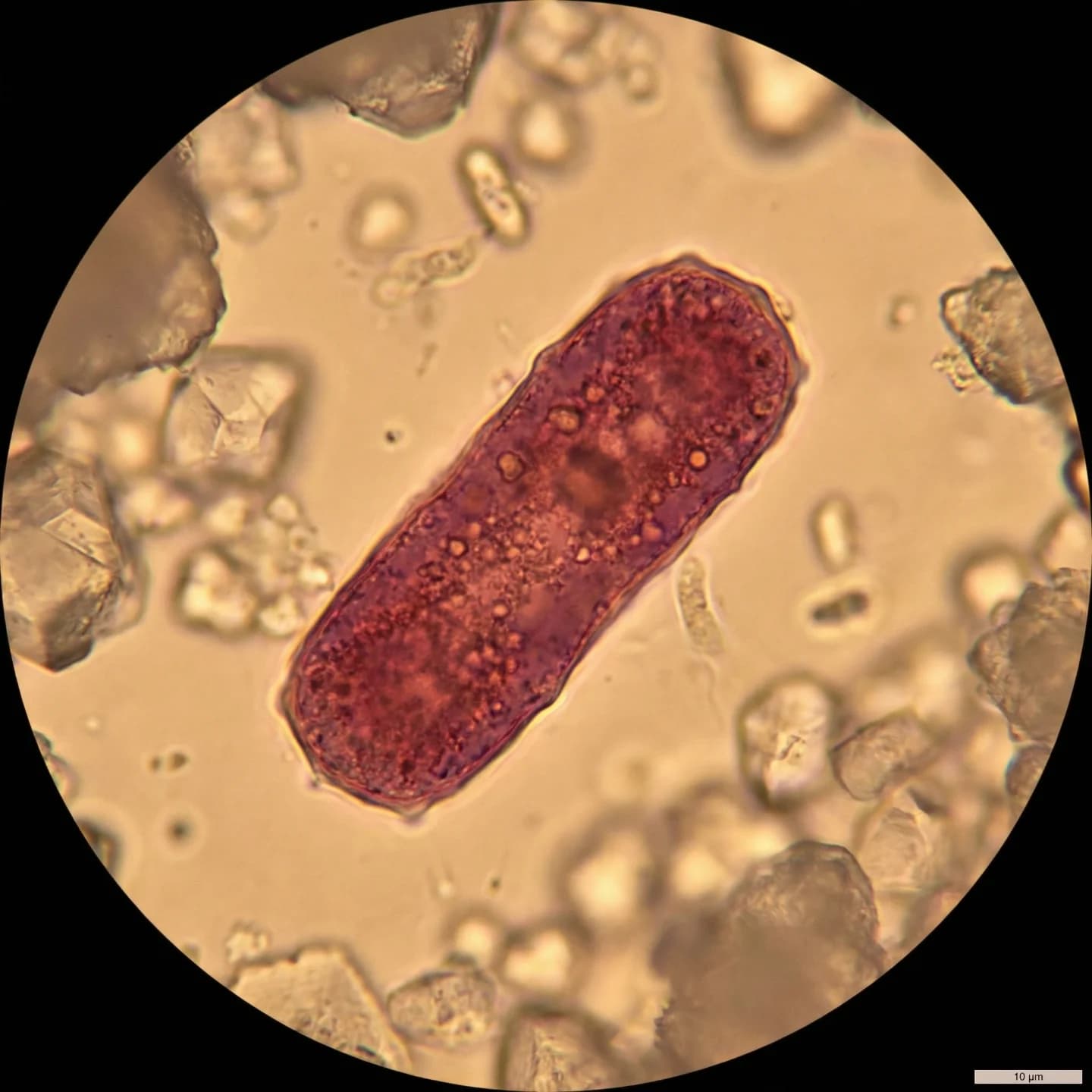
Halophilic archaea (haloarchaea) are a group of extremophilic microorganisms belonging to the class Halobacteria within the phylum Methanobacteriota (formerly Euryarchaeota) of the domain Archaea. They are obligately dependent on extremely high salt concentrations for growth and survival, with most species requiring a minimum of 2 M (~12%) NaCl and exhibiting optimal growth at 20–30% (3.4–5.2 M NaCl) — concentrations approaching or reaching saturation. Some species can thrive even at NaCl saturation (~37%), making haloarchaea among the most salt-adapted organisms on Earth.
One of the most distinctive features of haloarchaea is their use of the "salt-in" strategy for osmotic adaptation, in which molar concentrations of KCl (4–5 M) are accumulated within the cytoplasm to balance the external osmotic pressure. As a consequence, the entire intracellular proteome has evolved to function exclusively under high-salt conditions, resulting in a uniquely acidic proteome with a mean isoelectric point (pI) of approximately 4.2–5.0. Additionally, haloarchaea possess retinal-based membrane proteins — most notably bacteriorhodopsin — that enable light-driven proton pumping for ATP synthesis, and they produce C50 carotenoid pigments (bacterioruberin) that confer the vivid pink-to-red coloration seen in hypersaline lakes and salterns worldwide.
Haloarchaea are found in hypersaline environments globally, including the Dead Sea, Great Salt Lake, Lac Retba (Senegal), Australian pink lakes, solar salterns, rock salt deposits, and salted food products. The earliest systematic scientific study of these organisms dates to 1919, when the German botanist and mycologist Henrich Klebahn investigated the red discoloration of salted codfish (klippfish) in Hamburg, Germany, identifying halophilic microorganisms as the causative agents. The field was transformed in 1971 when Oesterhelt and Stoeckenius discovered bacteriorhodopsin in Halobacterium halobium (now Halobacterium salinarum), revealing a second principle of biological light-energy conversion independent of chlorophyll-based photosynthesis.
1. Overview
The name "halophilic archaea" derives from the Greek hals (salt) and philos (loving), literally meaning "salt-loving archaea." The formal class name Halobacteria (Grant et al. 2002) contains the word "bacteria" because it was established before the recognition of Archaea as a separate domain of life by Woese and Fox in 1977. To avoid confusion with true Bacteria, the informal name Haloarchaea is now widely preferred in the literature.
According to the LPSN (List of Prokaryotic names with Standing in Nomenclature), as of 2025, the class Halobacteria encompasses 2 orders (Halobacteriales and Halorutilales), approximately 10 families, over 80 genera, and more than 400 species with validly published names. The classification at the order and family level has undergone substantial revision in recent years. The traditional single-order system (Halobacteriales) was expanded to three orders (Halobacteriales, Haloferacales, and Natrialbales) by Gupta et al. (2015), but a comprehensive genome-based analysis by Cui et al. (2023) proposed remerging these into a single order with eight families. Simultaneously, Duran-Viseras et al. (2023) described the new order Halorutilales for a streamlined haloarchaeon, Halorutilus salinus. The LPSN currently treats Haloferacales and Natrialbales as synonyms of Halobacteriales and recognizes two orders (Halobacteriales and Halorutilales) as correct names.
The defining characteristic of haloarchaea is their obligate requirement for extremely high salt concentrations. Most species cannot grow below approximately 1.5–2 M NaCl, and when salt concentration drops below about 15%, proteins denature, the S-layer cell wall disintegrates, and cells lyse. This absolute dependence on high salt distinguishes them from moderate halophiles and halotolerant organisms.
2. Taxonomy and Phylogeny
The taxonomic placement of the class Halobacteria is as follows: domain Archaea, phylum Methanobacteriota. The phylum name was changed from the widely used but informally published "Euryarchaeota" to Methanobacteriota by Goker and Oren (2023), who validly published the name in compliance with the International Code of Nomenclature of Prokaryotes (ICNP). The type genus of the class is Halobacterium Elazari-Volcani 1957 (Approved Lists 1980).
The order-level classification has a complex history. Originally, all haloarchaea were placed within a single order, Halobacteriales (Grant and Larsen 1989), containing a single family, Halobacteriaceae. In 2015, Gupta et al. proposed a major reorganization based on phylogenomic analyses and conserved molecular signatures, dividing the class into three orders: an emended Halobacteriales (with families Halobacteriaceae, Haloarculaceae, and Halococcaceae), Haloferacales ord. nov. (with Haloferacaceae and Halorubraceae), and Natrialbales ord. nov. (with Natrialbaceae). In 2023, Cui et al. conducted a comprehensive genome-based classification of 76 genera and proposed that all species be remerged into a single order Halobacteriales with eight families, adding the new families Haladaptataceae and Halorubellaceae. In the same year, Duran-Viseras et al. described Halorutilus salinus, a streamlined haloarchaeon representing a new order, Halorutilales, with the family Halorutilaceae. On the LPSN, Haloferacales and Natrialbales are now listed as synonyms, and the two currently recognized orders with correct names are Halobacteriales and Halorutilales. A 2024 minimal standards document (Cui et al. 2024) and a 2025 phylogenomic analysis report the class as comprising two orders, approximately 10 families, over 80 genera, and more than 400 species — with taxonomic revisions still ongoing.
Phylogenetically, haloarchaea are inferred to have evolved from methanogenic ancestors. Nelson-Sathi et al. (2012) demonstrated through phylogenomic analysis that haloarchaea are a sister group to the Methanosarcinales and Methanomicrobiales, and that approximately 1,000 bacterial genes were acquired via horizontal gene transfer (HGT) at the origin of the haloarchaeal lineage. This massive gene acquisition is thought to have enabled the transition from anaerobic methanogenic metabolism to aerobic heterotrophic metabolism — one of the most dramatic metabolic transformations in prokaryotic evolutionary history.
Key families within the class include Halobacteriaceae, Haloarculaceae, Halococcaceae, Haloferacaceae, Halorubraceae, Natrialbaceae, Haladaptataceae, Halorubellaceae, and Halorutilaceae. Representative genera include Halobacterium (the model organism for rhodopsin studies), Haloferax (the primary genetic model), Haloquadratum (the square archaeon), Haloarcula (isolated from the Dead Sea), Halococcus (coccoid morphology), and Natronobacterium (haloalkaliphilic).
3. Morphology and Structure
Haloarchaea are among the most morphologically diverse groups of prokaryotes. Rod-shaped (bacilliform) cells are the most common morphology, exemplified by Halobacterium salinarum (approximately 2–6 μm in length, 0.5–1 μm in width). Coccoid (spherical) cells are characteristic of the genus Halococcus, with a diameter of approximately 0.8–1.5 μm. Pleomorphic forms are observed in Haloferax volcanii and Haloarcula marismortui, which can adopt rod, disc, triangular, or irregular shapes depending on culture conditions.
The most remarkable morphology is the flat, square cell of Haloquadratum walsbyi, first observed in 1980 by A.E. Walsby in brine samples from the Sinai Peninsula (Red Sea coast). These cells are approximately 2–5 μm on each side and only about 0.2 μm thick — so flat that they have been described as "living postage stamps." Despite being observed for nearly 25 years, the organism was not successfully cultivated until 2004, when Bolhuis et al. and Burns et al. independently reported pure cultures. The molecular mechanisms underlying this unique morphology remain incompletely understood, though genome analysis has identified candidate genes involved in cell division and shape determination.
The cell envelope of haloarchaea lacks the peptidoglycan found in bacterial cell walls. Instead, they possess only an S-layer (surface layer) composed of glycoprotein subunits that self-assemble into a crystalline lattice on the cell surface. This S-layer is stabilized by high concentrations of cations (particularly Na⁺), which is why cells lyse when transferred to low-salt solutions — the S-layer disassembles, and without the rigid support of peptidoglycan, the osmotically stressed cell bursts. The cell membrane is composed of ether-linked isoprenoid lipids characteristic of all archaea, distinguishing it from the ester-linked fatty acid membranes of bacteria and eukaryotes. The membrane lipids include C20-C20 diether lipids (archaeol) and C20-C25 diether lipids.
Many haloarchaeal species produce gas vesicles, which are cylindrical proteinaceous structures approximately 0.2–1.5 μm in length and 0.2 μm in diameter. These hollow structures are gas-permeable but liquid-impermeable, providing buoyancy that allows cells to float toward the water surface for optimal access to light and oxygen. Gas vesicle formation is encoded by the gvp gene cluster and is regulated in response to light and oxygen availability (Pfeifer, 2012).
4. Genome and Molecular Biology
Haloarchaeal genomes are typically circular double-stranded DNA (circular dsDNA), ranging in size from approximately 2.5 to 5.5 Mb depending on the species. The genome of Halobacterium sp. NRC-1 is approximately 2.57 Mb (Ng et al., 2000), Haloarcula marismortui has a genome of approximately 4.3 Mb (Baliga et al., 2004), and Haloquadratum walsbyi approximately 3.1 Mb. The type strain of Halobacterium salinarum (DSM 3754) has a main chromosome of approximately 2.18 Mb with a GC content of 67.1%, plus two large plasmids (Pfeiffer et al., 2019).
Common genomic features of haloarchaea include a high GC content (typically 59–70%), the presence of multiple replicons (a main chromosome plus several large plasmids or minichromosomes), and active insertion sequence (IS) elements. The high GC content has been hypothesized to contribute to DNA stability under high-salt conditions and resistance to UV damage, though the precise mechanistic basis of this correlation remains debated. Multiple replicons are common — Haloarcula marismortui, for example, carries nine replicons. This genomic architecture is thought to contribute to genomic plasticity and environmental adaptability.
The haloarchaeal proteome exhibits a pronounced amino acid composition bias reflecting adaptation to high intracellular salt. Most cytoplasmic proteins are enriched in acidic amino acids (aspartate and glutamate), resulting in a mean isoelectric point (pI) of approximately 4.2–5.0 (DasSarma & DasSarma, 2015). The negative surface charge of these acidic proteins is essential for maintaining solubility and proper folding in the high-KCl intracellular environment. In low-salt conditions, these proteins aggregate and denature.
Horizontal gene transfer (HGT) is remarkably active among haloarchaea, both within the class and from external donors. Gene exchange between different species occupying the same environment occurs frequently, as evidenced by the coexistence of high- and low-GC regions within individual genomes (e.g., the main chromosome of H. marismortui at 62.4% GC versus its minichromosomes at ~57% GC). Cell fusion and nanotube formation have also been reported as mechanisms of genetic exchange in some haloarchaeal species.
5. Biochemistry and Metabolism
Most haloarchaea are aerobic chemoorganotrophs, utilizing amino acids, organic acids, and carbohydrates as carbon and energy sources. Some species are facultatively anaerobic, capable of denitrification (nitrate reduction), DMSO reduction, or arginine fermentation under oxygen-limited conditions.
The cornerstone of haloarchaeal osmoadaptation is the "salt-in" strategy, in which KCl is accumulated in the cytoplasm to concentrations of 4–5 M, matching the external NaCl concentration (Gunde-Cimerman et al., 2018). This contrasts fundamentally with the "compatible solutes" strategy used by most halophilic bacteria, which synthesize and accumulate organic osmolytes such as glycine betaine, ectoine, or trehalose. The salt-in strategy is energetically more efficient, as it avoids the metabolic cost of synthesizing large quantities of organic solutes. However, it imposes a stringent evolutionary constraint: the entire intracellular machinery — proteins, ribosomes, and nucleic acid processing enzymes — must be adapted to function in a high-salt environment. Recent research has shown that some haloarchaeal species can also use compatible solutes as supplementary osmolytes under certain conditions.
The most distinctive metabolic feature of haloarchaea is their use of retinal-based membrane proteins (microbial rhodopsins) for light-energy harvesting. Bacteriorhodopsin (BR), discovered in 1971 by Oesterhelt and Stoeckenius in Halobacterium halobium (now H. salinarum), absorbs green light (peak ~568 nm) and functions as a light-driven proton pump, translocating H⁺ from the cytoplasm to the extracellular space. The resulting proton motive force drives ATP synthesis via ATP synthase. This mechanism represents a light-energy conversion principle that evolved independently of chlorophyll-based photosynthesis and does not involve carbon dioxide fixation.
In addition to bacteriorhodopsin, halorhodopsin (HR) uses light energy to pump Cl⁻ ions into the cell, contributing to ionic homeostasis. Sensory rhodopsins I and II (SRI/SRII) function as photoreceptors that mediate phototaxis — directional movement toward or away from light of specific wavelengths. These four retinal proteins have become central tools in the field of optogenetics, a revolutionary technology for controlling neuronal activity with light.
Haloarchaea produce C50 carotenoids, with bacterioruberin as the predominant pigment (Rodrigo-Banos et al., 2015). These extended carotenoids, with longer conjugated double-bond systems than the more common C40 carotenoids (e.g., beta-carotene), confer the characteristic pink-to-red coloration and serve multiple functions: UV photoprotection, reactive oxygen species scavenging (antioxidant activity), and membrane fluidity regulation. The vivid pink-to-red color of hypersaline lakes and salterns during haloarchaeal blooms is primarily attributable to the accumulation of these pigments and bacteriorhodopsin.
6. Ecology and Environmental Roles
Haloarchaea are the dominant members of microbial communities in extremely hypersaline environments worldwide. Their major natural habitats include salt lakes, solar salterns, rock salt deposits, and soda lakes.
The Dead Sea (Israel/Jordan), with a salinity of approximately 34%, has yielded several important haloarchaeal isolates, including Haloferax volcanii and Haloarcula marismortui. The Great Salt Lake (Utah, USA) has a salinity of approximately 25–27% in its North Arm, where haloarchaea reach densities of 10⁷–10⁸ cells per mL and impart a vivid pink coloration visible from space. Australian pink lakes (e.g., Hutt Lagoon) and Lac Retba (Senegal) similarly owe their distinctive color primarily to haloarchaeal pigments.
In solar salterns, as evaporation concentrates the brine, the microbial community undergoes succession, with haloarchaea becoming overwhelmingly dominant in the final crystallizer ponds (NaCl > 25%). Haloquadratum walsbyi is frequently the most abundant organism in these environments, sometimes comprising over 80% of the microbial community.
Soda lakes in the East African Rift Valley (e.g., Lake Magadi, Lake Natron) present the dual challenge of high salinity (up to 30%+) and extreme alkalinity (pH 9–11). Haloalkaliphilic species such as Natronobacterium, Natronomonas, and Natronoarchaeum are characteristic inhabitants of these environments.
Haloarchaea have been recovered from ancient rock salt deposits, where viable cells have been isolated from fluid inclusions within halite crystals. Vreeland et al. (2000) reported the isolation of a halotolerant bacterium from Permian salt (~250 million years old) in New Mexico, and subsequent studies have reported haloarchaeal recovery from Cretaceous (~120 million-year-old) halite. Whether these organisms truly survived for geological time spans or represent recent contamination via groundwater circulation or laboratory artifacts remains a topic of active scientific debate. Fendrihan et al. (2006) reviewed evidence supporting long-term survival, citing multiple genome copies, efficient DNA repair mechanisms, and the ability to enter a dormant state within fluid inclusions.
Ecologically, haloarchaea serve as the primary decomposers of organic matter in hypersaline environments, breaking down dead Dunaliella algae, cyanobacterial biomass, and other organic material, thereby contributing to carbon and nitrogen cycling. A diverse array of haloviruses infecting haloarchaea have been discovered, and these viruses play important roles in regulating microbial community dynamics and mediating horizontal gene transfer in hypersaline ecosystems.
Haloarchaea are also found in anthropogenic environments, particularly salted food products such as salt fish, salt pork, and fermented fish sauces. Klebahn's seminal 1919 study originated from the investigation of red discoloration in salted codfish (klippfish), and Halobacterium salinarum was originally isolated from such products.
7. Research History and Scientific Significance
The history of haloarchaeal research begins with Henrich Klebahn (1859–1942), a German botanist and mycologist at the Hamburg botanical institutions. Between 1916 and 1919, Klebahn conducted a systematic three-year study of the microbes causing red discoloration in the klippfish (salted cod) industry. He identified a red, Gram-negative, rod-shaped bacillus (Bacillus halobius ruber, now recognized as related to Halobacterium salinarum) and a coccoid organism (Sarcina morrhuae, now Halococcus morrhuae) as the primary causative agents. His 1919 publication is considered one of the founding documents of halophile microbiology. An English translation was published by Enache et al. (2010).
A transformative moment came in 1971 when Dieter Oesterhelt and Walther Stoeckenius discovered bacteriorhodopsin in the purple membrane of Halobacterium halobium (now H. salinarum). They showed that this retinal-containing protein functions as a light-driven proton pump — a second principle of biological light-energy conversion entirely independent of chlorophyll-based photosynthesis. Bacteriorhodopsin subsequently became one of the first membrane proteins whose structure was determined at near-atomic resolution (Henderson & Unwin, 1975) and has been one of the most extensively studied membrane proteins in biophysics.
In 1977, Carl Woese and George Fox recognized Archaea as a third domain of life based on 16S rRNA sequence analysis, leading to the reclassification of the "halophilic bacteria" as halophilic archaea — members of an entirely distinct domain from true Bacteria.
Since the 2000s, haloarchaeal retinal proteins have become foundational tools in optogenetics. Building on the pioneering work with channelrhodopsin (Boyden et al., 2005; Deisseroth et al., 2005), halorhodopsin has been widely used as an inhibitory optogenetic tool to silence neuronal activity with light. Optogenetics was named "Method of the Year" by Nature Methods in 2010 and has revolutionized neuroscience research.
8. Biotechnological Applications
Haloarchaea present several advantages as platforms for biotechnological applications, largely owing to their growth in high-salt media that inherently prevents contamination by most other microorganisms.
Polyhydroxyalkanoate (PHA) bioplastic production: Several haloarchaeal species, including Haloferax mediterranei, naturally produce polyhydroxyalkanoates — biodegradable bioplastics — as intracellular carbon and energy storage granules. Production using haloarchaea offers economic advantages: the high-salt growth medium suppresses contaminant growth (reducing sterilization costs), and cell lysis for PHA recovery can be achieved simply by suspending cells in low-salt water, which causes S-layer disintegration (Koller, 2019).
Carotenoid pigment production: The C50 carotenoids (especially bacterioruberin) produced by haloarchaea possess stronger antioxidant activity than common C40 carotenoids due to their extended conjugated double-bond system. These pigments are under investigation as natural food colorants, cosmetic ingredients, and nutraceutical antioxidants (Rodrigo-Banos et al., 2015).
Halotolerant enzymes (halozymes): Haloarchaeal enzymes are naturally adapted to function at high salt concentrations and often exhibit tolerance to organic solvents, making them attractive for industrial applications in high-salt processes (e.g., fish processing, leather tanning) and non-aqueous enzymatic reactions (DasSarma & DasSarma, 2015).
Optogenetic tools: Bacteriorhodopsin and halorhodopsin from haloarchaea are among the most important tools in optogenetics, enabling precise optical control of neuronal activity. These tools have opened revolutionary possibilities in neuroscience research and in the development of potential therapies for neurological disorders including Parkinson's disease, depression, and visual impairment.
Astrobiology: Haloarchaea are key model organisms in astrobiology due to their tolerance of multiple extreme conditions — high salinity, intense UV radiation, desiccation, vacuum, and ionizing radiation. The detection of chloride-rich brines on Mars has made haloarchaea a reference point for evaluating the habitability of Martian environments.
9. Comparison with Related Organisms
| Feature | Haloarchaea | Methanogens | Halophilic Bacteria |
|---|---|---|---|
| Domain | Archaea | Archaea | Bacteria |
| Phylum | Methanobacteriota | Methanobacteriota and others | Various |
| Salt adaptation strategy | Salt-in (KCl accumulation) | Not applicable | Compatible solutes (mostly) |
| Proteome characteristics | Acidic proteins (mean pI ~4.5) | Near-neutral | Near-neutral |
| Membrane lipids | Ether-linked isoprenoids | Ether-linked isoprenoids | Ester-linked fatty acids |
| Light energy use | Bacteriorhodopsin (BR) | None | None (mostly) |
| Oxygen requirement | Aerobic / facultatively anaerobic | Strictly anaerobic | Various |
| Pathogenicity | Non-pathogenic | Non-pathogenic | Various |
| GC content | 59–70% | 27–62% | Various |
| Typical habitat | Salt lakes, salterns | Wetlands, ruminant gut | Marine, salterns, soil |
Haloarchaea and methanogens belong to the same phylum (Methanobacteriota) and are phylogenetically closely related, yet their metabolic strategies are fundamentally different. Methanogens are strictly anaerobic and produce methane from CO₂/H₂ or acetate, whereas haloarchaea are aerobic chemoorganotrophs capable of retinal-based phototrophic energy generation. Halophilic bacteria belong to a different domain entirely and predominantly use the compatible solutes strategy, allowing their cytoplasmic proteins to remain functional in low-salt conditions — making them more metabolically flexible across varying salinities compared to the salt-in dependent haloarchaea.
10. Unresolved Questions and Future Directions
Several major questions remain open in haloarchaeal research. First, whether haloarchaea isolated from ancient rock salt (millions to hundreds of millions of years old) truly represent long-term geological survival or recent contamination remains unresolved. Second, the molecular mechanisms by which Haloquadratum walsbyi generates and maintains its unique flat, square morphology are incompletely understood. Third, the detailed evolutionary pathway by which an anaerobic methanogenic ancestor transitioned to aerobic heterotrophic metabolism through massive horizontal gene transfer warrants further investigation. Fourth, the diversity and ecological functions of uncultured haloarchaea — accessible primarily through metagenomic approaches — remain largely unexplored. Fifth, the discovery of Halorutilales in 2023, representing a streamlined haloarchaeal lineage, suggests that the full phylogenetic and functional diversity of this class has yet to be fully characterized.
Fun Facts
Haloarchaeal proteins have an average isoelectric point (pI) of about 4.2–5.0, making them among the most acidic proteomes known in any organism. This extreme acidity is an adaptation to maintain protein solubility in the 4–5 M KCl that fills their cytoplasm.
Haloquadratum walsbyi's flat, square cells are only about 0.2 μm thick — earning them the nickname 'living postage stamps.' First observed in 1980, it took 24 years before scientists managed to grow them in the laboratory (2004).
The 1971 discovery of bacteriorhodopsin in haloarchaea by Oesterhelt and Stoeckenius ultimately led to the birth of optogenetics — a technology that enables neurons to be controlled with light, named 'Method of the Year' by Nature Methods in 2010.
In the North Arm of the Great Salt Lake (~27% salinity), haloarchaea reach densities of approximately 10⁷–10⁸ cells per mL, turning the water a vivid pink that is visible from space.
Haloarchaea exhibit remarkable resistance to ultraviolet radiation, desiccation, vacuum, and gamma radiation — making them prime model organisms in astrobiology for assessing the possibility of life on Mars, where chloride-rich brines have been detected.
Microorganisms reportedly isolated from 250-million-year-old Permian rock salt may represent the oldest living organisms on Earth — though this claim remains one of the most hotly debated topics in microbiology.
During their evolution, haloarchaea acquired approximately 1,000 bacterial genes via horizontal gene transfer, enabling a dramatic 'career change' from anaerobic methane-producing ancestors to aerobic salt-loving heterotrophs — one of the most radical metabolic transitions in prokaryotic history.
The class name 'Halobacteria' literally means 'salt bacteria,' but these organisms are not bacteria at all — they are archaea. The name was coined before Carl Woese's 1977 discovery that archaea are a separate domain of life.
Producing bioplastics (PHA) using haloarchaea has a unique economic advantage: the high-salt growth medium naturally prevents contamination by other microbes, and harvesting is as simple as putting cells in fresh water — the cell walls spontaneously collapse.
The very first scientific study of haloarchaea arose from a practical food industry problem: in 1919, German mycologist Henrich Klebahn spent three years investigating why salted codfish turned red — launching an entirely new field of extremophile microbiology.
As of 2025, the class Halobacteria contains over 400 described species in more than 80 genera and 10 families. The taxonomy is still rapidly evolving — in 2023 alone, the phylum name was changed (Euryarchaeota to Methanobacteriota), the order-level classification was overhauled, and an entirely new order (Halorutilales) was described.
FAQ
Halophilic archaea use the 'salt-in' strategy, accumulating KCl to concentrations of 4–5 M in their cytoplasm to balance external osmotic pressure. As a consequence, all intracellular proteins have evolved to fold and function correctly only in high-salt conditions — they are enriched in acidic amino acids (aspartate and glutamate) with a mean isoelectric point of approximately 4.5. When salt concentration drops below about 15%, proteins denature and aggregate, the S-layer (glycoprotein cell wall) disintegrates due to loss of stabilizing cations, and cells lyse. This contrasts with halophilic bacteria, which mostly use compatible organic solutes and can tolerate a wider range of salinities.
The pink-to-red coloration is primarily caused by C50 carotenoid pigments (especially bacterioruberin) and retinal-based proteins (bacteriorhodopsin) produced by halophilic archaea. The halophilic green alga Dunaliella salina also contributes beta-carotene. As salinity increases, haloarchaea become the dominant organisms in the microbial community, reaching densities of 10⁷–10⁸ cells per mL during blooms, which intensifies the color. Famous examples include the Great Salt Lake (USA), Hutt Lagoon (Australia), and Lac Retba (Senegal).
Haloarchaea can persist for extremely long periods within fluid inclusions trapped in halite (rock salt) crystals. The most dramatic claim involves viable microorganisms recovered from Permian salt deposits approximately 250 million years old (Vreeland et al., 2000). However, whether these organisms truly survived for geological time spans or represent more recent contamination remains actively debated. In laboratory conditions, haloarchaea can survive for years without nutrients. Multiple genome copies and efficient DNA repair systems are thought to contribute to their exceptional longevity.
Bacteriorhodopsin uses retinal (a vitamin A derivative) rather than chlorophyll as its light-absorbing pigment, and the protein itself directly pumps protons (H⁺) across the membrane upon light absorption. This proton gradient drives ATP synthesis, but bacteriorhodopsin does not fix carbon dioxide. In contrast, plant/cyanobacterial photosynthesis uses chlorophyll and a complex electron transport chain to split water (producing O₂), generate ATP and NADPH, and then fix CO₂ via the Calvin cycle. Bacteriorhodopsin is structurally far simpler and represents an independently evolved mechanism for harvesting light energy.
The exact molecular mechanisms are not yet fully understood. Haloquadratum walsbyi forms extremely flat, square cells approximately 2–5 μm on each side and only ~0.2 μm thick. Genome analysis has identified candidate genes involved in cell division and shape determination, and intracellular gas vesicles provide buoyancy. The flat morphology is thought to maximize the surface-area-to-volume ratio, which may be advantageous for nutrient uptake and light harvesting in shallow hypersaline environments. First observed by A.E. Walsby in 1980, the organism took 24 years to cultivate in the lab, achieved independently by two groups in 2004.
Despite the class name 'Halobacteria' containing the word 'bacteria,' these organisms are archaea — members of a domain of life entirely distinct from true Bacteria. The class was named before Carl Woese's 1977 discovery that archaea constitute a separate domain. Archaea differ fundamentally from bacteria in membrane lipid chemistry (ether-linked vs. ester-linked), cell wall composition (S-layer vs. peptidoglycan), and transcription/translation machinery. To avoid confusion, the informal name 'Haloarchaea' is now widely preferred.
Key applications include: biodegradable bioplastic (PHA) production, where high-salt growth media naturally prevent contamination and cell lysis is achieved simply with low-salt water; C50 carotenoid pigment production for use as natural food colorants, cosmetic ingredients, and antioxidant nutraceuticals; halotolerant enzyme (halozyme) development for industrial processes requiring high salt or organic solvents; and optogenetic tools (bacteriorhodopsin, halorhodopsin) that have revolutionized neuroscience by enabling light-based control of neuronal activity. They also serve as model organisms in astrobiology research.
No. No halophilic archaeon has ever been reported to cause disease in humans or animals, and they are classified as BSL-1 (Biosafety Level 1, the lowest risk category). While haloarchaea can be found in salted food products (salt fish, fermented fish sauces, etc.), they do not pose a direct food safety threat. They can, however, cause undesirable red discoloration and off-odors in salted foods, which is a quality control concern for the food industry — the very issue that prompted Klebahn's pioneering 1919 study.
Phylogenomic evidence strongly supports this hypothesis. Nelson-Sathi et al. (2012) showed that haloarchaea are a sister group to the Methanosarcinales/Methanomicrobiales and that approximately 1,000 bacterial genes were acquired via horizontal gene transfer at the origin of the haloarchaeal lineage. This massive gene acquisition is thought to have enabled the transition from anaerobic methanogenic metabolism to aerobic heterotrophic metabolism — one of the most dramatic metabolic transformations known in prokaryotic evolution. The details of this transition's timing and mechanism remain active areas of research.
📚References
- Klebahn, H. (1919). Die Schadlinge des Klippfisches. Ein Beitrag zur Kenntnis der salzliebenden Organismen. Jahrbuch der Hamb. Wissensch. Anstaltes, XXXVI, Beiheft, 11-69. [English translation: Enache, M. et al. (2010). Translation of Henrich Klebahn's 'Damaging agents of the klippfish'. Saline Systems, 6, 7. https://pmc.ncbi.nlm.nih.gov/articles/PMC2912921/]
- Oesterhelt, D. & Stoeckenius, W. (1971). Rhodopsin-like protein from the purple membrane of Halobacterium halobium. Nature New Biology, 233, 149-152. https://www.nature.com/articles/newbio233149a0
- Oren, A. (2008). Microbial life at high salt concentrations: phylogenetic and metabolic diversity. Saline Systems, 4, 2. https://saline-systems.biomedcentral.com/articles/10.1186/1746-1448-4-2
- Gunde-Cimerman, N., Plemenitas, A. & Oren, A. (2018). Strategies of adaptation of microorganisms of the three domains of life to high salt concentrations. FEMS Microbiology Reviews, 42(3), 353-375. https://academic.oup.com/femsre/article/42/3/353/4909803
- DasSarma, S. & DasSarma, P. (2015). Halophiles and their enzymes: negativity put to good use. Current Opinion in Microbiology, 25, 120-126. https://pmc.ncbi.nlm.nih.gov/articles/PMC4729366/
- Nelson-Sathi, S. et al. (2012). Acquisition of 1,000 eubacterial genes physiologically transformed a methanogen at the origin of Haloarchaea. Proceedings of the National Academy of Sciences, 109(50), 20537-20542. https://www.pnas.org/doi/10.1073/pnas.1209119109
- Gupta, R.S., Naushad, S. & Baker, S. (2015). Phylogenomic analyses and molecular signatures for the class Halobacteria and its two major clades: a proposal for division of the class Halobacteria into an emended order Halobacteriales and two new orders. International Journal of Systematic and Evolutionary Microbiology, 65, 1050-1069.
- Cui, C., Han, D., Hou, J. & Cui, H.-L. (2023). Genome-based classification of the class Halobacteria and description of Haladaptataceae fam. nov. and Halorubellaceae fam. nov. International Journal of Systematic and Evolutionary Microbiology, 73(7). https://pubmed.ncbi.nlm.nih.gov/37486319/
- Duran-Viseras, A. et al. (2023). Discovery of the streamlined haloarchaeon Halorutilus salinus, comprising a new order widespread in hypersaline environments across the world. mSystems, 8(2), e01198-22. https://journals.asm.org/doi/10.1128/msystems.01198-22
- Burns, D.G. et al. (2007). Haloquadratum walsbyi gen. nov., sp. nov., the square archaeon of Walsby, isolated from saltern crystallizers in Australia and Spain. International Journal of Systematic and Evolutionary Microbiology, 57(2), 387-392.
- Bolhuis, H. et al. (2004). Isolation and cultivation of Walsby's square archaeon. Environmental Microbiology, 6(12), 1287-1291.
- Pfeifer, F. (2012). Distribution, formation and regulation of gas vesicles. Nature Reviews Microbiology, 10, 705-715.
- Rodrigo-Banos, M. et al. (2015). Carotenoids from Haloarchaea and their potential in biotechnology. Marine Drugs, 13(9), 5508-5532. https://pmc.ncbi.nlm.nih.gov/articles/PMC4584337/
- Grote, M. & O'Malley, M.A. (2011). Enlightening the life sciences: the history of halobacterial and microbial rhodopsin research. FEMS Microbiology Reviews, 35(6), 1082-1099. https://academic.oup.com/femsre/article/35/6/1082/523392
- Ng, W.V. et al. (2000). Genome sequence of Halobacterium species NRC-1. Proceedings of the National Academy of Sciences, 97(22), 12176-12181. https://www.pnas.org/doi/10.1073/pnas.190337797
- Pfeiffer, F. et al. (2019). The genome sequence of the Halobacterium salinarum type strain is closely related to that of laboratory strains NRC-1 and R1. Microbiology Resource Announcements, 8(28), e00429-19. https://pmc.ncbi.nlm.nih.gov/articles/PMC6624760/
- Fendrihan, S. et al. (2006). Extremely halophilic archaea and the issue of long-term microbial survival. Reviews in Environmental Science and Bio/Technology, 5, 203-218.
- Koller, M. (2019). Polyhydroxyalkanoate biosynthesis at the edge of water activity — Haloarchaea as biopolyester factories. Bioengineering, 6(2), 34.
- Vreeland, R.H., Rosenzweig, W.D. & Powers, D.W. (2000). Isolation of a 250 million-year-old halotolerant bacterium from a primary salt crystal. Nature, 407, 897-900.
- Goker, M. & Oren, A. (2023). Valid publication of four additional phylum names. International Journal of Systematic and Evolutionary Microbiology, 73, 6024.
- Cui, H.-L. et al. (2024). Proposed minimal standards for description of new taxa of the class Halobacteria. International Journal of Systematic and Evolutionary Microbiology, 74, 6290.
- Oren, A. (2024). Novel insights into the diversity of halophilic microorganisms and their functioning in hypersaline ecosystems. npj Biodiversity, 3, 18. https://www.nature.com/articles/s44185-024-00050-w
Gallery
2 images Halophilic Archaea (Haloarchaea)
Halophilic Archaea (Haloarchaea)
 Halophilic Archaea (Haloarchaea)
Halophilic Archaea (Haloarchaea)