Red-Eyed Tree Frog
Creature Type
Agalychnis callidryas
Scientific Name: "Agalychnis from Greek 'aga' (abundant) + 'lychnos' (light, lamp) = 'abundantly shining'; callidryas from Greek 'kalos' (beautiful) + 'dryas' (tree nymph) = 'beautiful tree nymph'"
Physical Characteristics
Discovery
Habitat
보전·개체·수명

The red-eyed tree frog (Agalychnis callidryas Cope, 1862) is an arboreal amphibian in the family Phyllomedusidae and the genus Agalychnis, widely regarded as one of the most iconic and instantly recognizable frogs in the world. Native to the Neotropical rainforests of Central America, from southern Mexico through Panama to northwestern Colombia, it is distinguished by its vivid red irises with vertical pupils, neon-green dorsum, blue-and-yellow flank stripes, and bright orange hands and feet. The species inhabits humid tropical lowland forests from sea level to approximately 1,250 m elevation, where it leads a nocturnal, arboreal lifestyle.
When threatened, the red-eyed tree frog employs a remarkable startle coloration (deimatic display) defense strategy: it abruptly opens its vivid red eyes and spreads its brightly colored limbs, delivering a momentary visual shock that can cause a predator to hesitate long enough for the frog to escape. Despite its striking appearance, this species is not poisonous — its bright colors serve camouflage and startle functions rather than warning of toxicity. Another hallmark of this species is its extraordinary adaptive hatching plasticity: embryos can analyze the temporal patterns of substrate-borne vibrations to distinguish snake attacks from rainstorms and trigger premature hatching in as little as 4–5 days post-oviposition, escaping the egg in just 6.5–49 seconds (Warkentin, 1995; Warkentin et al., 2006; Cohen et al., 2016).
The IUCN Red List classifies A. callidryas as Least Concern (LC), though the population trend is reported as decreasing (IUCN SSC Amphibian Specialist Group, 2020). In 2010, the entire genus Agalychnis was listed under CITES Appendix II, regulating international trade. The species has served as the inspiration for the Rainforest Alliance's well-known green frog seal, making it a globally recognized symbol of tropical rainforest conservation.
1. Overview
Name and Etymology
The genus name Agalychnis derives from the Greek words 'aga' (abundant, plentiful) and 'lychnos' (light, lamp), meaning "abundantly shining" — a reference to the vivid coloration shared by members of this genus. The specific epithet callidryas combines the Greek 'kalos' (beautiful) and 'dryas' (tree nymph, dryad), meaning "beautiful tree nymph," aptly reflecting the species' striking appearance and arboreal habits. Common English names include Red-Eyed Tree Frog and Red-Eyed Leaf Frog.
Taxonomic Status
This species was first described by the American paleontologist and zoologist Edward Drinker Cope in 1862 as Hyla callidryas (Cope, 1862). It was subsequently transferred to Phyllomedusa callidryas before being placed in its current genus as Agalychnis callidryas. Recognized synonyms include Agalychnis helenae Cope, 1885, Hyla callidryas Cope, 1862, Phyllomedusa callidryas (Cope, 1862), and Phyllomedusa helenae (Cope, 1885). At the family level, some authorities place it within Hylidae (subfamily Phyllomedusinae), while others — including AmphibiaWeb and Frost's Amphibian Species of the World — recognize Phyllomedusidae as an independent family. This account follows the Phyllomedusidae classification per AmphibiaWeb (2026).
In 2019, McCranie, Sunyer & Fonseca elevated the former subspecies A. callidryas taylori to full species status as Agalychnis taylori. A. taylori is distributed in the Yucatán Peninsula of Mexico and the Petén lowlands of Guatemala, and while morphologically similar, it is genetically and geographically distinct (FLAAR Mesoamerica, 2022).
One-Line Summary
The red-eyed tree frog is a nocturnal, arboreal amphibian famous for its vivid red eyes, startle coloration defense strategy, and embryonic adaptive hatching plasticity — a flagship species of Neotropical rainforest biodiversity.
2. Taxonomy and Phylogenetics
Higher Classification
| Rank | Taxon |
|---|---|
| Kingdom | Animalia |
| Phylum | Chordata |
| Class | Amphibia |
| Order | Anura |
| Family | Phyllomedusidae |
| Subfamily | Phyllomedusinae |
| Genus | Agalychnis |
| Species | A. callidryas (Cope, 1862) |
Molecular Phylogenetics
The genus Agalychnis is a Neotropical arboreal frog lineage within the subfamily Phyllomedusinae. Molecular phylogenetic analyses have suggested that A. callidryas may form a sister-group relationship with A. terranova, a species described from the middle Magdalena River valley in Colombia (Rivera-Correa et al., 2013). The genus currently comprises approximately 14 recognized species, all inhabiting Neotropical rainforests from Central America to northwestern South America.
Clark et al. (2022), published in Molecular Ecology, demonstrated that genetic differentiation and colour-pattern divergence across Costa Rican and Panamanian populations of A. callidryas are closely linked through genetic isolation by distance. Four major colour morphs (blue, red/blue, orange, purple) map onto underlying genetic structure, and some morphs may be attributable to genetic drift or differential selective pressures.
Subspecies and Geographic Variation
Following the separation of A. taylori in 2019, A. callidryas is currently treated as monotypic with no recognized subspecies. However, the significant genetic differentiation among the four colour morphs in Costa Rica and Panama suggests that additional cryptic species may exist, warranting further taxonomic investigation.
Taxonomic History
Originally described by Cope (1862) as Hyla callidryas, the species was later transferred through Phyllomedusa callidryas before reaching its current placement in Agalychnis. Cope's 1885 A. helenae is now treated as a junior synonym. The diploid chromosome number is 26 (2n = 26; Duellman & Cole, 1965).
3. Morphology and Anatomy
Body Form
The red-eyed tree frog is a slender, slightly flattened, medium-sized frog with a rounded head and truncated snout when viewed from above (Duellman, 2001). The skin is smooth both dorsally and ventrally, with almost no tubercles (Savage, 2002). The outer skin layer has a mucus-secreting function that resists water loss and provides some defense against infections.
Size
Pronounced sexual size dimorphism is present, with females being significantly larger than males. Males reach a maximum snout-vent length (SVL) of approximately 59 mm (typically 50–55 mm), with a body mass of approximately 6–8 g. Females reach a maximum SVL of approximately 77 mm (typically 65–70 mm), with a body mass of approximately 10–15 g (AmphibiaWeb, 2026; Savage, 2002; Duellman, 2001).
Colour Pattern
The dorsal surface ranges from leaf-green to dark green, sometimes marked with faint darker green transverse lines (especially in Nicaraguan and Costa Rican populations) or small white dots. The flanks are dark blue, purple, or brownish, bearing cream or yellow vertical or diagonal bars. The mean number of flank bars increases from north to south: a mean of 5.0 in Mexico to 9.0 in Panama (Duellman, 2001). Some Caribbean-slope populations in Nicaragua and Costa Rica display a continuous longitudinal yellowish stripe connecting the upper ends of the vertical bars. The upper arms are blue or orange; the anterior, posterior, and ventral surfaces of the thighs are blue or orange; the hands and feet are orange (except outermost digits); and the ventral surface is white (Savage, 2002; Leenders, 2001).
When the eyes are closed, a transparent lower eyelid (nictitating membrane) marked with a network of gold is visible (Leenders, 2001). This membrane transmits light, enabling the frog to detect approaching predators while resting. Newly metamorphosed froglets can change colour — green by day, purplish or reddish-brown at night — and their initially yellow eyes gradually turn red over approximately two weeks post-metamorphosis (Starrett, 1960; Pyburn, 1963).
Eyes and Sensory Organs
The species' most striking feature is its large, protruding eyes with bright red irises and vertical pupils. The laterally directed eyes provide a wide field of vision. The vertical pupil is an adaptation to nocturnal life, optimizing light regulation in low-light environments. Distinct tympana are present (Savage, 2002).
Limbs and Adhesive Discs
The fingers are approximately half-webbed and the toes approximately two-thirds webbed (Duellman, 2001). Well-developed adhesive discs at the tips of the fingers and toes enable stable locomotion on smooth leaf surfaces and vertical substrates. A narrow fold extends from the heel to the disc of the fifth toe (Savage, 2002). The terminal phalanx is claw-shaped — a synapomorphy of tree frogs. The limbs are long and slender, suited for moving through arboreal environments.
Sexual Dimorphism and Secondary Sexual Characters
Males possess paired vocal slits and a single internal median subgular vocal sac. During the breeding season, a grayish-brown spinose nuptial pad develops at the base of each male's thumb, used for grasping the female during amplexus (Savage, 2002).
4. Ecology and Behaviour
Diet
Adult red-eyed tree frogs are carnivorous nocturnal predators. Their diet includes crickets, moths, grasshoppers, flies, mosquitoes, and other insects, and they occasionally prey on small frogs (Gray & Nishikawa, 1995). They are primarily ambush predators, using a rapid tongue strike to capture prey within range. Tadpoles are water-column filter feeders, suspending themselves vertically near the water surface to feed on organic particles and algae (Vonesh & Warkentin, 2006; Savage, 2002).
Activity Patterns
The red-eyed tree frog is nocturnal and arboreal. During the day, individuals rest on the undersides of broad leaves or, rarely, inside bromeliads, with their limbs tucked beneath the body (Leenders, 2001; Duellman, 2001). In this posture, the green dorsum blends seamlessly with surrounding foliage, while the vivid flank and limb colours remain completely concealed.
Startle Coloration
When disturbed, the frog abruptly opens its vivid red eyes and extends its brightly coloured blue and orange limbs, creating a sudden startle coloration (deimatic display) that can momentarily startle predators and provide a window for escape. This is distinct from aposematic (warning) coloration, as the species is non-toxic.
Communication
During the breeding season, males produce advertisement calls ("chack" or "chack-chack," repeated at 8–60 second intervals at a dominant frequency of approximately 1.5–2.5 kHz) and softer aggressive calls ("chuckle" sounds) to deter rival males (Duellman, 1967; Gray & Rand, 1997). Calling begins at dusk and is most intense during rainfall. A brief daybreak chorus has also been documented (Gray & Rand, 1997).
Caldwell et al. (2010), published in Current Biology, demonstrated that males also use tremulation — rapidly shaking a branch with their hind legs — as a vibrational signal during male-male agonistic interactions. This was among the first documented cases of substrate vibration communication in arboreal vertebrates. Experimental trials using a robotic frog and branch shaker confirmed that live males responded aggressively to vibrational stimuli specifically, and only counter-vibrated in response to vibrational (not merely visual) displays.
Predators and Defense
Egg-stage predators include snakes (e.g., Leptodeira septentrionalis), wasps (especially Polybia rejecta), monkeys, parasitic fly larvae (Hirtodrosophila batracida), and pathogenic fungi (family Phaeosphaeriaceae) (Warkentin, 1995; Warkentin, 2000b; Warkentin et al., 2001). Tadpoles are preyed upon by freshwater shrimp (Macrobrachium americanum), fish (Brachyraphis rhabdophora), and giant water bugs (Belostoma sp.) (Warkentin, 1995; Vonesh & Warkentin, 2006). Newly metamorphosed froglets may fall prey to aquatic spiders (Thaumasia sp.) foraging at or above the water surface (Vonesh & Warkentin, 2006). Adults are preyed upon by snakes, birds, and bats (Leenders, 2001).
5. Reproduction and Life History
Breeding Ecology
Breeding occurs during the wet season (late May to November), initiated by the first rains. Activity peaks in June and sometimes again in October (Donnelly & Guyer, 1994; Pyburn, 1970), following a prolonged breeding pattern. Males begin calling at dusk from perches near water; on dry nights they call from higher canopy positions, descending to lower vegetation near breeding pools on wetter nights (Pyburn, 1970). Females descend from the canopy, approach selected calling males, and permit axillary amplexus.
Mating patterns show evidence of female choice: females prefer males with local call and flank-stripe patterns, and size-assortative mating has been observed in some years (Kaiser et al., 2018; Briggs, 2008). Molecular analysis has confirmed multiple paternity within single clutches, indicating that intruding males can successfully contribute to fertilization (D'Orgeix & Turner, 1995).
Oviposition
In amplexus, the female carries the male into the water for approximately 10 minutes to absorb water into her bladder for jelly production, then ascends to vegetation overhanging the water to oviposit (Pyburn, 1970). Clutches of approximately 40 green eggs, each surrounded by a clear jelly coat (diameter ~3.7 mm at oviposition, ~5.2 mm near hatching), are typically deposited on the upper or lower surface of broad leaves up to ~3.7 m above the water (Pyburn, 1963; Warkentin, 2000a; Fouquette, 1968). Females may produce up to 5 clutches per night, rehydrating between each bout (Pyburn, 1970; D'Orgeix & Turner, 1995). Fertilization success is extremely high — Briggs (2008) reported 100% fertilization in 54 of 56 experimental clutches.
Adaptive Hatching Plasticity
Undisturbed eggs hatch in 6–10 days (most at approximately 7 days; Panama populations average 6–7 days, Costa Rican populations 7–8 days; Warkentin, 2005). However, when threatened, embryos exhibit remarkable adaptive hatching plasticity, hatching as early as 4–5 days post-oviposition (Warkentin, 1995; Warkentin, 2000b). Early hatching can be triggered by snake attack, wasp predation, fungal infection, flooding, and hypoxia (Warkentin, 1995; 2000b; Warkentin et al., 2001; Warkentin, 2002).
Karen Warkentin's research group (1995–2022) demonstrated that embryos assess the temporal pattern of substrate-borne vibrations — specifically the combination of pulse duration and inter-pulse intervals — to distinguish between predator attacks (short, irregular vibrations) and rainstorms (long, regular vibrations) (Warkentin, 2005; Warkentin et al., 2006). Embryos do not hatch instantly upon stimulation but wait seconds to minutes to evaluate the information before deciding (Warkentin et al., 2007). The rapid hatching mechanism involves secretion of enzymes from hatching glands densely clustered on the snout, which dissolve the vitelline membrane, followed by vigorous muscular thrashing to escape in 6.5–49 seconds (Cohen et al., 2016). The precise biochemical characterization of the hatching enzyme remains to be accomplished.
Tadpole Development and Metamorphosis
Hatching tadpoles fall from the overhanging leaf into the water below. Tadpoles are large, reaching a maximum total length of 48 mm at Gosner stage 34 (Savage, 2002). They possess unusually large, elaborate external gills for anurans, likely an adaptation to oxygen limitation in the densely packed egg mass under warm conditions (Warkentin, 2000a). These external gills regress remarkably rapidly — within as little as 3 minutes post-hatching — primarily in response to increased environmental oxygen availability, mediated by prostaglandins of the E family (Warkentin, 2000a; Warkentin & Wassersug, 2001). Tadpoles can survive out of water for up to 20 hours (Valerio, 1971). Metamorphosis takes approximately 60–100 days, with considerable variation depending on environmental conditions.
Lifespan
The average wild lifespan is approximately 5 years (Wikipedia; Smithsonian). In captivity, with appropriate care, individuals can survive 8–12 years (Animal Diversity Web; Reptile Cymru). Some informal reports cite maximum captive lifespans of up to 20 years, though rigorously verified maximum longevity records are limited.
6. Distribution and Habitat
Natural Range
The red-eyed tree frog is distributed across the Neotropics, from southern Mexico (Veracruz, Oaxaca, Yucatán Peninsula) through Central America (Belize, Guatemala, Honduras, Nicaragua, Costa Rica, Panama) to an isolated population near Cartagena in northwestern Colombia (Savage, 2002; Ruiz-Carranza et al., 1996; AmphibiaWeb, 2026). Following the separation of A. taylori in 2019, some Yucatán and Petén populations may require reassessment.
Habitat Type
The species primarily inhabits humid tropical lowland rainforests and occasionally premontane slopes up to 1,250 m elevation (Leenders, 2001). During the breeding season, it is active in the canopy surrounding ponds, puddles, and other still or semi-permanent water bodies with overhanging vegetation suitable for oviposition. The species can tolerate a degree of habitat disturbance, including selective logging; in Honduras, breeding has been documented even in heavily deforested areas and a variety of atypical breeding sites (McCranie et al., 2003).
Distribution by Country
| Country | Elevation (m) | Notes |
|---|---|---|
| Mexico | 0–1,000 | Yucatán, Veracruz, Oaxaca |
| Belize | 0–500 | Tropical lowlands throughout |
| Guatemala | 0–800 | Petén lowlands |
| Honduras | 0–1,000 | Atlantic slope |
| Nicaragua | 0–600 | Caribbean coastal region |
| Costa Rica | 0–1,250 | Both slopes; most abundant populations |
| Panama | 0–1,000 | Atlantic and Pacific slopes |
| Colombia | ~200 | Isolated population near Cartagena |
7. Conservation Status and Threats
IUCN Red List Assessment
The IUCN SSC Amphibian Specialist Group (2020) assessed A. callidryas as Least Concern (LC). The wide distribution, relatively high habitat tolerance, and presumed large total population underpin the LC classification, though a decreasing population trend is noted. No precise global population estimate has been published.
Major Threats
Habitat loss through deforestation for agriculture, livestock grazing, and urban development is the primary threat. The chytrid fungus (Batrachochytrium dendrobatidis, Bd) affects this species but appears to cause less severe impacts than in congeners such as A. moreletii and A. lemur, which have experienced population declines exceeding 80%. Climate change — altered temperature and precipitation patterns, increased drought frequency, and elevated UV exposure — poses additional potential threats to egg survival and breeding phenology. Die-offs of wild tadpoles due to ranavirus have also been reported.
Pet Trade
The red-eyed tree frog is one of the most popular amphibians in the international pet trade. According to the Species Survival Network, approximately 221,960 Agalychnis frogs were imported into the United States alone over a roughly 10-year period. In 2010, at CITES CoP15, the entire genus Agalychnis was listed under Appendix II to monitor and regulate international trade.
Conservation Measures
National parks and biosphere reserves in Costa Rica (Tortuguero National Park, La Selva Biological Station, Monteverde Cloud Forest Reserve), Panama (Barro Colorado Island, Soberanía National Park), and other range countries protect key habitats. Active captive breeding programs supply the pet trade with captive-bred (CB) individuals, reducing wild-capture pressure.
8. Relationship with Humans
Cultural Symbol
The red-eyed tree frog is one of the most widely recognized symbols of tropical rainforest biodiversity. The Rainforest Alliance chose it as its mascot in the late 1980s, and its iconic green frog seal — inspired by this species — now appears on consumer products worldwide as an international mark of sustainability certification (Rainforest Alliance, 2023). The species' striking appearance makes it a staple in ecotourism promotion, conservation education materials, and popular media.
Pet Industry
As one of the world's most popular pet amphibians, this species is successfully bred in captivity. Recommended husbandry conditions include temperatures of 24–28°C, humidity above 80%, tall vertical enclosures, and a varied insect diet. CITES Appendix II listing requires that commercial trade be from legal, sustainable sources.
Scientific Research Model
The species is renowned as a model organism for studying adaptive hatching plasticity. Karen Warkentin's extensive body of research (1995–2022) has revealed how embryos sense environmental danger through vibrational cues and modulate their hatching timing accordingly, making fundamental contributions to developmental biology, behavioural ecology, and evolutionary biology. This work has broadened understanding of embryo cognition and developmental plasticity.
Bioactive Compounds
Five families of bioactive peptides have been isolated from the skin: tachykinins, bradykinins, caerulein, opioid peptides (dermorphin and [Hyp6] dermorphin), and sauvagine (Mignogna et al., 1997). These compounds hold potential biomedical research value. However, unlike dendrobatid poison frogs, they are not potent enough to pose toxicity risks to humans, and the species is considered non-toxic.
9. Uncertainties and Open Questions
Confirmed
The taxonomic placement (genus Agalychnis, leaf-frog lineage), basic morphology (body size, colour pattern, adhesive discs), nocturnal arboreal habits, startle coloration defense, adaptive hatching plasticity (vibration-based risk assessment and premature hatching), and LC conservation status are well-established through multiple peer-reviewed studies and the IUCN assessment.
Probable but Requiring Further Research
The precise relationship between colour-morph differentiation and genetic divergence across the Costa Rica–Panama contact zone, the immunological mechanisms underlying relative Bd tolerance compared to congeners, and the long-term impacts of climate change on breeding phenology and egg survival are supported by substantial evidence but are not fully resolved.
Hypothetical and Unresolved
The exact biochemical identity of the hatching enzyme, whether individual colour morphs constitute distinct evolutionary significant units (ESUs), and the potential existence of additional cryptic species following the separation of A. taylori all remain open questions requiring further investigation.
Common Misconceptions
Due to its bright coloration, the red-eyed tree frog is frequently mistaken for a poisonous species. In reality, it is non-toxic; its vivid colours serve camouflage and startle functions rather than aposematic warning.
10. Comparison with Related Species
| Species | Common Name | Range | IUCN Status | Eye Colour | Key Characteristics |
|---|---|---|---|---|---|
| A. callidryas | Red-eyed tree frog | Mexico to Colombia | LC | Red | Widest distribution, 4 colour morphs |
| A. saltator | Misfit leaf frog | Honduras to Panama | LC | Red | Uniform blue-purple flanks |
| A. moreletii | Black-eyed leaf frog | Mexico to Honduras | LC | Black/dark red | Severe Bd decline, partial recovery |
| A. annae | Blue-sided leaf frog | Costa Rica | EN | Yellow | Costa Rica endemic |
| A. lemur | Lemur leaf frog | Costa Rica to Panama | CR | Black | Colour change, severe decline |
| A. spurrelli | Gliding leaf frog | Ecuador to Colombia | LC | Red | Explosive communal breeding |
Agalychnis saltator is the most visually similar congener but is distinguished by its uniformly dark blue or purple flanks lacking the vertical bars typical of A. callidryas. Agalychnis moreletii and A. lemur are both far more susceptible to the chytrid fungus — A. moreletii was formerly Critically Endangered (CR) before recovering to LC status in 2016, while A. lemur remains CR.
11. Data Tables
Table 1. Basic Biological Data
| Parameter | Value | Source |
|---|---|---|
| SVL – male | Up to 59 mm | AmphibiaWeb 2026 |
| SVL – female | Up to 77 mm | AmphibiaWeb 2026 |
| Body mass | 6–15 g (sex-dependent) | Multiple sources |
| Chromosome number (2n) | 26 | Duellman & Cole 1965 |
| Wild lifespan | ~5 years | Wikipedia; ThoughtCo |
| Captive lifespan | 8–12 years | Reptile Cymru; ADW |
| IUCN status | LC (Least Concern) | IUCN SSC ASG 2020 |
| CITES listing | Appendix II | CITES 2010 |
Table 2. Reproduction and Development
| Parameter | Value | Source |
|---|---|---|
| Breeding season | Late May–November (wet season) | Donnelly & Guyer 1994 |
| Eggs per clutch | ~40 | Pyburn 1963 |
| Max. clutches per night | 5 | Pyburn 1970 |
| Egg diameter (at oviposition) | ~3.7 mm | Warkentin 2000 |
| Egg diameter (pre-hatching) | ~5.2 mm | Warkentin 2000 |
| Normal hatching time | 6–10 days (mean ~7 days) | Warkentin 1995, 2005 |
| Earliest premature hatching | 4–5 days | Warkentin 2000b |
| Rapid hatching duration | 6.5–49 seconds | Cohen et al. 2016 |
| Max. tadpole total length | 48 mm (stage 34) | Savage 2002 |
| Time to metamorphosis | ~60–100 days | Multiple sources |
Table 3. Colour Morphs (Costa Rica–Panama)
| Morph | Flank/Leg Colour | Primary Distribution |
|---|---|---|
| Blue | Blue | Costa Rica, Caribbean slope |
| Red/Blue | Red and blue | SE Costa Rica to W Panama |
| Orange | Orange | Central Panama |
| Purple | Purple | Panama, Pacific slope |
Fun Facts
The red-eyed tree frog is the inspiration for the Rainforest Alliance's iconic green frog seal, which appears on consumer products worldwide as an international symbol of sustainability and rainforest conservation.
Unhatched embryos can analyze the temporal pattern of substrate vibrations to distinguish between a snake attack and a rainstorm — a remarkable example of 'embryo cognition' that has made this species a model organism in behavioural ecology (Warkentin et al., 2006).
Premature hatching can be completed in just 6.5–49 seconds: the embryo secretes enzymes from snout glands to dissolve the egg membrane, then escapes with violent muscular thrashing — one of the fastest hatching mechanisms known among vertebrates (Cohen et al., 2016).
Newly metamorphosed froglets can change colour — green by day and purplish or reddish-brown at night — and their initially yellow eyes gradually turn their characteristic red over approximately two weeks (Starrett, 1960; Pyburn, 1963).
Males communicate during territorial disputes not only through vocalizations but also by rapidly shaking branches with their hind legs (tremulation) — one of the first documented cases of vibrational communication in arboreal vertebrates (Caldwell et al., 2010).
Tadpoles can survive out of water for up to 20 hours, meaning that if they miss the pond during hatching and land on the ground, they can still survive if washed into water by the next rain (Valerio, 1971).
Four distinct colour morphs (blue, red/blue, orange, and purple) occur across Costa Rica and Panama, and genetic studies have shown this colour-pattern divergence is linked to genetic isolation by distance (Clark et al., 2022).
Approximately 221,960 Agalychnis frogs were imported into the United States alone over a roughly 10-year period (Species Survival Network), leading to the genus being listed under CITES Appendix II in 2010 to regulate international trade.
Five families of bioactive peptides (tachykinins, bradykinins, caerulein, opioid peptides, and sauvagine) have been isolated from the skin, holding potential biomedical research value — yet they are not potent enough to pose any toxicity risk to humans (Mignogna et al., 1997).
The average number of flank bars increases along a latitudinal cline from Mexico (mean 5.0 bars) to Panama (mean 9.0 bars), reflecting gradual geographic variation across the species' range (Duellman, 2001).
Molecular analysis has confirmed that multiple paternity occurs within single egg clutches — an intruding male can successfully displace or join an amplectant pair and contribute significantly to fertilization (D'Orgeix & Turner, 1995).
FAQ
No, red-eyed tree frogs are not poisonous. Despite their vivid coloration, they do not produce toxins harmful to humans, unlike dendrobatid poison frogs. Five families of bioactive peptides have been isolated from their skin (Mignogna et al., 1997), but these are not potent enough to pose any toxicity risk. The bright colours serve a startle coloration (deimatic display) defense strategy rather than aposematic warning — the frog abruptly opens its red eyes and reveals its colourful limbs to momentarily startle predators, buying time to escape.
In the wild, the average lifespan is approximately 5 years. In captivity with proper care, they can live 8–12 years. The longer captive lifespan is attributable to the absence of predators, consistent food supply, and disease management. Some informal reports mention maximum captive lifespans of up to 20 years, but rigorously verified maximum longevity records are limited.
Red-eyed tree frogs inhabit humid tropical lowland rainforests from southern Mexico through Central America (Belize, Guatemala, Honduras, Nicaragua, Costa Rica, Panama) to an isolated population near Cartagena, Colombia. They are found from sea level to approximately 1,250 m elevation. During breeding season, they are active in the canopy near ponds and water bodies with overhanging vegetation. The species can tolerate some habitat disturbance — in Honduras, breeding has been documented even in heavily deforested areas (McCranie et al., 2003).
The vivid red eyes are a key component of the startle coloration (deimatic display) defense strategy. During daytime rest, the frog closes its eyes and blends with green foliage. When threatened, it abruptly opens its striking red eyes and displays its brightly coloured limbs, delivering a momentary visual shock that causes predators to hesitate, providing an escape window. Additionally, the vertical pupils are an adaptation to nocturnal life, optimizing light regulation in low-light conditions.
Research by Karen Warkentin's group (1995–2022) has shown that embryos analyze the temporal patterns of substrate-borne vibrations to assess risk. They can distinguish between snake attacks (short, irregular vibrations) and rainstorms (long, regular vibrations) based on specific combinations of pulse duration and inter-pulse intervals. When threatened, they can hatch as early as 4–5 days post-oviposition. The hatching mechanism involves enzyme secretion from snout-region hatching glands to dissolve the egg membrane, followed by muscular thrashing to escape in just 6.5–49 seconds (Cohen et al., 2016).
The red-eyed tree frog is classified as Least Concern (LC) on the IUCN Red List (2020 assessment). Its wide distribution, relatively high habitat tolerance, and presumed large population support this classification. However, the population trend is reported as decreasing, with ongoing threats from habitat loss, chytrid fungus, and the international pet trade. The entire genus Agalychnis was listed under CITES Appendix II in 2010 to regulate international trade.
The red-eyed tree frog has the widest distribution in the genus Agalychnis, with distinctive red eyes and four colour morphs (blue, red/blue, orange, purple) across Costa Rica and Panama. The black-eyed leaf frog (A. moreletii) and lemur leaf frog (A. lemur) have dark or black eyes and are far more susceptible to chytrid fungus. The misfit leaf frog (A. saltator) looks most similar but has uniformly dark blue-purple flanks lacking the vertical bars. The blue-sided leaf frog (A. annae) is a Costa Rican endemic with yellow eyes, classified as Endangered.
Yes, the red-eyed tree frog is one of the world's most popular pet amphibians and is successfully bred in captivity. Recommended husbandry includes temperatures of 24–28°C (75–82°F), humidity above 80%, tall vertical enclosures, and a varied insect diet (crickets, moths, flies). With proper care, captive individuals can live 8–12 years. Since the genus is listed under CITES Appendix II, buyers should ensure they are purchasing legally captive-bred (CB) individuals.
Yes, tadpoles can survive out of water for up to 20 hours (Valerio, 1971). If a hatching tadpole falls onto the ground rather than into the water below, it may still survive if washed into standing water by subsequent rain. Tadpoles can also flip themselves towards water by thrashing with their tails (Pyburn, 1963).
📚References
AmphibiaWeb. (2026). Agalychnis callidryas: Red-Eyed Tree Frog. University of California, Berkeley. https://amphibiaweb.org/species/616
Briggs, V. S. (2008). Mating patterns of red-eyed treefrogs, Agalychnis callidryas and A. moreletii. Ethology, 114, 489–498. https://doi.org/10.1111/j.1439-0310.2008.01490.x
Caldwell, M. S., Johnston, G. R., McDaniel, J. G., & Warkentin, K. M. (2010). Vibrational signaling in the agonistic interactions of red-eyed treefrogs. Current Biology, 20(11), 1012–1017. https://doi.org/10.1016/j.cub.2010.03.069
Clark, M. I., Bradburd, G. S., Akopyan, M., Vega, A., Rosenblum, E. B., & Robertson, J. M. (2022). Genetic isolation by distance underlies colour pattern divergence in red-eyed treefrogs (Agalychnis callidryas). Molecular Ecology, 31(6), 1666–1681. https://doi.org/10.1111/mec.16350
Cohen, K. L., Seid, M. A., & Warkentin, K. M. (2016). How embryos escape from danger: the mechanism of rapid, plastic hatching in red-eyed treefrogs. Journal of Experimental Biology, 219(12), 1875–1883. https://doi.org/10.1242/jeb.139519
Cope, E. D. (1862). Catalogues of the reptiles obtained during the explorations of the Parana, Paraguay, Vermejo and Uraguay Rivers, by Captain Thos. J. Page, U.S.N. Proceedings of the Academy of Natural Sciences of Philadelphia, 14, 346–359.
D'Orgeix, C. A., & Turner, B. J. (1995). Multiple paternity in the red-eyed treefrog Agalychnis callidryas (Cope). Molecular Ecology, 4, 505–508.
Donnelly, M., & Guyer, C. (1994). Patterns of reproduction and habitat use in an assemblage of Neotropical hylid frogs. Oecologia, 98, 291–302.
Duellman, W. E. (1967). Courtship isolating mechanisms in Costa Rican hylid frogs. Herpetologica, 23(3), 169–183.
Duellman, W. E. (2001). The Hylid Frogs of Middle America. Society for the Study of Amphibians and Reptiles.
Duellman, W. E., & Cole, C. J. (1965). Studies of chromosomes of some anuran amphibians. Systematic Zoology, 14(2), 139–143.
Fouquette, M. J., Jr. (1968). Some hylid frogs of the Canal Zone, with special reference to call structure. Caribbean Journal of Science, 6(3–4), 167–172.
Gray, L. A., & Nishikawa, K. C. (1995). Feeding kinematics of phyllomedusine tree frogs. Journal of Experimental Biology, 198, 457–463.
Gray, L. A., & Rand, A. S. (1997). A daybreak chorus in the frog, Agalychnis callidryas. Journal of Herpetology, 31(3), 440–441.
IUCN SSC Amphibian Specialist Group. (2020). Agalychnis callidryas. The IUCN Red List of Threatened Species 2020: e.T55290A3028059. https://doi.org/10.2305/IUCN.UK.2020-1.RLTS.T55290A3028059.en
Kaiser, K., Boehlke, C., Navarro-Pérez, E., Vega, A., Dudgeon, S., & Robertson, J. M. (2018). Local preference encoded by complex signaling: mechanisms of mate preference in the red-eyed treefrog (Agalychnis callidryas). Behavioral Ecology and Sociobiology, 72(12), 182. https://doi.org/10.1007/s00265-018-2597-0
Leenders, T. (2001). A Guide to Amphibians and Reptiles of Costa Rica. Zona Tropical.
McCranie, J. R., Wilson, L. D., & Townsend, J. H. (2003). Agalychnis callidryas (Red-eyed Treefrog). Reproduction. Herpetological Review, 34(1), 43.
Mignogna, G., Severini, C., Erspamer, G. F., Siciliano, R., Kreil, G., & Barra, D. (1997). Tachykinins and other biologically active peptides from the skin of the Costa Rican phyllomedusid frog Agalychnis callidryas. Peptides, 18(3), 367–372.
Pyburn, W. F. (1963). Observations on the life history of the treefrog, Phyllomedusa callidryas (Cope). Texas Journal of Science, 15, 155–170.
Pyburn, W. F. (1970). Breeding behavior of the leaf-frogs Phyllomedusa callidryas and Phyllomedusa dacnicolor in Mexico. Copeia, 1970(2), 209–218.
Rivera-Correa, M., Duarte-Cubides, F., Rueda-Almonacid, J. V., & Daza, J. M. (2013). A new red-eyed treefrog of Agalychnis (Anura: Hylidae: Phyllomedusinae) from middle Magdalena River valley of Colombia. Zootaxa, 3636(1), 85–100. https://doi.org/10.11646/zootaxa.3636.1.4
Savage, J. M. (2002). The Amphibians and Reptiles of Costa Rica. University of Chicago Press.
Starrett, P. (1960). Descriptions of tadpoles of Middle American frogs. Miscellaneous Publications Museum of Zoology, University of Michigan, 110, 5–37.
Valerio, C. E. (1971). Ability of some tropical tadpoles to survive without water. Copeia, 1971(2), 364–365.
Vonesh, J. R., & Warkentin, K. M. (2006). Opposite shifts in size at metamorphosis in response to larval and metamorph predators. Ecology, 87(3), 556–562.
Warkentin, K. M. (1995). Adaptive plasticity in hatching age: A response to predation risk trade-offs. Proceedings of the National Academy of Sciences, 92, 3507–3510.
Warkentin, K. M. (2000a). Environmental and developmental effects on external gill loss in the Red-Eyed Tree Frog, Agalychnis callidryas. Physiological and Biochemical Zoology, 73(5), 557–565.
Warkentin, K. M. (2000b). Wasp predation and wasp-induced hatching of red-eyed treefrog eggs. Animal Behaviour, 60, 503–510.
Warkentin, K. M. (2002). Hatching timing, O₂ availability and external gill regression in the treefrog, Agalychnis callidryas. Physiological and Biochemical Zoology, 75, 155–164.
Warkentin, K. M. (2005). How do embryos assess risk? Vibrational cues in predator-induced hatching of red-eyed treefrogs. Animal Behaviour, 70, 59–71.
Warkentin, K. M., Caldwell, M. S., & McDaniel, J. G. (2006). Temporal pattern cues in vibrational risk assessment by embryos of the red-eyed treefrog, Agalychnis callidryas. Journal of Experimental Biology, 209, 1376–1384.
Warkentin, K. M., Caldwell, M. S., Siok, T. D., D'Amato, A. T., & McDaniel, J. G. (2007). Flexible information sampling in vibrational assessment of predation risk by red-eyed treefrog embryos. Journal of Experimental Biology, 210, 614–619.
Warkentin, K. M., Currie, C. R., & Rehner, S. A. (2001). Egg-killing fungus induces early hatching of red-eyed treefrog eggs. Ecology, 82(10), 2860–2869.
Warkentin, K. M., & Wassersug, R. J. (2001). Do prostaglandins regulate external gill regression in anurans? Journal of Experimental Zoology, 289, 366–373.
Gallery
3 images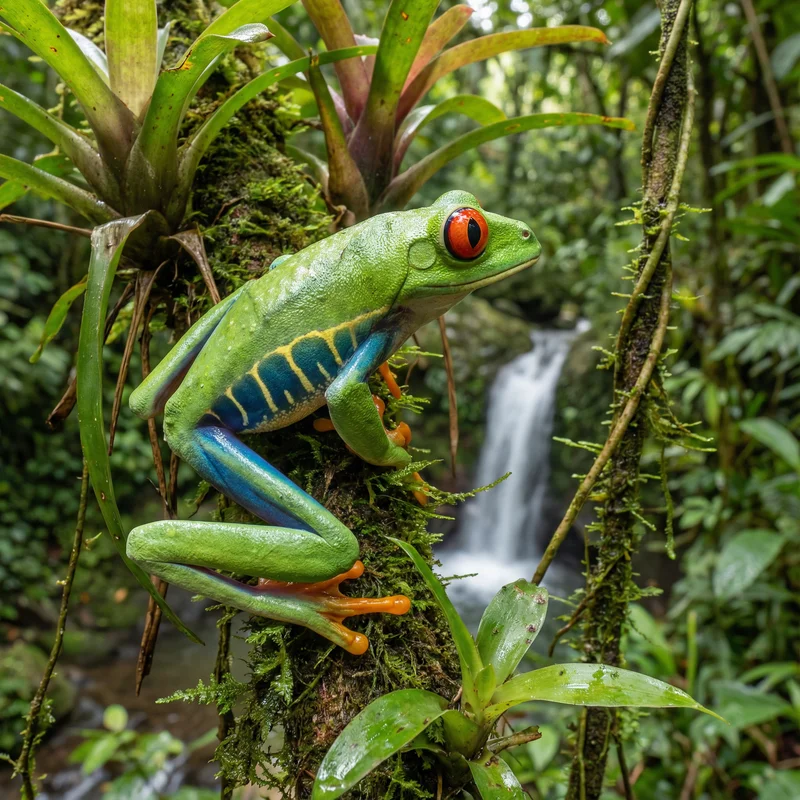 Red-Eyed Tree Frog
Red-Eyed Tree Frog
 Red-Eyed Tree Frog
Red-Eyed Tree Frog
 Red-Eyed Tree Frog
Red-Eyed Tree Frog
