Axolotl
Carnivore Creature Type
Ambystoma mexicanum
Scientific Name: "Genus Ambystoma is a contraction of the Greek 'anabystoma' (to cram into the mouth); the specific epithet mexicanum is Latin for 'of Mexico.' The common name 'axolotl' derives from Classical Nahuatl, combining 'atl' (water) and 'xolotl' (monster/the Aztec deity Xolotl), meaning 'water monster' or 'water dog'"
Physical Characteristics
Discovery
Habitat
보전·개체·수명

The axolotl (Ambystoma mexicanum Shaw & Nodder, 1798) is an aquatic salamander in the family Ambystomatidae, renowned as the quintessential example of neoteny — the retention of larval features into sexual maturity. Endemic exclusively to Lake Xochimilco in southern Mexico City, the axolotl spends its entire life underwater, retaining three pairs of feathery external gills, a fin-like tail, and a broad, flat head with a characteristically wide mouth that gives it the appearance of a perpetual smile. It is one of the most recognizable amphibians on Earth and has become a global cultural icon.
Classified as Critically Endangered (CR) on the IUCN Red List, the wild axolotl population is estimated at only 50 to 1,000 mature individuals (IUCN SSC Amphibian Specialist Group, 2020). Population density plummeted from approximately 6,000 individuals per km² in 1998 to about 1,000 in 2004, 100 in 2008, and a mere 36 per km² in a 2014 census — a decline exceeding 99% in just 16 years (Zambrano et al.; WIRED, 2025). Habitat destruction, invasive species, and water pollution are the primary drivers of this catastrophic decline, and a 2024 study from Mexico's National Autonomous University (UNAM) warned of the possibility of complete wild extinction.
Paradoxically, the axolotl is simultaneously one of the most important model organisms in biological research. Its extraordinary regenerative ability — capable of regrowing limbs, tail, gills, heart, spinal cord, and parts of the brain without scarring — makes it a cornerstone of regenerative medicine research. Its genome, at approximately 32 Gb (gigabase pairs), is roughly 10 times the size of the human genome and among the largest known in any vertebrate. In 2025, a landmark study demonstrated that captive-bred axolotls could survive in restored wild wetlands, offering new hope for conservation.
1. Overview
The common name "axolotl" derives from Classical Nahuatl (the Aztec language), combining "atl" (water) and "xolotl" (monster, or the Aztec deity Xolotl). The name is variously translated as "water monster," "water dog," or "water sprite." In Aztec mythology, Xolotl was the god of fire, lightning, and death, and the twin brother of Quetzalcoatl. According to legend, when the gods were required to sacrifice themselves to set the sun in motion, Xolotl fled death by transforming into various creatures, ultimately plunging into the water and becoming the axolotl.
The genus name Ambystoma is a contraction of the Greek "anabystoma," meaning "to cram into the mouth," describing the distinctive oral features of these salamanders. It has been erroneously attributed to the Greek words "amblys" (blunt) and "stoma" (mouth). The specific epithet mexicanum is Latin for "of Mexico."
The axolotl was first scientifically described in 1798 by British naturalists George Shaw and Frederick Polydore Nodder. Early debates centered on whether it represented the larval stage of another salamander or an independent species. This question was resolved in 1865 when French zoologist Auguste Duméril observed that some axolotls transported to Paris underwent metamorphosis into terrestrial adults, confirming the axolotl as an independent species exhibiting neoteny. Ambystoma mexicanum is currently recognized as a valid monotypic species with no subspecies.
The axolotl is a neotenous, fully aquatic salamander endemic to a single lake in Mexico City, teetering on the brink of wild extinction while thriving in laboratories and homes worldwide as one of science's most valuable model organisms.
2. Taxonomy and Phylogeny
| Rank | Taxon |
|---|---|
| Kingdom | Animalia |
| Phylum | Chordata |
| Class | Amphibia |
| Order | Urodela (Caudata) |
| Family | Ambystomatidae |
| Genus | Ambystoma |
| Species | A. mexicanum |
The genus Ambystoma comprises approximately 33 species, most distributed across North America and Mexico. The axolotl belongs to the Ambystoma tigrinum complex, a rapidly evolving clade of about 17 closely related species (Shaffer, 1993). Mitochondrial DNA analyses place the axolotl as most closely related to the tiger salamander (A. tigrinum), and the two species can form hybrids under laboratory conditions (Shaffer & McKnight, 1996). Recent research has demonstrated that geographic isolation, rather than life-history strategy (neoteny vs. metamorphosis), has been the primary driver of speciation in this complex (Everson et al., 2021).
Mexican ambystomatids form a monophyletic group whose diversification is intimately linked to the geological history of the Trans-Mexican Volcanic Belt. Volcanic activity created isolated highland lakes that served as engines of speciation, and the axolotl is thought to have diverged independently within the Xochimilco-Chalco lake system.
The axolotl is the paradigmatic example of neoteny (also called paedomorphosis) among amphibians, retaining larval features — external gills, caudal fin, and aquatic adaptations — while reaching full reproductive maturity. The underlying mechanism involves disruption of the hypothalamic-pituitary-thyroid (HPT) axis, specifically a failure in hypothalamic stimulation of pituitary thyrotropes (Laudet, 2019). While metamorphosis can be artificially induced through administration of thyroid hormones (T3/T4) or thyroid-stimulating hormone (TSH), it occurs extremely rarely in nature. A 2024 study proposed the concept of a "neoteny Goldilocks zone," suggesting that neoteny is evolutionarily advantageous only under specific environmental conditions, such as the stable aquatic environments found in highland lakes.
Following its 1798 description, the axolotl was for a time placed in the genus Siredon (as Siredon mexicanum) before being confirmed within Ambystoma after its neotenous nature was established. The spelling of the genus name itself was contested — Amblystoma was widely used historically — but Ambystoma was confirmed as the valid spelling by the International Commission on Zoological Nomenclature (ICZN).
3. Morphology and Anatomy
The axolotl retains the morphology of a larval salamander throughout life. The body is soft, cylindrical, and somewhat dorsoventrally compressed. The head is broad and flat with a rounded snout and a wide mouth. The eyes are small and lidless, with golden or dark irises. Four short limbs bear digits (four on the forelimbs, five on the hind limbs), and the long tail retains a larval dorsal fin.
Adult total length ranges from approximately 15 to 45 cm (6–18 in), with 23 cm (9 in) being the most common size. Body mass ranges from about 60 to 300 g (2–10.5 oz). Sexual dimorphism exists: females are generally larger and more round-bodied, averaging about 170–180 g, while males average approximately 125–130 g (San Diego Zoo Wildlife Alliance, 2024). Males can be distinguished by a more swollen cloaca.
The most striking feature of the axolotl is the three pairs of feathery external gills (rami) projecting from either side of the head. Richly vascularized, these gills facilitate efficient oxygen extraction from water and appear bright red in healthy individuals. Gill size and morphology can vary with water quality and oxygen levels, serving as a visual indicator of overall health. In addition to external gills, axolotls possess rudimentary lungs and can gulp air at the surface when necessary. Cutaneous respiration through the skin also contributes to gas exchange. Like other amphibians, the axolotl has a three-chambered heart.
Vision is relatively undeveloped. The axolotl relies primarily on its lateral line system to detect vibrations and pressure changes in the water — a sensory modality critical for prey detection and environmental awareness. The lateral line runs along the head and trunk. Olfaction also plays an important role in locating food.
Wild axolotls are typically dark olive-brown to black, often mottled with golden speckles. Over 150 years of selective breeding in captivity have produced a variety of color morphs. The most widely recognized is the leucistic morph — white or pink-bodied with dark eyes — which has become the public face of the species. Albino morphs display golden or white bodies with red eyes. Melanoid individuals are uniformly black. Additional variants include golden albino, copper, and GFP (green fluorescent protein)-expressing transgenic individuals used in research.
The axolotl's most extraordinary biological feature is its unparalleled capacity for regeneration. It can completely regrow lost limbs, tail, gills, heart tissue, eyes, spinal cord, and portions of the brain without scarring. The process begins with the formation of a blastema — a mass of dedifferentiated progenitor cells at the wound site — which then proliferates and re-differentiates into bone, muscle, nerve, and vasculature to restore the lost structure. The same limb can be regenerated hundreds of times with full functional recovery.
Research published in 2025 has advanced understanding of this process considerably. A study in Nature (2025) elucidated the molecular basis of positional memory in limb regeneration, and work from the MDI Biological Laboratory demonstrated the essential role of connective tissue cells in blastema formation. A separate 2025 study reported in WIRED revealed that the key to regeneration lies not in the production of a growth molecule, but in its controlled destruction.
4. Ecology and Behavior
The axolotl is an obligately aquatic, primarily nocturnal animal. During the day, it shelters among aquatic vegetation, in mud burrows, or under rocks and debris. Activity peaks within a narrow temperature range around 16°C, as confirmed by the 2025 reintroduction study (Ramos et al., 2025). Movement is generally slow and deliberate, though the animal can swim rapidly when threatened.
Axolotls are carnivorous ambush predators that use suction feeding — rapidly opening the mouth to create negative pressure that draws prey inside. In the wild, their diet includes small fish, insect larvae (especially mosquito larvae), crustaceans (small shrimp, amphipods), aquatic invertebrates, mollusks (small snails), annelid worms, and occasionally the eggs or larvae of other amphibians or fish.
Cannibalism is commonly observed among axolotls, particularly among juveniles, which frequently bite off each other's limbs or gills. Thanks to their regenerative ability, these injuries typically heal fully.
The primary predators of wild axolotls today are invasive species introduced in the 1970s–1980s for food production: tilapia (Oreochromis niloticus) prey on juvenile axolotls, while carp (Cyprinus carpio) consume their eggs. Both species also compete with adult axolotls for food and habitat. Wading birds, particularly the great egret (Ardea alba), are also confirmed predators — two axolotls were taken by egrets during the 2025 reintroduction experiment (Ramos et al., 2025). Historically, the axolotl was an apex predator in the Xochimilco ecosystem; invasive species have fundamentally disrupted this ecological role.
Axolotls are essentially solitary. Outside of breeding, no significant social interactions have been documented. Chemical signals (pheromones) and the lateral line system likely mediate individual recognition.
5. Reproduction and Life History
Sexual maturity is reached at approximately 6–12 months in captivity and 12–18 months in the wild, typically at 18–27 months of age. The breeding season in the wild extends primarily from December through June, triggered by declining water temperatures and changes in photoperiod.
The male initiates courtship by circling the female, nudging her with his snout, and performing a tail-shaking "waltz." Following this display, the male deposits one or more spermatophores (gelatinous packets containing sperm) on the substrate. The female then walks over and picks up the spermatophore with her cloaca, achieving internal fertilization. No direct copulation occurs. Females may accept spermatophores from multiple males in a single season.
Within 24–72 hours of fertilization, the female deposits eggs individually on aquatic vegetation or rock surfaces. Clutch size ranges from approximately 100 to over 1,000 eggs, with an average of about 300–600. Each egg is encased in a jelly coat and measures approximately 2–2.5 mm in diameter. Incubation lasts 14–21 days depending on temperature, with approximately 15–17 days at the optimal temperature of 18°C. Hatchlings measure about 1–1.5 cm.
In captivity, axolotls typically live 10–15 years, with a documented maximum of approximately 21 years under optimal conditions (AnAge database). In the wild, lifespan is estimated at approximately 5–6 years (Britannica, 2026), significantly shorter due to predation, pollution, and environmental stress.
6. Distribution and Habitat
The axolotl historically inhabited the lake system underlying the Valley of Mexico, specifically Lake Xochimilco and Lake Chalco, which were part of the larger Lake Texcoco system. During the Aztec Empire, these lakes formed an extensive wetland ecosystem surrounding Tenochtitlan (modern Mexico City), and axolotls were abundant throughout.
Today, the wild axolotl has one of the most restricted ranges of any vertebrate on Earth. It is found only in the Lake Xochimilco system in southern Mexico City, at an elevation of approximately 2,240 m (7,350 ft) above sea level. Lake Chalco was completely drained in the early 20th century for urban expansion and agriculture, extirpating that population entirely. The total area of the Xochimilco system is estimated at approximately 468 km², though the amount of suitable axolotl habitat within this area is far smaller (IUCN, 2020).
Axolotls inhabit the chinampa canal system of Xochimilco — an ancient agricultural island system developed by the Aztecs, constructed by layering mud and vegetation in shallow lake waters. The preferred habitat consists of still or slow-moving freshwater at depths of approximately 1–2 m, with abundant aquatic vegetation and muddy substrates. The optimal water temperature range is 14–20°C, with a clear preference for approximately 18°C. The species is adapted to the cool climate of the highland basin and is sensitive to elevated temperatures.
The axolotl's range has contracted dramatically over the past century. The complete drainage of Lake Chalco eliminated one population entirely, and ongoing urbanization of Mexico City — one of the world's largest metropolitan areas with over 20 million inhabitants — continues to encroach upon Xochimilco. Although Xochimilco is a UNESCO World Heritage Site, it faces mounting ecological degradation from urbanization, tourism, agricultural conversion, and pollution.
7. Evolution and Genetics
The evolutionary origin of the genus Ambystoma dates back approximately 10 million years. Diversification of the Mexican ambystomatids is closely tied to the formation of the Trans-Mexican Volcanic Belt, whose volcanic activity created isolated highland lakes that served as crucibles of speciation. The evolution of neoteny — driven by changes in the thyroid hormone axis — is thought to have been advantageous in stable aquatic environments where remaining in the water conferred survival benefits over transitioning to land.
The axolotl possesses one of the largest genomes known in any vertebrate, at approximately 32 Gb — roughly 10 times the size of the human genome (~3.1 Gb). Its chromosome number is 2n = 28 (14 pairs). The first genome assembly was published in Nature in 2018 (Nowoshilow et al., 2018), and a chromosome-scale, high-quality assembly followed in PNAS in 2021 (Schloissnig et al., 2021). The enormous genome size is primarily attributable to massive expansion of repetitive sequences and transposable elements. The relationship between this genomic architecture and the axolotl's exceptional regenerative capacity is an active area of research.
A critical distinction exists between wild and laboratory axolotl populations. All laboratory strains worldwide descend from approximately 34 founder individuals shipped to Paris in 1864, and over 150 years of captive breeding have resulted in significant genetic bottlenecks and inbreeding. A 2017 study confirmed that laboratory strains carry introgressed tiger salamander (A. tigrinum) DNA (Woodcock et al., 2017), and 2021 research demonstrated that laboratory axolotls are genetically substantially different from wild populations, potentially limiting their utility for wild population supplementation (Smith et al., 2021). The wild population itself is likely experiencing genetic erosion due to its extremely small size and restricted habitat.
8. Conservation Status and Threats
The axolotl is classified as Critically Endangered (CR) on the IUCN Red List (2019 assessment, published 2020), with an estimated wild population of 50–1,000 mature individuals and a decreasing population trend. Density surveys paint a stark picture: approximately 6,000 individuals/km² in 1998, falling to ~1,000 in 2004, ~100 in 2008, and just ~36/km² in 2014 — a decline of approximately 99.4% in 16 years (WIRED, 2025; Al Jazeera, 2025). The species is listed on CITES Appendix II and is protected under Mexican national law (NOM-059-SEMARNAT). A new census using environmental DNA (eDNA) analysis began in 2024–2025, led by UNAM, with results expected and a follow-up count planned for 2026.
The explosive urbanization of Mexico City (population exceeding 20 million) has severely degraded the Xochimilco lake system. Agricultural runoff and urban wastewater introduce nitrogen, phosphorus, heavy metals, and pathogens into the canals. Eutrophication leads to algal blooms and oxygen depletion. UNAM researchers have confirmed that axolotls preferentially occupy areas with better water quality, actively avoiding polluted zones.
Tilapia (Oreochromis niloticus) and carp (Cyprinus carpio), introduced in the 1970s–1980s for aquaculture, have become dominant species in Xochimilco and represent one of the most severe threats. Carp consume axolotl eggs; tilapia prey on juveniles; and both compete with adults for food. A fishing ban in Xochimilco inadvertently allowed these invasive populations to explode.
The amphibian chytrid fungus (Batrachochytrium dendrobatidis, Bd), which causes chytridiomycosis, has been detected in the Xochimilco region and represents a potential threat, particularly to a population already under severe environmental stress.
Rising temperatures and increased drought frequency threaten to further degrade the remaining habitat. Axolotls are adapted to cool water (14–20°C) and are vulnerable to thermal stress. Additionally, noise and light pollution from the surrounding city cause significant stress, and stressed axolotls sicken and die more rapidly.
UNAM's Ecological Restoration Laboratory, led by Luis Zambrano, has spearheaded the Chinampa Refugio project — an integrated approach that restores traditional chinampa agriculture, installs filters to improve water quality and exclude invasive fish, and partners with local farmers (chinamperos) to promote sustainable practices.
A landmark study published in PLOS One in April 2025 (Ramos et al., 2025) demonstrated that 18 captive-bred axolotls released into a restored chinampa (10 individuals) and an artificial wetland (8 individuals) in southern Mexico City all survived approximately 40 days of monitoring. Recaptured individuals had gained weight, confirming successful hunting in the wild. This was the first empirical evidence that captive-bred axolotls can survive release into natural and artificial habitats, validating reintroduction as a viable conservation strategy.
UNAM's Institute of Biology maintains a breeding colony that selects individuals genetically similar to wild axolotls for reintroduction. The "Adopta un Axolotl" (Adopt an Axolotl) campaign raises public funds for conservation. Predator awareness training for future release cohorts has been proposed to reduce predation by birds.
9. Relationship with Humans
The axolotl has been central to Mexican culture since the Aztec era. Revered as the incarnation of the god Xolotl, it was described in the 16th century by Fray Bernardino de Sahagun in his General History of the Things of New Spain as a water creature with "feet and hands like lizards, and a tail like an eel." In modern Mexico, the axolotl is a national icon and natural heritage symbol. The Mexican 50-peso banknote, which entered circulation in 2021 and features an axolotl depicted alongside Xochimilco's chinampas and native ahuejote willows, was named Banknote of the Year by the International Bank Note Society (IBNS).
Historically, axolotls were harvested from Xochimilco as a food source. From the Aztec period onward, they were roasted or prepared in tamales, and in traditional medicine they were used to treat respiratory ailments. Wild harvest has effectively ceased due to the species' critical decline, and collection from the wild is now legally prohibited.
The axolotl has served as a model organism for over 200 years. Since the first shipment to France in 1864, it has been instrumental in developmental biology, regenerative biology, neuroscience, genetics, aging research, and cancer biology. Its limb regeneration mechanisms offer key insights for advancing human regenerative medicine. The Ambystoma Genetic Stock Center (AGSC) at the University of Kentucky supplies standardized research axolotls to laboratories worldwide, and the U.S. National Institutes of Health (NIH) Office of Research Infrastructure Programs (ORIP) recognizes the axolotl as a valuable model for regenerative medicine.
The axolotl's distinctive appearance has made it enormously popular in the pet trade. Most pet axolotls are captive-bred. CITES Appendix II regulates international trade, and some jurisdictions (e.g., California, New Jersey, and New Mexico in the United States) prohibit private ownership. The dramatic contrast between the species' abundance in captivity (hundreds of thousands worldwide) and its critical rarity in the wild (possibly fewer than a few hundred individuals) defines one of the most unusual conservation paradoxes in biology.
10. Uncertainties and Unresolved Questions
The axolotl's endemism to Lake Xochimilco, its neotenous life history driven by HPT axis disruption, its genome size of ~32 Gb, its Critically Endangered IUCN status, and its extraordinary regenerative capacity are all well-established.
The hypothesis that neoteny evolved as an adaptation to the stable aquatic environment of highland lakes, the possible link between the massive genome and regenerative ability, and the role of Trans-Mexican Volcanic Belt geology in driving speciation are all strongly supported but not conclusively proven.
Key unresolved questions include the precise molecular mechanisms and evolutionary pathway of obligate neoteny, the limits of regenerative ability and its translatability to mammalian systems, the current size and genetic diversity of the wild population, the long-term effects of climate change on the Xochimilco ecosystem, and whether genetic differences between laboratory and wild populations will impede reintroduction success. The 2024 UNAM prediction of potential wild extinction by 2025 remains to be assessed against the ongoing census results.
A widespread misconception holds that axolotls are "forever babies" — in fact, they are fully sexually mature adults that merely retain larval morphology. Another misconception is that because captive axolotls are abundant, the species is not truly endangered. Wild populations are genetically and ecologically distinct from captive ones and are irreplaceable.
11. Comparison with Related Species
| Trait | Axolotl (A. mexicanum) | Tiger Salamander (A. tigrinum) | Taylor's Salamander (A. taylori) |
|---|---|---|---|
| Total length | ~15–45 cm | ~15–35 cm | ~12–18 cm |
| Neoteny | Obligate | Facultative (some populations) | Obligate |
| Habitat | Lake Xochimilco (Mexico) | Across North America (wetlands, ponds) | Laguna Alchichica (Mexico) |
| Range extent | Extremely restricted (~468 km²) | Broad (continent-wide) | Extremely restricted (single lake) |
| IUCN status | CR | LC | CR |
| Life history | Fully aquatic | Adults primarily terrestrial | Fully aquatic |
| External gills | Retained for life | Lost at metamorphosis | Retained for life |
| Regeneration | Exceptional | Limited (larval stage only) | Insufficiently studied |
The tiger salamander (A. tigrinum) is the axolotl's closest relative and can produce hybrids with it in the laboratory, but normally metamorphoses into a terrestrial adult and is widely distributed across North America. Taylor's salamander (A. taylori), endemic to Laguna Alchichica in Mexico, is another obligately neotenous species that parallels the axolotl's situation as a Critically Endangered single-lake endemic.
12. Data Tables
Table 1. Axolotl Population Density Over Time
| Survey Year | Density (individuals/km²) | Source |
|---|---|---|
| 1998 | ~6,000 | Zambrano et al. |
| 2004 | ~1,000 | WIRED 2025 |
| 2008 | ~100 | WIRED 2025 |
| 2014 | ~36 | Zambrano et al. |
| 2020 estimate | 50–1,000 total adults | IUCN 2020 |
Table 2. Morphometric Data
| Measurement | Males | Females | Notes |
|---|---|---|---|
| Total length | ~15–30 cm | ~20–45 cm | Females larger |
| Average weight | ~125–130 g | ~170–180 g | Adults |
| Maximum weight | ~200 g | ~300 g | Captive |
| External gills | 3 pairs | 3 pairs | Retained for life |
| Chromosome number | 2n = 28 | 2n = 28 | 14 pairs |
| Genome size | ~32 Gb | ~32 Gb | ~10x human |
Table 3. Reproductive and Life History Data
| Parameter | Value | Notes |
|---|---|---|
| Sexual maturity (captive) | 6–12 months | Wild: 12–18 months |
| Breeding season | December–June | Triggered by cooling |
| Clutch size | 100–1,000+ eggs | Average 300–600 |
| Egg diameter | ~2–2.5 mm | Including jelly coat |
| Incubation period | 14–21 days | Temperature-dependent |
| Hatchling size | ~1–1.5 cm | - |
| Lifespan (captive) | 10–15 years | Maximum ~21 years |
| Lifespan (wild) | ~5–6 years | Estimated |
| Optimal water temperature | 14–20°C | Preferred ~18°C |
Table 4. Threat Assessment Summary
| Threat | Severity | Status |
|---|---|---|
| Habitat destruction/urbanization | Very high | Most historical habitat lost |
| Water pollution | High | Agricultural/urban effluent ongoing |
| Invasive species (tilapia, carp) | Very high | Dominant in Xochimilco |
| Disease (Bd chytrid) | Medium | Infections reported |
| Climate change | Medium–high | Rising temps, drought risk |
| Noise/light pollution | Medium | Stress-related mortality |
| Illegal collection | Low–medium | Regulated under CITES |
13. References
- IUCN SSC Amphibian Specialist Group. (2020). Ambystoma mexicanum. The IUCN Red List of Threatened Species 2020: e.T1095A53947343. https://www.iucnredlist.org/species/1095/53947343
- Nowoshilow, S., et al. (2018). The axolotl genome and the evolution of key tissue formation regulators. Nature, 554(7690), 50–55. https://doi.org/10.1038/nature25458
- Schloissnig, S., et al. (2021). The giant axolotl genome uncovers the evolution, scaling, and transcriptional control of complex gene loci. Proceedings of the National Academy of Sciences, 118(15), e2017176118. https://doi.org/10.1073/pnas.2017176118
- Ramos, A. G., Mena, H., Schneider, D., & Zambrano, L. (2025). Movement ecology of captive-bred axolotls in restored and artificial wetlands: Conservation insights for amphibian reintroductions and translocations. PLOS One. https://doi.org/10.1371/journal.pone.0314257
- Shaffer, H. B. (1993). Phylogenetics of model organisms: The laboratory axolotl, Ambystoma mexicanum. Systematic Biology, 42(4), 508–522. https://doi.org/10.1093/sysbio/42.4.508
- Everson, K. M., et al. (2021). Geography is more important than life history in the recent diversification of the tiger salamander complex. Proceedings of the National Academy of Sciences, 118(17), e2014719118. https://doi.org/10.1073/pnas.2014719118
- Voss, S. R., et al. (2019). A chromosome-scale assembly of the axolotl genome. Genome Research, 29(2), 317–324. https://doi.org/10.1101/gr.241901.118
- Grow, L., & Bhattacharya, S. (2023). The axolotl's journey to the modern molecular era. Developmental Dynamics, 252(3), 297–314. https://doi.org/10.1002/dvdy.537
- Khattak, S., et al. (2022). Axolotl: A resourceful vertebrate model for regeneration and beyond. Developmental Dynamics, 251(6), 913–927. https://doi.org/10.1002/dvdy.520
- Laudet, V. (2019). Rediscovering the axolotl as a model for thyroid hormone dependent development. Frontiers in Endocrinology, 10, 237. https://doi.org/10.3389/fendo.2019.00237
- Woodcock, M. R., et al. (2017). Identification of mutant genes and introgressed tiger salamander DNA in the laboratory axolotl, Ambystoma mexicanum. Scientific Reports, 7, 6. https://doi.org/10.1038/s41598-017-00059-1
- San Diego Zoo Wildlife Alliance. (2024). Axolotl (Ambystoma mexicanum) Fact Sheet. https://ielc.libguides.com/sdzg/factsheets/axolotl
- AmphibiaWeb. (2025). Ambystoma mexicanum. https://amphibiaweb.org/species/3842
- WIRED en Español. (2025). In search of the last wild axolotls. https://www.wired.com/story/in-search-of-the-last-wild-axolotls-mexico/
- Mongabay. (2025). Hope for endangered axolotls as captive-bred group survives in wild. https://news.mongabay.com/short-article/hope-for-endangered-axolotls-as-captive-bred-group-survives-in-wild/
- Science News. (2025). The axolotl is endangered in the wild. A discovery offers hope. https://www.sciencenews.org/article/axolotl-endangered-wild-conservation
- MDI Biological Laboratory. (2025). Building a regeneration factory: New discoveries in limb regrowth. https://mdibl.org/building-a-regeneration-factory-new-discoveries-in-limb-regrowth/
- TEC Science. (2025). How to save the Mexican axolotl? Start by restoring their home. https://tecscience.tec.mx/en/biotechnology/how-to-save-the-axolotl/
Fun Facts
The axolotl has one of the largest genomes of any vertebrate — approximately 32 gigabase pairs, roughly 10 times the size of the human genome — making its 2018 genome sequencing a major scientific achievement.
An axolotl can regenerate the same limb hundreds of times with full functional recovery, and can also regrow its heart, eyes, spinal cord, and parts of its brain without any scarring — earning it the nickname 'nature's superhero.'
Every laboratory axolotl in the world descends from just 34 individuals shipped from Mexico to Paris in 1864, and after 150+ years of captive breeding, these animals are genetically quite different from their wild counterparts.
Mexico's 50-peso banknote, which entered circulation in 2021 and features an axolotl alongside Xochimilco's chinampas, won the International Bank Note Society's 'Banknote of the Year' award.
The axolotl's name derives from the Aztec god Xolotl, who according to legend fled death by shapeshifting into various creatures before finally plunging into the water and becoming the axolotl — 'the water monster.'
Wild axolotl population density crashed from approximately 6,000 per km² in 1998 to just 36 per km² in 2014 — a staggering decline of over 99% in only 16 years.
Although axolotls can be experimentally induced to metamorphose into land-dwelling adults using thyroid hormones, metamorphosed individuals suffer dramatically shortened lifespans and reduced regenerative ability, showing that remaining 'forever young' is the winning survival strategy.
An axolotl's external gills serve as a real-time health indicator: in healthy animals they are bright red and fully extended, but they shrink and pale when the animal is stressed or water quality deteriorates.
Young axolotls routinely cannibalize each other's limbs and gills, but thanks to their remarkable regenerative ability, the bitten-off parts grow back quickly — making this behavior surprisingly low-cost.
In a groundbreaking 2025 study, all 18 captive-bred axolotls released into restored wetlands in Mexico City survived and even gained weight, providing the first scientific evidence that reintroduction is a viable strategy for saving this species from extinction.
While only an estimated 50 to 1,000 axolotls survive in the wild, hundreds of thousands thrive in homes and laboratories worldwide — creating one of the most striking conservation paradoxes in biology.
FAQ
Axolotls exhibit obligate neoteny — the retention of larval features into sexual maturity — driven by a disruption of the hypothalamic-pituitary-thyroid (HPT) axis. Specifically, the hypothalamus fails to stimulate pituitary thyrotropes to produce sufficient thyroid-stimulating hormone, preventing the cascade that triggers metamorphosis in other salamanders. This trait is thought to have evolved because remaining fully aquatic in the stable highland lake environment was more advantageous than transitioning to land. Metamorphosis can be artificially induced with thyroid hormones (T3/T4), but metamorphosed axolotls suffer dramatically shortened lifespans and reduced regenerative ability.
Following amputation, a blastema — a mass of dedifferentiated progenitor cells — forms at the wound site. Immune cells respond first, followed by connective tissue cells that play a central organizing role. These progenitor cells then redifferentiate into bone, muscle, nerve, blood vessels, and skin to fully reconstruct the lost structure without scarring. A 2025 study published in Nature revealed that positional memory during regeneration is molecularly regulated, and separate research showed that regeneration depends not on the production of growth molecules but on their controlled destruction. Axolotls can regenerate the same limb hundreds of times with full functional recovery, and can also regrow heart tissue, eyes, spinal cord, and parts of the brain.
Axolotls can be kept as pets in many countries, and most pet axolotls are captive-bred rather than wild-caught. However, they are listed on CITES Appendix II, which regulates international trade, and some jurisdictions prohibit private ownership (e.g., California, New Jersey, and New Mexico in the U.S.). Axolotls require cool water (14–20°C, optimally around 18°C), clean water conditions, and appropriate food (earthworms, bloodworms, daphnia, or specialized pellets). They are sensitive to high temperatures, so a cooling system may be necessary in warm climates. With proper care, they can live 10–15 years, with some reaching 20 years or more.
The wild axolotl population has declined by more than 99% since 1998, from ~6,000 individuals per km² to just 36 per km² in 2014, with an estimated 50–1,000 adults remaining. Three primary factors drive this decline: (1) Habitat destruction — Mexico City's rapid urbanization has degraded the Xochimilco lake system, and the historical Lake Chalco was completely drained. (2) Invasive species — tilapia and carp introduced in the 1970s–80s prey on axolotl eggs and juveniles and compete for food. (3) Water pollution — agricultural and urban wastewater contaminates the canals with nitrogen, phosphorus, heavy metals, and pathogens. Climate change, noise/light pollution, and disease (chytrid fungus) are additional threats.
In captivity with proper care, axolotls typically live 10–15 years, with a documented maximum of approximately 21 years. In the wild, lifespan is estimated at only about 5–6 years, significantly shorter due to predation by invasive species (tilapia, carp, and wading birds), water pollution, habitat degradation, and environmental stress. Key factors affecting longevity include water temperature (14–20°C is optimal), water quality, diet quality, and stress levels.
Wild axolotls are typically dark olive-brown to black with golden speckles. The variety of color morphs seen in captivity — leucistic (white/pink body with dark eyes), albino (golden/white with red eyes), melanoid (solid black), golden albino, and others — result from over 150 years of selective breeding from the original 34 founder individuals shipped to Paris in 1864. These color variants arise from mutations in pigment cell (chromatophore) genes. Some research specimens even express GFP (green fluorescent protein), making them glow green under UV light. All captive color morphs trace back to this historically narrow founder population.
The name 'axolotl' comes from Classical Nahuatl (the Aztec language), combining 'atl' (water) and 'xolotl' (monster, or the Aztec deity Xolotl). It is translated as 'water monster,' 'water dog,' or 'water sprite.' In Aztec mythology, Xolotl was the god of fire, lightning, and death, and the twin brother of Quetzalcoatl. According to legend, when the gods had to sacrifice themselves to move the sun, Xolotl fled by shapeshifting into various forms before finally plunging into the water and becoming the axolotl. The scientific name Ambystoma mexicanum combines a contraction of the Greek 'anabystoma' (to cram into the mouth) with Latin 'mexicanum' (of Mexico).
The flagship conservation effort is UNAM's Chinampa Refugio project, which restores traditional chinampa farming, installs filters to exclude invasive fish and improve water quality, and partners with local farmers. A landmark April 2025 study in PLOS One demonstrated that all 18 captive-bred axolotls released into restored wetlands survived and gained weight, providing the first proof that reintroduction is a viable conservation strategy. UNAM's 'Adopta un Axolotl' campaign raises public funds for conservation. A new census using environmental DNA analysis was conducted in 2024–2025, and predator awareness training for future release cohorts has been proposed to reduce bird predation.
All laboratory axolotl strains descend from approximately 34 individuals shipped to Paris in 1864. Over 150+ years of captive breeding, they have accumulated significant genetic bottlenecks and inbreeding. A 2017 study confirmed that laboratory strains carry introgressed tiger salamander (A. tigrinum) DNA, and 2021 research showed that laboratory axolotls are genetically quite different from wild populations. Wild axolotls are typically dark olive-brown to black, while most laboratory/pet axolotls are leucistic (white/pink) or other artificially selected color morphs. These genetic differences are a significant concern for reintroduction programs, as laboratory animals may not be suitable for directly supplementing wild populations.
Gallery
3 images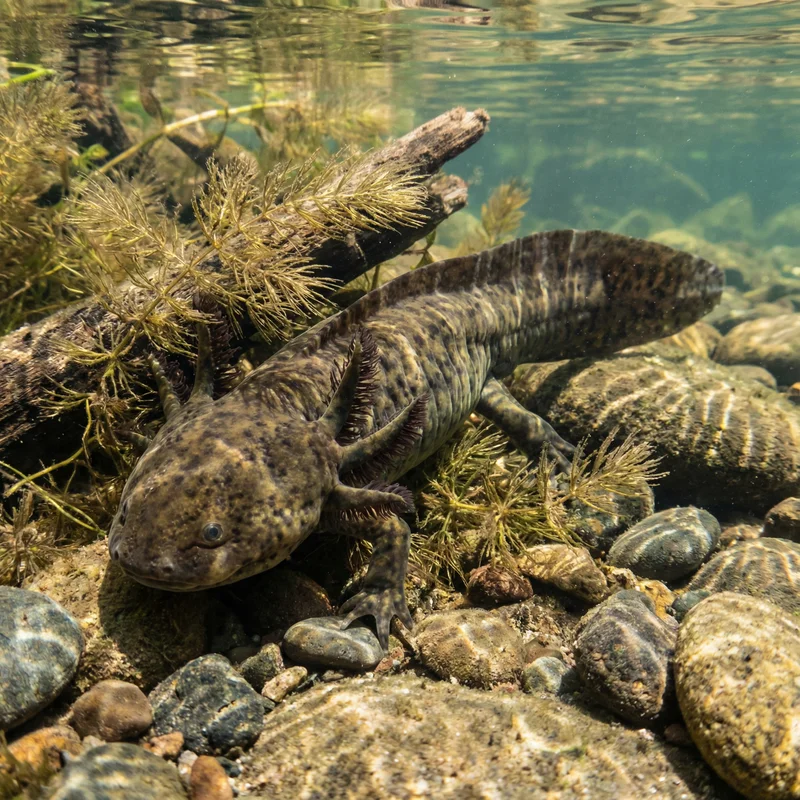 Axolotl
Axolotl · Carnivore
 Axolotl
Axolotl · Carnivore
 Axolotl
Axolotl · Carnivore
🔗Related Creatures
Red-Eyed Tree Frog
Agalychnis callidryas

Tiger
Panthera tigris
Caelestiventus
Caelestiventus hanseni
Calsoyasuchus
Calsoyasuchus valliceps
Cretodus
Cretodus
Luperosuchus
Luperosuchus fractus

Nanotyrannus
Nanotyrannus lancensis

Utahraptor
Utahraptor ostrommaysi