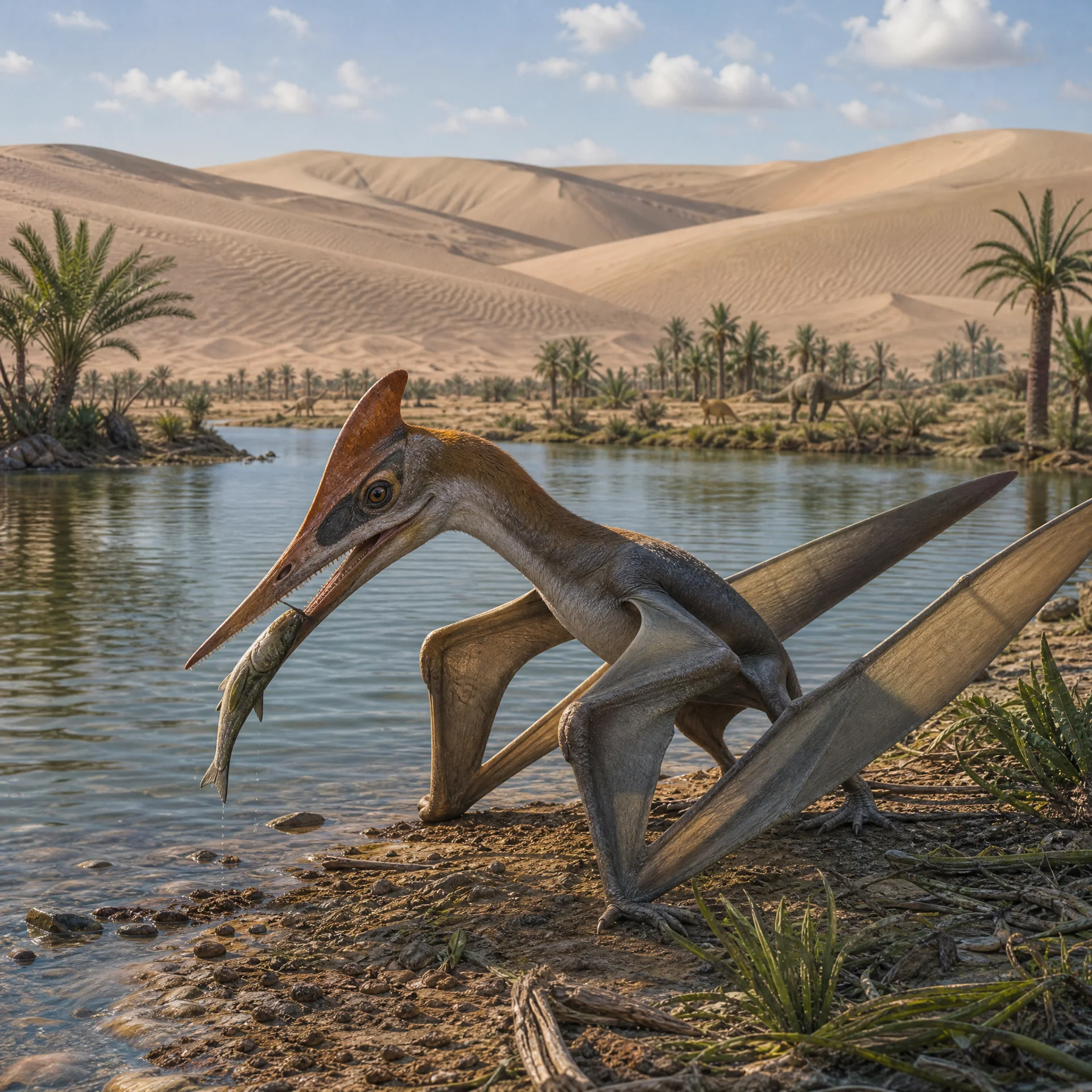
Caelestiventus
Caelestiventus hanseni
⏳ Triassic Period🍽️ CarnivoreDinosaurs
Physical Characteristics
⏳
PeriodTriassic Period
🍽️
DietCarnivore
📏
Size1m
🪽
Wingspan1.5m
Classification
GEN
GenusCaelestiventus
SP
SpeciesC. hanseni
Caelestiventus hanseni
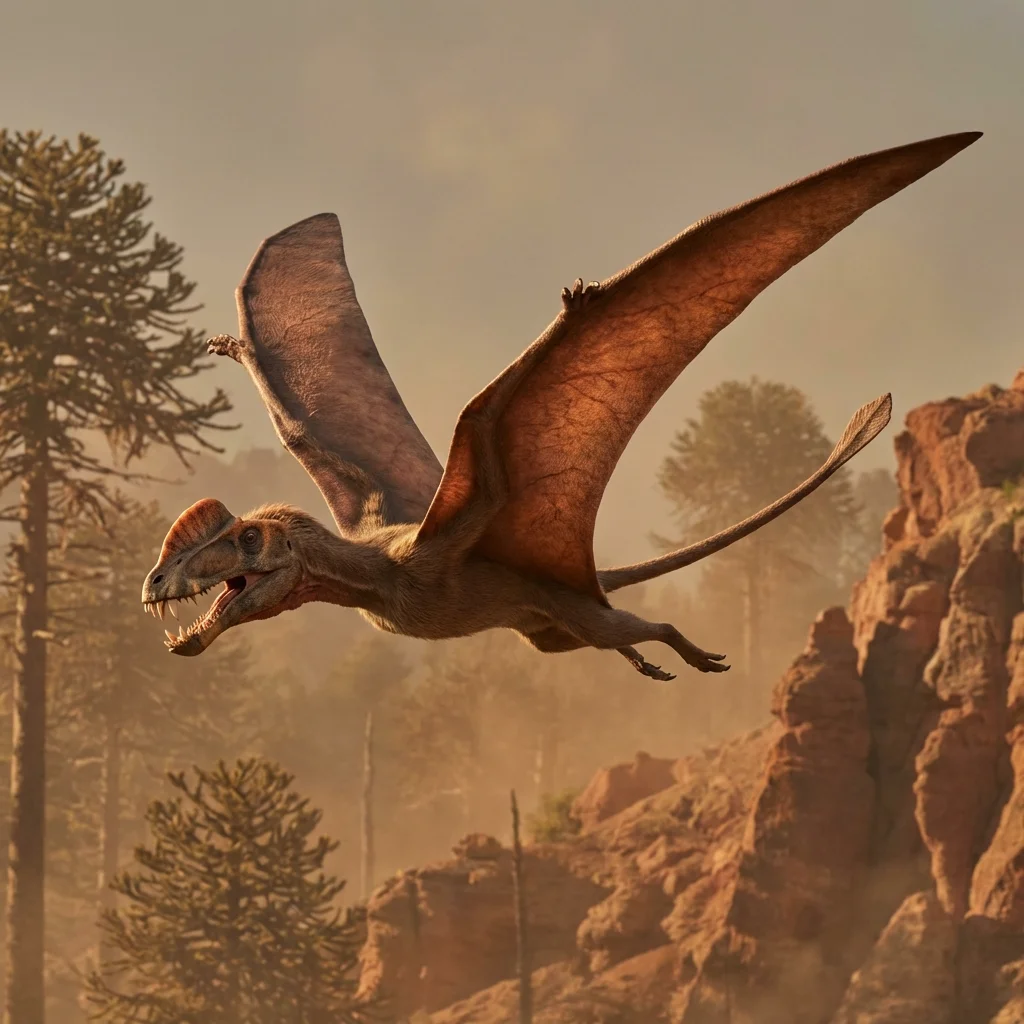
Caelestiventus hanseni Britt et al., 2018 is a dimorphodontid pterosaur from the Late Triassic (latest Norian or Rhaetian, approximately 210–201 Ma) of western North America. Its name derives from the Latin words caelestis (heavenly) and ventus (wind), meaning "heavenly wind." Discovered at the Saints & Sinners Quarry in northeastern Utah, it is among the largest known Triassic pterosaurs, with an estimated wingspan of at least 1.5 m. The holotype specimen (BYU 20707) represents a skeletally immature or indeterminately growing individual, meaning that fully grown adults would have been even larger.
The paleontological significance of Caelestiventus can be summarized in three key points. First, it is the sole known example of a desert-dwelling non-pterodactyloid pterosaur, predating all other known desert-dwelling pterosaur records by more than 65 million years (Britt et al., 2018). Second, its discovery demonstrates that early pterosaurs were not confined to marine depositional settings (as exemplified by the Alpine Triassic pterosaurs) but also inhabited arid inland environments, vastly expanding our understanding of the ecological and geographic diversity of the earliest pterosaurs. Third, phylogenetic analysis recovers it as the sister taxon of the Early Jurassic Dimorphodon macronyx, indicating that the family Dimorphodontidae originated in the Triassic and survived the end-Triassic extinction event into the Jurassic.
The fossils are preserved three-dimensionally within aeolian sandstone (Nugget Sandstone), in stark contrast to most other Triassic pterosaur fossils, which are severely crushed in marine sediments. This exceptional preservation allowed the research team to reconstruct delicate pneumatic structures in the skull bones and to produce the first endocranial cast (endocast) of any Triassic pterosaur using micro-computed tomography (micro-CT) scanning and 3D printing, rather than physically extracting the bones from the rock (Britt et al., 2018).
The genus name Caelestiventus is a compound of the Latin caelestis (heavenly, divine) and ventus (wind), translating to "heavenly wind." The species name hanseni honors Robin L. Hansen, a geologist with the United States Bureau of Land Management (BLM), who facilitated access to and fieldwork at the Saints & Sinners Quarry (Britt et al., 2018).
Caelestiventus was erected as a new genus and species simultaneously by Britt et al. in 2018 and remains a valid, monotypic taxon containing only C. hanseni. It is placed within the family Dimorphodontidae. No synonyms or taxonomic reassignments have been proposed.
A large dimorphodontid pterosaur from a Late Triassic desert oasis environment that fundamentally expanded our understanding of early pterosaur ecological diversity and established the Triassic origin of the Dimorphodontidae.
Caelestiventus is estimated to have lived during the latest Norian to Rhaetian stage of the Late Triassic. The host unit, the lower Nugget Sandstone, conformably overlies the Upper Triassic Chinle Formation and spans the Triassic–Jurassic boundary (approximately 201.3 Ma). Precise radiometric dating is unavailable because the formation lacks datable volcanic ash beds; however, stratigraphic relationships with the underlying Chinle Formation and the associated faunal assemblage constrain the age to approximately 210–201 Ma (Britt et al., 2016, 2018). Kligman et al. (2025) interpreted the type locality as younger than approximately 208–202.5 Ma but older than the very end of the Late Triassic, making it slightly younger than the other Late Triassic North American pterosaur Eotephradactylus mcintireae from Arizona.
The fossil-bearing unit is the lower portion of the Nugget Sandstone, composed predominantly of aeolian (wind-blown) sandstone. The Saints & Sinners Quarry horizon represents interdunal (between-dune) lacustrine/oasis deposits, situated approximately 55 m above the base of the lowest contiguous aeolian sandstone of the formation (Britt et al., 2016; Shumway, 2016). The relatively dense quartz sandstone matrix contributed to the remarkable three-dimensional preservation of the bones without significant crushing.
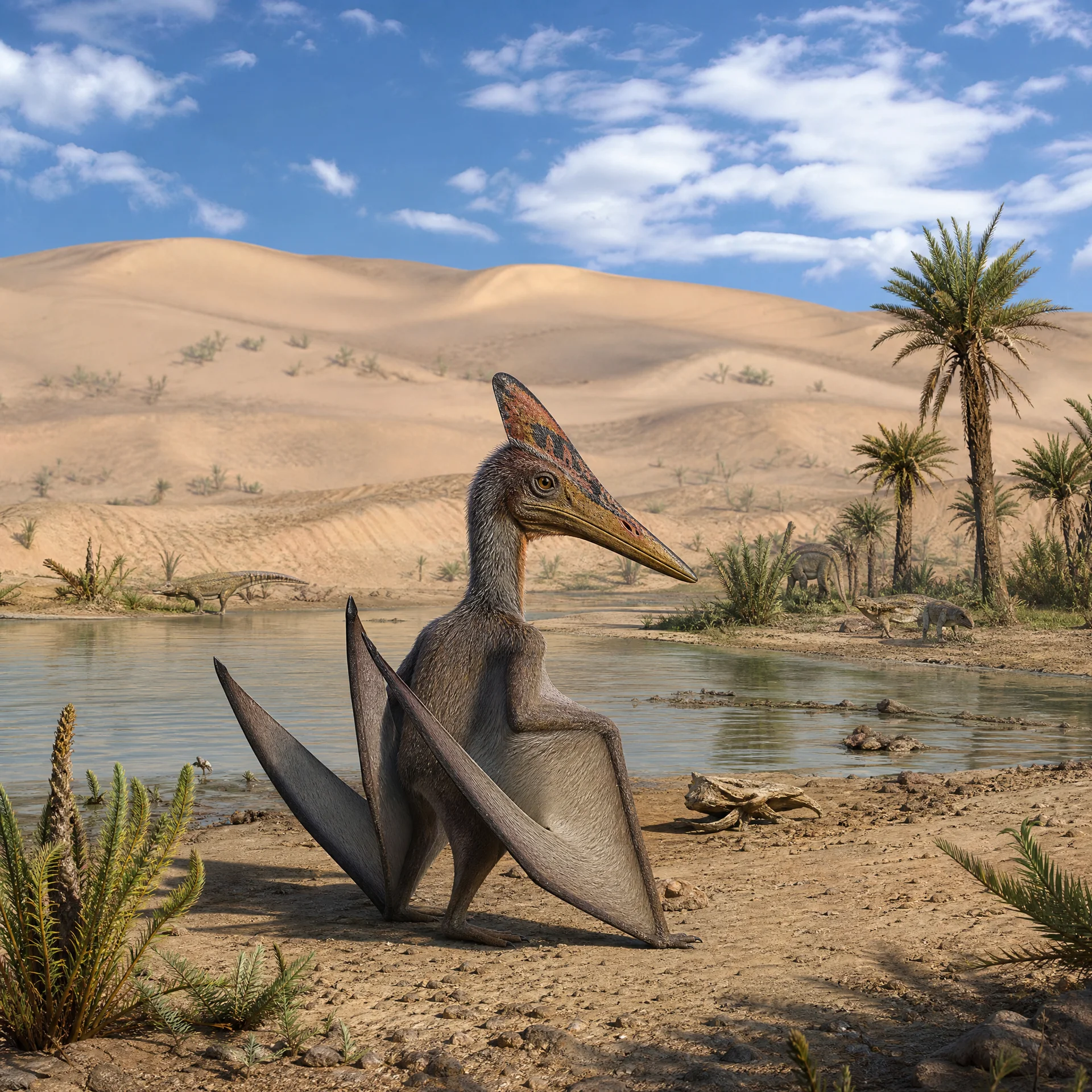
During the Late Triassic, northeastern Utah was located at approximately 10–15°N paleolatitude on the western margin of Pangaea, within the subtropical high-pressure arid belt. The underlying Chinle Formation records a warm, humid fluvial-lacustrine setting that transitioned relatively rapidly into a vast aeolian desert (erg), represented by the thick dune sandstones of the Nugget Sandstone. The Saints & Sinners Quarry preserves sediments from a shallow, non-carbonate interdunal oasis lake that was subsequently buried by migrating sand dunes (Britt et al., 2016, 2018).
No invertebrate body fossils have been recovered from the quarry, although insect burrows are present. The flora is dominated by Bennettitalean (cycad-like gymnosperm) fronds. This environmental context suggests a localized water source within an otherwise hyper-arid landscape, where diverse vertebrates congregated around the oasis.
The holotype is BYU 20707, housed at the Museum of Paleontology, Brigham Young University, Provo, Utah. It represents a single individual preserved across multiple sandstone blocks.
Preserved elements include:
| Region | Preserved Elements | Notes |
|---|---|---|
| Skull roof | Fused frontoparietals | Median ridge preserved |
| Face | Left maxilla (fused with jugal), right maxilla, right nasal | Premaxilla/upper snout not preserved |
| Lower jaw | Left and right mandibular rami, nearly complete | Total length approximately 17.8 cm |
| Wing | Right terminal wing phalanx (manual digit IV-4) | Only post-cranial identifiable element |
| Other | Three indeterminate bone fragments | — |
Key diagnostic (autapomorphic and distinguishing) features according to Britt et al. (2018) include:
The premaxilla, upper snout, otic region, and virtually all postcranial elements (trunk, limbs, tail) are unpreserved. Consequently, body proportions, body mass, and tail length are inferred by comparison with the closely related Dimorphodon rather than from direct fossil evidence.
The skull of Caelestiventus is generally similar to that of Dimorphodon macronyx: laterally narrow and vertically deep. The external naris is very large and triangular, occupying most of the anterior face of the snout, and is separated from the antorbital fenestra by a very narrow bony strut angled posterodorsally. Unlike Dimorphodon, the jugal is deep and the orbit was probably circular rather than triangular. The reconstructed skull length is estimated at approximately 18–20 cm (Pteros.com). In lateral profile, the skull superficially resembled that of a modern puffin or toucan, although this is convergent and no functional link has been established.
The skull roof bears a median ridge and large ridges along the medial borders of the upper temporal fenestrae, marking attachment sites for the jaw adductor muscles. A prominent nuchal crest at the posterior skull marks attachment for large neck muscles.
The uncrushed skull permitted the first endocranial reconstruction in any Triassic pterosaur. The endocast reveals large cerebral lobes with prominently bulging optic lobes and small olfactory lobes (Britt et al., 2018). This indicates highly acute vision but relatively poor olfaction. Additionally, the skull roof structure suggests that the eyes were directed slightly forward rather than purely laterally, as in many other pterosaurs (Witmer et al., 2003, for comparative context).
Caelestiventus is heterodont, possessing three distinct tooth morphologies:
| Tooth Type | Position | Characteristics |
|---|---|---|
| Fang-like spikes | Anterior mandible, 2 per side; similar teeth inferred in premaxilla | Long, pointed; presumably for prey capture |
| Large leaf-shaped blades | Maxilla, 12 per side | Triangular, strongly laterally compressed, labial and lingual median ridges, bicuspid apices, no serrations |
| Small conical teeth | Mandible, 38 per side (posterior to diastema) | Small, closely packed |
The total tooth count is estimated at approximately 112 or more: about 80 mandibular teeth (combined) + 24 maxillary teeth + an inferred 4 pairs of premaxillary teeth (unpreserved). This heterodont dentition is a characteristic feature of the Dimorphodontidae.
Comparison of the sole preserved postcranial element (the terminal wing phalanx) with the skull dimensions against complete specimens of Dimorphodon suggests that Caelestiventus had a relatively small skull or proportionally longer wings than its relative. The holotype's wingspan is estimated at approximately 1.5 m (about 5 ft), comparable to a modern osprey. Because the holotype was skeletally immature, the adult wingspan would have been larger (Britt et al., 2018). This makes it one of, if not the largest known Triassic pterosaur, exceeding the wingspan of most contemporaries (e.g., Eudimorphodon at approximately 1 m, Peteinosaurus at approximately 0.6 m).
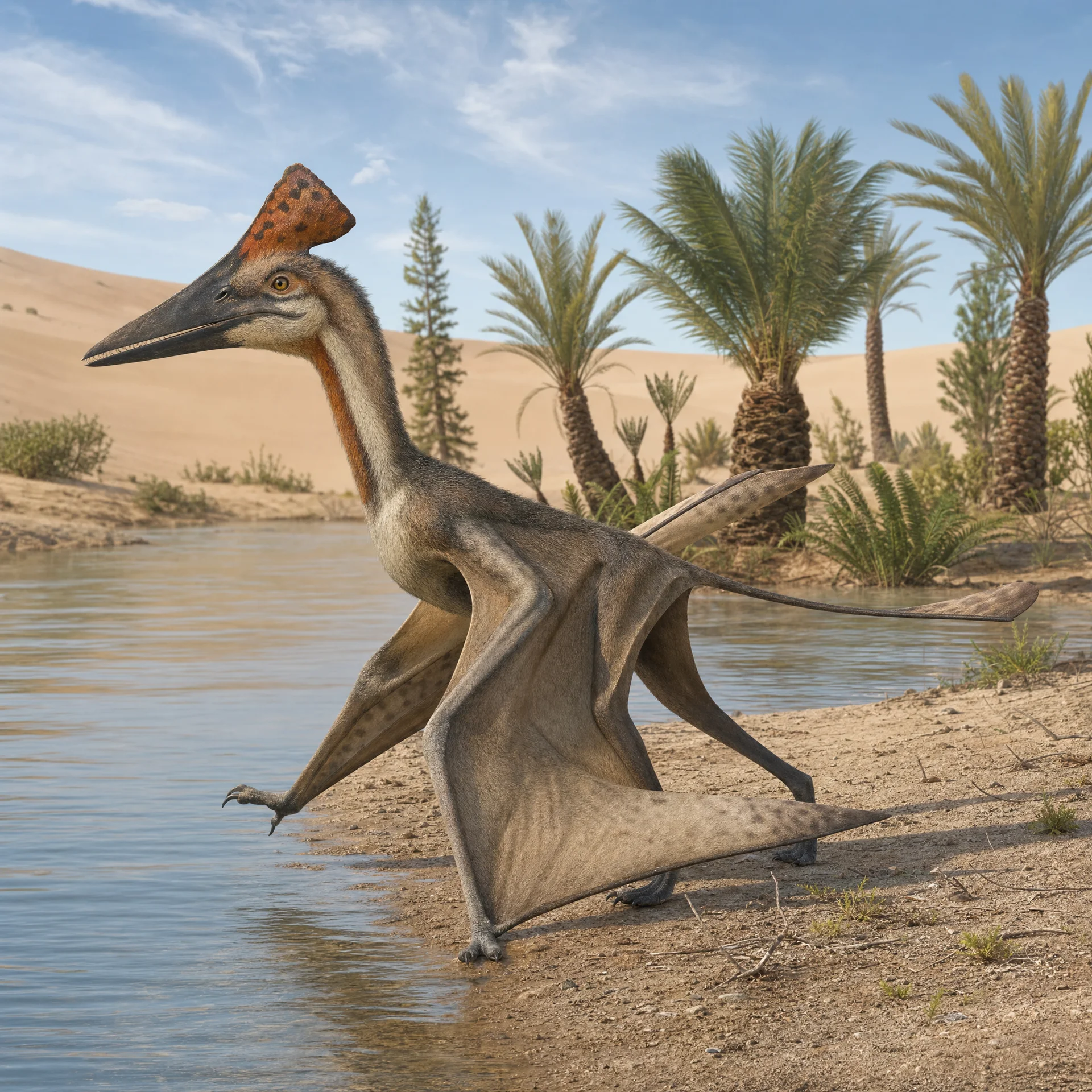
Based on the general body plan of dimorphodontids and other early pterosaurs, Caelestiventus likely had a relatively short neck, long bony tail, and short metacarpals, although this is inferred from phylogenetic comparison rather than direct fossil evidence.
No body mass estimate was provided in the original description. By analogy with Dimorphodon macronyx (wingspan approximately 1.4–1.45 m; body mass approximately 1–1.5 kg via 3D mathematical slicing; Henderson, 2010), the body mass of Caelestiventus may have been in a similar range (approximately 1–2 kg), but this is an unverified indirect extrapolation.
The bony keel along the ventral mandible and the medially deflected mandibular flange posteriorly are notable structures. Britt et al. (2018) proposed that this flange may have served as an attachment point for gular skin or a gular pouch. Similar structures have been reported in Rhamphorhynchus and Pterodactylus. If a gular pouch was present, it could have functioned for prey storage (as in pelicans), visual display, or vocal communication. However, no soft tissue is preserved, so this remains a hypothesis.
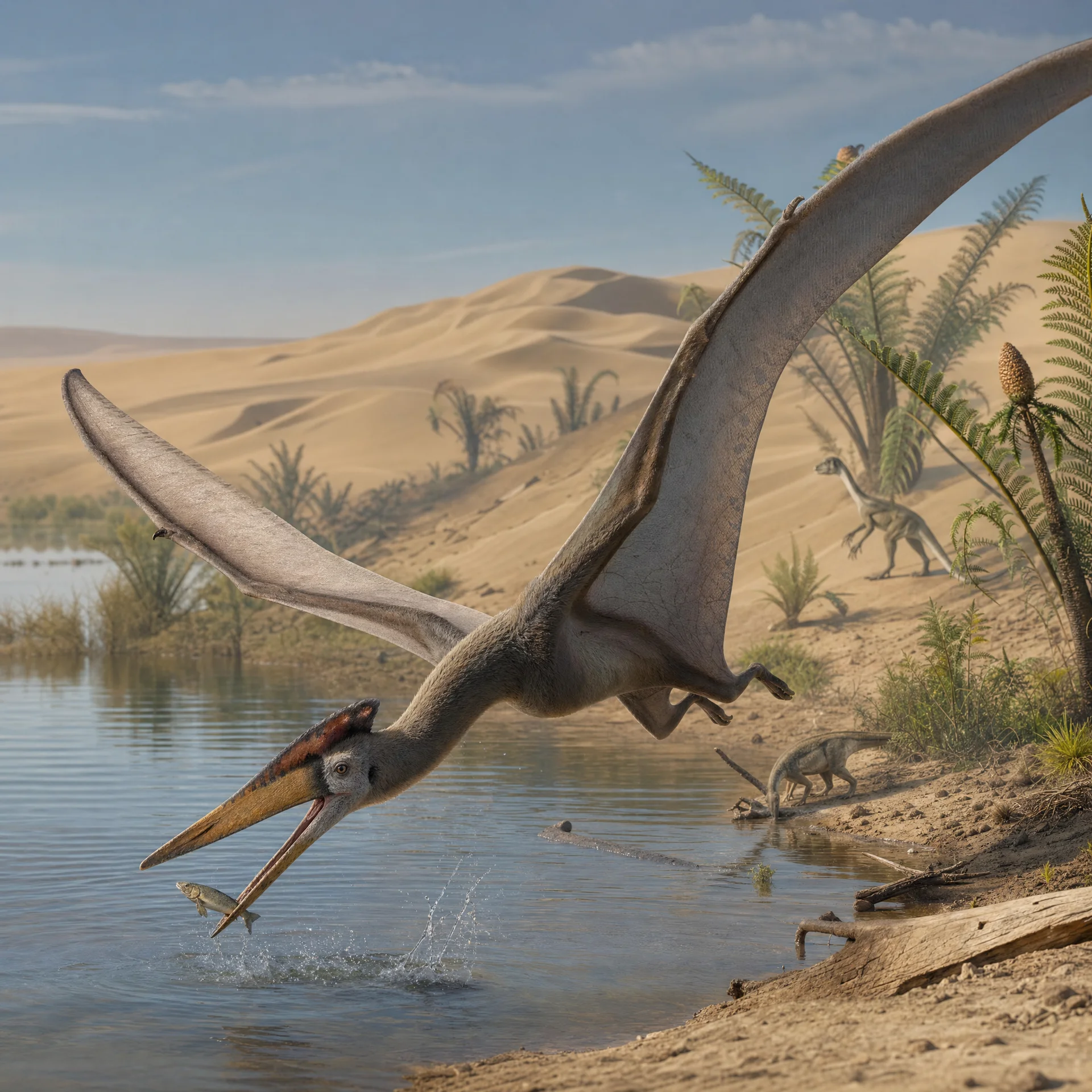
The heterodont dentition of Caelestiventus strongly suggests a diet of small terrestrial animals (Britt et al., 2018; Pteros.com). The anterior fang-like teeth were likely used to seize and puncture prey, the large leaf-shaped maxillary teeth for cutting, and the closely packed posterior mandibular teeth for processing captured prey. No direct evidence of diet is available (stomach contents, bite marks, or stable isotope data). The evidence type is functional morphological inference from tooth form, assessed as probable rather than confirmed.
The associated fauna at the Saints & Sinners Quarry is diverse and includes two sphenosuchian crocodylomorph genera (with over 80 individuals of one species recovered), two sphenodontian (tuatara-relative) genera, a drepanosaurid, a procolophonid, a coelophysoid theropod dinosaur known from several specimens, and a larger theropod known only from teeth (Britt et al., 2016, 2018). Caelestiventus likely occupied the niche of an aerial predator within this desert oasis ecosystem. Although no invertebrate body fossils have been found, the presence of insect burrows suggests that insects may also have been part of the prey base.
Dimorphodontid pterosaurs had relatively short wings and long tails, and some researchers have suggested that they spent considerable time on the ground and may have climbed trees or rock faces using their hand and foot claws (Padian, 1983; Unwin, 1998). Caelestiventus may have exhibited similar behaviors, but limb elements are not preserved, so this remains at the level of speculation based on phylogenetic inference.
Caelestiventus is currently known from a single locality: the Saints & Sinners Quarry, Uintah County, northeastern Utah, near Dinosaur National Monument. The quarry was discovered in 2007 by Dan Chure and George Engelmann during fieldwork on the geology and paleontology of the fossilized dunes of the Nugget Sandstone. The existence of Caelestiventus was first reported in conference abstracts in 2015 (Britt et al., 2015a, b) before its formal description in 2018.
During the Late Triassic, the Utah region was situated on the western margin of Pangaea at approximately 10–15°N paleolatitude, within the subtropical high-pressure belt that generates arid conditions (Dubiel, 1992; Boucot et al., 2013). This position is analogous to that of the modern Sahara Desert. The thick aeolian dune deposits of the Nugget Sandstone reflect this vast desert (erg) environment.
Prior to the discovery of Caelestiventus, the only known desert-dwelling pterosaurs came from the Cretaceous (approximately 130–100 Ma) of South America — in Chile (Bell & Padian, 1995; Martill et al., 2006) and Brazil (Manzig et al., 2014). Caelestiventus pushed this record back by more than 65 million years.
Britt et al. (2018) conducted a phylogenetic analysis of early pterosaurs using both PAUP 4.0a161 (Swofford, 2002) and TNT 1.5 (Goloboff & Catalano, 2016). The analysis recovered Caelestiventus as the **sister taxon of Dimorphodon macronyx** within the family Dimorphodontidae.
Dimorphodontidae was defined by Britt et al. as "the most inclusive clade containing Caelestiventus hanseni and Dimorphodon macronyx." In this analysis, the Dimorphodontidae were recovered as a relatively basal lineage within Pterosauria, branching early within the clade Macronychoptera.
Key synapomorphies uniting Caelestiventus and Dimorphodon include (Britt et al., 2018):
A notable finding of this analysis is that the Triassic multi-cusped pterosaurs (Eudimorphodon and allies) do not form a monophyletic "Eopterosauria." Instead, multi-cusped teeth may represent the primitive condition for Pterosauria as a whole.
Additionally, the purported Mexican species "Dimorphodon weintraubi" (from the Lower Jurassic of Tamaulipas, Mexico) was recovered not within Dimorphodontidae but as the sister taxon of Anurognathidae, representing the largest and earliest known member of that lineage. This excludes it from Dimorphodontidae as defined by Britt et al.
| Information Category | Confidence Level | Basis |
|---|---|---|
| Placement in Dimorphodontidae | Probable | Phylogenetic analysis (Britt et al., 2018) |
| Desert oasis habitat | Confirmed | Sedimentary facies, stratigraphy, depositional environment |
| Wingspan of at least 1.5 m | Probable | Terminal wing phalanx proportioned to Dimorphodon |
| Skeletally immature individual | Probable | Unfused cranial and mandibular elements |
| Gular pouch presence | Hypothesis | Mandibular flange morphology; no soft tissue preserved |
| Small-animal predator | Probable | Tooth morphology |
| Body mass approximately 1–2 kg | Extrapolation | By analogy with Dimorphodon; no direct estimate available |
| Terrestrial/arboreal locomotion | Hypothesis | Limbs not preserved; inference from relatives |
Caelestiventus has been described in some popular outlets as "the world's oldest pterosaur" or "the first desert pterosaur," but these characterizations require nuance. First, it is not the oldest pterosaur — Alpine Carnian-age pterosaurs such as Eudimorphodon and Peteinosaurus (approximately 228–216 Ma) are considerably older. In 2025, Eotephradactylus mcintireae (approximately 209 Ma, Arizona) was described as the oldest North American pterosaur (Kligman et al., 2025). Second, while "desert pterosaur" is accurate, this refers specifically to being "the first non-pterodactyloid pterosaur from a desert depositional environment" — a stratigraphic and sedimentological distinction, not a claim that it was exclusively desert-adapted.
The following table compares Caelestiventus with other key Triassic to Early Jurassic pterosaurs:
| Taxon | Age | Locality | Wingspan | Depositional Environment | Family |
|---|---|---|---|---|---|
| Eudimorphodon ranzii | Carnian–Norian (approx. 228–210 Ma) | Italy (Alps) | Approx. 1 m | Marine | Eudimorphodontidae |
| Peteinosaurus zambellii | Norian (approx. 215 Ma) | Italy (Alps) | Approx. 0.6 m | Marine | Basal pterosaur |
| Austriadactylus cristatus | Norian (approx. 215 Ma) | Austria (Alps) | Approx. 1.2 m | Marine | Austriadactylidae |
| Eotephradactylus mcintireae | Norian (approx. 209 Ma) | Arizona, USA | Indeterminate (fragmentary) | Fluvial | Indeterminate |
| Caelestiventus hanseni | Latest Norian–Rhaetian (approx. 210–201 Ma) | Utah, USA | Approx. 1.5 m or more | Desert oasis | Dimorphodontidae |
| Dimorphodon macronyx | Sinemurian (approx. 196–190 Ma) | England, UK | Approx. 1.4 m | Marine (Blue Lias) | Dimorphodontidae |
| Arcticodactylus cromptonellus | Norian (approx. 215 Ma) | Greenland | Approx. 1 m | Fluvial | Basal pterosaur |
Caelestiventus stands out as among the largest Triassic pterosaurs and the only non-pterodactyloid known from a desert environment, giving it a unique position in pterosaur evolutionary history.
| Item | Details |
|---|---|
| Specimen Number | BYU 20707 |
| Repository | Museum of Paleontology, Brigham Young University, Provo, Utah |
| Preserved Elements | Left maxilla (fused with jugal), right maxilla, right nasal, fused frontoparietals, left and right mandibular rami, right terminal wing phalanx (digit IV-4), three indeterminate bone fragments |
| Preservation | Three-dimensional (uncrushed), embedded in sandstone |
| Ontogenetic Stage | Subadult or indeterminately growing (unfused elements) |
| Study Methods | Micro-CT scanning, digital reconstruction, 3D printing |
| Item | Details |
|---|---|
| Formation | Nugget Sandstone (lower portion) |
| Locality | Saints & Sinners Quarry, Uintah County, Utah |
| Age | Late Triassic (latest Norian–Rhaetian), approx. 210–201 Ma |
| Underlying Unit | Chinle Formation (Upper Triassic) |
| Lithology | Aeolian sandstone (quartz sandstone), interdunal lacustrine deposits |
| Paleolatitude | Approximately 10–15°N (western Pangaea, subtropical arid belt) |
Caelestiventus is the first non-pterodactyloid pterosaur ever found in a desert environment, predating all previously known desert-dwelling pterosaur records by more than 65 million years.
The genus name Caelestiventus translates to 'heavenly wind' in Latin, while the species name hanseni honors Robin Hansen, a Bureau of Land Management geologist who helped facilitate the excavation.
Because the fossils were embedded in sandstone, researchers used micro-CT scanning and 3D printing rather than physical extraction, producing the first brain endocast reconstruction of any Triassic pterosaur.
The endocast reveals very large optic lobes and small olfactory lobes, suggesting Caelestiventus had excellent eyesight but a relatively poor sense of smell.
Caelestiventus had an estimated 112 or more teeth of three different types: anterior fangs for grabbing prey, large leaf-shaped bicuspid cheek teeth, and densely packed small conical teeth in the back of the jaw.
The holotype individual was still a subadult when it died, meaning fully grown adults would have exceeded the already-impressive 1.5 m wingspan, potentially making Caelestiventus the largest known Triassic pterosaur.
A bony flange on the lower jaw has been interpreted as a possible attachment for a throat pouch, similar to a pelican's, which could have been used for food storage, visual display, or vocalization.
The Saints & Sinners Quarry has yielded over 20,000 mapped vertebrate fossils, including more than 80 individuals of sphenosuchian crocodylomorphs, drepanosaurids, and theropod dinosaurs — all from a desert oasis ecosystem.
During the Late Triassic, the fossil site in Utah was located at approximately 15°N paleolatitude on Pangaea — in a vast erg (sand sea) environment comparable to the modern Sahara Desert.
While its sister taxon Dimorphodon macronyx lived in humid coastal marine environments in England, Caelestiventus inhabited an inland desert, demonstrating dramatically different ecological adaptations within the same family.
At the time of its 2018 description, only one other Triassic pterosaur — Arcticodactylus from Greenland — had been found outside Alpine marine deposits, making Caelestiventus just the second non-marine Triassic pterosaur occurrence.
No. Caelestiventus is a pterosaur (Pterosauria), which is a separate group from dinosaurs (Dinosauria). Pterosaurs are flying reptiles that belong to the broader group Archosauria alongside dinosaurs, but they are phylogenetically distinct lineages.
No. Alpine pterosaurs from the Carnian stage such as Eudimorphodon and Peteinosaurus (approximately 228–216 Ma) are considerably older. Additionally, Eotephradactylus mcintireae (approximately 209 Ma, Arizona), described in 2025, is now recognized as the oldest North American pterosaur. Caelestiventus is significant as the oldest non-pterodactyloid pterosaur known from a desert depositional environment.
The holotype (BYU 20707) is estimated to have had a wingspan of at least 1.5 m (approximately 5 ft), based on comparison of the terminal wing phalanx with complete Dimorphodon specimens. Since the holotype was skeletally immature, the adult wingspan would have been larger, but the exact maximum size is unknown due to incomplete preservation.
Nearly all Triassic pterosaur fossils come from marine sediments in the Alps, leading to the assumption that early pterosaurs were restricted to coastal or marine environments. The discovery of Caelestiventus in aeolian desert deposits demonstrated for the first time that non-pterodactyloid pterosaurs also inhabited arid inland settings, greatly expanding our understanding of early pterosaur ecological diversity.
Rather than physically extracting the fragile bones from the sandstone (which risked severe damage), the research team used micro-computed tomography (micro-CT) to scan the entire sandstone blocks, then digitally reconstructed and 3D-printed the bones. This enabled the first endocranial cast (brain endocast) reconstruction of any Triassic pterosaur.
No direct dietary evidence (stomach contents, etc.) is available. However, the heterodont dentition — anterior fang-like teeth for grasping, large leaf-shaped maxillary teeth for cutting, and numerous small posterior teeth for processing — strongly suggests it was a predator of small terrestrial animals (insects, small reptiles, etc.). This is a probable inference based on tooth morphology.
Phylogenetic analysis recovers Caelestiventus as the sister taxon of the Early Jurassic Dimorphodon macronyx, together forming the family Dimorphodontidae. This relationship indicates that the Dimorphodontidae had already diverged by the Late Triassic and survived the end-Triassic mass extinction into the Jurassic.
The mandible bears a bony flange structure that has been interpreted as a possible attachment point for gular (throat) skin or a gular pouch (Britt et al., 2018). Similar structures are known in Rhamphorhynchus and Pterodactylus. However, no soft tissue is preserved, so the existence of a gular pouch remains a hypothesis.
The exact timing of Caelestiventus relative to the end-Triassic extinction event (approximately 201.3 Ma) is uncertain because the Nugget Sandstone lacks volcanic ash beds for precise radiometric dating. However, since its sister taxon Dimorphodon is known from the Early Jurassic, the Dimorphodontidae as a family clearly survived the extinction.
In EP1 Rise, Caelestiventus is referred to as a 'pterosaur,' which is scientifically accurate — it is indeed a member of Pterosauria. The Late Triassic time setting is also consistent with the known temporal range of this genus. However, media reconstructions may differ from scientific understanding, so viewers should be aware of potential artistic liberties.
5images