Istiodactylus
Cretaceous Period Carnivore Creature Type
Istiodactylus latidens
Scientific Name: "Greek istion (sail) + daktylos (finger), referring to the elongate wing-finger of pterosaurs; species name latidens from Latin latus (wide) + dens (tooth)"
Physical Characteristics
Discovery
Habitat
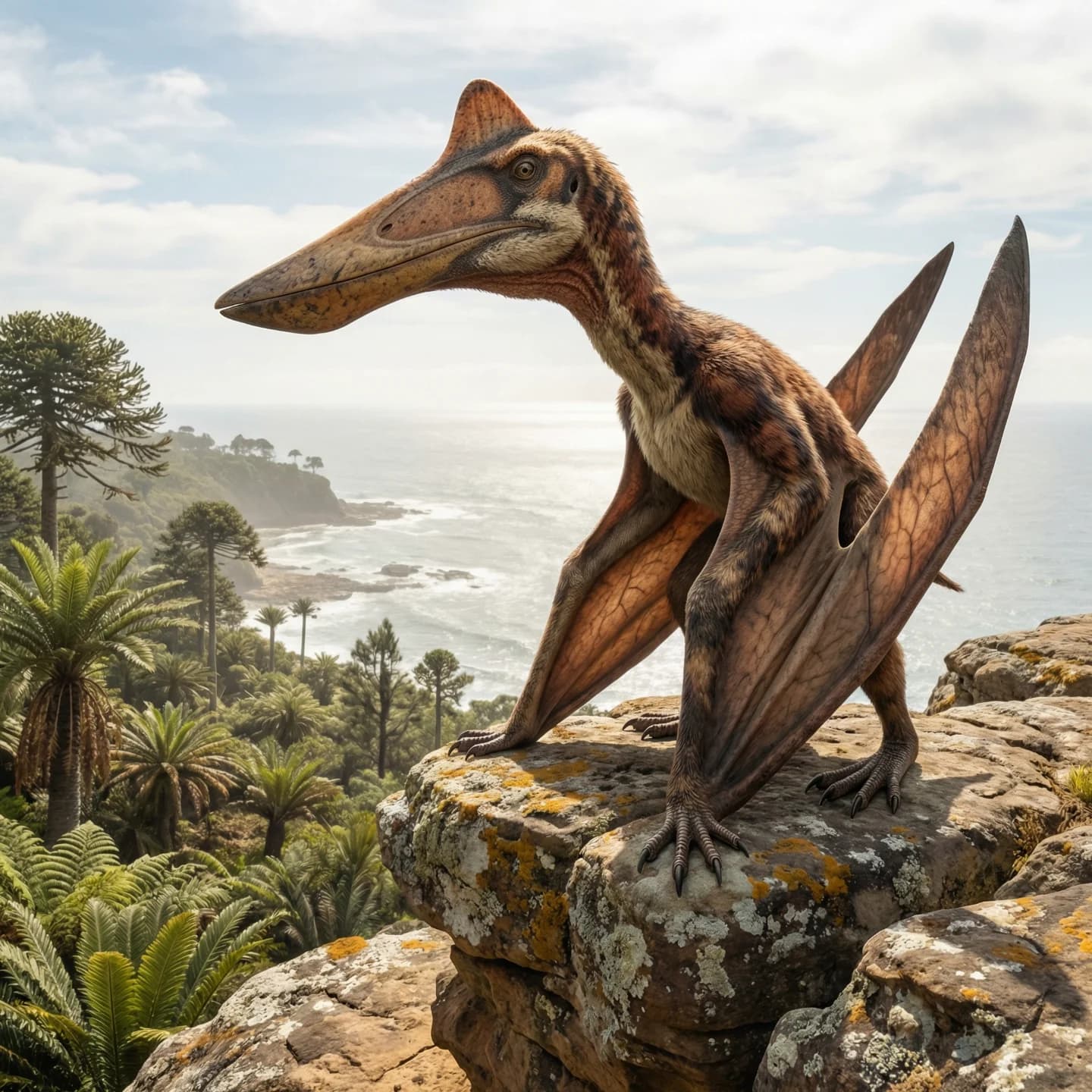
Istiodactylus (Istiodactylus latidens Seeley, 1901) is a medium-to-large pterosaur from the Early Cretaceous (Barremian–Aptian, approximately 125–120 Ma) of the Isle of Wight, southern England. It belongs to the family Istiodactylidae within the Ornithocheiroidea (order Pterosauria, suborder Pterodactyloidea), and serves as both the type genus and best-known member of its family. Istiodactylus is not a dinosaur — it is a pterosaur (flying reptile) belonging to a separate lineage within Archosauria.
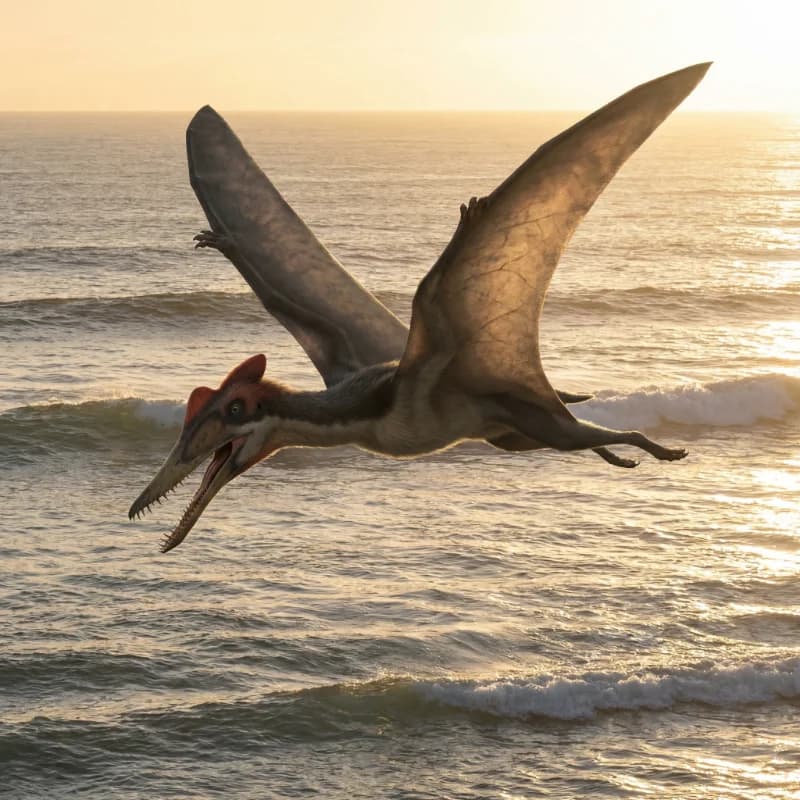
With an estimated wingspan of approximately 4.3–5 m, Istiodactylus is the largest known member of Istiodactylidae. Gregory S. Paul (2022) estimated a body mass of about 10 kg for an individual with a 4 m wingspan, while broader estimates in the literature range from roughly 8–15 kg. The skull was about 45 cm long — relatively short and broad for a pterosaur. The most striking feature of Istiodactylus is the semicircle of 48 triangular (lancet-shaped) teeth at the front of the jaws: the upper and lower teeth interlocked to form a "razor-edged" cutting outline. This distinctive dentition, combined with biomechanical analysis and dental microwear evidence (Bestwick et al., 2020), strongly supports the interpretation that Istiodactylus was a vulture-like scavenger that used its teeth to shear morsels from large carcasses in a cookie-cutter fashion.
The fossils of Istiodactylus are known from the Wessex Formation and the overlying Vectis Formation on the Isle of Wight, representing fluvial (river) and coastal-tidal environments respectively. The first specimen was collected by the Reverend William Fox at Atherfield on the Isle of Wight and was named Ornithodesmus latidens by H. G. Seeley in 1901. In 2001, Howse, Milner & Martill transferred the species to the new genus Istiodactylus, after it was shown that the original genus Ornithodesmus was actually based on a maniraptoran dinosaur. Istiodactylus was one of the only pterosaurs known from three-dimensionally preserved fossils for much of the 20th century, making it a cornerstone of pterosaur research.
Overview
Name and Etymology
The genus name Istiodactylus is derived from Greek istion ("sail") and daktylos ("finger"), referring to the elongate fourth finger (wing-finger) that supported the wing membrane in large pterosaurs. This name was established by Howse, Milner & Martill in 2001 when they erected the new genus. The species name latidens combines Latin latus ("wide") and dens ("tooth"), a reference to the broad and distinctive teeth — a name originally used informally by the fossil collector William Fox and his associates.
Taxonomic Status
Istiodactylus is a currently valid genus and the type genus of the family Istiodactylidae. The type species is I. latidens (Seeley, 1901). A second species, I. sinensis Andres & Ji, 2006, was described from the Jiufotang Formation of Liaoning Province, China, but its placement in Istiodactylus has been debated. Witton (2012) concluded, based on a revised skull reconstruction, that the differences between I. latidens and I. sinensis are far greater than previously appreciated, and suggested I. sinensis may belong to Liaoxipterus or represent a distinct genus. Some authors (Lü et al., 2006) have even considered I. sinensis a junior synonym of Nurhachius ignaciobritoi. Critically, Istiodactylus is NOT an azhdarchid — it is a member of Istiodactylidae within Ornithocheiroidea, a very different pterosaur group.
Key Distinguishing Feature
An Early Cretaceous medium-to-large pterosaur from England with a uniquely broad, short-snouted skull and a semicircle of interlocking lancet-shaped teeth, strongly indicative of a scavenging lifestyle — the best candidate for a vulture-like pterosaur known to date.
Stratigraphy, Age, and Depositional Environment
Temporal Range
Istiodactylus lived during the Early Cretaceous, spanning the Barremian to early Aptian stages — approximately 125–120 Ma. The Wessex Formation dates to the Barremian (roughly 130–126 Ma), while the overlying Vectis Formation represents the late Barremian to early Aptian (roughly 125–120 Ma) (Sweetman & Martill, 2010).
Formations and Lithology
Istiodactylus fossils are known from two formations within the Wealden Group on the Isle of Wight:
| Formation | Age | Lithology | Depositional Environment |
|---|---|---|---|
| Wessex Formation | Barremian | Mudstone, sandstone | Meander-belt river system, crevasse splay |
| Vectis Formation | Upper Barremian – lower Aptian | Mudstone, pyrite-encrusted beds | Coastal, tide-dominated near-shore |
The holotype (NHMUK R176) likely originated from the Wessex Formation, where isolated Istiodactylus teeth have also been found. Hooley's principal specimens (NHMUK R3877, R3878) came from the Vectis Formation, and are characteristically encrusted with pyrite.
Palaeoenvironment
The Wessex Formation was deposited by a meander-belt river system flowing west to east within the Wessex Basin. Crevasse splay deposits — sediment left when rivers breach their levees — are among the facies yielding Istiodactylus material. The Vectis Formation represents a tide-dominated coastal and near-shore environment (Radley, 1994; Sweetman & Martill, 2010).
During the Early Cretaceous, southern England experienced a semi-arid climate comparable to the modern Mediterranean, with mean temperatures of approximately 20–25 °C. The vegetation of the Wessex Formation was savannah- or chaparral-like, including Caytoniales, cycads, ginkgos, conifers, and early angiosperms (Sweetman & Martill, 2010).
Specimens and Diagnostic Features
Holotype and Principal Specimens
The fossil record of Istiodactylus consists of several key specimens and supplementary fragmentary material:
| Specimen | Repository | Preserved Elements | Formation | Notes |
|---|---|---|---|---|
| NHMUK R176 | Natural History Museum, London | Posterior skull, cervical vertebra, sternum, sacrum, right humerus, notarium, partial radius and ulna, carpals, metacarpals, wing phalanges | Wessex Fm. (inferred) | Holotype; collected by William Fox, acquired by museum in 1882 |
| NHMUK R3877 | Natural History Museum, London | Nearly complete skull, cervical and dorsal vertebrae, scapula, ischium, partial forelimb | Vectis Fm. | Most complete specimen; collected 1904 after a rockfall |
| NHMUK R3878 | Natural History Museum, London | Pectoral girdle parts, partial forelimb | Vectis Fm. | Collected from same locality as R3877 |
| SGM 1810-01 | Vernadsky State Geological Museum, Moscow | Anterior snout and mandibular symphysis | Vectis Fm. (inferred) | Possibly the lost holotype jaws (Averianov et al., 2021); studied via CT scanning |
| IWCMS 2003.40 | Museum of Isle of Wight Geology | Dentary fragment | Wessex Fm. | Possible juvenile |
Diagnosis
According to the revised diagnosis of Witton (2012), I. latidens is distinguished from other istiodactylids by the following autapomorphies: (1) teeth confined to the pre-nasoantorbital portion of the rostrum; (2) no more than 48 teeth; (3) upper toothrow occupying less than 25% of jaw length; (4) sagittal ridge on the rostrum; (5) maxillae less than half the depth of the posterodorsal extension of the premaxilla; (6) jaw length no more than 2.6 times the height of the skull; (7) skull width across quadrates three times that of jaw length.
Limitations of the Specimens
No complete skeleton of Istiodactylus is known. The holotype (NHMUK R176) is poorly preserved, and its jaw and tooth elements have been lost. NHMUK R3877 is the most complete specimen, but the skull was heavily damaged and disarticulated prior to deposition, leading to long-standing debate over jaw length estimates. Hooley (1913) estimated the jaw length at 423 mm, but Witton (2012) revised this to approximately 333 mm after rediscovering an overlooked jaw fragment, yielding a total skull length estimate of about 450 mm rather than the previously assumed 560 mm.
Morphology and Functional Anatomy
Body Size
Istiodactylus had an estimated wingspan of approximately 4.3–5 m, making it the largest known istiodactylid. Some isolated wing-bone fragments potentially referable to this genus suggest wingspans as large as 8 m (Martill et al., 1996), though this assignment is uncertain. Gregory S. Paul (2022) estimated a body mass of approximately 10 kg for an individual with a 4 m wingspan; broader literature estimates range from about 8–15 kg. As with all pterosaurs, the bones were highly pneumatised (hollow and air-filled), contributing to a remarkably light body mass for the animal's wingspan.
Skull and Dentition
The skull was relatively short and broad compared to most pterosaurs. The naso-antorbital fenestrae (combined nasal-antorbital openings) were very large and, unusually, extended posteriorly past the jaw joint and mandibular rear. The orbit was reclined and narrow, capped anteriorly by a tuberosity. The posterior skull was relatively tall, with a low crest or ridge on the skull table.
The jaws bore a semicircle of 48 teeth (24 upper, 24 lower), all confined to the front of the snout, anterior to the naso-antorbital opening. The teeth were uniform in size, triangular, and laterally compressed — described as "petal-like" or "lancet-like." Upper and lower teeth interlocked precisely, forming a "razor-edged" or "zig-zag" cutting outline. At the midline of the mandible's anterior tip, a sharp bony projection called an odontoid (or pseudo-tooth) filled the gap between two teeth. Martill (2014) proposed that this odontoid, likely sheathed in keratin, completed an arc-shaped bite allowing the animal to shear circular morsels of flesh. No replacement teeth have ever been found in any Istiodactylus specimen — possibly because erupting teeth would disrupt the tightly interlocking dentition (Averianov et al., 2021).
Postcranial Skeleton
The notarium consisted of six fused dorsal vertebrae whose neural spines merged into a plate, providing articular surfaces for the scapulae on each side. The sternum was very deep, with a shallow triangular keel. The humerus was stout, bearing a sharply curved deltopectoral crest. The forelimbs were disproportionately large — up to 4.5 times the length of the hindlimbs. The long wing-finger may have occupied approximately 50% of the wing skeleton. In contrast, the hindlimbs were very short, and the feet were only about as long as the diminutive third manual digit.
Flight Mechanics
Istiodactylids possessed wing-membranes attached to shortened bodies with short legs and long forelimbs, likely producing large wings with a high aspect ratio and low wing loadings — well suited for sustained soaring. The wing morphology of the related genus Nurhachius has been compared to those of modern soaring birds, and similar adaptations in Istiodactylus would have facilitated the low-energy soaring necessary for searching for carrion over large areas (Witton, 2012, 2013). Istiodactylid wings were shorter than those of other ornithocheiroids, possibly reflecting adaptation for terrestrial rather than oceanic soaring; modern inland-soaring birds similarly have shorter, deeper wings than pelagic soarers. Witton (2013) also suggested that istiodactylids were better adapted for launching from the ground, like modern vultures, rather than from water, as inferred for other ornithocheiroids. Detailed biomechanical modelling of Istiodactylus flight performance has not yet been conducted.
Diet and Ecology
Feeding Ecology: The Scavenging Hypothesis
Interpretations of Istiodactylus's diet have evolved substantially over time.
Hooley (1913) initially proposed a piscivorous (fish-eating) lifestyle, comparing its beak to those of herons and skimmers. Wellnhofer (1991) compared the jaw tips to those of a duck, while noting that the strong teeth precluded it from being a true "duck-billed pterosaur." The scavenging hypothesis was first proposed by Howse et al. (2001), who argued that the distinctive interlocking teeth were used to sever chunks of meat from prey or carcasses in a cookie-cutter fashion, and pointed out that the fossils were found in continental (non-marine) deposits.
Witton (2012, 2013) refined this hypothesis extensively by comparing Istiodactylus cranial anatomy to that of modern obligate scavenging birds (Aegypiinae, Cathartidae). He identified a mosaic of mechanically strong and weak cranial elements — a hallmark of scavenging birds. Specifically: (1) strong jaw muscles (indicated by elongate retroarticular processes), a deep skull (resisting dorsoventral bending), and a broad occipital face (enlarged neck muscle attachment area) are features suited to pulling and rending flesh from carcasses; (2) conversely, extremely slender maxillae, short toothrows, and the absence of fang-like teeth or hooked talons indicate an inability to subdue live, struggling prey. Additionally, the orbits were proportionally small compared to presumably predatory pterosaurs (such as ornithocheirids), suggesting reduced need for the keen visual acuity required for hunting.
Martill (2014) further elaborated on the cookie-cutter analogy, comparing the tooth function to that of the cookiecutter shark (Isistius), which bites circular plugs from much larger prey. He proposed that Istiodactylus may similarly have taken circular bites from large animals — including dinosaurs, crocodilians, and large fish — or may have scraped the last flesh from bones like marabou storks.
Bestwick et al. (2020) provided independent quantitative support through dental microwear texture analysis. Istiodactylus plotted closest to modern carnivorous reptiles, confirming its status as an obligate consumer of vertebrate animals.
Ecological Niche
Istiodactylus likely occupied an ecological niche comparable to that of modern vultures. Its soaring capability would have allowed it to survey wide areas, locating carcasses before terrestrial carnivores could reach them. When larger, more powerful predators approached, Istiodactylus would have been forced to retreat, returning to finish the remains once those animals departed (Witton, 2013).
Contemporary Fauna
The Wessex Formation preserves a diverse fauna alongside Istiodactylus. Other pterosaurs include Caulkicephalus, an undetermined ctenochasmatine, an azhdarchoid, and one or two additional undetermined istiodactylids. Dinosaurs from the same formation include the theropods Neovenator, Aristosuchus, and Thecocoelurus; the ornithopods Iguanodon, Hypsilophodon, and Valdosaurus; the sauropods Pelorosaurus and Chondrosteosaurus; and the ankylosaur Polacanthus. Non-dinosaurian fauna includes gastropods, bivalves, bony fishes, chondrichthyans, lissamphibians, lizards, turtles, crocodilians, birds, and mammals.
Distribution and Palaeogeography
Geographical Range
Confirmed I. latidens fossils are known exclusively from the Isle of Wight, England. However, istiodactylid teeth have been reported from Spain and mainland Britain, indicating the family may have been distributed more widely across Europe (Witton, 2013). The Moscow specimen SGM 1810-01 is also inferred to have originated from the Vectis Formation (Averianov et al., 2021).
The second species, I. sinensis, was reported from Liaoning Province, China (Andres & Ji, 2006), but its generic assignment remains contested.
Palaeogeographic Interpretation
Palaeogeographic reconstructions place the Isle of Wight area at approximately 37.5°N palaeolatitude during the Early Cretaceous, considerably south of its present-day position (approximately 50.7°N). This reflects the more southerly position of Europe at the time, consistent with the subtropical to warm-temperate climate inferred from sedimentological and palaeobotanical evidence.
Phylogenetics and Taxonomic Debate
Higher-Level Classification
The placement of Istiodactylidae within Pterodactyloidea has been debated between two major schools of pterosaur systematics. Unwin (2003) grouped Istiodactylidae with the toothless Pteranodontidae, whereas Kellner (2003) found the family closer to the toothed Anhangueridae. In 2014, Andres et al. placed Istiodactylidae within Lanceodontia — a clade of toothed ornithocheiromorphs excluding toothless forms like Pteranodon. In 2019, Kellner et al. erected the more inclusive clade Istiodactyliformes, encompassing Istiodactylidae and close relatives such as the newly described Mimodactylidae.
Intra-Family Relationships
Relationships within Istiodactylidae remain incompletely resolved. Witton's (2012) cladistic analysis recovered I. latidens, I. sinensis, and Liaoxipterus in an unresolved polytomy as the most derived istiodactylids. Andres et al. (2014) formalised these three taxa as the subfamily Istiodactylinae. Zhou et al. (2019) and Ozeki et al. (2023) both recovered I. latidens and I. sinensis as sister taxa. Xu et al. (2022) described the new genus Lingyuanopterus from China and noted that differences between Liaoxipterus and both Istiodactylus species are limited, warranting further study.
Comparison of Key Istiodactylid Taxa
| Taxon | Locality | Age | Wingspan (est.) | Key Features |
|---|---|---|---|---|
| I. latidens | Isle of Wight, England | Barremian–Aptian | 4.3–5 m | 48 teeth, short broad skull |
| I. sinensis | Liaoning, China | Aptian | ~2.7 m | 60 teeth, generic placement debated |
| Liaoxipterus | Liaoning, China | Aptian | Undetermined | Known from incomplete mandible, very similar to I. sinensis |
| Nurhachius | Liaoning, China | Aptian | ~2.5 m | Basal istiodactylid |
| Lingyuanopterus | Liaoning, China | Aptian | Undetermined | 42 teeth, described in 2022 |
| Luchibang | Liaoning, China | Barremian | ~2 m | Described in 2020, near-complete skeleton |
Reconstruction and Uncertainty
Established Facts
That Istiodactylus was a medium-to-large pterosaur with semicircular interlocking triangular teeth, a broad short snout, and very large naso-antorbital fenestrae is confirmed by multiple specimens. Its placement within Ornithocheiroidea as the type genus of Istiodactylidae is well established.
Well-Supported Interpretations
The scavenging hypothesis is supported by multiple independent lines of evidence — dental morphology, cranial biomechanics, dental microwear texture analysis, and sedimentological context. However, no direct evidence (stomach contents, bite marks on bones attributable to Istiodactylus) has yet been found.
Hypothetical or Estimated
Body mass estimates (approximately 8–15 kg) are based on indirect extrapolation from incomplete skeletal material. Flight speed and detailed gliding performance remain unquantified, as no focused biomechanical modelling study has been published. Whether specimen SGM 1810-01 represents the lost holotype jaws remains a hypothesis.
Common Misconceptions
Istiodactylus has often been called a "duck-billed pterosaur," but Witton (2012) emphatically showed that the closed jaw cross-section is circular and bears no resemblance to the broad, dorsoventrally flattened bills of ducks. The filter-feeding hypothesis (Fastnacht, unpublished Ph.D. thesis) was based on an inaccurate skull reconstruction and has been dismissed. Istiodactylus is also occasionally misclassified as an azhdarchid — this is incorrect; it belongs to Istiodactylidae within Ornithocheiroidea.
Discovery and Research History
The research history of Istiodactylus stretches back to the late 19th century.
1887: H. G. Seeley described a fused sacrum from the Wessex Formation of the Isle of Wight as a bird, naming it Ornithodesmus cluniculus. In the same year, J. W. Hulke suggested it was a pterosaur, but Seeley disagreed.
1901: Seeley named a second species, Ornithodesmus latidens, based on specimen NHMUK R176, collected by the Reverend William Fox at Atherfield on the Isle of Wight. This specimen is now the holotype of I. latidens.
1913: R. W. Hooley published a detailed monograph describing specimens NHMUK R3877 and R3878, recovered from the sea after a rockfall near Atherfield Point in 1904. These remain the most complete Cretaceous pterosaur specimens found in England.
1993: Howse & Milner demonstrated that the holotype sacrum of O. cluniculus belonged not to a pterosaur but to a maniraptoran dinosaur, necessitating a new genus name for the pterosaur species.
2001: Howse, Milner & Martill established the genus Istiodactylus and the family Istiodactylidae.
2006: Andres & Ji described I. sinensis from China. The same year, Lü et al. suggested it was a synonym of Nurhachius.
2012: Witton rediscovered an overlooked jaw fragment of NHMUK R3877 that had been neglected in a museum drawer for nearly a century, leading to a significantly revised skull reconstruction and updated phylogenetic analysis.
2014: Martill analysed the functional role of the mandibular odontoid. Andres et al. established the subfamily Istiodactylinae.
2019: Kellner et al. erected the clade Istiodactyliformes.
2021: Averianov et al. described the Moscow specimen SGM 1810-01, performed CT scanning, and suggested it could represent the lost holotype jaws.
2022: Xu et al. described Lingyuanopterus camposi as a new istiodactylid genus.
Fun Facts
FAQ
📚References
- Seeley, H. G. (1901). Dragons of the Air: an Account of Extinct Flying Reptiles. New York: D. Appleton & Co. pp. 173–175.
- Howse, S. C. B., Milner, A. R. & Martill, D. M. (2001). Pterosaurs. In: Martill, D. M. & Naish, D. (eds.), Dinosaurs of the Isle of Wight, Guide 10; Field Guides to Fossils. London: The Palaeontological Association. pp. 324–335.
- Hooley, R. W. (1913). On the skeleton of Ornithodesmus latidens; an ornithosaur from the Wealden Shales of Atherfield (Isle of Wight). Quarterly Journal of the Geological Society, 69: 372–422. doi:10.1144/GSL.JGS.1913.069.01-04.23
- Howse, S. C. B. & Milner, A. R. (1993). Ornithodesmus – a maniraptoran theropod dinosaur from the Lower Cretaceous of the Isle of Wight, England. Palaeontology, 36: 425–437.
- Witton, M. P. (2012). New insights into the skull of Istiodactylus latidens (Ornithocheiroidea, Pterodactyloidea). PLoS ONE, 7(3): e33170. doi:10.1371/journal.pone.0033170
- Witton, M. P. (2013). Pterosaurs: Natural History, Evolution, Anatomy. Princeton University Press. pp. 143–151.
- Andres, B. & Ji, Q. (2006). A new species of Istiodactylus (Pterosauria, Pterodactyloidea) from the Lower Cretaceous of Liaoning, China. Journal of Vertebrate Paleontology, 26(1): 70–78. doi:10.1671/0272-4634(2006)26[70:ANSOIP]2.0.CO;2
- Martill, D. M. (2014). A functional odontoid in the dentary of the Early Cretaceous pterosaur Istiodactylus latidens: Implications for feeding. Cretaceous Research, 47: 56–65. doi:10.1016/j.cretres.2013.11.005
- Averianov, A. O., Kolchanov, V. V., Zverkov, N. G., Aleksandrova, G. N. & Yaroshenko, O. P. (2021). The wandering jaws of Istiodactylus latidens (Pterosauria, Istiodactylidae). Cretaceous Research, 126: 104887. doi:10.1016/j.cretres.2021.104887
- Sweetman, S. C. & Martill, D. M. (2010). Pterosaurs of the Wessex Formation (Early Cretaceous, Barremian) of the Isle of Wight, southern England: a review with new data. Journal of Iberian Geology, 36(2): 225–242. doi:10.5209/rev_JIGE.2010.v36.n2.9
- Bestwick, J., Unwin, D. M., Butler, R. J. & Purnell, M. A. (2020). Dietary diversity and evolution of the earliest flying vertebrates revealed by dental microwear texture analysis. Nature Communications, 11: 5293. doi:10.1038/s41467-020-19022-2
- Andres, B., Clark, J. & Xu, X. (2014). The earliest pterodactyloid and the origin of the group. Current Biology, 24(9): 1011–1016. doi:10.1016/j.cub.2014.03.030
- Kellner, A. W. A., Caldwell, M. W., Holgado, B., Dalla Vecchia, F. M., Nohra, R., Sayao, J. M. & Currie, P. J. (2019). First complete pterosaur from the Afro-Arabian continent: insight into pterodactyloid diversity. Scientific Reports, 9: 17875. doi:10.1038/s41598-019-54042-z
- Xu, Y., Jiang, S. & Wang, X. (2022). A new istiodactylid pterosaur, Lingyuanopterus camposi gen. et sp. nov., from the Jiufotang Formation of western Liaoning, China. PeerJ, 10: e13819. doi:10.7717/peerj.13819
- Paul, G. S. (2022). The Princeton Field Guide to Pterosaurs. Princeton University Press.
- Wellnhofer, P. (1991). The Illustrated Encyclopedia of Pterosaurs. New York: Crescent Books. pp. 114–116.
- Martill, D. M., Frey, E., Green, M. & Green, M. E. (1996). Giant pterosaurs from the Lower Cretaceous of the Isle of Wight, UK. Neues Jahrbuch fur Geologie und Palaontologie - Monatshefte, 1996(11): 672–683.
- Unwin, D. M. (2003). On the phylogeny and evolutionary history of pterosaurs. Geological Society, London, Special Publications, 217(1): 139–190. doi:10.1144/GSL.SP.2003.217.01.11
- Zhou, X., Pegas, R. V., Leal, M. E. C. & Bonde, N. (2019). Nurhachius luei, a new istiodactylid pterosaur from the Early Cretaceous Jiufotang Formation of Chaoyang City, Liaoning Province (China) and comments on the Istiodactylidae. PeerJ, 7: e7688. doi:10.7717/peerj.7688
- Ozeki, M., Xing, L., O'Connor, J. & Demuth, O. (2023). New information on pterosaur phylogeny and the evolutionary history of istiodactylids. Cretaceous Research, 148: 105537.
Gallery
5 images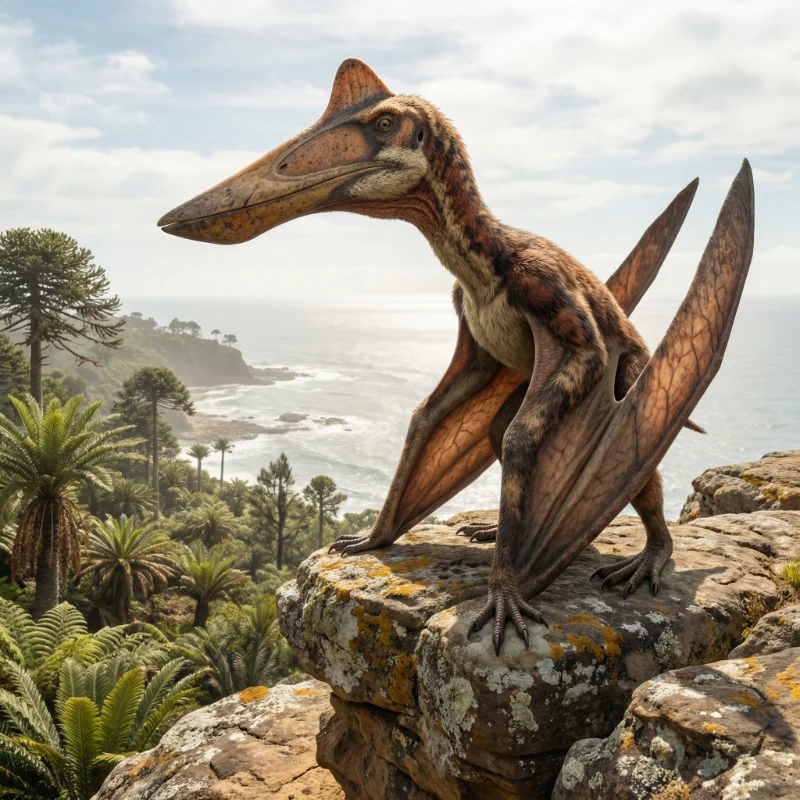 Istiodactylus
Istiodactylus · Cretaceous Period · Carnivore
 Istiodactylus
Istiodactylus · Cretaceous Period · Carnivore
 Istiodactylus
Istiodactylus · Cretaceous Period · Carnivore
 Istiodactylus
Istiodactylus · Cretaceous Period · Carnivore
 Istiodactylus
Istiodactylus · Cretaceous Period · Carnivore
🔗Related Creatures
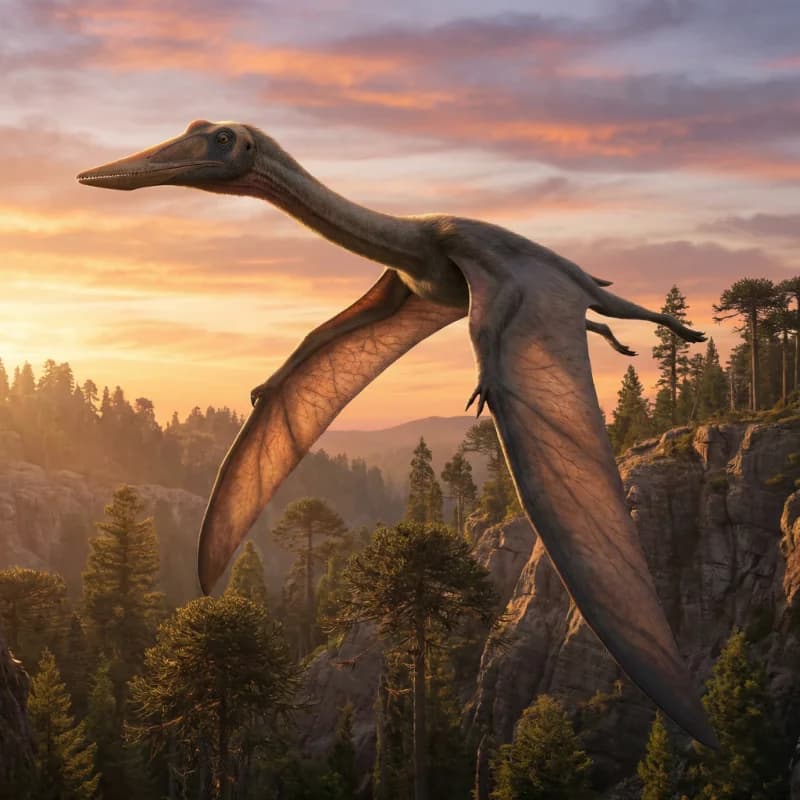
Arambourgiania
Arambourgiania philadelphiae
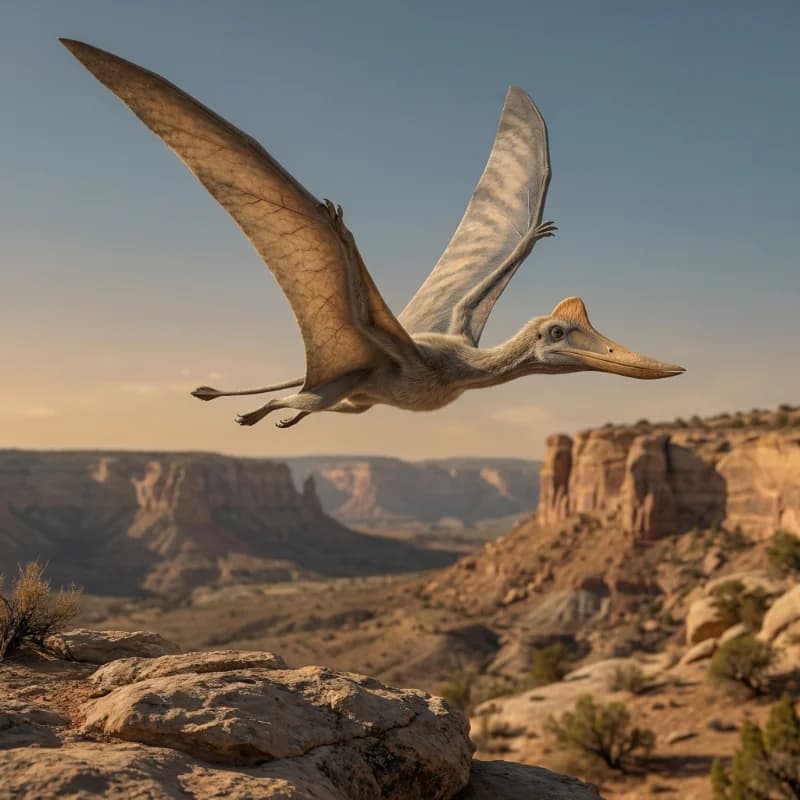
Dsungaripterus
Dsungaripterus weii
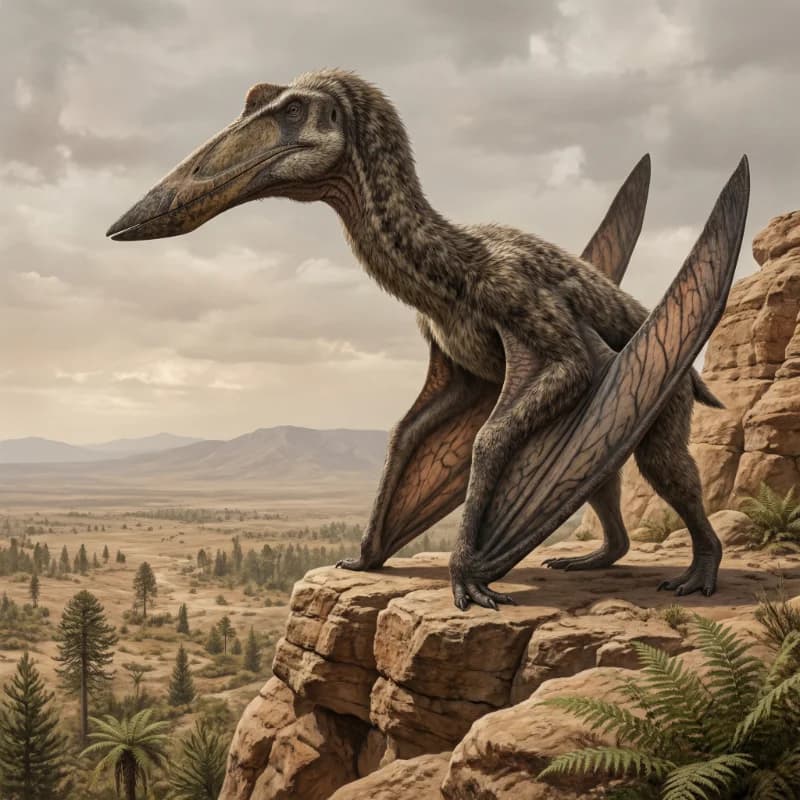
Hatzegopteryx
Hatzegopteryx thambema
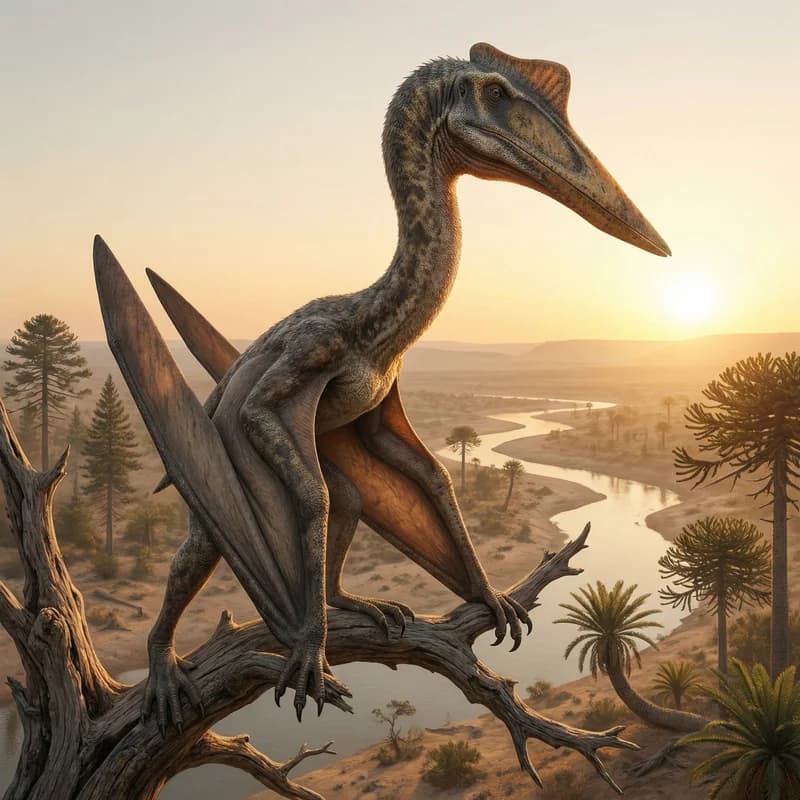
Quetzalcoatlus
Quetzalcoatlus northropi

Pteranodon
Pteranodon
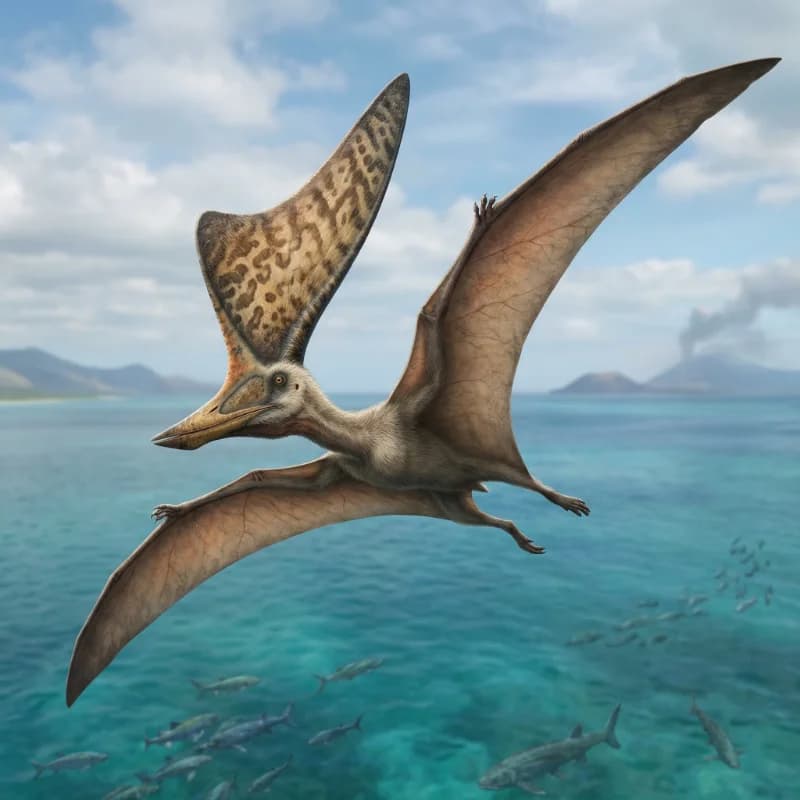
Nyctosaurus
Nyctosaurus gracilis
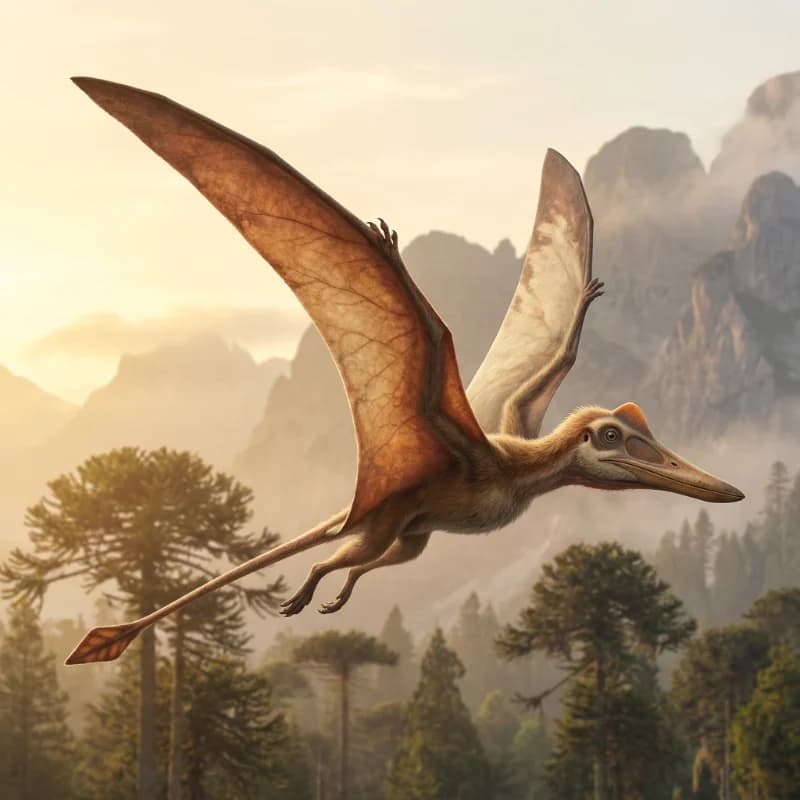
Kryptodrakon
Kryptodrakon progenitor
Ferrodraco
Ferrodraco lentoni