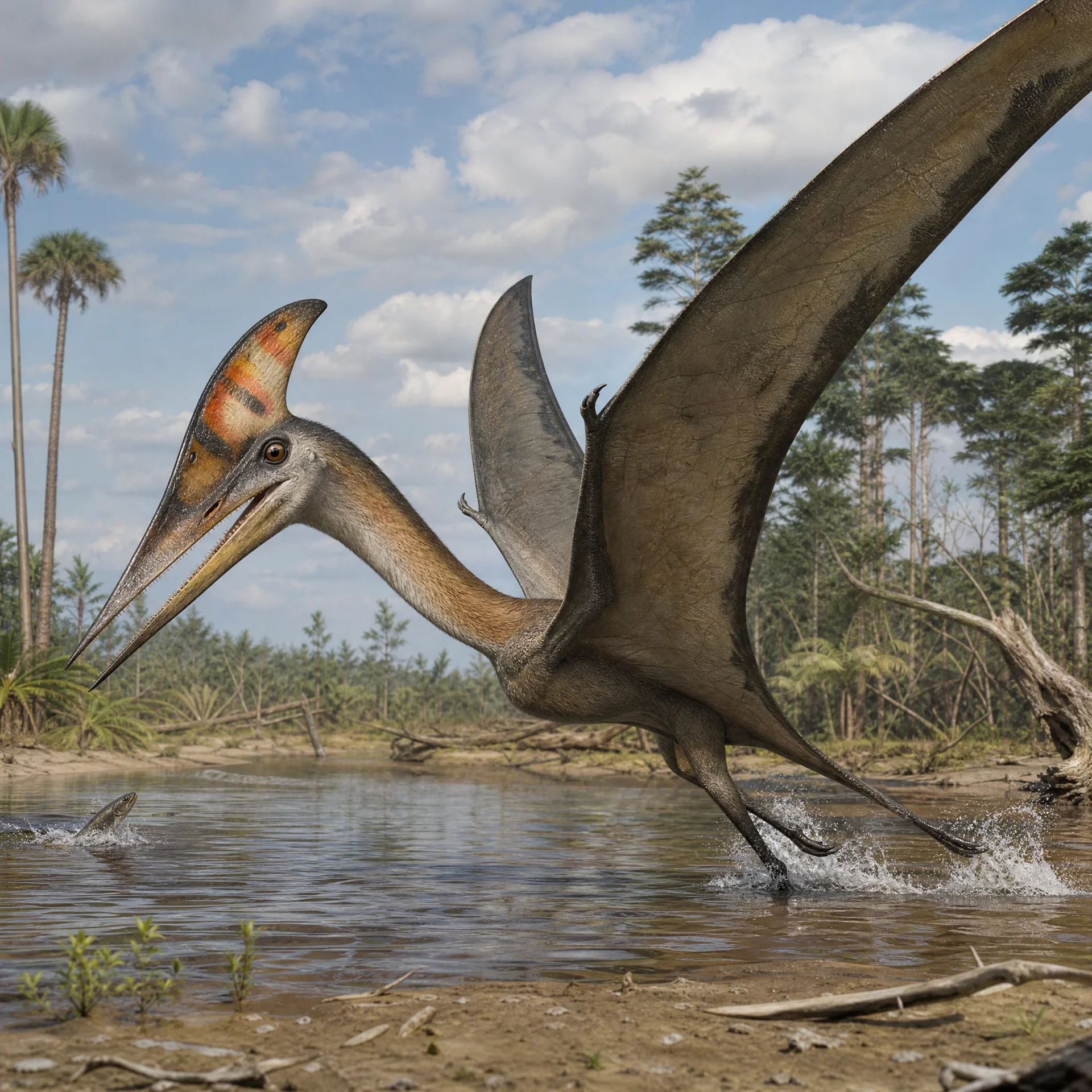
Ferrodraco
Ferrodraco lentoni
⏳ Cretaceous Period🍽️ PiscivoreDinosaurs
Physical Characteristics
⏳
PeriodCretaceous Period
🍽️
DietPiscivore
⚖️
Weight10kg
🪽
Wingspan4m
Classification
GEN
GenusFerrodraco
SP
SpeciesF. lentoni
Ferrodraco lentoni
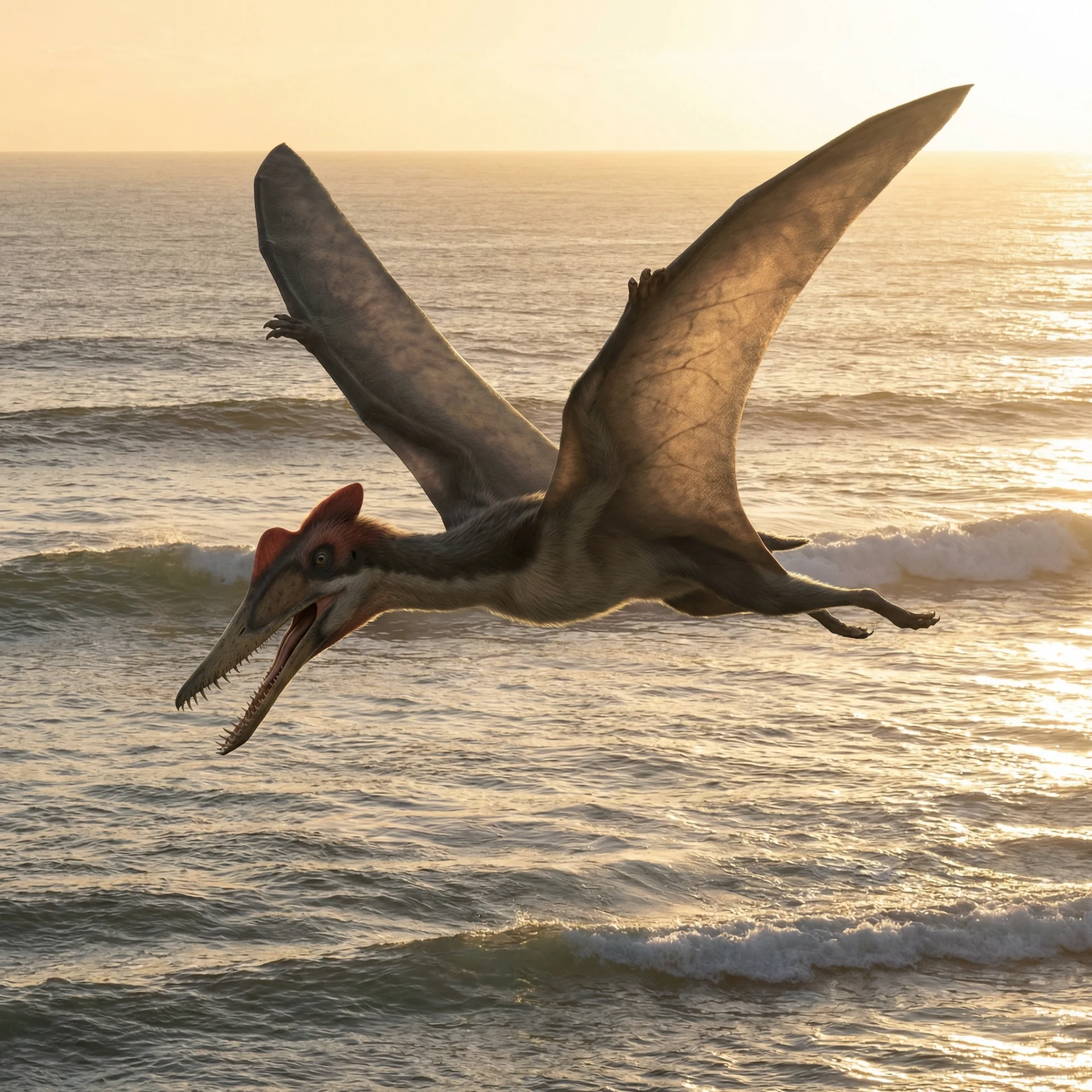
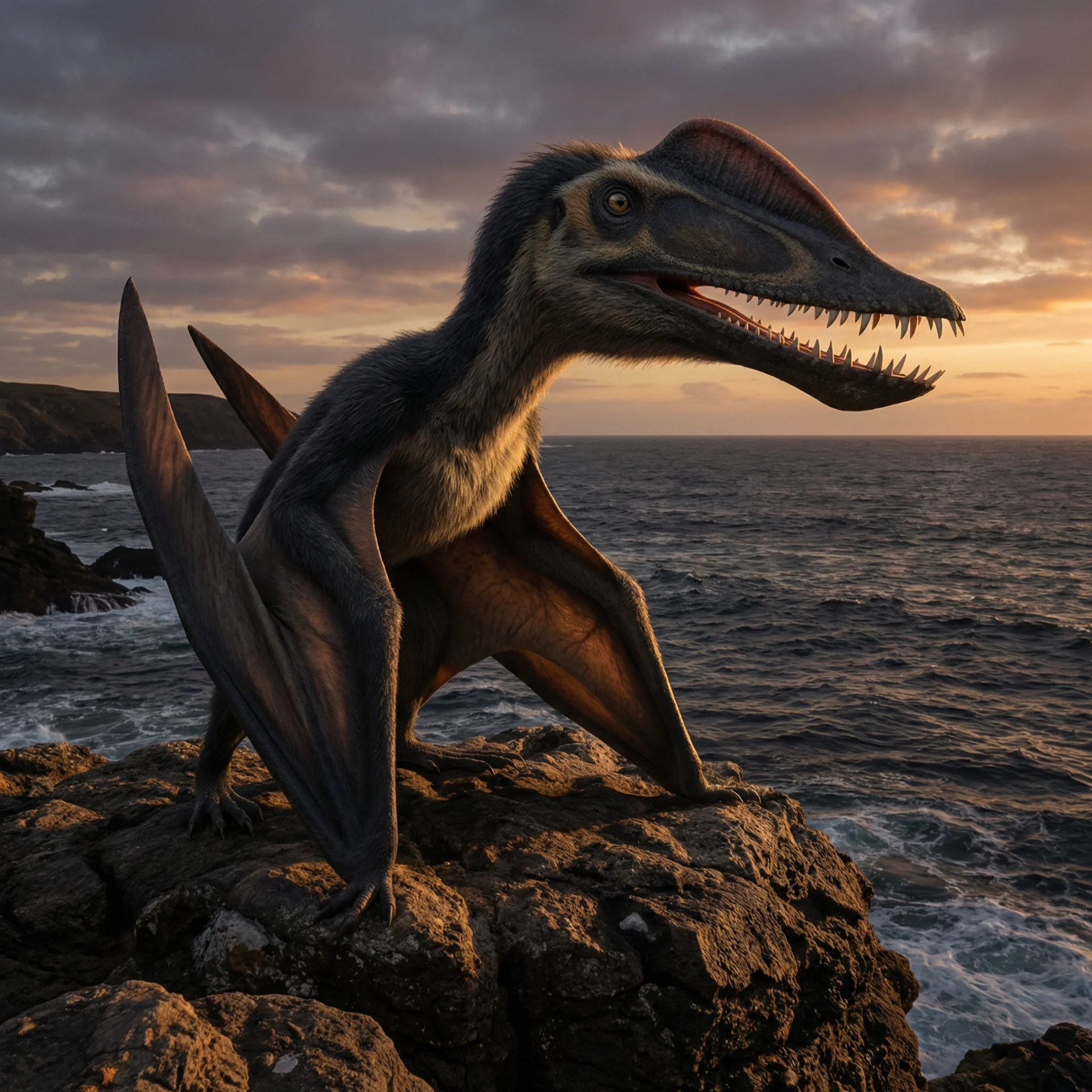
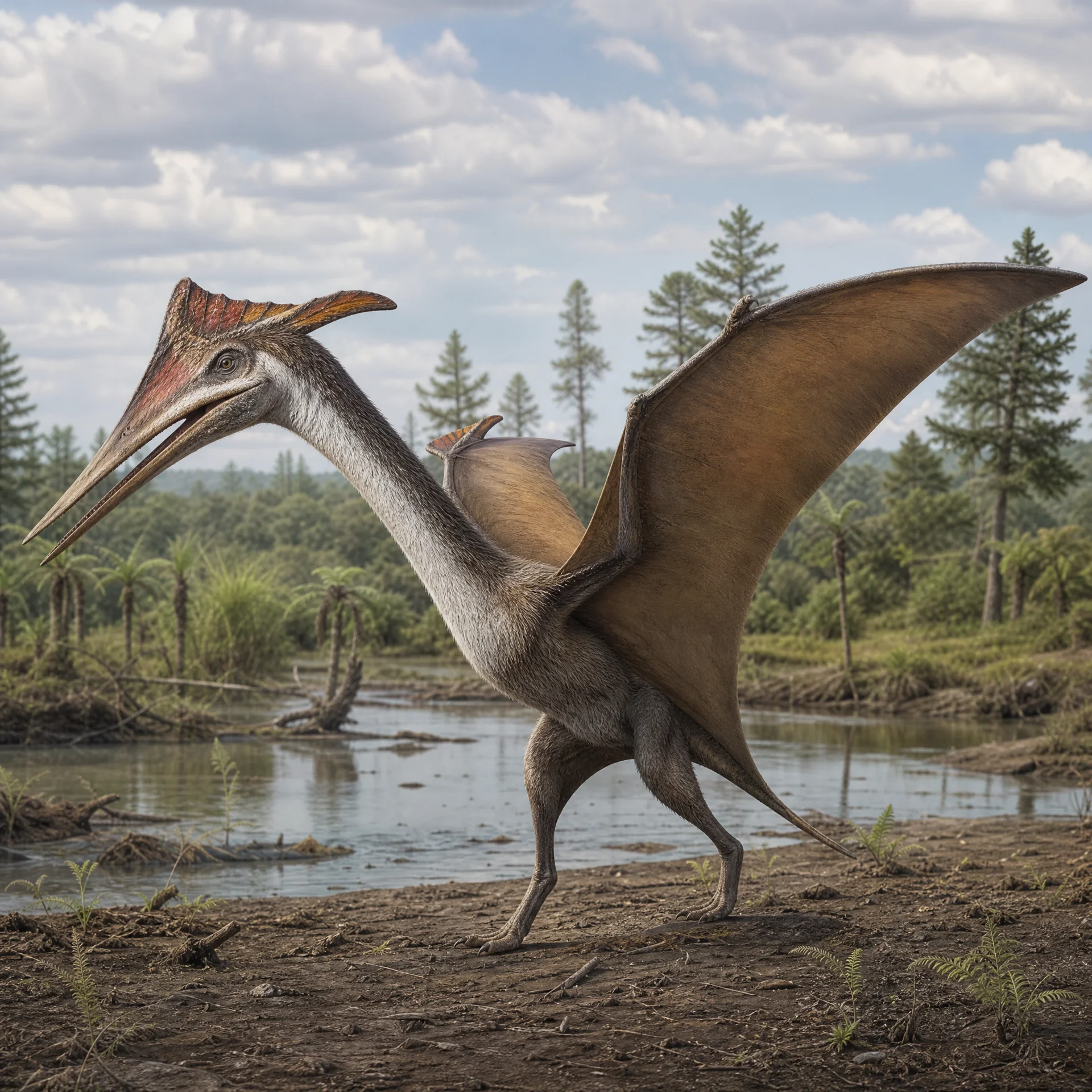
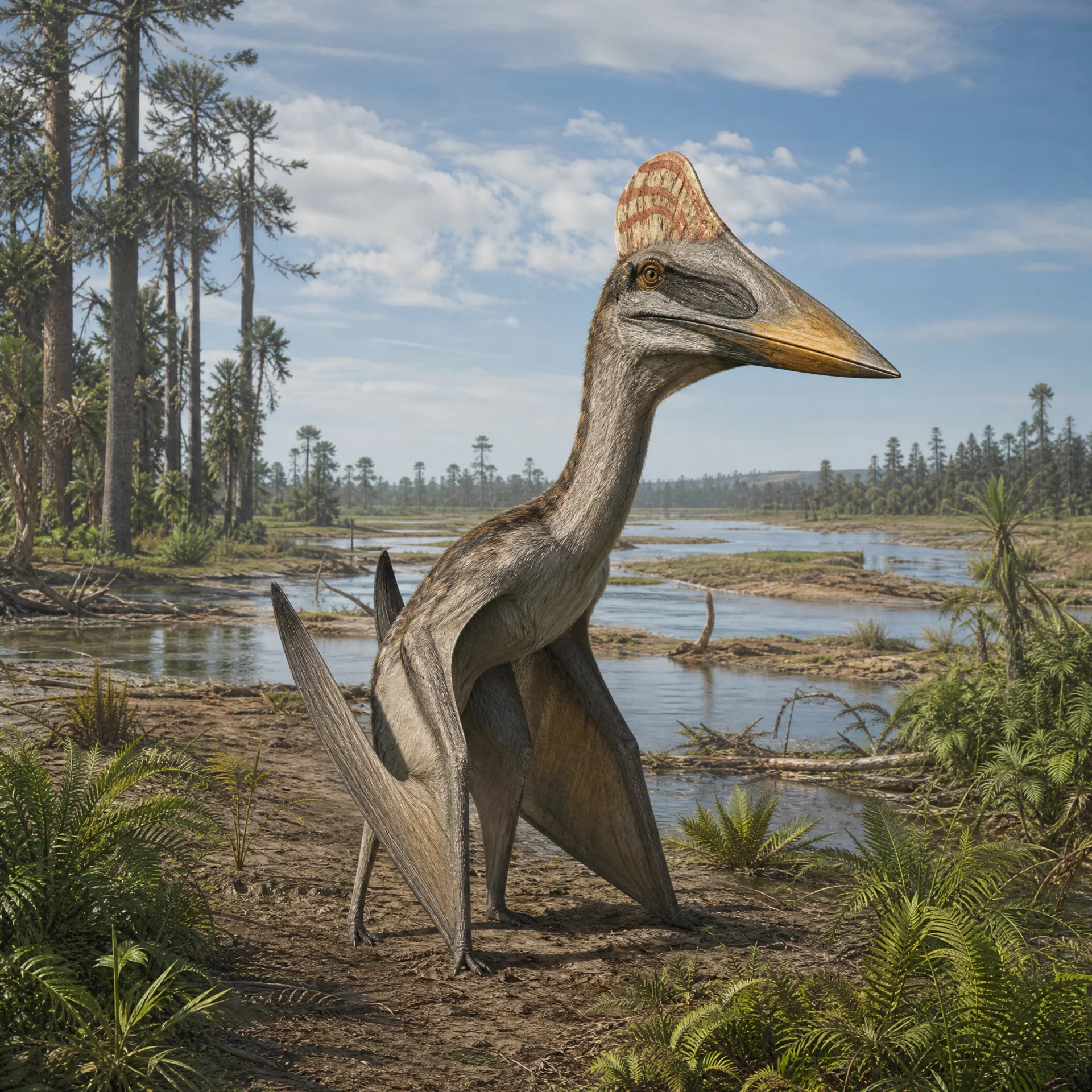
Ferrodraco (Ferrodraco lentoni Pentland et al., 2019) is an anhanguerian pterosaur from the Late Cretaceous (Cenomanian–early Turonian, approximately 96–90 Ma) of northeastern Australia. Known from the holotype specimen AODF 876, recovered from the Winton Formation of Queensland, it represents the most complete pterosaur fossil ever found in Australia at the time of its description. The specimen includes the anterior portion of the skull and dentary, five partial cervical vertebrae, and elements of both wings. Its wingspan has been estimated at approximately 4 m, and its body mass at roughly 10 kg.
The most striking aspect of this pterosaur is its three-dimensional preservation within ironstone, a circumstance that lends the genus its name: Ferrodraco derives from Latin ferrum (iron) and draco (dragon), translating to "Iron Dragon." The specific epithet lentoni honours Graham Thomas 'Butch' Lenton, the former mayor of Winton Shire, who supported the local community and the Australian Age of Dinosaurs Natural History Museum. Ferrodraco is classified within the family Anhangueridae, subfamily Tropeognathinae, and is consistently recovered as the sister taxon of Mythunga camara, another Australian pterosaur from the slightly older Toolebuc Formation.
The discovery of Ferrodraco is particularly significant given the exceptionally sparse pterosaur fossil record of Australia. Whereas most Australian pterosaur specimens consist of isolated and fragmentary remains, the Ferrodraco holotype preserves cranial, cervical, and appendicular elements, providing critical data for understanding the evolution of Anhangueria and the diversity of Cretaceous flying reptiles across Gondwana.
The genus name Ferrodraco is a compound of the Latin words ferrum (iron) and draco (dragon), referencing the ironstone matrix in which the holotype skeleton was preserved (Pentland et al., 2019). The specific name lentoni commemorates the late Graham Thomas 'Butch' Lenton, former mayor of Winton Shire, in recognition of his years of service to the Winton community and his support for the Australian Age of Dinosaurs Natural History Museum. Lenton passed away in 2017, the same year the holotype was discovered. The specimen's informal nickname is also 'Butch.'
In the original 2019 description, Pentland et al. placed Ferrodraco within the Ornithocheirinae of Ornithocheiridae in one analysis, while a second analysis recovered it as a basal member of Anhangueria. Subsequent work by Holgado & Pêgas (2020) reclassified it within the Anhangueridae, specifically the newly erected subfamily Tropeognathinae. The 2022 detailed osteological description by Pentland et al. corroborated the anhanguerid affinity, and Richards et al. (2023) erected the tribe Mythungini to accommodate the Australian tropeognathines (Ferrodraco, Mythunga, and Thapunngaka). The current consensus places Ferrodraco within Anhangueridae, Tropeognathinae, Mythungini.
The most complete pterosaur fossil from Australia at the time of its description, an anhanguerid "Iron Dragon" preserved in three dimensions within ironstone.
The Ferrodraco holotype derives from the Upper Cretaceous portion of the Winton Formation, corresponding to the Cenomanian–lowermost Turonian (approximately 93.9 Ma and surrounding interval). This age is constrained by detrital zircon chronology and stratigraphic-sedimentological analysis (Tucker et al., 2013, 2017). The Winton Formation as a whole spans the upper Albian to early Turonian (approximately 101–92 Ma), but the holotype locality (AODL 245, Belmont Station) falls within the Upper Cretaceous portion.
The Winton Formation is the uppermost unit of the Manuka Subgroup within the Rolling Downs Group of the intracratonic Eromanga Basin. It consists of volcanolithic sandstones, fine- to medium-grained feldspatholithic or lithofeldspathic arenite, siltstone, mudstone, claystone, and minor coal seams (Fielding, 1992; Tucker et al., 2017). At the type locality (AODL 245), sediments were deposited within a distal crevasse splay setting in a low-energy environment, comprising intermittent sandstone and siltstone layers. The coarsest layer at the site is an iron-rich fine sand, overlain by fine-grained mudstone (Pentland et al., 2022). The ironstone matrix is responsible for the exceptional three-dimensional preservation of the holotype.
The Upper Cretaceous (Cenomanian–Turonian) portion of the Winton Formation was deposited on a freshwater alluvial plain traversed by low-energy, meandering rivers with minor lakes and mires (Fletcher et al., 2018). At the time of deposition, central-western Queensland was situated at approximately 50°S palaeolatitude (Li & Powell, 2001). Despite this high-latitude position, the Cretaceous greenhouse climate produced warm, wet conditions with a mean annual temperature of approximately 16°C and mean annual precipitation of approximately 1,300–1,646 mm, with seasonal but non-monsoonal rainfall patterns (Fletcher et al., 2014). The vegetation was a heterogeneous mosaic of araucariacean, podocarp, and cupressacean conifers co-dominant with early angiosperms. The fauna included sauropod dinosaurs (Diamantinasaurus, Savannasaurus, Wintonotitan), theropods (Australovenator), crocodyliforms (Isisfordia), lungfish (Metaceratodus), freshwater turtles, bivalves, and gastropods.
| Item | Detail |
|---|---|
| Formation | Winton Formation (Upper Cretaceous) |
| Age | Cenomanian–lowermost Turonian (~96–90 Ma) |
| Lithology | Fine-grained mudstone, ferruginous fine-grained sandstone, siltstone |
| Depositional Setting | Distal crevasse splay (low-energy freshwater alluvial plain) |
| Palaeolatitude | ~50°S |
| Mean Annual Temperature | ~16°C (estimated) |
| Mean Annual Precipitation | ~1,300–1,646 mm (estimated) |
The holotype, AODF 876, is housed at the Australian Age of Dinosaurs Natural History Museum (Winton, Queensland, Australia). It was discovered in April 2017 by cattle farmer Robert A. Elliott while spraying herbicide near Belmont Station, and subsequently excavated by a team led by Adele H. Pentland.
The specimen comprises the following elements: the anterior portion of the skull including partial premaxillae, maxillae, and dentaries (with premaxillary and mandibular crests and mandibular symphysis); a partial left frontal; the left mandibular articular region (surangular, angular, and articular); five partial cervical vertebrae; a partial right scapulocoracoid; a partial left ulna; a partial left radius; left proximal and distal carpals; left metacarpal IV; the proximal end of right metacarpal IV; fragmentary left non-wing manual phalanges; and a partial left first wing phalanx (IV-1). The specimen represents approximately 10% of the skeleton, which was at the time of description the highest completeness for any Australian pterosaur (Pentland et al., 2019, 2022).
Ferrodraco is diagnosed as an anhanguerid by the following two autapomorphies (Pentland et al., 2019; emended in Pentland et al., 2022):
Additionally, Ferrodraco is distinguished from other anhanguerians by a unique combination of characters: the anterior margin of the premaxilla is flattened and triangular; the first premaxillary tooth pair projects vertically and is slightly elevated relative to the jawline; the anterior portions of the upper and lower jaws are not laterally expanded; the teeth decrease in size posteriorly and are vertically oriented; the alveolar borders are inflated relative to the jawline; the premaxillary crest is confluent with the anterior margin of the skull, rises steeply at approximately 60°, and has a rounded dorsal margin (Pentland et al., 2019).
The holotype preserves only approximately 10% of the skeleton, lacking the posterior skull (braincase, occiput), the trunk (thoracic, lumbar, sacral, and caudal vertebrae), and the hindlimbs (femur, tibia, pes). The posterior margin of the premaxillary crest is incomplete. Several elements (ulna, radius, left metacarpal IV) show crushing and distortion. Full-body reconstructions therefore rely on proportions from closely related taxa such as Tropeognathus mesembrinus (Pentland et al., 2019, 2022).
The wingspan of Ferrodraco is estimated at approximately 4 m based on comparisons with other anhanguerian pterosaurs (Pentland et al., 2019). The total skull length is estimated to have been approximately 60 cm. Body mass has been estimated at approximately 10 kg (Paul, 2022). This places Ferrodraco as a medium-sized anhanguerid, considerably smaller than the South American Tropeognathus mesembrinus (wingspan ~6–8 m).
The preserved anterior portion of the skull is anteroposteriorly longer than dorsoventrally tall. The premaxillary crest is transversely extremely thin (approximately 4 mm), consisting of two lateral bone plates connected by internal trabeculae — a hollow construction revealed through synchrotron CT scanning. The crest has a basal length of 131 mm and a maximum height of 128 mm, and it slopes posterodorsally at approximately 60° from the anterior skull margin (Pentland et al., 2019). The mandible also bears the base of a dentary crest, but erosion has obscured its full morphology.
The upper jaw is estimated to have contained approximately 12 teeth, and the lower jaw approximately 13, yielding a total of roughly 50 teeth. The teeth are conical spikes with oval, transversely compressed cross-sections. The inflated alveolar borders produce an undulating profile of the jawlines in occlusal view, a feature shared with Mythunga though more pronounced in the latter (Pentland et al., 2022).
CT scan data reveal a palatal ridge beginning posterior to the second alveolar pair, becoming progressively deeper and more pronounced posteriorly, and terminating at the posterior margin of the mandibular symphysis. This pattern mirrors that seen in Tropeognathus mesembrinus (Pentland et al., 2019).
Five cervical vertebrae are partially preserved, exhibiting the relatively short neck characteristic of anhanguerids. The fused scapulocoracoid indicates ontogenetic maturity. The left ulna and radius are preserved but show some compressional distortion. Both fourth metacarpals are partially preserved, and the fused extensor tendon process on the left first wing phalanx (IV-1) confirms that the individual was skeletally mature. However, the proximal and distal carpals are not sutured, suggesting that full skeletal maturity may not have been reached (Pentland et al., 2019).
Ferrodraco possessed the long, narrow wing structure characteristic of anhanguerids, a configuration suited to sustained soaring flight. Its approximately 4 m wingspan and approximately 10 kg body mass are comparable to those of large extant seabirds such as frigatebirds (Fregata), though such comparisons are analogical and should be treated as hypothetical.
Anhanguerian pterosaurs are generally interpreted as aerial piscivores. Ferrodraco's conical tooth morphology, the undulating alveolar borders, and the palatal ridge–mandibular groove system are all consistent with a jaw apparatus adapted for seizing and retaining slippery prey such as fish. Accordingly, Ferrodraco is inferred to have been a piscivore (Pentland et al., 2019). However, no direct evidence (stomach contents, bite marks, stable isotopes) is available to confirm this.
Unlike most anhanguerian pterosaurs, which are recovered from marine or coastal depositional settings, Ferrodraco was found in the freshwater alluvial plain deposits of the Winton Formation. This suggests that Ferrodraco may have fished in inland rivers and lakes rather than in marine waters (Pentland et al., 2019). This contrasts with closely related taxa such as Tropeognathus, Ornithocheirus, and Coloborhynchus, which are predominantly associated with marine sediments.
The contemporaneous fauna of the Winton Formation includes sauropods (Diamantinasaurus, Savannasaurus, Wintonotitan), the theropod Australovenator, the crocodyliform Isisfordia, lungfish (Metaceratodus), and freshwater turtles, indicating that Ferrodraco occupied the role of an aerial predator within a rich freshwater ecosystem.
The holotype individual was ontogenetically mature (fused scapulocoracoid, fused extensor tendon process) but potentially had not achieved complete skeletal maturity (unsutured carpals). This suggests a subadult-to-adult transitional stage. No direct evidence of behaviour (nesting, gregariousness, etc.) is available; interpretations are limited to broad analogies with anhanguerids in general.
Ferrodraco is currently known from a single locality: AODL 245 (the "Pterosaur Site"), Belmont Station, near Winton, central-western Queensland, Australia. This locality falls within the outcrop area of the Winton Formation in the Eromanga Basin.
At the time the Upper Cretaceous portion of the Winton Formation was deposited, central-western Queensland was located at approximately 50°S palaeolatitude (Li & Powell, 2001; Fletcher et al., 2015). Although this latitude today corresponds to sub-Antarctic regions, Cretaceous greenhouse conditions produced a warm, wet climate with mean annual temperatures around 16°C. Gondwana was undergoing fragmentation, and the Eromanga Sea was regressing, giving way to expanding inland alluvial plains.
Anhangueria is a globally distributed clade, with records from South America (Brazil, Santana Formation), Europe (England, Cambridge Greensand), Africa (Morocco, Kem Kem beds), and Australia. The sister-group relationship between Ferrodraco and Mythunga, and the broader affinities of this Australian clade with the South American Tropeognathus and European Ornithocheirus, suggest that dispersal routes for anhanguerian pterosaurs existed between Gondwanan and Laurasian landmasses through the mid-Cretaceous.
The original description presented two phylogenetic analyses. The first (based on the Andres et al., 2014 dataset) placed Ferrodraco within Ornithocheirae, specifically in Ornithocheirinae as the sister taxon of Mythunga. The second analysis recovered Ferrodraco as a basal member of Anhangueria, sister to the polytomy comprising Anhanguera, Coloborhynchus, and Ornithocheirus.
Holgado & Pêgas (2020) reviewed the internal classification of anhanguerids and erected Tropeognathinae, placing Ferrodraco within this new subfamily while maintaining its sister-group relationship with Mythunga.
The 2022 comprehensive osteological description reassessed Ferrodraco's phylogenetic position using modified versions of two datasets. One analysis resolved Ferrodraco and Mythunga as sister taxa within Tropeognathinae; another recovered Ferrodraco, Mythunga, and Tropeognathus in a polytomy within Coloborhynchinae. In both cases, anhanguerid affinity and a close relationship with Mythunga were consistently supported.
Richards et al. (2023), in describing a second specimen of Thapunngaka shawi, erected the tribe Mythungini to accommodate the Australian tropeognathines (Ferrodraco, Mythunga, Thapunngaka).
The 2024 description of Haliskia peterseni, a new anhanguerian from the Toolebuc Formation, reaffirmed the close relationship between Mythunga and Ferrodraco (Pentland et al., 2024). Pêgas (2025), in a comprehensive review of ornithocheiriform pterosaur systematics, also recovered Ferrodraco within Anhangueridae, Tropeognathinae.
| Study | Taxonomic Placement | Relationship with Mythunga |
|---|---|---|
| Pentland et al. (2019) Analysis 1 | Ornithocheirinae | Sister taxon |
| Pentland et al. (2019) Analysis 2 | Basal Anhangueria | Uncertain |
| Holgado & Pegas (2020) | Anhangueridae, Tropeognathinae | Sister taxon |
| Pentland et al. (2022) | Anhangueridae | Sister taxon (consistent) |
| Richards et al. (2023) | Tropeognathinae, Mythungini | Sister taxon |
| Pentland et al. (2024) | Anhangueridae | Close relationship supported |
| Pegas (2025) | Anhangueridae, Tropeognathinae | Close relationship supported |
The following are established facts: Ferrodraco is an anhanguerian pterosaur; its autapomorphies include the relatively small first tooth pair and the size reduction of the fourth through seventh teeth; the holotype is preserved in ironstone; it derives from the Winton Formation; and the estimated wingspan is approximately 4 m.
Placement within Anhangueridae, Tropeognathinae, and a sister-group relationship with Mythunga are supported by multiple independent phylogenetic analyses. Piscivory is well supported by dental morphology and ecological analogies with other anhanguerians.
The body mass of approximately 10 kg is based on Paul (2022) and has not been cross-validated by other estimation methods. Inland freshwater fishing behaviour is inferred from the depositional environment but lacks direct evidence (stomach contents, tooth marks, etc.). Full-body reconstructions depend on the proportions of Tropeognathus mesembrinus, and the actual body plan may have differed. The estimated total skull length of approximately 60 cm is also an approximation.
Ferrodraco has appeared in the Jurassic World franchise (2026 Jurassic World Survival toy line) and other media. However, only approximately 10% of the skeleton is known, so media depictions involve substantial speculation, particularly regarding colouration, behaviour, and full-body proportions.
| Taxon | Age | Locality | Wingspan | Family/Subfamily | Notable Features |
|---|---|---|---|---|---|
| Ferrodraco lentoni | Cenomanian–Turonian | Australia (Winton Fm.) | ~4 m | Anhangueridae, Tropeognathinae | Ironstone preservation; freshwater environment |
| Mythunga camara | Albian | Australia (Toolebuc Fm.) | Unknown (fragmentary) | Anhangueridae, Tropeognathinae | Incomplete skull only |
| Thapunngaka shawi | Albian | Australia (Toolebuc Fm.) | ~7 m (estimated) | Anhangueridae, Tropeognathinae | Massive mandibular crest |
| Haliskia peterseni | Albian | Australia (Toolebuc Fm.) | ~4.6 m (estimated) | Anhangueria (position uncertain) | Most complete Australian pterosaur (as of 2024) |
| Tropeognathus mesembrinus | Aptian–Albian | Brazil (Santana Fm.) | ~6–8 m | Anhangueridae, Tropeognathinae | Both premaxillary and dentary crests well-developed |
| Ornithocheirus simus | Albian–Cenomanian | England (Cambridge Greensand) | Unknown | Ornithocheiridae | Transversely thick crest |
| Aussiedraco molnari | Albian | Australia (Toolebuc Fm.) | Unknown | Targaryendraconia | Known only from mandibular symphysis |
Ferrodraco means 'Iron Dragon' in Latin, named for the ironstone in which the fossil was three-dimensionally preserved.
The holotype's nickname 'Butch' comes from the nickname of Graham 'Butch' Lenton, the former mayor of Winton Shire, in whose honour the species was named.
Ferrodraco is the first and, to date, only pterosaur fossil known from the Winton Formation.
Unlike most anhanguerian pterosaurs, which are found in marine settings, Ferrodraco was discovered in a freshwater alluvial plain environment, suggesting it fished in rivers and lakes.
When Ferrodraco was alive, central-western Australia was located near 50°S — close to present-day Antarctica — but Cretaceous greenhouse conditions kept mean annual temperatures around 16°C.
Thanks to ironstone preservation, synchrotron CT scanning revealed the hollow internal structure of the premaxillary crest, consisting of two bone plates connected by tiny trabeculae.
The premaxillary crest of Ferrodraco was 128 mm tall and 131 mm long at its base, yet only about 4 mm thick.
Ferrodraco has a unique dental arrangement: the first tooth pair is smaller than other anterior teeth, and teeth in positions 4–7 are smaller than those in positions 3 and 8.
The holotype was accidentally discovered in April 2017 by cattle farmer Robert Elliott while spraying herbicide at Belmont Station.
The fused scapulocoracoid and wing phalanx extensor tendon process indicate the Ferrodraco individual was mature, yet its unsutured carpals suggest it may not have reached full skeletal maturity.
In 2023, the tribe Mythungini was erected to unite the Australian anhanguerid pterosaurs Ferrodraco, Mythunga, and Thapunngaka.
Ferrodraco is one of the geologically youngest known members of Anhangueria, demonstrating that this pterosaur clade survived into the early Late Cretaceous.
Ferrodraco comes from the Latin words ferrum (iron) and draco (dragon), meaning 'Iron Dragon.' This name references the fact that the holotype fossil was preserved in ironstone. The specific name lentoni honours Graham Thomas 'Butch' Lenton, the former mayor of Winton Shire, for his service to the community and support for the Australian Age of Dinosaurs Natural History Museum.
Ferrodraco had an estimated wingspan of approximately 4 m (13 ft) and an estimated body mass of roughly 10 kg (22 lb) (Paul, 2022). The total skull length is estimated to have been approximately 60 cm. This makes it a medium-sized member of the Anhangueridae.
At the time of its description in 2019, the Ferrodraco holotype (AODF 876) was indeed the most complete pterosaur fossil ever found in Australia, preserving approximately 10% of the skeleton including skull, cervical vertebrae, and wing elements. However, this record was surpassed in 2024 by Haliskia peterseni from the Toolebuc Formation, which is now the most complete Australian pterosaur.
Ferrodraco is inferred to have been a piscivore (fish-eater) based on its conical tooth morphology, palatal ridge–mandibular groove system, and ecological analogies with other anhanguerian pterosaurs. However, no direct evidence such as stomach contents or tooth marks has been recovered. Unusually for an anhanguerian, Ferrodraco likely fished in inland rivers and lakes rather than marine waters.
The holotype was found at Belmont Station, near Winton, in central-western Queensland, Australia. In April 2017, cattle farmer Robert A. Elliott discovered the fossil while spraying herbicide. It was subsequently excavated by a team led by palaeontologist Adele H. Pentland.
Ferrodraco lived during the Late Cretaceous, in the Cenomanian to early Turonian interval, approximately 96–90 million years ago. At that time, central-western Australia was situated at roughly 50°S palaeolatitude, but the global greenhouse climate kept conditions warm and wet.
Multiple phylogenetic analyses consistently recover the Australian pterosaur Mythunga camara as the sister taxon of Ferrodraco. Together with Thapunngaka shawi, they form the tribe Mythungini within the subfamily Tropeognathinae (Richards et al., 2023). More broadly, they are related to the South American Tropeognathus mesembrinus and the European Ornithocheirus.
The Ferrodraco holotype was preserved within iron-rich sediments (ironstone) of the Winton Formation. This type of preservation maintained the three-dimensional shape of the bones, which is exceptionally rare for pterosaurs, whose thin-walled, hollow bones are usually crushed flat during fossilisation.
Ferrodraco is currently widely accepted as a member of Anhangueridae, subfamily Tropeognathinae. The original 2019 description placed it in Ornithocheiridae, but subsequent studies by Holgado & Pêgas (2020), Pentland et al. (2022), Richards et al. (2023), and Pêgas (2025) have consistently supported its reclassification within Anhangueridae. Minor differences remain regarding its precise position within the subfamily, but the anhanguerid affinity is the current consensus.
Ferrodraco has been featured in the Jurassic World franchise, including the 2026 Jurassic World Survival toy line by Mattel. However, since only about 10% of the skeleton is known, popular media reconstructions involve substantial artistic interpretation, particularly regarding colouration, full-body proportions, and behaviour.
5images