Tropeognathus
Cretaceous Period Piscivore Creature Type
Tropeognathus mesembrinus
Scientific Name: "Greek tropis (keel, the structural bottom ridge of a ship) + gnathos (jaw) = 'keel jaw'; specific epithet mesembrinus = Koine Greek 'southern' (reflecting Southern Hemisphere provenance)"
Local Name: Tropeognathus
Physical Characteristics
Discovery
Habitat
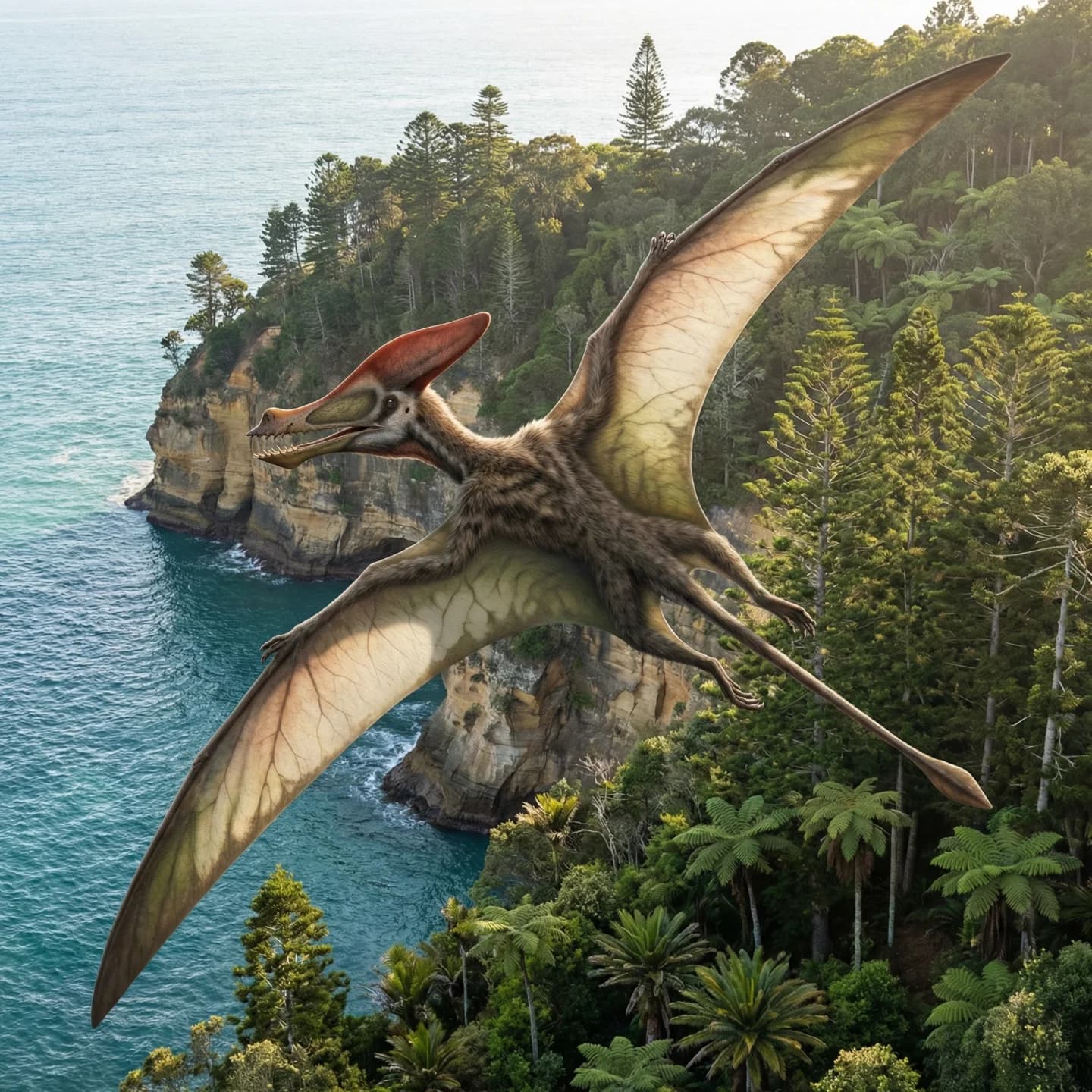
Tropeognathus (Tropeognathus mesembrinus Wellnhofer, 1987) is a large pterosaur from the late Early Cretaceous (Albian, approximately 112 Ma) of South America, belonging to the family Anhangueridae within the suborder Pterodactyloidea of the order Pterosauria. Its fossils have been recovered from the Romualdo Formation of the Santana Group in the Araripe Basin of northeastern Brazil, a geological unit renowned worldwide as a Konservat-Lagerstaette for its exceptional three-dimensional fossil preservation. The generic name derives from Greek tropis (keel) and gnathos (jaw), meaning "keel jaw," while the specific epithet mesembrinus comes from Koine Greek for "southern," referencing its provenance from the Southern Hemisphere.
With a maximum estimated wingspan of approximately 8.26–8.70 m (Kellner et al., 2013), Tropeognathus is the largest known pterosaur from the Southern Hemisphere (Gondwana), rivaled only by the giant azhdarchid pterosaurs such as Quetzalcoatlus. Its most distinctive feature is the prominent semicircular sagittal crest on the tips of both the upper and lower jaws, which Wellnhofer (1987) hypothesized functioned like a boat's keel to stabilize the snout during surface-skimming fish capture. As a piscivorous (fish-eating) pterosaur with a toothed beak, it occupied an aerial fisher ecological niche above the tropical epeiric seas that characterized the Early Cretaceous Araripe Basin.
Importantly, Tropeognathus was not a dinosaur. It was a flying reptile belonging to Pterosauria, a clade of archosaurs that evolved powered flight independently from birds. While pterosaurs and dinosaurs are both archosaurs, they represent separate evolutionary lineages. Tropeognathus also has a complex taxonomic history: after its naming in 1987, it was reassigned to various genera including Anhanguera, Ornithocheirus, Coloborhynchus, and Criorhynchus, before being reinstated as a valid genus in 2013 by Rodrigues & Kellner.
Overview
Name and Etymology
The generic name Tropeognathus is a compound of the Greek words tropis (keel, the structural spine running along the bottom of a ship) and gnathos (jaw), meaning "keel jaw." This refers to the prominent sagittal crests on the tips of both the upper and lower jaws, which resemble a ship's keel. The specific epithet mesembrinus derives from Koine Greek mesembrinos ("of the noontide," simplified as "southern"), reflecting the species' discovery in the Southern Hemisphere (Wellnhofer, 1987).
Taxonomic Status and Synonymy
Tropeognathus has endured considerable taxonomic confusion since its naming. The major synonymy history is as follows:
- 1989: Kellner reassigned it to Anhanguera mesembrinus
- 1998: Veldmeijer transferred it to Criorhynchus mesembrinus
- 2001: Fastnacht reassigned it to Coloborhynchus mesembrinus; Unwin sank it into Ornithocheirus simus as a junior synonym
- 2003: Unwin reinstated it as Ornithocheirus mesembrinus
- 2006: Veldmeijer used Criorhynchus mesembrinus
- 2013: Rodrigues & Kellner conducted a comprehensive taxonomic review and confirmed Tropeognathus as a valid genus, with T. mesembrinus as its sole valid species
This confusion reflects the broader difficulty of ornithocheirid (sensu lato) pterosaur systematics, where different research groups have applied fundamentally different classification frameworks. Since 2013, the validity of Tropeognathus has been widely accepted.
Wellnhofer (1987) also named a second species, Tropeognathus robustus, based on a more robust lower jaw (BSP 1987 I 47). However, Rodrigues & Kellner (2013) reclassified it as Anhanguera robustus, leaving T. mesembrinus as the only species in the genus.
Summary
The largest known pterosaur from Gondwana, characterized by large keel-like sagittal crests on both upper and lower jaw tips and a wingspan estimated at approximately 8.26–8.70 m.
Age, Stratigraphy, and Depositional Environment
Temporal Range
Tropeognathus fossils come from the Romualdo Formation, dated to the latest Aptian to earliest Albian stages of the Early Cretaceous, approximately 115–110 Ma. Most sources narrow the age to approximately 112 Ma based on calcareous nannofossil biostratigraphy and other dating methods (Kellner et al., 2013; Osorio-Doring et al., 2020).
Formation and Lithology
The Romualdo Formation is the uppermost lithostratigraphic unit of the Santana Group in the Araripe Basin of northeastern Brazil. It is composed of interbedded marls, limestones, calcareous concretions, and shales. The calcareous concretions are particularly notable for yielding three-dimensionally preserved fossils of extraordinary quality, making the Romualdo Formation one of the world's premier Konservat-Lagerstaetten. The holotype BSP 1987 I 46 was preserved within such a concretion, retaining its three-dimensional shape with virtually no compaction deformation.
Paleoenvironment
The Romualdo Formation records a restricted epeiric sea environment that formed during the early stages of South Atlantic rifting as South America separated from Africa. The rift valley was filled with numerous lakes and was periodically inundated by the incipient Atlantic Ocean in transgressive-regressive cycles. This produced a warm, tropical, marine-influenced depositional setting rich in diverse fauna. Tropeognathus inhabited this coastal to shallow marine environment, soaring above the waters and capturing fish.
Specimens and Diagnostic Features
Holotype and Referred Specimens
| Specimen Number | Institution | Composition | Reference |
|---|---|---|---|
| BSP 1987 I 46 (holotype) | Bayerische Staatssammlung fur Palaontologie und historische Geologie, Munich | Nearly complete skull + mandible, 3D preservation | Wellnhofer, 1987 |
| SMNS 56994 | Staatliches Museum fur Naturkunde Stuttgart | Partial mandible | Veldmeijer, 2002 |
| MN 6594-V | Museu Nacional, Rio de Janeiro | Incomplete skull + mandible, cervical/dorsal/sacral vertebrae, sternum, right scapulocoracoid + humerus, pelvis | Kellner et al., 2013 |
The holotype skull measures approximately 63 cm in length. The skull of the largest specimen, MN 6594-V, is estimated to have been nearly 1 m long (Kellner et al., 2013).
Diagnostic Features
Key diagnostic characters of Tropeognathus as identified by Wellnhofer (1987) and subsequent workers include:
- Upper jaw sagittal crest: A large, semicircular crest extending from the snout tip to the nasoantorbital fenestra, measuring approximately 23 cm long and 10.5 cm tall in the holotype. It is significantly larger and more prominent than in Coloborhynchus or Ornithocheirus.
- Lower jaw crest: A smaller crest projecting downward from the mandibular symphysis, approximately 13 cm long and 5 cm deep.
- Narrow snout tip: Unlike the laterally expanded, spoon-shaped rosette seen in Anhanguera, the rostrum of Tropeognathus does not show significant lateral expansion at its tip.
- Low, blunt frontoparietal crest: Observed in MN 6594-V.
- Dentition: 13 pairs in the upper jaw and 11 pairs in the lower jaw (teeth or alveoli), all concentrated in the anterior half of the jaws.
Specimen Limitations
The holotype consists only of a skull and mandible, providing no postcranial information. Postcranial data became available only with the description of MN 6594-V in 2013, though this specimen still lacks the tail and distal portions of the hindlimbs, leaving total body length and body mass estimates highly uncertain.
Morphology and Functional Anatomy
Skull and Crests
The skull of Tropeognathus is elongate and slender, with a long, tapering rostrum anterior to the orbits. The most striking feature is the large semicircular sagittal crest at the rostral tip, matched by a smaller opposing crest on the ventral surface of the mandibular symphysis. Wellnhofer (1987) proposed that these crests functioned like a boat's keel, stabilizing the snout when dipped into water during surface-skimming prey capture. The upper crest is distinctly larger and more prominent than in close relatives such as Coloborhynchus and Ornithocheirus, constituting a key distinguishing feature of the genus.
Dentition
The teeth are stout cones, slightly recurved posteriorly. With 13 pairs in the upper jaw and 11 pairs in the lower, all teeth are concentrated in the anterior half of the jaws and are especially dense near the jaw tips. This configuration is consistent with an adaptation for grasping slippery, struggling fish.
Postcranial Skeleton
Postcranial anatomy first became known through MN 6594-V (Kellner et al., 2013). Key features include:
- Notarium: The first five dorsal vertebrae are fused into a notarium, a structure that distributes stresses from the shoulder and wings during flight. This feature independently evolved in both pterosaurs and birds.
- Synsacrum: Five sacral vertebrae are fused into a synsacrum, with the third and fourth sacral vertebrae bearing a ventral keel.
- Ilium: The anterior blade of the ilium is strongly directed upward, forming a narrow structure.
Size Estimates
The maximized wingspan (maxws) of specimen MN 6594-V is estimated at approximately 8.70 m, and the normal wingspan (nws) at approximately 8.26 m (Kellner et al., 2013). At the time of its 2013 description, this was the largest pterosaur individual preserved at its degree of completeness. The holotype, with a skull length of approximately 63 cm, represents a smaller individual, while the skull of MN 6594-V is estimated at nearly 1 m.
No reliable, academically established body mass estimate currently exists for Tropeognathus. The figure of 100 kg popularized by the BBC documentary Walking with Dinosaurs was based on an exaggerated wingspan estimate of 12 m and is not supported by the scientific literature (Unwin, 2006). Peer-reviewed studies that directly calculate Tropeognathus body mass remain limited, and this document therefore refrains from citing a specific weight figure.
Diet and Ecology
Diet: Piscivory
Tropeognathus is strongly inferred to have been a piscivore (fish-eater) based on multiple lines of evidence:
- Tooth morphology: Stout, slightly recurved conical teeth concentrated at the jaw tips are well-suited for grasping slippery fish.
- Depositional environment: The Romualdo Formation records a fish-rich coastal to shallow marine setting.
- Anhanguerid ecology: Anhanguerid pterosaurs are broadly interpreted as occupying piscivorous ecological niches.
Flight Mode and Prey Capture
The long, narrow wing planform of Tropeognathus suggests adaptation for soaring flight. Dynamic soaring, in which the animal exploits wind speed differentials above ocean wave surfaces to gain energy without active flapping, has been proposed as a likely flight strategy, analogous to that of modern albatrosses. Wellnhofer (1987) hypothesized that the keel crests stabilized the snout during surface-skimming fish capture, though this functional interpretation remains unverified experimentally.
Coexisting Fauna
The Romualdo Formation has yielded a rich and diverse faunal assemblage alongside Tropeognathus. Other pterosaurs include Anhanguera, Cearadactylus, Brasileodactylus, Tupuxuara, and Thalassodromeus. The formation also preserves abundant fishes (Vinctifer, Calamopleurus, Cladocyclus, among others), crocodilians, turtles, and theropod dinosaurs (Santanaraptor, Mirischia, and spinosaurids). This diverse biota indicates a highly productive aquatic ecosystem in the Araripe Basin during the Early Cretaceous.
Distribution and Paleogeography
Geographic Distribution
All known Tropeognathus fossils come exclusively from the Romualdo Formation in the Araripe Basin of northeastern Brazil. Specific collection localities include the states of Ceara and Pernambuco.
Paleogeographic Context
During the late Early Cretaceous (approximately 112 Ma), South America and Africa were in the process of rifting apart. The Araripe Basin occupied a position within the early South Atlantic rift zone at an estimated paleolatitude of approximately 10–15 degrees South, placing it firmly in the tropics. The rift valley contained numerous lakes and was periodically flooded by the incipient Atlantic Ocean, creating an ideal environment for large piscivorous pterosaurs like Tropeognathus.
Phylogeny and Classification Debate
Family-Level Placement
The family-level classification of Tropeognathus has shifted between Anhangueridae and Ornithocheiridae depending on the analytical framework employed:
- Anhangueridae (majority view): Multiple analyses from 2019–2020 onward (Holgado et al., 2019; Kellner et al., 2019; Pegas et al., 2019; Holgado & Pegas, 2020) have recovered Tropeognathus within Anhangueridae.
- Ornithocheiridae: The analysis by Andres & Myers (2013) placed Tropeognathus at a basal position within Ornithocheiridae. This arrangement was generally preferred by European workers who used Ornithocheiridae as the more inclusive group.
Subfamily: Tropeognathinae
Holgado & Pegas (2020) established the new subfamily Tropeognathinae within Anhangueridae, placing Tropeognathus as sister taxon to Siroccopteryx. This subfamily also includes Mythunga and Ferrodraco, and is contrasted with Coloborhynchinae and Anhanguerinae within the same family.
| Analysis | Year | Tropeognathus Placement | Sister Taxon |
|---|---|---|---|
| Andres & Myers | 2013 | Ornithocheiridae (basal) | Near Ornithocheirus |
| Holgado et al. | 2019 | Anhangueridae | Within anhanguerids |
| Kellner et al. | 2019 | Anhangueridae | Within anhanguerids |
| Holgado & Pegas | 2020 | Anhangueridae: Tropeognathinae | Siroccopteryx |
Reconstruction and Uncertainty
Confirmed
- Large anhanguerid pterosaur with prominent sagittal crests on both upper and lower jaw tips.
- Wingspan estimated at approximately 8.26–8.70 m (based on MN 6594-V).
- Toothed beak with teeth concentrated in the anterior jaws; recovered from the Romualdo Formation (late Aptian–early Albian).
- Tropeognathus is a valid genus with T. mesembrinus as its sole valid species (confirmed by Rodrigues & Kellner, 2013).
Strongly Supported Inferences
- Piscivory: Supported by tooth morphology, depositional environment, and phylogenetic bracketing with other anhanguerid ecology.
- Soaring flight: Inferred from wing proportions analogous to modern dynamic soarers.
- Anhangueridae placement: Supported by multiple independent phylogenetic analyses from 2019–2020 onward.
Hypothetical or Uncertain
- Body mass: No academically established mass estimate exists. The 100 kg figure from the BBC documentary was based on an exaggerated 12 m wingspan and is not scientifically supported.
- Total body length: Incomplete postcranial material prevents reliable total length estimation.
- Keel crest function: Wellnhofer's "surface stabilizer" hypothesis is plausible but experimentally unverified.
- Social behavior: No multi-individual bone bed has been reported, so group living remains purely speculative.
Popular Media vs. Science
The BBC documentary Walking with Dinosaurs (1999), Episode 4 ("Giant of the Skies"), featured this pterosaur as its protagonist under the name Ornithocheirus mesembrinus. The program depicted it with a wingspan of 12 m and a body mass of 100 kg, but the actual description of the largest specimens yielded a maximum wingspan of approximately 8.70 m (Kellner et al., 2013), far less than the television estimate. Unwin (2006) noted that the BBC producers likely chose the most dramatic possible size estimate because it was more "spectacular."
Comparison with Related Taxa
| Taxon | Family | Locality | Age | Estimated Wingspan | Key Differences |
|---|---|---|---|---|---|
| Tropeognathus mesembrinus | Anhangueridae | Brazil | Aptian-Albian | 8.26–8.70 m | Largest keel crests; non-rosette snout tip |
| Anhanguera santanae | Anhangueridae | Brazil | Aptian-Albian | ~4–5 m | Laterally expanded rosette snout tip |
| Ornithocheirus simus | Ornithocheiridae | England | Albian-Cenomanian | ~4.5–6.1 m | Thicker crest; smaller overall size |
| Coloborhynchus clavirostris | Ornithocheiridae/Anhangueridae | England | Albian | ~4–7 m | Different crest morphology |
| Siroccopteryx moroccensis | Anhangueridae | Morocco | Cenomanian | ~5–6 m | Sister taxon within Tropeognathinae |
Fun Facts
FAQ
📚References
- Wellnhofer, P. (1987). New crested pterosaurs from the Lower Cretaceous of Brazil. Mitteilungen der Bayerischen Staatssammlung fur Palaontologie und historische Geologie, 27, 175–186.
- Kellner, A.W.A., Campos, D.A., Sayao, J.M., Saraiva, A.N.A.F., Rodrigues, T., Oliveira, G., Cruz, L.A., Costa, F.R., Silva, H.P. & Ferreira, J.S. (2013). The largest flying reptile from Gondwana: A new specimen of Tropeognathus cf. T. mesembrinus Wellnhofer, 1987 (Pterodactyloidea, Anhangueridae) and other large pterosaurs from the Romualdo Formation, Lower Cretaceous, Brazil. Anais da Academia Brasileira de Ciencias, 85(1), 113–135. doi:10.1590/S0001-37652013000100009
- Rodrigues, T. & Kellner, A.W.A. (2013). Taxonomic review of the Ornithocheirus complex (Pterosauria) from the Cretaceous of England. ZooKeys, 308, 1–112. doi:10.3897/zookeys.308.5559
- Holgado, B. & Pegas, R.V. (2020). A taxonomic and phylogenetic review of the anhanguerid pterosaur group Coloborhynchinae and the new clade Tropeognathinae. Acta Palaeontologica Polonica, 65. doi:10.4202/app.00751.2020
- Veldmeijer, A.J. (2002). Pterosaurs from the Lower Cretaceous of Brazil in the Stuttgart collection. Stuttgarter Beitrage zur Naturkunde, Serie B (Geologie und Palaontologie), 327, 1–27.
- Veldmeijer, A.J. (2006). Toothed pterosaurs from the Santana Formation (Cretaceous; Aptian-Albian) of northeastern Brazil. A reappraisal on the basis of newly described material. Proefschrift Universiteit Utrecht.
- Unwin, D.M. (2003). On the phylogeny and evolutionary history of pterosaurs. Geological Society, London, Special Publications, 217(1), 139–190. doi:10.1144/GSL.SP.2003.217.01.11
- Unwin, D.M. (2006). The Pterosaurs: From Deep Time. New York: Pi Press. p. 246.
- Wellnhofer, P. (1991). The Illustrated Encyclopedia of Pterosaurs. New York: Barnes and Noble Books. p. 124.
- Andres, B. & Myers, T.S. (2013). Lone Star Pterosaurs. Earth and Environmental Science Transactions of the Royal Society of Edinburgh, 103(3–4), 383–398. doi:10.1017/S1755691013000303
- Holgado, B., Pegas, R.V., Canudo, J.I., Fortuny, J., Rodrigues, T., Company, J. & Kellner, A.W.A. (2019). On a new crested pterodactyloid from the Early Cretaceous of the Iberian Peninsula and the radiation of the clade Anhangueria. Scientific Reports, 9, 4940. doi:10.1038/s41598-019-41280-4
- Pinheiro, F.L. & Rodrigues, T. (2017). Anhanguera taxonomy revisited: is our understanding of Santana Group pterosaur diversity biased by poor biological and stratigraphic control? PeerJ, 5, e3285. doi:10.7717/peerj.3285
- Kellner, A.W.A. & Tomida, Y. (2000). Description of a new species of Anhanguera (Pterodactyloidea) with comments on the pterosaur fauna from the Santana Formation (Aptian–Albian), northeastern Brazil. National Science Museum Monographs, 17.
- Haines, T. (1999). Walking with Dinosaurs: A Natural History. BBC Books. p. 158.
- Osorio-Doring, S.C., et al. (2020). New marine data and age accuracy of the Romualdo Formation (Santana Group, Araripe Basin), northeastern Brazil. Scientific Reports, 10, 15699. doi:10.1038/s41598-020-72789-8
Gallery
5 images Tropeognathus
Tropeognathus · Cretaceous Period · Piscivore
 Tropeognathus
Tropeognathus · Cretaceous Period · Piscivore
 Tropeognathus
Tropeognathus · Cretaceous Period · Piscivore
 Tropeognathus
Tropeognathus · Cretaceous Period · Piscivore
 Tropeognathus
Tropeognathus · Cretaceous Period · Piscivore
🔗Related Creatures

Pteranodon
Pteranodon
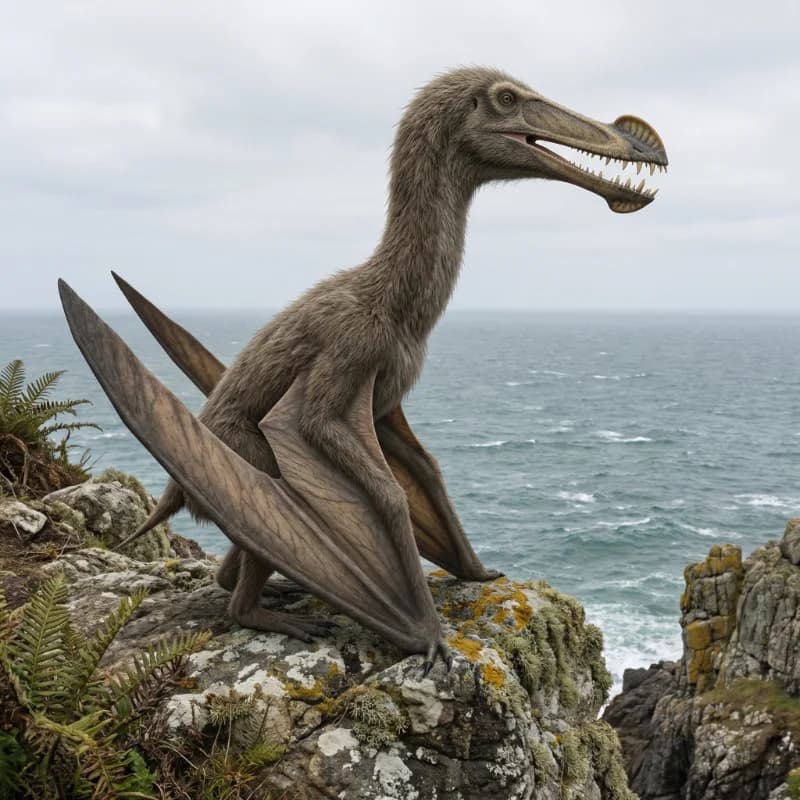
Ornithocheirus
Ornithocheirus simus
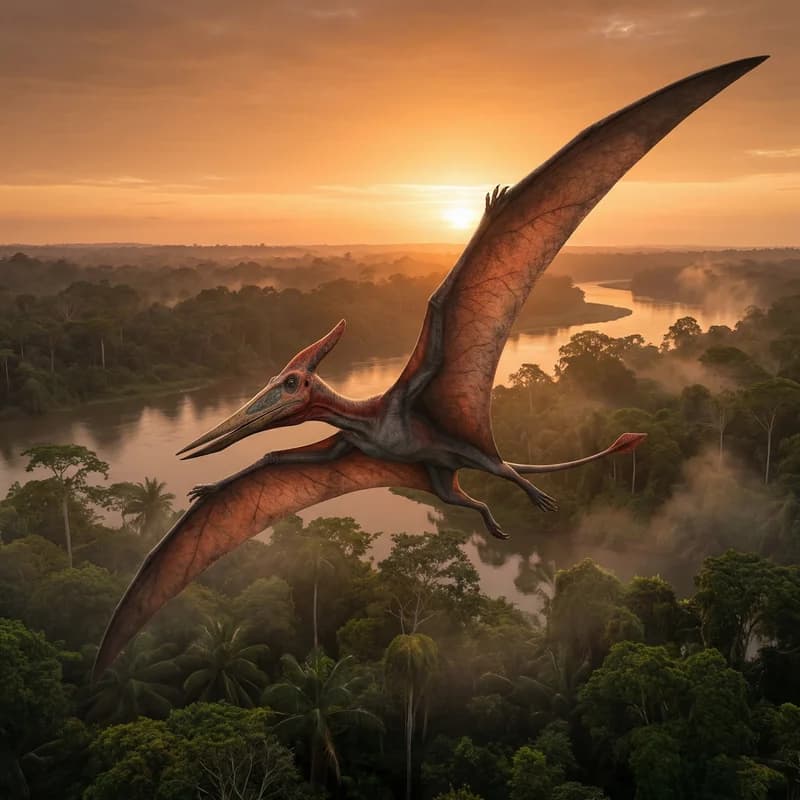
Anhanguera
Anhanguera blittersdorffi
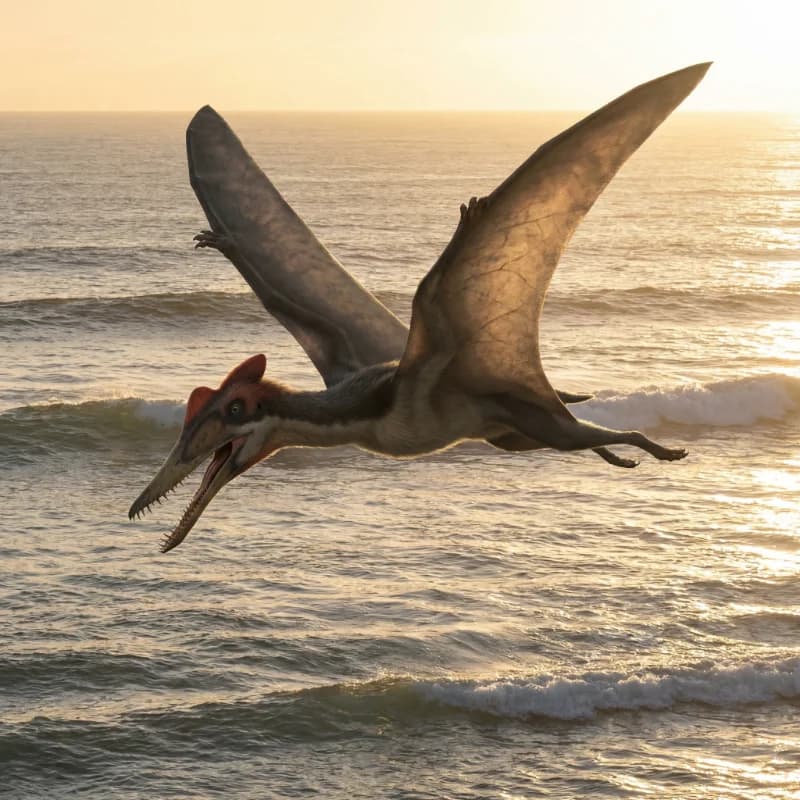
Ferrodraco
Ferrodraco lentoni
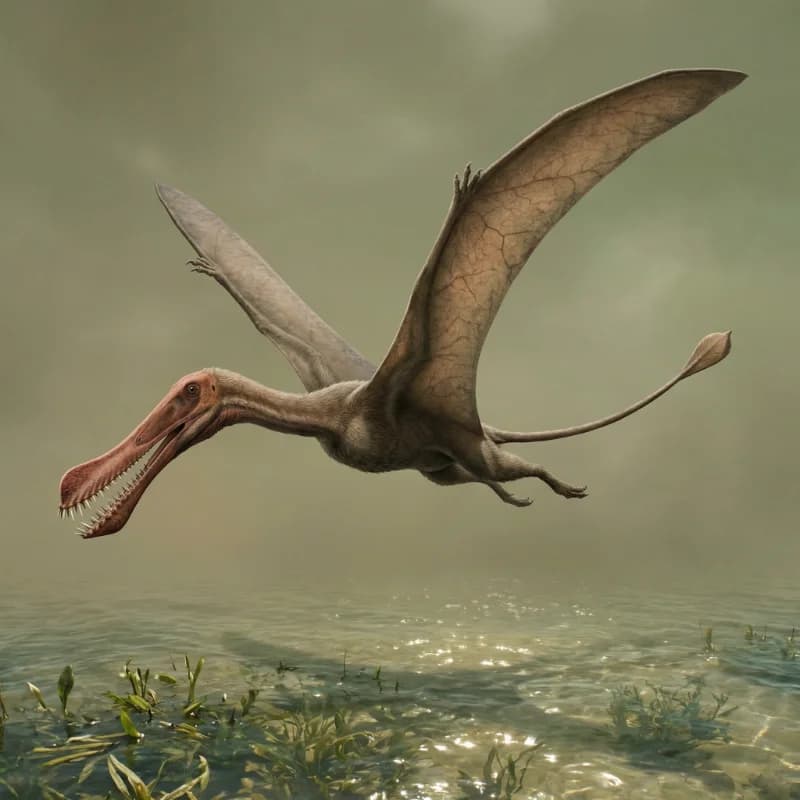
Cearadactylus
Cearadactylus atrox
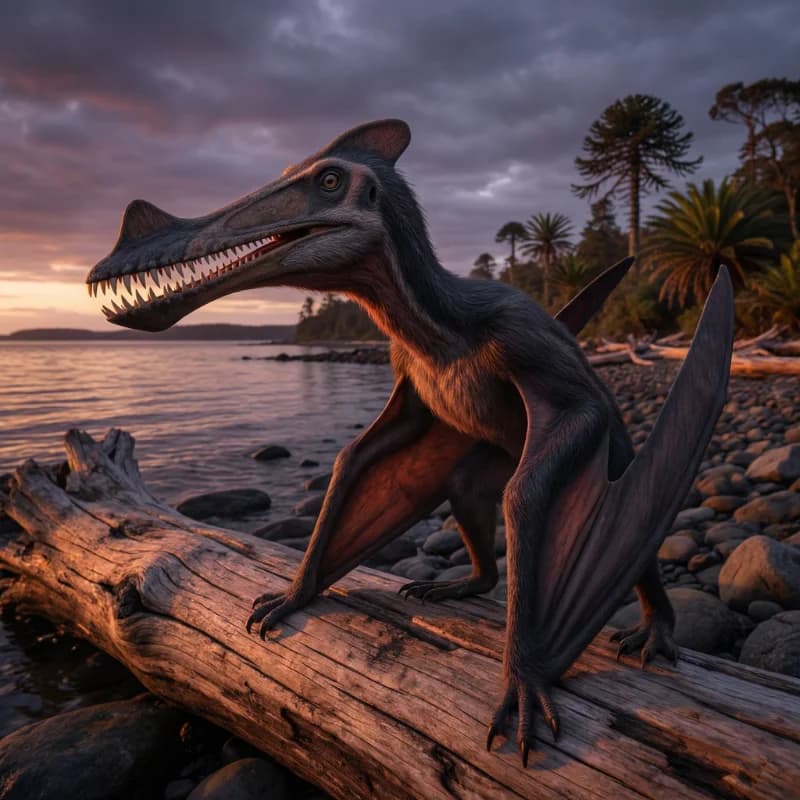
Guidraco
Guidraco venator
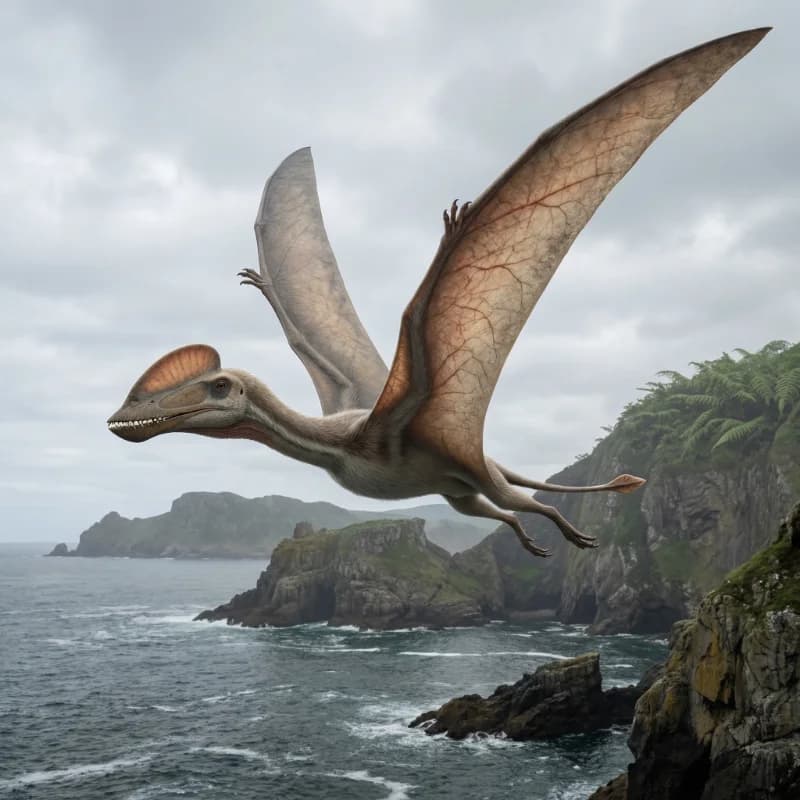
Coloborhynchus
Coloborhynchus clavirostris
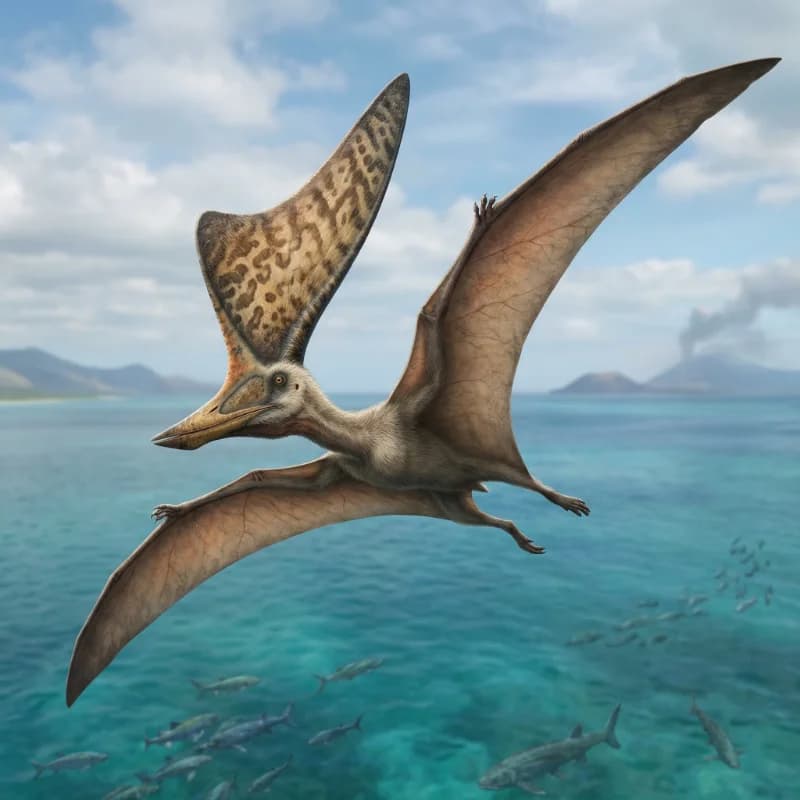
Nyctosaurus
Nyctosaurus gracilis