Ornithocheirus
Cretaceous Period Piscivore Creature Type
Ornithocheirus simus
Scientific Name: "Ornithocheirus: Ancient Greek ornis (bird) + cheir (hand) = 'bird hand'; simus: Latin 'snub-nosed, flat'"
Physical Characteristics
Discovery
Habitat
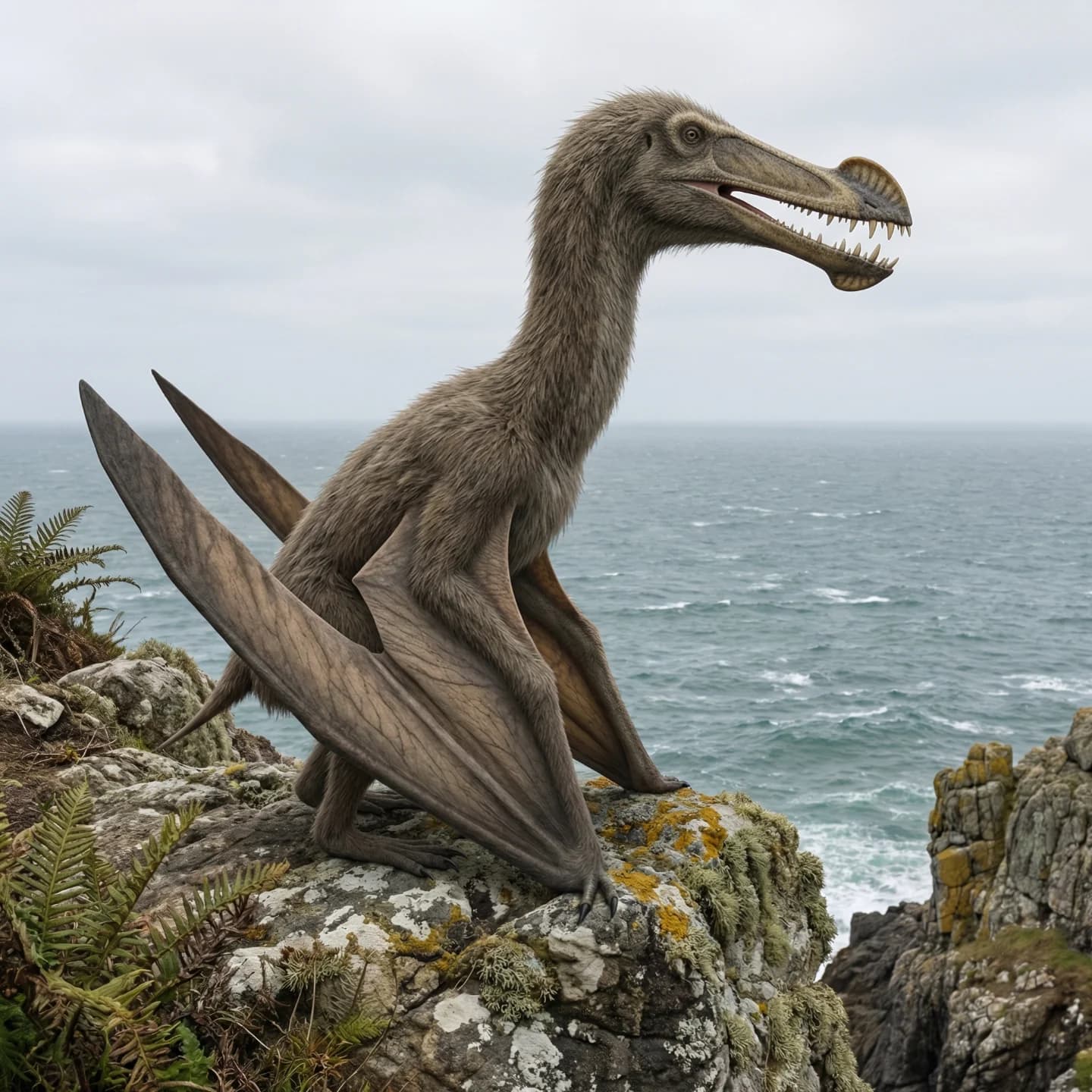
Ornithocheirus (Ornithocheirus simus Owen, 1861) is a medium-sized pterosaur from the Early Cretaceous Albian stage (approximately 105–100.5 Ma), belonging to the family Ornithocheiridae within Pterodactyloidea of the order Pterosauria. The genus name derives from the Ancient Greek ornis (bird) and cheir (hand), meaning "bird hand," reflecting the 19th-century belief of its namer Harry Govier Seeley that pterosaurs were direct ancestors of birds. The type species epithet simus is Latin for "snub-nosed" or "flat," a reference to the blunt morphology of its jaw tip, first described by Richard Owen in 1861 as Pterodactylus simus.
Ornithocheirus is known primarily from fragmentary jaw tip fossils recovered from the Cambridge Greensand of Cambridgeshire, England. Its wingspan is estimated at approximately 4.5–6.1 m, with a body mass of roughly 20–45 kg (Paul, 2022 estimated 5 m wingspan and 20 kg). The animal bore a distinctive convex keeled crest on the tip of its snout and is distinguished from close relatives such as Tropeognathus and Coloborhynchus by its narrower jaw tips, lack of a prominent lateral rosette expansion, and predominantly vertically oriented teeth.
This genus is historically infamous as one of the most taxonomically troubled pterosaur taxa. Over 40 species were assigned to Ornithocheirus during the 19th and 20th centuries, making it a classic "wastebasket genus." Following the comprehensive revision by Rodrigues & Kellner (2013), only the type species O. simus is currently considered valid. The genus gained widespread public recognition through BBC's "Walking with Dinosaurs" (1999), where it was depicted as a giant pterosaur with a 12 m wingspan — an enormous exaggeration, as the animal portrayed was actually based on the Brazilian Tropeognathus mesembrinus, and the real O. simus had a wingspan of only about 5 m.
Overview
Name and Etymology
The genus name Ornithocheirus is a compound of the Ancient Greek ὄρνις (ornis, bird) and χείρ (cheir, hand), literally meaning "bird hand." Seeley (1869) coined this name when cataloguing the pterosaur collection of the Woodwardian Museum (now Sedgwick Museum of Earth Sciences) at the University of Cambridge. At the time, he believed pterosaurs were the direct evolutionary ancestors of birds, and that the pterosaur hand represented a transitional stage toward the avian wing (Seeley, 1870). This hypothesis was later thoroughly disproven — birds evolved from small theropod dinosaurs — but the name persists under the rules of the ICZN.
The type species epithet simus was originally applied by Owen (1861) when he described the specimen as Pterodactylus simus. The word is Latin for "snub-nosed" or "flat-nosed," describing the blunt, robust character of the rostral tip.
Taxonomic Status and Historical Confusion
Ornithocheirus holds the dubious distinction of being one of the most taxonomically chaotic genera in pterosaur paleontology. Seeley (1869, 1870) assigned 27 species from the Cambridge Greensand to this genus, and subsequent authors inflated the total to over 40 named species. Owen (1874), who considered the name Ornithocheirus inappropriate because he rejected the evolutionary link between pterosaurs and birds, erected two replacement genera: Criorhynchus ("ram beak") and Coloborhynchus ("maimed beak"). However, since Criorhynchus shares the same type species (Pterodactylus simus) as Ornithocheirus, it is an objective junior synonym under the Principle of Priority (ICZN articles 23.1 and 61.3.3).
The comprehensive revision by Rodrigues & Kellner (2013) examined more than 30 species from the Cretaceous of England that had at some point been referred to Ornithocheirus. Of these, 16 were declared nomina dubia (undiagnosable due to fragmentary material), and the remaining valid species were redistributed among the genera Lonchodraco gen. nov., Camposipterus gen. nov., Cimoliopterus gen. nov., and Coloborhynchus. Ornithocheirus itself was confirmed as monotypic, containing only O. simus. O. platyrhinus Seeley, 1870 was synonymized with O. simus.
Key Distinguishing Feature
A medium-sized piscivorous pterosaur characterized by a convex keeled crest on the snout tip, vertically oriented teeth, and narrow jaw tips lacking the prominent lateral rosette expansion seen in related anhanguerid pterosaurs.
Stratigraphy, Age, and Depositional Environment
Temporal Range
Fossils of O. simus derive primarily from the Cambridge Greensand, a thin geological unit that is stratigraphically earliest Cenomanian in age (~100 Ma) but contains reworked fossils of late Albian age (~105–100.5 Ma) (Hart & Fox, 2020; Unwin, 2001). The actual lifespan of O. simus therefore corresponds to the late Albian, approximately 105–100.5 million years ago.
A specimen from the Kem Kem Group of Morocco (FSAC-KK 5025) has been tentatively referred to O. cf. simus (Jacobs et al., 2020), potentially extending the geographic and temporal range into the mid-Cretaceous of North Africa (~100–94 Ma), though this referral remains unconfirmed.
Formation and Lithology
The Cambridge Greensand lies above the erosive contact between the Gault Formation and the Chalk Group in the vicinity of Cambridgeshire, forming the lowest member bed of the West Melbury Marly Chalk Formation. It is extremely thin (0.1–1 m) and composed of glauconitic marl (described as a "chalk mud"), with abundant microfossils (ostracods, coccoliths, foraminifera) and a basal concentration of phosphatic nodules and bone (Hart & Fox, 2020; BGS records).
Depositional Environment and Paleoenvironment
The Cambridge Greensand represents a remanié deposit — fossils were not preserved in situ but were reworked from older sediments. Pterosaur carcasses are interpreted to have floated on the sea surface, gradually losing individual bones that sank to the seafloor of an epeiric (epicontinental) sea. Water currents then abraded, transported, and redeposited the bones before final burial (Unwin, 2001). This taphonomic history explains why all specimens are isolated, disarticulated, and heavily abraded fragments.
The paleocoordinates for the Cambridge Greensand are approximately 41°N, 1.8°E, indicating that during the mid-Cretaceous, this part of England lay at a significantly lower latitude than today, in a subtropical to warm-temperate climate zone.
Specimens and Diagnostic Characters
Holotype
The holotype of Ornithocheirus simus is CAMSM B54428, housed in the Sedgwick Museum of Earth Sciences, Cambridge, England. It consists of the anterior portion of the rostrum (upper jaw tip). Originally described by Owen (1861) as Pterodactylus simus, it was designated as the type species of Ornithocheirus by monotypy (ICZN articles 67.2, 67.2.1, and 68.3), since the other two species originally referred to the genus by Seeley (1869) were nomenclaturally unavailable (Unwin & Bakhurina, 2000; Unwin, 2001; Rodrigues & Kellner, 2013).
Referred Specimens
| Specimen | Repository | Material | Notes |
|---|---|---|---|
| CAMSM B54428 | Sedgwick Museum, Cambridge | Anterior rostrum fragment | Holotype |
| CAMSM B54429 | Sedgwick Museum, Cambridge | Anterior rostrum fragment | Referred specimen |
| CAMSM B54552 | Sedgwick Museum, Cambridge | Anterior rostrum fragment | Holotype of O. platyrhinus, synonymized with O. simus |
| MANCH L10832 | Manchester Museum | Anterior rostrum fragment | Referred specimen |
| FSAC-KK 5025 | Faculté des Sciences Aïn Chock, Morocco | Rostrum fragment | Tentatively referred as O. cf. simus (Kem Kem Group) |
Unwin (2001) reported that O. simus material from the Cambridge Greensand includes fragments of 13 rostra and 5 mandibular symphyses.
Diagnosis
The following diagnostic characters of O. simus were identified by Rodrigues & Kellner (2013):
- Presence of a convex keeled crest on the anterior tip of the rostrum, developed on both upper and lower jaws
- The palatal tip is not reflected (i.e., the first upper alveolus does not face markedly anteroventrally), unlike anhangueroids (Pêgas, 2025)
- Teeth are predominantly vertically oriented, rather than angled outward as in Coloborhynchus and Tropeognathus
- The jaw tips are relatively narrow, lacking the prominent lateral rosette expansion characteristic of anhanguerids
Limitations of Known Material
All confirmed English specimens consist exclusively of fragmentary jaw tips. No complete skull, postcranial elements, or limb bones are known for O. simus. This extreme incompleteness is the primary source of uncertainty regarding its body proportions, phylogenetic placement, and paleobiology.
Morphology and Functional Interpretation
Size Estimates
The holotype CAMSM B54428 represents a relatively small individual, corresponding to a wingspan of approximately 2.5 m. However, larger referred specimens indicate that the species attained wingspans of approximately 4.5–6.1 m. Paul (2022, The Princeton Field Guide to Pterosaurs) estimated a wingspan of 5 m and a body mass of approximately 20 kg. Some informal estimates suggest a mass range of 23–45 kg for the largest individuals. Historical estimates of a 12.2 m (40 ft) wingspan are now recognized as enormous overestimates based on material that does not belong to O. simus.
| Estimate | Value | Source |
|---|---|---|
| Wingspan (holotype) | ~2.5 m | Based on CAMSM B54428 |
| Wingspan (referred specimens) | ~4.5–6.1 m | Multiple specimens, various estimates |
| Wingspan (Paul, 2022) | ~5 m | Princeton Field Guide to Pterosaurs |
| Body mass (Paul, 2022) | ~20 kg | Princeton Field Guide to Pterosaurs |
| Body mass (informal range) | ~23–45 kg | Various informal estimates |
Skull and Crest
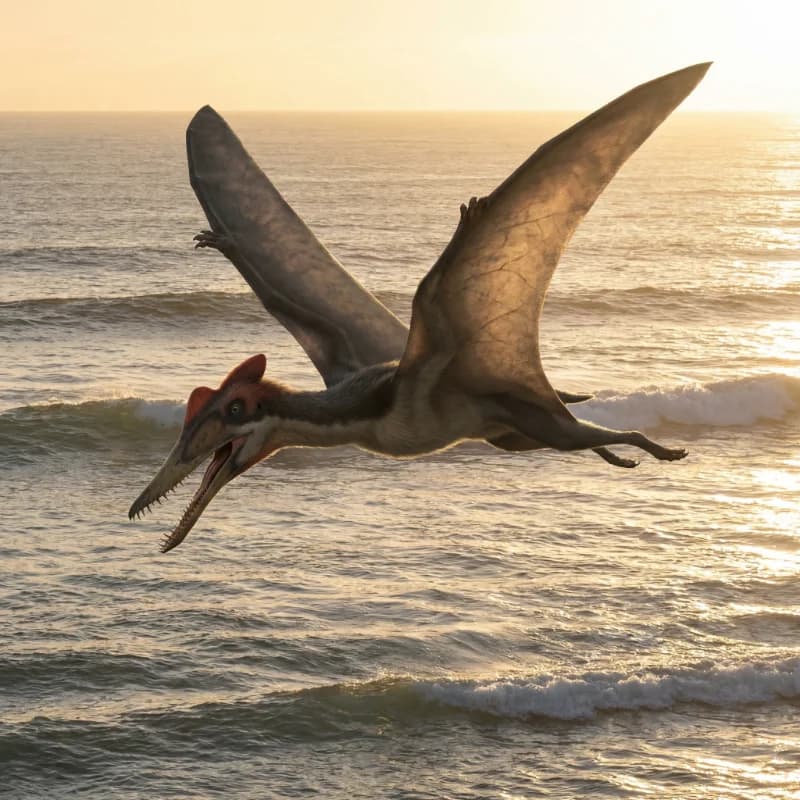
The most distinctive feature of Ornithocheirus is the convex keeled crest on the tip of its snout. This crest was present on both the upper and lower jaws, with the upper crest extending posteriorly toward the narial region. Each crest had a semicircular cross-sectional profile. Proposed functions for such crests include aerodynamic stabilization during flight, species recognition, and sexual display, though none of these hypotheses has been directly tested for O. simus due to the fragmentary nature of the material.
Dentition
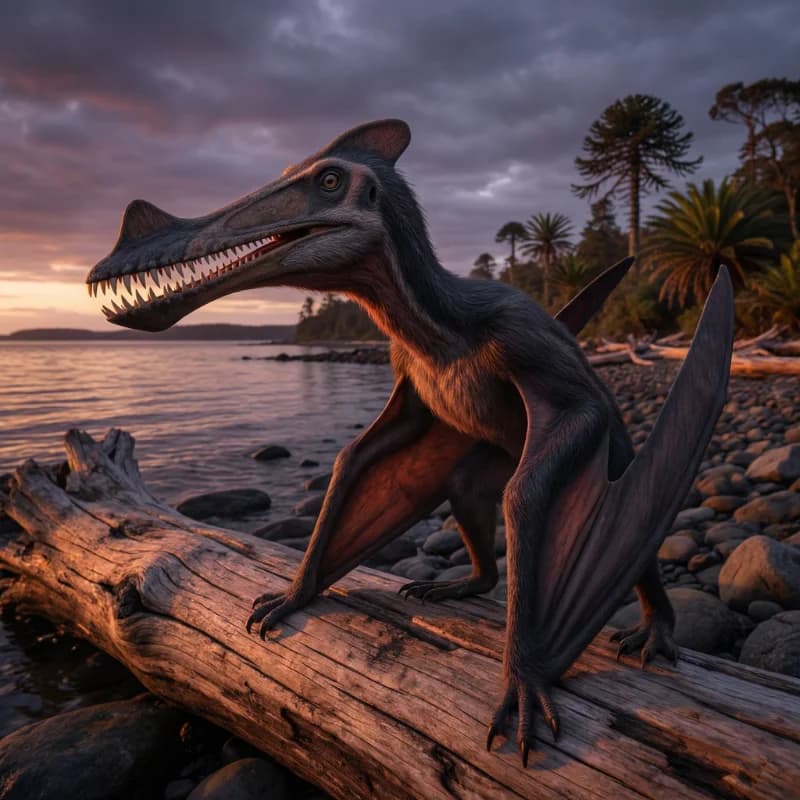
The teeth are conical in shape and mostly vertically oriented within the jaw. This contrasts sharply with the laterally angled or outwardly splayed teeth of related genera such as Coloborhynchus and Tropeognathus. The jaw tips taper toward the anterior end, a morphology that has been interpreted as potentially suited for skim-feeding over water surfaces, though direct evidence for this feeding strategy is lacking.
Wings and Flight
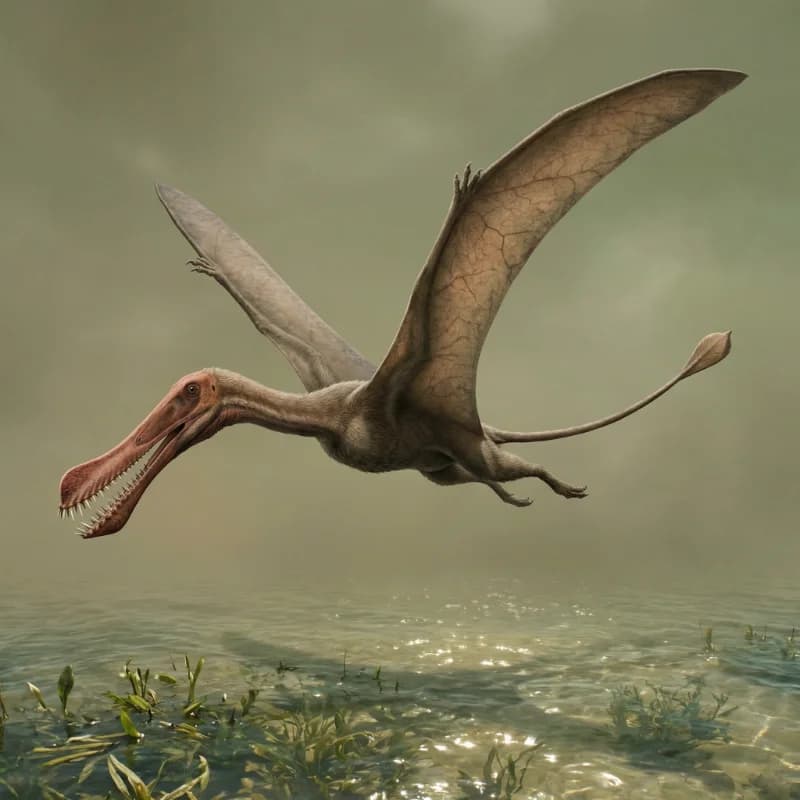
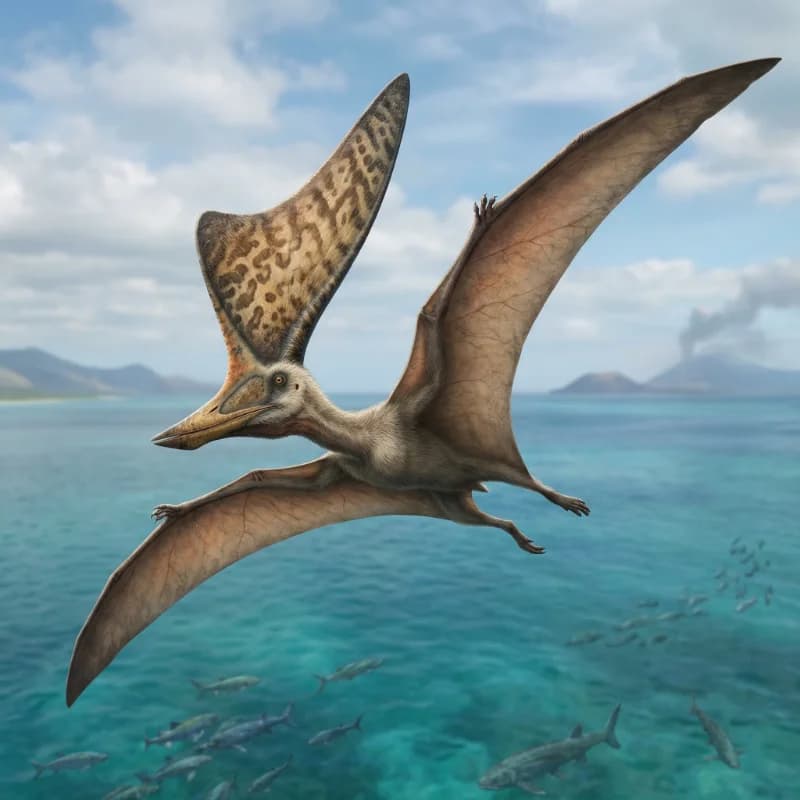
Since no postcranial material is known for O. simus, information about wing structure and flight capability must be inferred from comparative anatomy of related ornithocheiriform pterosaurs. Ornithocheirids generally possessed long, narrow wings (high aspect ratio) suited for dynamic soaring over open ocean, analogous to modern albatrosses. The combination of a light body mass (20–45 kg) and a 5 m class wingspan would have been efficient for sustained marine soaring flight.
Diet and Ecology
Evidence for Diet
The conical teeth and narrow jaw tips of O. simus are consistent with piscivory (fish-eating), as is characteristic of ornithocheiriform pterosaurs as a whole (Wellnhofer, 1991; Unwin, 2006; Pêgas et al., 2021). This interpretation is based on dental morphology and jaw shape — no direct evidence from stomach contents or stable isotope analyses has been reported for this species.
Ecological Niche
Ornithocheirus likely occupied a niche as a marine soaring piscivore, hunting fish while flying over the shallow epeiric seas that covered much of Europe during the mid-Cretaceous. The taphonomic context of the Cambridge Greensand — a marine deposit where pterosaur bones accumulated from floating carcasses — supports the interpretation that these animals spent significant time over open water.
Contemporary Fauna
The Cambridge Greensand has yielded an exceptionally diverse pterosaur assemblage. In addition to O. simus, at least 6–7 other valid pterosaur genera are known from this deposit, including Coloborhynchus clavirostris, Camposipterus nasutus, Cimoliopterus cuvieri, Lonchodraco spp., and the edentulous azhdarchoid Ornithostoma. The deposit also preserves ichthyosaurs (Pervushovisaurus, Cetarthrosaurus), dinosaurs (Anoplosaurus), and early birds (Enaliornis), painting a picture of a rich mid-Cretaceous marine-influenced ecosystem.
Distribution and Paleogeography
Geographic Range
The only confirmed locality for O. simus is the Cambridge Greensand of Cambridgeshire, England. A specimen from the Kem Kem Group of Morocco (FSAC-KK 5025) was tentatively referred to O. cf. simus by Jacobs et al. (2020), suggesting a potential range extension into North Africa during the Cenomanian (~100–94 Ma). In the phylogenetic analysis of Pêgas (2025), this Kem Kem specimen was recovered within Ornithocheiridae alongside O. simus and the Australian Thapunngaka, though its precise taxonomic identity remains unresolved.
Paleocoordinates and Climate
The paleocoordinates for the Cambridge Greensand locality are approximately 41°N, 1.8°E. During the mid-Cretaceous, England lay at a significantly lower latitude than its present position, within a subtropical to warm-temperate climate zone. Global temperatures during the Albian–Cenomanian were substantially higher than today, with minimal polar ice and elevated sea levels that created extensive shallow seas across Europe.
Phylogeny and Taxonomic Debates
The Ornithocheiridae Scope Problem
The scope of Ornithocheiridae is one of the most contentious issues in pterosaur systematics, with two major competing frameworks:
Restrictive Ornithocheiridae: O. simus and its closest relatives only, with Anhanguera, Tropeognathus, and allies placed in a separate Anhangueridae (Kellner, 2003; Rodrigues & Kellner, 2013; Pêgas et al., 2019; Pêgas, 2025).
Broad Ornithocheiridae: A single family encompassing O. simus, Tropeognathus, Anhanguera, and their relatives, rendering Anhangueridae redundant (Unwin, 2003; Andres & Myers, 2013).
Andres et al. (2014) and Andres (2021) redefined Ornithocheiridae under the PhyloCode as the most inclusive clade containing O. simus but not Anhanguera blittersdorffi. Pêgas (2025) criticized this definition for disrupting traditional nomenclatural usage when applied to alternative phylogenetic hypotheses, and proposed the new clade name Anhangueroidea along with an unrestricted emendation of Anhangueridae to stabilize the nomenclature.
Latest Phylogenetic Analysis (Pêgas, 2025)
Pêgas (2025) conducted the most comprehensive pterosaur phylogenetic analysis to date, incorporating 202 in-group taxa and 563 characters. In this analysis, O. simus was recovered as the sister taxon of Thapunngaka shawi from Australia within a restrictive Ornithocheiridae. The Kem Kem specimen (FSAC-KK 5025) was also placed within this clade. Ornithocheiridae in this topology is a small group (Ornithocheirus + Thapunngaka + Kem Kem specimen), clearly separated from Anhangueridae (Tropeognathus, Coloborhynchus, Anhanguera, etc.).
Earlier analyses placed O. simus in variable positions: Andres & Myers (2013) recovered it within a broad Ornithocheiridae in a position more derived than Tropeognathus but more basal than Coloborhynchus, while Pêgas et al. (2019) placed it as a basal member of Ornithocheirae outside Anhangueridae.
Reconstruction and Uncertainty
Confirmed
- O. simus is a valid genus and species; the holotype is CAMSM B54428 (Unwin, 2001; Rodrigues & Kellner, 2013).
- It is known from the Cambridge Greensand (England), containing reworked Albian-age fossils.
- It bore a convex keeled crest on the snout tip, with predominantly vertically oriented teeth.
- It belongs to Ornithocheiridae within Pterodactyloidea.
Probable but Unconfirmed
- A wingspan of 4.5–6.1 m and body mass of 20–45 kg (no postcranial skeleton known, so estimates are based on jaw scaling comparisons with related taxa).
- Piscivorous ecology (inferred from morphology only; no stomach contents or isotopic data).
- The Kem Kem specimen (FSAC-KK 5025) belonging to O. simus (Jacobs et al., 2020).
Hypothetical
- Exact phylogenetic position within Ornithocheiridae (varies between analyses).
- Skim-feeding behavior (morphological inference only).
- Function of the keeled crest (sexual display, aerodynamic stabilization, or species recognition — no direct evidence).
Popular Media vs. Science
BBC's "Walking with Dinosaurs" (1999), Episode 4 ("Giant of the Skies"), depicted Ornithocheirus as an enormous pterosaur with a wingspan of approximately 12 m (40 ft). This portrayal was scientifically inaccurate on two counts: first, the animal depicted was modeled after the Brazilian Tropeognathus mesembrinus (which Unwin, 2003 had temporarily classified as an Ornithocheirus species); second, even the actual Tropeognathus had a wingspan of only about 8.2 m. The real O. simus had a wingspan of roughly 5 m — less than half the size shown in the documentary.
Comparison with Related Taxa
| Genus | Family | Localities | Age | Wingspan | Jaw Tip Characteristics |
|---|---|---|---|---|---|
| Ornithocheirus | Ornithocheiridae | England (+Morocco?) | Albian | ~5 m | Narrow tips, vertical teeth, keeled crest |
| Tropeognathus | Anhangueridae | Brazil | Albian | ~8.2 m | Broad rosette, large keeled crests |
| Coloborhynchus | Anhangueridae | England, Brazil, USA | Albian–Cenomanian | ~4–6 m | Broad rosette, laterally angled teeth |
| Anhanguera | Anhangueridae | Brazil | Aptian–Albian | ~4–5 m | Broad rosette, prominent keeled crest |
| Thapunngaka | Ornithocheiridae | Australia | Albian–Cenomanian | ~7 m | Large keeled crest |
The key morphological distinction between Ornithocheirus and the Anhangueria (the clade containing Anhanguera, Tropeognathus, and Coloborhynchus) is the absence in Ornithocheirus of both a reflected palatal tip and a prominent lateral expansion (rosette) of the anterior jaw (Pêgas, 2025). These characters are the principal features separating Ornithocheiridae from Anhangueridae in the restrictive taxonomic framework.
Fun Facts
FAQ
📚References
- Seeley, H.G. (1869). Index to the fossil remains of Aves, Ornithosauria, and Reptilia, from the Secondary System of Strata, arranged in the Woodwardian Museum of the University of Cambridge. Annals and Magazine of Natural History, 5(27): 225–226. https://doi.org/10.1080/00222937008696143
- Seeley, H.G. (1870). The Ornithosauria: an Elementary Study of the Bones of Pterodactyles. Cambridge, pp. 112–128.
- Owen, R. (1861). Monograph on the fossil Reptilia of the Cretaceous formations, Supplement III. Palaeontographical Society, London.
- Owen, R. (1874). Monograph on the fossil Reptilia of the Mesozoic Formations. Palaeontographical Society, London, 14 pp.
- Hooley, R.W. (1914). On the Ornithosaurian genus Ornithocheirus, with a review of the specimens from the Cambridge Greensand in the Sedgwick Museum, Cambridge. Annals and Magazine of Natural History, 13(78): 529–557. https://doi.org/10.1080/00222931408693521
- Wellnhofer, P. (1978). Pterosauria. Handbuch der Paläoherpetologie, Teil 19. Gustav Fischer Verlag, Stuttgart and New York, 82 pp.
- Unwin, D.M. (2001). An overview of the pterosaur assemblage from the Cambridge Greensand (Cretaceous) of Eastern England. Mitteilungen aus dem Museum für Naturkunde in Berlin, Geowissenschaftliche Reihe, 4: 189–221.
- Unwin, D.M. (2003). On the phylogeny and evolutionary history of pterosaurs. Geological Society, London, Special Publications, 217(1): 139–190. https://doi.org/10.1144/GSL.SP.2003.217.01.11
- Unwin, D.M. (2006). The Pterosaurs: From Deep Time. Pi Press, New York, 246 pp.
- Rodrigues, T. & Kellner, A.W.A. (2013). Taxonomic review of the Ornithocheirus complex (Pterosauria) from the Cretaceous of England. ZooKeys, 308: 1–112. https://doi.org/10.3897/zookeys.308.5559
- Andres, B. & Myers, T.S. (2013). Lone Star Pterosaurs. Earth and Environmental Science Transactions of the Royal Society of Edinburgh, 103(3–4): 383–398. https://doi.org/10.1017/S1755691013000303
- Jacobs, M.L., Martill, D.M., Unwin, D.M., Ibrahim, N., Zouhri, S. & Longrich, N.R. (2020). New toothed pterosaurs (Pterosauria: Ornithocheiridae) from the middle Cretaceous Kem Kem beds of Morocco and implications for pterosaur palaeobiogeography and diversity. Cretaceous Research, 110: 104413. https://doi.org/10.1016/j.cretres.2020.104413
- Hart, M.B. & Fox, L.R. (2020). Micropalaeontology and stratigraphical setting of the Cambridge Greensand. Geological Society, London, Special Publications, 498(1): 147–163. https://doi.org/10.1144/SP498-2018-144
- Paul, G.S. (2022). The Princeton Field Guide to Pterosaurs. Princeton University Press, p. 168. https://doi.org/10.1515/9780691232218
- Pêgas, R.V., Holgado, B. & Leal, M.E.C. (2019). Targaryendraco wiedenrothi gen. nov. (Pterodactyloidea, Pteranodontoidea, Lanceodontia) and recognition of a new cosmopolitan lineage of Cretaceous toothed pterodactyloids. Historical Biology, 33(8): 1265–1279. https://doi.org/10.1080/08912963.2019.1690482
- Pêgas, R.V. (2025). On the systematics and phylogenetic nomenclature of the Ornithocheiriformes (Pterosauria, Pteranodontoidea). Palaeontologia Electronica, 28(2): a25. https://doi.org/10.26879/20
- Smith, R.E., Ibrahim, N., Longrich, N.R., Unwin, D.M., Jacobs, M.L., Williams, C.J., Zouhri, S. & Martill, D.M. (2023). The pterosaurs of the Cretaceous Kem Kem Group of Morocco. PalZ, 97(3): 519–568. https://doi.org/10.1007/s12542-022-00642-6
- Kellner, A.W.A., Campos, D.A., Sayão, J.M., Saraiva, A.N.A.F., Rodrigues, T., Oliveira, G., Cruz, L.A., Costa, F.R., Silva, H.P. & Ferreira, J.S. (2013). The largest flying reptile from Gondwana: a new specimen of Tropeognathus cf. T. mesembrinus Wellnhofer, 1987 (Pterodactyloidea, Anhangueridae). Anais da Academia Brasileira de Ciências, 85(1): 113–135. https://doi.org/10.1590/S0001-37652013000100009
Gallery
5 images Ornithocheirus
Ornithocheirus · Cretaceous Period · Piscivore
 Ornithocheirus
Ornithocheirus · Cretaceous Period · Piscivore
 Ornithocheirus
Ornithocheirus · Cretaceous Period · Piscivore
 Ornithocheirus
Ornithocheirus · Cretaceous Period · Piscivore
 Ornithocheirus
Ornithocheirus · Cretaceous Period · Piscivore
🔗Related Creatures

Pteranodon
Pteranodon
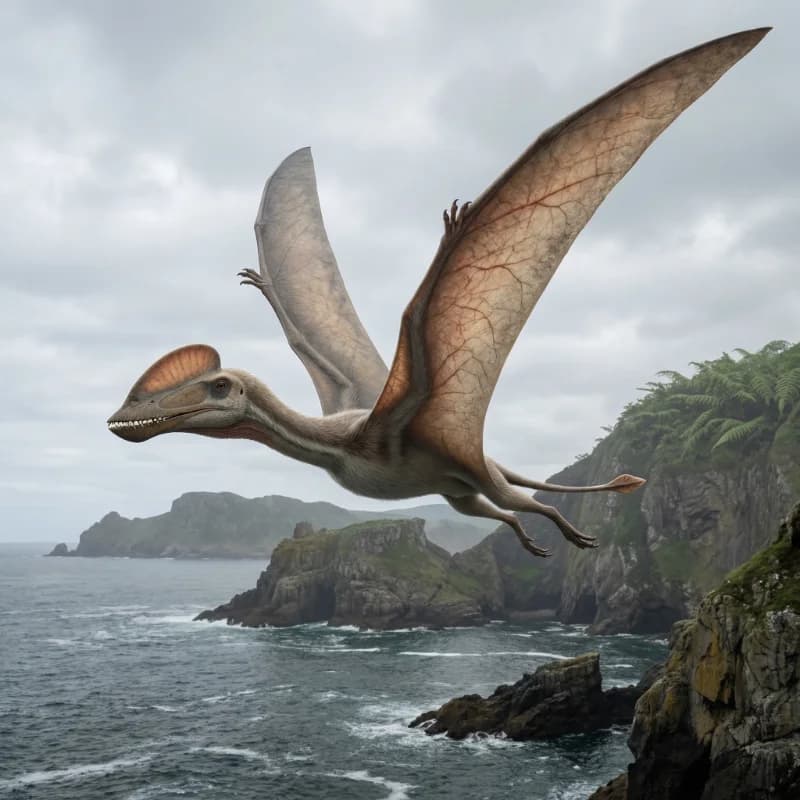
Coloborhynchus
Coloborhynchus clavirostris
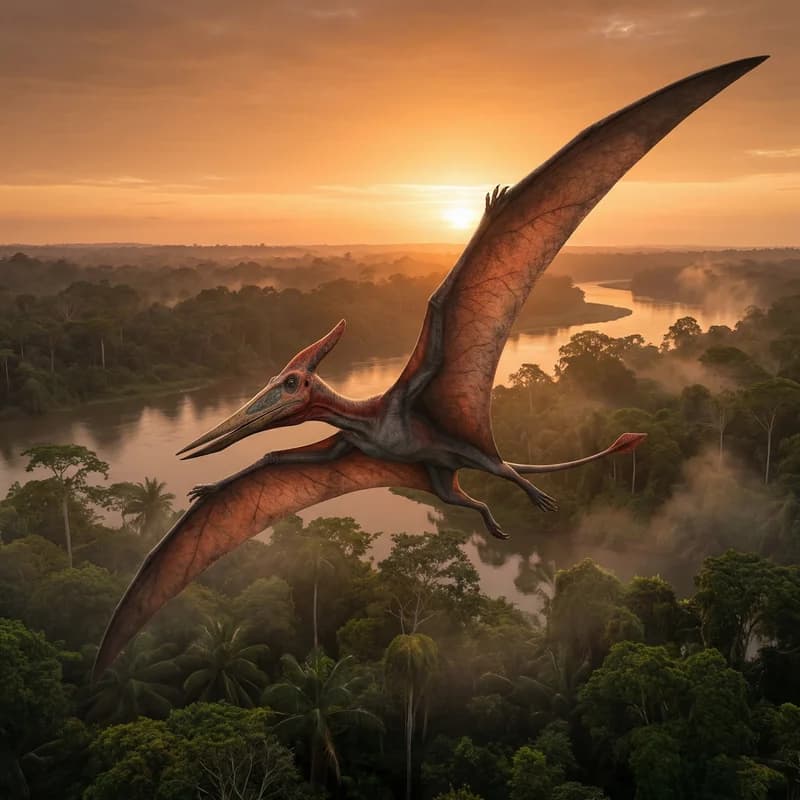
Anhanguera
Anhanguera blittersdorffi
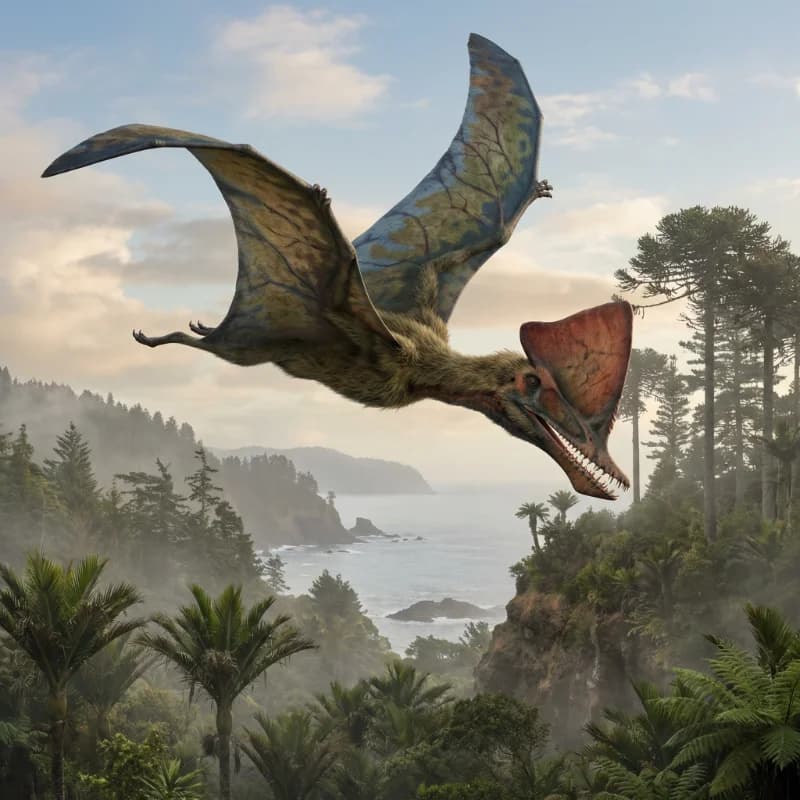
Tropeognathus
Tropeognathus mesembrinus
Ferrodraco
Ferrodraco lentoni
Cearadactylus
Cearadactylus atrox
Nyctosaurus
Nyctosaurus gracilis
Guidraco
Guidraco venator