Pterodactylus
Jurassic Period Carnivore Creature Type
Pterodactylus antiquus
Scientific Name: "Greek pteron (wing) + daktylos (finger) = 'winged finger'; species name antiquus = Latin for 'ancient'"
Local Name: Pterodactylus
Physical Characteristics
Discovery
Habitat
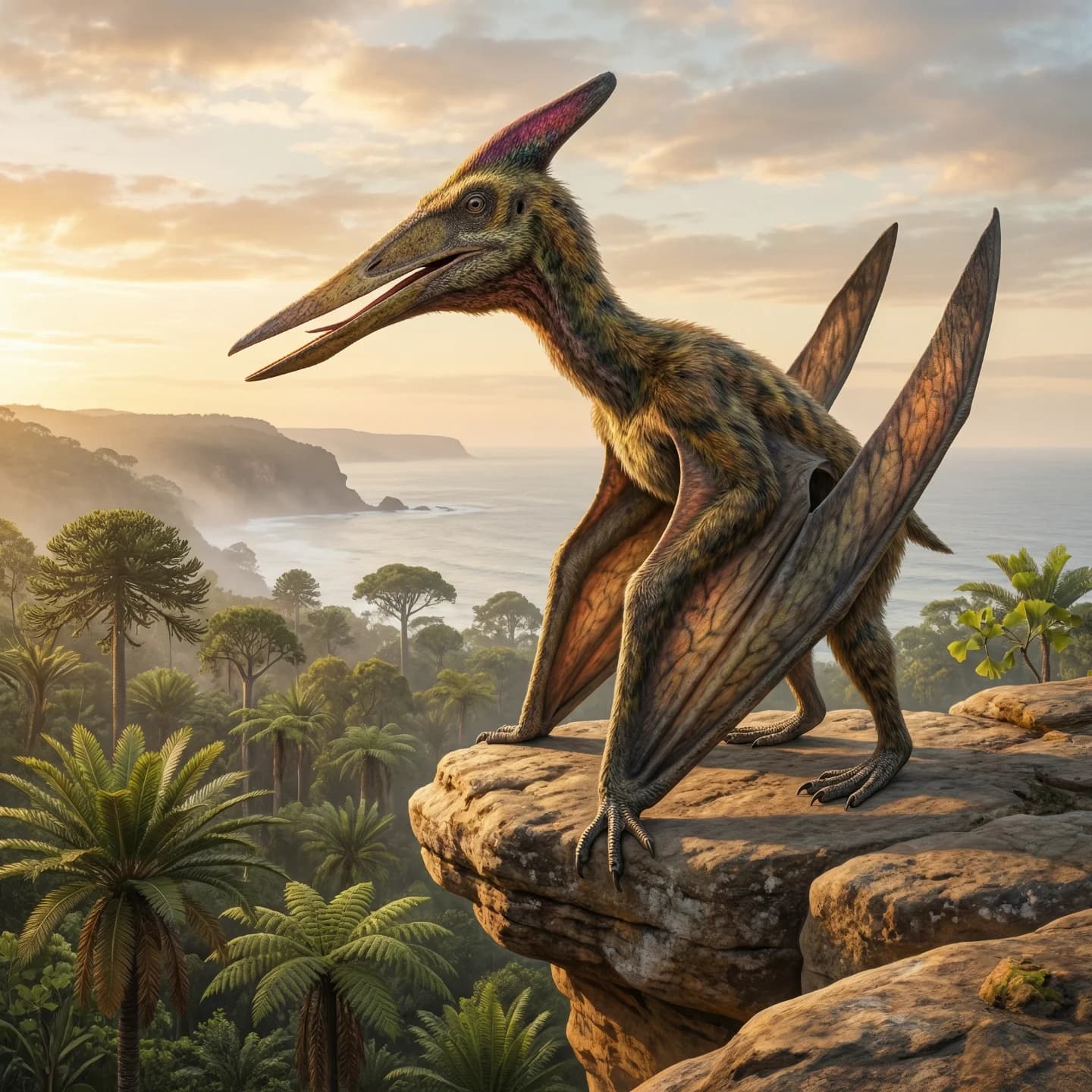
Pterodactylus antiquus (Sömmerring, 1812; genus: Cuvier, 1809) is a small pterosaur from the Late Jurassic Tithonian stage (approximately 150.8–148.5 Ma) of Europe and the first pterosaur ever to be scientifically recognized and named, as well as one of the earliest prehistoric reptiles to be discovered. Fossils are predominantly found in the Solnhofen Limestone (formally the Altmühltal Formation) of Bavaria, Germany. In 2022, the geologically oldest specimen was reported from the Torleite Formation near Painten, Bavaria, extending the genus into the Kimmeridgian stage (approximately 152–155 Ma) (Matzke et al. 2022). Over 30–50 specimens are currently known, most representing juveniles, though many preserve complete skeletons that are invaluable for studying growth and development.
The greatest scientific-historical significance of Pterodactylus lies in its role as the catalyst for pterosaur research. Italian scientist Cosimo Alessandro Collini first described the holotype in 1784, though he could not determine what kind of animal it was. In 1809, French naturalist Georges Cuvier correctly interpreted the fossil as a flying reptile and gave it the name 'Ptéro-Dactyle'. Samuel Thomas von Sömmerring subsequently named the species antiquus in 1812. The estimated adult wingspan is approximately 1.04 m (Bennett 2013), roughly comparable to a small heron — making Pterodactylus a small pterosaur by any measure. Crucially, Pterodactylus is not a dinosaur: it belongs to the order Pterosauria, a group of flying reptiles that shared a common archosaur ancestor with dinosaurs but evolved along a completely separate lineage.
Recent research has substantially revised our understanding of this animal. Dental microwear texture analysis (Bestwick et al. 2020) indicates that Pterodactylus was likely a generalist carnivore feeding primarily on invertebrates rather than a specialized piscivore. Scleral ring comparisons suggest diurnal activity patterns (Schmitz & Motani 2011). Most dramatically, Smyth & Unwin (2024) used UV-stimulated fluorescence to re-identify nearly 50 specimens as Pterodactylus, enabling reconstruction of the complete life history from robin-sized hatchlings ('flaplings') to raven-sized adults. In 2025, Smyth et al. published in Current Biology on neonatal pterosaur specimens with flight-bone fractures, demonstrating that catastrophic storms were a primary cause of juvenile mortality and explaining the strong juvenile bias in the Solnhofen fossil assemblage.
Overview
Name and Etymology
The generic name Pterodactylus derives from the Ancient Greek πτερόν (pteron, wing) and δάκτυλος (daktylos, finger), meaning 'winged finger'. This refers to the hyper-elongated fourth finger that supported the wing membrane — the defining anatomical feature of pterosaurs. The specific epithet antiquus is Latin for 'ancient'. Cuvier first coined the French form 'Ptéro-Dactyle' in 1809, and Constantine Samuel Rafinesque latinized it to Pterodactylus in 1815.
Taxonomic Status
The current majority consensus recognizes a single valid species, P. antiquus, within the genus Pterodactylus. Historically, approximately 80 species were assigned to this genus, but nearly all have since been reassigned to other genera or synonymized. The formerly recognized P. kochi was reinterpreted as a juvenile stage of P. antiquus by Jouve (2004) and Bennett (2013), based on tooth count ontogenetic scaling and corrected proportional measurements. Vidovic & Martill (2014) erected the separate genus Aerodactylus for P. scolopaciceps, but its validity remains disputed. The most recent large-scale re-evaluation (Smyth & Unwin 2024) used UV fluorescence to confirm that numerous specimens previously assigned to other species represent growth stages of P. antiquus, strongly supporting the single-species hypothesis.
One-Line Summary
Pterodactylus is the first pterosaur ever discovered and named, a small generalist carnivore that inhabited the lagoonal archipelago of what is now southern Germany during the Late Jurassic.
Age, Stratigraphy, and Depositional Environment
Temporal Range
The primary occurrence of Pterodactylus falls within the early Tithonian stage of the Late Jurassic, approximately 150.8–148.5 Ma. The oldest known specimen (DMA-JP-2014/004), described by Matzke et al. (2022) from the Torleite Formation near Painten, Bavaria, extends the temporal range into the Kimmeridgian stage (approximately 152–155 Ma), pushing the genus back by more than one million years.
Formation and Lithology
The primary fossil-bearing unit is the Solnhofen Limestone, formally designated the Altmühltal Formation. This formation consists of micritic (extremely fine-grained) limestone deposited in thin, even beds — the 'Plattenkalk' or lithographic limestone that gives the unit its common name. The Solnhofen Limestone is a world-renowned Konservat-Lagerstätte famous for the exceptional preservation of soft-bodied organisms including jellyfish, insects, and pterosaur wing membranes. The oldest specimen originates from the Torleite Formation in the Rygol Quarry near Painten (Matzke et al. 2022).
Paleoenvironment
During the Late Jurassic, the Solnhofen region lay on the northwestern margin of the Tethys Sea, forming a subtropical archipelago. Coral and sponge reefs created barriers that isolated shallow lagoons from the open ocean. Within these lagoons, restricted water circulation led to hypersaline, anoxic bottom conditions — lethal to most organisms except cyanobacteria and foraminifera (UCMP Berkeley). Animals that fell or were washed into these lagoons were rapidly buried in fine carbonate mud, resulting in the extraordinary fossil preservation for which Solnhofen is famous. Paleolatitude reconstructions place this region at approximately 34°N (Munnecke et al.), within the subtropical climate belt.
Specimens and Diagnostic Features
Holotype and Key Specimens
The holotype is BSP AS.I.739, housed at the Bayerische Staatssammlung für Paläontologie und Geologie (Bavarian State Collection for Palaeontology and Geology) in Munich. This sub-adult skeleton was first described by Collini in 1784 from a lithographic limestone quarry near Eichstätt and preserves a nearly complete skeleton with a wingspan of approximately 45 cm. The largest known Pterodactylus specimen is BMMS 7 (private collection), an incomplete skull and mandible with a preserved skull length of 142 mm, estimated at approximately 200 mm in life (Bennett 2013). This specimen yields the adult wingspan estimate of approximately 1.04 m.
| Specimen | Repository | Preserved Elements | Notes |
|---|---|---|---|
| BSP AS.I.739 (holotype) | Bavarian State Collection, Munich | Nearly complete sub-adult skeleton | First described by Collini 1784; wingspan ca. 45 cm |
| BMMS 7 | Private collection | Skull + mandible (incomplete) | Largest known P. antiquus skull; adult-grade |
| BSP 1929 I 18 | Bavarian State Collection, Munich | Skull-bearing skeleton | Preserves soft-tissue crest + occipital lappet |
| DMA-JP-2014/004 | Dinosauria Museum, Altmühltal | Nearly complete skeleton | Geologically oldest specimen; Kimmeridgian (Matzke et al. 2022) |
| SMF R 404 | Senckenberg Museum, Frankfurt | Nearly complete juvenile skeleton | Holotype of P. kochi; now reinterpreted as juvenile P. antiquus |
Diagnosis
According to Bennett (2013) and Smyth & Unwin (2024), the principal diagnostic features of P. antiquus include: skull and jaws straight (contrasting with the upwardly curved jaws of related ctenochasmatids); approximately 90 narrow, conical teeth extending from the jaw tips posteriorly, decreasing in size towards the back; teeth present below the anterior margin of the nasoantorbital fenestra; skull, neck, and limb proportions exhibiting allometric growth with body size.
Limitations of the Specimen Record
The vast majority of known specimens represent juveniles or sub-adults; no unambiguous fully mature postcranial skeleton has been identified. The only adult-grade specimen (BMMS 7) preserves only the skull, meaning adult body proportions remain estimated. Additionally, many historical specimens suffered damage to delicate soft-tissue crests during preparation (Bennett 2013).
Morphology and Functional Anatomy
Body Size
The estimated adult wingspan of Pterodactylus antiquus is approximately 1.04 m, based on the adult-grade skull BMMS 7 (Bennett 2013). The holotype (BSP AS.I.739) is a sub-adult with a wingspan of only approximately 45 cm, and the smallest known juvenile skulls measure just 15 mm in length. Body mass estimates for this size class of pterosaur are limited in the primary literature but fall in the approximate range of 0.5–5 kg depending on ontogenetic stage — some popular sources cite up to approximately 4.5 kg (ca. 10 lbs) for the largest individuals (ThoughtCo), while the smallest juveniles weighed well under 100 g.
Skull and Dentition
The adult skull was long and slender, bearing up to approximately 90 narrow, conical teeth. Teeth were distributed from the tips of both jaws and decreased in size posteriorly — a gradient pattern. Unlike most ctenochasmatid relatives, in which teeth are absent from the upper jaw tip and relatively uniform in size, Pterodactylus had teeth extending further back into the jaw, with some positioned below the anterior margin of the nasoantorbital fenestra (Bennett 2013). The skull and jaws were straight, distinguishing Pterodactylus from the upwardly curved jaws characteristic of ctenochasmatids (Jouve 2004).
Soft-Tissue Crest and Occipital Lappet
Adult Pterodactylus bore a soft-tissue cranial crest along the posterior portion of the skull. Bennett (2013) identified a crest-anchoring bony ridge in multiple specimens, including the holotype — though this structure is extremely thin (approximately 0.2 mm) and easily damaged during preparation, explaining why Pterodactylus was long considered crestless. In BMMS 7, the bony crest base measures 47.5 mm long with a maximum height of 0.9 mm above the orbit. Some specimens (notably BSP 1929 I 18) preserve a flexible, tab-like occipital lappet projecting from the rear of the skull. Both crests and lappets appear restricted to larger (adult-grade) individuals, suggesting they functioned as display structures related to sexual maturity.
Wing Structure and Flight
As in all pterosaurs, the wing was formed by a skin-and-muscle membrane supported by the hyper-elongated fourth finger, reinforced internally by collagen fibers and externally by keratinous ridges. The hollow, pneumatic bones were an essential adaptation for flight, reducing skeletal mass while maintaining structural integrity. The wing proportions of Pterodactylus suggest capabilities for both flapping and gliding flight.
Limbs and Terrestrial Locomotion
Like other pterodactyloids, Pterodactylus was almost certainly a quadrupedal walker on the ground. The hindlimbs were relatively short, and the feet comparatively large. Mark Witton (2015) speculated that Pterodactylus may have used a foot-paddling foraging strategy similar to modern gulls, using its forefeet to disturb and lure prey to the water surface.
Diet and Ecology
Dietary Evidence
Pterodactylus has traditionally been characterized as a piscivore, but recent quantitative evidence challenges this. Bestwick et al. (2020) applied three-dimensional dental microwear texture analysis to 17 pterosaur genera and found that the microwear patterns of P. antiquus are most consistent with a generalist carnivore feeding primarily on invertebrates, with a relatively high bite force. This suggests a broad diet encompassing insects, crustaceans, and other small invertebrates, supplemented by small vertebrates and possibly fish — rather than fish-dominated feeding.
Activity Patterns and Ecological Niche
Schmitz & Motani (2011) analyzed scleral ring dimensions in P. antiquus and compared them with extant birds and reptiles, concluding that Pterodactylus was likely diurnal (day-active). Notably, co-occurring Solnhofen pterosaurs Ctenochasma and Rhamphorhynchus were inferred to be nocturnal, suggesting temporal niche partitioning within the pterosaur community.
Growth and Reproduction
Bennett (1996) identified at least three distinct year classes among P. antiquus specimens. The first year class (skull length 15–45 mm) represents individuals less than one year old that had recently begun flying. The second year class (skull length 55–95 mm) corresponds to individuals aged one to two years. A rare third year class comprises specimens over two years old. This pattern indicates seasonal breeding and a crocodilian-like slow growth rate, contrasting with the rapid growth seen in modern birds. Smyth et al. (2025, Current Biology) described two neonatal Pterodactylus specimens from Solnhofen with fractured wing bones, demonstrating that violent storms were a primary cause of hatchling mortality and a key factor producing the strong juvenile sampling bias in the Solnhofen fossil assemblage.
Distribution and Paleogeography
Geographic Distribution
Pterodactylus fossils come predominantly from Bavaria, Germany, with major collecting sites in the lithographic limestone quarries around Solnhofen and Eichstätt. The 2022 Painten specimen (Torleite Formation, Rygol Quarry) extended the known distribution within Bavaria. Fragmentary material tentatively referred to Pterodactylus has been reported from elsewhere in Europe and from Africa, but these assignments remain unconfirmed.
Paleogeographic Interpretation
During the Late Jurassic, the Bavarian region constituted the Solnhofen Archipelago — a chain of low-lying islands and shallow lagoons on the northwestern margin of the Tethys Sea. Paleolatitude reconstructions place the area at approximately 34°N (Munnecke et al.), within the subtropical climate belt. Pterodactylus would have foraged along lagoon margins and island coastlines, exploiting the diverse invertebrate and small vertebrate fauna of this reef-bounded environment.
Phylogeny and Taxonomic Debates
Phylogenetic Position
Pterodactylus is classified within Pterosauria, suborder Pterodactyloidea, as an early-branching member of the clade Euctenochasmatia (Unwin 2003; Longrich et al. 2018). This places it on the same lineage as the comb-toothed filter-feeder Ctenochasma, the twisted-jawed Cycnorhamphus, and the long-necked Ardeadactylus.
Key Debates and Alternative Hypotheses
Single species vs. multiple species: Jouve (2004) and Bennett (2013) synonymized P. kochi with P. antiquus, treating the former as a junior synonym representing immature specimens. Smyth & Unwin (2024) strongly reinforced this view with their UV fluorescence survey. In contrast, Vidovic & Martill (2014) argued that the Solnhofen 'Pterodactylus' dataset contains at least three distantly related taxa (P. antiquus, 'Diopecephalus kochi', 'Aerodactylus scolopaciceps'), and that Euctenochasmatia/Archaeopterodactyloidea is paraphyletic at the base of Pterodactyloidea.
Current consensus: The single-species model (P. antiquus only) is supported by the majority of recent studies, particularly the comprehensive Smyth & Unwin (2024) re-evaluation which leveraged UV fluorescence to reveal previously invisible diagnostic features in dozens of specimens.
| Hypothesis | Core Claim | Key Authors |
|---|---|---|
| Single species (P. antiquus only valid) | P. kochi is a junior synonym; tooth and proportion differences reflect ontogenetic variation | Jouve 2004; Bennett 2013; Smyth & Unwin 2024 |
| Two genera (P. antiquus + Aerodactylus) | P. scolopaciceps warrants separation as Aerodactylus | Vidovic & Martill 2014 |
| Three+ genera (antiquus, kochi, scolopaciceps each distinct) | Ctenochasmatoidea paraphyletic at base of Pterodactyloidea | Vidovic & Martill 2014 |
Reconstruction and Uncertainty
Established Facts
The following are confirmed by direct fossil evidence: Pterodactylus was a flight-capable small pterosaur; its fossils primarily come from the Solnhofen Limestone; it possessed a toothed, straight-jawed beak; adult individuals bore soft-tissue cranial crests and occipital lappets.
Well-Supported Interpretations
The single-species taxonomy (P. antiquus only), the generalist-carnivore diet, diurnal activity patterns, and seasonal breeding with crocodilian-like growth rates are all well supported by current evidence, though not beyond revision.
Hypothetical or Estimated
The precise adult body mass (no rigorous published allometric estimate specific to P. antiquus), flight speed, exact crest shape and size, and the validity of Aerodactylus remain at the hypothesis or estimation stage. The absence of a complete adult postcranial skeleton means that adult trunk proportions are extrapolated from sub-adult material.
Popular Misconceptions
The colloquial name 'pterodactyl' is widely used to refer to all pterosaurs indiscriminately, but in formal taxonomy Pterodactylus designates only this specific genus. Popular media frequently depict Pterodactylus far larger than its actual approximately 1 m wingspan, and it is routinely misclassified as a dinosaur.
Comparison with Contemporaries
| Taxon | Age | Wingspan | Dentition | Inferred Diet | Phylogenetic Position |
|---|---|---|---|---|---|
| Pterodactylus antiquus | Late Jurassic (Tithonian) | ca. 1.04 m | ca. 90 narrow conical teeth | Generalist carnivore (invertebrate-dominated) | Euctenochasmatia (basal) |
| Ctenochasma elegans | Late Jurassic (Tithonian) | ca. 0.25–1.2 m | Hundreds of comb-like teeth | Filter feeder | Ctenochasmatidae |
| Rhamphorhynchus muensteri | Late Jurassic (Tithonian) | ca. 1.26 m | Forward-projecting piercing teeth | Piscivore | Rhamphorhynchidae |
| Germanodactylus cristatus | Late Jurassic (Tithonian) | ca. 0.98 m | Few small teeth | Carnivore (inferred) | Germanodactylidae |
| Anurognathus ammoni | Late Jurassic (Tithonian) | ca. 0.50 m | Needle-like teeth | Insectivore | Anurognathidae |
As this comparison illustrates, the Solnhofen pterosaur community comprised taxa with markedly different dental morphologies and feeding strategies, strongly suggesting ecological niche partitioning.
Fun Facts
FAQ
📚References
- Collini, C. A. (1784). Sur quelques Zoolithes du Cabinet d'Histoire naturelle de S.A.S.É. Palatine & de Bavière, à Identity. Acta Theodoro-Palatinae Mannheim, 5 Physicum, 58–103.
- Cuvier, G. (1809). Mémoire sur le squelette fossile d'un reptile volant des environs d'Aichstedt, que quelques naturalistes ont pris pour un oiseau, et dont nous formons un genre de Sauriens, sous le nom de Ptéro-Dactyle. Annales du Muséum national d'Histoire naturelle, 13, 424–437.
- Sömmerring, S. T. von (1812). Über einen Ornithocephalus. Denkschriften der königlichen Akademie der Wissenschaften zu München, 3, 89–158.
- Wellnhofer, P. (1970). Die Pterodactyloidea (Pterosauria) der Oberjura-Plattenkalke Süddeutschlands. Bayerische Akademie der Wissenschaften, Mathematisch-Wissenschaftlichen Klasse, Abhandlungen, 141, 1–133.
- Bennett, S. C. (1996). Year-classes of pterosaurs from the Solnhofen Limestone of Germany: taxonomic and systematic implications. Journal of Vertebrate Paleontology, 16(3), 432–444.
- Jouve, S. (2004). Description of the skull of a Ctenochasma (Pterosauria) from the latest Jurassic of eastern France, with a taxonomic revision of European Tithonian Pterodactyloidea. Journal of Vertebrate Paleontology, 24(3), 542–554.
- Unwin, D. M. (2003). On the phylogeny and evolutionary history of pterosaurs. In: Buffetaut, E. & Mazin, J.-M. (eds.), Evolution and Palaeobiology of Pterosaurs, Geological Society, London, Special Publications, 217, 139–190.
- Schmitz, L. & Motani, R. (2011). Nocturnality in dinosaurs inferred from scleral ring and orbit morphology. Science, 332(6030), 705–708. DOI: 10.1126/science.1200043
- Bennett, S. C. (2013). New information on body size and cranial display structures of Pterodactylus antiquus, with a revision of the genus. Paläontologische Zeitschrift, 87(2), 269–289. DOI: 10.1007/s12542-012-0159-8
- Vidovic, S. U. & Martill, D. M. (2014). Pterodactylus scolopaciceps Meyer, 1860 (Pterosauria, Pterodactyloidea) from the Upper Jurassic of Bavaria, Germany: the problem of cryptic pterosaur taxa in early ontogeny. PLoS ONE, 9(10), e110646. DOI: 10.1371/journal.pone.0110646
- Bestwick, J., Unwin, D. M., Butler, R. J., & Purnell, M. A. (2020). Dietary diversity and evolution of the earliest flying vertebrates revealed by dental microwear texture analysis. Nature Communications, 11, 5293. DOI: 10.1038/s41467-020-19022-2
- Matzke, A. T., Maisch, M. W., Sun, G., Pfretzschner, H.-U., & Stöhr, H. (2022). The geologically oldest specimen of Pterodactylus: a new exquisitely preserved skeleton from the Upper Jurassic (Kimmeridgian) Plattenkalk deposits of Painten (Bavaria, Germany). Fossil Record, 25(2), 331–343. DOI: 10.3897/fr.25.90692
- Smyth, R. S. H. & Unwin, D. M. (2024). Re-evaluation of Pterodactylus antiquus and Diopecephalus kochi: two troublesome taxonomic concepts. Journal of Systematic Palaeontology, 22(1), 2421845. DOI: 10.1080/14772019.2024.2421845
- Smyth, R. S. H., Belben, R., Thomas, R., & Unwin, D. M. (2025). Fatal accidents in neonatal pterosaurs and selective sampling in the Solnhofen fossil assemblage. Current Biology, 35(19), 4606–4619. DOI: 10.1016/j.cub.2025.08.034
- Longrich, N. R., Martill, D. M., & Andres, B. (2018). Late Maastrichtian pterosaurs from North Africa and mass extinction of Pterosauria at the Cretaceous-Paleogene boundary. PLoS Biology, 16(3), e2001663. DOI: 10.1371/journal.pbio.2001663
- Frey, E., Tischlinger, H., Buchy, M. C., & Martill, D. M. (2003). New specimens of Pterosauria (Reptilia) with soft parts with implications for pterosaurian anatomy and locomotion. Geological Society, London, Special Publications, 217(1), 233–266.
- Taquet, P. & Padian, K. (2004). The earliest known restoration of a pterosaur and the philosophical origins of Cuvier's Ossemens Fossiles. Comptes Rendus Palevol, 3(2), 157–175. DOI: 10.1016/j.crpv.2004.02.002
Gallery
5 images Pterodactylus
Pterodactylus · Jurassic Period · Carnivore
 Pterodactylus
Pterodactylus · Jurassic Period · Carnivore
 Pterodactylus
Pterodactylus · Jurassic Period · Carnivore
 Pterodactylus
Pterodactylus · Jurassic Period · Carnivore
 Pterodactylus
Pterodactylus · Jurassic Period · Carnivore
🔗Related Creatures

Dimorphodon
Dimorphodon macronyx
Kryptodrakon
Kryptodrakon progenitor
Istiodactylus
Istiodactylus latidens
Hatzegopteryx
Hatzegopteryx thambema
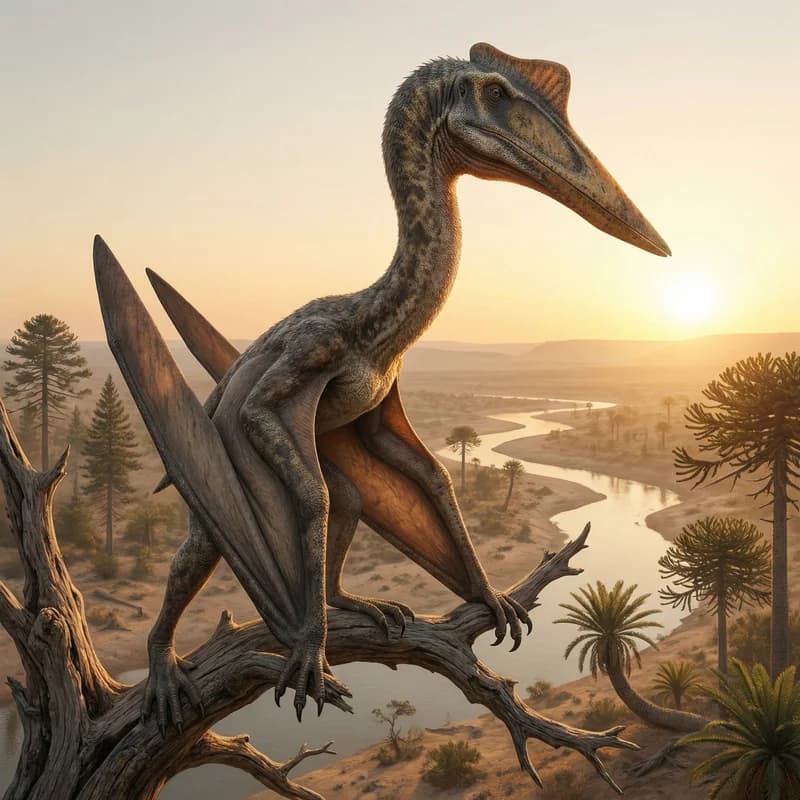
Quetzalcoatlus
Quetzalcoatlus northropi
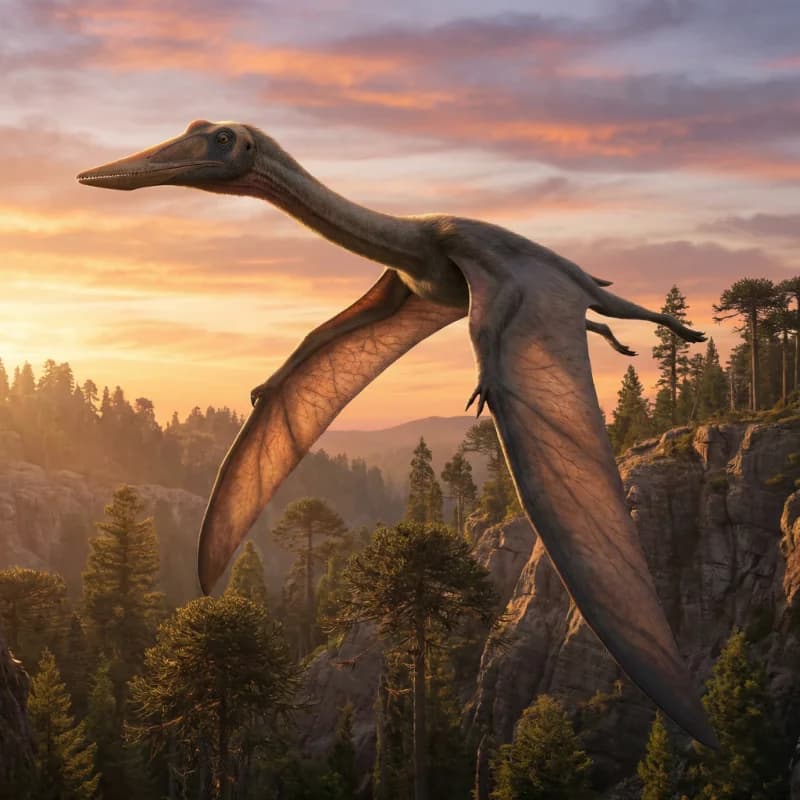
Arambourgiania
Arambourgiania philadelphiae
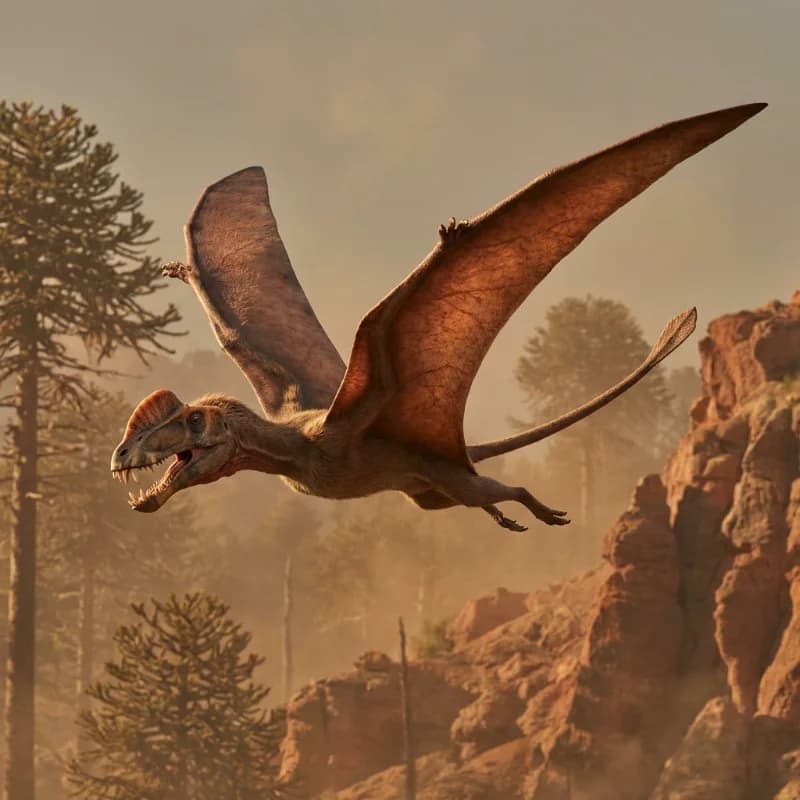
Caelestiventus
Caelestiventus hanseni
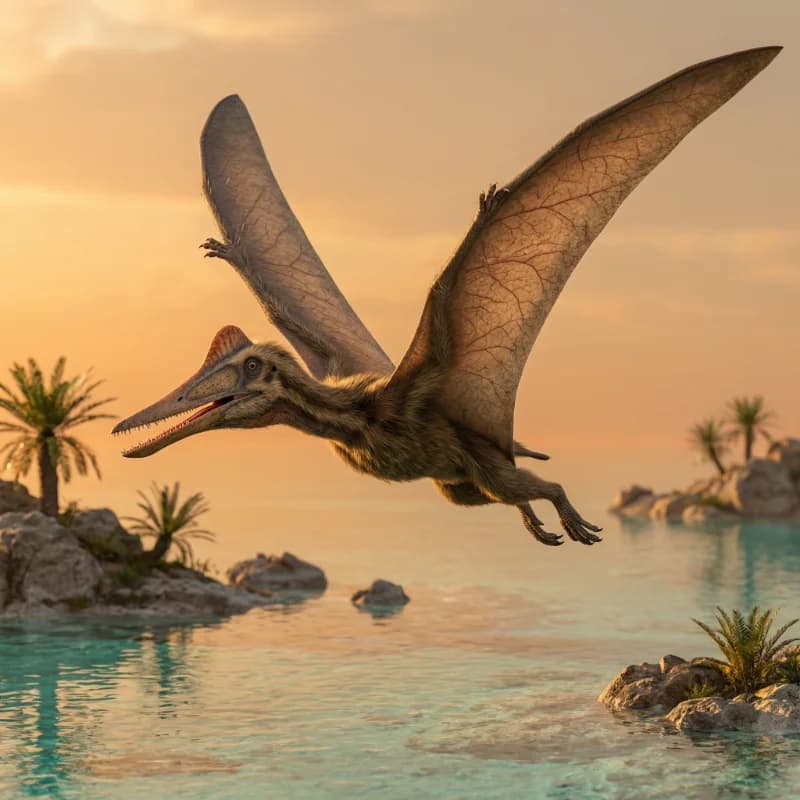
Germanodactylus
Germanodactylus cristatus