Germanodactylus
Jurassic Period Piscivore Creature Type
Germanodactylus cristatus
Scientific Name: "Germanodactylus: 'Germano-' (Germany) + Greek 'daktylos' (finger) = German finger; cristatus: Latin for 'crested'"
Local Name: Germanodactylus
Physical Characteristics
Discovery
Habitat
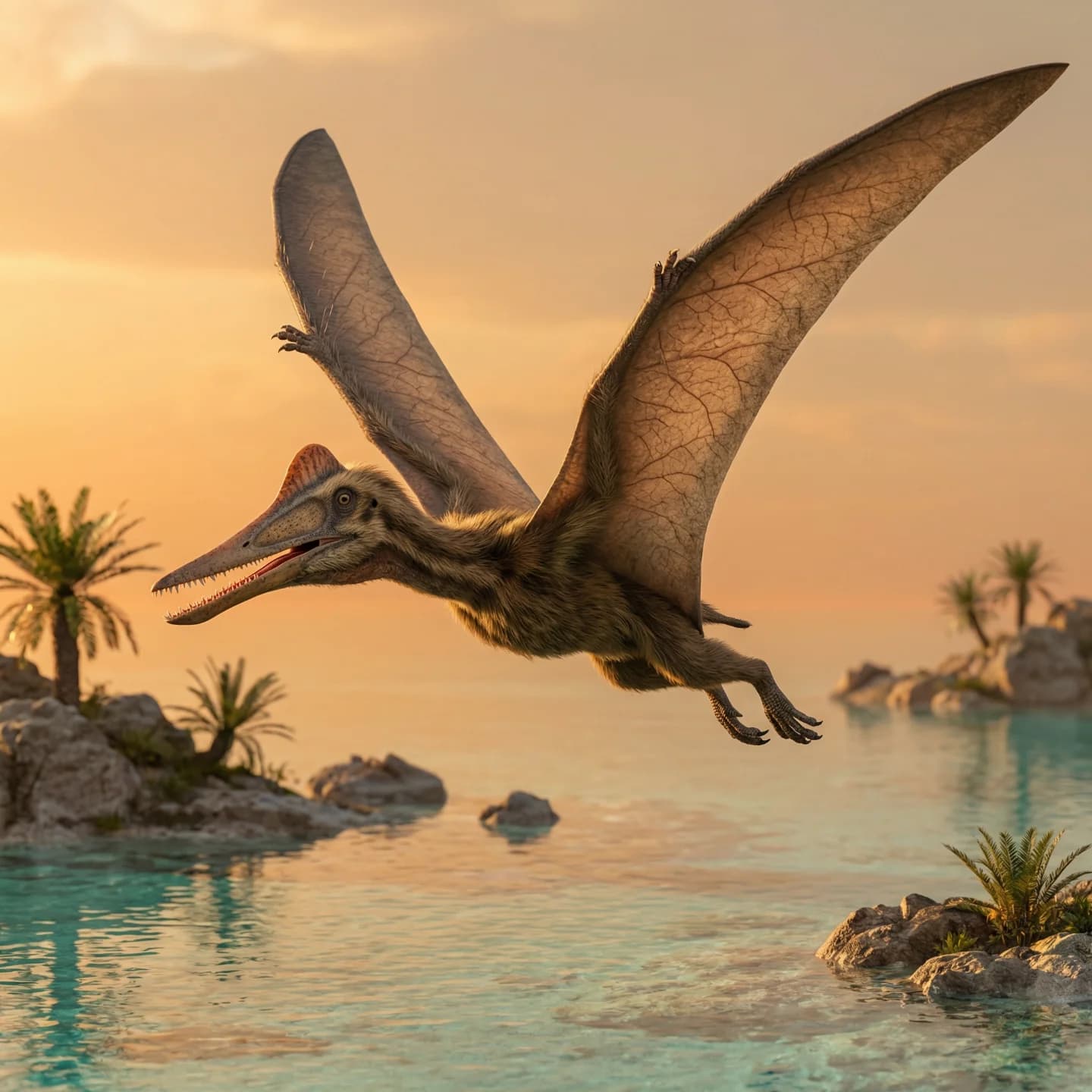
Germanodactylus (Yang, 1964) is a small pterodactyloid pterosaur from the Late Jurassic Tithonian stage (approximately 150.8–148.5 million years ago) of what is now southern Bavaria, Germany. Belonging to the advanced short-tailed suborder Pterodactyloidea, its fossils have been recovered from the Solnhofen Limestone (formally the Altmühltal Formation) and the Mörnsheim Formation, two of the world's most celebrated Konservat-Lagerstätten. The genus name means "German finger," alluding simultaneously to the discovery country and to the elongated fourth digit that formed the structural core of the pterosaur wing.
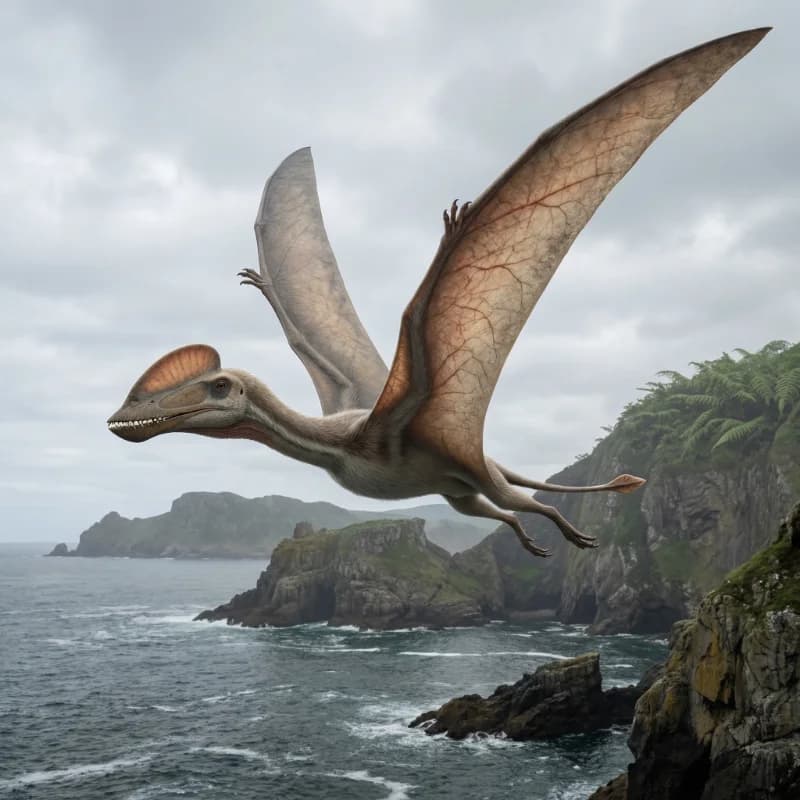
Described as "raven-sized," this diminutive pterosaur had a wingspan of approximately 0.98 m and a skull length of about 13 cm in the type species G. cristatus, while the second traditionally recognized species, G. rhamphastinus, was somewhat larger at roughly 1.08 m wingspan and 21 cm skull length (Wellnhofer, 1991). The most striking morphological feature of the genus is a bony midline crest on the skull topped by a soft-tissue extension composed of cornified epidermis, first described by Bennett (2002). This discovery marked the first confirmed instance of a soft-tissue crest in any pterosaur and fundamentally changed how palaeontologists interpret cranial ornamentation across Pterosauria.
Taxonomically, Germanodactylus has a complex history. Its specimens were long assigned to the wastebasket genus Pterodactylus before Yang Zhongjian (C.C. Young) erected the genus in 1964. Today, the monophyly of the two species is actively debated: Vidovic & Martill (2017) separated G. rhamphastinus into a new genus, Altmuehlopterus, whereas Longrich et al. (2018) retained both species as sister taxa within Germanodactylidae. Most recent analyses place the genus at a basal position within Archaeopterodactyloidea or at the base of Dsungaripteroidea, firmly among the primitive short-tailed pterosaurs of the Late Jurassic.
Overview
Name and Etymology
The genus name Germanodactylus is a compound of the Latinized "Germano-" (Germany) and the Greek "daktylos" (finger), referencing both the German discovery locality and the hyper-elongated fourth digit that supports the wing membrane in pterosaurs (Yang, 1964). The type species epithet cristatus derives from the Latin for "crested," describing the bony sagittal crest on the skull (Wiman, 1925). The second species epithet rhamphastinus alludes to the toucan genus Ramphastos, evoking the robust, beak-like profile of the snout (Wagner, 1851).
Taxonomic Status
Germanodactylus is currently accepted as a valid genus, and the validity of the type species G. cristatus is essentially uncontested. The status of G. rhamphastinus, however, remains disputed. Bennett (1996) once proposed that Germanodactylus represented adults of Pterodactylus, but this hypothesis was rejected by multiple subsequent studies, including Bennett's own later work (2002, 2006). Maisch et al. (2004) suggested that the two species might be paraphyletic, informally using the name "Daitingopterus" for G. rhamphastinus, though this name is a nomen nudum as it was never formally described. Vidovic & Martill (2017) formally separated G. rhamphastinus as Altmuehlopterus rhamphastinus, while Longrich et al. (2018) retained both species within Germanodactylus as a monophyletic unit.
Key Distinction
A raven-sized pterosaur from the Solnhofen Limestone, Germanodactylus is the first genus in which a soft-tissue cranial crest was scientifically confirmed.
Stratigraphy and Depositional Environment
Temporal Range
All confirmed specimens of Germanodactylus date to the Late Jurassic Tithonian stage (~150.8–148.5 Ma). G. cristatus comes from the Solnhofen Limestone (Altmühltal Formation, Malm Zeta 2), while G. rhamphastinus is from the slightly younger Mörnsheim Formation (Malm Zeta 2b–3).
Isolated limb bones and vertebral fragments from the Kimmeridgian-aged Kimmeridge Clay Formation (~157–152 Ma) of Dorset, England were tentatively referred to Germanodactylus by Unwin (1988). If confirmed, these would represent the earliest known occurrence of a short-tailed pterosaur, but the material is too fragmentary for certain identification.
Formations and Lithology
| Species/Record | Formation | Age | Lithology | Locality |
|---|---|---|---|---|
| G. cristatus | Altmühltal Fm. (Solnhofen Limestone) | Lower Tithonian (~150 Ma) | Lithographic limestone | Eichstätt, Bavaria |
| G. rhamphastinus | Mörnsheim Fm. | Lower Tithonian (~149 Ma) | Laminated lithographic limestone | Daiting, Bavaria |
| Germanodactylus sp. (tentative) | Kimmeridge Clay Fm. | Kimmeridgian (~157–152 Ma) | Mudstone | Kimmeridge, Dorset, England |
Palaeoenvironment
The Solnhofen and Mörnsheim limestones were deposited in hypersaline lagoons situated between low-lying islands of a subtropical archipelago at the northwestern margin of the Tethys Sea. The lagoon floors were anoxic or even toxic to most organisms, preventing scavenging and bioturbation. This exceptional taphonomic setting allowed extraordinarily fine preservation, including soft-tissue structures such as pterosaur wing membranes and cranial crests (Bartell et al., 1990). The palaeolatitude was approximately 30–40°N, corresponding to a subtropical climate zone considerably south of the present-day position of Bavaria.
The Kimmeridge Clay Formation, by contrast, represents a low-energy, anoxic shallow marine shelf environment along the margins of the Tethys, deposited as dark-grey mudstone (Unwin, 1988).
Specimens and Diagnosis
Holotype and Key Specimens
The holotype of G. cristatus is BSP 1892.IV.1 (with counterslab NMING F15005), a disarticulated but near-complete skeleton from the Solnhofen Limestone near Eichstätt. It was first described by Plieninger (1901) as Pterodactylus kochi, renamed P. cristatus by Wiman (1925), and established as the type species of Germanodactylus by Yang (1964). Bennett's (2006) reappraisal identified four specimens referable to G. cristatus, including the holotype, a second adult, and two juveniles (JME SoS 4593 and JME SoS 4006).
The holotype of G. rhamphastinus is BSP AS.I.745 (preserved on both slab and counterslab), a nearly complete skull with a partial postcranial skeleton from the Mörnsheim Formation near Daiting. First described by Wagner (1851) as Ornithocephalus rhamphastinus, the spelling was emended by Meyer (1858), and it was transferred to Germanodactylus by Wellnhofer (1970). Two specimens are known for this species (Bennett, 2006).
Diagnosis
Bennett (2006) defined the genus by a combination of features distinguishing it from other pterosaurs: sharply pointed jaw tips, 4–5 premaxillary teeth, 8–12 maxillary teeth per side in the upper jaw, robust conical maxillary teeth that (unlike in Pterodactylus) do not decrease in size distally, a naso-antorbital fenestra approximately twice the length of the orbit, and various proportional differences. The two species differ in that G. cristatus has edentulous jaw tips and fewer teeth (~13 upper, ~12 lower per side), whereas G. rhamphastinus has teeth extending to the jaw tip and higher tooth counts (16 upper, 15 lower per side), with the bony crest extending further posteriorly on the skull.
Specimen Summary
| Specimen Number | Species | Preserved Elements | Formation | Notes |
|---|---|---|---|---|
| BSP 1892.IV.1 (+ NMING F15005) | G. cristatus | Disarticulated near-complete skeleton | Altmühltal Fm. | Holotype, adult |
| JME SoS 4593 | G. cristatus | Partial skeleton | Altmühltal Fm. | Juvenile |
| JME SoS 4006 | G. cristatus | Partial skeleton | Altmühltal Fm. | Juvenile |
| (4th specimen) | G. cristatus | Partial skeleton | Altmühltal Fm. | Adult |
| BSP AS.I.745 a/b | G. rhamphastinus | Near-complete skull + partial skeleton | Mörnsheim Fm. | Holotype |
| (2nd specimen) | G. rhamphastinus | Partial skeleton | Mörnsheim Fm. | Adult |
Anatomy and Function
Body Size
Germanodactylus is described as "raven-sized" (Unwin, 2006). G. cristatus had a wingspan of approximately 0.98 m and a skull about 13 cm long, while G. rhamphastinus was somewhat larger, with a wingspan of roughly 1.08 m and a skull about 21 cm long (Wellnhofer, 1991). No precise mass estimates have been published specifically for this genus, but comparison with similarly sized pterodactyloids suggests a body mass of approximately 0.5–1.5 kg. The hollow, pneumatic skeleton is typical of pterosaurs and reflects weight reduction for flight.
Head Crest
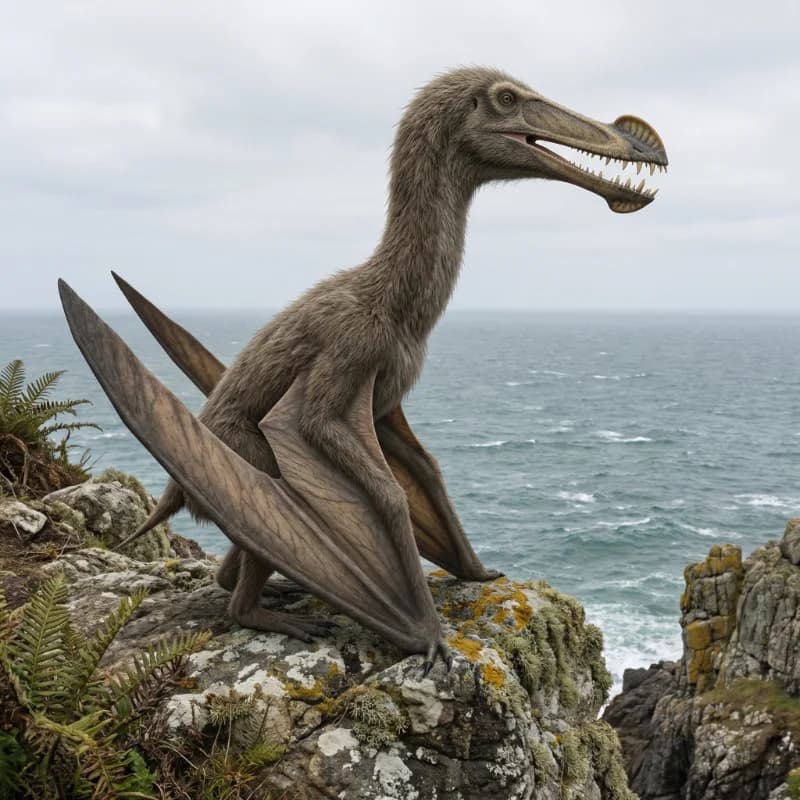
The most distinctive anatomical feature of Germanodactylus is its head crest. A low bony ridge runs along the skull midline, surmounted by a soft-tissue extension composed of cornified epidermis that more than doubled the total crest height. This soft-tissue crest was first described by Bennett (2002) in a specimen of G. rhamphastinus (BSP AS.I.745), making Germanodactylus the first pterosaur genus in which a soft-tissue crest component was confirmed. In G. cristatus, the bony ridge is confined to the premaxilla, while in G. rhamphastinus it extends further posteriorly across the skull roof.
Subsequent discoveries of analogous structures in Darwinopterus, Cuspicephalus, Tapejara, Hamipterus, and other genera have demonstrated that the trait is a homology across Pterosauria rather than a convergence (Vidovic, 2014). Bennett (2006) noted that the juvenile specimens of G. cristatus (JME SoS 4593, JME SoS 4006) lack any trace of the bony crest, indicating that it developed late in ontogeny, near skeletal maturity. The crest likely functioned in species recognition and/or sexual display.
Dentition
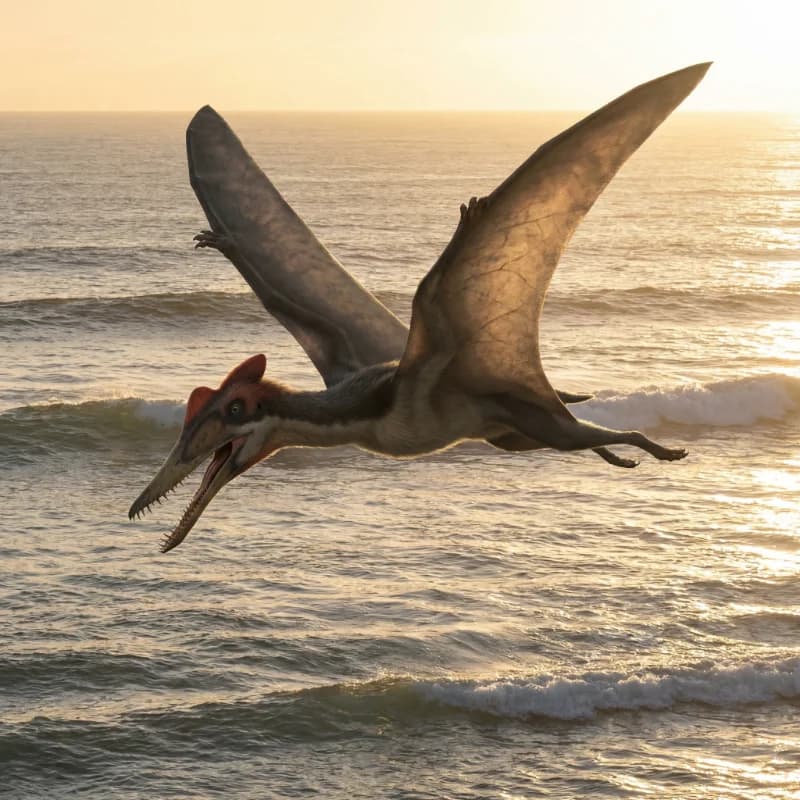
The teeth are robust and conical, clearly distinguished from the more slender, distally diminishing teeth of Pterodactylus. In G. cristatus, the jaw tips are edentulous, with 4–5 premaxillary teeth, 8–12 maxillary teeth per side, and approximately 12 teeth per side in the lower jaw. G. rhamphastinus has more teeth (16 upper, 15 lower per side) extending to the jaw tip (Bennett, 2006). This dentition is consistent with a generalized predatory or piscivorous habit, well suited for grasping fish and small animals.
Postcranial Skeleton and Flight Adaptations
Germanodactylus exhibits the standard pterodactyloid body plan. The cervical vertebrae bear tall neural spines exceeding the height of their centra, and the first three dorsal vertebrae are fused into a notarium (Bennett, 2006). The tail is reduced, as is characteristic of Pterodactyloidea. The forelimb is elongated to support the wing membrane, with reported measurements for the holotype of G. cristatus including a humerus of approximately 56 mm, ulna of 75 mm, and fourth metacarpal of 66 mm.
Diet and Ecology
Dietary Evidence
The pointed snout and robust conical teeth of Germanodactylus are consistent with piscivory. It has been characterized as a "fish-eater living on the dry, scrubby islands of the Solnhofen Basin" (Pteros.com). No direct evidence such as stomach contents has been reported, but the abundant bony fish fauna preserved in the Solnhofen Limestone supports the interpretation. Unwin (2003, 2006) placed this genus at the base of Dsungaripteroidea, a lineage that later evolved into dedicated shellfish crushers, suggesting possible incidental consumption of hard-shelled prey, though the teeth of Germanodactylus itself lack specialized crushing morphology.
Ecological Niche and Contemporaneous Fauna
In the subtropical lagoon archipelago of Solnhofen, Germanodactylus would have inhabited the dry, sparsely vegetated islands and foraged over the surrounding shallow waters. The contemporaneous Solnhofen fauna included the pterosaurs Pterodactylus and Rhamphorhynchus, the early avialan Archaeopteryx, the small theropod Compsognathus, diverse bony fishes, jellyfish, turtles, and crocodilians. The small body size and generalized tooth morphology of Germanodactylus likely facilitated resource partitioning with more specialized contemporaries such as the long-tailed, fish-snagging Rhamphorhynchus and the differently sized Pterodactylus.
Distribution and Palaeogeography
Fossil Localities
All confirmed specimens come from Bavaria, Germany. G. cristatus was recovered from the Solnhofen Limestone near Eichstätt, and G. rhamphastinus from the Mörnsheim Formation near Daiting. In addition, fragmentary limb bones and vertebrae from the Kimmeridge Clay Formation at Kimmeridge, Dorset, England were tentatively assigned to Germanodactylus by Unwin (1988), though this referral remains unconfirmed due to the fragmentary nature of the material.
Palaeogeographic Interpretation
The Solnhofen Limestone has approximate palaeocoordinates of 40°N, 19°E (PBDB), placing it on the subtropical northwestern margin of the Tethys Sea, at a latitude roughly equivalent to that of present-day southern Mediterranean. The tentative Kimmeridge Clay occurrence lies further west (approximately 32°N, 14°W), reflecting a similar latitude range within the shallow marine environments fringing the Tethys.
Phylogeny and Taxonomic Debate
The phylogenetic placement of Germanodactylus has varied considerably among researchers, with several competing hypotheses.
Yang (1964), in establishing the genus, simultaneously erected the family Germanodactylidae. Bennett (2006) placed the genus within the family Pterodactylidae, and Kellner (2003) likewise recovered it as closely related to Pterodactylus in his phylogenetic analysis. Unwin (2003, 2006), on the other hand, regarded Germanodactylus as a basal member of Dsungaripteroidea, a clade that later evolved into dedicated hard-prey specialists. Maisch et al. (2004) supported this placement but suggested the two species might be paraphyletic.
Vidovic & Martill (2014, 2017) found the two species in entirely different phylogenetic positions. They placed G. cristatus as the sister taxon of the clade Dsungaripteroidea + Azhdarchoidea, and G. rhamphastinus as sister to a group they called Aurorazhdarchia, erecting the new genus Altmuehlopterus for the latter species. In contrast, the most recent large-scale analysis by Longrich, Martill & Andres (2018) recovered both species as sister taxa within Germanodactylidae, placed at a basal position within Archaeopterodactyloidea, closer to primitive pterodactyloids such as Pterodactylus. A 2024 re-evaluation of Pterodactylus antiquus and Diopecephalus kochi corroborated the basal archaeopterodactyloid position of G. cristatus as a distinct lineage.
Notably, no published phylogenetic analysis has ever recovered Germanodactylus within Azhdarchidae, a family of Cretaceous giant pterosaurs including Quetzalcoatlus, making any such classification a clear error.
Restoration and Uncertainty
Well-Established Facts
The following aspects are firmly established: the status of Germanodactylus as a small pterodactyloid from the Solnhofen Limestone, the presence of a bony cranial crest topped by a cornified soft-tissue extension, the diagnostic dental and proportional features distinguishing it from Pterodactylus, and the validity of the type species G. cristatus.
Ongoing Debates and Uncertainties
The most significant unresolved question is the monophyly of the genus. Whether G. rhamphastinus truly belongs in the same genus as G. cristatus is contested between the Vidovic & Martill (2017) and Longrich et al. (2018) frameworks. Second, the attribution of the Kimmeridge Clay material to Germanodactylus remains tentative, leaving the temporal and geographic range of the genus uncertain. Third, the precise morphology and function of the soft-tissue crest are incompletely understood; sexual dimorphism has been proposed but cannot be tested with the small available sample size.
Popular Misconceptions
Some popular sources have classified this genus as a member of Azhdarchidae, which is not supported by any phylogenetic analysis. Additionally, claims of flight speeds exceeding 80 km/h are not documented in the scientific literature, and no detailed aerodynamic modelling has been published for this genus.
Comparative Table of Contemporaneous Solnhofen Pterosaurs
| Genus | Wingspan | Age | Locality | Key Features |
|---|---|---|---|---|
| Germanodactylus | 0.98–1.08 m | Lower Tithonian | Bavaria, Germany | Bony + soft-tissue cranial crest; robust conical teeth |
| Pterodactylus | ~1.04 m | Tithonian | Bavaria, Germany | Slender teeth diminishing distally; crest weakly developed |
| Rhamphorhynchus | ~1.26 m | Kimmeridgian–Tithonian | Bavaria, Germany | Long-tailed (basal pterosaur); rearward-pointing teeth; tail vane |
| Ctenochasma | ~1.2 m | Tithonian | Bavaria, Germany | Comb-like fine teeth for filter feeding |
Fun Facts
FAQ
📚References
- Yang [Young], C.C. (1964). On a new pterosaurian from Sinkiang, China. Vertebrata PalAsiatica, 8: 221–255.
- Wiman, C. (1925). Über Pterodactylus Westmanni und andere Flugsaurier. Bulletin of the Geological Institution of the University of Uppsala, 20: 1–38.
- Wagner, J.A. (1851). Beschreibung einer neuen Art von Ornithocephalus, nebst kritischer Vergleichung der in der k. palaeontologischen Sammlung zu München aufgestellten Arten aus dieser Gattung. Abhandlungen der königlichen bayerischen Akademie der Wissenschaften, 6: 1–64.
- Wellnhofer, P. (1970). Die Pterodactyloidea (Pterosauria) der Oberjura-Plattenkalke Süddeutschlands. Abhandlungen der Bayerischen Akademie der Wissenschaften, 141: 1–133.
- Wellnhofer, P. (1991). The Illustrated Encyclopedia of Pterosaurs. New York: Barnes and Noble Books, pp. 95–96.
- Bennett, S.C. (2002). Soft tissue preservation of the cranial crest of the pterosaur Germanodactylus from Solnhofen. Journal of Vertebrate Paleontology, 22(1): 43–48. doi:10.1671/0272-4634(2002)022[0043:STPOTC]2.0.CO;2
- Bennett, S.C. (2006). Juvenile specimens of the pterosaur Germanodactylus cristatus, with a revision of the genus. Journal of Vertebrate Paleontology, 26(4): 872–878. doi:10.1671/0272-4634(2006)26[872:JSOTPG]2.0.CO;2
- Unwin, D.M. (1988). A new pterosaur from the Kimmeridge Clay of Kimmeridge, Dorset. Proceedings of the Dorset Natural History Museum and Archaeological Society, 109: 150–153.
- Unwin, D.M. (2003). On the phylogeny and evolutionary history of pterosaurs. In Buffetaut, E. & Mazin, J.-M. (eds.), Evolution and Palaeobiology of Pterosaurs. Geological Society Special Publication 217, pp. 139–190.
- Unwin, D.M. (2006). The Pterosaurs: From Deep Time. New York: Pi Press, 347 pp.
- Kellner, A.W.A. (2003). Pterosaur phylogeny and comments on the evolutionary history of the group. In Buffetaut, E. & Mazin, J.-M. (eds.), Evolution and Palaeobiology of Pterosaurs. Geological Society Special Publication 217, pp. 105–137.
- Maisch, M.W., Matzke, A.T. & Sun, G. (2004). A new dsungaripteroid pterosaur from the Lower Cretaceous of the southern Junggar Basin, north-west China. Cretaceous Research, 25(5): 625–634. doi:10.1016/j.cretres.2004.06.002
- Vidovic, S.U. & Martill, D.M. (2014). Pterodactylus scolopaciceps Meyer, 1860 (Pterosauria, Pterodactyloidea) from the Upper Jurassic of Bavaria, Germany: The Problem of Cryptic Pterosaur Taxa in Early Ontogeny. PLoS ONE, 9(10): e110646. doi:10.1371/journal.pone.0110646
- Vidovic, S.U. & Martill, D.M. (2017). The taxonomy and phylogeny of Diopecephalus kochi (Wagner, 1837) and 'Germanodactylus rhamphastinus' (Wagner, 1851). Geological Society, London, Special Publications, 455(1): 125–147. doi:10.1144/SP455.12
- Longrich, N.R., Martill, D.M. & Andres, B. (2018). Late Maastrichtian pterosaurs from North Africa and mass extinction of Pterosauria at the Cretaceous-Paleogene boundary. PLoS Biology, 16(3): e2001663. doi:10.1371/journal.pbio.2001663
- Plieninger, F. (1901). Beiträge zur Kenntnis der Flugsaurier. Palaeontographica, 48: 65–90.
- Bennett, S.C. (1996). Year-classes of pterosaurs from the Solnhofen Limestone of Germany: taxonomic and systematic implications. Journal of Vertebrate Paleontology, 16(2): 432–444. doi:10.1080/02724634.1996.10011332
- Bartell, K.W., Swinburne, N.H.M. & Conway-Morris, S. (1990). Solnhofen: a Study in Mesozoic Palaeontology. Cambridge University Press.
Gallery
5 images Germanodactylus
Germanodactylus · Jurassic Period · Piscivore
 Germanodactylus
Germanodactylus · Jurassic Period · Piscivore
 Germanodactylus
Germanodactylus · Jurassic Period · Piscivore
 Germanodactylus
Germanodactylus · Jurassic Period · Piscivore
 Germanodactylus
Germanodactylus · Jurassic Period · Piscivore
🔗Related Creatures
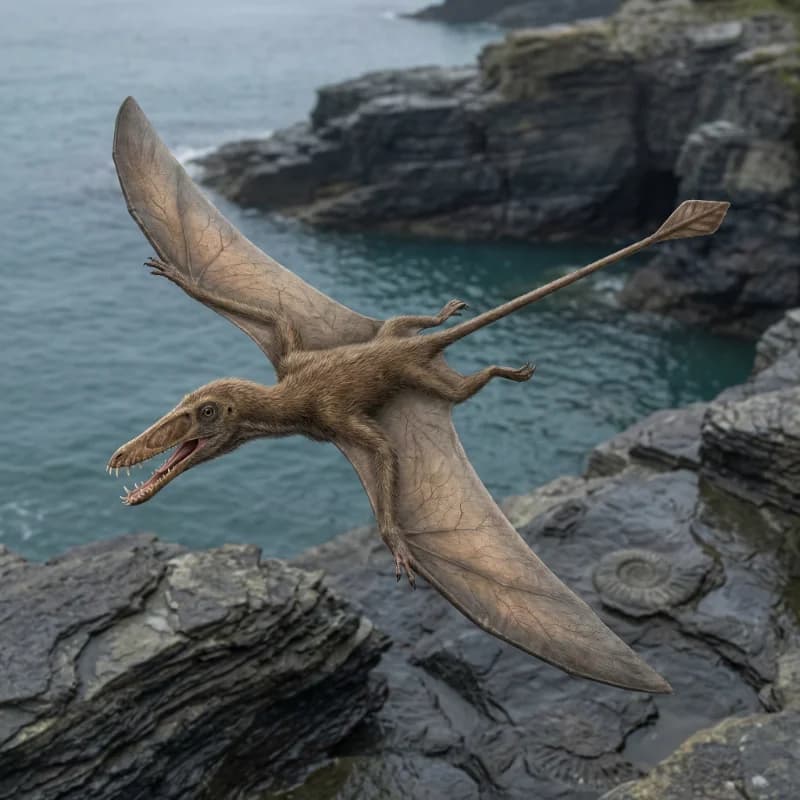
Dorygnathus
Dorygnathus banthensis
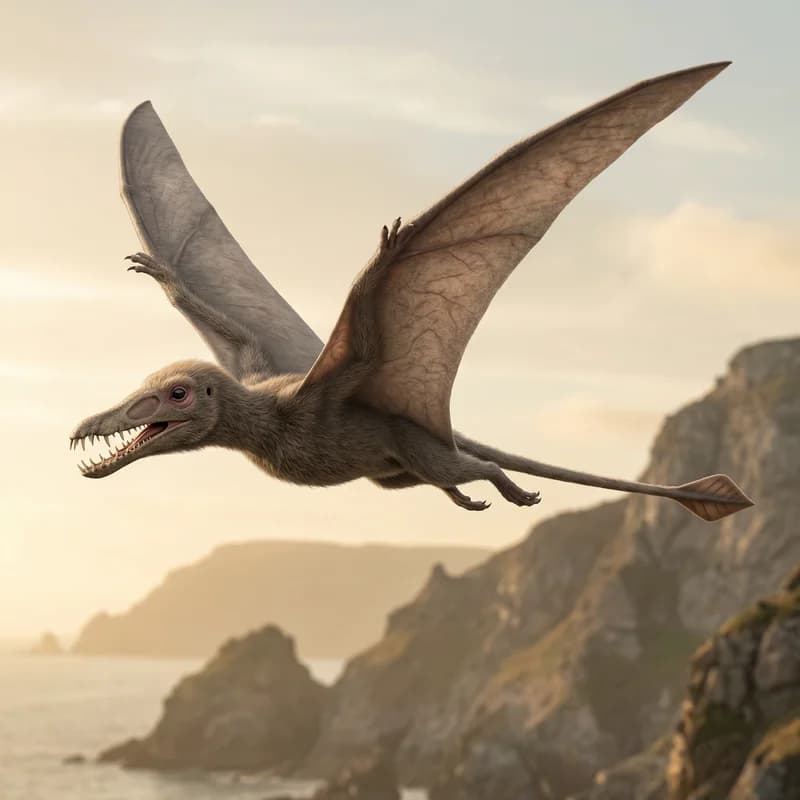
Rhamphorhynchus
Rhamphorhynchus muensteri
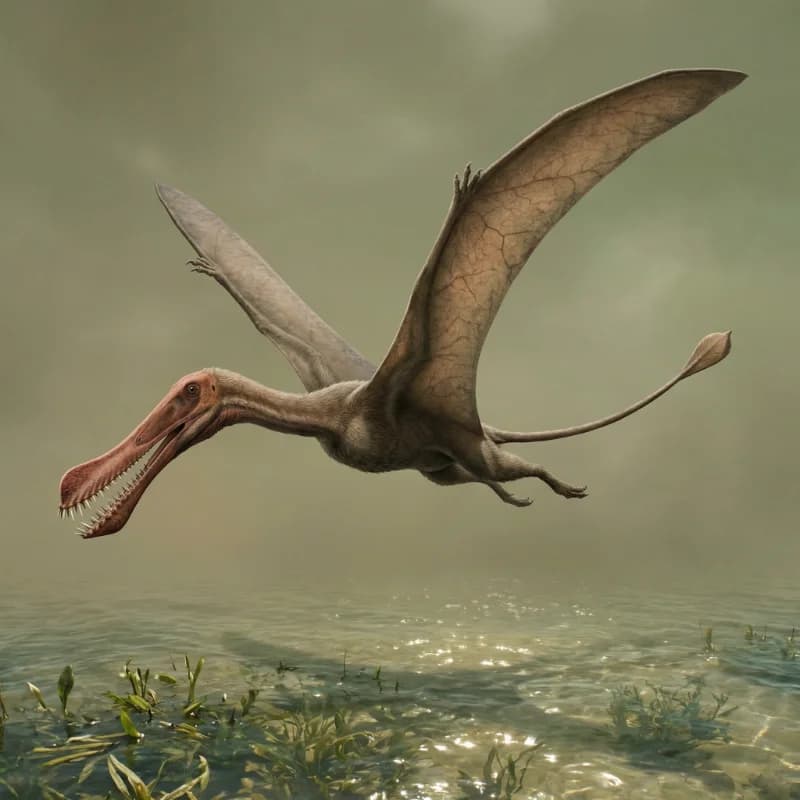
Cearadactylus
Cearadactylus atrox
Coloborhynchus
Coloborhynchus clavirostris
Ferrodraco
Ferrodraco lentoni
Pterodactylus
Pterodactylus antiquus
Guidraco
Guidraco venator
Ornithocheirus
Ornithocheirus simus