Cearadactylus
Cretaceous Period Piscivore Creature Type
Cearadactylus atrox
Scientific Name: "Ceará (Brazilian state) + daktylos (Greek, 'finger') = 'Ceará's finger'; atrox (Latin) = 'frightful'"
Physical Characteristics
Discovery
Habitat
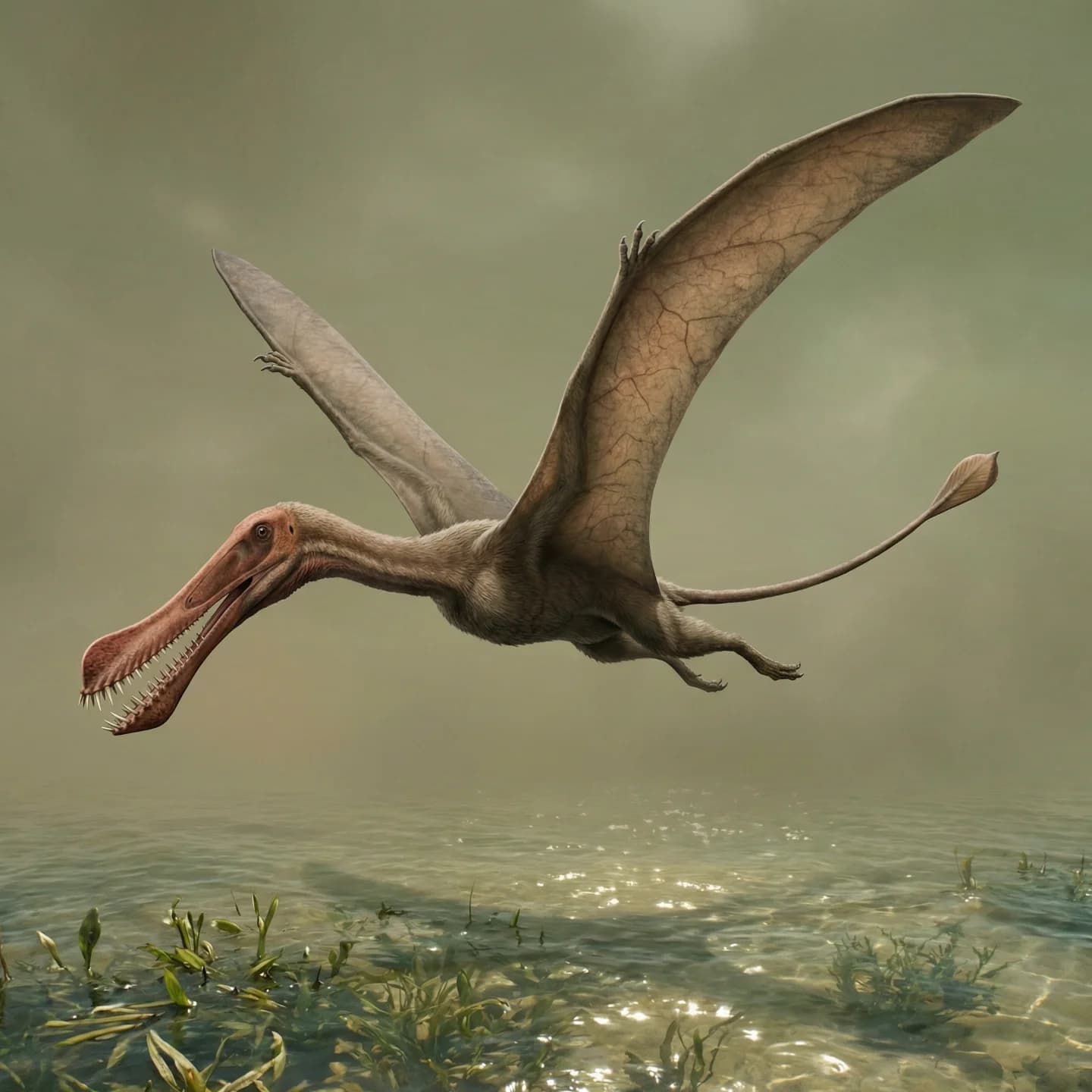
Cearadactylus (Cearadactylus atrox Leonardi & Borgomanero, 1985) is a large pterosaur from the Early Cretaceous (Albian stage, approximately 112 Ma) Romualdo Formation (Santana Group) of the Araripe Basin in northeastern Brazil. It belongs to the clade Anhangueria within the suborder Pterodactyloidea of the order Pterosauria — making it a flying reptile, not a dinosaur. Only one species, C. atrox, is currently recognized. The genus name combines the Brazilian state of Ceará with the Greek daktylos ("finger"), referencing the wing finger characteristic of pterosaurs, while the specific epithet atrox is Latin for "frightful," alluding to the animal's impressive dentition.
The holotype and only known specimen consists of a single skull (with associated lower jaw) approximately 57 cm long, lacking the occipital region and braincase. The original describers estimated a wingspan of about 4 m and a body mass of roughly 15 kg, though Wellnhofer (1991) later proposed a larger wingspan of approximately 5.5 m. Because only cranial material is known, all body-size estimates carry substantial uncertainty. Tragically, the holotype (MN 7019-V) was lost in the catastrophic September 2018 fire at the Museu Nacional in Rio de Janeiro, meaning all subsequent study must rely on pre-existing casts, photographs, and published descriptions.
Since its discovery, Cearadactylus has been one of the most taxonomically volatile pterosaur genera. Its classification has shifted from Pterodactyloidea incertae sedis (Leonardi & Borgomanero, 1985), to the family Cearadactylidae (Wellnhofer, 1991), to the Ctenochasmatidae (Unwin, 2002), and ultimately to Anhangueria as the sister group of Anhangueridae (Vila Nova et al., 2014) or a member of the subfamily Anhanguerinae within Anhangueridae (Holgado & Pêgas, 2020). Most recently, Pêgas et al. (2025) proposed that C. atrox is a junior synonym of the coeval Brasileodactylus araripensis, a claim that remains under active debate in the scientific community.
Overview
Name and Etymology
The genus name Cearadactylus is derived from Ceará, the Brazilian state where the fossil was found, combined with the Ancient Greek daktylos (δάκτυλος, "finger"). The "finger" refers to the elongated fourth digit that supports the wing membrane in all pterosaurs. The species name atrox comes from Latin, meaning "frightful" or "cruel," originally referencing the seemingly formidable anterior dentition — though subsequent re-preparation revealed that much of the teeth's imposing appearance was an artifact of erroneous fossil dealer reconstruction.
Taxonomic Status
In most recent phylogenetic analyses, Cearadactylus is recovered within the clade Anhangueria. Multiple studies (Holgado et al., 2019; Kellner et al., 2019; Holgado & Pêgas, 2020) place it within the family Anhangueridae, specifically in the subfamily Anhanguerinae. However, in 2025 Pêgas et al. argued that all characters previously used to distinguish Cearadactylus from Brasileodactylus araripensis (Kellner, 1984) are attributable to preservation differences and anatomical misinterpretation, proposing synonymy. This view has not yet achieved broad consensus and requires further independent verification.
Summary
A large piscivorous pterosaur from the Early Cretaceous Romualdo Formation of Brazil, Cearadactylus is one of the most taxonomically enigmatic pterodactyloid genera, with its classification and even its validity as a distinct genus currently under active debate.
Stratigraphy, Age, and Depositional Environment
Age Range
Cearadactylus is dated to the Early Cretaceous Albian stage, approximately 112–108 Ma. The precise age of the Romualdo Formation has been a subject of prolonged debate. Most workers place it on or near the Aptian–Albian boundary (approximately 112 Ma) based on biostratigraphic and geochemical evidence (Pons et al., 1990; Martill, 2007). Some authors have not entirely excluded a Cenomanian age, though the Albian assignment is currently the majority view.
Formation and Lithology
The holotype was recovered from the Romualdo Formation (formerly the Romualdo Member of the Santana Formation), part of the Santana Group in the Araripe Basin. The formation consists of alternating shales, marls, and limestones. Fossils are predominantly preserved within calcareous concretions (carbonate nodules), which are responsible for the exceptionally fine three-dimensional preservation — earning the Romualdo Formation its status as a Konservat-Lagerstätte. The holotype of Cearadactylus was almost certainly preserved in such a concretion.
Paleoenvironment
The Romualdo Formation was deposited in a rift-lake setting that experienced repeated shallow marine incursions from the proto-South Atlantic (Custódio et al., 2017). Sedimentary facies analysis, microfossil evidence (foraminifera, calcareous algae), and the co-occurrence of diverse fish and marine invertebrate fossils indicate a lagoonal to restricted shallow-subtidal environment. The climate during the Albian was significantly warmer and more humid than today, with subtropical to tropical conditions that supported an abundant fish fauna — providing ample prey for piscivorous pterosaurs.
Specimens and Diagnostic Characters
Holotype
The holotype, MN 7019-V (formerly CB-PV-F-O93 / F-PV-93), consists of an incomplete skull with associated lower jaw, lacking the occipital region and braincase. The preserved skull length is approximately 515 mm, with an estimated complete length of about 570 mm (Vila Nova et al., 2014; Wellnhofer, 1991). The specimen was traded to Italy in 1983 and purchased by Guido Borgomanero from fossil dealers. After Borgomanero's death, his widow Ragnhild donated the specimen to the Museu Nacional/UFRJ in Rio de Janeiro.
| Item | Details |
|---|---|
| Specimen number | MN 7019-V (formerly CB-PV-F-O93 / F-PV-93) |
| Composition | Incomplete skull + lower jaw (occipital region and braincase missing) |
| Preserved skull length | approximately 515 mm (estimated complete length approximately 570 mm) |
| Locality | Chapada do Araripe, Ceara State, Brazil |
| Formation | Romualdo Formation, Santana Group |
| Repository | Museu Nacional/UFRJ (destroyed in the 2018 fire) |
Fossil Dealer Reconstruction Errors
The holotype suffered serious reconstruction mistakes at the hands of fossil dealers. The most critical error was that the anterior portions of the snout and lower jaw were confused and glued in an inverted position — the premaxillary rostrum was placed ventrally and the tip of the dentary dorsally. This led to a reconstruction in which the anterior teeth appeared much larger and more robust than they actually were, forming an exaggerated "rosette" structure. Additionally, the teeth were extensively restored and enlarged with epoxy resin. These errors were only corrected in 2009 when Vila Nova fully re-prepared the specimen, with the corrected anatomical interpretation formally published in 2014 (Vila Nova et al., 2014). As a consequence, many anatomical descriptions published between 1985 and 2009 are based on incorrect morphology.
Emended Diagnosis (Vila Nova et al., 2014)
Following redescription, the autapomorphies of Cearadactylus atrox are as follows. First, the dentary groove extends to the very rostral tip of the bone and bifurcates at its end. Second, the posteroventral corner of the nasoantorbital fenestra forms a right angle. Additional distinguishing features from other pteranodontoids include the orbit and naris positioned above the midpoint of the nasoantorbital fenestra, a comparatively small number of teeth (16–18 maxillary and 11–13 mandibular per side), and teeth that decrease gradually in size toward the posterior end.
Limitations of the Material
Cearadactylus is known exclusively from cranial material; no postcranial skeleton has ever been discovered. Consequently, all estimates of body proportions, body mass, and wingspan are derived from proportional comparisons with more complete relatives. Furthermore, the 2018 fire permanently eliminated the possibility of direct re-examination of the holotype, leaving only a plastotype (cast), previously taken photographs, and published descriptions as the basis for future research.
Morphology and Functional Anatomy
Skull Morphology
The skull of Cearadactylus is remarkably elongate and low (dorsoventrally compressed). The premaxilla forms the principal structural element of the upper rostrum and extends to the dorsorostral margin of the nasoantorbital fenestra. Following re-preparation, a small premaxillary sagittal crest was identified on the dorsal surface — correcting all previous descriptions that stated no crest was present (Leonardi & Borgomanero, 1985; Unwin, 2002). However, this crest is much smaller than those seen in other anhanguerids such as Tropeognathus or Anhanguera.
The nasoantorbital fenestra occupies approximately 38% of the preserved skull length and exhibits the triangular outline typical of pterodactyloids. Notably, its posteroventral corner forms a right angle at the junction of the jugal and maxilla — a feature that is unique among related taxa and contrasts with the obtuse, concave margins seen in Anhanguera and 'Ornithocheirus' compressirostris.
Dentition
After re-preparation, the tooth count was determined as approximately 16–18 per side in the upper jaw and 11–13 per side in the lower jaw, making it relatively low within Anhangueridae (except for Tropeognathus mesembrinus). The first four pairs of teeth are distinctly larger than the posterior teeth, but the degree of heterodonty is not as extreme as originally described. The third tooth reaches approximately 35 mm in height, whereas teeth from the 6th position onward measure around 10 mm. Tooth size decreases gradually toward the posterior end — a pattern distinct from Anhanguera, in which the 5th and 6th teeth are abruptly smaller than the 4th and 7th.
Lower Jaw
The lower jaw is nearly complete. The mandibular symphysis measures approximately 110 mm in length, comprising about 20% of the total jaw length. A medial groove (dentary groove) runs along the dorsal surface of the dentaries to the very tip, where it bifurcates — a unique feature that distinguishes Cearadactylus from Brasileodactylus araripensis, in which the groove does not bifurcate (Vila Nova et al., 2014). Notably, the dentary lacks a sagittal crest, which is present in most anhanguerids that possess a premaxillary crest.
Size Estimates
Because no postcranial material is known, wingspan and body mass have been estimated through proportional comparisons with better-known relatives of similar skull size. Leonardi & Borgomanero (1985) estimated a wingspan of approximately 4 m and a mass of about 15 kg. Wellnhofer (1991) proposed a larger wingspan of approximately 5.5 m. Unwin (2002) noted that pterosaurs with skulls of similar size (e.g., Coloborhynchus robustus) have wingspans in the 4–5 m range. A wingspan of roughly 4–5.5 m and mass of approximately 15 kg are thus the generally cited estimates, with considerable uncertainty.
| Estimate | Value | Source | Notes |
|---|---|---|---|
| Wingspan | approximately 4 m | Leonardi & Borgomanero (1985) | Original description |
| Wingspan | approximately 5.5 m | Wellnhofer (1991) | Upward revision |
| Wingspan | 4-5 m | Unwin (2002) | Comparison with related taxa |
| Body mass | approximately 15 kg | Leonardi & Borgomanero (1985) | Original estimate |
| Skull length | approximately 57 cm (515 mm preserved) | Vila Nova et al. (2014) | Direct measurement |
Diet and Ecology
Dietary Inference
Cearadactylus is interpreted as a piscivore (fish-eater). The enlarged anterior teeth, which project slightly forward and outward, are well-suited for seizing slippery fish. The original description emphasized the spatulate anterior jaw expansion and tooth rosette as adaptations for fish capture, and although re-preparation showed the rosette was smaller than initially depicted, the heterodont dentition with enlarged anterior teeth still supports a piscivorous interpretation. The abundant fish fossils from the Romualdo Formation — including Vinctifer, Calamopleurus, Cladocyclus, and Rhacolepis — confirm that ample prey resources were available in the depositional environment.
Ecological Niche
The Romualdo Formation has yielded a remarkably diverse assemblage of toothed pterosaurs alongside Cearadactylus, including Anhanguera, Tropeognathus, and Brasileodactylus. These taxa differ in body size, dentition structure, and rostral morphology, suggesting possible niche partitioning. The comparatively low tooth count and gradual size-reduction pattern of Cearadactylus may indicate a preference for prey of particular size ranges, though this remains speculative.
Ontogeny and Behavior
Some cranial sutures in the holotype are not visible, but the unfused state of the right articular and both angulars led Vila Nova et al. (2014) to conclude that the holotype individual was a subadult. Flight mechanics, social behavior, and other aspects of life history cannot be meaningfully inferred from cranial material alone.
Distribution and Paleogeography
Occurrence
The sole occurrence of Cearadactylus is from the Chapada do Araripe in Ceará State, northeastern Brazil, within the Romualdo Formation. The exact collecting locality was not recorded; Leonardi & Borgomanero (1985) suggested it may have come from the eastern end of the Araripe Plateau.
Paleogeographic Context
During the Early Cretaceous Albian, the Araripe Basin was located at approximately 12°S paleolatitude and 11°W paleolongitude — closer to the equator than its present-day position. South America and Africa were in the process of rifting apart, and a narrow, shallow proto-South Atlantic seaway was forming. This marine incursion created the lagoonal to shallow-marine conditions recorded in the Romualdo Formation, providing an environment rich in fish and marine organisms that sustained a diverse pterosaur community.
Phylogeny and Taxonomic Debate
Classification History
Cearadactylus is one of the most taxonomically "nomadic" pterosaur genera in the literature. In the original 1985 description, Leonardi & Borgomanero refrained from assigning the genus to any family, listing it as Pterodactyloidea incertae sedis. In 1991, Wellnhofer erected the monotypic family Cearadactylidae, but this concept was not adopted by subsequent workers. In 2000, Kellner & Tomida placed it within Pteranodontoidea, closely related to but outside Anhangueridae. In 2002, Unwin proposed a radically different assignment to the Ctenochasmatidae (subfamily Gnathosaurinae), but this conclusion was heavily dependent on character codings derived from the incorrectly reconstructed snout.
The 2010 preliminary analysis by Vila Nova et al. and the 2014 redescription paper, using corrected anatomical information, consistently recovered Cearadactylus within Anhangueria, either as the sister group of Anhangueridae or within it. The ctenochasmatid assignment was unambiguously rejected.
Recent Phylogenetic Analyses
Multiple studies from 2019–2020 (Holgado et al., 2019; Kellner et al., 2019; Pentland et al., 2019; Holgado & Pêgas, 2020) recovered Cearadactylus within Anhangueria, though its precise position varies: just outside Ornithocheirae (Pentland et al., 2019) or within Anhanguerinae as the sister taxon of Maaradactylus (Holgado & Pêgas, 2020).
Synonymy Proposal (2025)
In 2025, Pêgas reviewed the systematics and phylogenetic nomenclature of Ornithocheiriformes and treated C. atrox as a junior synonym of Brasileodactylus araripensis. Later that year, Pêgas et al. (2025) published a detailed study arguing that all previously cited distinguishing characters between the two genera — including the bifurcation of the dentary groove and the relative expansion of the premaxilla versus the dentary — result from preservation differences and anatomical misinterpretation. Whether this view gains acceptance will depend on future independent evaluation.
Reconstruction and Uncertainty
Established Facts
That Cearadactylus is a large pterodactyloid pterosaur from the Early Cretaceous Albian Romualdo Formation, possessing heterodont dentition consistent with piscivory, is broadly agreed upon across the literature.
Hypothetical and Estimated Aspects
The exact phylogenetic position (within Anhangueridae vs. its sister group), the synonymy with Brasileodactylus, the precise wingspan and body mass, body proportions, and flight capabilities all remain at the hypothesis or estimation stage. The absence of postcranial material and the loss of the holotype compound these uncertainties.
Discrepancies Between Popular Media and Science
Cearadactylus gained substantial public recognition through its appearance in Michael Crichton's 1990 novel Jurassic Park, where pterosaurs are housed in an aviary over a river. However, Crichton's depiction was based on the original 1985 description — with the inverted snout reconstruction and exaggerated tooth rosette. The corrected anatomy, including the presence of a small premaxillary crest and a much smaller rosette, differs considerably from the novel's portrayal.
Comparison with Contemporaneous Taxa
The following table compares key features of toothed pterosaurs from the Romualdo Formation.
| Taxon | Estimated wingspan | Premaxillary crest | Dentary crest | Teeth per side (upper jaw) | Tooth size pattern |
|---|---|---|---|---|---|
| Cearadactylus atrox | 4-5.5 m | Small (vestigial) | Absent | 16-18 | Gradual posterior decrease |
| Brasileodactylus araripensis | approximately 3.9-4 m | Unknown (incomplete skull) | Absent | Unknown | Similar pattern inferred |
| Anhanguera blittersdorffi | approximately 4-5 m | Large | Present | approximately 20+ | 5th-6th abruptly reduced |
| Tropeognathus mesembrinus | approximately 6-8 m | Large (upper and lower) | Present | approximately 12-14 | Fewest in Anhangueridae |
| Maaradactylus kellneri | Unknown | Present | Unknown | Unknown | - |
Fun Facts
FAQ
📚References
- Leonardi, G. & Borgomanero, G. (1985). Cearadactylus atrox nov. gen., nov. sp.: novo Pterosauria (Pterodactyloidea) da Chapada do Araripe, Ceará, Brasil. Coletânea de Trabalhos Paleontológicos, Série Geologia, 27: 75–80.
- Unwin, D. M. (2002). On the systematic relationships of Cearadactylus atrox, an enigmatic Early Cretaceous pterosaur from the Santana Formation of Brazil. Fossil Record, 5(1): 239–263. doi:10.5194/fr-5-239-2002
- Vila Nova, B. C., Kellner, A. W. A., & Sayão, J. M. (2010). Short Note on the Phylogenetic Position of Cearadactylus atrox, and Comments Regarding Its Relationships to Other Pterosaurs. Acta Geoscientica Sinica, 31(Supp. 1): 73–75.
- Vila Nova, B. C., Sayão, J. M., Neumann, V. H. M. L., & Kellner, A. W. A. (2014). Redescription of Cearadactylus atrox (Pterosauria, Pterodactyloidea) from the Early Cretaceous Romualdo Formation (Santana Group) of the Araripe Basin, Brazil. Journal of Vertebrate Paleontology, 34(1): 126–134. doi:10.1080/02724634.2013.793694
- Wellnhofer, P. (1991). The Illustrated Encyclopedia of Pterosaurs. London: Salamander Books. pp. 125–126.
- Kellner, A. W. A. & Tomida, Y. (2000). Description of a new species of Anhangueridae (Pterodactyloidea) with comments on the pterosaur fauna from the Santana Formation (Aptian–Albian), Northeastern Brazil. National Science Museum Monographs, 17: 1–135.
- Holgado, B. & Pêgas, R. V. (2020). A taxonomic and phylogenetic review of the anhanguerid pterosaur group Coloborhynchinae and the new clade Tropeognathinae. Acta Palaeontologica Polonica, 65. doi:10.4202/app.00751.2020
- Holgado, B., Pêgas, R. V., Canudo, J. I., Fortuny, J., Rodrigues, T., Company, J., & Kellner, A. W. A. (2019). On a new crested pterodactyloid from the Early Cretaceous of the Iberian Peninsula and the radiation of the clade Anhangueria. Scientific Reports, 9: 4940. doi:10.1038/s41598-019-41280-4
- Pentland, A. H., Poropat, S. F., Tischler, T. R., Sloan, T., Elliott, R. A., Elliott, H. A., Elliott, J. A., & Elliott, D. A. (2019). Ferrodraco lentoni gen. et sp. nov., a new ornithocheirid pterosaur from the Winton Formation (Cenomanian–lower Turonian) of Queensland, Australia. Scientific Reports, 9: 13454. doi:10.1038/s41598-019-49789-4
- Pêgas, R. V. (2025). On the systematics and phylogenetic nomenclature of the Ornithocheiriformes (Pterosauria, Pteranodontoidea). Palaeontologia Electronica, 28(2): a25. doi:10.26879/20
- Pêgas, R. V., Nascimento, A. S., Piazentin, L. C., Pinheiro, F. L., Zaher, H., & Costa, F. R. (2025). Untangling the identity of Romualdo pterosaurs: 'Cearadactylus atrox' as a junior synonym of Brasileodactylus araripensis (Pterosauria, Anhangueridae). Historical Biology, 1–11. doi:10.1080/08912963.2025.2582068
- Kellner, A. W. A. (1984). Ocorrência de uma mandíbula de Pterosauria (Brasileodactylus araripensis, nov. gen.; nov. sp.) na Formação Santana, Cretáceo da Chapada do Araripe, Ceará-Brasil. Anais da Academia Brasileira de Ciências, 33: 519–527.
- Martill, D. M. (2007). The age of the Cretaceous Santana Formation fossil Konservat Lagerstätte of north-east Brazil: a historical review and an appraisal of the biochronostratigraphic utility of its palaeobiota. Cretaceous Research, 28(6): 895–920. doi:10.1016/j.cretres.2007.01.002
- Custódio, M. A., Guaglio, F., Warren, L. V., Simões, M. G., Fürsich, F. T., Perinotto, J. A., & Assine, M. L. (2017). The transgressive-regressive cycle of the Romualdo Formation (Araripe Basin): Sedimentary archive of the Early Cretaceous marine ingression in the interior of Northeast Brazil. Sedimentary Geology, 359: 1–15. doi:10.1016/j.sedgeo.2017.07.010
- Palmer, D. (ed.) (1999). The Marshall Illustrated Encyclopedia of Dinosaurs and Prehistoric Animals. London: Marshall Editions. p. 104.
- Kellner, A. W. A., Caldwell, M. W., Holgado, B., Dalla Vecchia, F. M., Nohra, R., Sayão, J. M., & Currie, P. J. (2019). First complete pterosaur from the Afro-Arabian continent: insight into pterodactyloid diversity. Scientific Reports, 9: 17875. doi:10.1038/s41598-019-54042-z
Gallery
5 images Cearadactylus
Cearadactylus · Cretaceous Period · Piscivore
 Cearadactylus
Cearadactylus · Cretaceous Period · Piscivore
 Cearadactylus
Cearadactylus · Cretaceous Period · Piscivore
 Cearadactylus
Cearadactylus · Cretaceous Period · Piscivore
 Cearadactylus
Cearadactylus · Cretaceous Period · Piscivore
🔗Related Creatures
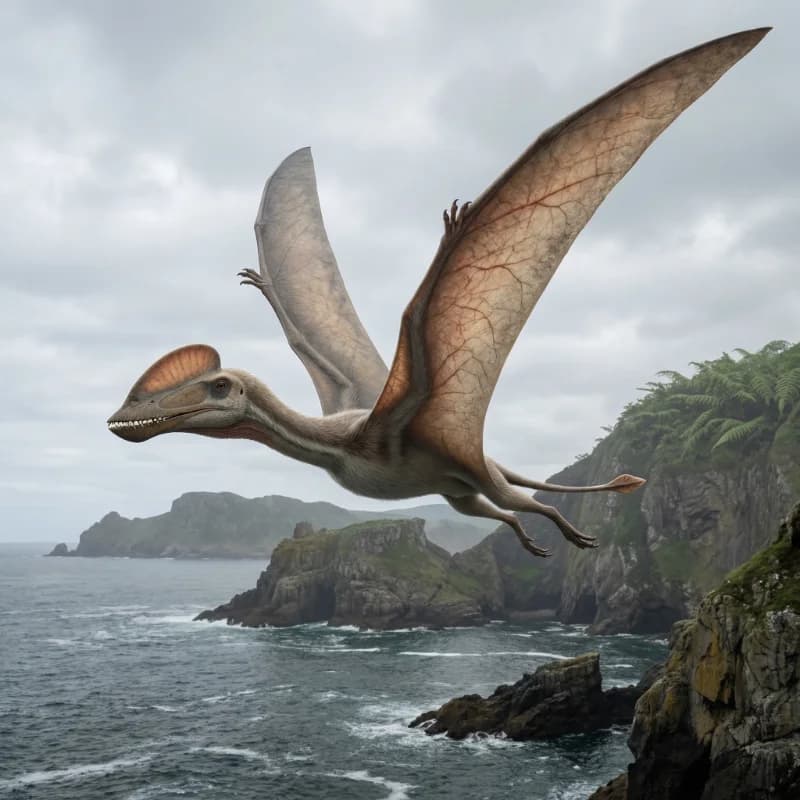
Coloborhynchus
Coloborhynchus clavirostris
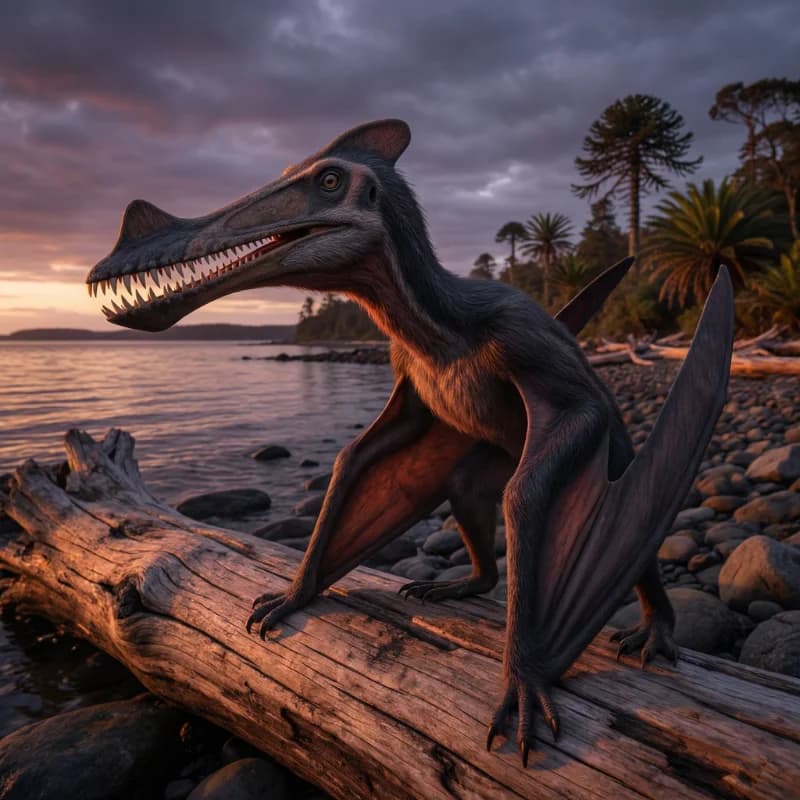
Guidraco
Guidraco venator

Pteranodon
Pteranodon
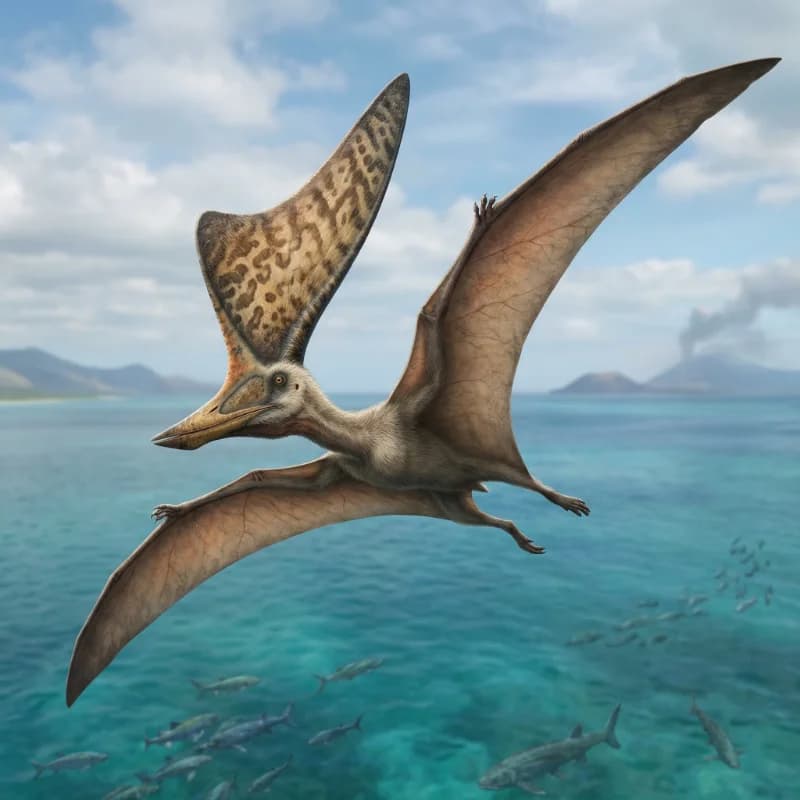
Nyctosaurus
Nyctosaurus gracilis
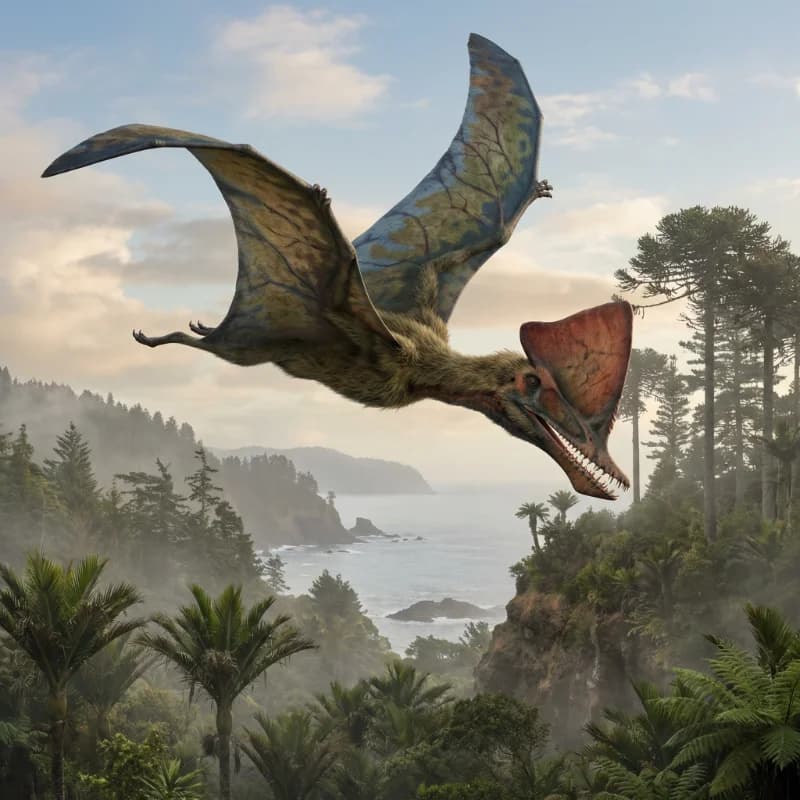
Tropeognathus
Tropeognathus mesembrinus
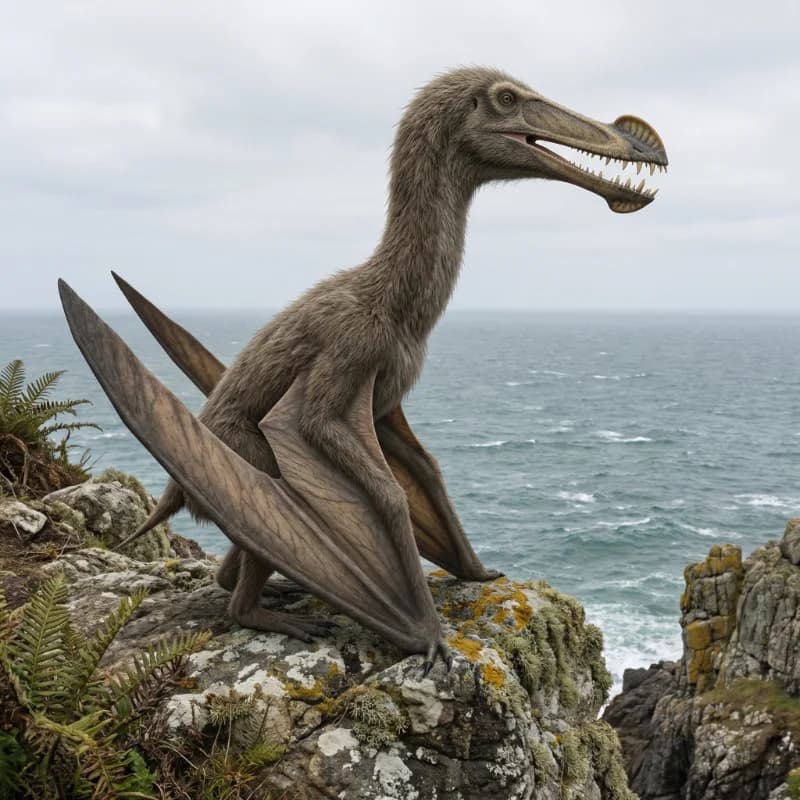
Ornithocheirus
Ornithocheirus simus
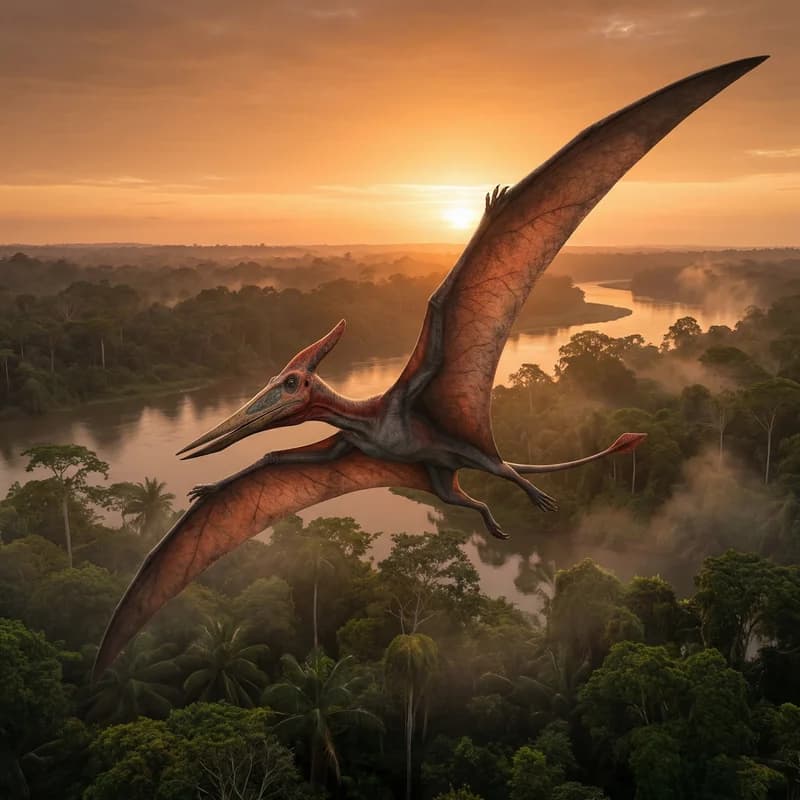
Anhanguera
Anhanguera blittersdorffi
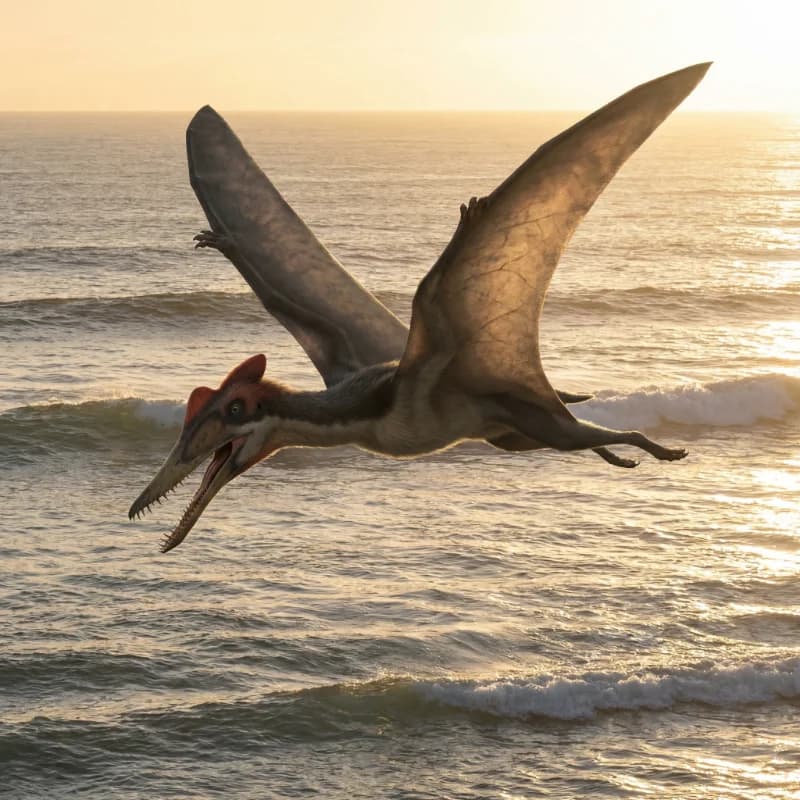
Ferrodraco
Ferrodraco lentoni