Guidraco
Guidraco venator
⏳ Cretaceous Period🍽️ PiscivoreDinosaurs
Physical Characteristics
⏳
PeriodCretaceous Period
🍽️
DietPiscivore
🪽
Wingspan4m
Classification
GEN
GenusGuidraco
SP
SpeciesG. venator
Guidraco venator
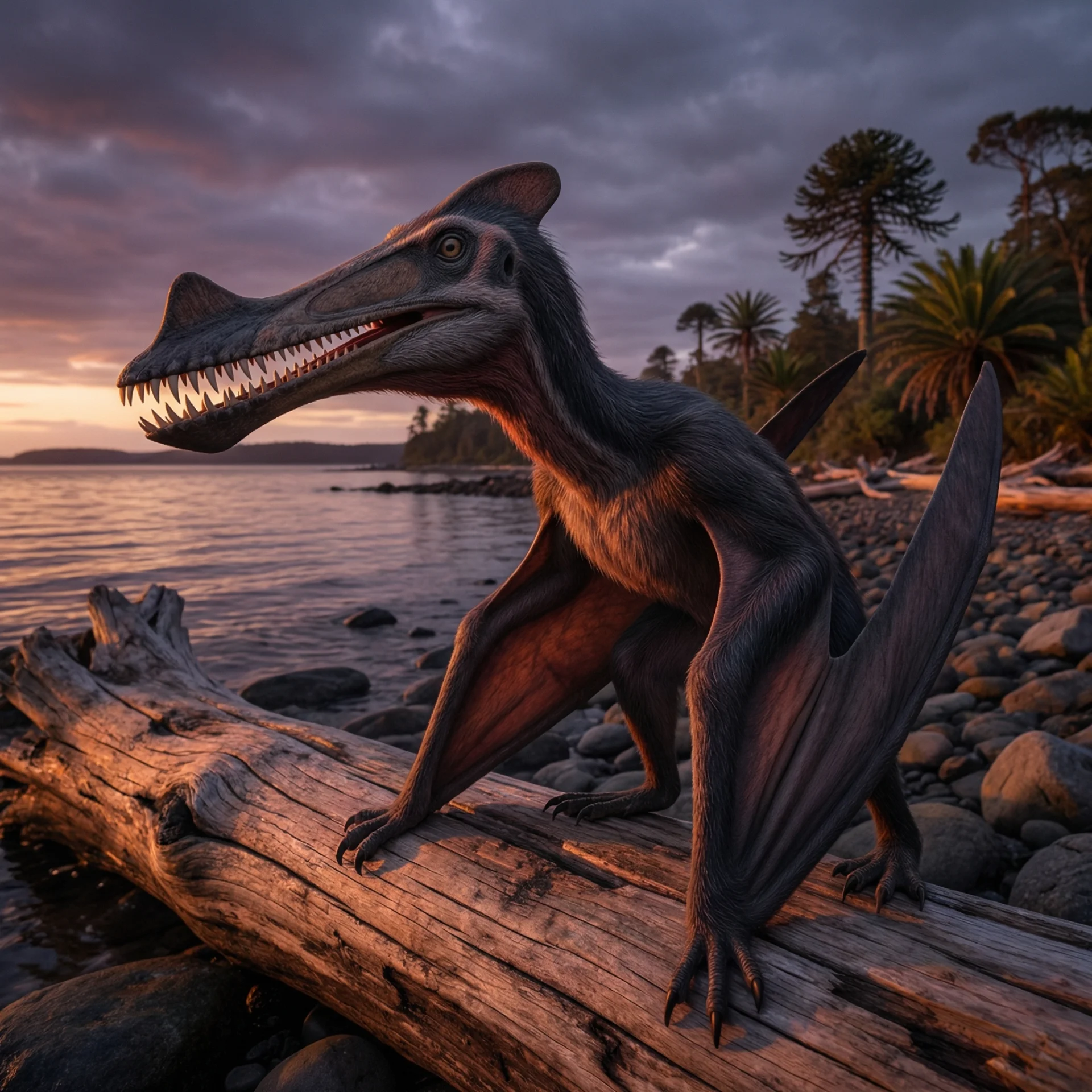
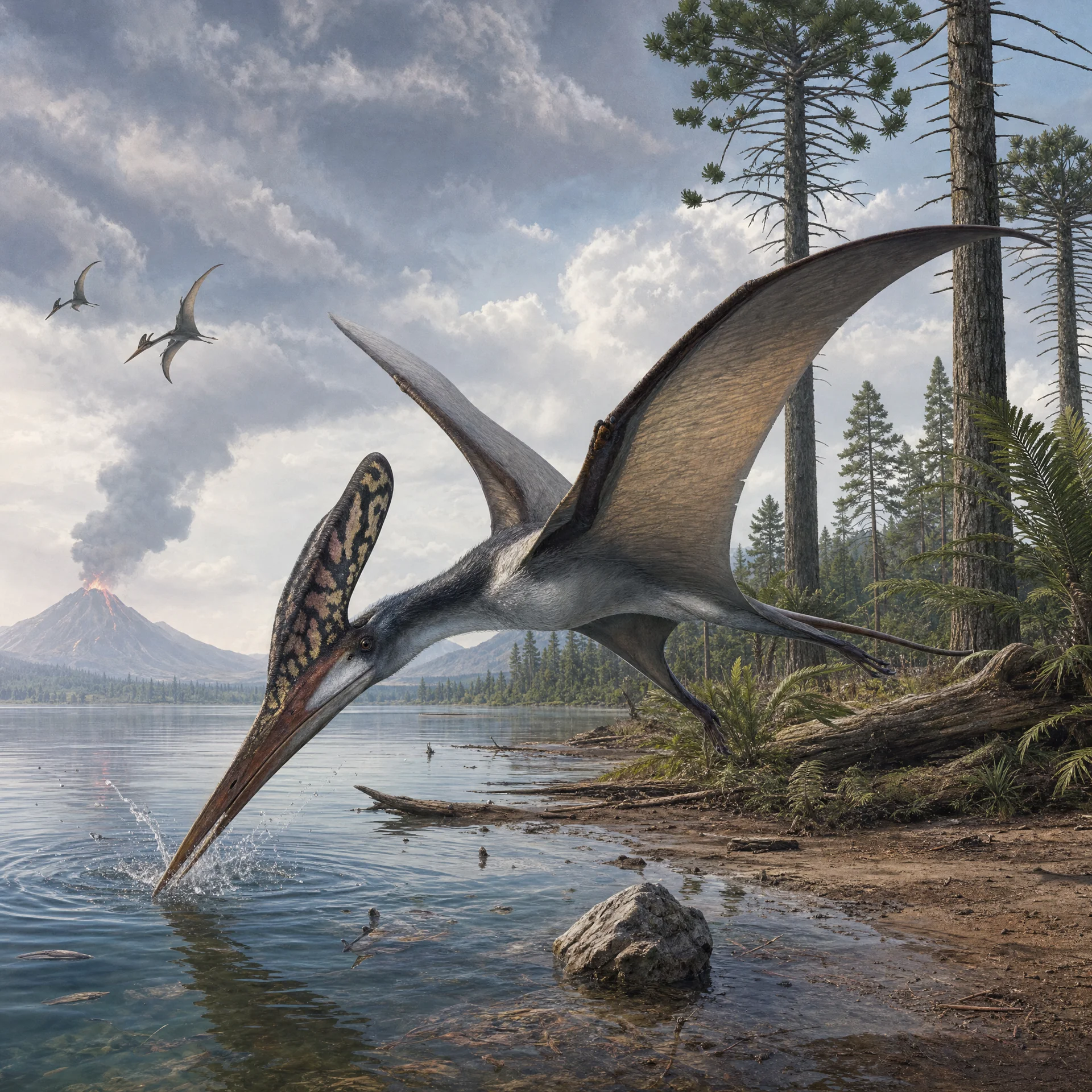
Guidraco (Guidraco venator Wang et al., 2012) is an extinct genus of toothed pterodactyloid pterosaur from the Early Cretaceous (Aptian stage, approximately 120 million years ago) Jiufotang Formation of western Liaoning Province, northeast China. The generic name combines the Chinese word 'gui' (鬼, meaning 'malicious ghost') with the Latin 'draco' (meaning 'dragon'), while the specific epithet 'venator' is Latin for 'hunter'—together translating to 'ghost dragon hunter.' This pterosaur is most notable for its distinctive upward-directed cranial crest on the frontals and its enormous anterior teeth that protrude far beyond the margins of the skull and lower jaw when the mouth is closed.
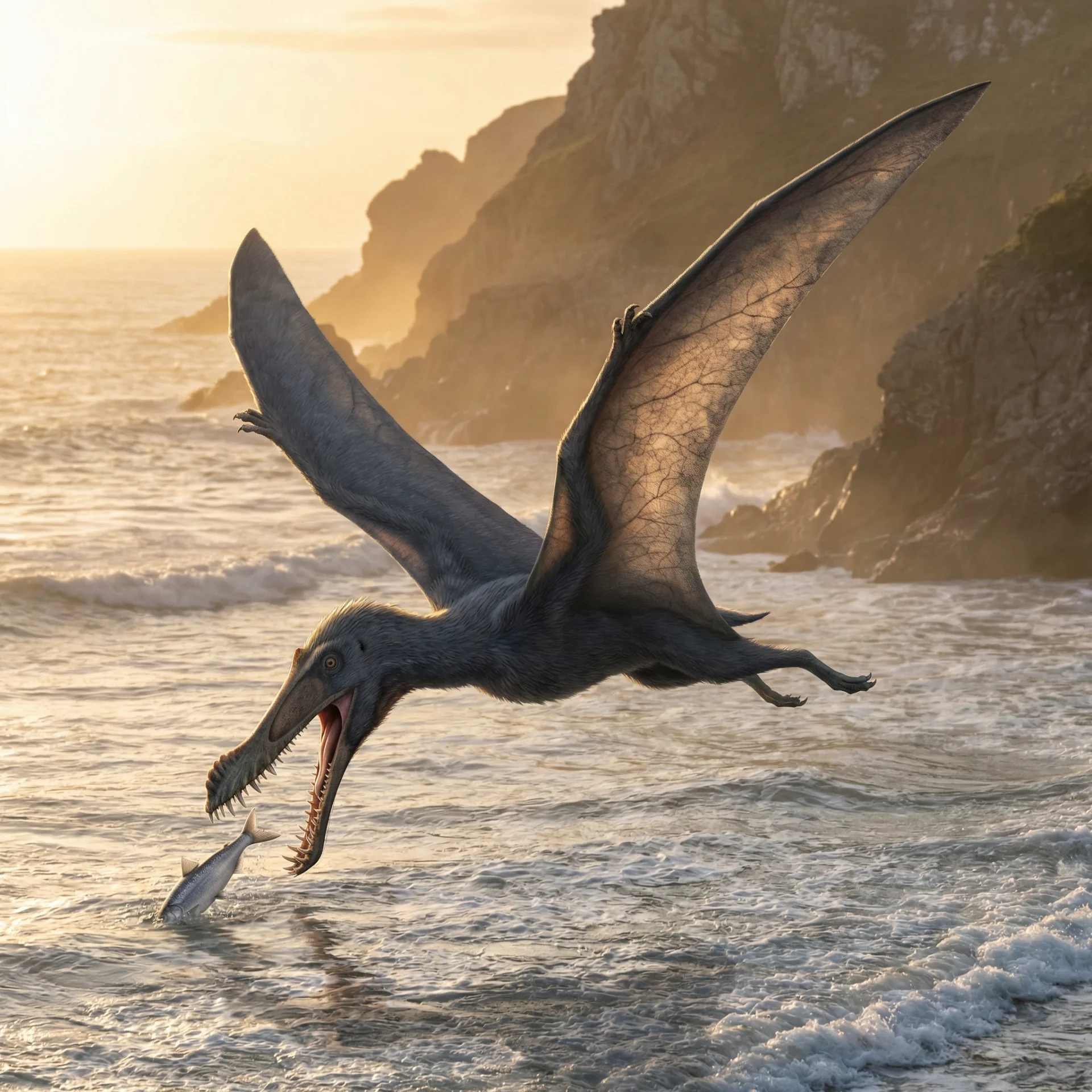
The holotype (IVPP V17083) consists of an articulated partial skeleton comprising a nearly complete skull, lower jaws, and a series of four cervical vertebrae (second through fifth). The skull measures approximately 38 cm in length, and the jaws bear a total of 82 teeth (23 in the upper jaw and 18 in the lower jaw on each side). The elongated, needle-like anterior teeth interlock when the mouth is closed, forming a functional 'prey grab' optimised for catching slippery fish. Four coprolites containing fish bones and scales were discovered in association with the holotype, further supporting a piscivorous diet. The wingspan has been estimated at roughly 4–5 m based on proportional comparisons with closely related anhanguerid pterosaurs, although the wing skeleton itself is not preserved, leaving considerable uncertainty in this figure.
The phylogenetic placement of Guidraco has been the subject of ongoing debate. In the original description, Wang et al. (2012) recovered it as the sister taxon of the Brazilian Ludodactylus, while Andres et al. (2014) placed it within Boreopteridae. More recent analyses by multiple independent research groups (Holgado et al., 2019; Kellner et al., 2019; Holgado & Pêgas, 2020) have consistently placed Guidraco within the subfamily Anhanguerinae of the family Anhangueridae, alongside Caulkicephalus and Ludodactylus. The close relationship between a Chinese pterosaur and a Brazilian taxon is regarded as significant palaeobiogeographic evidence for faunal interchange between Asia and South America during the Early Cretaceous, when the Atlantic Ocean was considerably narrower than it is today.
The generic name Guidraco is derived from the Chinese 'gui' (鬼), meaning 'malicious ghost' or 'malevolent spirit' in Chinese culture, combined with the Latin 'draco,' meaning 'dragon.' The specific epithet 'venator' is the Latin word for 'hunter.' The full binomial Guidraco venator thus translates to 'ghost dragon hunter,' a name inspired by the animal's dramatic and somewhat menacing cranial morphology (Wang et al., 2012).
Guidraco venator is currently recognised as a valid genus and species. In the original description, Wang et al. (2012) placed it within Pteranodontoidea (sensu Kellner) and recovered it as the sister taxon of Ludodactylus, with their clade being closely related to Istiodactylidae and Anhangueridae. Andres et al. (2014) alternatively placed Guidraco within Boreopteridae. However, from 2019 onwards, multiple independent phylogenetic analyses (Holgado et al., 2019; Kellner et al., 2019; Pêgas et al., 2019; Holgado & Pêgas, 2020) have consistently recovered Guidraco within the family Anhangueridae, specifically in the subfamily Anhanguerinae. Pêgas (2025), in a comprehensive systematic review of ornithocheiriform pterosaurs, maintained this placement.
A toothed Early Cretaceous Asian pterosaur characterised by a tall frontal crest and enormously enlarged, protruding anterior teeth adapted for fish capture.
Guidraco venator comes from the Jiufotang Formation, which spans the Aptian stage of the Early Cretaceous, approximately 122–118.9 Ma. Radiometric dating by He et al. (2004) yielded an age of approximately 120.3 ± 0.7 Ma for the formation. More recent uranium-lead (U-Pb) geochronology by Yu et al. (2021) and Zhong et al. (2025) has refined the age range to approximately 122–119 Ma.
The Jiufotang Formation is the upper part of the Jehol Group and is distributed across the Chaoyang area of Liaoning Province, northeast China. The formation comprises tuffaceous conglomerates in its lower portions, tuffaceous sandstones and mudstones interbedded with oil shale in the middle, and grey-green to grey mudstones and sandstones in the upper portions. Volcanic ash layers are intercalated within the sedimentary sequence, indicating episodic explosive volcanism (Li et al., 2023; Sun et al., 2022). The type locality of Guidraco—Sihedang, near Lingyuan City—is characterised primarily by fine-grained mudstone and siltstone facies.
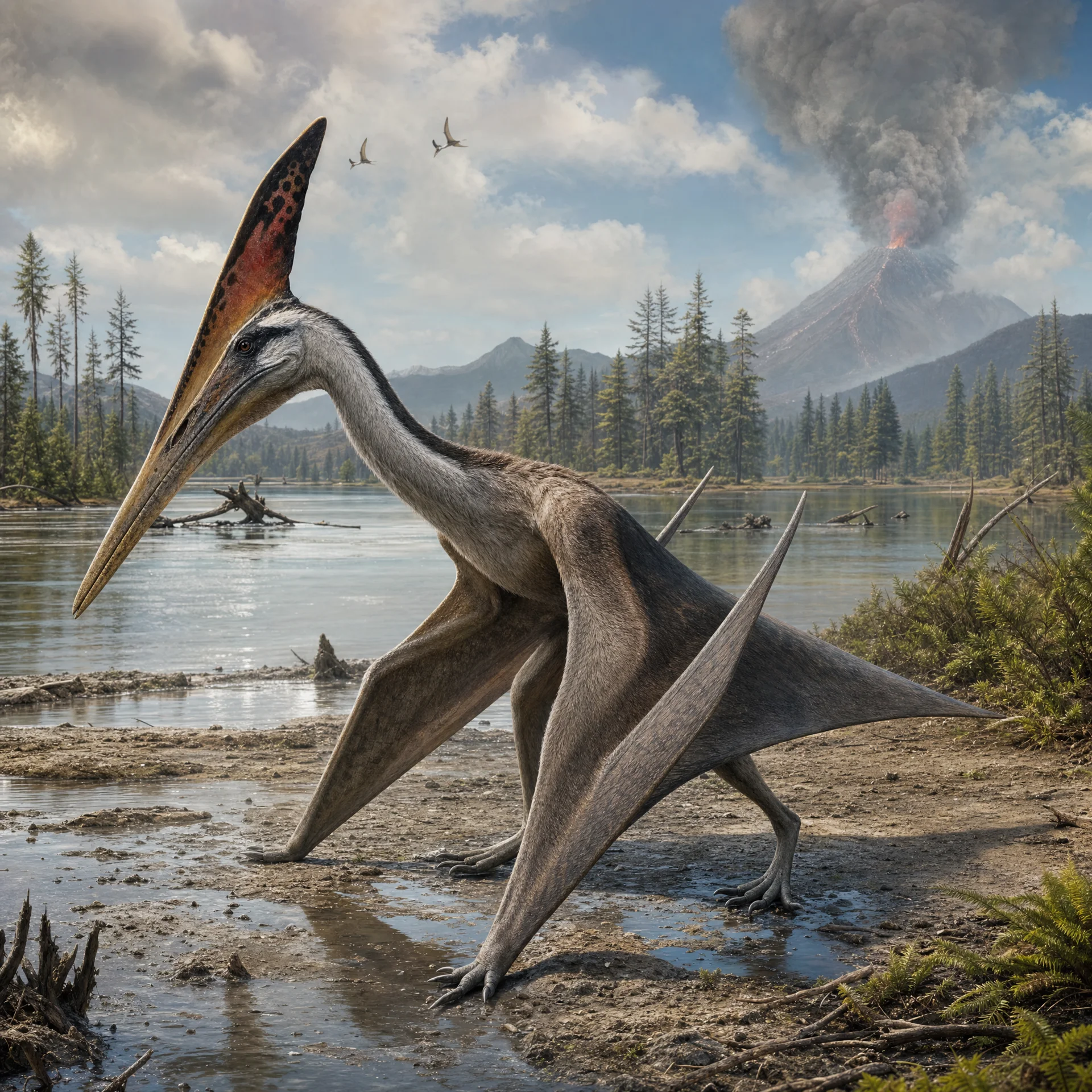
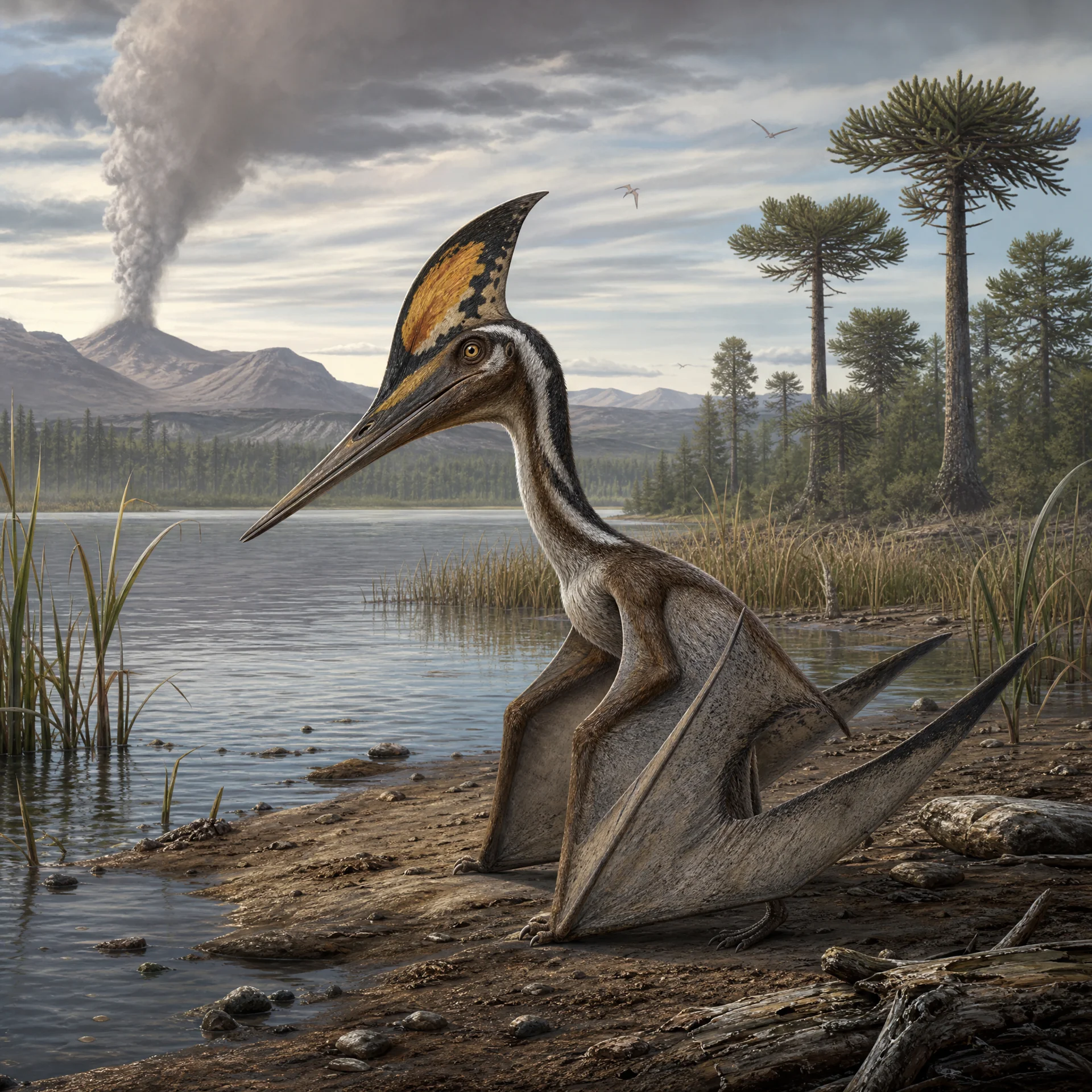
The depositional environment of the Jiufotang Formation is interpreted as a continental lacustrine basin dominated by large lake systems. Volcanic activity enriched the lakes with nutrients, enhancing primary productivity and contributing to the exceptional fossil preservation that makes the formation a Konservat-Lagerstätte (Wang et al., 2014). Palynological and clay mineral analyses indicate a sub-humid, warm-temperate climate with distinct seasonal variations, and the regional vegetation was dominated by coniferous forests surrounding the lake systems (Ying et al., 2025; Lu et al., 2025). The habitat of Guidraco was thus a volcanically active inland basin with extensive lakes and wetlands—an environment rich in fish and other aquatic organisms.
Guidraco venator is known exclusively from its holotype, IVPP V17083, collected at Sihedang near Lingyuan City in Liaoning Province. The specimen is an articulated partial skeleton consisting of a nearly complete skull (approximately 38 cm long), the lower jaws, and four cervical vertebrae (second through fifth). It is housed at the Institute of Vertebrate Paleontology and Paleoanthropology (IVPP) of the Chinese Academy of Sciences and is currently on display at the Paleozoological Museum of China in Beijing.
Four coprolites were found in close proximity to the skull, containing fish bones and scales (Wang et al., 2012). However, their definitive attribution to Guidraco has not been conclusively established.
Wang et al. (2012) provided the following diagnostic features:
Apart from the four cervical vertebrae, no postcranial skeleton (wings, torso, hindlimbs) is preserved. This means that direct measurements of wingspan, body length, and body mass are impossible, and all such estimates must rely on proportional comparisons with better-known relatives.
The skull is 38 cm long and highly elongated, with the upper margin and jaw line running nearly parallel over most of their length, giving the snout a relatively robust profile. No crest is present on the snout itself, but above the orbits the skull roof curves steeply upwards, forming a large crest on the frontal bones. This crest is as tall as the posterior portion of the skull is deep, ends in a rounded apex, and is slightly angled forwards (Wang et al., 2012). The function of the crest is not confirmed, but given the coexistence of numerous pterosaur species during this period, it was most likely used for visual display related to species recognition or sexual selection.
The upper jaw bears 23 teeth and the lower jaw 18 teeth on each side, for a bilateral grand total of 82 teeth. The anterior dentition displays a highly distinctive arrangement:
The enamel on the anterior 9 upper and 8 lower teeth bears vertical ridges on the lingual surface, while the posterior teeth have uniformly smooth enamel with thickened crown bases, giving them a more triangular outline (Wang et al., 2012; Pentland et al., 2022). When the jaws are closed, the large anterior teeth extend far beyond both the upper and lower margins of the head, with the protruding portions up to twice as long as the depth of the snout or mandible. This creates an interlocking cage-like mechanism ideally suited for trapping slippery prey. The describers noted that while the jaw tips are not expanded into a true rosette, the functional result is analogous.
The four preserved cervical vertebrae (second through fifth) are moderately elongated and bear ventral keels. Large pneumatic foramina on their lateral surfaces indicate that the cervical air sac system invaded the vertebral interiors, contributing to skeletal lightening. The axis bears a spiked neural spine (Wang et al., 2012).
Because the postcranial skeleton is extremely incomplete, overall body size can only be estimated indirectly. Popular sources commonly cite a wingspan of approximately 4–5 m (13–16 ft), derived from proportional comparisons with anhanguerid pterosaurs of similar skull size (Wired, 2012; various popular media). In contrast, the DinoAnimals Pterosaur Database provides a more conservative estimate of approximately 2.7 m based solely on known material, assigning an estimated size reliability (ESR) score of just 1.5 out of 4. Given the absence of wing bones, all wingspan figures are estimates, and substantial uncertainty exists across the approximately 3–5 m range.
| Feature | Value | Basis/Notes |
|---|---|---|
| Skull length | approx. 38 cm | Measured from holotype (Wang et al., 2012) |
| Total tooth count | 82 (bilateral) | Upper 23 + lower 18, each side (Wang et al., 2012) |
| Wingspan (estimated) | approx. 3–5 m | Based on proportional comparison with relatives; high uncertainty |
| Body mass | Unknown | Postcranium not preserved; no reliable estimate available |
Multiple lines of evidence support a fish-eating diet for Guidraco:
First, the dental morphology: the extremely long, needle-shaped anterior teeth interlock when the mouth is closed, forming a living cage mechanism optimised for catching and retaining slippery fish (Wang et al., 2012). Second, four coprolites found in association with the holotype contained fish bones and scales (Wang et al., 2012; Bestwick et al., 2018), though their definitive attribution to Guidraco remains unconfirmed (Jiang et al., 2022). Third, the Jiufotang Formation lacustrine environment has yielded abundant fish fossils, including Lycoptera, Sinamia, and Jinanichthys, confirming the availability of fish as a food resource.
In the comprehensive review of pterosaur dietary hypotheses by Bestwick et al. (2018), Guidraco was highlighted as one of the rare cases with associated coprolite evidence supporting piscivory.
The Jiufotang Formation hosted a remarkable diversity of pterosaurs alongside Guidraco, including other toothed pteranodontoids such as Liaoningopterus, Ikrandraco, and Linlongopterus, as well as azhdarchoid pterosaurs like Sinopterus, Chaoyangopterus, and Jidapterus. This extraordinary coexistence of multiple pterosaur species is best explained by niche partitioning through differences in body size, dental morphology, and feeding strategies (Wang et al., 2014). The distinctive large anterior dentition and robust snout of Guidraco suggest specialisation for capturing relatively large fish near the water surface.
The specific feeding behaviour of Guidraco (e.g., surface dipping vs. plunge diving) has not been determined. The once-popular skim-feeding hypothesis for anhanguerid pterosaurs has been largely rejected on biomechanical grounds. Plunge diving or surface dipping remain viable alternatives, but these cannot be directly tested in Guidraco without wing skeleton material.
Guidraco venator is presently known from a single locality: Sihedang, near Lingyuan City, western Liaoning Province, China. This site belongs to the Jiufotang Formation, dated to the Aptian stage of the Early Cretaceous.
The approximate palaeocoordinates for the Jiufotang Formation are approximately 44.4°N, 119.5°E—about 3° north of the present-day latitude—reflecting the slightly different position of the East Asian plate during the Early Cretaceous.
The close phylogenetic relationship between Guidraco from China and Ludodactylus from the Crato Formation of Brazil is one of the most notable aspects of this taxon. During the Early Cretaceous, the Atlantic Ocean was considerably narrower than today, making intercontinental dispersal along coastlines feasible for flying reptiles, particularly piscivorous forms accustomed to coastal and aquatic environments. Wang et al. (2012) used this evidence to propose that certain Early Cretaceous pterosaur clades, including Tapejaridae and Anhangueridae, may have originated in Asia before dispersing to other continents.
In the original description, Wang et al. (2012) placed Guidraco within Pteranodontoidea (sensu Kellner). Their phylogenetic analysis recovered it as the sister taxon of the Brazilian Ludodactylus, with the two forming a clade closely related to Istiodactylidae and Anhangueridae. This topology was subsequently replicated by Wang et al. (2014) and Wu et al. (2017).
Andres et al. (2014) recovered an alternative position for Guidraco within Boreopteridae, alongside Boreopterus and Zhenyuanopterus.
From 2019 onwards, multiple independent phylogenetic analyses have consistently placed Guidraco within the family Anhangueridae, specifically in the subfamily Anhanguerinae (Holgado et al., 2019; Kellner et al., 2019; Pêgas et al., 2019; Kellner et al., 2019b). In particular, Holgado & Pêgas (2020), in their comprehensive taxonomic and phylogenetic review of Anhangueridae, recovered Guidraco as closely related to Caulkicephalus and Ludodactylus within Anhanguerinae. This placement is currently the most widely accepted classification. Pêgas (2025) maintained this assignment in a broad systematic review of ornithocheiriform pterosaurs.
| Analysis | Placement | Sister/Close Relatives |
|---|---|---|
| Wang et al. (2012) | Pteranodontoidea | Ludodactylus (sister taxon) |
| Andres et al. (2014) | Boreopteridae | Boreopterus, Zhenyuanopterus |
| Holgado et al. (2019) | Anhangueridae: Anhanguerinae | Caulkicephalus, Ludodactylus |
| Holgado & Pegas (2020) | Anhangueridae: Anhanguerinae | Caulkicephalus, Ludodactylus |
| Pegas (2025) | Ornithocheiriformes: Anhangueridae | Placement maintained |
In the Netflix documentary series Life on Our Planet (2023), Episode 3 "Empire," Guidraco is depicted at approximately 2.2 m in size, considerably smaller than the commonly cited 4–5 m wingspan estimate. The documentary also portrays the animal covered in filamentous feather-like pycnofibres. While pycnofibre preservation is documented in some pterodactyloids, no pycnofibres have been preserved in the Guidraco holotype itself, making this reconstruction speculative.
A comparison of the principal toothed pteranodontoid pterosaurs from the Jiufotang Formation is presented below:
| Taxon | Family/Subfamily | Cranial Features | Estimated Wingspan | Inferred Diet |
|---|---|---|---|---|
| Guidraco | Anhangueridae: Anhanguerinae | Frontal crest; enormous protruding anterior teeth | approx. 3–5 m (estimated) | Piscivore (probable) |
| Liaoningopterus | Anhangueridae (?) | Large; rosette-type anterior dentition | approx. 5 m (estimated) | Piscivore (inferred) |
| Ikrandraco | Pteranodontoidea | Mandibular crest; small teeth | approx. 2.5 m (estimated) | Piscivore (hypothetical) |
| Linlongopterus | Pteranodontoidea | Medium-sized; differing dental arrangement | Unknown | Piscivore (inferred) |
| Ludodactylus (Brazil) | Anhangueridae: Anhanguerinae | Similar crest and tooth morphology to Guidraco | approx. 4 m (estimated) | Piscivore (inferred) |
The name Guidraco venator translates to 'ghost dragon hunter,' combining the Chinese concept of a 'malicious ghost' (gui, 鬼) with Latin words for 'dragon' and 'hunter.'
When the jaws are closed, Guidraco's front teeth protrude beyond the jaw margins by up to twice the depth of the snout, creating a fearsome, dragon-like profile.
With 82 teeth in total (bilateral count), Guidraco had one of the most numerous dentitions among toothed pterosaurs from the Jiufotang Formation.
Four fossilised coprolites found near the holotype skull contain fish bones and scales, providing some of the best direct dietary evidence for any Jiufotang pterosaur.
Guidraco's closest relative is Ludodactylus from Brazil—over 17,000 km away today—revealing that pterosaurs could disperse across continents when the Atlantic Ocean was still narrow.
The tall, rounded crest above the eyes resembles that of the famous Pteranodon, but unlike Pteranodon, Guidraco lacks any keel-like crests on the tips of its jaws.
Because no wing bones are preserved, Guidraco's wingspan estimates range widely from approximately 2.7 to 5 metres depending on the method of estimation used.
The Jiufotang Formation is a Konservat-Lagerstätte—a deposit of exceptional fossil preservation—where volcanic ash fertilised ancient lakes, preserving an entire ecosystem in extraordinary detail.
In the Netflix series Life on Our Planet, the CGI model of Guidraco was reused at the end of Episode 3 to portray Ferrodraco, an Australian anhanguerid pterosaur.
Large pneumatic openings in the cervical vertebrae show that the air sac system penetrated deep into the bones, a weight-saving adaptation essential for powered flight.
When Guidraco was announced in 2012, Wired magazine described it as a '120-million-year-old ghost dragon,' helping to make it one of the most widely publicised Chinese pterosaur discoveries of that year.
Guidraco combines the Chinese word 'gui' (鬼), meaning 'malicious ghost,' with the Latin 'draco,' meaning 'dragon,' to form 'ghost dragon.' The species name 'venator' is Latin for 'hunter.' Together, Guidraco venator translates to 'ghost dragon hunter.'
The sole known specimen (holotype IVPP V17083) was collected at Sihedang, near Lingyuan City, in western Liaoning Province, China. The fossil comes from the Jiufotang Formation, which dates to the Aptian stage of the Early Cretaceous, approximately 120 million years ago.
The wing skeleton is not preserved, so the exact wingspan is unknown. Popular sources commonly cite approximately 4–5 metres based on proportional comparisons with related anhanguerid pterosaurs, while the DinoAnimals Pterosaur Database provides a more conservative estimate of approximately 2.7 m with a low reliability score (ESR 1.5/4). The true wingspan likely falls somewhere in the 3–5 m range, but significant uncertainty remains.
Guidraco is inferred to have been a piscivore (fish-eater). Its elongated, needle-like anterior teeth interlocked when the mouth was closed, forming a cage-like mechanism ideal for trapping slippery fish. Additionally, four coprolites (fossilised faeces) containing fish bones and scales were found in association with the holotype (Wang et al., 2012), providing further support for a fish-based diet.
The precise function of the tall frontal crest has not been confirmed. Given that numerous pterosaur species coexisted during this period, the most likely explanation is that the crest served as a visual display structure for species recognition or sexual selection. The hypothesis that pterosaur crests functioned as flight aids is less supported, as the extraordinary diversity of crest shapes across pterosaur genera is more consistent with a display function.
The classification of Guidraco has been debated, but since 2019, multiple independent phylogenetic analyses have consistently placed it within the family Anhangueridae, specifically in the subfamily Anhanguerinae, alongside Caulkicephalus and Ludodactylus (Holgado & Pêgas, 2020). This is currently the most widely accepted classification.
Guidraco from China and Ludodactylus from the Crato Formation of Brazil have been recovered as sister taxa, suggesting faunal interchange between Asia and South America during the Early Cretaceous. At that time, the Atlantic Ocean was much narrower than it is today, making long-distance dispersal along coastlines feasible for flying, fish-eating pterosaurs.
Guidraco had a bilateral grand total of 82 teeth: 23 in each upper jaw (46 total) and 18 in each lower jaw (36 total). The teeth are divided into two types: the anterior teeth, which are large with vertical enamel ridges, and the posterior teeth, which are smaller with smooth enamel and thickened crown bases.
Yes, Guidraco appears in the Netflix documentary series Life on Our Planet (2023), Episode 3 'Empire.' In the episode, set approximately 125 million years ago, a male Guidraco lands on a fallen tree near nesting Longipteryx and is subsequently chased away by the territorial birds.
The Jiufotang Formation has yielded an extraordinarily diverse assemblage of organisms coexisting with Guidraco, including dinosaurs (Psittacosaurus, Sinotyrannus, Microraptor), birds (Longipteryx, Confuciusornis, Jeholornis), other pterosaurs (Sinopterus, Chaoyangopterus, Liaoningopterus), mammals, fish, turtles, and crustaceans such as clam shrimps. This reflects the remarkable biodiversity of the Jehol Biota.
5images