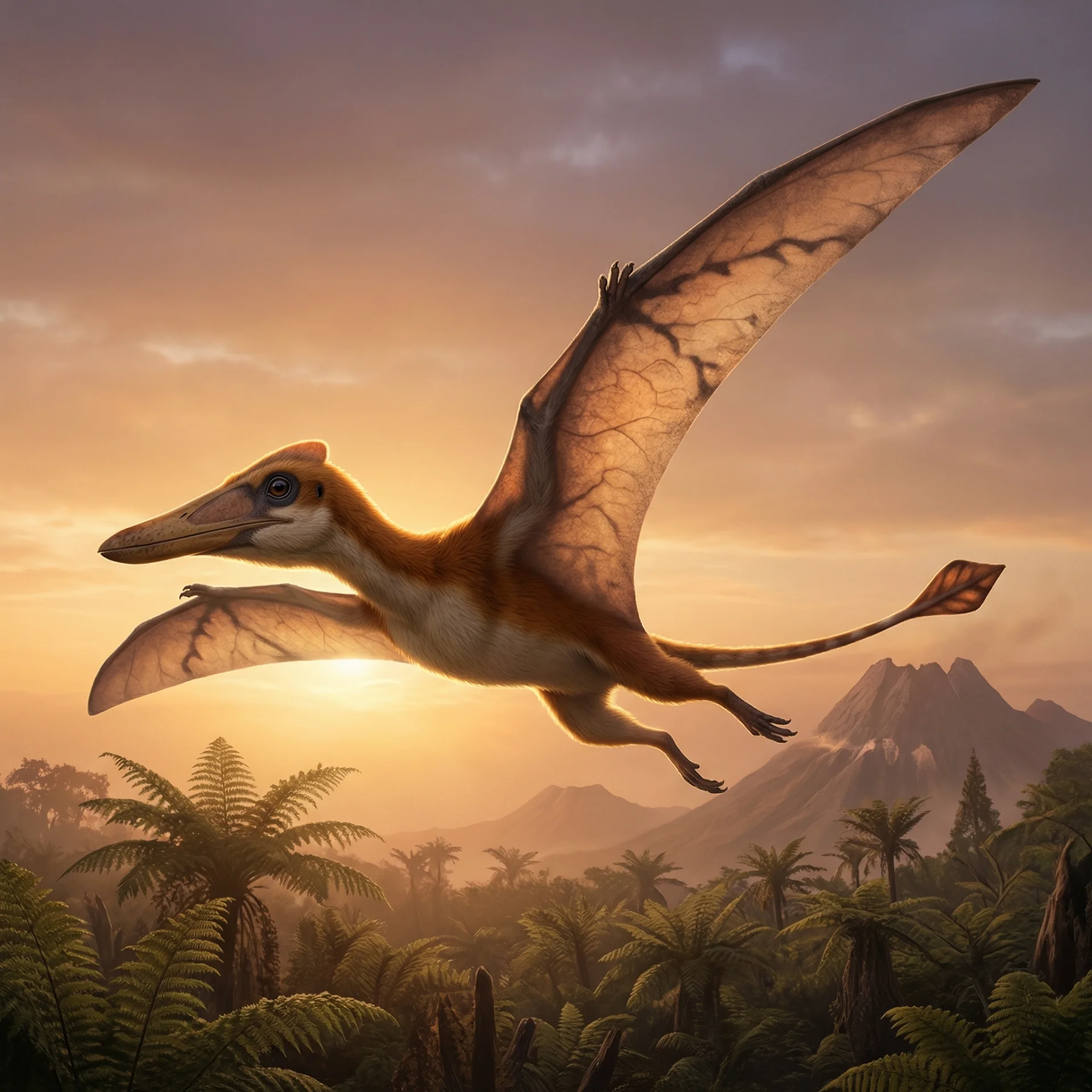
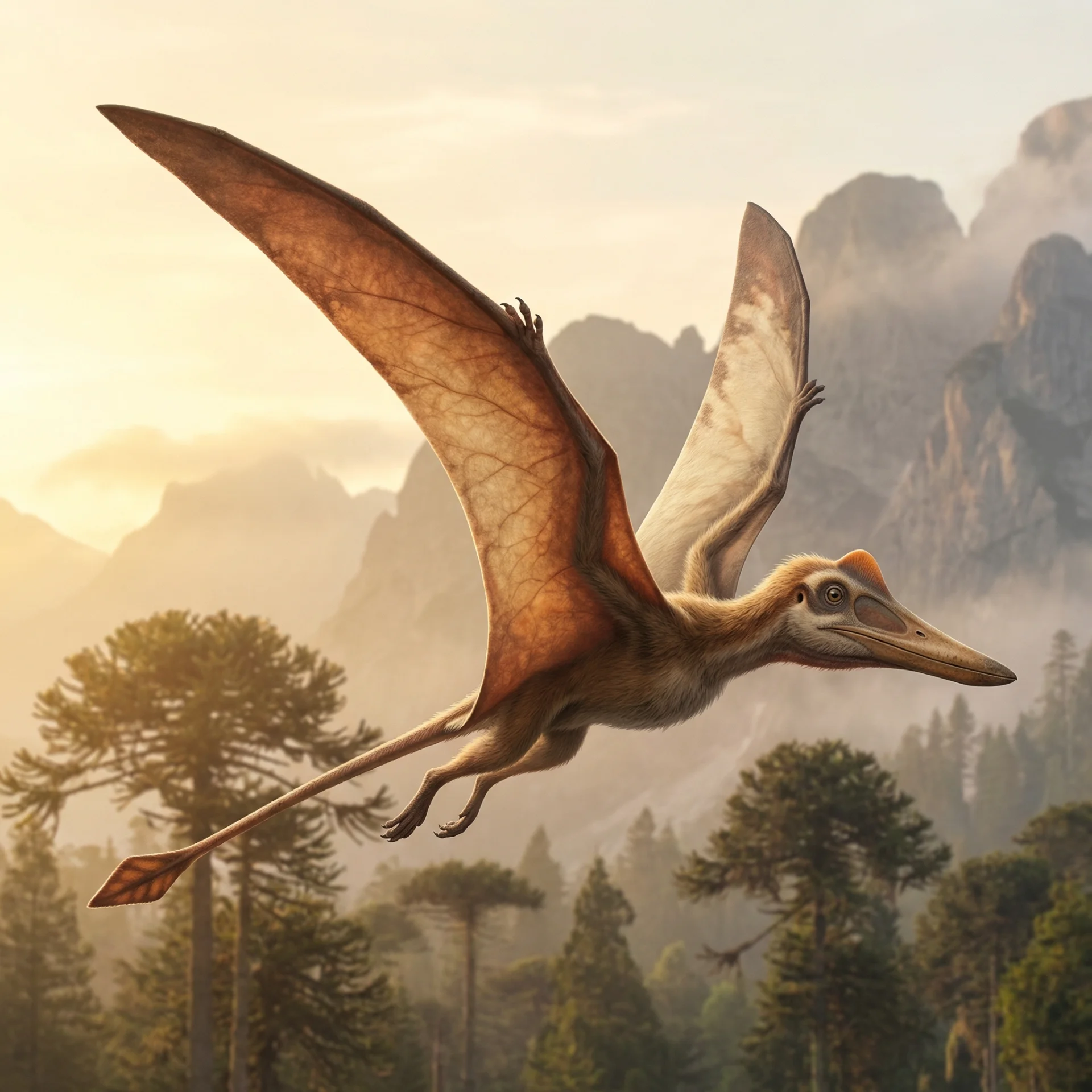
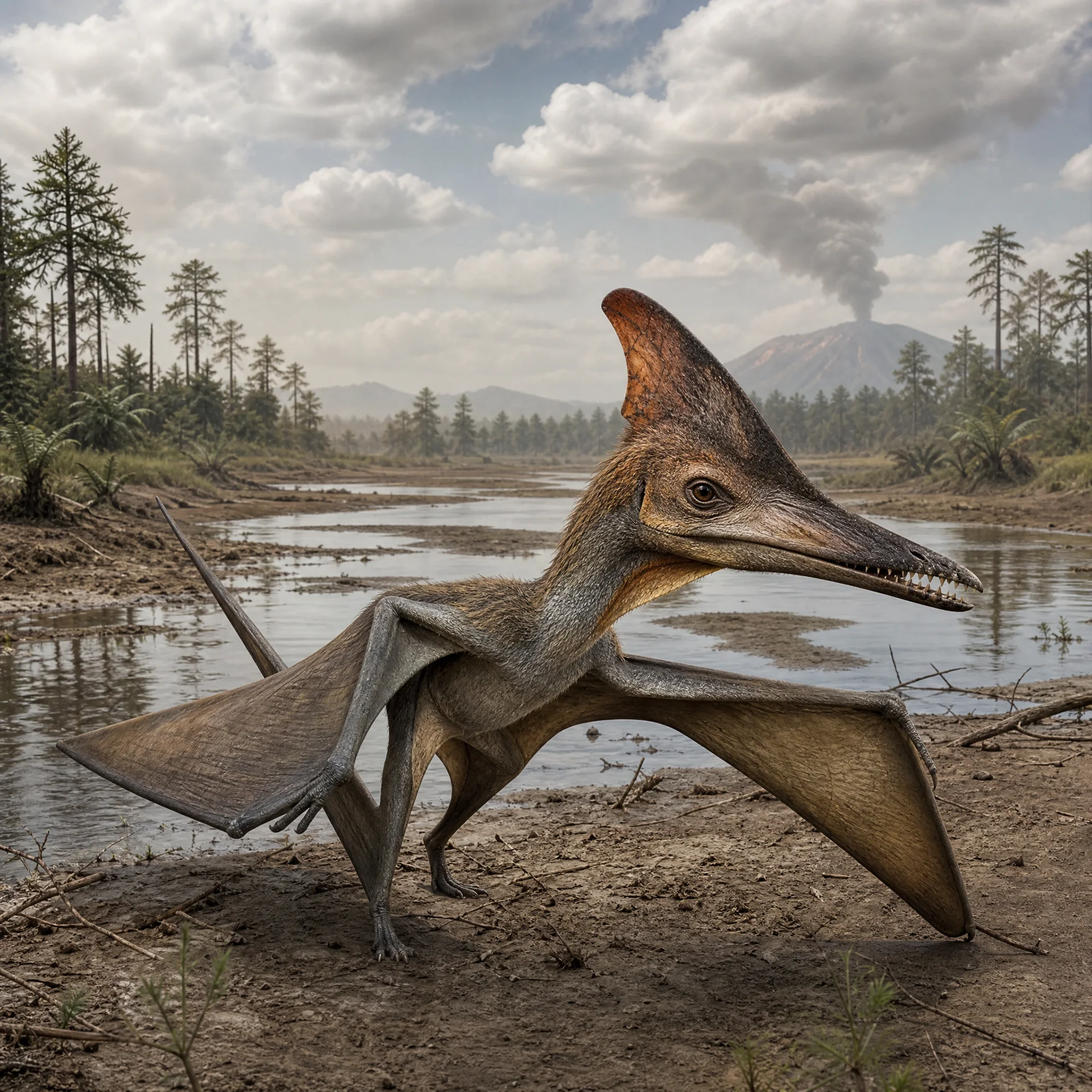
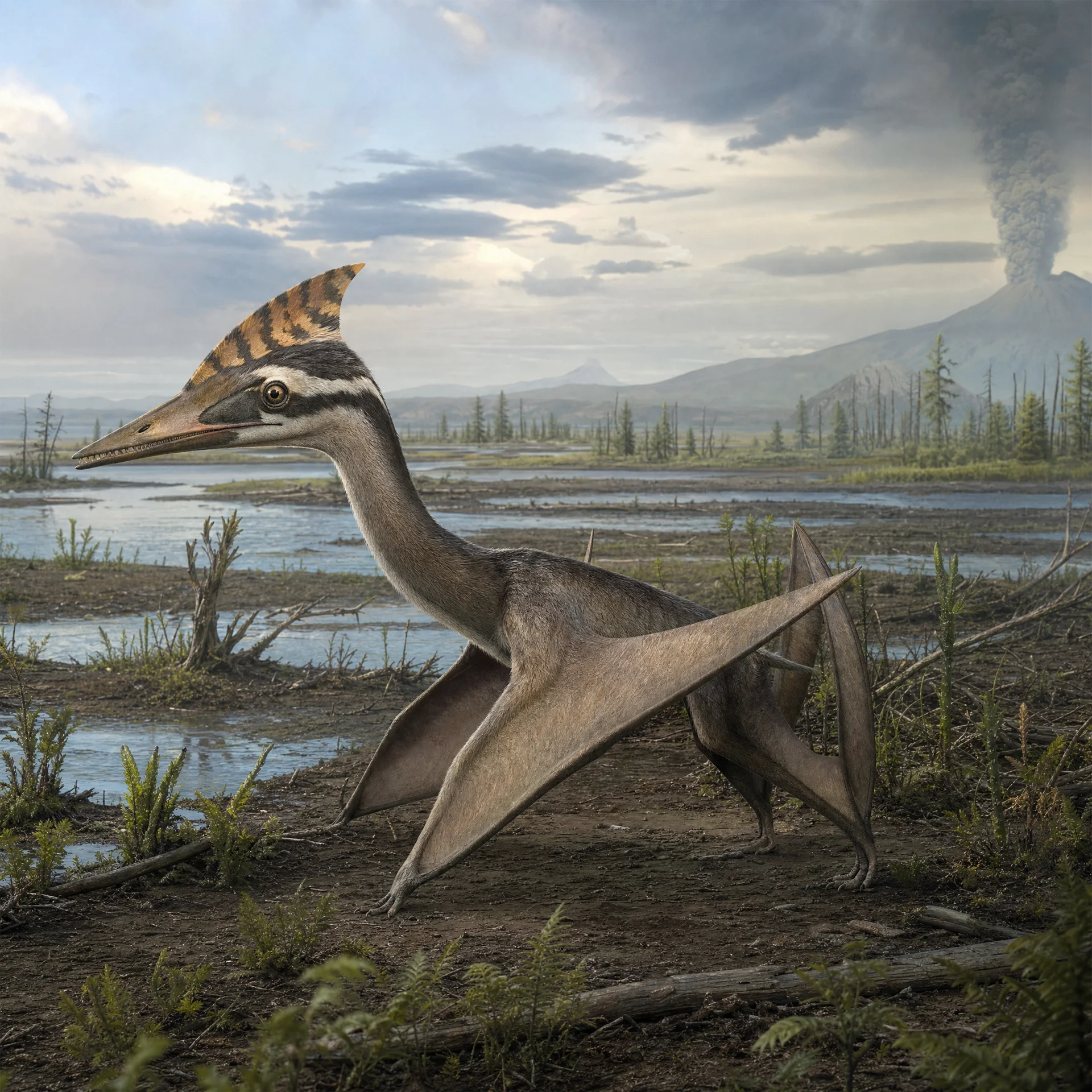
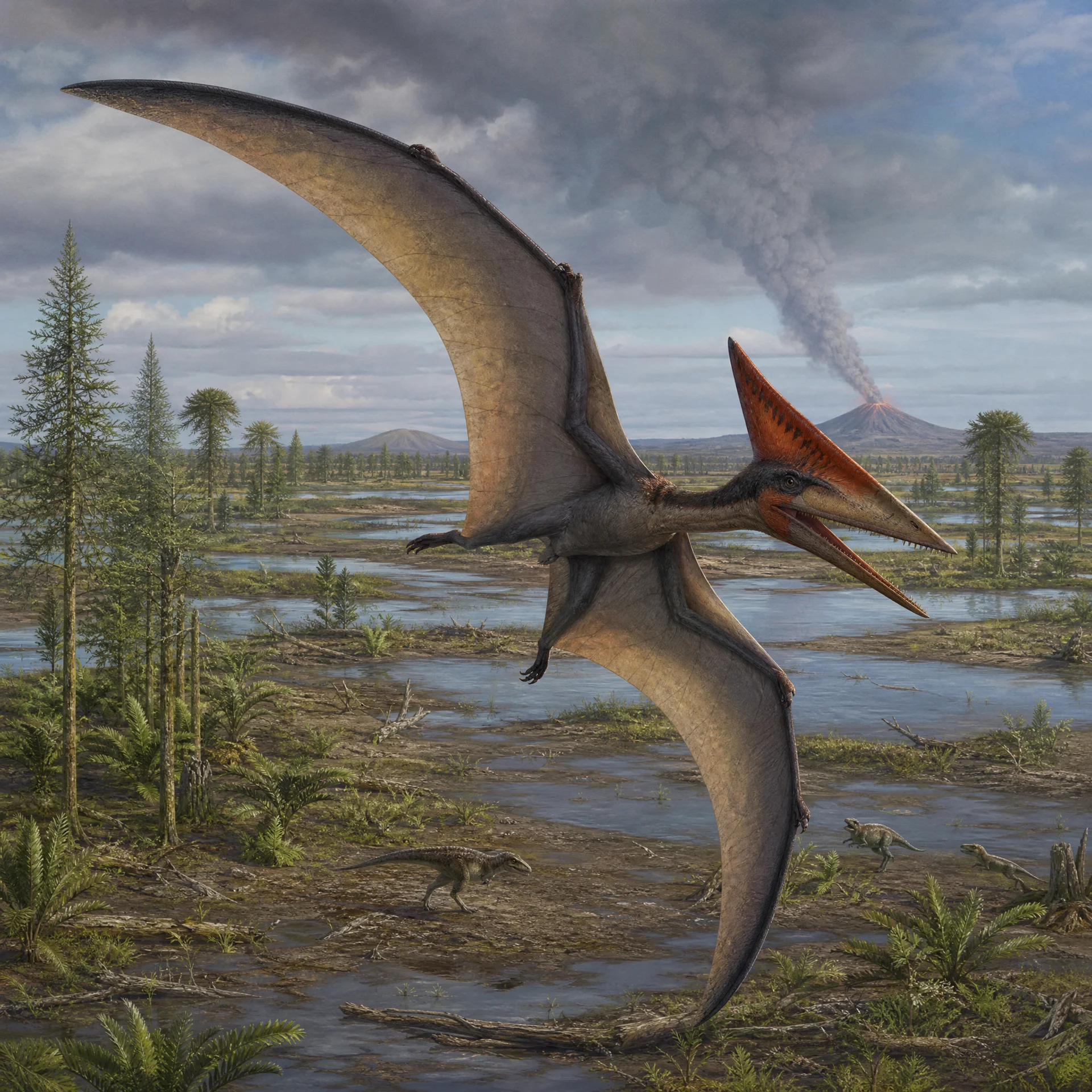
Kryptodrakon
Kryptodrakon progenitor
⏳ Jurassic Period🍽️ CarnivoreDinosaurs
Physical Characteristics
⏳
PeriodJurassic Period
🍽️
DietCarnivore
🪽
Wingspan1.47m
Classification
GEN
GenusKryptodrakon
SP
SpeciesK. progenitor
Kryptodrakon progenitor
Kryptodrakon (Kryptodrakon progenitor Andres, Clark & Xu, 2014) is an extinct genus of pterodactyloid pterosaur from the lower part of the Shishugou Formation in the Junggar Basin, Xinjiang, northwestern China. Dating to approximately 162.7 million years ago at the Middle–Upper Jurassic boundary (Callovian–Oxfordian), it is recognized as the oldest and most basal member of the Pterodactyloidea known to date. Its discovery extended the fossil record of pterodactyloids by at least five million years, fundamentally reshaping our temporal and ecological understanding of pterodactyloid origins.
The holotype specimen, IVPP V18184, consists of an incomplete postcranial skeleton lacking the skull. Preserved elements include portions of both wings, fragments of the shoulder girdle, and the second sacral vertebra. The estimated wingspan is approximately 1.47 m, placing Kryptodrakon among the smaller pterodactyloids. The most notable morphological feature is the elongation of the fourth metacarpal (wing metacarpal) to at least 84% of the estimated humeral length — fulfilling the diagnostic apomorphy that defines the Pterodactyloidea. Remarkably, the proximal end of this metacarpal retains a primitive, non-pterodactyloid morphology while the distal end exhibits derived pterodactyloid features, demonstrating a clear transitional condition in the evolution of the pterodactyloid body plan.
Equally significant is the depositional context: Kryptodrakon was recovered from alluvial facies mudstone in a fully terrestrial inland setting, far removed from any coastline. The comprehensive phylogenetic and comparative analyses of Andres et al. (2014) most parsimoniously reconstructed a terrestrial origin for the Pterodactyloidea, with Kryptodrakon's relatively short wings paralleling the low-aspect-ratio wings found in modern forest-dwelling birds. This provides compelling evidence that pterodactyloids began their evolutionary radiation not along marine coastlines, as previously assumed, but in continental interior environments.
The generic name Kryptodrakon is derived from the Greek κρυπτός (kryptos, "hidden") and δράκων (drakon, "serpent" or "dragon"), meaning "hidden dragon." This name alludes to the martial arts film Crouching Tiger, Hidden Dragon, portions of which were filmed near the type locality in the Junggar Basin badlands. The specific epithet progenitor is Latin for "ancestor" or "founder of a family," reflecting the animal's phylogenetic position as the most basal member of the Pterodactyloidea (Andres et al., 2014).
Since its description in 2014, Kryptodrakon has been known from a single species, K. progenitor, and remains a valid genus and species. The original description included the most extensive pterosaur phylogenetic analysis published at the time (112 species, 224 characters), which placed Kryptodrakon as the sister taxon to all other known pterodactyloids, together forming the Lophocratia. Subsequent analyses have debated the relative position of Kryptodrakon and the Painten pro-pterodactyloid (formally named Propterodactylus frankerlae by Spindler in 2024), but the consensus that Kryptodrakon belongs among the earliest pterodactyloids remains broadly supported (Wang et al., 2017; Andres, 2021; Spindler, 2024).
The oldest known pterodactyloid, from the Middle–Upper Jurassic boundary (~162.7 Ma) of inland northwestern China, whose transitional wing metacarpal morphology and terrestrial depositional context provide critical evidence for the terrestrial origin of Pterodactyloidea.
The holotype was collected from mudstone in the lower part of the Shishugou Formation at the Wucaiwan locality. The specimen was recovered approximately 35 m below the T-1 marker tuff, originally dated at 161.2 ± 0.2 Ma (Eberth et al., 2010). After recalibration of the Fish Canyon sanidine monitor mineral (Kuiper et al., 2008), the age of the T-1 tuff was adjusted 0.6% older to 162.2 ± 0.2 Ma. Applying an average sediment accumulation rate of 7.2 cm per 1,000 years for this portion of the basin (Eberth et al., 2010), the fossil specimen's age is estimated at approximately 162.7 Ma. Under the Geologic Time Scale of Gradstein et al. (2012), this age falls in the earliest Oxfordian (earliest Late Jurassic) but lies within the error margin of the end of the Middle Jurassic, and is therefore conservatively regarded as dating to the Middle–Upper Jurassic boundary (Andres et al., 2014).
The Shishugou Formation crops out in the eastern and western parts of the Junggar Basin, north of the Tian Shan mountains in Xinjiang, China. At the Wucaiwan locality, the formation is approximately 380 m thick. The basal 30 m consist predominantly of conglomerate, with the remainder dominated by red mudstone containing frequent channel and sheet sandstone lenses and occasional tuffaceous deposits (Choiniere et al., 2013; Eberth et al., 2010). The Kryptodrakon-bearing horizon specifically comprises mudstone within the alluvial facies of the lower Shishugou Formation (Andres et al., 2014).
The Shishugou Formation at Wucaiwan was deposited in an alluvial (river/floodplain) and paludal (wetland) environment along the up-dip margins of the Junggar Basin, a long-standing internally drained basin that has persisted since the Triassic (Xu et al., 2022). During the Middle–Late Jurassic, this region comprised a marshy floodplain adjacent to a small mountain range with intermittent volcanic activity. Substantial quantities of volcanic ash accumulated in the wetlands, creating viscous mud that trapped and buried animals — the origin of the formation's famous "dinosaur death pits" (Eberth et al., 2010). Crucially, this was an entirely inland, continental setting far removed from any marine influence, providing the key depositional evidence for the terrestrial origin hypothesis of the Pterodactyloidea.
The holotype IVPP V18184 is housed at the Institute of Vertebrate Paleontology and Paleoanthropology (IVPP) in Beijing, China. The fossil was collected in 2001 by Chris Sloan from alluvial facies mudstone in the lower Shishugou Formation. The bones were initially identified as theropod dinosaur remains; paleontologist James Clark later recognized their pterosaurian nature (Dell'Amore, 2014). The specimen was found disarticulated but within a small area of approximately 30 cm² (4.7 in²), at least 10 m from any other fossil remains, and is thus interpreted as representing a single individual. The bones were largely preserved three-dimensionally without strong compression.
The preserved elements include:
| Element | Details |
|---|---|
| Sacrum | Partial (second sacral vertebra) |
| Shoulder girdle | Ventral ramus of left coracoid; anterior end of right scapula |
| Humerus | Proximal end and shaft of left humerus |
| Radius | Distal end of right radius |
| Carpals | Right distal syncarpal; right preaxial carpal |
| Wing metacarpal | Right fourth metacarpal (wing metacarpal) |
| Wing phalanges | Proximal ends of right first and fourth wing phalanges; proximal end and shaft of left second wing phalanx; shaft of right third wing phalanx |
| Other | Numerous indeterminate fragments |
Fusion of the sacrum, scapulocoracoid, and distal syncarpal indicates that the holotype was an osteologically adult individual (Andres et al., 2014).
Kryptodrakon is differentiated from all other pterosaurs by the following autapomorphies and unique character combination (Andres et al., 2014):
The complete absence of cranial material precludes any direct assessment of skull morphology, dentition, or diet. The highly incomplete postcranial skeleton likewise prevents precise estimation of total body length or body mass. With only a single known specimen, intraspecific variation and ontogenetic changes in morphology cannot be evaluated.
Kryptodrakon was a small pterodactyloid with an estimated wingspan of approximately 1.47 m (4.8 ft). This estimate was derived by comparing the proportions of preserved wing elements with those of other pterosaurs. The fourth metacarpal has a minimum preserved length resulting in a combined minimum of at least 84% of the estimated humeral length (75–86 cm estimated humerus length). No formal body length or mass estimates have been published due to the incompleteness of the skeleton. For comparison, the non-pterodactyloid Sericipterus wucaiwanensis, also from the Shishugou Formation, had an estimated wingspan of at least 1.73 m (Andres et al., 2010), making Kryptodrakon somewhat smaller.
The most significant anatomical feature of Kryptodrakon is its right fourth metacarpal (wing metacarpal), which exhibits a striking mosaic of primitive and derived characteristics.
The proximal end retains non-pterodactyloid features: an anteroposteriorly compressed cross-section, a posterior proximal fossa, a low proximal tuberculum, and a large ventral expansion — all conditions shared with non-pterodactyloid pterosaurs. In contrast, the distal end displays pterodactyloid features: an oval cross-section and an elongate shaft, bringing the total length to more than nine times the mid-shaft width (Andres et al., 2014). Two additional pterodactyloid features are present on the proximal surface: a dorsoventrally oriented ventral articular surface and a proximal tuberculum surrounded by a crescentic sulcus. These features are interpreted as permitting greater rotation to absorb shocks and stresses during active flight (Bennett, 2003; Andres et al., 2014).
This combination of a non-pterodactyloid proximal end and a pterodactyloid distal end within a single bone represents a clear transitional morphology, documenting the incremental acquisition of the elongate metacarpus that characterizes the Pterodactyloidea.
The distal end of the right radius possesses an extra lump (distinct ventral flange with a dorsally positioned anterior tubercle) on the anterolateral lower side. This feature is not reported in any other pterosaur and constitutes a key autapomorphy supporting the validity of the genus. Notably, the skeleton shows no signs of pneumatization (Andres et al., 2014), contrasting with the extensively pneumatized bones found in many later pterodactyloids.
Kryptodrakon's relatively short wingspan of ~1.47 m places it at the small end of pterodactyloid size range. Andres et al. (2014) conducted a comparative analysis of wing aspect ratios in 19 pterosaur species and found a statistically significant correlation between wing shape and preservational environment (r = 0.563, two-tailed p = 0.012, n = 19). Terrestrial pterosaurs had lower wing aspect ratios (broader wings) than their marine relatives, mirroring the pattern observed in modern flying vertebrates. Species with lower-aspect wings are associated with more maneuverable flight suited to cluttered habitats such as forests, higher landing frequencies, and higher takeoff angles. Although no direct aerodynamic analysis has been performed specifically for Kryptodrakon, its inland recovery and relatively compact wing proportions are consistent with a terrestrial, possibly forest-adapted flight ecology.
No cranial or dental material is preserved for Kryptodrakon, and therefore no direct evidence of diet exists — neither tooth morphology, gut contents, bite marks, nor stable isotope data. Most early pterodactyloids and non-pterodactyloid pterosaurs are inferred to have been predators of small vertebrates (fish, lizards) and invertebrates (insects), and a similar generalist carnivorous or insectivorous diet is plausible for Kryptodrakon, though this remains entirely hypothetical.
The Shishugou Formation is renowned for yielding one of the most phylogenetically and trophically diverse Middle to Late Jurassic theropod faunas (Choiniere et al., 2013). Kryptodrakon shared its inland floodplain ecosystem with a remarkable assemblage of vertebrates:
| Taxonomic Group | Representative Genus | Notes |
|---|---|---|
| Pterosaur (non-pterodactyloid) | Sericipterus wucaiwanensis | Rhamphorhynchine; wingspan ~1.73 m+ |
| Theropod (early tyrannosauroid) | Guanlong wucaii | Crested basal tyrannosauroid |
| Theropod (ceratosaur) | Limusaurus inextricabilis | Toothless omnivorous elaphrosaurine |
| Theropod (alvarezsaurid) | Haplocheirus sollers, Aorun zhaoi | Early alvarezsaurs |
| Theropod (tetanuran) | Sinraptor dongi | Metriacanthosaurid; ~7.6 m long |
| Theropod (basal coelurosaur) | Zuolong salleei | Basal tyrannoraptoran |
| Sauropod | Mamenchisaurus sinocanadorum | Giant mamenchisaurid; ~35 m long |
| Ornithischian (early ceratopsian) | Yinlong downsi | One of the most primitive ceratopsians |
| Stegosaur | Jiangjunosaurus junggarensis | Shishugou stegosaurid |
| Crocodylomorph | Junggarsuchus sloani | Sphenosuchian crocodylomorph |
| Mammaliamorph | Bienotheroides, Yuanotherium | Tritylodontid cynodonts |
This rich terrestrial ecosystem demonstrates that Kryptodrakon inhabited a complex, multi-trophic-level inland community — not a marginal marine habitat as had been traditionally assumed for pterosaurs.
Kryptodrakon's recovery from inland alluvial deposits provides the first direct fossil evidence for a long-hypothesized terrestrial origin of the Pterodactyloidea (Andres et al., 2014). Previous analyses and discoveries had supported a predominantly marine ecological history for pterosaurs, with repeated invasions of terrestrial environments. However, when preservational environment was mapped onto the comprehensive phylogenetic analysis including Kryptodrakon, the most parsimonious reconstruction indicated that the Pterodactyloidea originated as part of an extensive lineage that had inhabited terrestrial environments for at least 5 million years. This reverses the traditional model: rather than pterosaurs being primarily marine animals that occasionally invaded land, the pterodactyloid lineage began on land and repeatedly invaded marine environments.
A phylogenetic signal test confirmed that occurrence in terrestrial versus marine preservational environments is very highly correlated with phylogeny (one-tailed p = 0.00000001, n = 10,000,000 randomizations), suggesting that pterosaur evolution was linked to specific environmental preferences over long periods (Andres et al., 2014).
Kryptodrakon is currently known from a single locality: the Wucaiwan area in the eastern Junggar Basin, Xinjiang, northwestern China. The site is part of the Shishugou Formation exposures and presently constitutes arid badlands and dunes along the western edge of the Gobi Desert. During the Middle–Late Jurassic, this region was an inland alluvial plain crossed by numerous rivers and adjacent to a volcanic mountain range.
The approximate paleocoordinates for the Shishugou Formation are 42.5°N, 100.5°E. During the Middle–Late Jurassic, this area occupied a mid-latitude continental interior position within eastern Laurasia, far from the Tethys Sea or any marine coastline. This paleogeographic context reinforces the interpretation that Kryptodrakon was an entirely inland animal and that early pterodactyloid evolution occurred well away from marine environments.
The describing paper included a comprehensive cladistic analysis — the largest pterosaur phylogenetic analysis published at the time — incorporating 112 valid species and 224 characters. The analysis was conducted using TNT v1.1 with both continuous and discrete character partitions, employing 2,000 random addition sequence replicates. It produced a single most parsimonious tree (tree length = 874.692, CI = 0.357, RI = 0.800).
In this analysis, Kryptodrakon was recovered as the sister taxon to all other known Pterodactyloidea, together forming the Lophocratia. This placement made Kryptodrakon the basalmost pterodactyloid under the definition of Pterodactyloidea sensu Padian (2004): those species possessing a metacarpal with at least 80% of the length of the humerus, homologous to Pterodactylus. The phylogenetic position of Kryptodrakon is supported by changes in two continuous and two discrete characters of the wing metacarpal, which further reduced the historically long branch leading to the Pterodactyloidea.
Several subsequent studies have explored the phylogenetic placement of Kryptodrakon relative to other transitional forms:
Wang et al. (2017), in their description of Douzhanopterus zhengi, recovered slightly different topologies in which the Painten pro-pterodactyloid (now Propterodactylus) was sometimes placed closer to Pterodactyloidea than Kryptodrakon.
Andres (2021), in a revised analysis accompanying the description of Quetzalcoatlus, maintained Kryptodrakon within Pterodactyloidea while placing Propterodactylus as sister to Lophocratia (i.e., outside of Pterodactyloidea proper).
Spindler (2024), formally describing Propterodactylus frankerlae, noted that this specimen has been repeatedly recovered as the sister group of Pterodactyloidea (Vidovic & Martill, 2018) or of Lophocratia (Andres, 2021), depending on the analysis. The description attempted to detail morphological differences from the fragmentary Kryptodrakon, noting that the controversial phylogenetic positions stem in part from the incompleteness of the Kryptodrakon holotype.
Despite these debates regarding the precise topology among transitional pterosaurs, the fundamental conclusion — that Kryptodrakon belongs among the earliest and most basal pterodactyloids — remains broadly supported.
Kryptodrakon has been popularly described as the "oldest pterodactyl," but it is not a member of the genus Pterodactylus. Rather, it is the oldest member of the much larger clade Pterodactyloidea. Kryptodrakon is not the direct ancestor of Pterodactylus or any other specific pterodactyloid — it is the basalmost known representative of the group. Additionally, its small size (~1.47 m wingspan) contrasts sharply with the popular image of giant pterodactyloids like Quetzalcoatlus (wingspan >10 m), demonstrating that the Pterodactyloidea began as small animals and diversified into a wide range of body sizes.
| Taxon | Phylogenetic Position | Age | Wingspan | Depositional Setting | Key Distinguishing Features |
|---|---|---|---|---|---|
| Kryptodrakon | Basalmost pterodactyloid | ~162.7 Ma (Callovian-Oxfordian) | ~1.47 m | Inland alluvial | Elongate metacarpal with primitive proximal end |
| Sericipterus | Rhamphorhynchidae (non-pterodactyloid) | ~162 Ma (Oxfordian) | ~1.73 m+ | Inland alluvial | Short metacarpal, long tail, non-pterodactyloid |
| Darwinopterus | Wukongopteridae (Monofenestrata) | ~160–158 Ma (Oxfordian) | ~0.8–1.0 m | Inland/lacustrine | Monofenestratan skull, retains long tail |
| Douzhanopterus | Transitional Monofenestrata | ~160 Ma (Oxfordian) | ~1.1 m | Inland/lacustrine | Reduced tail (173% of humerus length), transitional |
| Propterodactylus | Basal Monofenestrata | ~152 Ma (late Kimmeridgian) | Small (unknown exact) | Marine limestone | Complete skeleton, functional 5th toe, interlocking caudals |
| Pterodactylus | Basal pterodactyloid (Archaeopterodactyloidea) | ~150–148 Ma (Tithonian) | ~0.5–1.0 m | Marine limestone | Full pterodactyloid body plan, short tail |
Kryptodrakon occupies the earliest temporal and most basal phylogenetic position among these taxa, making it pivotal for understanding the non-pterodactyloid to pterodactyloid evolutionary transition. Its transitional wing metacarpal morphology bridges the morphological gap between basal monofenestratans and fully derived pterodactyloids.
The name 'hidden dragon' (Kryptodrakon) was inspired by the martial arts film Crouching Tiger, Hidden Dragon, directed by Ang Lee, which included scenes filmed near the fossil site in the Junggar Basin badlands.
The fossil bones were collected in 2001 but were initially misidentified as theropod dinosaur remains — it took years before paleontologist James Clark recognized them as belonging to a pterosaur.
Kryptodrakon pushed back the fossil record of pterodactyloids by approximately five million years, making it the oldest known member of the group that would eventually include giants like Quetzalcoatlus.
With a wingspan of only about 1.47 m, Kryptodrakon was tiny compared to later pterodactyloids like Quetzalcoatlus (wingspan exceeding 10 m), showing that the group started small before evolving enormous body sizes.
The fourth metacarpal of Kryptodrakon has a primitive non-pterodactyloid proximal end and a derived pterodactyloid distal end — effectively showing two evolutionary stages within a single bone.
Kryptodrakon is the first pterodactyloid ever found in an inland floodplain environment, providing key evidence that the group evolved far from the sea rather than along marine coastlines as traditionally assumed.
The Shishugou Formation where Kryptodrakon was found is also famous for its 'dinosaur death pits' — mud traps created by large dinosaur activity that ensnared and buried smaller animals in vertical stacks.
The 2014 paper describing Kryptodrakon included the largest pterosaur phylogenetic analysis ever published at the time, encompassing 112 species and 224 morphological characters.
All of Kryptodrakon's fossil bones were found within a tiny area of just 30 cm² (about 4.7 in²), yet at least 10 m from any other fossil — strong evidence they all belonged to a single individual.
Another creature named after the same film was found in the same formation: Yinlong (隐龙, meaning 'hidden dragon' in Chinese), one of the most primitive ceratopsian dinosaurs known.
Unlike many later pterodactyloids that had extensively pneumatized (air-filled) bones to reduce weight for flight, Kryptodrakon's skeleton shows no signs of pneumatization whatsoever.
Kryptodrakon's fossil dates to approximately 162.7 million years ago (Middle–Upper Jurassic boundary), making it about five million years older than the previously oldest known pterodactyloids. Additionally, comprehensive phylogenetic analysis placed it as the sister taxon to all other known pterodactyloids, confirming it as both the temporally earliest and phylogenetically most basal member of the Pterodactyloidea (Andres et al., 2014).
The genus name Kryptodrakon means 'hidden dragon' in Greek (kryptos = hidden, drakon = serpent/dragon). It references the martial arts film Crouching Tiger, Hidden Dragon, which was partially filmed near the fossil site in the Junggar Basin. The species name progenitor is Latin for 'ancestor' or 'founder,' reflecting its position as the most basal pterodactyloid.
Kryptodrakon had an estimated wingspan of approximately 1.47 m (4.8 ft), making it a small pterodactyloid. Because the skull and most of the body skeleton are not preserved, no formal body length or mass estimates have been published. For comparison, the non-pterodactyloid Sericipterus from the same formation had a larger wingspan of at least 1.73 m.
This is unknown. No skull or teeth are preserved, so there is no direct evidence of diet — no tooth morphology, gut contents, bite marks, or isotope data. By analogy with other early pterosaurs, a generalist carnivorous or insectivorous diet feeding on small vertebrates and invertebrates is plausible, but this remains entirely hypothetical.
Pterodactyloidea is defined by having a fourth metacarpal (wing metacarpal) at least 80% the length of the humerus (Padian, 2004). Kryptodrakon's fourth metacarpal reaches at least 84% of the estimated humeral length, and its distal end displays the oval cross-section and elongate shaft characteristic of pterodactyloids. Its proximal end, however, retains primitive non-pterodactyloid features, documenting the evolutionary transition.
It was collected in 2001 from mudstone in the lower part of the Shishugou Formation at Wucaiwan in the Junggar Basin, Xinjiang, northwestern China. Today this is an arid badlands landscape on the western edge of the Gobi Desert, but during the Jurassic it was an inland alluvial floodplain crossed by rivers and adjacent to volcanically active mountains.
Kryptodrakon is significant for three reasons. First, it extended the pterodactyloid fossil record by at least five million years. Second, its wing metacarpal shows a transitional morphology bridging non-pterodactyloids and pterodactyloids. Third, its recovery from an inland terrestrial deposit provided the first direct fossil evidence supporting the hypothesis that pterodactyloids originated in continental environments rather than marine coastal settings.
No. Kryptodrakon is the basalmost member of the clade Pterodactyloidea, while Pterodactylus is a much more derived genus within that clade. Kryptodrakon lived approximately 162.7 million years ago; Pterodactylus lived around 150 million years ago. When popular media calls Kryptodrakon the 'oldest pterodactyl,' they mean the oldest pterodactyloid — it is not the direct ancestor of Pterodactylus.
Very incomplete. The holotype IVPP V18184 is a partial postcranial skeleton lacking the skull entirely. It includes portions of both wings (metacarpal, wing phalanges), shoulder girdle fragments, and the second sacral vertebra. The bones were found disarticulated but within a ~30 cm² area, at least 10 m from any other fossils, confirming they belong to a single adult individual.
Yes. The non-pterodactyloid Sericipterus wucaiwanensis (Rhamphorhynchidae) was also recovered from the Shishugou Formation. These two species coexisted in the same inland ecosystem, demonstrating that pterodactyloid and non-pterodactyloid pterosaurs overlapped at the Middle–Late Jurassic boundary.
5images