Mamenchisaurus
Jurassic Period Herbivore Creature Type
Mamenchisaurus
Scientific Name: "'Mamenchi lizard' – from Chinese Pinyin mǎ (馬, 'horse') + mén (門, 'gate') + xī (溪, 'brook') + Greek sauros ('lizard'). Young intended to name it after the discovery locality Mǎmíngxī (馬鳴溪, 'horse-neighing brook') but mistakenly wrote Mǎménxī (馬門溪, 'horse-gate brook'), a place name that does not actually exist."
Local Name: Mamenchisaurus
Physical Characteristics
Discovery
Habitat
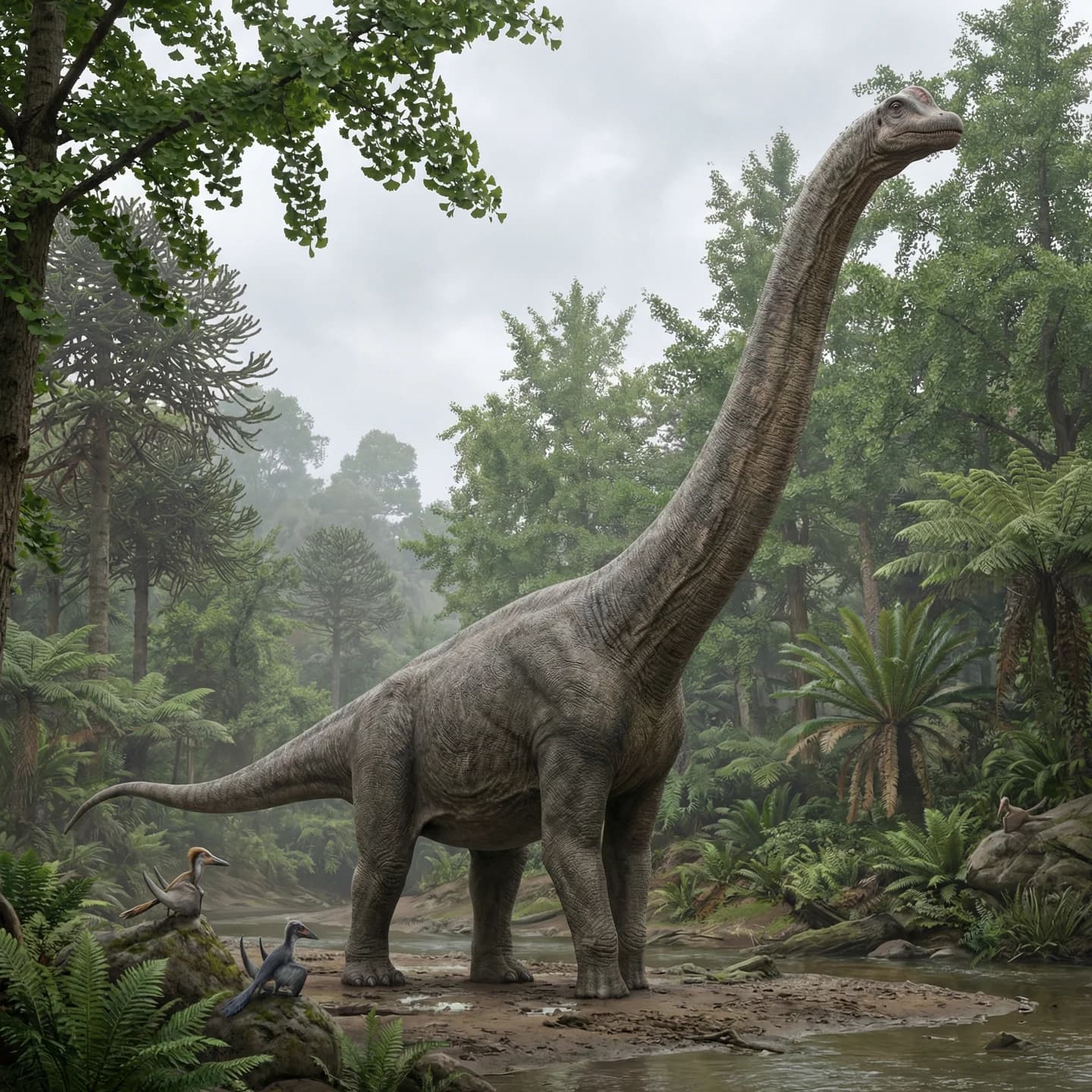
Mamenchisaurus (Young, 1954) is a genus of large sauropod dinosaurs that lived from the Late Jurassic to the Early Cretaceous (approximately 161–114 Ma) in East Asia, particularly China. As the namesake and most representative member of the family Mamenchisauridae, Mamenchisaurus is distinguished above all by its extraordinarily long neck, which approached half the total body length. Depending on the species, estimated body lengths range from roughly 13 to 26 m and body masses from approximately 5 to 25 tonnes. M. sinocanadorum is estimated to have possessed a neck between 14.4 and 15.1 m long—the longest that can be confidently inferred for any known sauropod (Moore et al., 2023).
The genus was first discovered in 1952 at a highway construction site near Yibin, Sichuan Province, and formally named by the eminent Chinese paleontologist C. C. Young (楊鍾健) in 1954, with Mamenchisaurus constructus as the type species. Since then, at least seven to eight species have been described. However, recent phylogenetic analyses consistently fail to recover Mamenchisaurus as monophyletic, underscoring the urgent need for taxonomic revision (Moore et al., 2020, 2023). Most species come from the Upper Shaximiao Formation of the Sichuan Basin, while others are known from the Shishugou Formation in Xinjiang and the Suining Formation in Sichuan.
Mamenchisaurus is a pivotal taxon for understanding the extreme elongation of sauropod necks, the mechanics of cervical pneumatization, and the distinctive radiation of non-neosauropod eusauropods in geographically isolated Middle–Late Jurassic East Asia. CT imaging of M. sinocanadorum reveals that its cervical vertebrae were 69–77% air by volume, and its cervical ribs measured 4.2 m in length—the longest of any described sauropod (Moore et al., 2023). These structural features represent remarkable evolutionary adaptations for supporting and lightening a neck of exceptional proportions.
Overview
Name and Etymology
The generic name Mamenchisaurus combines the Chinese Pinyin mǎ (馬, 'horse') + mén (門, 'gate') + xī (溪, 'brook') with the Greek sauros (σαῦρος, 'lizard'). Young originally intended to commemorate the fossil locality Mǎmíngxī (馬鳴溪, 'horse-neighing brook'), but due to a phonetic mix-up, he recorded it as Mǎménxī (馬門溪, 'horse-gate brook')—a place name that does not actually exist (Beijing Museum of Natural History records). The specific name constructus is Latin for 'constructed,' reflecting the highway construction site where the type specimen was unearthed.
Taxonomic Position and Validity
Mamenchisaurus is the type genus of Mamenchisauridae (Young & Zhao, 1972) and belongs to a non-neosauropod clade within Eusauropoda that radiated predominantly in Middle–Late Jurassic East Asia. However, recent phylogenetic analyses (Moore et al., 2020, 2023; Dai et al., 2025) consistently recover Mamenchisaurus as non-monophyletic, with different species placed at disparate phylogenetic positions. For example, in the analysis of Moore et al. (2023), M. sinocanadorum was recovered as the sister taxon of Xinjiangtitan, separated from other Mamenchisaurus species. Although a comprehensive taxonomic revision of the genus is clearly needed, Dai et al. (2025) opted to retain the generic name Mamenchisaurus for their new species "to avoid further nomenclatural confusion."
Currently recognized valid species are as follows:
| Species | Author(s) | Formation | Notes |
|---|---|---|---|
| M. constructus | Young, 1954 | Upper Shaximiao Fm. | Type species |
| M. hochuanensis | Young & Zhao, 1972 | Upper Shaximiao Fm. | 19 cervical vertebrae preserved |
| M. sinocanadorum | Russell & Zheng, 1993 | Shishugou Fm. | Longest estimated neck |
| M. youngi | Pi, Ouyang & Ye, 1996 | Upper Shaximiao Fm. | Nearly complete skeleton with skull |
| M. anyuensis | He et al., 1996 | Suining Fm. / Penglaizhen Fm. | Early Cretaceous age; generic assignment questioned |
| M. jingyanensis | Zhang, Li & Zeng, 1998 | Upper Shaximiao Fm. | Partial skull preserved |
| M. sanjiangensis | Dai et al., 2025 | Upper Shaximiao Fm. | Described in 2025 |
M. yunnanensis Fang et al., 2004 lacks a detailed description and has never been included in a phylogenetic analysis, making its validity uncertain (Wang et al., 2019; Dai et al., 2025). Zigongosaurus fuxiensis was once transferred to Mamenchisaurus as M. fuxiensis, but most researchers now consider it undiagnostic.
Scientific Significance
Mamenchisaurus is scientifically important in three key respects. First, it provides an extreme case study in the evolution of sauropod neck elongation. Second, it is a critical taxon for understanding the interplay between cervical pneumatization and structural stabilization via elongated cervical ribs. Third, it epitomizes the distinctive eusauropod radiation that occurred in geographically isolated Late Jurassic East Asia, separate from the neosauropod-dominated faunas of contemporaneous Europe, North America, and South America.
Temporal Range, Stratigraphy, and Depositional Setting
Temporal Range
The temporal range of Mamenchisaurus varies considerably by species. M. sinocanadorum comes from the upper Shishugou Formation and is radiometrically dated to approximately 161–159 Ma (Oxfordian). Most species from the Upper Shaximiao Formation were traditionally assigned a Callovian–Oxfordian age, but uranium–lead (U-Pb) detrital zircon dating by Wang et al. (2018) demonstrated that the underlying Lower Shaximiao Formation dates to approximately 159 Ma (Late Jurassic), pushing the overlying Upper Shaximiao Formation to no older than the Oxfordian. Dai et al. (2025) inferred an early Oxfordian age for the M. sanjiangensis horizon.
The most controversial dating concerns M. anyuensis, which was found in the Suining Formation and the lowermost Penglaizhen Formation. Wang et al. (2019) obtained U-Pb detrital zircon ages with a mean of 114.4 ± 1.1 Ma (Aptian, Early Cretaceous), making this species approximately 30 million years younger than the other Mamenchisaurus species and raising serious doubts about whether it truly belongs to the genus.
Formations and Lithology
Key formations yielding Mamenchisaurus fossils:
| Formation | Location | Estimated Age | Key Species | Lithology |
|---|---|---|---|---|
| Upper Shaximiao Fm. | Sichuan Basin | Post-Oxfordian (after ca. 159 Ma) | M. constructus, M. hochuanensis, M. youngi, M. jingyanensis, M. sanjiangensis | Purplish-red mudstone, sandstone, siltstone |
| Shishugou Fm. | Junggar Basin, Xinjiang | ca. 161–159 Ma | M. sinocanadorum | Coarse, weak sandstone |
| Suining Fm. / Penglaizhen Fm. | Sichuan Basin | ca. 114 Ma (Aptian) | M. anyuensis | Purplish-red mudstone, sandstone |
Paleoenvironment and Depositional Setting
The Upper Shaximiao Formation records a lacustrine-fluvial complex environment, transitioning from shallow-water deltas to fluvial fans and floodplains. Alternating purplish-red mudstones and sandstones indicate a floodplain setting. The Sichuan Basin during the Late Jurassic was a warm, humid subtropical region with lush vegetation and extensive floodplains.
The Shishugou Formation in the Junggar Basin represents a semi-arid to humid environment. The M. sinocanadorum type specimen is interpreted as having been buried in a point-bar deposit, with the cervical vertebrae having separated from the skull and drifted downstream before burial (Russell & Zheng, 1993).
Paleomagnetic analyses place the paleocoordinates at approximately 28.2°N, 110.0°E—similar to the modern position of Sichuan Province, but at a more southerly subtropical latitude during the Late Jurassic.
Specimens and Diagnostic Features
Type and Key Specimens
| Species | Specimen No. | Composition | Notes |
|---|---|---|---|
| M. constructus | IVPP V. 790 | 14 cervical vertebrae (incomplete), 5 dorsals, 30 caudals, chevrons, rib fragments, partial hindlimb | Holotype; unprofessionally excavated, fragmentary and disordered |
| M. hochuanensis | CCG V 20401 | Nearly complete articulated column (19 cervicals, 12 dorsals, 4 sacrals, 35 caudals) | Skull and forelimbs missing |
| M. sinocanadorum | IVPP V10603 | Complete left mandible, right dentary, portions of cervicals 2–4, intact left cervical rib | Found in 1987 during China-Canada Dinosaur Project; weak sandstone limited excavation |
| M. youngi | ZDM 0083 | Nearly complete skeleton with skull, C1 to Cd8 articulated, pectoral and pelvic girdles, all four limbs | One of the most complete mamenchisaurid specimens |
| M. anyuensis | AL001 | ca. 2/3 articulated skeleton (8 posterior cervicals, 12 dorsals, 5 sacrals, caudals, pelvis) | At least 5–6 individuals recovered together |
| M. jingyanensis | CV00734 | Partial scapula, complete coracoid, forelimb material, complete ischium, partial skull, hyoid bone | Paratype (JV002) and additional specimen (CV00219) also known |
| M. sanjiangensis | CIP V0001 | 2 posterior cervicals, 12 dorsals, 5 sacrals, 4 anterior caudals, pelvis, left hindlimb (femur, tibia, fibula) | Described in 2025; possibly early Oxfordian |
Diagnostic Features
Shared features of Mamenchisaurus and Mamenchisauridae include an extremely elongated neck composed of 18–19 cervical vertebrae, procoelous anterior caudal vertebrae, and a camellate (spongy) internal structure of the cervical and dorsal vertebrae. Bifurcated neural spines on the posterior cervical and anterior dorsal vertebrae are also characteristic.
Autapomorphies of M. sinocanadorum include an elongated external mandibular fenestra and distinctive pneumatic structures on the cervical centra (Moore et al., 2023). Autapomorphies of M. sanjiangensis include an additional fossa at the base of the prezygodiapophyseal lamina (PRDL) on the posterior cervical and anterior dorsal vertebrae, and bifurcation of the spinodiapophyseal lamina (SPDL) from dorsals 3–7, creating a secondary deep fossa (Dai et al., 2025).
Specimen Limitations
The holotype of the type species M. constructus (IVPP V. 790) was unprofessionally excavated, resulting in fragmentary and disordered material. This creates fundamental difficulties in defining the genus and determining its phylogenetic position, leading some researchers to characterize Mamenchisaurus as a "wastebasket taxon" (Moore et al., 2020, 2023). A thorough redescription of the type species and a comprehensive revision of the genus are urgently needed. Additionally, referred specimen ZDM0126 (tentatively assigned to M. hochuanensis) has not been recovered as the sister taxon of the M. hochuanensis holotype in phylogenetic analyses by Sekiya (2011) and Moore et al. (2020), casting doubt on this referral.
Morphology and Function
Body Size
Estimated sizes vary considerably among species:
| Species | Estimated Length | Neck Length | Estimated Mass | Source |
|---|---|---|---|---|
| M. constructus | 13–15 m | ca. 4.67 m (estimated) | ca. 5 t | Young, 1954; Paul, 2016 |
| M. hochuanensis | 21–22 m | ca. 9.3 m | 14–18.2 t | Young & Zhao, 1972; volumetric estimates |
| M. sinocanadorum | ca. 26 m | 14.4–15.1 m | undetermined | Russell & Zheng, 1993; Moore et al., 2023 |
| M. youngi | ca. 16 m | ca. 6.5 m | ca. 7.87 t | Pi et al., 1996; volumetric estimate |
| M. anyuensis | 21–25 m | undetermined | ca. 25 t | He et al., 1996; Paul, 2016 |
| M. jingyanensis | 20–26 m | undetermined | ca. 12 t | Zhang et al., 1998; Paul, 2016 |
Gregory Paul (2019) estimated up to 35 m and 60–80 tonnes based on two undescribed large cervical vertebrae from the same formation as M. sinocanadorum, but Moore et al. (2023) noted that these vertebrae lack anatomical overlap with the type specimen and therefore cannot be confirmed as belonging to the same species.
Neck Structure and Function
The neck of Mamenchisaurus is composed of 18–19 elongated cervical vertebrae. Complete necks are preserved in M. hochuanensis (19 cervicals, as described by Young & Zhao, 1972, though Upchurch et al. suggested the actual count may be 18 cervicals and 13 dorsals) and M. youngi (18 cervicals). The cervical vertebrae are lightly built and highly pneumatic. CT imaging of M. sinocanadorum revealed that 69–77% of the cervical vertebral volume was occupied by air (assuming complete removal of bone marrow; Moore et al., 2023).
The extremely elongated cervical ribs likely enhanced structural stability of the neck while restricting flexibility. The cervical rib of M. sinocanadorum measured 4.2 m—the longest of any described sauropod, far exceeding the 3.42 m cervical rib of Sauroposeidon. Moore et al. (2023) proposed an intriguing feedback mechanism: structural restrictions imposed by long cervical ribs paradoxically created a more predictable biomechanical environment, promoting increased pneumatization and enabling further neck elongation.
Biomechanical analysis of the M. youngi neck by Christian et al. (2013) indicated that in its neutral posture the neck was nearly straight and close to horizontal, with a slight upward bend at the base and a slight downward curve near the head. This suggests that Mamenchisaurus primarily fed at low to medium heights, sweeping its neck across a wide arc to access vegetation efficiently.
Tail Structure
Specimen ZDM0126 (tentatively referred to M. hochuanensis) preserves a tail club consisting of four fused distal caudal vertebrae with expanded neural arches and taller neural spines. Finite element analysis (FEA) by Xing et al. (2009) concluded that this club had limited effectiveness as a defensive weapon but may have functioned as a sensory organ. Other Chinese sauropods, Shunosaurus and Omeisaurus, are also known to possess tail clubs, but they differ in morphology from that of ZDM0126.
Mamenchisaurus possesses forked (sled-shaped) chevrons in the middle caudal series, similar to those of diplodocids. Paul (2016, 2019) argued that these are adaptations for tripodal rearing posture, with the tail acting as a prop and the forked chevrons distributing weight evenly.
Diet and Ecology
Diet
Mamenchisaurus was a typical herbivorous sauropod equipped with spatulate (spoon-shaped) teeth. The skull of M. youngi (ZDM 0083) preserves 4 teeth in the premaxilla, 18 in the maxilla, and 22–24 in the dentary (Pi et al., 1996). M. jingyanensis shows 4 premaxillary, 14–16 maxillary, and 17–19 dentary teeth (Zhang et al., 1998). The mandible of M. sinocanadorum was 60.3 cm long and bore 19 teeth; the front of the lower jaws met at an oblique angle, contrasting with the more squared-off snouts of diplodocids (Russell & Zheng, 1993).
Neck posture analysis (Christian et al., 2013) indicates that M. youngi primarily fed at low to medium heights, likely sweeping horizontally across broad arcs. No direct dietary evidence (gut contents, coprolites, stable isotope analyses) has been reported to date.
Ecological Niche and Associated Fauna
Within the "Mamenchisaurus assemblage" of the Upper Shaximiao Formation, Mamenchisaurus coexisted with a diverse range of taxa.
Herbivorous dinosaurs sharing its ecosystem included the sauropods Omeisaurus and Zigongosaurus; the stegosaurs Tuojiangosaurus, Chungkingosaurus, Gigantspinosaurus, and Chialingosaurus; and the small ornithopod Yandusaurus. Predators included Yangchuanosaurus (Metriacanthosauridae), a large theropod reaching approximately 10 m in length and likely the principal predator of Mamenchisaurus, as well as Sinraptor and Szechuanosaurus.
As one of the largest herbivores in its ecosystem, Mamenchisaurus would have had substantial food requirements and a large home range. The discovery of at least 5–6 individuals of M. anyuensis at a single quarry (He et al., 1996) hints at some degree of gregarious or social behavior.
Distribution and Paleogeography
Geographic Distribution
Mamenchisaurus fossils are known almost exclusively from China. The core area is the Sichuan Basin, where multiple species have been recovered from localities including Zigong, Hechuan, Jingyan, and Yibin. M. sinocanadorum represents the sole species from outside the Sichuan Basin, having been found in the Junggar Basin of the Xinjiang Uyghur Autonomous Region.
In 2025, the mamenchisaurid Jingia dongxingensis was described from the Upper Jurassic Dongxing Formation of Guangxi Zhuang Autonomous Region (Ren et al., 2025), extending the known range of mamenchisaurids to southernmost China. Another new mamenchisaurid genus, Tongnanlong zhimingi, was described from the Suining Formation in 2025, further increasing the recognized diversity of the family.
An incomplete sauropod humerus (NSM PV17656) from the Early Cretaceous Miyako Group of Japan was once referred to Mamenchisaurus sp. but was subsequently reassessed as an indeterminate sauropod (Azuma & Tomida, 1998; Barrett et al., 2002).
Paleogeographic Significance
During the Middle to Late Jurassic, East Asia was relatively isolated from other landmasses due to the breakup of Pangaea and the Tethys Sea barrier. This geographic isolation facilitated the distinctive radiation of non-neosauropod eusauropods, including mamenchisaurids, which dominated the large herbivore niche. In contrast, contemporaneous faunas in Europe, North America, and South America were dominated by neosauropods (diplodocoids and macronarians).
Phylogeny and Taxonomic Debates
History of Phylogenetic Placement
The phylogenetic position of Mamenchisaurus has been debated for over 70 years. Young (1954) noted similarities with Diplodocidae based on chevron morphology. In 1958, Young reassigned Mamenchisaurus to Titanosauridae. Young & Zhao (1972) established Mamenchisauridae upon describing M. hochuanensis. Berman & McIntosh (1978), working before any mamenchisaurid skulls were known, placed the genus within Diplodocidae based on vertebral features such as the forked chevrons. Upchurch (1995) placed Mamenchisaurus in Euhelopodidae.
The current near-consensus places Mamenchisauridae as an independent eusauropod clade outside Neosauropoda. However, some analyses by Moore et al. (2020) recovered topologies where Euhelopus falls outside Macronaria and groups with mamenchisaurid-like taxa to form Euhelopodidae, meaning uncertainty at higher taxonomic levels persists.
Recent Phylogenetic Results
Key conclusions from the 2023 redescription of M. sinocanadorum (Moore et al., 2023): (1) The genus Mamenchisaurus is not monophyletic; M. sinocanadorum was recovered as the sister taxon of Xinjiangtitan (with Hudiesaurus also a consistent relative), separated from other Mamenchisaurus species. (2) Referred specimen ZDM0126 (assigned to M. hochuanensis) was not recovered as sister to the holotype, questioning its referral. (3) Bellusaurus and Daanosaurus, both known only from juvenile material, may represent juvenile mamenchisaurids.
The 2025 description of M. sanjiangensis (Dai et al., 2025) recovered this species at a relatively derived (later-diverged) position within Mamenchisauridae, alongside M. sinocanadorum, M. hochuanensis, M. youngi, and M. constructus. However, interrelationships within the genus remain unstable across different analytical methods, and the question of monophyly remains unresolved.
Reconstruction and Uncertainty
What Is Established
The following can be stated with confidence: Mamenchisaurus was a large sauropod with an extremely long neck approaching half the total body length; it inhabited Late Jurassic to Early Cretaceous East Asia (primarily China); it belongs to the non-neosauropod eusauropod family Mamenchisauridae; its cervical vertebrae are highly pneumatic with camellate internal structure and procoelous anterior caudals; and it was herbivorous, equipped with spatulate teeth.
Probable Hypotheses
It probably fed primarily at low to medium heights, sweeping its neck horizontally across wide arcs (supported by neck posture biomechanics; Christian et al., 2013). Elongated cervical ribs likely enhanced neck stability while restricting flexibility, which may have paradoxically promoted further pneumatization and neck lengthening (Moore et al., 2023). Some individuals possessed a tail club that may have functioned as a sensory organ rather than a weapon (Xing et al., 2009).
Uncertain or Debated Issues
Generic-level monophyly is not established; Mamenchisaurus is not recovered as monophyletic in current phylogenetic analyses. Species boundaries are unclear, and the validity of several species (M. yunnanensis, M. fuxiensis) is debated. The 35 m, 60–80 tonne estimate (Paul, 2019) based on undescribed vertebrae remains unverified. M. anyuensis, dating to approximately 114 Ma, is roughly 30 million years younger than other species, making its generic assignment highly questionable. The precise age of the Upper Shaximiao Formation is not yet firmly established, affecting the temporal interpretation of multiple species.
Differences from Popular Media
Mamenchisaurus appeared in the film The Lost World: Jurassic Park (1997), introducing it to a wide audience. In popular media, it is often depicted as a single, well-defined taxon, but in reality it is taxonomically complex and in urgent need of revision. Size estimates are sometimes exaggerated; species actually range considerably from 13 m to 26 m in length.
Comparison with Related and Contemporaneous Taxa
| Taxon | Period | Formation | Estimated Length | Key Features |
|---|---|---|---|---|
| Mamenchisaurus hochuanensis | Late Jurassic | Upper Shaximiao Fm. | 21–22 m | 19 cervicals, 9.3 m neck |
| Omeisaurus tianfuensis | Middle–Late Jurassic | Lower Shaximiao Fm. | ca. 20 m | Mamenchisauridae; slightly lower neck proportion |
| Xinjiangtitan shanshanensis | Middle–Late Jurassic | Qigu Formation | ca. 30 m | Sister taxon of M. sinocanadorum |
| Tongnanlong zhimingi | Late Jurassic | Suining Fm. | 23–28 m | Mamenchisauridae; described 2025 |
| Diplodocus carnegii | Late Jurassic | Morrison Formation | ca. 25 m | North America; Diplodocidae; whip-like tail |
| Supersaurus vivianae | Late Jurassic | Morrison Formation | ca. 33 m | North America; among the longest known dinosaurs |
Fun Facts
FAQ
📚References
- Young, C. C. (1954). On a new sauropod from Yiping, Szechuan, China. Scientia Sinica, 3(4), 481–514.
- Young, C. C., & Zhao, X.-J. (1972). Mamenchisaurus hochuanensis sp. nov. Institute of Vertebrate Paleontology and Paleoanthropology Monographs, A, 8, 1–30.
- Russell, D. A., & Zheng, Z. (1993). A large mamenchisaurid from the Junggar Basin, Xinjiang, People's Republic of China. Canadian Journal of Earth Sciences, 30, 2082–2095. https://doi.org/10.1139/e93-180
- Moore, A. J., Upchurch, P., Barrett, P. M., Clark, J. M., & Xu, X. (2020). Osteology of Klamelisaurus gobiensis (Dinosauria, Eusauropoda) and the evolutionary history of Middle–Late Jurassic Chinese sauropods. Journal of Systematic Palaeontology, 18(16), 1299–1393. https://doi.org/10.1080/14772019.2020.1759706
- Moore, A. J., Barrett, P. M., Upchurch, P., Liao, C.-C., Ye, Y., Hao, B., & Xu, X. (2023). Re-assessment of the Late Jurassic eusauropod Mamenchisaurus sinocanadorum Russell and Zheng, 1993, and the evolution of exceptionally long necks in mamenchisaurids. Journal of Systematic Palaeontology, 21(1), 2171818. https://doi.org/10.1080/14772019.2023.2171818
- Wang, J., Norell, M. A., Pei, R., Ye, Y., & Chang, S.-C. (2019). Surprisingly young age for the mamenchisaurid sauropods in South China. Cretaceous Research, 104, 104176. https://doi.org/10.1016/j.cretres.2019.07.006
- Wang, J., Ye, Y., Pei, R., Tian, Y., Feng, C., Zheng, D., & Chang, S.-C. (2018). Age of Jurassic basal sauropods in Sichuan, China: A reappraisal of basal sauropod evolution. GSA Bulletin, 130(9–10), 1493–1500. https://doi.org/10.1130/B31910.1
- Dai, H., Hu, X.-F., Tan, C., Ren, X.-X., Ma, Q.-Y., Wei, G.-B., & You, H.-L. (2025). A new mamenchisaurid sauropod dinosaur from the upper Jurassic of Southwest China reveals new evolutionary evidence from East Asian eusauropods. Scientific Reports, 15, 41068. https://doi.org/10.1038/s41598-025-29995-z
- Paul, G. S. (2016). The Princeton Field Guide to Dinosaurs (2nd ed.). Princeton University Press.
- Paul, G. S. (2019). Determining the largest known land animal: A critical comparison of differing methods for restoring the volume and mass of extinct animals. Annals of the Carnegie Museum, 85(4), 335–358. https://doi.org/10.2992/007.085.0403
- He, X., Yang, S., Cai, K., Li, K., & Liu, Z. (1996). A new species of sauropod, Mamenchisaurus anyuensis sp. nov. Papers on Geosciences Contributed to the 30th Geological Congress, 83–86.
- Pi, L., Ouyang, H., & Ye, Y. (1996). A new species of sauropod from Zigong, Sichuan, Mamenchisaurus youngi. In Publication in Geoscience Contributed to the 30th International Geological Congress (pp. 87–91). China Economic Publishing House.
- Zhang, Y., Li, K., & Zeng, Q. (1998). A new species of sauropod from the Late Jurassic of the Sichuan Basin (Mamenchisaurus jingyanensis sp. nov.). Journal of the Chengdu University of Technology, 25(1), 61–68.
- Xing, L., Ye, Y., Shu, C., Peng, G., & You, H. (2009). Structure, orientation and finite element analysis of the tail club of Mamenchisaurus hochuanensis. Acta Geologica Sinica (English Edition), 83(6), 1031–1040. https://doi.org/10.1111/j.1755-6724.2009.00134.x
- Christian, A., Peng, G., Sekiya, T., Ye, Y., Wulf, M. G., & Steuer, T. (2013). Biomechanical reconstructions and selective advantages of neck poses and feeding strategies of sauropods with the example of Mamenchisaurus youngi. PLoS ONE, 8(10), e71172. https://doi.org/10.1371/journal.pone.0071172
- Ren, X. X., Wang, X. R., Ji, Y. N., Guo, Z., & Ji, Q. (2025). The first mamenchisaurid from the upper Jurassic Dongxing Formation of Guangxi, southernmost China. Historical Biology, 37(3), 465–478. https://doi.org/10.1080/08912963.2024.2309287
- Li, K., Liu, J., Yang, C., & Hu, F. (2011). Dinosaur assemblages from the Middle Jurassic Shaximiao Formation and Chuanjie Formation in the Sichuan-Yunnan Basin, China. Volumina Jurassica, 9, 21–42.
- Sekiya, T. (2011). Re-examination of Chuanjiesaurus anaensis (Dinosauria: Sauropoda) from the Middle Jurassic Chuanjie Formation, Lufeng County, Yunnan Province, Southwest China. Memoir of the Fukui Prefectural Dinosaur Museum, 10, 1–54.
- Upchurch, P. (1998). The phylogenetic relationships of sauropod dinosaurs. Zoological Journal of the Linnean Society, 124, 43–103. https://doi.org/10.1111/j.1096-3642.1998.tb00569.x
- Ren, X. X., Huang, J. D., & You, H.-L. (2022). Osteology of Dashanpusaurus dongi (Sauropoda: Macronaria) and new evolutionary evidence from Middle Jurassic Chinese sauropods. Journal of Systematic Palaeontology, 20(1), 1–72. https://doi.org/10.1080/14772019.2022.2144309
Gallery
5 images Mamenchisaurus
Mamenchisaurus · Jurassic Period · Herbivore
 Mamenchisaurus
Mamenchisaurus · Jurassic Period · Herbivore
 Mamenchisaurus
Mamenchisaurus · Jurassic Period · Herbivore
 Mamenchisaurus
Mamenchisaurus · Jurassic Period · Herbivore
 Mamenchisaurus
Mamenchisaurus · Jurassic Period · Herbivore
🔗Related Creatures
Vulcanodon
Vulcanodon karibaensis
Kentrosaurus
Kentrosaurus aethiopicus
Massospondylus
Massospondylus carinatus
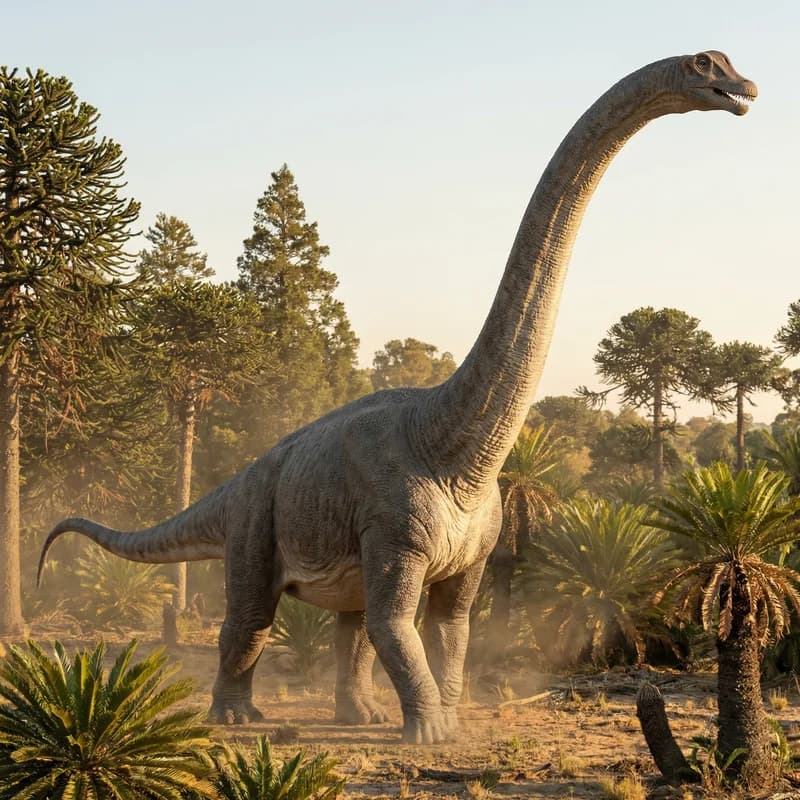
Barosaurus
Barosaurus lentus

Brachiosaurus
Brachiosaurus altithorax
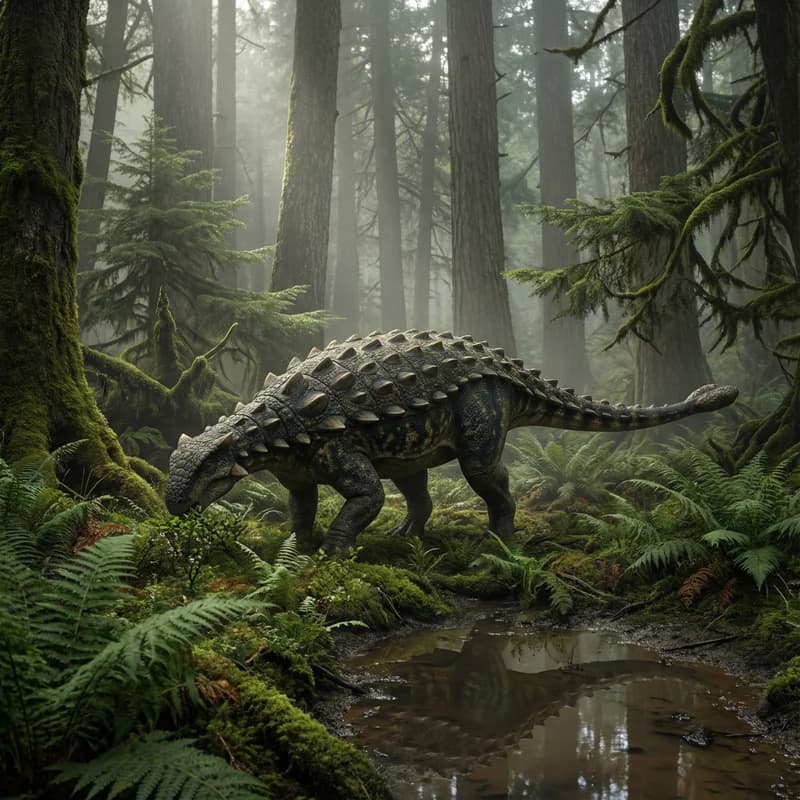
Dracopelta
Dracopelta zbyszewskii
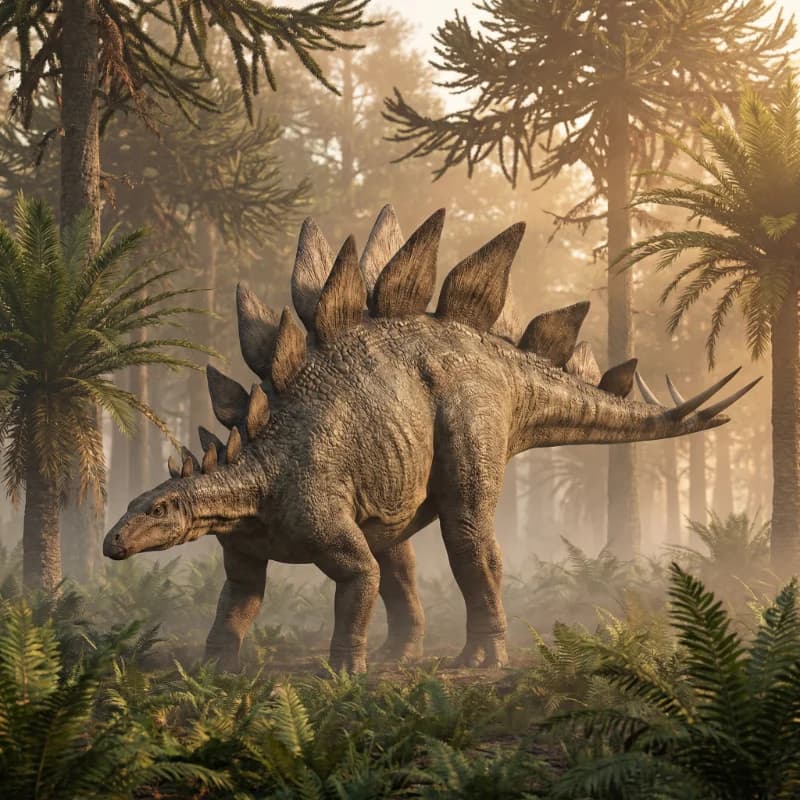
Tuojiangosaurus
Tuojiangosaurus multispinus
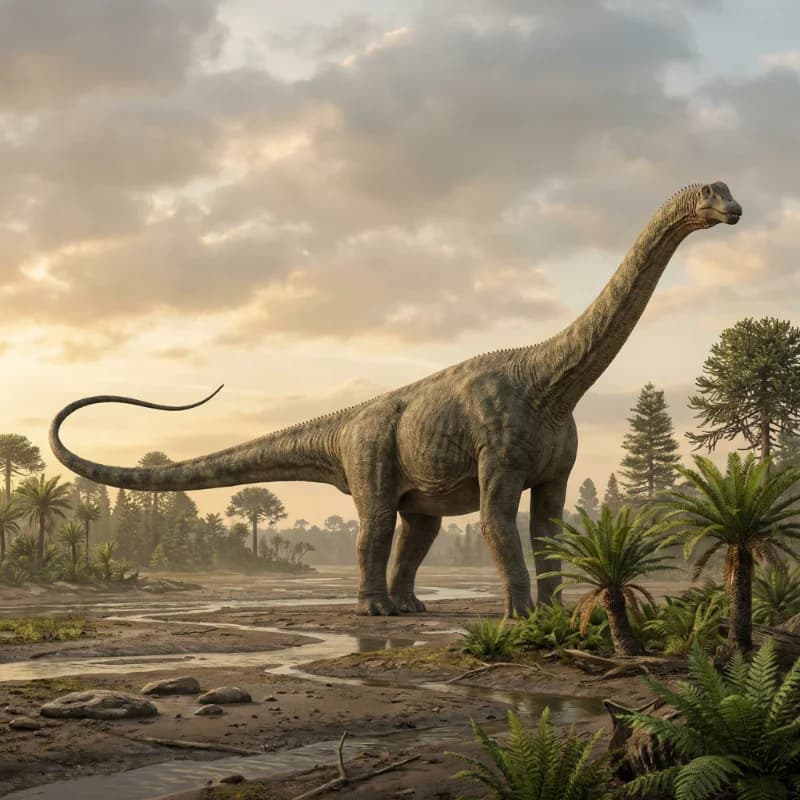
Supersaurus
Supersaurus vivianae