Tuojiangosaurus
Jurassic Period Herbivore Creature Type
Tuojiangosaurus multispinus
Scientific Name: "Tuojiang (the Tuo River in Sichuan, China) + Greek sauros (lizard) = 'Tuo River lizard'; the specific epithet multispinus is from Latin multus (many) + spina (spine) = 'many-spined'"
Local Name: Tuojiangosaurus
Physical Characteristics
Discovery
Habitat

Tuojiangosaurus multispinus (Dong et al., 1977) is a medium-to-large stegosaurian dinosaur from the Late Jurassic (approximately 163–157 Ma) of what is now Sichuan Province, China. Classified within Ornithischia, Thyreophora, Stegosauridae, it was named and described in 1977 by Chinese paleontologist Dong Zhiming and colleagues based on a nearly complete skeleton (holotype CV 209) recovered from the Upper Shaximiao Formation near Zigong City. The generic name derives from the Tuo River (Tuojiang, 沱江) near the type locality, while the specific epithet multispinus means 'many-spined' in Latin, referring to the numerous plates and spikes adorning its back and tail.
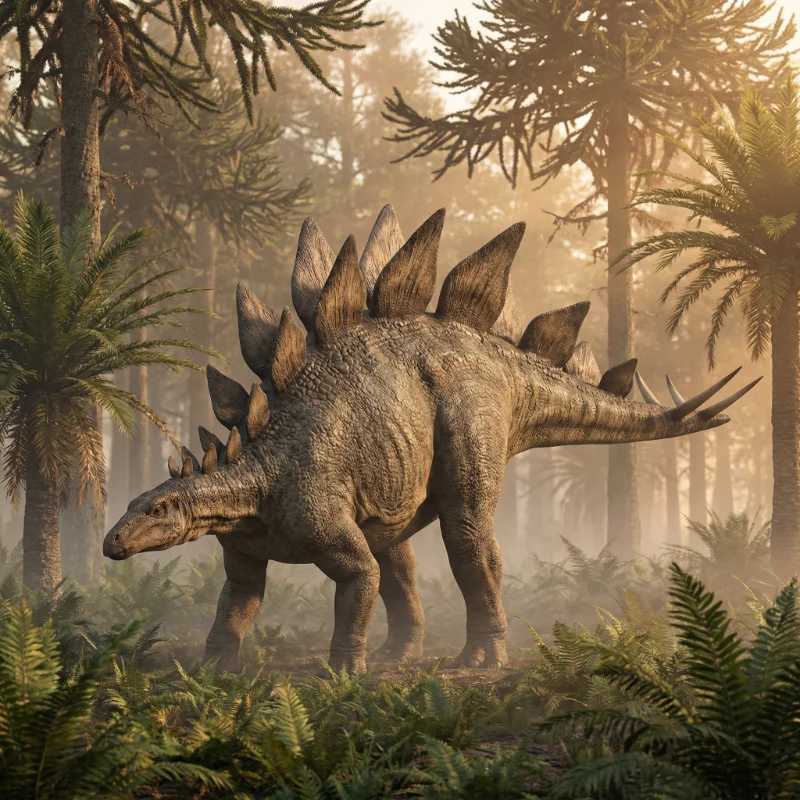
Tuojiangosaurus was a quadrupedal herbivore estimated at approximately 6.5–7 m in total length and 1.5–2.8 tonnes in body mass. While physically similar to the North American Stegosaurus, it exhibited several distinctive features: its dermal plates were arranged in parallel rows rather than alternating, the plates transitioned from rounded or pear-shaped forms at the neck to increasingly triangular and pointed forms posteriorly, and all plates possessed a thickened central section giving them a modified-spike appearance. The tail bore at least two pairs of robust outward-angling spikes (the thagomizer), positioned at approximately 45 degrees to the vertical, which likely served as formidable defensive weapons against predators.
As the best-understood Chinese stegosaur, Tuojiangosaurus holds a pivotal place in our understanding of stegosaurian diversity and biogeography. Its discovery in 1977 — exactly one hundred years after Othniel Charles Marsh named Stegosaurus — demonstrated that stegosaurs had achieved a global distribution across not only North America and Europe but also East Asia during the Late Jurassic. The holotype was at the time the most complete stegosaurian skeleton ever found in Asia, and it continues to serve as a key reference taxon for understanding the evolution and paleobiology of Asian stegosaurs.
Overview
Name and Etymology
The generic name Tuojiangosaurus is a compound of the Chinese geographical name Tuojiang (沱江, the Tuo River) and the Greek sauros (lizard), meaning 'Tuo River lizard.' The specific epithet multispinus derives from Latin multus (many) and spina (spine), in reference to the numerous dermal plates and spikes that characterize this animal (Dong et al., 1977). Coincidentally, the naming of Tuojiangosaurus in 1977 fell exactly one century after Marsh's original naming of Stegosaurus in 1877.
Taxonomic Status
Tuojiangosaurus was originally placed in Stegosauridae within the subfamily Stegosaurinae by Dong et al. (1977). Its phylogenetic position within Stegosauria has fluctuated somewhat across subsequent analyses, but it has consistently been recognized as a valid taxon. Maidment & Wei (2006), in their comprehensive review of Late Jurassic Chinese stegosaurs, recognized only three of the seven named Chinese stegosaur species as valid: Tuojiangosaurus multispinus, Chungkingosaurus jiangbeiensis, and Gigantspinosaurus sichuanensis.
One-Sentence Summary
The most iconic Asian stegosaur, characterized by parallel rows of transitional dermal plates, a tail armed with robust thagomizer spikes, and an autapomorphic 'bony skirt' on the neural spines of the proximal caudal vertebrae.
Age, Stratigraphy, and Depositional Environment
Temporal Range
The holotype of Tuojiangosaurus was recovered from the Upper Shaximiao Formation, traditionally assigned to the Oxfordian–Kimmeridgian stages of the Late Jurassic (approximately 163.5–157.3 Ma). However, the precise absolute age of the Upper Shaximiao Formation remains debated. Wang et al. (2018) reported a zircon U-Pb age of 160.4 ± 0.4 Ma for the lower part of the Shaximiao Formation, suggesting a younger age than traditionally accepted. Conversely, Zhou et al. (2022) obtained a tuff U-Pb age of approximately 166.0 ± 1.5 Ma supporting a traditional Middle Jurassic age for the lower subunit. The Upper Shaximiao Formation, from which Tuojiangosaurus derives, likely falls broadly within the Middle–Late Jurassic boundary interval (approximately 163–157 Ma), though the exact dating remains an active area of research.
Formation and Lithology
The Upper Shaximiao Formation is a widespread geological unit within the Sichuan Basin, reaching thicknesses of approximately 450–1,200 m. It consists primarily of purple-red to reddish-brown mudstones and sandstones, with siltstone intercalations (Li et al., 2011). These sediments represent a fluvial-lacustrine depositional system comprising meandering river channels, floodplains, and shallow lakes within the Sichuan Basin.
Paleoenvironment
Sedimentological analysis, paleosol profiles, and geochemical proxies indicate that the Upper Shaximiao Formation was deposited under subtropical climatic conditions with cyclical wet-dry phases. Fossil flora (ginkgoes, conifers, ferns) and the associated terrestrial vertebrate assemblage support the reconstruction of a warm, humid subtropical forest-and-plain environment. Tuojiangosaurus coexisted with large sauropods such as Mamenchisaurus and Omeisaurus, the apex theropod predator Yangchuanosaurus, and other stegosaurs including Chungkingosaurus and Gigantspinosaurus, together forming a diverse fluvial ecosystem along the ancient river valleys of the Sichuan Basin.
Specimens and Diagnostic Features
Holotype and Key Specimens
| Specimen No. | Type | Preserved Elements | Repository | Notes |
|---|---|---|---|---|
| CV 209 | Holotype | Partial skull, most vertebrae, ribs, limb elements, dermal armor (~80% complete) | IVPP, Beijing | Lacking parts of skull, lower jaws, tail, and some limb elements; some elements unlocated as of 2006 |
| CV 210 | Paratype | Sacrum | IVPP, Beijing | Second individual |
| NHMUK PV R 12158 | Cast | Mounted full skeleton cast | Natural History Museum, London | Based on holotype |
The holotype CV 209 was discovered in 1974 at the Wujiaba Quarry near Zigong City, Sichuan Province, during construction of the Wujiaba Dam. It was excavated by teams from the Institute of Vertebrate Paleontology and Paleoanthropology (IVPP), Chinese Academy of Sciences. At the time of its 1977 description, it represented the most complete stegosaurian skeleton found in Asia (Dong et al., 1977). Mounted skeletons are displayed at the Chongqing Natural History Museum (original), the Natural History Museum in London (cast, NHMUK PV R 12158), and the Beijing Museum of Natural History (cast, posed in confrontation with Yangchuanosaurus). A cast is also displayed at Bolton Museum in the United Kingdom.
Diagnostic Features (Autapomorphies)
The original diagnosis by Dong et al. (1977) largely consisted of traits shared with other stegosaurs. Subsequent studies identified key autapomorphies. Galton (1990) recognized that the neural spines of the proximal caudal vertebrae possess bony skirts ('aprons') extending from their anterior edges to the lateral sides — a feature unique to Tuojiangosaurus. Maidment & Wei (2006) identified two additional diagnostic characters: (1) the frontal bones are wider than they are long, and (2) the supraacetabular and posterior processes of the ilium are well-separated.
Limitations of the Material
Although the holotype is relatively complete, it lacks portions of the skull, the lower jaws, the distal tail, and some limb elements. Maidment & Wei (2006) reported that the whereabouts of some holotype elements were unknown, presumably due to institutional transfers over several decades. These gaps limit interpretation of detailed cranial morphology and precise limb proportions, but the axial skeleton and dermal armor are well-preserved.
Morphology and Function
Body Plan and Size
Tuojiangosaurus exhibited the typical stegosaurian body plan: a small, low head, a bulky torso, short but powerful forelimbs, longer hindlimbs, and a long tail. Total body length is estimated at approximately 6.5–7 m, with a shoulder height of about 2 m. Body mass estimates vary by study: Paul (2010) estimated approximately 2.8 tonnes, while volumetric modeling approaches yield a range of approximately 1.5–2.8 tonnes. The hind limbs were substantially longer than the forelimbs (femur-to-humerus length ratio of approximately 1.57–1.62), giving the animal a characteristically arched profile with the highest point over the hips.
Skull and Dentition
The skull is narrow and low, with the typical stegosaurian wedge shape. The orbits are relatively large, and the frontal bones are wider than they are long (an autapomorphic feature). A keratinous predentary beak would have been used for cropping vegetation. The dentary preserves at least 25 teeth per side, each with leaf-shaped crowns bearing marginal denticles suited for shearing plant material. The teeth have a thick basal cingulum and a triangular vertical median ridge on the lingual surface (Galton & Upchurch, 2004).
Axial Skeleton
The vertebral column comprises approximately 10 cervical, 17 dorsal, 4 sacral, and about 45 caudal vertebrae. The cervical and dorsal vertebrae are amphicoelous, and the dorsal vertebrae have tall neural arches. The scapula bears a rectangular acromion. Most notably, the neural spines of the proximal caudal vertebrae possess bony skirts extending from their anterior edges to the lateral sides — the key autapomorphy of Tuojiangosaurus identified by Galton (1990).
Dermal Armor and Spikes
The most striking feature of Tuojiangosaurus is the double row of dermal plates (osteoderms) running parasagittally along the back, coupled with the caudal tail spikes. Dong estimated approximately 17 pairs of plates and spikes in total. The plates at the neck and anterior trunk are rounded or pear-shaped, transitioning to more triangular and pointed forms posteriorly. All plates have a thickened central section, as though they were modified spikes. Unlike Stegosaurus, whose plates were arranged in an alternating pattern, those of Tuojiangosaurus were parallel to each other (Dong, 1990).
The tail terminus bore at least two pairs of robust spikes angled outward at approximately 45 degrees — the defensive structure known as the thagomizer. Dong considered four pairs possible, while Paul (2010), based on a related specimen (CV 00208), interpreted the arrangement as a 'pin-cushion array' with two vertical pairs of thick spikes and a third pair of narrow rearward-pointing spikes. Some evidence also suggests the presence of a parascapular spine over each shoulder, a feature shared with Kentrosaurus and Huayangosaurus but absent in Stegosaurus.
Locomotion and Posture
Tuojiangosaurus was an obligate quadruped with a graviportal limb structure — pillar-like legs positioned directly beneath the body. Biomechanical analyses of similar stegosaurs suggest maximum walking speeds of approximately 10 km/h. Unlike Stegosaurus, Tuojiangosaurus appears to have lacked certain vertebral features that would have facilitated rearing onto the hind legs, suggesting it was likely restricted to low-browsing postures (EBSCO, 2020).
Diet and Ecology
Feeding Strategy
Tuojiangosaurus was a low-browsing herbivore, accessing vegetation within approximately 1–2 m of the ground. This interpretation is supported by the wedge-shaped skull, narrow beak, and leaf-shaped dentition with marginal denticles. In the Late Jurassic Sichuan Basin, low-growing gymnosperms such as ferns, horsetails, cycads, and mosses were abundant and would have constituted its primary food source. Based on bite-force estimates for comparable stegosaurs (approximately 140–275 N), Tuojiangosaurus would have been unable to process branches thicker than about 8 mm in diameter, instead targeting soft leaves and shoots.
Ecological Niche
Within the Upper Shaximiao Formation ecosystem, Tuojiangosaurus occupied the low-browsing herbivore niche. Vertical niche partitioning likely occurred with contemporaneous large sauropods — Mamenchisaurus and Omeisaurus — which fed on higher conifer canopy. The apex predator in this ecosystem was Yangchuanosaurus, and other stegosaurs such as Chungkingosaurus and Gigantspinosaurus are also found in the same formation.
Defensive Behavior
The tail spikes (thagomizer) served as the primary defensive weapon against predators. Biomechanical studies of stegosaurian tails demonstrate that lateral swings could deliver substantial impact force to the spike tips, capable of deterring or injuring large theropods such as Yangchuanosaurus. The dorsal plates likely served multiple functions beyond direct physical defense, including species recognition, intraspecific display, and possibly thermoregulation through vascularized internal channels.
Social Behavior
Bone bed evidence from North American stegosaurs suggests that some stegosaurians may have lived in herds comprising mixed age groups. While direct multi-individual accumulations of Tuojiangosaurus are limited, the predation pressure within the Upper Shaximiao ecosystem suggests that some degree of gregarious behavior — including protection of juveniles — is plausible.
Distribution and Paleogeography
Geographic Range
Confirmed occurrences of Tuojiangosaurus are restricted to the Upper Shaximiao Formation in the Zigong area of Sichuan Province, China. The Sichuan Basin is one of the world's richest Middle–Late Jurassic dinosaur localities, with the Dashanpu quarry region alone yielding over 8,000 bone fragments representing dozens of taxa.
Paleogeographic Context
During the Late Jurassic, the Sichuan Basin was situated at approximately 28°N paleolatitude, 110°E paleolongitude, within eastern Laurasia. Asian stegosaurs, including Tuojiangosaurus, underwent a distinct regional radiation separate from their North American and European relatives, as supported by multiple phylogenetic analyses (Raven & Maidment, 2017; Li et al., 2024). This biogeographic separation may reflect tectonic barriers or climatic zonation that restricted faunal interchange during the Late Jurassic.
Systematics and Phylogenetic Debates
History of Phylogenetic Analyses
The phylogenetic position of Tuojiangosaurus has varied somewhat across different analyses. Key results are summarized below.
| Study | Method/Data | Position of Tuojiangosaurus |
|---|---|---|
| Dong et al. (1977) | Original description, morphological comparison | Stegosauridae, Stegosaurinae |
| Galton & Upchurch (2004) | Cladistic analysis | Derived position within Stegosauridae, sister to Chialingosaurus |
| Maidment & Wei (2006) | Taxonomic review | Valid taxon confirmed; some basal traits noted |
| Mateus et al. (2009) | Cladistic analysis | Possibly outside Stegosauridae; position uncertain |
| Raven & Maidment (2017) | 23 taxa, 115 characters | Grouped with Huayangosaurus and relatives |
| Li et al. (2024) | 31 taxa, 117 characters | Derived Asian stegosaurid, outside North American clade |
Key Debates
Two principal controversies surround the systematics of Tuojiangosaurus. First, whether it occupies a derived position within Stegosauridae (Galton & Upchurch, 2004) or a more basal one (Mateus et al., 2009). The most recent analysis by Li et al. (2024) recovers Tuojiangosaurus as a member of a distinct Asian stegosaurid clade, separate from the North American clade containing Stegosaurus, supporting an independent East Asian radiation.
Second, Gregory Paul (2010) proposed that Chialingosaurus and Chungkingosaurus might represent juvenile individuals of Tuojiangosaurus. However, subsequent analyses have pointed to distinct cranial proportions — Chungkingosaurus possesses a higher and narrower skull than the broader, lower profile of Tuojiangosaurus — and this synonymy hypothesis has not been widely accepted.
Reconstruction and Uncertainty
Confirmed Facts
It is well-established that Tuojiangosaurus is a valid stegosaurian taxon from the Upper Shaximiao Formation; that it was a quadrupedal herbivore with parallel rows of dermal plates and caudal thagomizer spikes; and that it possesses unique autapomorphies (caudal neural spine 'bony skirts,' broad frontals, separated iliac processes) that distinguish it from all other stegosaurs.
Well-Supported Estimates
The size estimates of approximately 6.5–7 m in length and 1.5–2.8 tonnes in mass are based on direct measurements of the holotype skeleton and are reasonably reliable. The low-browsing herbivorous diet is well-supported by dental morphology and cranial proportions.
Hypothetical Interpretations
The precise functions of the dorsal plates (defense vs. display vs. thermoregulation), the exact number of plate pairs (estimated at ~17), the degree of social behavior (herding), and the specific dynamics of predator-prey interactions with Yangchuanosaurus remain at the hypothesis level. Additionally, because the absolute age of the Upper Shaximiao Formation is not firmly established, some uncertainty remains regarding the precise temporal range of Tuojiangosaurus.
Popular Media vs. Scientific Understanding
Tuojiangosaurus is frequently depicted as being nearly identical to Stegosaurus, but important differences exist: the plate arrangement (parallel vs. alternating), plate morphology (thickened, spike-like centers vs. broad, flat plates), and the possible presence of shoulder spines. Furthermore, some popular sources cite a body mass of approximately 4 tonnes, but this figure is not supported by the primary literature — the most robust estimates cap the mass at approximately 2.8 tonnes (Paul, 2010).
Comparison with Related and Contemporary Taxa
| Taxon | Age | Locality | Length (m) | Mass (t) | Key Distinguishing Features |
|---|---|---|---|---|---|
| Tuojiangosaurus | Late Jurassic | Sichuan, China | 6.5–7 | 1.5–2.8 | Parallel plates, caudal neural spine bony skirts |
| Stegosaurus | Late Jurassic | North America | ~9 | ~5.3–7 | Alternating large plates, 4 tail spikes |
| Kentrosaurus | Late Jurassic | East Africa | ~4.5 | ~0.7–1.5 | Posterior plates transition to spikes |
| Chungkingosaurus | Late Jurassic | Sichuan, China | ~3–4 | Unknown | Smaller; higher, narrower skull |
| Gigantspinosaurus | Late Jurassic | Sichuan, China | ~4.2 | Unknown | Enormous parascapular (shoulder) spines |
| Huayangosaurus | Middle Jurassic | Sichuan, China | ~4.5 | ~0.5 | Basal stegosaur; retains premaxillary teeth |
| Dacentrurus | Late Jurassic | Europe | ~6–8 | ~2–5 | Large European stegosaurid |
Fun Facts
FAQ
📚References
- Dong, Z., Li, X., Zhou, S. & Zhang, Y. (1977). On the stegosaurian remains from Zigong (Tzekung), Szechuan Province. Vertebrata PalAsiatica, 15(4), 307–312.
- Dong, Z. (1990). Stegosaurs of Asia. In K. Carpenter & P. J. Currie (Eds.), Dinosaur Systematics: Approaches and Perspectives (pp. 255–268). Cambridge University Press. https://doi.org/10.1017/CBO9780511608377.022
- Galton, P. M. (1990). Stegosauria. In D. B. Weishampel, P. Dodson & H. Osmolska (Eds.), The Dinosauria (pp. 435–455). University of California Press.
- Galton, P. M. & Upchurch, P. (2004). Stegosauria. In D. B. Weishampel, P. Dodson & H. Osmolska (Eds.), The Dinosauria (2nd ed.). University of California Press.
- Maidment, S. C. R. & Wei, G. (2006). A review of the Late Jurassic stegosaurs (Dinosauria, Stegosauria) from the People's Republic of China. Geological Magazine, 143(5), 621–634. https://doi.org/10.1017/S0016756806002500
- Mateus, O., Maidment, S. C. R. & Christiansen, N. A. (2009). A new long-necked 'sauropod-mimic' stegosaur and the evolution of the plated dinosaurs. Proceedings of the Royal Society B, 276(1663), 1815–1821. https://doi.org/10.1098/rspb.2008.1909
- Raven, T. J. & Maidment, S. C. R. (2017). A new phylogeny of Stegosauria (Dinosauria, Ornithischia). Palaeontology, 60(3), 401–408. https://doi.org/10.1111/pala.12291
- Paul, G. S. (2010). The Princeton Field Guide to Dinosaurs. Princeton University Press. ISBN 978-0-691-13720-9.
- Li, K., Liu, J., Yang, C. & Hu, F. (2011). Dinosaur assemblages from the Middle Jurassic Shaximiao Formation and Chuanjie Formation in the Sichuan-Yunnan Basin, China. Volumina Jurassica, 9, 21–42.
- Wang, J., Ye, Y., Pei, R., Tian, Y., Feng, C., Zheng, D. & Chang, S.-C. (2018). Age of Jurassic basal sauropods in Sichuan, China: A reappraisal of basal sauropod evolution. GSA Bulletin, 130(9–10), 1493–1500. https://doi.org/10.1130/B31910.1
- Zhou, Y., Dai, H., Yu, H., Ma, Q., Tan, C., Li, N., Lin, Y. & Li, D. (2022). Zircon geochronology of the new dinosaur fauna in the Middle Jurassic lower Shaximiao Formation in Chongqing, SW China. Palaeogeography, Palaeoclimatology, Palaeoecology, 592, 110894. https://doi.org/10.1016/j.palaeo.2022.110894
- Maidment, S. C. R., Brassey, C. & Barrett, P. M. (2015). The postcranial skeleton of an exceptionally complete individual of the plated dinosaur Stegosaurus stenops (Dinosauria: Thyreophora) from the Upper Jurassic Morrison Formation of Wyoming, U.S.A. PLoS ONE, 10(10), e0138352. https://doi.org/10.1371/journal.pone.0138352
- Dong, Z., Zhou, S. & Zhang, Y. (1983). Dinosaurs from the Jurassic of Sichuan. Palaeontologica Sinica, 162(23), 1–136.
- Benton, M. J. (2012). Prehistoric Life. Dorling Kindersley. ISBN 978-0-7566-9910-9.
- Lindsay, W., Larkin, N. & Smith, N. (1996). Displaying Dinosaurs at The Natural History Museum, London. Curator, 39(4), 262–279. https://doi.org/10.1111/j.2151-6952.1996.tb01102.x
- Li, N., Dai, H., Maidment, S. C. R. et al. (2024). A new stegosaur from the Upper Jurassic Qigu Formation of Xinjiang, China. bioRxiv preprint. https://doi.org/10.1101/2024.09.29.615678
Gallery
5 images Tuojiangosaurus
Tuojiangosaurus · Jurassic Period · Herbivore
 Tuojiangosaurus
Tuojiangosaurus · Jurassic Period · Herbivore
 Tuojiangosaurus
Tuojiangosaurus · Jurassic Period · Herbivore
 Tuojiangosaurus
Tuojiangosaurus · Jurassic Period · Herbivore
 Tuojiangosaurus
Tuojiangosaurus · Jurassic Period · Herbivore
🔗Related Creatures

Scutellosaurus
Scutellosaurus lawleri
Mamenchisaurus
Mamenchisaurus
Vulcanodon
Vulcanodon karibaensis
Barosaurus
Barosaurus lentus
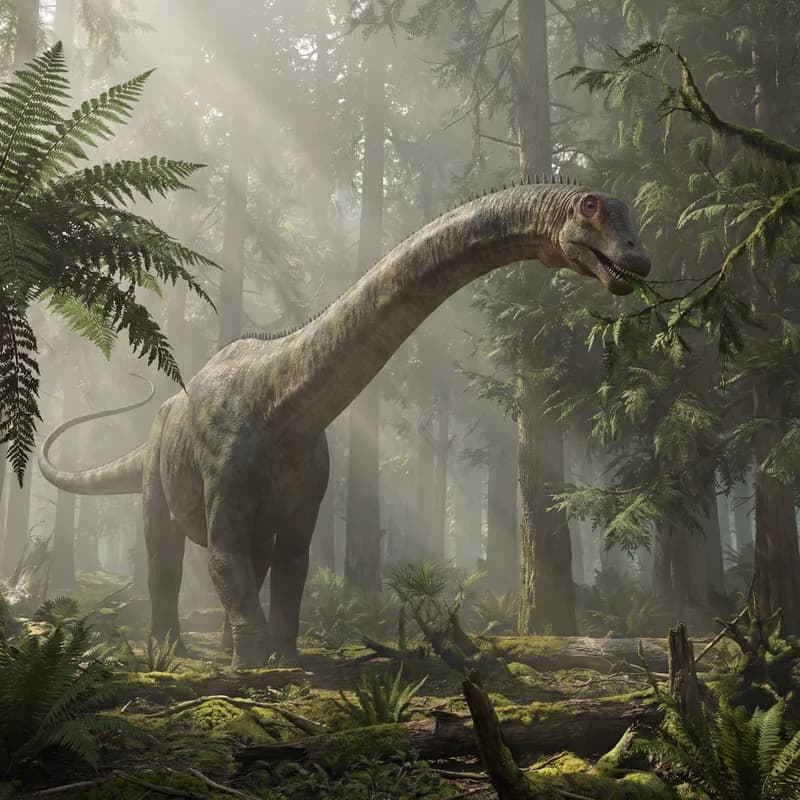
Diplodocus
Diplodocus
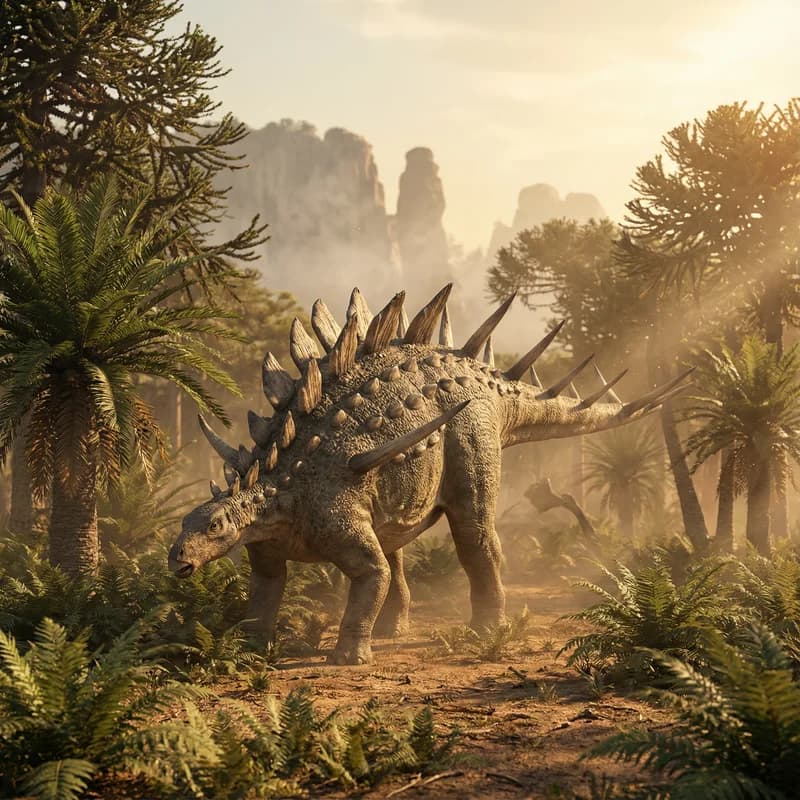
Kentrosaurus
Kentrosaurus aethiopicus
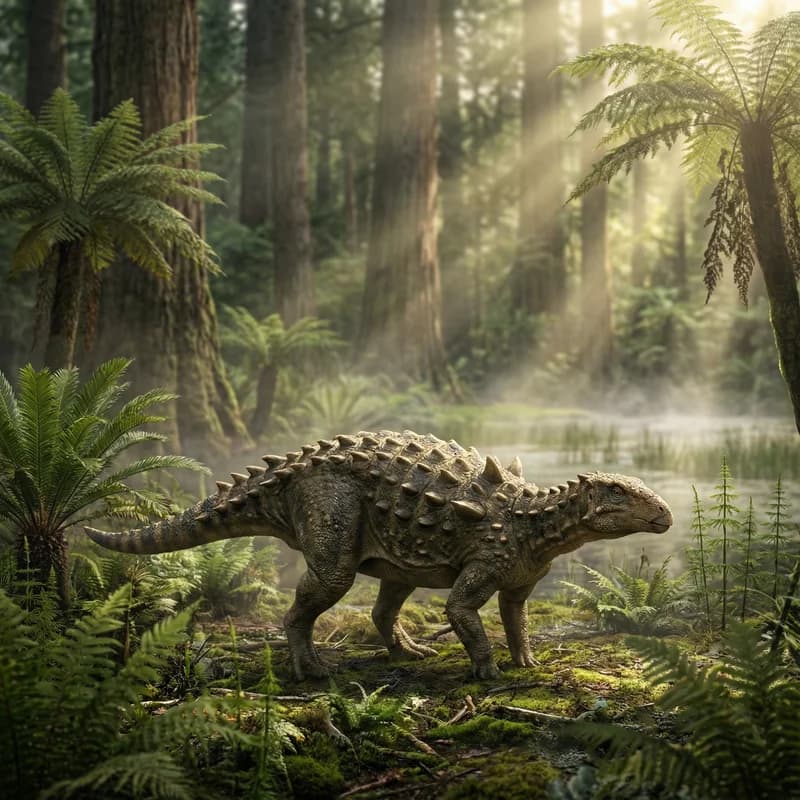
Scelidosaurus
Scelidosaurus harrisonii
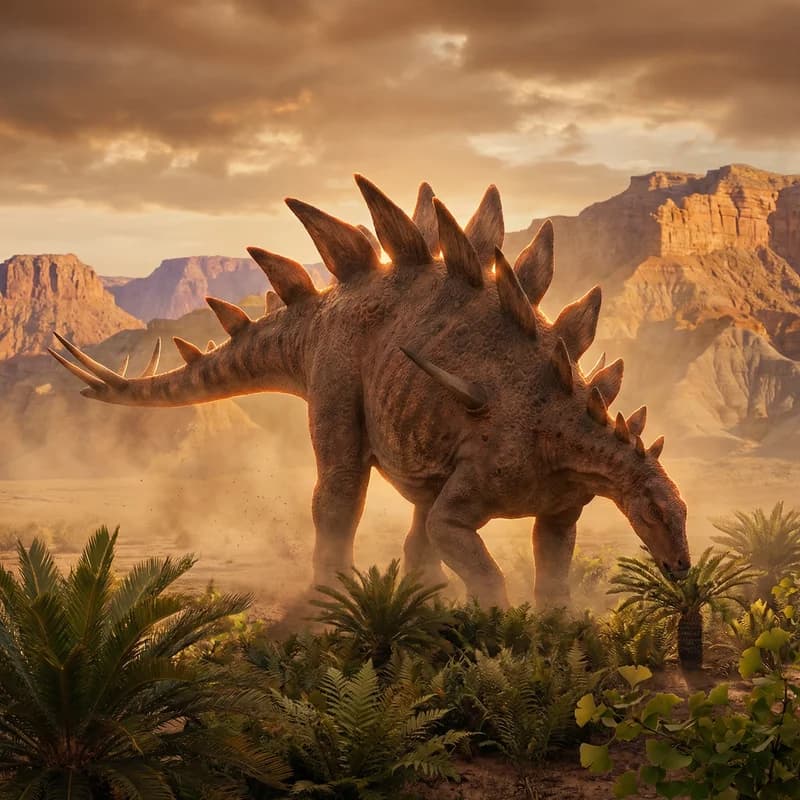
Dacentrurus
Dacentrurus armatus