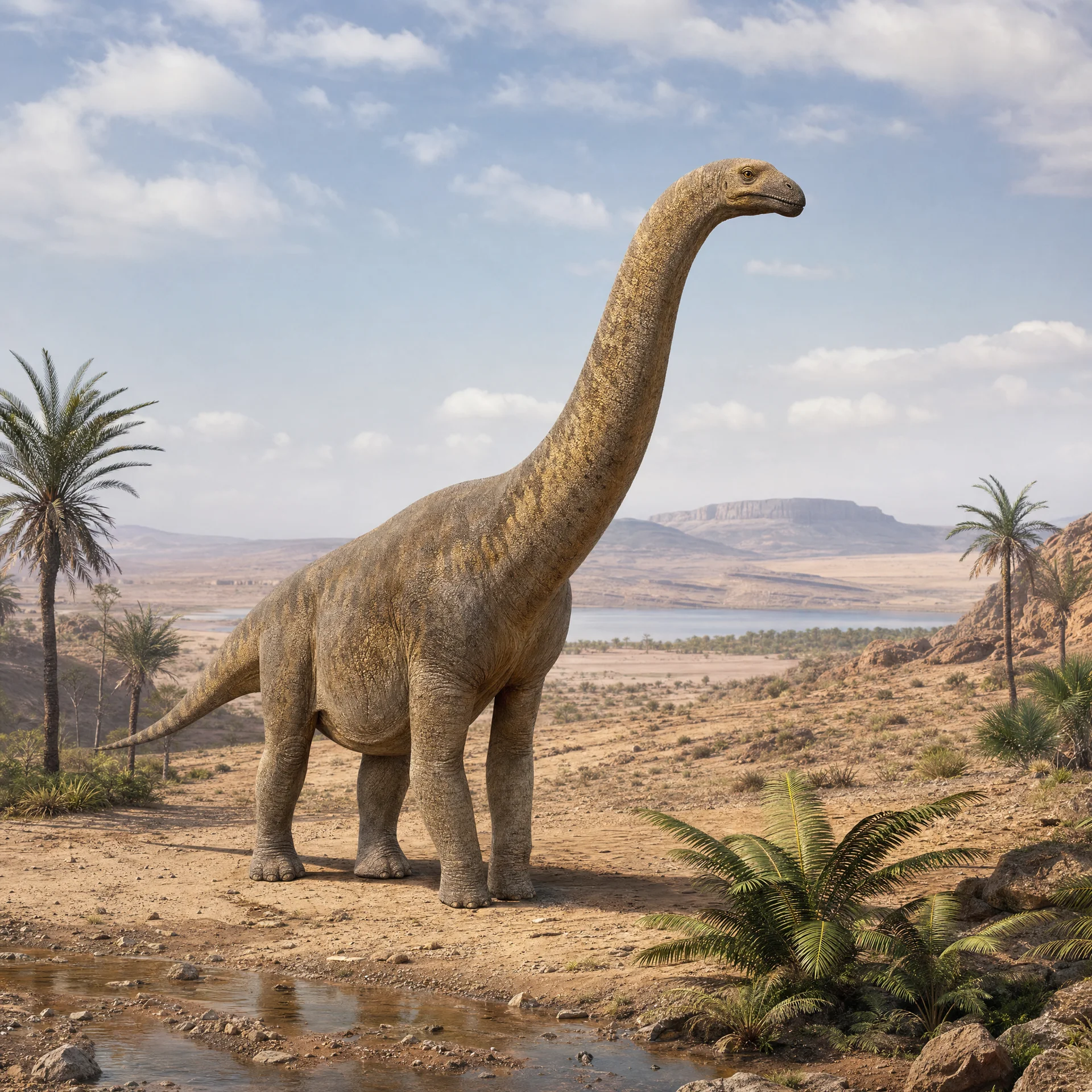
Vulcanodon
Vulcanodon karibaensis
⏳ Jurassic Period🍽️ HerbivoreDinosaurs
Physical Characteristics
⏳
PeriodJurassic Period
🍽️
DietHerbivore
📏
Size6.5~11m
⚖️
Weight3500~10300kg
↕
Height2m
Classification
GEN
GenusVulcanodon
SP
SpeciesV. karibaensis
Vulcanodon karibaensis
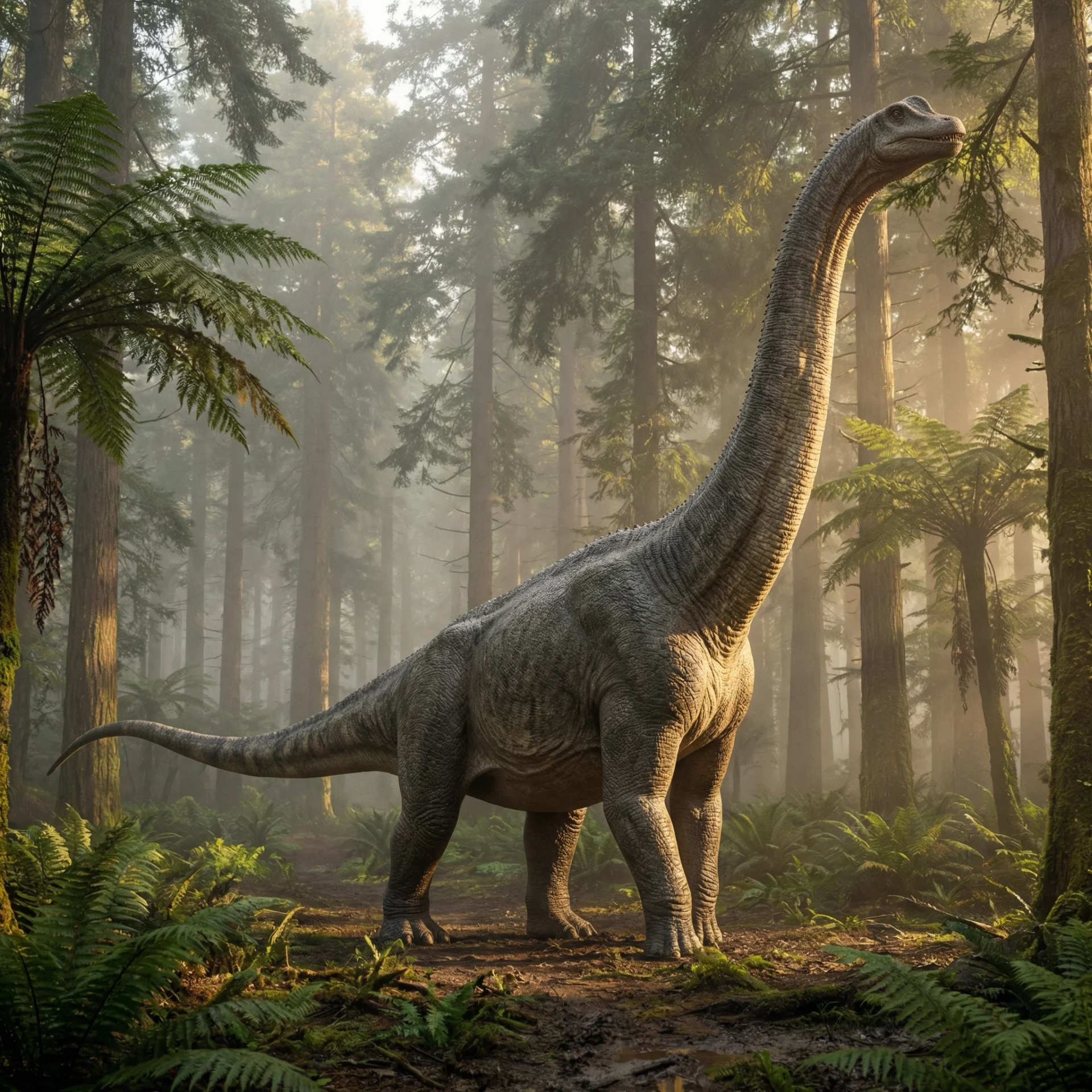
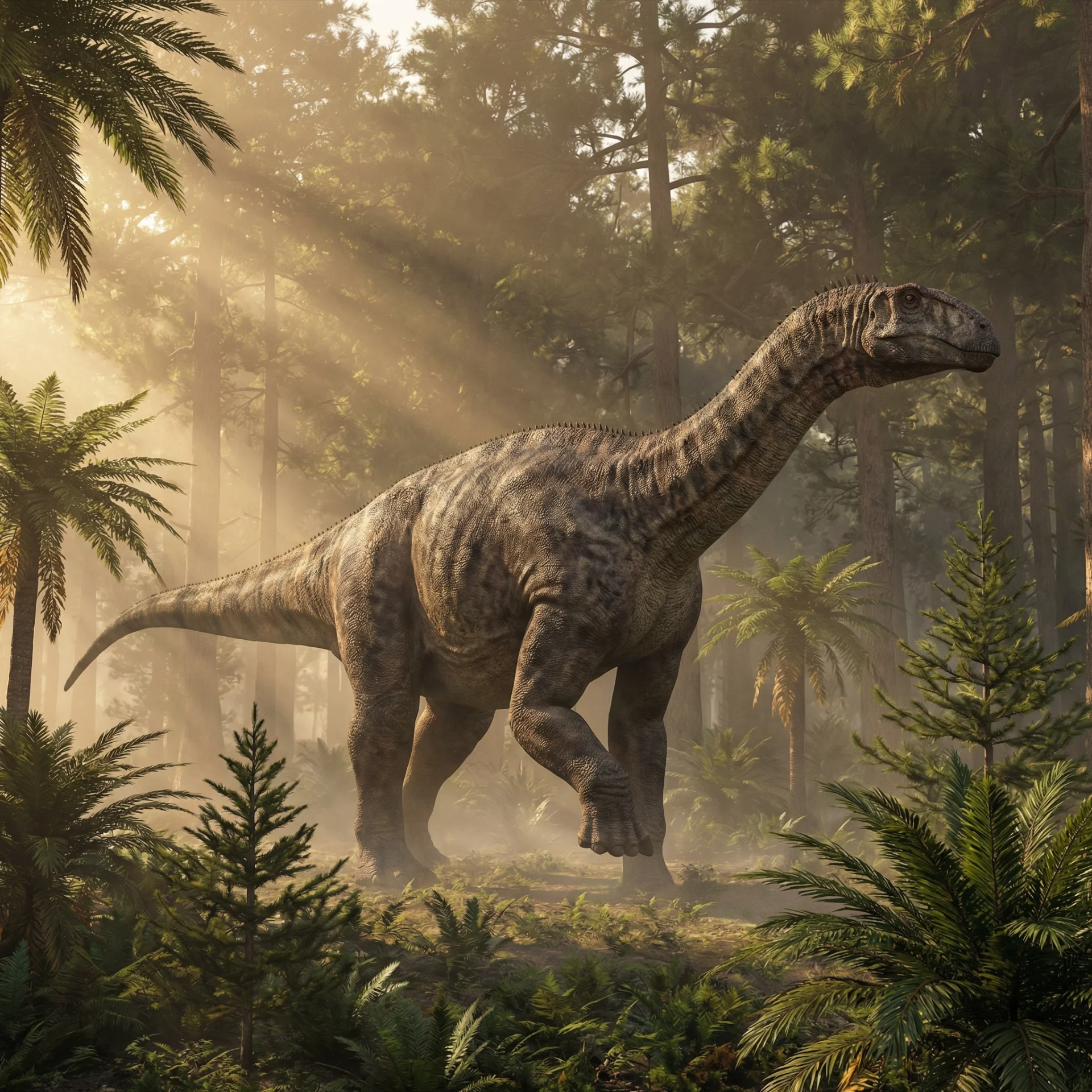
Vulcanodon (Vulcanodon karibaensis Raath, 1972) is a basal sauropod (Sauropoda) dinosaur from the Early Jurassic (Sinemurian–Pliensbachian, approximately 199–188 Ma) of southern Africa (present-day Zimbabwe). It occupies a pivotal position in understanding the origin and early evolution of sauropods and was regarded for decades as the oldest known sauropod, remaining one of the most phylogenetically basal sauropod genera ever discovered. The name derives from the Latin Vulcanus (the Roman god of fire) and the Greek odon (tooth), referencing the discovery of the fossil in sandstone adjacent to basalt lava flows.
Vulcanodon already exhibited the characteristic sauropod body plan — columnar limbs, a long neck and tail, and obligate quadrupedal locomotion — yet retained primitive features in its pelvic structure reminiscent of basal sauropodomorphs ("prosauropods"), making it a key transitional form in the shift from bipedal sauropodomorphs to fully quadrupedal sauropods. The holotype (QG24) includes much of the pelvis, most of the hindlimbs, parts of the forelimbs, and twelve anterior caudal vertebrae, but crucially lacks the skull and cervical vertebrae, leaving significant uncertainty in full-body reconstructions. Body size estimates vary considerably across studies: Paul (2010) estimated a total length of approximately 11 m and a mass of about 3.5 t, while McPhee et al. (2018) estimated a greater body mass of approximately 10.3 t using stylopodial circumference regression.
Notably, the knife-shaped teeth originally found near the skeleton — and which inspired the genus name — were later shown to belong to an unidentified theropod that likely scavenged on the Vulcanodon carcass (Cooper, 1984), not to Vulcanodon itself. No teeth attributable to Vulcanodon have ever been recovered.
The genus name Vulcanodon combines the Latin Vulcanus (Vulcan, the Roman god of fire and the forge) with the Greek odon (tooth), literally meaning "volcano tooth" (Glut, 1997). The name was chosen because the skeleton was found in sandstone adjacent to basalt lava flows (the Batoka Formation) and because knife-shaped teeth discovered nearby were originally misattributed to this animal (Raath, 1972). The specific epithet karibaensis refers to the type locality on a small island in Lake Kariba, Zimbabwe.
Vulcanodon is universally accepted today as one of the most basal members of Sauropoda (Wilson & Sereno, 1998; Upchurch et al., 2004). In the original description, Raath (1972) classified it as an advanced "prosauropod" (possibly Melanorosauridae), based on the primitive pelvis and the carnivorous teeth found nearby. Cruickshank (1975) was the first to demonstrate sauropod affinities, citing the equal length of the fifth metatarsal relative to other metatarsals — a condition seen in sauropods but not in "prosauropods." Cooper (1984) redescribed the genus and erected the family Vulcanodontidae. The validity of Vulcanodontidae has been debated, but it was reintroduced by Allain & Aquesbi (2004, 2008) following the description of Tazoudasaurus. There are no junior synonyms; V. karibaensis remains the sole valid species.
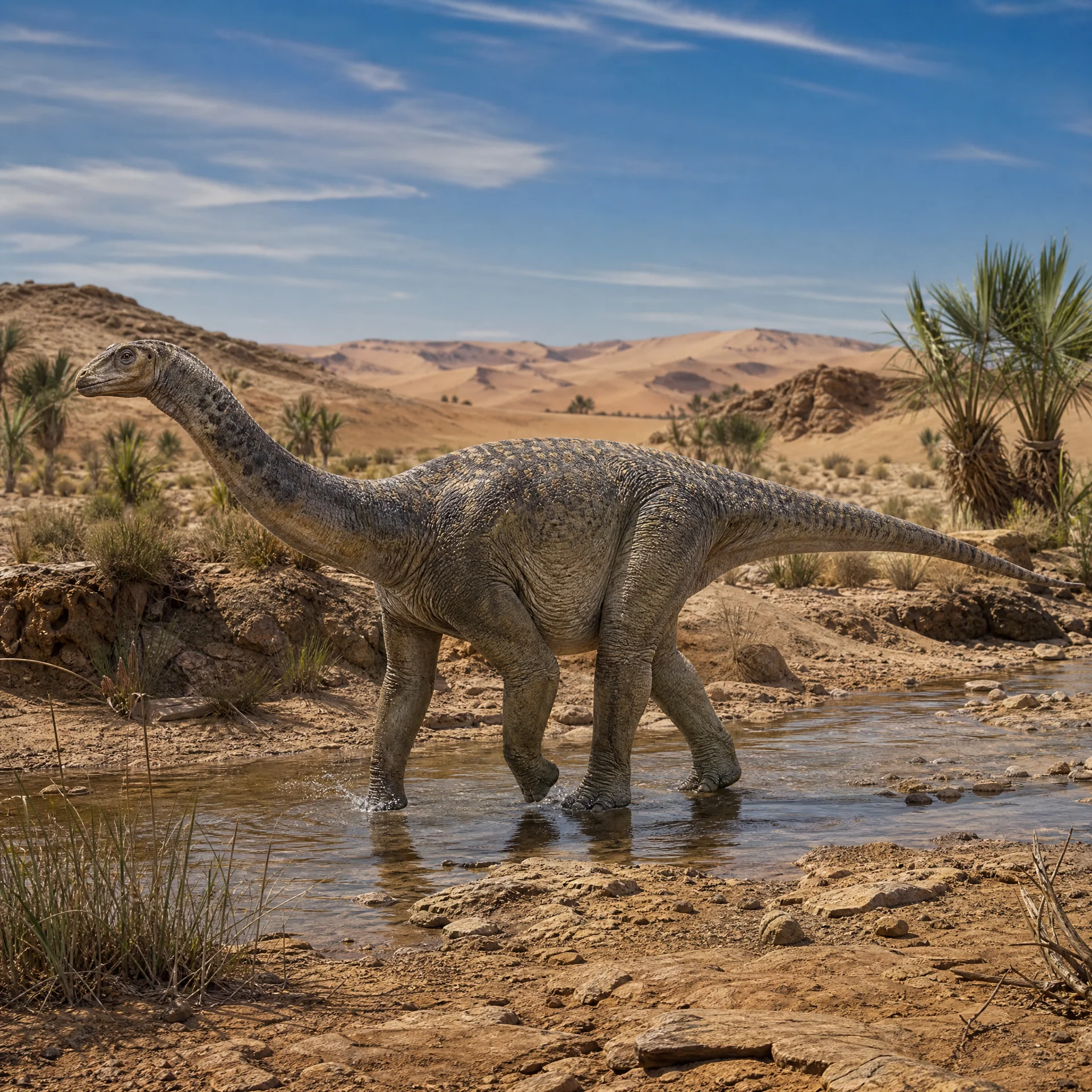
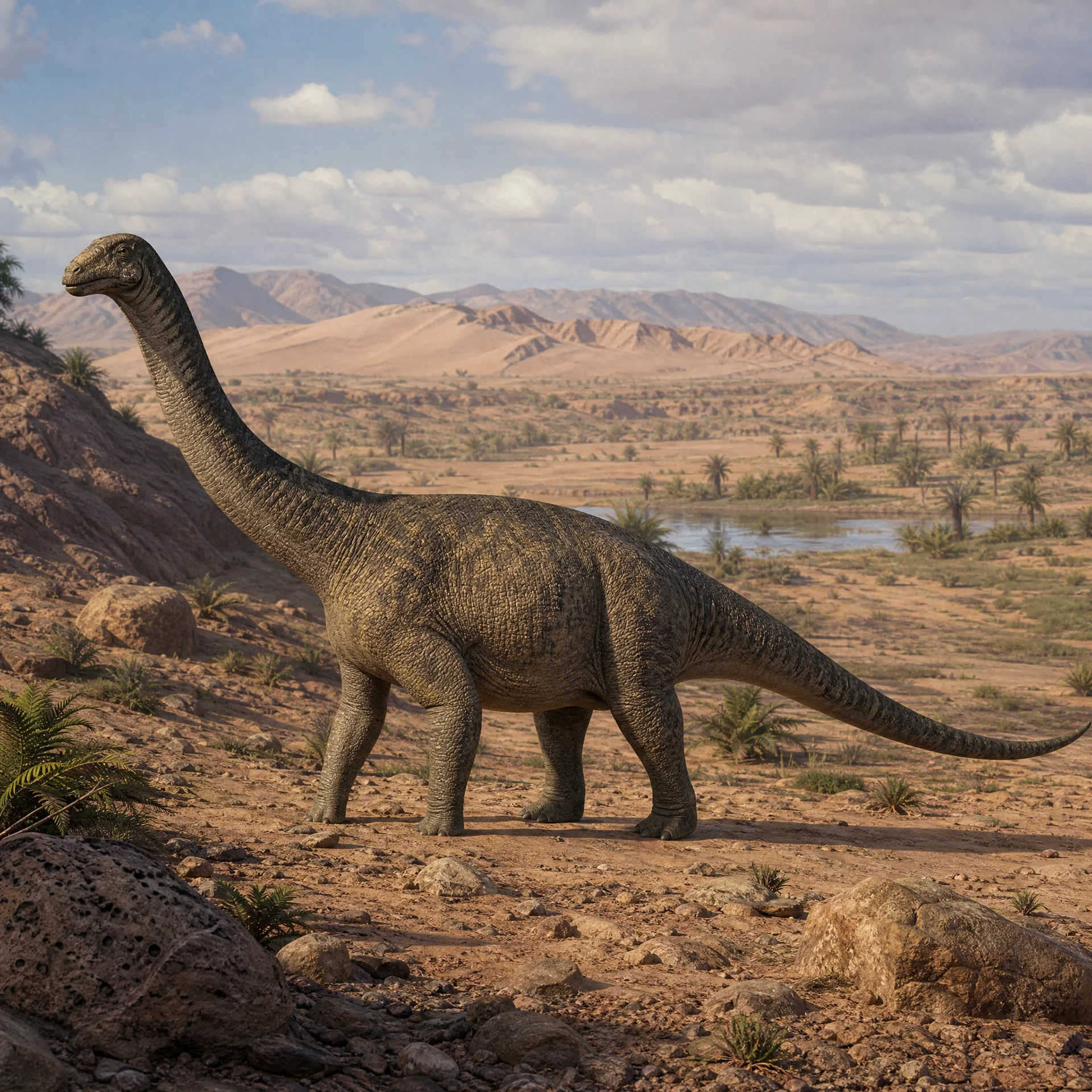
Vulcanodon is a basal sauropod from the Early Jurassic arid environments of southern Africa, representing a critical transitional form between bipedal sauropodomorphs and the giant quadrupedal sauropods that would dominate later ecosystems.
The geological age of Vulcanodon has been revised multiple times. The original description (Raath, 1972) placed the fossil near the Triassic–Jurassic boundary (Hettangian, approximately 200 Ma), making it the oldest known sauropod at that time. Yates et al. (2004) subsequently revised this to the Toarcian (approximately 175–183 Ma) based on Ar–Ar dating of the Batoka Basalt Formation lavas (approximately 180–179 Ma; Jones et al., 2001). However, in 2018, Viglietti et al. revisited the type locality during record-low lake levels at Lake Kariba, collecting new stratigraphic and sedimentological data. Their results confirmed that the holotype came from the uppermost Forest Sandstone Formation, not from interbedded sandstones within the Batoka Basalt Formation as previously assumed. Correlation of the upper Forest Sandstone with the Clarens Formation of the main Karoo Basin implies a Sinemurian–Pliensbachian age (approximately 199–188 Ma), potentially 10–15 million years older than the Toarcian estimate (Viglietti et al., 2018).
The holotype was recovered from "Island 126/127" in Lake Kariba, within the Mid-Zambezi Basin of northern Zimbabwe. Viglietti et al. (2018) confirmed the source horizon as the uppermost Forest Sandstone Formation (Upper Karoo Group, Karoo Supergroup). The Forest Sandstone consists primarily of pinkish-white to brownish, fine- to medium-grained, well-sorted sandstone; the lower portion contains subaqueous deposits, while the upper parts are predominantly aeolian (wind-blown) in origin (Thompson, 1975; Viglietti et al., 2018). The fossil was found near the top of an approximately 30 m-thick bedded layer of sand- and siltstone, overlain by the flood basalts of the Batoka Basalt Formation.
Cooper (1984) interpreted the depositional environment as desert-like and arid, based on the aeolian sands of the Forest Sandstone Formation. The sediments in which Vulcanodon was found likely represent distal alluvial fan deposits transitioning into a desert landscape, possibly containing ephemeral lakes during wet seasons. The individual may have inhabited the margins of wadis cutting into these alluvial fan deposits, although post-mortem transport of the carcass by flooding cannot be ruled out (Cooper, 1984). This interpretation was significant in challenging the prevailing hypothesis that sauropod gigantism evolved as an adaptation to aquatic life — Vulcanodon demonstrated that large body size had already appeared in terrestrial, arid environments.
The holotype specimen QG24 is housed at the Natural History Museum of Zimbabwe in Bulawayo. The first bone was discovered in July 1969 by B. A. Gibson, a harbourmaster from the town of Kariba, and the specimen was collected during three field campaigns in October 1969, March 1970, and May 1970. It was formally described by Michael Raath in 1972. The preserved elements include:
| Element | Preservation | Notes |
|---|---|---|
| Pelvis (including sacrum) | Four fused sacral vertebrae, both ilia, ischia, and pubes | Articulated |
| Left hindlimb | Femur, tibia, fibula, most of the foot | Articulated; femur length 110 cm |
| Right femur | Isolated | Same individual as left limb |
| Caudal vertebrae | 12 anterior caudals | Articulated |
| Forelimb | Right radius and ulna, some metacarpals and phalanges from both forefeet | Disarticulated |
| Skull, cervicals, dorsal vertebrae | Not preserved | Major source of reconstruction uncertainty |
Subsequent visits by Bond and Cooper yielded a scapula (QG152) and a cervical vertebra fragment, though these may belong to a different individual (Cooper, 1984).
Raath (1972) noted nine fragmentary carnivorous teeth near the pelvic region. He initially attributed them to Vulcanodon, suggesting a death pose had repositioned the skull over the pelvis. Cooper (1984) demonstrated that these teeth belonged to an unidentified theropod that likely scavenged on the carcass.
Key diagnostic features based on Cooper (1984) and Wilson & Sereno (1998) include:
The complete absence of the skull, cervical vertebrae, and dorsal vertebrae precludes any direct information on cranial morphology, neck length, or total body length. The commonly cited figure of 6.5 m represents only the preserved portion of the skeleton (excluding the neck and head); the actual total length was considerably greater (Paul, 2010, estimated approximately 11 m). The referred specimens (QG152 scapula and cervical fragment) may belong to a different individual or even a different taxon, requiring caution in their use.
Size estimates for Vulcanodon vary considerably depending on methodology and assumptions about the missing portions of the skeleton.
| Study | Estimated length (m) | Estimated mass (t) | Method / Notes |
|---|---|---|---|
| Holtz (2008) | ~6.5 | Not provided | Preserved portion only (excluding neck and skull) |
| Paul (2010) | ~11 | ~3.5 | Full reconstruction-based estimate |
| McPhee et al. (2018) | Not provided | ~10.3 | Stylopodial circumference regression |
The large discrepancy reflects both the incompleteness of the specimen (unknown neck length) and methodological differences in mass estimation.
Vulcanodon's limbs were robust and columnar, already displaying the typical sauropod body plan (Raath, 1972). The forelimbs reached approximately 76% of hindlimb length, relatively long for a basal sauropod (Upchurch, 1995). They were straight and gracile, with a V-shaped proximal ulna — features much more similar to derived sauropods than to basal sauropodomorphs (Klein et al., 2011).
The lower leg, metatarsus, and toes were shortened compared to bipedal ancestors but not as reduced as in later sauropods (Wilson, 2005). The feet were semiplantigrade, with both the digits and part of the metatarsals contacting the ground — a derived feature absent in more basal sauropods like Isanosaurus. However, the distal phalanges were not reduced, a condition seen in Shunosaurus and all more derived sauropods, indicating that while muscle positioning was shifting, reduction of the distal limb elements had not yet occurred (Fechner, 2009).
The pelvis retained relatively primitive features reminiscent of basal sauropodomorphs (Raath, 1972; Cooper, 1984). The fossa on the brevis shelf of the ilium is a notable primitive character absent in derived sauropods (Fechner, 2009). The incipient excavations on the lateral sides of the caudal centra are interpreted as precursors to the extensive pleurocoels that characterize later sauropod vertebrae (Cooper, 1984).
Vulcanodon is classified as a herbivore. The knife-shaped teeth originally found near the skeleton suggested an omnivorous or carnivorous diet, but these teeth were reidentified as belonging to a scavenging theropod (Cooper, 1984). No teeth directly attributable to Vulcanodon have been recovered, so dietary inference rests primarily on phylogenetic bracketing (Sauropoda is an exclusively herbivorous clade) and body plan. No direct evidence from gut contents, tooth wear, bite marks, or stable isotope analysis is available.
As a medium- to large-bodied herbivore in the arid Early Jurassic environments of southern Africa, Vulcanodon coexisted with the basal sauropodomorph Massospondylus, the theropod Megapnosaurus (=Syntarsus) rhodesiensis, and primitive crocodylomorphs (protosuchids) in the Forest Sandstone fauna (Weishampel et al., 2004). The theropod teeth found near the carcass provide direct evidence for the presence of predators or scavengers in this ecosystem.
Cooper (1984) emphasized the significance of Vulcanodon inhabiting an arid environment, arguing that the large body size of early sauropods was not an adaptation to aquatic life — a paradigm shift in sauropod paleoecology. This interpretation has been broadly supported by subsequent research.
Vulcanodon is known from a single locality: "Island 126/127" in Lake Kariba, northern Zimbabwe. This island lies within the world's largest artificial reservoir (by volume), west of the Bumi Hills (Raath, 1972; Viglietti et al., 2018). No additional localities have yielded Vulcanodon material.
During the Early Jurassic, Zimbabwe was situated in the southern portion of Gondwana. The approximate paleocoordinates for the Forest Sandstone Formation are approximately 35°S, 5°E (PBDB; Forest Sandstone Formation entry), placing the locality considerably further south (mid-latitudes) than the modern position of southern Africa. The contemporaneous occurrence of the closely related Tazoudasaurus in Morocco (northern Africa) and a sauropod caudal vertebra from the Upper Elliot Formation of South Africa (Yates et al., 2004) suggests that basal sauropods were distributed across much of Gondwana during the Early Jurassic.
The taxonomic placement of Vulcanodon has been revised multiple times since its discovery:
In Wilson & Sereno (1998), Vulcanodon was placed at the base of Sauropoda. Allain & Aquesbi (2008) recovered it within Gravisauria as part of a Vulcanodontidae clade (Vulcanodon + Tazoudasaurus). Nair & Salisbury (2012) also recovered Vulcanodon at the base of Gravisauria as the sister taxon of Tazoudasaurus.
However, analyses by Apaldetti et al. (2011) and Remes et al. (2009) did not support the Vulcanodon–Tazoudasaurus sister-group relationship, and the validity of Vulcanodontidae remains without universal consensus.
In some analyses, Vulcanodon is recovered in an unresolved position among various basal sauropods (e.g., Gongxianosaurus, Isanosaurus) rather than as the sister taxon of Tazoudasaurus. A key factor is the incomplete nature of the specimen (no skull or cervical vertebrae), which limits the number of scorable phylogenetic characters and reduces analytical resolution.
| Feature | Status | Evidence |
|---|---|---|
| Sauropod affinity | Confirmed | Multiple shared derived characters including metatarsal proportions (Cruickshank, 1975; Wilson & Sereno, 1998) |
| Obligate quadrupedality | Confirmed | Forelimb/hindlimb ratio of 76%, columnar limb morphology (Cooper, 1984; Upchurch, 1995) |
| Sinemurian–Pliensbachian age | Probable | Stratigraphic reassessment by Viglietti et al. (2018); no absolute radiometric date for the type horizon |
| Total length ~11 m | Hypothesis | Paul (2010) estimate; neck and skull not preserved |
| Body mass ~3.5–10.3 t | Hypothesis | Wide range depending on methodology (Paul, 2010 vs. McPhee et al., 2018) |
| Vulcanodontidae validity | Hypothesis | Supported by some analyses, not others; no universal consensus |
| Arid habitat | Probable | Aeolian sandstone facies (Cooper, 1984; Viglietti et al., 2018); post-mortem transport not excluded |
Vulcanodon is frequently described in popular sources as a "small sauropod" of approximately 6.5 m in length. However, this figure represents only the preserved portion of the skeleton and excludes the entirely unknown neck and skull; the actual animal was considerably larger (Paul, 2010). Additionally, the original interpretation as an omnivorous or carnivorous "prosauropod" — based on the misattributed theropod teeth — has been entirely rejected since Cooper (1984).
| Taxon | Age (Ma) | Locality | Estimated length (m) | Estimated mass (t) | Phylogenetic position |
|---|---|---|---|---|---|
| Vulcanodon karibaensis | ~199–188 | Zimbabwe | ~6.5–11 | ~3.5–10.3 | Basal Sauropoda (Gravisauria) |
| Tazoudasaurus naimi | ~183–175 | Morocco | ~9 | Undetermined | Basal Sauropoda (Vulcanodontidae?) |
| Barapasaurus tagorei | ~184–175 | India | ~14 | Undetermined | Near Eusauropoda |
| Isanosaurus attavipachi | ~210 | Thailand | ~6.5–15 (uncertain) | Undetermined | Basal Sauropoda |
| Antetonitrus ingenipes | ~215–210 | South Africa | ~8–10 | ~1–2 | Basal Sauropoda / transitional |
| Ledumahadi mafube | ~200 | South Africa | Undetermined | ~12 | Basal sauropodomorph (outgroup to Sauropoda) |
Vulcanodon shares the greatest number of derived features with Tazoudasaurus, including nail-like claws on digits II and III and a narrow sacrum — the basis for the proposed Vulcanodontidae clade (Allain & Aquesbi, 2008). In contrast, Barapasaurus is more derived and cannot be included in the same family (Upchurch, 1995).
| Specimen | Elements | Condition | Repository | References |
|---|---|---|---|---|
| QG24 (holotype) | Pelvis, left hindlimb and foot, right femur, 12 anterior caudals, right forearm and some manual elements | Partially articulated, some disarticulated | Natural History Museum of Zimbabwe, Bulawayo | Raath (1972); Cooper (1984) |
| QG152 | Scapula | Disarticulated | Natural History Museum of Zimbabwe, Bulawayo | Cooper (1984) |
| (Unnumbered cervical fragment) | Cervical vertebra fragment | Disarticulated | Natural History Museum of Zimbabwe, Bulawayo | Cooper (1984) |
| Item | Details | Basis |
|---|---|---|
| Formation | Forest Sandstone Formation (uppermost) | Viglietti et al. (2018) |
| Correlative unit | Clarens Formation (main Karoo Basin, South Africa) | Viglietti et al. (2018) |
| Age (current estimate) | Sinemurian–Pliensbachian (~199–188 Ma) | Viglietti et al. (2018) |
| Age (previous estimate) | Toarcian (~183–175 Ma) | Yates et al. (2004) |
| Age (original estimate) | Hettangian (~200 Ma) | Raath (1972) |
| Lithology | Fine- to medium-grained sandstone, siltstone (aeolian / distal alluvial fan) | Cooper (1984); Viglietti et al. (2018) |
Vulcanodon's name means 'volcano tooth,' yet the teeth that inspired the name turned out to belong not to Vulcanodon itself but to a theropod (carnivorous dinosaur) that had scavenged on its carcass.
Vulcanodon was discovered on a tiny island in Lake Kariba, Zimbabwe — one of the world's largest artificial reservoirs — and the island has no official name, known only as 'Island 126/127.'
For decades, Vulcanodon held the title of 'oldest known sauropod,' but it lost this distinction following the discovery of Isanosaurus in Thailand (2000) and a stratigraphic reinterpretation in 2018.
Vulcanodon's femur (thighbone) measured 110 cm in length — modest by later sauropod standards but already impressively large for most dinosaurs of its time.
The discovery of Vulcanodon in an arid, desert-like environment helped overturn the long-standing hypothesis that sauropods evolved their giant size as an adaptation to aquatic life.
Vulcanodon's sacrum consists of four fused vertebrae, one more than the three found in basal sauropodomorphs ('prosauropods'), marking a key step in the evolution toward the sauropod body plan.
The nail-like, wider-than-deep claws on Vulcanodon's second and third toes are a unique feature shared among all known sauropods only with Tazoudasaurus from Morocco.
Record-low water levels at Lake Kariba in 2016 exposed geological strata unseen for over 20 years, allowing researchers to revisit the Vulcanodon type locality and revise its age by 10–15 million years.
Vulcanodon was only the second dinosaur ever formally named from Zimbabwe, after Syntarsus rhodesiensis (now Megapnosaurus) in 1969.
Vulcanodon's forelimbs were approximately 76% the length of its hindlimbs, directly illustrating an intermediate stage in the evolutionary transition from bipedal ancestors to fully quadrupedal sauropods.
The name Vulcanodon means 'volcano tooth,' referring to the fossil's discovery in sandstone near basalt lava flows (volcanic deposits) and the knife-shaped teeth originally found near the skeleton. However, Cooper (1984) later showed that these teeth belonged to an unidentified theropod (carnivorous dinosaur) that likely scavenged on the Vulcanodon carcass. No teeth attributable to Vulcanodon itself have ever been found — making the name somewhat ironic.
For decades, Vulcanodon was regarded as the oldest known sauropod. However, this status has since been revised. In 2000, Isanosaurus from Thailand was described as a Late Triassic sauropod, predating Vulcanodon. Additionally, Antetonitrus from South Africa is another candidate for one of the earliest sauropods. Vulcanodon is now considered 'one of the most basal sauropods known' rather than the oldest.
Estimates vary significantly. The preserved portion of the skeleton (excluding the unknown neck and skull) measures approximately 6.5 m. Paul (2010) estimated a total length of about 11 m and a mass of approximately 3.5 tonnes. McPhee et al. (2018) estimated a higher body mass of approximately 10.3 tonnes using limb bone circumference regression. The wide range reflects the incompleteness of the specimen.
The holotype (QG24) includes the pelvis with four fused sacral vertebrae, most of the left hindlimb and foot, a right femur, twelve anterior caudal (tail) vertebrae, the right forearm (radius and ulna), and some hand bones. Crucially, the skull, cervical (neck) vertebrae, and dorsal (back) vertebrae were not preserved.
Based on Cooper's (1984) sedimentological analysis, Vulcanodon inhabited an arid, desert-like environment. The Forest Sandstone Formation consists of aeolian (wind-blown) dune sands, and the fossil-bearing sediments represent distal alluvial fan deposits transitioning into desert terrain, possibly with ephemeral lakes forming near wadis during wet seasons.
This remains debated. Cooper (1984) erected Vulcanodontidae to include Vulcanodon and Barapasaurus, but Upchurch (1995) demonstrated that Barapasaurus was more derived, rendering the family polyphyletic. Allain et al. (2004, 2008) reintroduced the family to unite Vulcanodon and Tazoudasaurus, but other phylogenetic analyses have not supported this sister-group relationship, so no universal consensus has been reached.
The original description (1972) assumed the fossil lay between two basalt layers within the Batoka Formation, suggesting a Hettangian age (~200 Ma). Radiometric dating of the basalts later revised this to Toarcian (~183–175 Ma). Then in 2018, direct stratigraphic re-examination during record-low lake levels revealed the actual source horizon was the uppermost Forest Sandstone Formation, implying a Sinemurian–Pliensbachian age (~199–188 Ma) — approximately 10–15 million years older than the Toarcian estimate.
Vulcanodon is a true sauropod. Raath (1972) originally classified it as an advanced 'prosauropod' based on primitive pelvic features and the misattributed carnivorous teeth. Cruickshank (1975) first demonstrated sauropod affinities using metatarsal proportions, and all subsequent studies have confirmed its placement within Sauropoda.
Some phylogenetic analyses (Allain & Aquesbi, 2008; Nair & Salisbury, 2012) recover Tazoudasaurus naimi from Morocco as the closest relative (sister taxon) of Vulcanodon. The two genera share unique features including nail-like claws on digits II and III and a narrow sacrum. However, this relationship is not supported by all analyses.
The holotype and referred specimens are housed at the Natural History Museum of Zimbabwe in Bulawayo, Zimbabwe.
5images