Camarasaurus
Jurassic Period Herbivore Creature Type
Camarasaurus supremus
Scientific Name: "Greek kamara (vaulted chamber, arched roof) + sauros (lizard) = 'chambered lizard', referring to the large pleurocoels (hollow chambers) in the cervical vertebrae"
Local Name: Camarasaurus
Physical Characteristics
Discovery
Habitat

Camarasaurus Cope, 1877 is a camarasaurid sauropod dinosaur from the Late Jurassic (Kimmeridgian–Tithonian, approximately 155–145 Ma) of what is now the western United States. The generic name derives from the Greek kamara (vaulted chamber) and sauros (lizard), referring to the large pleurocoels—hollow chambers connected to the pulmonary air-sac system—that pervade its cervical and dorsal vertebrae. Edward Drinker Cope named the type species, Camarasaurus supremus, in 1877 on the basis of fossils collected by Oramel William Lucas from Garden Park, Colorado, during the intense scientific rivalry known as the Bone Wars.
Camarasaurus is by far the most abundantly represented sauropod in the Morrison Formation, with over 175 reported specimens spanning a wide range of ontogenetic stages from juveniles to fully grown adults (Ikejiri, 2005). This extraordinary fossil record has made it one of the best-understood sauropods and a cornerstone for research on sauropod anatomy, growth, paleobiology, and paleoecology. Three to four valid species are currently recognized, ranging in size from the approximately 15 m long C. lentus to the much larger C. supremus, which may have reached up to 23 m in length. The skull of Camarasaurus is notably large and box-shaped compared to those of contemporaneous diplodocids, and the robust, spatulate (spoon-shaped) teeth indicate a capacity to process tougher vegetation than the pencil-toothed Diplodocus and Apatosaurus.
Oxygen isotope analyses of Camarasaurus tooth enamel (Fricke et al., 2011) have suggested that these animals may have undertaken seasonal migrations from lowlands to uplands during dry seasons, providing key evidence for niche partitioning among the multiple large herbivorous dinosaurs coexisting in the Morrison ecosystem. Finite element analyses of cranial biomechanics (Button et al., 2014) further confirmed that Camarasaurus possessed a stronger bite than Diplodocus, suited for processing tougher plant material.
Overview
Name and etymology
The generic name Camarasaurus is composed of the Greek kamara (κάμαρα, 'vaulted chamber' or 'anything with an arched cover') and sauros (σαῦρος, 'lizard'). It refers to the large hollow chambers (pleurocoels) within the cervical and dorsal vertebrae, which housed extensions of the pulmonary air-sac system. The type species epithet supremus is Latin for 'supreme' or 'highest'.
Taxonomic status and synonymy
Three species are definitively valid, with a fourth that remains debated. Othniel Charles Marsh's genus Morosaurus (1878; Greek moros 'stupid' + sauros 'lizard', alluding to its small brain-to-body ratio) was synonymized with Camarasaurus by Osborn & Mook (1921), and multiple Morosaurus species (M. impar, M. grandis, M. lentus, M. robustus) were subsequently transferred to Camarasaurus. Additional junior synonyms include Cope's own Caulodon diversidens, Caulodon leptoganus, Amphicoelias latus, and Camarasaurus leptodirus—all now referred to C. supremus. Uintasaurus douglassi Holland, 1919 and Camarasaurus annae Ellinger, 1950 are synonyms of C. lentus. Marsh's Morosaurus agilis was reassigned to the new dicraeosaurid genus Smitanosaurus in 2020.
One-line summary
The most abundant sauropod in the Morrison Formation and one of the best-studied sauropods globally, characterized by a robust, box-shaped skull, spatulate teeth, and extensively pneumatized vertebrae.
Age, stratigraphy, and depositional environment
Temporal range
The fossil record of Camarasaurus spans the Late Jurassic Kimmeridgian through Tithonian stages, approximately 155–145 Ma. Ikejiri (2005) subdivided the stratigraphic distribution of Camarasaurus into five biozones within the Morrison Formation, documenting an evolutionary succession from C. grandis in the lowest strata through C. lentus to C. supremus in the uppermost layers.
Formation and lithology
Fossils are overwhelmingly from the Morrison Formation, which is composed of mudstone, sandstone, siltstone, and limestone, with the Salt Wash Member and Brushy Basin Member constituting the principal fossil-bearing intervals. A small number of specimens from New Mexico have been reported from the Summerville Formation (Foster et al., 1996), indicating that the geographic and stratigraphic range of Camarasaurus extended beyond the Morrison sensu stricto.
Paleoenvironment
The Morrison Formation is widely interpreted as having accumulated in a semi-arid climate dominated by floodplain and fluvial systems (Turner & Peterson, 2004). The Brushy Basin Member in particular records a semi-arid meandering-stream/floodplain ecosystem, with evaporitic gypsum deposits indicating intervals of pronounced aridity. However, seasonal precipitation was sufficient to sustain rivers, lakes, and the vegetation base necessary to support diverse large herbivore communities, including multiple sauropod genera.
Specimens and diagnostic features
Holotype and key specimens
| Specimen | Species | Preserved elements | Locality | Notes |
|---|---|---|---|---|
| AMNH 5760 (cotypes) | C. supremus (type species) | 1 cervical, 2 dorsals, 3 caudals (composite of multiple individuals) | Garden Park, Colorado | Named by Cope, 1877; cervical proposed as lectotype |
| AMNH 5761 | C. supremus | Extensive mixed postcranial material | Garden Park, Colorado | Possibly 6+ individuals commingled |
| YPM 1901 | C. grandis | Juvenile partial skeleton | Como Bluff, Wyoming | Originally named Apatosaurus grandis by Marsh, 1877 |
| YPM 1910 | C. lentus | Near-complete juvenile skeleton | Como Bluff, Wyoming | Mounted at Yale Peabody Museum; among earliest near-complete sauropods |
| CM 11338 | C. lentus | Near-complete articulated juvenile skeleton | Dinosaur National Monument, Utah | Described by Gilmore (1925); one of the most complete sauropod specimens known |
| BYU 9740 | C. lewisi | Articulated postcranial skeleton | Uncompahgre Hill, Colorado | Originally described as Cathetosaurus lewisi by Jensen (1988) |
| GMNH-PV 101 | C. grandis | Near-complete articulated skeleton | near Bone Cabin Quarry, Wyoming | Housed at Gunma Museum of Natural History, Japan |
| SMA 0002 ("E.T.") | Camarasaurus sp. (possibly C. lewisi) | Near-complete articulated skeleton with skin impressions | Howe Quarry, Wyoming | Housed at Sauriermuseum Aathal, Switzerland |
| GPDM 220 ("Ralph") | Camarasaurus sp. | Near-complete skull and partial postcranium | Little Snowy Mountains, Montana | Northernmost occurrence (Woodruff & Foster, 2017) |
Diagnostic features
Key autapomorphies of Camarasaurus include (Madsen et al., 1995; Wilson, 2002; Foster, 2020): a lacrimal tilted anteriorly; a quadrate that does not reach the infratemporal fenestra due to a short dorsal process; a quadratojugal that extends dorsally to contact the squamosal; and an oblique groove on the lateral surface of the lower jaw running from the surangular anteroventrally to the ventral margin of the dentary.
At the species level, Ikejiri (2005) distinguished taxa by neural spine morphology in the caudal vertebrae and neural arch height in dorsals 3–8. However, most specimens cannot be assigned to species and are referred to simply as Camarasaurus sp.
Limitations of the type material
The type specimen AMNH 5760 is a composite of multiple adult individuals (cotypes), and the type of C. grandis (YPM 1901) is from a juvenile, complicating species-level comparisons based on morphology alone. An understanding of ontogenetic variation remains essential for resolving species-level taxonomy.
Morphology and function
Body size
Camarasaurus was a medium-to-large sauropod with pronounced size variation between species. According to Foster (2020), C. lentus was approximately 15 m in length, C. grandis was comparable, and C. supremus had bones roughly 50% longer than those of the smaller species, potentially reaching about 23 m in length. The body weight of adult C. grandis has been estimated at approximately 12.6 tonnes on average (range 8.3–16.6 tonnes). Assuming identical body proportions, C. supremus could have weighed up to 42.3 tonnes, though its incompleteness prevents precise estimation. Paul (2024) gave a more conservative estimate for C. supremus of approximately 18 m and 24 tonnes. The forelimbs were relatively long, so the shoulders stood slightly higher than the hips, and the wide ribcage gave Camarasaurus a robust, barrel-chested build. Shoulder height in C. lentus is estimated at approximately 4.5–7.6 m (NPS data).
Skull and dentition
The skull was large and robustly built relative to other sauropods, roughly box-shaped with a short snout. The external naris was greatly enlarged, producing an arched forehead reminiscent of Brachiosaurus. Tooth counts consist of 4 in each premaxilla, 9–10 in each maxilla, and 13 in each dentary. The spatulate (spoon-shaped) teeth formed a continuous cutting edge, were tilted forward and slightly incurved, and were rapidly replaced. The teeth increased in size and became more symmetrical toward the tip of the snout.
Vertebral column and pneumaticity
The vertebral formula is 12 cervicals, 12 dorsals, 5 sacrals, and approximately 53 caudals (based on CM 11338 and GMNH-PV 101). The cervical and dorsal vertebrae contain extensive pleurocoels connected to the pulmonary air-sac system, which occupied most of the volume of these bones—the very feature that inspired the genus name. This pneumatic architecture drastically reduced skeletal weight while maintaining structural integrity. The neural spines of the shoulder region are bifid, forming a U-shape in anterior or posterior view, whereas the hip-region neural spines are undivided and fan-shaped.
Limbs and locomotion
The forelimb was relatively slender, with a humerus about 77% the length of the femur. By contrast, the hindlimb was massive, with a tibia approximately 60% the length of the femur. Camarasaurus is one of the few sauropods in which wrist bones are preserved, consisting of only two elements: the ulnare and the radiale. The metacarpals were arranged vertically in a tubular configuration. Only the first digit (thumb) bore a claw, which was oriented laterally. The hind foot had five digits, with recurved, laterally compressed claws on the first three toes.
Skin impressions
Specimen SMA 0002 ("E.T.") preserves skin impressions on the palmar surface of the manus and on the hindlimbs (Tschopp et al., 2015). The hindlimb integument shows hexagonal scales 6–18 mm in diameter. The manual skin impressions indicate that digits II through IV were bound together in soft tissue, and no hoof structures were present.
Diet and ecology
Tooth morphology and bite force
The spatulate teeth of Camarasaurus contrast markedly with the pencil-like teeth of Diplodocus. Button et al. (2014) conducted finite element analyses of the skulls of both genera and demonstrated that Camarasaurus could exert and accommodate substantially greater bite forces, with peak stress concentrated in the quadrate shaft. This indicates that Camarasaurus was better adapted for processing tough, fibrous plant material—providing strong evidence for dietary niche partitioning among Morrison Formation sauropods.
Isotopic evidence for diet and migration
Fricke et al. (2011) analyzed oxygen isotope ratios (δ¹⁸O) in Camarasaurus tooth enamel and found seasonal fluctuations consistent with migration from lowland to upland environments during dry periods. Contemporaneous Diplodocus did not show the same isotopic pattern, suggesting that the two taxa employed different habitat-use strategies. More recently, calcium isotope analysis (Neubauer et al., 2025) found that Camarasaurus and Camptosaurus exploited different dietary resources, while Diplodocus utilized resources overlapping with both.
Feeding height and ecological niche
Camarasaurus is classified as a medium-height browser with an estimated feeding height of approximately 2–5 m. This places it between high browsers like Brachiosaurus, which accessed the upper canopy, and low browsers like Diplodocus, which swept vegetation close to the ground. This vertical stratification of feeding heights is a key mechanism explaining the coexistence of multiple sauropod genera in the Morrison ecosystem.
Social behavior
Multiple individuals have been found associated at single localities (e.g., the commingled specimens at Garden Park, Bone Cabin Quarry vicinity), but whether this reflects gregarious herding behavior or taphonomic aggregation remains unresolved. The recovery of individuals spanning a broad range of ontogenetic stages from the same stratigraphic horizons at least supports the possibility of mixed-age groupings.
Distribution and paleogeography
Geographic range
Camarasaurus fossils occur throughout the Morrison Formation outcrop belt in the western United States. Colorado, Utah, and Wyoming are the richest source areas. Additional occurrences have been reported from New Mexico (including the Summerville Formation; Foster et al., 1996), South Dakota (Carpenter & McIntosh, 1996), Oklahoma, and—at its northernmost extent—the Little Snowy Mountains of central Montana (Woodruff & Foster, 2017). The Morrison Formation is exposed across an area exceeding 1.5 million km² in the western United States, and Camarasaurus is the most uniformly distributed sauropod throughout this extent.
Paleogeographic interpretation
Paleomagnetic data indicate that the western United States during the Late Jurassic was situated at approximately 27°N paleolatitude, within the subtropical climate zone. This corresponds roughly to the modern latitude of southern Florida or the Caribbean. The region experienced pronounced seasonal wet-dry oscillations, consistent with the isotopic evidence for seasonal migration in Camarasaurus.
Phylogeny and taxonomic debates
Position within Macronaria
Camarasaurus is the type genus of Camarasauridae and is consistently recovered as a basal member of Macronaria. However, the composition of Camarasauridae varies across analyses. Mocho et al. (2014) included Tehuelchesaurus and Lourinhasaurus within Camarasauridae, while Tan et al. (2021) placed Camarasaurus in polytomy with Bellusaurus at the base of Macronaria. Mannion et al. (2019) recovered Lourinhasaurus as the sister taxon of Camarasaurus. In many current analyses, Camarasaurus is positioned as a basal macronarian outside Titanosauriformes, without strong resolution of its ingroup relationships.
Species-level uncertainty
Most researchers recognize four valid species (C. supremus, C. grandis, C. lentus, C. lewisi), but species-level diagnostic traits are poorly defined, and most specimens are referred only to Camarasaurus sp. (Tschopp & Mateus, 2013; Ikejiri, 2005). C. lewisi was originally described as the separate genus Cathetosaurus by Jensen (1988) and reassigned to Camarasaurus by McIntosh et al. (1996). Tschopp & Mateus (2013) argued in a conference abstract for the reinstatement of Cathetosaurus, but subsequent phylogenetic analyses have not supported its generic independence.
Stratigraphic succession of species
Ikejiri (2005) documented a biostratigraphic succession within the Morrison Formation: C. grandis appears in the lowest strata, C. lentus emerges later and coexists with C. grandis for several million years, C. grandis then disappears from the record, and C. supremus appears in the uppermost layers shortly after the disappearance of C. lentus. The close similarity between C. lentus and C. supremus, combined with this immediate succession, suggests that C. supremus may have evolved directly from C. lentus—a rare example of traceable evolutionary progression among Morrison Formation sauropods.
Restoration and uncertainty
Established, well-supported, and hypothetical claims
Established: Camarasaurus as a macronarian sauropod with pneumatized vertebrae bearing large pleurocoels, spatulate teeth, and a large box-shaped skull is firmly supported by numerous specimens spanning ontogenetic series. Its status as the most abundant Morrison Formation sauropod is empirically grounded in the fossil record.
Well-supported: Niche partitioning with Diplodocus is strongly corroborated by tooth morphology, finite element analysis, and isotopic data. Seasonal migration is a well-supported hypothesis based on oxygen isotope evidence.
Hypothetical: Herding behavior lacks direct evidence and remains speculative. Precise body mass and length estimates for C. supremus carry large uncertainty due to the incompleteness of preserved material. The generic independence of Cathetosaurus remains unresolved.
Popular misconceptions vs. scientific understanding
Cope's 1877 life restoration of Camarasaurus—the first full-scale reconstruction of any sauropod—depicted the animal with carnivorous teeth, an error attributable to the scarcity of cranial material at the time. In 1905, a plaster skull modeled on Camarasaurus was mistakenly mounted on a Brontosaurus skeleton at the American Museum of Natural History, initiating a decades-long trend of erroneously placing Camarasaurus-type skulls on apatosaurine bodies.
Comparison with contemporaneous sauropods
| Taxon | Estimated length (m) | Estimated mass (t) | Primary feeding strategy | Tooth morphology |
|---|---|---|---|---|
| Camarasaurus (C. lentus) | ~15 | ~8–17 | Medium-height browser (2–5 m) | Spatulate, robust |
| Camarasaurus (C. supremus) | ~18–23 | ~24–42 (estimated) | Medium-height browser | Spatulate, robust |
| Diplodocus | ~24–26 | ~12–16 | Low browser / wide sweep | Pencil-like, slender |
| Apatosaurus | ~21–23 | ~16–22 | Medium-to-low browser | Slender, elongate |
| Brachiosaurus | ~21–22 | ~28–47 | High browser (upper canopy) | Spatulate, relatively broad |
Camarasaurus is clearly differentiated from Diplodocus and Apatosaurus by its spatulate vs. pencil-like teeth and its large, boxy skull. It differs from Brachiosaurus in its shorter, broader skull (vs. elongate skull with an extremely elevated narial region) and its more even forelimb-to-hindlimb proportions.
Fun Facts
FAQ
📚References
- Cope, E. D. (1877). On a gigantic saurian from the Dakota epoch of Colorado. Paleontological Bulletin, 25, 5–10.
- Osborn, H. F. & Mook, C. C. (1921). Camarasaurus, Amphicoelias, and other sauropods of Cope. Memoirs of the American Museum of Natural History, n.s., 3(3), 249–387.
- Gilmore, C. W. (1925). A nearly complete articulated skeleton of Camarasaurus, a saurischian dinosaur from the Dinosaur National Monument, Utah. Memoirs of the Carnegie Museum, 10, 347–384.
- Ikejiri, T. (2005). Distribution and biochronology of Camarasaurus (Dinosauria, Sauropoda) from the Jurassic Morrison Formation of the Rocky Mountain Region. New Mexico Geological Society Guidebook, 56, 367–379.
- McIntosh, J. S., Miles, C. A., Cloward, K. C. & Parker, J. R. (1996). A new nearly complete skeleton of Camarasaurus. Bulletin of the Gunma Museum of Natural History, 1, 1–87.
- Madsen, J. H. Jr., McIntosh, J. S. & Berman, D. S. (1995). Skull and atlas-axis complex of the Upper Jurassic sauropod Camarasaurus Cope (Reptilia: Saurischia). Bulletin of the Carnegie Museum of Natural History, 31, 1–115.
- Wilson, J. A. (2002). Sauropod dinosaur phylogeny: critique and cladistic analysis. Zoological Journal of the Linnean Society, 136, 215–275. https://doi.org/10.1046/j.1096-3642.2002.00029.x
- Button, D. J., Rayfield, E. J. & Barrett, P. M. (2014). Cranial biomechanics underpins high sauropod diversity in resource-poor environments. Proceedings of the Royal Society B, 281(1795), 20142114. https://doi.org/10.1098/rspb.2014.2114
- Fricke, H. C., Hencecroth, J. & Hoerner, M. E. (2011). Lowland–upland migration of sauropod dinosaurs during the Late Jurassic epoch. Nature, 480, 513–515. https://doi.org/10.1038/nature10570
- Tschopp, E., Mateus, O. & Benson, R. B. J. (2015). Articulated bone sets of manus and pedes of Camarasaurus (Sauropoda, Dinosauria). Palaeontologia Electronica, 18.2.44A, 1–65. https://doi.org/10.26879/559
- Woodruff, D. C. & Foster, J. R. (2017). The first specimen of Camarasaurus (Dinosauria: Sauropoda) from Montana: The northernmost occurrence of the genus. PLoS ONE, 12(5), e0177423. https://doi.org/10.1371/journal.pone.0177423
- Foster, J. R. (2020). Jurassic West: The Dinosaurs of the Morrison Formation and Their World (2nd ed.). Indiana University Press.
- Lehman, T. M. & Woodward, H. N. (2008). Modeling growth rates for sauropod dinosaurs. Paleobiology, 34(2), 264–281. https://doi.org/10.1666/0094-8373(2008)034[0264:MGRFSD]2.0.CO;2
- Waskow, K. & Sander, P. M. (2014). Growth record and histological variation in the dorsal ribs of Camarasaurus sp. (Sauropoda). Journal of Vertebrate Paleontology, 34(4), 852–869. https://doi.org/10.1080/02724634.2014.840645
- Jensen, J. A. (1988). A fourth new sauropod dinosaur from the Upper Jurassic of the Colorado Plateau and sauropod bipedalism. The Great Basin Naturalist, 48(2), 121–145.
- Paul, G. S. (2024). The Princeton Field Guide to Dinosaurs (3rd ed.). Princeton University Press.
- Mocho, P., Royo-Torres, R. & Ortega, F. (2014). Phylogenetic reassessment of Lourinhasaurus alenquerensis, a basal Macronaria (Sauropoda) from the Upper Jurassic of Portugal. Zoological Journal of the Linnean Society, 170, 404–426. https://doi.org/10.1111/zoj.12113
- Turner, C. E. & Peterson, F. (2004). Reconstruction of the Upper Jurassic Morrison Formation extinct ecosystem—a synthesis. Sedimentary Geology, 167(3–4), 309–355. https://doi.org/10.1016/j.sedgeo.2004.01.009
- Tschopp, E. & Mateus, O. (2013). Cathetosaurus as a valid sauropod genus and comparisons with Camarasaurus. Journal of Vertebrate Paleontology, Program and Abstracts, 2013, 221.
- Neubauer, T. A. et al. (2025). Calcium isotopes reveal niche partitioning within the dinosaur fauna of the Carnegie Quarry, Morrison Formation. Palaeogeography, Palaeoclimatology, Palaeoecology, 675, 113103.
Gallery
5 images Camarasaurus
Camarasaurus · Jurassic Period · Herbivore
 Camarasaurus
Camarasaurus · Jurassic Period · Herbivore
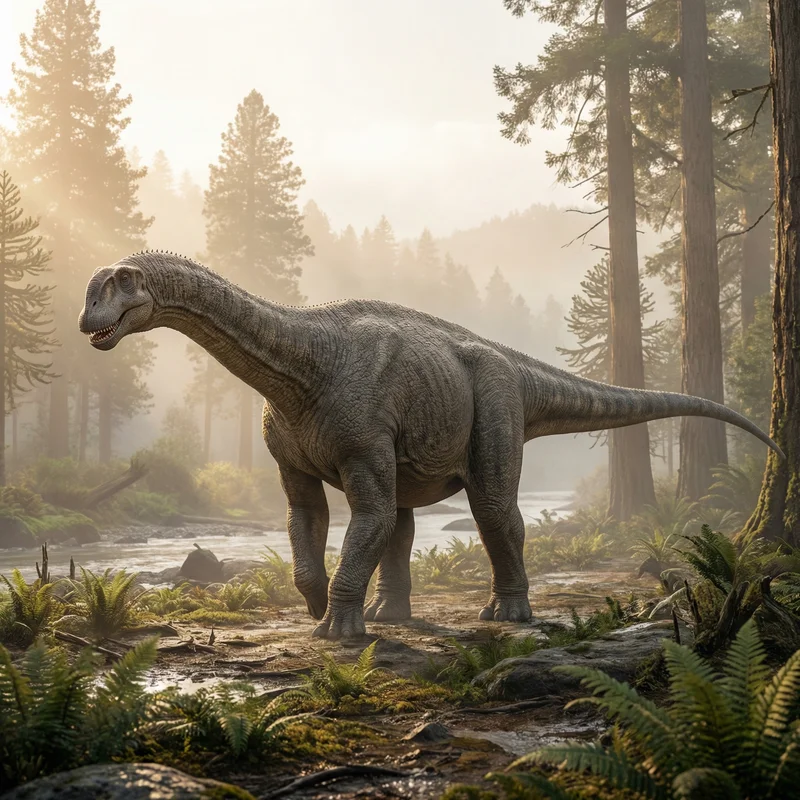 Camarasaurus
Camarasaurus · Jurassic Period · Herbivore
 Camarasaurus
Camarasaurus · Jurassic Period · Herbivore
 Camarasaurus
Camarasaurus · Jurassic Period · Herbivore
🔗Related Creatures

Apatosaurus
Apatosaurus
Scelidosaurus
Scelidosaurus harrisonii
Heterodontosaurus
Heterodontosaurus tucki
Supersaurus
Supersaurus vivianae
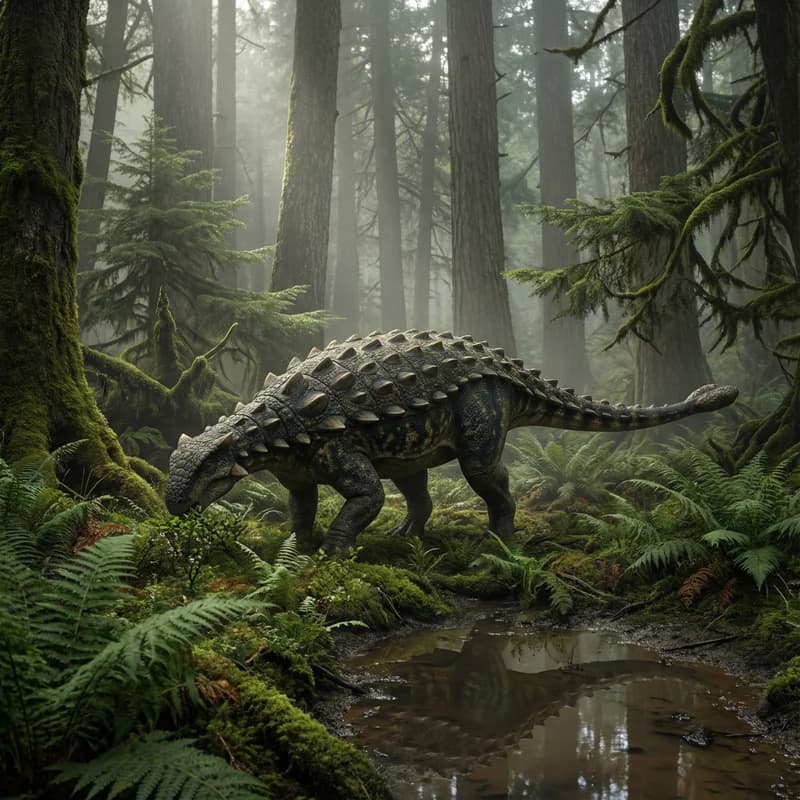
Dracopelta
Dracopelta zbyszewskii
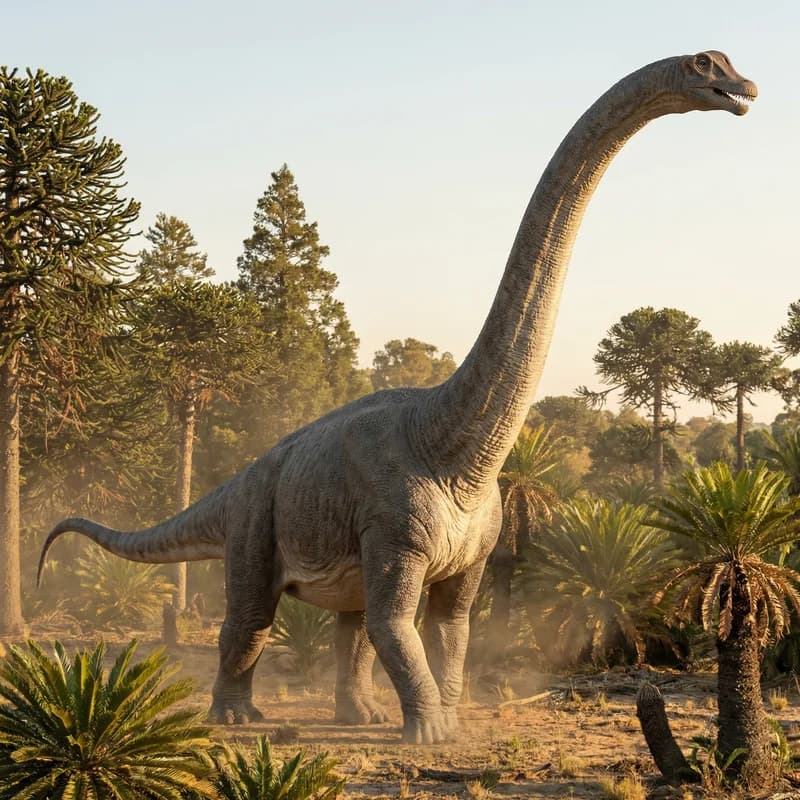
Barosaurus
Barosaurus lentus
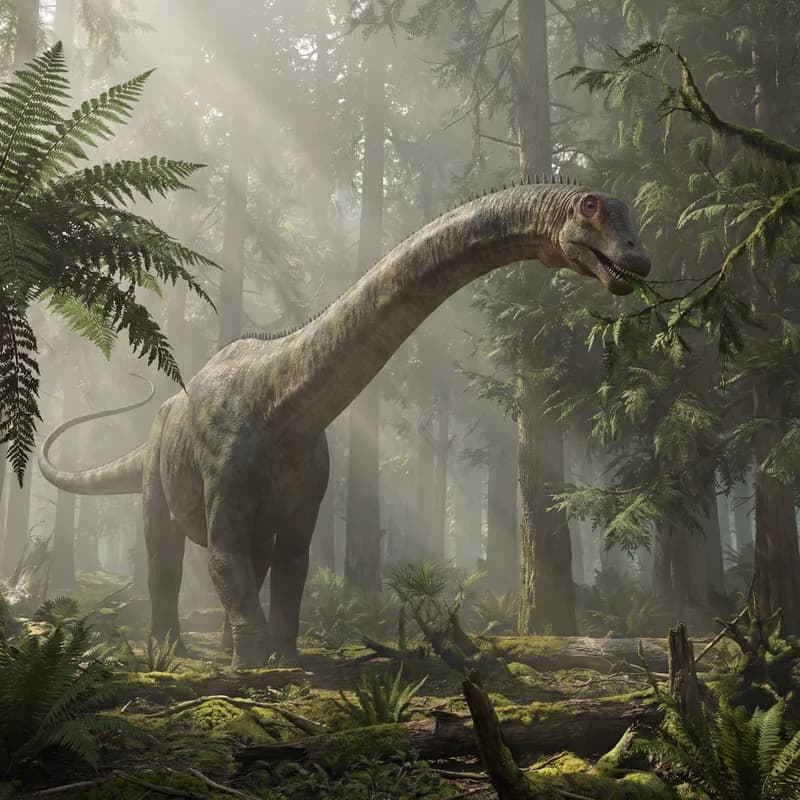
Diplodocus
Diplodocus
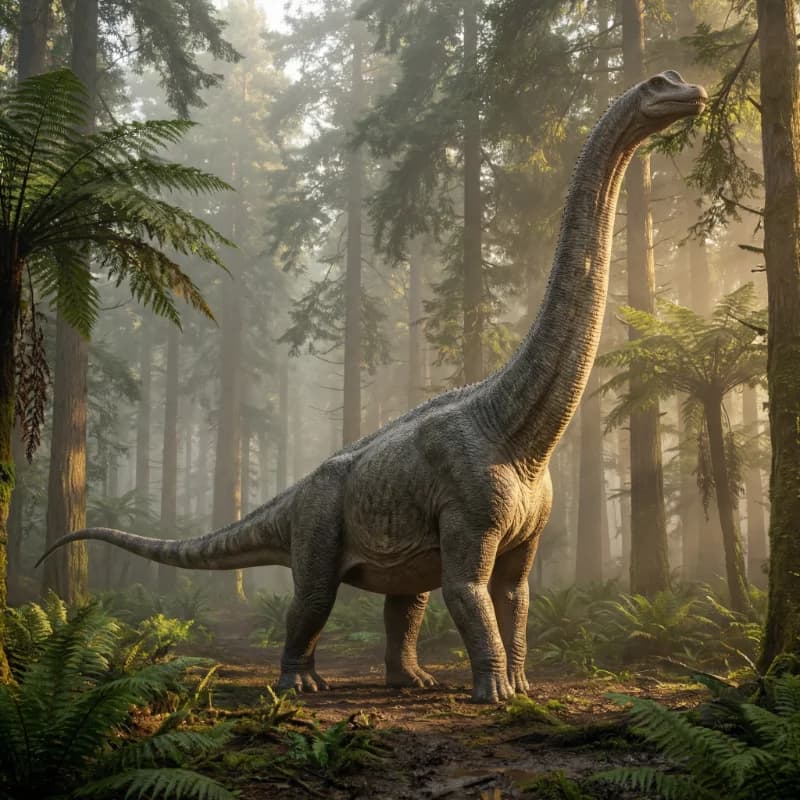
Vulcanodon
Vulcanodon karibaensis