Diplodocus
Jurassic Period Herbivore Creature Type
Diplodocus
Scientific Name: "diplos (double) + dokos (beam) = 'double beam,' referring to the distinctive double-beamed chevron bones on the underside of the tail vertebrae"
Local Name: Diplodocus
Physical Characteristics
Discovery
Habitat

Diplodocus (Marsh, 1878) is one of the most iconic and best-understood sauropod dinosaurs, known from abundant and remarkably complete skeletal material from the Late Jurassic Morrison Formation of western North America. A member of Diplodocidae within the subfamily Diplodocinae, it is characterized by an extraordinarily long, whip-like tail comprising approximately 80 caudal vertebrae, a long neck with at least 15 cervical vertebrae supported by extensive pneumatic structures, and a row of narrow, pencil-shaped teeth restricted to the front of the jaws. The genus name, coined by Othniel Charles Marsh in 1878, derives from the Greek diplos ('double') and dokos ('beam'), referring to the uniquely double-beamed chevron bones on the underside of the tail—a feature Marsh initially believed was unique to this dinosaur.
Diplodocus carnegii Hatcher, 1901, known from a nearly complete skeleton (CM 84, the celebrated 'Dippy'), is one of the longest dinosaurs documented from a complete skeleton, at 24–26 m in total length and an estimated 12–16 metric tons in body mass (Benson et al., 2014; Paul, 2019; Taylor et al., 2025). The larger species D. hallorum (originally described as Seismosaurus halli by Gillette, 1991) may have reached 29–33 m and ~21–23 t, with one individual estimated to have lived to approximately 60 years of age—the oldest known sauropod (Woodruff et al., 2024). The type species, D. longus Marsh, 1878, is based on fragmentary material (YPM 1920) and is widely regarded as a nomen dubium; an ICZN petition to replace it with D. carnegii as the type species was rejected in 2018 (ICZN Opinion 2425).
Diplodocus fossils are among the most common dinosaur remains in the Morrison Formation and are predominantly found in rocks dated between approximately 151.88 and 149.1 Ma (latest Kimmeridgian; Tschopp et al., 2015; Maidment, 2024). The Morrison Formation represents a semi-arid, seasonally dry environment of floodplains, rivers, and shallow lakes across what is now the western United States. Diplodocus coexisted with other giant sauropods including Apatosaurus, Brontosaurus, Barosaurus, Camarasaurus, and Brachiosaurus, as well as theropod predators such as Allosaurus, Ceratosaurus, and Torvosaurus. Dental microwear and biomechanical analyses indicate that Diplodocus was a low-level browser that stripped foliage from branches, occupying a distinct feeding niche from the contemporaneous Camarasaurus (Whitlock, 2011; Young et al., 2012).
Overview
Name and Etymology
The genus name Diplodocus was coined in 1878 by American paleontologist Othniel Charles Marsh. It is a Neo-Latin compound from the Greek diplos (διπλός, 'double') and dokos (δοκός, 'beam'), referring to the distinctive double-beamed chevron bones located on the underside of the caudal vertebrae. At the time, Marsh considered this feature unique to Diplodocus, but similar chevron morphology has since been identified in other diplodocids and even in non-diplodocid sauropods such as Mamenchisaurus (Upchurch, 1998).
Taxonomic Status and Valid Species
Multiple species have historically been assigned to Diplodocus, but only two are currently considered valid.
Diplodocus carnegii Hatcher, 1901 is the best-known species. Its holotype CM 84 was discovered at Sheep Creek, Wyoming, and named in honour of steel magnate Andrew Carnegie, who funded the collecting expedition. The composite 'Dippy' mount at the Carnegie Museum of Natural History, based primarily on CM 84 and paratype CM 94, became one of the most famous dinosaur skeletons in the world (Taylor et al., 2025).
Diplodocus hallorum (Gillette, 1991) was originally described as Seismosaurus halli from a partial postcranial skeleton with 230 gastroliths (NMMNH P-3690) found near San Ysidro, New Mexico. It was synonymized with Diplodocus by Lucas et al. (2006) and supported as a valid species of the genus by Tschopp et al. (2015). Several specimens formerly referred to D. longus—including AMNH FR 223, USNM V 10865, and DMNH 1494—were reassigned to D. hallorum by Tschopp et al. (2015).
The type species Diplodocus longus Marsh, 1878, based on holotype YPM 1920 (two mid-caudal vertebrae, a chevron, a left femur, tibia, fibula, astragalus, and five metatarsals from Felch Quarry, Colorado), is widely considered a nomen dubium due to the fragmentary nature of the material and the lack of diagnostic features that would permit confident referral of other specimens (Carpenter, 1999; Tschopp et al., 2015). Tschopp & Mateus (2016) petitioned the ICZN to designate D. carnegii as the replacement type species, but ICZN Opinion 2425 (2018) rejected this proposal, maintaining D. longus as the type species.
Scientific Significance
Diplodocus is one of the most thoroughly studied sauropod dinosaurs, owing to the availability of multiple largely complete skeletons. It has served as a cornerstone taxon for research on sauropod anatomy, posture, locomotion, feeding biomechanics, growth patterns, and respiratory physiology. The Carnegie Museum's casts of 'Dippy,' distributed to major museums across Europe and South America between 1905 and 1928, played a pivotal role in popularizing sauropod dinosaurs worldwide.
Age, Stratigraphy, and Paleoenvironment
Temporal Range
Diplodocus fossils are predominantly found within the middle to upper Morrison Formation, with most specimens dated between approximately 151.88 and 149.1 Ma, corresponding to the latest Kimmeridgian Age of the Late Jurassic (Tschopp et al., 2015). These specimens fall within stratigraphic systems tract 4 (B4). At least one specimen, AMNH FR 223, was recovered from systems tract 6 (C6), which contains some of the youngest deposits in the Morrison Formation and could extend into the earliest Tithonian (Maidment, 2024).
Radiometric dating places the Morrison Formation between approximately 156.3 Ma at the base and 146.8 Ma at the top (Trujillo & Kowallis, 2015).
Formation and Lithology
The Morrison Formation is an extensive Upper Jurassic terrestrial sedimentary sequence exposed across much of the western United States, including Colorado, Wyoming, Utah, Montana, New Mexico, and adjacent states. It is composed primarily of fluvial sandstone, floodplain mudstone, siltstone, and lacustrine limestone. Diplodocus fossils have been recovered mainly from the Brushy Basin Member and the Salt Wash Member. The holotype of D. carnegii (CM 84) was found in the upper 10 m of the Talking Rock facies of the Brushy Basin Member at Sheep Creek, Wyoming.
Paleoenvironment
The Morrison Formation records a semi-arid climate with pronounced wet and dry seasons (Turner & Peterson, 2004; Parrish et al., 2004). Sedimentological analysis reveals a complex mosaic of floodplains, braided and meandering river channels, shallow lakes, and dune fields. Vegetation included gallery forests of tree ferns along waterways, open fern savannas, and scattered coniferous woodlands dominated by Araucaria-like trees such as Brachyphyllum. Cycads, ginkgoes, and horsetails also formed part of the flora.
During the Kimmeridgian, the Morrison Basin stretched from present-day New Mexico to Alberta. The paleolatitude of the formation was approximately 30–35°N, placing it in a subtropical to warm-temperate zone. Early to mid-Kimmeridgian conditions were predominantly dry to semi-arid, with a trend toward slightly more humid conditions into the Tithonian (Parrish et al., 2004).
Specimens and Diagnostic Features
Key Specimens
| Specimen | Species | Composition | Locality / Formation | Notes |
|---|---|---|---|---|
| YPM 1920 | D. longus (type species, nomen dubium) | 2 mid-caudal vertebrae, chevron, left femur, tibia, fibula, astragalus, 5 metatarsals | Felch Quarry, Garden Park, Colorado; Brushy Basin Mbr | Marsh 1878 original description |
| CM 84 | D. carnegii (holotype) | 41 vertebrae (mid-caudals to anterior cervicals), 18 ribs, partial pelvis, right scapulocoracoid, right femur | Sheep Creek, Wyoming; Brushy Basin Mbr | Hatcher 1901; 'Dippy' original |
| CM 94 | D. carnegii (paratype) | Partial vertebral column, appendicular elements | Same locality as CM 84 | Smaller individual |
| NMMNH P-3690 | D. hallorum (holotype) | Vertebrae, partial pelvis, right femur, 230 gastroliths | San Ysidro, New Mexico | Gillette 1991; originally Seismosaurus |
| AMNH FR 223 | D. hallorum | Semi-articulated postcranial skeleton, many vertebrae | Como Bluff, Wyoming | First Diplodocus mount; Tschopp et al. 2015 reassignment |
| USNM V 10865 | D. hallorum | Semi-articulated postcranial skeleton, well-preserved dorsal column | Dinosaur National Monument, Utah | Gilmore 1932; Tschopp et al. 2015 reassignment |
| DMNH 1494 | D. hallorum | Cervical 8 to caudal 20, right scapulocoracoid, complete pelvis, both hind limbs | Dinosaur National Monument | Tschopp et al. 2015 reassignment |
| NMMNH P-25079 | D. hallorum | Partial postcranial skeleton | New Mexico | Woodruff et al. 2024; ~60 years old at death |
Diagnostic Features
Diplodocus is distinguished from other diplodocid genera by the following combination of characters (Tschopp et al., 2015): well-developed pneumatic fossae in the cervical and dorsal vertebrae; distinctive double-beamed chevron bones beneath the caudal vertebrae; forelimbs shorter than hind limbs, producing a sub-horizontal body posture; pencil-shaped teeth restricted to the anterior portions of the upper and lower jaws; and at least 15 cervical vertebrae.
D. carnegii is smaller than D. hallorum and differs in specific proportions and morphology of certain caudal vertebrae. D. hallorum is approximately 20–30% larger overall.
Specimen Limitations
The holotype of the type species D. longus (YPM 1920) is highly fragmentary. Carpenter (1999) demonstrated that some hind limb elements originally attributed to it actually belong to Apatosaurus. This extreme incompleteness has made it impossible to reliably refer additional specimens to D. longus, prompting many researchers to treat it as a nomen dubium.
Morphology and Function
Body Plan and Size
D. carnegii, based on the nearly complete skeleton CM 84, had a total length of 24–26 m, with the current mount measuring approximately 26.1 m based on photogrammetric and LiDAR analysis (Taylor et al., 2025). Body mass estimates for D. carnegii range from 12 to 16 metric tons depending on the method used (limb bone circumference, volumetric models; Benson et al., 2014; Paul, 2019).
D. hallorum was considerably larger. Early estimates of up to 52 m were drastically revised downward after Gillette's original vertebral placement was corrected; current estimates place this species at 29–33 m in length (Lucas et al., 2006; Lovelace et al., 2007). A 2024 study estimated the mass of a 33 m D. hallorum at approximately 21 metric tons, though the authors noted this may represent an average rather than maximum adult size (Woodruff et al., 2024). According to Gregory S. Paul, a 29 m individual would weigh approximately 23 metric tons (Paul, 2019).
Shoulder height was approximately 4 m, with the forelimbs distinctly shorter than the hind limbs, producing a gently sloping, sub-horizontal posture.
Neck Structure
The neck of Diplodocus comprised at least 15 cervical vertebrae and reached approximately 6–7 m in length. Internally, the cervical vertebrae contained extensive pneumatic diverticula (air-filled chambers) that reduced weight while maintaining structural integrity (Wedel, 2005; Schwarz & Frey, 2008). These structures are interpreted as having been connected to a bird-like air sac respiratory system, enhancing breathing efficiency.
Neck posture remains debated. Stevens & Parrish (2002) analyzed osteological neutral pose and argued that the neck was held approximately horizontal. Taylor et al. (2009) countered that comparisons with extant tetrapods suggest sauropods habitually held the base of the neck at the maximum vertical extension, implying a more elevated angle. Inner ear orientation studies tend to support a more horizontal habitual head position.
Tail Structure
The tail comprised approximately 80 caudal vertebrae and constituted roughly 55% of the total body length—nearly double the caudal count of earlier sauropods such as Shunosaurus (43 caudals) and substantially more than contemporaneous macronarians like Camarasaurus (53 caudals). The tail tapered to an extremely thin 'whiplash' tip, and its function has been the subject of much speculation.
Myhrvold & Currie (1997) used computer simulations to propose that the tail could have reached supersonic speeds (>340 m/s), producing a crack like a coachwhip. However, Simmonds et al. (2022) conducted multibody dynamics analysis and concluded that the soft tissues of the tail could not have withstood the stresses of supersonic motion. Nevertheless, their study confirmed that the tail tip could reach speeds of approximately 100 km/h (28 m/s), leaving open the possibility of defensive or communicative functions.
Skull and Dentition
The skull of Diplodocus was remarkably small relative to body size, approximately 60 cm long. No skull has been confidently attributed to Diplodocus itself; most reconstructions rely on closely related diplodocines such as Galeamopus (Tschopp et al., 2015).
The teeth were pencil-shaped ('peg-like'), anteriorly directed, and confined to the front portions of the upper and lower jaws. Wear facets were located primarily on the labial (cheek) side, a pattern unique among sauropods and strongly supporting a unilateral branch-stripping feeding behavior (Whitlock, 2011). D'Emic et al. (2013) demonstrated that teeth were replaced approximately every 35 days, with up to five replacement teeth developing simultaneously in each socket—one of the highest replacement rates known among dinosaurs.
Limbs and Locomotion
The limbs were columnar and supported a strictly quadrupedal gait. The forelimbs were shorter than the hind limbs, contributing to the sub-horizontal posture. The manus (forefoot) digits were arranged in a vertical, horseshoe-shaped column; only a single large, laterally compressed claw was retained, the function of which remains uncertain (Bonnan, 2005).
Estimated walking speed was approximately 1.24 m/s (4.5 km/h; Sellers et al., 2017), with a probable maximum speed of 10–15 km/h.
Diet and Ecology
Diet and Feeding Behavior
Based on tooth morphology, dental microwear patterns, and cranial biomechanical analysis, Diplodocus is interpreted as a low-level browser that non-selectively stripped foliage from stems and branches (Whitlock, 2011; Young et al., 2012). Whitlock (2011) demonstrated through microwear analysis that Diplodocus consumed softer plant material than the contemporaneous Camarasaurus and likely fed at or near ground level.
Young et al. (2012) used finite-element biomechanical modeling to test feeding hypotheses, rejecting bark-stripping (which would have imposed extreme stresses on the skull) and supporting both branch-stripping and precision biting as biomechanically viable strategies.
A juvenile skull (CM 11255) described by Whitlock et al. (2010) differs markedly from adult skulls in having a non-blunt snout and more widely distributed teeth, indicating ontogenetic dietary shifts. Intriguingly, dental microwear of juvenile Camarasaurus resembles that of adult Diplodocus, suggesting potential interspecific competition between juveniles and adults of these two genera (Whitlock, 2011).
Ecological Niche and Coexisting Fauna
Diplodocus occupied a distinct low-browsing niche in the diverse Morrison Formation sauropod community. Resource partitioning based on feeding height and food toughness separated it from Camarasaurus (higher browsing, harder vegetation) and other sauropods.
Contemporaneous dinosaurs included the sauropods Apatosaurus, Barosaurus, Brontosaurus, Brachiosaurus, and Camarasaurus; the ornithischians Stegosaurus, Camptosaurus, Dryosaurus, and Gargoyleosaurus; and the theropods Allosaurus (comprising 70–75% of theropod specimens), Ceratosaurus, Torvosaurus, and Ornitholestes. Non-dinosaurian vertebrates included ray-finned fishes, frogs, salamanders, turtles (Dorsetochelys), sphenodontians, lizards, crocodylomorphs (Hoplosuchus), and pterosaurs (Harpactognathus, Mesadactylus).
Behavior and Sociality
The Mother's Day Quarry in Carbon County, Montana, has yielded numerous Diplodocus bones spanning juvenile to adult stages at a single site, suggesting some degree of gregarious behavior (Woodruff & Fowler, 2012). However, whether this reflects sustained herd living or episodic aggregation (e.g., drought-driven congregation) remains uncertain from the taphonomic evidence alone.
Scleral ring comparisons with extant birds and reptiles suggest Diplodocus may have been cathemeral—active at irregular intervals throughout the day and night (Schmitz & Motani, 2011).
Distribution and Paleogeography
Geographic Distribution
Diplodocus fossils are found across the western United States within Morrison Formation exposures, principally in Colorado (Garden Park / Felch Quarry), Wyoming (Sheep Creek, Como Bluff), the Utah–Colorado border (Dinosaur National Monument), Montana (Mother's Day Quarry), and New Mexico (San Ysidro). This distribution spans much of the Morrison Basin, which extended from New Mexico to Alberta/Saskatchewan.
Stratigraphic Range
Most Diplodocus specimens derive from the middle to upper Brushy Basin Member, within systems tract 4 (approximately 151.88–149.1 Ma; Maidment, 2024). AMNH FR 223 from Como Bluff represents potentially the youngest record, from systems tract 6 (C6), which may extend into the earliest Tithonian.
Paleolatitude
During the Late Jurassic, the Morrison Formation was deposited at a paleolatitude of approximately 30–35°N, placing Diplodocus in a subtropical to warm-temperate inland setting (comparable to modern Morocco or the southern United States latitude).
Phylogeny and Taxonomic Debate
Phylogenetic Position
Tschopp et al. (2015) conducted a comprehensive specimen-level phylogenetic analysis of Diplodocidae. Within the family, Diplodocinae and Apatosaurinae form sister clades. Within Diplodocinae, Diplodocus carnegii and D. hallorum are recovered as sister taxa, and this clade is closely related to Kaatedocus siberi, Barosaurus lentus, and Galeamopus hayi. More distantly within Diplodocinae are Supersaurus, Leinkupal, and Tornieria.
Taxonomic Debates
The persistent instability surrounding the type species D. longus has been the most significant taxonomic issue. Its fragmentary holotype cannot be diagnostically compared with most other Diplodocus specimens. Tschopp & Mateus (2016) petitioned the ICZN to designate D. carnegii as the replacement type species. ICZN Opinion 2425 (2018) rejected the petition on the grounds that Hatcher (1901) had not demonstrated D. carnegii was definitively distinct from D. longus. Some authors continue to argue that D. longus could be valid (Mannion et al., 2018), though most current taxonomic practice treats it as a nomen dubium.
The synonymy of Seismosaurus with Diplodocus (Lucas et al., 2006) was supported by Tschopp et al. (2015), who reassigned multiple formerly D. longus-referred specimens (AMNH FR 223, USNM V 10865, DMNH 1494) to D. hallorum.
Reconstruction and Uncertainty
Established Facts
The following are confirmed by multiple complete or largely complete skeletons: Diplodocus was a large, quadrupedal sauropod with a long neck, an extremely long whip-like tail, forelimbs shorter than hind limbs, and pencil-shaped anterior-only dentition indicative of herbivory. It inhabited the Morrison Formation of western North America during the latest Kimmeridgian.
Well-Supported Hypotheses
A sub-horizontal neck posture (supported by inner ear orientation analysis and osteological neutral pose studies), a low-level branch-stripping feeding strategy (dental microwear, biomechanical modeling), a tooth replacement cycle of ~35 days (thin-section histology), a bird-like air sac respiratory system (extensive pneumaticity), and life in a semi-arid seasonal environment are all supported by multiple independent lines of evidence.
Uncertain Hypotheses
The supersonic tail-crack hypothesis was refuted by Simmonds et al. (2022), though defensive or communicative tail use at subsonic speeds remains plausible. The precise vertical range of neck motion, the exact skin coloration (despite the 2025 melanosome discovery by Gallagher et al., which provides the first evidence of colour patterning in a sauropod), detailed social behavior, and whether dorsal keratinous spines were present in Diplodocus specifically (as opposed to related taxa) all remain open questions.
Popular Media vs. Science
Diplodocus is frequently depicted in popular media with its neck raised high to browse from treetops, but the scientific consensus favors a more horizontal or moderately elevated habitual neck posture with ground-level or low-level feeding. Diplodocus was not as tall as Brachiosaurus and almost certainly did not hold its neck vertically like a giraffe under normal circumstances, though bipedal ('tripod') rearing may have allowed temporary access to heights of ~11 m.
Comparison with Related Taxa
| Genus | Total length | Body mass | Cervical vertebrae | Key distinguishing features |
|---|---|---|---|---|
| Diplodocus | 24–33 m | 12–23 t | 15 | Sub-horizontal posture, pencil-shaped teeth, whip tail |
| Apatosaurus | 21–23 m | 20–40 t | 15 | Heavier, more robust build, wider neck vertebrae |
| Barosaurus | 26–33 m | 12–20 t | 16 | Longer neck relative to body, shorter tail |
| Brachiosaurus | 20–22 m | 28–58 t | 13 | Longer forelimbs, more vertical posture, nasal crest |
| Supersaurus | 33–35 m | 35–40 t | 15 | Longest known diplodocid, more massive build |
| Camarasaurus | 15–23 m | 12–25 t | 12 | Spoon-shaped teeth, shorter neck, box-like skull |
Fun Facts
FAQ
📚References
- Marsh, O. C. (1878). "Principal characters of American Jurassic dinosaurs. Part I". American Journal of Science. 16 (95): 411–416. doi:10.2475/ajs.s3-16.95.411
- Hatcher, J. B. (1901). "Diplodocus (Marsh): its osteology, taxonomy, and probable habits, with a restoration of the skeleton". Memoirs of the Carnegie Museum. 1: 1–63.
- Tschopp, E.; Mateus, O.; Benson, R. B. J. (2015). "A specimen-level phylogenetic analysis and taxonomic revision of Diplodocidae (Dinosauria, Sauropoda)". PeerJ. 3: e857. doi:10.7717/peerj.857
- Lucas, S. G.; Spielmann, J. A.; Rinehart, L. F.; Heckert, A. B.; Herne, M. C.; Hunt, A. P.; Foster, J. R.; Sullivan, R. M. (2006). "Taxonomic status of Seismosaurus hallorum, a Late Jurassic sauropod dinosaur from New Mexico". New Mexico Museum of Natural History and Science Bulletin. 36: 149–161.
- Carpenter, K. (1999). "The holotype of Diplodocus longus, with comments on other specimens of the genus". In Wolberg, D.; Stump, E.; Rosenberg, G. (eds.). DinoFest International. Academy of Natural Sciences. pp. 145–165.
- Whitlock, J. A. (2011). "Inferences of diplodocoid (Sauropoda: Dinosauria) feeding behavior from snout shape and microwear analyses". PLOS ONE. 6 (4): e18304. doi:10.1371/journal.pone.0018304
- Young, M. T.; Rayfield, E. J.; Holliday, C. M.; Witmer, L. M.; Button, D. J.; Upchurch, P.; Barrett, P. M. (2012). "Cranial biomechanics of Diplodocus (Dinosauria, Sauropoda): testing hypotheses of feeding behaviour in an extinct megaherbivore". Naturwissenschaften. 99 (8): 637–643. doi:10.1007/s00114-012-0944-y
- D'Emic, M. D.; Whitlock, J. A.; Smith, K. M.; Fisher, D. C.; Wilson, J. A. (2013). "Evolution of high tooth replacement rates in sauropod dinosaurs". PLOS ONE. 8 (7): e69235. doi:10.1371/journal.pone.0069235
- Myhrvold, N. P.; Currie, P. J. (1997). "Supersonic sauropods? Tail dynamics in the diplodocids". Paleobiology. 23 (4): 393–409. doi:10.1017/S0094837300019801
- Simmonds, S.; Martín-Serra, A.; Barrett, P. M.; Benson, R. B. J.; Cuff, A. R. (2022). "Multibody analysis and soft tissue strength refute supersonic dinosaur tail". Scientific Reports. 12: 19245. doi:10.1038/s41598-022-21633-2
- Taylor, M. P.; Wedel, M. J.; Naish, D. (2009). "Head and neck posture in sauropod dinosaurs inferred from extant animals". Acta Palaeontologica Polonica. 54 (2): 213–220. doi:10.4202/app.2009.0007
- Stevens, K. A.; Parrish, J. M. (2002). "Neck posture and feeding habits of two Jurassic sauropod dinosaurs". Science. 284 (5415): 798–800. doi:10.1126/science.284.5415.798
- Paul, G. S. (2019). "Determining the largest known land animal: a critical comparison of differing methods for restoring the volume and mass of extinct animals". Annals of Carnegie Museum. 85 (4): 335–358.
- Benson, R. B. J.; Campione, N. E.; Carrano, M. T.; et al. (2014). "Rates of dinosaur body mass evolution indicate 170 million years of sustained ecological innovation on the dinosaurian stem lineage". PLOS Biology. 12 (5): e1001853. doi:10.1371/journal.pbio.1001853
- Woodruff, D. C.; Curtice, B. D.; Trujillo, K. C.; Chamberlain, K. R.; D'Emic, M. D. (2024). "Seis-ing up the Super—Morrison formation sauropods". Journal of Anatomy. 245 (5): 756–774. doi:10.1111/joa.14108
- Wedel, M. J. (2005). "Postcranial skeletal pneumaticity in sauropods and its implications for mass estimates". In Wilson, J. A.; Curry-Rogers, K. (eds.). The Sauropods: Evolution and Paleobiology. University of California Press. pp. 201–228.
- Turner, C. E.; Peterson, F. (2004). "Reconstruction of the Upper Jurassic Morrison Formation extinct ecosystem—a synthesis". Sedimentary Geology. 167 (3–4): 309–355. doi:10.1016/j.sedgeo.2004.01.009
- Parrish, J. T.; Peterson, F.; Turner, C. E. (2004). "Jurassic 'savannah'—plant taphonomy and climate of the Morrison Formation (Upper Jurassic, Western USA)". Sedimentary Geology. 167 (3–4): 137–162. doi:10.1016/j.sedgeo.2004.01.004
- Taylor, M. P.; Henrici, A. C.; Church, L. J.; Nieuwland, I.; Lamanna, M. C. (2025). "The history and composition of the Carnegie Diplodocus". Annals of the Carnegie Museum. 91 (1): 55–91. doi:10.2992/007.091.0104
- ICZN (2018). "Opinion 2425 (Case 3700) – Diplodocus Marsh, 1878 (Dinosauria, Sauropoda): Diplodocus longus Marsh, 1878 maintained as the type species". Bulletin of Zoological Nomenclature. 75 (1): 285–287. doi:10.21805/bzn.v75.a062
- Whitlock, J. A.; Wilson, J. A.; Lamanna, M. C. (2010). "Description of a nearly complete juvenile skull of Diplodocus (Sauropoda: Diplodocoidea) from the Late Jurassic of North America". Journal of Vertebrate Paleontology. 30 (2): 442–457. doi:10.1080/02724631003617647
- Gallagher, T. M. et al. (2025). "Fossilized melanosomes reveal colour patterning of a sauropod dinosaur". Royal Society Open Science. 12 (12): 251232. doi:10.1098/rsos.251232
- Gillette, D. D. (1991). "Seismosaurus halli, gen. et sp. nov., a new sauropod dinosaur from the Morrison Formation (Upper Jurassic/Lower Cretaceous) of New Mexico, USA". Journal of Vertebrate Paleontology. 11 (4): 417–433. doi:10.1080/02724634.1991.10011413
- Schmitz, L.; Motani, R. (2011). "Nocturnality in dinosaurs inferred from scleral ring and orbit morphology". Science. 332 (6030): 705–708. doi:10.1126/science.1200043
Gallery
5 images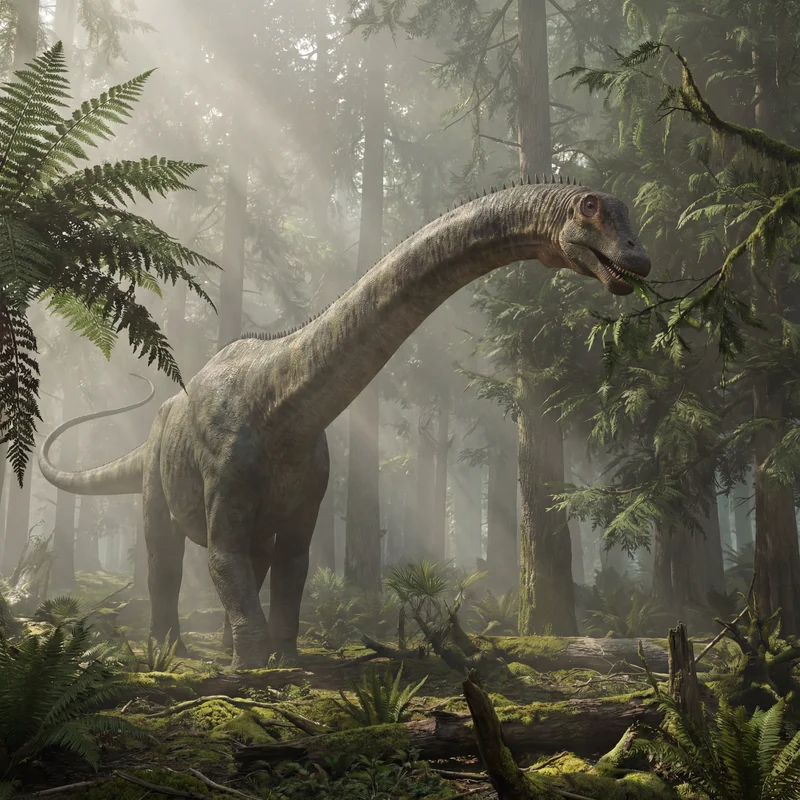 Diplodocus
Diplodocus · Jurassic Period · Herbivore
 Diplodocus
Diplodocus · Jurassic Period · Herbivore
 Diplodocus
Diplodocus · Jurassic Period · Herbivore
 Diplodocus
Diplodocus · Jurassic Period · Herbivore
 Diplodocus
Diplodocus · Jurassic Period · Herbivore
🔗Related Creatures
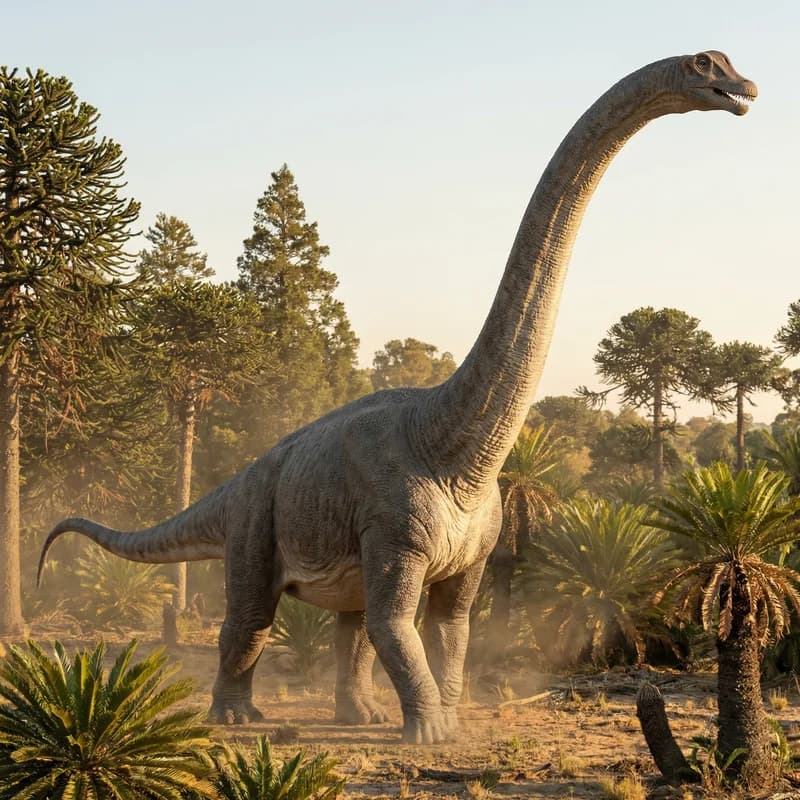
Barosaurus
Barosaurus lentus

Huayangosaurus
Huayangosaurus
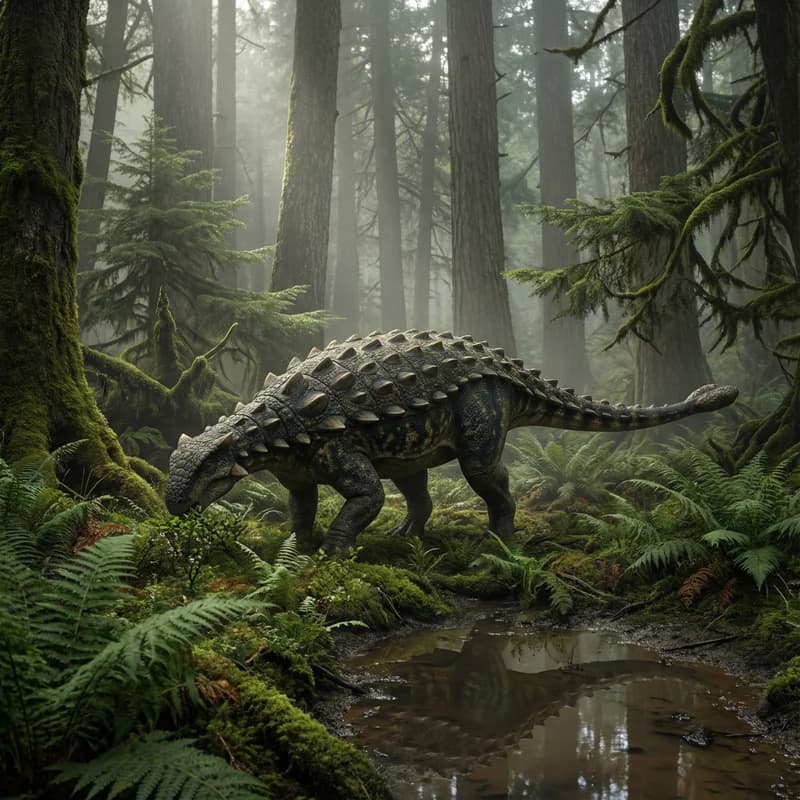
Dracopelta
Dracopelta zbyszewskii
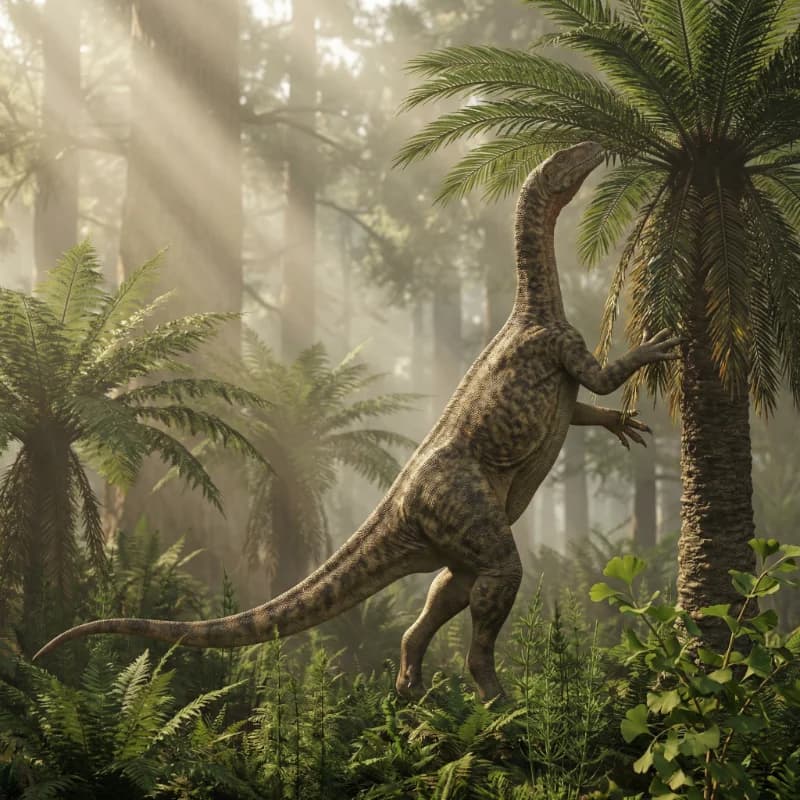
Massospondylus
Massospondylus carinatus
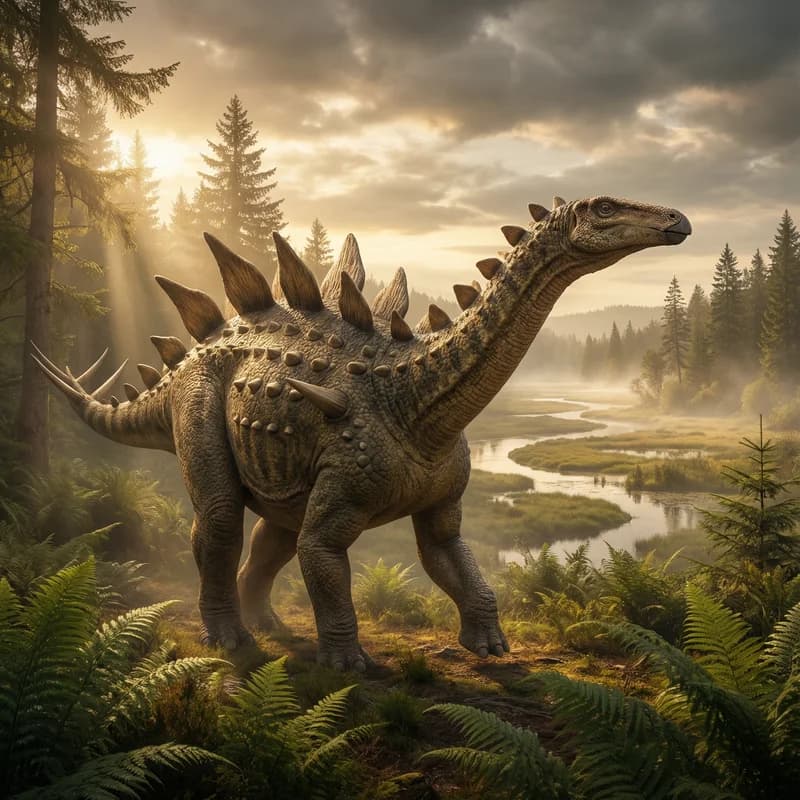
Miragaia
Miragaia longicollum
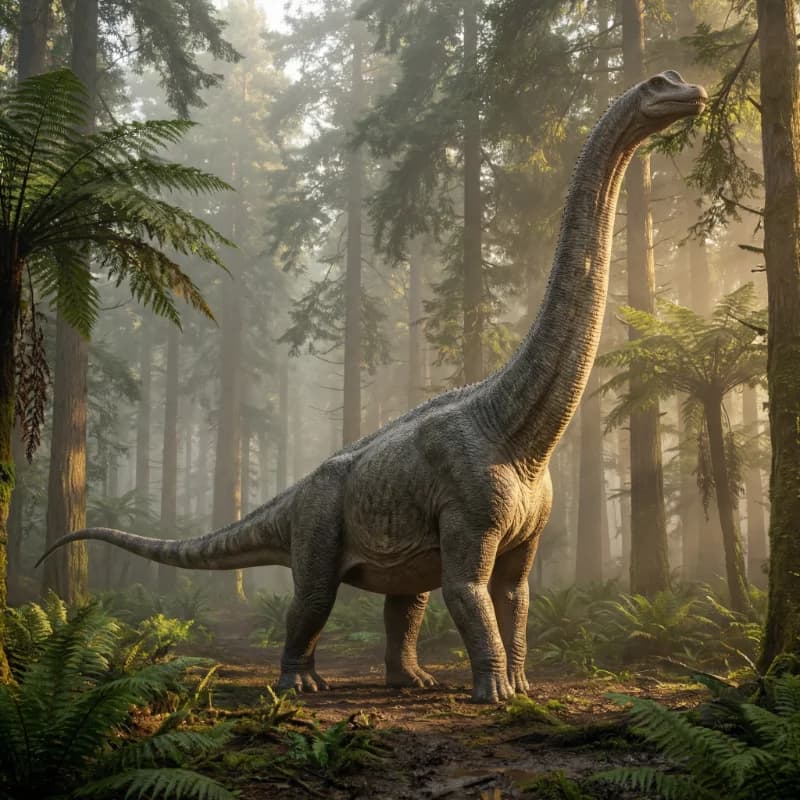
Vulcanodon
Vulcanodon karibaensis
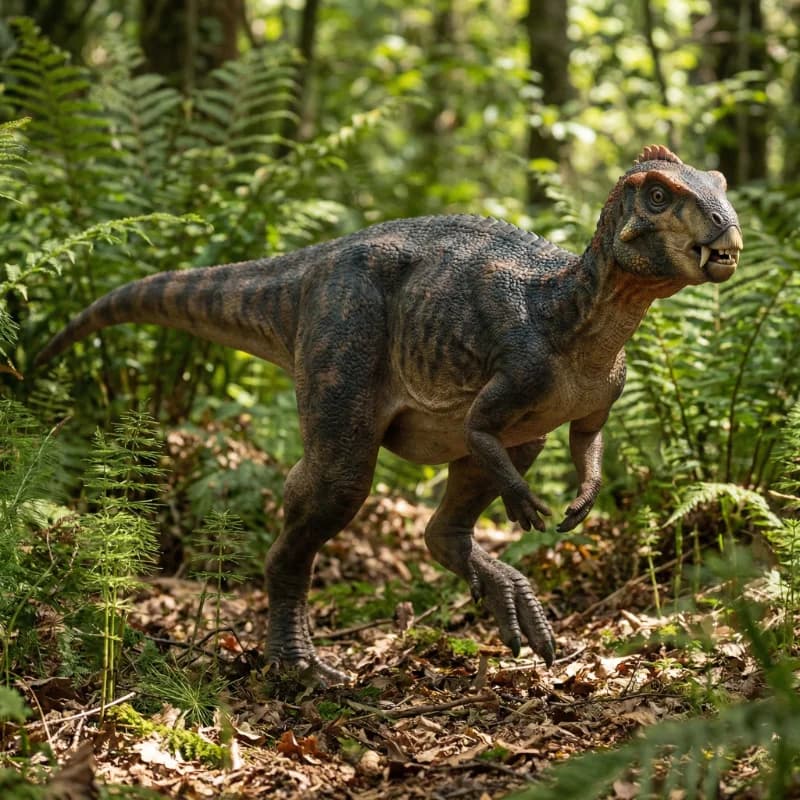
Heterodontosaurus
Heterodontosaurus tucki

Stegosaurus
Stegosaurus stenops