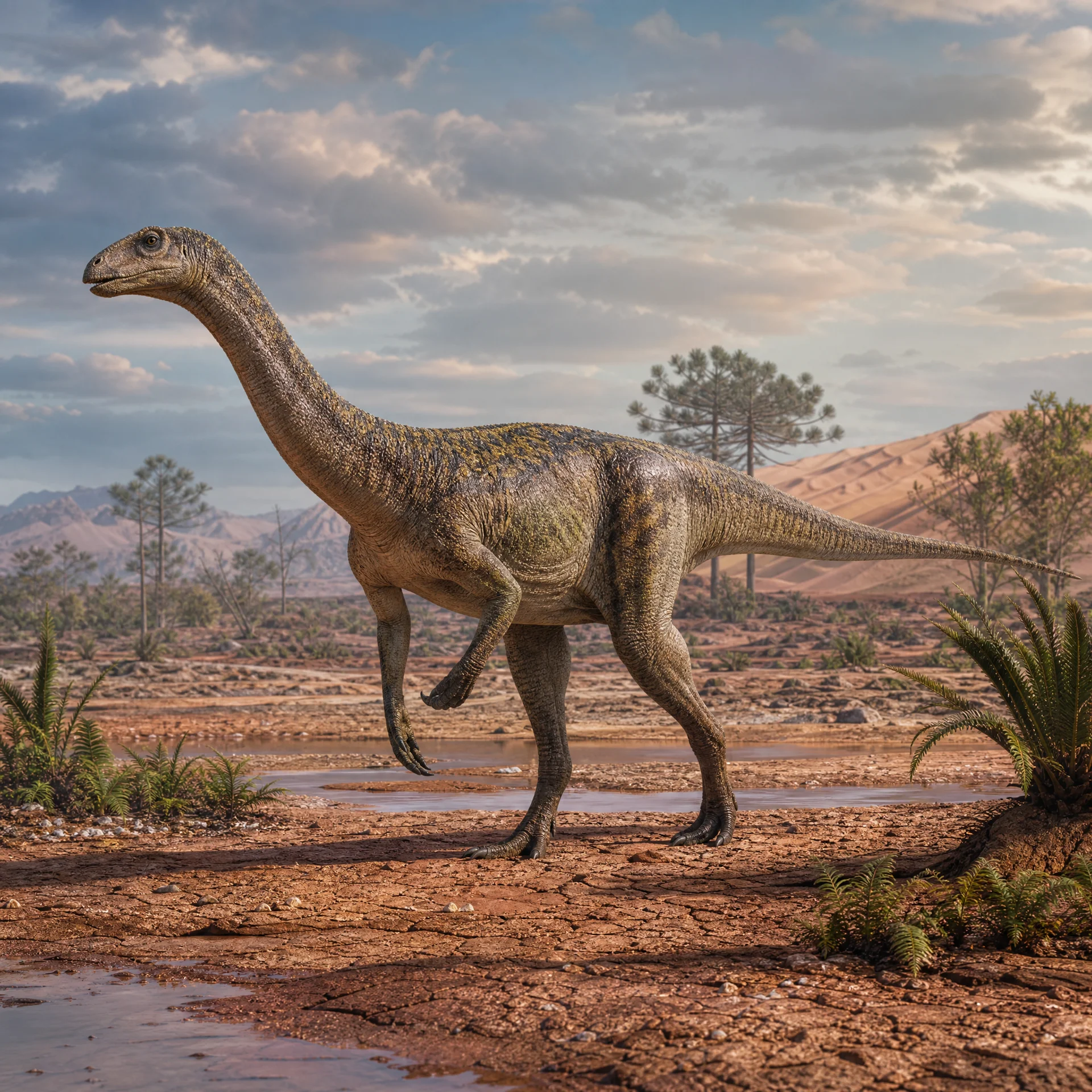
Massospondylus
Massospondylus carinatus
⏳ Jurassic Period🍽️ HerbivoreDinosaurs
Physical Characteristics
⏳
PeriodJurassic Period
🍽️
DietHerbivore
📏
Size4~6m
⚖️
Weight135~195kg
↕
Height1.5m
Classification
GEN
GenusMassospondylus
SP
SpeciesM. carinatus
Massospondylus carinatus
Massospondylus carinatus Owen, 1854 is a basal (non-sauropodan) sauropodomorph dinosaur from the Early Jurassic (Hettangian to Pliensbachian stages, ca. 200–183 Ma) of southern Africa. It is one of the first dinosaurs ever named from the Southern Hemisphere, having been described by Sir Richard Owen in 1854 based on a collection of 56 bones discovered near Harrismith in the Drakensberg mountains of South Africa. The genus name Massospondylus derives from the Greek μάσσων (massōn, "longer") and σπόνδυλος (spondylos, "vertebra"), meaning "longer vertebra"—a reference to Owen's observation that the vertebrae were proportionally longer than those of the extinct crocodilian Macrospondylus. The specific epithet carinatus refers to the pronounced keel (Latin carina) on the ventral surface of the vertebral centra.
Massospondylus is the most abundant dinosaur taxon from the upper Elliot Formation and lower Clarens Formation of South Africa, Lesotho, and Zimbabwe, with hundreds of specimens recovered from museum collections worldwide. At least 13 complete or nearly complete skulls are known, and the taxon preserves an exceptional ontogenetic series ranging from embryos to large adults—making it one of the most important early sauropodomorphs for understanding growth, development, and reproductive biology. In 2012, at least ten nests containing eggs (some with fully articulated embryos) were reported from Golden Gate Highlands National Park in South Africa, representing the oldest known dinosaurian nesting site (Reisz et al., 2012).
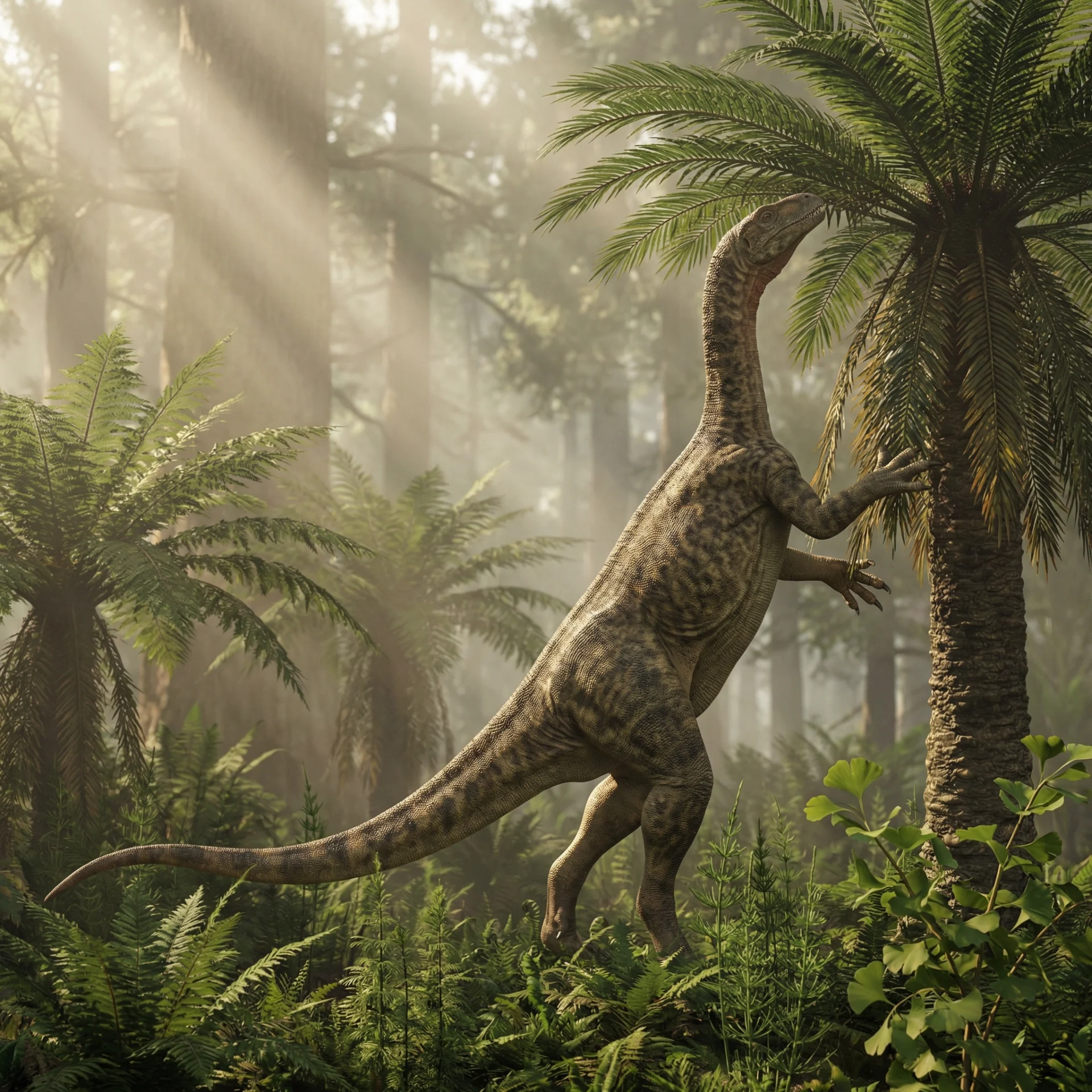
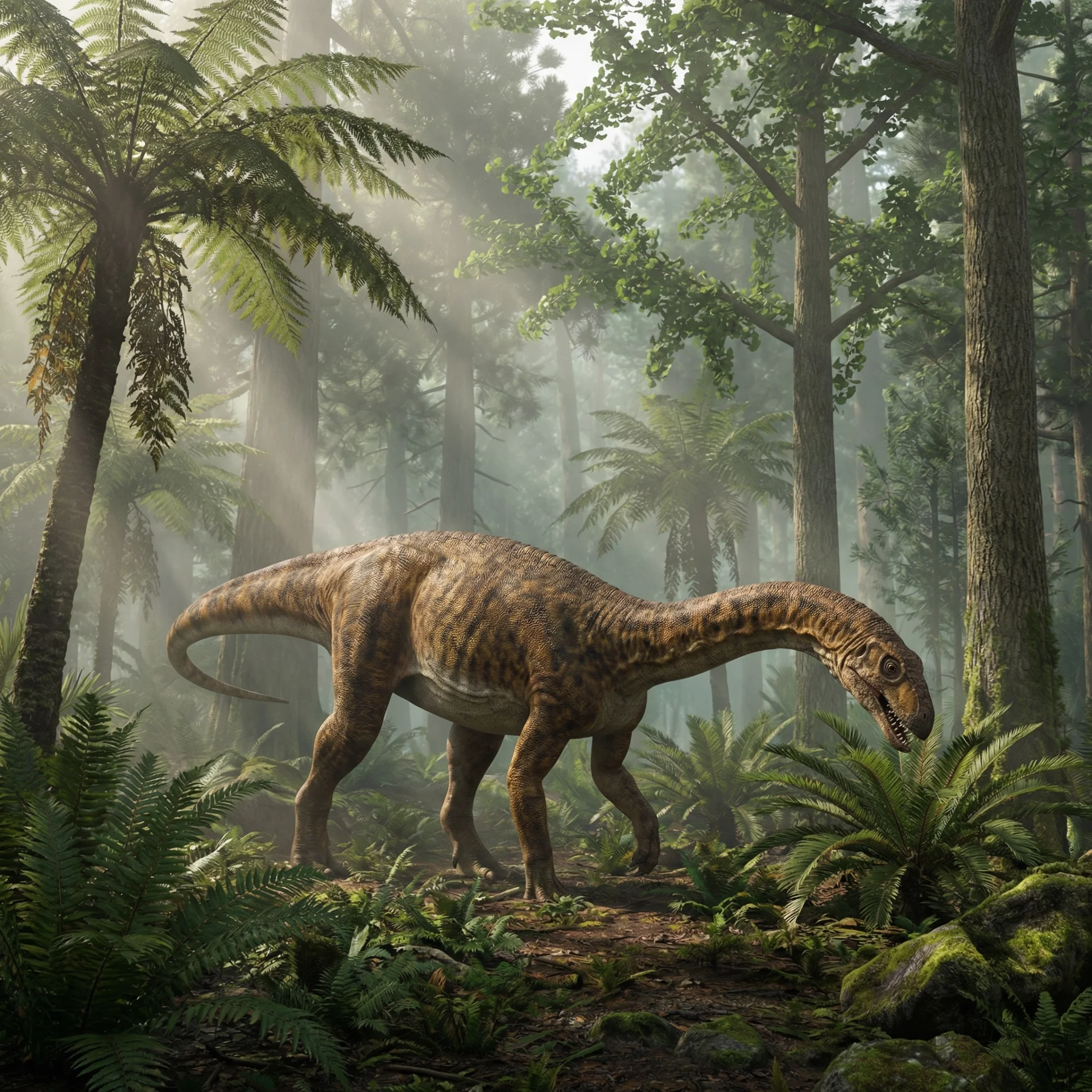
The animal was slender and lightly built, possessing a long neck and tail and a proportionally small head. Adult body length is estimated at approximately 4–6 m, with body mass around 135–195 kg (Seebacher, 2001; Paul, 2024; Barrett et al., 2019). A 2007 study by Bonnan and Senter demonstrated that adult Massospondylus was an obligate biped, as the forelimb was incapable of pronation, rendering habitual quadrupedal locomotion anatomically impossible. However, embryos and hatchlings show proportionally longer forelimbs and larger heads, suggesting a shift from quadrupedal to bipedal locomotion during ontogeny. Two species are currently recognized as valid: the type species M. carinatus Owen, 1854, and M. kaalae Barrett, 2009.
The genus name Massospondylus is a compound of the Greek μάσσων (massōn, "longer") and σπόνδυλος (spondylos, "vertebra"), translating to "longer vertebra." Owen chose this name in 1854 because the vertebrae were proportionally longer than those of the extinct crocodilian Macrospondylus (Owen, 1854). Notably, what Owen originally identified as caudal (tail) vertebrae were later reinterpreted as cervical (neck) vertebrae by Seeley (1895). The specific epithet carinatus derives from the Latin carina ("keel"), referring to the prominent ventral keel on the vertebral centra.
Massospondylus carinatus is a valid taxon currently placed within the family Massospondylidae (Massopoda, Sauropodomorpha). The type species is M. carinatus Owen, 1854, and the second valid species is M. kaalae Barrett, 2009, known from a single incomplete skull (SAM-PK-K1325) from the upper Elliot Formation near Herschel, South Africa. Over the past 150 years, more than seven species have been assigned to the genus, but only M. kaalae is currently regarded as valid alongside M. carinatus. Former species such as M. harriesi, M. schwarzi, and M. browni are now considered indeterminate sauropodomorphs (Galton & Upchurch, 2004). Previously synonymized taxa—including Leptospondylus capensis, Pachyspondylus orpenii, Aetonyx palustris, Gryponyx africanus, and Aristosaurus erectus—are also currently regarded as indeterminate sauropodomorphs rather than true synonyms.
Massospondylus is the most abundant and best-known basal sauropodomorph from the Early Jurassic of southern Africa, celebrated for its complete embryo-to-adult growth series and the oldest known dinosaurian colonial nesting site.
The temporal range of Massospondylus spans the Early Jurassic, from the Hettangian to the Pliensbachian, approximately 200–183 Ma. This age assignment is based on the stratigraphy, magnetostratigraphy, and detrital zircon geochronology of the upper Elliot Formation and lower Clarens Formation. Bordy et al. (2020) proposed a Hettangian–Sinemurian age for the upper Elliot Formation, with some detrital zircon ages ranging from approximately 202 to 192 Ma.
The primary fossil-bearing units are the upper Elliot Formation and lower Clarens Formation, both part of the Stormberg Group (Karoo Supergroup) of the main Karoo Basin in South Africa and Lesotho. The upper Elliot Formation is dominated by red to reddish-brown mudstones and siltstones with intercalated sandstone channel deposits. The Clarens Formation is characterized by buff-colored, fine-grained arenites. In Zimbabwe, Massospondylus fossils have also been recovered from the Forest Sandstone Formation (Cooper, 1981).
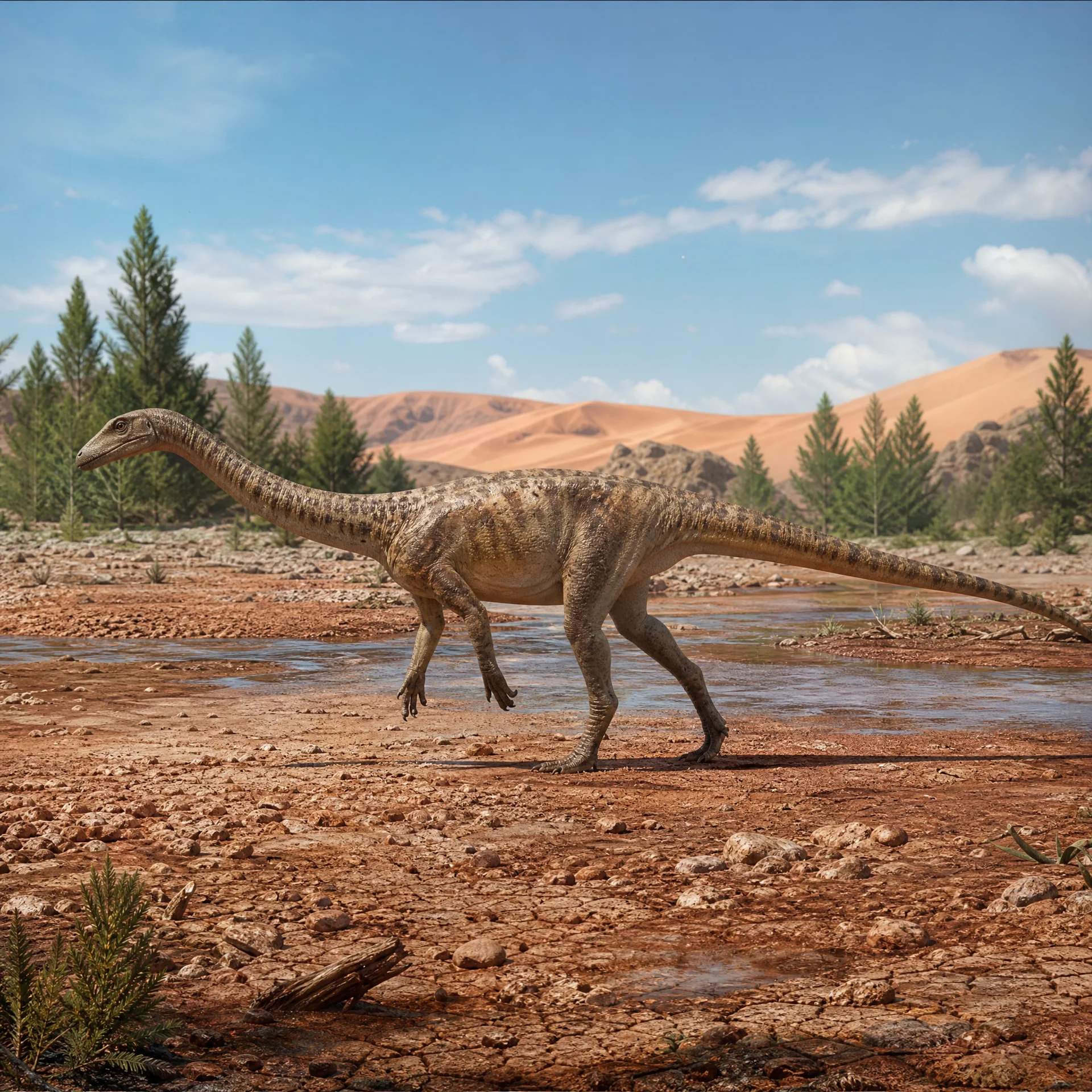
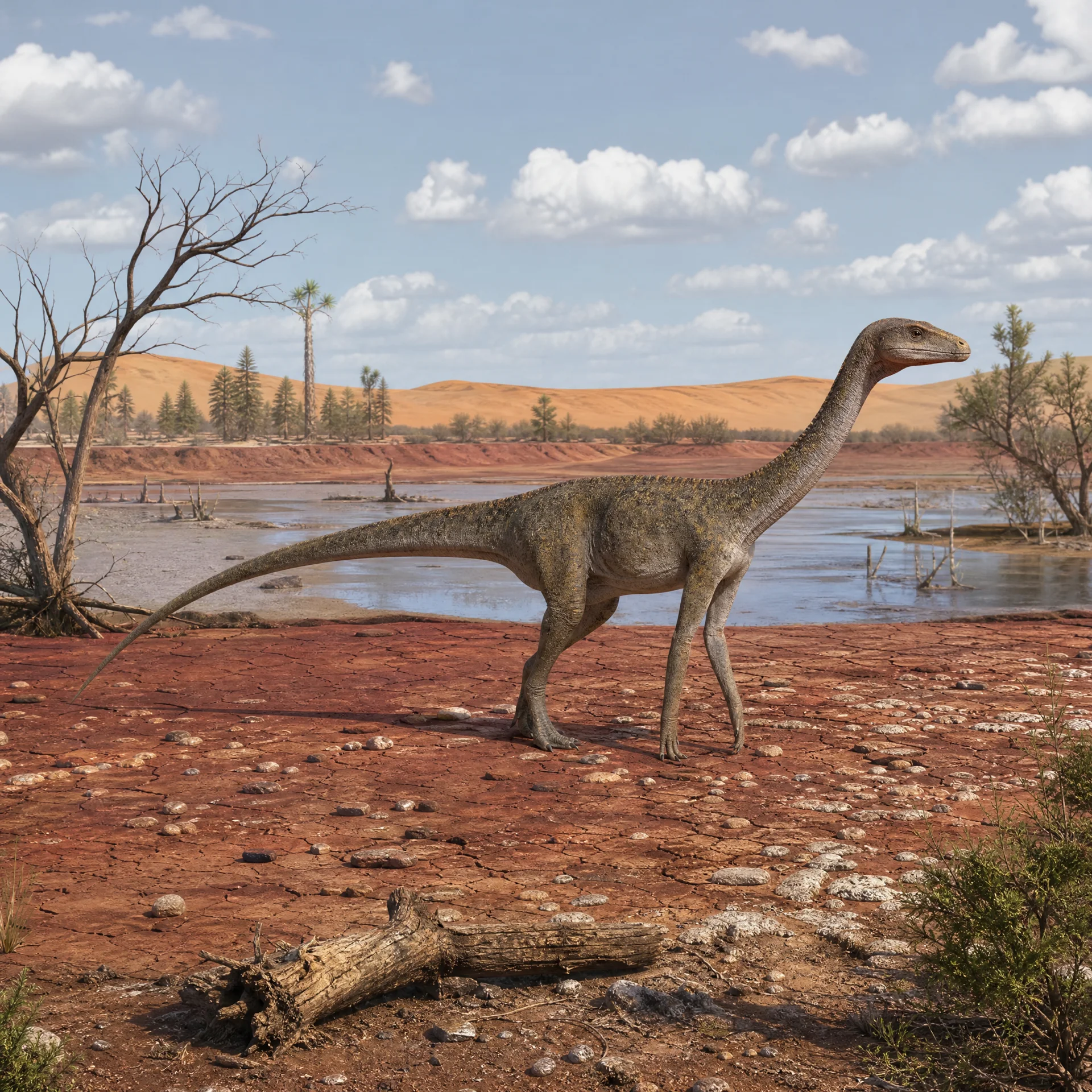
The upper Elliot Formation is interpreted as having been deposited in a semi-arid floodplain environment. The prevalence of red mudstones, desiccation cracks, and calcareous nodules (calcretes) indicates seasonally dry conditions. The Clarens Formation is partly interpreted as an aeolian (wind-blown) deposit, representing dune environments within an increasingly arid landscape (Bordy & Eriksson, 2015). The associated faunal assemblage includes early crocodylomorphs, cynodonts (e.g., Pachygenelus), turtles (Australochelys africanus), theropods (Dracovenator, Megapnosaurus), other basal sauropodomorphs (Ignavusaurus, Ngwevu, Arcusaurus), and ornithischians (Heterodontosaurus, Lesothosaurus), collectively representing a diverse Early Jurassic terrestrial biota.
Owen's 1854 original description was based on five damaged vertebrae (the syntype series) collected from an outcrop on the farm Beauchef Abbey in the Free State Province, South Africa. The material was donated to the Hunterian Museum of the Royal College of Surgeons in London. The original syntypes were destroyed during the German bombing of London on the night of 10–11 May 1941, during World War II. Only plaster casts and illustrations survive (Cooper, 1981; Yates & Barrett, 2010).
Because the original syntypes lack diagnostic features, Yates & Barrett (2010) designated BP/1/4934 as the neotype for M. carinatus. This specimen was discovered in March 1980 by Lucas Huma and James Kitching on the farm Bormansdrift near Clocolan, Free State Province, in the upper Elliot Formation. Nicknamed "Big Momma" (though its actual sex is unknown), BP/1/4934 includes a nearly complete skull and most of an articulated postcranial skeleton. It is the largest and most complete M. carinatus individual known, with an estimated total length of approximately 5 m (Barrett et al., 2019). The specimen is currently on public display at the Evolutionary Studies Institute (ESI), University of the Witwatersrand, Johannesburg.
| Specimen Number | Composition | Locality / Formation | Notes |
|---|---|---|---|
| BP/1/4934 (neotype) | Skull + near-complete postcranium | Clocolan, Free State; upper Elliot Fm. | Largest individual, ca. 5 m |
| BP/1/5241 | Skull (no mandible) + partial postcranium | Barkly East, Eastern Cape; upper Elliot Fm. | Second-largest skull; CT-based description (Chapelle et al., 2018) |
| BP/1/5347A | Egg clutch with fully articulated embryos | Golden Gate Highlands NP; upper Elliot Fm. | Earliest known in ovo dinosaur embryos (Reisz et al., 2005) |
| SAM-PK-K1325 | Incomplete, partially disarticulated skull | Herschel, Eastern Cape; upper Elliot Fm. | Holotype of M. kaalae (Barrett, 2009) |
| BP/1/4779 | Skull + partial postcranium | South Africa; upper Elliot Fm. | Endocast reconstruction (Sereno et al., 2007) |
Based on the descriptions of Chapelle et al. (2018) and Barrett et al. (2019), the cranial autapomorphic character combination for M. carinatus includes: (1) basipterygoid processes separated by an angle of less than 60° (also present in Coloradisaurus and Mamenchisaurus), and (2) a strongly curved jugal process of the ectopterygoid (also present in Leyesaurus and Pantydraco). Barrett et al. (2019) reported additional postcranial autapomorphies based on the neotype.
The loss of the original syntypes led to an overly broad concept of Massospondylus during much of the 20th century, particularly following Cooper's (1981) extensive synonymy. In the 21st century, Ignavusaurus (2010) and Ngwevu intloko (2019) have been separated as distinct taxa from material formerly assigned to M. carinatus, indicating that some referred specimens may require reassessment.
Massospondylus was a slender, lightly built, medium-sized sauropodomorph. Gregory S. Paul (2024) estimated body length at approximately 4.3 m with a body mass of 195 kg, while Seebacher (2001) calculated approximately 136.7 kg assuming a body length of 4 m. The neotype specimen BP/1/4934 represents a particularly large individual, estimated at around 5 m in total length by Barrett et al. (2019). Some sources cite a maximum length of up to 6 m, but this may be based on uncertain specimen assignments. Overall, Massospondylus had a slighter build than the otherwise similar but larger Plateosaurus.
The skull was relatively small, approximately half the length of the femur. A large external naris was positioned at the front of the skull, roughly half the size of the orbit. A triangular antorbital fenestra lay anterior to the orbit, and an hourglass-shaped infratemporal fenestra and a supratemporal fenestra were present posteriorly. The premaxilla bore 3–4 teeth, and additional teeth lined the maxilla. Compared to Plateosaurus, the skull of M. carinatus has a shorter, more convex snout and a sharper lacrimal angle (Chapelle et al., 2018).
The dentition of Massospondylus displays a heterodont pattern. The premaxillary teeth are sub-conical, while the maxillary and dentary teeth are leaf-shaped, somewhat broader, and bear coarse serrations (denticles). This heterodont condition is typical of early sauropodomorphs and has been interpreted as evidence for herbivorous or potentially omnivorous feeding habits.
Each forefoot bore a large, laterally compressed, pointed thumb claw (pollex ungual) that was likely used for defense, feeding, or intraspecific combat. Bonnan & Senter (2007) analyzed the antebrachial and carpal joint morphology of Massospondylus and concluded that pronation of the manus was impossible. This finding demonstrates that adult individuals could not have habitually walked on all fours, and that the commonly depicted quadrupedal posture in older restorations is anatomically inaccurate.
Adult Massospondylus is interpreted as an obligate biped (Bonnan & Senter, 2007). However, embryos and hatchlings display proportionally longer forelimbs and proportionally larger skulls relative to body size, suggesting that early ontogenetic stages may have been quadrupedal before transitioning to bipedality during growth (Reisz et al., 2005, 2010). This represents one of the earliest documented cases of an ontogenetic locomotor shift in dinosaurs.
The presence of a bird-like air sac system in early sauropodomorphs such as Massospondylus remains debated. Wedel (2007) inferred that sauropodomorphs, including forms like Massospondylus, likely possessed cervical and abdominal air sacs based on phylogenetic bracketing with theropods and sauropods. However, conspicuous pneumatic foramina have not been definitively identified in the cervical vertebrae of Massospondylus itself, so this interpretation remains hypothetical at present (Yates et al., 2012).
Massospondylus is generally interpreted as a herbivore, though the possibility that early sauropodomorphs were omnivorous has been discussed. Several lines of evidence inform dietary interpretations:
(1) Tooth morphology: The combination of sub-conical premaxillary teeth and leaf-shaped maxillary/dentary teeth (a heterodont condition) is consistent with herbivory, though the conical anterior teeth have been cited as possible evidence for occasional faunivory.
(2) Gastroliths: Small, polished pebbles have been recovered from the abdominal region of some Massospondylus specimens, interpreted as gastroliths (stomach stones) that may have aided in mechanically breaking down plant matter. However, Wings & Sander (2007) questioned whether gastroliths could have functioned as an effective gastric mill in dinosaurs.
(3) Jaw mechanics: Sues et al. (2004) suggested that the mandibular structure of Massospondylus may have permitted bilateral jaw movement suitable for processing plant material.
Massospondylus was the most abundant large herbivore in the upper Elliot Formation faunal assemblage (the Massospondylus Assemblage Zone). Contemporary predators included the dilophosaurid theropod Dracovenator regenti (Yates, 2005) and the small theropod Megapnosaurus (=Syntarsus). Small ornithischians such as Heterodontosaurus and Lesothosaurus coexisted in the same deposits, along with early crocodylomorphs, cynodonts, and turtles.
In 1976, James Kitching discovered the first Massospondylus eggs and embryos near Rooidraai in Golden Gate Highlands National Park (Kitching, 1979). Reisz et al. (2005) described fully articulated embryos (BP/1/5347A), which at the time constituted the oldest known dinosaurian embryos in the fossil record. Subsequent excavations by Reisz and colleagues (2012) revealed at least ten egg clutches across four fossiliferous horizons at the same site, establishing it as the oldest known dinosaurian colonial nesting site (ca. 190 Ma). Each clutch contained up to 34 closely packed, round eggs. The embryos showed proportionally large heads, long forelimbs, and a quadrupedal posture, indicating dramatically different body proportions compared to adults. The evidence for repeated site fidelity (colonial nesting at the same location over time) and the apparently altricial state of hatchlings have led to speculation about parental care, although this remains hypothetical.
Confirmed occurrences of Massospondylus are restricted to southern Africa: the Free State, Eastern Cape, and Limpopo provinces of South Africa; Lesotho; and Zimbabwe. Material previously assigned to Massospondylus from the Kayenta Formation of Arizona (USA), the Maleri Formation of India, and the Canon del Colorado Formation of Argentina has been reassigned to other genera—Sarahsaurus (USA), Adeopapposaurus (Argentina)—or treated as indeterminate.
During the Early Jurassic, southern Africa formed part of the supercontinent Gondwana. The present-day South African fossil localities would have been situated at approximately 40–50°S paleolatitude, consistent with a seasonal warm to semi-arid climate. The red beds and desiccation features of the upper Elliot Formation support this interpretation.
Massospondylus is placed within the family Massospondylidae (Massopoda, Sauropodomorpha). Chapelle et al. (2018) conducted a cladistic analysis using a modified version of the Yates et al. (2010) data matrix (353 characters, including 120 craniodental characters), adding 27 new cranial characters and deleting five existing ones. In this analysis, Massospondylus grouped with Lufengosaurus, Coloradisaurus, Adeopapposaurus, and Leyesaurus within Massospondylidae. Muller et al. (2021), in a large-scale analysis of 79 taxa, also recovered Massospondylus as a stable member of Massospondylidae within Massopoda.
Higher-level classification: Dinosauria > Saurischia > Sauropodomorpha > Bagualosauria > Plateosauria > Massopoda > Massospondylidae > Massospondylus
Early sauropodomorph phylogeny remains in flux, and some analyses disagree on the monophyly and composition of Massospondylidae. Ignavusaurus was proposed as a synonym of Massospondylus by Yates et al. (2011) but was recovered as a distinct massospondylid taxon in Chapelle et al. (2018, 2019). Ngwevu intloko was separated from M. carinatus as a new genus and species in 2019 (Chapelle et al., 2019), based on a skull previously referred to Massospondylus.
(1) Confirmed: A basal sauropodomorph from the Early Jurassic (upper Elliot to lower Clarens formations) of southern Africa. An embryo-to-adult growth series exists. Adults were obligate bipeds.
(2) Probable: Medium-sized, lightly built animal approximately 4–5 m long and 135–195 kg in mass. Primarily herbivorous, with gastroliths possibly aiding digestion.
(3) Hypothetical: Possible omnivory. Parental care behavior. Presence of a bird-like air sac system. Ontogenetic shift from quadrupedal to bipedal locomotion in juveniles.
Massospondylus is frequently depicted as a quadrupedal animal in popular media (games, documentaries), but scientific evidence demonstrates that adults were obligate bipeds (Bonnan & Senter, 2007). Body mass is sometimes exaggerated in popular sources; in reality, Massospondylus was considerably lighter than Plateosaurus. The term "prosauropod" is still used in some popular literature but is now considered to represent a paraphyletic grade rather than a natural (monophyletic) group by most researchers.
| Taxon | Age | Locality | Body Length | Body Mass | Diet | Classification |
|---|---|---|---|---|---|---|
| Massospondylus carinatus | Early Jurassic (~200–183 Ma) | South Africa, Lesotho, Zimbabwe | 4–5 m | ~135–195 kg | Herbivore/omnivore(?) | Massospondylidae |
| Plateosaurus engelhardti | Late Triassic (~214–204 Ma) | Europe (Germany, Switzerland) | 5–10 m | ~600–4,000 kg | Herbivore | Plateosauridae |
| Lufengosaurus huenei | Early Jurassic (~200–190 Ma) | China (Yunnan) | ca. 6 m | >200 kg | Herbivore | Massospondylidae |
| Adeopapposaurus mognai | Early Jurassic | Argentina (San Juan) | ca. 3 m | Unknown | Herbivore | Massospondylidae |
| Sarahsaurus aurifontanalis | Early Jurassic | USA (Arizona) | ca. 3–4 m | Unknown | Herbivore | Massospondylidae |
Chinsamy (1993) conducted pioneering bone histology studies on Massospondylus long bones, identifying lines of arrested growth (LAGs) that indicate the animal grew steadily throughout its life rather than exhibiting the rapid initial growth followed by a plateau characteristic of modern birds. In 2022, Chapelle and colleagues performed a multielement osteohistological study on 27 Massospondylus carinatus individuals, revealing that a cyclical woven-parallel bone tissue complex was the predominant growth pattern during early to mid-ontogeny. These studies establish Massospondylus as a key taxon for understanding the growth physiology of early dinosaurs.
The genus name Massospondylus means 'longer vertebra,' but the vertebrae Owen originally identified as tail bones turned out to be neck vertebrae.
The original type specimens were destroyed during the London Blitz in 1941—only plaster casts survive today.
The neotype specimen BP/1/4934 is nicknamed 'Big Momma,' though its actual sex remains unknown.
Massospondylus nests discovered at Golden Gate Highlands National Park in 2012 represent the oldest known dinosaurian colonial nesting site, dating to approximately 190 million years ago.
Massospondylus embryos had dramatically different body proportions from adults—with proportionally much larger heads and longer forelimbs—suggesting they walked on all fours before switching to two-legged locomotion as they grew.
Massospondylus was one of the first dinosaurs ever named from the Southern Hemisphere, with a research history spanning more than 170 years since its 1854 description.
Small polished pebbles (gastroliths) found in the abdominal region of some specimens suggest Massospondylus swallowed stones to help digest tough plant material.
A 2007 anatomical study proved that Massospondylus could not pronate its hands (turn palms downward), debunking decades of quadrupedal restorations.
At least 13 complete or nearly complete skulls of Massospondylus are known, providing a rare opportunity to study cranial changes from embryo to adult in a single dinosaur species.
CT scanning of a Massospondylus skull (Chapelle & Choiniere, 2018) produced a freely available 3D digital model, allowing anyone to 3D-print the skull of this 200-million-year-old dinosaur.
Fossils once attributed to Massospondylus from Arizona, India, Argentina, and even China have all been reassigned to other genera, restricting its confirmed range to southern Africa.
Each Massospondylus egg clutch at the Golden Gate nesting site contained up to 34 tightly packed round eggs, and the presence of nests at multiple stratigraphic levels demonstrates that the animals returned to the same site over generations.
The first fossils of Massospondylus were found in 1853–1854 by government surveyor Joseph Millard Orpen on a farm in the Drakensberg mountains near Harrismith, South Africa. The material was described by Sir Richard Owen in 1854, making Massospondylus one of the first dinosaurs named from the Southern Hemisphere.
A 2007 study by Bonnan and Senter demonstrated that adult Massospondylus was an obligate biped—the forelimb anatomy made pronation (turning the palm downward) impossible, ruling out habitual quadrupedal locomotion. However, embryos and hatchlings had proportionally longer forelimbs, suggesting they may have walked on all fours before transitioning to bipedality as they grew.
Adult body length is generally estimated at approximately 4–5 m, with body mass around 135–195 kg. The neotype specimen BP/1/4934 ('Big Momma') is the largest known individual, estimated at about 5 m by Barrett et al. (2019). Seebacher (2001) calculated approximately 136.7 kg for a 4 m individual, while Paul (2024) estimated 195 kg.
Massospondylus is primarily interpreted as a herbivore, though some researchers have suggested early sauropodomorphs may have been omnivorous. Evidence includes heterodont dentition (conical premaxillary teeth and leaf-shaped cheek teeth), gastroliths (stomach stones) found in some specimens, and jaw mechanics consistent with plant processing (Sues et al., 2004).
Yes. In 1976, James Kitching discovered the first eggs and embryos near Rooidraai in Golden Gate Highlands National Park, South Africa. Reisz et al. (2005) described fully articulated embryos, and by 2012 at least ten egg clutches had been found at the same site across four fossiliferous horizons, making it the oldest known dinosaurian colonial nesting site (ca. 190 Ma).
Owen's 1854 syntype vertebrae were housed in the Hunterian Museum at the Royal College of Surgeons in London. On the night of 10–11 May 1941, during World War II, the museum was directly hit by a German bomb, destroying the vast majority of its comparative anatomy collection—including the Massospondylus type material. Only plaster casts and illustrations survive. In 2010, Yates & Barrett designated BP/1/4934 as a replacement neotype.
No. Massospondylus is not a direct ancestor of Sauropoda but belongs to the broader clade Sauropodomorpha, specifically within the family Massospondylidae—a relatively basal position within the lineage that ultimately gave rise to sauropods. It is an important taxon for understanding the evolutionary transition toward sauropod body plans.
Two species are currently recognized: the type species M. carinatus Owen, 1854, and M. kaalae Barrett, 2009. Over 150 years, more than seven species were assigned to the genus, but all others have been reclassified as indeterminate sauropodomorphs or transferred to other genera.
Each forefoot bore a large, laterally compressed, pointed pollex (thumb) claw. Proposed functions include defense against predators, food gathering (pulling down branches), and intraspecific combat. The precise function is difficult to determine from the fossil record alone, and multiple uses may have been possible.
The Massospondylus Assemblage Zone includes the dilophosaurid predator Dracovenator regenti, the small theropod Megapnosaurus, ornithischians Heterodontosaurus and Lesothosaurus, and other basal sauropodomorphs such as Ignavusaurus, Ngwevu intloko, and Arcusaurus. Non-dinosaurian contemporaries included early crocodylomorphs, cynodonts, and turtles.
5images