Ceratosaurus
Jurassic Period Carnivore Creature Type
Ceratosaurus nasicornis
Scientific Name: "Ceratosaurus: Greek keras (horn) + sauros (lizard) = 'horned lizard'; nasicornis: Latin nasus (nose) + cornu (horn) = 'nose-horned'"
Local Name: Ceratosaurus
Physical Characteristics
Discovery
Habitat

Ceratosaurus nasicornis Marsh, 1884 is a medium-sized carnivorous theropod dinosaur from the Late Jurassic (Kimmeridgian–Tithonian, approximately 157–145 Ma) of North America and Europe. It belongs to the order Saurischia, suborder Theropoda, and is the name-bearing genus of the clade Ceratosauria. Ceratosaurus is readily distinguished from all other contemporary theropods by a prominent ridge-like horn on the midline of the snout formed by the fused nasal bones, a pair of smaller bony ridges above the eyes formed by the lacrimal bones, and a row of postcranial osteoderms (dermal armor) along the midline of the body — the only such armor confirmed in any theropod dinosaur.
The holotype (USNM 4735) was excavated in 1883–1884 by farmer Marshall Parker Felch from the Felch Quarry in the Garden Park area near Cañon City, Colorado, in strata of the Morrison Formation. Othniel Charles Marsh described the nearly complete, articulated skeleton — including the skull — as the new genus and species Ceratosaurus nasicornis in 1884, making it the most complete theropod known from North America at the time. Subsequently, additional specimens have been recovered from the Cleveland-Lloyd Dinosaur Quarry in Utah, the Fruita Paleontological Area in Colorado, and the Lourinhã Formation of Portugal, among other localities.
The holotype individual is estimated at 5.3–5.7 m in total length, with body mass estimates ranging from approximately 418 to 670 kg depending on the method used. Larger individuals, such as specimens UMNH VP 5278 and MWC 1, reached an estimated total length of around 7 m, with body mass up to approximately 1,240 kg (Sombathy et al., 2025). A 2025 osteohistological study revealed that Ceratosaurus grew on average nine times faster than other ceratosaurians, suggesting a distinctive life history strategy. Ceratosaurus shared its habitat with other large theropods including Allosaurus and Torvosaurus, but was considerably rarer in the fossil record, suggesting ecological niche partitioning among these predators.
Overview
Name and Etymology
The genus name Ceratosaurus is derived from the Greek words κέρας/κέρατος (keras/keratos, meaning 'horn') and σαῦρος (sauros, meaning 'lizard'), thus translating as 'horned lizard.' The specific epithet nasicornis comes from the Latin nasus ('nose') and cornu ('horn'), meaning 'nose-horned,' in direct reference to the animal's most conspicuous feature: the prominent horn on the snout. The name was coined by Marsh in his 1884 original description (Marsh, 1884).
Taxonomic Status
Ceratosaurus belongs to the order Saurischia (lizard-hipped dinosaurs), suborder Theropoda. It is not a member of Ornithischia (bird-hipped dinosaurs), as was erroneously stated in some prior accounts. It is the name-giving genus of Ceratosauria, one of the major basal clades of theropods, and is placed within the family Ceratosauridae alongside Genyodectes from Argentina (Rauhut, 2004; Pol & Rauhut, 2012). In 2000, Madsen & Welles described two additional species, C. dentisulcatus and C. magnicornis, based on fragmentary specimens from Utah and Colorado. However, most subsequent workers regard these as junior synonyms of C. nasicornis, interpreting the anatomical differences as ontogenetic or individual variation (Rauhut, 2003; Carrano & Sampson, 2008; Sombathy et al., 2025).
Scientific Significance
Ceratosaurus is a key taxon for understanding theropod diversity in the Late Jurassic Morrison Formation ecosystem. It is the only theropod genus known to possess postcranial osteoderms, exhibits an unusually rapid growth rate among ceratosaurians, and possesses distinctive proportionally very long, blade-like teeth that set it apart from sympatric predators. These features make Ceratosaurus central to studies of predatory ecology, niche partitioning, and ceratosaurian evolution.
Temporal Range, Stratigraphy, and Paleoenvironment
Temporal Range
Ceratosaurus fossils are known from Kimmeridgian through Tithonian strata, spanning approximately 157 to 145 Ma. Within the Morrison Formation, specimens have been recovered from stratigraphic zones 2 and 4–6 (Foster, 2020). The Portuguese specimen from the Lourinhã Formation derives from the lower levels of the Porto Novo Member, interpreted as late Kimmeridgian in age (Malafaia et al., 2015).
Formation and Lithology
The primary host unit, the Morrison Formation, is a widespread Upper Jurassic terrestrial sedimentary sequence across the western United States, consisting predominantly of sandstone, mudstone, and minor limestone. The holotype was recovered from hard sandstone at the Felch Quarry in Garden Park, Colorado (Gilmore, 1920). The Cleveland-Lloyd Dinosaur Quarry lies within the Brushy Basin Member, with the Agate Basin Quarry similarly placed at approximately 152–151 Ma (Maidment & Muxworthy, 2019). The Portuguese specimen (ML 352 / SHN(JJS)-65) was found in yellow to brown fine-grained sandstone interpreted as fluvial floodplain deposits of the Lourinhã Formation (Malafaia et al., 2015).
Depositional Environment and Paleoclimate
The Morrison Formation preserves a mosaic of fluvial (channel and floodplain), lacustrine, and minor eolian environments, deposited under semiarid to sub-humid conditions with marked wet and dry seasons. Associated fauna includes large sauropods (Diplodocus, Camarasaurus, Brachiosaurus), stegosaurs (Stegosaurus), ornithopods (Camptosaurus, Dryosaurus, Nanosaurus), large theropods (Allosaurus, Torvosaurus), crocodylomorphs, turtles, and lungfish, reflecting a diverse terrestrial–freshwater ecosystem.
Specimens and Diagnostic Features
Key Specimens
| Specimen | Locality | Preserved Elements | Notes |
|---|---|---|---|
| USNM 4735 (holotype) | Garden Park, Colorado | Nearly complete articulated skeleton with skull | Marsh, 1884; Gilmore, 1920 redescription |
| UMNH VP 5278 | Cleveland-Lloyd Quarry, Utah | Disarticulated partial skeleton with skull | Among the largest known individuals; Madsen & Welles, 2000 |
| MWC 1 | Fruita, Colorado | Fairly complete articulated skeleton with skull | Subadult; Madsen & Welles, 2000 |
| BYU 881-12893 | Agate Basin Quarry, Utah | Anterior skull, pelvic elements, vertebrae | Carrano & Sampson, 2008 |
| ML 352 / SHN(JJS)-65 | Valmitão Beach, Portugal | Femora, tibiae, partial fibula, teeth | Mateus et al., 2006; Malafaia et al., 2015 |
Diagnosis
Diagnostic features of Ceratosaurus include (following Carrano & Sampson, 2008): fused nasal bones forming a narrow, rounded midline horn core with a median oval groove posteriorly; only three premaxillary teeth per side (fewer than most other theropods); proportionally very long, blade-like maxillary teeth; a row of postcranial osteoderms along the body midline; and a pubis with a large, rounded distal expansion.
Limitations of the Fossil Record
The holotype was heavily distorted during fossilization due to lateral compression within hard sandstone, limiting three-dimensional reconstruction of the skull and vertebral column. Significant elements are missing, including the humeri, most of the right arm, left leg, and feet (Gilmore, 1920). The MWC 1 skull is also laterally compressed, and UMNH VP 5278 was found disarticulated, adding complexity to anatomical interpretation.
Morphology and Functional Anatomy
Body Size
Ceratosaurus was a medium-sized bipedal theropod. Body size estimates for the holotype (USNM 4735) range from approximately 5.3 to 5.7 m in total length (Gilmore, 1920; Paul, 2010), with body mass variously estimated at 418 kg (Benson et al., 2014), 524 kg, or 670 kg (Paul, 2010). Larger specimens significantly exceeded this size: UMNH VP 5278 was estimated at approximately 7 m long, with mass estimates ranging from 452 to 1,132 kg across various studies (Paul, 2010; Benson et al., 2014; Sombathy et al., 2025). In 2025, Sombathy and colleagues estimated MWC 1 at 1,240 kg (95% prediction interval: 930–1,550 kg), making it the largest known Ceratosaurus individual. The Portuguese specimen (ML 352) was estimated at approximately 6 m long and 600 kg (Mateus et al., 2006).
Skull and Dentition
The skull was relatively large for its body size, measuring approximately 55 cm from snout tip to occipital condyle in the holotype (Gilmore, 1920). The MWC 1 skull was somewhat more elongated, estimated at 60 cm long and 16 cm wide (Madsen & Welles, 2000). The most distinctive cranial feature is the prominent midline horn formed by the fused nasal bones: in the holotype, the bony horn core measures approximately 13 cm long, 2 cm wide at the base, and 7 cm tall (Gilmore, 1920). In life, a keratinous sheath would have made the horn appear larger.
The premaxilla contained only three teeth per side, unusually few for a theropod. The maxilla bore up to 15 blade-like teeth per side in the holotype, with the first eight being exceptionally long and robust. In UMNH VP 5278, tooth crowns reached up to 9.3 cm in length — matching the minimum height of the lower jaw. Such proportionally long teeth are, among theropods, otherwise known only from the possibly related Genyodectes (Rauhut, 2004). This contrasts markedly with abelisaurids, which have very short tooth crowns.
Function of the Nasal Horn and Osteoderms
Marsh (1884) initially interpreted the nasal horn as a powerful offensive and defensive weapon, and Gilmore (1920) concurred. However, modern consensus rejects this interpretation. Norman (1985) suggested the horn may have functioned in intraspecific combat for breeding rights, while Rowe & Gauthier (1990) proposed that it was used solely for visual display and played no role in physical confrontation. A display function is now the prevailing view, and if so, the horn may have been brightly colored in life (Paul, 1988). A similar display function has been proposed for the midline row of osteoderms (Rowe & Gauthier, 1990).
Forelimbs and Hands
The forelimbs were slenderer than those of Allosaurus, and the hand retained four digits (unlike the three digits of most derived theropods), with digit IV being reduced. Despite the short metacarpals and phalanges, analysis of the articular surfaces suggests that the hand retained grasping function (Carrano & Choiniere, 2016). This contrasts with the severely atrophied arms of abelisaurids such as Carnotaurus.
Tail
The tail comprised approximately 50 caudal vertebrae and accounted for about half the animal's total length. It was deep from top to bottom due to tall neural spines and elongated chevrons. The massive caudofemoralis muscle attached along the tail would have pulled the thigh backward during locomotion, generating forward thrust. Although some authors (Bakker & Bir, 2004) cited the deep tail as evidence for a semi-aquatic lifestyle, this interpretation is not widely accepted (see Feeding Ecology below).
Feeding Ecology and Behavior
Feeding Mechanics
Ceratosaurus would have subdued prey primarily with its jaws rather than its proportionally small forelimbs (Paul, 2010; Snively & Russell, 2007). Henderson (1998) compared the elongate skull to that of a dog: the narrow construction concentrated bite force over a small area, making it suited for quick slashing bites. Snively & Russell (2007) reconstructed the neck musculature and found that upward and lateral head movements were powerful, with short moment arms of most neck muscles indicating rapid striking capability — analogous to the feeding behavior of the extant Komodo dragon.
In 2026, Oswald & Curtice compared Ceratosaurus dentition morphometrically to other theropods and saber-toothed felids (Machairodontinae). They proposed that the exceptionally long teeth functioned analogously to sabertooth canines, specialized for quickly dispatching relatively small prey such as Nanosaurus, Dryosaurus, Camptosaurus, and juvenile sauropods.
Ecological Niche and Niche Partitioning
Within the Morrison Formation, Ceratosaurus coexisted with Allosaurus and Torvosaurus but was considerably rarer. This disparity in abundance suggests ecological niche partitioning among these large predators. Ceratosaurus was smaller than both Allosaurus and Torvosaurus, and its distinctive blade-like teeth may have been specialized for smaller prey items. At the Mygatt-Moore Quarry in Colorado, an unusually high frequency of theropod bite marks on herbivore bones includes marks attributable to both Allosaurus and Ceratosaurus, with bite marks on Allosaurus bones suggesting scavenging behavior, possibly by Ceratosaurus or Torvosaurus (Drumheller et al., 2020).
The Semi-Aquatic Hypothesis
Bakker & Bir (2004) proposed that Ceratosaurus was a semi-aquatic predator that hunted fish, crocodylomorphs, and turtles, citing the deep tail and tooth morphology as evidence. However, Yun (2019) critically re-evaluated this hypothesis and concluded that evidence supporting a semi-aquatic lifestyle was insufficient. Oswald & Curtice (2026) further demonstrated through morphometric analysis that Ceratosaurus teeth are significantly dissimilar to those of spinosaurids (the most-cited semi-aquatic theropods), providing additional evidence against the hypothesis. The semi-aquatic lifestyle interpretation is not the mainstream view in current paleontology.
Brain and Senses
Sanders & Smith (2005) CT-scanned the well-preserved braincase of specimen MWC 1, allowing reconstruction of the inner ear, gross brain regions, and cranial sinuses. They found that Ceratosaurus possessed a brain cavity typical for basal theropods, similar to that of Allosaurus. The olfactory bulb impressions were well preserved but smaller than those of Tyrannosaurus, which is thought to have had a particularly acute sense of smell. The orientation of the lateral semicircular canal indicated that the head and neck were held horizontally in neutral posture. The enlarged anterior semicircular canal is a feature generally associated with bipedal locomotion.
Distribution and Paleogeography
Geographic Range
Confirmed Ceratosaurus fossils are restricted to the Morrison Formation of the western United States (Colorado, Utah, Wyoming) and the Lourinhã Formation of Portugal. Major US localities include the Felch Quarry (Garden Park), Cleveland-Lloyd Dinosaur Quarry, Fruita Paleontological Area, Agate Basin Quarry, Dinosaur National Monument, Como Bluff, Dry Mesa Quarry, and Mygatt-Moore Quarry.
Fragmentary remains from the Tendaguru Formation of Tanzania, the Tacuarembó Formation of Uruguay, and Moutier, Switzerland, have at various times been referred to Ceratosaurus, but most current workers do not accept genus-level assignment for any of this material (Rauhut, 2011; Carrano et al., 2012).
Paleogeographic Context
During the Late Jurassic, North America and Europe were not yet fully separated by the expanding Atlantic Ocean, and intermittent land bridges may have facilitated faunal interchange. The striking similarity between the Morrison Formation and Lourinhã Formation faunas — both containing Ceratosaurus, Allosaurus, Torvosaurus, and various sauropods — reflects this paleogeographic connection. Paleomagnetic data place the Ceratosaurus habitat at approximately 12.4°N latitude, indicating a subtropical setting.
Phylogeny and Classification
Position Within Ceratosauria
Marsh (1884) erected both Ceratosauridae and Ceratosauria to accommodate the genus. However, these groupings were not widely accepted for nearly a century, during which Ceratosaurus was variously placed in Deinodontidae, Megalosauridae, Carnosauria, and other groups. The rediscovery of Ceratosauria as a natural group came with cladistic analyses in the 1980s and the discovery of abelisaurids in South America.
Current phylogenetic analyses (Carrano & Sampson, 2008; Pol & Rauhut, 2012; Delcourt, 2018) recover Ceratosauria as an early-diverging clade of theropods. Within Ceratosauria, the topology typically consists of basal forms such as Elaphrosaurus and Deltadromeus, followed by Ceratosaurus (within Ceratosauridae, alongside Genyodectes and possibly Eoabelisaurus), and the more derived Abelisauroidea (Noasauridae + Abelisauridae). In most analyses, Ceratosaurus occupies a position as the sister taxon to Abelisauroidea or is nested just outside it.
Relationship to Abelisauridae
Ceratosaurus is not a member of Abelisauridae. Abelisauridae includes Cretaceous forms such as Carnotaurus, Majungasaurus, and Abelisaurus, all of which are more derived than Ceratosaurus. While Wang et al. (2017) recovered a topology in which Noasauridae fell outside a clade including both Ceratosaurus and traditional abelisaurids — technically expanding Abelisauroidea to include Ceratosaurus by definition — Delcourt (2018) proposed replacing this expanded Abelisauroidea with the older name Ceratosauroidea and redefining Abelisauridae to exclude Ceratosaurus, thereby preserving traditional usage.
The Proceratosaurus Confusion
Proceratosaurus from the Middle Jurassic of England was once thought to be an ancestor of Ceratosaurus based on its nasal horn. However, it is now placed within Tyrannosauroidea, a far more derived clade (Rauhut et al., 2010). The nasal horn evolved independently in both lineages.
Growth and Osteohistology
Sombathy et al. (2025) analyzed the bone microstructure of hind limb bones, dorsal ribs, and an osteoderm from four individuals (MWC 1, BYU 881-12893, BYU 725-5133, UMNH VP 5278). Hind limb cortical bone displayed highly vascularized plexiform to reticular vascular canals with alternating strips of parallel-fibered and woven-fibered matrix, indicative of very rapid growth.
Maximum annual growth rates in Ceratosaurus were, on average, nine-fold faster than those of other ceratosaurians (specifically Masiakasaurus knopfleri and Majungasaurus crenatissimus). The best-fit growth model was the monomolecular model, with the von Bertalanffy and Gompertz models also receiving statistical support. This contrasts with the logistic model for Masiakasaurus and the Gompertz model for Majungasaurus, supporting the hypothesis of an evolutionary trend toward slower, more prolonged development in later-diverging Ceratosauria.
The osteoderm of UMNH VP 5278 displayed a core of large Haversian canals with a perimeter of lamellar bone bearing dense Sharpey's fibers along the internal surface — consistent with typical archosaurian osteoderm histology.
Reconstruction and Uncertainty
Confirmed by Fossil Evidence
The midline nasal horn, paired lacrimal ridges above the eyes, midline row of postcranial osteoderms, four-fingered hand, proportionally elongate blade-like teeth, only three premaxillary teeth per side, and obligate bipedalism are all firmly established by multiple specimens.
Well-Supported Interpretations
A display function for the nasal horn and osteoderms, ecological niche partitioning with Allosaurus and Torvosaurus, and a skull adapted for quick slashing strikes are well-supported by current evidence, though they remain interpretations rather than directly observed facts.
Hypothetical or Debated
The semi-aquatic lifestyle hypothesis is a minority view, rejected by most recent studies (Yun, 2019; Oswald & Curtice, 2026). The saber-tooth functional analogy (Oswald & Curtice, 2026) is a newly proposed hypothesis requiring further testing. The validity of C. dentisulcatus and C. magnicornis as distinct species is rejected by most workers but has not been formally synonymized in all accounts.
Common Misconceptions in Popular Media
The Ceratosaurus depicted in Jurassic Park III (2001) is substantially oversized relative to the actual animal. Ceratosaurus is sometimes erroneously described as belonging to Ornithischia or as closely related to Tyrannosaurus; it is in fact a saurischian theropod within the basal clade Ceratosauria, phylogenetically distant from Tyrannosauroidea.
Comparison With Related and Contemporary Taxa
| Taxon | Family | Age/Formation | Total Length | Body Mass | Key Features |
|---|---|---|---|---|---|
| Ceratosaurus | Ceratosauridae | Late Jurassic / Morrison, Lourinhã | 5.3–7 m | 418–1,240 kg | Nasal horn, osteoderms, long blade-like teeth |
| Allosaurus | Allosauridae | Late Jurassic / Morrison, Lourinhã | 8.5–12 m | 1,500–2,500 kg | Lacrimal horns, robust forelimbs |
| Torvosaurus | Megalosauridae | Late Jurassic / Morrison, Lourinhã | 9–10 m | 1,900–2,000 kg | Large teeth, powerful forelimbs |
| Genyodectes | Ceratosauridae (putative) | Early Cretaceous / Cerro Barcino, Argentina | Unknown | Unknown | Very elongate teeth similar to Ceratosaurus |
| Majungasaurus | Abelisauridae | Late Cretaceous / Maevarano, Madagascar | 6–7 m | 750–1,100 kg | Parietal dome, very short teeth, vestigial arms |
Ceratosaurus was smaller than both Allosaurus and Torvosaurus, with proportionally longer teeth and more slender forelimbs. Compared to abelisaurids like Majungasaurus, Ceratosaurus had much longer teeth and more functional forelimbs, reflecting its more basal phylogenetic position.
Fun Facts
FAQ
📚References
- Marsh, O. C. (1884). Principal characters of American Jurassic dinosaurs, part VIII: The order Theropoda. American Journal of Science, 27(160), 329–340. https://doi.org/10.2475/ajs.s3-27.160.329
- Gilmore, C. W. (1920). Osteology of the carnivorous Dinosauria in the United States National Museum, with special reference to the genera Antrodemus (Allosaurus) and Ceratosaurus. Bulletin of the United States National Museum, 110, 1–154. https://doi.org/10.5479/si.03629236.110.1
- Madsen, J. H. Jr. & Welles, S. P. (2000). Ceratosaurus (Dinosauria, Theropoda): A revised osteology. Utah Geological Survey Miscellaneous Publication, 00-2, 1–80.
- Carrano, M. T. & Sampson, S. D. (2008). The phylogeny of Ceratosauria (Dinosauria: Theropoda). Journal of Systematic Palaeontology, 6(2), 183–236. https://doi.org/10.1017/S1477201907002246
- Pol, D. & Rauhut, O. W. M. (2012). A Middle Jurassic abelisaurid from Patagonia and the early diversification of theropod dinosaurs. Proceedings of the Royal Society B, 279(1741), 3170–3175. https://doi.org/10.1098/rspb.2012.0660
- Rauhut, O. W. M. (2004). Provenance and anatomy of Genyodectes serus, a large-toothed ceratosaur (Dinosauria: Theropoda) from Patagonia. Journal of Vertebrate Paleontology, 24(4), 894–902. https://doi.org/10.1671/0272-4634(2004)024[0894:PAAOGS]2.0.CO;2
- Sombathy, R. S., O'Connor, P. M. & D'Emic, M. D. (2025). Osteohistology of the unusually fast-growing theropod dinosaur Ceratosaurus. Journal of Anatomy, 247(3–4), 765–789. https://doi.org/10.1111/joa.14186
- Malafaia, E., Ortega, F., Escaso, F. & Silva, B. (2015). New evidence of Ceratosaurus (Dinosauria: Theropoda) from the Late Jurassic of the Lusitanian Basin, Portugal. Historical Biology, 27(7), 938–946. https://doi.org/10.1080/08912963.2014.915820
- Yun, C. (2019). Comments on the ecology of Jurassic theropod dinosaur Ceratosaurus (Dinosauria: Theropoda) with critical reevaluation for supposed semiaquatic lifestyle. Volumina Jurassica, 17, 111–116.
- Oswald, T. & Curtice, B. (2026). A Morrison \"saber-tooth\"? — Comparison of Ceratosaurus dentition to other theropods and Machairodontinae and its implications for Ceratosaurus predatory ecology. Fossil Record, 29(1), 1–18.
- Snively, E. & Russell, A. P. (2007). Functional variation of neck muscles and their relation to feeding style in Tyrannosauridae and other large theropod dinosaurs. Anatomical Record, 290(8), 934–957. https://doi.org/10.1002/ar.20563
- Henderson, D. M. (1998). Skull and tooth morphology as indicators of niche partitioning in sympatric Morrison Formation theropods. Gaia, 15, 219–226.
- Delcourt, R. (2018). Ceratosaur palaeobiology: new insights on evolution and ecology of the southern rulers. Scientific Reports, 8, 9730. https://doi.org/10.1038/s41598-018-28154-x
- Carrano, M. T. & Choiniere, J. (2016). New information on the forearm and manus of Ceratosaurus nasicornis Marsh, 1884 (Dinosauria, Theropoda), with implications for theropod forelimb evolution. Journal of Vertebrate Paleontology, 36(2), e1054497. https://doi.org/10.1080/02724634.2015.1054497
- Sanders, R. K. & Smith, D. K. (2005). The endocranium of the theropod dinosaur Ceratosaurus studied with computed tomography. Acta Palaeontologica Polonica, 50(3), 601–616.
- Foster, J. R. (2020). Jurassic West: The Dinosaurs of the Morrison Formation and Their World (2nd ed.). Indiana University Press.
- Rauhut, O. W. M. (2011). Theropod dinosaurs from the Late Jurassic of Tendaguru (Tanzania). Special Papers in Palaeontology, 86, 195–239.
- Drumheller, S. K., McHugh, J. B., Kane, M., Riedel, A. & D'Amore, D. C. (2020). High frequencies of theropod bite marks provide evidence for feeding, scavenging, and possible cannibalism in a stressed Late Jurassic ecosystem. PLOS ONE, 15(5), e0233115. https://doi.org/10.1371/journal.pone.0233115
- Rauhut, O. W. M., Milner, A. C. & Moore-Fay, S. (2010). Cranial osteology and phylogenetic position of the theropod dinosaur Proceratosaurus bradleyi (Woodward, 1910) from the Middle Jurassic of England. Zoological Journal of the Linnean Society, 158(1), 155–195. https://doi.org/10.1111/j.1096-3642.2009.00591.x
- Paul, G. S. (2010). The Princeton Field Guide to Dinosaurs. Princeton University Press.
Gallery
5 images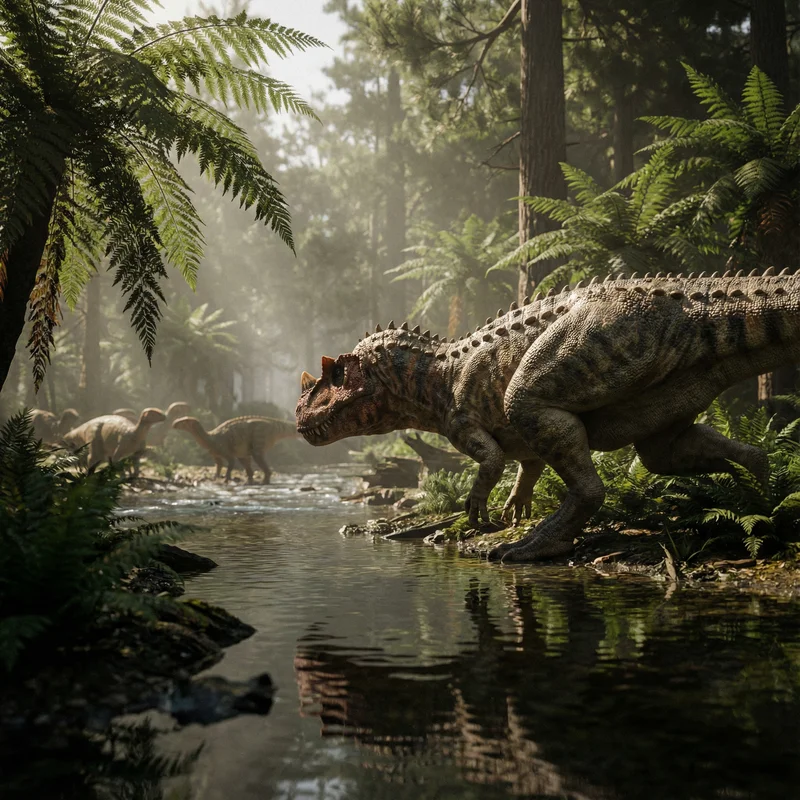 Ceratosaurus
Ceratosaurus · Jurassic Period · Carnivore
 Ceratosaurus
Ceratosaurus · Jurassic Period · Carnivore
 Ceratosaurus
Ceratosaurus · Jurassic Period · Carnivore
 Ceratosaurus
Ceratosaurus · Jurassic Period · Carnivore
 Ceratosaurus
Ceratosaurus · Jurassic Period · Carnivore
🔗Related Creatures
Megalosaurus
Megalosaurus bucklandii
Anchiornis
Anchiornis huxleyi
Sinraptor
Sinraptor dongi
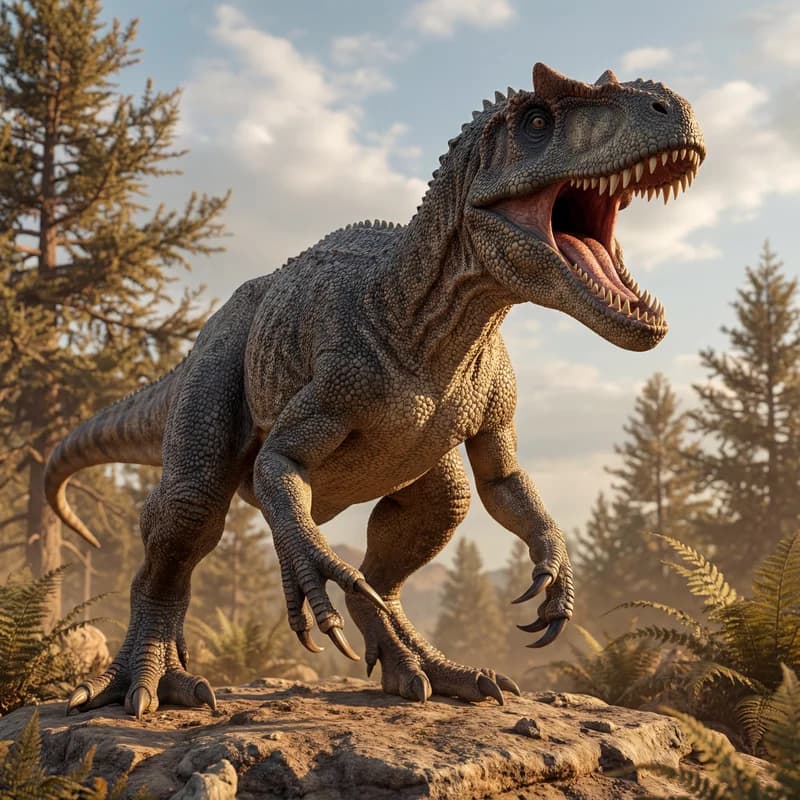
Allosaurus
Allosaurus fragilis
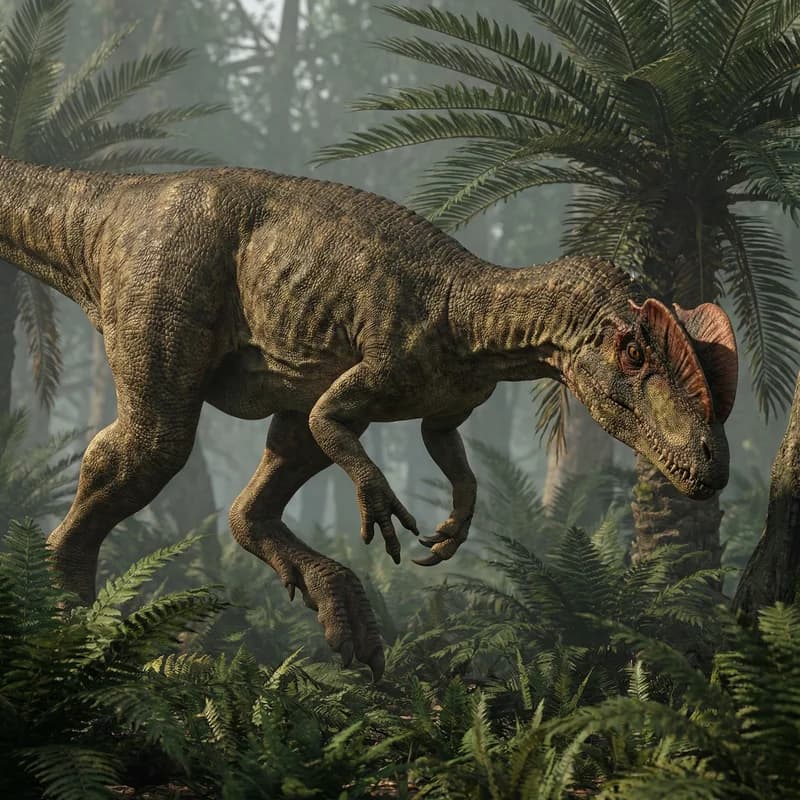
Dilophosaurus
Dilophosaurus wetherilli

Compsognathus
Compsognathus longipes

Archaeopteryx
Archaeopteryx lithographica

Tyrannosaurus Rex
Tyrannosaurus rex