Tyrannosaurus Rex
Cretaceous Period Carnivore Creature Type
Tyrannosaurus rex
Scientific Name: "Greek tyrannos (tyrant) + sauros (lizard) + Latin rex (king) = 'tyrant lizard king'"
Local Name: Tyrannosaurus Rex
Physical Characteristics
Discovery
Habitat

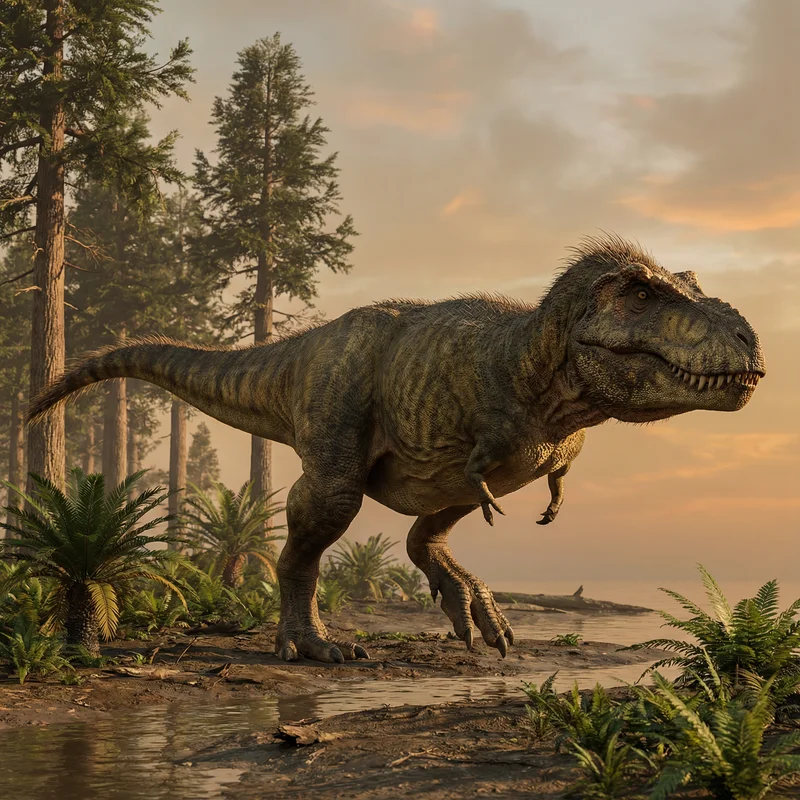
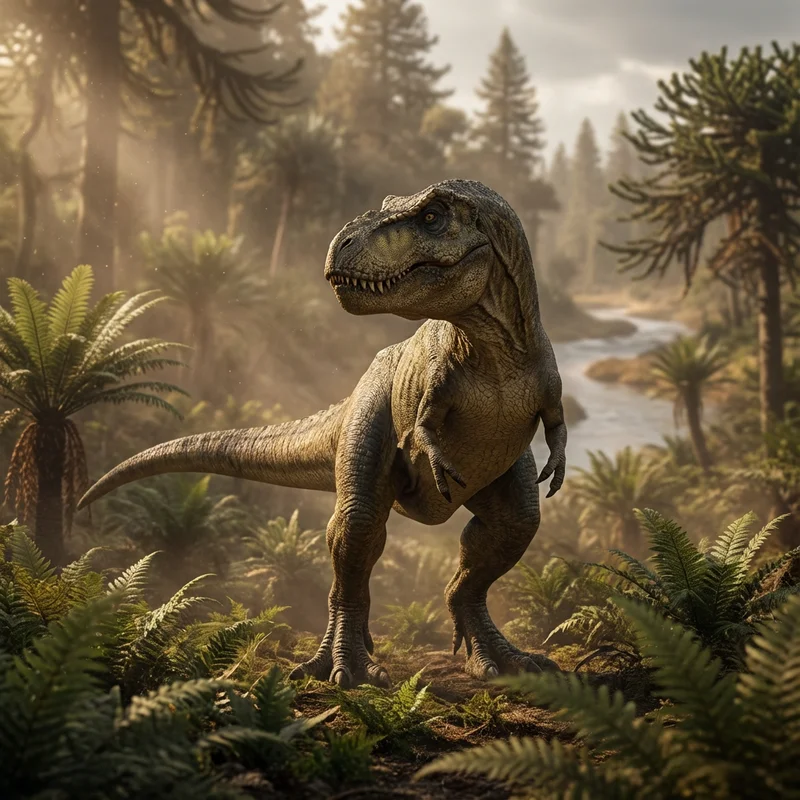
Tyrannosaurus rex (Osborn, 1905) is a large theropod dinosaur from the late Maastrichtian stage of the Late Cretaceous (approximately 68–66 Ma) that inhabited the island continent of Laramidia in western North America. Classified within Saurischia, Coelurosauria, Tyrannosauridae, and Tyrannosaurinae, it represents both the largest and the last-surviving member of its family. Adults reached total lengths of approximately 11–13 m, stood roughly 3.7–4 m tall at the hip, and weighed an estimated 5–9.5 tonnes depending on the individual. Armed with a skull exceeding 1.5 m in length and a bite force of approximately 35,000–57,000 N, T. rex is widely regarded as one of the most powerful terrestrial predators in Earth's history.
The species was described in 1905 by paleontologist Henry Fairfield Osborn of the American Museum of Natural History, based on a partial skeleton (CM 9380, formerly AMNH 973) collected by Barnum Brown from the Hell Creek Formation of Montana. The name derives from the Greek tyrannos (tyrant) and sauros (lizard), combined with the Latin rex (king), meaning "tyrant lizard king." With over 50 individual specimens reported to date, T. rex boasts the most abundant fossil record of any large theropod, enabling unparalleled depth of study in growth dynamics, biomechanics, sensory capabilities, and phylogenetic systematics.
A landmark 2026 study by Woodward et al. (PeerJ), analyzing bone histology from 17 specimens, suggests that T. rex took approximately 35–40 years to reach full adult size of around 8 tonnes—substantially longer than the roughly 20-year growth period previously estimated. Additionally, the 2024 description of Tyrannosaurus mcraeensis (Dalman et al.) from New Mexico, a potential sister species predating T. rex by 6–7 million years, has reinvigorated discussions about the evolutionary history of the genus.
Overview
Name and Etymology
The generic name Tyrannosaurus combines the Greek words tyrannos (τύραννος, "tyrant") and sauros (σαῦρος, "lizard"), while the specific epithet rex is Latin for "king." In the same 1905 publication, Osborn also proposed the name Dynamosaurus imperiosus ("powerful imperial lizard") for what he initially considered a separate specimen. However, because Tyrannosaurus rex appeared one page earlier in the paper, it was granted nomenclatural priority under the rules of the International Commission on Zoological Nomenclature (ICZN). By 1906, Osborn himself recognized that the two specimens belonged to the same taxon.
Taxonomic Status
Tyrannosaurus rex is widely accepted as a single valid species. In 2022, Paul, Persons & Van Raalte proposed splitting the hypodigm into three species—T. rex, T. imperator, and T. regina—based on variation in femoral robusticity and dentary tooth proportions. However, Carr et al. (2022) published a detailed rebuttal demonstrating that the observed differences fall within the range of individual, sexual, and ontogenetic variation, and that the stratigraphic resolution of the fossil-bearing beds is insufficient to support species-level separation. The overwhelming consensus among paleontologists remains that T. rex is a single species.
The validity of Nanotyrannus lancensis (Bakker et al., 1988), described from a small tyrannosaurid skull (CMNH 7541), has also been a longstanding debate. Carr (2020) and Woodward et al. (2020) provided osteohistological and morphological evidence that the specimen represents a juvenile T. rex, though Longrich & Saitta (2024) have more recently reasserted its potential distinctiveness.
One-Sentence Summary
The apex predator of latest Cretaceous North America, possessing the most powerful bite of any known terrestrial animal, exceptional sensory abilities, and the richest fossil record of any large theropod.
Stratigraphy and Paleoenvironment
Temporal Range
All definitive Tyrannosaurus rex fossils are restricted to the late Maastrichtian stage, spanning approximately 68–66 Ma. The species persisted for a comparatively brief interval of roughly 2 million years before being extinguished in the Cretaceous–Paleogene (K–Pg) mass extinction event, triggered by the Chicxulub asteroid impact at approximately 66.0 Ma.
Formations and Lithology
The principal fossil-bearing formations are summarized below.
| Formation | Region | Lithology | Notes |
|---|---|---|---|
| Hell Creek Formation | Montana, North Dakota, South Dakota | Sandstone, mudstone, siltstone, shale | Greatest abundance of specimens |
| Lance Formation | Wyoming | Sandstone, mudstone | Holotype locality |
| Frenchman Formation | Saskatchewan, Canada | Sandstone, mudstone | Scotty (RSM P2523.8) locality |
| Scollard Formation | Alberta, Canada | Sandstone | Few specimens |
| Laramie Formation | Colorado | Sandstone, mudstone | Fragmentary material |
All of these units correspond to the upper Maastrichtian and consist predominantly of alternating sandstones and mudstones deposited in fluvial to deltaic environments.
Depositional Environment and Paleoclimate
Sedimentological and paleobotanical evidence from the Hell Creek Formation indicates that T. rex inhabited subtropical to warm-temperate lowland floodplains, wetlands, and riparian forests. The climate of the late Maastrichtian was significantly warmer and more humid than the present day, with no polar ice caps. Mean annual temperatures at T. rex localities are estimated at approximately 18–25°C. A diverse flora of angiosperms and conifers coexisted, and rivers, lakes, and marshes supported a rich vertebrate fauna (Johnson, 2002; Hartman et al., 2002).
Specimens and Diagnostic Features
Holotype and Key Specimens
The holotype is CM 9380 (formerly AMNH 973), collected by Barnum Brown in 1902 from the Hell Creek Formation in Garfield County, Montana. The specimen includes partial skull and jaw elements, cervical, dorsal, and sacral vertebrae, ribs, the right humerus, and both femora and tibiae. It is currently housed at the Carnegie Museum of Natural History in Pittsburgh.
The most complete specimen is FMNH PR 2081, nicknamed "Sue," discovered in 1990 by Sue Hendrickson in South Dakota. Approximately 90% of the skeleton is preserved, with a total length of roughly 12.3 m, hip height of approximately 4 m, and a skull length of about 1.4 m. It was purchased by the Field Museum of Natural History in Chicago at auction in 1997 for US$8.36 million.
The largest known individual is RSM P2523.8, nicknamed "Scotty," discovered in 1991 near Eastend, Saskatchewan, in the Frenchman Formation. Persons, Currie & Erickson (2019) estimated its total length at approximately 13 m and body mass at roughly 8,870 kg, making it the most massive T. rex on record. The skeleton is approximately 65% complete and exhibits extensive pathologies including healed rib fractures, a jaw infection, and tail injuries.
Specimen Summary
| Specimen | Nickname | Locality / Formation | Completeness | Key Features |
|---|---|---|---|---|
| CM 9380 | (Holotype) | Montana, Hell Creek Fm. | Partial | Original type specimen |
| FMNH PR 2081 | Sue | South Dakota, Hell Creek Fm. | ~90% | Most complete; skull 1.4 m |
| RSM P2523.8 | Scotty | Saskatchewan, Frenchman Fm. | ~65% | Largest; est. 8,870 kg |
| USNM 555000 | (ex-MOR 555) | Montana, Hell Creek Fm. | ~20% | Smithsonian exhibit |
| BHI 3033 | Stan | South Dakota, Hell Creek Fm. | ~60% | Most widely cast and exhibited |
| BMRP 2002.4.1 | Jane | Montana, Hell Creek Fm. | ~50% | Representative subadult |
| MOR 1125 | - | Montana, Hell Creek Fm. | Partial | Soft tissue analysis (Schweitzer, 2005, 2007) |
Diagnostic Features
Key diagnostic characters distinguishing Tyrannosaurus rex from other tyrannosaurids include an extremely large skull relative to body size (approximately one-eighth of total length), broad binocular visual field produced by anteriorly expanded frontals, D-shaped incisiform premaxillary teeth, thick conical (pachyodont) maxillary and dentary teeth optimized for bone-crushing, extremely reduced forelimbs with a two-fingered (didactyl) manus, and tibiae exceeding femoral length.
Morphology and Functional Biology
Skull and Bite Force
The skull is the most striking anatomical feature of T. rex. In adults, the skull measured approximately 1.2–1.5 m in length and was lightened by elaborate pneumatic sinuses while retaining exceptional structural rigidity. The jaws housed approximately 60 teeth, the largest reaching about 30 cm in total length (including the root). The teeth were thick, conical pachyodonts—contrasting sharply with the blade-like ziphodont teeth of most other theropods—and were optimized for crushing bone.
Bates & Falkingham (2012) used multi-body dynamics simulations to estimate maximum adult bite force at approximately 35,000–57,000 N (roughly 3.5–5.8 tonnes-force). Gignac & Erickson (2017) further demonstrated that tooth-tip pressure reached approximately 431 MPa, enabling extreme osteophagy (bone-crushing feeding). These values exceed those of any known terrestrial animal, living or extinct, including modern saltwater crocodiles and hyenas.
Sensory Capabilities
CT scan studies of the braincase (Witmer & Ridgely, 2009) revealed proportionally large olfactory bulbs, indicating an acute sense of smell. Stevens (2006) determined that T. rex possessed a binocular visual field of approximately 55°, exceeding that of modern hawks. Visual acuity may have been roughly 13 times that of humans, with the ability to discern objects at distances up to approximately 6 km. A well-developed inner ear structure suggests sensitivity to low-frequency sound.
Forelimbs
The forelimbs were approximately 1 m long—extremely reduced relative to body size—and bore only two functional digits (digits I and II) on each hand. Despite their diminutive appearance, muscle attachment site analysis indicates each arm could exert forces sufficient to handle loads of approximately 200 kg. Proposed functions include assistance in rising from a prone position, grasping during mating, or holding prey, but no consensus has been reached.
Locomotion
The hindlimbs were powerfully built, with femora approximately 1.3 m long and tibiae exceeding femoral length—a cursorial proportion favoring efficient locomotion. Hutchinson & Garcia (2002) demonstrated through musculoskeletal modeling that adult T. rex likely lacked the muscle mass necessary for true running at high speeds (>11 m/s). Subsequent biomechanical studies have variously estimated maximum adult speed at approximately 5–11 m/s (~18–40 km/h), with the most commonly cited range being approximately 20–29 km/h (~5.5–8 m/s). Snively et al. (2019) noted that low rotational inertia of the hindlimbs would have facilitated agile turning. Younger, lighter individuals were almost certainly considerably faster and more maneuverable than full-grown adults.
Tail and Integument
The tail comprised approximately 40 caudal vertebrae and accounted for nearly half the animal's total length. The well-developed caudofemoralis muscle provided propulsive thrust to the hindlimbs and served as a counterbalance during locomotion. Regarding integument, Bell et al. (2017) reported crocodile-like scale impressions from the neck, pelvis, and tail regions of the T. rex specimen "Wyrex," suggesting that adults were predominantly scaly. However, because the early tyrannosauroid Yutyrannus (Xu et al., 2012) bore filamentous feathers, the possibility that juvenile T. rex possessed partial protofeathers that were lost during growth remains open.
Size Estimation Comparison
| Specimen | Estimated Total Length (m) | Estimated Body Mass (kg) | Method / Source |
|---|---|---|---|
| FMNH PR 2081 (Sue) | ~12.3 | 5,654–9,131 | Hutchinson et al. (2011); Campione et al. (2014) |
| RSM P2523.8 (Scotty) | ~13.0 | ~8,870 | Persons, Currie & Erickson (2019) |
| MOR 1125 | - | ~6,000–8,400 | Various estimates |
| Theoretical maximum | - | ~15,000 (?) | Mallon & Hone (2024), statistical upper bound |
Body mass estimates vary substantially depending on methodology (volumetric models vs. limb circumference regressions). Mallon & Hone (2024) statistically estimated that the largest T. rex ever to have lived may have been up to 70% more massive than the current largest known specimen, though this remains a theoretical upper bound.
Diet and Ecology
Evidence for Feeding Behavior
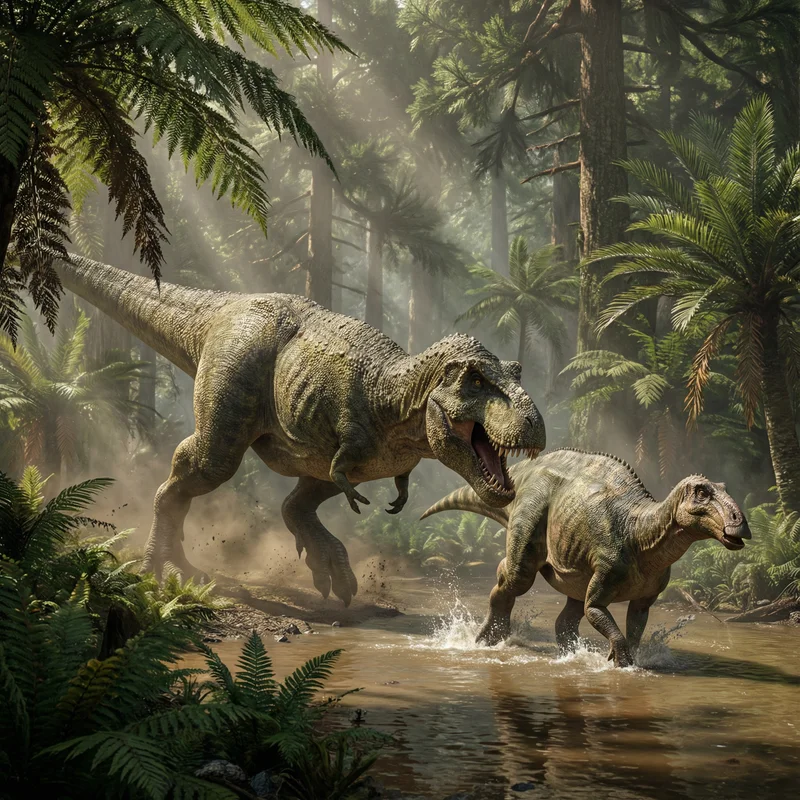
Direct evidence that T. rex was an active predator comes from a hadrosaur caudal vertebra with an embedded T. rex tooth surrounded by healed bone tissue (DePalma et al., 2013), demonstrating an attack on living prey. Additionally, numerous T. rex tooth marks have been documented on Triceratops skull frills and horns (Happ, 2008; Fowler et al., 2012), confirming a predatory relationship with heavily armored herbivores.
Coprolite evidence (e.g., Chin et al., 1998) reveals massive quantities of crushed bone fragments, confirming the osteophagy (bone-crushing) feeding behavior inferred from dental morphology and biomechanical modeling. The prevailing scientific view is that T. rex was an opportunistic predator that actively hunted live prey but also readily scavenged carrion when available.
Cannibalism
Longrich et al. (2010, PLOS ONE) documented feeding traces on four T. rex bones made by large theropod teeth. Because T. rex was the only animal in the Hell Creek ecosystem capable of producing bite marks of that size, these are interpreted as evidence of cannibalism. The relatively high frequency of such traces, despite the low preservation potential of feeding behavior, suggests that cannibalism was not uncommon.
Ontogenetic Niche Partitioning
Bone histology (Woodward et al., 2020) and morphological analysis (Carr, 2020) demonstrate that juvenile T. rex had markedly different body proportions compared to adults—being slender, long-legged, and possessing sharper teeth. This evidence supports the hypothesis of ontogenetic niche partitioning, in which juveniles targeted small to mid-sized, agile prey while adults preyed upon large herbivores such as Triceratops and Edmontosaurus, thereby reducing intraspecific competition for food resources.
Social Behavior
Multiple T. rex individuals of varying ages have been found at the same stratigraphic horizon at several localities in Montana and Alberta, raising the possibility of gregarious behavior. However, whether these associations reflect true social groupings during life or post-mortem fluvial accumulation of remains remains debated.
Geographic Distribution and Paleogeography
Distribution
Confirmed T. rex fossils are known from Montana, South Dakota, North Dakota, Wyoming, Colorado, and Utah in the United States, as well as Saskatchewan and Alberta in Canada. All localities correspond to the western shore of the Western Interior Seaway on the island continent of Laramidia.
Paleocoordinates
Paleogeographic reconstructions place T. rex localities at approximately 45–60°N paleolatitude and roughly 55–75°W paleolongitude. Representative coordinates from the Paleobiology Database are approximately 55.7°N / 64.9°W.
Population Density
Marshall et al. (2021, Science) estimated that the standing population of adult T. rex across Laramidia at any given time was approximately 20,000 individuals. Over the approximately 127,000 generations (~2.4 million years) for which the species existed, a cumulative total of roughly 2.5 billion individuals lived and died. The fossil recovery rate was estimated at approximately 1 specimen per 80 million individuals.
Phylogeny and Taxonomic Debates
Position Within Tyrannosauridae
In the comprehensive phylogenetic analysis by Brusatte & Carr (2016), T. rex was recovered as the sister taxon to Tarbosaurus bataar from Asia within the subfamily Tyrannosaurinae. This result suggests at least one dispersal event between North America and Asia among tyrannosaurines during the Late Cretaceous.
In 2024, Dalman et al. described Tyrannosaurus mcraeensis from the Hall Lake Formation (McRae Group) of New Mexico, dating to the late Campanian–early Maastrichtian (~72–71 Ma). This species predates T. rex by 6–7 million years and suggests that large-bodied Tyrannosaurus had already evolved considerably earlier than previously recognized. However, some researchers consider the taxonomic placement of this specimen as provisional pending additional material.
Multiple Species Debate
Paul, Persons & Van Raalte (2022) proposed splitting Tyrannosaurus rex into three species based on femoral robusticity and dentary tooth ratios—T. rex, T. imperator, and T. regina. Carr et al. (2022) challenged this proposal in a detailed rebuttal, arguing that the morphological characters used are taxonomically unreliable, the sample size was insufficient, and the stratigraphic resolution too poor to justify species-level divisions. The current consensus maintains T. rex as a single species.
The Nanotyrannus Question
Nanotyrannus lancensis (Bakker et al., 1988), based on a small tyrannosaurid skull (CMNH 7541), has been debated for decades. Carr (2020) analyzed a 31-stage ontogenetic series and Woodward et al. (2020) provided osteohistological data, both concluding that the specimen represents a juvenile T. rex. Conversely, Longrich & Saitta (2024) have reasserted the distinctiveness of small-bodied specimens. The 2025 description of a new Mongolian tyrannosauroid by Voris et al. has further highlighted unresolved questions about small tyrannosaurid taxonomy, and the debate remains ongoing.
Growth and Lifespan
Previous Model (Erickson et al., 2004)
Erickson et al. (2004, Nature) analyzed bone histology from seven individuals and concluded that T. rex underwent a period of explosive growth between approximately 14–18 years of age (with maximum annual mass gain of ~767 kg/year), followed by growth deceleration at roughly 18–20 years, and an estimated maximum lifespan of approximately 28–30 years. This model served as the standard reference for over two decades.
Revised Model (Woodward et al., 2026)
A major new study by Woodward et al. (2026, PeerJ) examined transverse diaphyseal thin sections from femora and tibiae of 17 Tyrannosaurus specimens—the largest osteohistological dataset assembled for this taxon. Using circularly polarized light (CPL), the team identified annuli (growth marks) not visible under standard plane-polarized light, revealing more growth cycles than previously recognized. The best-fit sigmoid growth curve places the growth asymptote at approximately 35–40 years—roughly 15 years later than the Erickson et al. (2004) model. This implies a considerably more protracted subadult growth phase than previously understood. The authors referred to their sample as the "Tyrannosaurus rex species complex," acknowledging that the taxonomic assignment of some specimens remains debated.
Reconstruction and Uncertainty
Well-Established Facts
The following are supported by abundant fossil material and repeated verification: large obligate biped; massive skull with reduced, didactyl forelimbs; temporal range restricted to the Maastrichtian of western North America; the most powerful bite of any known terrestrial animal; binocular vision and a highly developed sense of smell.
Probable but Debated
Opportunistic predation combined with scavenging (strongly supported); maximum adult locomotor speed of approximately 20–29 km/h (varies by method); predominantly scaly adult integument (Bell et al., 2017; partial juvenile feathering remains possible); growth asymptote at 35–40 years (Woodward et al., 2026; awaiting independent verification).
Hypothetical
Gregarious behavior and cooperative hunting (no direct evidence); low-frequency vocalization (inferred from extant phylogenetic bracket); sexual dimorphism (insufficient evidence to attribute morphological variation to sex); partial feathering in juveniles (no direct fossil evidence for T. rex specifically).
Popular Media vs. Science
The most pervasive misconception propagated by popular media—particularly the 1993 film Jurassic Park—is that T. rex could not detect stationary objects. In reality, it possessed visual acuity far surpassing that of modern raptorial birds (Stevens, 2006). Additionally, early skeletal reconstructions depicted T. rex in an upright, tail-dragging posture; since the 1970s, this has been corrected to a horizontal body posture with the head, torso, and tail held roughly parallel to the ground.
Comparison With Related and Contemporary Taxa
| Taxon | Age | Region | Est. Length (m) | Est. Mass (kg) | Key Traits |
|---|---|---|---|---|---|
| Tyrannosaurus rex | Maastrichtian, ~68–66 Ma | Western North America | 11–13 | 5,000–9,500 | Most powerful bite; didactyl manus |
| Tarbosaurus bataar | Maastrichtian, ~70–68 Ma | East Asia (Mongolia) | 10–12 | 4,500–5,000 | Sister taxon to T. rex; narrower snout |
| Albertosaurus sarcophagus | Campanian, ~71–68 Ma | Alberta, Canada | 8–9 | 1,300–1,700 | More gracile build; mass mortality sites |
| Gorgosaurus libratus | Campanian, ~76.5–75 Ma | Alberta, Canada | 8–9 | 2,000–2,500 | Sister to Albertosaurus |
| Daspletosaurus torosus | Campanian, ~77–74 Ma | Alberta, Canada | 8–9 | 2,500–3,800 | Candidate ancestor of T. rex |
| Giganotosaurus carolinii | Cenomanian, ~99–97 Ma | South America (Argentina) | 12–13 | 6,000–8,000 | Carcharodontosauridae; weaker bite than T. rex |
Among its relatives, T. rex displays the most extreme adaptations in skull hypertrophy, bite force, and sensory acuity—reflecting its ecological position as the terminal apex predator of the Maastrichtian.
Fun Facts
FAQ
📚References
- Osborn, H.F. (1905). Tyrannosaurus and other Cretaceous carnivorous dinosaurs. Bulletin of the American Museum of Natural History, 21, 259–265.
- Erickson, G.M., Makovicky, P.J., Currie, P.J., Norell, M.A., Yerby, S.A., & Brochu, C.A. (2004). Gigantism and comparative life-history parameters of tyrannosaurid dinosaurs. Nature, 430, 772–775. https://doi.org/10.1038/nature02699
- Bates, K.T. & Falkingham, P.L. (2012). Estimating maximum bite performance in Tyrannosaurus rex using multi-body dynamics. Biology Letters, 8(4), 660–664. https://doi.org/10.1098/rsbl.2012.0056
- Hutchinson, J.R. & Garcia, M. (2002). Tyrannosaurus was not a fast runner. Nature, 415, 1018–1021. https://doi.org/10.1038/4151018a
- Stevens, K.A. (2006). Binocular vision in theropod dinosaurs. Journal of Vertebrate Paleontology, 26(2), 321–330. https://doi.org/10.1671/0272-4634(2006)26[321:BVITD]2.0.CO;2
- Schweitzer, M.H., Suo, Z., Avci, R., Asara, J.M., Allen, M.A., Arce, F.T., & Horner, J.R. (2007). Analyses of soft tissue from Tyrannosaurus rex suggest the presence of protein. Science, 316(5822), 277–280. https://doi.org/10.1126/science.1138709
- Longrich, N.R., Horner, J.R., Erickson, G.M., & Currie, P.J. (2010). Cannibalism in Tyrannosaurus rex. PLOS ONE, 5(10), e13419. https://doi.org/10.1371/journal.pone.0013419
- Gignac, P.M. & Erickson, G.M. (2017). The biomechanics behind extreme osteophagy in Tyrannosaurus rex. Scientific Reports, 7, 2012. https://doi.org/10.1038/s41598-017-02161-w
- Bell, P.R., Campione, N.E., Persons, W.S., Currie, P.J., Larson, P.L., Tanke, D.H., & Bakker, R.T. (2017). Tyrannosauroid integument reveals conflicting patterns of gigantism and feather evolution. Biology Letters, 13(6), 20170092. https://doi.org/10.1098/rsbl.2017.0092
- Persons, W.S., Currie, P.J., & Erickson, G.M. (2019). An older and exceptionally large adult specimen of Tyrannosaurus rex. The Anatomical Record, 303(4), 656–672. https://doi.org/10.1002/ar.24118
- Carr, T.D. (2020). A high-resolution growth series of Tyrannosaurus rex obtained from multiple lines of evidence. PeerJ, 8, e9192. https://doi.org/10.7717/peerj.9192
- Woodward, H.N., Freedman Fowler, E.A., Farlow, J.O., & Horner, J.R. (2020). Growing up Tyrannosaurus rex: Osteohistology refutes the pygmy Nanotyrannus and supports ontogenetic niche partitioning in juvenile Tyrannosaurus. Science Advances, 6(1), eaax6250. https://doi.org/10.1126/sciadv.aax6250
- Marshall, C.R., Latorre, D.V., Wilson, C.J., Frank, T.M., Magoulick, K.M., Zimmt, J.B., & Poust, A.W. (2021). Absolute abundance and preservation rate of Tyrannosaurus rex. Science, 372(6539), 284–287. https://doi.org/10.1126/science.abc8300
- Paul, G.S., Persons, W.S., & Van Raalte, J. (2022). The Tyrant Lizard King, queen and emperor: multiple lines of morphological and stratigraphic evidence support subtle evolution and probable speciation within the North American genus Tyrannosaurus. Evolutionary Biology, 49, 156–179. https://doi.org/10.1007/s11692-022-09561-5
- Carr, T.D., Napoli, J.G., Brusatte, S.L., Holtz, T.R., Hone, D.W.E., Williamson, T.E., & Zanno, L.E. (2022). Insufficient evidence for multiple species of Tyrannosaurus in the latest Cretaceous of North America. Evolutionary Biology, 49, 180–202. https://doi.org/10.1007/s11692-022-09573-1
- Brusatte, S.L. & Carr, T.D. (2016). The phylogeny and evolutionary history of tyrannosauroid dinosaurs. Scientific Reports, 6, 20252. https://doi.org/10.1038/srep20252
- Dalman, S.G., Loewen, M.A., Pyron, R.A., Jasinski, S.E., Malinzak, D.E., Lucas, S.G., Fiorillo, A.R., Currie, P.J., & Longrich, N.R. (2024). A giant tyrannosaur from the Campanian–Maastrichtian of southern North America and the evolution of tyrannosaurid gigantism. Scientific Reports, 14, 922. https://doi.org/10.1038/s41598-023-47011-0
- Woodward, H.N., et al. (2026). Prolonged growth and extended subadult development in the Tyrannosaurus rex species complex. PeerJ, 14, e20469. https://doi.org/10.7717/peerj.20469
- Mallon, J.C. & Hone, D.W.E. (2024). Estimation of maximum body size in fossil species: a case study using Tyrannosaurus rex. Ecology and Evolution, 14, e11658. https://doi.org/10.1002/ece3.11658
- Witmer, L.M. & Ridgely, R.C. (2009). New insights into the brain, braincase, and ear region of tyrannosaurs, with implications for sensory reorganization and behavior. The Anatomical Record, 292(9), 1266–1296. https://doi.org/10.1002/ar.20983
Gallery
7 images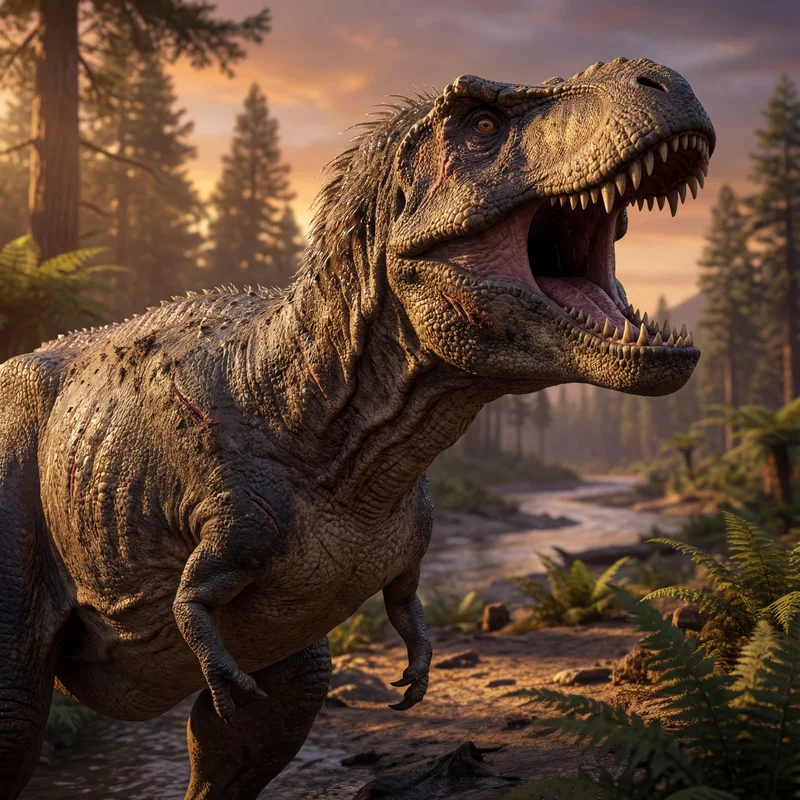 Tyrannosaurus Rex
Tyrannosaurus Rex · Cretaceous Period · Carnivore
 Tyrannosaurus Rex
Tyrannosaurus Rex · Cretaceous Period · Carnivore
 Tyrannosaurus Rex
Tyrannosaurus Rex · Cretaceous Period · Carnivore
 Tyrannosaurus Rex
Tyrannosaurus Rex · Cretaceous Period · Carnivore
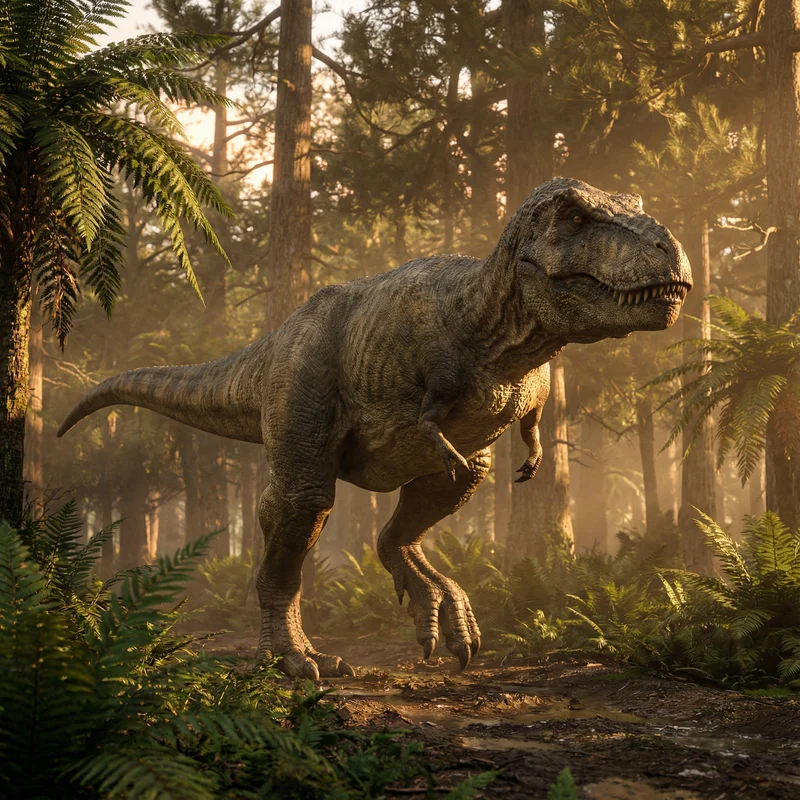 Tyrannosaurus Rex
Tyrannosaurus Rex · Cretaceous Period · Carnivore
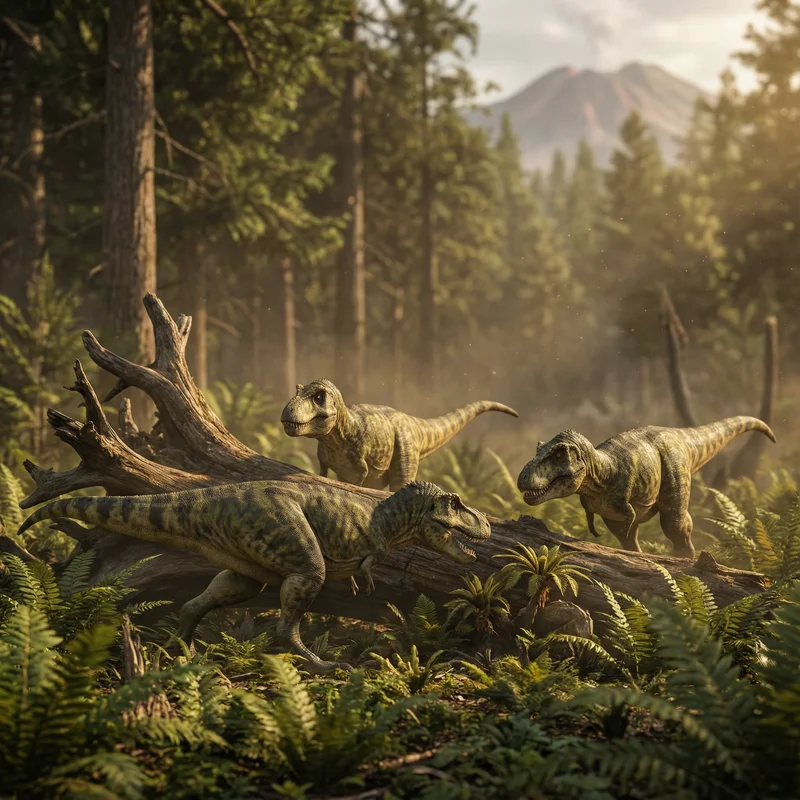 Tyrannosaurus Rex
Tyrannosaurus Rex · Cretaceous Period · Carnivore
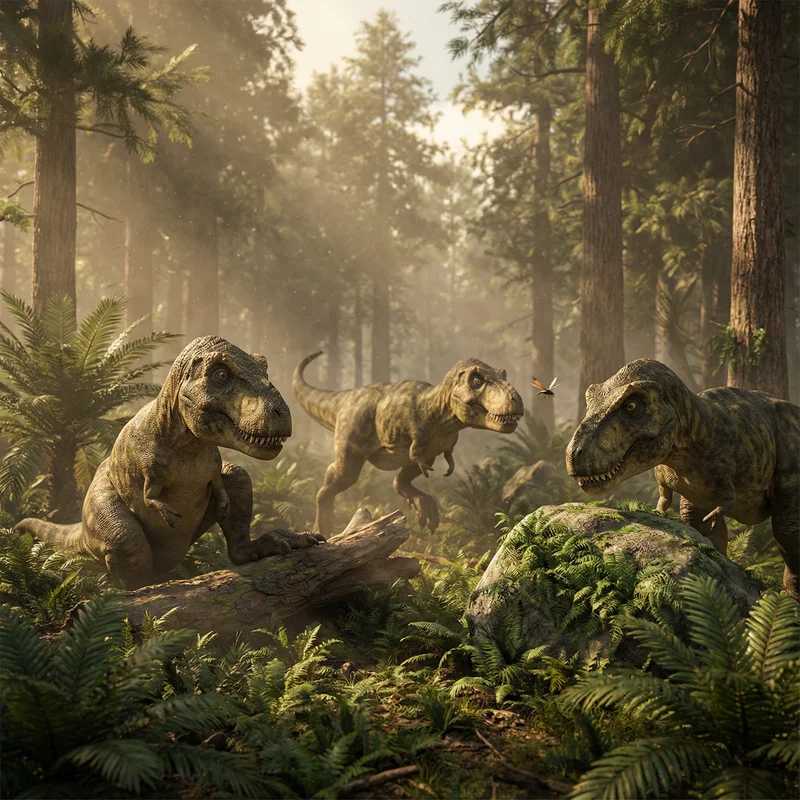 Tyrannosaurus Rex
Tyrannosaurus Rex · Cretaceous Period · Carnivore
🔗Related Creatures

Carcharodontosaurus
Carcharodontosaurus saharicus

Utahraptor
Utahraptor ostrommaysi
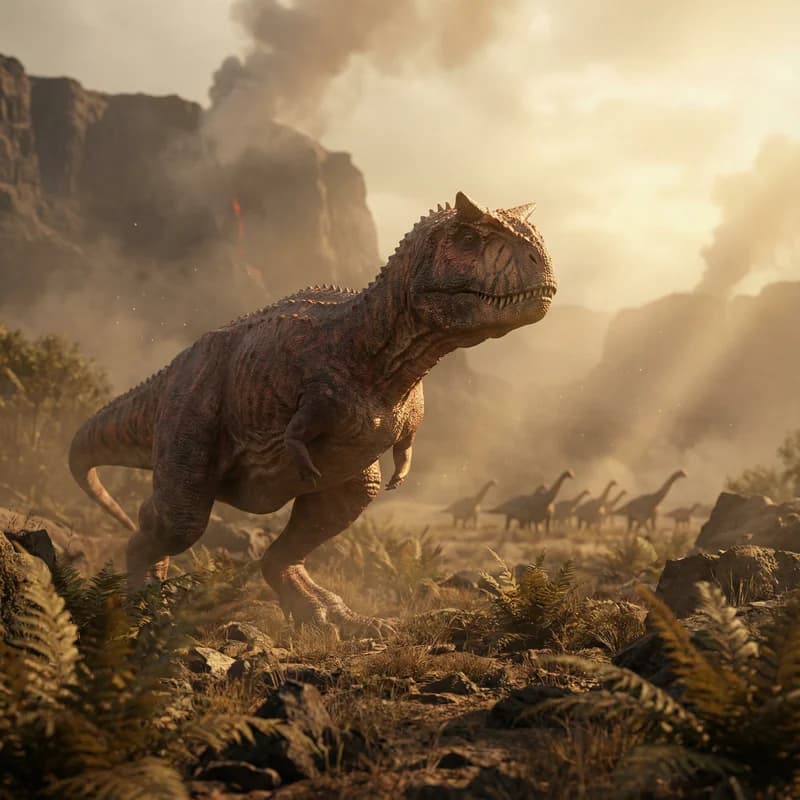
Rajasaurus
Rajasaurus narmadensis

Carnotaurus
Carnotaurus sastrei
Dromaeosaurus
Dromaeosaurus albertensis

Tarbosaurus
Tarbosaurus bataar

Nanotyrannus
Nanotyrannus lancensis

Deinonychus
Deinonychus antirrhopus