Triceratops
Cretaceous Period Herbivore Creature Type
Triceratops
Scientific Name: "tri- (three, Greek τρί-) + ceras (horn, Greek κέρας) + ops (face, Greek ὤψ) = 'three-horned face'"
Local Name: Triceratops
Physical Characteristics
Discovery
Habitat
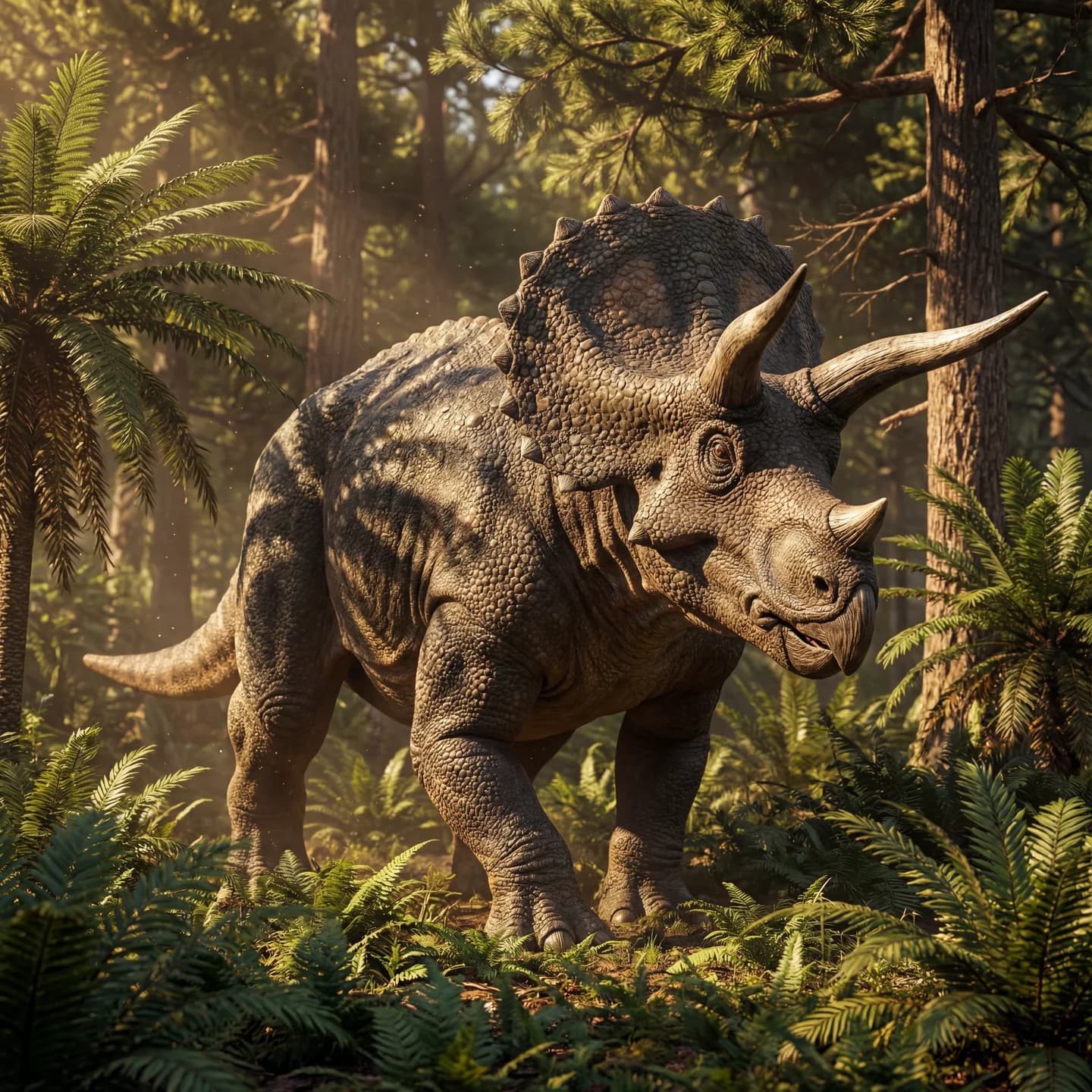
Triceratops Marsh, 1889 is a large herbivorous ceratopsid dinosaur belonging to the subfamily Chasmosaurinae, which lived during the late Maastrichtian stage of the Late Cretaceous (approximately 68–66 Ma) in western North America. The genus name derives from the Greek tri- (three) + keras (horn) + ops (face), referring to the three prominent facial horns—a pair of supraorbital brow horns above the eyes and a single nasal horn above the nose—that constitute the animal's most distinctive feature. Behind the horns, a solid bony frill formed by the parietal and squamosal bones extends posteriorly to shield the neck and shoulder region. Unlike most other chasmosaurines, the frill of Triceratops notably lacks parietal fenestrae, making it unusually robust. Two species are currently recognized as valid: the type species T. horridus Marsh, 1889 and T. prorsus Marsh, 1890, which are stratigraphically separated within the Hell Creek Formation, suggesting an anagenetic (ancestor–descendant) transition from the former to the latter (Scannella et al., 2014).
Adult Triceratops reached a total body length of approximately 8–9 m, a shoulder height of about 2.9–3 m, and an estimated body mass of roughly 6–10 metric tons (Paul, 2010; multiple estimates summarized in Campione & Evans, 2020). The largest individuals may have exceeded 10 t, though such figures represent upper-bound estimates for the most massive specimens. The skull alone could reach up to approximately 2.5 m in estimated complete length, constituting roughly one-third of the total body length—among the largest skulls of any known land animal. Triceratops was the most abundantly recovered large herbivorous dinosaur from the Lancian faunal stage of western North America; Bakker (1986) estimated it comprised approximately five-sixths of the large dinosaur fauna at the end of the Cretaceous. Fossils have been reported from the Hell Creek, Lance, Scollard, Frenchman, Laramie, Denver, and Evanston formations across Colorado, Wyoming, Montana, South Dakota, North Dakota (USA), and Alberta and Saskatchewan (Canada), yielding an exceptionally rich anatomical record that makes Triceratops the best-studied ceratopsid genus.
The predator–prey relationship between Triceratops and contemporaneous Tyrannosaurus rex is directly attested by bite marks on Triceratops ilia and sacra, as well as healed tyrannosaur tooth punctures on brow horns and squamosals (Happ, 2008; Fowler, 2012). Conversely, opposing conical depressions consistent with ceratopsian horn wounds have been noted on tyrannosaur bone. The functions of the frill and horns have been extensively debated, with current evidence supporting a combination of intraspecific combat, anti-predator defense, visual display, and species recognition. Farke et al. (2009) reported that approximately 14% of Triceratops skulls exhibit lesions consistent with horn-on-horn combat, a rate significantly higher than in Centrosaurus, supporting the hypothesis that the horns were actively used in fighting.
Overview
Name and Etymology
The genus name Triceratops is a compound of the Greek words tri- (τρί-, three), keras (κέρας, horn), and ops (ὤψ, face), meaning "three-horned face." The name was coined in 1889 by American paleontologist Othniel Charles Marsh. When Marsh initially described the holotype in 1889, only the two supraorbital horns were apparent, and he assigned it to the pre-existing genus Ceratops as Ceratops horridus. Upon discovering the third (nasal) horn during further preparation, Marsh erected the new genus Triceratops. The specific epithet horridus derives from the Latin for "rough" or "rugose," referring to the coarse surface texture of the type specimen skull, later understood to be characteristic of an aged individual.
Taxonomic Status
Two species are currently recognized as valid: T. horridus (Marsh, 1889) and T. prorsus (Marsh, 1890). Historically, as many as 17 species were named (e.g., T. elatus, T. calicornis, T. brevicornus, T. obtusus), but most have been synonymized or relegated to nomen dubium status based on individual variation, ontogenetic stage, or taphonomic distortion (Forster, 1996; Scannella et al., 2014). Nedoceratops, Ojoceratops, and Tatankaceratops have also been treated as probable synonyms of Triceratops by various authors, though some researchers retain them as separate taxa.
Triceratops was traditionally classified among the "short-frilled" ceratopsids (Centrosaurinae), but since Sternberg (1949), modern cladistic analyses have consistently placed it within Chasmosaurinae (Dodson, 1990; Lehman, 1990; Longrich, 2014). It is assigned to the tribe Triceratopsini, where it groups with Torosaurus and Eotriceratops as close relatives.
Key Summary
Triceratops is the most abundant, largest, and best-known ceratopsid from the latest Cretaceous of North America—a massive quadrupedal herbivore characterized by a solid bony frill and three facial horns.
Age, Stratigraphy, and Depositional Setting
Temporal Range
Triceratops existed during the late Maastrichtian, approximately 68–66 Ma. Magnetostratigraphic and radiometric dating of the Hell Creek Formation constrains the main occurrence to roughly 67.5–66.0 Ma (Hicks et al., 2002), with the upper limit coinciding with the Cretaceous–Paleogene (K–Pg) boundary at ~66.0 Ma. A specimen from the Laramie Formation of eastern Colorado (DMNH 48617) may represent the oldest known Triceratops based on the age of that formation. Overall, the genus persisted for more than two million years.
Formations and Lithology
The following table summarizes the principal fossil-bearing formations for Triceratops.
| Formation | Region | Primary Lithology | Notes |
|---|---|---|---|
| Hell Creek Formation | Montana, North Dakota, South Dakota | Mudstone, sandstone, siltstone interbeds; lignite | Most productive Triceratops locality |
| Lance Formation | Wyoming | Sandstone, mudstone, siltstone | Holotype YPM 1820 locality |
| Laramie Formation | Eastern Colorado | Sandstone, mudstone | Possibly oldest Triceratops |
| Denver Formation | Colorado | Sandstone, mudstone | First-discovered specimen (horn cores) |
| Scollard Formation | Alberta, Canada | Mudstone, sandstone | Canadian occurrences |
| Frenchman Formation | Saskatchewan, Canada | Sandstone, mudstone | Juvenile through adult specimens |
| Evanston Formation | Western Wyoming | Sandstone, mudstone | Minor records |
Paleoenvironment
The depositional facies of the Hell Creek and Lance formations reflect a large-scale fluvial floodplain environment. Alternating mudstone and sandstone beds, intercalated carbonaceous shale and lignite, and lacustrine deposits indicate extensive river floodplains with associated lakes and wetlands (Hartman et al., 2014). Abundant plant fossils—including palms, cycads, ferns, and angiosperms—along with crocodilians, turtles, mammals, and fish co-occur with Triceratops remains. Spatial analysis by Lyson & Longrich (2011) found that ceratopsians (including Triceratops) were preferentially recovered from floodplain mudstones, suggesting a habitat preference for low-lying floodplain environments compared to hadrosaurids. The climate was considerably warmer than today, with estimated mean annual temperatures of approximately 15–25°C and a probable wet–dry seasonal cycle.
Specimens and Diagnostic Features
Holotype and Key Specimens
The holotype is YPM 1820, a nearly complete skull collected in 1888 from the Lance Formation of Wyoming by fossil hunter John Bell Hatcher. Marsh initially named it Ceratops horridus; upon discovering the nasal horn, he reassigned it to the new genus Triceratops. Between 1889 and 1891, Hatcher collected an additional 31 skulls, establishing the foundational dataset for Triceratops research.
| Specimen | Species | Locality / Formation | Preservation | Notes |
|---|---|---|---|---|
| YPM 1820 | T. horridus | Wyoming, Lance Fm. | Nearly complete skull | Holotype |
| YPM 1822 | T. prorsus | Wyoming, Lance Fm. | Nearly complete skull | T. prorsus holotype |
| USNM 4276 | T. horridus | Montana | Skull + postcranial skeleton | Smithsonian mount |
| MWC 7584 | Triceratops sp. | Montana(?) | Partial skull | Largest known skull (~2.5 m estimated complete length) |
| HMNS PV.1506 (Lane) | T. horridus | Wyoming, Lance Fm. | Nearly complete skeleton + extensive skin impressions | Most complete skeleton until 2014; displayed at Houston Museum of Natural Science |
| Melbourne Museum Horridus | T. horridus | Montana, Hell Creek Fm. | >85% complete skeleton + skull | Among the most complete Triceratops (unveiled 2021) |
Diagnostic Features
Key autapomorphies distinguishing Triceratops from other chasmosaurines include: (1) a relatively short parietal-squamosal frill that is solid (lacking parietal fenestrae); (2) a single nasal horn (epinasal) above the nostrils and a pair of supraorbital brow horns up to ~1 m long; (3) separate epijugal ossifications on the jugal bones; (4) triangular epoccipital processes along the frill margin; and (5) a hollowed-out narial process of the premaxilla on its lateral surface.
T. horridus is distinguished from T. prorsus by having a smaller nasal horn and a shallower snout, whereas T. prorsus has a longer nasal horn and a shorter, deeper snout (Forster, 1996; Scannella et al., 2014).
Morphology and Function
Body Size
Adult Triceratops measured approximately 8–9 m in total length. Paul (2010, 2016) estimated body mass at approximately 6–9 t, while the largest known individuals (e.g., LACM 150076) may have exceeded 10 t. Britannica (citing Dodson and others) provides a range of 5,450–7,260 kg. Shoulder height was approximately 2.9–3 m, comparable to a modern African elephant. The build was markedly robust, with stout limbs and a massive, compact torso adapted for quadrupedal locomotion.
Skull
The skull of Triceratops ranks among the largest of any land animal, with the biggest known specimen (MWC 7584) estimated at approximately 2.5 m in complete length—roughly one-third of the total body length. The anterior skull bore a broad beak for cropping vegetation, behind which the maxillae housed 36–40 tooth columns per jaw side in a dental battery, with 3–5 vertically stacked teeth per column. Total tooth count ranged from approximately 432 to 800, with continuous replacement throughout life.
Horn Structure
The supraorbital brow horns reached up to approximately 1 m in length in adults and were sheathed in keratinous horn cores in life, likely extending the effective length beyond the underlying bone. The nasal horn varied between species: small in T. horridus, larger and more prominent in T. prorsus. Vascular traces on the horn cores indicate substantial blood supply, and cavities from the double skull roof extended into the brow horn bases.
Frill
The frill was formed by posterior extensions of the parietal and squamosal bones. Unlike most chasmosaurines, the Triceratops frill was solid—lacking parietal fenestrae—making it considerably more robust. Triangular epoccipital processes adorned the frill margin; their morphology changed dramatically during ontogeny (Horner & Goodwin, 2006). The frill likely served multiple functions: jaw muscle attachment, thermoregulation, visual display and species recognition, and as a defensive shield during intraspecific horn combat.
Postcranial Skeleton and Locomotion
The vertebral column comprised 10 cervical, 12 dorsal, 10 sacral, and approximately 45 caudal vertebrae. The anterior cervicals were fused into a syncervical unit. The limbs were powerful, especially the forelimbs, which bore the weight of the massive head. Locomotor posture was long debated, but trackway evidence and skeletal reconstructions (Fujiwara, 2009; Thompson & Holmes, 2007) indicate a semi-erect stance comparable to modern rhinoceroses—with elbows flexed and slightly bowed out—intermediate between fully upright and fully sprawling. The hand had three functional weight-bearing digits with hooves, while digits 4 and 5 were vestigial.
Skin
The "Lane" specimen (HMNS PV.1506) from the Lance Formation of Wyoming preserves extensive skin impressions from multiple body regions. The integument consisted of large hexagonal tubercles (~50–60 mm across) and even larger tubercles (~100 mm+) with conical projections rising from their centers. This represents some of the most complete skin preservation known for any ceratopsid and indicates a distinctly coarse-textured integument.
Diet and Ecology
Feeding
Triceratops was an obligate herbivore. Its low-slung head posture and powerful beak–dental battery system indicate primary feeding on low-growing vegetation. The dental batteries functioned through vertical to near-vertical shearing, efficiently processing tough fibrous plant material such as ferns, cycads, palms, and early angiosperms that were abundant in late Maastrichtian ecosystems (Mallon & Anderson, 2014). The animal may also have used its horns and bulk to topple taller vegetation. Sakagami et al. suggested based on inner-ear anatomy that Triceratops typically held its head at about 45° to the ground, simultaneously showcasing horns and frill while allowing efficient ground-level grazing.
Predator–Prey Interactions
Direct fossil evidence demonstrates interaction between Triceratops and Tyrannosaurus rex. Heavily tooth-scored Triceratops ilia and sacra attest to tyrannosaur feeding (Erickson & Olson, 1996; Fowler, 2012). Healed bite marks on a Triceratops brow horn and squamosal—including a horn broken and regrown—demonstrate non-fatal encounters in which the Triceratops survived. Happ (2008) reported opposing conical depressions on a Triceratops supraorbital horn core consistent with tyrannosaur tooth damage, with corresponding evidence of mutual engagement.
Social Behavior
Direct evidence for gregarious behavior is limited compared to centrosaurine ceratopsids that are known from massive bonebeds of hundreds to thousands of individuals. Most Triceratops specimens have been found as isolated individuals. However, Mathews et al. (2009) reported the first Triceratops bonebed from southeastern Montana—three juvenile individuals preserved together—suggesting at least juvenile gregariousness. In 2012, a group of three individuals (adult to juvenile) was discovered near Newcastle, Wyoming, interpreted as a possible family unit. In 2020, Illies & Fowler et al. presented evidence for small groups of approximately 5–10 individuals. Large-scale herding, however, remains unsupported.
Growth and Ontogeny
Horner & Goodwin (2006) analyzed a growth series of 10 skulls and defined four ontogenetic stages: baby (skull ~38 cm long), juvenile, subadult, and adult (skull ~2 m+). Dramatic morphological changes occur during growth: epoccipital size reduction, reorientation of postorbital horns (posteriorly directed in juveniles, anteriorly in adults), and progressive hollowing of the horn cores. These findings explained many formerly named "species" as ontogenetic variants of a single or two species.
Distribution and Paleogeography
Geographic Range
Triceratops fossils are distributed across western North America, including the US states of Colorado, Wyoming, Montana, South Dakota, and North Dakota, as well as the Canadian provinces of Alberta and Saskatchewan. The Hell Creek Formation yields the overwhelming majority of specimens; Erickson (Science Museum of Minnesota) reported observing over 200 T. prorsus specimens in the Montana Hell Creek alone, and Barnum Brown claimed to have seen over 500 skulls in the field.
Paleogeographic Context
During the late Maastrichtian, the retreat of the Western Interior Seaway created expansive coastal plains and fluvial floodplains across western North America. Triceratops thrived in this environment, distributed across latitudes corresponding approximately to modern 45–55°N. Paleolatitudes were somewhat lower than present-day positions, though precise values vary by formation.
Phylogeny and Taxonomic Debates
Position within Chasmosaurinae
Triceratops has been consistently recovered within Chasmosaurinae in cladistic analyses by Dodson (1990), Lehman (1990), Forster (1996), and Longrich (2014). It is placed within the tribe Triceratopsini, forming a clade with Torosaurus and Eotriceratops. Despite its unusually short frill, Triceratops shares no derived characters with Centrosaurinae beyond this single feature, firmly supporting its chasmosaurine affinity.
The Torosaurus Synonymy Debate
Scannella & Horner (2010) proposed that Torosaurus represents mature Triceratops individuals in which the frill had elongated and fenestrae had formed—a hypothesis that generated intense debate. Longrich & Field (2012) countered that immature Torosaurus specimens and fully mature Triceratops specimens exist in the fossil record, undermining the synonymy. Farke (2011) further objected that the proposed morphological transformations—including late-stage fenestra development, reversion of bone texture, and growth of additional epoccipitals—would be unprecedented among ceratopsids. The debate remains unresolved, though the majority of researchers currently favor retaining Torosaurus as a distinct genus.
Relationship Between T. horridus and T. prorsus
Scannella et al. (2014, PNAS) placed over 50 skulls within a stratigraphic framework for the Hell Creek Formation, demonstrating that T. horridus concentrates in the lower portion and T. prorsus in the upper portion. They proposed anagenesis (gradual evolutionary transformation) from T. horridus to T. prorsus through an intermediate morphology. This interpretation has been further supported by data from the Canadian Scollard and Frenchman formations (Canadian Journal of Earth Sciences, 2025).
Reconstruction and Uncertainties
Established Facts
It is firmly established, based on an abundant fossil record, that Triceratops was a large (~8–9 m) quadrupedal herbivore with three facial horns and a solid frill, inhabiting latest Cretaceous (~68–66 Ma) western North America. Its dental battery for processing fibrous vegetation, its predator–prey relationship with T. rex, and the stratigraphic separation of its two valid species (T. horridus and T. prorsus) are well-supported conclusions.
Well-Supported Hypotheses
The use of horns in intraspecific combat (supported by the lesion-frequency study of Farke et al., 2009), the multifunctional nature of the frill (display + defense), and anagenesis from T. horridus to T. prorsus are strongly supported but still subject to further testing.
Unresolved Questions
Key uncertainties include: the synonymy status of Torosaurus; the precise mass range (estimates vary from ~5.5 to 12+ t depending on methodology); the degree of sociality (large herds vs. small family groups vs. solitary individuals); skin coloration and detailed texture; and metabolic rate (ectothermic vs. gigantothermic, per Wiemann et al., 2022).
Common Misconceptions in Popular Reconstructions
Popular media frequently depict dramatic head-on battles between Triceratops and T. rex, but whether such confrontations were routine remains uncertain. The older view that frills functioned solely as anti-predator shields has been revised to emphasize visual display and species recognition. The extreme sprawling forelimb posture seen in early artwork has also been corrected to a semi-erect stance based on trackway evidence.
Comparison with Related and Contemporaneous Taxa
| Taxon | Classification | Age | Body Length (m) | Frill Features | Horn Arrangement |
|---|---|---|---|---|---|
| Triceratops | Chasmosaurinae, Triceratopsini | ~68–66 Ma | 8–9 | Short and solid (no fenestrae) | 2 supraorbital (~1 m) + 1 nasal |
| Torosaurus | Chasmosaurinae, Triceratopsini | ~68–66 Ma | 7.5–9 | Long with 2 fenestrae | 2 supraorbital + 1 nasal |
| Eotriceratops | Chasmosaurinae, Triceratopsini | ~68 Ma | ~9 | Incompletely known | 2 supraorbital + 1 nasal |
| Styracosaurus | Centrosaurinae | ~75.5–74.5 Ma | ~5.5 | Long with marginal spikes | 1 tall nasal |
| Chasmosaurus | Chasmosaurinae | ~76.5–75.5 Ma | ~5–6 | Long with fenestrae | 2 supraorbital (short) + 1 nasal (short) |
| Centrosaurus | Centrosaurinae | ~76.5–75.5 Ma | ~6 | Large parietal fenestrae | 1 nasal (curved forward) + small supraorbital |
Fun Facts
FAQ
📚References
- Marsh, O. C. (1889). "Notice of gigantic horned Dinosauria from the Cretaceous." American Journal of Science, 38(224): 173–175.
- Marsh, O. C. (1890). "Additional characters of the Ceratopsidae, with notice of new Cretaceous dinosaurs." American Journal of Science, 39(232): 418–426.
- Hatcher, J. B., Marsh, O. C., & Lull, R. S. (1907). The Ceratopsia. Monographs of the United States Geological Survey, 49: 1–300.
- Forster, C. A. (1996). "Species resolution in Triceratops: cladistic and morphometric approaches." Journal of Vertebrate Paleontology, 16(2): 259–270. https://doi.org/10.1080/02724634.1996.10011313
- Horner, J. R. & Goodwin, M. B. (2006). "Major cranial changes during Triceratops ontogeny." Proceedings of the Royal Society B, 273(1602): 2757–2761. https://doi.org/10.1098/rspb.2006.3643
- Scannella, J. B. & Horner, J. R. (2010). "Torosaurus Marsh, 1891, is Triceratops Marsh, 1889 (Ceratopsidae: Chasmosaurinae): synonymy through ontogeny." Journal of Vertebrate Paleontology, 30(4): 1157–1168. https://doi.org/10.1080/02724634.2010.483632
- Longrich, N. R. & Field, D. J. (2012). "Torosaurus is not Triceratops: ontogeny in chasmosaurine ceratopsids as a case study in dinosaur taxonomy." PLoS ONE, 7(2): e32623. https://doi.org/10.1371/journal.pone.0032623
- Scannella, J. B., Fowler, D. W., Goodwin, M. B., & Horner, J. R. (2014). "Evolutionary trends in Triceratops from the Hell Creek Formation, Montana." Proceedings of the National Academy of Sciences, 111(28): 10049–10054. https://doi.org/10.1073/pnas.1313334111
- Farke, A. A., Wolff, E. D. S., & Tanke, D. H. (2009). "Evidence of combat in Triceratops." PLoS ONE, 4(1): e4252. https://doi.org/10.1371/journal.pone.0004252
- Farke, A. A. (2014). "Evaluating combat in ornithischian dinosaurs." Journal of Zoology, 292(4): 242–249. https://doi.org/10.1111/jzo.12111
- Happ, J. (2008). "An analysis of predator-prey behavior in a head-to-head encounter between Tyrannosaurus rex and Triceratops." In Larson, P. & Carpenter, K. (eds.), Tyrannosaurus rex, the Tyrant King, Indiana University Press, pp. 355–368.
- Mathews, J. C., Brusatte, S. L., Williams, S. A., & Henderson, M. D. (2009). "The first Triceratops bonebed and its implications for gregarious behavior." Journal of Vertebrate Paleontology, 29(1): 286–290. https://doi.org/10.1671/039.029.0126
- Paul, G. S. (2010). The Princeton Field Guide to Dinosaurs. Princeton University Press, Princeton, NJ. ISBN 978-0-691-13720-9.
- Dodson, P., Forster, C. A., & Sampson, S. D. (2004). "Ceratopsidae." In Weishampel, D. B., Dodson, P., & Osmólska, H. (eds.), The Dinosauria (2nd ed.), University of California Press, pp. 494–513.
- Campione, N. E. & Evans, D. C. (2020). "The accuracy and precision of body mass estimation in non-avian dinosaurs." Biological Reviews, 95(6): 1759–1797. https://doi.org/10.1111/brv.12638
- Lyson, T. R. & Longrich, N. R. (2011). "Spatial niche partitioning in dinosaurs from the latest Cretaceous (Maastrichtian) of North America." Proceedings of the Royal Society B, 278(1709): 1158–1164. https://doi.org/10.1098/rspb.2010.1444
- Longrich, N. R. (2014). "The horned dinosaurs Pentaceratops and Kosmoceratops from the upper Campanian of Alberta and implications for dinosaur biogeography." Cretaceous Research, 51: 292–308.
- Fujiwara, S. (2009). "A reevaluation of the manus structure in Triceratops (Ceratopsia: Ceratopsidae)." Journal of Vertebrate Paleontology, 29(4): 1136–1147. https://doi.org/10.1671/039.029.0406
- Hartman, J. H., Johnson, K. R., & Nichols, D. J. (eds.) (2014). The Hell Creek Formation and the Cretaceous-Tertiary Boundary in the Northern Great Plains. Geological Society of America Special Paper 503.
Gallery
5 images Triceratops
Triceratops · Cretaceous Period · Herbivore
 Triceratops
Triceratops · Cretaceous Period · Herbivore
 Triceratops
Triceratops · Cretaceous Period · Herbivore
 Triceratops
Triceratops · Cretaceous Period · Herbivore
 Triceratops
Triceratops · Cretaceous Period · Herbivore
🔗Related Creatures

Diabloceratops
Diabloceratops eatoni
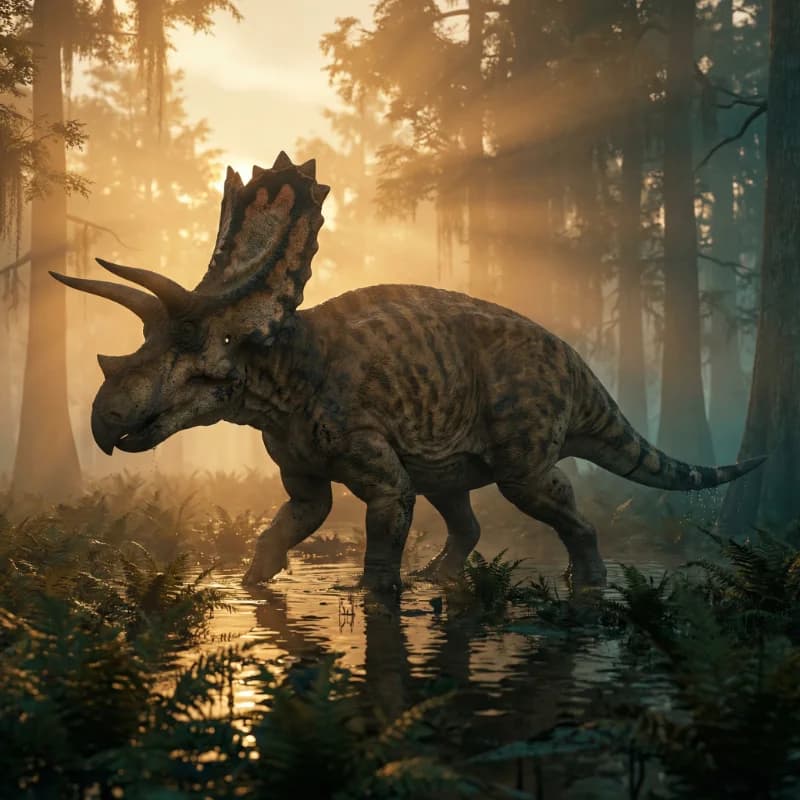
Pentaceratops
Pentaceratops sternbergii
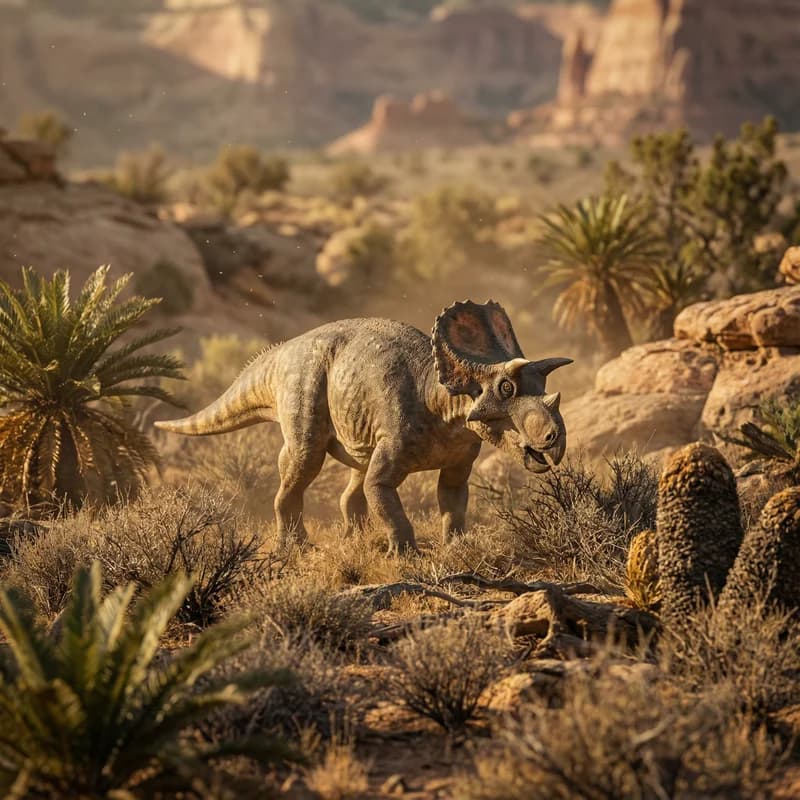
Zuniceratops
Zuniceratops christopheri

Edmontosaurus
Edmontosaurus
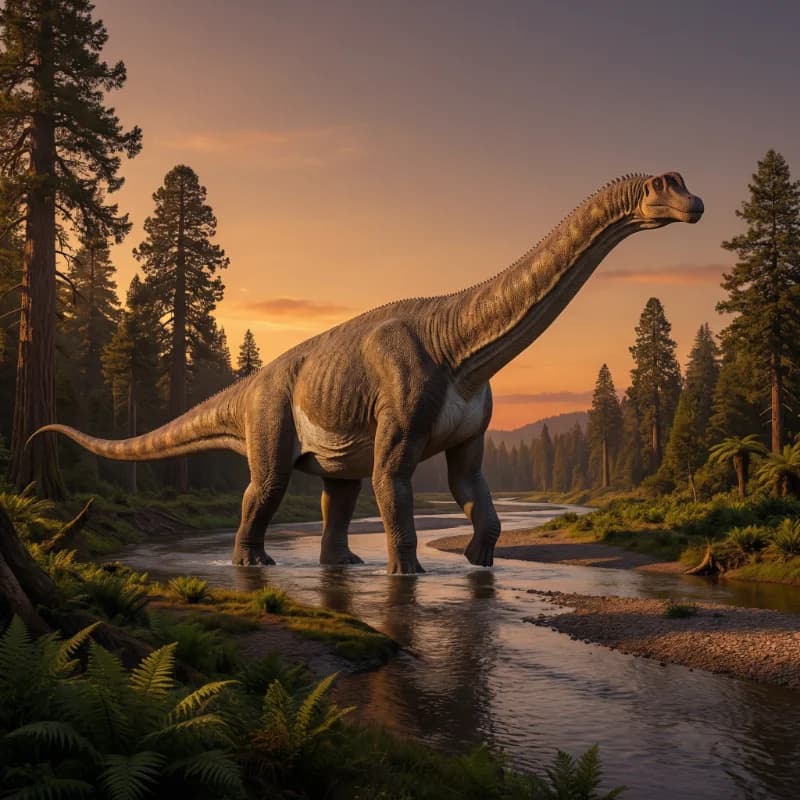
Patagotitan
Patagotitan mayorum
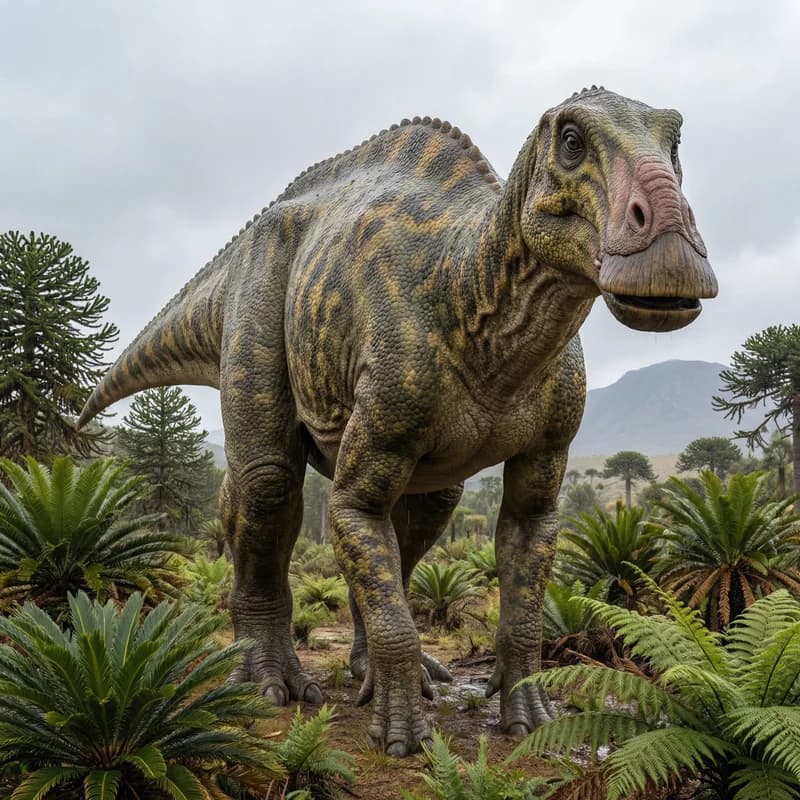
Shantungosaurus
Shantungosaurus giganteus

Leaellynasaura
Leaellynasaura amicagraphica

Nasutoceratops
Nasutoceratops titusi