Edmontosaurus
Cretaceous Period Herbivore Creature Type
Edmontosaurus
Scientific Name: "Edmonton (city in Alberta, Canada) + sauros (Greek: lizard) = 'Edmonton lizard.' Named after the Edmonton Formation near Edmonton, Alberta, where the genus was first discovered"
Local Name: Edmontosaurus
Physical Characteristics
Discovery
Habitat

Edmontosaurus Lambe, 1917 is a genus of large hadrosaurid (duck-billed) dinosaur that inhabited western North America during the Late Cretaceous (Campanian to Maastrichtian, approximately 73–66 million years ago). Two species are currently recognized as valid: the type species E. regalis Lambe, 1917 (late Campanian, ~73–69 Ma) and E. annectens (Marsh, 1892) (late Maastrichtian, ~68–66 Ma). Edmontosaurus was among the last non-avian dinosaurs to exist, living alongside iconic taxa such as Triceratops, Tyrannosaurus, Ankylosaurus, and Pachycephalosaurus immediately prior to the Cretaceous–Paleogene (K-Pg) mass extinction event.
Edmontosaurus ranks among the largest and best-known hadrosaurids. Depending on species and individual, adult total length ranged from approximately 9 to 13 m, and a 2022 osteohistological study by Wosik & Evans estimated the mean asymptotic body mass of E. annectens at roughly 5.6 metric tons, with the largest individuals reaching 6.6–7 metric tons. The genus is particularly renowned for multiple "mummified" specimens preserving skin impressions, soft tissue structures, and even candidate gut contents. In 2025, Tuinstra et al. reported the detection of endogenous collagen (hydroxyproline) in an Edmontosaurus sacrum from the Hell Creek Formation, providing some of the strongest evidence to date for the preservation of original organic molecules in a dinosaur fossil and marking a significant milestone in the decades-long debate over organic material in fossils.
Taxonomically, Edmontosaurus belongs to the Ornithischia, Ornithopoda, family Hadrosauridae, subfamily Saurolophinae (=Hadrosaurinae), tribe Edmontosaurini. Specimens once scattered across multiple genera—including Anatosaurus, Anatotitan, Claosaurus annectens, and Thespesius—were progressively consolidated into Edmontosaurus through systematic revisions from the 1970s to the 2010s, most notably by Campione & Evans (2011), whose morphometric analysis provided robust support for this consolidation. Edmontosaurus forms a sister-group relationship with the giant Chinese hadrosaurine Shantungosaurus and, together with Kamuysaurus, Kerberosaurus, and Laiyangosaurus, constitutes the tribe Edmontosaurini.
Overview
Name and Etymology
The genus name Edmontosaurus is a Latinized compound of the place name "Edmonton" and the Greek sauros (lizard), meaning "Edmonton lizard." The name derives from the Edmonton Formation (now the Horseshoe Canyon Formation) in Alberta, Canada, where the type specimen was found. The type species epithet regalis is Latin for "regal" or "king-sized," bestowed by Lambe (1917) in reference to the animal's imposing size. The second species, E. annectens, bears a specific name from the Latin annectens ("connecting"), originally assigned by Marsh (1892) when he described the species as Claosaurus annectens.
Taxonomic Status and Synonymy
Edmontosaurus has one of the most complex taxonomic histories of any dinosaur. E. annectens was first described by Marsh in 1892 as Claosaurus annectens and subsequently reassigned to Trachodon, Thespesius, Hadrosaurus, and other genera by various authors. In 1942, Lull & Wright erected a new genus Anatosaurus to accommodate several flat-skulled hadrosaurid species, but Brett-Surman's graduate research in the 1970s–1980s demonstrated that Anatosaurus annectens was properly a species of Edmontosaurus, rendering Anatosaurus a junior synonym. Chapman & Brett-Surman (1990) separated Anatotitan copei as a distinct genus, but this too was synonymized with E. annectens by Horner et al. (2004) and Campione & Evans (2011), who showed that the long, low skull of A. copei represented fully mature E. annectens individuals. The Alaskan taxon Ugrunaaluk kuukpikensis Mori et al., 2015 was likewise regarded as indistinguishable from Edmontosaurus by Xing et al. (2017), who considered it a nomen dubium.
Key Summary
Edmontosaurus is the most abundant and best-preserved hadrosaurid from the terminal Cretaceous of North America, providing unparalleled insights into dinosaur skin, behavior, growth, and diet through its numerous mummified specimens and monodominant bonebeds.
Stratigraphy, Age, and Depositional Environment
Temporal Range
Edmontosaurus spans two distinct time intervals within the Late Cretaceous. E. regalis occurs in the late Campanian (~73–69 Ma) Horseshoe Canyon and Wapiti formations of Alberta, while E. annectens is restricted to late Maastrichtian (~68–66 Ma) formations including the Hell Creek (Montana, North Dakota), Lance (Wyoming, South Dakota), and Frenchman (Saskatchewan). The two species are temporally non-overlapping (Campione & Evans, 2011).
Formations and Lithology
| Species | Formation | Region | Age (Ma) | Principal Lithology |
|---|---|---|---|---|
| E. regalis | Horseshoe Canyon Fm. | Alberta, Canada | ~73–69 | Sandstone–mudstone interbeds, fluvial to coastal |
| E. regalis | Wapiti Fm. | Alberta, Canada | ~72–69 | Sandstone–mudstone, floodplain deposits |
| E. annectens | Hell Creek Fm. | Montana, North Dakota, USA | ~68–66 | Sandstone–mudstone–coal, fluvial floodplain |
| E. annectens | Lance Fm. | Wyoming, South Dakota, USA | ~68–66 | Sandstone–mudstone, floodplain to deltaic |
| E. annectens | Frenchman Fm. | Saskatchewan, Canada | ~66 | Sandstone–mudstone, floodplain |
| Edmontosaurus sp. | Prince Creek Fm. | Alaska, USA | ~69 | Sandstone–mudstone, floodplain |
Paleoenvironment
The Horsethief Member of the Horseshoe Canyon Formation, which yields E. regalis bonebeds (including the Danek Bonebed), represents fluvial floodplain to coastal-plain environments characterized by bald cypress swamps and broad coastal lowlands under a warm climate (Eberth & Bell, 2014). The Hell Creek Formation preserves a warm-temperate floodplain-and-channel environment with mixed angiosperm–conifer forests and open ground. The overall distribution of Edmontosaurus fossils suggests a preference for coastal and coastal-plain habitats (Horner et al., 2004).
Specimens and Diagnostic Features
Holotype and Key Specimens
The holotype of E. regalis is NMC 2288, collected in 1912 by Levi Sternberg from the Horseshoe Canyon Formation along the Red Deer River in Alberta. It comprises a skull, articulated vertebrae to the sixth caudal, ribs, partial pelvis, a humerus, and most of a hind limb. The paratype NMC 2289, discovered in 1916 by George F. Sternberg, consists of a skull and skeleton missing the beak, most of the tail, and part of the feet.
The holotype of E. annectens is USNM 2414, collected in 1891 by John Bell Hatcher from the Lance Formation of Niobrara County, Wyoming. It consists of a partial skull roof and skeleton. The paratype YPM 2182 was among the first essentially complete mounted dinosaur skeletons in the United States, displayed since 1901.
Notable mummified specimens include:
| Specimen | Nickname | Species | Locality/Formation | Preservation | Notes |
|---|---|---|---|---|---|
| AMNH 5060 | Trachodon mummy | E. annectens | Lance Fm., Wyoming | Mummy with skin impressions | Discovered 1908 by C.H. Sternberg |
| SMF R4036 | Senckenberg mummy | E. annectens | Lance Fm., Wyoming | Skin impressions + candidate gut contents | Discovered 1910 by Sternberg family |
| NDGS 2000 | Dakota | E. annectens | Hell Creek Fm., North Dakota | Mummy with skin and nail preservation | Discovered 1999 by Tyler Lyson |
| UALVP 53722 | — | Edmontosaurini sp. | Wapiti Fm., Alberta | Soft-tissue cranial comb preserved | Bell et al. (2014); reassessed by Sharpe et al. (2025) |
Diagnostic Features
Edmontosaurus is a saurolophine hadrosaurid lacking a bony cranial crest (i.e., a "non-crested" or flat-headed duck-bill). The two species differ primarily in skull proportions: E. annectens has a longer, lower, and less robust skull than E. regalis (Campione & Evans, 2011). Maxillary tooth column counts are 51–53 in E. regalis and 52 in E. annectens; dentary column counts are 48–49 and 44, respectively (Lull & Wright, 1942). The broad, flat duck-bill snout, continuously replacing dental battery, and ossified tendons reinforcing the back and tail are characteristic of the genus.
Morphology and Functional Anatomy
Body Size
Edmontosaurus was among the largest hadrosaurids. Size varied significantly by species, individual, and ontogenetic stage. The E. regalis holotype (NMC 2288) has been estimated at approximately 9–12 m in total length with a body mass of around 4 metric tons. Two mounted E. annectens skeletons (USNM 2414 and YPM 2182) measure 8.0 m and 8.9 m, respectively, but these are likely subadults (Campione & Evans, 2011). According to the 2022 osteohistological study by Wosik & Evans, fully grown E. annectens averaged approximately 11–12 m in length and about 5.6 metric tons in asymptotic body mass, with the largest individuals reaching 6.6–7 metric tons. Undescribed large specimens at the Museum of the Rockies (MOR 1609, MOR 1142) suggest maximum lengths approaching 15 m and masses up to ~15.9 metric tons, though such giant individuals were likely extremely rare. Hip height ranged from approximately 2.1 m in smaller subadults (USNM 2414) to an estimated 3–3.5 m or more in large adults.
Skull and Dentition
A fully grown Edmontosaurus skull could exceed 1 m in length; one E. annectens skull (formerly Anatotitan) measures 1.18 m. The skull was roughly triangular in lateral profile and expanded anteriorly and posteriorly in dorsal view, forming the characteristic duck-bill or spoon-bill shape. The beak was covered by a keratinous rhamphotheca; in the Senckenberg mummy, the preserved non-bony beak extended at least 8 cm beyond the bone, projecting downward (Lambe, 1920). Teeth were present only in the maxillae and dentaries, organized into dental batteries containing hundreds of teeth. Individual teeth took approximately half a year to form (Thomas & Carlson, 2004) and were composed of six tissue types, rivaling mammalian tooth complexity (LeBlanc et al., 2016).
Postcranial Skeleton
E. regalis possessed 13 cervical, 18 dorsal, and 9 sacral vertebrae; the caudal count is uncertain. The back and most of the tail were reinforced by a latticework of ossified tendons along the neural spines, stiffening these regions into a "ramrod-straight" horizontal posture (Ostrom, 1964). The forelimbs were shorter and lighter than the hind limbs but long enough for standing or quadrupedal locomotion. The hand bore four fingers (no thumb), with digits II–IV enclosed in a fleshy "mitten" in life. The foot had three toes with hoof-like unguals. In 2025, Lyson et al. (Science) reported the preservation of soft-tissue hooves on the hind toes of E. annectens mummies—structurally different from horse hooves but functionally analogous.
Soft Tissue and Skin
Edmontosaurus has the best-known skin of any dinosaur. Multiple mummified specimens (AMNH 5060, SMF R4036, NDGS 2000, and others) have revealed the scalation pattern over most of the body. The skin was covered in small polygonal tubercles (scales), with larger specialized scales in certain regions (back, tail). In 2014, Bell et al. reported a soft-tissue cock's comb-like crest atop the skull of a mummified specimen (UALVP 53722) from the Wapiti Formation—the first direct evidence that "non-crested" hadrosaurids could bear conspicuous soft-tissue cranial ornaments. However, Sharpe et al. (2025) re-examined this specimen and concluded that it cannot be confidently referred to E. regalis and may represent a distinct edmontosaurin taxon.
In October 2025, Lyson et al. published in Science a study of two E. annectens mummies revealing a fleshy midline crest running along the neck and trunk, a spike row over the hips and tail, and hooves capping the hind toes—soft-tissue structures previously unknown in this genus. These mummies were preserved via a clay-template pathway, distinct from the sand-cast preservation known from earlier mummies.
Diet and Ecology
Feeding Ecology
Edmontosaurus was a large terrestrial herbivore. It used its broad beak to crop or strip vegetation and processed food using its dental battery. Dental microwear analysis (Williams et al., 2009) found scratch-dominated textures suggesting a grazing-type diet involving silica-rich plants (e.g., horsetails) or ground-level feeding. Tooth structure analysis revealed combined slicing and grinding capabilities (LeBlanc et al., 2016). The vertical feeding range extended from ground level to approximately 4 m (Horner et al., 2004).
Candidate gut contents reported from the Senckenberg mummy (SMF R4036) include conifer needles (Cunninghamites elegans), conifer and broadleaf twigs, and numerous small seeds or fruits (Kräusel, 1922). Whether this material represents genuine stomach contents or post-mortem wash-in debris remains debated (Currie et al., 1995; Tweet et al., 2008).
Stable isotope analysis of tooth enamel (Thomas & Carlson, 2004) yielded enriched carbon values that, interpreted by modern mammalian standards, would suggest a mixed C3/C4 diet. Since C4 plants were extremely rare in the Late Cretaceous, the most likely explanations include a gymnosperm-heavy diet, consumption of salt-stressed coastal vegetation near the Western Interior Seaway, or physiological differences between dinosaur and mammalian tissue formation.
Chewing Mechanics
The prevailing model of hadrosaurid mastication (Weishampel, 1984) proposed cranial kinesis in which the maxillae bowed outward during jaw closure, creating a rasp-like grinding action against the lower teeth. However, Holliday & Witmer (2008) challenged this model by noting that ornithopods like Edmontosaurus lacked the skull joint types seen in modern kinetic-skulled animals. Cuthbertson et al. (2012) proposed an alternative model in which slight anteroposterior and rotational movements of the two mandibular rami generated the grinding action, better accounting for observed tooth wear patterns in a more solidly constructed skull.
Social Behavior
Edmontosaurus was capable of both bipedal and quadrupedal locomotion, likely favoring quadrupedal walking at slower speeds and bipedal locomotion for faster movement. Multiple monodominant bonebeds are known, including the Danek Bonebed in the Horseshoe Canyon Formation (Bell & Campione, 2014), several bonebeds near Drumheller (Eberth & Bell, 2014), and the Ruth Mason Dinosaur Quarry in the Hell Creek Formation (Wosik & Evans, 2022). These accumulations provide strong evidence for gregarious, herd-like behavior. Migration has been proposed but remains equivocal; isotope data from Thomas & Carlson (2004) favored local seasonal variation over long-distance migration.
Predator–Prey Interactions
Edmontosaurus fossils bear multiple records of tyrannosaur bite marks. Carpenter (1998) described healed bite damage on E. annectens caudal neural spines, interpreting it as a failed predation attempt. DePalma et al. (2013) reported a T. rex tooth embedded in hadrosaur (probable Edmontosaurus) caudal vertebrae with healed bone tissue, constituting physical evidence of predation on a living animal. Most recently (2025/2026), a tyrannosaur tooth embedded in an Edmontosaurus skull was reported, adding new data to the ongoing predation-versus-scavenging debate.
Distribution and Paleogeography
Geographic Range
Edmontosaurus was widely distributed across western North America, from Colorado in the south to the North Slope of Alaska. E. regalis is restricted to the Horseshoe Canyon and Wapiti formations of Alberta, while E. annectens has a broader range encompassing Montana, North Dakota, South Dakota, Wyoming, and Saskatchewan. Alaskan specimens from the Prince Creek Formation document high-paleolatitude (~70°N+) habitation, implying survival through months of polar darkness.
Paleogeographic Interpretation
Paleomagnetic coordinate analysis places E. regalis localities at approximately 57–62°N paleolatitude and E. annectens sites at approximately 48–57°N. During the Late Cretaceous, western North America featured extensive coastal plains formed by the retreating Western Interior Seaway. Edmontosaurus appears to have preferentially occupied these coastal and near-coastal lowland environments.
Phylogenetics and Taxonomic Debate
Phylogenetic Position
Edmontosaurus is unambiguously placed within the Saurolophinae (=Hadrosaurinae). Xing et al. (2014) recovered a sister-group relationship between Edmontosaurus and Shantungosaurus and formally defined the tribe Edmontosaurini, which includes Kerberosaurus, Laiyangosaurus, Shantungosaurus, Kamuysaurus, and Edmontosaurus. A subsequent analysis by Xing et al. (2017) placed Kerberosaurus as the sister taxon to the (Shantungosaurus + Edmontosaurus) clade within Edmontosaurini.
Alternative Hypotheses
Horner et al. (2004) recovered a notably different topology, nesting Edmontosaurus between Gryposaurus and the brachylophosaurins and distant from Saurolophus. However, most subsequent analyses have consistently placed Edmontosaurus close to Saurolophus and Prosaurolophus, and in a sister-group relationship with Shantungosaurus.
Interspecific Relationships Within Edmontosaurus
Campione & Evans (2011) demonstrated through morphometric analysis that only two species are valid (E. regalis and E. annectens), with previously named taxa representing ontogenetic stages: E. saskatchewanensis (juveniles of E. annectens), Anatosaurus edmontoni (subadults of E. regalis), and Anatotitan copei (fully mature E. annectens).
Reconstruction and Uncertainty
Confirmed
Edmontosaurus was a large herbivorous hadrosaurid—this is firmly established. The validity of two species (E. regalis and E. annectens), the scaly skin covering, combined bipedal-quadrupedal locomotion, dental battery food processing, and gregarious behavior are all well-supported by extensive fossil evidence. The 2025 findings by Lyson et al. also confirmed the presence of hind-foot hooves and a fleshy dorsal midline crest and spike row in E. annectens.
Probable
The existence of a soft-tissue cranial comb was reported from UALVP 53722 by Bell et al. (2014), but Sharpe et al. (2025) re-evaluated this specimen as potentially representing a separate edmontosaurin taxon rather than E. regalis. Whether E. regalis itself bore such a crest therefore remains uncertain, although the presence of soft-tissue ornaments within Edmontosaurini is well established. The 2025 Science study further demonstrated that E. annectens possessed midline fleshy structures, suggesting such ornaments were widespread in this lineage.
Hypothetical and Uncertain
Migratory behavior remains hypothetical. The Senckenberg mummy gut contents are ambiguous. Precise body mass estimates for E. regalis lack statistical significance due to insufficient osteohistological sampling (Wosik & Evans, 2022). The popular-media image of a fully aquatic "duck dinosaur" has been rejected since the 1960s and does not reflect current scientific understanding.
Growth and Ontogeny
Campione & Evans (2011) showed that the Edmontosaurus skull underwent dramatic changes during growth—becoming longer and flatter with age—leading to historical misclassification of growth stages as separate species or genera. The ontogenetic sequence E. saskatchewanensis (juvenile) → E. annectens (subadult) → Anatotitan copei (adult) representing a single species is the most notable example.
Regarding growth rate, Wosik & Evans (2022) found that E. annectens reached skeletal maturity at approximately 9 years of age, a growth trajectory similar to that of other hadrosaurids such as Maiasaura. E. regalis is estimated to have reached maturity at 10–15 years (Wosik et al., 2014).
Recent Research Highlights
2025: Endogenous Collagen Discovery
Tuinstra et al. (2025) used advanced mass spectrometry techniques to detect hydroxyproline—an amino acid diagnostic of collagen—in an Edmontosaurus sacrum from the Hell Creek Formation. This represents some of the strongest evidence to date for the preservation of original organic molecules in a ~66-million-year-old fossil, providing a significant counterpoint to the hypothesis that all organic material in fossils must be contamination.
2025: Mummy Study — Fleshy Crest and Hooves
Lyson et al. (2025, Science) analyzed two E. annectens mummies and reported a fleshy midline crest along the neck and trunk, a spike row over the pelvis and tail, and soft-tissue hooves on the hind toes. These mummies were preserved via a clay-template pathway, representing a different fossilization mechanism from the sand-cast preservation documented in earlier mummies.
2025: Soft-Tissue Crest Re-evaluation
Sharpe et al. (2025) re-examined specimen UALVP 53722 and concluded that it cannot be confidently assigned to E. regalis, potentially representing a distinct edmontosaurin taxon. This study also discussed the taphonomy of the specimen, finding consistency with Drumheller et al.'s (2022) slow-burial mummification pathway.
Comparison with Related and Contemporary Taxa
| Taxon | Family/Subfamily | Age | Distribution | Length (m) | Key Features |
|---|---|---|---|---|---|
| Edmontosaurus | Hadrosauridae, Saurolophinae | Campanian–Maastrichtian | North America | 9–13 (max ~15) | Non-crested; possible soft-tissue crest |
| Shantungosaurus | Hadrosauridae, Saurolophinae | Maastrichtian | Shandong, China | ~15–16 | Sister taxon within Edmontosaurini; largest known ornithopod |
| Saurolophus | Hadrosauridae, Saurolophinae | Campanian–Maastrichtian | North America, Asia | ~9–12 | Bony spike crest |
| Kamuysaurus | Hadrosauridae, Saurolophinae | Maastrichtian | Hokkaido, Japan | ~8 | Edmontosaurini member; described 2019 |
| Maiasaura | Hadrosauridae, Saurolophinae | Campanian | North America | ~9 | Evidence for nesting and parental care |
Edmontosaurus is most closely related to Shantungosaurus; Brett-Surman noted the two genera differed only in size-related details. However, Shantungosaurus was substantially larger, with an estimated total length of ~15–16 m and body mass exceeding 16 metric tons, making it the largest known ornithopod dinosaur.
Fun Facts
FAQ
📚References
- Lambe, L.M. (1917). "A new genus and species of crestless hadrosaur from the Edmonton Formation of Alberta." The Ottawa Naturalist, 31, 65–73.
- Marsh, O.C. (1892). "Notice of new reptiles from the Laramie Formation." American Journal of Science, 3(43), 449–453.
- Campione, N.E. & Evans, D.C. (2011). "Cranial growth and variation in edmontosaurs (Dinosauria: Hadrosauridae): implications for latest Cretaceous megaherbivore diversity in North America." PLoS ONE, 6(9), e25186. https://doi.org/10.1371/journal.pone.0025186
- Horner, J.R., Weishampel, D.B. & Forster, C.A. (2004). "Hadrosauridae." In Weishampel, D.B., Dodson, P. & Osmólska, H. (eds.), The Dinosauria (2nd ed.), pp. 438–463. University of California Press.
- Bell, P.R., Fanti, F., Currie, P.J. & Arbour, V.M. (2014). "A mummified duck-billed dinosaur with a soft-tissue cock's comb." Current Biology, 24(1), 70–75. https://doi.org/10.1016/j.cub.2013.11.008
- Wosik, M. & Evans, D.C. (2022). "Osteohistological and taphonomic life-history assessment of Edmontosaurus annectens (Ornithischia: Hadrosauridae) from the late Cretaceous (Maastrichtian) Ruth Mason Dinosaur Quarry, South Dakota, United States." Journal of Anatomy, 241(3), 594–621. https://doi.org/10.1111/joa.13679
- Xing, H., Zhao, X., Wang, K., Li, D., Chen, S., Mallon, J.C., Zhang, Y. & Xu, X. (2014). "Comparative osteology and phylogenetic relationship of Edmontosaurus and Shantungosaurus (Dinosauria: Hadrosauridae) from the Upper Cretaceous of North America and East Asia." Acta Geologica Sinica (English Edition), 88(6), 1623–1652. https://doi.org/10.1111/1755-6724.12334
- Xing, H., Mallon, J.C. & Currie, M.L. (2017). "Supplementary cranial description of the types of Edmontosaurus regalis (Ornithischia: Hadrosauridae), with comments on the phylogenetics and biogeography of Hadrosaurinae." PLoS ONE, 12(4), e0175253. https://doi.org/10.1371/journal.pone.0175253
- Tuinstra, L.R. et al. (2025). "Evidence for endogenous collagen in Edmontosaurus fossil bone." Analytical Chemistry, 97(4), 2149–2158. https://doi.org/10.1021/acs.analchem.4c03115
- Lyson, T.R. et al. (2025). "Duck-billed dinosaur fleshy midline and hooves reveal terrestrial clay-template 'mummification.'" Science, published online October 23, 2025. https://doi.org/10.1126/science.adw3536
- Sharpe, H.S., Bell, P.R., Baylatry, M., Sissons, R. & Sullivan, C. (2025). "Re-evaluation of a soft crested Edmontosaurin, with implications for hadrosaurid life appearance and diversity." The Anatomical Record, published online November 29, 2025. https://doi.org/10.1002/ar.70098
- Eberth, D.A. & Bell, P.R. (2014). "Stratigraphy of the Danek Bonebed (Upper Cretaceous Horseshoe Canyon Formation, central Alberta) and correlations with strata in the Drumheller area." Canadian Journal of Earth Sciences, 51(11), 975–981.
- DePalma, R.A. et al. (2013). "Physical evidence of predatory behavior in Tyrannosaurus rex." Proceedings of the National Academy of Sciences, 110(31), 12560–12564. https://doi.org/10.1073/pnas.1216534110
- Carpenter, K. (1998). "Evidence of predatory behavior by carnivorous dinosaurs." Gaia, 15, 135–144.
- Thomas, K.J. & Carlson, S.J. (2004). "Microscale δ18O and δ13C isotopic analysis of an ontogenetic series of the hadrosaurid dinosaur Edmontosaurus: implications for physiology and ecology." Palaeogeography, Palaeoclimatology, Palaeoecology, 206(3–4), 257–287.
- Williams, V.S., Barrett, P.M. & Purnell, M.A. (2009). "Quantitative analysis of dental microwear in hadrosaurid dinosaurs, and the implications for hypotheses of jaw mechanics and feeding." Proceedings of the National Academy of Sciences, 106(27), 11194–11199.
- Ostrom, J.H. (1964). "A reconsideration of the paleoecology of hadrosaurian dinosaurs." American Journal of Science, 262(8), 975–997.
- Lull, R.S. & Wright, N.E. (1942). "Hadrosaurian dinosaurs of North America." Geological Society of America Special Papers, 40, 1–242.
- Drumheller, S.K. et al. (2022). "Biostratinomic alterations of an Edmontosaurus 'mummy' reveal a pathway for soft tissue preservation." PLoS ONE, 17(10), e0275240. https://doi.org/10.1371/journal.pone.0275240
- Cuthbertson, R.S., Tirabasso, A., Rybczynski, N. & Holmes, R.B. (2012). "Kinetic limitations of intracranial joints in Brachylophosaurus canadensis and Edmontosaurus regalis (Dinosauria: Hadrosauridae), and their implications for the chewing mechanics of hadrosaurids." The Anatomical Record, 295(6), 968–979.
Gallery
5 images Edmontosaurus
Edmontosaurus · Cretaceous Period · Herbivore
 Edmontosaurus
Edmontosaurus · Cretaceous Period · Herbivore
 Edmontosaurus
Edmontosaurus · Cretaceous Period · Herbivore
 Edmontosaurus
Edmontosaurus · Cretaceous Period · Herbivore
 Edmontosaurus
Edmontosaurus · Cretaceous Period · Herbivore
🔗Related Creatures
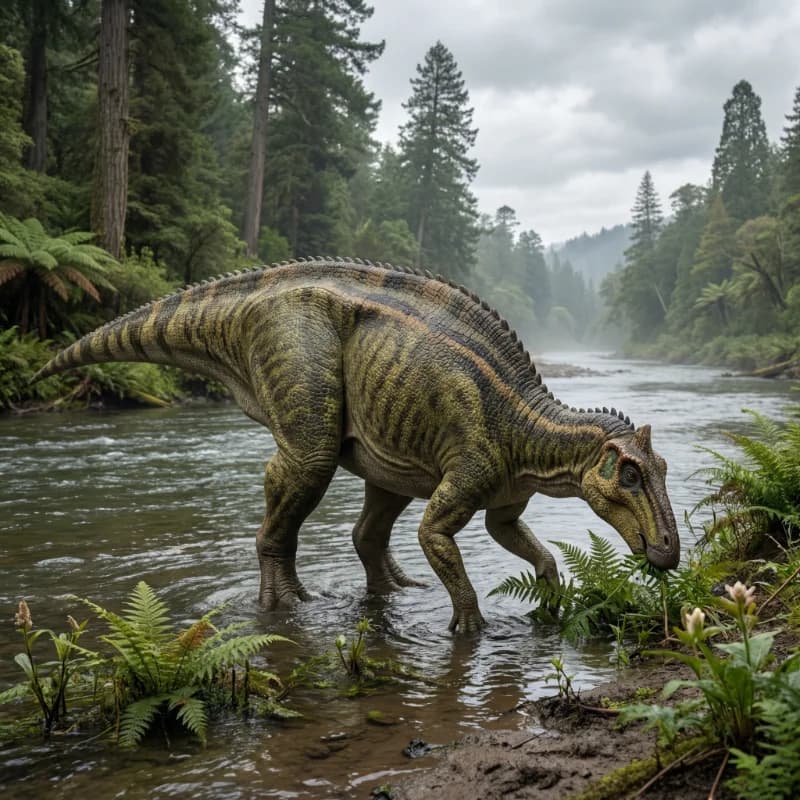
Hadrosaurus
Hadrosaurus foulkii
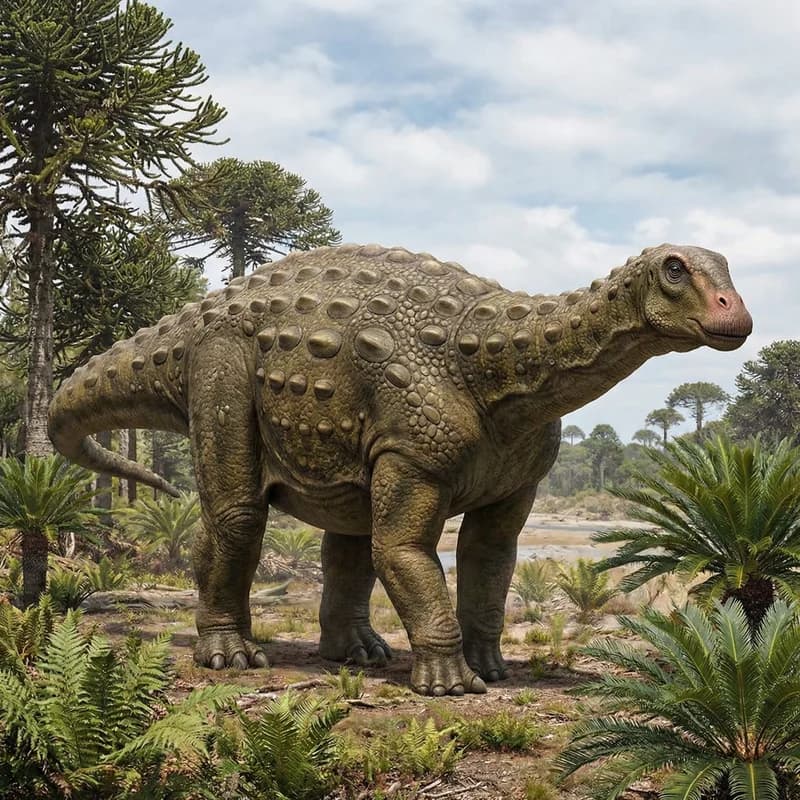
Saltasaurus
Saltasaurus loricatus
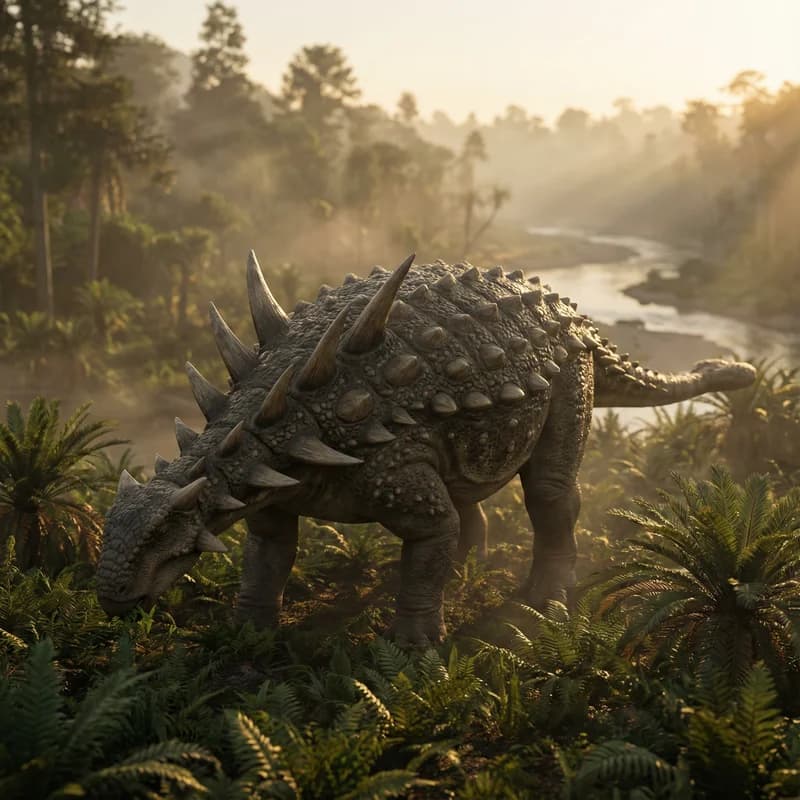
Sauropelta
Sauropelta edwardsorum
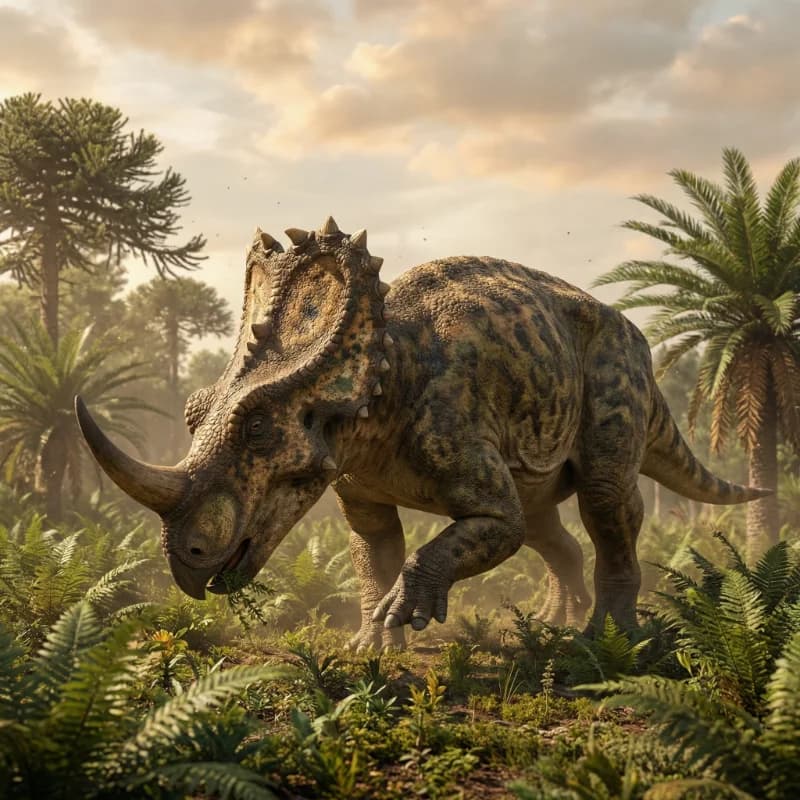
Centrosaurus
Centrosaurus apertus

Triceratops
Triceratops

Corythosaurus
Corythosaurus casuarius
Magyarosaurus
Magyarosaurus dacus
Peloroplites
Peloroplites cedrimontanus