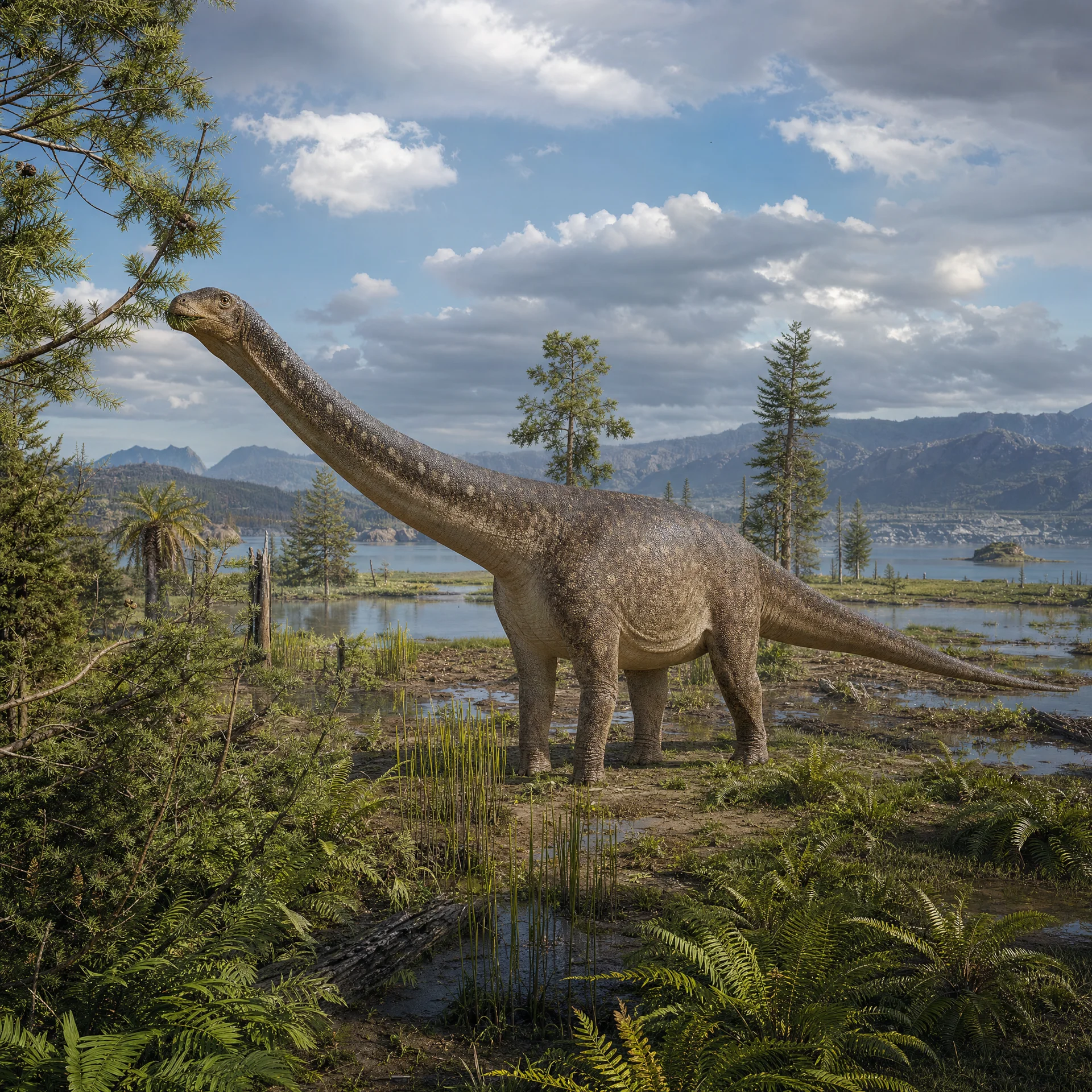
Magyarosaurus
Magyarosaurus dacus
⏳ Cretaceous Period🍽️ HerbivoreDinosaurs
Physical Characteristics
⏳
PeriodCretaceous Period
🍽️
DietHerbivore
📏
Size2.16~6m
⚖️
Weight660~972kg
Classification
GEN
GenusMagyarosaurus
SP
SpeciesM. dacus
Magyarosaurus dacus
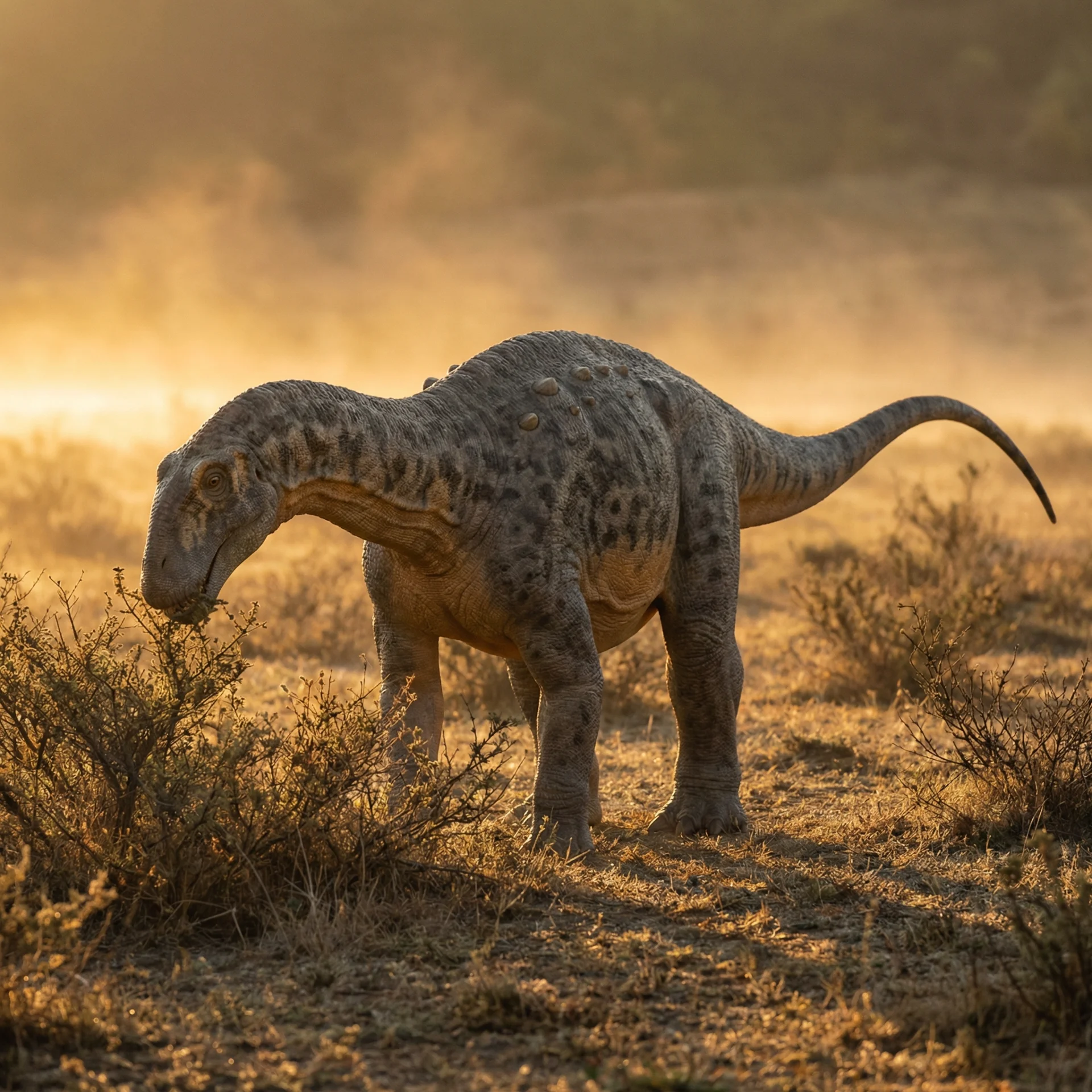
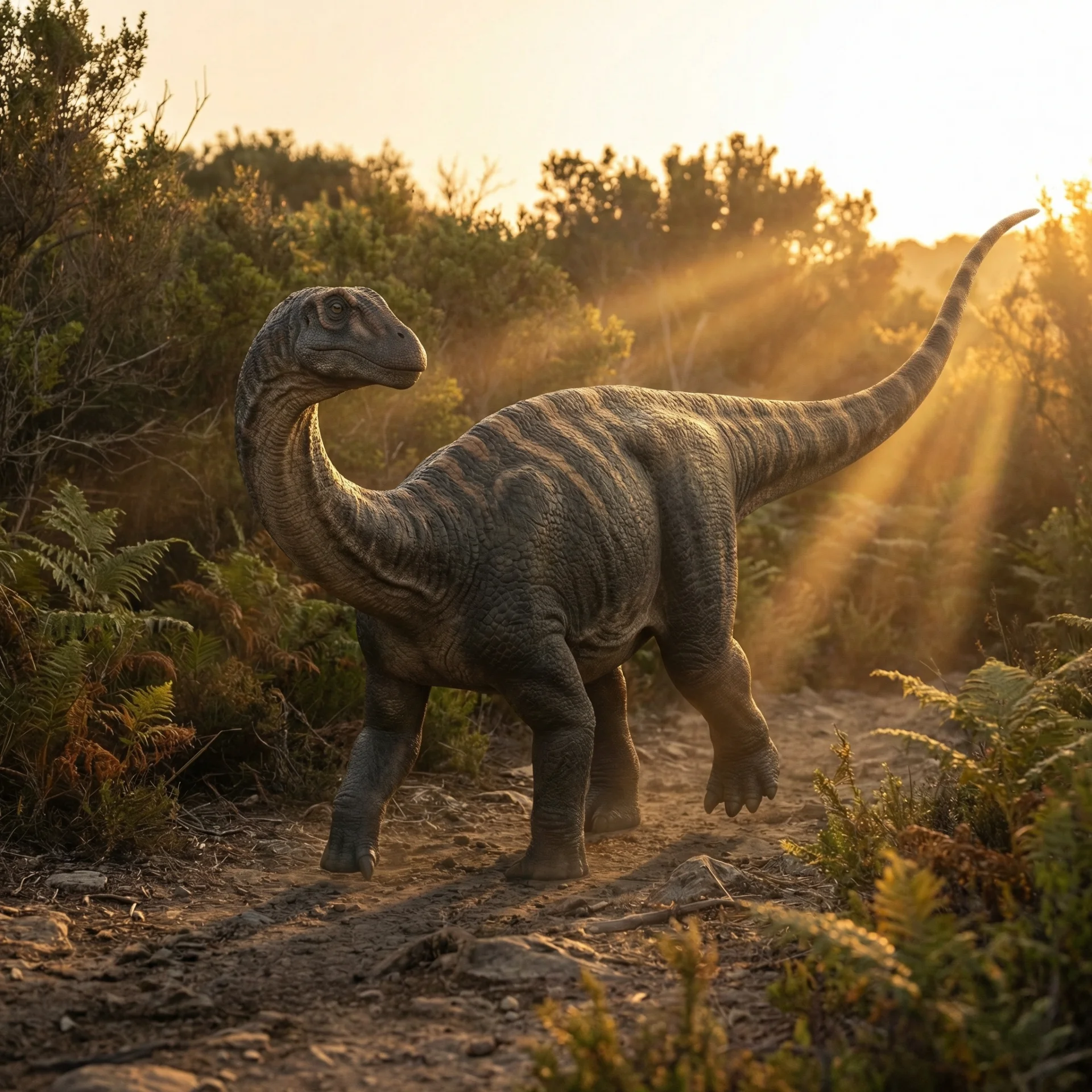
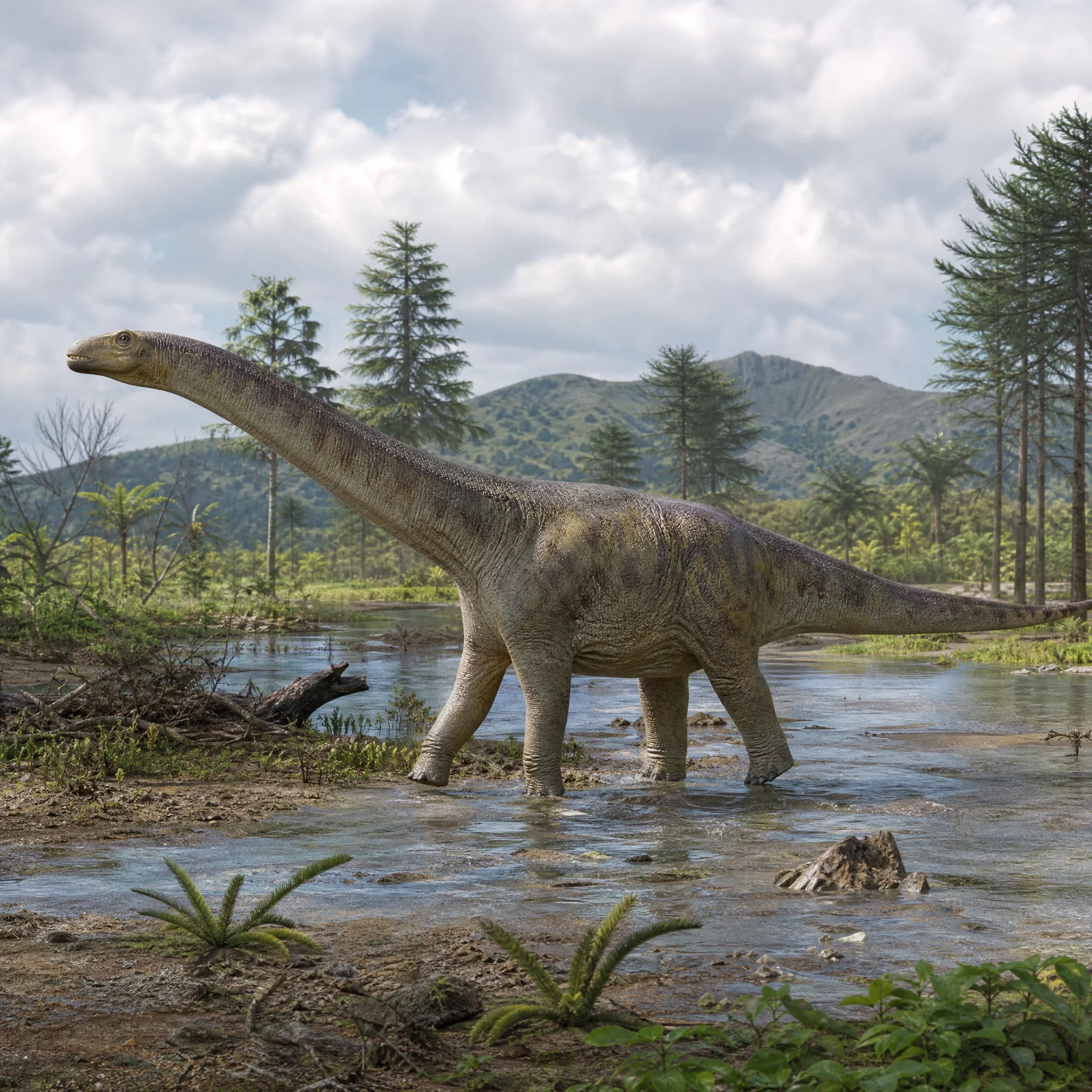
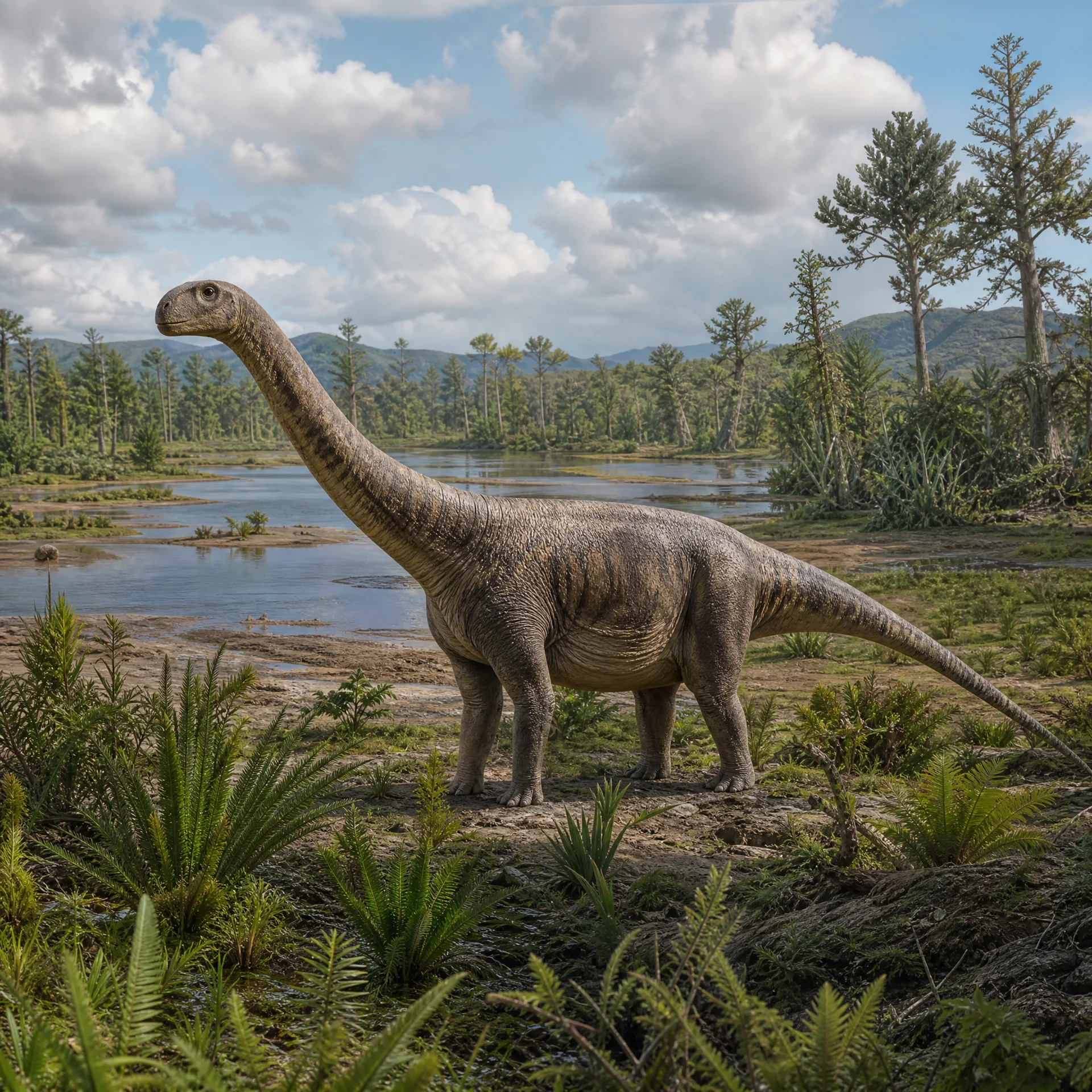
Magyarosaurus (Magyarosaurus dacus Nopcsa, 1915) is a small-bodied titanosaurian sauropod dinosaur from the Late Cretaceous Maastrichtian stage (approximately 71–66 Ma) of what is now Transylvania, western Romania. With an adult body length of approximately 2.16–6 m and a body mass of roughly 660–972 kg (some earlier estimates suggesting approximately 750–900 kg), it ranks among the smallest known adult sauropods. Its remarkably diminutive stature represents one of the best-documented cases of insular dwarfism (phyletic nanism) in the fossil record, the result of evolution on Hațeg Island — a landmass in the Late Cretaceous European Archipelago when elevated sea levels fragmented Europe into a chain of islands.
The dwarfed status of Magyarosaurus was initially contested, with some researchers arguing that the small bones represented juveniles of a larger-bodied species. However, Stein et al. (2010) provided decisive osteohistological evidence refuting this alternative. Even the smallest Magyarosaurus specimens exhibit histologic ontogenetic stages (HOS 12–14) — bone microstructures identical to those of fully mature or senescent individuals of large-bodied sauropods — with cortical bone almost entirely replaced by secondary osteons (Haversian bone). This demonstrates that Magyarosaurus drastically reduced its growth rate while retaining the high basal metabolic rate characteristic of sauropods. A comprehensive taxonomic revision by Díez Díaz et al. (2025) stabilized the taxonomy of this species: the previously included M. hungaricus was transferred to a new genus, Petrustitan, and a large-bodied Hațeg titanosaur was named as the new genus and species Uriash kadici.
Within the latest Cretaceous ecosystem of the Hațeg Basin, Magyarosaurus coexisted with other dwarfed dinosaurs, including the basal hadrosaurid Telmatosaurus, the euornithopod Zalmoxes, and the nodosaurid Struthiosaurus. The apex predator of this island was likely the giant azhdarchid pterosaur Hatzegopteryx, with an estimated wingspan of 10–12 m. Magyarosaurus thus stands as a paleontologically pivotal taxon demonstrating that the general ecological principles driving insular body-size reduction applied even to the largest group of terrestrial animals — the sauropod dinosaurs.
The genus name Magyarosaurus combines the Hungarian ethnonym Magyar with the Greek saurus (lizard), meaning "Hungarian lizard." This name reflects the political geography at the time of discovery: the fossil localities were within the Kingdom of Hungary, part of the Austro-Hungarian Empire. The specific epithet dacus honours the Dacians, an ancient Thracian-related people who once inhabited the Transylvanian region approximately 2,000 years ago. The species was originally described by Franz Baron Nopcsa in 1915 as Titanosaurus dacus. In 1932, Friedrich von Huene recognized morphological differences from the Indian Titanosaurus indicus and erected the new genus Magyarosaurus, transferring the species into it.
Magyarosaurus dacus is currently regarded as a valid species, with its taxonomy stabilized by the comprehensive revision of Díez Díaz et al. (2025). Huene (1932) had named two additional species within the genus: M. transsylvanicus was found to be a chimera, with some material referable to M. dacus and the rest indeterminate; M. hungaricus was confirmed as a distinct taxon and transferred to the new genus Petrustitan hungaricus. Phylogenetic analyses recover Magyarosaurus as a member of or closely related to Saltasauridae, allied with taxa such as Rapetosaurus and Nemegtosaurus.
A dwarfed titanosaurian sauropod from the Late Cretaceous Hațeg Island (Romania), approximately 2–6 m long, whose phyletic nanism has been histologically confirmed — one of the most compelling examples of island dwarfism among dinosaurs.
Magyarosaurus is known from the Maastrichtian stage of the Late Cretaceous (approximately 71–66 Ma), with the majority of specimens coming from lower Maastrichtian deposits. The age assignment is supported by the stratigraphic position of continental sediments overlying biostratigraphically dated Campanian marine beds (Melinte-Dobrinescu, 2010), magnetostratigraphy (Panaiotu & Panaiotu, 2010), palynostratigraphy (van Itterbeeck et al., 2005), and limited radiometric dating (Bojar et al., 2011).
Most specimens derive from the Sînpetru (Sânpetru) Formation in the central Hațeg Basin, with additional material from the Densuş-Ciula Formation in the northwestern marginal areas of the basin. The sediments are dominantly fluvial siliciclastics, comprising coarser channel sandstones interbedded with finer-grained floodplain siltstones and mudstones. In the northwestern Hațeg Basin (Densuş-Ciula Formation), volcanoclastic material, volcanic tuffs, minor lava flows, and coal bed intercalations are also present (Csiki-Sava et al., 2016).
During the Maastrichtian, the Hațeg Basin was situated on a subtropical island (Hațeg Island) along the northern margin of the Mesozoic Neotethys–Alpine Tethys oceanic realm, at an approximate paleolatitude of 29°N (Panaiotu & Panaiotu, 2010). Paleosol analysis by Therrien et al. (2009) reveals that the early Maastrichtian Sânpetru landscape was a mosaic of wetlands, seasonal wetlands, and better-drained floodplain habitats under semi-arid to subhumid conditions. A large-scale paleoenvironmental shift occurred during the late Maastrichtian, transforming the region into an extensive wetland.
The lectotype is the anterior caudal vertebra SZTFH Ob.3091, designated by Díez Díaz et al. (2025) as the most complete and diagnostic element among the three specimens originally figured by Nopcsa (1915). Additional specimens SZTFH Ob.4215 (middle caudal) and SZTFH Ob.3098 (posterior caudal) are also referred to M. dacus as part of the original type series. In total, remains from at least ten individuals have been recovered, consisting primarily of caudal vertebrae, dorsal vertebrae, and appendicular elements (humeri, femora, tibiae, ulnae, fibulae). No cranial material is known.
Specimens are distributed across several institutions: the Collection of the Supervisory Authority for Regulatory Affairs in Budapest (SZTFH, formerly MAFI), the Laboratory of Palaeontology at the University of Bucharest (LPB/FGGUB), and the Natural History Museum, London (NHMUK).
According to Díez Díaz et al. (2025), M. dacus can be diagnosed on the basis of five autapomorphies and six "local" autapomorphies. Its diminutive adult body size (total length approximately 2–6 m; body mass approximately 660–972 kg) is itself a distinguishing autapomorphy, as none of its close relatives exhibit such extreme size reduction. Key diagnostic features pertain to the morphology of the caudal vertebrae, including details of centrum robustness and neural arch configuration.
No skull material is known, leaving cranial morphology entirely unknown. Most specimens were recovered as isolated elements, making it difficult to reconstruct a single complete individual. Historically, remains of M. dacus, M. hungaricus, and M. transsylvanicus were conflated uncritically, but the 2025 revision identified three monospecific assemblages that can be confidently attributed to M. dacus.
Magyarosaurus is an exceptionally small titanosaurian sauropod. According to Díez Díaz et al. (2025), specimens confidently referable to M. dacus measure approximately 2.16–2.82 m in body length and weigh approximately 660–972 kg. However, earlier studies estimated a total body length of approximately 5–6 m and body mass of approximately 750–900 kg (Stein et al., 2010; Benson et al., 2014). The discrepancy may partly reflect the prior inclusion of specimens now reassigned to Petrustitan. By any estimate, the adult body size of M. dacus is dramatically smaller than that of typical sauropods (which weigh tens of tonnes), comparable to a modern horse.
Stein et al. (2010) measured humeral lengths ranging from approximately 222 to 488 mm and femoral lengths from approximately 346 to 540 mm among M. dacus specimens. By comparison, the large-bodied Hațeg taxon Uriash kadici (including material formerly assigned to "M. hungaricus") has a humerus approximately 914 mm long — more than twice the size.
| Taxon | Estimated length | Estimated mass | Notes |
|---|---|---|---|
| Magyarosaurus dacus | ca. 2.16–6 m | ca. 660–972 kg | Dwarfed titanosaur |
| Europasaurus holgeri | ca. 6.2 m | ca. 800 kg | Late Jurassic, Germany; dwarfed basal macronarian |
| Paludititan nalatzensis | Unknown (incomplete) | Unknown | Contemporaneous Hațeg Island medium-sized titanosaur |
| Petrustitan hungaricus | Unknown | Unknown (larger than M. dacus) | Hațeg Island; formerly M. hungaricus |
| Uriash kadici | ca. 12 m | ca. 8,000 kg | Large-bodied Hațeg Island titanosaur |
Caudal vertebrae are the most abundantly preserved elements. Anterior caudals are characterized by short, robust centra with well-developed neural arches. Dorsal vertebrae and limb bones are also known, but manus elements and skull material remain undiscovered. Notably, the limb bones are proportionally long and gracile, suggesting that limb proportions may have changed in concert with body-size reduction — a possible correlate of island dwarfism (Díez Díaz et al., 2025).
Csiki (1999) reported an osteoderm from the "La Cărare" locality in the Sânpetru Formation, assigned to Magyarosaurus dacus. The osteoderm is distinctive in morphology and size, providing evidence that dermal armour was widespread among Late Cretaceous titanosaurs.
The osteohistological study of Stein et al. (2010) was pivotal to understanding the biology of Magyarosaurus. In all M. dacus limb bones, the cortical bone is almost entirely replaced by secondary osteons (Haversian bone), corresponding to histologic ontogenetic stages (HOS) of 12–14. In typical large sauropods such as Apatosaurus, these stages are observed only in massive, senescent individuals with femora exceeding 1.5–1.8 m in length. Crucially, even the smallest M. dacus specimen (MAFI Ob.3092, humerus approximately 222 mm) records HOS 12, demonstrating that these tiny individuals were fully mature adults, not juveniles.
The primary bone tissue contains a high proportion of parallel-fibered and lamellar bone, indicating relatively slow deposition rates, yet the bone retains the extensive vascular canal network characteristic of fibrolamellar bone — the tissue type associated with rapid growth and high metabolic rates in sauropods. This unique combination demonstrates that Magyarosaurus drastically reduced its ontogenetic growth rate while maintaining the high basal metabolic rate typical of sauropods, rather than reverting to the slow-growing lamellar-zonal bone seen in ectothermic reptiles.
Magyarosaurus was almost certainly herbivorous, consistent with all known titanosaurian sauropods. No skull or dental material has been recovered, so this inference rests on its phylogenetic position within Saltasauridae/Lithostrotia, among close relatives such as Rapetosaurus and Nemegtosaurus that possess the pencil-shaped (cylindrical) teeth characteristic of derived titanosaurs.
Magyarosaurus was part of a small-to-medium-bodied herbivore guild on Hațeg Island. Contemporaneous taxa sharing the same ecosystem included the basal hadrosaurid Telmatosaurus transsylvanicus, the euornithopod Zalmoxes (two species: Z. robustus and Z. shqiperorum), and the nodosaurid Struthiosaurus transylvanicus — all of which also exhibit dwarfism. The apex predator of the island was likely the giant azhdarchid pterosaur Hatzegopteryx thambema (estimated wingspan approximately 10–12 m). Small maniraptoran theropods such as Balaur bondoc were also present.
Grellet-Tinner et al. (2012) attributed 11 megaloolithid eggs discovered at the Totești-Baraj locality in the Hațeg Basin to Nemegtosauridae, likely Magyarosaurus dacus or possibly Paludititan. Embryonic remains were preserved inside one egg, and evidence of incipient dermal armour (osteoderms) was identified within the embryo — the first evidence of reproductive adaptation to the "island effect" in a dwarfed titanosaur. However, the precise taxonomic attribution of the eggs remains provisional.
Magyarosaurus is known with certainty only from western Transylvania, Romania. The principal fossil localities are in the Hațeg Basin (Hunedoara County), including the Sibișel River valley near Sânpetru, Vălioara, Ciula Mică, and Groapa. An uncertain referred specimen (an isolated caudal vertebra) was reported from the Sebeș Formation of the southwestern Transylvanian Basin (Codrea et al., 2008), but this attribution is not definitive.
During the Maastrichtian, the Hațeg Basin lay on a subtropical island at approximately 29°N paleolatitude (Panaiotu & Panaiotu, 2010), part of the Late Cretaceous European Archipelago fringing the northern margin of the Neotethys–Alpine Tethys oceanic realm. Hațeg Island is estimated to have been roughly the size of modern Ireland. This limited land area constituted the key selective pressure driving body-size reduction among the island's resident fauna.
Díez Díaz et al. (2025) conducted a large-scale phylogenetic analysis incorporating 152 taxa scored for 570 characters. Magyarosaurus was recovered as a member of or closely related to Saltasauridae, consistent with the earlier analysis of Curry Rogers (2005) placing it within the lithostrotian Rapetosaurus clade.
Remarkably, the four Hațeg Basin titanosaur taxa (M. dacus, Paludititan, Petrustitan, Uriash) are scattered across different regions of the titanosaurian phylogeny. Paludititan shows affinities with Lognkosauria, Petrustitan is most closely related to South American early-diverging eutitanosaurs, and Uriash also shares affinities with Gondwanan taxa. This pattern implies a complex biogeographic history involving multiple independent dispersal events to Hațeg Island, rather than a single colonization followed by in situ diversification.
Nopcsa (1914, 1915) was the first to interpret the small body size of the Hațeg dinosaurs as analogous to the insular dwarfism of Mediterranean dwarf elephants. Le Loeuff (2005) challenged this interpretation, suggesting the small titanosaur bones could represent juveniles of a larger-bodied taxon. Stein et al. (2010) provided decisive histological evidence supporting Nopcsa's original hypothesis: the bone microstructure of small M. dacus specimens and large "M. hungaricus" (now Uriash/Petrustitan) specimens cannot be placed on the same growth trajectory, confirming they represent separate taxa with fundamentally different growth strategies.
Díez Díaz et al. (2025) further discussed several scenarios to explain the co-occurrence of dwarfed and large-bodied titanosaurs on Hațeg Island: the large taxon may have arrived during a period of lowered sea level when the effective island area was greater; it may represent a "stray" castaway population; or it may derive from a newly arrived lineage that had not yet undergone dwarfing.
Confirmed: The taxonomic validity of M. dacus; designation of the lectotype (SZTFH Ob.3091); histological evidence for dwarfed adult status (HOS 12–14); phylogenetic position as a member of or closely related to Saltasauridae.
Probable/well-supported: Body mass of approximately 660–972 kg (varies by estimation method); body length of approximately 2–6 m; subtropical floodplain–wetland habitat; herbivorous diet (inferred phylogenetically due to the absence of cranial material).
Hypothetical/uncertain: The full extent and function of dermal armour (only a single osteoderm reported); attribution of specific egg fossils to M. dacus versus Paludititan (Grellet-Tinner et al., 2012); the precise island area and the tempo of dwarfing; the ecological context explaining the co-occurrence of large-bodied Uriash on the same island.
Popular accounts frequently cite the total length of Magyarosaurus as uniformly "6 m," but this figure predates the 2025 revision. Based on specimens confidently referable to M. dacus, the revised body-length estimate is only approximately 2.16–2.82 m (Díez Díaz et al., 2025). The earlier 5–6 m figure likely incorporated material now reassigned to Petrustitan or other taxa.
| Feature | Magyarosaurus dacus | Europasaurus holgeri | Paludititan nalatzensis | Uriash kadici |
|---|---|---|---|---|
| Age | Maastrichtian (ca. 71–66 Ma) | Kimmeridgian (ca. 154 Ma) | Maastrichtian | Maastrichtian |
| Region | Romania, Hațeg Island | Germany, Lower Saxony Island | Romania, Hațeg Island | Romania, Hațeg Island |
| Estimated length | ca. 2.16–6 m | ca. 6.2 m | Unknown (incomplete) | ca. 12 m |
| Estimated mass | ca. 660–972 kg | ca. 800 kg | Unknown | ca. 8,000 kg |
| Dwarfism | Confirmed (HOS 12–14) | Confirmed (EFS present; HOS 10.5) | Possible (insufficient data) | Large-bodied (not dwarfed) |
| Histological peculiarity | Extreme secondary remodeling; EFS not observed | Fibrolamellar bone preserved; clear EFS | Unknown | Typical titanosaur histology |
| Phylogenetic position | Near Saltasauridae | Basal Macronaria | Lognkosauria affinity | Gondwanan affinity |
Despite similar adult body masses (approximately 800–900 kg), the two insular dwarf sauropods — Magyarosaurus and Europasaurus — display markedly different osteohistological profiles and growth strategies. Europasaurus reaches only HOS 10.5 and preserves a clear external fundamental system (EFS), whereas M. dacus reaches HOS 14 with complete cortical remodeling that has obliterated any EFS. This indicates that the two lineages independently underwent dwarfism via different heterochronic mechanisms, separated by approximately 90 million years.
Magyarosaurus was roughly the size of a modern horse, weighing approximately 660–972 kg — making it one of the smallest adult sauropods ever known.
Franz Baron Nopcsa, who first studied Magyarosaurus, was a pioneering paleontologist, wartime spy, and once offered to become the King of Albania.
The bones of Magyarosaurus show the same extreme degree of internal remodeling (HOS 14) seen only in the oldest, largest individuals of giant sauropods — yet its bones are less than one-twentieth the size.
On Hațeg Island, the apex predator was not a theropod dinosaur but the giant azhdarchid pterosaur Hatzegopteryx, with an estimated wingspan of 10–12 m.
A 2025 revision revealed that at least four titanosaur species coexisted on Hațeg Island, each belonging to a different evolutionary lineage — implying multiple independent colonization events.
Fossil eggs tentatively attributed to Magyarosaurus contained preserved embryos with incipient dermal armour, suggesting osteoderms began forming before hatching.
Despite drastically reducing its growth rate, Magyarosaurus retained the highly vascularized fibrolamellar bone tissue characteristic of endothermic sauropods — it shrank, but kept its metabolic engine running hot.
Magyarosaurus and the German Europasaurus independently evolved insular dwarfism approximately 90 million years apart, representing a remarkable case of convergent evolution among sauropods.
The name Magyarosaurus means 'Hungarian lizard,' yet all known fossils come from territory that is today part of Romania — reflecting the shifting borders of the former Austro-Hungarian Empire.
Alongside Magyarosaurus, the hadrosaurid Telmatosaurus and the euornithopod Zalmoxes also underwent island dwarfism on Hațeg Island, demonstrating that ecological principles limiting body size applied broadly across dinosaur clades.
Magyarosaurus was one of the smallest known adult sauropods. Based on the 2025 taxonomic revision (Díez Díaz et al.), specimens confidently referable to M. dacus measure approximately 2.16–2.82 m in body length and weigh approximately 660–972 kg — roughly the size of a modern horse. Earlier estimates of approximately 5–6 m and 750–900 kg likely included material now reassigned to other genera.
Magyarosaurus evolved its diminutive body size through insular dwarfism (phyletic nanism). During the Late Cretaceous, elevated sea levels fragmented Europe into an archipelago. On the limited landmass of Hațeg Island, restricted food resources and reduced predation pressure favored smaller body sizes. Osteohistological analysis (Stein et al., 2010) confirmed that Magyarosaurus drastically reduced its growth rate while retaining a high basal metabolic rate.
Stein et al. (2010) provided decisive osteohistological evidence. Even the smallest Magyarosaurus specimens show histologic ontogenetic stages (HOS) of 12–14 — bone microstructures observed only in fully mature or senescent individuals of large-bodied sauropods. The cortical bone is almost entirely replaced by Haversian bone (secondary osteons), a condition impossible in juveniles. For comparison, titanosaurs of similar size (such as Alamosaurus and Phuwiangosaurus) record only HOS 3–5 at that bone size.
Magyarosaurus was discovered in western Transylvania, Romania, in the Hațeg Basin (Hunedoara County). Key localities include the Sibișel River valley near Sânpetru, Vălioara, Ciula Mică, and Groapa. The first dinosaur bones in this area were found in 1895 by Ilona, the sister of the pioneering paleontologist Franz Baron Nopcsa, on their family estate.
Hațeg Island hosted a remarkable community of mostly dwarfed dinosaurs: the basal hadrosaurid Telmatosaurus, the euornithopod Zalmoxes (two species), the nodosaurid Struthiosaurus, the maniraptoran Balaur bondoc, and the giant azhdarchid pterosaur Hatzegopteryx (the likely apex predator). The 2025 revision also recognized additional titanosaur taxa — Paludititan, Petrustitan, and the large-bodied Uriash — on the same island.
Grellet-Tinner et al. (2012) attributed 11 megaloolithid eggs from the Totești-Baraj locality in the Hațeg Basin to titanosaurs of the family Nemegtosauridae, most likely Magyarosaurus dacus or possibly Paludititan. Embryonic remains were preserved inside one egg, and evidence of incipient dermal armour (osteoderms) was identified within the embryo. However, the precise species attribution remains tentative.
Yes. Csiki (1999) described an osteoderm (dermal bone plate) from the Sânpetru Formation that was assigned to Magyarosaurus dacus. The osteoderm has a distinctive morphology and provides evidence that dermal armour was widespread among Late Cretaceous titanosaurs. Embryonic osteoderms observed within fossil eggs (Grellet-Tinner et al., 2012) further suggest that armour began developing before hatching.
Both are insular dwarf sauropods with similar adult body masses (approximately 800–900 kg), but they differ significantly in age, phylogeny, and growth strategy. Europasaurus is a Late Jurassic (ca. 154 Ma) basal macronarian from Germany, while Magyarosaurus is a Late Cretaceous (ca. 71–66 Ma) derived titanosaur from Romania. Histologically, Europasaurus reaches only HOS 10.5 with a clear external fundamental system (EFS), whereas Magyarosaurus reaches HOS 14 with complete cortical remodeling. They represent independent, convergent instances of insular dwarfism separated by approximately 90 million years.
A major 2025 revision by Díez Díaz et al. reorganized Hațeg Basin titanosaurs. M. hungaricus was transferred to the new genus Petrustitan. M. transsylvanicus was found to be a chimera (a mix of M. dacus material and indeterminate remains). A new large-bodied taxon, Uriash kadici, was named from specimens previously referred to as the 'large Magyarosaurus.' The type species M. dacus was stabilized with a designated lectotype (SZTFH Ob.3091).
In 1895, Ilona Nopcsa — the sister of the brilliant and eccentric paleontologist Franz Baron Nopcsa — discovered small dinosaur bones on their family estate near Sânpetru in Transylvania. Franz Nopcsa subsequently collected and studied the material, formally describing it as Titanosaurus dacus in 1915. Friedrich von Huene erected the genus Magyarosaurus in 1932.
5images