Muttaburrasaurus
Cretaceous Period Herbivore Creature Type
Muttaburrasaurus langdoni
Scientific Name: "Muttaburra (place name in Queensland) + sauros (Greek, lizard) = Muttaburra's lizard"
Local Name: Muttaburrasaurus
Physical Characteristics
Discovery
Habitat

Muttaburrasaurus langdoni (Bartholomai & Molnar, 1981) is a herbivorous ornithopod (Ornithopoda) dinosaur that inhabited northeastern Australia during the Early to mid-Cretaceous (Albian–Cenomanian, approximately 112–103 Ma). It belongs to the Iguanodontia within Ornithischia and represents one of the most complete dinosaur skeletons ever discovered in Australia, second only to Kunbarrasaurus in terms of overall completeness.
The most striking feature of Muttaburrasaurus is an enlarged, hollow bony bump on the snout known as the bulla nasalis. This structure may have served as a resonating chamber for vocalisation, enhanced the sense of smell by increasing the surface area of the olfactory epithelium, or functioned as a visual display structure for species recognition and mating. However, since no fossilised nasal soft tissue has been found, the precise function remains hypothetical. Adults are estimated to have reached a total length of approximately 7–8 m and a body mass of around 2.8 tonnes (Paul, 2010).
This dinosaur lived along the margins of the Eromanga Sea, a vast inland sea that covered much of central Australia from roughly 125 to 100 Ma. Its habitat consisted of araucarian conifer forests with an understorey of ferns, cycads, clubmosses, and podocarps, at a high palaeolatitude of approximately 51°S. Despite the extreme seasonal light cycles at such latitudes, the warm mid-Cretaceous climate allowed diverse vegetation to flourish. Muttaburrasaurus was selected as the fossil emblem of the State of Queensland through a public vote in October 2022 and was officially legislated as such in December 2023.
The phylogenetic position of Muttaburrasaurus remains debated. Multiple analyses (McDonald, 2010, 2012; Poole, 2022; Dieudonné et al., 2016, 2026) have recovered it within Rhabdodontomorpha, while Fonseca et al. (2024) placed it within the Gondwanan clade Elasmaria. Most recently, Dieudonné et al. (2026) described the tiny Spanish ornithopod Foskeia pelendonum and recovered it as the sister taxon of Muttaburrasaurus within Rhabdodontomorpha, lending renewed support to a rhabdodontomorph affinity.
Overview
Name and etymology
The genus name "Muttaburrasaurus" combines the name of the town of Muttaburra in central Queensland, near which the holotype was found, with the Greek word sauros (σαῦρος, "lizard"), meaning "Muttaburra's lizard." The specific name langdoni honours Doug Langdon, the local grazier who discovered the fossil in 1963 while riding his horse near Rosebery Downs Station along the Thomson River. The remains were subsequently collected by Queensland Museum palaeontologist Dr Alan Bartholomai and entomologist Edward Dahms, and the species was formally described in 1981 (Bartholomai & Molnar, 1981).
Taxonomic status and phylogenetic debate
The phylogenetic placement of Muttaburrasaurus has been the subject of persistent debate. In the original description (1981), Bartholomai and Molnar assigned it to Iguanodontidae. Subsequent researchers proposed more basal euornithopod affiliations, including Camptosauridae, Dryosauridae, and Hypsilophodontidae. McDonald et al. (2010, 2012) recovered it within Rhabdodontidae, and Poole (2022) found Muttaburrasaurus and Tenontosaurus to be basal members of Rhabdodontomorpha.
In 2024, Fonseca et al. conducted a comprehensive phylogenetic analysis of early ornithischians and placed Muttaburrasaurus outside Rhabdodontomorpha, instead classifying it within the Gondwanan clade Elasmaria alongside Fostoria dhimbangunmal. However, the most recent analysis by Dieudonné et al. (2026), published alongside the description of Foskeia pelendonum from the Lower Cretaceous of Spain, recovered Foskeia as the sister taxon of Muttaburrasaurus within Rhabdodontomorpha. In this study, Rhabdodontomorpha was redefined as a node-based taxon including Muttaburrasaurus langdoni, Rhabdodon priscus, and Tenontosaurus tilletti. These conflicting results reflect the incompleteness of the Gondwanan ornithopod fossil record and the complexity of dinosaur evolution across the southern continents.
Scientific significance
Muttaburrasaurus is among the most complete dinosaur fossils discovered in Australia and provides critical data for understanding the anatomy, phylogenetic evolution, and palaeoenvironmental adaptations of Southern Hemisphere ornithopods. It is particularly important for elucidating dinosaur life at high palaeolatitudes (approximately 50–60°S). It was also the first Australian dinosaur to be cast and mounted for museum display.
Stratigraphy, age, and depositional environment
Temporal range
Fossils of Muttaburrasaurus come from strata dated to approximately 112–103 Ma (Albian–Cenomanian, late Early to earliest Late Cretaceous; Holtz, 2012). The holotype (QM F6140) was recovered from the Mackunda Formation at the Albian–Cenomanian boundary. A second skull, known as the "Dunluce Skull" (QM F14921), derives from the somewhat older Allaru Mudstone, indicating that the genus persisted for several million years.
Formations and lithology
The principal fossil-bearing units belong to the Rolling Downs Group of the Eromanga Basin in Queensland.
The Mackunda Formation (late Albian, approximately 104–100 Ma) is composed of mudstone, sandstone, and siltstone. It records a coastal environment associated with the regressing Eromanga Sea. The holotype was found at Rosebery Downs Station near the Thomson River, and according to the Australian Museum, the skeleton likely represents a carcass that washed up on a shoreline.
The Allaru Mudstone (Albian, approximately 112–100 Ma) is a predominantly mudstone unit reaching up to approximately 700 m in thickness. It was deposited during the marine transgression of the Eromanga Sea. The Dunluce Skull was discovered at Dunluce Station between Hughenden and Richmond in 1987.
Palaeoenvironment
Muttaburrasaurus inhabited the margins of the Eromanga Sea, an extensive epicontinental sea that covered much of central Australia between approximately 125 and 100 Ma. The vegetation of the region was dominated by araucarian conifers (Araucaria), with an understorey of ferns, cycads, clubmosses, and podocarps (Australian Museum). These plants would have constituted the primary food resources for Muttaburrasaurus. At the more southerly part of its range, near Lightning Ridge, extreme seasonal photoperiod variation (polar night in winter, midnight sun in summer) would have occurred, but the generally warm mid-Cretaceous climate allowed forests to flourish even at such high latitudes. The palaeocoordinates of the Allaru Mudstone locality are estimated at approximately 51°S, 133°E.
Specimens and diagnostic features
Holotype and key specimens
The holotype, QM F6140, was discovered in 1963 by Doug Langdon near Muttaburra and collected by Alan Bartholomai and Edward Dahms. It consists of a roughly 60% complete skeleton including the skull and lower jaws, numerous vertebrae, parts of the pelvis, and portions of the forelimbs and hindlimbs. The underside of the skull, the posterior portion of the mandible, and the upper part of the nasal bulla were not preserved (Bartholomai & Molnar, 1981; Molnar, 1996).
The Dunluce Skull (QM F14921) was found in 1987 by John Stewart-Moore and 14-year-old Robert Walker at Dunluce Station. It comes from an older horizon within the Allaru Mudstone, and Molnar (1996) regarded it as representing a separate, as-yet-unnamed species, Muttaburrasaurus sp. The nasal bulla of this skull is shorter and more rounded than that of the holotype, suggesting either intraspecific variation or a distinct species.
Two fragmentary skeletons were found in the same area in 1989. Isolated teeth and bones have also been collected at Iona Station, southeast of Hughenden. At Lightning Ridge in New South Wales, opalised teeth and a scapula have been found that may belong to Muttaburrasaurus or a closely related taxon. According to the Australian Museum, at least two and possibly three species of Muttaburrasaurus may exist, though confirmation requires further study.
Diagnostic features
Key diagnostic features that distinguish Muttaburrasaurus from other ornithopods include the following. The bulla nasalis is a strongly enlarged, hollow nasal structure on the snout that is unique among most ornithopods. The skull has a triangular cross-section when viewed from above, with a broad posterior region tapering to a narrow snout. The dental system features shearing teeth in which replacement teeth develop directly beneath the functional teeth, resulting in only a single erupted generation at any time—fundamentally different from the tooth batteries of hadrosaurids. The tooth sides lack a primary ridge and instead display approximately eleven low ridges (Bartholomai & Molnar, 1981; Molnar, 1996).
Limitations of the specimens
Several limitations affect the interpretation of Muttaburrasaurus fossils. The upper portion of the nasal bulla is not preserved in the holotype, introducing uncertainty in full-form reconstructions. The presence of a thumb spike is uncertain; Molnar (1996) questioned the existence of such a structure, which had been included in earlier reconstructions. Whether the Lightning Ridge material is conspecific with M. langdoni or represents a separate species remains unresolved.
Morphology and functional biology
Body size
Muttaburrasaurus was a medium-sized ornithopod. Paul (2010) estimated a total length of approximately 8 m and a body mass of around 2.8 tonnes (2,800 kg) in The Princeton Field Guide to Dinosaurs, the most widely cited academic estimate. The Western Australian Museum records a length of approximately 7 m and a shoulder height of about 2.3 m, while the Queensland Museum lists a hip height of approximately 3 m. Some sources (e.g., EBSCO Research Starters) cite a weight range of 1.7–2 tonnes. The femur of the holotype measures 1,015 mm (approximately 40 inches).
| Source | Length | Height | Mass | Notes |
|---|---|---|---|---|
| Paul (2010) | 8 m | - | 2.8 t | Princeton Field Guide to Dinosaurs |
| Western Australian Museum | 7 m | 2.3 m (shoulder) | - | Museum data |
| Queensland Museum | 7 m | 3 m (hip) | 2.8 t | Official data |
| EBSCO Research Starters | 7-7.5 m | - | 1.7-2 t | Compiled estimate |
| Australian Age of Dinosaurs | 7-8 m | 2.5 m | - | Composite estimate |
Skull and nasal bulla
The skull of Muttaburrasaurus is relatively flat, with a triangular outline in dorsal view. The occiput is broad, but the snout narrows anteriorly.
The most notable feature, the nasal bulla, is a greatly inflated hollow structure situated above the nares. Several hypotheses for its function have been proposed. The sound amplification hypothesis suggests the hollow chamber could have acted as a resonator during vocalisation, producing distinctive calls. The olfactory enhancement hypothesis proposes that it increased the surface area of the olfactory epithelium, improving the sense of smell. The display function hypothesis suggests it served as a visual signal for species recognition or mate selection. Since no fossilised nasal soft tissue has been recovered, the precise function remains unconfirmed, and a combination of functions is also possible.
The Dunluce Skull comes from an older horizon and displays a relatively shorter, more rounded bulla (Molnar, 1996), which may reflect temporal morphological change or a distinct species.
Dentition and jaws
Muttaburrasaurus possessed very powerful jaws. The anterior part of the snout bore a keratinous beak for cropping tough vegetation, while the posterior cheek teeth were likely enclosed by fleshy cheeks to prevent food from falling out of the mouth during processing.
The dental system was optimised for a shearing function. Replacement teeth grew directly beneath the functional teeth, with only a single erupted generation present at any time—unlike the continuously replacing tooth batteries of hadrosaurids. Molnar (1995) interpreted this shearing system as convergently evolved with the ceratopsian dental system, likely an adaptation for consuming tough vegetation such as cycads.
Limbs and locomotion
Whether Muttaburrasaurus was capable of both bipedal and quadrupedal locomotion remains debated. When it was classified as an iguanodontid, facultative quadrupedality was assumed. However, more recent phylogenetic analyses suggesting a more basal position raise the possibility that it was exclusively bipedal, since basal ornithopods were generally incapable of quadrupedal movement.
The forelimbs were shorter than the hindlimbs, and the hind feet were long and broad with four toes. Molnar (1996) questioned the presence of a thumb spike that had featured in earlier reconstructions. The Western Australian Museum and the Australian Age of Dinosaurs suggest a compromise interpretation: Muttaburrasaurus walked on all fours while feeding on low-growing vegetation but ran on its two hind legs during locomotion.
Diet and ecology
Feeding
Muttaburrasaurus was a herbivore. No direct evidence of stomach contents has been found, but its diet can be inferred from dental and jaw morphology. The plants available in its habitat included ferns, cycads, clubmosses, and podocarps (Australian Museum).
In the original 1981 description, Molnar speculated that the unusual dentition indicated an omnivorous diet, potentially including occasional carrion consumption. He later revised this view in 1995, interpreting the shearing dental system as convergent with that of ceratopsians and adapted for consuming tough vegetation such as cycads (Molnar, 1995).
Ecological role
Muttaburrasaurus occupied the niche of a medium-to-large herbivore in the Early to mid-Cretaceous ecosystems of eastern Australia. Contemporaneous fauna from the same region included the sauropods Diamantinasaurus and Wintonotitan, the small armoured dinosaurs Kunbarrasaurus (formerly Minmi sp.) and Minmi, and the theropod Australovenator wintonensis. Australovenator, a megaraptoran predator approximately 5–6 m in length, may have preyed on juvenile, injured, or weakened Muttaburrasaurus.
Behavioural inferences
Direct evidence for gregarious behaviour in Muttaburrasaurus is limited. Multiple specimens have been found in the same general area, but it is unclear whether this reflects social grouping or taphonomic processes such as carcass accumulation at favourable depositional sites. If the nasal bulla functioned in sound production, this could suggest intraspecific communication or mating displays, but this remains speculative.
Distribution and palaeogeography
Geographic distribution
Muttaburrasaurus is Australia's most widely distributed dinosaur, with fossils known from both Queensland and New South Wales (Australian Museum).
In Queensland, material has been found near Muttaburra (holotype, Mackunda Formation), at Dunluce Station between Hughenden and Richmond (Dunluce Skull, Allaru Mudstone), and at Iona Station southeast of Hughenden (isolated specimens). In New South Wales, opalised teeth and a scapula from the Griman Creek Formation at Lightning Ridge may represent Muttaburrasaurus or a closely related, potentially distinct species.
High palaeolatitude
During the Cretaceous, Australia was connected to Antarctica and situated much further south than its present position. The palaeocoordinates of the Allaru Mudstone locality are estimated at approximately 51°S, 133°E. Some Australian Cretaceous dinosaur sites, particularly those in Victoria, may have been at palaeolatitudes of 60–70°S.
Dinosaurs such as Muttaburrasaurus would have experienced polar night in winter and midnight sun in summer at these high latitudes. However, the overall warm climate of the mid-Cretaceous allowed forests and diverse faunas to persist even in polar regions.
Phylogenetic and taxonomic debate
Classification history
The taxonomic placement of Muttaburrasaurus has been continually reassessed since its naming. Bartholomai & Molnar (1981) originally assigned it to Iguanodontidae. In his 1996 reassessment, Molnar suggested it diverged early from the iguanodontian-hadrosaurid lineage. Various workers have subsequently proposed alternative placements including Camptosauridae, Dryosauridae, and Hypsilophodontidae, reflecting the mosaic of basal and derived character states displayed by this taxon.
Recent phylogenetic analyses
McDonald et al. (2010, 2012) recovered Muttaburrasaurus within Rhabdodontidae. Dieudonné et al. (2016) placed it within Rhabdodontomorpha as a sister taxon to Tenontosaurus, outside the core Rhabdodontidae. Poole (2022) obtained a similar result, recovering Muttaburrasaurus and Tenontosaurus as basal rhabdodontomorphs.
In 2024, Fonseca et al. produced a markedly different topology, placing Muttaburrasaurus outside Rhabdodontomorpha and within Elasmaria alongside Fostoria dhimbangunmal.
However, in February 2026, Dieudonné et al. published a new phylogenetic analysis accompanying the description of Foskeia pelendonum, a tiny ornithopod (approximately 0.5 m long) from the Lower Cretaceous (Barremian–Aptian) of Salas de los Infantes, Spain. This analysis recovered Foskeia as the sister taxon of Muttaburrasaurus within Rhabdodontomorpha. The study redefined Rhabdodontomorpha as a node-based taxon consisting of Muttaburrasaurus langdoni, Rhabdodon priscus, and Tenontosaurus tilletti (Dieudonné et al., 2026).
Sources of taxonomic uncertainty
The persistent phylogenetic instability stems from several factors. The Gondwanan ornithopod fossil record is far less complete than its Laurasian counterpart, limiting the information available for phylogenetic inference. Muttaburrasaurus displays a mosaic of character states combining features of basal ornithopods with those of more derived iguanodontians. Additionally, different studies employ different character matrices and taxon sampling strategies, producing divergent topologies.
Reconstruction and uncertainty
Established facts
The following are well established for Muttaburrasaurus. It lived in Australia during the late Early to earliest Late Cretaceous (approximately 112–103 Ma). It possessed a distinctive enlarged, hollow nasal bulla on the snout. It had a shearing dental system and was herbivorous. It was a medium-sized ornithopod approximately 7–8 m in length. Its fossils come from the Mackunda Formation and Allaru Mudstone. Two or more species may exist within the genus.
Probable hypotheses
Several well-supported hypotheses exist. The nasal bulla likely functioned in sound production and/or olfactory enhancement (based on its hollow structure and enlarged nasal passages). The dental system was probably an adaptation for consuming tough vegetation such as cycads (Molnar, 1995). A rhabdodontomorph affinity is supported by the majority of phylogenetic analyses (McDonald, 2010, 2012; Dieudonné et al., 2016, 2026; Poole, 2022), though an elasmarian placement (Fonseca et al., 2024) cannot be excluded.
Unresolved questions
Several key questions remain open. The precise phylogenetic position (Rhabdodontomorpha vs. Elasmaria) varies between analyses. The presence or absence of a thumb spike is uncertain. Whether Muttaburrasaurus was gregarious or solitary is unknown. The taxonomic identity of the Lightning Ridge material and the Dunluce Skull species (conspecific with M. langdoni or distinct) remain unresolved. The mode of locomotion (exclusively bipedal vs. facultatively quadrupedal) is also debated.
Discrepancies between popular media and science
Several common depictions in popular media differ from current scientific understanding. The thumb spike is frequently shown in older reconstructions and video games by analogy with Iguanodon, but Molnar (1996) questioned its existence. The nasal bulla is often described definitively as a "trumpet" for producing loud calls, but this is an unconfirmed hypothesis in the absence of soft tissue evidence. Body colouration varies widely in artistic reconstructions, but no evidence exists to constrain the actual colour.
Related and contemporaneous taxa
| Taxon | Age | Region | Size | Key features |
|---|---|---|---|---|
| Muttaburrasaurus langdoni | Albian-Cenomanian (~112-103 Ma) | Australia (Queensland, New South Wales) | 7-8 m, ~2.8 t | Nasal bulla, shearing teeth |
| Foskeia pelendonum | Barremian-Aptian (~129-121 Ma) | Spain (Burgos Province) | ~0.5 m | Tiny, highly derived skull, sister taxon to Muttaburrasaurus |
| Tenontosaurus tilletti | Aptian-Albian (~115-108 Ma) | North America | 6.5-8 m | Very long tail, basal iguanodontian/rhabdodontomorph |
| Rhabdodon priscus | Campanian-Maastrichtian (~75-66 Ma) | Europe | 4-6 m | Type genus of Rhabdodontidae, European island environment |
| Fostoria dhimbangunmal | Cenomanian (~100-94 Ma) | Australia (New South Wales) | ~5 m est. | Non-hadrosaurid Australian ornithopod, opalised specimens |
Data summary
Specimen summary
| Specimen | Year found | Discoverer | Formation | Elements preserved | Notes |
|---|---|---|---|---|---|
| QM F6140 (holotype) | 1963 | Doug Langdon | Mackunda Formation | Skull, mandible, vertebrae, pelvis, partial limbs (~60%) | Type specimen, described 1981 |
| QM F14921 (Dunluce Skull) | 1987 | John Stewart-Moore, Robert Walker | Allaru Mudstone | Skull | Provisionally assigned to Muttaburrasaurus sp. |
| 1989 fragmentary skeletons (2) | 1989 | - | Near Allaru Mudstone | Fragmentary postcranial material | From Dunluce Station area |
| Lightning Ridge material | - | - | Griman Creek Formation | Opalised teeth, scapula | Possible separate species, held at Australian Museum |
Fun Facts
FAQ
📚References
- Bartholomai, A. & Molnar, R.E. (1981). Muttaburrasaurus, a new Iguanodontid (Ornithischia: Ornithopoda) dinosaur from the Lower Cretaceous of Queensland. Memoirs of the Queensland Museum 20(2): 319-349.
- Molnar, R.E. (1996). Observations on the Australian ornithopod dinosaur, Muttaburrasaurus. Memoirs of the Queensland Museum 39(3): 639-652.
- Molnar, R.E. (1995). Possible convergence in the jaw mechanisms of ceratopians and Muttaburrasaurus. In: Sun, A. & Wang, Y. (eds.) Sixth Symposium on Mesozoic Terrestrial Ecosystems and Biota, short papers. Beijing: China Ocean Press, pp. 115-117.
- McDonald, A.T., Kirkland, J.I., DeBlieux, D.D., Madsen, S.K., Cavin, J., Milner, A.R.C. & Panzarin, L. (2010). New Basal Iguanodonts from the Cedar Mountain Formation of Utah and the Evolution of Thumb-Spiked Dinosaurs. PLoS ONE 5(11): e14075. doi:10.1371/journal.pone.0014075
- McDonald, A.T. (2012). Phylogeny of Basal Iguanodonts (Dinosauria: Ornithischia): An Update. PLoS ONE 7(5): e36745. doi:10.1371/journal.pone.0036745
- Dieudonné, P.-E., Tortosa, T., Torcida Fernández-Baldor, F., Canudo, J.I. & Díaz-Martínez, I. (2016). An Unexpected Early Rhabdodontid from Europe (Lower Cretaceous of Salas de los Infantes, Burgos Province, Spain) and a Re-Examination of Basal Iguanodontian Relationships. PLoS ONE 11(6): e0156251. doi:10.1371/journal.pone.0156251
- Poole, K.E. (2022). Phylogeny of iguanodontian dinosaurs and the evolution of quadrupedality. Palaeontologia Electronica 25(3). doi:10.26879/702
- Fonseca, A.O., Reid, I.J., Venner, A., Duncan, R.J., Garcia, M.S. & Müller, R.T. (2024). A comprehensive phylogenetic analysis on early ornithischian evolution. Journal of Systematic Palaeontology 22(1): 2346577. doi:10.1080/14772019.2024.2346577
- Dieudonné, P.-E., Zanesco, T., Becerra, M.G., Tortosa, T., Cruzado-Caballero, P., Stein, K. & Torcida Fernández-Baldor, F. (2026). Foskeia pelendonum, a new rhabdodontomorph from the Lower Cretaceous of Salas de los Infantes (Burgos Province, Spain), and a new phylogeny of ornithischian dinosaurs. Papers in Palaeontology. doi:10.1002/spp2.70057
- Paul, G.S. (2010). The Princeton Field Guide to Dinosaurs. Princeton University Press, p. 286.
- Holtz, T.R. Jr. (2012). Dinosaurs: The Most Complete, Up-to-Date Encyclopedia for Dinosaur Lovers of All Ages, Winter 2011 Appendix.
- Weishampel, D.B., Dodson, P. & Osmólska, H. (eds.) (2004). The Dinosauria, 2nd edition. Berkeley: University of California Press, pp. 573-574.
- Australian Museum. Dinosaurs - Muttaburrasaurus langdoni. https://australian.museum/learn/dinosaurs/fact-sheets/muttaburrasaurus-langdoni/
- Australian Age of Dinosaurs. Muttaburrasaurus langdoni. https://www.australianageofdinosaurs.com/page/86/
- Queensland Government (2023). Fossil emblem. https://www.qld.gov.au/about/how-government-works/flags-emblems-icons/fossil-emblem
- Long, J.A. et al. (2002). Dinosaurs of Australia and New Zealand and Other Animals of the Mesozoic Era. New South Wales University Press, Sydney.
- Cannon, L. (2006). The Muttaburra Lizard. Australian Age of Dinosaurs 4: 16-31.
Gallery
5 images Muttaburrasaurus
Muttaburrasaurus · Cretaceous Period · Herbivore
 Muttaburrasaurus
Muttaburrasaurus · Cretaceous Period · Herbivore
 Muttaburrasaurus
Muttaburrasaurus · Cretaceous Period · Herbivore
 Muttaburrasaurus
Muttaburrasaurus · Cretaceous Period · Herbivore
 Muttaburrasaurus
Muttaburrasaurus · Cretaceous Period · Herbivore
🔗Related Creatures

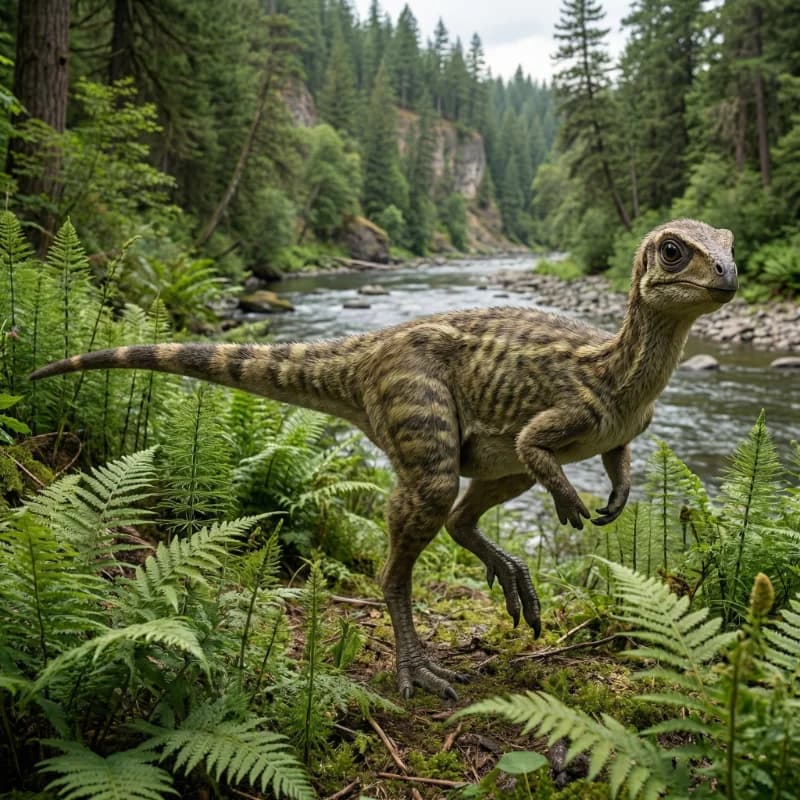
Leaellynasaura
Leaellynasaura amicagraphica
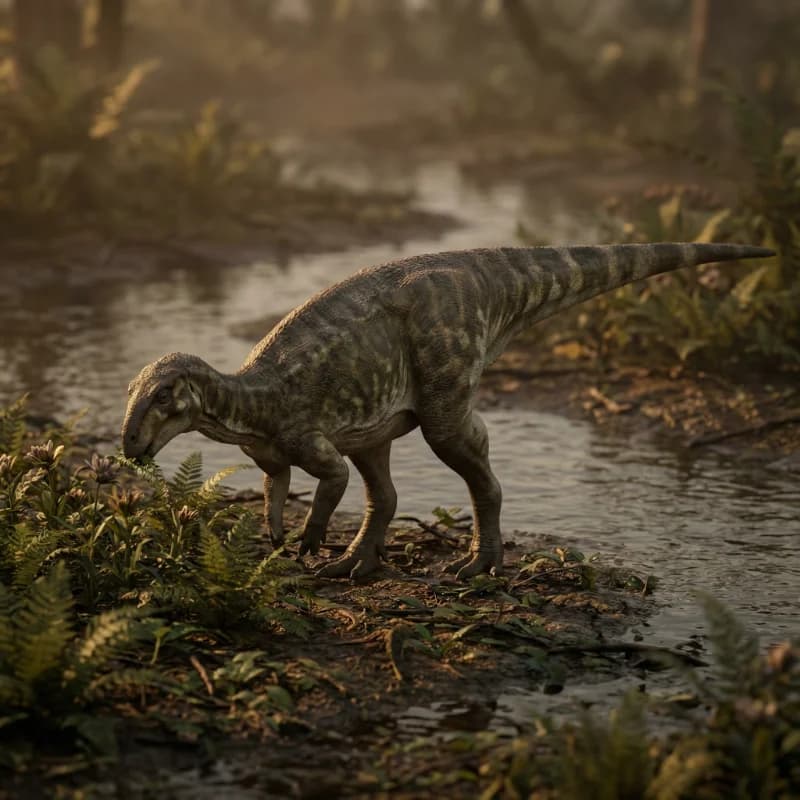
Hypsilophodon
Hypsilophodon foxii
Thescelosaurus
Thescelosaurus neglectus
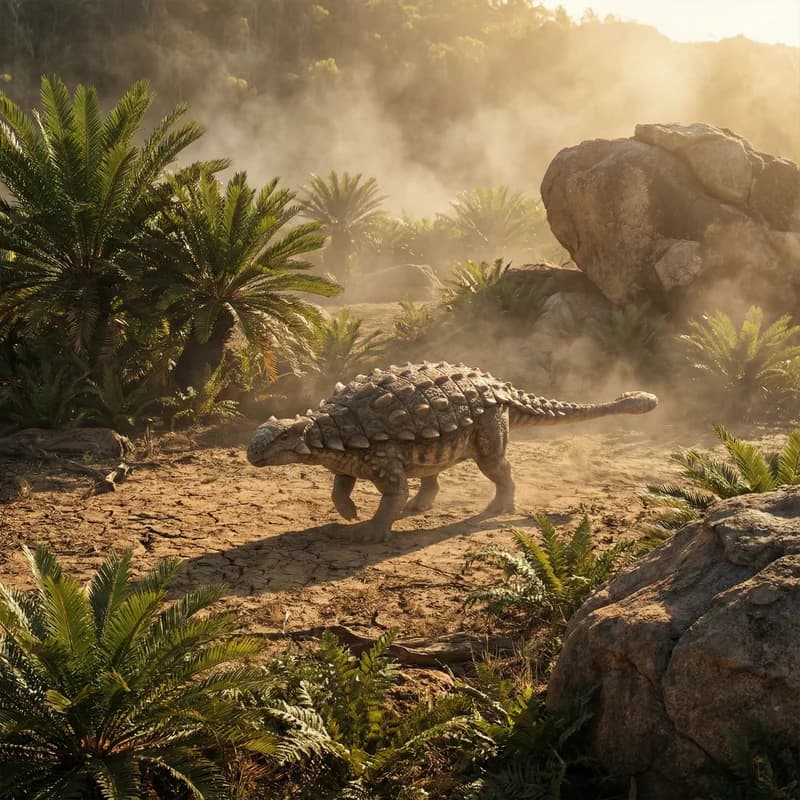
Minmi
Minmi paravertebra
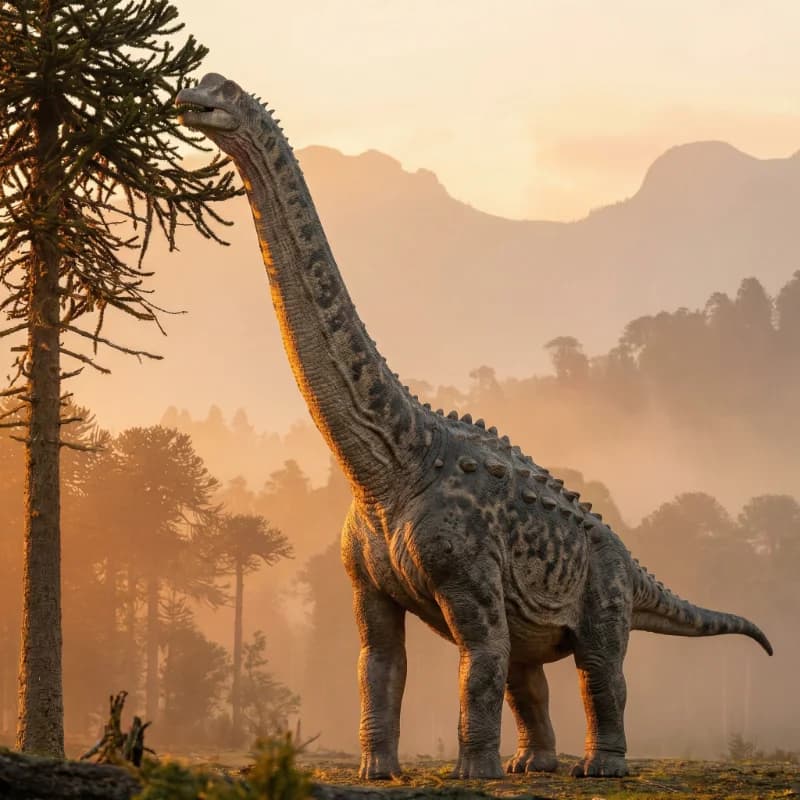
Dongbeititan
Dongbeititan dongi
Wuerhosaurus
Wuerhosaurus homheni
Sauropelta
Sauropelta edwardsorum
Polacanthus
Polacanthus foxii