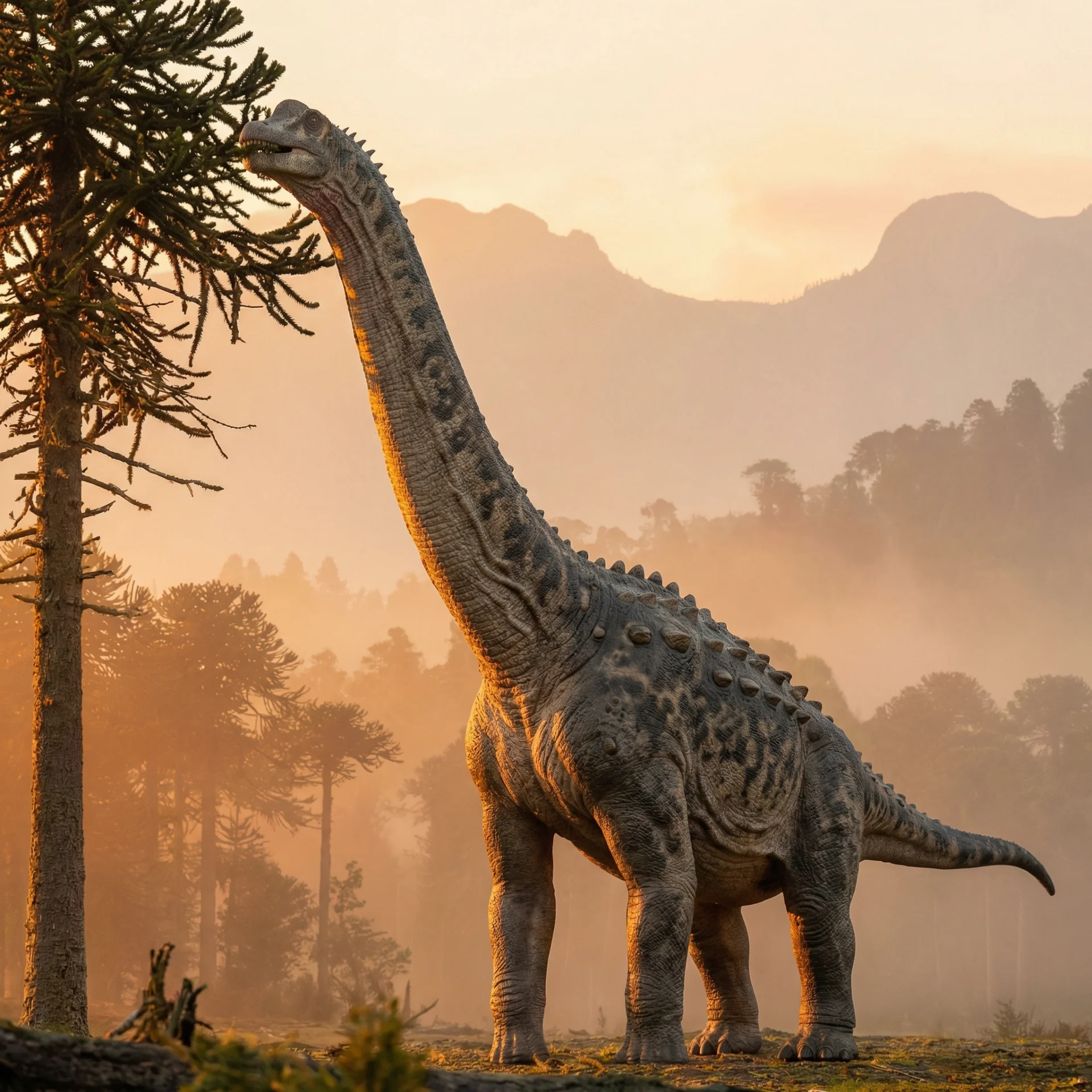
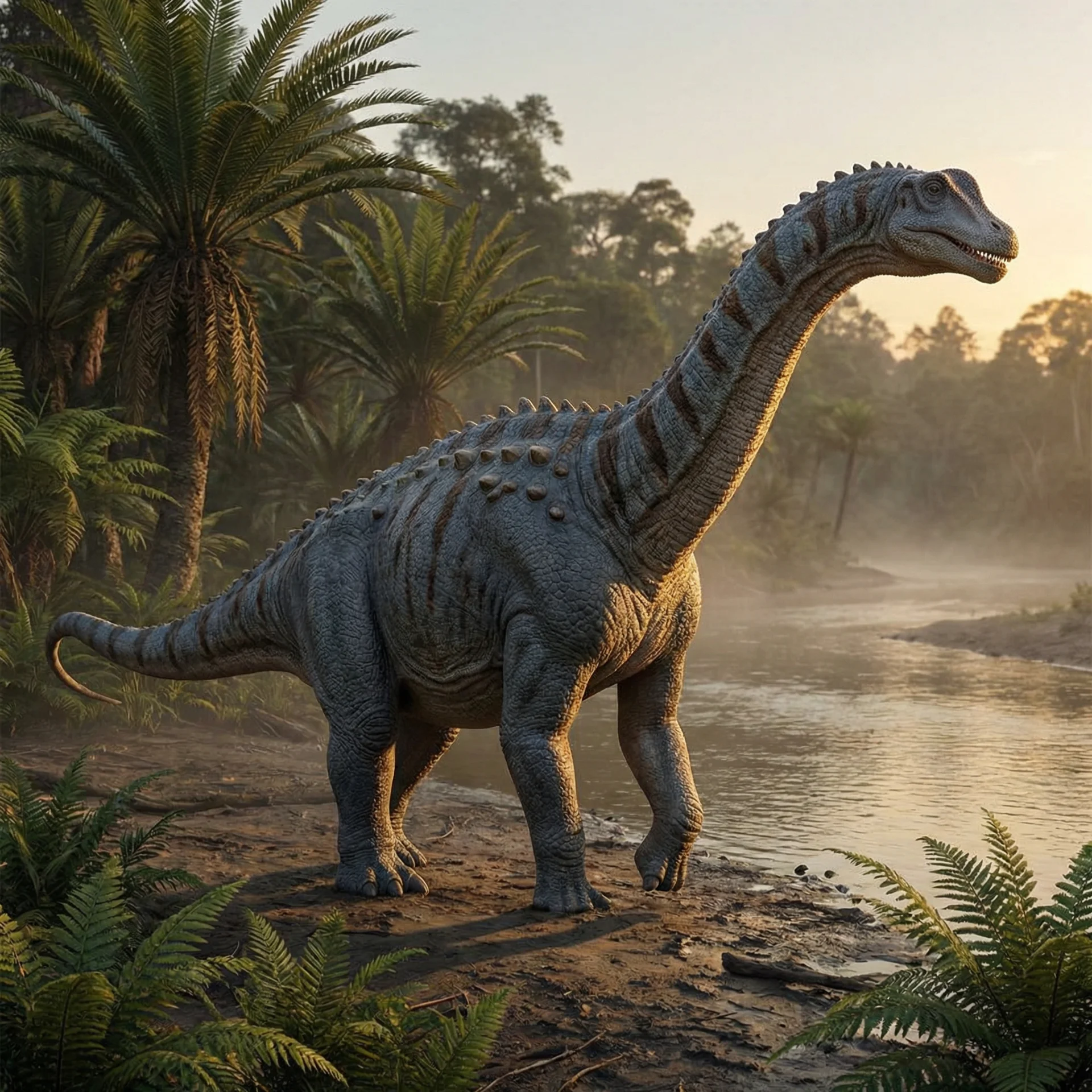
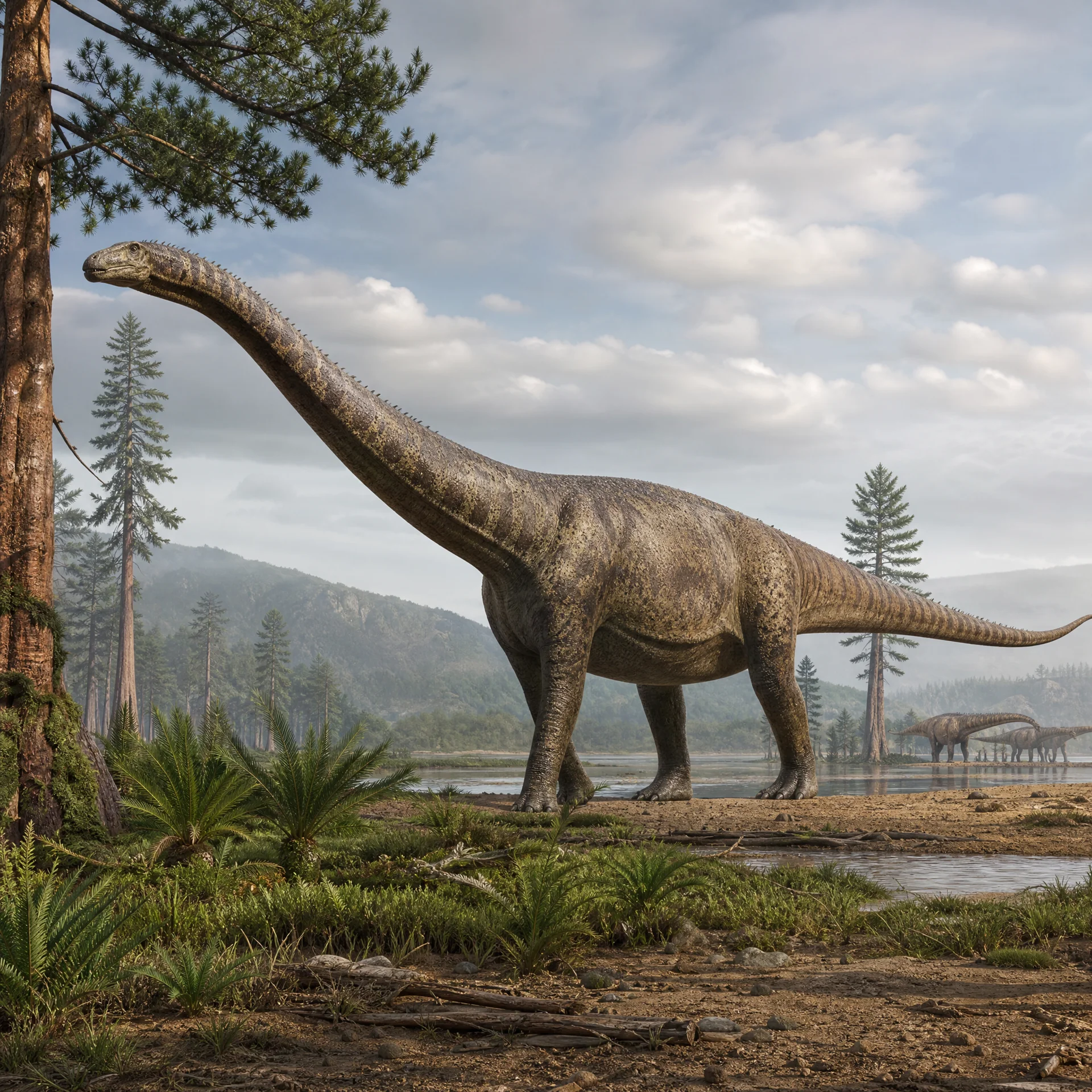
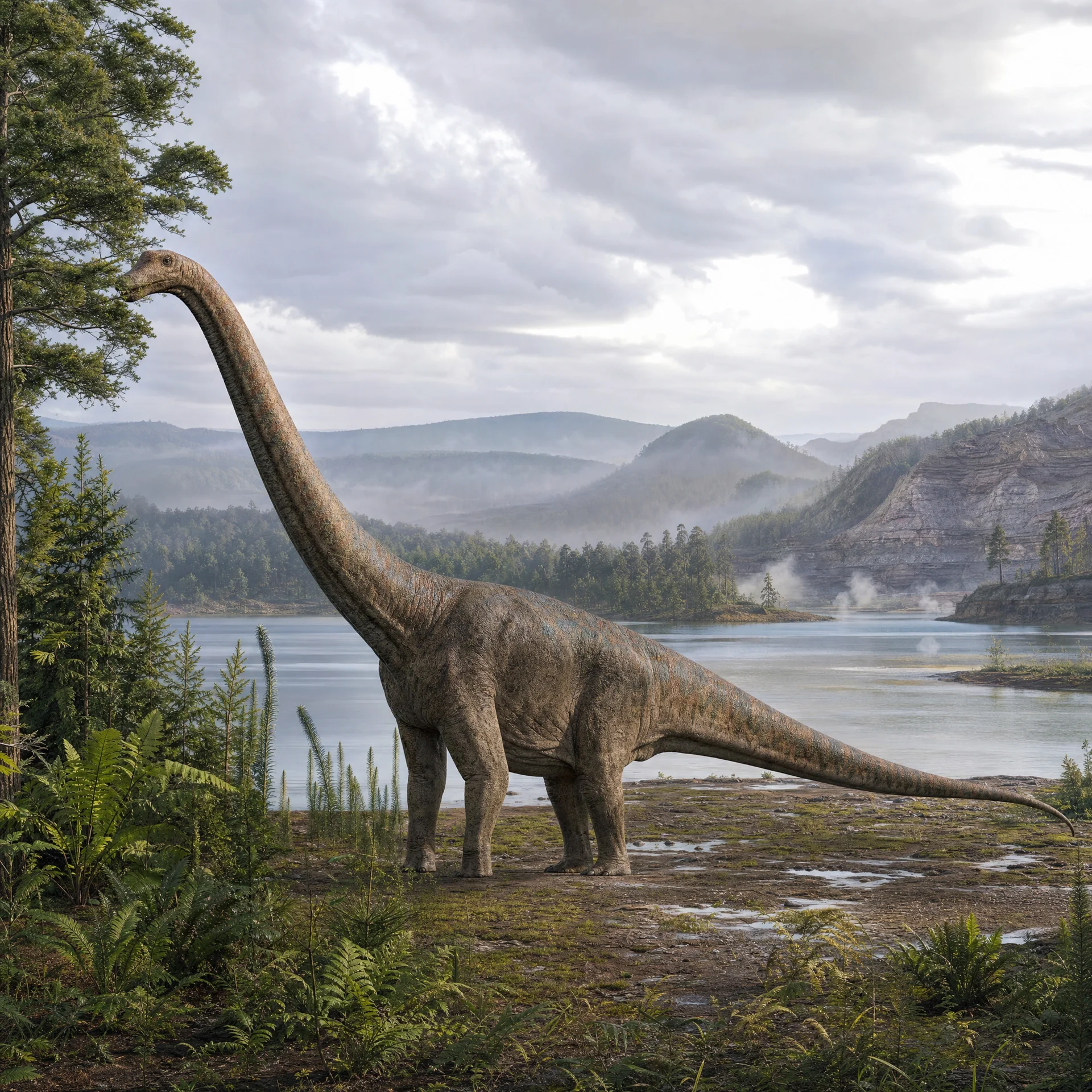
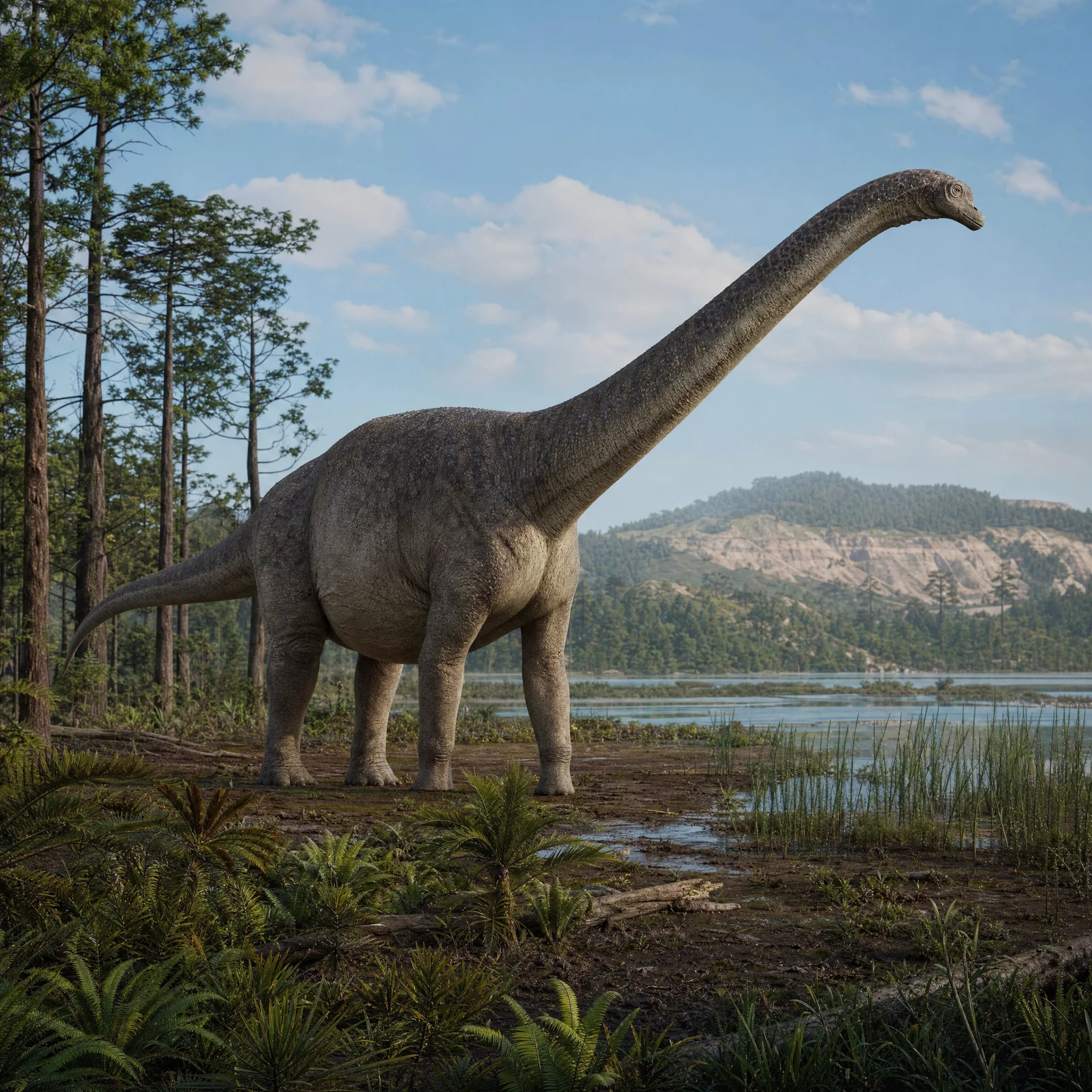
Dongbeititan
Dongbeititan dongi
⏳ Cretaceous Period🍽️ HerbivoreDinosaurs
Physical Characteristics
⏳
PeriodCretaceous Period
🍽️
DietHerbivore
📏
Size12~15m
⚖️
Weight8000~13000kg
Classification
GEN
GenusDongbeititan
SP
SpeciesD. dongi
Dongbeititan dongi
Dongbeititan dongi Wang et al., 2007 is a sauropod dinosaur from the Early Cretaceous (Barremian, approximately 125 Ma) of the Yixian Formation, Beipiao, western Liaoning Province, China. It holds the distinction of being the first sauropod dinosaur reported from the Jehol Group, a geological unit famous worldwide for its extraordinarily preserved feathered dinosaurs, early birds, and other biota. The holotype, DNHM D2867, comprises a partial postcranial skeleton including 16 cervical vertebrae, 7 dorsal vertebrae, 3 proximal caudal vertebrae, a partial fused right scapulocoracoid, elements of the pelvic girdle, and fore- and hindlimb bones. No cranial material is preserved.
The original describers identified the specimen as a basal titanosauriform within Somphospondyli, but outside Titanosauria, based on key features such as the camellate internal structure of the presacral vertebrae, pneumatocoels on the proximal ends of the dorsal ribs, and a medially deflected proximal portion of the femur. Two autapomorphies distinguish Dongbeititan from all other titanosauriforms: a craniocaudally elongate coracoid with a squared cranioventral margin, and a long, smooth, slightly convex acetabular margin of the pubis. Notably, the original description did not include a formal cladogram, and subsequent phylogenetic analyses have placed Dongbeititan at varying positions within Macronaria.
Dongbeititan is the earliest-named of the three sauropod genera now known from the Yixian Formation (alongside Liaoningotitan and Ruixinia), and it plays an important role in understanding the diversity of large herbivores in the Early Cretaceous Jehol Biota of East Asia. With a femur length of approximately 114 cm, total body length is estimated at roughly 12–15 m, making it a medium-sized sauropod and one of the largest animals in its ecosystem, which was otherwise dominated by small to medium-sized theropods and ornithischians.
The genus name Dongbeititan is a compound of the Mandarin Chinese word "Dongbei" (东北), referring to the northeastern region of China that encompasses the provinces of Liaoning, Jilin, and Heilongjiang, and the Greek word "titan," meaning giant, an allusion to the animal's large sauropod body size. The specific epithet dongi honours Professor Dong Zhiming (董枝明), a prominent Chinese palaeontologist whose extensive contributions to the study of Mesozoic dinosaurs in China have been foundational to the field (Wang et al., 2007).
Dongbeititan is currently a monotypic genus containing only the type species D. dongi. No synonyms have been proposed, and no additional referred specimens are known. It is generally treated as a valid genus. Post-description phylogenetic analyses, including those by D'Emic (2012), Mannion et al. (2013, 2019), and Shan (2025), have consistently recovered it within Macronaria, although its precise position — whether as a basal somphospondylan, a non-titanosauriform macronarian, or even a taxon with possible euhelopodid affinities — varies between analyses. This instability likely reflects the incomplete nature of the holotype.
The first sauropod dinosaur described from the Jehol Group, representing a basal titanosauriform that illuminates the early diversification of this clade in Early Cretaceous East Asia.
The holotype of Dongbeititan was recovered from the Yixian Formation, the basal unit of the Jehol Group. High-precision U-Pb zircon dating of volcanic layers within the formation constrains its age to approximately 125.8–124.1 Ma (Barremian stage of the Early Cretaceous) (Zhong et al., 2021; Chang et al., 2017). This places Dongbeititan firmly within the Early Cretaceous, corresponding to the Barremian as defined by the International Commission on Stratigraphy.
The Yixian Formation is the basal unit of the Jehol Group and extends across western Liaoning Province, northern Hebei Province, and southeastern Inner Mongolia. The dominant lithologies are fine-grained sandstones, shales, and mudstones, frequently interbedded with volcanic tuffs and ash layers. These tuffaceous horizons record periodic explosive volcanic activity that intermittently disrupted the lacustrine depositional system, leading to rapid burial of organisms and the exceptional fossil preservation for which the formation is renowned (Pan, 2012; MacLennan et al., 2024).
The Yixian Formation was deposited in fault-controlled rift basins along the northern margin of the North China Craton. Small, closed volcanic-valley lakes fed by fluvial input dominated the landscape. The palaeoclimate was a humid, seasonal temperate regime with estimated mean annual air temperatures of approximately 10 ± 4°C, warm summers, and cool winters (Wu et al., 2013). Vegetation was dominated by gymnosperms — conifers, ginkgoes, cycadophytes, and Gnetales — together with ferns and emerging early angiosperms such as Archaefructus. This floral assemblage provided ample food resources for large herbivorous megafauna. Cyclic sedimentation driven by recurrent volcanic eruptions and fluvial input produced finely laminated shales and tuffaceous sandstones. Dysoxic to anoxic bottom waters in the lakes, combined with rapid burial from pyroclastic deposits, created lagerstätten conditions that facilitated exceptional fossil preservation.
The holotype is DNHM D2867, housed at the Dalian Natural History Museum, Liaoning Province, China. It was collected in 2006 from a valley between Libalang and Er Valleys near Beipiao City. Preparation was carried out with assistance from the Lufeng Dinosaur Research Center, Yunnan Province. The preserved elements are as follows:
| Region | Preserved elements |
|---|---|
| Cervical vertebrae | 16 |
| Dorsal vertebrae | 7 |
| Proximal caudal vertebrae | 3 |
| Dorsal ribs | Partial |
| Scapulocoracoid | Partially fused right |
| Pelvic girdle | Distal left ilium, both ischia, right pubis |
| Forelimb | Left humerus, left radius, left ulna, 3 metacarpals |
| Hindlimb | Right femur, left tibia, left fibula, 3 metatarsals |
Wang et al. (2007) diagnosed Dongbeititan on the basis of two autapomorphies that distinguish it from all other titanosauriforms: (1) a craniocaudally elongate coracoid with a squared cranioventral extreme; and (2) a long, smooth, slightly convex acetabular margin of the pubis. These features, in combination, are not reported in any other titanosauriform sauropod.
No cranial material is preserved, and the axial skeleton is incomplete, precluding full vertebral-column reconstruction. The bones show taphonomic compression typical of the fine-grained Yixian Formation sediments, which limits some morphological observations. The absence of teeth means there is no direct dental evidence for dietary inference; herbivory is inferred from sauropod-wide ecology.
No formal body-length estimate was provided in the original description. However, based on a femur length of approximately 114 cm (confirmed at 1,100 mm in Shan, 2025) and scaling against more completely known titanosauriform sauropods such as Euhelopus and Daxiatitan, total body length is informally estimated at roughly 12–15 m. The femoral midshaft minimum width is approximately 230 mm, yielding a Femoral Robusticity Index (FRI) of approximately 0.93, indicating relatively robust limb proportions (Shan, 2025). Body mass, estimated via femur-based regression equations, falls in the approximate range of 8–13 tonnes, though this figure carries substantial uncertainty owing to the incomplete skeleton.
The cervical and dorsal vertebrae exhibit a camellate internal bone texture — complex, air-filled chambers that exceed the simpler camerate pneumatisation seen in more basal forms. This structure indicates extensive invasion of the vertebral column by diverticula from the respiratory air-sac system, contributing both to skeletal mass reduction and structural integrity in a large-bodied sauropod (Wedel, 2003; Wang et al., 2007).
Pneumatic foramina (pneumatocoels) are present at the proximal ends of the dorsal ribs, demonstrating that pneumatisation extended into the thoracic skeleton. This is interpreted as evidence for cervical and pulmonary air-sac diverticula invading the ribs, supporting an efficient, avian-like respiratory system adapted for the metabolic demands of a large sauropod.
The femur is long and strongly craniocaudally compressed, with a medially deflected proximal portion and a robust fourth trochanter that served as a major muscle-attachment site for hindlimb retraction. This morphology contrasts with the straighter femoral shafts of more derived titanosaurs and suggests a transitional form balancing mobility and load-bearing capacity in a basal titanosauriform.
The humerus and radius are elongated relative to the femur, producing pillar-like forelimb support. This configuration aligns with titanosauriform adaptations for elevated posture but retains primitive elongation patterns not seen in more derived titanosaurs.
No direct evidence of diet (stomach contents, coprolites, stable isotopes) is preserved. However, the universal herbivory of sauropods (Upchurch et al., 2004), combined with the abundant gymnosperm-dominated vegetation of the Yixian Formation (conifers, ginkgoes, cycadophytes), supports the inference that Dongbeititan was a high-browsing herbivore.
In 2012, Xing et al. described a theropod tooth — attributed to Sinocalliopteryx — embedded in an incomplete thoracic rib shaft from the Dongbeititan holotype. This represents direct evidence of theropod feeding behaviour on a sauropod within the Jehol ecosystem (Xing et al., 2012). The discovery is one of the few instances worldwide providing fossil evidence of a specific predator–prey or scavenger–prey interaction between a theropod and a sauropod.
The Yixian Formation fauna was dominated by small to medium-sized theropods (feathered taxa such as Sinosauropteryx, Microraptor, Sinornithosaurus, and the large Yutyrannus), small ornithischians (Jeholosaurus, Psittacosaurus), armoured dinosaurs (Liaoningosaurus), pterosaurs, and early birds (Confuciusornis). Dongbeititan was among the largest animals in this ecosystem, occupying a distinct ecological niche as a high-browsing herbivore with access to canopy-level vegetation. The large feathered tyrannosauroid Yutyrannus huali (up to approximately 9 m) may have been a potential predator of sub-adult or even adult Dongbeititan individuals.
Dongbeititan is presently known from a single locality (Beipiao, Liaoning Province) and a single specimen. No additional referred material has been reported. Isolated titanosauriform teeth recovered from the Yixian Formation (Barrett & Wang, 2007; Zhang et al., 2024) have been noted as potentially referable to Dongbeititan or close relatives, but direct comparison is impossible because the holotype lacks teeth.
During the Early Cretaceous (approximately 125 Ma), the Beipiao region occupied a palaeolatitude of roughly 42°N along the northern margin of the North China Craton. The presence of Dongbeititan demonstrates that sauropod dinosaurs inhabited relatively high latitudes in East Asia during this interval, within a rift-basin lacustrine–fluvial landscape.
Wang et al. (2007) classified Dongbeititan as a basal member of Titanosauriformes, placing it within Somphospondyli but outside Titanosauria. They considered it more derived than Euhelopus, Fusuisaurus, and Huanghetitan, but less derived than Gobititan and Jiutaisaurus. However, no formal cladogram was published in the original paper.
| Study | Placement of Dongbeititan | Analytical approach |
|---|---|---|
| D'Emic (2012) | Basal Somphospondyli | Comprehensive titanosauriform matrix |
| Mannion et al. (2013) | LSDM: basal Somphospondyli / LCDM: non-titanosauriform Macronaria | Dual-matrix analysis |
| Mo et al. (2023) | Near Titanosauria (included in Ruixinia description) | Morphological analysis |
| Shan (2025) | Somphospondyli (non-Euhelopodidae) | Beeston et al. (2024) matrix |
The principal debate concerns whether Dongbeititan is a somphospondylan or a more basal macronarian. Some analyses have even recovered it with possible euhelopodid affinities (e.g., the GEA analyses in Shan, 2025). This instability is likely driven by the incomplete nature of the holotype, and a more precise phylogenetic placement awaits the discovery of additional material.
The sauropod identity of Dongbeititan, its provenance from the Yixian Formation (Barremian, approximately 125 Ma), its camellate presacral pneumaticity, dorsal-rib pneumatocoels, medially deflected femoral proximal end, and its status as the first sauropod from the Jehol Group are all firmly established.
Placement within Titanosauriformes is supported by most analyses, but the precise branching position (basal Somphospondyli vs. non-titanosauriform Macronaria) varies between studies.
Total body length of 12–15 m and body mass of 8–13 tonnes are femur-based regression estimates not formally calculated in any peer-reviewed publication and carry considerable uncertainty. Popular-media depictions of Dongbeititan as a giant titanosaur comparable to Argentinosaurus are inaccurate; it was a medium-sized sauropod.
Dongbeititan features in the Netflix documentary The Dinosaurs (2026), Season 1 Episode 3 ("Empire"), where it is referred to on-screen as a "sauropod" and is depicted being threatened by Yutyrannus. The palaeontological evidence of a theropod tooth embedded in a Dongbeititan rib (Xing et al., 2012) lends scientific support to such predator–prey depictions in the Jehol ecosystem.
The following table compares the three known sauropod genera from the Yixian Formation:
| Taxon | Year described | Femur length | Estimated body length | Phylogenetic position | Notable features |
|---|---|---|---|---|---|
| Dongbeititan dongi | 2007 | approx. 114 cm | approx. 12–15 m | Basal Somphospondyli (variable) | First Jehol Group sauropod |
| Liaoningotitan sinensis | 2018 | approx. 106 cm | approx. 10 m | Euhelopodidae (Shan, 2025) | Skull preserved |
| Ruixinia zhangi | 2023 | approx. 137 cm | approx. 12 m | Near Titanosauria | 52 caudals preserved; last 6 fused into a rod |
All three taxa come from the same formation but their exact temporal overlap requires finer stratigraphic resolution. By femur size, Dongbeititan is intermediate: Ruixinia is the largest and Liaoningotitan the smallest.
| Item | Details |
|---|---|
| Holotype number | DNHM D2867 |
| Repository | Dalian Natural History Museum, Liaoning, China |
| Locality | Beipiao City, Libalang–Er Valleys, Liaoning Province |
| Formation | Yixian Formation, Jehol Group |
| Age | Early Cretaceous, Barremian (approx. 125 Ma) |
| Preserved elements | 16 cervicals, 7 dorsals, 3 proximal caudals, partial dorsal ribs, partial scapulocoracoid, pelvic elements, forelimb and hindlimb bones |
| Cranial material | None |
| Element | Value | Source |
|---|---|---|
| Femur total length | approx. 1,100 mm | Wang et al. (2007); Shan (2025) |
| Femur midshaft minimum width | approx. 230 mm | Shan (2025) |
| Femoral Robusticity Index (FRI) | approx. 0.93 | Shan (2025) |
Dongbeititan was the very first sauropod dinosaur reported from the Jehol Group — before its 2007 description, no sauropod had been formally named from this world-famous fossil assemblage.
A theropod (Sinocalliopteryx) tooth was found embedded in one of Dongbeititan's ribs, providing rare direct evidence of a predator or scavenger feeding on a sauropod.
The species name dongi honours Dong Zhiming, a legendary Chinese palaeontologist who has named or studied over 100 dinosaur species throughout his career.
Sixteen cervical vertebrae are preserved in the holotype — an unusually good count for a sauropod, and the specimen has been cited in studies cataloguing complete sauropod neck preservation.
The Yixian Formation, where Dongbeititan was found, is one of the most important fossil sites in the world, famous for its feathered dinosaurs, early birds, early mammals, and extraordinarily preserved soft tissues.
Three sauropod genera are now known from the Yixian Formation: Dongbeititan, Liaoningotitan, and Ruixinia. Ruixinia is notable for having its last six tail vertebrae fused into a bony rod.
The presacral vertebrae of Dongbeititan contain complex air-filled chambers (camellate pneumaticity), evidence of an efficient avian-like respiratory system with air sacs penetrating deep into the skeleton.
Dongbeititan appears in the Netflix documentary The Dinosaurs (2026), Episode 3 'Empire,' depicted being threatened by the feathered tyrannosauroid Yutyrannus — a scenario supported by fossil evidence.
With a femur length of about 114 cm, Dongbeititan falls between the larger Ruixinia (137 cm) and the smaller Liaoningotitan (106 cm) among Yixian Formation sauropods.
The Yixian Formation environment during Dongbeititan's time had a mean annual temperature of about 10°C — a surprisingly cool, temperate setting for a sauropod, far from the tropical image often associated with the age of dinosaurs.
Dongbeititan dongi is a sauropod dinosaur — a large, quadrupedal herbivore — from the Early Cretaceous (approximately 125 million years ago) of Liaoning Province, China. It was the first sauropod reported from the famous Jehol Group (Wang et al., 2007).
The genus name combines the Mandarin Chinese word 'Dongbei' (东北, meaning 'northeast,' referring to northeastern China) with the Greek word 'titan' (giant), giving 'giant of the northeast.' The species name dongi honours the renowned Chinese palaeontologist Dong Zhiming.
Based on a femur length of approximately 114 cm, total body length is informally estimated at roughly 12–15 m, with a body mass of approximately 8–13 tonnes. These are regression-based estimates with substantial uncertainty because the skeleton is incomplete. Dongbeititan was a medium-sized sauropod, not a giant like Argentinosaurus.
The holotype DNHM D2867 includes 16 cervical vertebrae, 7 dorsal vertebrae, 3 proximal caudal vertebrae, partial dorsal ribs, a partially fused right scapulocoracoid, pelvic elements (distal left ilium, both ischia, right pubis), and limb bones (left humerus, radius, ulna; right femur; left tibia and fibula; plus metacarpals and metatarsals). No skull material is preserved.
The original describers placed Dongbeititan within Somphospondyli (a clade within Titanosauriformes) but outside Titanosauria. Subsequent studies have recovered it at varying positions — sometimes as a basal somphospondylan, sometimes as a non-titanosauriform macronarian. Its exact phylogenetic placement remains unstable due to the incomplete holotype.
Yes. In 2012, Xing et al. described a theropod tooth, attributed to Sinocalliopteryx, embedded in an incomplete thoracic rib shaft from the Dongbeititan holotype. This provides direct evidence of theropod feeding behaviour — either predation or scavenging — on a sauropod in the Jehol ecosystem.
The Yixian Formation preserves a rift-basin lacustrine environment with freshwater lakes, forested floodplains, and periodic volcanic activity. The palaeoclimate was humid and seasonal temperate, with mean annual temperatures around 10 ± 4°C. Vegetation was dominated by conifers, ginkgoes, cycadophytes, and ferns, with some early angiosperms.
Yes. Three sauropod genera are currently known from the Yixian Formation: Dongbeititan dongi (described 2007), Liaoningotitan sinensis (2018), and Ruixinia zhangi (2023). Ruixinia is the largest by femur size, and Liaoningotitan is the smallest.
Dongbeititan features in the Netflix documentary The Dinosaurs (2026), Season 1 Episode 3 ('Empire'), where it is referred to as a 'sauropod' and is shown being threatened by Yutyrannus. The scenario is broadly supported by fossil evidence of theropod feeding on Dongbeititan bones.
Two autapomorphies distinguish it from all other titanosauriforms: (1) a craniocaudally elongate coracoid with a squared cranioventral margin, and (2) a long, smooth, slightly convex acetabular margin of the pubis. Additionally, its presacral vertebrae have complex camellate pneumaticity and the dorsal ribs bear pneumatocoels.
5images