Psittacosaurus
Cretaceous Period Herbivore Creature Type
Psittacosaurus mongoliensis
Scientific Name: "Greek psittakos (parrot) + sauros (lizard) = 'parrot lizard'"
Local Name: Psittacosaurus
Physical Characteristics
Discovery
Habitat

Psittacosaurus (Psittacosaurus Osborn, 1924) is a genus of basal ceratopsian (Ceratopsia) dinosaur that lived across Asia during the Early Cretaceous, approximately 125 to 105 million years ago (Ma). The generic name derives from the Greek psittakos ("parrot") and sauros ("lizard"), referencing the animal's short, deep skull and powerful beak that superficially resemble those of modern parrots. It belongs to Ornithischia, Marginocephalia, Ceratopsia, and is the type genus of the family Psittacosauridae.
Psittacosaurus is the most species-rich non-avian dinosaur genus, with 9 to 12 valid species currently recognized from China, Mongolia, Siberia (Russia), and possibly Thailand. Hundreds of individual fossils have been collected, spanning nearly every ontogenetic stage from hatchlings less than 13 cm long to mature adults approaching 2.5 m in length. This extraordinary sample size has made Psittacosaurus one of the most thoroughly studied dinosaur genera in the world, yielding landmark discoveries in growth biology, reproductive behavior, integument, and coloration.
Among the most notable findings are the long bristle-like structures preserved on the tail of specimen SMF R 4970, the countershading color pattern revealed through melanosome analysis, the first cloaca and first umbilical scar ("belly button") ever identified in a non-avian dinosaur, and the dramatic specimen DNHM D2156 preserving a single adult alongside 34 juveniles — widely interpreted as evidence of post-hatching parental care. Additionally, a 2023 fossil captured a Repenomamus mammal apparently attacking a Psittacosaurus at the moment of burial, providing direct evidence that Mesozoic mammals could prey on dinosaurs larger than themselves.
Adult Psittacosaurus of various species ranged from roughly 1 to 2.5 m in total length and approximately 5 to 30 kg in body mass, with obligate bipedal locomotion in adulthood. The genus occupies a pivotal position in ceratopsian phylogeny as one of the most basal members, predating the evolution of the large bony frills and prominent horns characteristic of later horned dinosaurs such as Triceratops.
Overview
Name and Etymology
The name Psittacosaurus combines the Greek psittakos ("parrot") and sauros ("lizard"). Henry Fairfield Osborn coined the name in 1924 at the suggestion of fellow paleontologist William King Gregory, who noted the dinosaur's parrot-like short, deep snout and robust beak (Osborn, 1924). The type species is P. mongoliensis, based on a nearly complete skull and skeleton (AMNH 6254) recovered from the Oshih (Khukhtek) Formation of Mongolia during the American Museum of Natural History's Third Asiatic Expedition in 1922.
Taxonomic Status
Currently, 9 to 12 species of Psittacosaurus are considered valid — the highest species count for any non-avian dinosaur genus. Sereno's (2010) conservative revision recognized nine valid species, with P. gobiensis (Sereno et al., 2010) and P. amitabha (Napoli et al., 2019) subsequently added. In 2025, Ishikawa et al. re-evaluated Hongshanosaurus houi and transferred it to Psittacosaurus houi, supporting its distinction from P. lujiatunensis based on previously unrecognized cranial features and phylogenetic analyses. Key synonyms include Protiguanodon Osborn, 1924 and Hongshanosaurus You, Xu & Wang, 2003.
Scientific Significance
With hundreds of specimens spanning all ontogenetic stages and exceptionally preserved soft-tissue remains (SMF R 4970), Psittacosaurus is among the most intensively studied dinosaur genera in paleontology. Its fossil abundance in Early Cretaceous strata of East Asia has led to the informal designation of this interval as the "Psittacosaurus biochron."
Stratigraphy, Age, and Depositional Setting
Temporal Range
Psittacosaurus ranges from the Barremian to the Albian stages of the Early Cretaceous, approximately 125 to 105 Ma. The oldest known species is P. lujiatunensis, from the Lujiatun unit of the Yixian Formation, now dated to approximately 123 Ma (Hedrick et al., 2014). The youngest records come from Albian-age deposits of the Jiufotang Formation (~110 Ma) and the upper Tugulu Group.
Principal Fossil-Bearing Formations
| Formation | Country/Region | Age (Ma) | Species |
|---|---|---|---|
| Yixian Fm. (Lujiatun unit) | Liaoning, China | ~123 Ma | P. lujiatunensis, P. houi |
| Yixian Fm. (upper beds) | Liaoning, China | ~120–125 Ma | Psittacosaurus sp. (numerous) |
| Jiufotang Fm. | Liaoning–Inner Mongolia, China | ~110–120 Ma | P. meileyingensis |
| Oshih (Khukhtek) Fm. | Mongolia | Aptian–Albian | P. mongoliensis |
| Ejinhoro Fm. | Inner Mongolia, China | Early Cretaceous | P. neimongoliensis, P. ordosensis? |
| Qingshan Fm. | Shandong, China | Aptian–Albian | P. sinensis |
| Tugulu Group | Xinjiang, China | Aptian–Albian | P. xinjiangensis |
| Ilek Fm. | Kemerovo Oblast, Siberia, Russia | Barremian–Aptian | P. sibiricus |
| Andakhuduk Fm. | Mongolia | Barremian | P. amitabha |
Paleoenvironment
The Yixian Formation — the richest source of Psittacosaurus fossils — consists of lacustrine sediments interbedded with volcanic deposits, indicating a long-lived lake system punctuated by episodic volcanism. The Lujiatun unit has traditionally been interpreted as preserving animals buried rapidly by volcanic debris flows (lahars), in what has been dubbed the "Chinese Pompeii" (Zhao et al., 2007; Jiang et al., 2014), although a 2024 study by Rowe et al. questioned whether some specimens may instead have died when burrows collapsed, and the debate remains active (Rowe et al., 2024; Emery-Wetherell, 2025). Lithologically, the deposits consist of tuffaceous mudstone, lacustrine shale, and red mudstone-sandstone. Oxygen isotope analyses (Amiot et al., 2011) suggest mean air paleotemperatures of approximately 10 ± 4°C for the Liaoning region during Yixian deposition — consistent with cool temperate midlatitude conditions. The associated plant fossils include conifers, ginkgophytes, and ferns. Vinther et al. (2016) interpreted the countershading pattern of SMF R 4970 as being optimized for camouflage under diffuse light in a densely forested habitat.
Specimens and Diagnostic Characters
Holotype and Key Specimens
The holotype of P. mongoliensis is AMNH 6254, a nearly complete skull and articulated skeleton collected in 1922 from the Oshih (Khukhtek) Formation of Mongolia (Osborn, 1924). Hundreds of additional specimens have been recovered, making Psittacosaurus one of the most abundantly represented dinosaur genera in museum collections worldwide. The most celebrated soft-tissue specimen is SMF R 4970, housed at the Senckenberg Museum in Germany. This specimen — most likely from the Yixian Formation of Liaoning — was probably illegally exported from China and purchased by the museum in 2001 (Mayr et al., 2002). It preserves extensive skin with scales, tail bristles, and pigment patterns. Another landmark specimen is DNHM D2156 (Dalian Natural History Museum), which preserves one adult associated with 34 juveniles (Meng et al., 2004). The 2023 Repenomamus–Psittacosaurus interaction specimen comes from the Lujiatun unit of the Yixian Formation (Gan et al., 2023).
Diagnostic Features of the Genus
Key diagnostic characters of Psittacosaurus include (Sereno, 2010; You & Dodson, 2004):
- An extremely tall and short skull, with the preorbital region comprising only ~40% of skull length — shorter than any other known ornithischian.
- Edentulous premaxillae bearing a robust beak formed by the rostral bone (upper) and predentary bone (lower), likely sheathed in keratin.
- A distinctive bulbous vertical ridge on each dentary tooth.
- Loss of the antorbital fenestra (the skull opening between the eye socket and nostril), which is retained in most other ceratopsians and archosaurs.
- Only four digits on the manus (hand), compared to five in all other ceratopsians.
Individual species are distinguished primarily by features of the jugal (cheek) "horns," dentary flanges, skull proportions, and tooth counts.
Morphology and Function
Body Size
Adult body size varies considerably among species. The best-known species, P. mongoliensis, reached approximately 2 m in total length with an estimated adult body mass exceeding 20 kg. The largest species are P. sibiricus (skull length ~20.7 cm, femur length ~22.3 cm, total length up to ~2.5 m) and P. lujiatunensis, while the smallest, P. ordosensis, had adult skulls as short as 9.5 cm and was approximately 30% smaller than P. mongoliensis (Russell & Zhao, 1996). Histological studies by Erickson et al. (2009) on P. lujiatunensis found that the youngest individuals (approximately 3 years old) weighed less than 1 kg, while the largest (~9 years old) approached 20 kg.
| Species | Skull length (cm) | Femur length (cm) | Estimated total length (m) |
|---|---|---|---|
| P. mongoliensis | ~15.2 (holotype, possibly juvenile) | ~16.2–21 | ~2 |
| P. sibiricus | ~20.7 | ~22.3 | ~2–2.5 |
| P. lujiatunensis | ~19–20.5 | — | ~2 |
| P. sinensis | ~11.5 | — | ~1.5 |
| P. ordosensis | ~9.5 | — | ~1 |
| P. meileyingensis | ~13.7 | — | ~1.5 |
Skull and Beak
The psittacosaur skull is highly modified compared to other contemporary ornithischians. It is nearly circular in profile in some species, with the height approaching or exceeding the length. The robust beak, formed by the rostral and predentary bones and likely covered with a keratinous sheath, was well-suited for cropping plant material. The jugal (cheek) bones flare laterally to form prominent "horns" of varying size depending on species — particularly pronounced in P. sibiricus and P. sinensis. Although Psittacosaurus shares several derived features with more advanced ceratopsians (e.g., the unique rostral bone), it lacks the large bony neck frill and prominent facial horns that characterize later members of the group. Bony protuberances around the orbits in P. sibiricus are interpreted as convergently evolved rather than homologous with the horns of later ceratopsians (Averianov et al., 2006).
Limbs and Locomotion
The forelimbs of Psittacosaurus are markedly shorter than the hindlimbs, and adults were obligate bipeds. Zhao et al. (2013) used bone histology and limb proportional analysis to demonstrate that P. lujiatunensis underwent an ontogenetic postural shift from quadrupedal to bipedal locomotion at approximately 3 to 4 years of age. This transition coincided with the onset of the exponential growth phase, supported by strong negative allometry of the forelimb relative to the hindlimb. The manus retains only four digits, in contrast to the plesiomorphic five-digit condition in all other ceratopsians.
Integument and Coloration
Tail Bristles
Specimen SMF R 4970, presumed to originate from the Yixian Formation of Liaoning, preserves a row of approximately 16-cm-long hollow, tubular bristle-like structures along the dorsal surface of the tail (Mayr et al., 2002). Mayr et al. (2016) used laser-stimulated fluorescence (LSF) imaging to reveal that the bristles were arranged in tight clusters of three to six, filled with pulp, and heavily cornified. Critically, these structures are not feathers and differ structurally and developmentally from the feathers of theropod dinosaurs. The authors considered them most comparable to the quill-like filaments of Tianyulong and the elongate broad filamentous feathers (EBFFs) of Beipiaosaurus, and found it likely that the bristles are structurally and developmentally homologous to similar filamentous integumentary structures in other dinosaurs. Ji et al. (2016) alternatively interpreted them as highly modified scales. The precise homology of these bristles — whether they represent a deep homology with theropod feather precursors or independently derived keratinous structures — remains debated.
Countershading Coloration
Vinther et al. (2016) analyzed the distribution of melanosomes preserved in SMF R 4970 and determined that Psittacosaurus exhibited countershading — darker pigmentation dorsally and lighter coloration ventrally. This pattern matched the optimal camouflage predicted for an animal living under the diffuse light conditions of a densely forested habitat. Disruptive coloration (stripes and spots) was also identified on the limbs. Dense pigment clusters were observed on the shoulders and face (possibly for display) and around the cloaca. Published in Current Biology, this study was one of the first to use dinosaur color patterns to infer habitat preference.
Cloaca and Umbilical Scar
Vinther et al. (2021) reported the first preserved cloaca in a non-avian dinosaur from SMF R 4970, describing a V-shaped structure with discrete lateral lips converging anteriorly, comparable to those of crocodilians, and a dorsal lobe homologous to the cloacal protuberance of birds. Bell et al. (2022) subsequently identified the oldest known umbilical scar ("belly button") in any amniote from the same specimen. The scar presented as a midline structure delimited by a row of paired enlarged scales on the abdomen. Since the individual was estimated to be a 6–7 year-old subadult close to sexual maturity, the authors concluded that the umbilicus was likely retained at least until near-adulthood in Psittacosaurus.
Diet and Ecology
Feeding
Psittacosaurus was an herbivore equipped with a robust beak and self-sharpening teeth suited for cropping and slicing plant material. Unlike later ceratopsians, however, its dentition was not specialized for grinding or chewing, indicating reliance on slicing mechanics (You & Dodson, 2004). Landi et al. (2021) found evidence of an ontogenetic dietary shift in P. lujiatunensis: adult bite force estimates exceeded those of juveniles, suggesting that mature individuals could process tougher vegetation.
Gastroliths
Gastroliths (stomach stones) are frequently found in the abdominal cavity of Psittacosaurus specimens, including the holotype of P. gobiensis (Sereno et al., 2010). Wang et al. (2026) recently documented gastroliths in hatchling Psittacosaurus, suggesting that the behavior of ingesting stones for digestive assistance began immediately after hatching.
Parental Care and Social Behavior
Meng et al. (2004) described specimen DNHM D2156, in which a single adult Psittacosaurus was preserved alongside 34 closely associated articulated juveniles. This was interpreted as evidence of post-hatching parental care in an ornithischian dinosaur. Zhao et al. (2014) reported juvenile-only clusters containing individuals of different ages (e.g., two- and three-year-olds together), suggesting age-mixed gregarious behavior among young Psittacosaurus independent of adult supervision.
Predator Interactions
Gan et al. (2023) described a remarkable specimen from the Lujiatun unit of the Yixian Formation in which a gobiconodontid mammal, Repenomamus robustus (~3.5 kg), was found in direct contact with a Psittacosaurus lujiatunensis (~10–12 kg estimated), apparently attacking it at the moment both animals were buried by a volcanic debris flow. Published in Scientific Reports, this fossil provides the first direct evidence that Mesozoic mammals could actively prey on dinosaurs substantially larger than themselves.
Growth and Development
Erickson et al. (2009) analyzed femoral histology of 80 P. lujiatunensis individuals to construct a life table. The youngest specimens (~3 years old) weighed less than 1 kg, while the oldest (~9 years old) reached approximately 20 kg, indicating relatively rapid growth (although Myhrvold, 2015, identified statistical issues with the growth curve methodology). Zhao et al. (2013) demonstrated through bone histology that the quadrupedal-to-bipedal postural shift at approximately 3–4 years of age coincided with the onset of exponential growth. Zhao et al. (2019) established an ontogenetic staging system for Psittacosaurus based on histological criteria: hatchling, juvenile, subadult, and adult.
Distribution and Paleogeography
Psittacosaurus was widely distributed across Early Cretaceous Asia. Multiple species are documented from China (Liaoning, Shandong, Xinjiang, Inner Mongolia, Gansu), Mongolia, and Siberia (Kemerovo Oblast, Russia). A single species, P. sattayaraki, has been reported from Thailand, but its validity remains disputed (Sereno, 2010, treated it as Ceratopsia incertae sedis). Farke et al. (2014) noted that, with the exception of the North American Aquilops, all known basal ceratopsians are from Asia, supporting an Asian origin for the group. The ubiquity of Psittacosaurus in Early Cretaceous strata of East Asia has led to its use as a biostratigraphic marker, informally termed the "Psittacosaurus biochron."
Phylogeny and Taxonomic Debates
Higher-Level Placement
Psittacosaurus is one of the most basal ceratopsians, positioned above Yinlong and Chaoyangsauridae but outside Neoceratopsia (the clade including Triceratops) on most phylogenetic analyses (Farke et al., 2014). It was once placed in its own family, Psittacosauridae, recovered as the sister group to Neoceratopsia. The loss of the fifth manual digit and the antorbital fenestra are key features that exclude Psittacosaurus from the direct ancestry of later ceratopsians, as it is considered highly improbable that these traits would re-evolve.
Intrageneric Relationships
Several phylogenetic analyses have explored relationships among Psittacosaurus species, but no firm consensus has emerged. The most detailed analyses include those by Averianov et al. (2006), You et al. (2008), and Sereno (2010). Zhou et al. (2006) proposed that P. lujiatunensis is the most basal species, consistent with its earliest stratigraphic appearance. The most recent analysis by Ishikawa et al. (2025) recovered P. sinensis and P. sibiricus as sister taxa, with P. lujiatunensis basal to a clade including P. gobiensis, P. amitabha, and P. mongoliensis.
Reconstruction and Uncertainties
Well-Established
- Basal ceratopsian with a parrot-like beak, tall skull, four manual digits, and loss of the antorbital fenestra — all confirmed as diagnostic.
- Obligate bipedality in adults.
- Bristle-like integumentary structures on the tail dorsum (SMF R 4970).
- Countershading color pattern with darker dorsal and lighter ventral surfaces.
Strongly Supported Hypotheses
- An ontogenetic postural shift from quadrupedal to bipedal locomotion at approximately 3–4 years of age (histological evidence).
- Post-hatching parental care (DNHM D2156), though some researchers consider the possibility of chance association during burial.
- Habitation of densely forested environments (coloration pattern evidence).
Uncertain or Debated
- The precise homology of the tail bristles: their relationship to theropod feathers remains unclear, and whether they represent modified scales or a deep integumentary homology is debated.
- The validity of several species (P. sattayaraki, P. mazongshanensis, P. ordosensis) remains contentious.
- Popular depictions of Psittacosaurus as a "feathered dinosaur" are inaccurate. The tail bristles are not feathers and were restricted to the dorsal tail surface rather than covering the entire body.
- The exact species assignment and provenance of the key soft-tissue specimen SMF R 4970 remain unknown.
- The taphonomic mechanism responsible for the exceptional 3D preservation at Lujiatun — volcanic lahar versus burrow collapse — is actively debated (Rowe et al., 2024).
Comparison with Related and Contemporary Taxa
| Taxon | Age | Distribution | Size (length) | Key Features |
|---|---|---|---|---|
| Psittacosaurus | 125–105 Ma | East Asia (China, Mongolia, Siberia) | 1–2.5 m | Parrot-like beak, no frill/horns, tail bristles |
| Protoceratops | 75–71 Ma | Mongolia, China | 1.5–2 m | Small frill, rudimentary horns |
| Leptoceratops | 68–66 Ma | North America, Asia | ~2 m | Small frill, bipedal/quadrupedal |
| Triceratops | 68–66 Ma | North America | ~8–9 m | Large frill, three prominent horns |
| Aquilops | ~108 Ma | North America | ~0.6 m | Earliest North American ceratopsian, very small |
| Yinlong | ~160 Ma | China | ~1.2 m | Most basal ceratopsian |
Psittacosaurus represents an early stage of ceratopsian evolution: it already possesses the key shared derived characters of the group (rostral bone, jugal expansion, beak) but lacks the large frills and horns that define later members. Its phylogenetic position and remarkable fossil record make it an essential taxon for understanding the evolutionary trajectory of horned dinosaurs.
Fun Facts
FAQ
📚References
- Osborn, H.F. (1924). Psittacosaurus and Protiguanodon: Two Lower Cretaceous iguanodonts from Mongolia. American Museum Novitates, 127, 1–16.
- Sereno, P.C. (2010). Taxonomy, cranial morphology, and relationships of parrot-beaked dinosaurs (Ceratopsia: Psittacosaurus). In M.J. Ryan, B.J. Chinnery-Allgeier, & D.A. Eberth (Eds.), New Perspectives on Horned Dinosaurs (pp. 21–58). Indiana University Press.
- Vinther, J., Nicholls, R., Lautenschlager, S., Pittman, M., Kaye, T.G., Rayfield, E., Mayr, G., & Cuthill, I.C. (2016). 3D camouflage in an ornithischian dinosaur. Current Biology, 26(18), 2456–2462. https://doi.org/10.1016/j.cub.2016.06.065
- Mayr, G., Peters, D.S., Plodowski, G., & Vogel, O. (2002). Bristle-like integumentary structures at the tail of the horned dinosaur Psittacosaurus. Naturwissenschaften, 89(8), 361–365. https://doi.org/10.1007/s00114-002-0339-6
- Mayr, G., Pittman, M., Saitta, E., Kaye, T.G., & Vinther, J. (2016). Structure and homology of Psittacosaurus tail bristles. Palaeontology, 59(6), 793–802. https://doi.org/10.1111/pala.12257
- Meng, Q., Liu, J., Varricchio, D.J., Huang, T., & Gao, C. (2004). Parental care in an ornithischian dinosaur. Nature, 431, 145–146. https://doi.org/10.1038/431145a
- Erickson, G.M., Makovicky, P.J., Inouye, B.D., Zhou, C., & Gao, K. (2009). A life table for Psittacosaurus lujiatunensis: Initial insights into ornithischian dinosaur population biology. The Anatomical Record, 292(9), 1514–1521. https://doi.org/10.1002/ar.20992
- Zhao, Q., Benton, M.J., Sullivan, C., Sander, P.M., & Xu, X. (2013). Histology and postural change during the growth of the ceratopsian dinosaur Psittacosaurus lujiatunensis. Nature Communications, 4, 2079. https://doi.org/10.1038/ncomms3079
- Gan, H., Luo, Z., Chase, M.H., Chen, C., Turner, A.H., & Meng, J. (2023). An extraordinary fossil captures the struggle for existence during the Mesozoic. Scientific Reports, 13, 11221. https://doi.org/10.1038/s41598-023-37545-8
- Vinther, J., Nicholls, R., & Kelly, D.A. (2021). A cloacal opening in a non-avian dinosaur. Current Biology, 31(2), R63–R64. https://doi.org/10.1016/j.cub.2020.12.039
- Bell, P.R., Hendrickx, C., Pittman, M., Kaye, T.G., & Mayr, G. (2022). Oldest preserved umbilical scar reveals dinosaurs had 'belly buttons'. BMC Biology, 20, 132. https://doi.org/10.1186/s12915-022-01329-9
- You, H., & Dodson, P. (2004). Basal Ceratopsia. In D.B. Weishampel, P. Dodson, & H. Osmolska (Eds.), The Dinosauria (2nd ed., pp. 478–493). University of California Press.
- Averianov, A.O., Voronkevich, A.V., Leshchinskiy, S.V., & Fayngertz, A.V. (2006). A ceratopsian dinosaur Psittacosaurus sibiricus from the Early Cretaceous of West Siberia, Russia and its phylogenetic relationships. Journal of Systematic Palaeontology, 4(4), 359–395. https://doi.org/10.1017/S1477201906001933
- Napoli, J.G., Hunt, T., Erickson, G.M., & Norell, M.A. (2019). Psittacosaurus amitabha, a new species of ceratopsian dinosaur from the Ondai Sayr locality, Central Mongolia. American Museum Novitates, 3932, 1–36. https://doi.org/10.1206/3932.1
- Farke, A.A., Maxwell, W.D., Cifelli, R.L., & Wedel, M.J. (2014). A ceratopsian dinosaur from the Lower Cretaceous of Western North America, and the biogeography of Neoceratopsia. PLOS ONE, 9(12), e112055. https://doi.org/10.1371/journal.pone.0112055
- Landi, D., Benton, M.J., & Vinther, J. (2021). Testing for a dietary shift in the Early Cretaceous ceratopsian dinosaur Psittacosaurus. Palaeontology, 64(3), 371–384. https://doi.org/10.1111/pala.12529
- Zhao, Q., Benton, M.J., Xu, X., & Sander, P.M. (2014). Juvenile-only clusters and behaviour of the Early Cretaceous dinosaur Psittacosaurus. Acta Palaeontologica Polonica, 59(4), 827–833. https://doi.org/10.4202/app.2012.0128
- Ishikawa, A., Zheng, W., et al. (2025). Psittacosaurus houi, a longer snouted psittacosaurid from the Lower Cretaceous Yixian Formation. PeerJ, 13, e19547. https://doi.org/10.7717/peerj.19547
- Russell, D.A., & Zhao, X. (1996). New psittacosaur occurrences in Inner Mongolia. Canadian Journal of Earth Sciences, 33, 637–648.
- Rowe, A.J., Reisz, R.R., Scott, D., & Evans, D.C. (2024). Extremely rapid, yet noncatastrophic, preservation of the flattened Psittacosaurus dinosaur fossils of the Lujiatun beds. PNAS, 121(46), e2411892121. https://doi.org/10.1073/pnas.2411892121
- Wang, L., et al. (2026). Gastroliths in hatchling Psittacosaurus show early dietary habits. Science China Earth Sciences, 69, 340–348. https://doi.org/10.1007/s11430-025-1759-4
- Amiot, R., et al. (2011). Oxygen isotopes of East Asian dinosaurs reveal exceptionally cold Early Cretaceous climates. PNAS, 108(13), 5179–5183. https://doi.org/10.1073/pnas.1011369108
Gallery
5 images Psittacosaurus
Psittacosaurus · Cretaceous Period · Herbivore
 Psittacosaurus
Psittacosaurus · Cretaceous Period · Herbivore
 Psittacosaurus
Psittacosaurus · Cretaceous Period · Herbivore
 Psittacosaurus
Psittacosaurus · Cretaceous Period · Herbivore
 Psittacosaurus
Psittacosaurus · Cretaceous Period · Herbivore
🔗Related Creatures
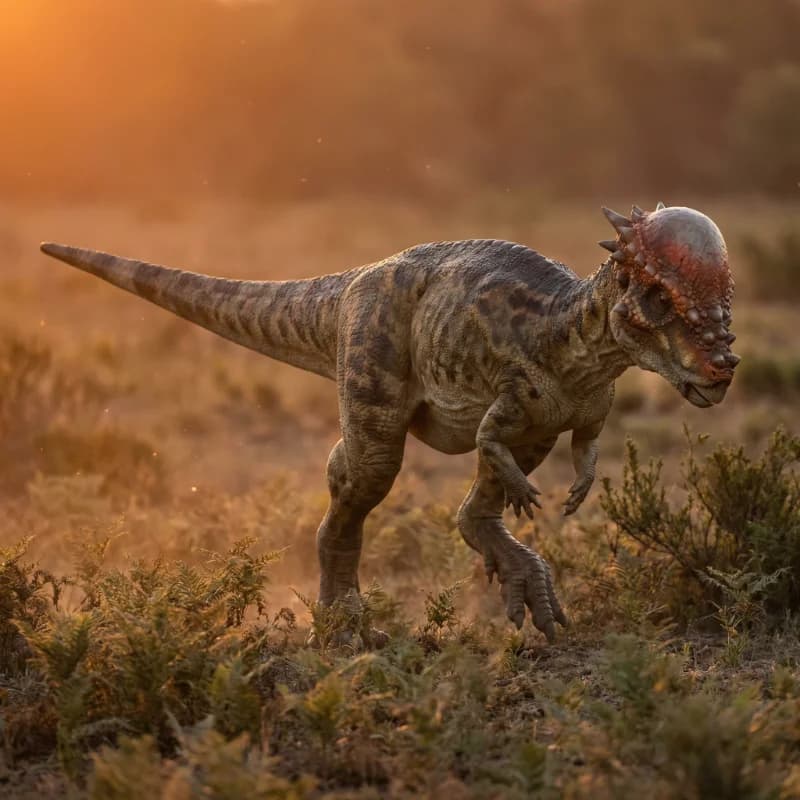
Pachycephalosaurus
Pachycephalosaurus wyomingensis
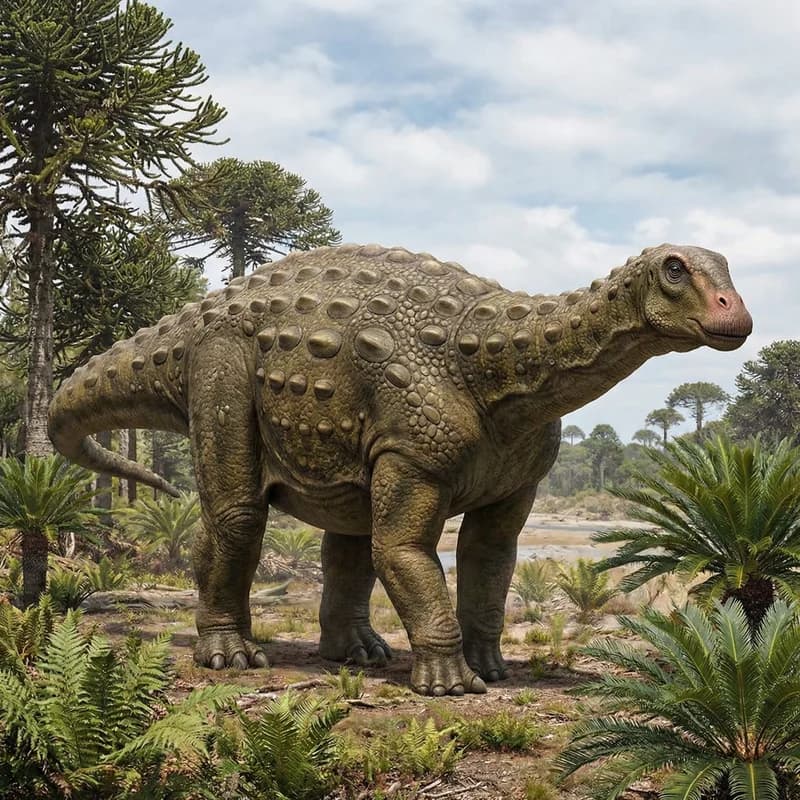
Saltasaurus
Saltasaurus loricatus
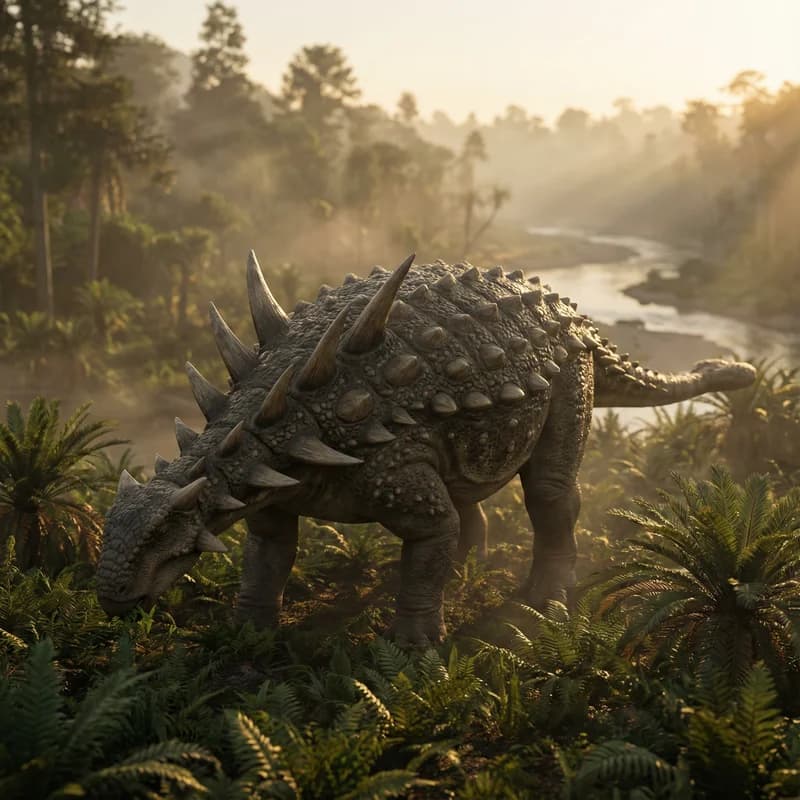
Sauropelta
Sauropelta edwardsorum
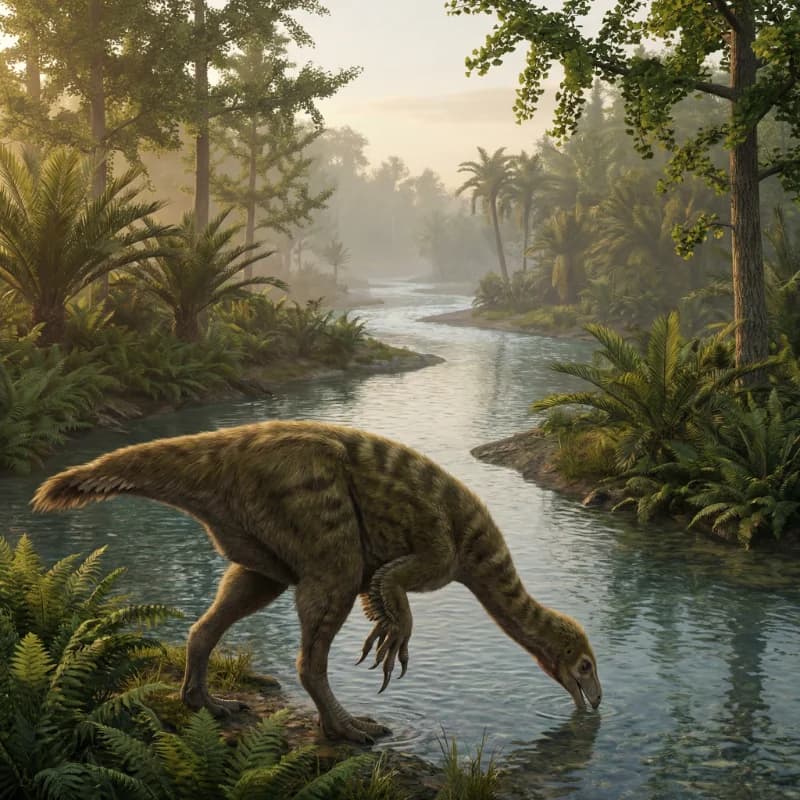
Therizinosaurus
Therizinosaurus cheloniformis
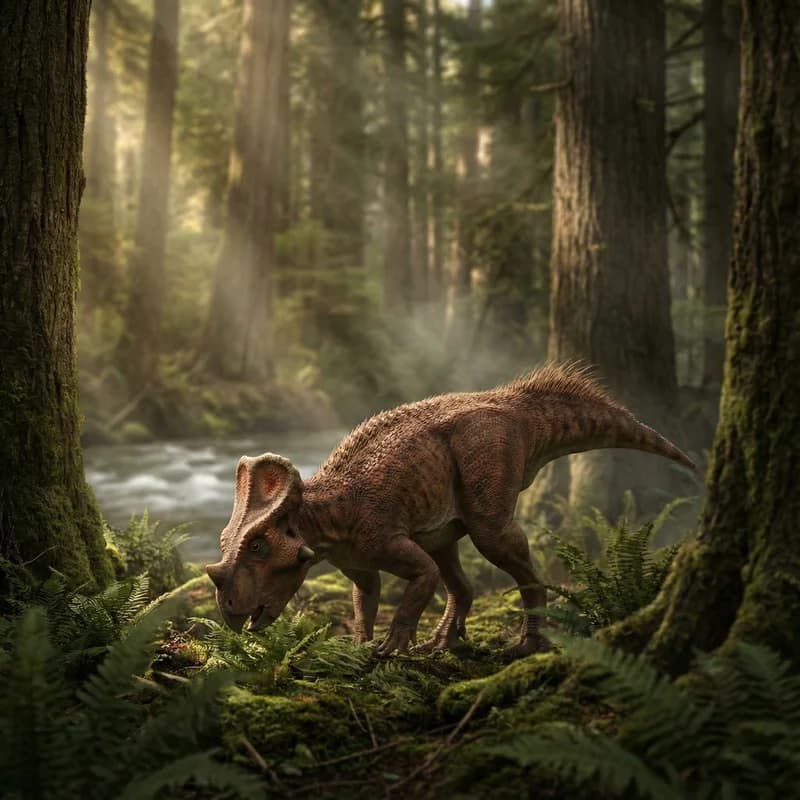
Leptoceratops
Leptoceratops gracilis
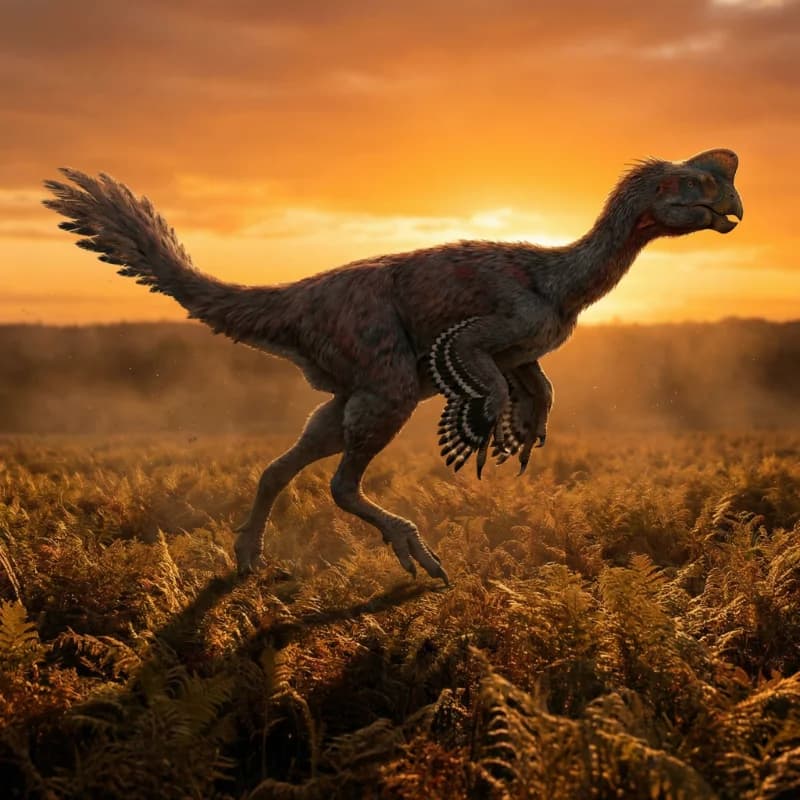
Yanbeilong
Yanbeilong ultimus
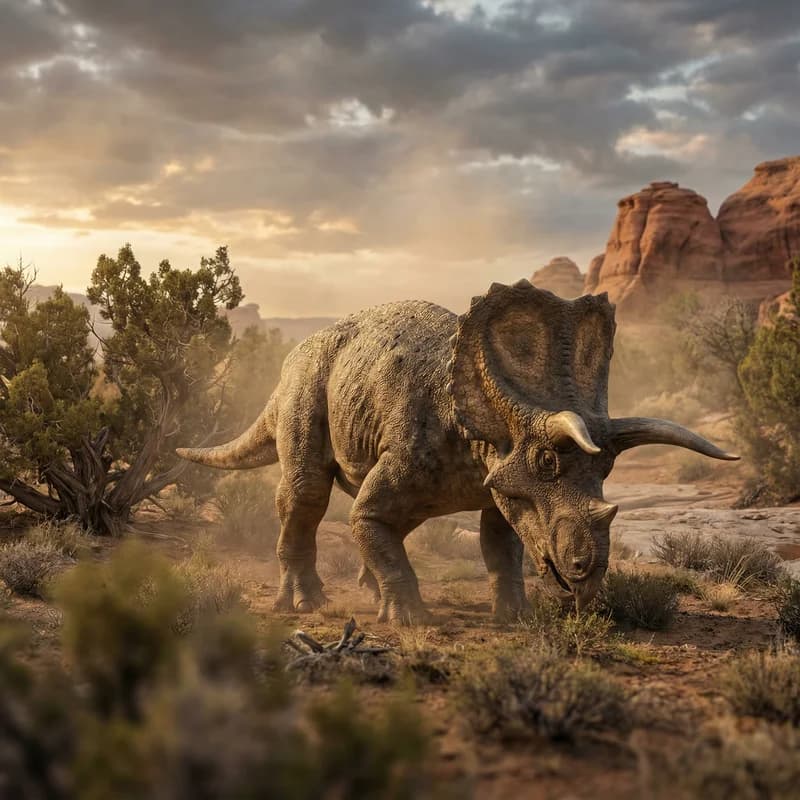
Utahceratops
Utahceratops gettyi
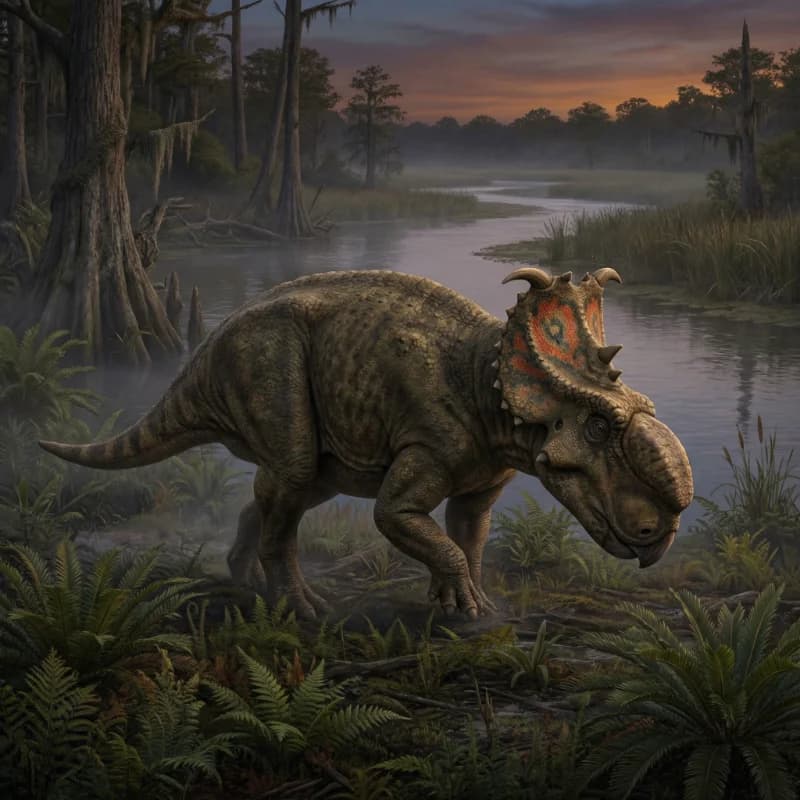
Pachyrhinosaurus
Pachyrhinosaurus