Utahceratops
Cretaceous Period Herbivore Creature Type
Utahceratops gettyi
Scientific Name: "Utah (U.S. state of discovery) + ceratops (Greek κέρας 'horn' + ὤψ 'face') — 'horned face from Utah'; the species name gettyi honors Mike Getty, who discovered the holotype"
Local Name: Utahceratops
Physical Characteristics
Discovery
Habitat

Utahceratops gettyi (Sampson et al., 2010) is a large chasmosaurine ceratopsid dinosaur that lived during the late Campanian stage of the Late Cretaceous, approximately 76.4–75.5 million years ago, on the southern portion of the island continent of Laramidia, in what is now southern Utah, USA. Classified within Ornithischia → Ceratopsia → Ceratopsidae → Chasmosaurinae, it was recovered as the sister taxon to Pentaceratops sternbergii in the original phylogenetic analysis (Sampson et al., 2010). Six specimens, including the holotype UMNH VP 16784, have been recovered from the upper lower unit to the lower middle unit of the Kaiparowits Formation in Grand Staircase–Escalante National Monument. Together, these specimens preserve approximately 96% of the skull and 70% of the postcranial skeleton.
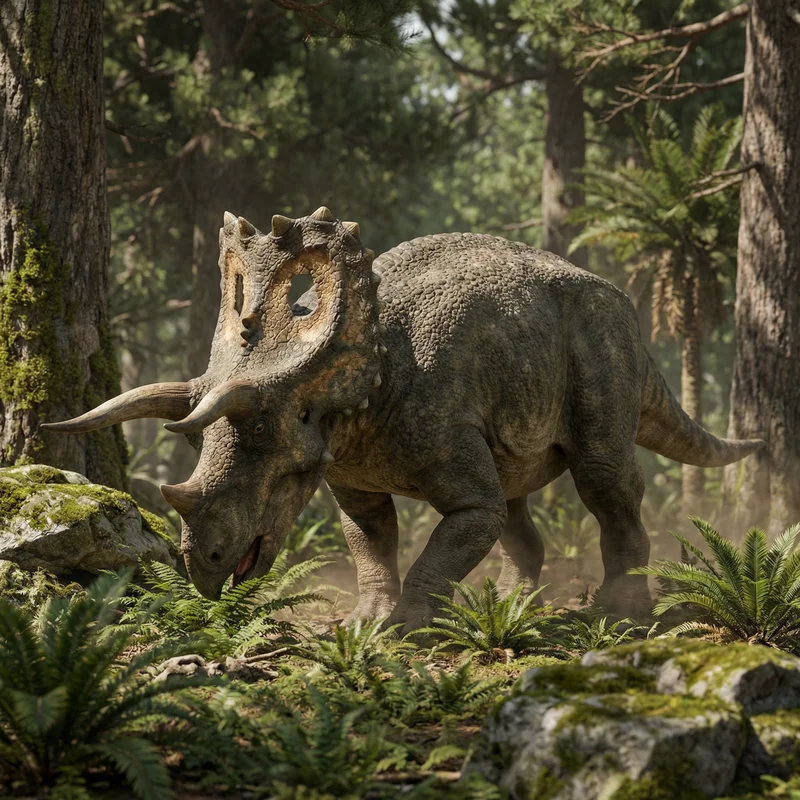
The most distinctive features of Utahceratops include short, robust, dorsolaterally projecting supraorbital horncores with blunt tips — superficially resembling the horns of a modern bison rather than the long brow horns of Triceratops — a nasal horncore positioned almost entirely behind the external naris, and an elongate parietosquamosal frill with a deep median embayment on the transverse parietal bar. The reconstructed skull is approximately 2.3 m (7.5 ft) long. According to the Natural History Museum of Utah (NHMU), the animal stood about 2 m (6 ft) high at the shoulder and measured 6–7 m (18–22 ft) in total length, while more conservative academic estimates place body length at 4.5–5 m with a mass of approximately 2 tonnes (Paul, 2016).
The scientific significance of Utahceratops extends well beyond its anatomy. Together with the co-occurring chasmosaurine Kosmoceratops richardsoni, it provided the strongest evidence at the time of its description for latitudinally arrayed dinosaur provincialism — the hypothesis that distinct dinosaur communities existed in the northern and southern regions of Laramidia during the late Campanian (Sampson et al., 2010). The discovery dramatically increased the known diversity of chasmosaurines from the southern Western Interior Basin, demonstrating that large-bodied horned dinosaurs underwent rapid, independent radiations on opposite ends of a diminutive landmass.
Overview
Name and Etymology
The genus name Utahceratops is derived from Utah, the U.S. state where the fossils were discovered, combined with the Greek κέρας (keras, 'horn') and ὤψ (ops, 'face'), meaning 'horned face from Utah.' The specific epithet gettyi honors Mike Getty, the former paleontology collections manager at the Natural History Museum of Utah (NHMU), who discovered the holotype specimen and played a pivotal role in the recovery of fossils from Grand Staircase–Escalante National Monument (Sampson et al., 2010).
Taxonomic Status
Utahceratops is currently a valid, monotypic genus containing the single species U. gettyi. No synonyms, reassignments, or taxonomic disputes have been proposed. In the original description, it was recovered within Chasmosaurinae as the sister taxon to Pentaceratops sternbergii near the base of the clade (Sampson et al., 2010). Subsequent analyses by Longrich (2014) and Fowler (2020) have largely maintained this basal chasmosaurine position, though internal relationships within the subfamily vary depending on the dataset and methodology.
One-Line Summary
A large basal chasmosaurine ceratopsid from southern Laramidia, diagnosed by short, laterally projecting brow horns and a deep median embayment on an elongate frill.
Age, Stratigraphy, and Depositional Environment
Temporal Range
All specimens of Utahceratops come from the upper portion of the lower unit and the lower portion of the middle unit of the Kaiparowits Formation. 40Ar/39Ar dating by Roberts et al. (2005) initially constrained the formation to approximately 76.6–74.5 Ma. The original description placed the stratigraphic range of Utahceratops between approximately 76.4 and 75.5 Ma (Sampson et al., 2010), corresponding to the Judithian land vertebrate age within the late Campanian. More recently, Ramezani et al. (2022) recalibrated the Kaiparowits Formation using high-precision CA-ID-TIMS U–Pb geochronology, establishing the fossil-bearing portion at approximately 77.2–75.0 Ma. These dates confirm temporal overlap with the Dinosaur Park Formation of Alberta, Canada, a key constraint for testing the dinosaur provincialism hypothesis.
Formation and Lithology
The Kaiparowits Formation is a thick (approximately 860 m) succession of Upper Cretaceous sedimentary rocks exposed across the Kaiparowits Plateau in southern Utah. The dominant lithologies are mudstone and claystone, grading upward into more sandstone-rich intervals (Roberts, 2007). Sandstone beds represent the channel deposits of large meandering rivers, while mudstone beds record floodplain sedimentation. Carbonaceous mudstone, thin coal seams, and septarian carbonate concretions occur throughout the succession. The formation is among the most fossiliferous Upper Cretaceous terrestrial units in the American Southwest.
Paleoenvironment
During the late Campanian, the depositional area of the Kaiparowits Formation lay within approximately 100 km of the western shore of the Cretaceous Western Interior Seaway, at a paleolatitude of roughly 45°N (Roberts et al., 2005; Sampson et al., 2010). Facies analysis indicates a broad alluvial floodplain dominated by large meandering river channels, abundant wetland peat swamps, ponds, and lakes, bordered by highlands to the west (Roberts, 2007). Abundant plant fossils — including vines, leaves, and branches — suggest a dense subtropical forest environment with high rainfall. The climate was warm and humid, supporting one of the most diverse Late Cretaceous terrestrial ecosystems known.
Specimens and Diagnostic Features
Holotype and Referred Specimens
The holotype is UMNH VP 16784, a partial skull. Five additional referred specimens are known, collectively providing excellent coverage of the cranial and postcranial anatomy.
| Specimen | Preserved Elements | Notes |
|---|---|---|
| UMNH VP 16784 (holotype) | Partial skull | Discovered by Mike Getty |
| UMNH VP 12198 | Fragmentary but mostly complete skull (~2.3 m long) + associated postcranium | Most complete individual |
| UMNH VP 12225 | Subadult partial skull including partial postorbital with mostly complete supraorbital horncore | Growth-stage data |
| UMNH VP 16404 | Partial postorbital with nearly complete supraorbital horncore | — |
| UMNH VP 13913 | Small juvenile partial postorbital with complete supraorbital horncore | Youngest known individual |
| UMNH VP 16671–16676 (bonebed locality 942) | Rostrum, premaxilla, nasal fragment, jugal, squamosal, parietal — minimum 2 individuals | Possible mass-death assemblage |
Together, these six specimens preserve approximately 96% of the skull and 70% of the postcranial skeleton (Sampson et al., 2010).
Diagnosis (Autapomorphies)
According to Sampson et al. (2010), Utahceratops gettyi is diagnosed by four autapomorphies. First, the nasal horncore is caudally positioned, situated almost entirely behind the external naris. Second, the supraorbital horncores are short, robust, dorsolaterally directed, and oblate in cross-section with blunt tips. Third, the episquamosals on the mid-portion of the lateral frill margin are low and extremely elongate (some exceeding 10 cm in basal length). Fourth, the median portion of the transverse bar of the parietal is rostrally curved, producing a deep median embayment.
Specimen Limitations
While the holotype itself is only a partial skull, the composite reconstruction from six specimens is exceptionally complete for a ceratopsid. The postcranial skeleton, however, is only 70% known, and certain limb and caudal elements remain undescribed. The availability of juvenile-to-adult growth series (UMNH VP 13913 through adult holotype) provides potential for ontogenetic studies, though detailed histological or morphometric analyses have not yet been published specifically for this taxon.
Morphology and Functional Anatomy
Body Size
Utahceratops was a large, robustly built, quadrupedal ceratopsid. Size estimates vary somewhat depending on the source. Wikipedia and academic literature cite a body length of approximately 4.5–5 m and a mass of about 2 tonnes (Paul, 2016), while the Natural History Museum of Utah (NHMU) press release and reconstructed skeleton provide a length of approximately 6–7 m (18–22 ft) and a shoulder height of about 2 m (6 ft). The discrepancy likely reflects different reconstruction methods and inclusion of different specimens; 4.5–5 m may represent a conservative estimate for the UMNH VP 12198 individual, while 6–7 m represents the upper bound from the full skeletal reconstruction. Mass was likely in the range of 2–2.5 tonnes.
Skull and Horns
The skull of Utahceratops is characteristically large for a ceratopsid, with the composite reconstruction measuring approximately 2.3 m in length. The nasal horncore is unusual in being positioned almost entirely behind the external naris, with a pronounced caudal keel on the distal half that produces a tear-drop shaped cross-section — a feature otherwise seen only in Agujaceratops (Sampson et al., 2010). The supraorbital horncores are the most immediately distinctive feature: rather than projecting upward or forward as in most chasmosaurines, they are directed dorsolaterally, producing a bison-like profile. They are short, compressed rostrocaudally, and terminate in blunt tips. This morphology is confirmed across four specimens from different localities, ruling out postmortem distortion or pathology as explanations.
Frill Structure
The parietosquamosal frill tapers caudally, resembling that of Pentaceratops. The episquamosals along the mid-portion of the lateral frill margin are uniquely low yet extremely elongate in their basal extent (some exceeding 10 cm), unlike any other known ceratopsid. The transverse parietal bar displays a distinctive rostral curvature at its midline, creating a deep, relatively uniform-width median embayment — deeper and more uniform than the tapering embayment of Pentaceratops. As in most non-Chasmosaurus chasmosaurines, the epijugal ossifications are relatively large. A pair of parietal fenestrae is present, as in most ceratopsids except Triceratops, reducing the weight of the massive skull.
Beak and Dentition
The anterior of the skull bears a keratinous beak (formed by the rostral bone and predentary) adapted for cropping vegetation. The maxillae and dentaries contain hundreds of closely packed teeth organized into dental batteries optimized for cutting and slicing plant material (NHMU description). This arrangement is typical of ceratopsids and is highly efficient for processing tough, fibrous vegetation.
Limbs and Locomotion
Utahceratops was an obligate quadruped with robust limbs. While approximately 70% of the postcranial skeleton is preserved, detailed limb osteology was not the focus of the original description. Based on general biomechanical studies of large ceratopsids, Utahceratops likely moved at speeds of approximately 20–30 km/h at maximum (estimated; Fujiwara, 2009).
Diet and Ecology
Feeding Behavior
Utahceratops was unambiguously herbivorous (confirmed). Its keratinous beak was suited for cropping low-to-mid-level vegetation, while the complex dental battery efficiently processed tough plant material. Given a shoulder height of approximately 2 m, the animal likely foraged on vegetation at or below this height, including ferns, cycads, conifers, and early angiosperms that formed the understory and midstory of the subtropical Kaiparowits forest ecosystem.
Ecological Role and Coexisting Fauna
Within the Kaiparowits ecosystem, Utahceratops coexisted with a remarkably diverse assemblage of large-bodied dinosaurs. Fellow ceratopsians included the chasmosaurine Kosmoceratops richardsoni and the centrosaurine Nasutoceratops titusi. Hadrosaurids were represented by Gryposaurus monumentensis and Parasaurolophus cyrtocristatus. The armored ankylosaur Akainacephalus johnsoni was also present. Apex predators included the tyrannosaurid Teratophoneus curriei, while smaller theropods such as the troodontid Talos sampsoni and the oviraptorosaurian Hagryphus giganteus occupied different trophic niches. The giant crocodylian Deinosuchus was a further potential threat, particularly to juveniles and subadults near waterways. Utahceratops, together with Gryposaurus, likely occupied the large-bodied, low-browsing herbivore niche.
Social Behavior
Bonebed locality 942 has yielded remains of at least two Utahceratops individuals, providing indirect evidence for gregarious behavior or at least periodic aggregation (Getty et al., 2010). Specimens spanning juvenile to adult growth stages have been recovered from the same formation, which may suggest multi-generational herding, though taphonomic analysis is needed to distinguish intentional aggregation from catastrophic (e.g., flood-related) accumulation. The short, blunt brow horns and elaborate frill ornamentation are most consistent with functions in species recognition and sexual display (probable), rather than as primary weapons for intraspecific combat.
Distribution and Paleogeography
Geographic Range
All confirmed specimens of Utahceratops have been recovered exclusively from the Kaiparowits Formation within Grand Staircase–Escalante National Monument, southern Utah. Localities lie within Kane and Garfield counties. No specimens have been reported from any other formation or geographic region, indicating a highly restricted known range.
Paleogeographic Context
During the late Campanian (~76–73 Ma), North America was divided by the Cretaceous Western Interior Seaway into the eastern landmass of Appalachia and the western landmass of Laramidia. The Kaiparowits depositional area was situated in the southern portion of Laramidia at approximately 45°N paleolatitude (Roberts et al., 2005; Sampson et al., 2010), some 8° farther north than the modern latitude of the site (~37°N). Contemporaneous northern Laramidian faunas (Alberta, ~55–60°N paleolatitude) hosted different chasmosaurine taxa, including Chasmosaurus and Vagaceratops, while the southern region harbored Utahceratops, Kosmoceratops, and their relatives. This north-south faunal dichotomy is central to the hypothesis of latitudinally arrayed dinosaur endemism on Laramidia.
Phylogeny and Taxonomic Debates
Original Phylogenetic Analysis
The phylogenetic analysis of Sampson et al. (2010) — based on 148 characters scored across 7 non-chasmosaurine outgroups and 18 chasmosaurine ingroup taxa — recovered Utahceratops as the sister taxon of Pentaceratops sternbergii. This clade was positioned near the base of the more derived chasmosaurines, above Chasmosaurus and Mojoceratops. Importantly, Kosmoceratops was not recovered as the closest relative of Utahceratops but instead formed a well-supported clade with Vagaceratops irvinensis — demonstrating that the two co-occurring Utah chasmosaurines were not each other's nearest relatives.
Subsequent Analyses
Longrich (2014), in describing Pentaceratops aquilonius, confirmed the close relationship between Utahceratops and P. sternbergii within a broader southern Laramidian chasmosaurine clade. Fowler (2020) described two new taxa from the Kirtland Formation of New Mexico — Navajoceratops sullivani and Terminocavus sealeyi — and proposed a morphological transitional series: Utahceratops → Pentaceratops → Navajoceratops → Terminocavus → Anchiceratops. If this anagenetic lineage hypothesis is supported, Utahceratops occupies a pivotal position at the base of a major chasmosaurine evolutionary radiation.
Key Debates
The taxonomic validity of Utahceratops itself is not disputed. However, the precise internal relationships within Chasmosaurinae remain somewhat fluid across analyses, likely reflecting the rapid radiation of this clade during the late Campanian. In some analyses, the sister-group relationship between Utahceratops and Pentaceratops is only weakly supported. Additionally, the precise temporal correlation between the Kaiparowits Formation and the Dinosaur Park Formation was debated, but Ramezani et al. (2022) resolved this with high-precision U-Pb dates confirming broad temporal overlap.
Reconstruction and Uncertainty
Confirmed
The cranial morphology, diagnostic autapomorphies, chasmosaurine classification, provenance from the Kaiparowits Formation, and Campanian age (~76–75.5 Ma) of Utahceratops are all firmly established. The composite skull (96%) and postcranial (70%) reconstructions based on six specimens are highly reliable.
Probable
A total body length of approximately 5–7 m and mass of approximately 2–2.5 tonnes for a large ceratopsid is probable. The sister-group relationship with Pentaceratops is supported by multiple independent analyses and is probable. The use of brow horns and frill ornamentation for intraspecific signaling (species recognition, sexual display) is also probable based on comparative evidence across Ceratopsidae.
Hypothetical
The use of horns in active combat (head-butting), the scale and structure of herding behavior, and Fowler's (2020) proposed linear anagenetic series from Utahceratops through Anchiceratops all require further testing and remain at the hypothesis level. Precise body coloration, skin texture, vocalizations, and detailed life-history parameters cannot be determined from the current fossil record.
Popular Media vs. Scientific Consensus
Utahceratops is sometimes simplified as a "cousin of Triceratops," but it is phylogenetically more basal within Chasmosaurinae and differs markedly in brow horn morphology. Unlike the long, forward-pointing brow horns of Triceratops, those of Utahceratops are short, blunt, and laterally splayed. Additionally, Utahceratops retains large parietal fenestrae in its frill, whereas Triceratops has a largely solid frill.
Comparison with Related and Contemporaneous Taxa
| Taxon | Age (Ma) | Locality | Brow Horn Morphology | Frill Features | Body Length (m) |
|---|---|---|---|---|---|
| Utahceratops gettyi | 76.4–75.5 | Utah (southern Laramidia) | Short, blunt, laterally projecting | Elongate, deep median embayment | 5–7 |
| Pentaceratops sternbergii | ~76–73 | New Mexico (southern Laramidia) | Long, forward/upward projecting | Very large, triangular, large parietal fenestrae | ~6 |
| Kosmoceratops richardsoni | 76.4–75.5 | Utah (same formation) | Long, laterally projecting, curved | Short, broad, 10 hook-like processes | ~4.5 |
| Chasmosaurus belli | ~77–75.5 | Alberta (northern Laramidia) | Moderate length, forward or backward | Broad, heart-shaped, large parietal fenestrae | ~5 |
| Vagaceratops irvinensis | ~75.5 | Alberta (northern Laramidia) | Short | Short, broad, hook-like processes | ~4.5 |
Utahceratops and Kosmoceratops coexisted in the same formation yet are morphologically and phylogenetically distinct, each more closely related to taxa from different regions (New Mexico and Alberta, respectively). This pattern is interpreted as evidence of independent colonization and diversification of distinct chasmosaurine lineages in southern Laramidia (Sampson et al., 2010).
Fun Facts
FAQ
📚References
- Sampson, S. D., Loewen, M. A., Farke, A. A., Roberts, E. M., Forster, C. A., Smith, J. A., & Titus, A. L. (2010). New horned dinosaurs from Utah provide evidence for intracontinental dinosaur endemism. PLoS ONE, 5(9), e12292. https://doi.org/10.1371/journal.pone.0012292
- Roberts, E. M., Deino, A. L., & Chan, M. A. (2005). 40Ar/39Ar age of the Kaiparowits Formation, southern Utah, and correlation of contemporaneous Campanian strata and vertebrate faunas along the margin of the Western Interior Basin. Cretaceous Research, 26(2), 307–318. https://doi.org/10.1016/j.cretres.2005.01.002
- Roberts, E. M. (2007). Facies architecture and depositional environments of the Upper Cretaceous Kaiparowits Formation, southern Utah. Sedimentary Geology, 197(3–4), 207–233. https://doi.org/10.1016/j.sedgeo.2006.10.001
- Paul, G. S. (2016). The Princeton Field Guide to Dinosaurs (2nd ed.). Princeton University Press. p. 297.
- Longrich, N. R. (2014). The horned dinosaurs Pentaceratops and Kosmoceratops from the upper Campanian of Alberta and implications for dinosaur biogeography. Cretaceous Research, 51, 292–308. https://doi.org/10.1016/j.cretres.2014.06.011
- Fowler, D. W. (2020). Transitional evolutionary forms in chasmosaurine ceratopsid dinosaurs: evidence from the Campanian of New Mexico. PeerJ, 8, e9251. https://doi.org/10.7717/peerj.9251
- Getty, M. A., Loewen, M. A., Roberts, E., Titus, A. L., & Sampson, S. D. (2010). Taphonomy of horned dinosaurs (Ornithischia: Ceratopsidae) from the late Campanian Kaiparowits Formation, Grand Staircase-Escalante National Monument, Utah. In M. J. Ryan, B. J. Chinnery-Allgeier, & D. A. Eberth (Eds.), New Perspectives on Horned Dinosaurs: The Royal Tyrrell Museum Ceratopsian Symposium (pp. 478–494). Indiana University Press.
- Titus, A. L., & Loewen, M. A. (Eds.). (2013). At the Top of the Grand Staircase: The Late Cretaceous of Southern Utah. Indiana University Press.
- Ramezani, J., Beveridge, T. L., Rogers, R. R., Eberth, D. A., & Roberts, E. M. (2022). Calibrating the zenith of dinosaur diversity in the Campanian of the Western Interior Basin by CA-ID-TIMS U–Pb geochronology. Scientific Reports, 12, 16026. https://doi.org/10.1038/s41598-022-19896-w
- Loewen, M. A., Farke, A. A., Sampson, S. D., Getty, M. A., Lund, E. K., & O'Connor, P. M. (2013). Ceratopsid dinosaurs from the Grand Staircase of southern Utah. In A. L. Titus & M. A. Loewen (Eds.), At the Top of the Grand Staircase: The Late Cretaceous of Southern Utah (pp. 488–503). Indiana University Press.
- Dodson, P., Forster, C. A., & Sampson, S. D. (2004). Ceratopsidae. In D. B. Weishampel, P. Dodson, & H. Osmólska (Eds.), The Dinosauria (2nd ed., pp. 494–513). University of California Press.
- Sampson, S. D., & Loewen, M. A. (2010). Unraveling a radiation: a review of the diversity, stratigraphic distribution, biogeography, and evolution of horned dinosaurs (Ornithischia: Ceratopsidae). In M. J. Ryan, B. J. Chinnery-Allgeier, & D. A. Eberth (Eds.), New Perspectives on Horned Dinosaurs (pp. 405–427). Indiana University Press.
- Beveridge, T. L., Roberts, E. M., & Titus, A. L. (2020). Volcaniclastic member of the richly fossiliferous Kaiparowits Formation reveals new insights for regional correlation and tectonics in southern Utah during the latest Campanian. Cretaceous Research, 114, 104527. https://doi.org/10.1016/j.cretres.2020.104527
- Fowler, D. W. (2017). Revised geochronology, correlation, and dinosaur stratigraphic ranges of the Santonian–Maastrichtian (Late Cretaceous) formations of the Western Interior of North America. PLoS ONE, 12(11), e0188426. https://doi.org/10.1371/journal.pone.0188426
Gallery
5 images Utahceratops
Utahceratops · Cretaceous Period · Herbivore
 Utahceratops
Utahceratops · Cretaceous Period · Herbivore
 Utahceratops
Utahceratops · Cretaceous Period · Herbivore
 Utahceratops
Utahceratops · Cretaceous Period · Herbivore
 Utahceratops
Utahceratops · Cretaceous Period · Herbivore
🔗Related Creatures
Torosaurus
Torosaurus latus
Anchiceratops
Anchiceratops ornatus

Medusaceratops
Medusaceratops lokii
Zuniceratops
Zuniceratops christopheri
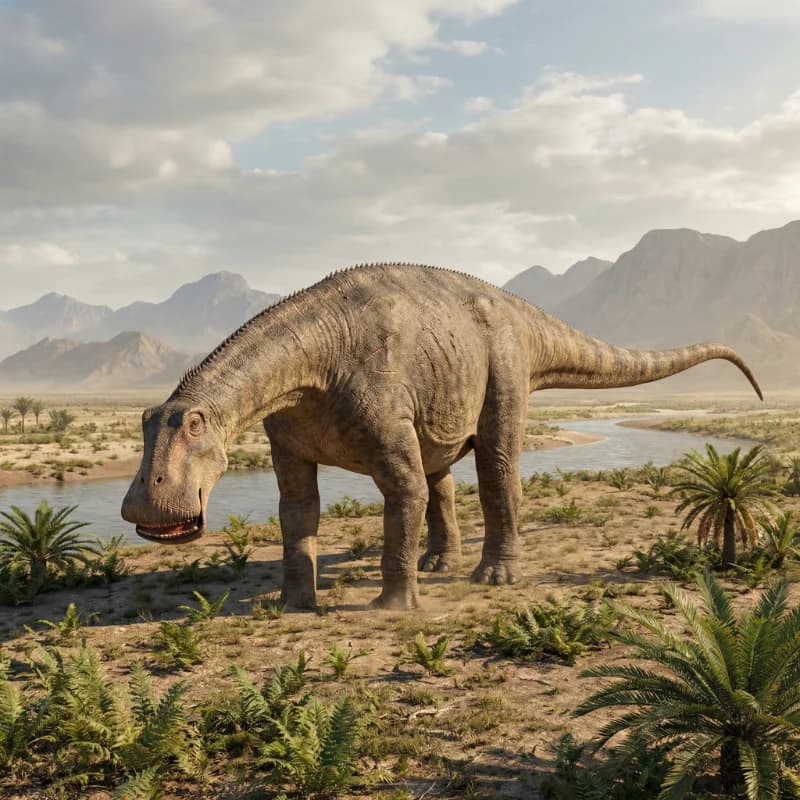
Nigersaurus
Nigersaurus taqueti
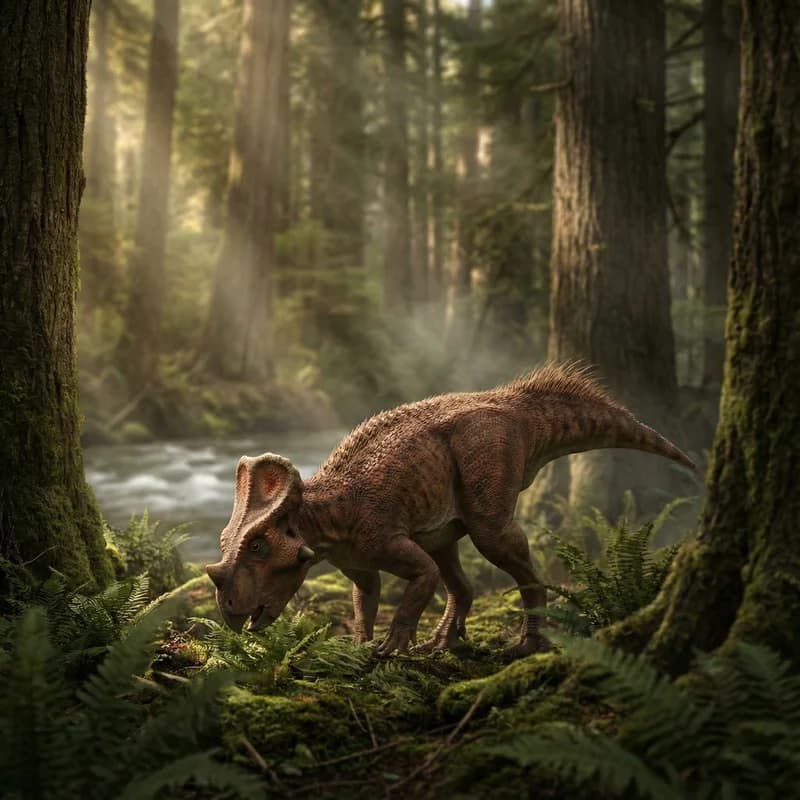
Leptoceratops
Leptoceratops gracilis
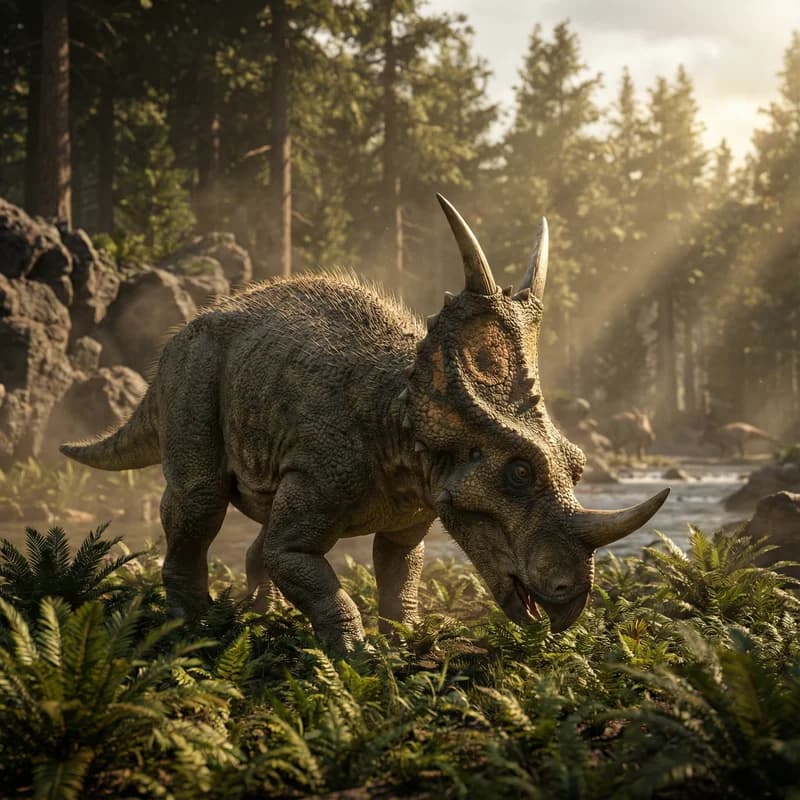
Einiosaurus
Einiosaurus procurvicornis

Iguanodon
Iguanodon bernissartensis