Leptoceratops
Cretaceous Period Herbivore Creature Type
Leptoceratops gracilis
Scientific Name: "Greek leptos (λεπτός, 'small/slender') + ceras (κέρας, 'horn') + ops (ὤψ, 'face') = 'small horn face'; species name gracilis is Latin for 'graceful/slender'"
Local Name: Leptoceratops
Physical Characteristics
Discovery
Habitat

Leptoceratops (Leptoceratops gracilis Brown, 1914) is a primitive ceratopsian dinosaur from the Late Cretaceous (Maastrichtian stage, approximately 67.2–66.2 Ma) of western North America. It is the type genus of the family Leptoceratopsidae, with fossils known from the Scollard Formation of Alberta (Canada), the Hell Creek Formation of Montana, and the Lance Formation of Wyoming (USA). More than ten individuals are currently known, including the near-complete skeleton CMN 8889, which together with other specimens provides a comprehensive picture of the anatomy from skull to tail tip (Sternberg, 1951; Ott, 2006).
Based on the complete specimen CMN 8889 (with the tail of CMN 8887 scaled up and added), the total body length is approximately 1.81 m, while the largest individuals (AMNH 5205, YPM VPPU 18133) likely reached around 2 m and weighed approximately 100 kg (Russell, 1969; Paul, 2016). Leptoceratops had a proportionally very large head, but its frill was extremely reduced and it entirely lacked horns—a stark contrast to its contemporary and sympatric relative Triceratops, which reached 8–9 m in length and 6–12 tonnes. Dental microwear analysis has revealed that Leptoceratops possessed a unique mammal-like chewing motion termed "circumpalinal" mastication, making it the first dinosaur confirmed to have this level of jaw complexity (Varriale, 2016). Additionally, bonebeds from the Hell Creek Formation suggest that Leptoceratops may have lived in multi-generational burrows (Fowler et al., 2019).
As one of the last non-avian dinosaurs to walk the earth before the Cretaceous–Paleogene (K-Pg) mass extinction at approximately 66.04 Ma, Leptoceratops represents a remarkable case of evolutionary conservatism: it retained a primitive body plan while independently developing sophisticated feeding adaptations in an ecosystem dominated by giant ceratopsids.
Overview
Name and Etymology
The generic name Leptoceratops is derived from the Ancient Greek words leptos (λεπτός, 'small', 'slender'), ceras (κέρας, 'horn'), and ops (ὤψ, 'face'), meaning "small horn face" or "slender horn face." The specific epithet gracilis is Latin for 'graceful' or 'slender.' Brown (1914) did not explicitly explain the etymology in the original description, but the name is interpreted as reflecting the small and simple skull morphology of this hornless dinosaur (Lucas, 2016; Dodson, 1996). Some popular sources translate leptos as 'light,' but in classical Greek, 'small' or 'slender' is the more accurate primary meaning.
Taxonomic Status
Leptoceratops belongs to Ornithischia, Ceratopsia, and the family Leptoceratopsidae, of which it is the type genus. The only valid species is Leptoceratops gracilis. A second species, L. cerorhynchus, was named by Brown & Schlaikjer (1942) based on a specimen (AMNH 5464) from the St. Mary River Formation of Montana, but Sternberg (1951) separated it into the distinct genus Montanoceratops. Additionally, Gilmore (1939) referred specimens from the Two Medicine Formation to Leptoceratops sp., but these were later reclassified as Cerasinops (Chinnery & Horner, 2007).
One-Line Summary
Leptoceratops is a primitive ceratopsian that survived until the very end of the Cretaceous without evolving horns or a large frill, yet independently developed complex mammal-like chewing mechanics unique among dinosaurs.
Geological Context and Paleoenvironment
Temporal Range
Leptoceratops fossils date to the late Maastrichtian stage of the Late Cretaceous, spanning approximately 67.2–66.2 Ma. Within the Scollard Formation, nine specimens were reported from the lower portion (estimated at 65.5–66.1 Ma, or approximately 0.5 My older with recalibration; Eberth et al., 2013). The Hell Creek Formation spans from approximately 67.20 Ma to the K-Pg boundary at 66.043 Ma, with the middle and lower sections being older than the entire Scollard Formation. The total temporal range of Leptoceratops therefore extends over roughly one million years.
Formations and Lithology
The principal fossil-bearing formations are summarized below.
| Formation | Location | Lithology | Age (Ma) |
|---|---|---|---|
| Scollard Formation | Alberta, Canada | Sandstone, siltstone, mudstone, shale | 66.88–66.04 |
| Hell Creek Formation | Montana, USA | Mudstone, carbonaceous shale dominant | 67.20–66.04 |
| Lance Formation | Wyoming, USA | Fine sandstone, siltstone | ~69–66 |
The Scollard Formation belongs to the Western Canada Sedimentary Basin of southwestern Alberta and spans from the upper Maastrichtian into the lower Paleocene (Danian), encompassing the K-Pg boundary.
Depositional Environment and Paleoclimate
The paleoenvironment of both the Scollard and Hell Creek formations represents semi-arid to semi-humid floodplains with braided and meandering stream systems (Fowler, 2020). The environment transitioned to more humid wetlands across the K-Pg boundary. The regions where Leptoceratops lived formed a broad coastal plain extending from the western shore of the Western Interior Seaway to the foothills of the newly forming Rocky Mountains. During the Maastrichtian, Alberta was situated at a paleolatitude of approximately 55–60°N (Lehman, 1987), experiencing a warm-temperate climate that was relatively cool in the mountain foothills. Leptoceratops fossils are concentrated in the well-drained lower third of the Hell Creek Formation, while the swampy upper Hell Creek virtually lacks them—a pattern that may reflect a habitat preference for drier environments.
Vegetation by the end of the Cretaceous was transitioning to angiosperm-dominated small-tree forests, though conifers and ferns still contributed significantly to biomass (Hell Creek flora).
Specimens and Diagnostic Features
Holotype and Key Specimens
The holotype is AMNH 5205, discovered in 1910 by an American Museum of Natural History expedition along the Red Deer River in Alberta, Canada. The specimen was exposed in a weathered-out cow trail that had destroyed and fragmented some material. It consists of two partial skeletons: the primary individual preserves portions of the skull and jaws, a complete right forelimb, partial hindlimbs, and 24 caudal vertebrae, while the second (slightly larger) individual preserves part of the forelimb plus several vertebrae (Brown, 1914).
In 1947, Charles M. Sternberg discovered three additional individuals from the Edmonton Formation (now Scollard Formation). CMN 8889 preserves a nearly complete skull and skeleton, making it the most anatomically informative specimen. CMN 8888 is a larger individual missing most of the head and part of the left hand, and CMN 8887 is the smallest individual, found directly beside CMN 8888 (Sternberg, 1951). Russell (1969) published a complete skeletal reconstruction based on these CMN specimens.
| Specimen | Institution | Preserved Elements | Locality / Formation |
|---|---|---|---|
| AMNH 5205 (holotype) | American Museum of Natural History | Partial skull, complete right forelimb, partial hindlimbs, 24 caudals (2 individuals) | Alberta, Scollard Fm. |
| CMN 8887 | Canadian Museum of Nature | Nearly complete small individual | Alberta, Scollard Fm. |
| CMN 8888 | Canadian Museum of Nature | Near-complete large individual, head and left hand partly missing | Alberta, Scollard Fm. |
| CMN 8889 | Canadian Museum of Nature | Nearly complete skull and skeleton (adult) | Alberta, Scollard Fm. |
| YPM VPPU 18133 | Yale Peabody Museum | Nearly complete hindlimb, pelvis, tail (48–49 caudals), isolated teeth | Wyoming, Lance Fm. |
| UWGM 200 | Univ. Wisconsin-Madison | Posterior skull (first complete braincase) | Montana, Hell Creek Fm. |
| NJSM 24228 | New Jersey State Museum | Partial skeleton | Wyoming, Lance Fm. |
| RTMP 93.95.1, 95.86.1 | Royal Tyrrell Museum | Partial skeletons | Alberta, Scollard Fm. |
Diagnostic Features
The principal diagnostic features distinguishing Leptoceratops from other leptoceratopsids and ceratopsians include the following (Sternberg, 1951; Ryan et al., 2012).
The skull is similar to Protoceratops in general shape but lower and longer, and uniquely lacks a posterior crest, resulting in an extremely reduced frill. The parietal bones are reduced, solid, and lack fenestrae. No horns are present on the nasal or postorbital. Unlike Protoceratops, the premaxilla is edentulous (toothless). There are 17 teeth each in the maxilla and dentary.
The predentary (forming the lower beak) is shorter than in any more derived ceratopsian. The dentary is short and deep, shorter than that of Montanoceratops.
The teeth are the largest single-rooted teeth of any ceratopsian (ceratopsids have double-rooted teeth). Tooth wear facets are nearly vertical and form a distinctive shelf structure. This unique wear pattern is shared only with Udanoceratops and Archaeoceratops (Tanoue et al., 2009). Crown surfaces display a strong, slightly offset longitudinal ridge accompanied by two to three weaker parallel ridges, all bordered by a pronounced cingulum.
Clavicles are present—a primitive feature lost in Ceratopsidae and most non-ceratopsian ornithischians (Sternberg, 1951; Maidment & Barrett, 2011).
Specimen Limitations
The holotype (AMNH 5205) suffered damage and partial loss due to weathering in the cow trail, and the exact locality could not be relocated by subsequent collectors (though Brown's description indicates it came from the Upper Edmonton member). The assignment of YPM VPPU 18133 to Leptoceratops was questioned by Chinnery (2004), who noted that the jugal resembles Prenoceratops and the locality may belong to the Meeteetse Formation. UWGM 200 preserves only the posterior skull, with unfused sutures indicating a subadult individual (Ott, 2006).
Morphology and Function
Body Size
The complete vertebral columns of CMN 8888 and CMN 8887 are 1.66 m and 1.35 m long, respectively. Russell's (1969) reconstruction, combining the body of CMN 8889 with the proportionally scaled tail of CMN 8887, yields a total length of approximately 1.81 m. The largest individuals (AMNH 5205, YPM VPPU 18133) are estimated at approximately 2 m in length and 100 kg in body mass (Paul, 2016). All described specimens fall within a similar size range, though the holotype and YPM specimen are somewhat larger than the three CMN individuals. This size is comparable to Cerasinops, Prenoceratops, and Protoceratops, but considerably smaller than the 4 m, ~700 kg Udanoceratops.
Skull
Complete skull length is 450 mm in CMN 8889 and 330 mm in the smallest individual, CMN 8887, with corresponding mandible lengths of 345 mm and 275 mm (Sternberg, 1951). Extrapolation from preserved material gives estimated skull lengths of approximately 529 mm for AMNH 5205 and 468–540 mm for UWGM 200 (Ott, 2006). Skull sutures in CMN 8889 are fused, indicating an adult, while those in CMN 8887 and UWGM 200 are unfused, suggesting subadult status.
The skull is broadly similar to Protoceratops but is lower and longer. The parietal frill is reduced and solid (no fenestrae). A large ridge above the maxillary teeth would have supported a muscular cheek pouch for processing vegetation. As in other ceratopsians, the jugal bones flare laterally and bear an epijugal ossification. The palpebral bone is small and loosely positioned within the orbit. Hyoid bones are preserved—known among ceratopsians only additionally in Centrosaurus and Protoceratops (Sternberg, 1951).
The braincase anatomy is similar to Montanoceratops, with minor differences including a constricted neck on the occipital condyle, an unsplit supraoccipital ridge, and an elevated palatal articulation on the exoccipital (Ott, 2006).
Teeth and Jaw Mechanics
The unique tooth wear of Leptoceratops was investigated in detail by Varriale (2016) through dental microwear analysis of CMN 8889. Microwear scratches on the tooth surfaces describe curvilinear arcs spanning approximately 50°, inconsistent with simple orthal (vertical) chewing. Varriale coined the term "circumpalinal" chewing for this motion, which differs from both the standard palinal (posterior-pulling) chewing of other neoceratopsians and the orthal chewing of ornithopods. The mechanism involves a smooth power transition between the external and posterior adductor muscles, producing an orbital jaw motion analogous to that of mammals—despite the vastly different jaw joint anatomy. This represents convergent evolution with mammalian masticatory systems.
Biomechanical studies of ceratopsian jaws have further shown that Leptoceratops and other leptoceratopsids had efficient bites that allowed adaptability to different food types, independent of the improvements seen along the ceratopsid evolutionary lineage (Tanoue et al., 2009; Mallon & Anderson, 2014).
Postcranial Skeleton
The vertebral column consists of 9 cervicals, 13 dorsals, 6 sacrals, and a variable number of caudals (38 in CMN 8887, 48 in CMN 8888, 48–49 in YPM VPPU 18133; Sternberg, 1951; Ostrom, 1978). The first three cervicals fuse into a syncervical only in adulthood—distinctly more primitive than in Protoceratops and ceratopsids. Caudal neural spines are very elongate, reaching 2–4 times the height of the centrum; although the tallest among ceratopsians when first described, they are now exceeded by those of Montanoceratops (5–8 times centrum height).
Limbs and Locomotion
Senter (2007) conducted the first detailed analysis of forelimb function in basal ceratopsians, concluding that Leptoceratops forelimbs were long enough to reach the ground, permitting quadrupedal posture. However, the radius could not rotate around the ulna (unlike in Protoceratops), restricting pronation and limiting quadrupedal hand posture to a laterally splayed position. Fore- and hindlimb proportions indicate that Leptoceratops was likely bipedal when moving at speed but reverted to quadrupedality when moving slowly or feeding, with a slightly more bipedal tendency than Protoceratops.
The hindlimb is more robust than the forelimb. Femur lengths are: 270 mm (CMN 8889), 265 mm (CMN 8888), 230 mm (CMN 8887), and >257 mm (YPM VPPU 18133). The femur is consistently slightly shorter than the tibia—unlike in heavier ceratopsids. The pes is proportionally longer than in Protoceratops, with four fully developed clawed digits and a reduced fifth metatarsal (phalangeal formula: 2-3-4-5-0).
Diet and Ecology
Feeding and Diet
Leptoceratops was herbivorous and, given its small body size, was an obligate low browser. By the end of the Cretaceous, angiosperms had become taxonomically diverse, but vegetation biomass was likely still dominated by conifers and ferns. Equisetum (horsetails) provided high energy content, Ginkgo offered high protein, and cycads and palms may have supplied starch. Cycad material has been found in the teeth of ceratopsid dinosaurs, providing direct evidence that ceratopsians consumed such plants.
The powerful beak and circumpalinal chewing mechanism of Leptoceratops would have constituted an efficient and versatile feeding strategy. Biomechanical analyses confirm that leptoceratopsid jaw mechanics were not simply a step along the evolutionary progression toward ceratopsids but represent an independently efficient feeding system (Mallon & Anderson, 2014).
Burrowing Behavior Hypothesis
Three bonebeds containing Leptoceratops specimens of various ages were discovered in the Hell Creek Formation. Originally interpreted as miring events, Fowler et al. (2019) proposed that these sites instead represent adults buried during collapses of multi-generational burrows. All three bonebeds occur in the lower third of the Hell Creek Formation, where the environment was better drained than the swampy upper Hell Creek, which lacks Leptoceratops.
The forelimb anatomy of Leptoceratops is compatible with scratch-digging behavior (Senter, 2007). The presence of a syncervical is also potentially relevant, as most modern animals with fused cervical vertebrae are either fossorial (burrowing) or pelagic (e.g., hornbills, porcupines, dolphins). However, direct evidence in the form of a burrow trace fossil associated with Leptoceratops has not yet been found, so this remains a plausible hypothesis.
Faunal Associates
Leptoceratops constituted approximately 6% of the dinosaur fauna in its formations (Ott, 2006), making it a rare component. Co-occurring dinosaurs include the ceratopsids Triceratops and Torosaurus, the hadrosaurid Edmontosaurus, the ankylosaurs Ankylosaurus and Denversaurus, the pachycephalosaurs Pachycephalosaurus, Platytholus, and Sphaerotholus, and the theropods Tyrannosaurus, Acheroraptor, Pectinodon, Anzu, and Eoneophron. Non-dinosaurian vertebrates recorded from these formations include chondrichthyans, osteichthyans (Lepisosteus, Cyclurus), amphibians (Scapherpeton), turtles (Compsemys), crocodilians, the pterosaur Infernodrakon, and a diverse assemblage of mammals (multituberculates, marsupials such as Alphadon and Didelphodon, and insectivorans such as Cimolestes).
Distribution and Paleogeography
Geographic Range and Stratigraphic Occurrence
Leptoceratops fossils are confirmed from Alberta, Canada (Scollard Formation); Montana, USA (Hell Creek Formation); and Wyoming, USA (Lance Formation). During the Late Cretaceous, these regions formed part of the western coast of the Western Interior Seaway and the broad coastal plain extending westward to the foothills of the young Rocky Mountains on the continent of Laramidia. The paleolatitude was approximately 55–60°N, within a warm-temperate climatic zone.
Lehman (1987) proposed the "Leptoceratops fauna" as an indicator of faunal provinciality during the late Maastrichtian, characterizing assemblages in the Scollard, Lance, and Pinyon Canyon formations that include Leptoceratops, Triceratops, and Tyrannosaurus but lack Edmontosaurus and Alamosaurus. However, the subsequent discovery of Leptoceratops within the Hell Creek Formation—previously assigned to the Triceratops/Edmontosaurus fauna—demonstrated that Leptoceratops was not as ecologically restricted as originally hypothesized. Its extremely small sample size (6% of the Scollard dinosaur fauna) also precludes it from being a reliable indicator taxon for faunal provinces (Ott, 2006).
Leptoceratopsidae Distribution
The family Leptoceratopsidae as a whole is distributed across both North America and Asia, providing critical evidence for understanding the biogeography of Late Cretaceous ceratopsians. North American taxa include Leptoceratops, Montanoceratops, Cerasinops, Prenoceratops, Gryphoceratops, Unescoceratops, and Ferrisaurus (from British Columbia; Arbour & Evans, 2019). Asian taxa include Udanoceratops, Zhuchengceratops, Ischioceratops, Koreaceratops, and Helioceratops.
Phylogeny and Taxonomic Debate
Taxonomic History
Brown (1914) originally named Leptoceratops as a primitive ceratopsian outside Ceratopsidae, suggesting that it and Brachyceratops might form their own family. Nopcsa (1923) erected the subfamily Leptoceratopsinae within Ceratopsidae, while Romer (1927) elevated the group to the family Leptoceratopsidae. For several decades, Leptoceratops was placed alongside Protoceratops and Montanoceratops in Protoceratopsidae (Sternberg, 1951; Brown & Schlaikjer, 1942). From 1975 onward, new basal ceratopsian discoveries in Asia and the introduction of cladistic methods led to the recognition that Protoceratopsidae was paraphyletic (Sereno, 1986). Leptoceratopsidae was subsequently re-established as an independent monophyletic clade.
Recent Phylogenetic Analyses
Morschhauser et al. (2019) conducted a comprehensive phylogenetic analysis incorporating all previously published neoceratopsian matrices, constructing a new character matrix of 41 taxa. Leptoceratopsidae was recovered as monophyletic, with Helioceratops at the base of the family and Leptoceratops in a relatively basal position just above it. Within the family, Montanoceratops groups with Cerasinops, Gryphoceratops, and Unescoceratops—not as the sister taxon of Leptoceratops, despite their stratigraphic and geographic proximity (Ryan et al., 2012; Morschhauser et al., 2019).
Arbour & Evans (2019) described the new leptoceratopsid Ferrisaurus sustutensis from the Tango Creek Formation of British Columbia and expanded the Morschhauser et al. matrix. However, the fragmentary nature of many leptoceratopsid specimens continues to result in low phylogenetic resolution within the family.
Reconstruction and Uncertainty
Confirmed
The primitive morphology of Leptoceratops—the absence of horns, extremely reduced frill, and generally Protoceratops-like but more primitive features—is firmly established by more than ten specimens including the near-complete skeleton CMN 8889. Facultative bipedal/quadrupedal locomotion is supported by anatomical analysis of limb proportions and forelimb joint range of motion (Senter, 2007). Mammal-like circumpalinal chewing has been directly verified through dental microwear analysis (Varriale, 2016). Maastrichtian survival up to just before the K-Pg boundary is confirmed by multiple occurrences across three formations.
Probable Hypotheses
Burrowing behavior is supported by the Hell Creek bonebed evidence, forelimb anatomy, and syncervical morphology, but no direct burrow trace fossil has been found in association with Leptoceratops. A preference for foothill environments is supported by Lehman's (1987) biogeographic analysis, but the Hell Creek discoveries confirm that Leptoceratops also inhabited coastal plain settings.
Uncertainties and Popular Misconceptions
Some popular sources cite a maximum length of 2.5–2.7 m (e.g., National Geographic), but the academically supported maximum is approximately 2 m (Paul, 2016). Weight estimates of 68–200 kg appear in some non-academic sources, but the largest individuals are estimated at approximately 100 kg. Specific speed estimates (e.g., 20–25 km/h) have not been directly tested in the academic literature. The translation of leptos as 'light' is less accurate than 'small' or 'slender' based on classical Greek.
Comparison with Related Taxa
| Taxon | Length | Mass | Frill | Horns | Age and Range |
|---|---|---|---|---|---|
| Leptoceratops gracilis | ~2 m | ~100 kg | Extremely reduced, solid | None | Maastrichtian; Alberta, Montana, Wyoming |
| Montanoceratops cerorhynchus | ~2–3 m | ~200 kg (est.) | Small | Small nasal boss | Campanian–Maastrichtian; Montana |
| Protoceratops andrewsi | ~1.8 m | ~180 kg | Moderate, with fenestrae | None | Campanian; Mongolia |
| Udanoceratops tschizhovi | ~4 m | ~700 kg | Small | None | Campanian; Mongolia |
| Cerasinops hodgskissi | ~2 m | Unknown | Small | None | Campanian; Montana |
| Ferrisaurus sustutensis | ~1.75 m | ~150 kg (est.) | Unknown (fragmentary) | Unknown | Maastrichtian; British Columbia |
| Triceratops horridus | ~8–9 m | ~6–12 t | Large, solid | Three large horns | Maastrichtian; western North America |
Fun Facts
FAQ
📚References
- Brown, B. (1914). Leptoceratops, a new genus of Ceratopsia from the Edmonton Cretaceous of Alberta. Bulletin of the American Museum of Natural History, 33(36), 567–580.
- Brown, B. & Schlaikjer, E.M. (1942). The skeleton of Leptoceratops with the description of a new species. American Museum Novitates, 1169, 1–15.
- Sternberg, C.M. (1951). Complete skeleton of Leptoceratops gracilis Brown from the Upper Edmonton Member on Red Deer River, Alberta. National Museum of Canada Bulletin, 123, 225–255.
- Russell, D.A. (1969). A skeletal reconstruction of Leptoceratops gracilis from the upper Edmonton Formation (Cretaceous) of Alberta. Canadian Journal of Earth Sciences, 7, 181–184. https://doi.org/10.1139/e70-014
- Ostrom, J.H. (1978). Leptoceratops gracilis from the "Lance" Formation of Wyoming. Journal of Paleontology, 52(3), 697–704.
- Lehman, T.M. (1987). Late Maastrichtian paleoenvironments and dinosaur biogeography in the Western Interior of North America. Palaeogeography, Palaeoclimatology, Palaeoecology, 60, 189–217.
- Sereno, P.C. (1986). Phylogeny of the bird-hipped dinosaurs (Order Ornithischia). National Geographic Research, 2, 234–256.
- Gilmore, C.W. (1939). Ceratopsian dinosaurs from the Two Medicine Formation, Upper Cretaceous of Montana. Proceedings of the United States National Museum, 87(3066), 1–18. https://doi.org/10.5479/si.00963801.87-3066.1
- Dodson, P. (1996). The Horned Dinosaurs. Princeton University Press. ISBN 978-0-691-02882-8.
- Chinnery, B.J. (2004). Description of Prenoceratops pieganensis gen. et sp. nov. (Dinosauria: Neoceratopsia) from the Two Medicine Formation of Montana. Journal of Vertebrate Paleontology, 24(3), 572–590.
- Ott, C.J. (2006). Cranial Anatomy and Biogeography of the First Leptoceratops gracilis (Dinosauria: Ornithischia) Specimens from the Hell Creek Formation, Southeast Montana. In Carpenter, K. (ed.), Horns and Beaks: Ceratopsian and Ornithopod Dinosaurs (pp. 213–234). Indiana University Press.
- Senter, P. (2007). Analysis of forelimb function in basal ceratopsians. Journal of Zoology, 273(3), 305–314. https://doi.org/10.1111/j.1469-7998.2007.00329.x
- Chinnery, B.J. & Horner, J.R. (2007). A new neoceratopsian dinosaur linking North American and Asian taxa. Journal of Vertebrate Paleontology, 27(3), 625–641.
- Tanoue, K., You, H. & Dodson, P. (2009). Comparative anatomy of selected basal ceratopsian dentitions. Canadian Journal of Earth Sciences, 46(6), 425–439. https://doi.org/10.1139/E09-030
- Maidment, S.C.R. & Barrett, P.M. (2011). The locomotor musculature of basal ornithischian dinosaurs. Journal of Vertebrate Paleontology, 31(6), 1265–1291.
- Ryan, M.J., Evans, D.C., Currie, P.J., Brown, C.M. & Brinkman, D. (2012). New leptoceratopsids from the Upper Cretaceous of Alberta, Canada. Cretaceous Research, 35, 69–80. https://doi.org/10.1016/j.cretres.2011.11.018
- Eberth, D.A., Evans, D.C., Brinkman, D.M., Therrien, F., Tanke, D.H. & Russell, L.S. (2013). Dinosaur biostratigraphy of the Edmonton Group (Upper Cretaceous), Alberta, Canada: evidence for climate influence. Canadian Journal of Earth Sciences, 50(7), 701–726. https://doi.org/10.1139/cjes-2012-0185
- Mallon, J.C. & Anderson, J.S. (2014). Jaw mechanics and evolutionary paleoecology of the megaherbivorous dinosaurs from the Dinosaur Park Formation (upper Campanian) of Alberta, Canada. Journal of Vertebrate Paleontology, 34(2), 451–467. https://doi.org/10.1080/02724634.2014.904323
- Varriale, F.J. (2016). Dental microwear reveals mammal-like chewing in the neoceratopsian dinosaur Leptoceratops gracilis. PeerJ, 4, e2132. https://doi.org/10.7717/peerj.2132
- Paul, G.S. (2016). The Princeton Field Guide to Dinosaurs (2nd ed.). Princeton University Press. ISBN 978-0-691-16766-4.
- Lucas, S.G. (2016). Dinosaurs: The Textbook (6th ed.). Columbia University Press. ISBN 978-0-231-54184-8.
- Morschhauser, E.M., You, H., Li, D. & Dodson, P. (2019). Phylogenetic history of Auroraceratops rugosus (Ceratopsia: Neoceratopsia) from the Lower Cretaceous of Gansu Province, China. Journal of Vertebrate Paleontology, 38(sp1), 1–31. https://doi.org/10.1080/02724634.2018.1509866
- Arbour, V.M. & Evans, D.C. (2019). A new leptoceratopsid dinosaur from Maastrichtian-aged deposits of the Sustut Basin, northern British Columbia, Canada. PeerJ, 7, e7926. https://doi.org/10.7717/peerj.7926
- Fowler, D.W. (2020). The Hell Creek Formation, Montana: A Stratigraphic Review and Revision Based on a Sequence Stratigraphic Approach. Geosciences, 10(11), 435. https://doi.org/10.3390/geosciences10110435
Gallery
5 images Leptoceratops
Leptoceratops · Cretaceous Period · Herbivore
 Leptoceratops
Leptoceratops · Cretaceous Period · Herbivore
 Leptoceratops
Leptoceratops · Cretaceous Period · Herbivore
 Leptoceratops
Leptoceratops · Cretaceous Period · Herbivore
 Leptoceratops
Leptoceratops · Cretaceous Period · Herbivore
🔗Related Creatures
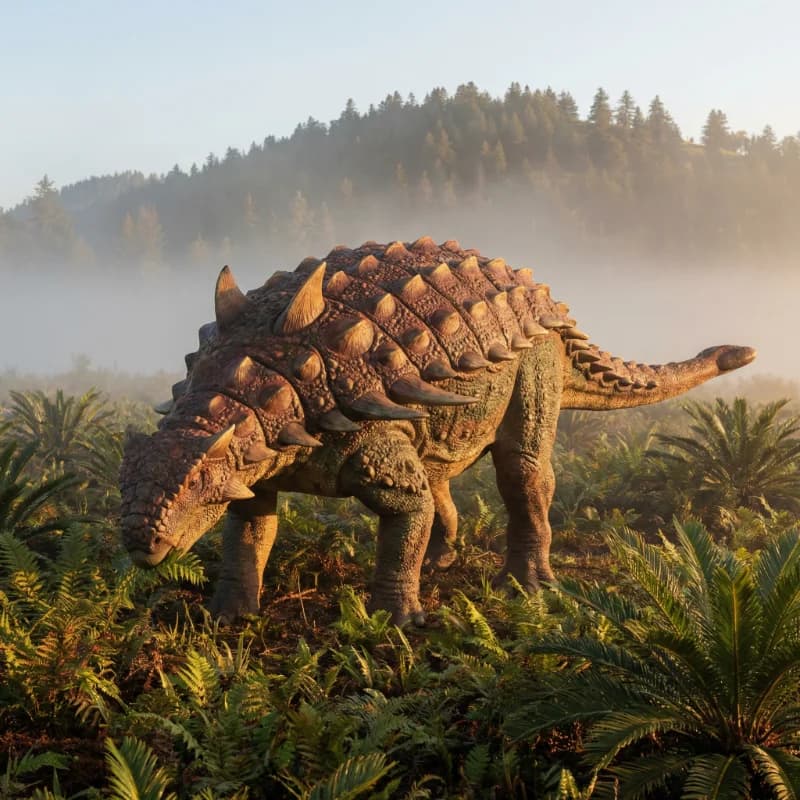
Peloroplites
Peloroplites cedrimontanus

Medusaceratops
Medusaceratops lokii
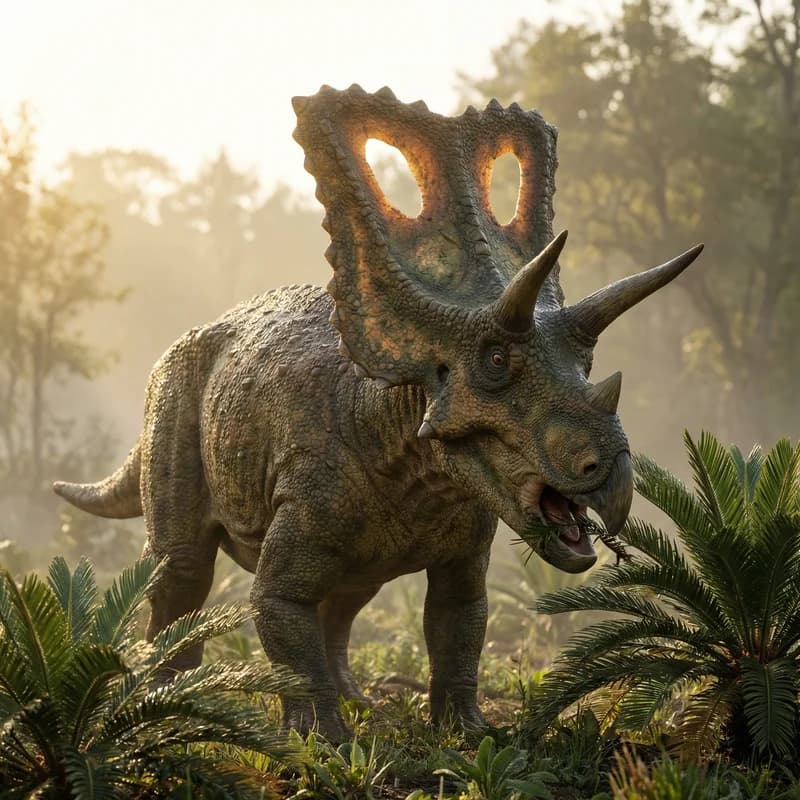
Chasmosaurus
Chasmosaurus belli
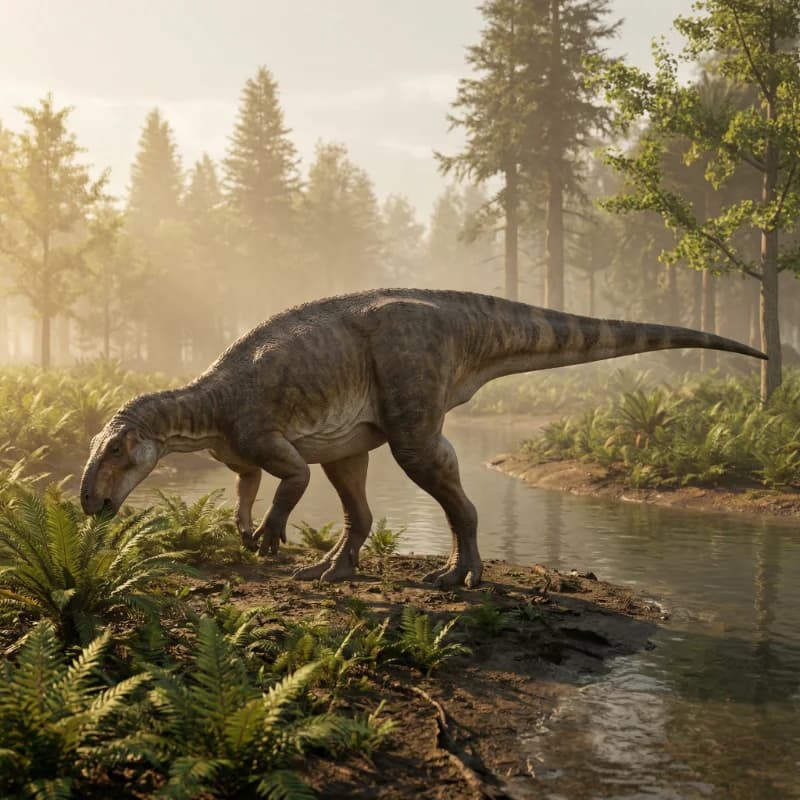
Tenontosaurus
Tenontosaurus tilletti

Diabloceratops
Diabloceratops eatoni
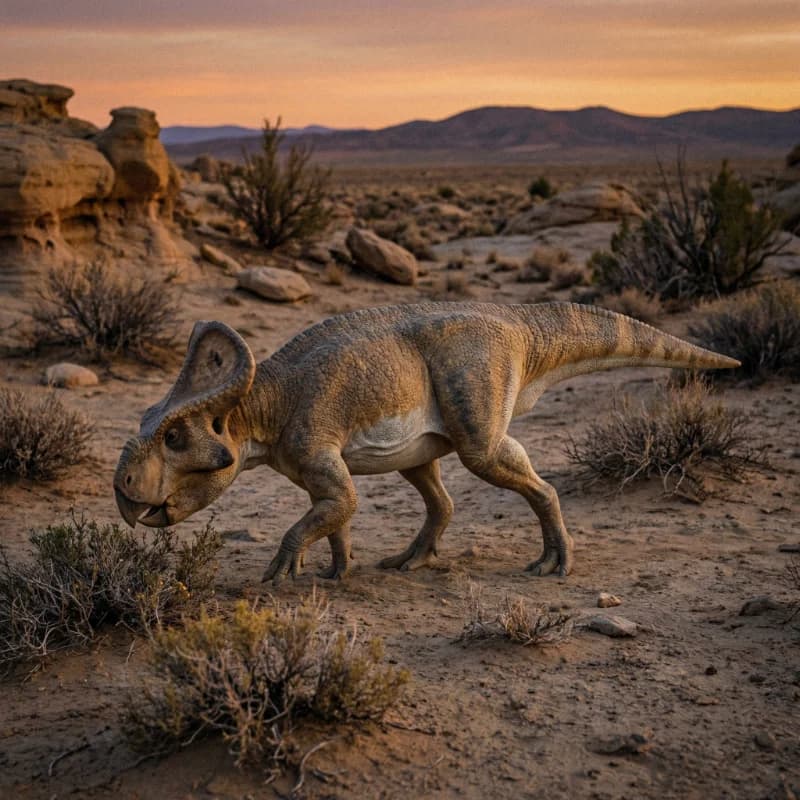
Protoceratops
Protoceratops andrewsi
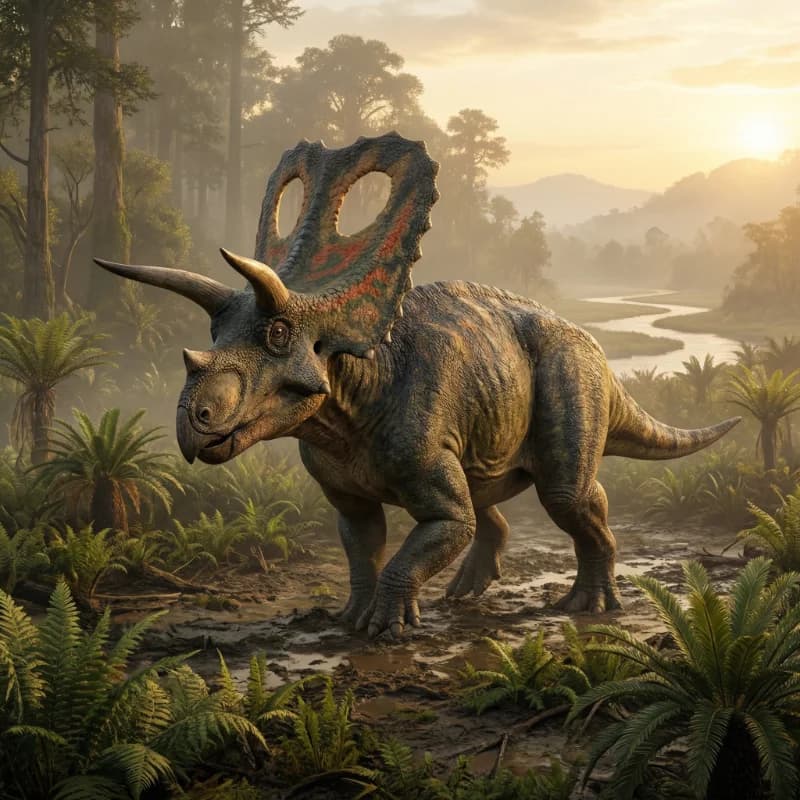
Torosaurus
Torosaurus latus
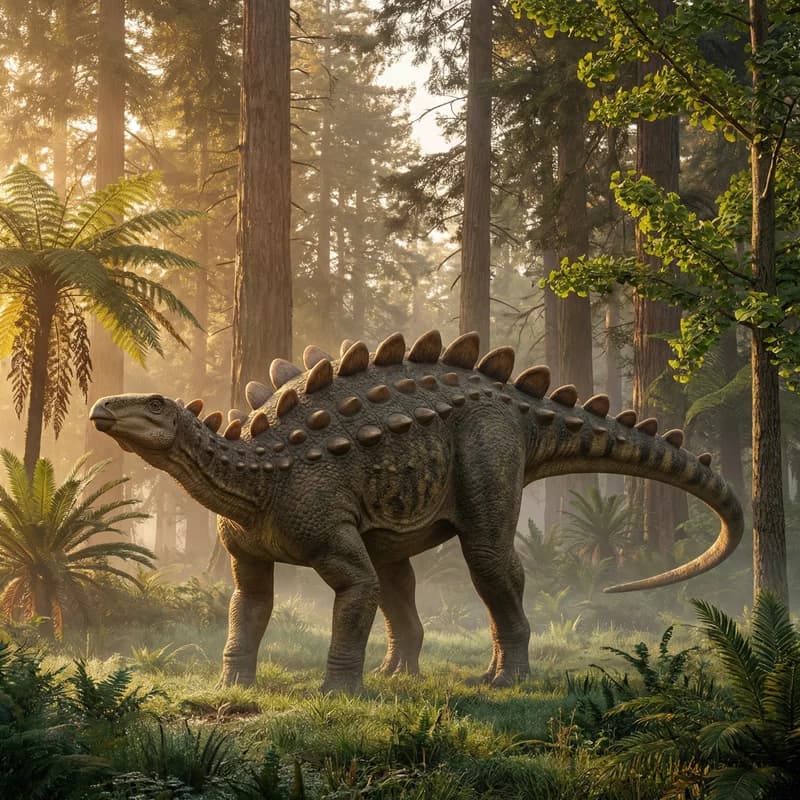
Wuerhosaurus
Wuerhosaurus homheni