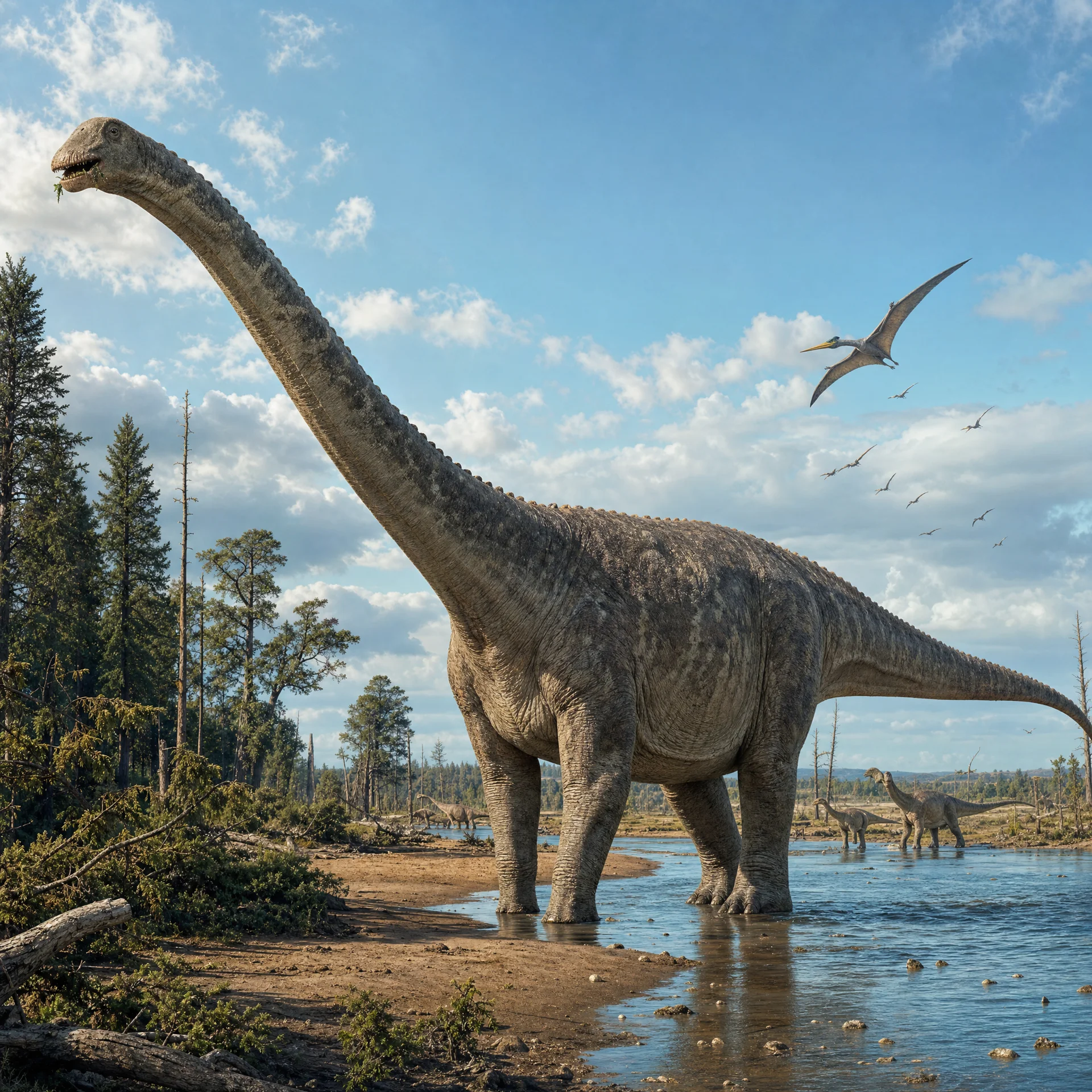
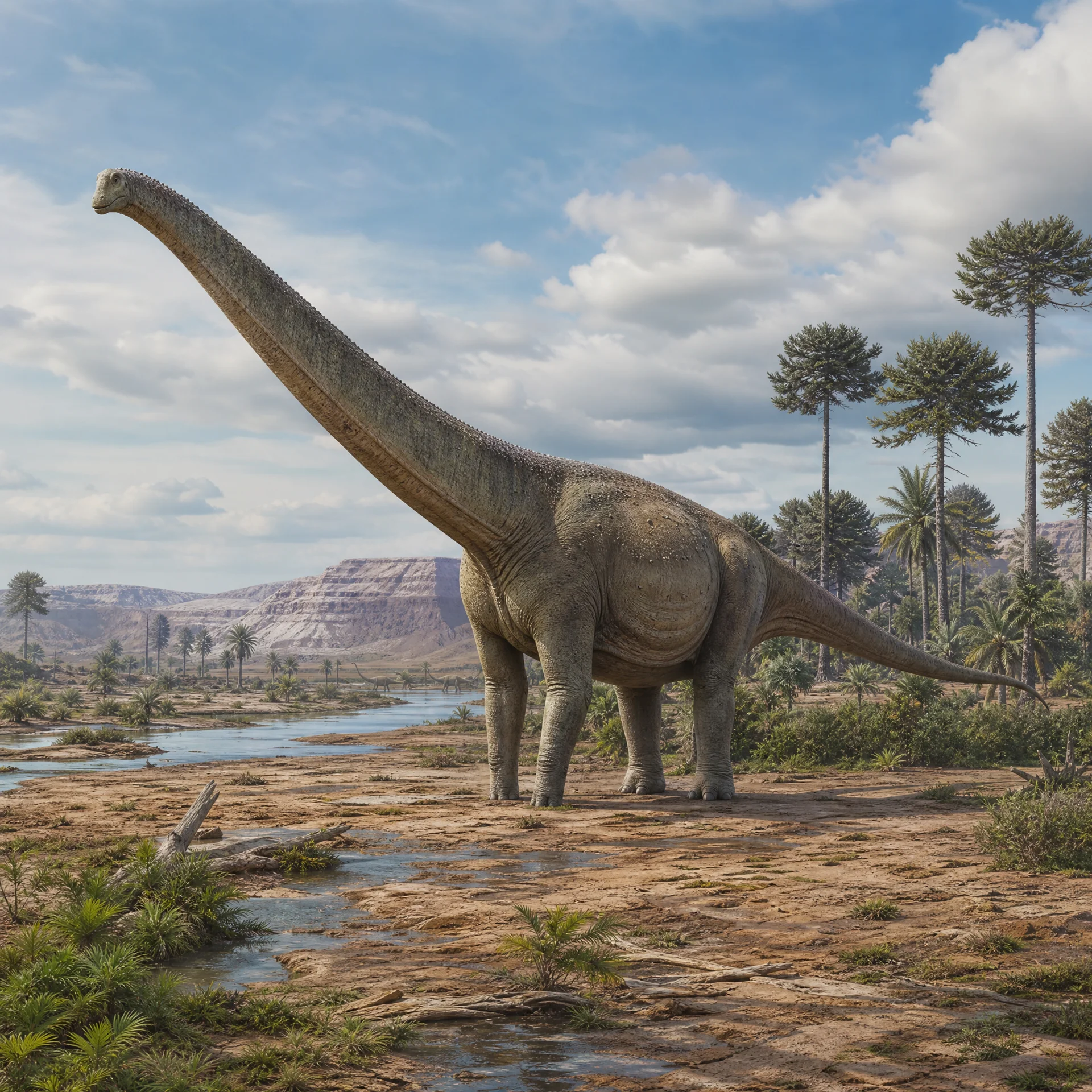
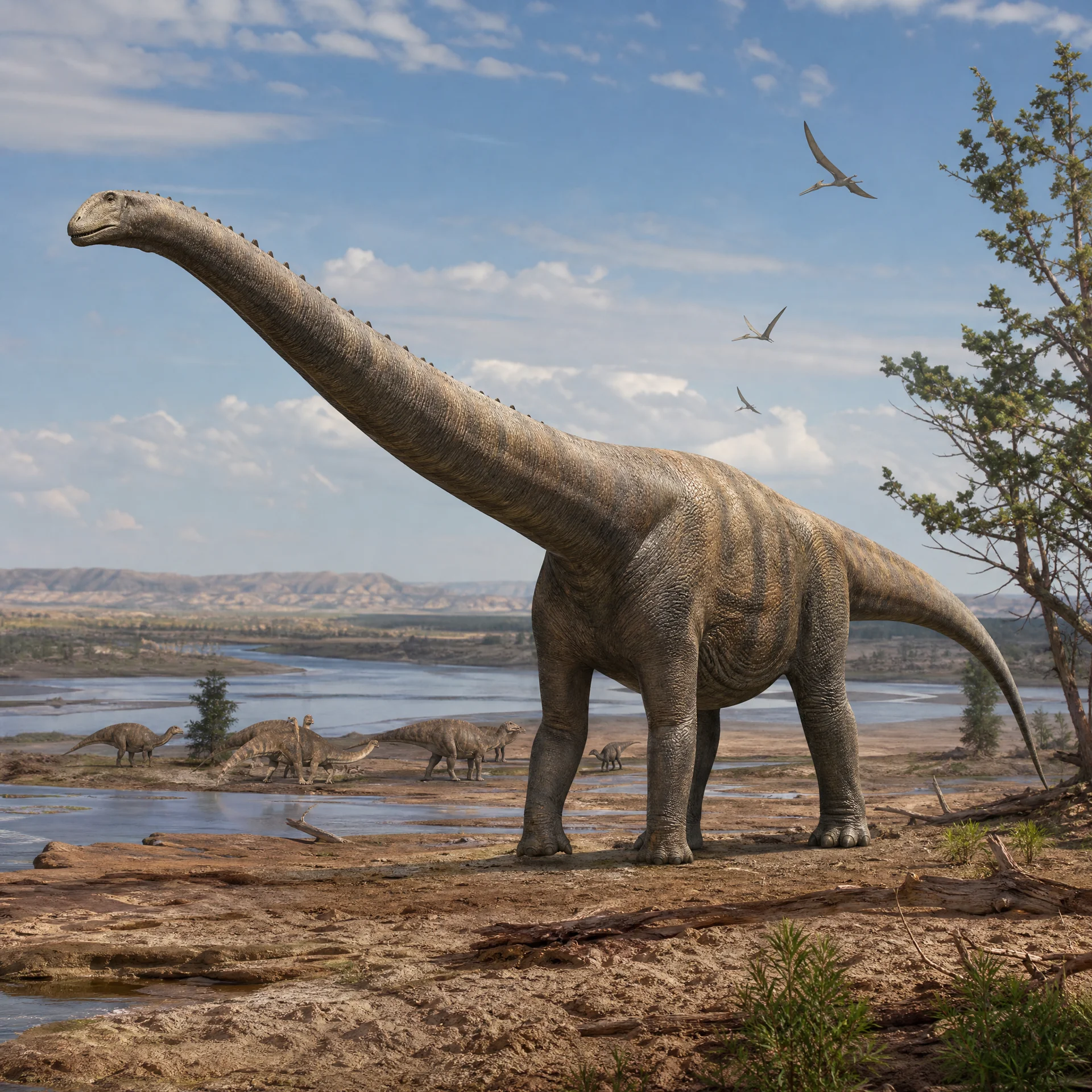
Alamosaurus

Cretaceous Period Herbivore Creature Type

Alamosaurus sanjuanensis

Scientific Name: "Alamo (Spanish for 'poplar/cottonwood tree', from the Ojo Alamo Formation) + saurus (Greek σαῦρος, 'lizard') = 'Ojo Alamo lizard'. The species name sanjuanensis refers to San Juan County, New Mexico, where the holotype was discovered."

🕐Cretaceous Period
🌿Herbivore

Physical Characteristics

📏
Size26~30m
⚖️
Weight30000~80000kg
📐
Height5m

Discovery

📅
Discovery Year1922Year
👤
DiscovererCharles W. Gilmore
📍
Discovery LocationSouthwestern United States (San Juan Basin, New Mexico; Big Bend, Texas; North Horn Mountain, Utah), with possible occurrence in Chihuahua, Mexico

Habitat

🏔️
Geological FormationOjo Alamo Formation (Naashoibito Member), Javelina Formation, North Horn Formation
🌍
EnvironmentSemi-arid, seasonally variable inland plains and floodplains. Interpreted as semi-arid deltaic and floodplain environments based on sedimentary facies and associated fauna (Quetzalcoatlus, hadrosaurids, etc.) (Lehman, 2001). Fossils occur in fluvial sandstones interbedded with mudstones.
🪨
LithologyConglomeratic sandstone, sandstone, siltstone, and mudstone (Ojo Alamo Fm.); sandstone and mudstone (Javelina Fm.)
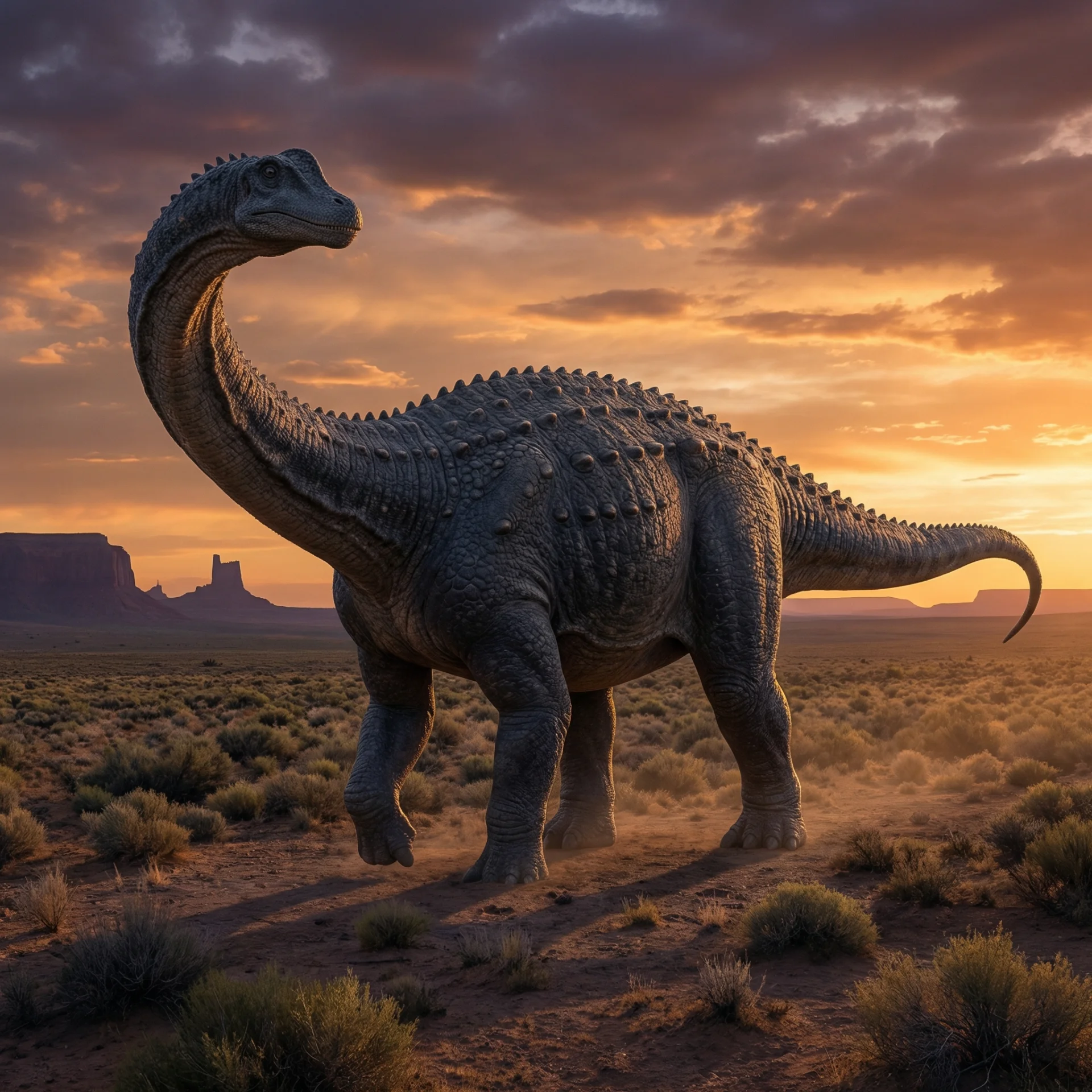
Alamosaurus (Alamosaurus sanjuanensis) restoration

Alamosaurus (Alamosaurus sanjuanensis Gilmore, 1922) is a large titanosaurian sauropod dinosaur from the Maastrichtian stage of the Late Cretaceous (approximately 68–66 Ma) in what is now the southwestern United States. It is the only sauropod known to have returned to North America after the approximately 30-million-year 'sauropod hiatus', during which no definitive sauropod fossils are known from the continent. Alamosaurus rapidly became the dominant large herbivore of southern Laramidia in the latest Cretaceous and is currently represented by a single valid species, A. sanjuanensis.

Typical adult size estimates, based on the most complete specimens, suggest a total length of approximately 26 m, a shoulder height of about 5 m, and a body mass of roughly 30–35 tonnes (Lehman & Coulson, 2002; Benson et al., 2014). However, fragmentary giant specimens from New Mexico (SMP VP-1625, SMP VP-1850, SMP VP-2104) indicate that some individuals may have reached lengths of 28–30 m and masses of approximately 72.5–80 tonnes, rivalling Argentinosaurus as one of the largest dinosaurs ever known (Fowler & Sullivan, 2011; Holtz, 2014). If confirmed, this would make Alamosaurus the largest known dinosaur from North America.

The holotype consists of only a single left scapula (USNM 10486), and no skull has ever been recovered, imposing significant limitations on morphological and phylogenetic understanding. In 2015, osteoderms (bony armour plates) were identified in association with referred specimen USNM 15560 (Carrano & D'Emic, 2015), and in 2016–2017, an articulated cervical vertebral series (BIBE 45854) from Big Bend National Park, Texas, was described, offering new perspectives on phylogenetic relationships (Tykoski & Fiorillo, 2017). In 2025, Gregory S. Paul reassigned the North Horn Formation specimen USNM 15560 to a new genus, Utetitan zellaguymondeweyae (Paul, 2025), thereby narrowing the morphological scope of Alamosaurus and prompting ongoing taxonomic reassessment.

Overview

Name and Etymology

The name Alamosaurus derives from the Ojo Alamo Formation in New Mexico, where the holotype was discovered. The formation itself was named after the nearby Ojo Alamo trading post. The Spanish word álamo means 'poplar' or 'cottonwood tree' and has no connection to the Alamo mission in San Antonio, Texas, or the famous 1836 battle (Fredericks, 2012). The suffix -saurus comes from the Greek σαῦρος (sauros), meaning 'lizard'. The species epithet sanjuanensis refers to San Juan County, New Mexico, where the first remains were found (Gilmore, 1922).

Taxonomic Status

Alamosaurus is consistently recovered as a derived member of Titanosauria, but its placement within that clade remains contentious. Various analyses have positioned it within the Saltasauridae as a member of Opisthocoelicaudiinae (Wilson, 2002), within the Saltasaurinae as sister to Baurutitan (Navarro et al., 2022), or outside Saltasauridae entirely as sister to Lognkosauria (Tykoski & Fiorillo, 2017). Only a single species, A. sanjuanensis, is currently considered valid. The 2025 erection of Utetitan for the North Horn Formation and some Texas specimens has reduced the anatomical scope of Alamosaurus and may significantly affect future phylogenetic analyses.

Key Summary

Alamosaurus is the sole sauropod known to have reappeared in North America after a roughly 30-million-year absence, dominating the latest Cretaceous ecosystems of southern Laramidia until the end-Cretaceous mass extinction.

Age, Stratigraphy, and Depositional Environment

Temporal Range

Definitive Alamosaurus fossils range across the Maastrichtian stage, approximately 68–66 Ma. The holotype locality in the Naashoibito Member of the Ojo Alamo Formation has been constrained by 40Ar/39Ar dating to 66.87 ± 0.04 Ma and 66.38 ± 0.08 Ma at levels approximately 5 m and 3.5 m above the base of the member, respectively (Flynn et al., 2025), establishing it as among the geologically youngest Alamosaurus specimens.

The Alamosaurus fauna in the Javelina Formation of Texas has been dated by magnetostratigraphy to no younger than approximately 66.4 Ma (Lehman et al., 2022; Leslie et al., 2018), with the earliest records potentially extending to about 70 Ma near the base of the Javelina Formation (Lehman et al., 2006).

Formations and Lithology

Alamosaurus specimens have been recovered from several formations across the southwestern United States:

FormationLocationAgePrincipal LithologyNotes
Ojo Alamo Fm. (Naashoibito Mbr.)San Juan Basin, New MexicoLate Maastrichtian (~66.9–66.4 Ma)Conglomeratic sandstone, sandstone, siltstone, mudstoneHolotype locality
Javelina Fm.Big Bend, TexasMaastrichtian (~70–66.4 Ma)Sandstone and mudstone interbedsNumerous referred specimens
North Horn Fm.Emery County, UtahMaastrichtian–PaleoceneSandstone, mudstone, limestoneUSNM 15560 reassigned to Utetitan (Paul, 2025)
Black Peaks Fm.Big Bend, TexasLatest Maastrichtian–PaleoceneMudstone, sandstoneJuvenile specimen; possibly reassigned to Utetitan

Depositional Environment and Paleoenvironment

Lehman (2001) interpreted the Alamosaurus–Quetzalcoatlus association as representative of semi-arid inland plains. The conglomeratic sandstones and sandstones of the Ojo Alamo Formation indicate a fluvial depositional setting, while interbedded mudstones and siltstones represent floodplain deposits. The Javelina Formation similarly consists of fluvial sandstones alternating with floodplain mudstones, consistent with a low-latitude inland environment with pronounced seasonal climate variability. Associated fossils of fish, amphibians, lizards, turtles, and multituberculates corroborate these paleoenvironmental interpretations.

Specimens and Diagnostic Characters

Holotype and Key Specimens

The holotype, USNM 10486, is a nearly complete left scapula, and the paratype, USNM 10487, is a right ischium. Both were collected in June 1921 by Gilmore, Reeside, and Sternberg at Barrel Springs Arroyo, New Mexico, with the ischium found approximately 60 m from the scapula (Gilmore, 1922).

Key referred specimens include:

SpecimenCompositionLocality / FormationNotes
USNM 10486 (holotype)Left scapulaNew Mexico, Ojo Alamo Fm.Gilmore, 1922
USNM 10487 (paratype)Right ischiumNew Mexico, Ojo Alamo Fm.Gilmore, 1922
USNM 15560Complete tail, right forelimb, both ischia, osteodermsUtah, North Horn Fm.Gilmore, 1946; reassigned to Utetitan (Paul, 2025)
TMM 43621-1Juvenile partial skeletonTexas, Javelina Fm.Lehman & Coulson, 2002
TMM 41541-1Partial skeleton (pelvis, hindlimb, femur 1.61 m)Texas, Javelina Fm.Basis of skeletal reconstructions
BIBE 45854Articulated series of 9 cervical vertebraeTexas, Big Bend, Javelina Fm.Tykoski & Fiorillo, 2017
SMP VP-1625, 1850, 2104Giant vertebrae and partial femur fragmentsNew Mexico, Ojo Alamo Fm.Fowler & Sullivan, 2011

Diagnostic Characters

The diagnosis of Alamosaurus is based on the holotype scapula, which exhibits a characteristic distal expansion distinguishing it from other titanosaurs. A unique autapomorphy is the extensive pneumatization of the ribs, extending for approximately two-thirds of the rib length — no other titanosaur exhibits pneumaticity extending to such a degree, with proximal rib pneumatization being the typical condition (Woodward & Lehman, 2009). No autapomorphies have been identified in the ischium.

Limitations of the Material

The holotype consists of only a single bone (a scapula), limiting confident referral of specimens from other formations. No skull has ever been recovered, although rod-shaped teeth found in association with Alamosaurus skeletons likely belong to this taxon (Lehman & Coulson, 2002). Paul's (2025) reassignment of the North Horn Formation and some Texas material to Utetitan has prompted reassessment of which specimens truly pertain to Alamosaurus.

Morphology and Functional Biology

Body Form and Size

Alamosaurus was a large quadrupedal sauropod with a long neck, a long tail, and relatively elongate limbs. Size estimates vary considerably depending on the specimen.

Typical adult estimates based on TMM 41541-1 indicate a total length of approximately 26 m, shoulder height of about 5 m, and body mass of around 30–35 tonnes (Lehman & Coulson, 2002; Benson et al., 2014; Paul, 2019). The composite reconstruction at the Perot Museum yields a total length of approximately 24 m and a head height of about 12.6 m (SVPOW, 2009). However, giant fragmentary vertebrae and a partial femur from New Mexico (Fowler & Sullivan, 2011) indicate the existence of much larger individuals, with Holtz (2014) estimating a maximum length of approximately 30 m or more and a body mass of roughly 72.5–80 tonnes. Scott Hartman estimated a length of 28–30 m based on a massive tibia, comparable in mass to Argentinosaurus and Puertasaurus, though he noted uncertainty about whether the tibia belongs to Alamosaurus or an undescribed species.

Key Anatomical Features

The mid-caudal vertebrae of Alamosaurus have elongated centra, and the vertebral lateral fossae are shallow depressions similar to those of Saltasaurus, Malawisaurus, Aeolosaurus, and Gondwanatitan (Tidwell et al., 2001). The radii are more robust than those of Venenosaurus. The complete referred femur (TMM 41541-1) measures 1.61 m in length.

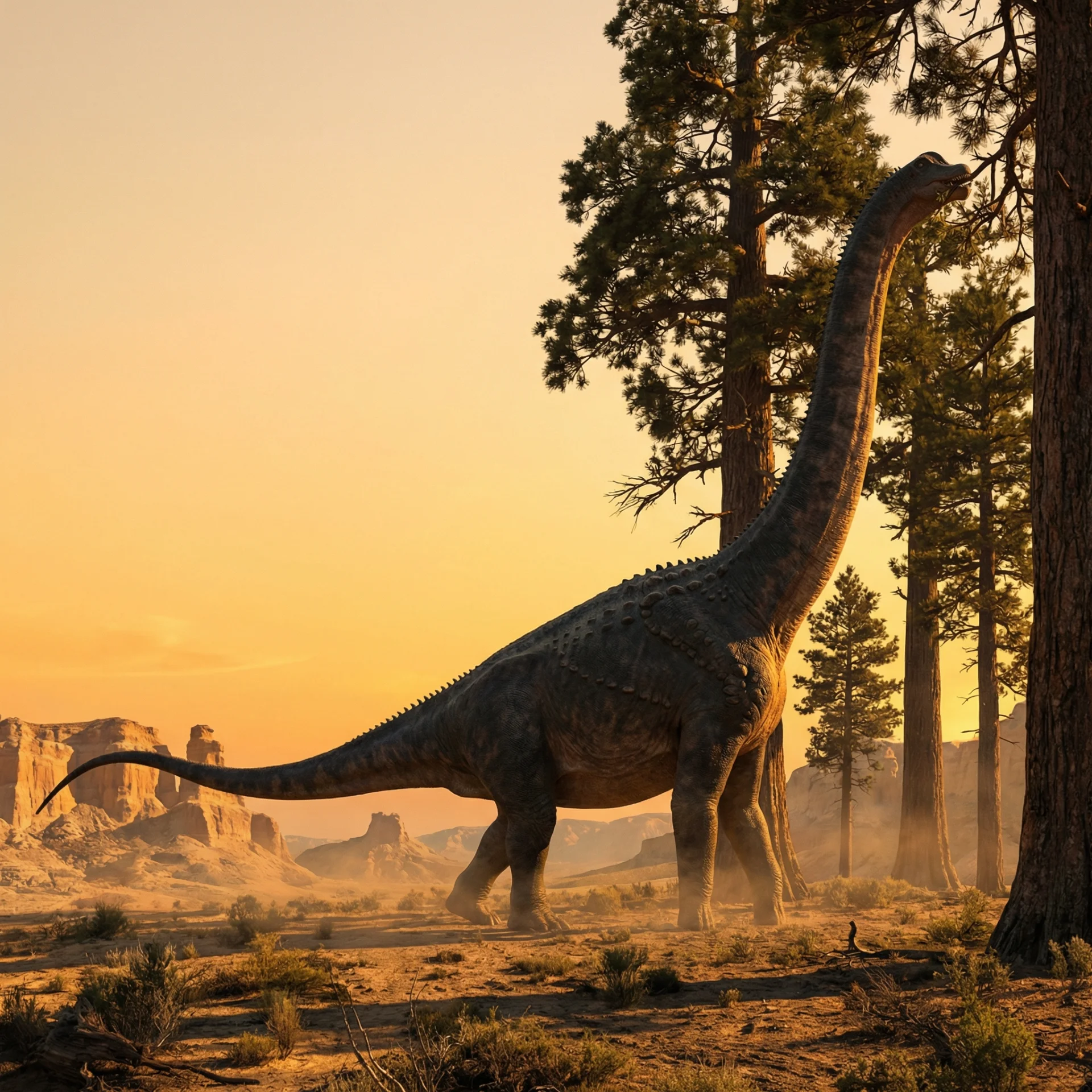
The extensive rib pneumatization (extending for two-thirds of rib length) is without parallel among titanosaurs (Woodward & Lehman, 2009). In 2015, Carrano & D'Emic identified multiple osteoderms associated with USNM 15560, demonstrating that this titanosaur (now Utetitan) possessed dermal armour, a feature widely distributed among saltasaurids.

Growth and Locomotion

Lehman & Woodward (2008) used bone histology to estimate that Alamosaurus reached a body mass exceeding 32,000 kg within approximately 45 years, with a maximum annual growth rate of roughly 1,000 kg/year. Lines of arrested growth (LAGs) formed between ages 4 and 12, and maximum estimated lifespan was approximately 55–60 years. Trackway analysis indicates that Alamosaurus walked slowly at speeds of approximately 3.2–4 km/h without dragging its tail (Williamson, undated).
Diet and Ecology

Diet

Alamosaurus was a typical herbivorous sauropod that likely used its long neck to access high vegetation. Direct analysis of the feeding apparatus is constrained by the absence of cranial material, but rod-shaped teeth found in association with Alamosaurus skeletons are typical of titanosaurs and suited for stripping vegetation (Lehman & Coulson, 2002).

Ecological Role

During the Maastrichtian, Alamosaurus was the dominant large herbivore of southern Laramidia. This regional dinosaur community is termed the 'Alamosaurus fauna' and included the giant azhdarchid pterosaurs Quetzalcoatlus northropi and Q. lawsoni, Torosaurus cf. utahensis, cf. Tyrannosaurus, hadrosaurids (Kritosaurus, possible Gryposaurus), the dromaeosaurid Dineobellator, the nodosaurid Glyptodontopelta, and the chasmosaurines Ojoceratops and Bravoceratops (Lehman, 2001). Lehman described these faunas as exhibiting a superficially 'Jurassic' aspect.

Given its immense size, adult Alamosaurus would have been largely immune to predation, though juveniles and subadults may have been vulnerable to tyrannosaurids. As of 2025, however, no direct evidence of predation or scavenging (such as bite marks or gut contents) has been reported for Alamosaurus.

Behaviour and Life History

Trackway evidence is suggestive of social behaviour (herding), though this is generally inferred for sauropods as a group and is not uniquely demonstrated for Alamosaurus. The existence of the juvenile specimen TMM 43621-1 demonstrates that individuals at various ontogenetic stages co-occurred in the same area.

Distribution and Paleogeography

Geographic Range

Definitive Alamosaurus specimens come from New Mexico (San Juan Basin, Naashoibito Member of the Ojo Alamo Formation). Titanosaur specimens from the Javelina and Black Peaks formations of Texas and the North Horn Formation of Utah have traditionally been referred to Alamosaurus, but following Paul's (2025) reassignment, North Horn and Black Peaks material is now placed in Utetitan, and some Javelina Formation specimens require re-evaluation.

Additional material potentially related to Alamosaurus includes three articulated caudal vertebrae from the Evanston Formation in Wyoming (Lucas & Hunt, 1989) and an undescribed large titanosaur vertebra from northeastern Chihuahua, Mexico (Rivera Sylva et al., 2021).

Paleogeographic Origin and the Sauropod Hiatus

Three hypotheses have been advanced for the origin of Alamosaurus. First, the austral immigrant hypothesis proposes that Alamosaurus descended from South American titanosaurs, supported by phylogenetic affinities with Pellegrinisaurus and other South American taxa, as well as contemporaneous dispersal of hadrosaurs in the opposite direction (Cerda et al., 2021; Gorscak & O'Connor, 2016). Second, the inland herbivore hypothesis suggests that titanosaurs persisted in North America throughout the Late Cretaceous but are absent from the fossil record due to taphonomic bias against upland habitats; however, this hypothesis lacks supporting fossil evidence (D'Emic et al., 2010). Third, the Asian origin hypothesis proposes dispersal across the Bering land bridge, but this is challenged by the unsuitability of high-latitude environments for sauropods and the absence of contemporaneous sauropod fossils in northern Laramidia (Chiarenza et al., 2022).

Chiarenza et al. (2022) concluded that a South American origin is "the only viable origin" for Alamosaurus, and this remains the prevailing view in the scientific community.

Phylogenetics and Taxonomic Debates

Key Phylogenetic Analyses

The phylogenetic position of Alamosaurus varies substantially among analyses:

AnalysisResultKey Basis
Wilson (2002)Saltasauridae: Opisthocoelicaudiinae (sister to Opisthocoelicaudia)Limb and caudal vertebral morphology
Upchurch et al. (2004)Outside Saltasauridae, sister to PellegrinisaurusBroader taxon sampling
Tykoski & Fiorillo (2017)Sister to Lognkosauria, outside SaltasauridaeCervical vertebral synapomorphies
Navarro et al. (2022)Saltasauridae: Saltasaurinae, sister to Baurutitan570-character morphological matrix
Cerda et al. (2021)Outside Saltasauridae, near PellegrinisaurusInclusion of Pellegrinisaurus

Core Debate

Analyses recovering a close relationship between Alamosaurus and Opisthocoelicaudia did not include Pellegrinisaurus, and when Pellegrinisaurus is included, the Asian affinity weakens (Cerda et al., 2021). Meanwhile, Tykoski & Fiorillo's (2017) cervical-based analysis linked BIBE 45854 to Lognkosauria, but Navarro et al. (2022) recovered this cervical series in a position separate from Alamosaurus itself, suggesting BIBE 45854 may represent a distinct lognkosaurian taxon rather than Alamosaurus.

Paul's (2025) erection of Utetitan partitions morphological data previously combined under Alamosaurus, with potentially significant implications for future phylogenetic analyses.

Reconstruction and Uncertainty

Confirmed, Probable, and Hypothetical Distinctions

Confirmed: Alamosaurus is a derived titanosaurian sauropod from the latest Maastrichtian of southwestern North America. The holotype is a left scapula from the Naashoibito Member of the Ojo Alamo Formation, New Mexico.

Probable: Typical adult total length of approximately 26 m and body mass of 30–35 tonnes. A South American origin for the lineage is strongly supported. Rod-shaped teeth found in association likely belong to this taxon.

Hypothetical: Maximum body size of 30 m and 70–80 tonnes (based on fragmentary specimens). The precise phylogenetic position within Titanosauria. Whether BIBE 45854 truly pertains to Alamosaurus. Whether osteoderms are a feature of Alamosaurus itself (the osteoderm-bearing specimen USNM 15560 has been reassigned to Utetitan).

Popular Media vs. Scientific Understanding

Alamosaurus is commonly but incorrectly associated with the Alamo fortress in Texas; its name actually derives from a geological formation in New Mexico. Furthermore, the mounted skeleton at the Perot Museum in Dallas is a composite reconstruction based on multiple individuals and specimens (some now reassigned to Utetitan), not a single individual. These points are frequently misrepresented in popular sources.

Comparison with Related and Contemporary Taxa

TaxonAgeRegionEstimated LengthEstimated MassKey Difference
Alamosaurus sanjuanensisMaastrichtian (~68–66 Ma)SW North America26–30 m30–80 tLast sauropod in North America; extreme rib pneumatization
Utetitan zellaguymondeweyaeMaastrichtianUtah, TexasUndeterminedUndeterminedSplit from Alamosaurus in 2025; caudal and forelimb morphological differences (Paul, 2025)
Saltasaurus loricatusCampanian–MaastrichtianArgentina~12 m~7 tSmall-bodied; dense osteoderm coverage
Opisthocoelicaudia skarzynskiiCampanian–MaastrichtianMongolia~12 m~8–25 tOpisthocoelous caudal vertebrae; Asian distribution
Argentinosaurus huinculensisCenomanianArgentina~30–35 m~65–80 tAmong the largest known titanosaurs

Fun Facts

💡
Despite its name, Alamosaurus has nothing to do with the famous Alamo mission in Texas — 'álamo' is Spanish for 'poplar' or 'cottonwood tree', and the dinosaur is named after a geological formation in New Mexico.
💡
Alamosaurus is the only sauropod known to have returned to North America after the roughly 30-million-year 'sauropod hiatus', during which no definitive sauropod fossils are found on the continent.
💡
The holotype of Alamosaurus consists of just a single shoulder blade (left scapula), and despite over a century of research, no skull has ever been found.
💡
Alamosaurus ribs are pneumatized (filled with air spaces) for approximately two-thirds of their length — an extreme condition unmatched by any other known titanosaur.
💡
If the giant fragmentary specimens from New Mexico truly belong to Alamosaurus, it may have reached 30 m in length and 70–80 tonnes in mass, making it the largest known dinosaur from North America.
💡
Alamosaurus shared its world with Quetzalcoatlus, one of the largest flying animals ever, and together they characterise the semi-arid inland plains of latest Cretaceous southern Laramidia.
💡
Bone histology studies suggest Alamosaurus grew at a rate of approximately 1 tonne per year, reaching adult size in about 45 years, with a maximum lifespan estimated at 55–60 years.
💡
Trackway analysis reveals that Alamosaurus walked without dragging its tail at a leisurely pace of approximately 3.2–4 km/h.
💡
In 2025, the well-known Utah specimen USNM 15560, long referred to Alamosaurus, was reassigned to a brand-new genus: Utetitan zellaguymondeweyae, significantly reshaping our understanding of Late Cretaceous North American titanosaurs.
💡
The mounted Alamosaurus skeleton at the Perot Museum of Nature and Science in Dallas is a composite reconstruction assembled from multiple individuals and specimens, not a single animal.
💡
The ancestors of Alamosaurus are thought to have immigrated from South America, crossing into North America at the same time that North American hadrosaurs dispersed southward in the opposite direction.
💡
Titanosaur material potentially related to Alamosaurus has been found in the Evanston Formation of Wyoming, suggesting this dinosaur may have shared its habitat with Triceratops.

FAQ

?Is Alamosaurus named after the Alamo in Texas?
No. The name Alamosaurus derives from the Ojo Alamo Formation in New Mexico, which was itself named after the nearby Ojo Alamo trading post. The Spanish word 'álamo' means 'poplar' or 'cottonwood tree'. It has no connection to the Alamo mission in San Antonio, Texas, or the 1836 Battle of the Alamo (Gilmore, 1922; Fredericks, 2012).
?How large was Alamosaurus?
Based on typical adult specimens, Alamosaurus measured approximately 26 m in total length, stood about 5 m tall at the shoulder, and weighed roughly 30–35 tonnes (Lehman & Coulson, 2002; Benson et al., 2014). However, fragmentary giant specimens from New Mexico suggest that some individuals may have reached 28–30 m in length and 72.5–80 tonnes in mass, rivalling the largest known dinosaurs (Fowler & Sullivan, 2011; Holtz, 2014). The attribution of these giant specimens remains debated.
?Where did Alamosaurus originate?
After a roughly 30-million-year absence of sauropods from North America (the 'sauropod hiatus'), Alamosaurus suddenly appeared in the Maastrichtian. Three hypotheses have been proposed: immigration from South America, persistence in unsampled North American uplands, and immigration from Asia. Phylogenetic evidence and paleoclimatic modelling strongly favour a South American origin, with Chiarenza et al. (2022) concluding it is 'the only viable origin' for Alamosaurus.
?Did Alamosaurus coexist with Tyrannosaurus?
Yes, spatial and temporal overlap is likely. Specimens referred to cf. Tyrannosaurus have been found in the Javelina Formation alongside Alamosaurus material, and Alamosaurus sp. has been reported alongside Tyrannosaurus mcraeensis from the McRae Group of New Mexico. However, as of 2025, no direct evidence of predation or scavenging (such as bite marks or gut contents) has been reported.
?Has a skull of Alamosaurus ever been found?
No. No skull material attributable to Alamosaurus has ever been recovered. Rod-shaped teeth found in association with Alamosaurus skeletons likely belong to this taxon, but this has not been confirmed (Lehman & Coulson, 2002). Cranial reconstructions are therefore based on closely related titanosaurs.
?What taxonomic changes occurred in 2025?
Gregory S. Paul (2025) reassigned the prominent Utah specimen USNM 15560, previously referred to Alamosaurus, as the holotype of a new genus and species, Utetitan zellaguymondeweyae. Specimens from the North Horn Formation, the Black Peaks Formation, and possibly the Javelina Formation were transferred to Utetitan, narrowing the morphological scope of Alamosaurus. The validity and implications of this reassignment are under ongoing review.
?Did Alamosaurus have armour (osteoderms)?
Osteoderms were identified in association with specimen USNM 15560 by Carrano & D'Emic (2015). However, this specimen was reassigned to Utetitan in 2025, so whether osteoderms were also present in Alamosaurus sensu stricto requires re-evaluation. Osteoderms are broadly distributed among saltasaurid titanosaurs.
?How fast did Alamosaurus grow?
Bone histology studies by Lehman & Woodward (2008) estimated that Alamosaurus reached a body mass exceeding 32,000 kg within approximately 45 years, with a peak annual growth rate of about 1,000 kg per year. Lines of arrested growth (LAGs) began forming between ages 4 and 12, and maximum estimated lifespan was approximately 55–60 years.
?Was Alamosaurus the largest dinosaur in North America?
Potentially, yes. Giant fragmentary vertebrae and a partial femur from New Mexico (Fowler & Sullivan, 2011) suggest body sizes comparable to Argentinosaurus. If these specimens truly belong to Alamosaurus, it would be the largest known North American dinosaur. However, the fragmentary nature of the material limits precise size estimation, and the generic attribution remains uncertain.
?Did Alamosaurus go extinct in the end-Cretaceous mass extinction?
Yes. The latest Alamosaurus fossils occur just below the Cretaceous-Paleogene (K-Pg) boundary. The Naashoibito Member specimens date to approximately 66.87–66.38 Ma (Flynn et al., 2025), and the youngest Javelina Formation fossil locality lies approximately 27 m below the K-Pg boundary (Lehman et al., 2022). Alamosaurus thus appears to have been extinguished by the end-Cretaceous mass extinction event, likely linked to the Chicxulub impact approximately 66 million years ago.

📚References

  • Gilmore, C.W. (1922). A new sauropod dinosaur from the Ojo Alamo Formation of New Mexico. Smithsonian Miscellaneous Collections, 72(14): 1–9.
  • Gilmore, C.W. (1946). Reptilian fauna of the North Horn Formation of central Utah. U.S. Geological Survey Professional Paper, 210-C: 29–51.
  • Lehman, T.M. & Coulson, A.B. (2002). A juvenile specimen of the sauropod Alamosaurus sanjuanensis from the Upper Cretaceous of Big Bend National Park, Texas. Journal of Paleontology, 76(1): 156–172. doi:10.1017/S0022336000017431
  • Wilson, J.A. (2002). Sauropod dinosaur phylogeny: critique and cladistic analysis. Zoological Journal of the Linnean Society, 136(2): 217–276. doi:10.1046/j.1096-3642.2002.00029.x
  • Lehman, T.M. & Woodward, H.N. (2008). Modeling growth rates for sauropod dinosaurs. Paleobiology, 34(2): 264–281. doi:10.1666/0094-8373(2008)034[0264:MGRFSD]2.0.CO;2
  • Woodward, H.N. & Lehman, T.M. (2009). Bone histology and microanatomy of Alamosaurus sanjuanensis (Sauropoda: Titanosauria) from the Maastrichtian of Big Bend National Park, Texas. Journal of Vertebrate Paleontology, 29(3): 807–821. doi:10.1671/039.029.0310
  • Fowler, D.W. & Sullivan, R.M. (2011). The first giant titanosaurian sauropod from the Upper Cretaceous of North America. Acta Palaeontologica Polonica, 56(4): 685–690. doi:10.4202/app.2010.0105
  • Benson, R.B.J. et al. (2014). Rates of dinosaur body mass evolution indicate 170 million years of sustained ecological innovation on the avian stem lineage. PLOS Biology, 12(5): e1001853. doi:10.1371/journal.pbio.1001853
  • Carrano, M.T. & D'Emic, M.D. (2015). Osteoderms of the titanosaur sauropod dinosaur Alamosaurus sanjuanensis Gilmore, 1922. Journal of Vertebrate Paleontology, 35(1): e901334. doi:10.1080/02724634.2014.901334
  • Tykoski, R.S. & Fiorillo, A.R. (2017). An articulated cervical series of Alamosaurus sanjuanensis Gilmore, 1922 (Dinosauria, Sauropoda) from Texas: new perspective on the relationships of North America's last giant sauropod. Journal of Systematic Palaeontology, 15(5): 339–364. doi:10.1080/14772019.2016.1183150
  • Cerda, I., Zurriaguz, V.L., Carballido, J.L., González, R. & Salgado, L. (2021). Osteology, paleohistology and phylogenetic relationships of Pellegrinisaurus powelli (Dinosauria: Sauropoda) from the Upper Cretaceous of Argentinean Patagonia. Cretaceous Research, 128: 104957. doi:10.1016/j.cretres.2021.104957
  • Chiarenza, A.A., Mannion, P.D., Farnsworth, A., Carrano, M.T. & Varela, S. (2022). Climatic constraints on the biogeographic history of Mesozoic dinosaurs. Current Biology, 32(3): 570–585.e3. doi:10.1016/j.cub.2021.11.061
  • Navarro, B.A. et al. (2022). A new nanoid titanosaur (Dinosauria: Sauropoda) from the Upper Cretaceous of Brazil. Ameghiniana, 59(5): 317–354. doi:10.5710/AMGH.25.08.2022.3477
  • Lehman, T.M., Cobb, J., Sylvester, P. & Souders, A.K. (2022). The Cretaceous-Paleogene contact in the Tornillo Group of Big Bend National Park, West Texas, USA. Geosphere, 18(6): 1851–1884. doi:10.1130/GES02519.1
  • Paul, G.S. (2025). Stratigraphic and anatomical evidence for multiple titanosaurid dinosaur taxa in the Late Cretaceous (Campanian-Maastrichtian) of southwestern North America. Geology of the Intermountain West, 12: 201–220. doi:10.31711/giw.v12.pp201-220
  • Flynn, A.G., Brusatte, S.L., Chiarenza, A.A. et al. (2025). Late-surviving New Mexican dinosaurs illuminate high end-Cretaceous diversity and provinciality. Science, 390(6771): 400–404. doi:10.1126/science.adw3282
  • Lehman, T.M. (2001). Late Cretaceous dinosaur provinciality. In Tanke, D.H. & Carpenter, K. (eds.), Mesozoic Vertebrate Life. Indiana University Press. pp. 310–328.
  • Paul, G.S. (2019). Determining the largest known land animal: A critical comparison of differing methods for restoring the volume and mass of extinct animals. Annals of the Carnegie Museum, 85(4): 335–358. doi:10.2992/007.085.0403
  • Lehman, T.M., McDowell, F.W. & Connelly, J.N. (2006). First isotopic (U-Pb) age for the Late Cretaceous Alamosaurus vertebrate fauna of West Texas, and its significance as a link between two faunal provinces. Journal of Vertebrate Paleontology, 26(4): 922–928. doi:10.1671/0272-4634(2006)26[922:FIUAFT]2.0.CO;2
  • D'Emic, M.D., Wilson, J.A. & Thompson, R. (2010). The end of the sauropod dinosaur hiatus in North America. Palaeogeography, Palaeoclimatology, Palaeoecology, 297(2): 486–490. doi:10.1016/j.palaeo.2010.08.032

Gallery

2 images
  • Alamosaurus (Alamosaurus sanjuanensis) 1
    Alamosaurus

    Alamosaurus · Cretaceous Period · Herbivore

  • Alamosaurus (Alamosaurus sanjuanensis) 2
    Alamosaurus

    Alamosaurus · Cretaceous Period · Herbivore

🔗Related Creatures