Saltasaurus
Cretaceous Period Herbivore Creature Type
Saltasaurus loricatus
Scientific Name: "Saltasaurus (lizard from Salta): Latin Salta (place name, Salta Province, Argentina) + Greek sauros (lizard); loricatus (armored): from Latin lorica (small cuirass/chain mail), meaning 'protected by small armored plates'"
Local Name: Saltasaurus
Physical Characteristics
Discovery
Habitat
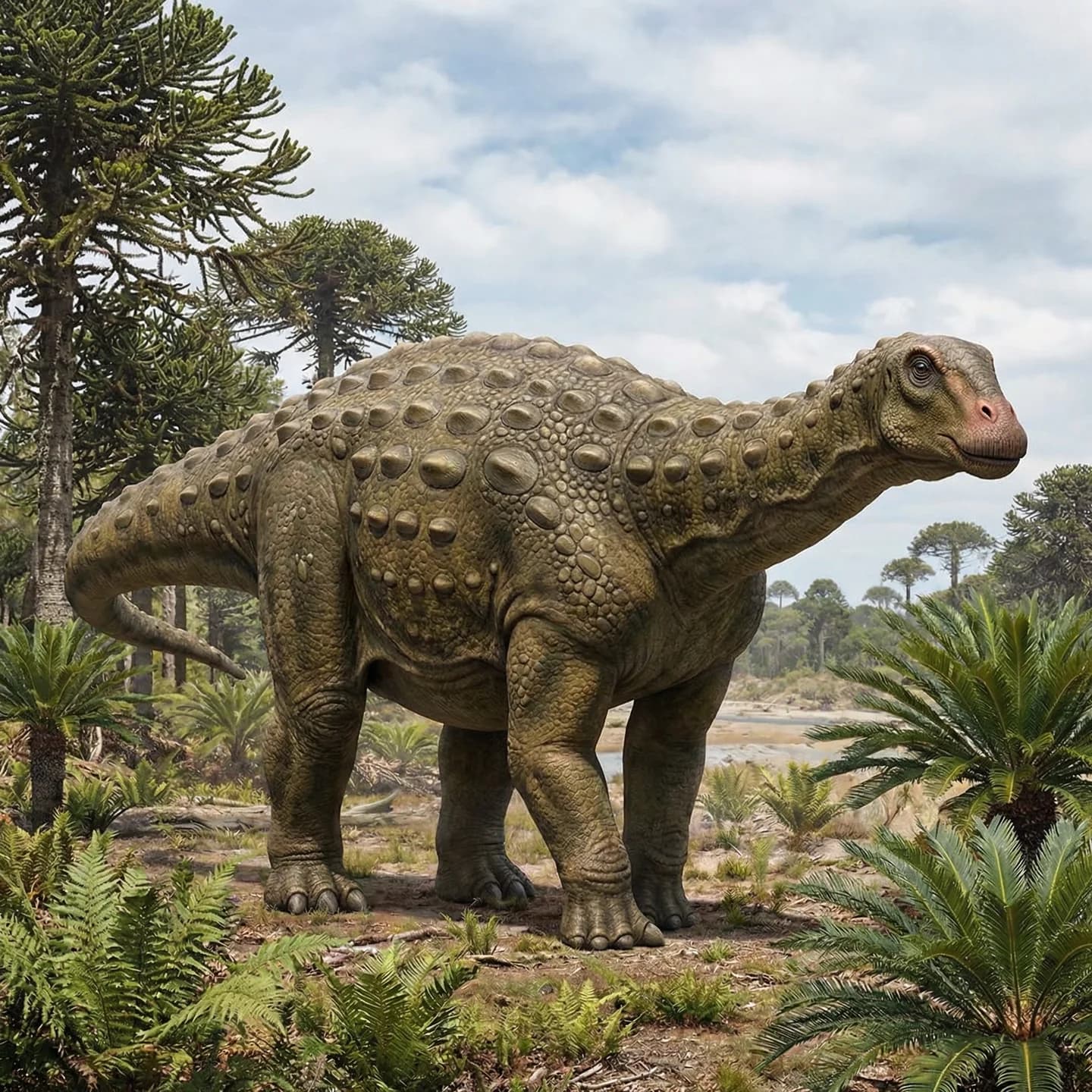
Saltasaurus loricatus (Bonaparte & Powell, 1980) is a titanosaurian sauropod of the family Saltasauridae that lived during the early Maastrichtian stage of the Late Cretaceous (approximately 70–68 Ma) in what is now northwestern Argentina. Its generic name derives from Salta Province, where the first fossils were recovered, while the specific epithet loricatus is Latin for 'protected by small armored plates,' referencing the animal's most distinctive feature—bony dermal armor. Saltasaurus was the first sauropod genus for which the presence of osteoderms (bony plates embedded in the skin) was unambiguously demonstrated, a discovery that fundamentally challenged the prevailing assumption that sauropods relied solely on their enormous body size as a defense against predators.
In terms of size, Saltasaurus was notably small for a sauropod. Adult body length estimates vary considerably among researchers, ranging from approximately 6 m (Powell, 1992) to about 12.8 m (Henderson, 2013), with mass estimates spanning from roughly 2.5 tonnes (Paul, 2010) to approximately 6.87 tonnes (Henderson, 2013). This variation stems largely from the fact that the type locality at El Brete is a bonebed containing commingled remains of at least five individuals—two adults and three subadults or juveniles—making it difficult to establish the complete dimensions of a single individual. Over 200 fossil elements have been recovered from the site, including cranial fragments, teeth, cervical through caudal vertebrae, elements of the pectoral and pelvic girdles, limb bones, and numerous osteoderms (PVL 4017 series; Powell, 1992, 2003).
Saltasaurus is characterized by a relatively short neck, stout and robust limbs, an extremely wide abdomen, and two distinct types of osteoderms distributed across its dorsal surface—large oval plates and small globular ossicles. While osteoderms have since been discovered in other titanosaurs, Saltasaurus remains the only titanosaurian in which both large plates and small ossicles have been confirmed from the same taxon. The animal also exhibits extreme postcranial pneumaticity extending into the cervical, dorsal, and caudal vertebrae as well as the ribs, ilia, and coracoids (Cerda et al., 2012). Recovered from fluvial-lacustrine deposits of the Lecho Formation, this dinosaur is a key taxon for understanding sauropod diversity and adaptive strategies in Gondwana during the terminal Cretaceous.
Overview
The generic name Saltasaurus derives from Salta Province in northwestern Argentina, where the fossils were first discovered. The specific epithet loricatus comes from the Latin word lorica, originally referring to the chain mail cuirass worn by Roman legionaries, and means 'protected by small armored plates'—a direct reference to the animal's most striking feature, its dermal osteoderms (Bonaparte & Powell, 1980). The full binomial thus translates to 'armored lizard from Salta.'
Only a single species, S. loricatus, is currently recognized as valid within the genus Saltasaurus. Two additional species—S. robustus and S. australis—were previously referred to this genus but have since been reassigned to the separate genus Neuquensaurus (D'Emic & Wilson, 2011). Additionally, Friedrich von Huene in 1929 named Loricosaurus scutatus based on osteoderms from Argentina that he mistakenly attributed to an armored ankylosaur; the possibility that these plates actually belonged to a saltasaurine titanosaur has been raised, though this synonymy remains unconfirmed.
Saltasaurus holds considerable significance in the history of paleontology as the first sauropod genus for which dermal armor was unambiguously documented. Prior to its description in 1980, the prevailing view held that the enormous body size of sauropods was their sole defense against predators. The discovery of Saltasaurus demonstrated that at least some sauropods evolved additional integumentary defensive structures. Subsequently, osteoderms were reported in other titanosaurs such as Laplatasaurus and Ampelosaurus, revealing that dermal armor was a widespread feature among Titanosauria.
Age, Stratigraphy, and Depositional Environment
All confirmed fossils of Saltasaurus come from the El Brete locality (Estancia "El Brete") in southern Salta Province, Argentina. This site belongs to the Lecho Formation, a stratigraphic unit within the Balbuena Subgroup of the Salta Group, deposited in the Salta Basin.
The Lecho Formation is dated to the early Maastrichtian stage, approximately 70–68 Ma. Powell (1992) noted the possibility that the formation could extend into the late Campanian, and Cerda & Powell (2010) employed the age range "?late Campanian–Maastrichtian." The Lecho Formation underlies the Yacoraite Formation and overlies the Los Blanquitos Formation; these stratigraphic relationships provide the primary basis for age determination.
The lithology of the Lecho Formation consists primarily of reddish sandstone (Frankfurt & Chiappe, 1999), with fine-grained bioturbated sandstone being particularly characteristic. The depositional environment is interpreted as a fluvial to lacustrine coastal plain. Given that the overlying Yacoraite Formation consists largely of lacustrine mixed siliciclastic-carbonate sediments and the Lecho Formation itself comprises fluvial and aeolian sandstones, Saltasaurus is inferred to have inhabited an inland setting near rivers and lakes.
Specimens and Diagnostic Features
The fossils of Saltasaurus were excavated between 1975 and 1977 by José Bonaparte, Martín Vince, and Juan C. Leal at the El Brete locality. The find was first reported in the scientific literature in 1977 (Bonaparte et al., 1977), followed by the formal naming and description by Bonaparte and Powell in 1980.
The holotype, PVL 4017-92, is housed in the paleontological vertebrate collection of the Instituto Miguel Lillo in Tucumán, Argentina. It consists of a complete sacrum with both ilia articulated.
Over 200 additional fossil elements are catalogued under the inventory number PVL 4017. According to the most recent inventory by Powell (2003), these include 3 cranial fragments, 1 axis, 14 cervical vertebrae, 20 dorsal vertebrae, 3 sacra, 26 caudal vertebrae, 4 scapulae, 3 coracoids, 4 sternal plates, 10 humeri, 5 ulnae, 4 radii, 5 metacarpals, 5 ilia, 4 pubes, 2 ischia, 5 femora, 5 tibiae, 4 fibulae, 7 metatarsals, 6 osteoderm plates, and 4 patches of small dermal ossicles. These represent a minimum of five individuals—two adults and three subadults or juveniles (Powell, 1992).
Key diagnostic features include caudal centra that are wider than tall, anteriorly inclined neural spines on the caudal vertebrae with a process on the anterior margin (Powell, 1992), and most distinctively, the dual-type osteoderm system comprising large oval plates and small globular ossicles forming a continuous mosaic armor.
However, D'Emic & Wilson (2011) identified what appears to be a sacrum attributable to Neuquensaurus within the El Brete bonebed, raising the possibility that more than one saltasaurine taxon is represented at this locality. This introduces uncertainty regarding the confident referral of individual bones—beyond the holotype sacrum and ilia—to Saltasaurus.
Morphology and Function
Body Shape and Size
Size estimates for Saltasaurus vary substantially depending on the researcher and methodology employed. Powell (1992) estimated adult body length at approximately 6 m. Gregory S. Paul (2010) subsequently estimated a maximum length of about 8.5 m and a mass of approximately 2.5 tonnes, while Donald Henderson (2013) used a volumetric modeling approach to arrive at a larger estimate of approximately 12.8 m in length and 6.87 tonnes in mass. These discrepancies reflect both the size range inherent in a multi-individual assemblage and differences in estimation methodology.
The largest humerus measures 59.0 cm in length (Powell, 2003), approximately 59% of the humerus length of the related taxon Opisthocoelicaudia (~100 cm). Regardless of which estimate is adopted, Saltasaurus was small for a sauropod, yet still a substantial animal by the standards of extant large terrestrial fauna.
| Researcher | Year | Estimated length | Estimated mass | Method |
|---|---|---|---|---|
| Powell | 1992 | ~6 m | Not provided | Skeletal comparison |
| Paul | 2010 | ~8.5 m | ~2.5 t | Skeletal reconstruction |
| Henderson | 2013 | ~12.8 m | ~6.87 t | Volumetric model |
Teeth and Skull
Cranial material of Saltasaurus is limited, and no complete skull is known. Posterior cranial elements and teeth have been reported. The teeth are cylindrical with spatulate tips, similar to the pencil-like dentition typical of derived titanosaurs. This tooth morphology is interpreted as being suited to cropping or stripping vegetation.
Vertebral Column and Pneumatic System
The cervical vertebrae are relatively short and robust, indicating that Saltasaurus had a notably shorter neck than most other sauropods. Powell (1992) described the cervicals as shorter and more robust than those of Titanosaurinae. The mid-caudal centra are elongated (Tidwell et al., 2001). Shallow depression-like pleurocoels (lateral fossae) are present on the vertebral centra, a condition also known in Malawisaurus, Alamosaurus, Aeolosaurus, and Gondwanatitan (Tidwell et al., 2001). Internally, the vertebral bone is generally cancellous with larger air chambers also present.
Zurriaguz & Powell (2015) described the pneumatization features of the cervical and dorsal vertebrae in detail, noting that the distribution pattern of pneumatic foramina in the cervicals is not conservative among saltasaurini titanosaurs. Zurriaguz & Cerda (2017) further documented pneumatization in the caudal vertebrae, with small pneumatic foramina on the lateral surfaces of anterior caudal centra and conspicuous internal pneumatization. Cerda et al. (2012) demonstrated that pneumatization extends into the ribs, ilia, and coracoids, establishing Saltasaurus as one of the sauropods exhibiting "extreme postcranial pneumaticity." This reflects deep invasion of the skeletal elements by the air sac system, which would have contributed to weight reduction and enhanced respiratory efficiency.
Limbs and Body Proportions
The limbs are short and stocky, with especially abbreviated hands (manus) and feet (pes). The radius is more robust than that of the related taxon Venenosaurus (Tidwell et al., 2001). The abdomen was extremely wide, and Powell (1992) compared the overall body shape to that of a hippopotamus. Like all sauropods, Saltasaurus was graviportal—its limbs were held straight during the load-bearing phase of the walking cycle, precluding any capacity for running.
Osteoderms
The armor of Saltasaurus consists of two distinct types of osteoderms. The first type comprises large oval plates up to approximately 12 cm in length, bearing keels or spikes, and possibly arranged in longitudinal rows along the back. The second type consists of small rounded or pentagonal ossicles approximately 7 mm in diameter that formed a continuous mosaic armor in the spaces between the larger plates. Patches of small ossicles were found directly associated with the skeleton above the posterior pelvis (Bonaparte & Powell, 1980).
A histological study by Cerda & Powell (2010) revealed that the large plates are composed primarily of reconstructed cancellous bone, with mineralized structural fiber bundles in the outer cortex and woven fibered bone at the base and margins. In contrast, the small ossicles lack secondary remodeling and consist of dense primary bone tissue organized in a system of three orthogonal collagen fiber bundles. Lines of arrested growth (LAGs) were identified in both types, with up to 17 LAGs recorded in the ossicles. The study suggests that the osteoderms originated primarily through direct mineralization (metaplasia) of the dermis.
Diet and Ecology
Like all sauropods, Saltasaurus was herbivorous. Its cylindrical teeth with spatulate tips were well suited for efficiently cropping or stripping plant material. While no direct evidence exists for specific daily food intake, the animal's body size and metabolic requirements would have necessitated the consumption of substantial quantities of vegetation.
Several hypotheses have been proposed regarding the function of the osteoderm armor. The most straightforward interpretation is defense against predators. Powell (1992) suggested that adults were protected by their body armor while juveniles relied on herd protection. The discovery of LAGs within the osteoderms by Cerda & Powell (2010) indicates that these structures were physiologically active tissues rather than simple passive shields, leaving open the possibility of additional functions such as thermoregulation or calcium storage, though these remain unconfirmed hypotheses.
The recovery of multiple individuals from the El Brete bonebed suggests that Saltasaurus may have exhibited gregarious behavior. Furthermore, the massive titanosaur nesting ground discovered at Auca Mahuevo in Patagonia, Argentina, yielded hundreds of eggs (approximately 11–12 cm in diameter) and embryos preserving skin impressions (Chiappe et al., 1998; Coria & Chiappe, 2007). The bead-like scale pattern observed on the embryonic skin resembles the armor pattern of Saltasaurus. While it has not been confirmed that these eggs belong directly to the genus Saltasaurus (they are attributed to Saltasaurinae), the site provides valuable evidence for nesting behavior involving excavation of nest holes and burial of eggs.
Distribution and Paleogeography
The confirmed fossil record of Saltasaurus is restricted to the Lecho Formation at the El Brete locality in southern Salta Province, Argentina. During this period, South America was already an island continent separated from Africa. While hadrosaurs and ceratopsians were the dominant herbivorous dinosaurs in North America, titanosaurian sauropods remained the prevailing large herbivores across the Gondwanan landmasses of South America and Africa. The only broadly comparable taxon in North America is Alamosaurus, a saltasaurid present in the Maastrichtian of the southwestern United States, whose occurrence has been interpreted as evidence of dispersal from South America.
The distribution of Saltasaurinae encompasses the Lecho Formation of Argentina (Saltasaurus), the Allen Formation (Rocasaurus), and the Anacleto Formation (Neuquensaurus) (Zurriaguz et al., 2017). More recently, the inclusion of Ibirania parva from the Upper Cretaceous of Brazil within Saltasaurinae (Navarro et al., 2022) has expanded the geographic range of the subfamily.
Phylogeny and Taxonomic Debate
Saltasaurus is a derived member of Titanosauria within Lithostrotia, and serves as the eponymous taxon for both Saltasauridae and Saltasaurinae. Wilson & Upchurch (2003) defined Saltasaurinae as the least inclusive clade containing Saltasaurus but not Opisthocoelicaudia.
In the phylogenetic analysis of Navarro et al. (2022), Saltasauridae is divided into Opisthocoelicaudiinae (including Opisthocoelicaudia and Nemegtosaurus) and Saltasaurinae. Within Saltasaurinae, Saltasaurus nests deeply within Saltasaurini alongside Neuquensaurus, Rocasaurus, Bonatitan, and Ibirania, occupying one of the most terminal positions. Alamosaurus and Baurutitan form part of the broader Saltasaurinae outside of Saltasaurini.
Díez Díaz et al. (2024) described Qunkasaura pintiquiniestra from Spain and established the new clade Lohuecosauria, defined as the most recent common ancestor of Saltasaurus and Lohuecotitan and all its descendants. In this analysis, Qunkasaura falls within Opisthocoelicaudiinae of Saltasauridae, suggesting that the geographic range of Saltasauridae may extend beyond South America to include Europe.
The membership of Saltasauridae and Saltasaurinae, and their precise relationships with other lithostrotian taxa, remain fluid depending on the character matrix and taxon sampling employed in any given analysis.
Reconstruction and Uncertainty
A distinction can be drawn between what is firmly established, what constitutes a well-supported interpretation, and what remains uncertain or hypothetical regarding Saltasaurus.
Firmly established facts include the presence of two types of osteoderms (large plates and small ossicles) in the skin, the animal's relatively small size for a sauropod with a wide body and short limbs, extreme postcranial pneumaticity, and provenance from the Lecho Formation (early Maastrichtian).
Well-supported interpretations include its phylogenetic position as a derived member of Saltasauridae/Saltasaurinae, the functional interpretation that osteoderms contributed to predator defense, and the possibility of gregarious behavior.
Uncertain hypotheses and caveats include the following. First, the wide range of size estimates (6–12.8 m) makes it difficult to settle on a single definitive value. Second, as noted by D'Emic & Wilson (2011), the potential presence of Neuquensaurus in the El Brete bonebed introduces uncertainty in the referral of individual bones beyond the holotype sacrum and ilia. Third, whether the Auca Mahuevo embryos belong directly to the genus Saltasaurus has not been confirmed. Fourth, Powell's (1992) suggestion of a semi-aquatic, hippopotamus-like lifestyle is not widely accepted by current researchers; the consensus treats Saltasaurus as a typical terrestrial sauropod.
Popular media restorations often depict Saltasaurus with its entire back covered in seamless armor resembling an ankylosaur. In reality, the known ossicle patches are limited to the region above the posterior pelvis, and the full extent of the armor's distribution remains unknown. The considerable width of the body is another feature frequently overlooked in many restorations.
Comparison with Related and Contemporary Taxa
| Taxon | Age | Locality | Estimated length | Estimated mass | Osteoderms |
|---|---|---|---|---|---|
| Saltasaurus loricatus | Early Maastrichtian (~70–68 Ma) | Salta Province, Argentina | ~6–12.8 m | ~2.5–6.87 t | Large plates + small ossicles |
| Neuquensaurus australis | Campanian (~80 Ma) | Neuquén Province, Argentina | ~7 m | Unknown | Inferred (disarticulated) |
| Rocasaurus muniozi | Campanian–Maastrichtian | Río Negro Province, Argentina | ~8 m | Unknown | Reported |
| Opisthocoelicaudia skarzynskii | Campanian–Maastrichtian | Mongolia | ~11–12 m | Unknown | Unknown |
| Ibirania parva | Upper Cretaceous | Brazil | ~5.7 m (nanoid) | Unknown | Unknown |
The contemporary biota recovered alongside Saltasaurus at the El Brete locality includes Noasaurus leali (a noasaurid theropod), isolated abelisaurid teeth, and numerous enantiornithine birds. Described avian taxa include Enantiornis leali, Lectavis bretincola, Soroavisaurus australis, Yungavolucris brevipedalis, Elbretornis bonapartei, and several species of Martinavis (Walker & Dyke, 2009; Hendrickx et al., 2024). Noasaurus, a small theropod approximately 1–2 m in length, was described in the same publication as Saltasaurus (Bonaparte & Powell, 1980). Abelisaurid theropods may have been the primary predators of Saltasaurus, and the osteoderms likely served as a defense against these carnivores.
Fun Facts
FAQ
📚References
- Bonaparte, J.F., Salfity, J.A., Bossi, G. & Powell, J.E. (1977). Hallazgo de dinosaurios y aves cretácicas en la Formación Lecho de El Brete (Salta), próximo al límite con Tucumán. Acta Geológica Lilloana, 14, 5–17.
- Bonaparte, J.F. & Powell, J.E. (1980). A continental assemblage of tetrapods from the Upper Cretaceous beds of El Brete, northwestern Argentina (Sauropoda-Coelurosauria-Carnosauria-Aves). Mémoires de la Société Géologique de France, Nouvelle Série, 139, 19–28.
- Powell, J.E. (1992). Osteología de Saltasaurus loricatus (Sauropoda—Titanosauridae) del Cretácico Superior del noroeste Argentino. In: Sanz, J.L. & Buscalioni, A.D. (Eds.), Los dinosaurios y su entorno biótico: Actas del Segundo Curso de Paleontología in Cuenca, pp. 165–230.
- Powell, J.E. (2003). Revision of South American titanosaurid dinosaurs: palaeobiological, palaeobiogeographical and phylogenetic aspects. Records of the Queen Victoria Museum, 111, 1–173.
- Paul, G.S. (2010). The Princeton Field Guide to Dinosaurs. Princeton University Press, p. 213.
- Henderson, D.M. (2013). Sauropod necks: Are they really for heat loss? PLOS ONE, 8(10), e77108. doi:10.1371/journal.pone.0077108
- Cerda, I.A. & Powell, J.E. (2010). Dermal armor histology of Saltasaurus loricatus, an Upper Cretaceous sauropod dinosaur from Northwest Argentina. Acta Palaeontologica Polonica, 55(3), 389–398. doi:10.4202/app.2009.1101
- Cerda, I.A., Salgado, L. & Powell, J.E. (2012). Extreme postcranial pneumaticity in sauropod dinosaurs from South America. Paläontologische Zeitschrift, 86, 441–449.
- Zurriaguz, V. & Powell, J. (2015). New contributions to the presacral osteology of Saltasaurus loricatus (Sauropoda, Titanosauria) from the Upper Cretaceous of northern Argentina. Cretaceous Research, 54, 283–300. doi:10.1016/j.cretres.2014.12.012
- Zurriaguz, V.L. & Cerda, I.A. (2017). Caudal pneumaticity in derived titanosaurs (Dinosauria: Sauropoda). Cretaceous Research, 73, 14–24. doi:10.1016/j.cretres.2017.01.001
- D'Emic, M.D. & Wilson, J.A. (2011). New remains attributable to the holotype of the sauropod dinosaur Neuquensaurus australis, with implications for saltasaurine systematics. Acta Palaeontologica Polonica, 56(1), 61–73. doi:10.4202/app.2009.0149
- Tidwell, V., Carpenter, K. & Meyer, S. (2001). New titanosauriform (Sauropoda) from the Poison Strip Member of the Cedar Mountain Formation (Lower Cretaceous), Utah. In: Tanke, D.H. & Carpenter, K. (Eds.), Mesozoic Vertebrate Life, pp. 139–165. Indiana University Press.
- Navarro, B.A., Ghilardi, A.M., Aureliano, T., et al. (2022). A new nanoid titanosaur (Dinosauria: Sauropoda) from the Upper Cretaceous of Brazil. Ameghiniana, 59(5), 317–354. doi:10.5710/AMGH.25.08.2022.3477
- Díez Díaz, V., Mocho, P., Páramo, A., et al. (2024). A Spanish saltasauroid titanosaur reveals Europe as a melting pot of endemic and immigrant sauropods in the Late Cretaceous. Communications Biology, 7, 1096. doi:10.1038/s42003-024-06653-0
- Chiappe, L.M., Coria, R.A., Dingus, L., Jackson, F., Chinsamy, A. & Fox, M. (1998). Sauropod dinosaur embryos from the Late Cretaceous of Patagonia. Nature, 396, 258–261. doi:10.1038/24370
- Coria, R.A. & Chiappe, L.M. (2007). Embryonic skin from Late Cretaceous Sauropods (Dinosauria) of Auca Mahuevo, Patagonia, Argentina. Journal of Paleontology, 81(6), 1528–1532. doi:10.1666/05-150.1
- Frankfurt, N.G. & Chiappe, L.M. (1999). A possible oviraptorosaur from the Late Cretaceous of northwestern Argentina. Journal of Vertebrate Paleontology, 19(1), 101–105.
- Walker, C.A. & Dyke, G.J. (2009). Euenantiornithine birds from the Late Cretaceous of El Brete (Argentina). Irish Journal of Earth Sciences, 27, 15–62. doi:10.3318/IJES.2010.27.15
- Hendrickx, C., Cerroni, M.A., Agnolín, F.L., Catalano, S., Ribeiro, C.F. & Delcourt, R. (2024). Osteology, relationship, and feeding ecology of the theropod dinosaur Noasaurus leali, from the Late Cretaceous of North-Western Argentina. Zoological Journal of the Linnean Society, 202(4). doi:10.1093/zoolinnean/zlae150
- Zurriaguz, V., Martinelli, A.G., Rougier, G.W. & de la Fuente, M.S. (2017). A saltasaurine titanosaur (Sauropoda: Titanosauriformes) from the Angostura Colorada Formation (upper Campanian, Cretaceous), northwestern Patagonia, Argentina. Cretaceous Research, 75, 101–114.
Gallery
5 images Saltasaurus
Saltasaurus · Cretaceous Period · Herbivore
 Saltasaurus
Saltasaurus · Cretaceous Period · Herbivore
 Saltasaurus
Saltasaurus · Cretaceous Period · Herbivore
 Saltasaurus
Saltasaurus · Cretaceous Period · Herbivore
 Saltasaurus
Saltasaurus · Cretaceous Period · Herbivore
🔗Related Creatures

Argentinosaurus
Argentinosaurus huinculensis

Edmontosaurus
Edmontosaurus
Parasaurolophus
Parasaurolophus walkeri

Medusaceratops
Medusaceratops lokii
Pachyrhinosaurus
Pachyrhinosaurus
Kosmoceratops
Kosmoceratops richardsoni
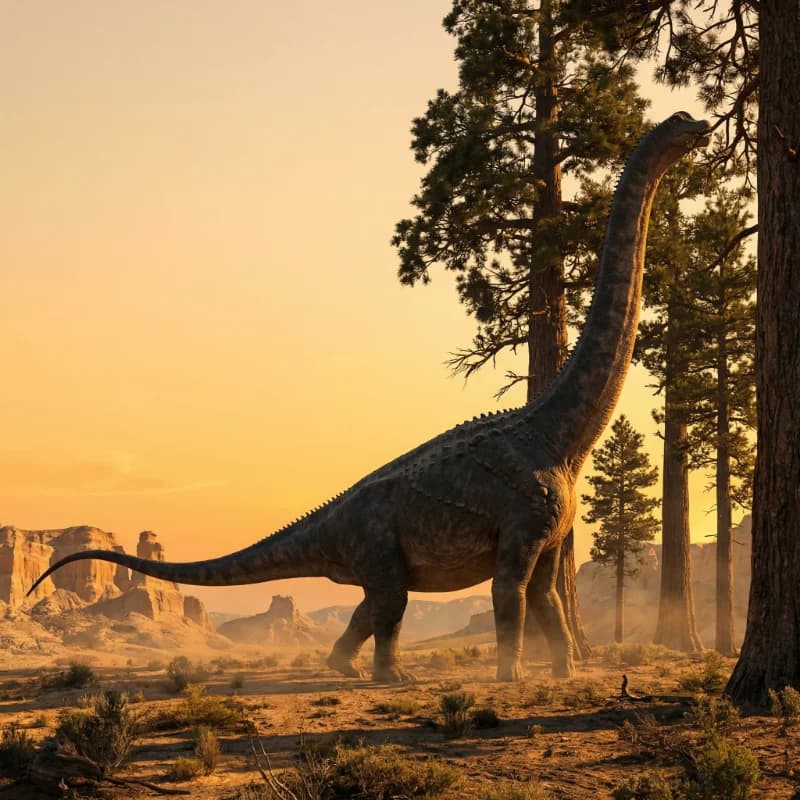
Alamosaurus
Alamosaurus sanjuanensis
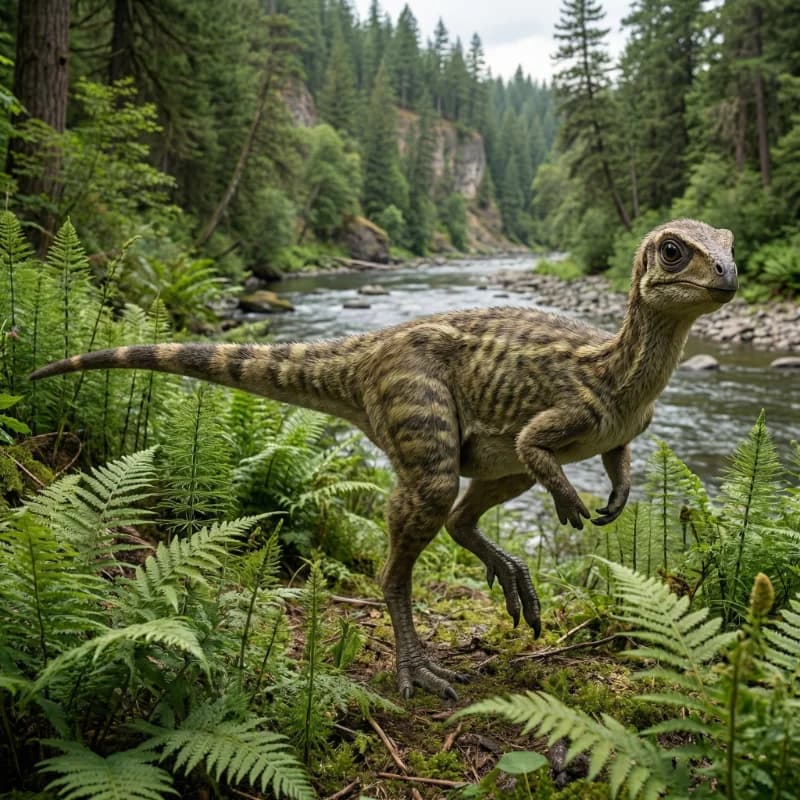
Hypsilophodon
Hypsilophodon foxii