Medusaceratops
Cretaceous Period Herbivore Creature Type
Medusaceratops lokii
Scientific Name: "Medusa (snake-haired monster from Greek mythology) + ceratops (Greek keras 'horn' + ops 'face') = 'Medusa horned face'; the specific name lokii honors Loki, the trickster god of Norse mythology, reflecting the years of taxonomic confusion surrounding the Mansfield Bonebed material"
Local Name: Medusaceratops
Physical Characteristics
Discovery
Habitat

Medusaceratops lokii Ryan, Russell & Hartman, 2010 is a medium-to-large ceratopsid dinosaur that lived during the middle Campanian stage of the Late Cretaceous, approximately 77.5 Ma (million years ago), in western North America. It belongs to the order Ornithischia, suborder Ceratopsia, family Ceratopsidae, and was reclassified in 2018 by Chiba et al. as a member of the subfamily Centrosaurinae within the clade Albertaceratopsini. Its body length is estimated at roughly 6 m (~20 ft) and its body mass at approximately 2 tonnes or more (Ryan et al. 2010; ScienceDaily 2010; DinoAnimals.com). All known material comes from the Mansfield Bonebed in Kennedy Coulee, Hill County, Montana, USA.
The most striking feature of this genus is its distinctive frill ornamentation. The second and third pairs of epiparietals (ep 2 and ep 3) are large, basally broadened, and pachyostotic (thickened), curving snake-like down the sides of the frill. This morphology evokes the serpentine hair of Medusa from Greek mythology, inspiring the generic name. The specific name lokii honors Loki, the trickster god of Norse mythology, reflecting the nearly two decades of taxonomic confusion that surrounded the Mansfield Bonebed fossils before they were formally described (Ryan et al. 2010).
Medusaceratops is particularly notable for its convoluted taxonomic history. The original description (2010) interpreted the frill as having only three pairs of epiparietals and assigned the taxon to the Chasmosaurinae. However, the 2018 redescription based on additional material revealed at least five pairs of epiparietals and a broad midline ramus, features characteristic of Centrosaurinae (Chiba et al. 2018). This case serves as a classic example of how incomplete fossil material can lead to erroneous higher-level classifications. In 2024, Lokiceratops rangiformis was described from a quarry only 2.6 km from the Mansfield Bonebed at a nearly identical stratigraphic level (Loewen et al. 2024), sparking ongoing discussion about ceratopsid diversity in this region and the relationship between these two taxa.
Overview
Name and Etymology
The generic name Medusaceratops is composed of two elements. The first, 'Medusa,' refers to the monster of Greek mythology whose hair consisted of living snakes. The second, 'ceratops,' combines the Greek words keras ('horn') and ops ('face'), meaning 'horned face'—a common suffix for ceratopsian genera. The name alludes to the large, thick, snake-like epiparietal hooks that extend down the sides of the frill, evoking Medusa's serpentine hair.
The specific name lokii honors Loki, the trickster god of Norse mythology. This was chosen because the Mansfield Bonebed material caused years of taxonomic confusion: initially misidentified as Styracosaurus albertensis (1993), then left taxonomically unresolved (1995), subsequently confused with Albertaceratops (2007), and finally recognized as a distinct taxon in 2010—a journey spanning approximately 17 years from first report to formal description (Ryan et al. 2010).
Taxonomic History and Confusion
The ceratopsid fossils from the Mansfield Bonebed were first reported by Sweeney and Boyden in 1993, who misidentified frill spikes and considered them the southernmost occurrence of Styracosaurus albertensis. In 1995, Trexler and Sweeney reinterpreted the spikes as brow horn cores and noted their similarity to those of the nomen dubium Ceratops montanus from a nearby area, but could not refer the bonebed material to any valid existing taxon.
Canadian paleontologist Michael J. Ryan first coined the name 'Medusaceratops' in his 2003 dissertation. The fossils were subsequently confused with those of Albertaceratops, another centrosaurine ceratopsian from Alberta described by Ryan in 2007. After Ryan recognized that the Mansfield Bonebed material differed from Albertaceratops, Medusaceratops lokii was formally described in 2010 by Ryan, Russell, and Hartman. The original description assigned the taxon to the Chasmosaurinae based on frill ornamentation features, making it the oldest known chasmosaurine at the time (Ryan et al. 2010).
However, in 2018, Chiba et al. described additional material from the Mansfield Bonebed, collected in 2011–2012 by David Trexler, which revealed that Medusaceratops actually belongs to the Centrosaurinae. The newly described material showed a previously overlooked small first epiparietal (ep 1), at least five pairs of epiparietals in total, a broad midline ramus, and small rounded frill fenestrae—all features consistent with centrosaurines. The phylogenetic analysis placed Medusaceratops as a unique, early centrosaurine more closely related to Centrosaurini and Pachyrhinosaurini than to Nasutoceratopsini (Chiba et al. 2018).
Scientific Significance
Medusaceratops is scientifically important on several fronts. First, its reclassification from Chasmosaurinae to Centrosaurinae demonstrates the dangers of assigning subfamily-level taxonomy based solely on frill ornamentation from incomplete material. Second, together with Albertaceratops, Wendiceratops, and Lokiceratops, it provides crucial information for understanding the early diversification of the Albertaceratopsini clade. Third, it is a key taxon documenting middle Campanian ceratopsid diversity in the Judith River Formation, contributing to evidence that at least four centrosaurine and one chasmosaurine species coexisted within a narrow stratigraphic interval in the Kennedy Coulee area—an unprecedented level of ceratopsid diversity (Loewen et al. 2024).
Age, Stratigraphy, and Depositional Environment
Age and Dating
Medusaceratops dates to the middle Campanian stage of the Late Cretaceous, approximately 77.5 Ma. The Mansfield Bonebed lies in the upper part of the Judith River Formation and, following the stratigraphic revision by Rogers et al. (2016) and Rogers, Eberth & Ramezani (2023), correlates to the lower McClelland Ferry Member. This interval is lithologically equivalent to the upper Foremost Formation and overlying Oldman Formation in southern Alberta, Canada, specifically above the Taber Coal Zone. The Mansfield Bonebed sits approximately 10 m above the Marker A Coal (MAC) seam, at nearly the same stratigraphic level as the holotype of Albertaceratops (~8 m above the Taber Coal Zone) (Chiba et al. 2018; Loewen et al. 2024).
Formation and Lithology
The Judith River Formation is a fossiliferous Upper Cretaceous unit in Montana, deposited between approximately 79.4 and 75.2 Ma (Rogers et al. 2016; Ramezani et al. 2022). The interval containing the Mansfield Bonebed consists of interbedded organic-rich mudstones with discontinuous carbonaceous seams, siltstones, and sandstones forming a 10–15 m thick package (Loewen et al. 2024). The bonebed itself is located in the badlands on the west side of Kennedy Coulee adjacent to the Milk River, within the Milk River Natural Area on private land.
Paleoenvironment
The Judith River Formation was deposited on a coastal plain along the western shoreline of the Western Interior Seaway (Rogers 1998). The dominant depositional environments were floodplains and deltaic settings, with organic-rich fine-grained sediments and coal seams indicating warm, humid subtropical conditions with lush vegetation. The co-occurring fauna—including diverse hadrosaurids, ceratopsids, tyrannosaurids, dromaeosaurids, crocodilians, turtles, amphibians, and fishes—indicates a rich terrestrial and freshwater ecosystem.
Specimens and Diagnostic Features
Holotype and Key Specimens
The holotype is WDC DJR 001, a partial parietal preserving the posterior ramus and the entire lateral ramus. The paratype is WDC DJR 002, also a partial parietal. Both are housed at the Wyoming Dinosaur Center and were purchased from Canada Fossils, Ltd. of Calgary, Alberta. Additional material, collected by David Trexler in 2011–2012, is accessioned at the Royal Tyrrell Museum of Palaeontology and other institutions (Ryan et al. 2010; Chiba et al. 2018).
Although the Mansfield Bonebed has yielded several hundred individual elements, only parietal specimens can be confidently referred to Medusaceratops at the genus level. Most postcranial and other cranial elements are diagnosable only to Ceratopsidae. Notably, no unequivocal chasmosaurine bones or diagnostic material from any other ceratopsid have been identified from the bonebed, suggesting it represents a monodominant centrosaurine accumulation (Chiba et al. 2018).
| Specimen | Element | Repository | Notes |
|---|---|---|---|
| WDC DJR 001 | Partial parietal (posterior and lateral rami) | Wyoming Dinosaur Center | Holotype |
| WDC DJR 002 | Partial parietal | Wyoming Dinosaur Center | Paratype |
| 2011–2012 collection | Additional parietals, squamosals, etc. | Royal Tyrrell Museum and others | Described by Chiba et al. 2018 |
Diagnosis (2018 Redescription)
According to the revised diagnosis by Chiba et al. (2018), the epiparietal ornamentation of Medusaceratops, from medial to lateral, consists of: a small, variably procurving first epiparietal (ep 1); a large, basally broadened, pachyostotic hook curving anterolaterally (ep 2); a smaller pachyostotic process (ep 3); and two small triangular epiparietals (ep 4 and ep 5). The midline ramus is broad, resulting in relatively small, rounded frill fenestrae—consistent with centrosaurine morphology.
This diagnostic combination is similar to but distinct from that of its close relative Albertaceratops. The third epiparietal pair of Albertaceratops closely resembles the second epiparietal pair of Medusaceratops, supporting the close phylogenetic relationship between the two taxa within Albertaceratopsini.
Limitations of the Material
The Mansfield Bonebed lies on private land and has historically been excavated by several commercial companies, resulting in fossils being dispersed across multiple institutions and private collections. The composite skeletons on display at the Wyoming Dinosaur Center and the Fukui Prefectural Dinosaur Museum (Japan) were assembled by Canada Fossils, Ltd. before Medusaceratops was formally described and do not represent accurate scientific reconstructions of this taxon (Ryan et al. 2010). Furthermore, the lack of a complete skull prevents precise determination of overall cranial morphology, and most postcranial elements cannot be confidently assigned to species level.
Morphology and Function
Body Size
Ryan et al. (2010) and the Cleveland Museum of Natural History (ScienceDaily 2010) estimated the body length of Medusaceratops at roughly 6 m (~20 ft). DinoAnimals.com provides estimates of approximately 5.6 m in length and ~2.2 tonnes in body mass (ESR 2/4, moderate size reliability) based on the largest known specimens. These figures are broadly comparable to other contemporaneous centrosaurines such as Wendiceratops and Albertaceratops. However, because postcranial elements cannot be confidently referred to Medusaceratops at the species level, these size estimates carry considerable uncertainty.
Frill and Horn Ornamentation
The most distinctive feature of Medusaceratops is its frill-margin epiparietal ornamentation. The second (ep 2) and third (ep 3) pairs are large, pachyostotic (thickened), and curve snake-like down the sides of the frill and anteriorly—the morphology that inspired the genus name by evoking Medusa's serpentine hair. Brow horn cores recovered from the Mansfield Bonebed measure approximately 60 cm (~2 ft) in length; including the keratin sheath, the horns would likely have exceeded 90 cm in life. This is consistent with the long brow horns seen in Albertaceratops, its closest known relative.
These ornamental structures likely served functions related to species recognition, sexual display, and/or intraspecific competition. The coexistence of at least four centrosaurine species in the same narrow stratigraphic interval in the Kennedy Coulee area strongly suggests that frill ornamentation functioned as a visual signal for species identification (Loewen et al. 2024).
Skull and Dentition
Like other ceratopsids, Medusaceratops would have possessed a parrot-like rostral beak covered in keratin, suitable for cropping vegetation. Behind the beak, a dental battery of closely packed replacement teeth would have efficiently processed plant material through shearing. However, no complete skull of Medusaceratops has been recovered, so the precise cranial morphology must be inferred from close relatives such as Albertaceratops and Wendiceratops.
Limb Structure
As in all ceratopsids, Medusaceratops was an obligate quadruped. Its limbs and pelvis were robustly built to support a heavy body, designed more for strength than for speed. Limb elements from the Mansfield Bonebed fall within the size range of those known from Wendiceratops (Chiba et al. 2018).
Diet and Ecology
Diet
Medusaceratops was herbivorous, as is universally inferred for ceratopsids. The beak and dental battery architecture was suited to cropping and processing low-growing vegetation. During the middle Campanian, the warm, humid coastal-plain environment would have supported a variety of food plants including ferns, cycads, conifers, and early angiosperms.
Frill and Horn Function
The function of ceratopsid frill and horn ornamentation has been debated for over a century. The most widely supported hypotheses for the distinctive frill ornaments of Medusaceratops are species recognition and sexual display (intraspecific signaling). The extraordinary diversity of contemporaneous ceratopsids in the Kennedy Coulee area—at least four centrosaurines and one chasmosaurine within a narrow stratigraphic window—provides strong circumstantial evidence that these elaborate ornaments served primarily as species-specific visual signals (Loewen et al. 2024). Direct defensive function against predators is considered unlikely given the position and structure of the frill.
Social Behavior
The recovery of multiple individuals from the Mansfield Bonebed suggests that Medusaceratops may have been gregarious. Chiba et al. (2018) proposed that the bonebed could represent one of the oldest known monodominant centrosaurine bonebeds on record. Such bonebeds in centrosaurines (e.g., Centrosaurus) are often interpreted as the result of mass mortality events affecting large herds. However, detailed taphonomic analysis of the Mansfield Bonebed has not been completed, so whether it reflects a single catastrophic event or time-averaged accumulation remains uncertain.
Distribution and Paleogeography
Geographic Distribution
Medusaceratops is known exclusively from the Mansfield Bonebed in Kennedy Coulee, Hill County, Montana. This locality lies within the Milk River Natural Area, only a few tens of kilometers south of the Canadian border. Nearby significant ceratopsian localities include the Loki Quarry (Lokiceratops, ~2.6 km to the west), the Judiceratops holotype locality (~4.9 km to the southeast), and the Probrachylophosaurus quarry (~8 km to the northeast) (Loewen et al. 2024).
Paleogeographic Context
During the middle Campanian, the Montana region lay along the eastern coastal plain of the island continent Laramidia, between the Western Interior Seaway to the east and the Cordilleran Overthrust Belt to the west. Medusaceratops inhabited the alluvial and coastal plains of this narrow landmass. The Kennedy Coulee area shared a continuous depositional environment and similar faunal assemblages with the Oldman Formation region of southern Alberta, Canada, just across the modern international border.
Phylogeny and Taxonomic Debate
Current Phylogenetic Position
According to the phylogenetic analysis by Chiba et al. (2018), Medusaceratops is positioned within the Centrosaurinae as the sister taxon to Albertaceratops nesmoi. Together, these two taxa form the sister group to Eucentrosaura (the clade comprising Centrosaurini + Pachyrhinosaurini). In 2024, Loewen et al. formally defined the clade Albertaceratopsini to include Lokiceratops, Albertaceratops, and Medusaceratops. Some analyses also recover Wendiceratops and Sinoceratops in close proximity to this clade.
Chasmosaurinae vs. Centrosaurinae Debate
The original description (Ryan et al. 2010) assigned Medusaceratops to the Chasmosaurinae because only three pairs of epiparietals were recognized on the type material, and the absence of tab-shaped fourth-through-seventh epiparietal pairs was considered to exclude it from Centrosaurinae. This interpretation was an artifact of specimen incompleteness. The first epiparietal (ep 1) was so small that it was overlooked. The 2018 redescription revealed at least five epiparietal pairs and a broad midline ramus, both diagnostic of Centrosaurinae, definitively resolving the subfamily assignment (Chiba et al. 2018).
Relationship with Lokiceratops
Lokiceratops rangiformis, described in 2024 by Loewen et al., was recovered from the Loki Quarry approximately 2.6 km west of the Mansfield Bonebed, at a nearly identical stratigraphic level (slightly above Mansfield). Lokiceratops shares similar frill ornamentation with Medusaceratops but is distinguished by its unique asymmetric blade-like brow horns and large blade-shaped epiparietals at the top of the frill. Some researchers have suggested that Lokiceratops could represent a mature Medusaceratops (as noted in the New York Times 2024), but the two are currently recognized as separate taxa. This question remains an important topic for future investigation.
Comparison with Related Taxa
| Taxon | Subfamily / Clade | Formation | Age (Ma) | Key Features |
|---|---|---|---|---|
| Medusaceratops lokii | Centrosaurinae / Albertaceratopsini | Judith River Fm. (Montana) | ~77.5 | Snake-like pachyostotic ep 2–3 |
| Albertaceratops nesmoi | Centrosaurinae / Albertaceratopsini | Oldman Fm. (Alberta) | ~77.5 | Long brow horns; ep 3 similar to Medusaceratops ep 2 |
| Wendiceratops pinhornensis | Centrosaurinae / Albertaceratopsini | Oldman Fm. (Alberta) | ~79–78.5 | Nasal horn; numerous epiparietals |
| Lokiceratops rangiformis | Centrosaurinae / Albertaceratopsini | Judith River Fm. (Montana) | ~78–77.5 | Asymmetric blade-like brow horns; large frill ornaments |
| Avaceratops lammersi | Centrosaurinae / Nasutoceratopsini | Judith River Fm. (Montana) | ~78–77 | Small, simple frill |
Contemporaneous Fauna
Co-occurring Dinosaurs
The Mansfield Bonebed and adjacent Kennedy Coulee localities in the Judith River Formation have yielded a diverse dinosaur assemblage. Hadrosaurids include Brachylophosaurus canadensis and Probrachylophosaurus bergei. Other ceratopsids include the centrosaurines Avaceratops and Lokiceratops, as well as the chasmosaurines Judiceratops, Mercuriceratops, and Spiclypeus. Theropods include tyrannosaurids, dromaeosaurids (Dromaeosaurus, Saurornitholestes), and troodontids (Troodon).
Other Fauna
The Judith River Formation has produced a wide range of non-dinosaurian vertebrates including amphibians (salamanders, frogs), turtles, crocodilians (Brachychampsa, Leidyosuchus, the giant Deinosuchus), lizards, choristoderes (Champsosaurus), pterosaurs, and fishes (sharks, rays, bony fishes). This assemblage documents a rich terrestrial and freshwater ecosystem.
Reconstruction and Uncertainty
Confirmed
The following aspects of Medusaceratops are well established: it is a centrosaurine ceratopsid (Chiba et al. 2018); its frill bears at least five pairs of epiparietals, with ep 2–3 displaying a unique pachyostotic hook/process morphology; it dates to approximately 77.5 Ma (middle Campanian); and it is known exclusively from the Mansfield Bonebed in the Judith River Formation. The bonebed is interpreted as a monodominant centrosaurine accumulation, with no unequivocal chasmosaurine material identified.
Uncertain
Several aspects require further study. The complete skull morphology is unknown, as no complete skull has been recovered; in particular, the precise form and size of the nasal horn remain undetermined. Body length and mass estimates carry substantial uncertainty because postcranial elements cannot be confidently assigned to species level. The biological function of the frill ornaments remains at the hypothesis stage. The relationship with Lokiceratops—whether the latter represents a distinct species, an ontogenetic variant, or a sexually dimorphic form—is actively debated. Detailed taphonomic analysis of the Mansfield Bonebed is also needed to clarify whether it records a single mass mortality event or time-averaged accumulation.
Popular Media vs. Scientific Consensus
Some popular sources and commercial reconstructions still depict Medusaceratops as a chasmosaurine (with a very long frill and small brow horns) or base their reconstructions on the composite skeletons at the Wyoming Dinosaur Center, which were assembled before the taxon was formally described and do not accurately represent the animal. The scientific consensus since the 2018 redescription firmly places Medusaceratops within the Centrosaurinae, with a relatively shorter frill and well-developed brow horns consistent with centrosaurine morphology.
Fun Facts
FAQ
📚References
- Ryan, M.J., Russell, A.P. & Hartman, S. (2010). A new chasmosaurine ceratopsid from the Judith River Formation, Montana. In: Ryan, M.J., Chinnery-Allgeier, B.J. & Eberth, D.A. (eds.), New Perspectives on Horned Dinosaurs: The Royal Tyrrell Museum Ceratopsian Symposium, pp. 181–188. Indiana University Press. ISBN 978-0-253-35358-0.
- Chiba, K., Ryan, M.J., Fanti, F., Loewen, M.A. & Evans, D.C. (2018). New material and systematic re-evaluation of Medusaceratops lokii (Dinosauria, Ceratopsidae) from the Judith River Formation (Campanian, Montana). Journal of Paleontology, 92(2), 272–288. doi:10.1017/jpa.2017.62
- Loewen, M.A., Burns, M.E., Getty, M.A., Kirkland, J.I. & Vickaryous, M.K. (2024). Lokiceratops rangiformis gen. et sp. nov. (Ceratopsidae: Centrosaurinae) from the Campanian Judith River Formation of Montana reveals rapid regional radiations and high diversity of centrosaurine dinosaurs. PeerJ, 12, e17224. doi:10.7717/peerj.17224
- Longrich, N.R. (2013). Judiceratops tigris, a new horned dinosaur from the Middle Campanian Judith River Formation of Montana. Bulletin of the Peabody Museum of Natural History, 54(1), 51–65. doi:10.3374/014.054.0103
- Sweeney, A. & Boyden, D. (1993). Ceratopsian remains from the northernmost occurrence of the Judith River Formation (Upper Cretaceous) in Montana. Journal of Vertebrate Paleontology, 13(3, suppl.), 55A.
- Trexler, D. & Sweeney, A. (1995). Ceratopsian bonebeds from the Judith River Formation, Hill County, Montana: implications for ceratopsian taxonomy and systematics. Journal of Vertebrate Paleontology, 15(3, suppl.), 57A.
- Evans, D.C. & Ryan, M.J. (2015). Cranial anatomy of Wendiceratops pinhornensis gen. et sp. nov., a centrosaurine ceratopsid (Dinosauria: Ornithischia) from the Oldman Formation (Campanian), Alberta, Canada, and the evolution of ceratopsid nasal ornamentation. PLOS ONE, 10(7), e0130007. doi:10.1371/journal.pone.0130007
- Ryan, M.J. (2007). A new basal centrosaurine ceratopsid from the Oldman Formation, southeastern Alberta. Journal of Paleontology, 81(2), 376–396. doi:10.1666/0022-3360(2007)81[376:ANBCCF]2.0.CO;2
- Mallon, J.C., Ott, C.J., Larson, P.L., Iuliano, E.M. & Evans, D.C. (2016). Spiclypeus shipporum gen. et sp. nov., a boldly audacious new chasmosaurine ceratopsid (Dinosauria: Ornithischia) from the Judith River Formation (Upper Cretaceous: Campanian) of Montana, USA. PLOS ONE, 11(5), e0154218. doi:10.1371/journal.pone.0154218
- Ryan, M.J., Evans, D.C., Currie, P.J. & Loewen, M.A. (2014). A new chasmosaurine from northern Laramidia expands frill disparity in ceratopsid dinosaurs. Naturwissenschaften, 101(6), 505–512. doi:10.1007/s00114-014-1183-1
- Rogers, R.R., Kidwell, S.M. & Deino, A.L. (2016). Age, correlation, and lithostratigraphic revision of the Upper Cretaceous (Campanian) Judith River Formation in its type area (north-central Montana), with a comparison of low- and high-accommodation alluvial records. The Journal of Geology, 124(2), 215–244. doi:10.1086/684289
- Rogers, R.R., Eberth, D.A. & Ramezani, J. (2023). The "Judith River–Belly River problem" revisited (Montana–Alberta–Saskatchewan): new perspectives on the correlation of Campanian dinosaur-bearing strata based on a revised stratigraphic model updated with CA-ID-TIMS U–Pb geochronology. GSA Bulletin, 135(9-10), 2427–2450. doi:10.1130/B36999.1
- Ramezani, J., Beveridge, T.L., Rogers, R.R., Eberth, D.A. & Roberts, E.M. (2022). Calibrating the zenith of dinosaur diversity in the Campanian of the Western Interior Basin by CA-ID-TIMS U–Pb geochronology. Scientific Reports, 12, 16026. doi:10.1038/s41598-022-19896-w
- Rogers, R.R. (1998). Sequence analysis of the Upper Cretaceous Two Medicine and Judith River formations, Montana: nonmarine response to the Claggett and Bearpaw marine cycles. Journal of Sedimentary Research, 68(4), 604–614. doi:10.2110/jsr.68.604
- Cleveland Museum of Natural History. (2010, May 30). New horned dinosaur: Two-ton plant-eater lived 78 million years ago in Montana. ScienceDaily. https://www.sciencedaily.com/releases/2010/05/100528113914.htm
Gallery
5 images Medusaceratops
Medusaceratops · Cretaceous Period · Herbivore
 Medusaceratops
Medusaceratops · Cretaceous Period · Herbivore
 Medusaceratops
Medusaceratops · Cretaceous Period · Herbivore
 Medusaceratops
Medusaceratops · Cretaceous Period · Herbivore
 Medusaceratops
Medusaceratops · Cretaceous Period · Herbivore
🔗Related Creatures
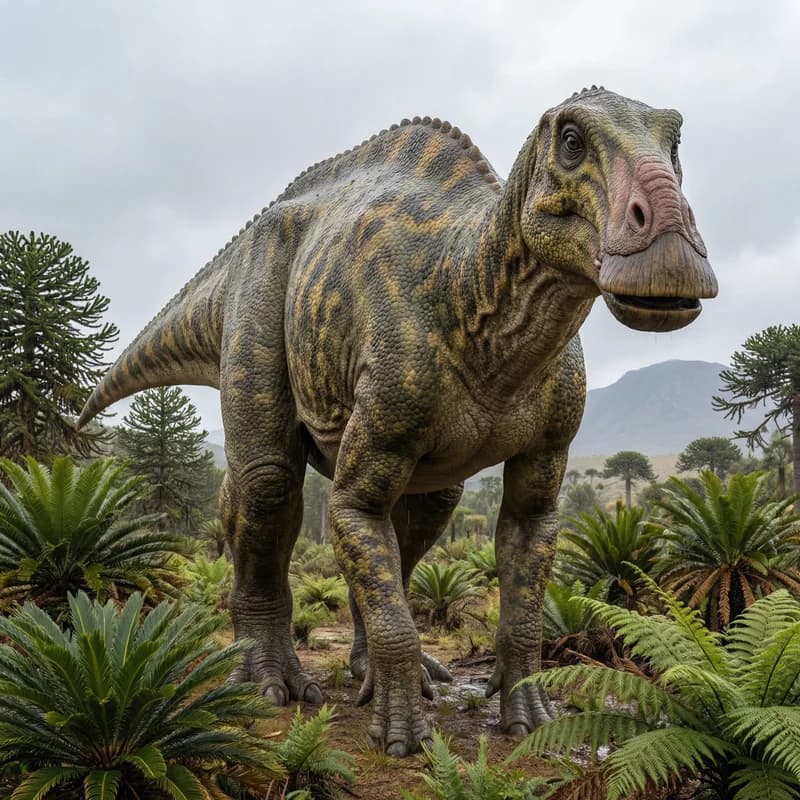
Shantungosaurus
Shantungosaurus giganteus
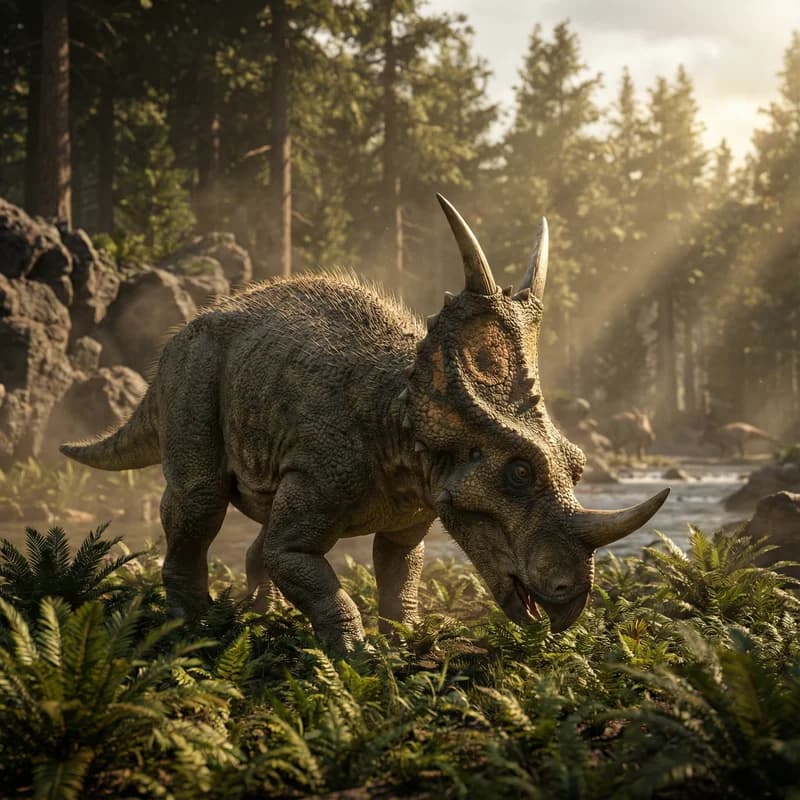
Einiosaurus
Einiosaurus procurvicornis
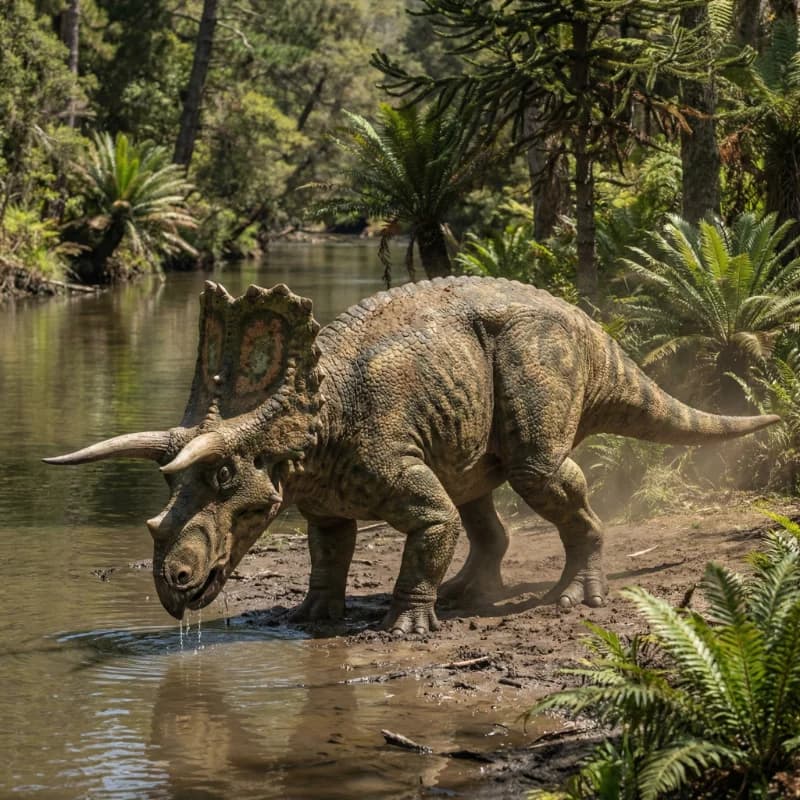
Anchiceratops
Anchiceratops ornatus

Regaliceratops
Regaliceratops peterhewsi
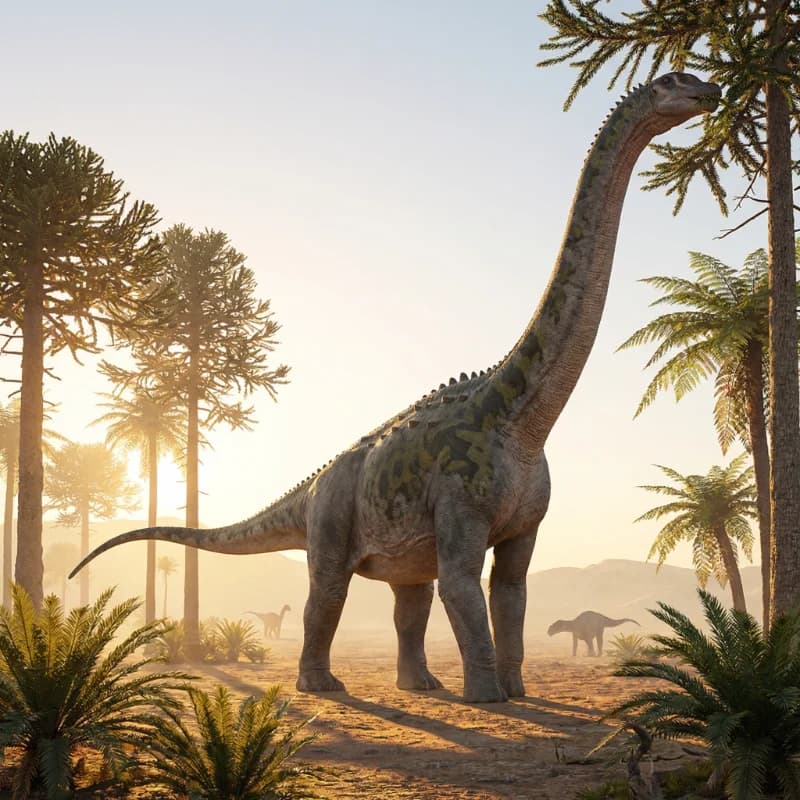
Diamantinasaurus
Diamantinasaurus matildae
Sauropelta
Sauropelta edwardsorum
Magyarosaurus
Magyarosaurus dacus
Saltasaurus
Saltasaurus loricatus