Regaliceratops
Cretaceous Period Herbivore Creature Type
Regaliceratops peterhewsi
Scientific Name: "Latin regalis (royal) + Greek keras (horn) + ops (face) = 'royal horned face'; the species name peterhewsi honours geologist Peter Hews, who discovered the fossil"
Local Name: Regaliceratops
Physical Characteristics
Discovery
Habitat

Regaliceratops (Regaliceratops peterhewsi Brown & Henderson, 2015) is a chasmosaurine ceratopsid dinosaur from the Late Cretaceous (middle Maastrichtian, approximately 68.5–67.5 Ma) of what is now southwestern Alberta, Canada. The genus name combines the Latin regalis (royal) with the Greek keras (κέρας, horn) and ops (ὤψ, face), meaning "royal horned face"—a reference both to the crown-like arrangement of massive epiossifications along the frill margin and to the Royal Tyrrell Museum of Palaeontology, which houses the specimen. The species epithet peterhewsi honours geologist Peter Hews, who in 2005 first spotted the tip of the snout protruding from a cliff face along the Oldman River.
Known from a single holotype specimen (TMP 2005.055.0001), a nearly complete skull lacking only the rostral bone and lower jaws, Regaliceratops is estimated at approximately 5 m in length and 1.5–2 tonnes in body mass (Paul, 2016; Pickrell, 2016). Its maximum sagittal skull length is approximately 1,570 mm (Brown & Henderson, 2015). The most remarkable aspect of this dinosaur is that it provides the first clear evidence of convergent evolution in display structures between dinosaur clades within Ceratopsidae. Despite being phylogenetically nested within Chasmosaurinae, Regaliceratops exhibits a cranial ornamentation pattern—large nasal horncore, small postorbital horncores, and elaborate frill epiossifications—that is strikingly similar to the centrosaurine subfamily (Centrosaurinae), which had largely gone extinct in North America by the early Maastrichtian.
The specimen earned the nickname "Hellboy" from the excavation team, owing to the extreme difficulty of the recovery—the skull was embedded in heavily cemented siltstone near protected bull trout (Salvelinus confluentus) spawning habitat—and the small postorbital horncores topped with distinct resorption pits that evoked the comic book character's stumpy horns.
Overview
Etymology and Naming History
The generic name carries a dual meaning. The Latin regalis (royal) refers to the crown-like arrangement of frill epiossifications, while simultaneously paying tribute to the Royal Tyrrell Museum of Palaeontology, which received the "Royal" designation from Her Majesty Queen Elizabeth II in 1990 (Brown & Henderson, 2015). The Greek components keras (horn) and ops (face) are the traditional elements used in ceratopsian nomenclature.
The species name peterhewsi honours geologist Peter Hews, who in 2005 noticed the tip of a snout protruding from a cliff along the Oldman River in southwestern Alberta, approximately 164 km south of Calgary, in the Waldron Flats area. He reported the find to the Royal Tyrrell Museum. The skull was excavated in two field seasons (2006 and 2008) by museum teams, who removed it in blocks. The excavation was complicated by the extremely hard siltstone matrix and the proximity of the site to protected bull trout spawning habitat, which required special environmental precautions. Royal Tyrrell Museum senior technician Darren H. Tanke spent 17 months preparing the specimen from its matrix. In 2015, Caleb M. Brown and Donald M. Henderson formally named and described the new genus and species in Current Biology.
Systematic Position
Regaliceratops is classified within Ornithischia, Ceratopsia, Ceratopsidae, Chasmosaurinae. In the original description, Brown & Henderson (2015) placed it within the tribe Triceratopsini, in a polytomy with Eotriceratops and Ojoceratops, as sister taxa to the remaining Triceratopsini (Triceratops, Torosaurus, Nedoceratops, Titanoceratops).
However, a subsequent phylogenetic analysis by Mallon et al. (2016) recovered Regaliceratops outside Triceratopsini, in a polytomy with Anchiceratops and Arrhinoceratops. Most recently, Dalman et al. (2022) once again recovered Regaliceratops within Triceratopsini, as a sister taxon to Triceratops (T. horridus, T. prorsus) and Ojoceratops. While the precise phylogenetic placement varies between analyses, its position as a derived chasmosaurine is consistently supported.
Scientific Significance
The most important scientific contribution of Regaliceratops is that it documents the first clear case of convergent evolution in horn-like display structures between dinosaur clades (Brown & Henderson, 2015). Ceratopsidae has historically been divided along clearly distinct cranial ornamentation patterns: Chasmosaurinae (e.g., Triceratops, Pentaceratops) typically exhibit large postorbital horns, small nasal horns, and relatively simple frills that emphasize frill length; Centrosaurinae (e.g., Styracosaurus, Centrosaurus) typically show large nasal horns, small postorbital horns, and elaborate frill epiossifications (Dodson, 1993; Farlow & Dodson, 1975). Regaliceratops is phylogenetically a chasmosaurine yet exhibits the centrosaurine-type ornamentation pattern, and when its nasal-to-postorbital horncore ratio is plotted, it falls within the morphospace of Campanian centrosaurines rather than Maastrichtian chasmosaurines (Brown & Henderson, 2015: Figure 4). This indicates that after centrosaurines went largely extinct in the early Maastrichtian, the chasmosaurine Regaliceratops independently evolved a convergent display morphology.
Geological Age, Stratigraphy, and Depositional Setting
Geological Age and Dating
Regaliceratops lived during the Late Cretaceous, Maastrichtian stage. The St. Mary River Formation as a whole spans approximately 71.9–67 Ma (Fowler, 2017). The holotype was recovered from the upper approximately 30 m of the formation, which correlates with the upper Horseshoe Canyon Formation (Carbon Member and Whitemud Member) of southern Alberta. Since the Carbon Member is well dated to approximately 67.5–68.5 Ma (Wu et al., 2007; Eberth & Braman, 2012; Eberth et al., 2013), the holotype is assigned a middle Maastrichtian age. This stratigraphic correlation is further supported by the presence of the angiosperm palynomorph Scollardia trapaformis in the host matrix (Brown & Henderson, 2015).
This time interval immediately precedes the Cretaceous–Paleogene (K–Pg) mass extinction and represents the final diversification phase of non-avian dinosaurs. Regaliceratops lived slightly earlier than Triceratops, during a period when centrosaurines had largely disappeared from North America and chasmosaurines were diversifying.
Formation and Lithology
The holotype was recovered from the St. Mary River Formation of southwestern Alberta. This formation is part of the Western Canada Sedimentary Basin and extends from southwestern Alberta into northwesternmost Montana (Mossop & Shetsen, 1994; Prior et al., 2013). Formation thickness reaches approximately 762 m along the Crowsnest and Castle Rivers and approximately 457 m along the Oldman River.
The St. Mary River Formation is divided into two broadly defined units. The basal 30–60 m was deposited in brackish water environments and is characterised by fine-grained sandstones, grey shales, coquinoid beds (concentrations of Ostrea and Corbicula shells), carbonaceous mudstones, and coal beds. The remainder of the formation records freshwater fluvial and floodplain environments and consists of interbedded sandstone and siltstone with minor occurrences of carbonaceous shale and coal (Hamblin, 1998). The fossil was preserved in heavily cemented siltstone at the Waldron Flats locality along the Oldman River.
Palaeoenvironment
The St. Mary River Formation records a semi-arid fluvial system (Nadon, 1989; Hamblin, 1998). Plant fossils are diverse: Bell (1949) described 18 leaf species, and subsequent work increased the total to at least 32 species. The assemblage includes ferns (Hydropteris pinnata: Rothwell & Stockey, 1994), Ginkgo, conifers, a Trapa-like aquatic angiosperm (Trapago angulata: Stockey & Rothwell, 1997), sabaloid palms, at least six types of large monocot leaves, the aquatic angiosperm Cardstonia tolmanii (Riley & Stockey, 2004), the floating aquatic Tolmania aquatica (Edmonds et al., 2022), and the amphibious eudicot Zlatkovia crenulata (Rothwell & Stockey, 2022).
Contemporaneous fauna includes the nodosaurid ankylosaur Edmontonia (cf. E. longiceps), the leptoceratopsid Montanoceratops cerorhynchus, the centrosaurine ceratopsid Pachyrhinosaurus canadensis, ceratopsid material previously referred to Anchiceratops (precise species attribution uncertain: Weishampel et al., 2004), the albertosaurine tyrannosaurid Albertosaurus, the dromaeosaurid Saurornitholestes (cf. sp.), the troodontid Troodon sp., mammals (Cimolomys gracilis, Meniscoessus conquista, Mesodma cf. thompsoni, Cimolodon nitidus, Pediomys cf. cooki, Didelphodon sp., Eodelphis sp.), fish (Myledaphus, Lepisosteus), the crocodylomorph Leidyosuchus, and the choristodere Champsosaurus (Sloan & Russell, 1974; Hunter et al., 2010; Weishampel et al., 2004).
Specimen and Diagnostic Characters
Holotype and Only Known Specimen
Regaliceratops is known from a single specimen, TMP 2005.055.0001, housed at the Royal Tyrrell Museum of Palaeontology. The holotype consists of a nearly complete cranium (skull excluding the lower jaw), missing only the rostral bone. The palatal and braincase regions are obscured by matrix. The maximum sagittal length of the skull is approximately 1,570 mm (Brown & Henderson, 2015).
The specimen represents an adult individual, as indicated by the fused cranial elements and rugose bone surface texture, unlike the smoother texture seen in juvenile and subadult ceratopsids. The skull has experienced post-depositional deformation, including rostrocaudal compression of the entire cranium, dorsal shear of the narial region, and dorsal deflection of the parietosquamosal frill (Brown & Henderson, 2015).
Diagnosis
Brown & Henderson (2015) diagnosed Regaliceratops based on the following autapomorphies (marked with ) and a unique suite of synapomorphies.
A single, midline epiparietal ossification (P0 locus) is present that is rostrodorsally offset from the plane of the frill and other epiparietals, projects caudally beyond the parietal, and has a roughly triangular transverse cross-section (). A prominent midline ridge (sagittal keel) on the parietal is confluent with the median epiparietal (). Paired epiparietal ossifications (P1–P2) are long, flat, and roughly pentagonal or spade-shaped (). A prominent postorbital ridge runs diagonally from the supraorbital horncore to the base of the squamosal. Parietal fenestrae are small or subequal in size to the orbit (shared with Kosmoceratops). The nasal horncore is larger than the postorbital horncores (shared with Chasmosaurus belli and Vagaceratops).
Limitations of the Specimen
Because Regaliceratops is known only from a single skull, no postcranial skeletal information is available. Body length (ca. 5 m) and mass (ca. 1.5–2 t) estimates therefore rely on indirect comparisons with closely related taxa based on skull proportions. Additionally, with only a single individual known, intraspecific variation, sexual dimorphism, and ontogenetic changes cannot be assessed. The skull itself has undergone post-depositional deformation (rostrocaudal compression, narial shearing, frill deflection), which may exaggerate or distort certain morphological features.
Morphology and Function
Body Form and Size
Regaliceratops is estimated at approximately 5 m (16 ft) in length and 1.5–2 tonnes (1,500–2,000 kg) in body mass (Paul, 2016; Pickrell, 2016). This makes it smaller than Triceratops (ca. 8–9 m, 6–12 t) but still a substantial medium-large ceratopsid and one of the major herbivores of its ecosystem. These estimates, however, are indirect, being based solely on skull proportions, and could be revised if postcranial material is discovered.
The maximum sagittal skull length of approximately 1,570 mm is considerable, and since the rostral bone is missing, the total skull length would have been greater still.
Nasal and Postorbital Horns
One of the most distinctive features of Regaliceratops is the size reversal of the horns compared to most chasmosaurines. The nasal horncore has a preserved height of approximately 148 mm; extrapolation of the horn's lateral slopes yields an estimated total height of 240–280 mm, making it one of the tallest nasal horncores in Chasmosaurinae (Brown & Henderson, 2015). It is straight, projects dorsally and slightly rostrally, and is teardrop-shaped in horizontal cross-section, with a broad rostral margin and tapered caudal margin.
In contrast, the postorbital horncores are approximately 140 mm in height with a rostrocaudal base length of approximately 110 mm—distinctly smaller than the nasal horn. They have narrow bases and taper distally, with the apex of each bearing a distinct resorption pit (Brown & Henderson, 2015). The horncores are dorsally directed and procurved (curved rostrally), as in Pentaceratops. This horn ratio—large nasal horn, small postorbital horns—is characteristic of centrosaurines and is found within Chasmosaurinae only in Chasmosaurus belli and Vagaceratops.
Frill and Epiossifications
The parietosquamosal frill is nearly semicircular in rostrodorsal view, with epiossifications uniformly spaced along the circumference. It is short and wide, with the greatest transverse width at midlength, as in Torosaurus and Triceratops. The frill is shorter than the preorbital length and less than 70% of basal skull length, though this may be partly exaggerated by post-depositional rostrocaudal compression.
The dorsal midline of the parietal preserves a prominent sagittal keel that runs from the rostralmost point of the parietal to the base of the large midline epiossification (P0) near the caudal margin. P0 is a single, unpaired, large structure located at the caudal midline of the parietal, rostrodorsally offset from the caudal margin, projecting caudally, and triangular in cross-section. It is confluent with the sagittal keel and is interpreted as homologous to the P0 of Triceratops and the laterally curved hooks of Anchiceratops.
The remaining caudolateral periphery is adorned with seven pairs of flat, distally attenuated epiossifications on each side, decreasing in size from largest caudomedially to smallest rostrolaterally. Two paired epiparietals (P1 and P2) are fused exclusively to the caudal parietal and are large (maximum length 201 mm, exceeding the postorbital horncore bases) and roughly pentagonal or spade-shaped. These represent the largest frill epiossifications recorded in Chasmosaurinae (Brown & Henderson, 2015). Four episquamosals (S1–S4) are fused to the lateral squamosal margin; the rostralmost three (S2–S4) are roughly triangular and decrease slightly in size rostrally, while the caudalmost (S1) is pentagonal or spade-shaped and distinctly larger. One paired epiparietosquamosal (PS) articulates along the parietosquamosal suture and is transitional in shape and size.
Other Cranial Features
The snout is short and tall, though partly exaggerated by tectonic shortening. The paired premaxillae form the median premaxillary septum with a thin septal fossa and a large interpremaxillary fenestra, characteristic of Maastrichtian chasmosaurines. The narial strut is sinuous in shape, contrasting with the broad triangular form in Triceratops and Titanoceratops.
The orbits are highly ellipsoidal, unlike the slightly ellipsoidal orbits of other ceratopsids. The rostrodorsal orbital margin features a prominent antorbital buttress formed by the rugose, swollen palpebral, which is larger than in most chasmosaurines. The ventrolateral extremity of the jugal is triangular, capped by a large, conical epijugal whose base is only slightly smaller than the postorbital horncore bases.
Small, paired parietal fenestrae are situated entirely within the parietal and do not contact the squamosal laterally, unlike the condition in Chasmosaurus, Agujaceratops, and Pentaceratops.
Diet and Ecology
Diet
Like all ceratopsids, Regaliceratops was herbivorous. The keratinous beak was suited for cropping tough vegetation, and the complex dental battery was adapted for efficient processing of fibrous plant material.
The rich plant fossil record of the St. Mary River Formation—ferns, Ginkgo, conifers, Trapa-like aquatic angiosperms, sabaloid palms, large monocots, and aquatic plants—indicates a diverse flora from which Regaliceratops would have fed. The relatively low head posture of ceratopsids is consistent with browsing on low-growing vegetation.
Horn and Frill Function
The function of ceratopsid horns and frills has long been debated, with proposed hypotheses including predator defence, intraspecific combat (head-locking), and sociosexual display and species recognition (Farlow & Dodson, 1975; Farke, 2004; Farke et al., 2009). The small postorbital horncores of Regaliceratops appear better suited for visual display than for physical combat.
Brown & Henderson (2015) interpreted the convergent ornamentation pattern as potentially reflecting not only morphological but also behavioural convergence with centrosaurines, noting that in fossil and extant mammals, convergent horn evolution often correlates with convergent social behaviours (Geist, 1966, 1998). They hypothesised that Regaliceratops may have converged behaviourally with centrosaurines following the latter's early Maastrichtian extinction.
Ecological Role
Regaliceratops occupied the role of a medium-large herbivore in the middle Maastrichtian ecosystem of southwestern Alberta. It coexisted with Pachyrhinosaurus canadensis (a centrosaurine), ceratopsid material referred to Anchiceratops, Montanoceratops (a leptoceratopsid), and the nodosaurid Edmontonia, among other ornithischians. It would have been potential prey for the large tyrannosaurid Albertosaurus.
Distribution and Palaeogeography
Geographic Distribution
Regaliceratops is currently known exclusively from a single locality in the St. Mary River Formation of southwestern Alberta, Canada. The holotype was found in the Waldron Flats area along the Oldman River, approximately 164 km south of Calgary. Although the St. Mary River Formation extends into northwesternmost Montana (Mossop & Shetsen, 1994), no Regaliceratops material has been reported from other localities.
Palaeogeographic Context
During the Late Cretaceous, western North America formed the island continent of Laramidia, separated from eastern Appalachia by the Western Interior Seaway. By the middle Maastrichtian, when Regaliceratops lived, the seaway was progressively retreating, expanding terrestrial habitats and influencing faunal turnover. The approximate palaeocoordinates of the St. Mary River Formation are 49.6°N, 86.5°W.
Phylogeny and Taxonomic Debate
Phylogenetic Position Through Time
The phylogenetic placement of Regaliceratops has shifted across three major analyses.
Brown & Henderson (2015) used a revised data matrix incorporating reassessed epiossification homologies and recovered Regaliceratops within Triceratopsini, in a polytomy with Eotriceratops and Ojoceratops, as sister taxa to the remaining Triceratopsini (Titanoceratops, Nedoceratops, Torosaurus, Triceratops). Their analysis supported a deep split within Chasmosaurinae into an older Chasmosaurus clade (primarily Campanian) and a younger Triceratops clade (primarily Maastrichtian).
Mallon et al. (2016), in the description of Spiclypeus, recovered Regaliceratops outside Triceratopsini, in a polytomy with Anchiceratops and Arrhinoceratops.
Dalman et al. (2022), in the description of Sierraceratops, once again recovered Regaliceratops within Triceratopsini, as a sister taxon to Triceratops (T. horridus, T. prorsus) and Ojoceratops.
Implications of Convergent Evolution
The discovery of Regaliceratops significantly expanded the known morphological disparity of Maastrichtian chasmosaurines. Brown & Henderson (2015) plotted postorbital horncore length against nasal horncore length and demonstrated that Regaliceratops falls well outside the morphospace of other Maastrichtian chasmosaurines, instead falling within the morphospace of Campanian centrosaurines.
This has two major evolutionary implications. First, the near-simultaneous extinction of centrosaurines and the older Chasmosaurus clade in the early Maastrichtian may have opened ecological space for the Triceratopsini to diversify and explore novel display morphologies. Second, the base of the Triceratops clade implies a ghost lineage of approximately 3 million years, suggesting considerable undiscovered chasmosaurine diversity in the Campanian–Maastrichtian interval.
Reconstruction and Uncertainty
Confirmed Features
Anatomically confirmed features observed directly on the holotype skull include the large nasal horncore (preserved height 148 mm, estimated total height 240–280 mm) and small postorbital horncores (ca. 140 mm height) with resorption pits; the crown-like arrangement of massive frill epiossifications (P0 with triangular cross-section, P1–P2 up to 201 mm in maximum length, S1–S4, PS pairs); the short, wide, semicircular frill; the sagittal keel confluent with the median P0 epiparietal; and the small parietal fenestrae.
Hypothetical and Estimated Features
Since no postcranial skeleton is known, the body length (ca. 5 m) and mass (ca. 1.5–2 t) estimates are indirect, based on scaling from skull size against closely related taxa. Skin colour and patterning, specific behavioural repertoires, and the precise functional role of the horns and frill all lack direct evidence and remain hypothetical or inferred. The behavioural convergence hypothesis with centrosaurines (Brown & Henderson, 2015) is an intriguing proposal but currently rests on indirect morphological evidence.
Limitations of a Single Specimen
With only a single adult skull available, the following remain unknown: the range of intraspecific variation; whether sexual dimorphism was present; ontogenetic changes in skull ornamentation through growth; postcranial anatomy; and the true geographic range and ecological preferences of the species. Additionally, the post-depositional deformation of the skull (rostrocaudal compression, narial shearing, frill deflection) may have exaggerated or distorted certain morphological features.
Comparison with Related and Contemporaneous Taxa
| Taxon | Binomial | Subfamily | Nasal vs postorbital horn | Frill features | Age |
|---|---|---|---|---|---|
| Regaliceratops | R. peterhewsi | Chasmosaurinae | Nasal > postorbital | Large pentagonal/triangular epiossifications, sagittal keel | Middle Maastrichtian |
| Triceratops | Triceratops spp. | Chasmosaurinae | Nasal postorbital | Long radiating epiossifications | Campanian |
Specimen Summary
| Specimen number | Elements preserved | Locality | Stratigraphic position | Reference |
|---|---|---|---|---|
| TMP 2005.055.0001 (holotype) | Nearly complete skull (rostral bone, lower jaw missing; palate and braincase obscured by matrix) | SW Alberta, Waldron Flats, Oldman River (ca. 164 km S of Calgary) | Upper ca. 30 m of St. Mary River Fm., middle Maastrichtian | Brown & Henderson (2015) |
Fun Facts
FAQ
📚References
- Brown, C. M., & Henderson, D. M. (2015). A new horned dinosaur reveals convergent evolution in cranial ornamentation in Ceratopsidae. Current Biology, 25(12), 1641–1648. https://doi.org/10.1016/j.cub.2015.04.041
- Paul, G. S. (2016). The Princeton Field Guide to Dinosaurs (2nd ed.). Princeton University Press. p. 300.
- Mallon, J. C., Ott, C. J., Larson, P. L., Iuliano, E. M., & Evans, D. C. (2016). Spiclypeus shipporum gen. et sp. nov., a boldly audacious new chasmosaurine ceratopsid (Dinosauria: Ornithischia) from the Judith River Formation (Upper Cretaceous: Campanian) of Montana, USA. PLoS ONE, 11(5), e0154218. https://doi.org/10.1371/journal.pone.0154218
- Dalman, S. G., Lucas, S. G., Jasinski, S. E., & Longrich, N. R. (2022). Sierraceratops turneri, a new chasmosaurine ceratopsid from the Hall Lake Formation (Upper Cretaceous) of south-central New Mexico. Cretaceous Research, 130, 105034. https://doi.org/10.1016/j.cretres.2021.105034
- Fowler, D. W. (2017). Revised geochronology, correlation, and dinosaur stratigraphic ranges of the Santonian-Maastrichtian (Late Cretaceous) formations of the Western Interior of North America. PLoS ONE, 12(11), e0188426. https://doi.org/10.1371/journal.pone.0188426
- Wu, X.-C., Brinkman, D. B., Eberth, D. A., & Braman, D. R. (2007). A new ceratopsid dinosaur (Ornithischia) from the uppermost Horseshoe Canyon Formation (upper Maastrichtian), Alberta, Canada. Canadian Journal of Earth Sciences, 44(9), 1243–1265. https://doi.org/10.1139/e07-011
- Eberth, D. A., & Braman, D. R. (2012). A revised stratigraphy and depositional history for the Horseshoe Canyon Formation (Upper Cretaceous), southern Alberta plains. Canadian Journal of Earth Sciences, 49(9), 1053–1086. https://doi.org/10.1139/e2012-035
- Eberth, D. A., Evans, D. C., Brinkman, D., Therrien, F., Tanke, D. H., & Russell, L. S. (2013). Dinosaur biostratigraphy of the Edmonton Group (Upper Cretaceous), Alberta, Canada: evidence for climate influence. Canadian Journal of Earth Sciences, 50(7), 701–726. https://doi.org/10.1139/cjes-2012-0185
- Nadon, G. C. (1989). Sedimentology of the Upper Cretaceous St. Mary River Formation, southern Alberta. Ph.D. dissertation, University of Alberta.
- Hamblin, A. P. (1998). Edmonton Group/St Mary River Formation: Summary of Literature and Concepts. Geological Survey of Canada, Open File 3578.
- Bell, W. A. (1949). Uppermost Cretaceous and Paleocene floras of western Canada. Geological Survey of Canada, Bulletin, 13, 231 pp.
- Stockey, R. A., & Rothwell, G. W. (1997). The aquatic angiosperm Trapago angulata from the Upper Cretaceous (Maastrichtian) St. Mary River Formation of southern Alberta. International Journal of Plant Sciences, 158(1), 83–94.
- Riley, M. G., & Stockey, R. A. (2004). Cardstonia tolmanii gen. et sp. nov. (Limnocharitaceae) from the Upper Cretaceous of Alberta, Canada. International Journal of Plant Sciences, 165(5), 897–916.
- Sloan, R. E., & Russell, L. S. (1974). Mammals of the St. Mary River Formation (Cretaceous) of southwestern Alberta. Life Sciences Contributions, Royal Ontario Museum, Number 95.
- Hunter, J. P., Heinrich, R. E., & Weishampel, D. B. (2010). Mammals from the St. Mary River Formation (Upper Cretaceous), Montana. Journal of Vertebrate Paleontology, 30(3), 885–898. https://doi.org/10.1080/02724631003763490
- Weishampel, D. B., Barrett, P. M., Coria, R. A., Le Loeuff, J., Xu, X., Zhao, X., Sahni, A., Gomani, E. M. P., & Noto, C. R. (2004). Dinosaur distribution. In D. B. Weishampel, P. Dodson, & H. Osmólska (Eds.), The Dinosauria (2nd ed., pp. 517–606). University of California Press.
- Pickrell, J. (2016). Weird Dinosaurs: The Strange New Fossils Challenging Everything We Thought We Knew. Columbia University Press.
- Farlow, J. O., & Dodson, P. (1975). The behavioral significance of frill and horn morphology in ceratopsian dinosaurs. Evolution, 29(2), 353–361.
- Geist, V. (1966). The evolution of horn-like organs. Behaviour, 27(3–4), 175–214.
- Dodson, P. (1993). Comparative craniology of the Ceratopsia. American Journal of Science, 293-A, 200–234.
- Farke, A. A. (2004). Horn use in Triceratops (Dinosauria: Ceratopsidae): testing behavioral hypotheses using scale models. Palaeontologia Electronica, 7(1), 1–10.
- Farke, A. A., Wolff, E. D. S., & Tanke, D. H. (2009). Evidence of combat in Triceratops. PLoS ONE, 4(1), e4252. https://doi.org/10.1371/journal.pone.0004252
- Sampson, S. D., & Loewen, M. A. (2010). Unraveling a radiation: a review of the diversity, stratigraphic distribution, biogeography, and evolution of horned dinosaurs (Ornithischia: Ceratopsidae). In M. Ryan, B. J. Chinnery-Allgeier, & D. A. Eberth (Eds.), New Perspectives on Horned Dinosaurs (pp. 405–427). Indiana University Press.
- Mossop, G. D., & Shetsen, I. (Compilers) (1994). The Geological Atlas of the Western Canada Sedimentary Basin, Chapter 24. Canadian Society of Petroleum Geologists.
Gallery
5 images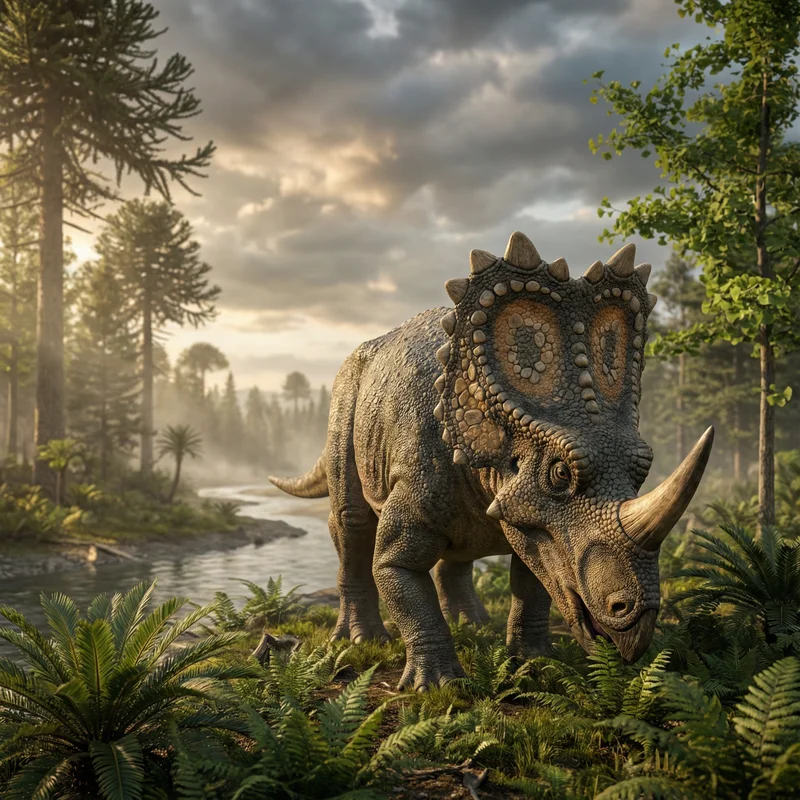 Regaliceratops
Regaliceratops · Cretaceous Period · Herbivore
 Regaliceratops
Regaliceratops · Cretaceous Period · Herbivore
 Regaliceratops
Regaliceratops · Cretaceous Period · Herbivore
 Regaliceratops
Regaliceratops · Cretaceous Period · Herbivore
 Regaliceratops
Regaliceratops · Cretaceous Period · Herbivore
🔗Related Creatures
Yanbeilong
Yanbeilong ultimus
Zuniceratops
Zuniceratops christopheri
Hadrosaurus
Hadrosaurus foulkii
Parasaurolophus
Parasaurolophus walkeri
Minmi
Minmi paravertebra
Sauropelta
Sauropelta edwardsorum
Styracosaurus
Styracosaurus albertensis
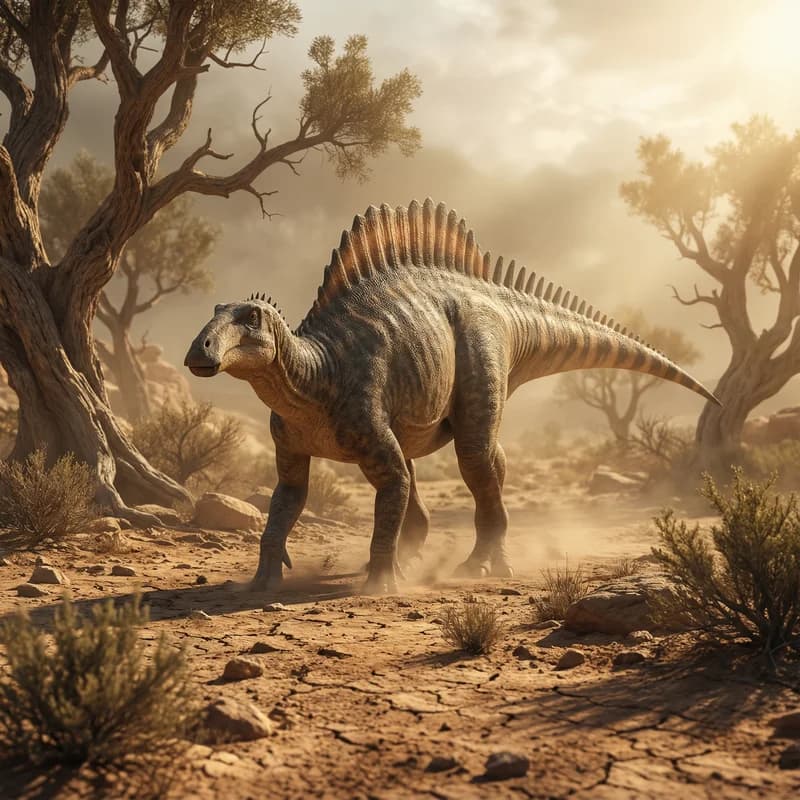
Ouranosaurus
Ouranosaurus nigeriensis