Albertosaurus
Cretaceous Period Carnivore Creature Type
Albertosaurus sarcophagus
Scientific Name: "Alberta (Canadian province) + Greek sauros (lizard) = 'Alberta lizard'; species name sarcophagus from Greek sarx (flesh) + phagein (to eat) = 'flesh-eater'"
Local Name: Albertosaurus
Physical Characteristics
Discovery
Habitat
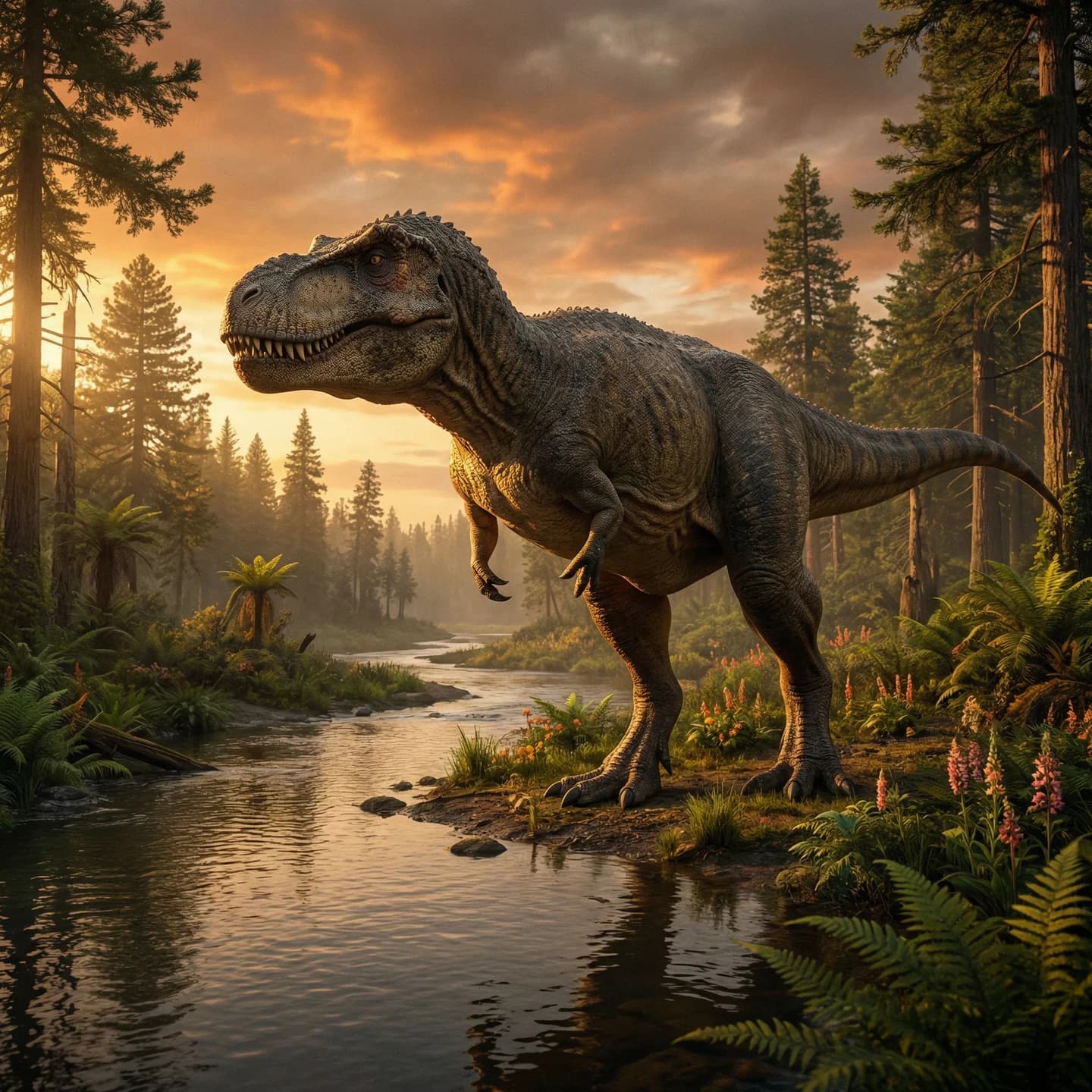
Albertosaurus sarcophagus Osborn, 1905 is a large tyrannosaurid theropod dinosaur from the early Maastrichtian stage of the Late Cretaceous (approximately 71–68 Ma), known primarily from the upper Horseshoe Canyon Formation in what is now the province of Alberta, western Canada. The generic name Albertosaurus combines "Alberta"—the newly established Canadian province in which the first fossils were found—with the Greek sauros (lizard), while the specific epithet sarcophagus derives from the Ancient Greek sarkophagos (σαρκοφάγος), meaning "flesh-eating," sharing its etymology with the English word for a stone coffin (Osborn, 1905). The holotype, a partial skull catalogued as CMN 5600, was collected on June 9, 1884, by geologist Joseph Burr Tyrrell during a Geological Survey of Canada expedition along the Red Deer River—a chance discovery made while prospecting for coal that would ultimately help establish one of the world's great dinosaur fossil regions.
As a member of the Tyrannosauridae, Albertosaurus was a bipedal predator characterized by a massive skull, powerful jaws armed with dozens of banana-shaped teeth, tiny two-fingered forelimbs, and long, muscular hindlimbs. Typical adults measured 8–9 m (26–30 ft) in length, stood approximately 3–3.4 m at the hip, and weighed between 1.7 and 3.0 metric tonnes, making them substantially smaller than the more famous Tyrannosaurus rex but still formidable apex predators in their ecosystem (Russell, 1970; Christiansen & Fariña, 2004; Campione et al., 2014; Paul, 2016). Since the initial discovery, fossils of more than 30 individuals have been recovered, providing scientists with an unusually detailed knowledge of Albertosaurus anatomy, ontogeny, and population biology—a level of understanding rarely achieved for large theropods.
Perhaps the most remarkable aspect of the Albertosaurus fossil record is the Dry Island bonebed, first discovered by Barnum Brown in 1910 and rediscovered by Philip J. Currie in 1997. This single locality has yielded over 1,128 bones representing a minimum of 12–26 individuals of various ages, constituting the largest known concentration of large Cretaceous theropod fossils anywhere in the world (Eberth & Currie, 2010). This extraordinary assemblage has fueled vigorous debate about gregarious behavior in large theropods—whether these animals lived and hunted in groups—and has served as a foundational dataset for studies of tyrannosaur growth rates, life history, and population dynamics (Erickson et al., 2006).
Overview
Name and Etymology
The genus name Albertosaurus was coined by Henry Fairfield Osborn in 1905, honoring the Canadian province of Alberta (itself established that same year) where the fossils were found, combined with the Greek suffix -sauros (lizard), the most common ending in dinosaur names. The species epithet sarcophagus comes from the Ancient Greek sarx (σαρξ, "flesh") and phagein (φαγεῖν, "to eat"), literally meaning "flesh-eater." This word shares its root with the English term sarcophagus (a stone coffin), as ancient Greeks believed a type of limestone could consume the flesh of the dead placed within it. Osborn named Albertosaurus in a brief one-page note appended to the end of his landmark 1905 paper describing Tyrannosaurus rex—making A. sarcophagus something of a footnote to the most famous dinosaur name ever coined (Osborn, 1905).
Taxonomic Status
Albertosaurus is classified within Tyrannosauridae, subfamily Albertosaurinae, of which it is the type genus. Its closest known relative is the slightly older Gorgosaurus libratus Lambe, 1914, from the Campanian-aged Dinosaur Park Formation. The holotype CMN 5600 is a damaged partial skull, and concerns arose by the early 21st century that Albertosaurus might be a nomen dubium (a name of doubtful application) because other fossils could not be reliably referred to it based on the fragmentary type material. However, Carr (2010) demonstrated that the holotype, the paratype CMN 5601, and comparable later finds all share a unique autapomorphy—an enlarged pneumatic opening in the posterior rim of the lateral surface of the palatine bone—establishing Albertosaurus as a valid and diagnosable taxon.
Key Significance
Albertosaurus sarcophagus stands as one of the most informative tyrannosaur species for understanding large theropod biology. Its abundant fossil record, spanning multiple ontogenetic stages from 2-year-old juveniles to 28-year-old adults, has enabled unparalleled studies of tyrannosaur growth, mortality, and potential social behavior.
Age, Stratigraphy, and Depositional Environment
Temporal Range
The confirmed temporal range of A. sarcophagus is the early Maastrichtian, approximately 71–68 Ma, based on stratigraphic, biostratigraphic, and paleomagnetic data from the upper Horseshoe Canyon Formation (Eberth & Currie, 2010; Eberth, 2005). Some Campanian records exist for the genus Albertosaurus, but these represent uncertain referrals ("cf. Albertosaurus sp.") and have not been confirmed as A. sarcophagus.
Formation and Lithology
Nearly all definitive A. sarcophagus fossils come from the upper portion of the Horseshoe Canyon Formation in southern Alberta. This formation consists of deltaic and fluvial deposits of interbedded sandstone, siltstone, mudstone, shale, and coal, reflecting deposition in shallow-marine, estuarine, lower coastal plain, and upper coastal plain environments (Eberth, 2005; Weblex Canada). The Dry Island bonebed occurs within unit 4 of the formation, in a predominantly siltstone-dominated interval (Eberth & Currie, 2010).
Paleoenvironment
The upper Horseshoe Canyon Formation records a dynamic coastal landscape shaped by the retreat of the Western Interior Seaway. Immediately underlying the formation is the Bearpaw Shale, a marine unit representing a portion of the seaway. As sea levels dropped and the climate cooled toward the end of the Cretaceous, land previously submerged was exposed, though the seaway periodically re-advanced. This produced a diverse array of environments—offshore and nearshore marine habitats, lagoons, estuaries, tidal flats, and extensive peat swamps (represented by numerous coal seams). Most Albertosaurus fossils were deposited in the deltas and floodplains of large rivers during the later portion of Horseshoe Canyon deposition (Eberth, 2005). Although the paleolatitude was high (~64°N based on PBDB data), the climate was warmer than present-day Alberta, though it was relatively cool by Late Cretaceous standards—a "cool-climate" assemblage (Eberth et al., 2010).
Specimens and Diagnostic Features
Holotype and Key Specimens
The holotype CMN 5600 is a partial skull collected on June 9, 1884, by Joseph Burr Tyrrell from a Horseshoe Canyon Formation outcrop along the Red Deer River near present-day Drumheller, Alberta. The paratype CMN 5601, a smaller incomplete skull with associated skeletal elements, was found nearby by Thomas Chesmer Weston in 1889. Both are housed in the Canadian Museum of Nature in Ottawa (Tanke & Currie, 2010).
| Specimen | Locality / Formation | Composition | Notes |
|---|---|---|---|
| CMN 5600 (holotype) | Red Deer River, Horseshoe Canyon Fm. | Partial skull (maxillae, jugals, etc.) | Collected 1884 by Tyrrell |
| CMN 5601 (paratype) | Nearby locality, Horseshoe Canyon Fm. | Smaller incomplete skull + partial skeleton | Collected 1889 by Weston |
| ROM 807 | Red Deer River | Partial skeleton lacking skull | Parks, 1928; A. arctunguis, now synonymized |
| Dry Island bonebed (multiple) | Dry Island Buffalo Jump PP | Min. 12–26 individuals, 1,128+ bones | Brown 1910 discovery; Currie 1997 rediscovery |
| RTMP 81.010.001 | Alberta | Skeleton | Found 1978 by Stefanuk |
| RTMP 85.098.001 | Alberta | Skeleton | Found 1985 by Stefanuk |
| AMNH 5222 | Red Deer River, Tolman Bridge | Fragmentary partial skull | Brown, 1911 |
Diagnosis
The autapomorphy established by Carr (2010)—an enlarged pneumatic opening in the posterior margin of the lateral surface of the palatine bone—distinguishes Albertosaurus from all other tyrannosaurids and confirms the validity of the taxon. More broadly, Albertosaurus and its sister taxon Gorgosaurus share albertosaurine features including a more gracile build, proportionally smaller skulls, and proportionally longer tibiae and metatarsals compared to tyrannosaurines.
Limitations of the Type Material
The holotype CMN 5600 is a significantly damaged partial skull, which historically made confident referral of other specimens difficult. This problem was resolved by Carr's (2010) identification of the palatine autapomorphy, but the holotype itself remains far from complete.
Morphology and Functional Anatomy
Body Size and Mass
Adult Albertosaurus typically measured 8–9 m in total length (Russell, 1970; Holtz, 2004; Paul, 2016), with the oldest known individual from the Dry Island bonebed (~28 years old) estimated at over 10 m (Erickson et al., 2006). Hip height was approximately 3–3.4 m. Body mass estimates vary depending on the method used:
| Study | Method | Mass estimate |
|---|---|---|
| Christiansen & Farina (2004) | Limb bone regression | ~1,488–2,626 kg |
| Erickson et al. (2006) | Histology-based growth curve | ~1,300 kg (adult minimum) |
| Campione et al. (2014) | Biped-to-quadruped stylopodial conversion | ~1,743 kg |
| Paul (2016) | Volumetric reconstruction | ~2,000–3,000 kg |
A consensus range of approximately 1.7–3.0 tonnes is widely accepted for typical adults, with considerable variation depending on individual size and estimation methodology.
Skull and Dentition
The skull was massive, perched on a muscular, short, S-shaped neck, reaching about 1 m in length in the largest adults (Currie, 2003b). Large fenestrae (openings) in the skull reduced its overall weight while providing space for jaw muscle attachment sites and sensory organs. The jaws contained a combined total of 58 or more banana-shaped teeth—fewer than Gorgosaurus (62) but within the range typical of tyrannosaurids. The premaxillary teeth (four per side) were smaller, more closely packed, and D-shaped in cross section, differing from the larger maxillary and dentary teeth. Maximum bite force was estimated at approximately 3,413 Newtons at the posterior teeth. Short bony crests above the eyes may have been brightly colored in life and potentially used in courtship displays.
Abler (2001) demonstrated that the serrations (denticles) on Albertosaurus teeth terminate in rounded voids called ampullae, which distribute stress during feeding and reduce the risk of crack propagation through the tooth—an engineering solution analogous to the technique of drilling holes to arrest crack growth in aircraft surfaces.
Limbs and Locomotion
Albertosaurus was a bipedal predator that balanced its heavy head and torso with a long, muscular tail comprising approximately 48% of total body length (Royal Tyrrell Museum). The forelimbs were extremely small relative to body size and retained only two functional fingers with curved claws. The hindlimbs were proportionally longer than those of tyrannosaurines, with elongated tibiae and metatarsals, suggesting a greater emphasis on cursorial ability. Thulborn (1982) estimated walking speeds of 14–21 km/h for adults, while younger, lighter individuals were likely capable of considerably faster running (Currie, 1998). Claims of top speeds of 40–50 km/h that appear in popular media likely refer to theoretical maximums for subadults or juveniles; the actual running speed of full-grown adults remains debated.
Integument
Two skin impressions are known for Albertosaurus (Bell et al., 2017). One patch, found near gastralic ribs (and thus from the belly region), shows pebbly scales that gradually become larger and somewhat hexagonal in shape, with two larger "feature scales" spaced 4.5 cm apart. This makes Albertosaurus, along with Carnotaurus, one of only two theropods with preserved feature scales. A second impression from an unknown body region shows small, diamond-shaped scales arranged in rows. No direct evidence of feathers has been found for Albertosaurus.
Diet and Ecology
Feeding Behavior
Albertosaurus was unambiguously a macropredator, equipped with powerful jaws and robust, recurved teeth adapted for seizing and processing large prey. The most abundant herbivorous dinosaurs in the Horseshoe Canyon ecosystem were hadrosaurs (Edmontosaurus, Saurolophus, Hypacrosaurus), which likely constituted the primary prey. Ceratopsians and ornithomimids were also common potential food sources.
Evidence of intraspecific feeding (cannibalism) was reported by Coppock & Currie (2024), who identified tooth traces on the medial surface of an albertosaurine pubis from the Danek Bonebed. The absence of healing indicates these were post-mortem feeding marks, representing the first direct evidence of cannibalism in Albertosaurus.
Ecological Role
Adult Albertosaurus occupied the apex predator niche in the Horseshoe Canyon ecosystem. Subadults and juveniles may have filled intermediate predatory niches between the enormous adults and the much smaller contemporary theropods (troodontids, dromaeosaurids, caenagnathids), which were two orders of magnitude lighter in body mass (Holtz, 2004). This ontogenetic niche partitioning parallels the life history of modern Komodo dragons, which transition from small insectivores as hatchlings to dominant predators as adults.
Growth and Life History
Bone histology studies of the multi-age Dry Island bonebed assemblage have allowed remarkably detailed reconstruction of the Albertosaurus growth curve (Erickson et al., 2006). The youngest known individual was approximately 2 years old, weighing about 50 kg and measuring slightly over 2 m. The largest individual was approximately 28 years old and exceeded 10 m in length. Growth followed an S-shaped (sigmoidal) curve, with the most rapid phase occurring between ages 12 and 16, during which the animal gained approximately 122 kg per year (calibrated to an adult mass of ~1.3 tonnes). This rate is similar to comparably sized tyrannosaurs but roughly one-fifth the peak growth rate of Tyrannosaurus rex (601 kg/year). Sexual maturity appears to have been reached at approximately 14–16 years, coinciding with the end of the rapid growth phase, though growth continued slowly throughout life.
Juvenile Albertosaurus fossils are rare relative to adults, which may reflect not merely preservational bias but actual low juvenile mortality rates—after just two years, juveniles were already larger than any other predator in their environment except adult Albertosaurus (Erickson et al., 2006). Mortality rates increased at approximately age 12 (possibly due to the physiological demands of rapid growth), then doubled again with sexual maturity (ages 14–16), likely due to the stresses of reproduction, intraspecific competition, and senescence. This mortality pattern closely parallels that of modern large mammals such as elephants and African buffalo.
Social Behavior
The Dry Island Bonebed
The Dry Island bonebed (Dry Island Buffalo Jump Provincial Park), first discovered by Barnum Brown in 1910 and rediscovered by Philip J. Currie in 1997, has yielded over 1,128 bones from a minimum of 12 individuals (based on unrepeatable skeletal elements) to 26 individuals (when mirrored elements differing in size due to ontogeny are counted) (Eberth & Currie, 2010). This is the largest known assemblage of large Cretaceous theropod fossils worldwide.
The age structure of the assemblage includes approximately 1 very old adult, 8 adults aged 17–23, 7 subadults in the rapid growth phase (ages 12–16), and 6 juveniles aged 2–11 (Erickson et al., 2006). Currie (1998, 2010) argued that the near-absence of herbivore remains and the similar taphonomic condition of the individuals indicate a simultaneous death event rather than a predator trap, and he interpreted this as evidence for gregarious (group-living) behavior. He further hypothesized that the fleet-footed younger individuals may have served as drivers, chasing prey toward the larger, more powerful but slower adults in a cooperative hunting strategy.
Skepticism and Alternative Hypotheses
Other researchers have proposed alternative explanations, including drought-driven or flood-driven aggregation at a diminishing resource, or Komodo dragon-style carcass mobbing, in which aggressive competition at a food source leads to predator deaths and even cannibalism (Erickson et al., 2006; Roach & Brinkman, 2007). Currie himself acknowledged in 2010 that other causes, such as slowly rising flood waters, could not be ruled out. Therefore, while gregarious behavior in Albertosaurus is a well-supported hypothesis, it remains unconfirmed.
Distribution and Paleogeography
Geographic Range
Confirmed A. sarcophagus fossils are restricted to the upper Horseshoe Canyon Formation of Alberta, Canada, with the major localities concentrated along the Red Deer River valley. Fossils referred to the genus Albertosaurus (but not necessarily to A. sarcophagus) have been reported from the U.S. states of Montana, New Mexico, Wyoming, and Missouri, though their generic assignment is considered doubtful (Holtz, 2004). Two specimens from Mexico (Corral de Enmedio and Packard Formations, Sonora) have been reported as "cf. Albertosaurus sp." (Sullivan & Lucas, 2006).
Paleocoordinates and Paleogeography
Paleobiology Database (PBDB) paleocoordinate data place the holotype locality at approximately 64°N paleolatitude and 68°W paleolongitude during the early Maastrichtian. This region lay on the western landmass of Laramidia, on the coastal plain exposed by the regression of the Western Interior Seaway. Despite the high paleolatitude (comparable to modern Iceland), the global climate was substantially warmer than today, though the Horseshoe Canyon interval represents a relatively cool phase within the Late Cretaceous.
Phylogeny and Taxonomic Debates
Position within Tyrannosauridae
Albertosaurus is the type genus of Albertosaurinae, one of two subfamilies within Tyrannosauridae (the other being Tyrannosaurinae). Phylogenetic analyses, including those by Currie (2003), Loewen et al. (2013), and Brusatte et al. (2016), consistently recover Albertosaurus and Gorgosaurus as sister taxa forming Albertosaurinae, which is in turn sister to Tyrannosaurinae (including Daspletosaurus, Teratophoneus, Bistahieversor, Lythronax, Tyrannosaurus, and Tarbosaurus). Albertosaurines are distinguished from tyrannosaurines by their more gracile build, proportionally smaller skulls, and longer lower limb elements (tibiae and metatarsals).
Relationship with Gorgosaurus
Russell (1970) synonymized Gorgosaurus with Albertosaurus, renaming G. libratus as Albertosaurus libratus. However, Currie (2003) conducted detailed skull comparisons and identified consistent differences in periorbital osteology, basitubera width, and tooth count, recommending that the two genera be maintained separately—noting that the differences between Albertosaurus and Gorgosaurus are comparable to those between Daspletosaurus and Tyrannosaurus, which are universally treated as separate genera. Most subsequent workers have followed Currie's recommendation (Holtz, 2004; Loewen et al., 2013), though some (e.g., Carr et al., 2005) continue to treat them as congeneric. Temporally, the two are well separated: Gorgosaurus dates to approximately 77–74.5 Ma (Campanian), while Albertosaurus dates to approximately 71–68 Ma (early Maastrichtian).
Reconstruction and Uncertainty
Established Facts
The following are firmly supported by fossil evidence: Albertosaurus was a large, bipedal tyrannosaurid theropod with a massive skull (~1 m), 58+ banana-shaped teeth, tiny two-fingered forelimbs, proportionally long hindlimbs, and scaly skin with pebbly to hexagonal scales including rare feature scales.
Well-Supported Interpretations
Body mass of approximately 1.7–3 tonnes, apex predator status, and a diet primarily consisting of hadrosaurs are well supported by multiple lines of evidence but lack certain direct confirmation (e.g., no preserved stomach contents). The Dry Island bonebed's reflection of social behavior is well-supported but not conclusive.
Hypotheses Requiring Further Evidence
Cooperative pack hunting, the role of juveniles as drivers in group hunts, and adult running speeds in excess of ~30 km/h remain speculative. The popular characterization of Albertosaurus as a direct ancestor of Tyrannosaurus rex is not supported by phylogenetic analyses—Albertosaurus belongs to Albertosaurinae, while T. rex belongs to Tyrannosaurinae.
Popular Media vs. Science
Popular sources often cite an Albertosaurus body mass of 2–2.5 tonnes, but published estimates range from ~1.3 tonnes (Erickson et al., 2006, minimum baseline) to 3 tonnes (Paul, 2016). Similarly, speeds of 40–50 km/h frequently attributed to the species likely apply to subadults or juveniles at most; conservative walking speed estimates for adults are 14–21 km/h (Thulborn, 1982).
Comparison with Related Taxa
| Taxon | Age | Length | Mass | Subfamily | Notes |
|---|---|---|---|---|---|
| Albertosaurus sarcophagus | ~71–68 Ma | 8–9 m | 1.7–3.0 t | Albertosaurinae | Horseshoe Canyon Fm., Alberta |
| Gorgosaurus libratus | ~77–74.5 Ma | 8–9 m | 2.0–2.5 t | Albertosaurinae | Dinosaur Park Fm., Alberta/Montana |
| Daspletosaurus torosus | ~77–74 Ma | 8–9 m | 2.5–3.8 t | Tyrannosaurinae | Dinosaur Park Fm., Alberta |
| Tyrannosaurus rex | ~68–66 Ma | 11–12.3 m | 8–14 t | Tyrannosaurinae | Hell Creek Fm. and equivalents |
| Tarbosaurus bataar | ~70–68 Ma | 10–12 m | 5–7 t | Tyrannosaurinae | Nemegt Fm., Mongolia |
Albertosaurus closely resembles Gorgosaurus in size and proportions but appeared several million years later and is its sister taxon within Albertosaurinae. It belongs to the same family as T. rex but in a different subfamily, with a body mass roughly 3–5 times smaller.
Fun Facts
FAQ
📚References
- Osborn, H.F. (1905). "Tyrannosaurus and other Cretaceous carnivorous dinosaurs." Bulletin of the American Museum of Natural History, 21: 259–265. doi:10.5281/zenodo.1038222
- Russell, D.A. (1970). "Tyrannosaurs from the Late Cretaceous of western Canada." National Museum of Natural Sciences Publications in Paleontology, 1: 1–34.
- Thulborn, R.A. (1982). "Speeds and gaits of dinosaurs." Palaeogeography, Palaeoclimatology, Palaeoecology, 38(3–4): 227–256. doi:10.1016/0031-0182(82)90005-0
- Currie, P.J. (1998). "Possible evidence of gregarious behaviour in tyrannosaurids." Gaia, 15: 271–277.
- Abler, W.L. (2001). "A kerf-and-drill model of tyrannosaur tooth serrations." In Tanke, D.H.; Carpenter, K. (eds.), Mesozoic Vertebrate Life. Indiana University Press, pp. 84–89.
- Currie, P.J. (2003). "Cranial anatomy of tyrannosaurids from the Late Cretaceous of Alberta." Acta Palaeontologica Polonica, 48(2): 191–226.
- Currie, P.J. (2003). "Allometric growth in tyrannosaurids (Dinosauria: Theropoda) from the Upper Cretaceous of North America and Asia." Canadian Journal of Earth Sciences, 40(4): 651–665. doi:10.1139/e02-083
- Christiansen, P.; Fariña, R.A. (2004). "Mass prediction in theropod dinosaurs." Historical Biology, 16(2–4): 85–92. doi:10.1080/08912960412331284313
- Holtz, T.R. (2004). "Tyrannosauroidea." In Weishampel, D.B.; Dodson, P.; Osmólska, H. (eds.), The Dinosauria (2nd ed.). University of California Press, pp. 111–136.
- Erickson, G.M.; Currie, P.J.; Inouye, B.D.; Wynn, A.A. (2006). "Tyrannosaur life tables: an example of nonavian dinosaur population biology." Science, 313(5784): 213–217. doi:10.1126/science.1125721
- Tanke, D.H.; Currie, P.J. (2010). "A history of Albertosaurus discoveries in Alberta, Canada." Canadian Journal of Earth Sciences, 47(9): 1197–1211. doi:10.1139/e10-057
- Carr, T.D. (2010). "A taxonomic assessment of the type series of Albertosaurus sarcophagus and the identity of Tyrannosauridae in the Albertosaurus bonebed from the Horseshoe Canyon Formation." Canadian Journal of Earth Sciences, 47(9): 1213–1226. doi:10.1139/e10-035
- Eberth, D.A.; Currie, P.J. (2010). "Stratigraphy, sedimentology, and taphonomy of the Albertosaurus bonebed (upper Horseshoe Canyon Formation; Maastrichtian), southern Alberta, Canada." Canadian Journal of Earth Sciences, 47(9): 1119–1143. doi:10.1139/e10-045
- Currie, P.J.; Eberth, D.A. (2010). "On gregarious behavior in Albertosaurus." Canadian Journal of Earth Sciences, 47(9): 1277–1289. doi:10.1139/E10-072
- Loewen, M.A.; Irmis, R.B.; Sertich, J.J.W.; Currie, P.J.; Sampson, S.D. (2013). "Tyrant Dinosaur Evolution Tracks the Rise and Fall of Late Cretaceous Oceans." PLoS ONE, 8(11): e79420. doi:10.1371/journal.pone.0079420
- Campione, N.E.; Evans, D.C.; Brown, C.M.; Carrano, M.T. (2014). "Body mass estimation in non-avian bipeds using a theoretical conversion to quadruped stylopodial proportions." Methods in Ecology and Evolution, 5(9): 913–923. doi:10.1111/2041-210X.12226
- Paul, G.S. (2016). The Princeton Field Guide to Dinosaurs (2nd ed.). Princeton University Press, p. 112.
- Bell, P.R.; Campione, N.E.; Persons, W.S.; Currie, P.J.; Larson, P.L.; Tanke, D.H.; Bakker, R.T. (2017). "Tyrannosauroid integument reveals conflicting patterns of gigantism and feather evolution." Biology Letters, 13(6): 20170092. doi:10.1098/rsbl.2017.0092
- Parks, W.A. (1928). "Albertosaurus arctunguis, a new species of therapodous dinosaur from the Edmonton Formation of Alberta." University of Toronto Studies, Geological Series, 25: 1–42.
- Coppock, B.D.; Currie, P.J. (2024). "Additional Albertosaurus sarcophagus (Tyrannosauridae: Albertosaurinae) material from the Danek Bonebed of Edmonton, Alberta, Canada, with evidence of cannibalism." Canadian Journal of Earth Sciences, 61(3): 401–412. doi:10.1139/cjes-2023-0055
Gallery
5 images Albertosaurus
Albertosaurus · Cretaceous Period · Carnivore
 Albertosaurus
Albertosaurus · Cretaceous Period · Carnivore
 Albertosaurus
Albertosaurus · Cretaceous Period · Carnivore
 Albertosaurus
Albertosaurus · Cretaceous Period · Carnivore
 Albertosaurus
Albertosaurus · Cretaceous Period · Carnivore
🔗Related Creatures
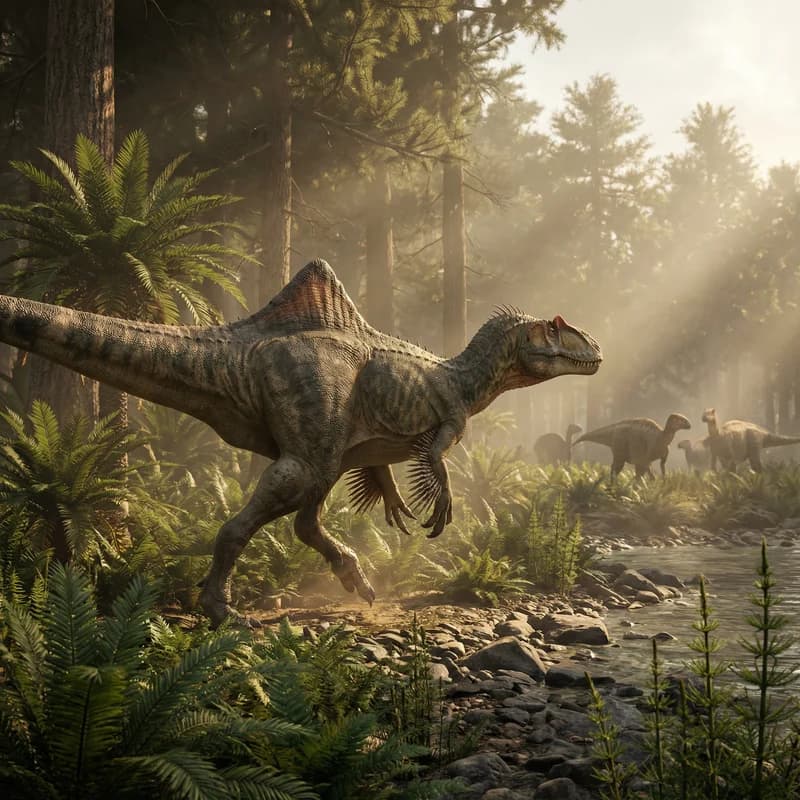
Concavenator
Concavenator corcovatus
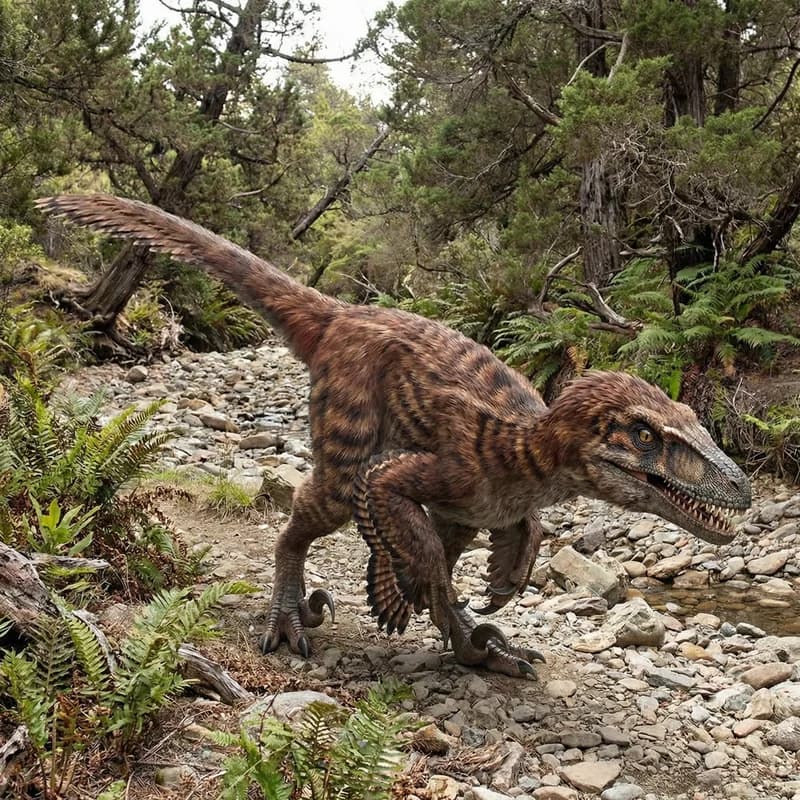
Dromaeosaurus
Dromaeosaurus albertensis

Deinonychus
Deinonychus antirrhopus
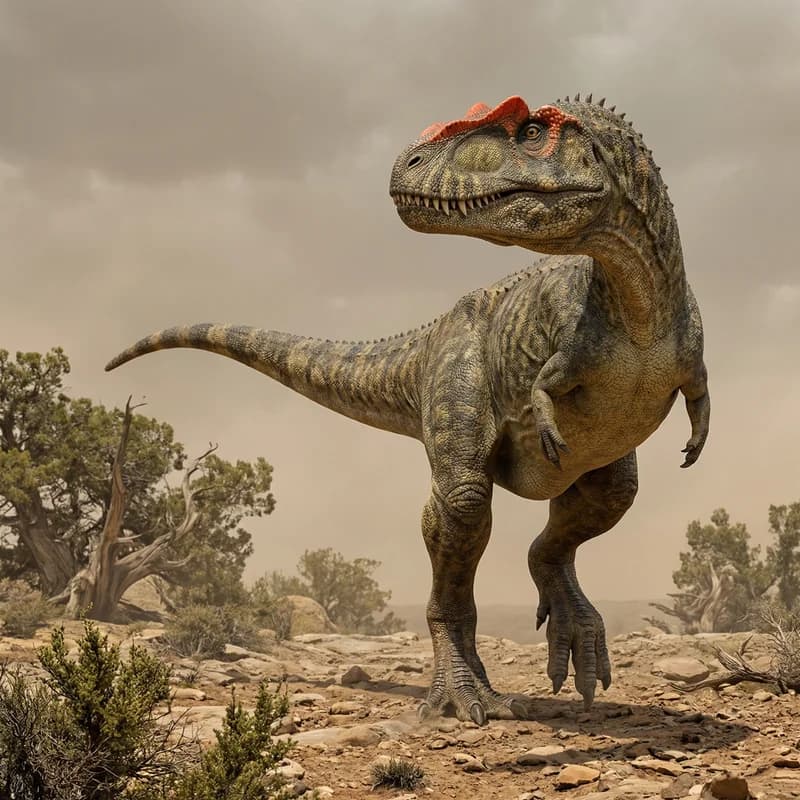
Abelisaurus
Abelisaurus comahuensis

Velociraptor
Velociraptor mongoliensis
Sinosauropteryx
Sinosauropteryx prima

Tarbosaurus
Tarbosaurus bataar
Majungasaurus
Majungasaurus crenatissimus