Deinonychus
Cretaceous Period Carnivore Creature Type
Deinonychus antirrhopus
Scientific Name: "deinos (terrible, Greek) + onyx (claw, Greek) = 'terrible claw'; antirrhopus (counterbalancing, Greek) = refers to the stiffened tail's balancing function"
Local Name: Deinonychus
Physical Characteristics
Discovery
Habitat

Deinonychus (Deinonychus antirrhopus Ostrom, 1969) is a medium-to-large dromaeosaurid theropod dinosaur from the Early Cretaceous (late Aptian to early Albian, approximately 115–108 Ma) of North America. The genus name Deinonychus derives from the Ancient Greek δεινός (deinos, 'terrible') and ὄνυξ (onyx, 'claw'), meaning 'terrible claw', in reference to the distinctive sickle-shaped talon on the second toe of each hind foot. The specific epithet antirrhopus, from Greek ἀντίρροπος, means 'counterbalancing', reflecting Ostrom's interpretation that the stiffened tail served as a dynamic counterbalance during locomotion (Ostrom, 1969).
Fossils have been recovered primarily from the Cloverly Formation of Montana and Wyoming and the roughly contemporaneous Antlers Formation of Oklahoma, with teeth tentatively assigned to Deinonychus also known from the Arundel Clay Facies of Maryland. Adults are estimated at approximately 3.3–3.4 m in total length, 0.87 m at the hip, and 60–73 kg in body mass (Paul, 1988; 2016), though a higher estimate of approximately 100 kg has been proposed based on femoral and humeral circumference (Campione et al., 2014).
Deinonychus is widely regarded as the single most important dinosaur discovery of the mid-20th century and the catalyst of the 'Dinosaur Renaissance'. John Ostrom's detailed 1969 monograph overturned the prevailing image of dinosaurs as sluggish, cold-blooded reptiles by presenting anatomical evidence for an active, agile, warm-blooded predator. Ostrom subsequently noted the striking similarity between the forelimbs of Deinonychus and those of Archaeopteryx, reviving the hypothesis that birds descended from theropod dinosaurs—an idea now almost universally accepted (Ostrom, 1969; 1976b).
Overview
Name and Etymology
The genus name Deinonychus is a compound of the Ancient Greek δεινός (deinós, 'terrible') and ὄνυξ (ónyx, 'claw'; genitive ὄνυχος ónykhos), meaning 'terrible claw'. Ostrom chose this name to emphasize the large sickle-shaped ungual on the second pedal digit. The specific epithet antirrhopus, from Greek ἀντίρροπος, means 'counterbalancing' or 'counterpoised'. This reflects Ostrom's observation that the ossified tendons and hyper-elongated prezygapophyses stiffening the tail would have served as a dynamic counterbalance during running (Ostrom, 1969).
Taxonomic Status and Validity
Deinonychus antirrhopus is currently recognized as a valid monospecific genus. Gregory S. Paul (1988) proposed reclassifying it as Velociraptor antirrhopus by synonymizing Deinonychus with Velociraptor, but this view was not adopted by the majority of researchers (Smithsonian Magazine, 2008). In recent phylogenetic analyses, Deinonychus is placed within Eudromaeosauria of the family Dromaeosauridae, though its subfamilial position fluctuates between Velociraptorinae and Dromaeosaurinae depending on the study. Turner et al. (2012), the 2021 Kansaignathus study (Averianov & Lopatin, 2021), and Tse, Miller & Pittman (2024) recovered it as a velociraptorine, while DePalma et al. (2015) and some 2022 analyses placed it as a basal dromaeosaurine.
One-Line Summary
Deinonychus, with its iconic sickle claw, stiffened tail, and bird-like anatomy, was the pivotal taxon that sparked the Dinosaur Renaissance and reshaped our understanding of dinosaurs as active, feathered predators.
Age, Stratigraphy, and Depositional Setting
Temporal Range and Basis
Deinonychus lived from the late Aptian to the early Albian stages of the Early Cretaceous, approximately 115–108 Ma. This age is constrained by radiometric dating and biostratigraphic data from the Cloverly Formation (Chen & Lubin, 1997; Burton et al., 2006). The Antlers Formation is correlated to a similar Aptian–Albian age, while teeth from the Arundel Clay Facies of Maryland are considered mid-Aptian.
Formations and Lithology
The principal formations yielding Deinonychus fossils are summarized below:
| Formation | Location | Lithology | Age |
|---|---|---|---|
| Cloverly Formation | Montana, Wyoming | Sandstone, mudstone, siltstone | Late Aptian–early Albian |
| Antlers Formation | Oklahoma | Sandstone, shale | Aptian–Albian |
| Arundel Clay Facies | Maryland | Clay | Mid-Aptian (teeth only) |
The Cloverly Formation is subdivided into the lower Pryor Conglomerate Member, the middle Little Sheep Mudstone Member, and the upper Himes Member. Deinonychus fossils are recovered primarily from the middle and upper members.
Paleoenvironment
Sedimentary facies analysis indicates that Deinonychus inhabited floodplain and swamp-like environments. The upper Cloverly Formation represents a coastal plain setting near the Sevier Mountains to the west, coinciding with the initial transgression of the Western Interior Seaway. The climate was warm and humid, likely subtropical, with tropical/subtropical forests, deltas, and lagoons. The associated vertebrate fauna includes the ornithopod Tenontosaurus, the ankylosaur Sauropelta, the small ornithopod Zephyrosaurus, the small theropod Microvenator, turtles (Naomichelys, Glyptops), and the lungfish Ceratodus.
Specimens and Diagnostic Features
Holotype and Key Specimens
The holotype (YPM 5205) is housed at the Yale Peabody Museum of Natural History and consists of a complete left foot and a partial right foot—the only elements that could be definitively assigned to a single individual from over 1,000 recovered bone fragments representing at least three individuals (Ostrom, 1969). The remaining specimens were catalogued in 50 separate entries at the Peabody Museum.
The very first Deinonychus fossils were actually found in 1931 by Barnum Brown near Billings, Montana, during an expedition focused on Tenontosaurus. Brown informally named the animal "Daptosaurus agilis" but never completed a formal description. His specimen (AMNH 3015) was later recognized as the same species by Ostrom, who published the formal naming in February 1969 and a comprehensive monograph in July 1969.
Key specimens:
| Specimen | Institution | Composition | Notes |
|---|---|---|---|
| YPM 5205 | Peabody Museum | Holotype; both feet | Ostrom 1969 original description |
| AMNH 3015 | American Museum of Natural History | Partial skeleton | 1931 Barnum Brown; eggshell found in matrix in 2000 |
| MCZ 4371 | Harvard Museum of Comparative Zoology | Near-complete skeleton (femora, pubes, sacrum) | 1974, Steven Orzack/Farish Jenkins expedition |
| MCZ 8791 | Harvard Museum of Comparative Zoology | Immature individual | Ontogenetic study (Parsons & Parsons, 2015); estimated 1–2 years old |
Diagnosis
Key diagnostic features distinguishing Deinonychus from other dromaeosaurids include (Ostrom, 1969; Turner et al., 2012): a large hyperextensible sickle-shaped ungual on pedal digit II, exceeding 120 mm including the keratinous sheath in life; a more robust skull roof than Velociraptor, similar to Dromaeosaurus, with non-depressed nasals unlike Velociraptor; a very large antorbital fenestra; ossified tendons and hyper-elongated prezygapophyses stiffening the tail; and a pubis approximately equal in length to the ischium, slightly retroverted.
Limitations of the Specimen Record
The holotype consists only of foot bones. Ostrom's initial excavations lacked postorbital skull elements, femora, sacrum, furcula, and sternum. He initially misidentified the unusually shaped pubis as a coracoid (shoulder element), correcting this error in a 1974 paper (Ostrom, 1974). The 1974 discovery of MCZ 4371 finally provided well-preserved femora, pubes, and sacrum. Unprepared rock blocks from AMNH 3015 yielded gastralia (abdominal ribs) and eggshell fragments in 2000, interpreted as evidence of brooding behavior (Grellet-Tinner & Makovicky, 2006). Erickson et al. (2007) determined that this individual was 13–14 years old at death and had reached its adult growth plateau.
Morphology and Function
Body Size
Adult size estimates for Deinonychus:
| Measurement | Value | Source |
|---|---|---|
| Total length | 3.3–3.4 m | Paul (1988, 2016) |
| Hip height | 0.87 m | Paul (2016) |
| Skull length | ~410 mm | Paul (1988) |
| Body mass | 60–73 kg | Paul (1988) |
| Body mass (alternative) | ~100 kg | Campione et al. (2014) |
The discrepancy in mass estimates reflects methodological differences: Paul used volumetric models, while Campione et al. employed regression equations based on femoral and humeral circumferences.
The Sickle Claw
The most distinctive feature of Deinonychus is the large sickle-shaped claw on the second toe. The holotype YPM 5205 preserves a strongly curved ungual bone; with the keratinous sheath, the claw would have exceeded 120 mm in life (Ostrom, 1969). This claw was held retracted off the ground during walking via a hyperextension mechanism, with the animal bearing weight on only the third and fourth toes. Deinonychosaur trackways from China corroborate this interpretation (Li et al., 2008). Notably, the curvature and shape of the sickle claw varies between specimens—the 1976 specimen had a much weaker curvature than the holotype, possibly reflecting individual, sexual, or age-related variation (Ostrom, 1976).
Skull and Dentition
The skull is elongate and laterally compressed, with a particularly large antorbital fenestra. Ostrom initially reconstructed the imperfectly preserved skulls as broad and triangular, but subsequent material and three-dimensionally preserved skulls of close relatives (Maxwell & Witmer, 1996) revealed a more vaulted palate, narrower snout, and broadly flared jugals that enhanced stereoscopic vision. The jaws bore approximately 70 curved, blade-like teeth with serrations, effective for seizing and tearing prey.
Bite force estimates vary dramatically. A 2005 biomechanical study (Therrien et al.) estimated only about 15% of the bite force of a modern American alligator. In 2010, Gignac et al. analyzed Deinonychus tooth puncture marks on Tenontosaurus bones and estimated 4,100–8,200 N—exceeding living hyenas and comparable to a similarly sized alligator. However, Sakamoto (2022) used phylogenetically predicted jaw adductor muscle cross-sectional areas to estimate approximately 706 N, an order of magnitude lower than the tooth-mark-based estimate. This discrepancy may reflect the difference between an extreme maximum event (bone puncture) and typical biting force.
In 2024, Tse, Miller & Pittman combined 2D geometric morphometrics, mechanical advantage analysis, and finite element analysis to compare dromaeosaurid skulls. Deinonychus showed a relatively high temporal mechanical advantage (MA = 0.302), second only to Dromaeosaurus albertensis (MA = 0.306), indicating adaptation for powerful bites. However, its skull was relatively less resistant to bite-induced stress (MWAM strain = 579 μϵ) compared to Velociraptor mongoliensis (360 μϵ). The authors suggested that higher bite force resistance in Velociraptor may reflect greater scavenging behavior, and that Deinonychus may have fed by using neck-driven pullback movements to dismember carcasses, akin to modern varanid lizards.
Feather Reconstruction
No skin impressions or feather fossils are known directly from Deinonychus. However, phylogenetic bracketing provides strong indirect evidence. Microraptor, a geologically older and phylogenetically more basal relative within the same family, preserves complete pennaceous feathers on the arms, legs, and tail (Xu et al., 2003). Velociraptor, a geologically younger and closely related genus, bears quill knobs on the ulna, directly indicating the presence of modern-type wing feathers (Turner et al., 2007). Since Deinonychus is phylogenetically bracketed between these two feathered taxa, it is widely inferred to have been feathered as well (strong hypothesis). These feathers likely served functions other than flight, such as thermoregulation, display, and brooding. Senter (2006) conducted forelimb range-of-motion studies assuming the presence of wing feathers.
Limbs and Locomotion
The hindlimbs are long and robust, with the tibia exceeding the femur in length—proportions suited for cursorial locomotion. The ankle joint has a bird-like hinge structure (mesotarsal joint). Maximum running speed has been estimated at approximately 40 km/h based on skeletal proportions, though the Natural History Museum in London notes that Deinonychus may not have been as agile as once imagined.
Bishop et al. (2021) used predictive computer simulations to reveal a previously unrecognized dynamic role for the tail in theropod locomotion. Tail lateroflexion served as a passive, physics-based mechanism for regulating angular momentum during running. This is significant for Deinonychus, whose tail was stiffened by ossified tendons, as it suggests some degree of lateral flexibility even in stiffened tails. Supportingly, a Velociraptor mongoliensis specimen (IGM 100/986) was found with its tail preserved in a lateral S-curve (Norell & Makovicky, 1999).
The forelimbs are large with three clawed digits, the first being shortest and the second longest. The wrist was flexible and suited for grasping. Ostrom noted the striking similarity of the Deinonychus forelimb to that of Archaeopteryx, which became a cornerstone of evidence for the dinosaurian origin of birds (Ostrom, 1976b).
Diet and Ecology
Feeding and Predatory Behavior
Deinonychus was carnivorous, supported by multiple lines of evidence including tooth morphology, claw structure, and close association with Tenontosaurus remains. Deinonychus teeth have been found alongside Tenontosaurus skeletons at multiple sites in both the Cloverly and Antlers formations. Isotopic analysis confirms that adult Deinonychus fed on Tenontosaurus to some extent (Frederickson et al., 2020). Powers et al. (2020) found that the Deinonychus maxilla was short and deep, resembling short-snouted canids, suggesting specialization on larger prey.
Several hypotheses address the function of the sickle claw:
The slashing hypothesis, Ostrom's (1969) original proposal, suggested the claw was used to disembowel prey. Manning et al. (2005) tested this with a hydraulic robotic replica and found that the talon produced only shallow punctures in pig carcasses, casting doubt on the slashing model. The team suggested the claw may have been more effective for climbing.
The Raptor Prey Restraint (RPR) hypothesis, proposed by Fowler et al. (2011), suggests Deinonychus hunted like modern accipitrid birds of prey—leaping onto prey, pinning it under body weight, gripping with the sickle claws, and beginning to feed while the animal was still alive. The proportions of the foot and leg closely resemble those of eagles and hawks. The feathered forelimbs may have served as flapping stabilizers for balance atop struggling prey.
The piercing and gripping hypothesis, proposed by Manning et al. (2009), suggests the claw punctured and locked into prey in a ratchet-like manner, with the curved claw tip functioning as a hook. This team also argued the claws supported a scansorial (climbing) phase in the evolution of flight.
Pack Hunting Debate
Whether Deinonychus hunted cooperatively in packs has been debated for decades. Multiple Deinonychus individuals found associated with Tenontosaurus were long cited as evidence of pack hunting (a popular interpretation since Ostrom, 1969).
However, Roach & Brinkman (2007) challenged this view, arguing that the bone distribution patterns at these sites better fit non-cooperative aggregation around a carcass, similar to modern Komodo dragons or crocodilians.
Frederickson et al. (2020) conducted stable isotope (δ¹³C) analysis of Deinonychus teeth and found that small teeth (juveniles) and large teeth (adults) had significantly different carbon isotope ratios, indicating an ontogenetic dietary shift. In modern cooperative pack hunters like wolves, juveniles and adults share similar diets. The isotopic divergence in Deinonychus therefore argues against mammalian-style cooperative pack hunting.
The current prevailing interpretation is that Deinonychus exhibited some degree of gregariousness but did not engage in the sophisticated cooperative hunting seen in wolves or African wild dogs.
Intelligence
Dromaeosaurids had relatively high encephalization quotients (EQ) among non-avian dinosaurs. Troodontids possessed the highest EQ (approximately 5.8), with dromaeosaurids ranking second (Hopson, 1980). The exact EQ of Deinonychus is uncertain due to incomplete cranial material, but based on the overall pattern for Dromaeosauridae, a relatively high intelligence is inferred (strong hypothesis). This supports the possibility of complex predatory behaviors and social interactions.
Distribution and Paleogeography
Geographic Distribution
Confirmed Deinonychus localities span multiple U.S. states: Montana and Wyoming (Cloverly Formation, most specimens), Oklahoma (Antlers Formation; Brinkman et al., 1998), and Utah. Teeth tentatively assigned to Deinonychus are also known from Maryland (Arundel Clay Facies).
Paleolatitude and Paleogeography
According to PBDB and paleomagnetic reconstructions, the Cloverly Formation localities occupied a paleolatitude of approximately 43–44°N and a paleolongitude of approximately -49 to -50°W during the Early Cretaceous. This region lay on a subtropical inland floodplain between the Sevier Orogenic belt to the west and the nascent Western Interior Seaway to the east.
Phylogeny and Systematic Debates
Position Within Dromaeosauridae
Deinonychus belongs to the family Dromaeosauridae, which along with Troodontidae forms the clade Deinonychosauria within Paraves. Eudromaeosauria, defined by Turner et al. (2012) as the least inclusive clade containing Saurornitholestes langstoni, Deinonychus antirrhopus, Velociraptor mongoliensis, and Dromaeosaurus albertensis, represents the core radiation of "true raptors".
The subfamilial position of Deinonychus remains unstable:
Under the Velociraptorinae hypothesis, Deinonychus groups with Velociraptor, Tsaagan, and Saurornitholestes as claw-specialized predators. This placement is supported by Turner et al. (2012), Averianov & Lopatin (2021), and Tse et al. (2024).
Under the Dromaeosaurinae hypothesis, Deinonychus is placed as a basal member of the robust-skulled clade alongside Dromaeosaurus, as recovered by DePalma et al. (2015) and some 2022 analyses.
This instability likely reflects the mosaic morphology of Deinonychus, which combines the broad jugals characteristic of velociraptorines with the robust skull roof typical of dromaeosaurines.
Relationship to Birds
Ostrom discovered that the forelimbs of Deinonychus were remarkably similar to those of Archaeopteryx, leading him to revive the dinosaurian origin of birds in the 1970s (Ostrom, 1976b). Today, Dromaeosauridae is recognized as one of the non-avian dinosaur groups most closely related to Aves. Anatomical features shared between dromaeosaurids (including Deinonychus) and birds—such as the furcula, semilunate carpal, and feathers—are key evidence for understanding avian evolution (Benton, 2005).
Reconstruction and Uncertainty
Confirmed, Probable, and Hypothetical
Confirmed: presence of a large sickle-shaped claw on pedal digit II; ossified tendon-stiffened tail; Early Cretaceous (~115–108 Ma) North American distribution; feeding on Tenontosaurus (tooth marks and isotope evidence).
Probable: feathered integument (phylogenetic bracketing evidence); active, agile carnivorous predator; relatively high intelligence (family-level EQ data); some degree of endothermy (eggshell/brooding evidence).
Hypothetical: cooperative pack hunting (isotope evidence argues against); exact function of sickle claw (slashing vs. RPR vs. piercing-gripping); precise maximum speed; precise bite force (706 N vs. 4,100–8,200 N debate).
Popular Media vs. Science
The 'Velociraptor' of Jurassic Park (1993) is essentially Deinonychus in size and proportions. The real Velociraptor mongoliensis was turkey-sized (about 2 m long). This confusion traces to Gregory S. Paul's (1988) proposal to synonymize Deinonychus with Velociraptor, which Michael Crichton adopted for his novel—Dr. Grant even states that "Deinonychus is now considered one of the Velociraptors". However, this reclassification was never accepted by the scientific community. The film also depicted the animals without feathers, whereas modern reconstructions universally include feathered integument. The pack-hunting scenes, while iconic, are also now viewed with skepticism in light of recent isotope research.
Comparison with Related and Contemporary Taxa
| Taxon | Age | Region | Length | Key Features |
|---|---|---|---|---|
| Deinonychus antirrhopus | 115–108 Ma | North America | 3.3–3.4 m | Large sickle claw, robust skull roof |
| Velociraptor mongoliensis | 75–71 Ma | Mongolia/China | ~2 m | Small, quill knobs confirmed, high bite stress resistance |
| Utahraptor ostrommaysi | ~126 Ma | North America | 5–7 m | Largest known dromaeosaurid |
| Microraptor zhaoianus | ~120 Ma | China | ~1 m | Four-winged, preserved feather fossils |
| Dromaeosaurus albertensis | ~76 Ma | North America | ~2 m | Robust skull, highest mechanical advantage among tested dromaeosaurids |
Fun Facts
FAQ
📚References
- Ostrom, J. H. (1969). Osteology of Deinonychus antirrhopus, an unusual theropod from the Lower Cretaceous of Montana. Bulletin of the Peabody Museum of Natural History, 30, 1–165. PDF
- Ostrom, J. H. (1969). A new theropod dinosaur from the Lower Cretaceous of Montana. Postilla, 128, 1–17.
- Ostrom, J. H. (1974). The pectoral girdle and forelimb function of Deinonychus (Reptilia: Saurischia): a correction. Postilla, 165, 1–11.
- Ostrom, J. H. (1976). On a new specimen of the Lower Cretaceous theropod dinosaur Deinonychus antirrhopus. Breviora, 439, 1–21.
- Ostrom, J. H. (1976b). Archaeopteryx and the origin of birds. Biological Journal of the Linnean Society, 8(2), 91–182.
- Turner, A. H., Makovicky, P. J., & Norell, M. A. (2012). A review of dromaeosaurid systematics and paravian phylogeny. Bulletin of the American Museum of Natural History, 371, 1–206. https://doi.org/10.1206/748.1
- Fowler, D. W., Freedman, E. A., Scannella, J. B., & Kambic, R. E. (2011). The predatory ecology of Deinonychus and the origin of flapping in birds. PLoS ONE, 6(12), e28964. https://doi.org/10.1371/journal.pone.0028964
- Frederickson, J. A., Engel, M. H., & Cifelli, R. L. (2020). Ontogenetic dietary shifts in Deinonychus antirrhopus (Theropoda; Dromaeosauridae): Insights into the ecology and social behavior of raptorial dinosaurs through stable isotope analysis. Palaeogeography, Palaeoclimatology, Palaeoecology, 552, 109780. https://doi.org/10.1016/j.palaeo.2020.109780
- Roach, B. T., & Brinkman, D. L. (2007). A reevaluation of cooperative pack hunting and gregariousness in Deinonychus antirrhopus and other nonavian theropod dinosaurs. Bulletin of the Peabody Museum of Natural History, 48(1), 103–138.
- Grellet-Tinner, G., & Makovicky, P. J. (2006). A possible egg of the dromaeosaur Deinonychus antirrhopus: phylogenetic and biological implications. Canadian Journal of Earth Sciences, 43(6), 705–719.
- Parsons, W. L., & Parsons, K. M. (2015). Morphological variations within the ontogeny of Deinonychus antirrhopus (Theropoda, Dromaeosauridae). PLoS ONE, 10(4), e0121476. https://doi.org/10.1371/journal.pone.0121476
- Paul, G. S. (1988). Predatory Dinosaurs of the World. Simon and Schuster, New York.
- Paul, G. S. (2016). The Princeton Field Guide to Dinosaurs (2nd ed.). Princeton University Press.
- Campione, N. E., Evans, D. C., Brown, C. M., & Carrano, M. T. (2014). Body mass estimation in non-avian bipeds using a theoretical conversion to quadruped stylopodial proportions. Methods in Ecology and Evolution, 5(9), 913–923.
- Manning, P. L., et al. (2009). Biomechanics of dromaeosaurid dinosaur claws: Application of X-ray microtomography, nanoindentation, and finite element analysis. The Anatomical Record, 292(9), 1397–1405.
- Gignac, P. M., Makovicky, P. J., Erickson, G. M., & Walsh, R. P. (2010). A description of Deinonychus antirrhopus bite marks and estimates of bite force using tooth indentation simulations. Journal of Vertebrate Paleontology, 30(4), 1169–1177.
- Sakamoto, M. (2022). Estimating bite force in extinct dinosaurs using phylogenetically predicted physiological cross-sectional areas of jaw adductor muscles. PeerJ, 10, e13731. https://doi.org/10.7717/peerj.13731
- Tse, Y. T., Miller, C. V., & Pittman, M. (2024). Morphological disparity and structural performance of the dromaeosaurid skull informs ecology and evolutionary history. BMC Ecology and Evolution, 24, 52. https://doi.org/10.1186/s12862-024-02222-5
- Turner, A. H., Makovicky, P. J., & Norell, M. A. (2007). Feather quill knobs in the dinosaur Velociraptor. Science, 317(5845), 1721.
- Li, R., Lockley, M. G., Makovicky, P. J., Matsukawa, M., Norell, M. A., Harris, J. D., & Liu, M. (2008). Behavioral and faunal implications of Early Cretaceous deinonychosaur trackways from China. Naturwissenschaften, 95(3), 185–191.
- DePalma, R. A., Burnham, D. A., Martin, L. D., Larson, P. L., & Bakker, R. T. (2015). The first giant raptor (Theropoda: Dromaeosauridae) from the Hell Creek Formation. Paleontological Contributions, 14, 1–16.
- Maxwell, W. D., & Witmer, L. M. (1996). New material of Deinonychus (Dinosauria, Theropoda). Journal of Vertebrate Paleontology, 16(Suppl. 3), 51A.
- Norell, M. A., & Makovicky, P. J. (1999). Important features of the dromaeosaurid skeleton II: Information from newly collected specimens of Velociraptor mongoliensis. American Museum Novitates, 3282, 1–45.
- Xu, X., Zhou, Z., Wang, X., Kuang, X., Zhang, F., & Du, X. (2003). Four-winged dinosaurs from China. Nature, 421(6921), 335–340.
- Bishop, P. J., et al. (2021). Predictive simulations of running gait reveal a critical dynamic role for the tail in bipedal dinosaur locomotion. Science Advances, 7(39), eabi7348. https://doi.org/10.1126/sciadv.abi7348
- Powers, M. J., Sullivan, C., & Currie, P. J. (2020). Divergent trends in snout morphology between Asian and North American dromaeosaurids. Palaeogeography, Palaeoclimatology, Palaeoecology, 549, 109726.
- Averianov, A. O., & Lopatin, A. V. (2021). A new theropod dinosaur (Theropoda, Dromaeosauridae) from the Late Cretaceous of Tajikistan. Doklady Earth Sciences, 499, 570–574.
- Brinkman, D. L., Cifelli, R. L., & Czaplewski, N. J. (1998). First occurrence of Deinonychus antirrhopus (Dinosauria: Theropoda) from the Antlers Formation (Lower Cretaceous: Aptian–Albian) of Oklahoma. Oklahoma Geological Survey Bulletin, 146, 1–27.
- Hopson, J. A. (1980). Relative brain size in dinosaurs—Implications for dinosaurian endothermy. In R. D. K. Thomas & E. C. Olson (Eds.), A Cold Look at the Warm-Blooded Dinosaurs (pp. 287–310). Westview Press.
- Erickson, G. M., et al. (2007). Growth patterns in brooding dinosaurs reveals the timing of sexual maturity in non-avian dinosaurs and genesis of the avian condition. Biology Letters, 3(5), 558–561.
Gallery
5 images Deinonychus
Deinonychus · Cretaceous Period · Carnivore
 Deinonychus
Deinonychus · Cretaceous Period · Carnivore
 Deinonychus
Deinonychus · Cretaceous Period · Carnivore
 Deinonychus
Deinonychus · Cretaceous Period · Carnivore
 Deinonychus
Deinonychus · Cretaceous Period · Carnivore
🔗Related Creatures

Microraptor
Microraptor zhaoianus
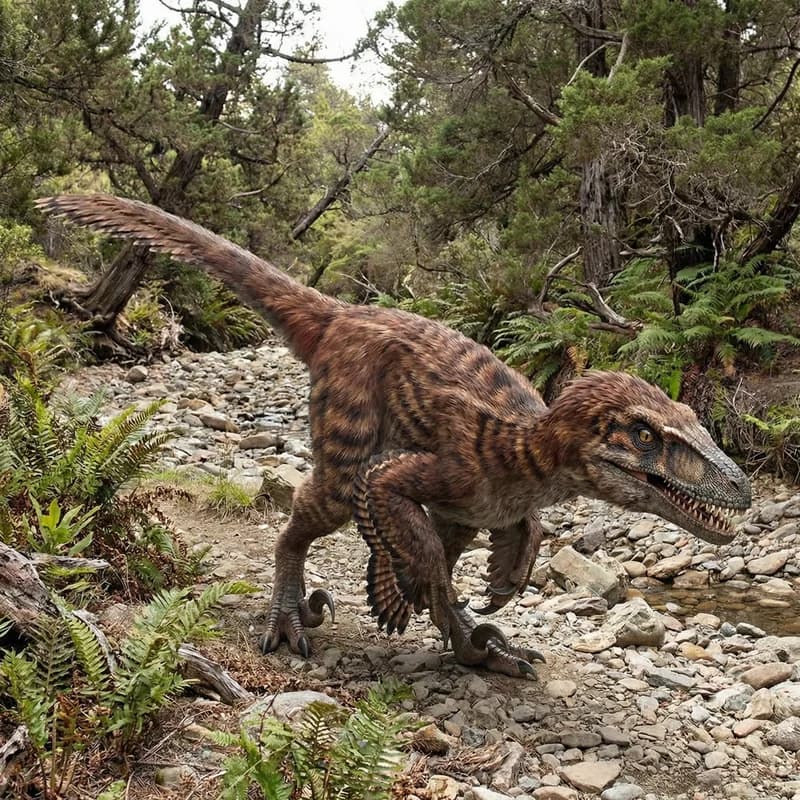
Dromaeosaurus
Dromaeosaurus albertensis
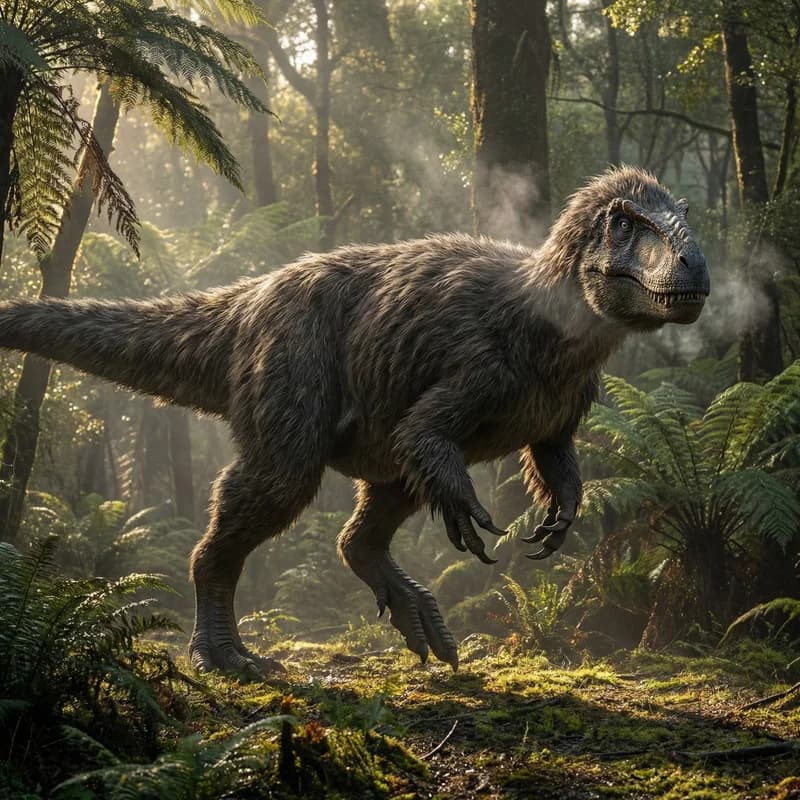
Yutyrannus
Yutyrannus huali
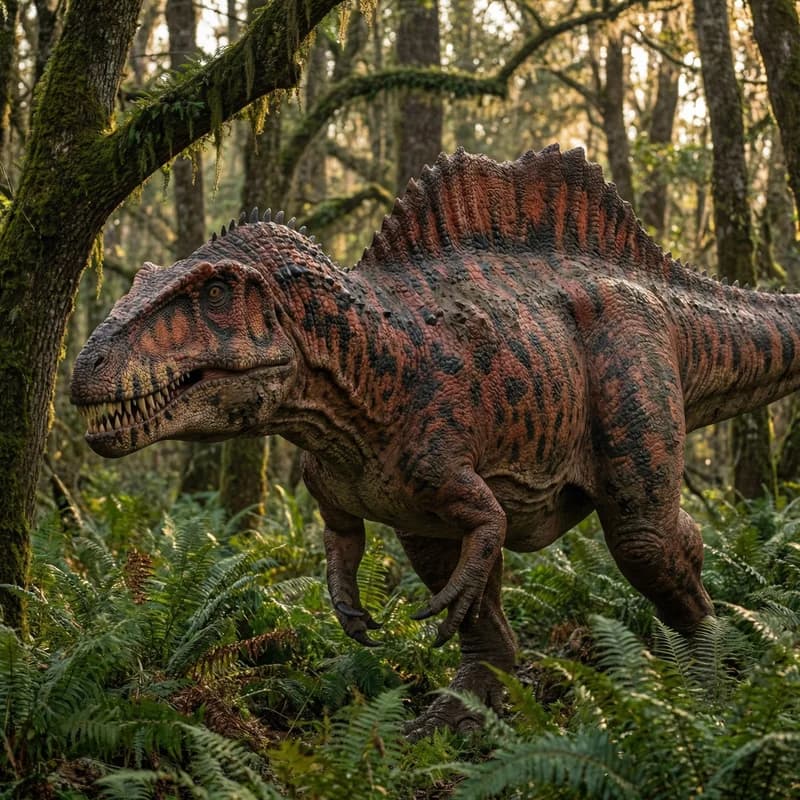
Acrocanthosaurus
Acrocanthosaurus atokensis

Giganotosaurus
Giganotosaurus carolinii

Velociraptor
Velociraptor mongoliensis

Tyrannosaurus Rex
Tyrannosaurus rex

Utahraptor
Utahraptor ostrommaysi