Yutyrannus
Cretaceous Period Carnivore Creature Type
Yutyrannus huali
Scientific Name: "Yutyrannus: Mandarin yǔ (羽, 'feather') + Latinised Greek tyrannos (τύραννος, 'tyrant') = 'feathered tyrant'; huali: Mandarin huáli (华丽/華麗, 'beautiful') — referring to the beauty of the plumage"
Local Name: Yutyrannus
Physical Characteristics
Discovery
Habitat
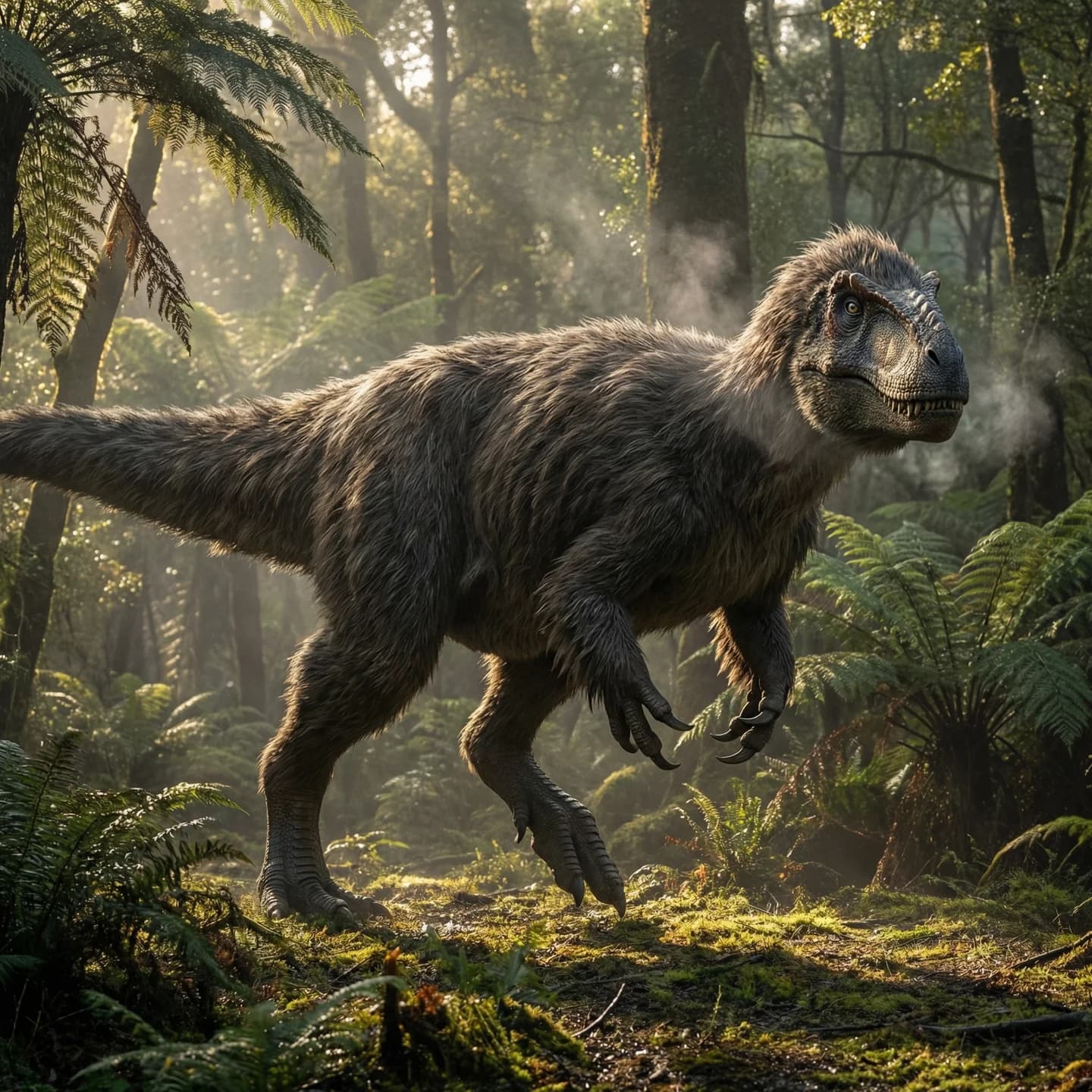
Yutyrannus huali (Xu et al., 2012) is a large basal tyrannosauroid (Tyrannosauroidea) theropod dinosaur from the Lower Cretaceous (Barremian, ~125 Ma) Yixian Formation of Liaoning Province, northeastern China. The genus name combines Mandarin yǔ (羽, 'feather') with Latinised Greek tyrannos ('tyrant'), meaning 'feathered tyrant', while the specific epithet huali (华丽, 'beautiful') references the perceived beauty of its plumage. Y. huali is the only known species in the genus.
Yutyrannus holds the distinction of being the largest dinosaur species for which direct fossil evidence of feathers has been preserved — approximately 40 times heavier than the previous record holder, Beipiaosaurus. The holotype specimen (ZCDM V5000) has an estimated body length of ~9 m and a body mass of ~1,414 kg (Xu et al., 2012), while Gregory S. Paul (2016) offered a lower estimate of ~7.5 m and ~1,100 kg. Three nearly complete skeletons representing an adult, a subadult, and a juvenile are known, providing rare ontogenetic data for a basal tyrannosauroid.
Phylogenetically, Yutyrannus was placed within the Proceratosauridae (a basal tyrannosauroid family) by the comprehensive analysis of Brusatte & Carr (2016), differing somewhat from the original description (Xu et al., 2012) which recovered it as more basal than Eotyrannus but outside Proceratosauridae. Unlike derived Late Cretaceous tyrannosaurids (e.g. Tyrannosaurus, Tarbosaurus), Yutyrannus retained primitive traits such as three-fingered hands and relatively long forelimbs, alongside derived features shared with tyrannosaurids including a large, deep skull and a prominent lacrimal horn. The cool-temperate palaeoenvironment of the Yixian Formation (mean annual temperature ~10 °C; Amiot et al., 2011) suggests that the feathers of Yutyrannus may have served a thermoregulatory function, making it a pivotal taxon in understanding the evolution of feathers, body size, and thermoregulation in tyrannosauroids.
Overview
Name and Etymology
The genus name Yutyrannus is a hybrid of Mandarin Chinese yǔ (羽, 'feather') and the Latinised Greek tyrannos (τύραννος, 'tyrant'), literally meaning 'feathered tyrant'. The specific epithet huali (华丽/華麗) is Mandarin for 'beautiful', chosen in reference to the beauty of the preserved plumage (Xu et al., 2012). The full binomial thus translates as 'beautiful feathered tyrant'.
Taxonomic Status
Yutyrannus huali is currently recognised as a valid monotypic genus and species. The original description (Xu et al., 2012) placed it as a basal tyrannosauroid more primitive than Eotyrannus. A subsequent comprehensive phylogenetic analysis by Brusatte & Carr (2016) repositioned it within the Proceratosauridae alongside Guanlong, Proceratosaurus, Kileskus, and Sinotyrannus. However, some analyses have yielded alternative placements, and the precise phylogenetic position of Yutyrannus remains subject to revision as new taxa and character data become available.
Key Significance
Yutyrannus is the largest dinosaur with direct fossil evidence of feathers, providing critical insight into the evolution of integumentary structures in large theropods and their potential role in thermoregulation under cool-temperate climatic conditions.
Stratigraphy and Palaeoenvironment
Temporal Range
Yutyrannus derives from the Yixian Formation, part of the Jehol Group. High-precision ⁴⁰Ar/³⁹Ar geochronology (Zhong et al., 2021) constrains the entire Yixian Formation to ~125.8–124.1 Ma (Barremian stage, Early Cretaceous), with a total depositional duration of ~1.63 Myr. The original description (Xu et al., 2012) assigned an Aptian age (~125 Ma), but more recent dating has refined the age to wholly Barremian.
Formation and Lithology
The Yixian Formation is the middle unit of the Jehol Group in Liaoning Province. It is characterised by lacustrine deposits interbedded with volcanic sediments, primarily basalt with siliciclastic intervals. The Yixian is broadly subdivided into the Lujiatun Unit (sandstone, conglomerate, breccia; 20–40 m thick), the Lower Lava Unit (basalt and andesite), the Jianshangou Unit (shale and tuff; 230–420 m thick), the Upper Lava Unit, the Upper Yixian, and the Huanghuanshan Unit (Wang et al., 2016; Zhong et al., 2021). The Yutyrannus specimens are preserved on shale slabs exhibiting sedimentary features typical of Jehol Group feathered dinosaur fossils, strongly suggesting provenance from the Yixian Formation — most likely from the Jianshangou or Lujiatun units, though the exact horizon cannot be confirmed due to the specimens' acquisition through a fossil dealer (Xu et al., 2012, Supplementary Information).
Palaeoenvironment
The Liaoning region during Yixian deposition was characterised by a cool-temperate climate, significantly cooler than the typical 'greenhouse Earth' conditions of the Cretaceous. Amiot et al. (2011), using oxygen isotope compositions of apatite phosphate (δ¹⁸Op) from dinosaur teeth, estimated mean annual air temperatures of ~10 ± 4 °C for the Yixian interval — comparable to modern cool-temperate mid-latitude conditions. A more recent study by Wu et al. (2021) derived an even lower mean annual palaeotemperature of ~5.9 ± 1.7 °C from palaeosol carbonates in the Sihetun area, suggesting palaeoelevations of ~2.8–4.1 km.
Vegetation was dominated by conifers, ginkgoes, cycads, and seed ferns, with ground cover of ferns, horsetails, and lycopods; primitive angiosperms were present but rare (Zhou, 2006). Freshwater lake systems were well developed, supporting abundant fish populations (notably Lycoptera). Periodic volcanic eruptions, wildfires, and possible limnic eruptions continually disturbed and reset the ecosystem, contributing to the exceptional preservation of the Jehol biota.
Specimens and Diagnostic Features
Holotype and Referred Specimens
Yutyrannus is known from three nearly complete skeletal specimens, all acquired from a fossil dealer who stated they were collected from a single quarry at Batuyingzi, Beipiao, western Liaoning Province. The precise quarry location could not be independently verified. All three specimens were prepared at the IVPP (Institute of Vertebrate Paleontology and Paleoanthropology, Chinese Academy of Sciences) under the supervision of Xu Xing.
| Specimen | Repository | Ontogenetic Stage | Femur Length | Estimated Mass | Notes |
|---|---|---|---|---|---|
| ZCDM V5000 (holotype) | Zhucheng Dinosaur Museum | Adult | 850 mm | ~1,414 kg | Nearly complete skeleton with skull; neurocentral sutures ossified |
| ZCDM V5001 (paratype) | Zhucheng Dinosaur Museum | Subadult | 650 mm | ~596 kg | Preserved on the same slab as the holotype |
| ELDM V1001 (paratype) | Erlianhaote Dinosaur Museum | Juvenile | 613 mm | ~493 kg | Estimated ~8 years younger than the holotype |
Diagnostic Traits
Xu et al. (2012) established the following autapomorphies distinguishing Yutyrannus from other tyrannosauroids: (1) the snout bears a rugose, highly fenestrated midline crest formed by the nasals and premaxillae, covered by large pneumatic recesses; (2) the postorbital has a small secondary process projecting into the upper posterior corner of the orbit; (3) the lateral surface of the main body of the postorbital is excavated; (4) in the lower jaw, the external mandibular fenestra is mainly located within the surangular.
Specimen Limitations
Because all three specimens were acquired through a fossil dealer rather than collected in situ by researchers, the exact quarry location and stratigraphic horizon remain uncertain. The sedimentological characteristics (fine-grained lacustrine shale slabs) are consistent with the Yixian Formation, but whether the specimens derive from the Lujiatun or Jianshangou unit cannot be determined. The dealer's claim that all three individuals were found together in a single quarry also remains unverified independently.
Morphology and Functional Anatomy
Body Size
Yutyrannus was a large bipedal predator. The holotype (ZCDM V5000) has an estimated total body length of ~9 m and a body mass of ~1,414 kg, calculated using the regression equations of Christiansen & Fariña (2004) based on femur length (Xu et al., 2012). Gregory S. Paul (2016) estimated a smaller body length of ~7.5 m and a mass of ~1.1 tonnes. The skull of the holotype has an estimated length of ~90.5 cm. The paratype skulls measure ~80 cm (ZCDM V5001) and ~63 cm (ELDM V1001), with corresponding mass estimates of ~596 kg and ~493 kg, respectively.
Skull and Dentition
The skull is large and deep — a feature shared with derived tyrannosaurids. Notable cranial characters include: the premaxilla with an upturned lateral surface; a large, cuneiform (wedge-shaped) lacrimal horn anterior to the orbit; a postorbital process on the posterior orbital rim; and the squamosal–quadratojugal forming a large process on the posterior rim of the infratemporal fenestra. The distinctive midline nasal crest, accompanied by lateral 'wavy' crests in the two adult specimens, is unique to Yutyrannus and may have served a display function. The teeth are sharp and laterally compressed, typical of carnivorous theropods.
Forelimbs and Manus
Unlike derived Late Cretaceous tyrannosaurids which possessed two-fingered hands on greatly reduced forelimbs, Yutyrannus retained three-fingered hands on relatively longer forelimbs — a primitive tyrannosauroid trait. Metacarpal III measures 150 mm in the holotype, representing ~18% of femur length, proportionally longer than in derived tyrannosaurids.
Hindlimbs and Locomotion
The hindlimbs are robust but lack the cursorial specialisations seen in derived tyrannosaurids, particularly the arctometatarsalian pes (a foot structure adapted for running). The tibia (725 mm) and metatarsal III (350 mm) are relatively short compared to the femur (850 mm), suggesting a less agile locomotory style than in later tyrannosaurids. Morphometric analysis (Xu et al., 2012, Supplementary Table S1) revealed that the tibia and metatarsus exhibit much stronger negative allometry in Yutyrannus than in tyrannosaurids, indicating a distinctly different growth strategy.
Feathers
The most remarkable feature of Yutyrannus is the preservation of direct integumentary evidence in the form of fossil feather impressions. The feathers are filamentous, up to ~20 cm in length; preservation quality precluded determination of whether the filaments were simple or compound, broad or narrow. Feather impressions were found in different body regions across the three specimens: the pelvis and near the foot in the holotype (ZCDM V5000); the tail in ZCDM V5001, angled ~30° posteriorly relative to the tail axis; and the neck (~20 cm filaments) and upper arm (~16 cm filaments) in the juvenile ELDM V1001.
This distribution suggests feathers may have covered much of the body, and given the cool-temperate climate of the Yixian Formation (~10 °C mean annual temperature), a thermoregulatory function is considered the most likely primary role (Xu et al., 2012). Alternatively, if feathers were restricted only to the preserved regions, they may have functioned primarily as display structures.
Diet and Palaeoecology
Feeding Ecology
The large, deep skull and sharp, laterally compressed teeth of Yutyrannus are strongly indicative of a carnivorous/predatory ecology. No direct evidence of diet (e.g. stomach contents or coprolites) has been reported. Based on body size, dental morphology, and phylogenetic bracketing within the Tyrannosauroidea, Yutyrannus is inferred to have been an apex or near-apex predator in the Yixian ecosystem.
Coexisting Fauna
The Yixian Formation preserves a rich and diverse fauna. Dinosaurs contemporaneous with Yutyrannus include the basal ceratopsian Psittacosaurus, the sauropod Dongbeititan, small theropods such as Sinosauropteryx, Caudipteryx, Sinornithosaurus, and Dilong, the troodontid Mei, and the therizinosauroid Beipiaosaurus, along with numerous bird species. Non-dinosaurian vertebrates include the fish Lycoptera, various mammals, and choristoderan reptiles. Yutyrannus would have been among the largest predators in this ecosystem. Notably, a sauropod (Dongbeititan) rib with an embedded theropod tooth has been reported from the Yixian (Xing et al., 2012), raising the possibility that Yutyrannus preyed on sauropods.
Social Behaviour
Based on the fossil dealer's claim that the three known Yutyrannus individuals were found together, some palaeontologists — including Xu Xing — have speculated that the animal may have been a pack hunter, possibly targeting sauropods such as Dongbeititan (Smith & Levi, 2012, Nature Podcast). However, the cause of death of the three individuals is unknown, and the co-occurrence claim has not been independently verified. This interpretation remains strictly hypothetical.
Hyoid and Tongue
Li et al. (2018) determined that Yutyrannus had a simple hyoid apparatus, suggesting a flat, fixed tongue similar to that of crocodilians — in contrast to the mobile tongues of birds and pterosaurs.
Distribution and Palaeogeography
Geographic Range
All known Yutyrannus specimens reportedly originate from the Batuyingzi area near Beipiao, western Liaoning Province, China (modern coordinates ~41.5°N, ~121.2°E). Yixian Formation fossil localities are concentrated in western Liaoning.
Palaeocoordinates
The estimated palaeocoordinates of the Yixian Formation are approximately 44.3°N, 122.8°E, indicating that the region was situated at mid-latitudes, slightly further north than its present position. This mid-latitude location, combined with the cool-temperate climate, is consistent with the hypothesis that feathers in Yutyrannus provided a thermoregulatory advantage.
Phylogeny and Taxonomic Debate
Original Phylogenetic Analysis
Xu et al. (2012) conducted two separate phylogenetic analyses. In a broad theropod dataset, Yutyrannus was recovered within Tyrannosauroidea. In a tyrannosauroid-specific dataset, it was positioned more basal than Eotyrannus but more derived than Proceratosaurus, Guanlong, and Sinotyrannus. When the three specimens were scored as separate OTUs, they formed a monophyletic group, supporting their conspecificity.
Brusatte & Carr (2016) Analysis
The comprehensive tyrannosauroid phylogeny of Brusatte & Carr (2016; Scientific Reports 6: 20252) repositioned Yutyrannus within the Proceratosauridae, recovering it as more basal than Dilong. Within their cladogram, the Proceratosauridae consisted of Guanlong — Proceratosaurus — Kileskus — Yutyrannus — Sinotyrannus in successive branching order.
Alternative Hypotheses
Some analyses have placed Yutyrannus outside the Proceratosauridae or even outside Tyrannosauroidea entirely, though the latter position has not been recovered in most peer-reviewed studies. The precise phylogenetic placement of Yutyrannus is expected to be refined as new tyrannosauroid taxa are discovered and character datasets are expanded.
Reconstruction and Uncertainty
Confirmed
Yutyrannus was a large bipedal theropod belonging to the basal Tyrannosauroidea, with direct fossil evidence of filamentous feathers. Three nearly complete skeletons are known, providing robust anatomical data.
Well-Supported Interpretations
The thermoregulatory function of feathers is well supported by the cool-temperate palaeoclimate of the Yixian Formation but remains unconfirmed, as the extent of feather coverage across the entire body is unknown. The placement within Proceratosauridae (Brusatte & Carr, 2016) is the most widely accepted current phylogenetic hypothesis.
Hypothetical Interpretations
Pack-hunting behaviour, sauropod predation, and the simultaneous death of the three known individuals all remain hypothetical and require independent verification. The precise function of the nasal crest (species recognition, sexual display, visual signalling) is also speculative.
Common Misconceptions
Yutyrannus is frequently misidentified in popular media as a member of the Tyrannosauridae (the family containing T. rex), when it actually belongs to a far more basal position within the Tyrannosauroidea. Additionally, the discovery of feathers in Yutyrannus does not automatically demonstrate that Tyrannosaurus rex was feathered. Bell et al. (2017) reported scaly skin impressions from several Late Cretaceous tyrannosaurids (Gorgosaurus, Tarbosaurus, Tyrannosaurus), suggesting that large derived tyrannosaurids may have secondarily evolved predominantly scaly integument.
Comparative Table
| Taxon | Age | Locality | Est. Length | Est. Mass | Phylogenetic Position | Feather Evidence |
|---|---|---|---|---|---|---|
| Yutyrannus huali | Barremian, ~125 Ma | Liaoning, China | 7.5–9 m | 1,100–1,414 kg | Proceratosauridae | Direct (filaments) |
| Dilong paradoxus | Barremian, ~126 Ma | Liaoning, China | ~1.6 m | ~5 kg | Basal Tyrannosauroidea | Direct (filaments) |
| Guanlong wucaii | Oxfordian, ~160 Ma | Xinjiang, China | ~3 m | ~60 kg | Proceratosauridae | Inferred |
| Sinotyrannus kazuoensis | Aptian, ~120 Ma | Liaoning, China | ~10 m (est.) | Unknown | Proceratosauridae (?) | None |
| Eotyrannus lengi | Barremian, ~130 Ma | Isle of Wight, UK | ~4.5 m | ~200 kg (est.) | Basal Tyrannosauroidea | None |
| Tyrannosaurus rex | Maastrichtian, ~68–66 Ma | North America | 11–12.3 m | 8,000–14,000 kg | Tyrannosauridae | Scaly impressions (Bell et al., 2017) |
Fun Facts
FAQ
📚References
- Xu, X., Wang, K., Zhang, K., Ma, Q., Xing, L., Sullivan, C., Hu, D., Cheng, S. & Wang, S. (2012). A gigantic feathered dinosaur from the Lower Cretaceous of China. Nature, 484(7392), 92–95. https://doi.org/10.1038/nature10906
- Brusatte, S.L. & Carr, T.D. (2016). The phylogeny and evolutionary history of tyrannosauroid dinosaurs. Scientific Reports, 6, 20252. https://doi.org/10.1038/srep20252
- Paul, G.S. (2016). The Princeton Field Guide to Dinosaurs (2nd ed.). Princeton University Press.
- Amiot, R., Wang, X., Zhou, Z., Wang, X., Buffetaut, E., Lécuyer, C., Ding, Z., Fluteau, F., Hibino, T., Kusuhashi, N., Mo, J., Suteethorn, V., Wang, Y., Xu, X. & Zhang, F. (2011). Oxygen isotopes of East Asian dinosaurs reveal exceptionally cold Early Cretaceous climates. Proceedings of the National Academy of Sciences, 108(13), 5179–5183. https://doi.org/10.1073/pnas.1011369108
- Bell, P.R., Campione, N.E., Persons, W.S., Currie, P.J., Larson, P.L., Tanke, D.H. & Bakker, R.T. (2017). Tyrannosauroid integument reveals conflicting patterns of gigantism and feather evolution. Biology Letters, 13(6), 20170092. https://doi.org/10.1098/rsbl.2017.0092
- Zhou, Z. (2006). Evolutionary radiation of the Jehol Biota: chronological and ecological perspectives. Geological Journal, 41(3–4), 377–393. https://doi.org/10.1002/gj.1045
- Zhong, Y., Huyskens, M.H., Yin, Q.-Z., Wang, Y., Ma, Q. & Xu, Y.-G. (2021). High-precision geochronological constraints on the duration of 'Dinosaur Pompeii' and the Yixian Formation. National Science Review, 8(6), nwab063. https://doi.org/10.1093/nsr/nwab063
- Swisher, C.C., Wang, Y., Wang, X., Xu, X. & Wang, Y. (2002). Further support for a Cretaceous age for the feathered-dinosaur beds of Liaoning, China: New ⁴⁰Ar/³⁹Ar dating of the Yixian and Tuchengzi Formations. Chinese Science Bulletin, 47, 135–138.
- Christiansen, P. & Fariña, R.A. (2004). Mass prediction in theropod dinosaurs. Historical Biology, 16(2–4), 85–92. https://doi.org/10.1080/08912960412331284313
- Li, Z., Zhou, Z. & Clarke, J.A. (2018). Convergent evolution of a mobile bony tongue in flighted dinosaurs and pterosaurs. PLOS ONE, 13(6), e0198078. https://doi.org/10.1371/journal.pone.0198078
- Xing, L., Bell, P.R., Currie, P.J., Shibata, M., Tseng, K. & Dong, Z. (2012). A sauropod rib with an embedded theropod tooth: direct evidence for feeding behaviour in the Jehol group, China. Lethaia, 45(4), 500–506. https://doi.org/10.1111/j.1502-3931.2012.00310.x
- Erickson, G.M., Makovicky, P.J., Currie, P.J., Norell, M.A., Yerby, S.A. & Brochu, C.A. (2004). Gigantism and comparative life-history parameters of tyrannosaurid dinosaurs. Nature, 430(7001), 772–775. https://doi.org/10.1038/nature02699
- Wu, Y., Cui, Y., Qu, Y., Hay, W.W., Zhu, J. & Liu, X. (2021). High-altitude and cold habitat for the Early Cretaceous feathered dinosaurs. Geophysical Research Letters, 48(13), e2021GL094370. https://doi.org/10.1029/2021GL094370
- Brusatte, S.L., Norell, M.A., Carr, T.D., Erickson, G.M., Hutchinson, J.R., Balanoff, A.M., Bever, G.S., Choiniere, J.N., Makovicky, P.J. & Xu, X. (2010). Tyrannosaur paleobiology: new research on ancient exemplar organisms. Science, 329(5998), 1481–1485. https://doi.org/10.1126/science.1193304
- Wang, Y., Olsen, P.E., Sha, J., Yao, X., Liao, H., Pan, Y., Kinney, S., Zhang, X. & Rao, X. (2016). Stratigraphy, correlation, depositional environments, and cyclicity of the Early Cretaceous Yixian and ?Jurassic-Cretaceous Tuchengzi formations. Palaeogeography, Palaeoclimatology, Palaeoecology, 464, 110–133. https://doi.org/10.1016/j.palaeo.2016.06.043
- Xu, X., Norell, M.A., Kuang, X., Wang, X., Zhao, Q. & Jia, C. (2004). Basal tyrannosauroids from China and evidence for protofeathers in tyrannosauroids. Nature, 431(7009), 680–684. https://doi.org/10.1038/nature02855
Gallery
5 images Yutyrannus
Yutyrannus · Cretaceous Period · Carnivore
 Yutyrannus
Yutyrannus · Cretaceous Period · Carnivore
 Yutyrannus
Yutyrannus · Cretaceous Period · Carnivore
 Yutyrannus
Yutyrannus · Cretaceous Period · Carnivore
 Yutyrannus
Yutyrannus · Cretaceous Period · Carnivore
🔗Related Creatures

Giganotosaurus
Giganotosaurus carolinii
Albertosaurus
Albertosaurus sarcophagus

Tyrannosaurus Rex
Tyrannosaurus rex
Concavenator
Concavenator corcovatus
Gorgosaurus
Gorgosaurus libratus
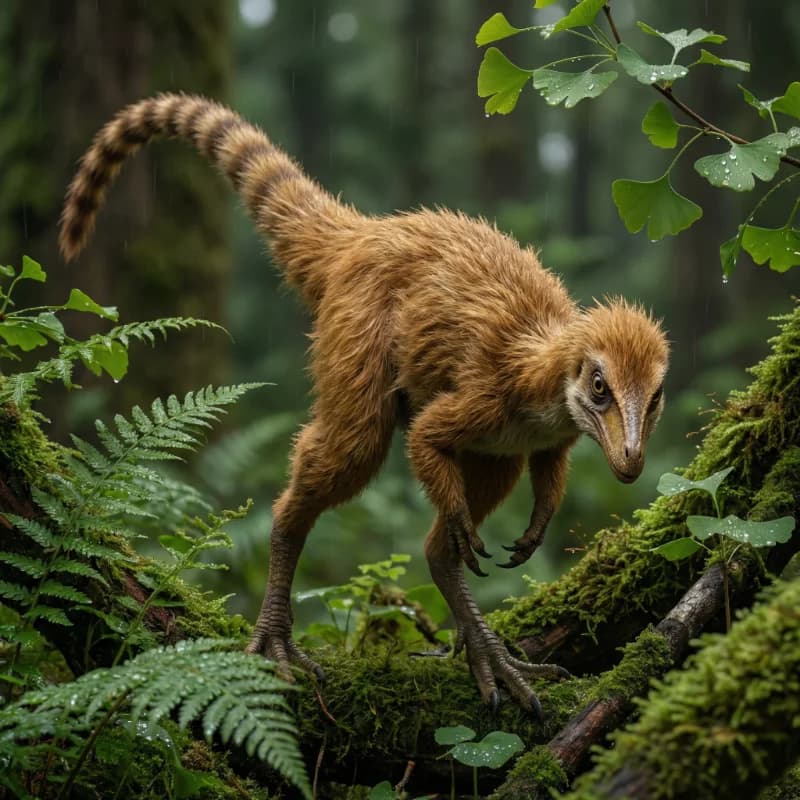
Sinosauropteryx
Sinosauropteryx prima
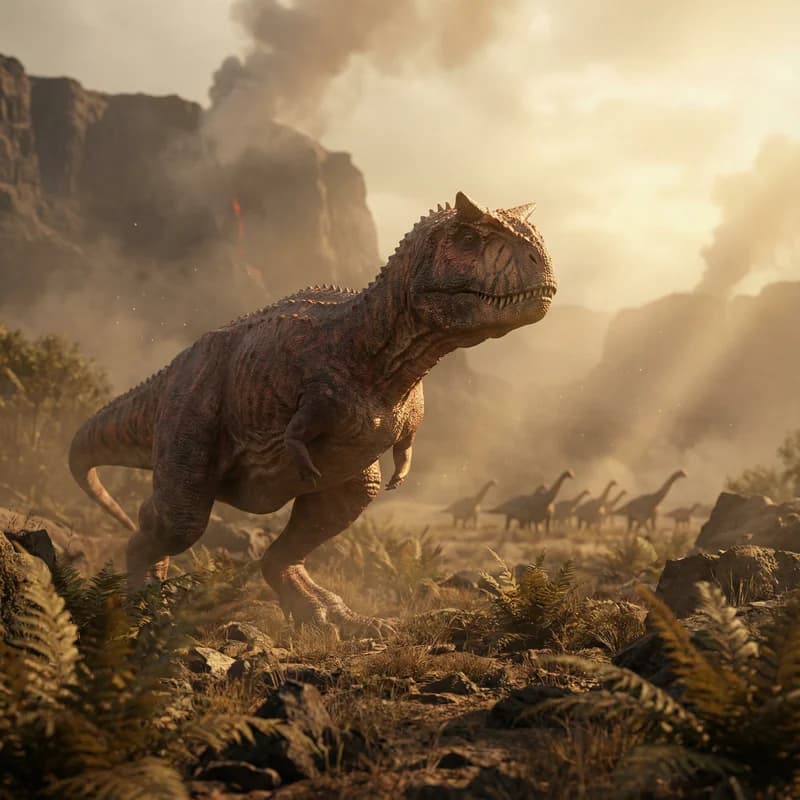
Rajasaurus
Rajasaurus narmadensis

Utahraptor
Utahraptor ostrommaysi