Tarbosaurus
Cretaceous Period Carnivore Creature Type
Tarbosaurus bataar
Scientific Name: "tarbos (Ancient Greek: terror, alarm, awe) + sauros (lizard) = 'alarming lizard'; species name bataar is a Latinised misspelling of Mongolian баатар (baatar, 'hero')"
Local Name: Tarbosaurus
Physical Characteristics
Discovery
Habitat

Tarbosaurus (Tarbosaurus bataar Maleev, 1955) is a large tyrannosaurid theropod dinosaur from the Late Cretaceous Maastrichtian stage (approximately 70–68 Ma) of Asia. The generic name derives from Ancient Greek τάρβος (tarbos, 'terror, alarm, awe') and σαῦρος (sauros, 'lizard'), meaning 'alarming lizard,' while the specific epithet bataar is a Latinised misspelling of the Mongolian word баатар (baatar, 'hero'). The holotype, PIN 551-1, consists of a large partial skull (premaxilla-to-occipital condyle length approximately 1,220 mm) and cervical vertebrae discovered in 1946 by a joint Soviet-Mongolian expedition to the Nemegt Formation of the Gobi Desert, Ömnögovi Province, Mongolia. Soviet palaeontologist Evgeny Maleev originally described it as Tyrannosaurus bataar in 1955.
Tarbosaurus is regarded as the second or third largest tyrannosaurid—after Tyrannosaurus rex and possibly Zhuchengtyrannus magnus. Based on the holotype, total body length is estimated at approximately 10 m, hip height at roughly 3 m, and body mass at about 4.5–5 metric tonnes, while the largest adult specimens may have exceeded 12 m in length. With more than 30 known individuals, including over 15 skulls and several nearly complete postcranial skeletons, Tarbosaurus possesses one of the richest fossil records among tyrannosaurids, enabling extensive research into its phylogenetic relationships, cranial mechanics, brain morphology, and ontogeny.
Most recent phylogenetic analyses recover Tarbosaurus as the sister taxon of Tyrannosaurus rex, and some workers have argued that the two should be synonymised under a single genus (Tyrannosaurus). However, significant morphological differences exist in cranial stress distribution, mandibular locking mechanism, binocular vision, and forelimb proportions. The majority of current literature maintains Tarbosaurus as a separate genus while acknowledging its close sister-group relationship with Tyrannosaurus (Hurum & Sabath, 2003; Currie et al., 2003; Voris et al., 2020). As the apex predator of the Nemegt ecosystem, Tarbosaurus preyed upon hadrosaurs (e.g., Saurolophus), titanosaurs (e.g., Nemegtosaurus, Opisthocoelicaudia), and ankylosaurs (e.g., Tarchia, Saichania), as confirmed by bite marks and stable isotope analyses.
Overview
Name and Etymology
The generic name Tarbosaurus was established by Maleev in his second 1955 paper when he described the specimen PIN 551-2 as Tarbosaurus efremovi, combining Ancient Greek τάρβος (tarbos, 'terror, alarm, awe') and σαῦρος (sauros, 'lizard'). The species name efremovi honoured Russian palaeontologist and science fiction writer Ivan Yefremov. The specific epithet bataar was originally assigned by Maleev when he described PIN 551-1 as Tyrannosaurus bataar; it is a misspelling of the Mongolian word баатар (baatar, meaning 'hero'), but the original spelling is retained under ICZN rules (Maleev, 1955a).
Taxonomic Status
Most current palaeontologists recognise a single valid species within Tarbosaurus: T. bataar (Holtz, 2004; Brusatte & Carr, 2016). Numerous taxa once described as separate genera and species—including Tarbosaurus efremovi (PIN 551-2), Gorgosaurus lancinator (PIN 553-1), Gorgosaurus novojilovi (PIN 552-2), Maleevosaurus novojilovi, Jenghizkhan bataar, and the Chinese Shanshanosaurus huoyanshanensis—are now regarded as junior synonyms of T. bataar, representing different ontogenetic stages of the same species (Rozhdestvensky, 1965; Carr, 1999; Holtz, 2004). Some researchers (Carpenter, 1992; Carr et al., 2005, 2017) classify this taxon as Tyrannosaurus bataar, subsuming it within the genus Tyrannosaurus, but the majority of recent literature retains Tarbosaurus as a distinct genus.
Scientific Significance
With a fossil record encompassing more than 30 individuals (including over 15 skulls), Tarbosaurus possesses the most abundant specimen record of any tyrannosaurid after T. rex itself. This wealth of material has enabled studies on ontogenetic growth variation, cranial biomechanics, endocranial morphology, tooth replacement patterns, and stable isotope-based palaeodietary reconstruction.
Age, Stratigraphy, and Depositional Environment
Temporal Range
The vast majority of Tarbosaurus specimens come from the Nemegt Formation in the Nemegt Basin, Ömnögovi Province, Gobi Desert, southern Mongolia. No radiometric dates have been directly obtained from the Nemegt Formation, but biostratigraphic evidence from the associated fauna places it in the early to middle Maastrichtian stage of the Late Cretaceous, approximately 72–68 Ma. U-Pb isotope analysis of Tarbosaurus teeth published in 2023 suggests that deposition of the middle Nemegt Formation occurred before 66.7 ± 2.5 Ma, though whether the formation extends back into the late Campanian remains unresolved.
Lithostratigraphy
The Nemegt Formation is dominated by light grey to tan sandstone, with interbedded mudstone and siltstone. Sedimentary facies are characterised by large-scale fluvial channel deposits and associated floodplain sediments, with indications of shallow lakes and mudflats (Eberth, 2018). Caliche deposits within the succession indicate periodic arid intervals.
In China, the Subashi Formation of Shanshan County, Xinjiang Autonomous Region, has yielded fragmentary tyrannosaurid remains originally described as Shanshanosaurus huoyanshanensis (now provisionally synonymised with T. bataar). The Subashi Formation spans the Campanian to Maastrichtian.
Palaeoenvironment
The Nemegt Formation records a notably more humid climate than the underlying Barun Goyot and Djadokhta formations. It preserves a landscape dominated by large river systems and floodplains, with Araucarian conifer forests as the primary vegetation, alongside ginkgos, reed grasses, fagalean trees, cycad-like plants, sycamores, bald cypresses, katsura relatives, and various aquatic plants including pondweeds, lotuses, and sedges (Owocki et al., 2020). Oxygen and carbon stable isotope analyses of Tarbosaurus tooth enamel suggest mean annual temperatures of approximately 7.6–12 °C (Owocki et al., 2020), indicating temperate to cool-temperate conditions rather than the subtropical climate previously assumed.
Specimens and Diagnostic Characters
Holotype and Key Specimens
| Specimen Number | Institution | Preserved Elements | Notes |
|---|---|---|---|
| PIN 551-1 (holotype) | Palaeontological Institute (PIN), Moscow | Large skull (premaxilla-to-condyle length 1,220 mm) + cervical vertebrae | Largest known Tarbosaurus skull; originally described as Tyrannosaurus bataar |
| PIN 551-2 | PIN, Moscow | Skull + partial postcranium | Originally described as Tarbosaurus efremovi; subadult |
| PIN 553-1 | PIN, Moscow | Skull + postcranial fragments (endocast preserved) | Originally described as Gorgosaurus lancinator; used for brain endocast studies |
| PIN 552-2 | PIN, Moscow | Skull + partial postcranium | Originally described as Gorgosaurus novojilovi |
| ZPAL MgD-I/4 | Institute of Paleobiology, Polish Academy of Sciences, Warsaw | Nearly complete skeleton + skull | Detailed description by Hurum & Sabath (2003); most frequently used for skeletal reconstructions |
| MPC-D 107/7 | Mongolian Palaeontological Center, Ulaanbaatar | Juvenile partial skeleton + nearly complete skull (length 290 mm) | Discovered in 2006 at Bügiin Tsav; described by Tsuihiji et al. (2011); key ontogenetic specimen |
| MPC-D 107/2 | Mongolian Palaeontological Center | Subadult skeleton | Estimated body mass 2.2–3.4 t |
More than 30 individuals are known, including over 15 skulls and several nearly complete postcranial skeletons (Holtz, 2004).
Diagnostic Characters
Key diagnostic features of Tarbosaurus bataar, as outlined by Hurum & Sabath (2003) and Holtz (2004), include: a massively developed posterior process of the maxilla that inserts into a sheath formed by the lacrimal; a mandibular locking mechanism created by a ridge on the external surface of the angular that articulates with a squared process on the posterior end of the dentary; a tooth count of approximately 58–64 (slightly higher than Tyrannosaurus); the proportionally smallest forelimbs of any tyrannosaurid relative to body size; and a diminutive posterior surangular foramen.
Limitations of the Material
The holotype PIN 551-1 consists only of a skull and some cervical vertebrae, lacking diagnostic postcranial elements. Detailed postcranial morphology is therefore derived from referred specimens such as ZPAL MgD-I/4, meaning that the diagnostic power of the holotype itself is limited to cranial characters.
Morphology and Function
Body Size
Tarbosaurus was a large bipedal predator. Based on the holotype PIN 551-1, total body length is estimated at approximately 10 m, hip height at roughly 3 m, and body mass at approximately 4.5–5 metric tonnes. Some adult specimens may have exceeded 12 m in length, with maximum body mass estimates ranging from 5 to 6 t. Smaller adult individuals (MPC-D 107/2, ZPAL MgD-I/4, PIN 552-1) are estimated at about 2.2–3.4 t, indicating substantial intraspecific size variation. The commonly cited range of '4.5–6 t' reflects the span from the holotype to the largest known individuals.
Skull and Dentition
The largest known Tarbosaurus skull measures approximately 1.35 m in length, larger than that of any other tyrannosaurid except Tyrannosaurus (Holtz, 2004). The skull is tall, like that of Tyrannosaurus, but the posterior region is comparatively narrow (unexpanded), meaning the eyes faced primarily sideways rather than forwards—limiting binocular vision. The dentition comprises 58–64 teeth, slightly more than in Tyrannosaurus (56–60). The premaxillary teeth exhibit the D-shaped cross-section characteristic of tyrannosaurid heterodonty. The longest maxillary tooth crowns measure approximately 85 mm.
The mandibular locking mechanism is particularly noteworthy: a ridge on the external surface of the angular articulates with a squared process on the posterior dentary, restricting medial flexibility of the lower jaw. This mechanism is also observed in Alioramus but is absent in North American tyrannosaurids (Hurum & Sabath, 2003).
Limb Structure
The forelimbs of Tarbosaurus are the smallest relative to body size of any known tyrannosaurid. The hand bears two functional, clawed digits plus a vestigial, unclawed third metacarpal in some specimens. The second metacarpal is less than twice the length of the first—shorter than the ratio observed in other tyrannosaurids—and the third metacarpal is proportionally shorter than the first, suggesting an additional stage of digit reduction beyond that seen in other family members (Holtz, 2004). The hindlimbs are long, robust, and muscular, supporting bipedal locomotion on three-toed feet. A long, heavy tail served as a counterbalance to the head and torso, placing the centre of gravity over the hips.
Brain and Senses
Saveliev & Alifanov (2007) provided a detailed analysis of Tarbosaurus brain morphology based on an endocast produced from PIN 553-1. Total brain volume for a 12 m individual is estimated at approximately 184 cm³. The brain structure is broadly similar to that of crocodilians and other non-avian reptiles. The olfactory bulbs and terminal nerves are large, indicating a keen sense of smell. The auditory nerve is also well developed, suggesting good hearing and spatial awareness via a well-developed vestibular component. In contrast, structures associated with vision—the midbrain tectum, optic nerve, and oculomotor nerve—are relatively small. Unlike Tyrannosaurus, whose forward-facing eyes provided stereoscopic binocular vision, Tarbosaurus had a narrower skull with laterally oriented eyes, suggesting greater reliance on olfaction and hearing than on sight.
A large, differentiated vomeronasal bulb was initially interpreted as indicative of a well-developed Jacobson's organ and potentially complex mating behaviour, but this identification has been challenged because vomeronasal organs are not present in any living archosaur.
Cranial Biomechanics
According to the detailed comparative study by Hurum & Sabath (2003), bite force in North American tyrannosaurids was transmitted from the maxilla through the fused nasals and bony struts to the lacrimals. In Tarbosaurus, these struts are absent; instead, a massively developed posterior projection of the maxilla fits directly into a sheath formed by the lacrimal, resulting in a more direct force pathway from maxilla to lacrimal. The lacrimal is also more firmly anchored to the frontal and prefrontal bones. Together, these features made the upper jaw of Tarbosaurus considerably more rigid than in its North American relatives.
Some researchers have hypothesised that this more rigid skull was an adaptation for hunting the large titanosaurid sauropods present in the Nemegt ecosystem, which had no counterpart in most Late Cretaceous North American faunas. However, this remains a hypothesis based on biomechanical inference.
Diet and Ecology
Dietary Evidence
The carnivorous diet of Tarbosaurus is supported by multiple lines of evidence: tooth morphology (large, serrated teeth with D-shaped premaxillary teeth), bite mark fossils, and stable isotope analysis.
Hone & Watabe (2010) reported three distinct feeding trace types (punctures, drag marks, and bite-and-drag marks) on the humerus of a Saurolophus specimen (MPC-D 100/764) from the Bügiin Tsav locality. Because only the humerus was damaged while the rest of the skeleton remained intact, this was interpreted as evidence of scavenging rather than active predation.
In 2012, bite marks matching Tarbosaurus teeth were identified on two fragmentary gastralia of the holotype of the giant ornithomimosaur Deinocheirus mirificus. Bite marks attributed to Tarbosaurus have also been recorded on hadrosaur and sauropod fossils, and a wound on a Tarchia skull was likely inflicted by Tarbosaurus—the ankylosaur survived the attack but eventually succumbed to a pathology during the healing process.
Owocki et al. (2020, Palaeogeography, Palaeoclimatology, Palaeoecology) analysed oxygen and carbon stable isotopes from Tarbosaurus tooth enamel, confirming that this predator primarily consumed titanosaurs and hadrosaurs.
Bite Force
The bite force of Tarbosaurus has been estimated at approximately 8,000–10,000 PSI (pounds per square inch), indicating bone-crushing capability comparable to that of its North American relative Tyrannosaurus.
Ecological Role and Food Web
Tarbosaurus was the unequivocal apex predator of the Nemegt Formation ecosystem. Primary prey for adults likely included hadrosaurs (Saurolophus, Barsboldia), titanosaurs (Nemegtosaurus, Opisthocoelicaudia), and ankylosaurs (Tarchia, Saichania). Juvenile and subadult Tarbosaurus likely occupied intermediate ecological niches between the massive adults and the smaller theropods, reducing intraspecific competition through ontogenetic niche partitioning (Tsuihiji et al., 2011).
Contemporary smaller theropods included troodontids (Borogovia, Zanabazar), oviraptorosaurs (Elmisaurus, Rinchenia, Nemegtomaia), the small tyrannosaurid Alioramus, and Bagaraatan. None of these would have competed directly with adult Tarbosaurus. The giant Therizinosaurus was likely herbivorous, and large ornithomimosaurs (Deinocheirus, Gallimimus, Anserimimus) were probably omnivores that took only small prey, thus presenting minimal dietary overlap.
Ontogeny and Behaviour
The juvenile specimen MPC-D 107/7 (skull length 290 mm; estimated age at death 2–3 years) revealed a weakly constructed skull with slender teeth compared to adults, suggesting different dietary preferences at younger growth stages (Tsuihiji et al., 2011). Sclerotic ring analysis indicated the juvenile may have been crepuscular or nocturnal, though evidence for adult activity patterns is lacking.
A stress fracture study (Rothschild et al., 2001) examined 18 Tarbosaurus foot bones (no fractures found) and 10 hand bones (one fracture identified). Since hand stress fractures are more likely caused by contact with struggling prey than by locomotion, this provides indirect evidence for an actively predatory lifestyle.
Distribution and Palaeogeography
Geographic Range
Confirmed occurrences of Tarbosaurus are concentrated in the Nemegt Formation of the Nemegt Basin, southern Mongolia, with key localities including Bügiin Tsav, Nemegt, and Altan Ula. Fragmentary material has also been recovered from the Subashi Formation in Xinjiang, China (IVPP V4878 and others). Additional remains tentatively referred to Tarbosaurus include Albertosaurus periculosus from the Yuliangze Formation of Heilongjiang, China, and a partial femur from the Bostobe Formation of Kazakhstan, but none of these can be diagnostically assigned to Tarbosaurus or T. bataar with confidence.
Palaeogeographic Interpretation
Palaeomagnetic data place the Nemegt Basin at approximately 37–45°N palaeolatitude during the Late Cretaceous, slightly south of its present-day position (43°N). Asia and North America were intermittently connected via the Beringian land bridge during this interval, and the divergence of the Tarbosaurus–Tyrannosaurus lineage may have been driven by dispersal across this land bridge followed by geographic isolation (Loewen et al., 2013).
Phylogeny and Taxonomic Debate
Recent Phylogenetic Analyses
In the phylogenetic analysis of Voris et al. (2020), Tarbosaurus is recovered as the sister taxon of Tyrannosaurus rex, with both forming a derived tyrannosaurine clade alongside Zhuchengtyrannus magnus. This result is broadly consistent with the analyses of Loewen et al. (2013) and Brusatte & Carr (2016). However, alternative topologies have been recovered in some analyses, in which Tarbosaurus and Zhuchengtyrannus are sister taxa to the exclusion of Tyrannosaurus.
Earlier cranial-based analyses by Hurum & Sabath (2003) and Currie et al. (2003) recovered Alioramus as the closest relative of Tarbosaurus. This hypothesis has since been supplanted following the discovery of Qianzhousaurus sinensis and the establishment of the tribe Alioramini, which is now placed outside the Tarbosaurus–Tyrannosaurus clade.
Synonymy with Tyrannosaurus
Some researchers (Carpenter, 1992; Carr et al., 2005, 2017, 2022) classify this taxon as Tyrannosaurus bataar, arguing that the morphological differences between the two are at the species level and that the consistent sister-taxon relationship warrants generic synonymy. Opponents (Hurum & Sabath, 2003; Holtz, 2004; Voris et al., 2020) cite the distinct cranial biomechanics (maxillary-lacrimal articulation, mandibular locking mechanism), restricted binocular vision, and reduced forelimb proportions as sufficient to maintain generic separation. The prevailing consensus in recent literature is to retain Tarbosaurus as a separate genus while acknowledging its close affinity with Tyrannosaurus.
Restoration and Uncertainty
Confirmed, Probable, and Hypothetical
Confirmed: Large tyrannosaurid theropod from the Nemegt Formation (Maastrichtian); bipedal predator with approximately 60 serrated teeth; proportionally smallest forelimbs among tyrannosaurids (two functional digits); mandibular locking mechanism; abundant fossil record (>30 individuals).
Probable (strongly supported): Sister taxon of Tyrannosaurus rex (consistently recovered in most phylogenetic analyses); apex predator (bite marks, isotope data); reliance on olfaction and hearing over vision (endocast analysis); ontogenetic niche partitioning (juvenile skull morphology).
Hypothetical: Rigid skull as a specific adaptation for hunting sauropods (biomechanical inference); complex mating behaviour via Jacobson's organ (unconfirmed in living archosaurs); synonymy of Tarbosaurus with Tyrannosaurus (a taxonomic judgment call with arguments on both sides); precise maximum body mass (estimates range from 5 to 7 t depending on methodology).
Common Misconceptions
Popular media often depict Tarbosaurus as virtually identical to T. rex under the label 'Asia's T. rex.' In reality, the skull is narrower posteriorly with limited binocular vision, the forelimbs are proportionally even smaller, and the mandibular flexibility differs markedly. Additionally, the frequently cited figure of '6 t or more' represents a maximum estimate; the holotype-based estimate is approximately 4.5–5 t.
Skin Impressions and Footprints
Skin impressions recovered from a large skeleton at the Bügiin Tsav locality (subsequently destroyed by poachers) show non-overlapping scales with an average diameter of approximately 2.4 mm, pertaining to the thoracic region. Currie, Badamgarav & Koppelhus (2003) described two footprints from the Nemegt locality probably attributable to Tarbosaurus. The better-preserved track (61 cm in length) features skin impressions on and behind the toe impressions, with vertical parallel slide marks left by scales during foot insertion.
Carpenter (1997), citing a personal communication from Konstantin Mikhailov, reported a Tarbosaurus skull with impressions of a dewlap or throat pouch beneath the lower jaws. The structure was speculatively compared to a frigatebird's inflatable pouch, but the specimen was never collected and may have been destroyed by poachers.
Comparison with Related Taxa
| Taxon | Age | Geographic Range | Length (m) | Mass (t) | Key Distinctions |
|---|---|---|---|---|---|
| Tarbosaurus bataar | Maastrichtian, 70–68 Ma | Mongolia, China | 10–12 | 4.5–5 (holotype-based) | Mandibular locking mechanism, narrow posterior skull, smallest forelimb proportions |
| Tyrannosaurus rex | Maastrichtian, 68–66 Ma | North America | 11–12.3 | 8–14 (max. estimates) | Wide posterior skull, binocular vision, more robust build |
| Zhuchengtyrannus magnus | Maastrichtian | Shandong, China | 11 | 6 (est.) | Known from fragmentary material; maxillary morphology differs |
| Alioramus remotus / A. altai | Maastrichtian | Mongolia | 5–6 | ~0.4–0.8 | Long, low skull with nasal ridge of bony bumps; 76–78 teeth |
Discovery and Research History
In 1946, a joint Soviet-Mongolian expedition to the Gobi Desert recovered a large theropod skull and cervical vertebrae from the Nemegt Formation. In 1955, Maleev described this specimen (PIN 551-1) as Tyrannosaurus bataar and, in a separate publication the same year, described three additional specimens as belonging to three different taxa: PIN 551-2 as Tarbosaurus efremovi (a new genus), PIN 553-1 as Gorgosaurus lancinator, and PIN 552-2 as Gorgosaurus novojilovi (Maleev, 1955a, b). In 1965, Rozhdestvensky recognised all of these as growth stages of a single species and proposed the new combination Tarbosaurus bataar, a view subsequently accepted by most researchers.
Polish-Mongolian joint expeditions (1963–1971) recovered significant new material including ZPAL MgD-I/4. Japanese-Mongolian expeditions (1993–1998) and early 21st-century expeditions led by Philip Currie further expanded the specimen inventory. In 2006, a joint Hayashibara Museum–Mongolian Palaeontological Center expedition discovered the juvenile specimen MPC-D 107/7 at Bügiin Tsav, formally described by Tsuihiji et al. in 2011.
In 2012, a smuggled Tarbosaurus skeleton drew international attention when it was put up for auction in New York City. Objections from the president of Mongolia and numerous palaeontologists led to an investigation; smuggler Eric Prokopi pleaded guilty, and the skeleton was returned to Mongolia in 2013. The case catalysed the repatriation of dozens of Mongolian dinosaur fossils.
Fun Facts
FAQ
📚References
- Maleev, E. A. (1955a). Giant carnivorous dinosaurs of Mongolia. Doklady Akademii Nauk SSSR, 104(4), 634–637.
- Maleev, E. A. (1955b). New carnivorous dinosaurs from the Upper Cretaceous of Mongolia. Doklady Akademii Nauk SSSR, 104(5), 779–783.
- Rozhdestvensky, A. K. (1965). Growth changes in Asian dinosaurs and some problems of their taxonomy. Paleontological Journal, 3, 95–109.
- Maleev, E. A. (1974). Gigantic carnosaurs of the family Tyrannosauridae. The Joint Soviet-Mongolian Paleontological Expedition Transactions, 1, 132–191.
- Carpenter, K. (1992). Tyrannosaurids (Dinosauria) of Asia and North America. In N. J. Mateer & P.-J. Chen (Eds.), Aspects of Nonmarine Cretaceous Geology (pp. 250–268). China Ocean Press.
- Carr, T. D. (1999). Craniofacial ontogeny in Tyrannosauridae (Dinosauria, Coelurosauria). Journal of Vertebrate Paleontology, 19(3), 497–520. https://doi.org/10.1080/02724634.1999.10011161
- Hurum, J. H., & Sabath, K. (2003). Giant theropod dinosaurs from Asia and North America: Skulls of Tarbosaurus bataar and Tyrannosaurus rex compared. Acta Palaeontologica Polonica, 48(2), 161–190.
- Currie, P. J., Hurum, J. H., & Sabath, K. (2003). Skull structure and evolution in tyrannosaurid phylogeny. Acta Palaeontologica Polonica, 48(2), 227–234.
- Currie, P. J., Badamgarav, D., & Koppelhus, E. B. (2003). The first Late Cretaceous footprints from the Nemegt locality in the Gobi of Mongolia. Ichnos, 10(1), 1–13.
- Holtz, T. R., Jr. (2004). Tyrannosauroidea. In D. B. Weishampel, P. Dodson, & H. Osmólska (Eds.), The Dinosauria (2nd ed., pp. 111–136). University of California Press.
- Saveliev, S. V., & Alifanov, V. R. (2007). A new study of the brain of the predatory dinosaur Tarbosaurus bataar (Theropoda, Tyrannosauridae). Paleontological Journal, 41(3), 281–289. https://doi.org/10.1134/S0031030107030070
- Hone, D. W. E., & Watabe, M. (2010). New information on scavenging and selective feeding behaviour of tyrannosaurids. Acta Palaeontologica Polonica, 55(4), 627–634. https://doi.org/10.4202/app.2009.0133
- Tsuihiji, T., Watabe, M., Tsogtbaatar, K., Tsubamoto, T., Barsbold, R., Suzuki, S., Lee, A. H., Ridgely, R. C., Kawahara, Y., & Witmer, L. M. (2011). Cranial osteology of a juvenile specimen of Tarbosaurus bataar (Theropoda, Tyrannosauridae) from the Nemegt Formation (Upper Cretaceous) of Bugin Tsav, Mongolia. Journal of Vertebrate Paleontology, 31(3), 497–517. https://doi.org/10.1080/02724634.2011.557116
- Loewen, M. A., Irmis, R. B., Sertich, J. J. W., Currie, P. J., & Sampson, S. D. (2013). Tyrant dinosaur evolution tracks the rise and fall of Late Cretaceous oceans. PLoS ONE, 8(11), e79420. https://doi.org/10.1371/journal.pone.0079420
- Brusatte, S. L., & Carr, T. D. (2016). The phylogeny and evolutionary history of tyrannosauroid dinosaurs. Scientific Reports, 6, 20252. https://doi.org/10.1038/srep20252
- Eberth, D. A. (2018). Stratigraphy and paleoenvironmental evolution of the dinosaur-rich Baruungoyot–Nemegt succession (Upper Cretaceous), Nemegt Basin, southern Mongolia. Palaeogeography, Palaeoclimatology, Palaeoecology, 494, 29–50. https://doi.org/10.1016/j.palaeo.2017.11.018
- Owocki, K., Kremer, B., Cotte, M., & Bocherens, H. (2020). Diet preferences and climate inferred from oxygen and carbon isotopes of tooth enamel of Tarbosaurus bataar (Nemegt Formation, Upper Cretaceous, Mongolia). Palaeogeography, Palaeoclimatology, Palaeoecology, 537, 109190. https://doi.org/10.1016/j.palaeo.2019.05.012
- Voris, J. T., Therrien, F., Zelenitsky, D. K., & Brown, C. M. (2020). A new tyrannosaurine (Theropoda: Tyrannosauridae) from the Campanian Foremost Formation of Alberta, Canada, provides insight into the evolution and biogeography of tyrannosaurids. Cretaceous Research, 110, 104388. https://doi.org/10.1016/j.cretres.2020.104388
- Yun, C.-G., Delcourt, R., & Currie, P. J. (2025). Allometric growth and intraspecific variation of the craniomandibular bones of Tarbosaurus bataar (Theropoda, Tyrannosauridae): a geometric morphometric approach. Lethaia, 58(4). https://doi.org/10.18261/let.58.4.6
- Rothschild, B. M., Tanke, D. H., & Ford, T. L. (2001). Theropod stress fractures and tendon avulsions as a clue to activity. In D. H. Tanke & K. Carpenter (Eds.), Mesozoic Vertebrate Life (pp. 331–336). Indiana University Press.
Gallery
5 images Tarbosaurus
Tarbosaurus · Cretaceous Period · Carnivore
 Tarbosaurus
Tarbosaurus · Cretaceous Period · Carnivore
 Tarbosaurus
Tarbosaurus · Cretaceous Period · Carnivore
 Tarbosaurus
Tarbosaurus · Cretaceous Period · Carnivore
 Tarbosaurus
Tarbosaurus · Cretaceous Period · Carnivore
🔗Related Creatures
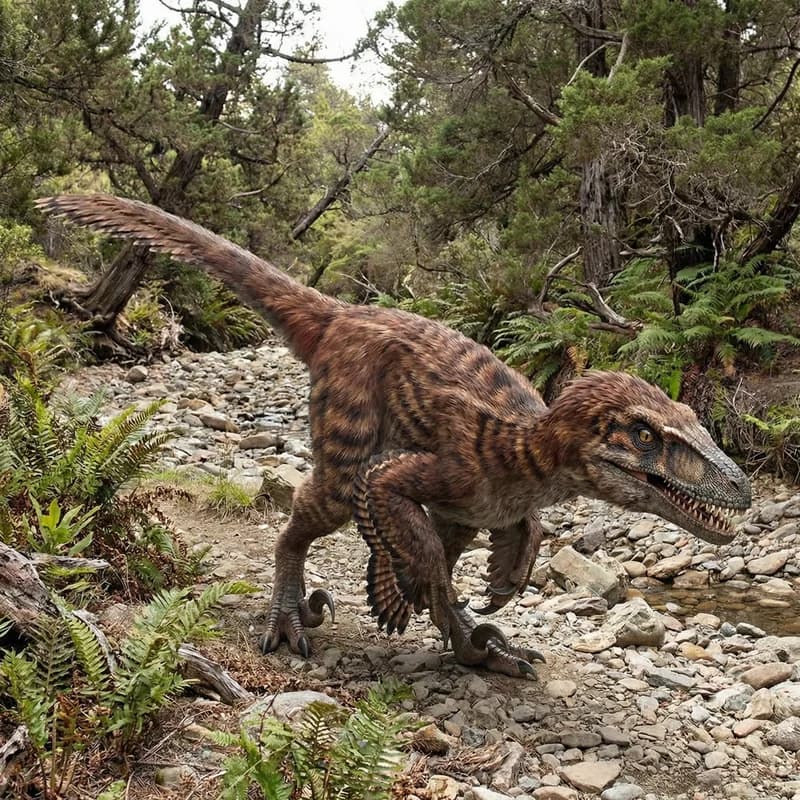
Dromaeosaurus
Dromaeosaurus albertensis
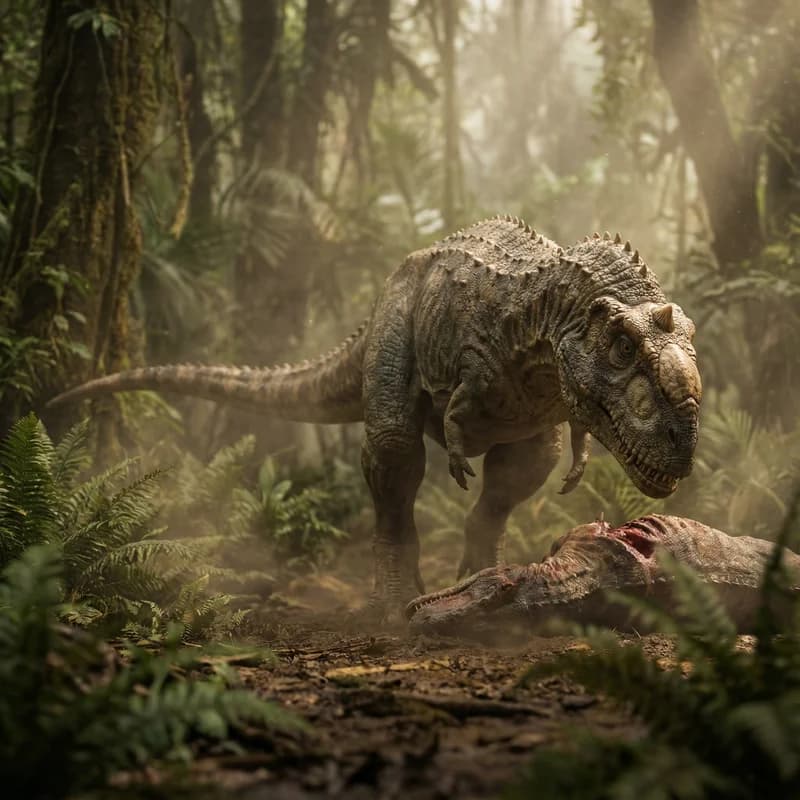
Majungasaurus
Majungasaurus crenatissimus

Microraptor
Microraptor zhaoianus
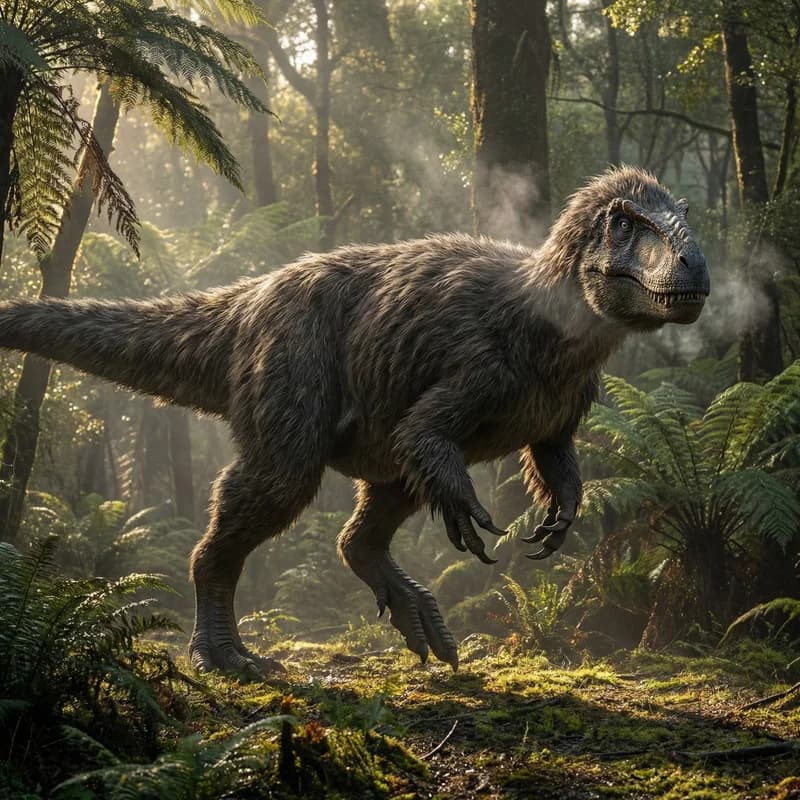
Yutyrannus
Yutyrannus huali

Carcharodontosaurus
Carcharodontosaurus saharicus

Utahraptor
Utahraptor ostrommaysi
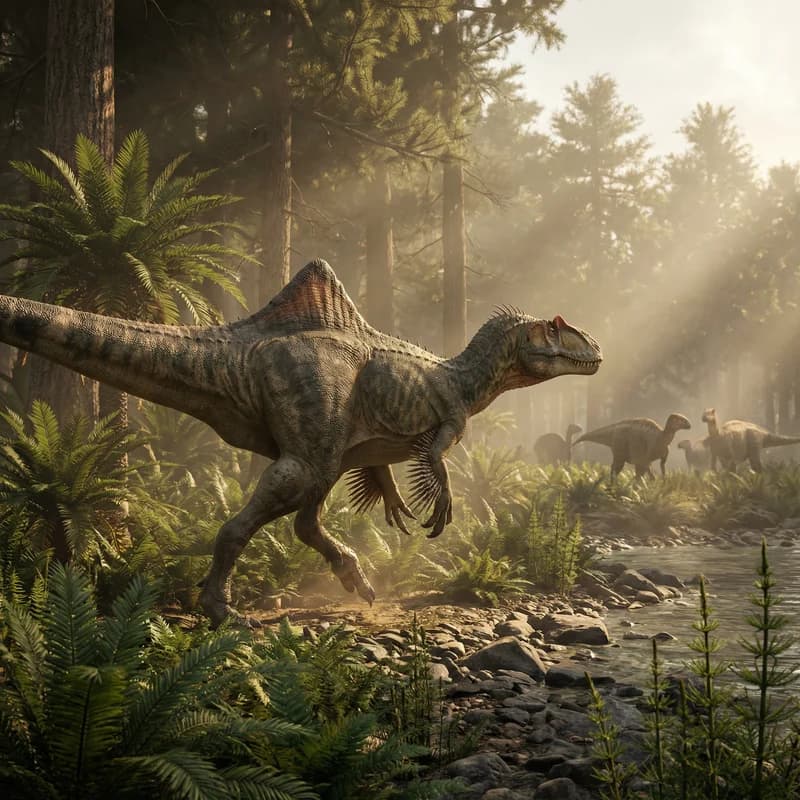
Concavenator
Concavenator corcovatus

Nanotyrannus
Nanotyrannus lancensis