Gallimimus
Cretaceous Period Omnivore Creature Type
Gallimimus bullatus
Scientific Name: "Gallus (chicken, Latin) + mimos (mimic, Greek) = chicken mimic; bullatus = from bulla, a golden capsule worn by Roman youth, referring to the bulbous parasphenoid structure at the base of the skull"
Local Name: Gallimimus
Physical Characteristics
Discovery
Habitat

Gallimimus bullatus (Osmólska, Roniewicz & Barsbold, 1972) is a large theropod dinosaur belonging to the family Ornithomimidae (Ornithomimosauria), which lived during the Late Cretaceous Maastrichtian stage (~70 Ma) in what is now the Gobi Desert of Mongolia. The generic name Gallimimus is a compound of the Latin gallus (chicken) and the Greek mimos (mimic), referring to the resemblance of the anterior cervical vertebrae to those of galliform birds. The specific epithet bullatus derives from the Latin bulla, a golden capsule worn by Roman youths around the neck, in reference to the distinctive bulbous, hollow structure formed by the parasphenoid bone at the base of the skull — a feature that had not been described from any other reptile at the time of naming (Osmólska et al., 1972).
Gallimimus is the largest known member of Ornithomimidae. Adults reached approximately 6 metres in body length, 1.9 metres in hip height, and an estimated body mass of 400–490 kilograms (Paul, 1988, 2016). Between 1963 and 1965, the Polish-Mongolian palaeontological expeditions recovered numerous ornithomimid specimens at various growth stages from several localities in the Nemegt Basin. In 1972, Halszka Osmólska, Ewa Roniewicz, and Rinchen Barsbold named the new genus and species based on the holotype specimen IGM 100/11 — a nearly complete adult skeleton discovered in 1964 by Zofia Kielan-Jaworowska at Tsaagan Khushuu. At the time, this represented the most complete and best-preserved ornithomimid material ever discovered, and the genus remains among the best-known members of the group (Osmólska et al., 1972).
The Nemegt Formation, from which all Gallimimus fossils are known, records a fluvial depositional environment dominated by braided river channels, floodplains, and shallow lakes, reconstructed as a humid ecosystem similar to the modern Okavango Delta in Botswana (Gradziński, 1970; Eberth, 2018). Gallimimus is the most commonly found ornithomimosaur in this formation and coexisted with other ornithomimosaurs such as Anserimimus and Deinocheirus, as well as large predators including the tyrannosaurid Tarbosaurus. The species gained widespread public recognition through its appearance in the 1993 film Jurassic Park, in a herd stampede scene that was a landmark achievement in computer-generated imagery for cinema.
Overview
Name and Etymology
The generic name Gallimimus combines the Latin gallus (chicken) and the Greek mimos (mimic), meaning "chicken mimic." This name refers to the anterior cervical vertebrae, whose structural similarities to those of galliform birds (Galliformes) were noted by the original describers (Osmólska et al., 1972). Despite the name, the overall body plan of Gallimimus far more closely resembles an ostrich than a chicken. The specific epithet bullatus is derived from the Latin bulla, a golden locket-like amulet given to noble Roman youths, and refers to the thin-walled, pear-shaped, hollow bulbous structure formed by the parasphenoid bone at the base of the skull. This structure has a shallow anteriorly directed furrow, and the original authors interpreted the opening as possibly homologous to Rathke's pouch. At the time of description, no comparable structure had been reported from any other reptile (Osmólska et al., 1972).
Taxonomic Position
Gallimimus belongs to the Saurischia (Theropoda), within the clade Ornithomimosauria, family Ornithomimidae. Ornithomimidae is a derived family within Ornithomimosauria, itself part of the clade Maniraptoriformes among coelurosaurian theropods. The family includes genera such as Ornithomimus, Struthiomimus, Rativates, and Archaeornithomimus, all of which share an ostrich-like body plan and cursorial adaptations. Phylogenetic analyses have consistently recovered Anserimimus, also from Mongolia, as the closest relative (sister taxon) of Gallimimus, with both forming a derived clade alongside North American ornithomimids (Kobayashi & Lü, 2003; Kobayashi & Barsbold, 2006; McFeeters et al., 2016). Early ornithomimosaurs possessed teeth, which were lost in more derived members of the group.
In 1994, Holtz grouped ornithomimosaurs and troodontids in a clade named Bullatosauria, based on shared features including the parasphenoid capsule (the feature that inspired the species name bullatus). However, Holtz (1998) subsequently found troodontids to be basal maniraptorans, meaning Bullatosauria became a junior synonym of Maniraptoriformes, and the clade has since fallen out of use.
Scientific Significance
Gallimimus has been instrumental in elucidating ornithomimid cranial and postcranial anatomy. The 1972 description provided the first detailed account of ornithomimid braincase structure, which had been poorly known. The genus also achieved cultural prominence through its depiction in the 1993 film Jurassic Park, where the herd stampede scene helped pioneer the use of computer-generated imagery (CGI) for dinosaurs in cinema and played a key role in reshaping public perception of dinosaurs as bird-like animals.
Geological and Temporal Context
Temporal Range
Gallimimus dates to the Late Cretaceous Maastrichtian stage, approximately 70 million years ago (~70 Ma). The Nemegt Formation has never been directly radiometrically dated, but the contained fauna (including Tarbosaurus and Saurolophus) and biostratigraphic comparison with the Edmonton and Oldman formations of North America support an early Maastrichtian age (Osmólska et al., 1972). Recent U–Pb apatite dating of Tarbosaurus teeth by Tanabe et al. (2023) constrained the depositional age of the middle Nemegt Formation to before 66.7 ± 2.5 Ma, supporting a Maastrichtian age, though whether deposition began in the late Campanian remains unresolved.
Formation and Lithology
All Gallimimus fossils come from the Nemegt Formation, distributed across the southern Gobi Desert of Mongolia. The formation is dominated by mudstones, siltstones, and sandstones, with occasional conglomerate interbeds. It exceeds 235 metres in total thickness and has been informally subdivided into lower, middle, and upper stratigraphic zones (Eberth, 2018): Zone 5 (fluvial, seasonally wet-dry), Zone 6 (mixed), and Zone 7. The holotype locality of Tsaagan Khushuu consists of silts, siltstones, mudstones, sands, and less frequent thin beds of sandstones (Gradziński et al., 1969).
Depositional Environment and Palaeoenvironment
The rock facies of the Nemegt Formation indicate the presence of river channels, mudflats, shallow lakes, and floodplains in a significantly more humid climate than the underlying Barun Goyot and Djadochta formations (Gradziński, 1970). Large river channels and soil deposits attest to the wetter conditions, although caliche deposits indicate periodic droughts. The overall environment has been compared to the modern Okavango Delta of Botswana (Holtz, 2014). Oxygen isotope (δ18O) analysis of Tarbosaurus tooth enamel by Owocki et al. (2020) suggests a mean annual temperature of approximately 7.6°C with monsoonal seasonal precipitation patterns comparable to those of modern Shijiazhuang, China, indicating a cold semi-arid to semi-humid climate.
The flora was dominated by araucarian conifers, with additional elements including ginkgophytes, horsetails (Equisetum), lotuses, and grasses (reeds). The aquatic fauna included molluscs, fish, turtles, and crocodylomorphs such as Shamosuchus. Mammals were rare, but several bird taxa have been recovered, including the enantiornithine Gurilynia, the hesperornithiform Judinornis, and Teviornis, a possible anseriform. The estimated palaeocoordinates are approximately 40.8°N, 90.2°E, slightly south of the current position of Mongolia, reflecting a warm-temperate to subtropical continental interior setting.
Specimens and Diagnostic Features
Holotype and Referred Specimens
The holotype, IGM 100/11 (formerly G.I.No.DPS 100/11 and MPD 100/11), was discovered in 1964 by Zofia Kielan-Jaworowska at Tsaagan Khushuu, Mongolia. It is a nearly complete adult skeleton preserved lying on its back, with the skull found beneath the pelvis. The specimen includes a skull (with a somewhat distorted snout and incomplete lower jaw), a vertebral series, pelvis, and most of the forelimbs and hindlimbs, with some hand and foot bones missing. The braincase is particularly well preserved, enabling the first detailed description of ornithomimid neurocranial structure (Osmólska et al., 1972).
Additional referred specimens include ZPAL MgD-I/1 (Tsaagan Khushuu, a subadult with a crushed skull missing the tip, damaged vertebrae, fragmented ribs, pectoral girdle and forelimbs, and an incomplete left hindlimb), ZPAL MgD-I/94 (Nemegt locality, a juvenile lacking skull, atlas, tail tip, pectoral girdle, and forelimbs), and IGM 100/10 (Bugeen Tsav, the smallest specimen, lacking pectoral girdle, forelimbs, and several vertebrae and ribs). Osmólska and colleagues listed 25 known specimens in total, nine of which were represented by single bones only. Specimens are housed primarily at the Mongolian Academy of Sciences Geological Institute (IGM/MPC) and the Polish Academy of Sciences Institute of Palaeobiology (ZPAL) (Osmólska et al., 1972).
Diagnostic Features
Gallimimus is distinguished from other ornithomimids by the following autapomorphies (Osmólska et al., 1972; Kobayashi & Barsbold, 2006): a proportionally long snout relative to total skull length; the snout tip being broad and rounded in dorsal view (U-shaped), contrasting with the V-shaped snout of North American ornithomimids; an infratemporal fenestra that is nearly triangular and smaller than that of Struthiomimus; the thin-walled, hollow, pear-shaped bulbous structure of the parasphenoid; a shovel-like anterior mandible creating a gap when the jaws are closed; an elongate but comparatively small mandibular fenestra; the manus having the smallest manus-to-humerus length ratio of any ornithomimosaur; the metatarsus exceeding 70% of the lower leg (tibia + astragalus) length; and an arctometatarsalian foot structure in which the third metatarsal is pinched at mid-length.
Limitations of the Material
The holotype IGM 100/11 has a somewhat distorted snout, an incomplete lower jaw, and some missing hand and foot bones. Juvenile specimens are comparatively incomplete, often lacking the pectoral girdle and forelimbs. Fossil poaching has become a serious problem in Mongolia in the 21st century. In 2017, Lee et al. reported a Gallimimus foot fossil (MPC-D100F/17) associated with trackways, with the rest of the skeleton apparently having been removed by poachers. In 2014, a slab with two Gallimimus specimens that had been illegally smuggled to the United States was repatriated to Mongolia.
Morphology and Function
Body Plan and Size
Gallimimus is the largest known ornithomimid. The adult holotype (IGM 100/11) measures approximately 6 metres in total body length, 1.9 metres in hip height, with a skull length of approximately 330 mm and a femur length of approximately 660 mm. Body mass is estimated at 400–490 kg (Paul, 1988, 2016). A juvenile specimen (ZPAL MgD-I/94) was approximately 2.15 metres long, 0.79 metres tall at the hip, and weighed an estimated 26–30 kg (Paul, 1988). Based on feather impressions and quill knobs found on the closely related Ornithomimus (Zelenitsky et al., 2012), Gallimimus was almost certainly feathered.
Skull
The skull was small and lightly built relative to the vertebral column. The snout was proportionally longer than in other ornithomimids, with a gently convex sloping upper profile. In dorsal view, the snout was spatulate (spoon-shaped), broad and rounded at the tip (U-shaped), differing from the acute (V-shaped) snout of North American ornithomimids. The orbits were large and laterally directed. The temporal region was deep, and the infratemporal fenestra was nearly triangular. Deep muscle scars were present on the posterior part of the skull roof along the parietal bone.
The most distinctive cranial feature of Gallimimus is the thin-walled, hollow, pear-shaped bulbous structure formed by the parasphenoid at the base of the skull. The internal nares were large and positioned far back on the palate due to an extensive secondary palate, a feature common to ornithomimids (Osmólska et al., 1972; Makovicky et al., 2004).
The delicate lower jaw consisted of thin bones, slender and shallow anteriorly, deepening towards the rear. The anterior mandible was shovel-like, similar to that of a common seagull, creating a gap between the jaw tips when closed. The mandible lacked a coronoid process and a supradentary bone, a feature shared with other beaked theropods (ornithomimosaurs, oviraptorosaurs, therizinosaurs, and birds) (Osmólska et al., 1972; Hurum, 2001).
Gallimimus was edentulous (toothless), with the front of the jaws covered by a keratinous rhamphotheca (horny beak) in life. The inner side of the beak bore small, tightly packed, evenly spaced columnar structures, whose function has been debated (see Diet section below).
Vertebral Column
The vertebral column comprised 64–66 vertebrae, fewer than in other ornithomimids: 10 cervicals, 13 dorsals, 5 sacrals, and 36–39 caudals. Centra were predominantly platycoelous, and many bore pneumatic foramina indicating air-filled internal chambers. Together with Deinocheirus and Archaeornithomimus, Gallimimus had the most extensively pneumatised skeleton among ornithomimosaurs (Watanabe et al., 2015).
The neck was divided into two structurally distinct sections. The anterior cervicals (axis through C4) had centra that were nearly triangular in lateral view with low neural arches and short, broad zygapophyses, resembling galliform birds. The posterior cervicals (C5–C10) had spool-like centra that became progressively taller, with long, thin zygapophyses. The neck was proportionally longer relative to the trunk than in other ornithomimids, and the animal held its neck at an estimated angle of 35 degrees from horizontal (Osmólska et al., 1972). The sacral neural spines were rectangular and broad, and unlike those of other ornithomimids, they were separate rather than fused.
Forelimbs
The forelimbs were comparatively weak, as in all ornithomimids. The humerus was long and twisted with a nearly circular cross-section. The deltopectoral crest was small, providing limited surface area for upper arm muscle attachment. The ulna was slender, long, and weakly curved; the olecranon process was prominent in adults but poorly developed in juveniles.
The manus (hand) was proportionally the shortest of any ornithomimosaur relative to humerus length but was otherwise similar in structure to other family members. It bore three digits: the first ("thumb") was the strongest, the second was the longest, and the third was the weakest. The unguals (claw bones) were strong, somewhat curved, and laterally compressed with a deep groove on each side. The hand was not prehensile and the thumb was not opposable. Osmólska et al. (1972) suggested the hands were used for raking or digging rather than bringing food to the mouth.
Hindlimbs
The hindlimbs were proportionally longer than in other theropods, adapted for rapid locomotion. The femur was nearly straight, long, and slender with a laterally compressed shaft. The tibia was straight and longer than the femur. The fibula was flat, thin, and broad at the upper end, narrowing distally.
The foot exhibited an arctometatarsalian structure: the lower half of the third metatarsal was broad when viewed end-on but narrowed abruptly at mid-length, wedging between the adjacent metatarsals. The third toe was proportionally shorter relative to the limb than in other ornithomimids. As in other ornithomimids, the hallux (first toe) was absent, and the pedal unguals were flat on their ventral surfaces.
Locomotion
Gallimimus was a highly cursorial (running-adapted) animal that likely relied on speed to escape predators. Thulborn (1982) estimated a top speed of 42–56 km/h (29–34 mph), while the Natural History Museum, London, estimates 47–55 km/h. These speeds are slower than those of modern ostriches (70–80 km/h), in part because the arms and tail added weight. Paul (1988) suggested that the reduced tail weight and absent hallux were adaptations for speed, and that ornithomimids could defend themselves by pecking and kicking but primarily relied on flight.
Pneumatisation of the skeleton is thought to have reduced the mass of large bones, potentially aiding locomotion, though its exact function in non-avian dinosaurs is not known with certainty. Other proposed functions include roles in thermoregulation, balance, and high metabolism (Watanabe et al., 2015).
Feathers
No feather impressions have been directly preserved with Gallimimus fossils. However, the closely related Ornithomimus preserves feather traces and quill knobs (bumps on the ulna indicating feather attachment points) (Zelenitsky et al., 2012). Juveniles bore only filamentous (hair-like) structures, while adults displayed wing-like structures, suggesting these originally functioned as secondary sexual characteristics used for courtship, display, or brooding rather than flight. Based on phylogenetic bracketing, it is considered virtually certain that Gallimimus was feathered.
Growth and Development
Skull shape and proportions changed significantly during ontogeny. The rear of the skull and the orbits decreased proportionally in size while the snout became relatively longer, changes paralleled in modern crocodilians. The skull was proportionally larger in juveniles, and the sloping upper profile of the snout was less distinct. Cervical ribs fused to the vertebrae only in adults. Forelimbs became proportionally longer during growth, whereas hindlimb bone proportions changed little (Osmólska et al., 1972; Hurum, 2001).
Pawlicki and Bolechała (1987) documented age-related differences in calcium and phosphorus content of Gallimimus bone, finding the highest ratios in young to middle-aged individuals. Rensberger and Watabe (2000) found that the canaliculi and collagen fibre bundles of Gallimimus and other ornithomimids were more akin to those of birds than mammals.
Diet and Ecology
The Diet Debate
The diet of Gallimimus has been a longstanding subject of debate. Osmólska et al. (1972) noted the high mobility of the anterior neck and the duck- or goose-like beak, suggesting Gallimimus fed on small, living prey swallowed whole. They proposed that the forelimbs were used for raking or digging to access food rather than bringing items to the mouth.
In 2001, Norell, Makovicky, and Currie reported a Gallimimus skull (IGM 100/1133) and an Ornithomimus skull preserving soft-tissue beak structures. They compared the columnar structures on the inner beak surface to the lamellae in anseriform (duck and goose) birds and proposed a filter-feeding hypothesis, finding the Northern shoveller the closest modern analogue. If correct, Gallimimus would have been one of the largest known terrestrial filter feeders (Makovicky et al., 2004).
However, Barrett (2005) argued that the columnar structures were rigid ridges rather than flexible bristles, more akin to those found in turtles and hadrosaurs, which use such ridges to crop tough vegetation. He further calculated that a 440 kg Gallimimus would need 0.07–3.34 kg of food per day depending on metabolic rate, an intake he considered unfeasible for a filter feeder. He also noted that ornithomimids were abundant in both mesic and arid environments, undermining the dependence on aquatic food sources. The discovery of gastroliths (gizzard stones) in some ornithomimids supports herbivory, as these indicate the presence of a gastric mill for grinding fibrous plant material.
Knutsen (2007) found that ornithomimid beak morphology, when compared to modern birds, was consistent with omnivory or high-fibre herbivory. Button and Zanno (2019) classified ornithomimid ornithomimosaurs as "gut-processing" herbivores characterized by gracile skulls and low bite forces. The current prevailing interpretation is that Gallimimus was an omnivore, with the Natural History Museum, London, stating that "the most likely answer is that Gallimimus was an omnivore, meaning it ate both plants and animals depending on what was available."
Ecological Niche
Gallimimus is the most commonly found ornithomimosaur in the Nemegt Formation, coexisting with other ornithomimosaurs including Anserimimus (Ornithomimidae) and Deinocheirus (Deinocheiridae). Predatory theropods in the same ecosystem included the large tyrannosaurid Tarbosaurus, the smaller Alioramus, and Bagaraatan. Herbivorous or omnivorous theropods included the therizinosaur Therizinosaurus and oviraptorosaurs such as Elmisaurus, Nemegtomaia, and Rinchenia. Herbivorous dinosaurs included the ankylosaurid Tarchia, the pachycephalosaur Prenocephale, large hadrosaurs such as Saurolophus and Barsboldia, and sauropods including Nemegtosaurus and Opisthocoelicaudia. Gallimimus likely relied on its speed to evade predators.
Social Behaviour
Evidence for gregarious behaviour comes from the discovery of multiple specimens at the same localities. Lee et al. (2017) reported a Gallimimus foot skeleton (MPC-D100F/17) found associated with a trackway at a site where multiple empty excavation pits at the same stratigraphic level suggested a possible bone bed representing a mass mortality event, perhaps due to drought or famine. The apparent synchronous death of multiple individuals supports the hypothesis that Gallimimus was a gregarious animal, consistent with evidence for group living in other ornithomimids.
Distribution and Palaeogeography
Locality Distribution
Gallimimus fossils are known exclusively from the Nemegt Basin in the southern Gobi Desert, Mongolia. Principal localities include Tsaagan Khushuu (holotype locality), Nemegt, Altan Uul IV, Naran Bulak, and Bugeen Tsav. A single ornithomimid vertebra from Japan, informally named "Sanchusaurus," was assigned to Gallimimus sp. (species indeterminate) by Dong Zhiming and colleagues in 1990 (Glut, 1997).
Palaeogeography
Estimated palaeocoordinates for the Nemegt Formation are approximately 40.8°N, 90.2°E, slightly south of Mongolia's current position, reflecting a warm-temperate to subtropical continental interior during the Late Cretaceous. Makovicky et al. (2004) proposed that most of the early evolutionary history of Ornithomimosauria took place in Asia, with one or two dispersal events across Beringia to North America during the Late Cretaceous. Following the isolation of Europe from Asia by the Turgai Strait, ornithomimosaurs were largely restricted to Asia and North America.
Phylogeny and Taxonomic Debates
Phylogenetic Position
Osmólska et al. (1972) assigned Gallimimus to Ornithomimidae and considered the North American Struthiomimus its closest relative. In 1975, Kielan-Jaworowska noted that the rounded beak of Gallimimus (similar to a goose or duck) contrasted with the pointed beaks of North American ornithomimids, a difference that in modern birds would place them in separate families. Subsequent analyses by Kobayashi and Lü (2003) and Kobayashi and Barsbold (2006) recovered Anserimimus as the sister taxon to Gallimimus, with both forming a derived clade alongside North American genera.
The phylogenetic analysis of McFeeters et al. (2016) recovered the following relationships within Ornithomimidae:
| Taxon | Region | Formation | Position in Cladogram |
|---|---|---|---|
| Archaeornithomimus | China | Iren Dabasu Fm. | Basal Ornithomimidae |
| Sinornithomimus | China | Ulansuhai Fm. | Basal Ornithomimidae |
| Gallimimus | Mongolia | Nemegt Fm. | Derived Ornithomimidae |
| Rativates | Canada (Alberta) | Dinosaur Park Fm. | Derived Ornithomimidae |
| Struthiomimus | Canada (Alberta) | Dinosaur Park Fm. | Derived Ornithomimidae |
| Qiupalong | China / Canada | Multiple formations | Derived Ornithomimidae |
| Anserimimus | Mongolia | Nemegt Fm. | Derived Ornithomimidae |
| Ornithomimus | Canada / USA | Horseshoe Canyon Fm. etc. | Derived Ornithomimidae |
Species-Level Taxonomy and Synonymy
In 1988, Gregory S. Paul synonymised Gallimimus with Ornithomimus, creating the combination Ornithomimus bullatus. In 2010, he listed it as "Gallimimus (or Struthiomimus) bullatus" but reverted to Gallimimus bullatus by 2016. Most workers maintain Gallimimus as a valid, separate genus. In 2000, Currie proposed that Anserimimus was a junior synonym of Gallimimus, but Kobayashi and Barsbold (2006) rejected this, pointing out several morphological differences.
Barsbold informally referred to a nearly complete skeleton (IGM 100/14) as "Gallimimus mongoliensis," but Kobayashi and Barsbold (2006) noted that it differs from Gallimimus in some details and probably belongs to a different genus. This specimen has not been formally described.
Reconstruction and Uncertainty
Confirmed Facts vs. Hypotheses
Confirmed: Gallimimus is the largest known ornithomimid, characterised by a toothless keratinous beak with a distinctive U-shaped snout, a diagnostic bulbous parasphenoid structure, long hindlimbs with an arctometatarsalian foot, and the shortest manus-to-humerus ratio of any ornithomimosaur. It is the most common ornithomimosaur in the Nemegt Formation. The holotype is a nearly complete skeleton.
Well-supported hypotheses: Gallimimus was feathered, based on phylogenetic bracketing and direct evidence from the closely related Ornithomimus (Zelenitsky et al., 2012). An omnivorous diet is the most widely accepted interpretation.
Uncertain or debated: The exact function of the columnar beak structures (filter-feeding vs. herbivory); the precise top speed (42–56 km/h or 47–55 km/h depending on the study); the exact body mass (estimation methods vary); the degree and nature of gregarious behaviour; the taxonomic status of "Gallimimus mongoliensis" (IGM 100/14); and the precise age of the Nemegt Formation.
Popular Media vs. Science
In the 1993 film Jurassic Park, Gallimimus was depicted as a flock of fast-running, bird-like animals in a stampede scene that emphasised their avian-like flocking behaviour. The scene was animated by tracing footage of running ostriches, with herding gazelle footage also referenced. Smaller individuals were shown in the centre of the group as if being protected. The scene was originally planned as stop-motion but was converted to CGI after Industrial Light & Magic produced convincing test animations, marking a watershed moment in visual effects history.
However, the film depicted Gallimimus without feathers, using scaly skin — an inaccuracy by current scientific understanding, as feathering is now considered virtually certain. The film also showed Tyrannosaurus rex preying on Gallimimus, but in reality T. rex lived in North America while Gallimimus lived in Asia; the actual predator of Gallimimus was Tarbosaurus, a closely related tyrannosaurid from the same formation. The speeds implied in the film may also exceed the academic estimates of 42–56 km/h.
Comparisons with Related and Contemporaneous Taxa
| Taxon | Scientific Name | Estimated Length | Family | Key Features |
|---|---|---|---|---|
| Gallimimus | Gallimimus bullatus | ~6 m | Ornithomimidae | Largest ornithomimid, U-shaped snout, parasphenoid capsule |
| Anserimimus | Anserimimus planinychus | ~3 m | Ornithomimidae | Flattened claws (name means "goose mimic with flat claws"), inferred sister taxon |
| Deinocheirus | Deinocheirus mirificus | ~11 m | Deinocheiridae | Enormous forelimbs (~2.4 m), dorsal sail, gastroliths and fish remains in gut |
Gallimimus and Anserimimus are inferred to be sister taxa based on multiple phylogenetic analyses, while Deinocheirus belongs to the separate family Deinocheiridae within Ornithomimosauria and was a much larger, heavily built, non-cursorial animal with a distinctive hump-backed profile.
Fun Facts
FAQ
📚References
- Osmólska, H., Roniewicz, E., & Barsbold, R. (1972). A new dinosaur, Gallimimus bullatus n. gen., n. sp. (Ornithomimidae) from the Upper Cretaceous of Mongolia. Palaeontologia Polonica, 27, 103–143. PDF
- Kobayashi, Y., & Barsbold, R. (2006). Ornithomimids from the Nemegt Formation of Mongolia. Journal of the Paleontological Society of Korea, 22, 195–207.
- Kobayashi, Y., & Lü, J.-C. (2003). A new ornithomimid dinosaur with gregarious habits from the Late Cretaceous of China. Acta Palaeontologica Polonica, 48(2), 235–259.
- Gradziński, R. (1970). Sedimentation of dinosaur-bearing upper Cretaceous deposits of the Nemegt Basin, Gobi Desert. Palaeontologia Polonica, 21, 147–229.
- Eberth, D. A. (2018). Stratigraphy and paleoenvironmental evolution of the dinosaur-rich Baruungoyot-Nemegt succession (Upper Cretaceous), Nemegt Basin, southern Mongolia. Palaeogeography, Palaeoclimatology, Palaeoecology, 494, 29–50. DOI: 10.1016/j.palaeo.2017.11.018
- Owocki, K., Kremer, B., Cotte, M., & Bocherens, H. (2020). Diet preferences and climate inferred from oxygen and carbon isotopes of tooth enamel of Tarbosaurus bataar (Nemegt Formation, Upper Cretaceous, Mongolia). Palaeogeography, Palaeoclimatology, Palaeoecology, 537, 109190. DOI: 10.1016/j.palaeo.2019.05.012
- Paul, G. S. (2016). The Princeton Field Guide to Dinosaurs (2nd ed.). Princeton University Press.
- Thulborn, R. A. (1982). Speeds and gaits of dinosaurs. Palaeogeography, Palaeoclimatology, Palaeoecology, 38, 227–256. DOI: 10.1016/0031-0182(82)90005-090005-0)
- Norell, M. A., Makovicky, P. J., & Currie, P. J. (2001). The beaks of ostrich dinosaurs. Nature, 412, 873–874. DOI: 10.1038/35091139
- Barrett, P. M. (2005). The diet of ostrich dinosaurs (Theropoda: Ornithomimosauria). Palaeontology, 48(2), 347–358. DOI: 10.1111/j.1475-4983.2005.00448.x
- Zelenitsky, D. K., Therrien, F., Erickson, G. M., DeBuhr, C. L., Kobayashi, Y., Eberth, D. A., & Hadfield, F. (2012). Feathered non-avian dinosaurs from North America provide insight into wing origins. Science, 338(6106), 510–514. DOI: 10.1126/science.1225376
- Watanabe, A., Gold, M. E. L., Brusatte, S. L., Prokop, S., Norell, M. A., & Balanoff, A. M. (2015). Vertebral pneumaticity in the ornithomimosaur Archaeornithomimus (Dinosauria: Theropoda) revealed by computed tomography imaging and reappraisal of axial pneumaticity in Ornithomimosauria. PLOS ONE, 10(12), e0145168. DOI: 10.1371/journal.pone.0145168
- Lee, H.-J., Lee, Y.-N., Fiorillo, A. R., & Lü, J.-C. (2017). Theropod trackways associated with a Gallimimus foot skeleton from the Nemegt Formation, Mongolia. Palaeogeography, Palaeoclimatology, Palaeoecology, 494, 160–167. DOI: 10.1016/j.palaeo.2017.10.020
- Holtz, T. R. (1994). The phylogenetic position of the Tyrannosauridae: implications for theropod systematics. Journal of Paleontology, 68(5), 1100–1117.
- Tanabe, M., Aoki, K., Chiba, K., et al. (2023). Apatite U–Pb dating of dinosaur teeth from the Upper Cretaceous Nemegt Formation in the Gobi Desert, Mongolia. Island Arc, 32(1), e12488. DOI: 10.1111/iar.12488
- McFeeters, B., Ryan, M. J., Schröder-Adams, C., & Currie, P. J. (2016). A new ornithomimid theropod from the Dinosaur Park Formation of Alberta, Canada. Journal of Vertebrate Paleontology, 36(6), e1221415. DOI: 10.1080/02724634.2016.1221415
- Button, D. J., & Zanno, L. E. (2019). Repeated evolution of divergent modes of herbivory in non-avian dinosaurs. Current Biology, 30(1), 158–168.e4. DOI: 10.1016/j.cub.2019.10.050
- Makovicky, P. J., Kobayashi, Y., & Currie, P. J. (2004). Ornithomimosauria. In D. B. Weishampel, P. Dodson, & H. Osmólska (Eds.), The Dinosauria (2nd ed., pp. 137–150). University of California Press.
- Hurum, J. H. (2001). Lower jaw of Gallimimus bullatus. Acta Palaeontologica Polonica, 46(2), 241–255.
- Paul, G. S. (1988). Predatory Dinosaurs of the World. Simon & Schuster.
- Knutsen, E. M. (2007). Beak morphology in extant birds with implications for the diet of ornithomimids. Journal of Vertebrate Paleontology, 27(3, Supplement), 101A.
- Gradziński, R., Kaźmierczak, J., & Lefeld, J. (1969). Geographical and geological data from the Polish-Mongolian palaeontological expeditions. Palaeontologica Polonica, 19, 33–82.
- Kielan-Jaworowska, Z. (2013). In Pursuit of Early Mammals. Indiana University Press.
Gallery
5 images Gallimimus
Gallimimus · Cretaceous Period · Omnivore
 Gallimimus
Gallimimus · Cretaceous Period · Omnivore
 Gallimimus
Gallimimus · Cretaceous Period · Omnivore
 Gallimimus
Gallimimus · Cretaceous Period · Omnivore
 Gallimimus
Gallimimus · Cretaceous Period · Omnivore
🔗Related Creatures
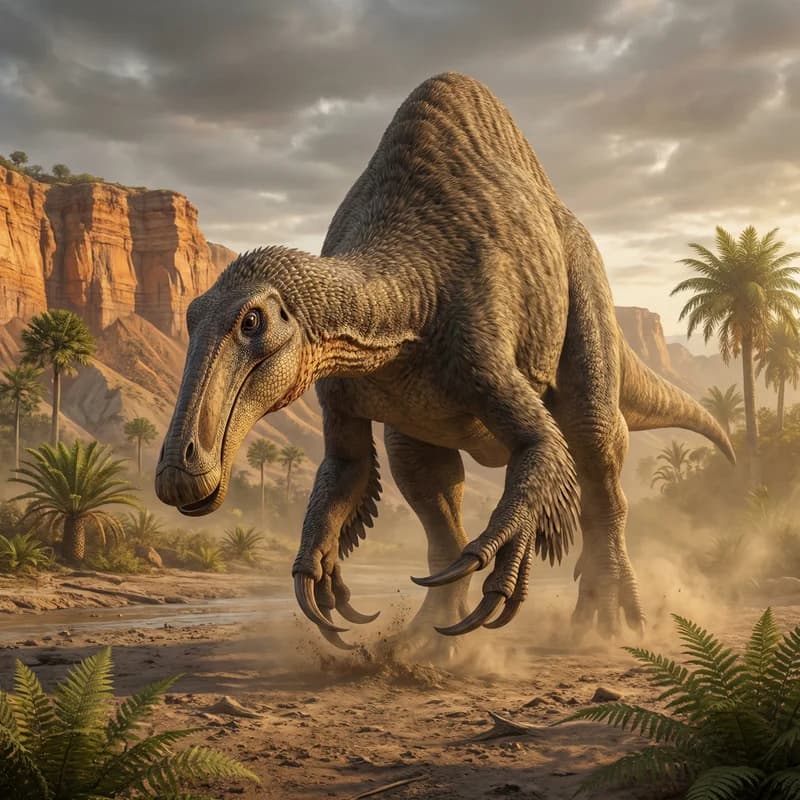
Deinocheirus
Deinocheirus mirificus
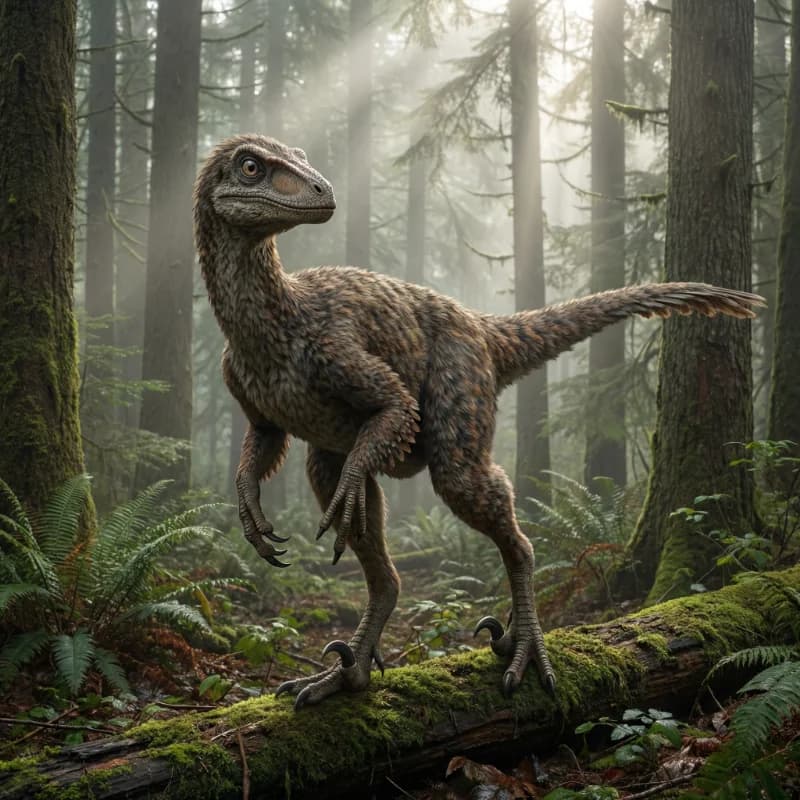
Troodon
Troodon formosus
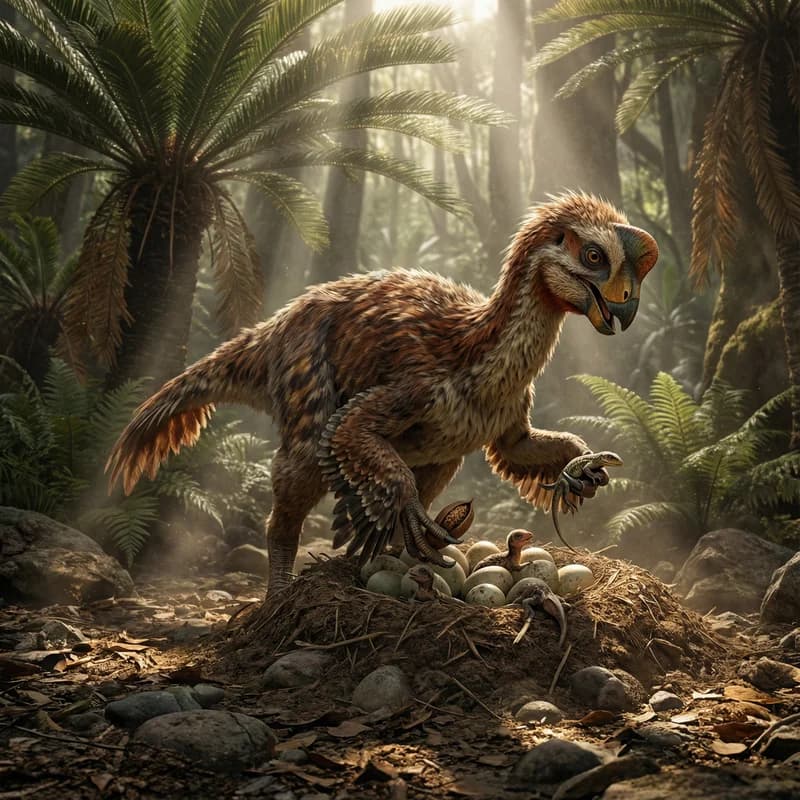
Oviraptor
Oviraptor philoceratops
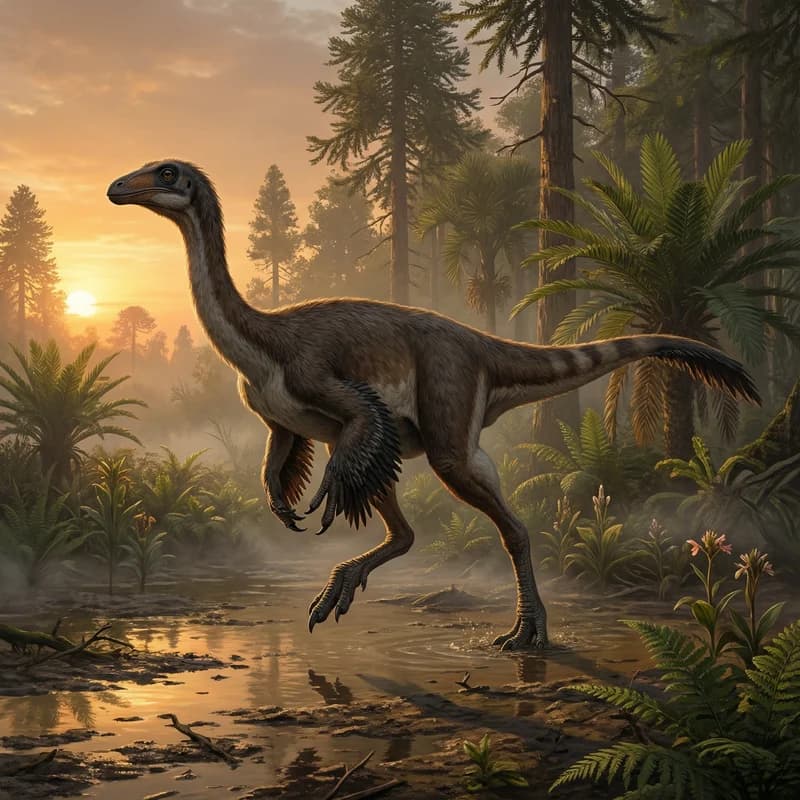
Ornithomimus
Ornithomimus velox
Arkansaurus
Arkansaurus fridayi
Doolysaurus
Doolysaurus huhmini
Struthiomimus
Struthiomimus altus
Caudipteryx
Caudipteryx zoui