Ornithomimus
Cretaceous Period Omnivore Creature Type
Ornithomimus velox
Scientific Name: "Greek ornis (ὄρνις, 'bird') + mimos (μῖμος, 'mimic') = 'bird mimic'. The specific name velox is Latin for 'swift'"
Local Name: Ornithomimus
Physical Characteristics
Discovery
Habitat
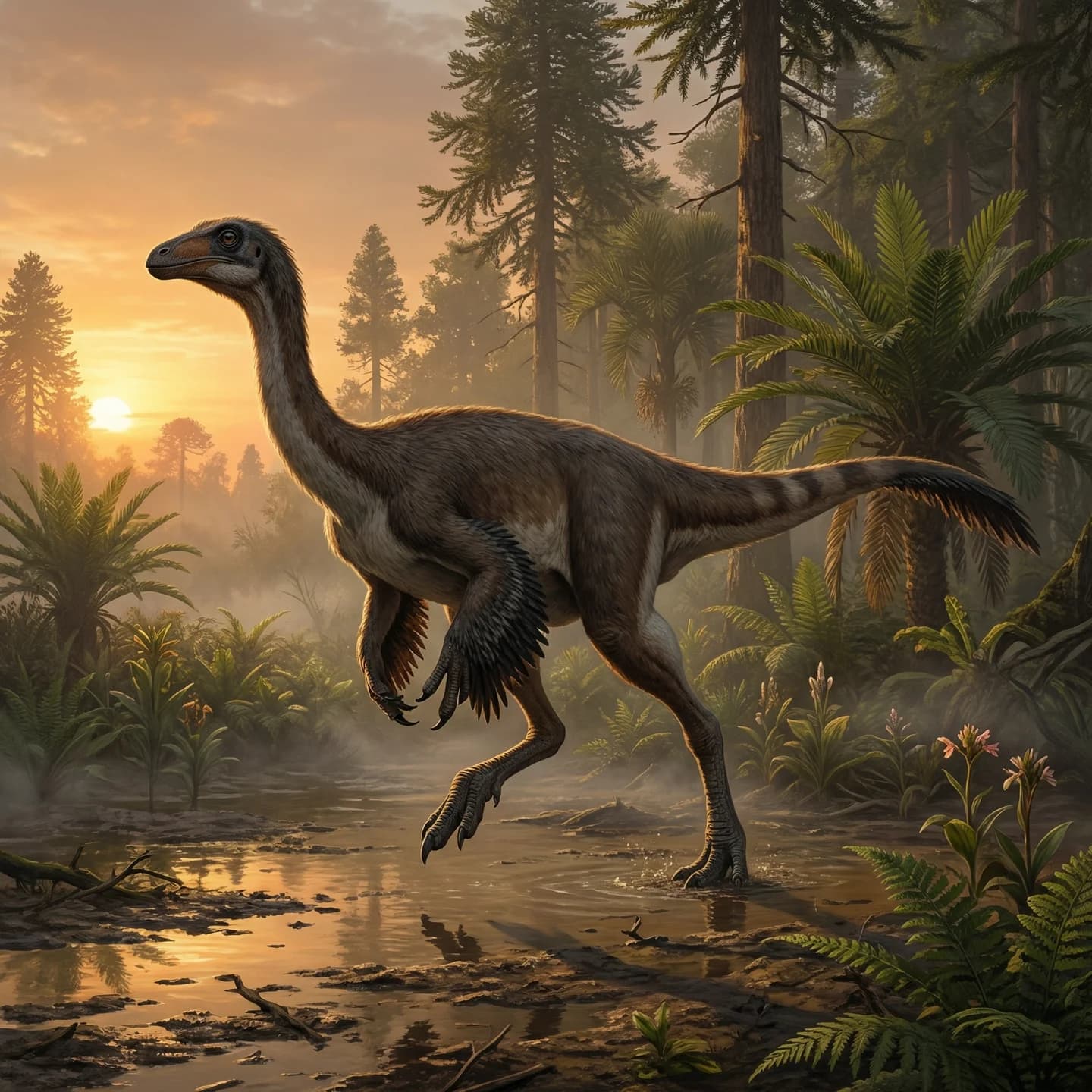
Ornithomimus (Ornithomimus Marsh, 1890) is a medium-sized ornithomimid (Ornithomimidae) theropod dinosaur that lived in western North America during the Late Cretaceous (Campanian to Maastrichtian, approximately 76.5–66 Ma). The generic name is derived from the Greek words ornis ('bird') and mimos ('mimic'), meaning 'bird mimic,' a reference to the bird-like structure of its feet. The specific name of the type species, velox, is Latin for 'swift.' The genus was first erected by Othniel Charles Marsh in 1890 on the basis of a partial hindlimb and forelimb (syntypes YPM 542 and YPM 548) recovered from the Denver Formation of Colorado.
Ornithomimus was a bipedal, ostrich-like dinosaur characterized by a long, slender neck, a small skull with a toothless beak, elongate and gracile forelimbs and hindlimbs, large eyes, and a relatively large braincase. Based on O. edmontonicus (Sternberg, 1933), body length is estimated at approximately 3.8 m and body mass at around 170 kg (Paul, 2010). A series of landmark studies beginning in 2012 revealed direct feather preservation in multiple Ornithomimus specimens: juveniles bore filamentous plumage covering the body, while adults additionally possessed pennaceous feather shafts on the forearms, suggesting that wing-like structures evolved for purposes other than flight, possibly mating display (Zelenitsky et al., 2012). These discoveries made Ornithomimus the first ornithomimid from North America with direct evidence of feathers, providing critical data for understanding plumage evolution in non-avian dinosaurs.
Two species are currently considered valid: the type species O. velox (Marsh, 1890) and O. edmontonicus (Sternberg, 1933). The most complete skeletal material belongs to O. edmontonicus, known from several nearly complete skeletons from the Horseshoe Canyon Formation of Alberta, Canada. The type species O. velox is based on comparatively fragmentary material, and the phylogenetic relationship between the two species has not yet been formally tested in a published cladistic analysis. A third species, O. samueli (Parks, 1928), is sometimes included but its status remains debated.
Overview
Name and Etymology
The generic name Ornithomimus combines the Greek ornis (ὄρνις, 'bird') and mimos (μῖμος, 'mimic'), meaning 'bird mimic.' Marsh chose the name because the foot structure of this dinosaur closely resembled that of modern birds. The specific name velox is Latin for 'swift,' alluding to the animal's presumed running ability (Marsh, 1890).
Taxonomic Status and Valid Species
Over the course of its taxonomic history, more than seventeen species have been named within Ornithomimus, but the vast majority have since been reassigned to other genera or recognized as nomina dubia. The two species currently accepted as valid are summarized below.
| Species | Author / Year | Type Specimen | Formation | Age |
|---|---|---|---|---|
| O. velox | Marsh, 1890 | YPM 542 + YPM 548 (syntypes) | Denver Formation, Colorado | Late Maastrichtian |
| O. edmontonicus | Sternberg, 1933 | CMN 8632 | Horseshoe Canyon Fm., Alberta | Early Maastrichtian |
O. samueli (Parks, 1928; originally Struthiomimus samueli) is included within Ornithomimus by some authors (Longrich, 2008), but others treat it as a distinct, undescribed species or retain it in Dromiceiomimus. O. sedens (Marsh, 1892), from the Lance Formation of Wyoming, is currently most often referred to Struthiomimus sedens.
Significance in One Sentence
Ornithomimus is the first ornithomimid dinosaur from North America for which direct feather preservation has been documented, providing pivotal evidence for understanding plumage evolution and wing origins in non-avian theropods.
Temporal Range, Stratigraphy, and Depositional Environment
Temporal Range
The genus Ornithomimus spans the Campanian through Maastrichtian stages of the Late Cretaceous, approximately 76.5–66 Ma (Claessens & Loewen, 2015). O. edmontonicus is known from the early Maastrichtian Horseshoe Canyon Formation (approximately 72.6–69.6 Ma). O. velox comes from the late Maastrichtian Denver Formation. Specimens from the Dinosaur Park Formation, tentatively referred to Ornithomimus sp., date to the Campanian (approximately 76.5–75 Ma), representing the oldest records of the genus.
Formations and Lithology
Horseshoe Canyon Formation: This unit crops out across the southern Alberta plains and is approximately 265 m thick. It consists of interbedded mudstones, sandstones, carbonaceous shales, and coal seams deposited in a paralic-to-continental setting that records regression–transgression cycles of the Western Interior Seaway (Eberth, 2012). Sedimentary facies range from floodplain to estuarine and coastal environments.
Denver Formation: Located in the Denver Basin of Colorado, this unit is composed of sandstone, mudstone, and claystone, spanning the late Maastrichtian to early Paleocene. Basaltic lava flows occur in the upper portion of the formation.
Dinosaur Park Formation: The uppermost unit of the Belly River Group in southern Alberta, consisting of interbedded sandstone and mudstone, indicative of coastal plain to fluvial floodplain environments.
Paleoenvironment
The depositional setting for O. edmontonicus in the Horseshoe Canyon Formation reflects a coastal-to-inland floodplain environment that formed as the Western Interior Seaway retreated westward. Under warm-temperate to subtropical climatic conditions, the landscape supported lush vegetation, extensive river floodplains, and coal swamps. Notably, the feather-preserving specimens were recovered from sandstone — a lithology previously considered unlikely to preserve soft tissues — highlighting the exceptional preservation potential of these deposits (Zelenitsky et al., 2012).
Specimens and Diagnostic Characters
Holotype and Key Specimens
Type species O. velox syntypes: YPM 542 (partial left hindlimb — distal tibia and foot) + YPM 548 (partial forelimb — metacarpals and phalanges). Collected by George Lyman Cannon from the Denver Formation of Colorado on June 30, 1889. Claessens & Loewen (2015) re-prepared and redescribed these specimens, re-establishing the diagnostic framework for the genus.
O. edmontonicus holotype: CMN 8632 — a nearly complete skeleton. Collected and named by Charles Mortram Sternberg in 1933 from the Horseshoe Canyon Formation of Alberta. Additional referred specimens include AMNH 5201, ROM 797, ROM 851, ROM 852, and CMN 12228.
Feathered specimens: TMP 1995.110.1 (adult; carbonized traces on forearm indicating pennaceous feather shafts), TMP 2008.070.0001 (juvenile, approximately 1 year old; filamentous plumage up to 5 cm long covering the rump, legs, and neck), TMP 2009.110.0001 (adult; forearm feather traces) — all described by Zelenitsky et al. (2012). TMP 2012.036.0001 (tail feathers and skin impressions preserved) — described by van der Reest et al. (2015).
Diagnosis
According to the redescription by Claessens & Loewen (2015), the genus-level diagnosis of Ornithomimus is based on metacarpal proportions: metacarpal I is longer than metacarpal II, which in turn is longer than metacarpal III (this proportion differs in Struthiomimus). Additional distinguishing features include slender, straight hand and foot claws, a relatively short torso, and elongate, gracile forelimbs, as well as hand bones and fingers of similar lengths (Makovicky et al., 2004).
Limitations of the Type Material
The type species O. velox is based on very fragmentary material (a foot and partial hand). Claessens & Loewen (2015) concluded that only the holotype specimen can be confidently referred to this species. The Kaiparowits Formation specimen MNA P1 1762A, previously attributed to O. velox, was reassigned to Ornithomimus sp. (Zanno et al., 2010; Claessens & Loewen, 2015).
Morphology and Functional Anatomy
Body Size
Paul (2010) estimated the length of O. edmontonicus at approximately 3.8 m (12 ft) and its body mass at around 170 kg (370 lb). Specimen CMN 12228 preserves a femur 46.8 cm long. The O. velox type specimen represents a smaller individual, with the second metacarpal measuring only 53 mm compared to 84 mm in the O. edmontonicus holotype CMN 8632. The genus-level size range is commonly estimated at approximately 3.0–3.8 m in length and 80–220 kg in mass, though considerable uncertainty exists. Hip height is estimated at approximately 1.2–1.5 m, with the head reaching approximately 2.1 m above the ground.
Skull and Beak
Ornithomimus possessed a small, lightweight skull equipped with a toothless keratinous beak (keratinized rhamphotheca). The large orbits suggest keen visual acuity and potentially nocturnal or crepuscular habits (Palmer, 1999). The braincase was relatively large for a non-avian dinosaur, though this was likely related to kinesthetic coordination rather than advanced cognition.
Forelimbs
The forelimbs were long and slender, terminating in three fingers with straight, narrow claws. The hand bones and fingers are of similar lengths, a feature that distinguishes Ornithomimus from Struthiomimus. Henry Fairfield Osborn noted that the hands bore a remarkable resemblance to sloth claws and suggested they may have been used to hook branches during feeding.
Hindlimbs and Locomotion
The hindlimbs were very long and robust, with the tibia approximately 20% longer than the femur — a hallmark of cursorial (running-adapted) morphology. The elongate metatarsus further supports this interpretation. Speed estimates vary widely depending on the model employed, generally ranging from approximately 40–60 km/h (with some estimates reaching approximately 70 km/h), placing Ornithomimus among the fastest known dinosaurs. However, such estimates carry significant uncertainty due to model assumptions.
Feathers and Integument
Zelenitsky et al. (2012) reported feather evidence from three O. edmontonicus specimens. The juvenile (TMP 2008.070.0001, approximately 1 year old) preserved filamentous plumage up to 5 cm long covering the rump, legs, and neck. Two adult specimens (TMP 1995.110.1, TMP 2009.110.0001) preserved carbonized traces on the forearms consistent with pennaceous feather shafts. This ontogenetic pattern — filamentous down in juveniles, wing-like pennaceous feathers appearing only in adults — suggests that wing structures evolved for reproductive display rather than flight.
Van der Reest et al. (2015) described a fourth feathered specimen (TMP 2012.036.0001) from the lower Dinosaur Park Formation, the first to preserve tail feathers. The feather structure and distribution bore strong similarities to those of an ostrich. Skin impressions indicated bare skin from mid-thigh to the feet, along with a skin flap connecting the upper thigh to the torso, analogous to structures found in modern birds, though positioned higher above the knee.
Foth et al. (2014) cautioned that the forearm feather traces are not necessarily pennaceous, noting that the monofilamentous wing feathers of cassowaries could leave similar carbonized traces.
Diet and Ecology
Dietary Debate
The diet of ornithomimids has long been debated. Barrett (2005) argued on the basis of the keratinized rhamphotheca (beak) and the presence of gastroliths (stomach stones) in several ornithomimid specimens that these animals were primarily herbivorous. The gastroliths suggest a gastric mill function analogous to that of modern grain-eating birds, which would have aided in the processing of plant material. Traditionally, however, ornithomimids have been interpreted as omnivorous, with a suggested diet including insects, crustaceans, fruit, leaves, branches, eggs, lizards, and small mammals. Given the versatile nature of the toothless beak, the most widely accepted interpretation is an omnivorous to primarily herbivorous diet with opportunistic consumption of small animals.
Ecological Niche
Ornithomimus occupied the niche of a medium-sized herbivorous to omnivorous theropod in Late Cretaceous North American ecosystems. Contemporaneous fauna from the Horseshoe Canyon Formation included the tyrannosaurid Albertosaurus, ceratopsians such as Anchiceratops and Pachyrhinosaurus, hadrosaurids including Edmontosaurus and Hypacrosaurus, the ankylosaurid Anodontosaurus, and the caenagnathid Epichirostenotes. Likely predators of Ornithomimus included Albertosaurus and dromaeosaurids.
Social Behavior
Cullen et al. (2013) described an ornithomimid bonebed from the Horseshoe Canyon Formation — the first ornithomimid bonebed discovered in North America and the fourth such record for the clade globally. The assemblage preserves partial skeletons of at least three individuals and provides strong evidence for gregarious (herding) behavior. This finding complements the Sinornithomimus bonebed from China (Kobayashi & Lü, 2003), collectively supporting the hypothesis that social behavior was widespread among ornithomimids.
Potential Nocturnality
The large orbits of Ornithomimus suggest exceptional visual acuity, and some researchers have interpreted this as evidence for nocturnal or crepuscular activity patterns (Palmer, 1999).
Distribution and Paleogeography
Geographic Distribution
Ornithomimus fossils are concentrated in western North America. The primary localities are the Horseshoe Canyon Formation and Dinosaur Park Formation of Alberta, Canada; the Denver Formation of Colorado; the Lance and Ferris Formations of Wyoming; and the Kaiparowits Formation of Utah. Material from the Navesink Formation of New Jersey and Maryland was formerly referred to Ornithomimus as O. antiquus, but it is now regarded as an indeterminate ornithomimosaur and a nomen dubium (Weishampel, 2004).
Paleogeographic Interpretation
Paleomagnetic data indicate that the Alberta region where O. edmontonicus lived was situated at approximately 53°N paleolatitude and approximately -62°W paleolongitude. During this interval, the Western Interior Seaway was progressively retreating, expanding inland and coastal environments across the continent of Laramidia. A warm-temperate to subtropical climate supported a diverse flora and fauna, creating rich ecosystems across floodplain, estuarine, and swamp habitats.
Phylogeny and Taxonomic Debates
Position within Ornithomimidae
Marsh (1890) originally placed Ornithomimus within Ornithomimosauria, a classification that remains standard. In modern cladistic analyses, Ornithomimus occupies a derived position within Ornithomimidae. In the analysis of Xu et al. (2011), Ornithomimidae includes Qiupalong as a sister taxon, with Ornithomimus, Struthiomimus, and the Dry Island specimens forming an unresolved polytomy within the family. A similar topology was recovered by McFeeters et al. (2016) in the description of Rativates.
The Dromiceiomimus Synonymy
Dale Russell (1972) erected Dromiceiomimus (meaning 'emu mimic') based on morphometric analysis of ornithomimid proportions, separating it from both Ornithomimus and Struthiomimus. However, Makovicky et al. (2004) re-analyzed Russell's proportional data and concluded that Dromiceiomimus is a junior subjective synonym of O. edmontonicus. This synonymy has been accepted by most subsequent workers.
Relationship Between O. velox and O. edmontonicus
A key unresolved issue is that no published cladistic analysis has directly tested the phylogenetic relationship between the two valid species. Claessens & Loewen (2015) retained both within a single genus based on shared metacarpal proportions, but only O. edmontonicus has been included in formal phylogenetic analyses to date.
Reconstruction and Uncertainty
Well-Established Facts
That Ornithomimus was a bipedal, toothless-beaked theropod belonging to Ornithomimidae is firmly established. The feather evidence from multiple independent O. edmontonicus specimens (Zelenitsky et al., 2012; van der Reest et al., 2015) conclusively demonstrates that this animal was feathered.
Probable but Unconfirmed
Speed estimates (approximately 40–70 km/h), an omnivorous to herbivorous diet, and gregarious behavior are supported by multiple lines of indirect evidence but lack definitive confirmation.
Hypothetical
The function of adult pennaceous forearm feathers (display, brooding, thermoregulation, or some combination) remains speculative. Foth et al. (2014) noted that the forearm feather traces need not necessarily represent pennaceous feathers, as the monofilamentous wing feathers of cassowaries could produce similar preservation patterns.
Popular Media vs. Scientific Consensus
In popular media, Ornithomimus has traditionally been depicted as a scaly 'ostrich dinosaur,' but since 2012, the scientific standard is a fully feathered reconstruction. Additionally, popular sources often exaggerate the running speed to 60–70+ km/h, whereas academic estimates vary considerably depending on the biomechanical model employed and should be treated with caution.
Comparison with Related Taxa
The following table compares Ornithomimus with closely related ornithomimid genera.
| Genus | Age (Ma) | Region | Est. Length (m) | Est. Mass (kg) | Key Features |
|---|---|---|---|---|---|
| Ornithomimus | 76.5–66 | Western North America | 3.0–3.8 | 100–170 | Slender straight claws, short torso, long forelimbs |
| Struthiomimus | 76.5–72 | Alberta, Canada | 4.3 | ~150 | Longer torso, relatively shorter arms, straight claws |
| Gallimimus | ~70 | Mongolia | 6.0 | ~440 | Largest Asian ornithomimid, flattened beak |
| Dromiceiomimus | = O. edmontonicus | Alberta, Canada | ~3.5 | ~150 | Now treated as junior synonym of O. edmontonicus |
| Rativates | 76–75 | Alberta, Canada | ~3.4 | Unknown | Dinosaur Park Fm.; described in 2016 |
Fun Facts
FAQ
📚References
- Marsh, O.C. (1890). Description of new dinosaurian reptiles. The American Journal of Science, series 3, 39: 81–86.
- Sternberg, C.M. (1933). A new Ornithomimus with complete abdominal cuirass. The Canadian Field-Naturalist, 47(5): 79–83.
- Russell, D.A. (1972). Ostrich dinosaurs from the Late Cretaceous of western Canada. Canadian Journal of Earth Sciences, 9(4): 375–402. https://doi.org/10.1139/e72-031
- Makovicky, P.J., Kobayashi, Y., & Currie, P.J. (2004). Ornithomimosauria. In Weishampel, D.B., Dodson, P., & Osmólska, H. (eds.), The Dinosauria (2nd ed.), pp. 137–150. University of California Press.
- Barrett, P.M. (2005). The diet of ostrich dinosaurs (Theropoda: Ornithomimosauria). Palaeontology, 48(2): 347–358. https://doi.org/10.1111/j.1475-4983.2005.00448.x
- Longrich, N.R. (2008). A new, large ornithomimid from the Cretaceous Dinosaur Park Formation of Alberta, Canada: Implications for the study of dissociated dinosaur remains. Palaeontology, 51(4): 983–997. https://doi.org/10.1111/j.1475-4983.2008.00791.x
- Paul, G.S. (2010). The Princeton Field Guide to Dinosaurs. Princeton University Press.
- Zanno, L.E., Gillette, D.D., Albright, L.B., & Titus, A.L. (2010). A new North American therizinosaurid and the role of herbivory in 'predatory' dinosaur evolution. Proceedings of the Royal Society B, 276(1672): 3505–3511.
- Xu, X., Sullivan, C., Pittman, M., et al. (2011). A monodactyl nonavian dinosaur and the complex evolution of the alvarezsauroid hand. Proceedings of the National Academy of Sciences, 108(6): 2338–2342.
- Zelenitsky, D.K., Therrien, F., Erickson, G.M., DeBuhr, C.L., Kobayashi, Y., Eberth, D.A., & Hadfield, F. (2012). Feathered non-avian dinosaurs from North America provide insight into wing origins. Science, 338(6106): 510–514. https://doi.org/10.1126/science.1225376
- Eberth, D.A. (2012). A revised stratigraphy and depositional history for the Horseshoe Canyon Formation (Upper Cretaceous), southern Alberta plains. Canadian Journal of Earth Sciences, 49(9): 1053–1086. https://doi.org/10.1139/e2012-035
- Cullen, T.M., Ryan, M.J., Schröder-Adams, C., Currie, P.J., & Kobayashi, Y. (2013). An ornithomimid (Dinosauria) bonebed from the Late Cretaceous of Alberta, with implications for the behavior, classification, and stratigraphy of North American ornithomimids. PLoS ONE, 8(3): e58853. https://doi.org/10.1371/journal.pone.0058853
- Foth, C., Tischlinger, H., & Rauhut, O.W.M. (2014). New specimen of Archaeopteryx provides insights into the evolution of pennaceous feathers. Nature, 511(7507): 79–82. https://doi.org/10.1038/nature13467
- Claessens, L.P.A.M. & Loewen, M.A. (2015). A redescription of Ornithomimus velox Marsh, 1890 (Dinosauria, Theropoda). Journal of Vertebrate Paleontology, 36(1): e1034593. https://doi.org/10.1080/02724634.2015.1034593
- van der Reest, A.J., Wolfe, A.P., & Currie, P.J. (2015). A densely feathered ornithomimid (Dinosauria: Theropoda) from the Upper Cretaceous Dinosaur Park Formation, Alberta, Canada. Cretaceous Research, 58: 108–117. https://doi.org/10.1016/j.cretres.2015.10.004
- McFeeters, B., Ryan, M.J., Schröder-Adams, C., & Cullen, T.M. (2016). A new ornithomimid theropod from the Dinosaur Park Formation of Alberta, Canada. Journal of Vertebrate Paleontology, 36(6): e1221415. https://doi.org/10.1080/02724634.2016.1221415
- Kobayashi, Y. & Lü, J. (2003). A new ornithomimid dinosaur with gregarious habits from the Late Cretaceous of China. Acta Palaeontologica Polonica, 48(2): 235–259.
- Rothschild, B.M., Tanke, D.H., & Ford, T.L. (2001). Theropod stress fractures and tendon avulsions as a clue to activity. In Tanke, D.H. & Carpenter, K. (eds.), Mesozoic Vertebrate Life, pp. 331–336. Indiana University Press.
Gallery
5 images Ornithomimus
Ornithomimus · Cretaceous Period · Omnivore
 Ornithomimus
Ornithomimus · Cretaceous Period · Omnivore
 Ornithomimus
Ornithomimus · Cretaceous Period · Omnivore
 Ornithomimus
Ornithomimus · Cretaceous Period · Omnivore
 Ornithomimus
Ornithomimus · Cretaceous Period · Omnivore
🔗Related Creatures
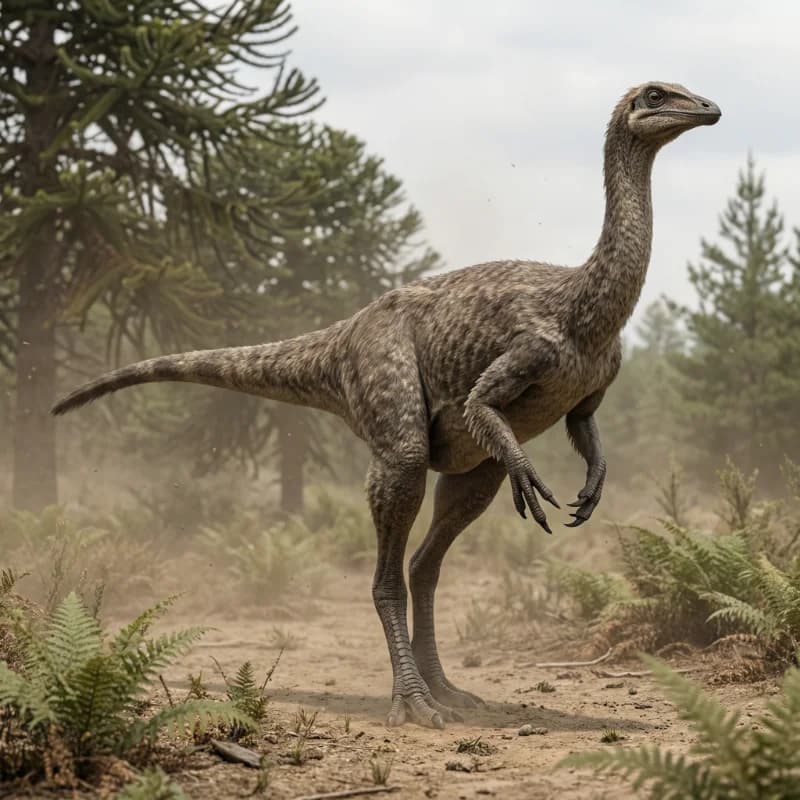
Struthiomimus
Struthiomimus altus
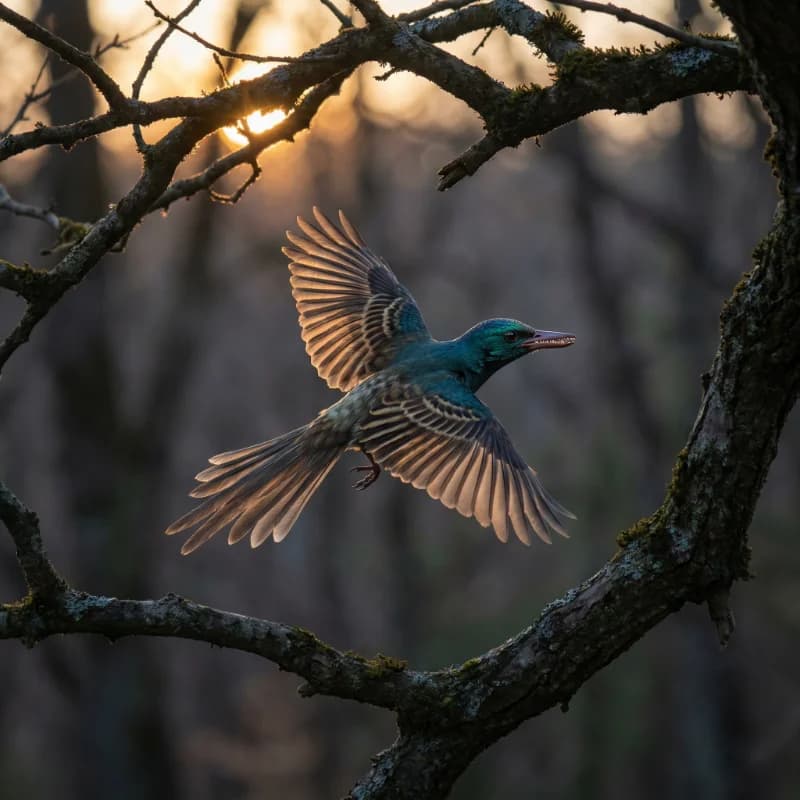
Longipteryx
Longipteryx chaoyangensis
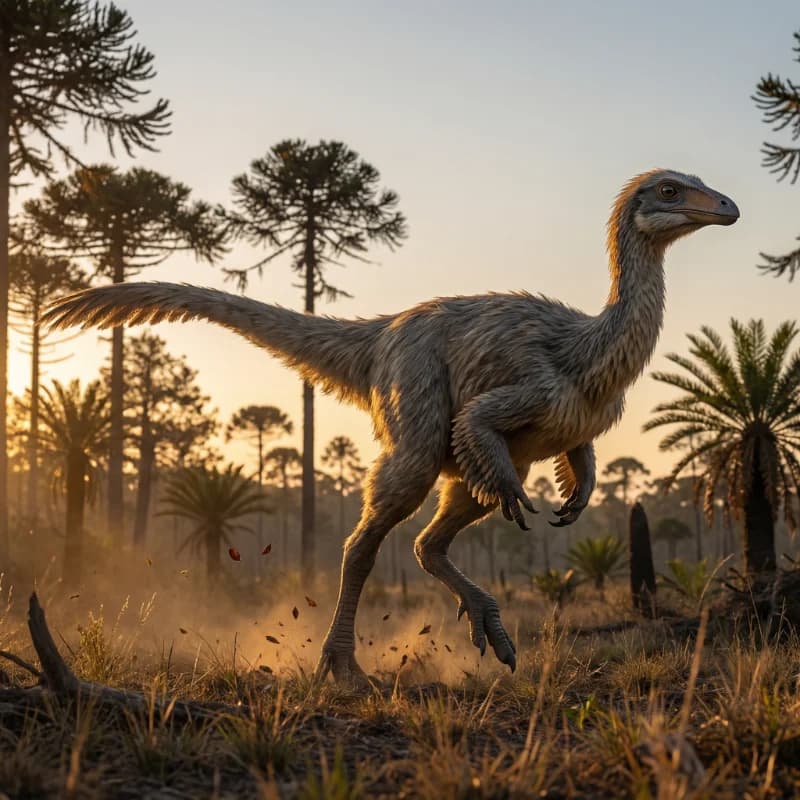
Arkansaurus
Arkansaurus fridayi
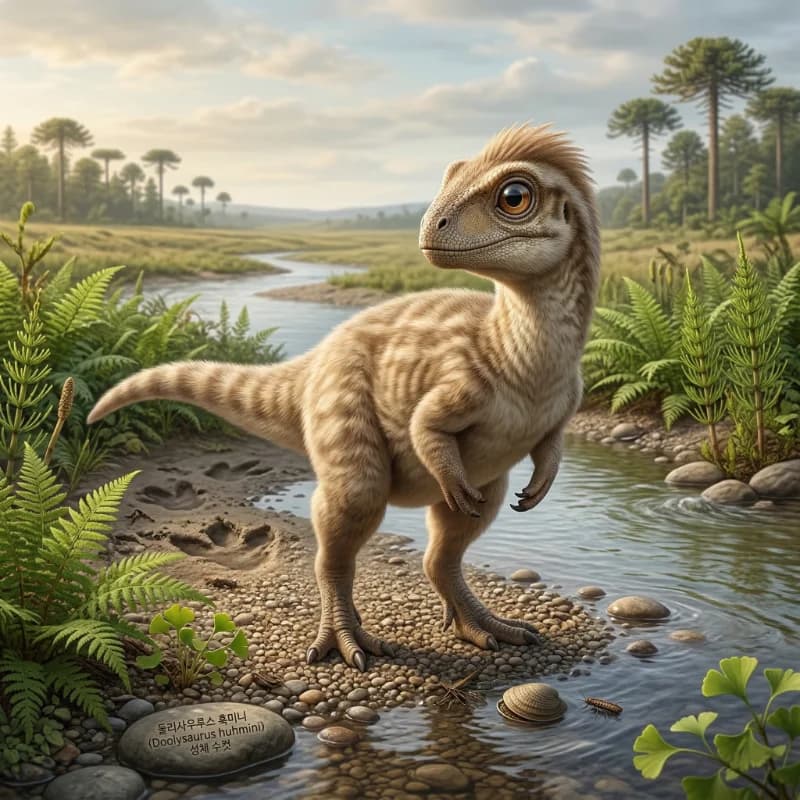
Doolysaurus
Doolysaurus huhmini
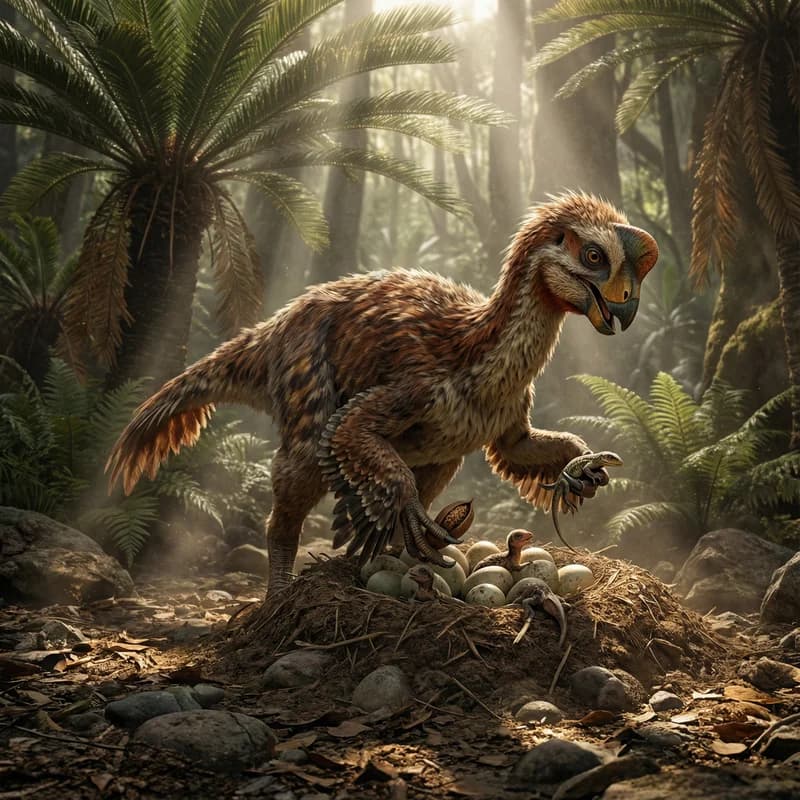
Oviraptor
Oviraptor philoceratops
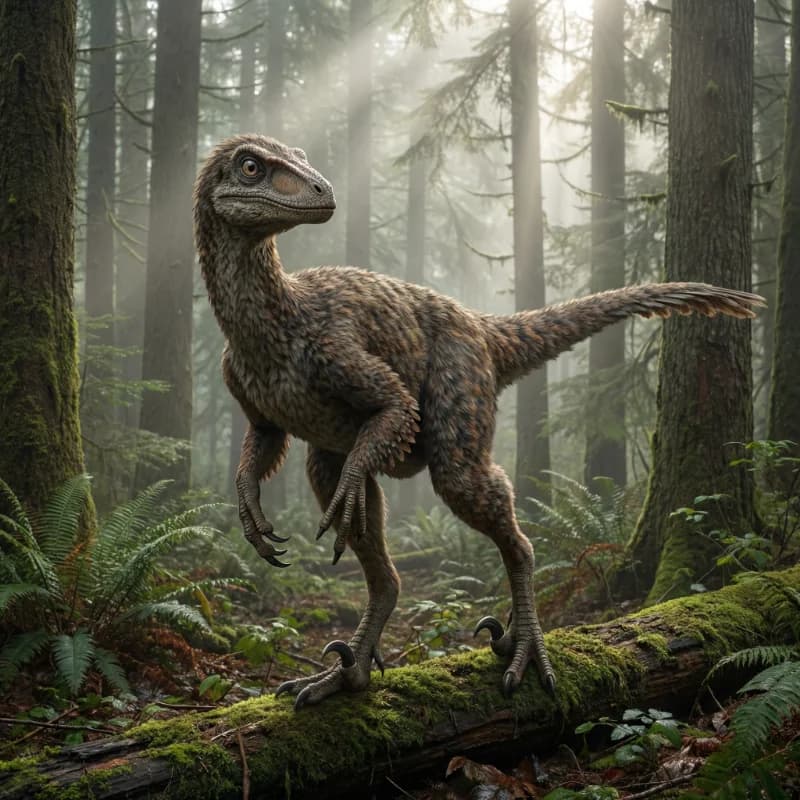
Troodon
Troodon formosus

Gallimimus
Gallimimus bullatus
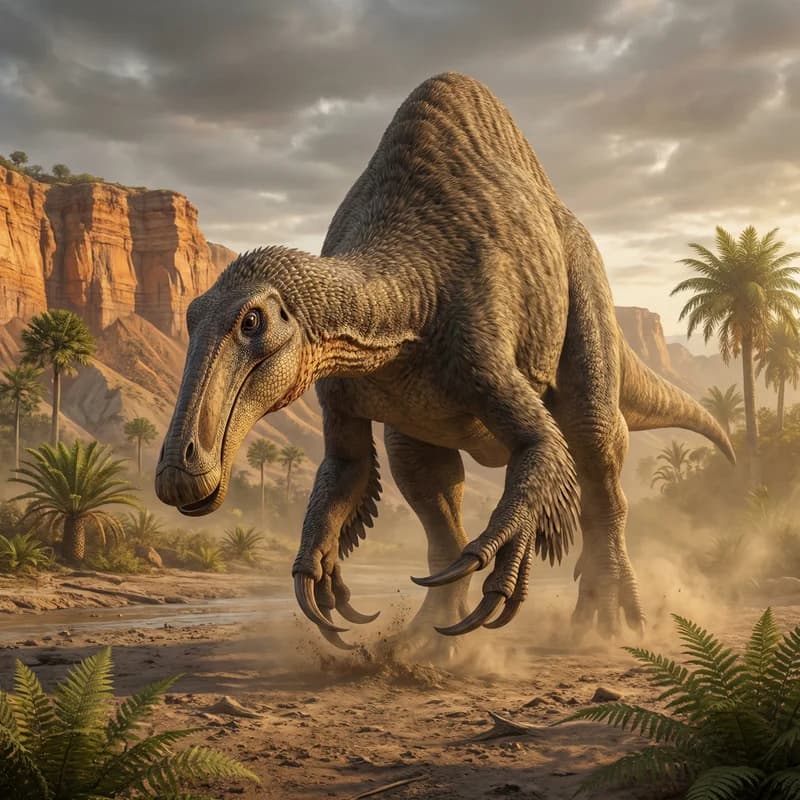
Deinocheirus
Deinocheirus mirificus