Longipteryx

Cretaceous Period Omnivore Creature Type

Longipteryx chaoyangensis

Scientific Name: "Longipteryx: from Latin longus (long) + Ancient Greek pteryx (πτέρυξ, wing/feather) = 'one with long wings/feathers'; chaoyangensis: geographic epithet from Chaoyang City (朝阳市), Liaoning Province, China"

🕐Cretaceous Period
🍽️Omnivore

Physical Characteristics

📏
Size0.15m
⚖️
Weight0.124~0.246kg
🦅
Wingspan0.463m

Discovery

📅
Discovery Year2001Year
👤
DiscovererZhang Fucheng, Zhou Zhonghe, Hou Lianhai & Gu Gang
📍
Discovery LocationChaoyang City and Jinzhou vicinity, western Liaoning Province, China

Habitat

🏔️
Geological FormationJiufotang Formation, Yixian Formation (Jehol Group)
🌍
EnvironmentWarm, humid lacustrine-fluvial forested environment; freshwater lake basins with frequent volcanic activity and surrounding gymnosperm- and early angiosperm-dominated forests (lithofacies: lacustrine mudstone/shale intercalated with volcaniclastic tuffs; associated fossils include diverse birds, non-avian dinosaurs, fish, insects, and plant remains)
🪨
LithologyLacustrine mudstone/shale, volcaniclastic tuff interbeds
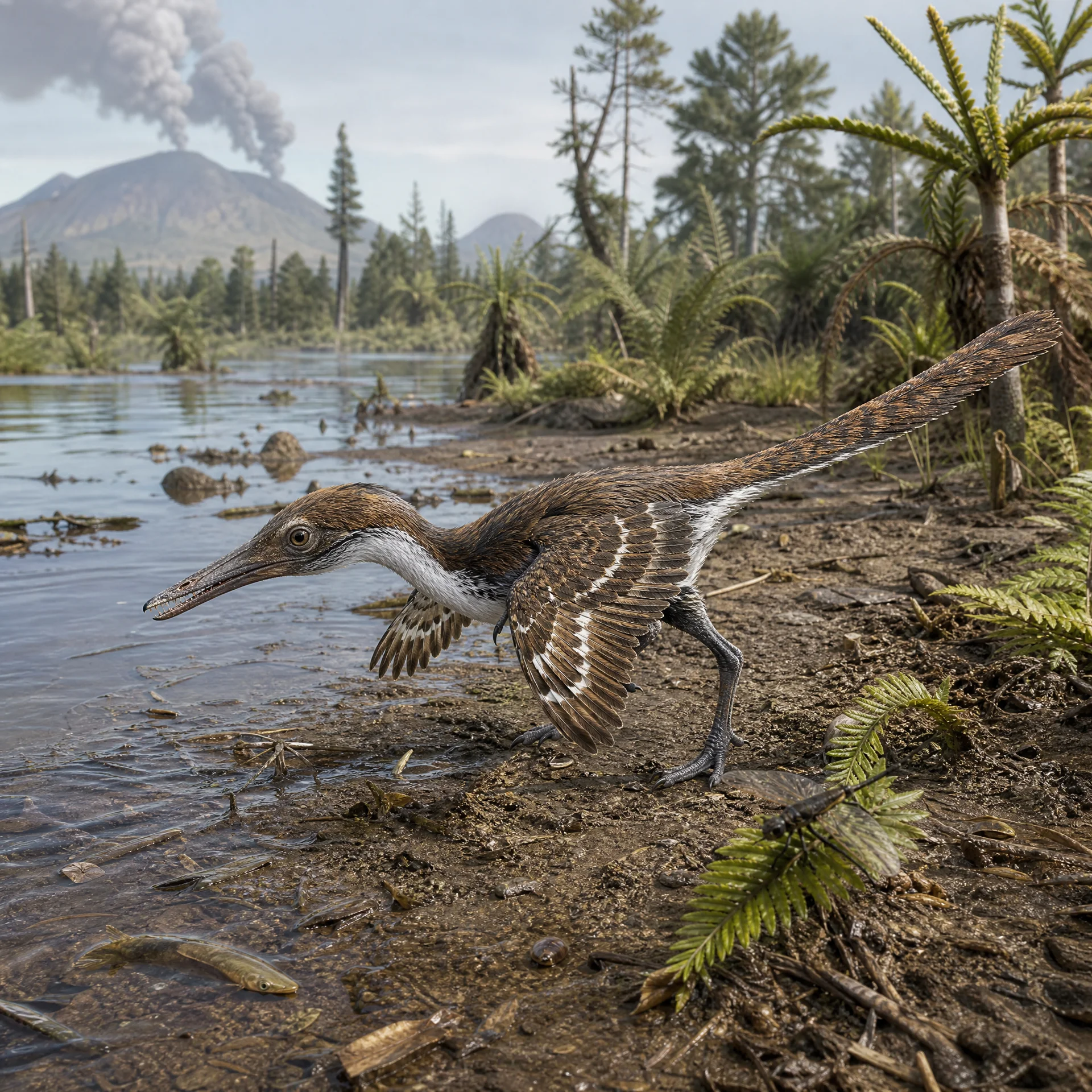
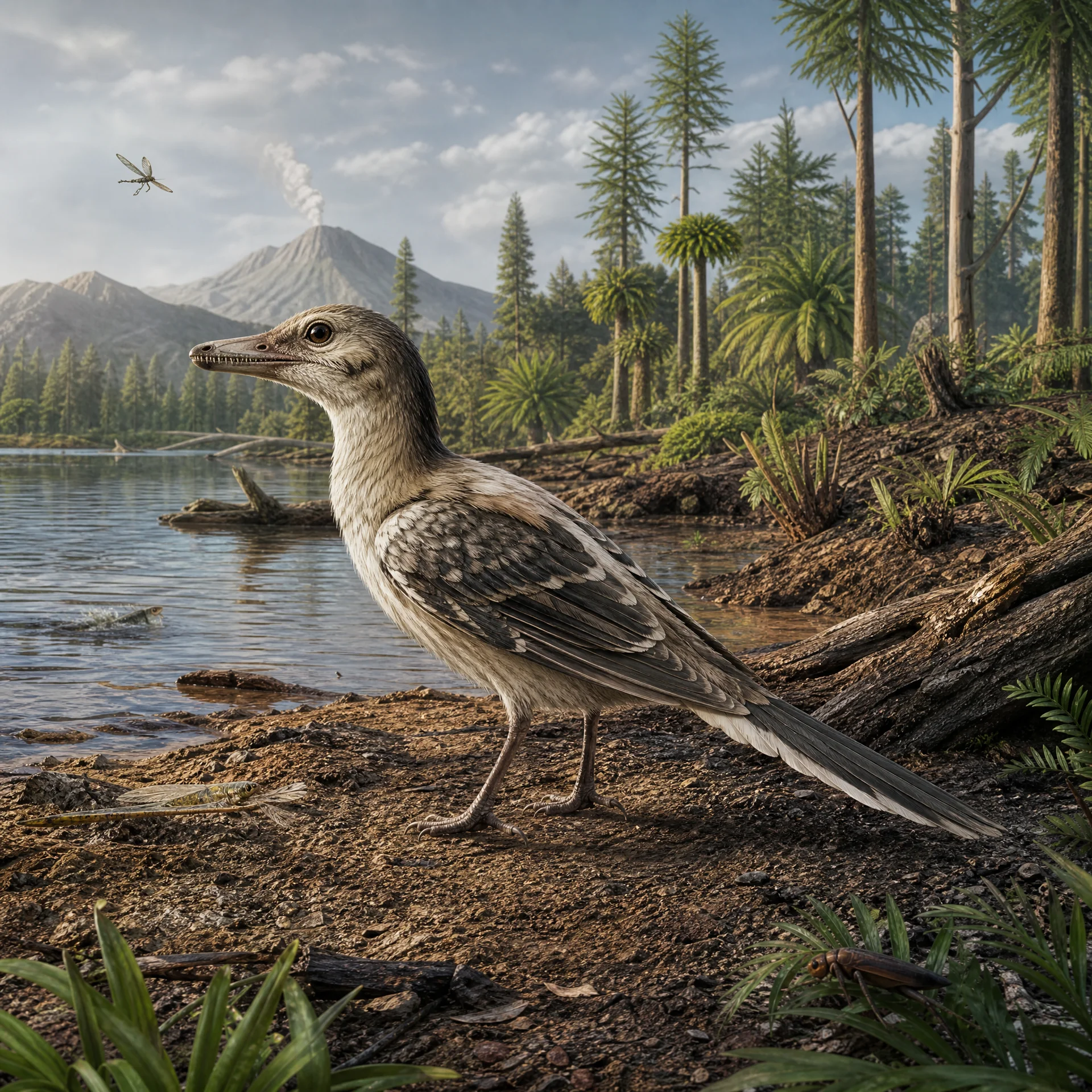
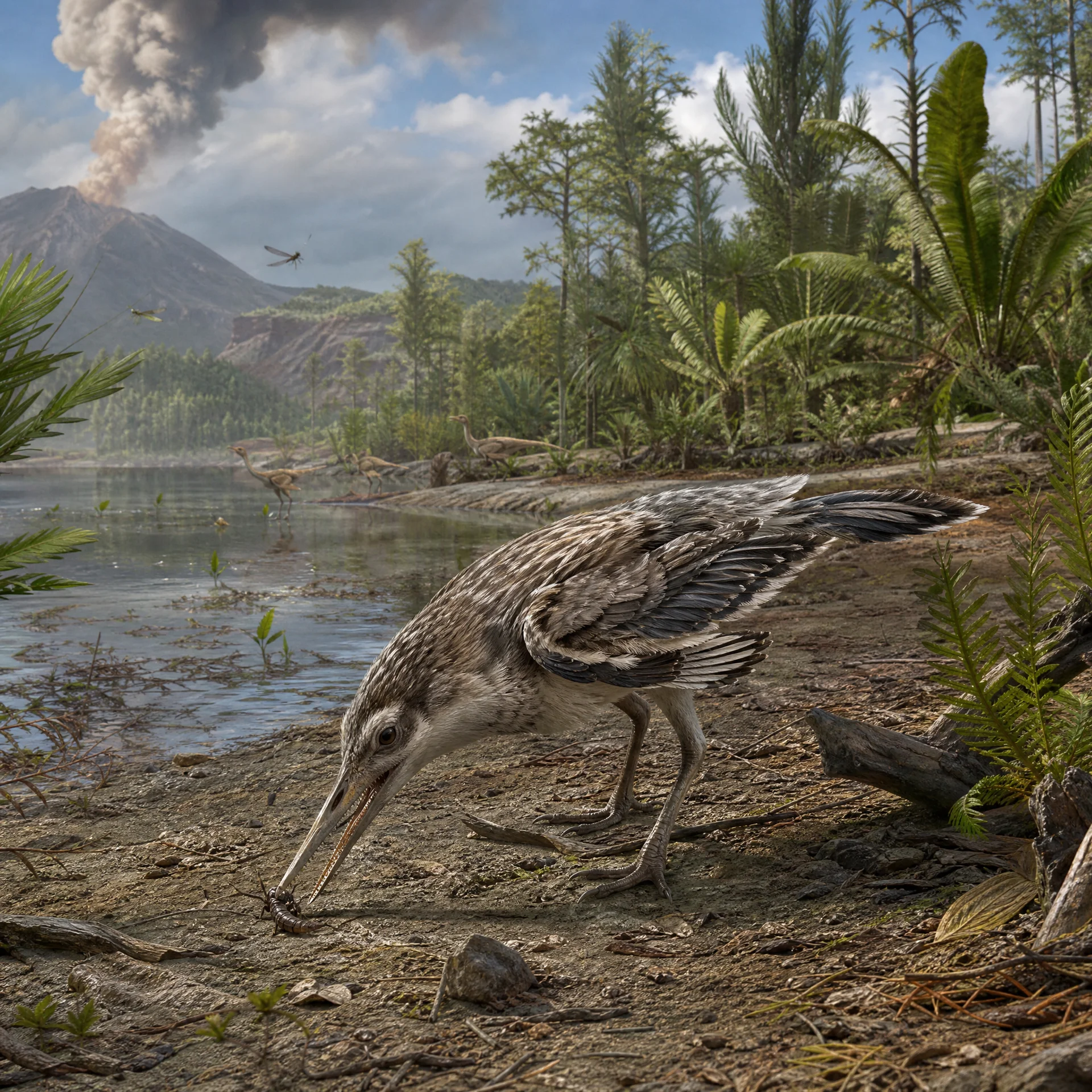
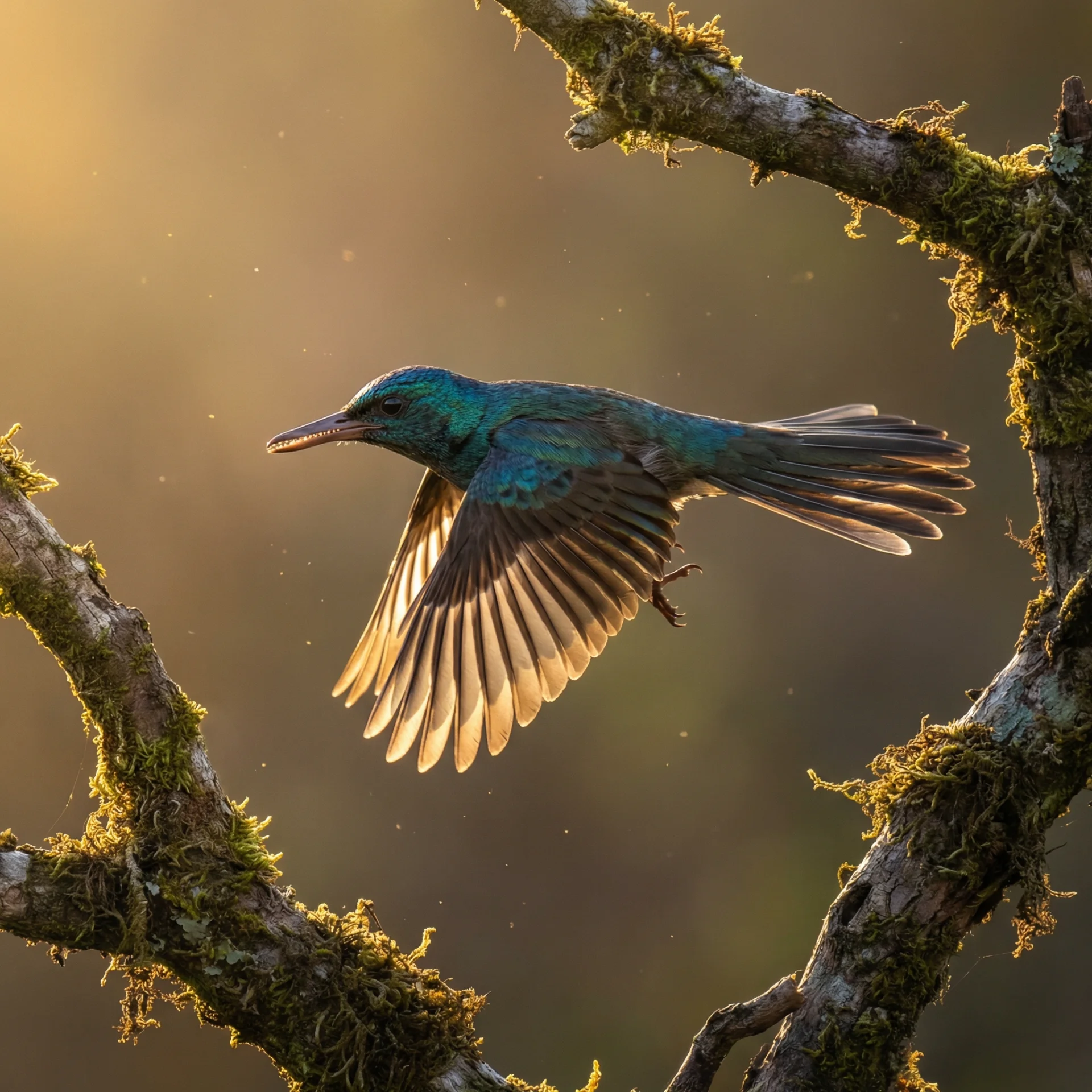
Longipteryx (Longipteryx chaoyangensis) restoration

Longipteryx (Longipteryx chaoyangensis Zhang et al., 2001) is a small enantiornithine bird from the Early Cretaceous (Aptian stage, approximately 120 Ma) of what is now western Liaoning Province, China. With a body length of roughly 15 cm (excluding the tail), an estimated body mass of about 124–246 g, and a wingspan of approximately 46 cm, it was comparable in size to a modern blue jay. Among the Enantiornithes, Longipteryx is immediately recognizable for its extremely elongate rostrum—accounting for roughly 70% of total skull length—and a handful of hooked teeth restricted to the very tip of the snout. This distinctive cranial morphology and distally restricted dentition are hallmark diagnostic features of the family Longipterygidae, of which Longipteryx is the type genus, clearly distinguishing it from all other enantiornithine birds.

When originally described by Zhang et al. (2001), Longipteryx was interpreted as a piscivorous bird ecologically analogous to extant kingfishers (Coraciiformes). Subsequent studies reinterpreted it as an insectivore or hypercarnivore based on tooth morphology and quantitative biomechanical analyses (Wang et al., 2015; Clark et al., 2023; Miller et al., 2022). However, a landmark study by O'Connor et al. (2024) discovered complete gymnosperm seeds preserved as gut contents in two specimens (STM8–86 and STM8–112) with no gastroliths present, providing direct evidence that Longipteryx was in fact a frugivore. This finding overturned all previous morphology-based dietary hypotheses and dramatically illustrated the limitations of using untested morphological proxies to predict diet in extinct taxa.

Notably, Longipteryx is the first enantiornithine in which uncinate processes on the ribs have been confirmed—a structure linked to efficient ventilation in modern birds. Combined with its proportionally long and robust wings, a well-developed sternal keel, and shortened hindlimbs suited for perching rather than cursorial locomotion, the flight apparatus of Longipteryx was among the most advanced of any Early Cretaceous enantiornithine, suggesting a powerful and sophisticated capacity for powered flight.

Overview

Name and Etymology

The genus name Longipteryx derives from Latin longus ("long") and Ancient Greek pteryx (πτέρυξ, "wing" or "feather"), meaning "one with long wings" or "one with long feathers." The original description by Zhang et al. (2001) explicitly states the genus name means "long-wing bird," referencing its proportionally long wings relative to its body. The specific epithet chaoyangensis is a Latinized geographic adjective derived from Chaoyang City (朝阳市), Liaoning Province, China, where the type specimens were collected.

Taxonomic Status

Longipteryx is the type genus of both the family Longipterygidae and the order Longipterygiformes, both erected simultaneously in the original description (Zhang et al., 2001). Within Enantiornithes, the Longipterygidae is consistently recovered as a relatively basal clade in most phylogenetic analyses (O'Connor et al., 2009; Clark et al., 2023; O'Connor et al., 2025).

The sole valid species is L. chaoyangensis. Two taxa previously described as separate genera—"Camptodontornis yangi" Li et al., 2010 and "Shengjingornis yangi" Li et al., 2012—are now treated as junior synonyms of L. chaoyangensis, as their purported diagnostic features fall within the range of intraspecific variation of Longipteryx (Stidham & O'Connor, 2021; Wang et al., 2015; Yun, 2019).

One-Sentence Summary

A small Early Cretaceous enantiornithine from the Jehol Biota with the most distinctive rostral morphology among toothed birds, whose 2024-discovered gut contents of gymnosperm seeds overturned decades of morphology-based dietary predictions.

Temporal Range, Stratigraphy, and Depositional Environment

Temporal Range

The holotype was recovered from the Jiufotang Formation, which corresponds to the Aptian stage of the Early Cretaceous. Recent U-Pb radiometric dating constrains the Jiufotang Formation to approximately 122–119 Ma (He et al., 2004), although more recent studies have suggested a broader depositional range of approximately 124.4–112.25 Ma (Zhong et al., 2025). The estimated age at the level of the type locality is approximately 120.3 Ma.

Additionally, the referred specimen DNHM D2889 reported by Wang et al. (2015) was collected from the Yixian Formation near Chaoyang, which is slightly older than the Jiufotang Formation (near the Barremian–Aptian boundary, approximately 125–124 Ma). This extends the known temporal range of Longipteryx to approximately 125–120 Ma.

Formation and Lithology

The primary source formations are the Jiufotang Formation and the Yixian Formation, both belonging to the Jehol Group exposed in western Liaoning Province, near Chaoyang and Jinzhou. The Jiufotang Formation consists predominantly of lacustrine mudstones and shales intercalated with volcaniclastic tuffs. The Yixian Formation similarly comprises an alternation of lacustrine sediments and volcaniclastic deposits.

Paleoenvironment

The Jehol Biota paleoenvironment is reconstructed as a warm, humid lacustrine-fluvial setting dominated by freshwater lakes surrounded by forests in a volcanically active region. The flora was dominated by gymnosperms (conifers, ginkgoes) alongside early angiosperms, with a rich fauna of insects, fish, amphibians, small mammals, and a remarkable diversity of dinosaurs and birds. The discovery of gymnosperm seeds in the gut of Longipteryx corroborates a forested, lake-margin habitat in which this bird consumed fruits from surrounding trees (O'Connor et al., 2024).

Specimens and Diagnostic Features

Holotype and Key Specimens

Specimen NumberRepositoryPreserved ElementsFormationNotes
IVPP V 12325 (holotype)IVPP, BeijingNearly complete articulated skeleton with feather impressionsJiufotang Fm.Type specimen (Zhang et al., 2001)
IVPP V 12552IVPP, BeijingComplete articulated skeletonJiufotang Fm.Referred; current whereabouts unknown
IVPP V 12553IVPP, BeijingHumerus + furculaJiufotang Fm.Isolated elements
IVPP V 12554IVPP, BeijingUlnaJiufotang Fm.Isolated element
DNHM D2889Dalian Natural History MuseumNearly complete articulated skeleton with feathersYixian Fm.Wang et al. (2015); first report of avian tooth crenulations
IVPP V21702IVPP, BeijingSkull-bearing skeletonLi et al. (2020); quadrate study
STM8-86, STM8-112Shandong Tianyu Museum of NatureComplete skeletons with gut contents (seeds)O'Connor et al. (2024); direct evidence of frugivory

Additional specimens include STM 7-156 and STM 8-117 (Miller et al., 2022), bringing the total number of known individuals to at least seven. The holotype specimens of "Camptodontornis yangi" (PMOL AB00178) and "Shengjingornis yangi" (PMOL AB00179) are also referred to L. chaoyangensis.

Diagnostic Features

The principal diagnostic features from the original description (Zhang et al., 2001) include:

  • Skull length at least 2.5 times skull height
  • Premaxilla comprising approximately 70% of total skull length, forming an extremely elongate rostrum
  • Short, conical teeth restricted to the tip of the snout (six in the premaxilla, three in the dentary in the holotype)
  • Heterocoelous middle cervical vertebrae
  • Sternum with a well-developed keel and lateral processes distally
  • Uncinate processes present on the ribs, unfused (first record in Enantiornithes)
  • Minor metacarpal longer than major metacarpal
  • Pubis curved posteriorly with a perpendicular pubic foot
  • Tarsometatarsus fused proximally; metatarsal IV longer than metatarsals II and III
  • Wings markedly longer than hindlimbs (wing-to-leg length ratio exceeding 1.5)

Limitations of the Material

The tail end of the holotype is destroyed, and although the pygostyle is completely preserved in other specimens, no elongate display tail feathers have been found in any known individual (O'Connor et al., 2011a). The predominantly two-dimensional, crushed preservation of most specimens limits interpretation of certain anatomical details—particularly the three-dimensional morphology of the quadrate (Stidham & O'Connor, 2021).

Morphology and Function

Body Size

Longipteryx was a small bird with a body length (excluding the tail) of approximately 15 cm, comparable to a modern blue jay or pigeon. Body mass estimates vary among studies: Serrano et al. (2017) estimated the holotype (IVPP V12325) at approximately 193 g with a wingspan of about 46.3 cm. Miller et al. (2022), using multivariate regression of skeletal measurements, provided mass ranges of approximately 155–230 g for the holotype and 124–184 g for the referred specimen DNHM D2889. Notably, the small-toothed morphotype specimen STM 7-156 was estimated at only 36–53 g, indicating considerable size variation among known individuals.

Skull and Dentition

The most striking feature of the skull is the extremely elongate rostrum. The premaxilla accounts for roughly 70% of total skull length, and the few conical teeth are restricted to the anterior tips of both upper and lower jaws. In the holotype, six teeth are preserved in the upper jaw and three in the lower jaw; they are short, conical, and slightly recurved posteriorly (Zhang et al., 2001). Wang et al. (2015) were the first to identify fine crenulations (micro-serrations) on the apicodistal margins of the premaxillary teeth in DNHM D2889, representing the first recognized tooth crenulations in any avian taxon. Li et al. (2020) further reported that the tooth enamel of Longipteryx is approximately 50 micrometers thick—more than eight times thicker than in other Mesozoic birds (e.g., Sapeornis at 21 μm, Jeholornis at 7 μm).

Stidham & O'Connor (2021) described a previously unrecognized lateral crest and caudolateral fossa on the quadrate bone. This structure may have served to increase the surface area for adductor musculature, potentially enhancing bite force or influencing jaw kinematics. The authors suggested this feature might have a wider, as yet unrecognized distribution among enantiornithines.

Wings and Flight

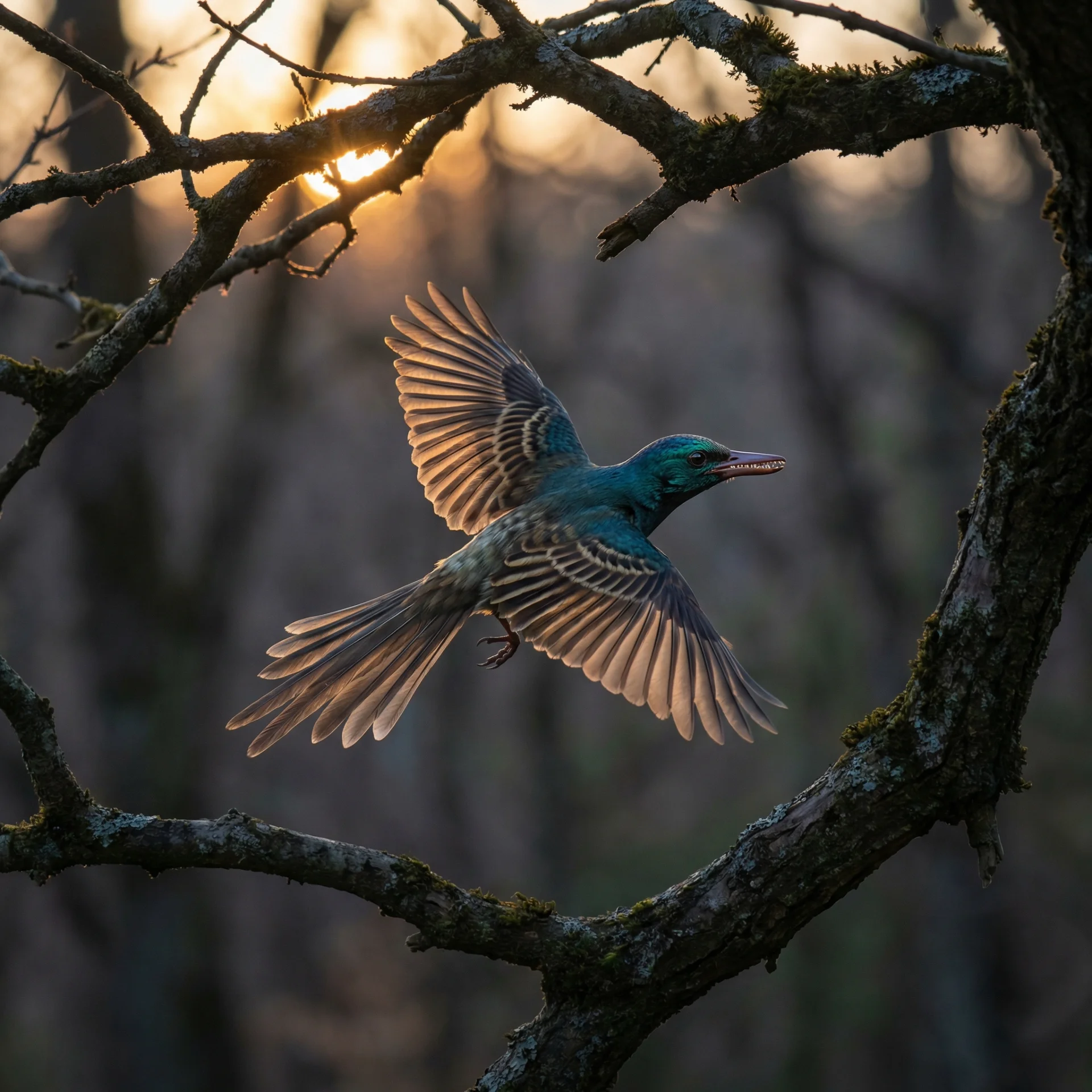
The wing proportions are markedly long relative to the hindlimbs (humerus length approximately 1.56 times femur length), indicating superior flight capabilities compared to contemporary primitive birds. A well-developed sternal keel, laterally compressed clavicles of the furcula, and the presence of uncinate processes strengthening the ribcage all point to powerful flight musculature and an efficient respiratory mechanism (Zhang et al., 2001). According to Serrano et al. (2017), the estimated wingspan of the holotype was approximately 46.3 cm.

However, the manus still retained two long, clawed fingers (plus a small alular claw), a plesiomorphic feature of the Enantiornithes. Feather impressions are preserved in the holotype but are poorly preserved; remiges were not identified, and only body feathers, wing coverts, and down have been observed (Zhang et al., 2001).

Hindlimbs and Locomotion

The hindlimbs are relatively short, with the tibiotarsus being notably short compared to the femur—a proportion more suited for perching than for cursorial locomotion on the ground. The trochleae of metatarsals I through IV are positioned at nearly the same level, a configuration similar to modern perching birds. The unique feature of metatarsal IV projecting distally beyond metatarsals II and III is a synapomorphy uniting Longipteryx with Boluochia within the Longipteryginae (O'Connor et al., 2011a).
Diet and Paleoecology

History of Dietary Interpretations

The diet of Longipteryx has been among the most debated topics since its discovery. The progression of hypotheses is as follows:

  • Piscivory hypothesis: The original description (Zhang et al., 2001) proposed an ecological analogy with extant kingfishers based on morphological similarities such as the elongate rostrum, powerful wings, short hindlimbs, and perching foot. Li et al. (2020) later cited unusually thick enamel as additional support for piscivory. However, counterarguments pointed to the complete absence of ingested fish remains in any Longipteryx specimen and the rostrally restricted dentition, which contrasts sharply with other piscivorous Mesozoic birds like Yanornis that have teeth distributed throughout the jaw (O'Connor, 2019).
  • Insectivory/carnivory hypothesis: Wang et al. (2015) proposed a "hypercarnivorous" interpretation relative to other enantiornithines, based on the discovery of tooth crenulations. Miller et al. (2022) and Clark et al. (2023) provided quantitative support for insectivory or generalist animalivory through analyses of body mass, claw morphometrics, jaw mechanics, and finite element analysis.
  • Frugivory — direct evidence: O'Connor et al. (2024), published in Current Biology, reported the discovery of complete gymnosperm seeds in the stomach region of two specimens (STM8–86 and STM8–112), with a conspicuous absence of gastroliths. This constitutes direct evidence that Longipteryx consumed gymnosperm fruits, overturning all prior morphology-based dietary predictions (piscivory, insectivory, carnivory).

These results powerfully demonstrate the inherent limitations of inferring diet in extinct taxa solely from morphological proxies such as tooth shape, rostral proportions, and claw curvature.

Ecological Niche

Longipteryx is interpreted as an arboreal bird inhabiting the canopy or mid-story of forested environments surrounding the freshwater lakes of the Jehol ecosystem, primarily consuming gymnosperm fruits (or seeds within fleshy structures). However, supplementary feeding on insects or other small food items cannot be ruled out—a dietary flexibility commonly observed in many extant bird species.

Contemporaneous birds sharing the same habitat included other longipterygids (Longirostravis, Rapaxavis, Shanweiniao), bohaiornithids (Bohaiornithidae), Confuciusornis, Yanornis, Jeholornis, and non-avian theropod dinosaurs such as Microraptor, all of which are known from the same geological formations.

Distribution and Paleogeography

Geographic Distribution

All known specimens of Longipteryx have been recovered from western Liaoning Province, China, specifically from the vicinity of Chaoyang City (朝阳市) and Jinzhou (锦州). The exact type locality is Qidaoquanzi (七道泉子), Chaoyang City (Zhang et al., 2001).

Paleogeography

During the Early Cretaceous, this region occupied the interior of the East Asian landmass within a volcanically active basin. The paleolatitude is estimated at approximately 42°N, broadly similar to its present-day position. The area experienced a warm, seasonal climate supporting a mosaic of freshwater lakes, rivers, and volcanic terrains that produced the extraordinarily rich and diverse assemblage known as the Jehol Biota.

Phylogeny and Systematic Debates

Position of Longipterygidae

The Longipterygidae is positioned as a relatively basal clade within Enantiornithes in most phylogenetic analyses, and its monophyly is consistently recovered. The family is subdivided into two subfamilies:

  • Longipteryginae: Longipteryx, Boluochia, and Chromeornis (described in 2025)—characterized by large, labiolingually compressed teeth and a tarsometatarsus in which metatarsal IV projects distally beyond metatarsal III.
  • Longirostravinae: Longirostravis, Rapaxavis, Shanweiniao—characterized by smaller, peg-like teeth and proportionally shorter wings.

Most Recent Phylogenetic Analysis

O'Connor et al. (2025), in their description of the new longipterygid Chromeornis funkyi, conducted a comprehensive phylogenetic analysis. In the 50% majority-rule consensus tree, Chromeornis was recovered as the sister taxon to Longipteryx, together forming the Longipteryginae, which is in turn sister to the Longirostravinae. This topology is broadly consistent with earlier analyses by O'Connor et al. (2009, 2011a).

Alternative Hypotheses

Some early analyses suggested Longipteryx might be positioned at the very base of Enantiornithes or even outside the clade (Mortimer, 2004, informal analysis), but subsequent formal analyses have consistently placed it within Enantiornithes, specifically within Euenantiornithes. The diversity and unusual morphology of Longipterygidae suggest that enantiornithines had already undergone substantial diversification before the earliest known fossils of the clade (Zhang et al., 2001; Wang & Lloyd, 2016).

Reconstruction and Uncertainty

Confirmed Facts

  • A small enantiornithine bird from the Early Cretaceous Jehol Biota
  • Distinctive cranial morphology with teeth restricted to the rostral tip
  • Uncinate processes on the ribs (first record in Enantiornithes)
  • Gymnosperm seeds confirmed as gut contents (direct evidence of frugivory)
  • Well-developed flight apparatus and perching ability

Well-Supported Interpretations

  • An arboreal bird that primarily consumed fruits, inhabiting forested lake margins
  • Flight capability among the most advanced of any Early Cretaceous enantiornithine
  • "Camptodontornis" and "Shengjingornis" are junior synonyms of L. chaoyangensis

Hypothetical or Uncertain

  • Whether frugivory was the exclusive diet or supplemented by insects and small animals remains unconfirmed
  • The extent of intraspecific size variation or sexual dimorphism (body mass ranges from 36 to 246 g across specimens)
  • The presence or absence of elongate tail display feathers (none found in any specimen, presumed absent but not definitively confirmed)
  • Whether the lateral crest of the quadrate is widely distributed among other enantiornithines
  • Popular media depictions as a "kingfisher-like fish-eater" are now known to be inaccurate based on the 2024 gut content study

Comparison with Related and Contemporaneous Taxa

TaxonFamilyAge / FormationBody Mass (g)Rostral ProportionDietary Evidence
Longipteryx chaoyangensisLongipterygidaeAptian / Jiufotang-Yixian124–246~70% of skullGymnosperm seeds (direct)
Boluochia zhengiLongipterygidaeAptian / JiufotangUnknown≥60% of skullUnknown
Chromeornis funkyiLongipterygidaeAptian / JiufotangSmall (unpublished)Elongate800+ gastroliths
Longirostravis haniLongipterygidaeAptian / Jiufotang32–47≥60% of skullUnknown
Rapaxavis paniLongipterygidaeAptian / Jiufotang38–56≥60% of skullUnknown
Shanweiniao cooperorumLongipterygidaeAptian / Jiufotang46–68≥60% of skullUnknown
Yanornis martiniYanornithidaeAptian / JiufotangLargerModerateFish (direct)

Longipteryx is the largest and most robustly built member of the Longipterygidae, and with at least seven known individuals, it is by far the best-understood genus in the family.

Fun Facts

💡
Longipteryx is the first enantiornithine bird in which uncinate processes on the ribs were confirmed—a structure associated with efficient breathing in modern birds.
💡
For roughly 20 years it was depicted as a 'kingfisher-like fish-eating bird,' but a 2024 gut content analysis revealed it was actually a fruit-eater that consumed gymnosperm seeds, shocking the paleontological community.
💡
The tooth enamel of Longipteryx is approximately 50 micrometers thick—over eight times thicker than any other known Mesozoic bird.
💡
Despite its genus name meaning 'long wing,' the most conspicuous feature of Longipteryx is its extraordinarily elongate snout, which accounts for about 70% of its total skull length.
💡
With a body length (excluding the tail) of only about 15 cm, Longipteryx was blue jay-sized, and one specimen (STM 7-156) weighed an estimated 36–53 g—lighter than a sparrow.
💡
Three different genus names were coined for what turned out to be a single species: Longipteryx, 'Camptodontornis,' and 'Shengjingornis' are all the same bird.
💡
Its close relative Chromeornis (described in 2025) was found with over 800 gastroliths lodged in its throat area, and likely choked to death on the stones.
💡
A unique lateral crest on the quadrate bone, discovered in 2021, was previously misidentified as a reduced orbital process for two decades after the original description.
💡
The contemporaneous piscivorous bird Yanornis frequently preserves fish in its gut, yet not a single Longipteryx specimen has ever been found with fish remains—a clue that its diet was fundamentally different.
💡
The family Longipterygidae and the order Longipterygiformes were both established simultaneously in the very same paper that described Longipteryx in 2001.

FAQ

?Did Longipteryx really eat fish?
No. Although it was originally interpreted as a kingfisher-like piscivore when described in 2001, a 2024 study by O'Connor et al. discovered complete gymnosperm seeds in the gut contents of two specimens, providing direct evidence of frugivory. No fish remains have ever been found in any Longipteryx specimen.
?How large was Longipteryx?
Excluding the tail, its body length was approximately 15 cm, comparable in size to a modern blue jay. Body mass estimates range from about 36 to 246 g depending on the specimen, and the wingspan was estimated at approximately 46 cm.
?What are the Enantiornithes?
The Enantiornithes (meaning 'opposite birds') were a diverse group of birds that thrived worldwide during the Cretaceous period. They belong to a separate lineage from modern birds (Neornithes) and went entirely extinct during the end-Cretaceous mass extinction event approximately 66 million years ago. Their name comes from the fact that their tarsal bone fusion pattern is reversed compared to modern birds.
?Could Longipteryx fly?
Yes, it had a very well-developed flight apparatus. Its wings were significantly longer than its hindlimbs, the sternum bore a well-developed keel for flight muscle attachment, and it was the first enantiornithine known to possess uncinate processes on the ribs—structures associated with a strong ribcage and efficient respiration in modern birds.
?Did Longipteryx have teeth?
Yes. It had a small number of conical teeth restricted to the tip of its snout. The holotype preserves six teeth in the upper jaw and three in the lower jaw. Some specimens also exhibit fine crenulations (micro-serrations) along the tooth margins.
?Are Camptodontornis and Shengjingornis separate animals?
No. Both genera are now treated as junior synonyms of Longipteryx chaoyangensis. Multiple studies have demonstrated that their purported diagnostic features fall within the range of variation observed across L. chaoyangensis specimens (Stidham & O'Connor, 2021; Wang et al., 2015).
?Why was its snout so elongated?
The precise functional reason remains debated. Initial hypotheses proposed fish-catching, followed by insect capture or probing, but the 2024 discovery of frugivory demonstrated that an elongate rostrum does not necessarily correlate with any single diet. The function may relate to reaching into seed-bearing structures or a combination of behaviors not yet identified.
?What other birds lived alongside Longipteryx?
The Jehol Biota included a remarkable diversity of birds: Confuciusornis, Jeholornis, Yanornis, Bohaiornis, and other longipterygids (Longirostravis, Rapaxavis, Shanweiniao). Non-avian theropod dinosaurs such as Microraptor are also known from the same geological formations.
?What is Chromeornis and how is it related to Longipteryx?
Chromeornis funkyi, described by O'Connor et al. in 2025, is a newly discovered small-bodied longipterygid from the Jiufotang Formation. Phylogenetic analysis recovered it as the sister taxon to Longipteryx, forming the Longipteryginae. Remarkably, this specimen was found with over 800 gastroliths lodged near its neck, suggesting it may have choked to death.

📚References

  • Zhang, F., Zhou, Z., Hou, L. & Gu, G. (2001). Early diversification of birds: Evidence from a new opposite bird. Chinese Science Bulletin, 46(11), 945–949. https://doi.org/10.1007/bf02900473
  • Wang, X., Shen, C., Liu, S., Gao, C., Cheng, X. & Zhang, F. (2015). New material of Longipteryx (Aves: Enantiornithes) from the Lower Cretaceous Yixian Formation of China with the first recognized avian tooth crenulations. Zootaxa, 3941(4), 565–578. https://doi.org/10.11646/zootaxa.3941.4.5
  • Stidham, T.A. & O'Connor, J.K. (2021). The evolutionary and functional implications of the unusual quadrate of Longipteryx chaoyangensis (Avialae: Enantiornithes) from the Cretaceous Jehol Biota of China. Journal of Anatomy, 239(5), 1066–1074. https://doi.org/10.1111/joa.13487
  • O'Connor, J., Clark, A., Herrera, F., Yang, X., Wang, X., Zheng, X., Hu, H. & Zhou, Z. (2024). Direct evidence of frugivory in the Mesozoic bird Longipteryx contradicts morphological proxies for diet. Current Biology, 34(19), 4559–4566.e1. https://doi.org/10.1016/j.cub.2024.08.012
  • Clark, A.D., Hu, H., Benson, R.B.J. & O'Connor, J.K. (2023). Reconstructing the dietary habits and trophic positions of the Longipterygidae (Aves: Enantiornithes) using neontological and comparative morphological methods. PeerJ, 11, e15139. https://doi.org/10.7717/peerj.15139
  • Miller, C.V., Pittman, M., Wang, X., Zheng, X. & Bright, J.A. (2022). Diet of Mesozoic toothed birds (Longipterygidae) inferred from quantitative analysis of extant avian diet proxies. BMC Biology, 20(1), 101. https://doi.org/10.1186/s12915-022-01294-3
  • Serrano, F.J., Palmqvist, P., Chiappe, L.M. & Sanz, J.L. (2017). Inferring flight parameters of Mesozoic avians through multivariate analyses of forelimb elements in their living relatives. Paleobiology, 43(1), 144–169. https://doi.org/10.1017/pab.2016.35
  • O'Connor, J.K., Zhou, Z. & Zhang, F. (2011a). A reappraisal of Boluochia zhengi (Aves: Enantiornithes) and a discussion of intraclade diversity in the Jehol avifauna, China. Journal of Systematic Palaeontology, 9(1), 51–63. https://doi.org/10.1080/14772019.2010.512614
  • O'Connor, J.K., Chiappe, L.M. & Bell, A. (2011b). Pre-modern birds: avian divergences in the Mesozoic. In Living Dinosaurs (eds. G.D. Dyke & G. Kaiser), 39–114. Wiley-Blackwell.
  • O'Connor, J., Wang, X., Clark, A., Kuo, P.-C., Davila, R., Wang, Y., Zheng, X. & Zhou, Z. (2025). A new small-bodied longipterygid (Aves: Enantiornithes) from the Aptian Jiufotang Formation preserving unusual gastroliths. Palaeontologia Electronica, 28(3), 1–38. https://doi.org/10.26879/1589
  • O'Connor, J.K., Wang, X., Chiappe, L.M., Gao, C. & Meng, Q. (2009). Phylogenetic support for a specialized clade of Cretaceous enantiornithine birds with information from a new species. Journal of Vertebrate Paleontology, 29(1), 188–204. https://doi.org/10.1080/02724634.2009.10010371
  • He, H.Y., Wang, X.L., Zhou, Z.H., Wang, F., Boven, A., Shi, G.H. & Zhu, R.X. (2004). Timing of the Jiufotang Formation (Jehol Group) in Liaoning, northeastern China, and its implications. Geophysical Research Letters, 31, L12605. https://doi.org/10.1029/2004GL019790
  • Li, Y., O'Connor, J.K., Xu, L., Zhang, X. & Lu, J. (2020). Tooth enamel microstructure of Longipteryx chaoyangensis (Aves: Enantiornithes). Cretaceous Research, 108, 104337.
  • Zhou, Y.-C., Sullivan, C., Zhou, Z.-H. & Zhang, F.-C. (2021). Evolution of tooth crown shape in Mesozoic birds, and its adaptive significance with respect to diet. Palaeoworld, 30(4), 724–736. https://doi.org/10.1016/j.palwor.2020.12.008
  • O'Connor, J.K. (2019). The trophic habits of early birds. Palaeogeography, Palaeoclimatology, Palaeoecology, 513, 178–195.
  • Morschhauser, E.M., Varricchio, D.J., Gao, C., Liu, J., Wang, X., Cheng, X. & Meng, Q. (2009). Anatomy of the Early Cretaceous bird Rapaxavis pani, a new species from Liaoning Province, China. Journal of Vertebrate Paleontology, 29(2), 545–554.

Gallery

2 images
  • Longipteryx (Longipteryx chaoyangensis) 1
    Longipteryx

    Longipteryx · Cretaceous Period · Omnivore

  • Longipteryx (Longipteryx chaoyangensis) 2
    Longipteryx

    Longipteryx · Cretaceous Period · Omnivore

🔗Related Creatures