Microraptor
Cretaceous Period Carnivore Creature Type
Microraptor zhaoianus
Scientific Name: "Greek mikros (small) + Latin raptor (seizer/plunderer) = "small seizer""
Local Name: Microraptor
Physical Characteristics
Discovery
Habitat

Microraptor (Microraptor zhaoianus Xu, Zhou & Wang, 2000) is a small dromaeosaurid (Dromaeosauridae) dinosaur from the Early Cretaceous (Aptian stage, approximately 125–120 million years ago), discovered in the Jiufotang Formation of Liaoning Province, China. Its name derives from the Greek mikros (small) and Latin raptor (seizer), meaning "small seizer." With over 300 specimens reported to date, Microraptor holds the most abundant fossil record of any dromaeosaurid and ranks among the smallest known non-avian dinosaurs (Xu et al., 2000; Alexander et al., 2010).
The most distinctive feature of Microraptor is the presence of asymmetrical pennaceous flight feathers not only on the forelimbs but also on the hindlimbs, leading Xu Xing and colleagues to describe it as a "four-winged dinosaur" in 2003 (Xu et al., 2003, Nature). Microstructural analysis of its feathers revealed glossy, iridescent black plumage (Li et al., 2012, Science), and gut-content studies have confirmed that it consumed mammals, birds, fish, and lizards—establishing it as an opportunistic generalist predator (Hone et al., 2022; O'Connor et al., 2011; Xing et al., 2013; O'Connor et al., 2019). Evidence of sequential moulting demonstrated that Microraptor maintained flight capability while replacing its feathers (Kiat et al., 2020, Current Biology), and a 2024 study by Kiat & O'Connor found that Microraptor's remex (flight feather) morphology is consistent with that of modern volant birds, further strengthening the case for its aerial ability (Kiat & O'Connor, 2024, PNAS).
Overview
Name and Etymology
The generic name Microraptor combines Greek μικρός (mikros, "small") and Latin raptor ("seizer, plunderer"), emphasizing the animal's diminutive body size. The specific epithet zhaoianus honors the Chinese paleontologist Zhao Xijin (Xu et al., 2000).
Taxonomic Status and Species-Level Debate
Three species have been named within the genus: M. zhaoianus (Xu et al., 2000), M. gui (Xu et al., 2003), and M. hanqingi (Gong et al., 2012). However, following a review by Senter et al. (2004), most researchers regard the differences among these three species as representing individual variation (body size, ontogenetic stage, sexual dimorphism) and treat them all as synonyms of the single valid species M. zhaoianus (Senter et al., 2004; Pei et al., 2014). Xing et al. (2013) argued that M. gui is morphologically distinguishable, so species-level taxonomy remains debated. Additionally, Cryptovolans pauli (Czerkas et al., 2002) is widely accepted as a junior synonym of Microraptor (Senter et al., 2004; Holtz, 2011; Feduccia et al., 2005).
Scientific Significance
Microraptor is a pivotal taxon for understanding the evolution of flight from dinosaurs to birds. Its four-wing configuration was hailed as a real-world example of the "tetrapteryx" hypothesis proposed by William Beebe in 1915, and multiple paleontological methods—feather-color reconstruction, gut-content analysis, moulting-pattern studies—have been applied intensively to this genus. Its sequential moulting evidence is among the earliest known in non-avian dinosaurs, suggesting that Microraptor maintained year-round flight capability (Kiat et al., 2020).
Age, Stratigraphy, and Depositional Setting
Temporal Range
The vast majority of Microraptor fossils derive from the Jiufotang Formation in Liaoning Province. ⁴⁰Ar/³⁹Ar dating places the Jiufotang Formation at approximately 120.3 ± 0.7 Ma (Aptian stage; He et al., 2004, Geophysical Research Letters), and Microraptor's temporal range is estimated at approximately 125–120 Ma. A handful of specimens have also been reported from the Yixian Formation (ca. 129–122 Ma), but the overwhelming majority come from the Jiufotang Formation.
Formation and Lithology
The Jiufotang Formation is a Lower Cretaceous volcanic-sedimentary complex developed in the western Liaoning Basin. It consists of alternating lacustrine mudstones, shales, and tuff (volcanic ash) beds. This formation is a key locality of the Jehol Biota, and rapid burial by volcanic eruptions is interpreted as the mechanism enabling exceptional preservation of soft tissue and feathers (Jiang et al., 2014, Nature Communications).
Paleoenvironment and Paleolatitude
The paleolatitude of the Liaoning region during the Early Cretaceous is estimated at approximately 40–50°N (Wang, 2013; Zhou et al., 2003), not greatly different from its modern latitude. Although the Early Cretaceous climate was generally warmer than today, recent research indicates that eastern Asia experienced intervals of anomalously low temperatures during this period (Amiot et al., 2011, PNAS). Based on sedimentary facies and associated fossils (fish, insects, plants), Microraptor's habitat is reconstructed as a temperate lake-forest ecosystem influenced by volcanic activity.
Specimens and Diagnostic Features
Holotype and Key Specimens
The holotype is IVPP V12330, an incomplete skeleton comprising a partial skull, complete mandible, right radius, right ulna, partial right manus, and some vertebrae (Xu et al., 2000). This specimen was originally part of the notorious "Archaeoraptor" chimeric fossil—a composite assembled from bones of Microraptor, Yanornis, and an unidentified third species—which became a scientific scandal after being featured in National Geographic. Despite the controversial naming history, Microraptor zhaoianus is now recognized as a nomen protectum (protected name).
The M. gui holotype (IVPP V13352) was the first specimen to clearly preserve hindlimb flight feathers, providing the initial proof of the "four-winged dinosaur" concept (Xu et al., 2003). Specimen BMNHC PH881, used for feather-color analysis, preserves iridescent black plumage and a bifurcated tailfan with a pair of elongated central streamer feathers (Li et al., 2012). In 2024, Wang & Pei reported the smallest known juvenile specimen, with a femoral length of less than 5 cm, making it the smallest dromaeosaurid individual from the Jehol Biota (Wang & Pei, 2024).
Diagnostic Features
Microraptor is distinguished from other dromaeosaurids by the following combination of characters (Xu et al., 2000, 2003; Hwang et al., 2002; Pei et al., 2014).
First, the teeth are partially unserrated or weakly serrated, with constrictions ("waists") at the base of the crown—a feature shared with primitive birds and troodontids. Second, the humerus is proportionally very long. Third, asymmetrical pennaceous flight feathers are present on the hindlimbs (tibia, metatarsals, and toes). Fourth, a diamond-shaped feather fan adorns the tail tip. Fifth, body size is extremely small, with adults measuring approximately 77–90 cm in total length and weighing approximately 0.5–1.4 kg.
Specimen Limitations
The holotype is incomplete and heavily compressed, which limited early anatomical interpretations. Hundreds of additional specimens have since been discovered, revealing a broad range of morphological variation, but some specimens are suspected of having been altered or composited by private fossil collectors and must be treated with caution (Alexander et al., 2010).
Morphology and Function
Body Size
Microraptor ranks among the smallest non-avian dinosaurs. Based on the M. gui holotype, total length is approximately 77 cm, wingspan approximately 88–94 cm, and body mass approximately 0.5–1.0 kg (Chatterjee & Templin, 2007, PNAS). A larger specimen (QV1002) measures at least 80 cm in precaudal length with a wingspan exceeding 99 cm and an estimated mass of 1.25–1.88 kg (Dececchi et al., 2020). Holtz (2011) estimated maximum length at approximately 90 cm, while Benson (2012) proposed a maximum of approximately 1.2 m. These dimensions are roughly equivalent to a crow or pigeon.
Feathers and Wing Structure
Microraptor's most striking feature is its four aerodynamic surfaces (wings). The forelimbs bear primary feathers (attached to the hand) and secondary feathers (attached to the forearm), similar to modern birds. The hindlimbs bear flight feathers attached to the metatarsals, tibia, and fibula. UV-light studies confirmed that feather bases were anchored very close to the bone, providing strong attachment points comparable to those in modern birds (Hone et al., 2010, PLoS ONE). A propatagium (a membrane connecting the wrist to the shoulder that fills the space in front of the folded wing) and an alula (a "thumb-like" leading-edge slot) have also been identified, indicating considerable structural similarity to modern bird wings.
The tail bore a diamond-shaped feather fan, and some specimens (BMNHC PH881) additionally display a pair of elongated central streamer feathers extending beyond the fan (Li et al., 2012).
Feather Coloration
Li et al. (2012, Science) analyzed melanosomes (pigment-bearing organelles) preserved in specimen BMNHC PH881 and determined that Microraptor's plumage was iridescent, glossy black. The melanosome arrangement closely matches that of modern starlings and other iridescent birds, suggesting that the plumage may have served functions in sexual display or species recognition. This was the first documented case of iridescent plumage in a non-avian dinosaur.
Skull and Dentition
Microraptor's skull is small and lightweight, with the maxillary fenestra displaced dorsally (Pei et al., 2014). The teeth are small and sharp, some partially serrated, with basal constrictions similar to those of primitive birds and troodontids (Hwang et al., 2002). The anterodorsal inclination of the first three premaxillary teeth has been interpreted as a possible adaptation for piscivory (Xing et al., 2013).
Flight Capability and Locomotion
Gliding vs. Powered Flight
Multiple hypotheses have been proposed regarding Microraptor's flight capability. Chatterjee & Templin (2007) suggested a biplane model in which the forewings and hindwings operated at different vertical levels, optimized for gliding. Their computer simulations indicated that Microraptor met the requirements for sustained level powered flight.
Alexander et al. (2010) conducted physical model tests and argued that a laterally abducted hindwing posture was more biologically and aerodynamically consistent. Wind-tunnel experiments by Dyke et al. (2013, Nature Communications) demonstrated that Microraptor could sustain high-lift coefficients for efficient gliding, even without a sophisticated "modern" wing morphology.
Dececchi et al. (2016, PeerJ) found that Microraptor may have been capable of wing-assisted incline running, wing-assisted leaping, and even ground-based launching. In 2024, Kiat & O'Connor analyzed flight-feather number and shape across modern birds and fossil paravians and concluded that Microraptor's remex morphology is consistent with that of extant volant birds (Kiat & O'Connor, 2024, PNAS). Their analysis simultaneously found that anchiornithines and Caudipteryx had feather morphologies matching those of modern flightless birds, suggesting these taxa were secondarily flightless. While these findings strengthen the case for Microraptor's aerial capability, most researchers agree it was probably not capable of fully modern avian-style flapping flight.
Arboreal Lifestyle
The four-wing configuration has long been interpreted as evidence for an arboreal lifestyle and tree-to-tree gliding (Xu et al., 2003). However, limb-proportion analysis by Dececchi & Larsson (2011, PLoS ONE) showed that Microraptor's proportions align more closely with modern ground-dwelling birds than with arboreal specialists, and no climbing-specific adaptations are evident. This suggests a scansorial (mixed ground-tree) lifestyle rather than fully arboreal habits.
Constraints on Ground Movement
Sullivan et al. (2010) analyzed the hindlimb flight feathers and long forewing feathers and concluded they would have significantly impeded ground locomotion and prey capture. Even with the wings folded as far as possible, the feathers would have dragged along the ground in a neutral arm position. Microraptor could only have avoided damaging its wing feathers by keeping the wings elevated or by fully extending the upper arm backward (Sullivan et al., 2010).
Diet and Ecology
Gut-Content Evidence
Microraptor has four known specimens preserving gut contents, making it one of the best-documented non-avian dinosaurs in terms of direct dietary evidence.
First, a bird (enantiornithine): O'Connor et al. (2011, PNAS) identified a partial wing and feet of an arboreal enantiornithean bird in the abdominal cavity of a M. gui specimen. The prey was preserved swallowed head-first, suggesting the Microraptor may have captured birds in trees.
Second, fish: Xing et al. (2013, Evolution) found fish scales within the abdominal cavity of another M. gui specimen and interpreted the anterodorsal inclination of the premaxillary teeth as a piscivorous adaptation.
Third, a lizard: O'Connor et al. (2019, Current Biology) discovered a new species of scleroglossan lizard (Indrasaurus wangi) inside a Microraptor's stomach. The lizard was swallowed head-first, consistent with feeding behavior observed in modern carnivorous birds and lizards.
Fourth, a mammal: Hone et al. (2022, Journal of Vertebrate Paleontology) identified a small mammal foot (all tarsals, metatarsals, and most phalanges) in the holotype (IVPP V12330) abdominal cavity. The mammal had an estimated snout-to-vent length of approximately 80 mm and a mass of 13–43 g, similar to Eomaia or Sinodelphys. Hone et al. (2022) noted that both predation and scavenging remain plausible explanations, and that the same ambiguity applies to the other gut-content instances.
Generalist Predator
Taken together, this evidence strongly suggests that Microraptor was an opportunistic generalist predator rather than a dietary specialist (Hone et al., 2022). It acquired prey from both arboreal (birds, lizards) and aquatic (fish) habitats, and the breadth of its vertebrate diet argues against specialization in any single hunting strategy. Unlike Anchiornis, no evidence of gastric pellet production has been found in Microraptor, suggesting it passed indigestible fur, feathers, and bone fragments in its droppings (O'Connor et al., 2019).
Nocturnality
Analysis of scleral ring morphology raised the possibility that Microraptor was nocturnal (Schmitz & Motani, 2011). However, the subsequent discovery of iridescent plumage cast doubt on this hypothesis, as no modern birds with iridescent feathers are known to be nocturnal (Li et al., 2012).
Distribution and Paleogeography
Fossil Localities
Microraptor fossils come almost exclusively from the Jehol Biota deposits in western Liaoning Province, China. The primary horizon is the Shangheshou Bed of the Jiufotang Formation, with some specimens also reported from the Yixian Formation. Microraptor is the most common non-avian dinosaur fossil in these formations (Xu & Norell, 2006).
Paleogeography and Paleolatitude
The paleolatitude of the Liaoning region during the Early Cretaceous was approximately 40–50°N, not significantly different from its present position (Wang, 2013). The area supported a temperate lake-forest ecosystem influenced by volcanic activity, with conifers, ferns, and early angiosperms. Associated fauna include Confuciusornis, Sinosauropteryx, Jeholornis, Psittacosaurus, and numerous other vertebrates.
Phylogeny and Taxonomic Debate
Position within Dromaeosauridae
Microraptor is classified within the clade Microraptoria of Dromaeosauridae. This clade also includes Sinornithosaurus, Graciliraptor, Hesperonychus, and Changyuraptor (Senter et al., 2012; Longrich & Currie, 2009). Microraptoria is recovered as a basal clade within Dromaeosauridae, sister to Eudromaeosauria (Velociraptor, Deinonychus, Dromaeosaurus).
In 2024, Wang & Pei erected a new clade, Serraraptoria, to encompass Microraptoria and Eudromaeosauria—i.e., dromaeosaurids more derived than Halszkaraptorinae or Unenlagiinae (Wang & Pei, 2024, Historical Biology).
Relationship to Bird Origins
Microraptor belongs to Paraves, one of the dinosaur groups closest to birds. Dromaeosauridae, Troodontidae, and Avialae (including birds) are all paravian clades, and Microraptor shares several anatomical features with the basal troodontid Sinovenator (Hwang et al., 2002).
Secondary Flightlessness Hypothesis
Some researchers (Czerkas, Paul) have argued that Microraptor's flight capability indicates that all dromaeosaurids descended from a flying ancestor, with larger species such as Deinonychus and Velociraptor having secondarily lost flight. However, Turner et al. (2007) showed that the primitive dromaeosaurid Mahakala had short forelimbs unsuitable for gliding, casting doubt on this hypothesis. Most current research supports the view that Microraptor evolved flight (or gliding) independently—convergently with birds—rather than inheriting it from a common flying ancestor (Dececchi et al., 2016; Kiat & O'Connor, 2024). Notably, Hartman et al. (2019) recovered Hesperonychus and Balaur bondoc as avialans rather than dromaeosaurids, illustrating the fluidity of phylogenetic placements within Paraves.
Reconstruction and Uncertainty
Confirmed Facts
It is firmly established that Microraptor belongs to Dromaeosauridae and bore asymmetrical flight feathers on both forelimbs and hindlimbs, confirmed across numerous specimens. Its iridescent black plumage has been reconstructed with high confidence via melanosome analysis (Li et al., 2012). Direct gut-content evidence confirms it fed on a variety of small vertebrates (birds, fish, lizards, mammals). Sequential moulting has also been directly documented from the fossil record (Kiat et al., 2020).
Well-Supported Hypotheses
Microraptor's ability to glide between trees or achieve limited powered flight is well supported, but the exact flight mode (biplane posture vs. laterally splayed posture) and degree of aerial capability (gliding only vs. limited flapping) remain debated. A scansorial lifestyle is probable, but limb proportions do not support obligate arboreality. The finding that its remex morphology matches modern volant birds (Kiat & O'Connor, 2024) strengthens the case for powered flight but falls short of definitive proof.
Speculative Interpretations
The interpretation that tail streamer feathers and iridescent coloration served in sexual display is a functional inference without direct evidence. The nocturnal hypothesis, initially supported by scleral-ring analysis, has been weakened by the iridescent-plumage discovery. Whether individual gut-content instances represent predation or scavenging cannot be determined conclusively.
Differences from Popular Depictions
Popular media often portray Microraptor as an "intermediate between dinosaurs and birds" or a "flying dinosaur." Strictly speaking, Microraptor is a non-avian dinosaur and is not included within Avialae (birds). Furthermore, the "four wings" differ structurally from modern bird wings, and the hindwing is a feature that persists only as vestiges—or not at all—in living birds.
Comparison with Related and Contemporary Taxa
| Taxon | Family | Total length (cm) | Mass (kg) | Age (Ma) | Wing features | Notes |
|---|---|---|---|---|---|---|
| Microraptor zhaoianus | Dromaeosauridae | 77–90 | 0.5–1.4 | 125–120 | Four wings (fore + hind) | 300+ specimens |
| Sinornithosaurus millenii | Dromaeosauridae | ca. 100 | ca. 1–2 | ca. 125 | Feathered, two wings | Venom controversy |
| Changyuraptor yangi | Dromaeosauridae | ca. 132 | ca. 4 | ca. 125 | Four wings, longest tail feathers | Large microraptorian |
| Archaeopteryx lithographica | Avialae | ca. 50 | ca. 0.5–1 | ca. 150 | Two wings (fore) | Iconic early bird |
| Anchiornis huxleyi | Avialae/Troodontidae | ca. 40 | ca. 0.11 | ca. 160 | Four wings | Gastric pellet evidence |
Fun Facts
FAQ
📚References
- Xu, X., Zhou, Z., & Wang, X. (2000). The smallest known non-avian theropod dinosaur. Nature, 408, 705–708. https://doi.org/10.1038/35047056
- Xu, X., Zhou, Z., Wang, X., Kuang, X., Zhang, F., & Du, X. (2003). Four-winged dinosaurs from China. Nature, 421, 335–340. https://doi.org/10.1038/nature01342
- Senter, P., Barsold, R., Britt, B. B., & Burnham, D. A. (2004). Systematics and evolution of Dromaeosauridae (Dinosauria, Theropoda). Bulletin of the Gunma Museum of Natural History, 8, 1–20.
- Hwang, S. H., Norell, M. A., Ji, Q., & Gao, K. (2002). New specimens of Microraptor zhaoianus (Theropoda: Dromaeosauridae) from northeastern China. American Museum Novitates, 3381, 1–44.
- Li, Q., Gao, K.-Q., Meng, Q., Clarke, J. A., Shawkey, M. D., D'Alba, L., Pei, R., Ellison, M., Norell, M. A., & Vinther, J. (2012). Reconstruction of Microraptor and the evolution of iridescent plumage. Science, 335, 1215–1219. https://doi.org/10.1126/science.1213780
- Chatterjee, S., & Templin, R. J. (2007). Biplane wing planform and flight performance of the feathered dinosaur Microraptor gui. Proceedings of the National Academy of Sciences, 104, 1576–1580. https://doi.org/10.1073/pnas.0609975104
- Dyke, G., de Kat, R., Palmer, C., van der Kindere, J., Naish, D., & Ganapathisubramani, B. (2013). Aerodynamic performance of the feathered dinosaur Microraptor and the evolution of feathered flight. Nature Communications, 4, 2489. https://doi.org/10.1038/ncomms3489
- O'Connor, J., Zhou, Z., & Xu, X. (2011). Additional specimen of Microraptor provides unique evidence of dinosaurs preying on birds. Proceedings of the National Academy of Sciences, 108, 19662–19665. https://doi.org/10.1073/pnas.1117727108
- Xing, L., Persons, W. S., Bell, P. R., Xu, X., Zhang, J., Miyashita, T., Wang, F., & Currie, P. J. (2013). Piscivory in the feathered dinosaur Microraptor. Evolution, 67, 2441–2445. https://doi.org/10.1111/evo.12119
- O'Connor, J., Zhang, Y., Chiappe, L. M., Meng, Q., Quanguo, L., & Di, L. (2019). Microraptor with ingested lizard suggests non-specialized digestive function. Current Biology, 29, 2423–2429. https://doi.org/10.1016/j.cub.2019.06.020
- Hone, D. W. E., Dececchi, T. A., Sullivan, C., Xu, X., & Larsson, H. C. E. (2022). Generalist diet of Microraptor zhaoianus included mammals. Journal of Vertebrate Paleontology, 42, e2144337. https://doi.org/10.1080/02724634.2022.2144337
- He, H., Wang, X., Zhou, Z., Wang, F., Boven, A., Shi, G., & Zhu, R. (2004). Timing of the Jiufotang Formation (Jehol Group) in Liaoning, northeastern China, and its implications. Geophysical Research Letters, 31, L12605. https://doi.org/10.1029/2004GL019790
- Pei, R., Li, Q., Meng, Q., Norell, M. A., & Gao, K.-Q. (2014). A new specimen of Microraptor (Theropoda: Dromaeosauridae) from the Lower Cretaceous of western Liaoning, China. American Museum Novitates, 3821, 1–28.
- Dececchi, T. A., Larsson, H. C. E., & Habib, M. B. (2016). The wings before the bird: an evaluation of flapping-based locomotory hypotheses in bird antecedents. PeerJ, 4, e2159. https://doi.org/10.7717/peerj.2159
- Dececchi, T. A., Larsson, H. C. E., Pittman, M., & Habib, M. B. (2020). High flyer or high fashion? A comparison of flight potential among small-bodied paravians. Bulletin of the American Museum of Natural History, 440, 295–320.
- Hone, D. W. E., Tischlinger, H., Xu, X., & Zhang, F. (2010). The extent of the preserved feathers on the four-winged dinosaur Microraptor gui under ultraviolet light. PLoS ONE, 5, e9223. https://doi.org/10.1371/journal.pone.0009223
- Alexander, D. E., Gong, E., Martin, L. D., Burnham, D. A., & Falk, A. R. (2010). Model tests of gliding with different hindwing configurations in the four-winged dromaeosaurid Microraptor gui. Proceedings of the National Academy of Sciences, 107, 2972–2976. https://doi.org/10.1073/pnas.0911852107
- Turner, A. H., Pol, D., Clarke, J. A., Erickson, G. M., & Norell, M. (2007). A basal dromaeosaurid and size evolution preceding avian flight. Science, 317, 1378–1381. https://doi.org/10.1126/science.1144066
- Longrich, N. R., & Currie, P. J. (2009). A microraptorine (Dinosauria–Dromaeosauridae) from the Late Cretaceous of North America. Proceedings of the National Academy of Sciences, 106, 5002–5007. https://doi.org/10.1073/pnas.0811664106
- Wang, R., & Pei, R. (2024). The smallest known specimen of Microraptor (Dinosauria: Dromaeosauridae) from the Jiufotang Formation in northeastern China. Historical Biology, 37(8), 1757–1767. https://doi.org/10.1080/08912963.2024.2385604
- Kiat, Y., & O'Connor, J. K. (2024). Functional constraints on the number and shape of flight feathers. Proceedings of the National Academy of Sciences, 121, e2306639121. https://doi.org/10.1073/pnas.2306639121
- Kiat, Y., Balaban, A., Sapir, N., O'Connor, J. K., Haase, M., Hauber, M., & Davison, F. (2020). Sequential molt in a feathered dinosaur and implications for early paravian ecology and locomotion. Current Biology, 30, 3633–3638. https://doi.org/10.1016/j.cub.2020.06.066
- Dececchi, T. A., & Larsson, H. C. E. (2011). Assessing arboreal adaptations of bird antecedents: Testing the ecological setting of the origin of the avian flight stroke. PLoS ONE, 6, e22292. https://doi.org/10.1371/journal.pone.0022292
- Sullivan, C., Hone, D. W. E., Xu, X., & Zhang, F. (2010). The asymmetry of the carpal joint and the evolution of wing folding in maniraptoran theropod dinosaurs. Proceedings of the Royal Society B, 277, 2027–2033. https://doi.org/10.1098/rspb.2009.2281
- Schmitz, L., & Motani, R. (2011). Nocturnality in dinosaurs inferred from scleral ring and orbit morphology. Science, 332, 705–708. https://doi.org/10.1126/science.1200043
- Senter, P., Kirkland, J. I., DeBlieux, D. D., Madsen, S., & Toth, N. (2012). New dromaeosaurids (Dinosauria: Theropoda) from the Lower Cretaceous of Utah, and the evolution of the dromaeosaurid tail. PLoS ONE, 7, e36790. https://doi.org/10.1371/journal.pone.0036790
- Xu, X., & Norell, M. A. (2006). Non-avian dinosaur fossils from the Lower Cretaceous Jehol Group of western Liaoning, China. Geological Journal, 41, 419–437. https://doi.org/10.1002/gj.1044
Gallery
5 images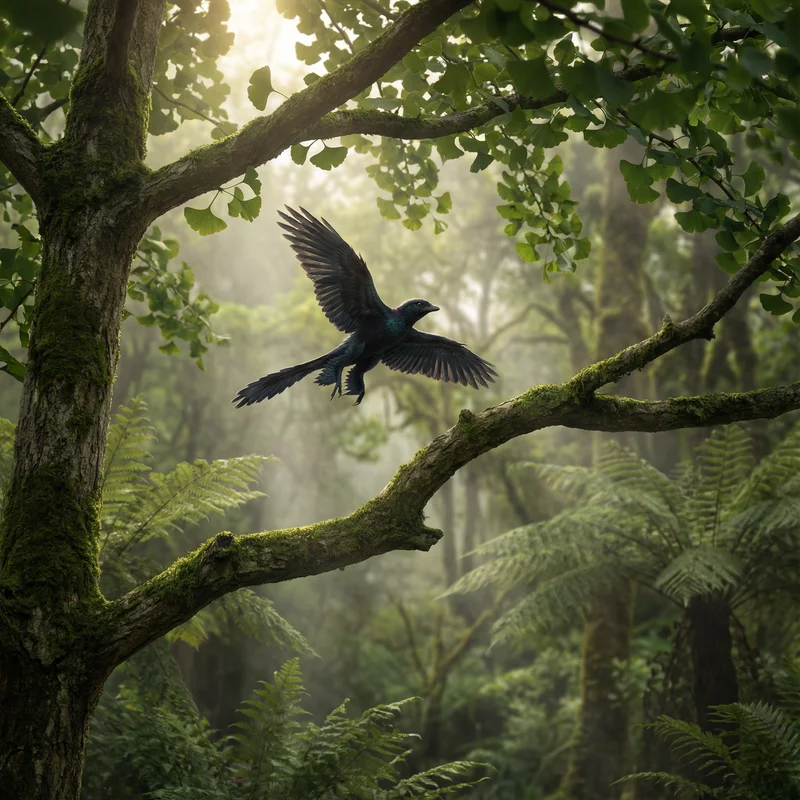 Microraptor
Microraptor · Cretaceous Period · Carnivore
 Microraptor
Microraptor · Cretaceous Period · Carnivore
 Microraptor
Microraptor · Cretaceous Period · Carnivore
 Microraptor
Microraptor · Cretaceous Period · Carnivore
 Microraptor
Microraptor · Cretaceous Period · Carnivore
🔗Related Creatures

Velociraptor
Velociraptor mongoliensis

Tarbosaurus
Tarbosaurus bataar
Concavenator
Concavenator corcovatus
Acrocanthosaurus
Acrocanthosaurus atokensis

Carnotaurus
Carnotaurus sastrei
Gorgosaurus
Gorgosaurus libratus
Yutyrannus
Yutyrannus huali
Abelisaurus
Abelisaurus comahuensis