Sinosauropteryx
Cretaceous Period Carnivore Creature Type
Sinosauropteryx prima
Scientific Name: "Sino (China) + sauros (lizard) + pteryx (wing) = 'Chinese reptilian wing'; prima = 'first'"
Local Name: Sinosauropteryx
Physical Characteristics
Discovery
Habitat
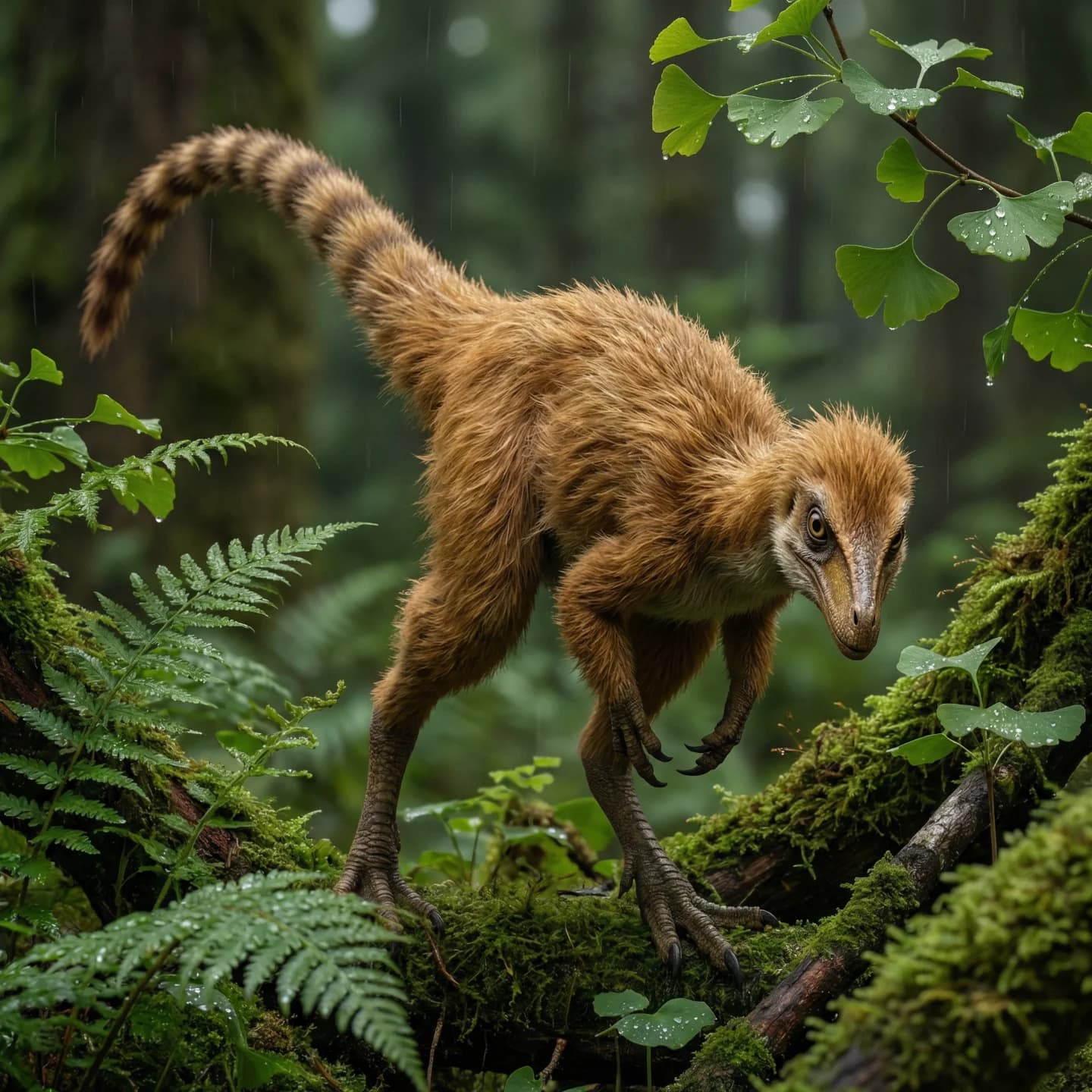
Sinosauropteryx (Sinosauropteryx Ji & Ji, 1996) is a small theropod dinosaur that lived during the Early Cretaceous (early Aptian, approximately 124.6–122 Ma) in what is now northeastern China's Liaoning Province. Described in 1996, this genus is the first non-avian dinosaur in which the presence of feathers (proto-feathers) was confirmed, a historic discovery that dramatically shifted academic discourse on the dinosaur–bird evolutionary link. The scientific name means 'Chinese reptilian wing,' a deliberate allusion to Archaeopteryx ('ancient wing').
Classified within Compsognathidae or the recently re-established Sinosauropterygidae (Qiu et al. 2025), this small bipedal carnivore had a holotype (GMV 2123) body length of only about 68 cm, with the largest known specimen reaching approximately 1.07 m. Body mass is estimated at 0.55–0.99 kg, making it one of the smallest known non-avian theropods. It is characterized by a proportionally extremely long tail (about 60% of body length), short forelimbs, and a large first finger. Simple, downy proto-feathers covering the entire body, a countershading coloration pattern, and specimens preserving stomach contents (lizards) and unlaid eggs provide invaluable direct evidence of this dinosaur's diet, reproduction, and ecology. It is found in the Yixian Formation and is a representative member of the Jehol Biota.
Overview
Name and Etymology
The scientific name 'Sinosauropteryx' combines the prefix 'Sino-' derived from Latin 'Sinae' (China), Greek 'sauros' (lizard/reptile), and Greek 'pteryx' (wing), meaning "Chinese reptilian wing" (Ji & Ji, 1996). This naming deliberately evokes Archaeopteryx ('ancient wing'), described in the 19th century. The type species epithet 'prima' means 'first' in Latin, reflecting the fact that this was the first non-avian dinosaur in which feathers were discovered.
Discovery History
The first Sinosauropteryx fossil was discovered in August 1996 by Li Yumin, a farmer and fossil collector active in the Liaoning Province area. The fossil was in the form of two split slabs (slab & counter-slab), and Li Yumin sold each slab separately to the National Geological Museum in Beijing (GMV) and the Nanjing Institute of Geology and Palaeontology (NIGP). Ji Qiang, the director of the Beijing museum, and visiting Canadian paleontologist Phil Currie immediately recognized the significance of the fossil, and Ji Qiang and Ji Shuan formally described it in 1996. When Currie presented photographs of this fossil at the 1996 Society of Vertebrate Paleontology (SVP) meeting, it reportedly caused great shock in the paleontological community, including John Ostrom, a pioneer of the dinosaur–bird origin hypothesis (Browne, New York Times, 1996).
Classification and Current Status
Sinosauropteryx was originally described as a type of bird (Aves) in the original description (Ji & Ji 1996, 1997), but this view was not accepted. Subsequent studies placed it within Compsognathidae, interpreting it as closely related to Compsognathus (Chen et al. 1998; Currie & Chen 2001). However, Cau (2024) questioned the monophyly of Compsognathidae, and Qiu et al. (2025) re-established the compsognathid-like theropods of the Jehol Biota as a separate family, Sinosauropterygidae. This family includes Sinosauropteryx, Huadanosaurus, Huaxiagnathus, Sinocalliopteryx, and Mirischia.
Two species are currently recognized: the type species S. prima Ji & Ji, 1996, and S. lingyuanensis Qiu et al., 2025, described in 2025. Specimen IVPP V14202, previously assigned to Sinosauropteryx, was reclassified by Qiu et al. (2025) as the holotype of a separate genus, Huadanosaurus sinensis.
Age, Stratigraphy, and Depositional Environment
Age and Formation
All Sinosauropteryx fossils come from the Yixian Formation in Liaoning Province, China. Specimens have been found in both the Jianshangou Beds and the Dawangzhangzi Beds of the Yixian Formation, dated by radiometric methods to approximately 124.6–122 Ma (Early Cretaceous, early Aptian) (Zhou, 2006). The Yixian Formation primarily consists of sedimentary layers of siltstone and volcaniclastic deposits intercalated between volcanic rock layers such as andesite and basalt, reflecting a freshwater lacustrine environment within a basin with frequent volcanic activity.
Paleoenvironment and Climate
The paleoenvironment of the Yixian Formation was a freshwater lacustrine setting where repeated mass mortality events caused by periodic volcanic eruptions, wildfires, and toxic gases emanating from lakes produced fossils of exceptional preservation (Zhou, 2006). The surrounding forests were dominated by conifers, with a small number of early angiosperms also present. Crustaceans, insects, bivalves, and gastropods were abundant, and mammals and birds are also known.
Regarding climate, while it was previously interpreted as a subtropical warm climate, oxygen isotope analysis by Amiot et al. (2011) indicates a mean annual temperature of approximately 10°C, an unusually cool temperate climate by Mesozoic standards. This is related to the relatively high latitude (approximately 41–42°N) of northeastern China at the time. The climate was seasonal with distinct dry and wet seasons (Wang et al. 2006), and this environment supports the possibility that Sinosauropteryx's proto-feathers served a thermoregulatory function.
Paleogeography
According to GPlates reconstructions from the Paleobiology Database (PBDB), the paleolatitude/paleolongitude of the Yixian Formation is approximately 41.5°N, 129.5°E, very similar to the modern coordinates. This reflects the fact that the East Asian plate occupied a position not significantly different from its present location during the Early Cretaceous.
Specimens and Diagnostic Characters
Key Specimens
| Specimen Number | Species | Composition | Locality/Beds | Notes |
|---|---|---|---|---|
| GMV 2123 (+ counter-slab NIGP 127586) | S. prima | Nearly complete articulated skeleton + feather impressions, body length 68 cm | Jianshangou Beds | Holotype, subadult |
| NIGP 127587 | S. prima | Nearly complete skeleton, stomach contents (lizard) + unlaid eggs preserved | Jianshangou Beds | Presumed adult female |
| D 2141 | S. prima | Partial skeleton | Unspecified | Referred specimen |
| IVPP V 12415 | S. lingyuanensis | Nearly complete skeleton + feather impressions | Dawangzhangzi Beds (Lingyuan) | Holotype, presumed juvenile but largest known individual |
GMV 2124 (NGMC 2124), previously assigned to Sinosauropteryx, has been reclassified as belonging to Tyrannosauroidea (Ji et al. 2007; Qiu et al. 2025), and IVPP V14202 has been separated as the holotype of Huadanosaurus sinensis (Qiu et al. 2025). Therefore, the specimens definitively assigned to S. prima currently number three (GMV 2123, NIGP 127587, D 2141).
Diagnostic Characters
The genus Sinosauropteryx is diagnosed by the following combination of characters (Ji & Ji 1996; Currie & Chen 2001): a relatively tall skull with a blunt snout, an oval but unexpanded antorbital fenestra, 64 extremely long caudal vertebrae (about 60% of body length), extremely short forelimbs (about 30% of hindlimb length), a first finger that is longer and more robust than the forearm bones, and simple downy proto-feathers covering the entire body.
Morphology and Function
Overall Body Plan and Size
Sinosauropteryx is a slender, elongate bipedal theropod, with a proportionally longer tail than any other known theropod (Chen et al. 1998). The holotype (GMV 2123) is a subadult with a total body length of only about 68 cm. The largest S. prima specimen reaches approximately 1.07 m, with body mass estimated at approximately 0.55 kg based on skull length (Therrien & Henderson, 2007) and approximately 0.99 kg from body mass evolutionary rate analysis (Benson et al., 2014). The holotype of S. lingyuanensis (IVPP V 12415) is presumed to be a juvenile but is the largest known Sinosauropteryx individual.
Proto-feathers
All described Sinosauropteryx specimens preserve downy integumentary structures originating from the skin. These filaments are distributed along the posterior half of the skull, neck, back, arms, and both the dorsal and ventral surfaces of the tail, with sporadic occurrences on the sides as well. Chen et al. (1998) suggested that, considering the density differences between the dorsal and lateral regions, the entire body was likely covered in feathers during life, with the ventral feathers lost during decomposition.
Filament length varies by body region: approximately 13 mm anterior to the eye, approximately 35 mm above the scapula, and up to approximately 40 mm at the middle of the tail. Under microscopic observation, individual filaments appear dark at the edges and light internally, suggesting a hollow structure. The nature of these structures has been debated. Feduccia and Lingham-Soliar et al. interpreted them as remnants of collagen fibers (Lingham-Soliar et al. 2007), but Smithwick et al. (2017) compared them in detail with collagen fibers of the ichthyosaur Stenopterygius and demonstrated that the key arguments for the collagen hypothesis were attributable to misidentification of preparation scratches, splitting artifacts, and sediment color differences. The structures are now almost universally accepted as proto-feathers in the scientific community.
A 2018 study by Saitta et al. proposed that thicker filaments may not represent structures with a separate central rachis but rather overlapping thin filaments, supporting the possibility that Sinosauropteryx's feathers were the simplest type of single-branch filaments.
Coloration and Countershading
Sinosauropteryx is the first non-avian dinosaur for which a scientifically based color reconstruction was performed. Longrich (2002) interpreted the alternating light and dark bands preserved on the tail as pigment remnants, and Smithwick et al. (2017) confirmed a countershading pattern with a dark dorsum and light ventrum, tail stripes, and a 'bandit mask' pattern around the eyes using 3D model comparisons. Such patterns are a camouflage strategy commonly observed in open-habitat animals, suggesting that the Jehol Biota habitats included diverse environment types, including open areas.
The reddish-brown coloration reported by Zhang et al. (2010) was based on specimen IVPP V14202, which was then classified as Sinosauropteryx but has since been reclassified as the holotype of the separate genus Huadanosaurus sinensis (Qiu et al. 2025). Therefore, caution is needed when directly applying the reddish-brown coloration to Sinosauropteryx itself.
Skull and Teeth
The skull was approximately 15% longer than the femur, a feature distinguishing it from Compsognathus (where the skull and femur are nearly equal in length). The teeth show slight heterodont morphology depending on position. The premaxillary teeth are slender and lack serrations, while the maxillary teeth are laterally compressed with serrations. The dentary teeth show similar differentiation (Currie & Chen 2001).
Limb Proportions
The forelimbs are extremely short, with the combined length of the humerus and radius being only about 30% of the combined femur and tibia length (compared to about 40% in Compsognathus). The hand is relatively long compared to the arm (about 84–91% of humerus + radius length), equaling approximately half the foot length. The first finger is large and robust, longer and thicker than the forearm bones, and was likely effective for grasping small prey.
Diet and Ecology
Stomach Contents: Direct Evidence
Direct evidence of Sinosauropteryx's diet is preserved in the fossil record. Remains of a lizard were found in the stomach region of specimen NIGP 127587, likely corresponding to Dalinghosaurus, which is commonly found in the same formation (Smithwick et al. 2017). Since Dalinghosaurus is interpreted as a fast-running lizard adapted to open habitats, Sinosauropteryx is inferred to have hunted agile small animals in similar open environments.
Mammalian jaw bones (Zhangheotherium ×2, Sinobaatar ×1) were found in the stomach of specimen GMV 2124, previously assigned to Sinosauropteryx (Hurum et al. 2006), but this specimen has now been reclassified as Tyrannosauroidea and should be excluded from the dietary evidence for Sinosauropteryx.
Reproduction
Specimen NIGP 127587 preserved unlaid eggs within the body cavity alongside the stomach contents (lizard). Two well-developed eggs were identified anterior to the pelvis, with additional eggs possibly present beneath them. Each egg measures approximately 36 × 26 mm. The simultaneous presence of two developed eggs demonstrates that Sinosauropteryx, like other theropods, possessed dual oviducts and laid eggs in pairs (Chen et al. 1998). This specimen represents a rare case in which the sex (female) was confirmed through the presence of eggs.
Coexisting Fauna
The Jehol Biota of the Yixian Formation includes, in addition to Sinosauropteryx, diverse theropods (Sinocalliopteryx, Huaxiagnathus, Caudipteryx, Microraptor, etc.), herbivorous dinosaurs (Psittacosaurus, Liaoningosaurus), birds (Confuciusornis), pterosaurs, mammals, amphibians, and various fish and insects. Large theropods such as Yutyrannus also belong to the same biota, though whether they occur in exactly the same stratigraphic horizons as Sinosauropteryx requires separate confirmation.
Phylogenetics and Taxonomic Debate
Monophyly of Compsognathidae
Sinosauropteryx has traditionally been placed within Compsognathidae, and was included in this family alongside Sinocalliopteryx, Huaxiagnathus, Compsognathus, Juravenator, and Scipionyx in the analysis by Senter et al. (2012). However, Cau (2024) failed to recover the monophyly of Compsognathidae and placed Sinosauropteryx in a polytomy within basal Coelurosauria.
Re-establishment of Sinosauropterygidae
Qiu et al. (2025) confirmed through phylogenetic analyses using two independent datasets that the compsognathid-like theropods of the Jehol Biota form a separate monophyletic group, and re-established the previously monotypic family Sinosauropterygidae. This family includes Sinosauropteryx, Huadanosaurus, Huaxiagnathus, Sinocalliopteryx, and Mirischia. However, Hendrickx (2025) noted the possibility that S. lingyuanensis and Huadanosaurus may be juveniles of already-known Jehol Biota tyrannosauroids, and commented that the describers did not provide a strong rebuttal of this possibility.
Reconstruction and Uncertainties
Confirmed Aspects
The basic form of Sinosauropteryx as a small bipedal theropod covered in simple downy proto-feathers is well established by multiple articulated specimens. The presence of stomach contents (lizard), unlaid eggs, countershading coloration pattern, and striped tail are strongly supported by direct fossil evidence.
Probable but Unconfirmed
The detailed aspects of coloration (exact hue) require re-evaluation, as the reddish-brown interpretation was based on a specimen now reclassified as Huadanosaurus, and its direct applicability to Sinosauropteryx itself needs reassessment. The precise microstructure of the feathers (single filaments vs. basic branching structure) also remains unresolved. Speed estimates (20–30 km/h) are based on general inference rather than direct biomechanical modeling.
Hypotheses and Unresolved Issues
The validity of Sinosauropterygidae and its relationship to Compsognathidae requires further research. Hendrickx's (2025) question of whether S. lingyuanensis and Huadanosaurus are independent taxa or juveniles of existing taxa is another issue to be resolved in the future. The relative importance of different functions of proto-feathers (thermoregulation, display, camouflage, etc.) also remains uncertain.
Related Taxa and Contemporary Comparisons
| Taxon | Age | Locality | Estimated Length | Features |
|---|---|---|---|---|
| Sinosauropteryx prima | Aptian, ~124.6–122 Ma | Liaoning, China (Yixian Fm) | ~0.68–1.07 m | First feathered non-avian dinosaur discovered, extremely long tail |
| Sinosauropteryx lingyuanensis | Aptian, ~124.6–122 Ma | Liaoning, China (Yixian Fm, Lingyuan) | Larger than S. prima (exact figures unpublished) | New species described in 2025 |
| Huadanosaurus sinensis | Aptian, ~124.6–122 Ma | Liaoning, China (Yixian Fm) | ~1 m estimated | Described as separate genus in 2025, formerly assigned to Sinosauropteryx |
| Compsognathus longipes | Late Jurassic, ~150 Ma | Germany and France | ~0.89–1.25 m | European sister taxon, proportionally longer arms |
| Sinocalliopteryx gigas | Aptian, ~124 Ma | Liaoning, China (Yixian Fm) | ~2.37 m | Largest compsognathid-grade theropod, stomach contents include birds |
Fun Facts
FAQ
📚References
- Ji, Q., & Ji, S. (1996). On the discovery of the earliest bird fossil in China (Sinosauropteryx gen. nov.) and the origin of birds. Chinese Geology, 10(233), 30–33.
- Chen, P., Dong, Z., & Zhen, S. (1998). An exceptionally well-preserved theropod dinosaur from the Yixian Formation of China. Nature, 391, 147–152. https://doi.org/10.1038/34356
- Currie, P. J., & Chen, P.-j. (2001). Anatomy of Sinosauropteryx prima from Liaoning, northeastern China. Canadian Journal of Earth Sciences, 38(1), 705–727. https://doi.org/10.1139/cjes-38-12-1705
- Ji, S., Gao, C., Liu, J., Meng, Q., & Ji, Q. (2007). New material of Sinosauropteryx (Theropoda: Compsognathidae) from western Liaoning, China. Acta Geologica Sinica (English Edition), 81(2), 177–182. https://doi.org/10.1111/j.1755-6724.2007.tb00942.x
- Zhang, F., Kearns, S. L., Orr, P. J., Benton, M. J., Zhou, Z., Johnson, D., Xu, X., & Wang, X. (2010). Fossilized melanosomes and the colour of Cretaceous dinosaurs and birds. Nature, 463, 1075–1078. https://doi.org/10.1038/nature08740
- Qiu, R., Wang, X., Jiang, S., Meng, J., & Zhou, Z. (2025). Two new compsognathid-like theropods show diversified predation strategies in theropod dinosaurs. National Science Review, 12(5), nwaf068. https://doi.org/10.1093/nsr/nwaf068
- Smithwick, F. M., Mayr, G., Saitta, E. T., Benton, M. J., & Vinther, J. (2017). On the purported presence of fossilized collagen fibres in an ichthyosaur and a theropod dinosaur. Palaeontology, 60(3), 409–422. https://doi.org/10.1111/pala.12292
- Smithwick, F. M., Nicholls, R., Cuthill, I. C., & Vinther, J. (2017). Countershading and stripes in the theropod dinosaur Sinosauropteryx reveal heterogeneous habitats in the Early Cretaceous Jehol Biota. Current Biology, 27(21), 3337–3343.e2. https://doi.org/10.1016/j.cub.2017.09.032
- Saitta, E. T., Gelernte, R., & Vinther, J. (2018). Additional information on the primitive contour and wing feathering of paravian dinosaurs. Palaeontology, 61(2), 273–288. https://doi.org/10.1111/pala.12342
- Therrien, F., & Henderson, D. M. (2007). My theropod is bigger than yours…or not: estimating body size from skull length in theropods. Journal of Vertebrate Paleontology, 27(1), 108–115. https://doi.org/10.1671/0272-4634(2007)27[108:MTIBTY]2.0.CO;2
- Benson, R. B. J., Campione, N. E., Carrano, M. T., Mannion, P. D., Sullivan, C., Upchurch, P., & Evans, D. C. (2014). Rates of dinosaur body mass evolution indicate 170 million years of sustained ecological innovation on the avian stem lineage. PLoS Biology, 12(5), e1001853. https://doi.org/10.1371/journal.pbio.1001853
- Zhou, Z. (2006). Evolutionary radiation of the Jehol Biota: chronological and ecological perspectives. Geological Journal, 41(3–4), 377–393. https://doi.org/10.1002/gj.1045
- Amiot, R., Wang, X., Zhou, Z., Wang, X., Buffetaut, E., Lécuyer, C., Ding, Z., Fluteau, F., Hibino, T., Kusuhashi, N., Mo, J., Suteethorn, V., Wang, Y., Xu, X., & Zhang, F. (2011). Oxygen isotopes of East Asian dinosaurs reveal exceptionally cold Early Cretaceous climates. Proceedings of the National Academy of Sciences, 108(13), 5179–5183. https://doi.org/10.1073/pnas.1011369108
- Longrich, N. (2002). Systematics of Sinosauropteryx. Journal of Vertebrate Paleontology, 22(supplement to 3), 80A.
- Lingham-Soliar, T., Feduccia, A., & Wang, X. (2007). A new Chinese specimen indicates that 'protofeathers' in the Early Cretaceous theropod dinosaur Sinosauropteryx are degraded collagen fibres. Proceedings of the Royal Society B, 274(1620), 1823–1829. https://doi.org/10.1098/rspb.2007.0352
- Hurum, J. H., Luo, Z.-X., & Kielan-Jaworowska, Z. (2006). Were mammals originally venomous? Acta Palaeontologica Polonica, 51(1), 1–11.
- Senter, P., Kirkland, J. I., Deblieux, D. D., Madsen, S., & Toth, N. (2012). New dromaeosaurids (Dinosauria: Theropoda) from the Lower Cretaceous of Utah, and the evolution of the dromaeosaurid tail. PLoS ONE, 7(5), e36790. https://doi.org/10.1371/journal.pone.0036790
- Cau, A. (2024). A unified framework for predatory dinosaur macroevolution. Bollettino della Società Paleontologica Italiana, 63(1), 1–19. https://doi.org/10.4435/BSPI.2024.08
- Hendrickx, C. (2025). Comment on "Two new compsognathid-like theropods show diversified predation strategies of theropod dinosaurs" by Qiu et al. National Science Review, 12(5), nwaf131. https://doi.org/10.1093/nsr/nwaf131
- Browne, M. W. (1996, October 19). Feathery fossil hints dinosaur-bird link. New York Times, Section 1, p. 1.
Gallery
5 images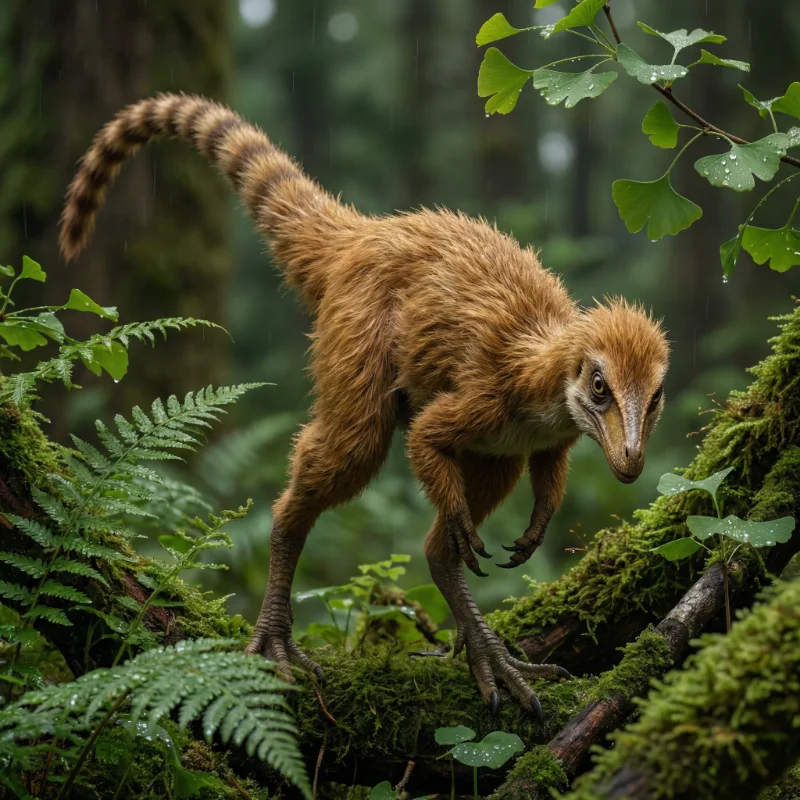 Sinosauropteryx
Sinosauropteryx · Cretaceous Period · Carnivore
 Sinosauropteryx
Sinosauropteryx · Cretaceous Period · Carnivore
 Sinosauropteryx
Sinosauropteryx · Cretaceous Period · Carnivore
 Sinosauropteryx
Sinosauropteryx · Cretaceous Period · Carnivore
 Sinosauropteryx
Sinosauropteryx · Cretaceous Period · Carnivore
🔗Related Creatures

Australovenator
Australovenator wintonensis
Concavenator
Concavenator corcovatus
Yutyrannus
Yutyrannus huali
Majungasaurus
Majungasaurus crenatissimus
Rajasaurus
Rajasaurus narmadensis

Velociraptor
Velociraptor mongoliensis

Microraptor
Microraptor zhaoianus

Deinonychus
Deinonychus antirrhopus