Australovenator
Cretaceous Period Carnivore Creature Type
Australovenator wintonensis
Scientific Name: "Latin australis ('southern') + venator ('hunter') = 'southern hunter'; the specific epithet wintonensis refers to the town of Winton, Queensland, near the type locality"
Local Name: Australovenator
Physical Characteristics
Discovery
Habitat

Australovenator (Australovenator wintonensis Hocknull et al., 2009) is a medium-sized megaraptoran theropod dinosaur from the Late Cretaceous (Cenomanian, approximately 95 million years ago) of eastern Australia. Classified within the Saurischia, Theropoda, and Megaraptora, it is based on the most complete non-avian theropod skeleton (approximately 30% preserved) ever found in Australia. The holotype specimen (AODF 604), affectionately nicknamed "Banjo" after the iconic Australian poet Banjo Paterson, was recovered from the lower part of the Winton Formation near Elderslie Station, approximately 60 km northwest of the town of Winton in Queensland. Remarkably, its remains were found intermingled with those of the sauropod Diamantinasaurus matildae at the so-called "Matilda site" (AODL 85).
The most striking anatomical feature of Australovenator is its powerfully built and highly flexible forelimbs, each bearing three fingers equipped with large, wickedly curved claws. The claws on the first and second digits were particularly formidable, reaching approximately 30 cm in length — a hallmark trait of the megaraptoran clade. A 2015 computer-modelling study demonstrated that Australovenator's elbow had a range of motion spanning 66 to 144 degrees, and that its radius could slide independently of the ulna, a feature resembling that of modern birds but unlike most non-avian dinosaurs (White et al., 2015). By contrast, the jaws and teeth were relatively lightly built, suggesting that prey capture relied primarily on the forelimbs and claws rather than bite force.
Estimates of body size place Australovenator at approximately 5–6 m in total length with a hip height of about 1.6 m. Body mass estimates vary: Benson et al. (2014) calculated approximately 310 kg based on femoral circumference regression, while Gregory S. Paul (2016) estimated roughly 500 kg using volumetric reconstruction. Its relatively lightweight build indicates that it was a swift, agile predator — its original describer, Scott Hocknull, famously dubbed it "the cheetah of its time." The phylogenetic position of Megaraptora, the clade to which Australovenator belongs, remains one of palaeontology's most contested questions: whether megaraptorans are allosauroid carnosaurians or basal coelurosaurs (possibly tyrannosauroids) is still actively debated, lending Australovenator additional significance to broader evolutionary discussions.
Overview
Name and Etymology
The genus name Australovenator is composed of the Latin words australis ("southern") and venator ("hunter"), meaning "southern hunter." The specific epithet wintonensis refers to the town of Winton in central-western Queensland, near the type locality. The name was coined in 2009 by Scott Hocknull of the Queensland Museum and colleagues when they formally described three new dinosaur taxa from the Winton Formation (Hocknull et al., 2009).
Taxonomic Status
Australovenator is a valid genus containing a single species, A. wintonensis. In its original description, it was placed as a sister taxon to the Carcharodontosauridae within Allosauroidea. Subsequent analyses have consistently placed it within Megaraptora, and more specifically within Megaraptoridae. The relationship between Australovenator and the enigmatic Rapator ornitholestoides — once suggested to be congeneric — was resolved by White et al. (2013), who identified multiple morphological differences in metacarpal I between the two taxa, confirming them as distinct genera.
Scientific Significance
As the most complete predatory dinosaur skeleton from the Australian Cretaceous, Australovenator has served as a cornerstone for understanding megaraptoran anatomy and phylogeny in the Southern Hemisphere. Its well-preserved forelimb and hindlimb material has enabled a series of biomechanical studies on forearm range of motion, pedal function, dental morphology, and footprint replication that would not have been possible with more fragmentary specimens.
Stratigraphy, Age, and Depositional Environment
Age Range
The holotype was recovered from the lower part of the Winton Formation within the northern Eromanga Basin. The original description (Hocknull et al., 2009) assigned a latest Albian age based on palynological evidence (the Phimopollenites pannosus zone). However, subsequent detrital zircon U–Pb dating by Tucker et al. (2013) revised the age of the lower Winton Formation upward to the Cenomanian (approximately 95 Ma). This revised dating is now broadly accepted. The Winton Formation as a whole spans a depositional interval of approximately 10–12 million years, from the late Albian to the early Turonian (Poropat et al., 2018).
Megaraptoran material from the Eumeralla Formation (Albian) of Victoria has been referred to cf. Australovenator (Poropat et al., 2019), and if confirmed, this would extend the temporal range of the genus into the Early Cretaceous.
Formation and Lithology
The Winton Formation is the uppermost Mesozoic formation of the Eromanga Basin, reaching approximately 1,100 m in thickness. It comprises lithic and feldspathic sandstone, mudstone, siltstone, coal, minor conglomerate, and layers of volcanic-derived detrital material. At the holotype locality (AODL 85, the "Matilda site"), the bones were well preserved within fine-grained clay sediment bounded by upper and lower sandstone horizons (Hocknull et al., 2009).
Depositional Environment and Palaeoclimate
The depositional environment at the holotype locality was interpreted as a low-energy, silt-rich, abandoned channel-fill deposit with distinctive billabong (oxbow lake) morphology (Hocknull et al., 2009). Associated fauna at the site included the sauropod Diamantinasaurus, fish, crocodiliforms, turtles, and hyriid bivalves, along with macrofloral remains of angiosperms, araucarian gymnosperms, ginkgoes, and ferns. Palaeoclimatic analysis of the Cenomanian–Turonian portion of the Winton Formation indicates warm conditions with seasonal rainfall and mean annual temperatures above approximately 20°C (Fletcher et al., 2014). The palaeolatitude of central-western Queensland at this time was approximately 50–60°S — considerably farther south than its present position — but greenhouse climate conditions maintained a warm environment.
| Feature | Detail |
|---|---|
| Formation | Lower Winton Formation |
| Basin | Eromanga Basin, Queensland |
| Age | Cenomanian (approximately 95 Ma) |
| Lithology | Fine-grained siltstone and claystone between sandstone horizons; feldspathic and lithic sandstone, mudstone |
| Depositional environment | Distal fluvial, oxbow lake (billabong) |
| Palaeoclimate | Warm and humid with seasonal rainfall |
| Palaeolatitude | Approximately 55°S |
Specimens and Diagnostic Features
Holotype
The holotype AODF 604 ("Banjo") is housed at the Australian Age of Dinosaurs Museum of Natural History in Winton, Queensland. As initially described, it consists of a left dentary, teeth, partial forelimbs and hindlimbs, a partial right ilium, ribs, and gastralia (Hocknull et al., 2009). Discovery of the holotype began in 2006 during the first excavation of the "Matilda site," discovered by Sandra Muir, with excavation continuing for five field seasons through 2010.
Subsequent publications have progressively expanded the known anatomy of the holotype:
- 2012: Additional forearm elements described (White et al., 2012)
- 2013: Additional hindlimb elements described, revealing the most complete megaraptoran leg known at the time (White et al., 2013)
- 2015: Right dentary described (White et al., 2015a)
In total, the skeleton preserves nearly complete arms and hands, legs and feet, several dorsal and ventral ribs, both anterior portions of the lower jaw, and several teeth — approximately 30% skeletal completeness.
Diagnostic Characters
Key diagnostic features identified in the original description and subsequent studies include:
- The first dentary tooth is subcircular in cross-section, whereas all subsequent dentary teeth are figure-of-eight shaped and asymmetrically lanceolate (White et al., 2015a).
- Tooth crowns lack mesial denticles, a synapomorphy of Megaraptoridae.
- The claw of manual digit I is hypertrophied.
- The astragalus is morphologically similar to that of Fukuiraptor.
- The olecranon process of the ulna is mediolaterally compressed and subtriangular.
Limitations of the Material
Cranial material is limited to the dentary; the maxilla, nasal, and braincase are unknown. Axial elements are also poorly represented, making full vertebral column reconstruction impossible. These gaps introduce uncertainty into precise body mass estimates and certain aspects of phylogenetic analysis.
Additional Specimens
In 2020, White et al. reported a heavily eroded indeterminate megaraptoran specimen from near the type locality, comprising fragmentary vertebrae, partial metatarsals, and a pedal phalanx. This individual was slightly larger than the holotype of Australovenator, but its assignment to Australovenator could not be confirmed.
Morphology and Functional Anatomy
Body Plan and Size
Australovenator was a bipedal carnivore with a total body length of approximately 5–6 m and a hip height of about 1.6 m. Body mass estimates differ between studies:
| Study | Estimated length | Estimated mass | Method |
|---|---|---|---|
| Paul (2016) | 6–7 m | Approximately 500 kg | Volumetric reconstruction |
| Benson et al. (2014) | — | Approximately 310 kg | Femoral circumference regression |
Its relatively light build and long hindlimbs indicate it was a fast, agile predator. Running speed has been estimated at up to approximately 48 km/h, though this figure is not based on rigorous biomechanical modelling and should be treated as approximate.
Forelimbs and Manus
The most anatomically distinctive feature of Australovenator is its powerfully built and highly flexible forelimbs. Each hand bore three fingers with sharply curved claws, and the claws on the first and second digits were particularly large and robust, reaching approximately 30 cm in length.
White et al. (2015b) conducted a detailed analysis of forearm range of motion using computer models, yielding several key findings:
- Elbow range of motion: approximately 66–144 degrees, comparable to that of maniraptoriforms
- The radius could slide independently of the ulna during flexion — a bird-like feature not found in most non-avian dinosaurs
- Finger hyperextension capability exceeded that of any other sampled theropod, with only Dilophosaurus approaching a similar range
- This combination of flexibility was interpreted as facilitating prey capture by drawing prey toward the chest, compensating for the relatively weak jaws
The study concluded that Australovenator employed an arm-centric predatory strategy — grasping and restraining prey with its powerful forelimbs before using its weaker jaws to disembowel it. The gracile morphology of the skull supports this interpretation.
Dentary and Dentition
The dentary is relatively lightly built, and the teeth, while serrated, are small. According to White et al. (2015a, PeerJ), the first alveolus of the dentary is reduced, and tooth crowns lack mesial denticles — a shared derived character of Megaraptoridae. The overall gracile construction of the skull suggests the jaws were not the primary tool for subduing prey.
Hindlimbs and Pes
The hindlimb elements described by White et al. (2013) represented the most complete megaraptoran leg known at the time of publication. A subsequent study by White et al. (2016) used CT scans of an emu foot to digitally reconstruct the musculature and soft tissue of the Australovenator pes, analysing how soft tissue affects range of motion. The study found that muscular range of motion is frequently overestimated when soft tissue is not accounted for.
Notably, phalanx II-3 of the holotype exhibited a splayed pathology, potentially resulting from repetitive impacts associated with kicking motions. Modern cassowaries are known to use their second toe as a weapon in defensive or territorial encounters, and a similar behaviour has been tentatively inferred for Australovenator (White et al., 2016).
Tail
The tail is only fragmentarily preserved. As a bipedal theropod, Australovenator would have possessed a long, muscular tail that served as a counterbalance during locomotion.
Diet and Palaeoecology
Feeding Strategy
Tooth morphology (serrated crowns) and forelimb structure (hypertrophied claws) confirm Australovenator as an active predator. The contrast between its lightly built jaws and its powerful, flexible forelimbs has led to the hypothesis that it employed an arm-centric predatory strategy: capturing prey with its large claws, drawing it toward the body, and then using the jaws to disembowel it (White et al., 2015b). This represents a markedly different approach from jaw-dominant predators such as tyrannosaurids.
Recent evidence from a closely related South American megaraptorid, Joaquinraptor casali (Lamanna et al., 2025), provided direct dietary evidence: a crocodyliform humerus was found in close association with the holotype's mouth, indicating that megaraptorids preyed upon small to medium-sized vertebrates. Australovenator likely consumed contemporaneous small ornithopods, fish, turtles, and other available fauna.
Ecological Niche
Within the Cenomanian-aged Winton Formation ecosystem, Australovenator was likely the apex or near-apex predator. Contemporaneous fauna included the sauropods Diamantinasaurus matildae and Wintonotitan wattsi, unnamed ankylosaurs and hypsilophodontid ornithopods, the crocodyliform Isisfordia, the lungfish Metaceratodus, turtles, pterosaurs, and diverse invertebrates (Hocknull et al., 2009).
Behavioural Inferences
In 2017, White et al. 3D-printed a reconstructed Australovenator foot and created artificial footprints in a clay-and-sand matrix, comparing them with the controversial large tracks at Lark Quarry in Queensland. The results supported a theropod origin for the Lark Quarry tracks, though this interpretation remains debated, with some researchers favouring an ornithopod trackmaker (Romilio & Salisbury, 2011; Lallensack et al., 2022). No direct evidence for pack hunting has been reported for Australovenator.
Distribution and Palaeogeography
Geographic Range
The confirmed locality is Elderslie Station, approximately 60 km northwest of Winton, Queensland, from the lower Winton Formation. In 2020, White et al. described an additional indeterminate megaraptoran specimen from near the type locality that was slightly larger than the holotype, though its assignment to Australovenator remains uncertain.
Megaraptoran material from the Eumeralla Formation (Albian) of Victoria has been referred to cf. Australovenator (Poropat et al., 2019), and specimens from the Wonthaggi Formation may also pertain to this genus. If confirmed, the geographic range of Australovenator would extend from Queensland to Victoria.
Palaeogeography
During the Cenomanian, central-western Queensland lay at a palaeolatitude of approximately 50–60°S. Australia and Antarctica had not yet fully separated within Gondwana at this time. The distribution of megaraptorans across South America and Australia has been interpreted as evidence for faunal exchange through eastern Gondwana during the mid-Cretaceous (Smith et al., 2008; Bell et al., 2016).
Phylogenetic Placement and Debate
The Megaraptora Problem
The phylogenetic position of Megaraptora within Theropoda is one of palaeontology's most contested issues. Two principal competing hypotheses exist:
Hypothesis 1: Allosauroidea — Benson, Carrano & Brusatte (2010) placed Megaraptora within Neovenatoridae, itself nested within Allosauroidea. In this framework, Australovenator forms a sister-taxon relationship with Fukuiraptor, and together with Aerosteon and Megaraptor constitutes Megaraptora. Under this hypothesis, megaraptorans would most likely have had scaly skin, as known allosauroid skin impressions show scales.
Hypothesis 2: Basal Coelurosauria / Tyrannosauroidea — Novas et al. (2012, 2013) and Porfiri et al. (2014) interpreted megaraptorans as basal members of Tyrannosauroidea within Coelurosauria. Under this scenario, megaraptorans may have possessed primitive feathers, since all known coelurosaurs appear to have had at least some form of integumentary covering.
Apesteguía et al. (2016) found that megaraptorans could be placed as either allosauroids or basal coelurosaurs. The 2025 description of Joaquinraptor casali by Lamanna et al. (Nature Communications) confirmed that this controversy remains unresolved, citing the fragmentary nature of most megaraptoran fossils and the lack of anatomically overlapping elements among taxa as the primary obstacles.
Position of Australovenator
| Analysis | Position of Australovenator | Higher classification of Megaraptora |
|---|---|---|
| Hocknull et al. (2009) | Sister taxon to Carcharodontosauridae | Allosauroidea |
| Benson et al. (2010) | Within Neovenatoridae-Megaraptora, sister to Fukuiraptor | Allosauroidea |
| Porfiri et al. (2014) | Within Megaraptoridae, more derived than Fukuiraptor | Tyrannosauroidea |
| Apesteguía et al. (2016) | Within Megaraptoridae | Allosauroidea or basal Coelurosauria |
Reconstruction and Uncertainty
Confirmed Facts
- A medium-sized bipedal carnivorous dinosaur belonging to Megaraptora
- Powerfully built forelimbs with hypertrophied, hooked claws on digits I and II
- Relatively gracile jaws with small, serrated teeth
- Lived during the Late Cretaceous (Cenomanian, approximately 95 Ma) in Australia
- The most complete non-avian theropod skeleton from Australia (approximately 30%)
Well-Supported Interpretations
- Total body length approximately 5–6 m, body mass approximately 310–500 kg
- Arm-centric prey capture strategy (supported by White et al., 2015b biomechanical analysis)
- Fast, agile locomotion based on limb proportions
Hypothetical / Uncertain
- Pack hunting behaviour: no direct evidence
- Integumentary covering: depends on the higher-level classification of Megaraptora (scales if allosauroid; primitive feathers if coelurosaur)
- Lark Quarry trackmaker identity: debated
- Maximum running speed of approximately 48 km/h: rough estimate, not derived from rigorous biomechanical modelling
Common Misconceptions
Australovenator is frequently misidentified online as a member of either the Megalosauridae or as closely related to Velociraptor. Neither is accurate. Australovenator belongs to Megaraptora, an entirely separate clade from the Dromaeosauridae (to which Velociraptor belongs) and from the Megalosauridae. Megaraptorans are characterised by their own unique suite of features including hypertrophied manual claws, elongate skulls with low-crowned teeth, and extensively pneumatized bones.
Comparison with Related and Contemporaneous Taxa
| Taxon | Age | Locality | Length | Notable features |
|---|---|---|---|---|
| Australovenator wintonensis | Cenomanian (approximately 95 Ma) | Queensland, Australia | 5–6 m | Most complete Australian theropod |
| Megaraptor namunhuaiquii | Turonian–Coniacian | Patagonia, Argentina | Approximately 8 m | First-named megaraptoran genus |
| Fukuiraptor kitadaniensis | Barremian–Albian | Fukui, Japan | Approximately 4.2 m | Basal megaraptoran lineage |
| Aerosteon riocoloradensis | Santonian | Argentina | Approximately 6–7 m | Extensive pneumaticity |
| Joaquinraptor casali | Maastrichtian | Patagonia, Argentina | Approximately 5–6 m | Described in 2025; direct evidence of crocodyliform predation |
Fun Facts
FAQ
📚References
- Hocknull, S. A., White, M. A., Tischler, T. R., Cook, A. G., Calleja, N. D., Sloan, T. & Elliott, D. A. (2009). New mid-Cretaceous (latest Albian) dinosaurs from Winton, Queensland, Australia. PLoS ONE, 4(7), e6190. https://doi.org/10.1371/journal.pone.0006190
- White, M. A., Cook, A. G., Hocknull, S. A., Sloan, T., Sinapius, G. H. K. & Elliott, D. A. (2012). New forearm elements discovered of holotype specimen Australovenator wintonensis from Winton, Queensland, Australia. PLoS ONE, 7(6), e39364. https://doi.org/10.1371/journal.pone.0039364
- White, M. A., Benson, R. B. J., Tischler, T. R., Hocknull, S. A., Cook, A. G., Barnes, D. G., Poropat, S. F., Wooldridge, S. J. & Sloan, T. (2013). New Australovenator hind limb elements pertaining to the holotype reveal the most complete neovenatorid leg. PLoS ONE, 8(7), e68649. https://doi.org/10.1371/journal.pone.0068649
- White, M. A., Falkingham, P. L., Cook, A. G., Hocknull, S. A. & Elliott, D. A. (2013). Morphological comparisons of metacarpal I for Australovenator wintonensis and Rapator ornitholestoides: implications for their taxonomic relationships. Alcheringa, 37(4), 435–441. https://doi.org/10.1080/03115518.2013.770221
- White, M. A., Bell, P. R., Cook, A. G., Poropat, S. F. & Elliott, D. A. (2015a). The dentary of Australovenator wintonensis (Theropoda, Megaraptoridae); implications for megaraptorid dentition. PeerJ, 3, e1512. https://doi.org/10.7717/peerj.1512
- White, M. A., Bell, P. R., Cook, A. G., Barnes, D. G., Tischler, T. R., Bassam, B. J. & Elliott, D. A. (2015b). Forearm range of motion in Australovenator wintonensis (Theropoda, Megaraptoridae). PLoS ONE, 10(9), e0137709. https://doi.org/10.1371/journal.pone.0137709
- White, M. A., Cook, A. G., Klinkhamer, A. J. & Elliott, D. A. (2016). The pes of Australovenator wintonensis (Theropoda: Megaraptoridae): analysis of the pedal range of motion and biological restoration. PeerJ, 4, e2312. https://doi.org/10.7717/peerj.2312
- White, M. A., Cook, A. G. & Rumbold, S. J. (2017). A methodology of theropod print replication utilising the pedal reconstruction of Australovenator and a simulated paleo-sediment. PeerJ, 5, e3427. https://doi.org/10.7717/peerj.3427
- Benson, R. B. J., Carrano, M. T. & Brusatte, S. L. (2010). A new clade of archaic large-bodied predatory dinosaurs (Theropoda: Allosauroidea) that survived to the latest Mesozoic. Naturwissenschaften, 97(1), 71–78. https://doi.org/10.1007/s00114-009-0614-x
- Porfiri, J. D., Novas, F. E., Calvo, J. O., Agnolín, F. L., Ezcurra, M. D. & Cerda, I. A. (2014). Juvenile specimen of Megaraptor (Dinosauria, Theropoda) sheds light about tyrannosauroid radiation. Cretaceous Research, 51, 35–55. https://doi.org/10.1016/j.cretres.2014.04.007
- Tucker, R. T., Roberts, E. M., Hu, Y., Kemp, A. I. S. & Salisbury, S. W. (2013). Detrital zircon age constraints for the Winton Formation, Queensland: contextualizing Australia's Late Cretaceous dinosaur faunas. Gondwana Research, 24(2), 767–779. https://doi.org/10.1016/j.gr.2012.12.009
- Paul, G. S. (2016). The Princeton Field Guide to Dinosaurs (2nd ed.). Princeton University Press.
- Benson, R. B. J., Campione, N. E., Carrano, M. T., Mannion, P. D., Sullivan, C., Upchurch, P. & Evans, D. C. (2014). Rates of dinosaur body mass evolution indicate 170 million years of sustained ecological innovation on the avian stem lineage. PLoS Biology, 12(5), e1001853. https://doi.org/10.1371/journal.pbio.1001853
- Poropat, S. F., White, M. A., Vickers-Rich, P. & Rich, T. H. (2019). New megaraptorid (Dinosauria: Theropoda) remains from the Lower Cretaceous Eumeralla Formation of Cape Otway, Victoria, Australia. Journal of Vertebrate Paleontology, 39(4), e1666273. https://doi.org/10.1080/02724634.2019.1666273
- White, M. A., Bell, P. R., Poropat, S. F., Pentland, A. H., Rigby, S. L., Cook, A. G., Sloan, T. & Elliott, D. A. (2020). New theropod remains and implications for megaraptorid diversity in the Winton Formation (lower Upper Cretaceous), Queensland, Australia. Royal Society Open Science, 7(1), 191462. https://doi.org/10.1098/rsos.191462
- Fletcher, T. L., Salisbury, S. W., Moss, P. T. & McLoughlin, S. (2014). Paleoclimate of the Late Cretaceous (Cenomanian–Turonian) portion of the Winton Formation, central-western Queensland, Australia: new observations based on CLAMP and bioclimatic analysis. PALAIOS, 29(3), 121–128. https://doi.org/10.2110/palo.2013.080
- Poropat, S. F., Mannion, P. D., Upchurch, P., Hocknull, S. A., Kear, B. P., Kundrát, M., Tischler, T. R., Sloan, T., Sinapius, G. H. K., Elliott, J. A. & Elliott, D. A. (2018). The palaeoenvironment of the Upper Cretaceous (Cenomanian–Turonian) portion of the Winton Formation, Queensland, Australia. PeerJ, 6, e5513. https://doi.org/10.7717/peerj.5513
- Lamanna, M. C., Ibiricu, L. M., Casal, G. A., Martínez, R. D. F. et al. (2025). Latest Cretaceous megaraptorid theropod dinosaur sheds light on the end of the age of dinosaurs in South America. Nature Communications, 16. https://doi.org/10.1038/s41467-025-63793-5
- Apesteguía, S., Smith, N. D., Valieri, R. J. & Makovicky, P. J. (2016). An unusual new theropod with a didactyl manus from the Upper Cretaceous of Patagonia, Argentina. PLoS ONE, 11(7), e0157793. https://doi.org/10.1371/journal.pone.0157793
- Agnolin, F. L., Ezcurra, M. D., Pais, D. F. & Salisbury, S. W. (2010). A reappraisal of the Cretaceous non-avian dinosaur faunas from Australia and New Zealand: evidence for their Gondwanan affinities. Journal of Systematic Palaeontology, 8(2), 257–300. https://doi.org/10.1080/14772011003594870
Gallery
5 images Australovenator
Australovenator · Cretaceous Period · Carnivore
 Australovenator
Australovenator · Cretaceous Period · Carnivore
 Australovenator
Australovenator · Cretaceous Period · Carnivore
 Australovenator
Australovenator · Cretaceous Period · Carnivore
 Australovenator
Australovenator · Cretaceous Period · Carnivore
🔗Related Creatures

Giganotosaurus
Giganotosaurus carolinii
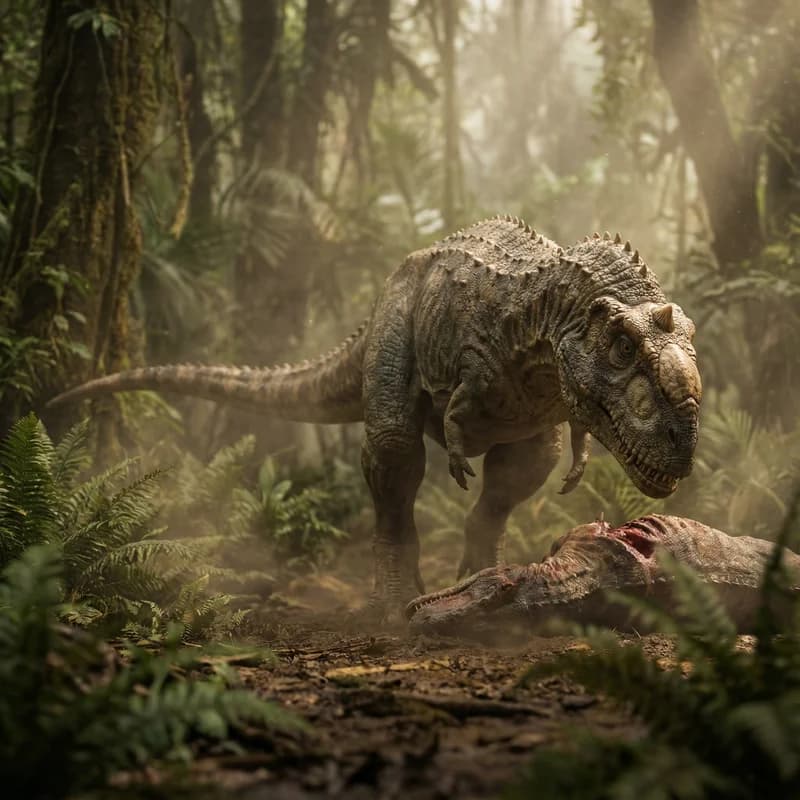
Majungasaurus
Majungasaurus crenatissimus
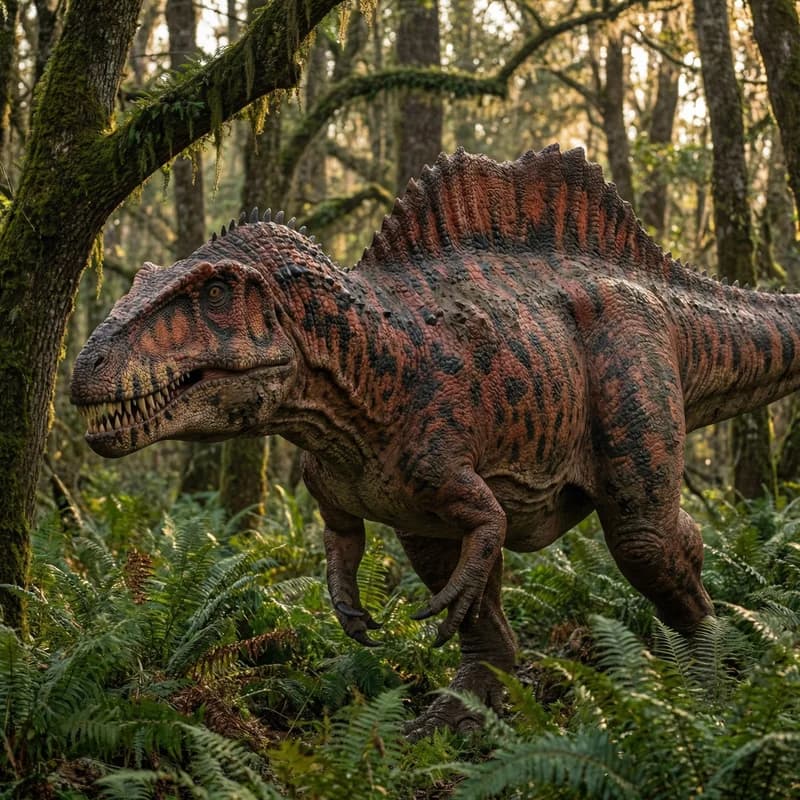
Acrocanthosaurus
Acrocanthosaurus atokensis
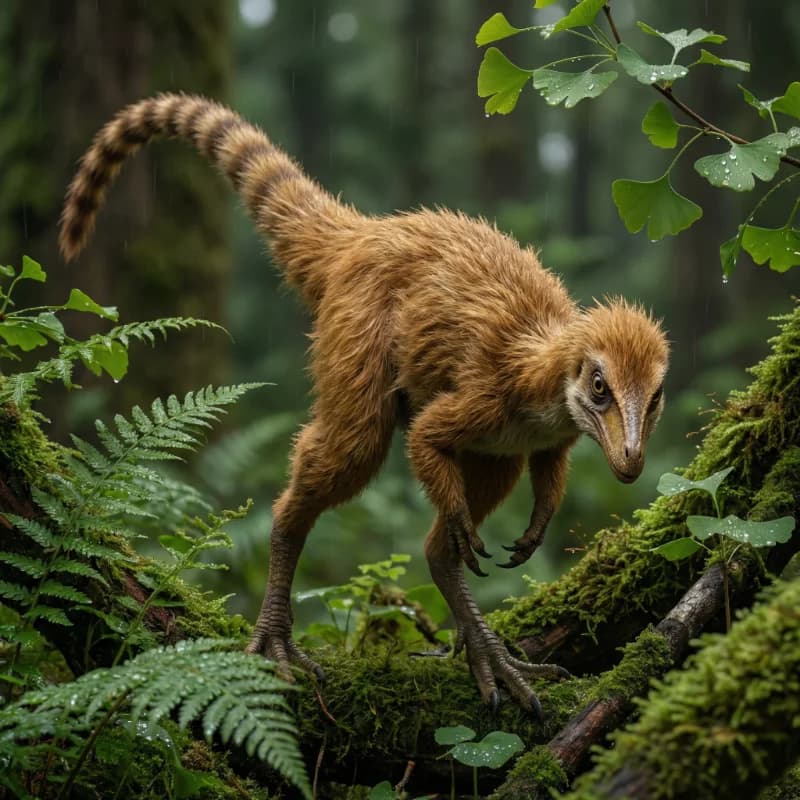
Sinosauropteryx
Sinosauropteryx prima

Carcharodontosaurus
Carcharodontosaurus saharicus
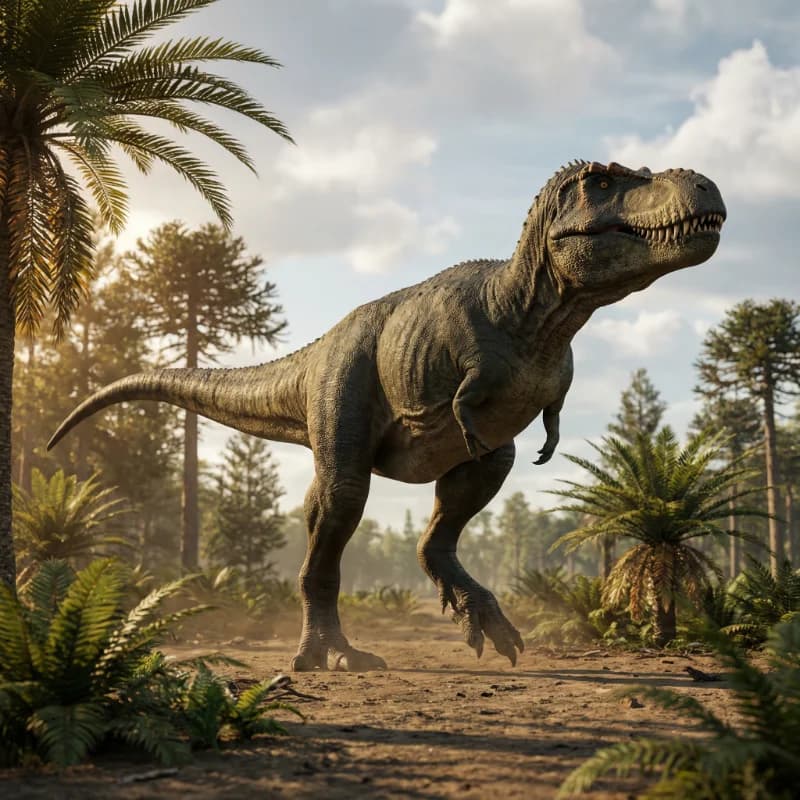
Gorgosaurus
Gorgosaurus libratus

Tyrannosaurus Rex
Tyrannosaurus rex

Velociraptor
Velociraptor mongoliensis