Giganotosaurus
Cretaceous Period Carnivore Creature Type
Giganotosaurus carolinii
Scientific Name: "Greek gigas (giant) + notos (south) + sauros (lizard) = "Giant Southern Lizard""
Local Name: Gigantosaurus
Physical Characteristics
Discovery
Habitat

Giganotosaurus carolinii (Coria & Salgado, 1995) is a giant theropod dinosaur belonging to the family Carcharodontosauridae that inhabited South America during the late Cenomanian stage of the Late Cretaceous (approximately 99.6–97 Ma). It was discovered in the Candeleros Formation of present-day Patagonia, Argentina. In 1993, amateur fossil collector Rubén Darío Carolini found the first specimen, and in 1995 Rodolfo Coria and Leonardo Salgado formally named the taxon. The specific epithet carolinii honors its discoverer, Carolini.
The holotype specimen (MUCPv-Ch1) is approximately 70% complete, preserving most of the vertebral column, the pectoral and pelvic girdles, both femora, and the left tibia and fibula. This specimen is among the most complete within Carcharodontosauridae and plays a pivotal role in understanding the anatomy of the family. Size estimates vary by methodology, but the holotype is estimated at roughly 12–13 m in length and 4.2–8.5 tonnes in body mass. Extrapolation from a larger dentary fragment (MUCPv-95) suggests maximum lengths of approximately 13.2 m (Calvo & Coria, 1998). At the time of its discovery, Giganotosaurus attracted worldwide attention as a potential rival to Tyrannosaurus rex for the title of "largest carnivorous dinosaur."
Overview
Name and Etymology
The genus name Giganotosaurus is composed of the Ancient Greek words gigas (γίγας, "giant") + notos (νότος, "south wind/south") + -sauros (-σαῦρος, "lizard"), meaning "Giant Southern Lizard." This reflects both the animal's enormous size and its discovery in the Southern Hemisphere (South America). The specific epithet carolinii commemorates Rubén Darío Carolini, the Argentine amateur paleontologist who discovered the first fossil (Coria & Salgado, 1995). Note that the genus should not be confused with Gigantosaurus (Seeley, 1869), an entirely different and previously named taxon; spelling confusion between the two is common.
Taxonomic Position
Giganotosaurus is classified within Saurischia, Theropoda, Tetanurae, Carnosauria, and more specifically within Carcharodontosauridae, tribe Giganotosaurini. The family includes other giant theropods such as Carcharodontosaurus from Africa, and from South America Mapusaurus, Tyrannotitan, and the recently described Meraxes gigas (Canale et al., 2022). Giganotosaurus is one of the most completely known taxa within Carcharodontosauridae (Carrano et al., 2012).
Scientific Significance
Giganotosaurus is a key taxon for understanding the anatomy, ecology, and evolution of the giant theropods that served as apex predators in the Southern Hemisphere during the mid-Cretaceous. It demonstrates that before tyrannosaurids rose to dominance in the Northern Hemisphere (Laurasia), carcharodontosaurids filled the apex predator niche across Gondwanan landmasses (South America, Africa). The taxon has also fueled academic debate over body-mass and size-estimation methodologies for giant theropods, driven in part by public fascination with the question of the "largest carnivorous dinosaur."
Age, Stratigraphy & Depositional Environment
Age Range
Giganotosaurus dates to the early Cenomanian stage of the Late Cretaceous, with an absolute age of approximately 99.6–97 Ma (million years ago). The base of the Candeleros Formation has been dated to approximately 98.6 ± 2.5 Ma (Garrido, 2010), and the formation as a whole spans the lower to upper Cenomanian.
Formation and Lithology
Both the holotype and additional specimens were recovered from the Candeleros Formation, which belongs to the Río Limay Subgroup of the Neuquén Group within the Neuquén Basin. The formation is composed primarily of sandstone and conglomerate, with intervals of eolian deposits and siltstone with paleosols indicative of wetland environments. In some areas, the formation reaches thicknesses of approximately 300 m (Leanza et al., 2004; Sánchez et al., 2006).
Depositional Environment and Paleoclimate
The Candeleros Formation represents part of the ancient Kokorkom Desert, a semi-arid paleoenvironment dominated by braided river systems. Eolian dune deposits alternate with fluvial channel deposits, and localized wetland facies are also present. Paleogeographic reconstructions place this region at approximately 46.5°S, 45.5°W during the Cenomanian (Wikipedia, Candeleros Formation paleocoordinates), significantly farther south than the present-day location (~39.4°S, 69.2°W). The area occupied a mid-latitude semi-arid to subtropical climate belt along the margin of the Kokorkom paleo-desert.
Specimens and Diagnostic Features
Holotype and Referred Specimens
The holotype (MUCPv-Ch1) was discovered in 1993 by Rubén Darío Carolini in the badlands near Villa El Chocón, Neuquén Province. The specimen is approximately 70% complete, preserving partial cranial elements (found scattered across an area of roughly 10 m²), most of the vertebral column, the pectoral girdle, the pelvis, both femora, and the left tibia and fibula (Coria & Salgado, 1995; Coria & Currie, 2002). The degree of cranial suture fusion indicates the holotype individual was an adult.
The referred specimen MUCPv-95 is an incomplete left dentary discovered by J.O. Calvo in 1987 near Los Candeleros. It is approximately 8% (or 6.5%) larger than the holotype, suggesting it belonged to a larger individual (Calvo & Coria, 1998).
Diagnostic Characters
Coria and Salgado (1995) diagnosed Giganotosaurus by the following features: the skull is relatively low and elongate; the nasal bones have a strongly rugose (rough-textured) surface; the lacrimal bone bears a prominent ridge-like crest on its anterior surface; the postorbital bone projects into the orbit (eye socket) posteriorly; the anterior portion of the dentary is flattened and bears a ventrally projecting "chin" structure; the teeth are laterally compressed with prominent serrations on both carinae; the shoulder girdle is relatively reduced; and the vertebral column is robustly constructed.
Limitations of the Specimens
The holotype skull was found in a disarticulated and fragmentary state, introducing uncertainty in reassembly. Some cranial suture contacts are not preserved, creating ambiguity in total skull-length estimates. Carrano et al. (2012) suggested that skull length may have been overestimated and that the skulls of Giganotosaurus, Carcharodontosaurus, and Tyrannosaurus were roughly comparable in size. The referred specimen (MUCPv-95) preserves only the dentary, limiting geometric extrapolation to overall body size.
Morphology and Function
Body Form and Size
Giganotosaurus is among the largest theropods known, though incomplete preservation makes precise size estimation challenging. Various studies have estimated the holotype at 12–13 m in total length, a skull length of 1.53–1.80 m, femur lengths of 1.365–1.43 m, and a body mass of 4.2–8.5 tonnes (Coria & Salgado, 1995; Coria & Currie, 2002; Mazzetta et al., 2004; Therrien & Henderson, 2007; Hartman, 2013; Reolid et al., 2021). Extrapolation from the larger individual (MUCPv-95) yields maximum estimates of approximately 13.2 m and 8.2–10 tonnes. Henderson (2023) used pelvic dimensions to estimate the holotype at 12.5 m, matching the original description.
Skull and Dentition
The skull is low and elongate, with the maxillary tooth row extending approximately 92 cm. The upper and lower borders of the maxilla are nearly parallel, and a distinct protuberance is present beneath the external naris (nostril). The entire surface of the nasals is covered with rugosities, and the lacrimal bears a dorsally directed ridge-like crest. The quadrate bone is approximately 44 cm long and bears pneumatic foramina on its medial surface. The skull roof is broad and shelf-like, overhanging the supratemporal fenestrae. This architecture suggests that the jaw musculature did not extend over the skull roof (as in most other theropods) but instead attached to the lateral surfaces beneath the shelf (Coria & Currie, 2002).
The teeth are laterally compressed and blade-like, with serrations along both anterior and posterior carinae, making them effective for slicing through flesh. Unlike the robust, conical teeth of Tyrannosaurus (adapted for bone-crushing), the teeth of Giganotosaurus were specialized for a cutting function.
Jaw Mechanics and Bite Force
The jaws of Giganotosaurus are lighter than those of Tyrannosaurus, and the jaw-muscle attachment sites are relatively smaller, suggesting a weaker bite force. However, the jaws could close rapidly, and the ventral "chin" structure of the dentary likely helped distribute stress during feeding (Coria & Currie, 2002). A 2025 biomechanical study confirmed that carcharodontosaurids (including Giganotosaurus) had relatively lighter bites compared to Tyrannosaurus, and likely hunted using a strategy of repeated raking bites with their blade-like teeth to inflict deep wounds and cause blood loss, rather than crushing bone (Lautenschlager & Rayfield, 2025, Current Biology).
Limbs and Locomotion
The hindlimbs are long and powerfully built, with holotype femur lengths of approximately 1.365–1.43 m. The femoral circumference is approximately 520 mm, a key metric used for body-mass estimation. The tibia is approximately 1.12 m long, roughly 8 cm shorter than that of the Tyrannosaurus specimen "Sue" (Mazzetta et al., 2004). The forelimbs were relatively small, and the reduction of the shoulder girdle was noted in the original description. Giganotosaurus was an obligate biped, with a long tail serving as a counterbalance. Speed estimates suggest a maximum of approximately 14 m/s (~50 km/h), though more recent biomechanical models indicate actual sustained speeds were likely lower (Blanco & Mazzetta, 2001).
Diet and Ecology
Feeding Strategy and Prey
Giganotosaurus was an apex predator that likely preyed primarily on medium-to-large herbivorous dinosaurs. Sauropods co-occurring in the Candeleros Formation include the rebbachisaurid Limaysaurus, Andesaurus, and various titanosaurs. Although popular media frequently depicts Giganotosaurus hunting Argentinosaurus, the latter taxon is actually known from the stratigraphically higher Huincul Formation (~97–93 Ma), making direct coexistence unlikely (hypothesis; evidence suggests a ~2 Ma temporal gap). The contemporaneous prey of Giganotosaurus would have been the sauropods and other herbivores of the Candeleros Formation.
The hunting strategy is hypothesized to have been a "slash-and-bleed" approach: using blade-like serrated teeth to inflict repeated deep wounds, causing hemorrhage and debilitation before the prey succumbed. This contrasts markedly with the bone-crushing bite strategy of Tyrannosaurus.
Pack Hunting
No direct fossil evidence (such as a bonebed) currently supports pack hunting in Giganotosaurus itself. However, the closely related Mapusaurus was found in a bonebed containing at least seven individuals, suggesting gregarious behavior or some degree of sociality (Coria & Currie, 2006). By phylogenetic inference, similar behavior has been proposed for Giganotosaurus, but this remains a hypothesis unsupported by direct evidence.
Coexisting Fauna
The fauna co-occurring with Giganotosaurus in the Candeleros Formation is highly diverse. Theropods include the abelisaurid Ekrixinatosaurus, the dromaeosaurid Buitreraptor, the alvarezsaurid Alnashetri, and the basal coelurosaur Bicentenaria. Sauropods include Andesaurus, Limaysaurus, Rayososaurus, and the recently described rebbachisaurid Campananeyen, among other titanosaurs. Other taxa include azhdarchid pterosaurs, notosuchian crocodyliforms (Araripesuchus spp.), the basal snake Najash, and the small, hair-covered mammal Cronopio.
Distribution and Paleogeography
Geographic Range
Giganotosaurus is currently known only from Patagonia, Argentina, specifically from the Candeleros Formation of Neuquén Province. The holotype was found near Villa El Chocón, while additional specimens were recovered near Los Candeleros and Lake Ezequiel Ramos Mexía.
Paleogeographic Interpretation
During the Cenomanian, South America was part of Gondwana and in the process of separating from Africa. Paleocoordinate reconstructions place the Candeleros Formation localities at approximately 46.5°S, 45.5°W—significantly farther south than their present-day positions (~39.4°S, 69.2°W). The region occupied a mid-latitude semi-arid climate belt along the margin of the Kokorkom paleo-desert.
Phylogeny and Taxonomic Debate
Latest Phylogenetic Analyses
Giganotosaurus is placed within the tribe Giganotosaurini of the family Carcharodontosauridae. In the phylogenetic analysis accompanying the description of Meraxes gigas (Canale et al., 2022), Giganotosaurus formed a clade with Mapusaurus and Meraxes as a South American radiation of giant carcharodontosaurids. This morphology-based analysis supports earlier hypotheses that Giganotosaurus is more closely related to Mapusaurus and Tyrannotitan than to Carcharodontosaurus.
Relationship to Tyrannosauridae
Although both Giganotosaurus and Tyrannosaurus rex are giant theropods, they are phylogenetically distant. Giganotosaurus belongs to Allosauroidea (Carnosauria), while Tyrannosaurus belongs to Coelurosauria (Tyrannosauroidea). These two lineages independently evolved gigantism along separate branches of the theropod tree. Carcharodontosaurids flourished in Gondwana until the mid-Cretaceous but declined during the late Cretaceous (Turonian–Santonian), after which tyrannosauroids assumed the apex predator role in the Northern Hemisphere.
Reconstruction and Uncertainties
Confirmed (based on fossil evidence)
Giganotosaurus was one of the apex predators in Cenomanian South America (~99.6–97 Ma) [confirmed]. It belongs to Carcharodontosauridae and is closely related to Mapusaurus [confirmed]. The skull was low and elongate with blade-like serrated teeth [confirmed]. Its body size ranks among the largest theropods (total length 12–13+ m) [confirmed].
Likely (strong anatomical/ecological inference)
Body mass in the range of approximately 6–8.5 tonnes (varying by methodology) [likely]. The hunting strategy was a "slash-and-bleed" approach using serrated teeth to wound and debilitate prey [likely]. Primary prey consisted of sauropods (e.g., Andesaurus, titanosaurs) and other herbivores from the Candeleros Formation [likely].
Uncertain / Common Misconceptions
The claim that Giganotosaurus was definitively "larger than Tyrannosaurus" is uncertain. While length may have been similar or slightly greater, body mass may have been comparable to or slightly less than that of the Tyrannosaurus specimen "Sue" (~8.4 t) (Hartman, 2013; Persons et al., 2019). The popular image of Giganotosaurus hunting Argentinosaurus is likely inaccurate, as the two taxa derive from different formations (and therefore different time intervals). Direct evidence for pack hunting in Giganotosaurus is absent; this inference is based on bonebed evidence from the related Mapusaurus. The skull-length estimate of 1.95 m (extrapolated from MUCPv-95) may be exaggerated (Carrano et al., 2012; Paul, 2010) and should be interpreted with caution.
Comparison with Related and Contemporary Taxa
| Taxon | Age | Region | Est. Length | Est. Mass | Key Features |
|---|---|---|---|---|---|
| Giganotosaurus carolinii | Cenomanian (~99.6–97 Ma) | South America (Argentina) | 12–13.2 m | 6–8.5 t | Low, elongate skull; serrated blade-like teeth |
| Mapusaurus roseae | Cenomanian–Turonian (~97–93 Ma) | South America (Argentina) | ~12.2–12.6 m | ~5–8 t | Bonebed discovery suggests sociality |
| Carcharodontosaurus saharicus | Cenomanian (~100–94 Ma) | North Africa | ~12–13 m | ~6–15 t | Skull ~1.6 m |
| Tyrannosaurus rex | Maastrichtian (~68–66 Ma) | North America | ~12–12.3 m | ~8.4–9+ t | Powerful bite force; robust conical teeth |
| Spinosaurus aegyptiacus | Cenomanian (~99–95 Ma) | North Africa | ~14–15+ m | ~7–12+ t | Semi-aquatic; elongate snout |
Specimen Summary Table
| Specimen No. | Preserved Elements | Locality / Formation | Year Discovered | Notes |
|---|---|---|---|---|
| MUCPv-Ch1 (holotype) | Partial cranium, most vertebrae, pectoral girdle, pelvis, both femora, left tibia/fibula (~70% complete) | Villa El Chocón, Candeleros Fm. | 1993 | Adult; housed at EBPM |
| MUCPv-95 | Partial left dentary | Los Candeleros, Candeleros Fm. | 1987 | ~6.5–8% larger than holotype |
| MUCPv-52 | Single incomplete tooth | Lake Ezequiel Ramos Mexía | 1987 | First specimen ever found |
Size Estimate Comparison Table
| Study | Method | Holotype Length | Holotype Mass | Notes |
|---|---|---|---|---|
| Coria & Salgado, 1995 | Morphological comparison | 12.5 m | 6–8 t | Original description |
| Seebacher, 2001 | Polynomial model | 12.5 m | 6.6 t | — |
| Coria & Currie, 2002 | Femoral circumference extrapolation | — | 4.2 t | Possible underestimate |
| Mazzetta et al., 2004 | Multivariate regression | — | 6.5–8 t | Larger specimen 8.2–10 t |
| Therrien & Henderson, 2007 | Volumetric model | ~13 m | 13.8 t | Controversial; possible overestimate |
| Hartman, 2013 (GDI) | Skeletal reconstruction-based | ~12.4 m | 6.8 t | Larger specimen 8.2 t |
| Reolid et al., 2021 | 3D model & averaging | 13 m | 5.5–8.5 t (mean 6.75 t) | Comprehensive analysis |
| Henderson, 2023 | Pelvic proportional scaling | 12.5 m | — | Matches original description |
Fun Facts
FAQ
📚References
- Coria, R. A., & Salgado, L. (1995). A new giant carnivorous dinosaur from the Cretaceous of Patagonia. Nature, 377(6546), 224–226. https://doi.org/10.1038/377224a0
- Coria, R. A., & Currie, P. J. (2002). The braincase of Giganotosaurus carolinii (Dinosauria: Theropoda) from the Upper Cretaceous of Argentina. Journal of Vertebrate Paleontology, 22(4), 802–811.
- Calvo, J. O., & Coria, R. A. (1998). New specimen of Giganotosaurus carolinii (Coria & Salgado, 1995), supports it as the largest theropod ever found. Gaia, 15, 117–122.
- Carrano, M. T., Benson, R. B. J., & Sampson, S. D. (2012). The phylogeny of Tetanurae (Dinosauria: Theropoda). Journal of Systematic Palaeontology, 10(2), 211–300. https://doi.org/10.1080/14772019.2011.630927
- Coria, R. A., & Currie, P. J. (2006). A new carcharodontosaurid (Dinosauria, Theropoda) from the Upper Cretaceous of Argentina. Geodiversitas, 28(1), 71–118.
- Canale, J. I., Apesteguía, S., Gallina, P. A., Mitchell, J., Smith, N. D., Cullen, T. M., ... & Makovicky, P. J. (2022). New giant carnivorous dinosaur reveals convergent evolutionary trends in theropod arm reduction. Current Biology, 32(14), 3195–3202.e5. https://doi.org/10.1016/j.cub.2022.05.057
- Mazzetta, G. V., Christiansen, P., & Fariña, R. A. (2004). Giants and bizarres: Body size of some southern South American Cretaceous dinosaurs. Historical Biology, 16(2–4), 71–83. https://doi.org/10.1080/08912960410001715132
- Therrien, F., & Henderson, D. M. (2007). My theropod is bigger than yours…or not: estimating body size from skull length in theropods. Journal of Vertebrate Paleontology, 27(1), 108–115.
- Hartman, S. (2013). Mass estimates: North vs South redux. Scott Hartman's Skeletal Drawing.com (blog post). https://www.skeletaldrawing.com/home/mass-estimates-north-vs-south-redux772013
- Persons, W. S., Currie, P. J., & Erickson, G. M. (2019). An older and exceptionally large adult specimen of Tyrannosaurus rex. The Anatomical Record, 303(4), 656–672. https://doi.org/10.1002/ar.24118
- Reolid, M., Cardenal, A., & Reolid, J. (2021). Digital 3D models of theropods for approaching body-mass distribution and volume. Journal of Iberian Geology, 47, 599–624. https://doi.org/10.1007/s41513-021-00172-1
- Henderson, D. M. (2023). Growth constraints set an upper limit to theropod dinosaur body size. The Science of Nature, 110, 4. https://doi.org/10.1007/s00114-023-01832-1
- Garrido, A. (2010). Estratigrafía del Grupo Neuquén, Cretácico Superior de la Cuenca Neuquina (Argentina): nueva propuesta de ordenamiento litoestratigráfico. Revista del Museo Argentino de Ciencias Naturales, nueva serie, 12(2), 121–177.
- Leanza, H. A., Apesteguía, S., Novas, F. E., & De la Fuente, M. S. (2004). Cretaceous terrestrial beds from the Neuquén Basin (Argentina) and their tetrapod assemblages. Cretaceous Research, 25(1), 61–87.
- Sánchez, M. L., Heredia, S., & Calvo, J. O. (2006). Paleoambientes sedimentarios del Cretácico Superior de la Formación Plottier (Grupo Neuquén), Departamento Confluencia, Neuquén. Revista de la Asociación Geológica Argentina, 61(1), 3–18.
- Sereno, P. C., Dutheil, D. B., Iarochene, M., Larsson, H. C., Lyon, G. H., Magwene, P. M., ... & Wilson, J. A. (1996). Predatory dinosaurs from the Sahara and Late Cretaceous faunal differentiation. Science, 272(5264), 986–991.
- Blanco, R. E., & Mazzetta, G. V. (2001). A new approach to evaluate the cursorial ability of the giant theropod Giganotosaurus carolinii. Acta Palaeontologica Polonica, 46(2), 193–202.
- Lautenschlager, S., & Rayfield, E. J. (2025). Carnivorous dinosaur lineages adopt different skull performances at large body sizes. Current Biology. https://doi.org/10.1016/j.cub.2025.08.011
Gallery
5 images Giganotosaurus
Giganotosaurus · Cretaceous Period · Carnivore
 Giganotosaurus
Giganotosaurus · Cretaceous Period · Carnivore
 Giganotosaurus
Giganotosaurus · Cretaceous Period · Carnivore
 Giganotosaurus
Giganotosaurus · Cretaceous Period · Carnivore
 Giganotosaurus
Giganotosaurus · Cretaceous Period · Carnivore
🔗Related Creatures
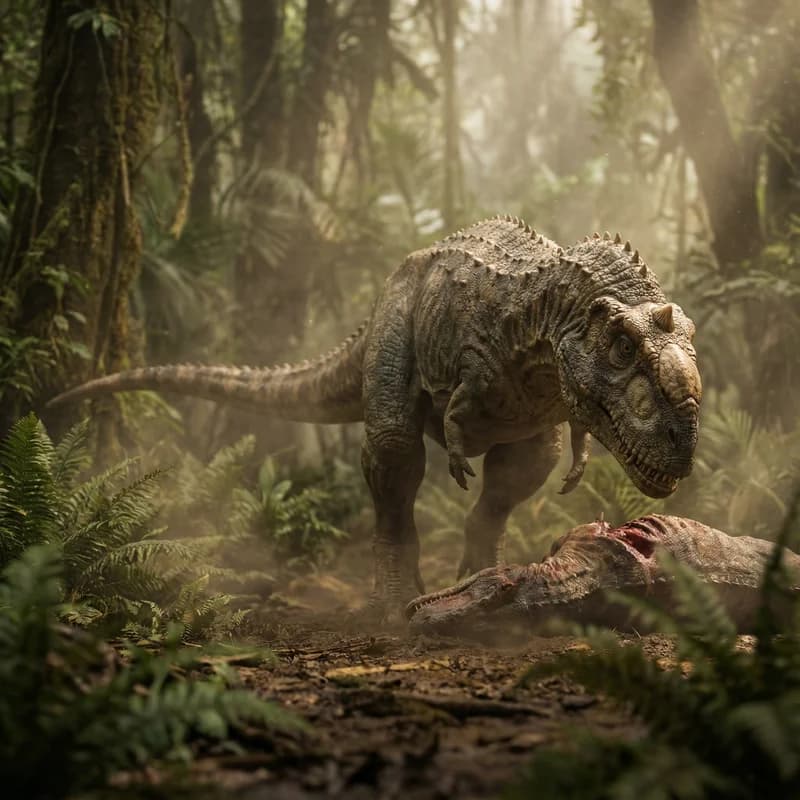
Majungasaurus
Majungasaurus crenatissimus
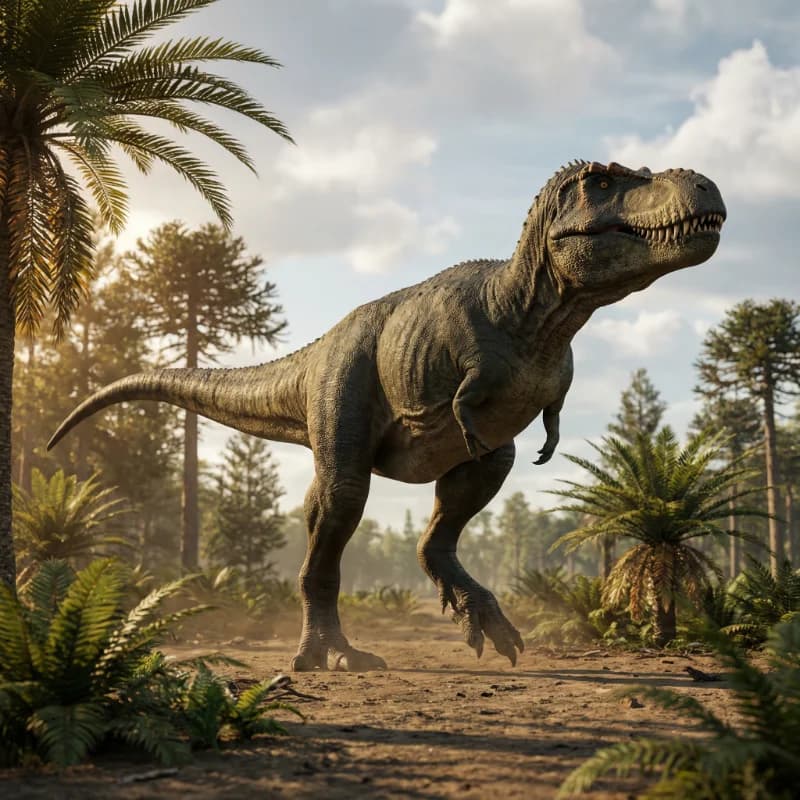
Gorgosaurus
Gorgosaurus libratus
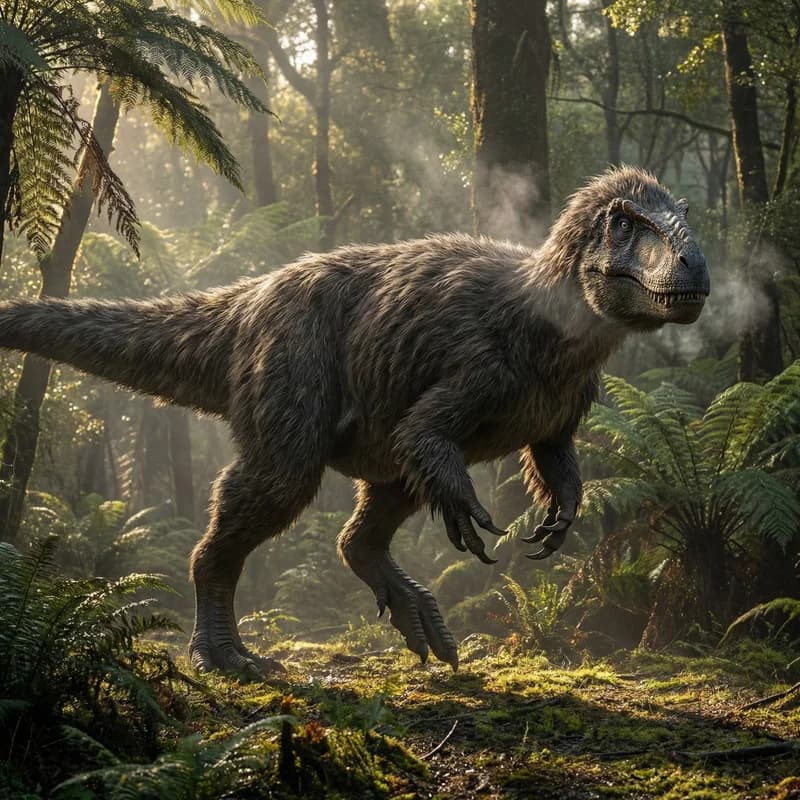
Yutyrannus
Yutyrannus huali
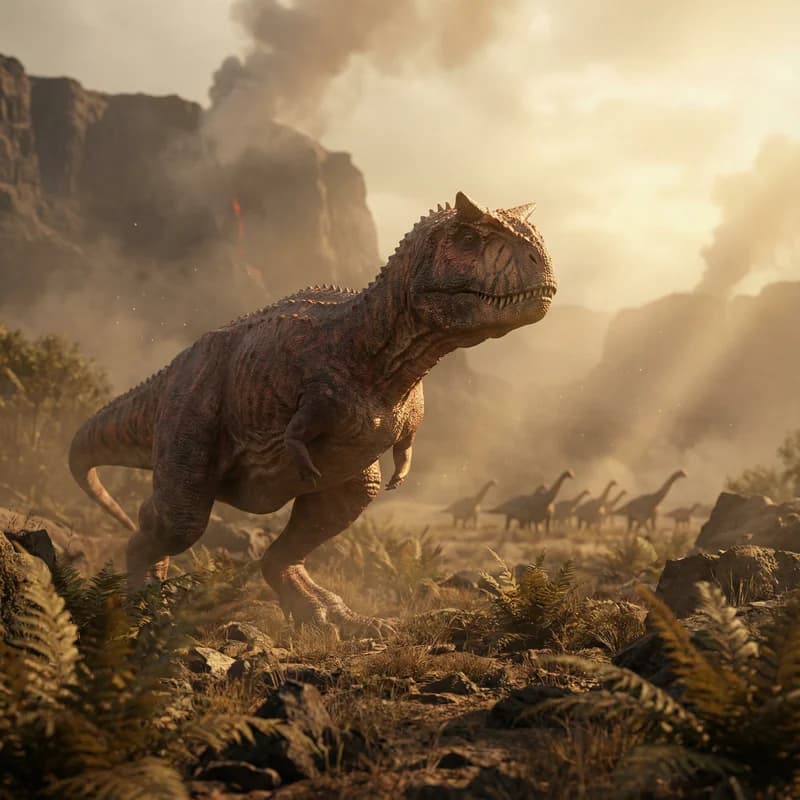
Rajasaurus
Rajasaurus narmadensis

Carnotaurus
Carnotaurus sastrei

Utahraptor
Utahraptor ostrommaysi

Tyrannosaurus Rex
Tyrannosaurus rex

Deinonychus
Deinonychus antirrhopus