Acrocanthosaurus
Cretaceous Period Carnivore Creature Type
Acrocanthosaurus atokensis
Scientific Name: "High-spined lizard — from Greek ákros (high) + ákanthos (thorn/spine) + saûros (lizard). The species name atokensis refers to Atoka County, Oklahoma, where the original specimens were found."
Local Name: Acrocanthosaurus
Physical Characteristics
Discovery
Habitat
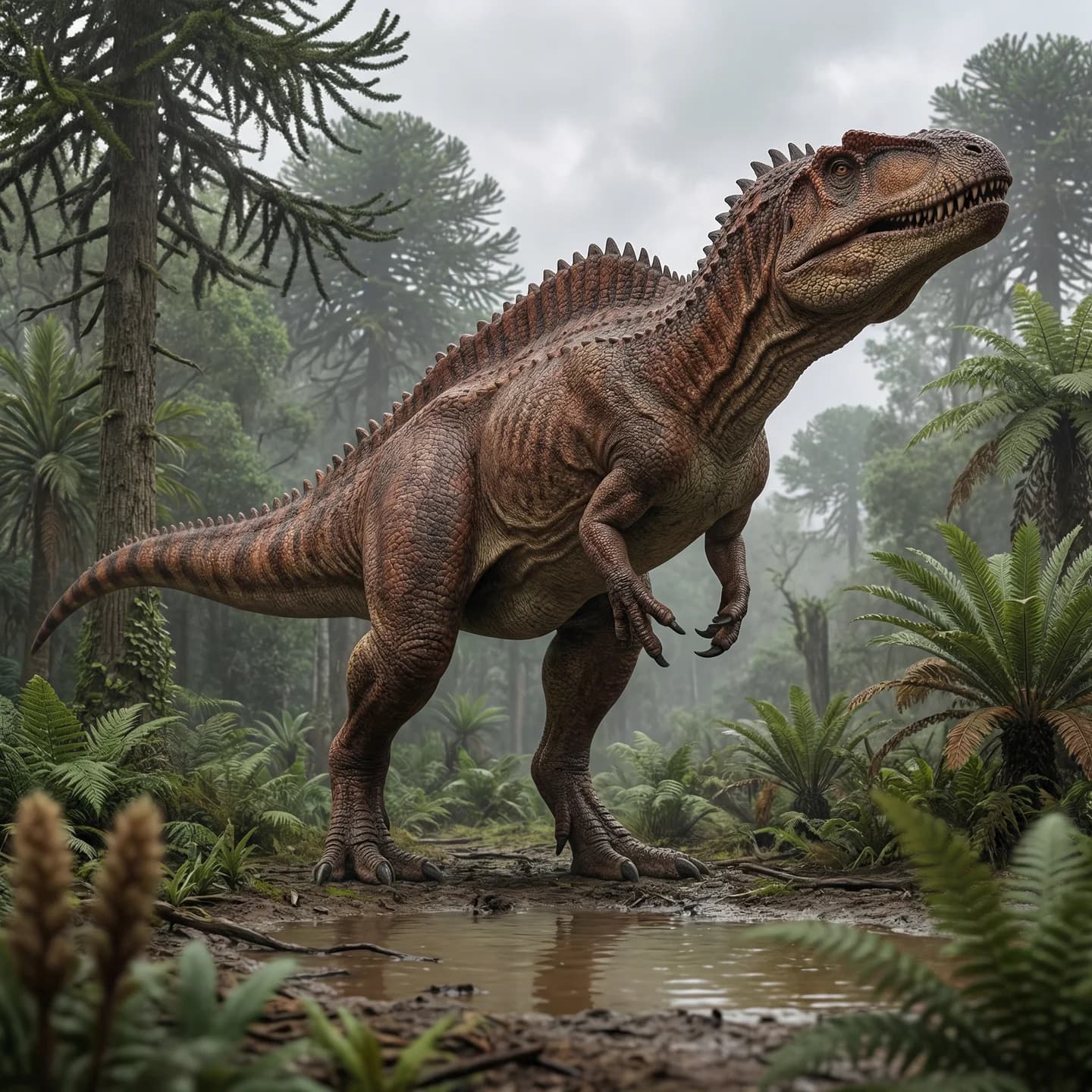
Acrocanthosaurus atokensis (Stovall & Langston, 1950) is a large theropod dinosaur from the Early to early Late Cretaceous (Barremian to early Cenomanian, approximately 125–99.6 million years ago) of North America. It belongs to the family Carcharodontosauridae within the superfamily Allosauroidea, making it a close relative of the famous southern-hemisphere giants Giganotosaurus and Carcharodontosaurus. During the Early Cretaceous, Acrocanthosaurus was the largest theropod and undisputed apex predator of its ecosystem across what is now the central and eastern United States.
The most striking feature of Acrocanthosaurus is the row of dramatically elongated neural spines along its cervical, dorsal, sacral, and proximal caudal vertebrae. These spines exceeded 2.5 times the height of their respective centra and bore attachment surfaces consistent with powerful musculature rather than a thin membrane, suggesting that in life the animal carried a thick muscular ridge along its back — analogous to the shoulder hump of a modern American bison rather than the sail of Spinosaurus (Stovall & Langston, 1950; Bailey, 1997). The largest known individual (NCSM 14345) reached an estimated total body length of 11–12.2 m, a hip height of approximately 3.96 m, and a body mass estimated between roughly 5 and 9 metric tonnes depending on the reconstruction method employed.
Fossil remains have been recovered from four geologic formations spanning the U.S. states of Oklahoma, Texas, Wyoming, and Maryland — an unusually broad geographic range that encompasses both western and eastern North America. This continent-wide distribution indicates that Acrocanthosaurus was already established across the landmass before the Western Interior Seaway split the continent later in the Cretaceous (Carrano, 2024). To date, at least five significant specimens are known, with NCSM 14345 (nicknamed "Fran") being the most complete, preserving the only known complete skull and forelimb of the genus. This specimen has been the foundation for specialized studies on cranial anatomy, brain structure, forelimb biomechanics, and phylogenetic placement.
Overview
Name and Etymology
The genus name Acrocanthosaurus derives from the Greek words ákros (high), ákanthos (thorn or spine), and saûros (lizard), meaning "high-spined lizard" — a direct reference to the conspicuously tall neural spines on its vertebrae (Liddell & Scott, 1980). The species epithet atokensis refers to Atoka County in southeastern Oklahoma, where the holotype was discovered. Wann Langston Jr. originally proposed the name "Acracanthus atokaensis" in his unpublished 1947 master's thesis, but this was emended to Acrocanthosaurus atokensis for the formal 1950 description co-authored with J. Willis Stovall (Stovall & Langston, 1950; Czaplewski et al., 1994).
Taxonomic Status
Only a single valid species, A. atokensis, is currently recognized within the genus. In 1988, Gregory S. Paul assigned tall-spined vertebrae from Early Cretaceous England to a second species, A. altispinax, but these were subsequently reassigned to the separate genus Becklespinax (Olshevsky, 1991). During the decades following its initial description, Acrocanthosaurus was variously classified within Allosauridae, Megalosauridae, and even Spinosauridae due to its elongated neural spines. Since the late 1990s, however, successive cladistic analyses have consistently placed it within Carcharodontosauridae (Harris, 1998; Eddy & Clarke, 2011; Novas et al., 2013; Cau, 2024).
Notably, a 2025 study describing the new carcharodontosaurid Tameryraptor identified nine morphological differences between NCSM 14345 and the holotype OMNH 10146, raising the possibility that North American carcharodontosaurid diversity may have been richer than previously recognized (Kellermann et al., 2025).
Age, Stratigraphy, and Depositional Environment
Temporal Range
The stratigraphic range of Acrocanthosaurus spans approximately 125–99.6 Ma (Barremian to early Cenomanian), based primarily on biostratigraphic correlations rather than direct radiometric dates (Holtz, 2011; Holtz et al., 2004). The Aptian–Albian boundary has been located within the Glen Rose Formation of Texas using ammonite biostratigraphy; since the Twin Mountains Formation underlies the Glen Rose, it is constrained to the Aptian stage (125–112 Ma). The Antlers Formation shares key dinosaur genera (Deinonychus, Tenontosaurus) with the Cloverly Formation, which has yielded radiometric dates placing it in the Aptian–Albian interval, supporting a similar age for the Antlers Formation.
Formations and Lithology
| Formation | Region | Approximate Age | Key Specimen(s) |
|---|---|---|---|
| Antlers Formation (Trinity Group) | Southern Oklahoma | Late Aptian – Early Albian | OMNH 10146 (holotype), NCSM 14345 |
| Twin Mountains Formation (Trinity Group) | Northern Texas | Aptian | SMU 74646 |
| Cloverly Formation | North-central Wyoming | Aptian – Albian | UM 20796 (juvenile) |
| Arundel Formation (Potomac Group) | Maryland | Aptian | USNM 466054 (subadult) |
The Antlers and Twin Mountains formations consist primarily of sandstones, mudstones, siltstones, and conglomerates deposited in fluvial and deltaic environments along a coastal plain adjacent to the proto-Gulf of Mexico (Harris, 1998; Currie & Carpenter, 2000).
Paleoenvironment
During the Early Cretaceous, the areas preserved in the Antlers and Twin Mountains formations represented a vast floodplain that drained into a shallow inland sea — the precursor to the Western Interior Seaway that would later divide North America for most of the Late Cretaceous. The Glen Rose Formation preserves a coastal environment, with large theropod footprints (possibly attributable to Acrocanthosaurus) found in ancient shoreline mudflats. As a large apex predator, Acrocanthosaurus would have ranged across multiple habitat types, from riverine floodplains to coastal lowlands (Farlow, 2001). The climate was substantially warmer and more humid than today, with subtropical conditions prevailing across the region.
Specimens and Diagnostic Characters
Holotype and Referred Specimens
Holotype OMNH 10146: Discovered in the early 1940s near Atoka, Oklahoma. Consists of a braincase and fragmentary posterior skull and mandible elements, plus partial postcranial remains. The paratype OMNH 10147, found in the same area, preserves only postcranial material (Stovall & Langston, 1950).
NCSM 14345 ("Fran"): The most complete specimen known, including the only complete skull and forelimb. Recovered from the Antlers Formation in McCurtain County, Oklahoma, by Cephis Hall and Sid Love. Prepared at the Black Hills Institute and now on permanent display at the North Carolina Museum of Natural Sciences in Raleigh (Currie & Carpenter, 2000). It is the largest known individual.
SMU 74646: A partial skeleton from the Twin Mountains Formation of Texas, missing most of the skull (Harris, 1998).
UM 20796: A juvenile specimen from the Cloverly Formation of Wyoming, consisting of vertebral fragments, partial pubic bones, a femur, a partial fibula, and other fragments. Found near the scapula of a Sauroposeidon (D'Emic et al., 2012).
USNM 466054: An incomplete subadult skeleton from the Arundel Formation of Maryland. Previously misidentified as an ornithomimosaur, it was re-identified in 2024 as Acrocanthosaurus cf. atokensis, marking the first definitive record of the genus from eastern North America and the smallest known individual (Carrano, 2024).
| Specimen | Formation | Key Preserved Elements | Individual Size | Reference |
|---|---|---|---|---|
| OMNH 10146 (holotype) | Antlers Fm., Oklahoma | Braincase, fragmentary skull and mandible, partial postcrania | Smaller individual | Stovall & Langston, 1950 |
| OMNH 10147 (paratype) | Antlers Fm., Oklahoma | Postcranial elements only | Similar size to NCSM 14345 | Stovall & Langston, 1950 |
| SMU 74646 | Twin Mountains Fm., Texas | Partial skeleton, mostly lacking skull | Smaller individual | Harris, 1998 |
| NCSM 14345 | Antlers Fm., Oklahoma | Complete skull, complete forelimb, near-complete skeleton | Largest known individual | Currie & Carpenter, 2000 |
| UM 20796 | Cloverly Fm., Wyoming | Vertebrae, pubis, femur, fibula fragments | Juvenile | D'Emic et al., 2012 |
| USNM 466054 | Arundel Fm., Maryland | Fragmentary partial skeleton | Subadult (smallest known) | Carrano, 2024 |
Diagnostic Characters
According to the revised diagnosis by Eddy & Clarke (2011), A. atokensis is distinguished by four primary autapomorphies: (1) a knob on the lateral surangular shelf; (2) an enlarged posterior surangular foramen; (3) a supraoccipital protruding as a double-boss posterior to the nuchal crest; and (4) a pneumatic recess within the medial surface of the quadrate. In addition, the elongated neural spines exceeding 2.5 times the height of their respective centra remain a defining characteristic of the genus (Stovall & Langston, 1950).
Morphology and Biomechanics
Body Size and Mass
Based on the largest specimen (NCSM 14345), skull length is estimated at 1.23–1.29 m, total body length at 11–12.2 m, and hip height at approximately 3.96 m (Currie & Carpenter, 2000; Paul, 2016; NCSM FAQ). Body mass estimates for this specimen vary considerably depending on method.
| Study | Method | Estimated Mass (kg) |
|---|---|---|
| Henderson & Snively (2003) | 3D mathematical slicing | ~5,672 |
| Bates et al. (2009) | 3D laser scan + digital model | ~6,177 (best estimate) |
| Campione & Evans (2020) | Limb bone circumference regression | ~4,400–7,000 range |
| Dempsey et al. (2025) | Revised 3D digital model | ~7,500 (sail-backed) to ~8,400 (hump-backed) |
The most recent study by Dempsey et al. (2025) constructed separate models with "sail-backed" and "hump-backed" soft tissue hypotheses over the neural spines, yielding higher mass estimates than previous work. Taken together, the available evidence suggests an adult body mass in the range of approximately 5–9 tonnes, with a central tendency around 6–7 tonnes.
Skull
The skull of Acrocanthosaurus was long, low, and narrow, typical of allosauroids. The antorbital fenestra was very large — more than a quarter of the skull's total length and two-thirds of its height. The external surface of the maxilla and nasal bones was relatively smooth compared to the heavily rugose condition seen in Giganotosaurus and Carcharodontosaurus (Eddy & Clarke, 2011). Low longitudinal ridges ran along each side of the snout from the nostril to the eye, continuing onto the lacrimal bones — a characteristic feature of all allosauroids (Holtz et al., 2004). Unlike Allosaurus, no prominent crest adorned the lacrimal bone, but the lacrimal and postorbital bones met to form a thick brow ridge over the eye, a feature shared with other carcharodontosaurids and convergently evolved in abelisaurids. Nineteen curved, serrated teeth lined each side of the upper jaw. The teeth were wider than those of Carcharodontosaurus and lacked the wrinkled enamel texture characteristic of that genus (Currie & Carpenter, 2000).
Neural Spines and the Dorsal Ridge
The most iconic anatomical feature of Acrocanthosaurus is its row of tall neural spines on the cervical, dorsal, sacral, and proximal caudal vertebrae. On the dorsal vertebrae, these spines exceeded 2.5 times the height of their respective centra (Stovall & Langston, 1950; Currie & Carpenter, 2000). All cervical and dorsal vertebrae also bore prominent lateral depressions (pleurocoels), a feature more similar to carcharodontosaurids than to Allosaurus (Harris, 1998).
The muscle attachment surfaces on these neural spines closely resemble those of the modern American bison, strongly suggesting that a thick muscular ridge — not a thin membranous sail — ran along the animal's back (Bailey, 1997). The potential functions of this ridge include thermoregulation, fat storage, intraspecific display, and reinforcement of the axial skeleton, though no definitive conclusion has been reached. Critically, the neural spines of Acrocanthosaurus are morphologically and functionally distinct from those of Spinosaurus, whose spines reached approximately 11 times their vertebral body height and were far more elongate and slender.
Forelimb Function
Senter & Robins (2005) conducted a detailed analysis of forelimb range of motion based on casts of NCSM 14345. The shoulder could retract (swing backward) 109° from vertical but protract (swing forward) only 24° past vertical, meaning the arm could not even reach the animal's own neck. Total elbow range of motion was only 57°, insufficient to fully extend or deeply flex the forearm. The radius and ulna were locked together, preventing any pronation or supination (twisting). Substantial cartilage in the wrist would have stiffened it considerably.
All digits could hyperextend until nearly touching the wrist. The first digit bore the largest claw, which was permanently flexed, and the second claw may also have been permanently curved. These findings indicate that the forelimbs were not used for initial prey capture. Instead, Acrocanthosaurus likely seized prey with its jaws first, then used powerful arm retraction to hold prey tightly against the body. Struggling prey would have been further impaled on the permanently flexed claws. The extreme hyperextensibility of the digits may have been an adaptation to hold struggling prey without risking joint dislocation (Senter & Robins, 2005).
Locomotion
The femur of Acrocanthosaurus was longer than the tibia and metatarsals, a limb proportion inconsistent with cursorial (fast-running) adaptations (Harris, 1998). A 2017 biomechanical study by Sellers et al. demonstrated that for a 7-tonne theropod like Tyrannosaurus, speeds above approximately 18 km/h would generate skeletal loads exceeding fracture thresholds — a finding the authors noted would apply to other giant theropods including Giganotosaurus, Mapusaurus, and Acrocanthosaurus. This suggests Acrocanthosaurus was a power-and-endurance predator rather than a fast pursuit hunter.
Diet and Ecology
Evidence for Diet
As the largest theropod in its ecosystem, Acrocanthosaurus occupied the apex predator niche. Its curved, serrated teeth were well-suited for slicing flesh, and Sakamoto (2022) estimated its bite force using a phylogenetic predictive model: approximately 8,266 N at the anterior jaw and 16,894 N at the posterior jaw. While considerably lower than Tyrannosaurus rex (estimated at over 35,000 N), this was formidable for its time period and sufficient to dispatch large prey.
Indirect evidence of predatory behavior comes from the Glen Rose Formation of central Texas, where large three-toed theropod footprints — most likely attributable to Acrocanthosaurus based on size, morphology, and geographic/temporal context — are preserved in Paluxy River mudflats (Farlow, 2001). In the famous trackway now displayed at the American Museum of Natural History, theropod prints follow parallel to sauropod tracks, sometimes superimposed on them. This has been interpreted as evidence of pursuit, though the tracks may equally represent multiple individuals passing through at different times (Farlow, 2001). Tooth marks matching Acrocanthosaurus teeth have also been found on sauropod bones from southern Arizona (Ratkevich, 1997, 1998).
Ecological Niche and Co-occurring Fauna
Potential prey animals included the enormous sauropods Sauroposeidon and Astrodon, the large ornithopod Tenontosaurus, and various ankylosaurs. The smaller theropod Deinonychus (approximately 3 m long) shared the same ecosystem but likely represented minimal competition or even occasional prey for Acrocanthosaurus (Ostrom, 1970).
Growth and Longevity
Bone histology of the holotype OMNH 10146 and NCSM 14345 revealed a minimum of 11–12 lines of arrested growth (LAGs). Accounting for the probable loss of some growth lines through medullary cavity expansion and bone remodeling, D'Emic et al. (2012) estimated that Acrocanthosaurus required approximately 18–24 years to reach adult body size.
Brain Structure and Senses
Franzosa & Rowe (2005) reconstructed a cranial endocast from CT scans of the holotype braincase (OMNH 10146). The brain was slightly sigmoidal (S-shaped) without substantial cerebral hemisphere expansion, more closely resembling a crocodilian brain than an avian one — consistent with the conservative brain morphology of non-coelurosaurian theropods. The olfactory bulbs were large and bulbous, indicating an acute sense of smell. Reconstruction of the semicircular canals showed that the head was held at approximately 25° below horizontal in an alert posture.
Significantly, the overall brain morphology was more similar to Carcharodontosaurus and Giganotosaurus than to Allosaurus or Sinraptor, providing independent neuroanatomical support for carcharodontosaurid affinities (Franzosa & Rowe, 2005). Eddy & Clarke (2011) subsequently produced an additional CT-based endocast from NCSM 14345, largely corroborating the earlier results while providing more detailed information on cranial nerve pathways.
Distribution and Paleogeography
Geographic Range
Acrocanthosaurus is one of the few large theropods known from both the western and eastern regions of the North American continent. Definitive remains span from Oklahoma, Texas, and Wyoming in the west to Maryland in the east. The presence of the genus in the Arundel Formation of Maryland (Carrano, 2024) demonstrates that it had spread across the continent before the Western Interior Seaway could impede transcontinental dispersal. As an apex predator, it would have maintained an extensive home range encompassing diverse environments.
Paleogeographic Context
Paleomagnetic analysis places the primary fossil localities at approximately 39.86°N paleolatitude and -44.78°W paleolongitude — a subtropical interior region positioned substantially farther east than the modern locations of Oklahoma and Texas. This reflects the narrower Atlantic Ocean and closer proximity of North America to Europe and Africa during the Early Cretaceous.
Phylogeny and Systematic Debates
Classification History
At its original description in 1950, Acrocanthosaurus was placed in the "Antrodemidae" (equivalent to Allosauridae). In 1956, Romer transferred it to Megalosauridae, then a wastebasket taxon for large theropods. The elongated neural spines subsequently prompted comparisons with Spinosaurus, and through the 1980s Acrocanthosaurus was widely considered a spinosaurid (Walker, 1964; Carroll, 1988). This classification persisted in popular dinosaur references of the era.
Modern Phylogenetic Analyses
Eddy & Clarke (2011) conducted the most comprehensive phylogenetic analysis focused on Acrocanthosaurus, incorporating 24 newly identified characters for a total of 177 characters across 18 terminal taxa. Their analysis recovered Acrocanthosaurus firmly within Carcharodontosauridae, as a relatively basal member positioned outside the more derived Carcharodontosaurinae (which includes Carcharodontosaurus, Giganotosaurus, and Mapusaurus). Acrocanthosaurus was recovered near Eocarcharia from Africa, suggesting a global carcharodontosaurid radiation during the Early Cretaceous.
Novas et al. (2013) and Cau (2024) recovered broadly similar topologies, consistently placing Acrocanthosaurus as a basal carcharodontosaurid. This phylogenetic position is more congruent with the stratigraphic record and body-size evolution patterns within the clade than the alternative hypothesis of a close relationship with the smaller-bodied Allosaurus (Eddy & Clarke, 2011).
The Neovenatoridae Question
Benson et al. (2009) erected Neovenatoridae as the sister group to Carcharodontosauridae within the larger clade Carcharodontosauria. Acrocanthosaurus has consistently been placed within Carcharodontosauridae proper rather than Neovenatoridae, supporting the distinction between the two families.
Trackway Evidence and Behavioral Inferences
The Glen Rose Formation of central Texas, particularly along the Paluxy River in Dinosaur Valley State Park, preserves extensive dinosaur trackways including large three-toed theropod prints (Bird, 1985; Farlow, 2001). While no skeletal remains have been directly associated with any trackway, the size and shape of the prints are consistent with Acrocanthosaurus feet, and no other large theropod is known from the same temporal and geographic context. A 2001 study by Farlow concluded that Acrocanthosaurus was the most likely trackmaker.
The famous Paluxy River trackway (partly on display at the American Museum of Natural History in New York) shows theropod prints paralleling and occasionally overprinting the tracks of up to twelve sauropods moving in the same direction. This has been interpreted by some as evidence of pack hunting (Bird, 1985), but alternative explanations — including multiple solitary theropods passing through at different times — cannot be excluded (Farlow, 2001).
Pathology
The holotype skull of Acrocanthosaurus (OMNH 10146) displays light exostotic growth on the squamosal bone. The neural spine of the eleventh vertebra was fractured and healed during life, and the neural spine of the third caudal vertebra shows an unusual hook-like structure. Additionally, NCSM 14345 preserves a crocodylomorph tooth embedded in the left maxilla above the eleventh alveolus, overgrown by a thin layer of bone — indicating that the individual survived a crocodilian bite long enough for significant bone healing to occur.
Reconstruction and Uncertainty
Confirmed
Placement within Carcharodontosauridae; large bipedal theropod; exceptionally tall neural spines (exceeding 2.5x centrum height); 19 serrated teeth per maxilla; restricted forelimb range of motion; femur longer than tibia; continent-wide distribution across Early Cretaceous North America.
Strongly Supported Hypotheses
The neural spines supported a thick muscular ridge rather than a thin sail (based on muscle attachment morphology; Bailey, 1997). Prey was seized with the jaws first, with forelimbs used subsequently for gripping (Senter & Robins, 2005). The animal was a power/endurance predator rather than a fast sprinter.
Uncertain
Precise body mass (5–9 t range). Exact coloration and integument. Whether feathers or proto-feathers were present. Specific function(s) of the dorsal ridge (thermoregulation, display, fat storage, or axial reinforcement). Social behavior (solitary versus gregarious). Precise maximum speed.
Common Misconceptions
Acrocanthosaurus is frequently depicted in popular media with a thin "sail" on its back similar to Spinosaurus. However, the neural spines of Acrocanthosaurus are proportionally much shorter and thicker than those of Spinosaurus, and their muscle attachment surfaces indicate a fleshy muscular hump was far more likely (Bailey, 1997). Additionally, older body mass estimates of 5,000–6,000 kg (as seen in many popular sources) may underestimate the animal's true mass, with the most recent studies suggesting 7,500–8,400 kg (Dempsey et al., 2025).
Comparison with Related and Contemporaneous Taxa
| Taxon | Age | Region | Length (m) | Mass Estimate (t) | Family |
|---|---|---|---|---|---|
| Acrocanthosaurus atokensis | Barremian–Cenomanian | North America | 11–12.2 | 5–9 | Carcharodontosauridae |
| Carcharodontosaurus saharicus | Cenomanian | North Africa | 12–13 | 6–15 | Carcharodontosauridae |
| Giganotosaurus carolinii | Cenomanian | South America | 12–13 | 6–8 | Carcharodontosauridae |
| Mapusaurus roseae | Cenomanian | South America | 10–12.5 | 3–5 | Carcharodontosauridae |
| Tyrannosaurus rex | Maastrichtian | North America | 11–12.3 | 8–14 | Tyrannosauridae |
Acrocanthosaurus is one of the most basally positioned large-bodied carcharodontosaurids, predating the southern-hemisphere giants by several million years. After the decline of carcharodontosaurids in North America during the mid-Cretaceous, their ecological role as large-bodied apex predators was eventually filled by the tyrannosaurid lineage.
Fun Facts
FAQ
📚References
- Stovall, J.W. & Langston, W. (1950). Acrocanthosaurus atokensis, a new genus and species of Lower Cretaceous Theropoda from Oklahoma. American Midland Naturalist, 43(3): 696–728. doi:10.2307/2421859
- Currie, P.J. & Carpenter, K. (2000). A new specimen of Acrocanthosaurus atokensis (Theropoda, Dinosauria) from the Lower Cretaceous Antlers Formation (Lower Cretaceous, Aptian) of Oklahoma, USA. Geodiversitas, 22(2): 207–246.
- Harris, J.D. (1998). A reanalysis of Acrocanthosaurus atokensis, its phylogenetic status, and paleobiological implications, based on a new specimen from Texas. New Mexico Museum of Natural History and Science Bulletin, 13: 1–75.
- Eddy, D.R. & Clarke, J.A. (2011). New information on the cranial anatomy of Acrocanthosaurus atokensis and its implications for the phylogeny of Allosauroidea (Dinosauria: Theropoda). PLoS ONE, 6(3): e17932. doi:10.1371/journal.pone.0017932
- Senter, P. & Robins, J.H. (2005). Range of motion in the forelimb of the theropod dinosaur Acrocanthosaurus atokensis, and implications for predatory behaviour. Journal of Zoology, 266(3): 307–318. doi:10.1017/S0952836905006989
- Franzosa, J. & Rowe, T. (2005). Cranial endocast of the Cretaceous theropod dinosaur Acrocanthosaurus atokensis. Journal of Vertebrate Paleontology, 25(4): 859–864.
- Bates, K.T., Manning, P.L., Hodgetts, D. & Sellers, W.I. (2009). Estimating mass properties of dinosaurs using laser imaging and 3D computer modelling. PLoS ONE, 4(2): e4532. doi:10.1371/journal.pone.0004532
- D'Emic, M.D., Melstrom, K.M. & Eddy, D.R. (2012). Paleobiology and geographic range of the large-bodied Cretaceous theropod dinosaur Acrocanthosaurus atokensis. Palaeogeography, Palaeoclimatology, Palaeoecology, 333–334: 13–23. doi:10.1016/j.palaeo.2012.03.003
- Dempsey, M., Cross, S.R.R., Maidment, S.C.R., Hutchinson, J.R. & Bates, K.T. (2025). New perspectives on body size and shape evolution in dinosaurs. Biological Reviews, 100(5): 1829–1860. doi:10.1111/brv.70026
- Carrano, M.T. (2024). First definitive record of Acrocanthosaurus (Theropoda: Carcharodontosauridae) in the Lower Cretaceous of eastern North America. Cretaceous Research, 157: 105814. doi:10.1016/j.cretres.2023.105814
- Sakamoto, M. (2022). Estimating bite force in extinct dinosaurs using phylogenetically predicted physiological cross-sectional areas of jaw adductor muscles. PeerJ, 10: e13731. doi:10.7717/peerj.13731
- Novas, F.E. (2013). Evolution of the carnivorous dinosaurs during the Cretaceous: The evidence from Patagonia. Cretaceous Research, 45: 174–215. doi:10.1016/j.cretres.2013.04.001
- Sellers, W.I., Pond, S.B., Brassey, C.A., Manning, P.L. & Bates, K.T. (2017). Investigating the running abilities of Tyrannosaurus rex using stress-constrained multibody dynamic analysis. PeerJ, 5: e3420. doi:10.7717/peerj.3420
- Holtz, T.R., Molnar, R.E. & Currie, P.J. (2004). Basal Tetanurae. In Weishampel, D., Dodson, P. & Osmólska, H. (eds.), The Dinosauria (2nd ed.), pp. 71–110. University of California Press.
- Paul, G.S. (2016). The Princeton Field Guide to Dinosaurs. Princeton University Press, p. 102.
- Campione, N.E. & Evans, D.C. (2020). The accuracy and precision of body mass estimation in non-avian dinosaurs. Biological Reviews, 95(6): 1759–1797. doi:10.1111/brv.12638
- Bailey, J.B. (1997). Neural spine elongation in dinosaurs: Sailbacks or buffalo-backs? Journal of Paleontology, 71(6): 1124–1146.
- Farlow, J.O. (2001). Acrocanthosaurus and the maker of Comanchean large-theropod footprints. In Tanke, D.H. & Carpenter, K. (eds.), Mesozoic Vertebrate Life, pp. 408–427. Indiana University Press.
- Kellermann, M., Cuesta, E. & Rauhut, O.W.M. (2025). Re-evaluation of the Bahariya Formation carcharodontosaurid (Dinosauria: Theropoda) and its implications for allosauroid phylogeny. PLoS ONE, 20(1): e0311096. doi:10.1371/journal.pone.0311096
- Cau, A. (2024). A unified framework for predatory dinosaur macroevolution. Bollettino della Società Paleontologica Italiana, 63(1): 1–19. doi:10.4435/BSPI.2024.08
- Benson, R.B.J., Carrano, M.T. & Brusatte, S.L. (2009). A new clade of archaic large-bodied predatory dinosaurs (Theropoda: Allosauroidea) that survived to the latest Mesozoic. Naturwissenschaften, 97(1): 71–78. doi:10.1007/s00114-009-0614-x
- Czaplewski, N.J., Cifelli, R.L. & Langston, W.R. Jr. (1994). Catalog of type and figured fossil vertebrates, Oklahoma Museum of Natural History. Oklahoma Geological Survey Special Publication, 94(1): 1–35.
Gallery
5 images Acrocanthosaurus
Acrocanthosaurus · Cretaceous Period · Carnivore
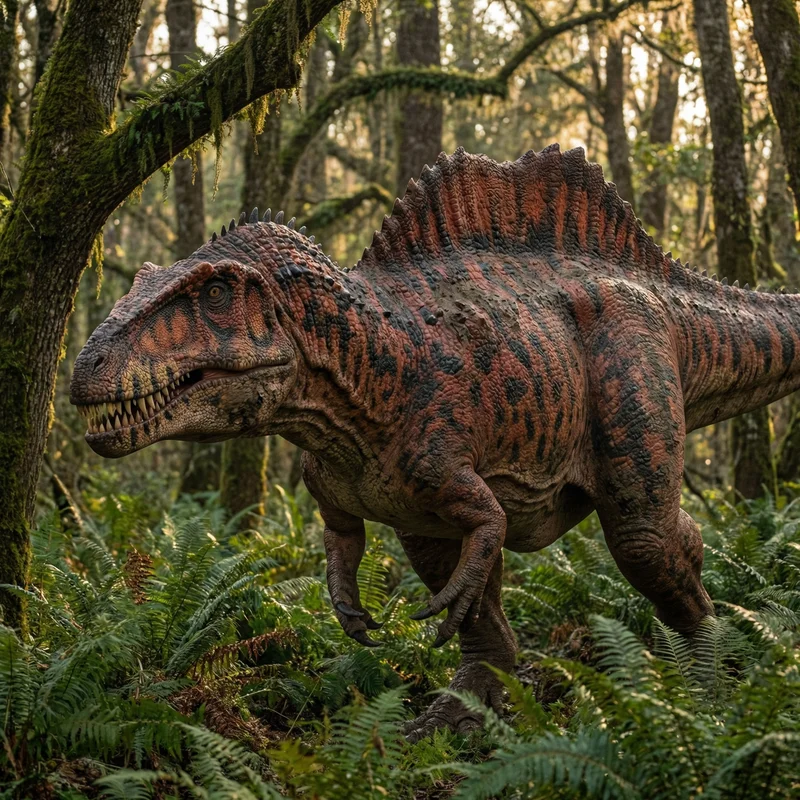 Acrocanthosaurus
Acrocanthosaurus · Cretaceous Period · Carnivore
 Acrocanthosaurus
Acrocanthosaurus · Cretaceous Period · Carnivore
 Acrocanthosaurus
Acrocanthosaurus · Cretaceous Period · Carnivore
 Acrocanthosaurus
Acrocanthosaurus · Cretaceous Period · Carnivore
🔗Related Creatures
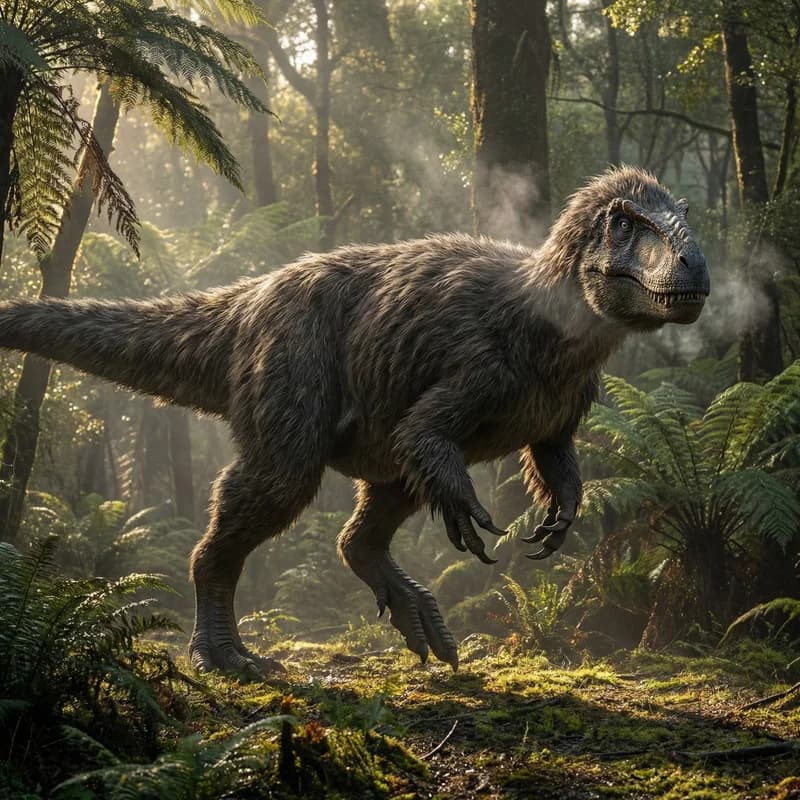
Yutyrannus
Yutyrannus huali
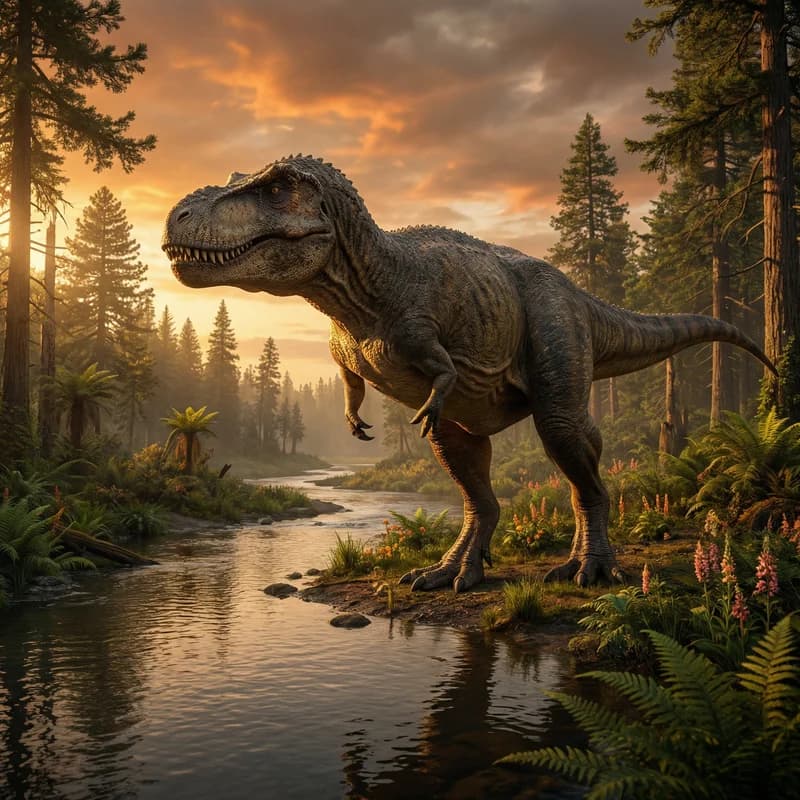
Albertosaurus
Albertosaurus sarcophagus

Carcharodontosaurus
Carcharodontosaurus saharicus

Tarbosaurus
Tarbosaurus bataar
Sinosauropteryx
Sinosauropteryx prima

Deinonychus
Deinonychus antirrhopus

Carnotaurus
Carnotaurus sastrei

Nanotyrannus
Nanotyrannus lancensis