Nanotyrannus
Cretaceous Period Carnivore Creature Type
Nanotyrannus lancensis
Scientific Name: "nanos (Greek, dwarf/small) + tyrannos (Greek, tyrant/king) = 'Dwarf Tyrant'; lancensis = from the Lance Formation"
Local Name: Nanotyrannus
Physical Characteristics
Discovery
Habitat

Nanotyrannus (Nanotyrannus lancensis (Gilmore, 1946) Bakker, Williams & Currie, 1988) is a tyrannosauroid theropod dinosaur that inhabited western North America during the latest Cretaceous (Maastrichtian, approximately 67–66 Ma). The genus name Nanotyrannus combines the Greek nanos (dwarf, small) and tyrannos (tyrant, king), meaning 'Dwarf Tyrant.' The specific epithet lancensis derives from the Lance Formation, to which the type locality was initially attributed, though the actual type horizon is the Hell Creek Formation.
Nanotyrannus has been one of the most contentious taxa in the history of paleontology. A skull (CMNH 7541, the 'Cleveland skull') discovered in 1942 in Montana was described in 1946 by Charles W. Gilmore as Gorgosaurus lancensis, and in 1988 was reassigned by Robert Bakker, Michael Williams, and Philip Currie to the new genus Nanotyrannus. For decades, the central question—'Is Nanotyrannus a valid species or a juvenile Tyrannosaurus rex?'—remained unresolved.
In October 2025, Lindsay Zanno and James Napoli published a landmark study in Nature analyzing the 'Dueling Dinosaurs' specimen (NCSM 40000, nicknamed 'Bloody Mary' or 'Manteo'). Their results confirmed that this individual was a skeletally mature Nanotyrannus lancensis, strongly supporting the validity of the genus (Zanno & Napoli, 2025). The same study named the 'Jane' specimen (BMRP 2002.4.1) as the holotype of a new species, Nanotyrannus lethaeus. In December 2025, Griffin et al. published a hyoid bone histology study in Science that independently confirmed the holotype as a mature individual, further corroborating its status as a distinct taxon (Griffin et al., 2025).
Overview
Name and Etymology
The genus name Nanotyrannus combines Greek nanos (dwarf, small) and tyrannos (tyrant, king), meaning 'Dwarf Tyrant' or 'Pygmy Tyrant' (Bakker et al., 1988). This name emphasizes its dramatically smaller body size compared to Tyrannosaurus rex. The specific epithet lancensis reflects Gilmore's (1946) original attribution of the type locality to the 'Hell Creek member' of the Lance Formation, though the actual horizon is now recognized as the Hell Creek Formation proper.
The second species, Nanotyrannus lethaeus, named in 2025, takes its specific epithet from the Latin adjective referring to the River Lethe of Greco-Roman mythology—the river of forgetfulness flowing through the underworld. This alludes both to the Hell Creek ('Hell Creek') Formation and to the mythological function of Lethe's waters, which cause the dead to forget their former lives before reincarnation (Zanno & Napoli, 2025).
Taxonomic Position
Nanotyrannus belongs to Saurischia, Theropoda, Tyrannosauroidea. For decades it was interpreted either as a member of Tyrannosauridae or as a juvenile Tyrannosaurus rex. The 2025 study by Zanno and Napoli established a new clade, Nanotyrannidae, which was recovered as the sister group to Tyrannosauridae. This means Nanotyrannus is relatively distantly related to T. rex within Tyrannosauroidea. In the Bayesian inference analysis (BI-FBD), the Appalachian tyrannosaurs Appalachiosaurus and Dryptosaurus were recovered as early-diverging members of Nanotyrannidae, suggesting that the ancestors of Nanotyrannus may have originated on the eastern continent (Appalachia), which was separated from the western continent (Laramidia) by the Western Interior Seaway, and subsequently dispersed westward as the seaway retreated (Zanno & Napoli, 2025).
Scientific Significance
Nanotyrannus represents perhaps the most dramatic example of the 'juvenile individual vs. distinct species' problem in dinosaur taxonomy. The debate highlighted the challenges posed by incomplete fossil records, ontogenetic morphological change, and taxonomic judgment. The 2025 studies integrated osteohistology, growth markers, skeletal fusion patterns, and morphological comparisons to strongly support Nanotyrannus as a distinct taxon separate from T. rex, fundamentally reshaping our understanding of the predator guild in the Hell Creek ecosystem. The 'Dueling Dinosaurs' specimen also provides a rare potential snapshot of predator–prey interaction (between Nanotyrannus and Triceratops), making it significant for paleoecological research.
Age, Stratigraphy & Depositional Environment
Age Range
Nanotyrannus dates to the latest Maastrichtian stage of the Late Cretaceous, approximately 67–66 Ma (Zanno & Napoli, 2025). This corresponds to the final interval of non-avian dinosaur existence, and Nanotyrannus survived until the Cretaceous–Paleogene (K–Pg) mass extinction event.
Formation and Lithology
Nanotyrannus fossils are primarily known from the Hell Creek Formation, which crops out across Montana, South Dakota, North Dakota, and Wyoming. The formation is dominated by fluvial facies including sandstone, mudstone, and siltstone. The holotype (CMNH 7541) was collected in Carter County, Montana; the 'Dueling Dinosaurs' specimen (NCSM 40000) also comes from Montana's Hell Creek Formation; and the 'Jane' specimen (BMRP 2002.4.1) was excavated from the same formation.
Depositional Environment and Paleoclimate
The Hell Creek Formation represents a warm, humid, swamp-dominated environment reflecting oceanic to subtropical climatic conditions. Leaf-margin analysis yields a mean annual temperature of approximately 11.3–11.6 °C (Wikipedia, Hell Creek Formation). The landscape featured fern-dominated lowland wetlands coexisting with a forest canopy composed of diverse conifers (redwood, cypress, pines) and angiosperms (sycamores, magnolias, rosids, laurels, palms). Ginkgos and cycads were also present. The wetlands and waterways supported a rich fauna of invertebrates (bivalves, ammonites), fishes (sharks, gars, sturgeons), amphibians (frogs, salamanders), and reptiles (turtles, crocodilians, champsosaurs, mosasaurs).
The paleolatitude of the Hell Creek Formation is estimated at approximately 45–50°N, slightly south of its present-day location. The precise paleolongitude is uncertain but is estimated at roughly −55° to −65°W based on Maastrichtian continental configurations.
Specimens and Diagnostic Features
Holotype and Major Specimens
The holotype of Nanotyrannus lancensis (CMNH 7541) is a single skull collected in 1942 by David H. Dunkle in Montana. The skull measures approximately 57.2 cm in length. Gilmore (1946) described it as Gorgosaurus lancensis, and Bakker et al. (1988) reassigned it to the new genus Nanotyrannus. The specimen is housed and displayed at the Cleveland Museum of Natural History.
The principal referred specimen is NCSM 40000 (the Nanotyrannus portion of the 'Dueling Dinosaurs,' nicknamed 'Bloody Mary' or 'Manteo'). Discovered in 2006 in Montana, it was found preserved alongside a Triceratops specimen in what appears to be a potential combat scenario. After the North Carolina Museum of Natural Sciences acquired the specimen in 2020, research proceeded, and the 2025 study confirmed it as a skeletally mature (approximately 17–22 years old) individual of N. lancensis (Zanno & Napoli, 2025). The skull of NCSM 40000 measures approximately 71.3 cm in length with a maximum width of approximately 27.3 cm.
The 'Jane' specimen (BMRP 2002.4.1) is a relatively complete subadult tyrannosaur excavated in 2001 by the Burpee Museum of Natural History team. In the 2025 study by Zanno and Napoli, morphological differences from N. lancensis led to its designation as the holotype of a new species, Nanotyrannus lethaeus. This individual was estimated to have been approximately 8–14 years old at death and was not yet fully mature.
Diagnostic Characters
Nanotyrannus is distinguished from Tyrannosaurus rex and other tyrannosaurids by the following features (Bakker et al., 1988; Zanno & Napoli, 2025): 15–17 teeth per maxilla and 16–18 teeth per dentary (vs. 11–12 and 12–13 in T. rex) [confirmed]; premaxillary teeth lack serrations entirely, a primitive feature shared with basal tyrannosauroids such as Moros and Timurlengia but absent in Tyrannosauridae [confirmed]; maxillary teeth are ziphodont (laterally compressed), unlike the robust teeth of most tyrannosaurids [confirmed]; the skull is gracile and low, with a small crest/horn anterior to the eye [confirmed]; the lacrimal bears a convex cornual process, but the postorbital lacks one (unlike juvenile tyrannosaurids, which possess postorbital cornual processes) [confirmed]; the mandible lacks a 'chin' projection [confirmed]; the forelimbs are absolutely and relatively larger than in Tyrannosauridae [confirmed]; the hindlimbs are extremely elongate, indicating 'hypercursorial' adaptation [confirmed].
Specimen Limitations
The holotype CMNH 7541 preserves only the skull, limiting postcranial information. The 'Jane' specimen is relatively complete but is subadult and has been classified as a separate species (N. lethaeus) in the 2025 study, so it does not directly represent the complete skeleton of N. lancensis. NCSM 40000 is a highly complete adult specimen, but some precaudal vertebrae are obscured by soft tissue matrix, preventing detailed morphological assessment.
Morphology and Function
Body Form and Size
Nanotyrannus is a medium-sized tyrannosauroid. The 1988 original description estimated a body length of approximately 5.2 m (17 ft) and a mass of approximately 450 kg (1,000 lb). The 2025 study by Zanno and Napoli estimated N. lancensis (NCSM 40000) at approximately 700 kg (1,552 lb) body mass and roughly 5 m total length. The N. lethaeus holotype ('Jane') had a body mass exceeding approximately 833 kg at death (subadult), with adult mass estimated at approximately 1,200 kg (2,600 lb). Longrich and Saitta (2024) estimated maximum body mass for the genus at approximately 900–1,500 kg. This is roughly one-tenth the mass of T. rex (approximately 7,000–8,800 kg) [estimate].
Skull
The skull of Nanotyrannus is gracile and low compared to T. rex. The holotype (CMNH 7541) skull measures approximately 57.2 cm in length; NCSM 40000 measures approximately 71.3 cm in length with a maximum width of approximately 27.3 cm. A notable feature is the absence of a distinct subnarial foramen at the premaxilla–maxilla junction. The maxilla is long and low, lacking the deep fossa on the subcutaneous surface that characterizes Albertosaurus, Tarbosaurus, and Tyrannosaurus. The nuchal crest on the posterior parietal expands from a thin sagittal crest and lacks the parasagittal fossae seen in Albertosaurus or Tyrannosaurus. The quadratojugal bears a small foramen indicating pneumatic invasion, a feature also observed in the Daspletosaurus horneri paratype and an isolated Alberta quadratojugal.
The basitubera (posterior muscle attachment sites on the braincase) are laterally expanded, suggesting strong lateral flexion capability of the head (Bakker et al., 1988).
Dentition
The premaxilla bears four chisel-shaped teeth that entirely lack serrations—a primitive condition shared with basal tyrannosauroids such as Moros, Timurlengia, and Xiongguanlong but not found in Tyrannosauridae [confirmed]. The maxillary tooth count is 15–17, higher than all tyrannosaurids except Alioramus and Daspletosaurus. Maxillary teeth are ziphodont (laterally compressed), unlike the robust teeth of most tyrannosaurids. The dentary tooth count is 16–18, again higher than in most tyrannosaurids.
Forelimbs
The forelimbs of Nanotyrannus are absolutely and relatively larger than those of Tyrannosauridae. The distal humerus bears five distinct tubercles, distinguishing it from other eutyrannosaurians. The hand is functionally didactyl (two-fingered), but—like Gorgosaurus—retains a vestigial first phalanx of the third digit (this structure is fused to the forearm in T. rex). The first phalanx of the first digit is nearly twice the size of its equivalent in Tyrannosaurus. The unguals (claw bones) are large, and the second ungual is laterally compressed [confirmed].
Hindlimbs
The hindlimbs of Nanotyrannus are extremely elongate relative to body size compared to other eutyrannosaurians, indicating 'hypercursorial' adaptation. The metatarsals of NCSM 40000 are nearly the same length as those of the largest T. rex specimens despite Nanotyrannus being dramatically smaller overall. These extreme limb proportions suggest a fundamentally different lifestyle from T. rex—one better suited to pursuit predation (Zanno & Napoli, 2025) [confirmed].
Functional Interpretation: Speed
Nanotyrannus is estimated to have been considerably faster than adult T. rex. Persons and Currie (2016) calculated cursorial-limb-proportion (CLP) scores of 35.8 and 32.7 for the 'Jane' and 'Bloody Mary' specimens, respectively—far exceeding the score of 11.5 for adult T. rex, indicating a much greater cursorial adaptation. Dececchi et al. (2020) estimated Jane's maximum running speed at approximately 12.57–13.82 m/s (45.3–49.8 km/h; 28.1–30.9 mph), nearly twice the estimated top speed of adult T. rex (approximately 21–29 km/h) [estimate].
Diet and Ecology
Diet
Nanotyrannus was a carnivorous predator. Its sharp, laterally compressed (ziphodont) teeth were suited for cutting into small-to-medium prey. The 'Dueling Dinosaurs' specimen, in which Nanotyrannus was preserved alongside a Triceratops, suggests it may have attacked ceratopsians, though the precise nature of the interaction (predation attempt, defensive death, etc.) remains uncertain [hypothesis]. Its speed and relatively large forelimbs would have been advantageous for pursuing and seizing small-to-medium prey.
Intraspecific Interactions
Healed puncture wounds were discovered on the skull of the 'Jane' specimen. Peterson et al. (2009) interpreted these as injuries inflicted by another juvenile tyrannosaur (or Nanotyrannus), and CT scanning confirmed traumatic injury followed by healing. This suggests intraspecific aggression among Nanotyrannus or juvenile tyrannosaurs [likely].
Ecological Niche
In the Hell Creek ecosystem, Nanotyrannus coexisted with Tyrannosaurus rex. The confirmation of Nanotyrannus as a distinct taxon in 2025 requires reassessment of the Hell Creek predator guild—fossils previously interpreted as 'juvenile T. rex' may actually represent Nanotyrannus. Nanotyrannus likely occupied a different ecological niche from the giant, relatively slower T. rex: a fast, agile, medium-sized pursuit predator versus a large apex predator. This division may be analogous to the coexistence of lions (large, ambush predator) and cheetahs (medium, pursuit predator) in modern African ecosystems [hypothesis].
Distribution and Paleogeography
Geographic Range
Nanotyrannus fossils are known primarily from the Hell Creek Formation in the western United States. Key localities include Montana, South Dakota, North Dakota, and Wyoming. The holotype (CMNH 7541) comes from Carter County, Montana; the 'Dueling Dinosaurs' specimen (NCSM 40000) from Montana; and the 'Jane' specimen (BMRP 2002.4.1) also from the Hell Creek Formation.
Paleogeography
During the latest Cretaceous, the Western Interior Seaway was retreating, progressively reuniting eastern (Appalachia) and western (Laramidia) North America into a single landmass. The paleolatitude of the Hell Creek Formation is estimated at approximately 45–50°N. The 2025 phylogenetic analysis by Zanno and Napoli suggested that Nanotyrannidae may have originated on the eastern continent (Appalachia). Around the time of the Western Interior Seaway's formation (~103 Ma), Tyrannosauridae (in Laramidia) and Nanotyrannidae (in Appalachia) may have diverged. As the seaway retreated, Nanotyrannus ancestors may have dispersed westward [hypothesis].
Phylogeny and Taxonomic Debate
History of the Debate
The taxonomic status of Nanotyrannus has been one of the most contentious questions in dinosaur paleontology since 1988. The core issue was whether Nanotyrannus represented a valid genus/species or a juvenile Tyrannosaurus rex. In 1988, Bakker et al. argued for adult status based on cranial suture fusion. In 1999, Carr cited the Gorgosaurus libratus growth series to suggest tooth counts decrease ontogenetically, raising the possibility that the Cleveland skull was a juvenile T. rex. After the 2001 discovery of 'Jane,' the 2005 Burpee Museum symposium saw former Nanotyrannus proponents (Currie, Williams) shift to the juvenile T. rex interpretation. However, Peter Larson and others continued to advocate for distinct-species status based on differences in tooth count, hand morphology, and furcula shape.
In 2020, Woodward et al. published a limb-bone osteohistology study concluding that Nanotyrannus-referred specimens were ontogenetically immature and likely represented juvenile T. rex (Woodward et al., 2020).
The 2024–2025 Paradigm Shift
In January 2024, Longrich and Saitta re-examined the holotype and referred specimens, arguing from morphological, ontogenetic, and phylogenetic evidence that Nanotyrannus is a distinct taxon outside Tyrannosauridae (Longrich & Saitta, 2024). This study drew criticism from some tyrannosaur specialists (e.g., Thomas Carr, Thomas Holtz) but reignited the debate.
In October 2025, Zanno and Napoli's Nature paper demonstrated that NCSM 40000 ('Bloody Mary') possessed 25 periodic growth marks, indicating a minimum of 14 years of growth and an age at death of approximately 17–22 years. For this specimen to fit within the T. rex growth trajectory, T. rex would need to have grown extremely slowly for its first 20 years, then undergone a protracted plateau followed by a renewed growth phase—a pattern unprecedented in any archosaur. Furthermore, the skeletal fusion patterns of NCSM 40000 contradict such an interpretation. The study also noted that previous 'ontogenetic plasticity' arguments (such as decreasing tooth counts during growth) can be explained by individual variation, and that classifying Nanotyrannus within T. rex would require 'resorption and loss of sinuses'—changes without precedent in living amniotes. Additionally, certain forelimb, wrist, and hand elements of Nanotyrannus are absolutely larger than those of T. rex, and no known amniote exhibits absolute reduction of limb elements during growth (Zanno & Napoli, 2025).
In December 2025, Griffin et al. demonstrated that ceratobranchial ('hyoid') bone histology can assess ontogenetic maturity in archosaurs, and their analysis of the N. lancensis holotype's hyoid confirmed it as a mature individual (Griffin et al., 2025). This finding provided independent corroboration of the distinct-species hypothesis.
Following these publications, former Nanotyrannus skeptics including Thomas Carr, Steve Brusatte, and David Hone acknowledged that the 'Bloody Mary' specimen represents a species distinct from T. rex. Some disagreements persist: Carr has suggested Nanotyrannus might be better placed as a separate species within the genus Tyrannosaurus, and the assignment of 'Jane' to N. lethaeus is not universally accepted.
Phylogenetic Results
Both phylogenetic analyses (maximum parsimony and Bayesian inference) by Zanno and Napoli (2025) placed Nanotyrannus in the newly erected clade Nanotyrannidae as the sister group to Tyrannosauridae. The Bayesian analysis recovered Appalachiosaurus and Dryptosaurus as early-diverging members of Nanotyrannidae, suggesting an Appalachian origin for the clade [hypothesis].
Reconstruction and Uncertainties
Confirmed (high confidence, based on 2025 studies)
Nanotyrannus is a valid taxon distinct from Tyrannosaurus rex [confirmed by Zanno & Napoli, 2025; Griffin et al., 2025]. NCSM 40000 is a skeletally mature N. lancensis individual [confirmed]. Nanotyrannus possessed far greater cursorial adaptation than T. rex, with relatively longer hindlimbs [confirmed]. The forelimbs were relatively and absolutely larger than those of T. rex [confirmed].
Likely (strong inference)
Nanotyrannidae is the sister clade to Tyrannosauridae [likely; supported by both parsimony and Bayesian analyses]. The ancestors of Nanotyrannus may have originated in Appalachia [likely; supported by Bayesian analysis]. 'Jane' (BMRP 2002.4.1) represents a distinct species, N. lethaeus [likely; some researchers dissent].
Uncertain (requiring further research)
Precise adult body mass range (estimates span 700–1,500 kg depending on species and methodology) [estimate]. The exact phylogenetic relationships between Nanotyrannidae and Appalachian tyrannosaurs [hypothesis]. The taxonomic placement of other Hell Creek small tyrannosaurs such as Stygivenator [uncertain]. The specific nature of the ecological niche partitioning between Nanotyrannus and T. rex [hypothesis].
Current Status of the Debate
As of 2025, the independent-species status of Nanotyrannus is accepted by most specialists following the Zanno & Napoli and Griffin et al. studies. Remaining disagreements concern generic placement (a separate species within Tyrannosaurus vs. a separate genus) and species-level taxonomy (the validity of N. lethaeus).
Comparison with Coexisting Taxa
| Feature | Nanotyrannus (N. lancensis) | Tyrannosaurus rex |
|---|---|---|
| Estimated body length | ~5–5.5 m | ~12–13 m |
| Estimated body mass | ~700–1,500 kg | ~7,000–8,800 kg |
| Maxillary tooth count | 15–17 | 11–12 |
| Dentary tooth count | 16–18 | 12–13 |
| Premaxillary tooth serrations | Absent | Present |
| Maxillary tooth morphology | Ziphodont (laterally compressed) | Robust |
| Forelimb size | Relatively/absolutely large | Relatively very small |
| Hindlimb proportions | Extremely elongate (hypercursorial) | Long but less extreme |
| Estimated top speed | ~45–50 km/h | ~21–29 km/h |
| Phylogenetic position | Nanotyrannidae | Tyrannosauridae |
Specimen Summary Table
| Specimen No. | Elements Preserved | Locality / Formation | Year Discovered | Notes |
|---|---|---|---|---|
| CMNH 7541 (holotype, N. lancensis) | Complete skull and lower jaws | Carter County, Montana, Hell Creek Fm. | 1942 | Skull length ~57.2 cm; housed at CMNH |
| NCSM 40000 ('Bloody Mary'/'Manteo') | Near-complete skeleton (~80%+) | Montana, Hell Creek Fm. | 2006 | Skeletally mature (~17–22 yrs); skull ~71.3 cm; ref. specimen of N. lancensis |
| BMRP 2002.4.1 ('Jane', holotype N. lethaeus) | Relatively complete subadult skeleton | Hell Creek Fm. | 2001 | Subadult (~8–14 yrs at death); holotype of N. lethaeus |
Fun Facts
FAQ
📚References
- Zanno, L. E., & Napoli, J. G. (2025). Nanotyrannus and Tyrannosaurus coexisted at the close of the Cretaceous. Nature, 648, 357–367. DOI: 10.1038/s41586-025-09801-6
- Griffin, C. T., et al. (2025). A diminutive tyrannosaur lived alongside Tyrannosaurus rex. Science. DOI: 10.1126/science.adx8706
- Gilmore, C. W. (1946). A new carnivorous dinosaur from the Lance Formation of Montana. Smithsonian Miscellaneous Collections, 106, 1–19.
- Bakker, R. T., Williams, M., & Currie, P. J. (1988). Nanotyrannus, a new genus of pygmy tyrannosaur, from the latest Cretaceous of Montana. Hunteria, 1, 1–30.
- Carr, T. D. (1999). Craniofacial ontogeny in Tyrannosauridae (Dinosauria, Coelurosauria). Journal of Vertebrate Paleontology, 19(3), 497–520. DOI: 10.1080/02724634.1999.10011161
- Longrich, N. R., & Saitta, E. T. (2024). Taxonomic status of Nanotyrannus lancensis (Dinosauria: Tyrannosauroidea)—A distinct taxon of small-bodied tyrannosaur. Fossil Studies, 2(1), 1–65. DOI: 10.3390/fossils2010001
- Woodward, H. N., et al. (2020). Growing up Tyrannosaurus rex: osteohistology refutes the pygmy 'Nanotyrannus' and supports ontogenetic niche partitioning in juvenile Tyrannosaurus. Science Advances, 6(1), eaax6250. DOI: 10.1126/sciadv.aax6250
- Persons, W. S., & Currie, P. J. (2016). An approach to scoring cursorial limb proportions in carnivorous dinosaurs and an attempt to account for allometry. Scientific Reports, 6, 19828. DOI: 10.1038/srep19828
- Dececchi, T. A., Mloszewska, A. M., Holtz, T. R., Habib, M. B., & Larsson, H. C. E. (2020). The fast and the frugal: Divergent locomotory strategies drive limb lengthening in theropod dinosaurs. PLOS ONE, 15(5), e0223698. DOI: 10.1371/journal.pone.0223698
- Peterson, J. E., Henderson, M. D., Scherer, R. P., & Vittore, C. P. (2009). Face biting on a juvenile tyrannosaurid and behavioral implications. Palaios, 24(11), 780–784. DOI: 10.2110/palo.2009.p09-056r
- Larson, P. L. (2013). The case for Nanotyrannus. In J. M. Parrish, R. A. Molnar, P. J. Currie, & E. B. Koppelhus (Eds.), Tyrannosaurid Paleobiology (pp. 15–53). Indiana University Press.
- Witmer, L. M., & Ridgely, R. C. (2010). The Cleveland tyrannosaur skull (Nanotyrannus or Tyrannosaurus): new findings based on CT scanning, with special reference to the braincase. Kirtlandia, 57, 61–81.
- Carr, T. D. (2020). A high-resolution growth series of Tyrannosaurus rex obtained from multiple lines of evidence. PeerJ, 8, e9192. DOI: 10.7717/peerj.9192
- Brusatte, S. L., & Carr, T. D. (2016). The phylogeny and evolutionary history of tyrannosauroid dinosaurs. Scientific Reports, 6, 20252. DOI: 10.1038/srep20252
- Tsuihiji, T., et al. (2011). Cranial osteology of a juvenile specimen of Tarbosaurus bataar from the Nemegt Formation (Upper Cretaceous) of Bugin Tsav, Mongolia. Journal of Vertebrate Paleontology, 31(3), 497–517. DOI: 10.1080/02724634.2011.557116
- Paul, G. S. (2025). A presentation of the current data on the exceptionally diverse non-tyrannosaurid eutyrannosaur and tyrannosaurini genera and species of western North America during the end Cretaceous North American interchange. Mesozoic, 2(2), 85–138. DOI: 10.11646/mesozoic.2.2.1
Gallery
5 images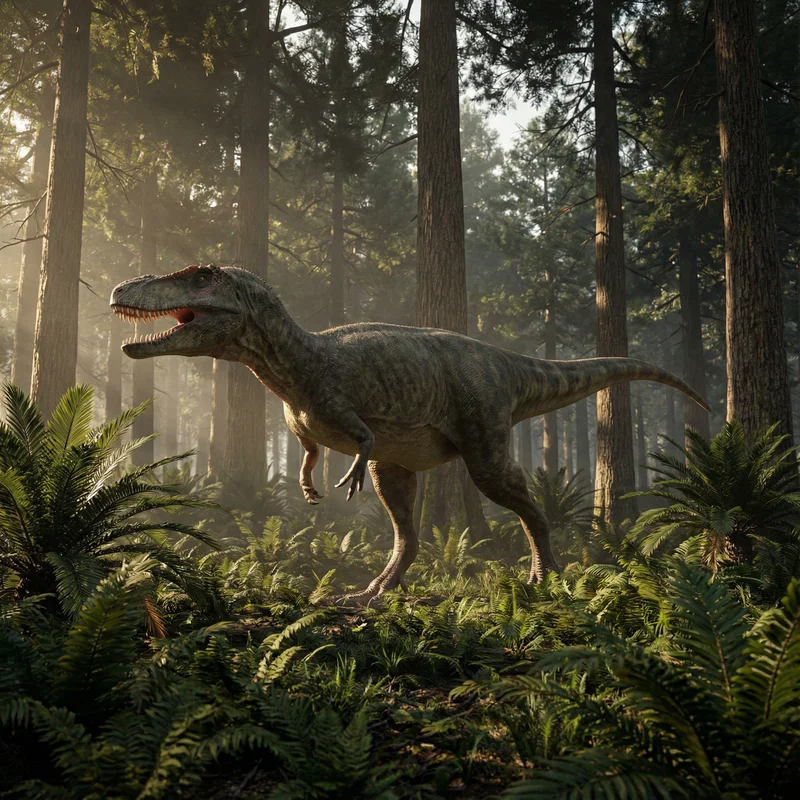 Nanotyrannus
Nanotyrannus · Cretaceous Period · Carnivore
 Nanotyrannus
Nanotyrannus · Cretaceous Period · Carnivore
 Nanotyrannus
Nanotyrannus · Cretaceous Period · Carnivore
 Nanotyrannus
Nanotyrannus · Cretaceous Period · Carnivore
 Nanotyrannus
Nanotyrannus · Cretaceous Period · Carnivore
🔗Related Creatures

Sinosauropteryx
Sinosauropteryx prima

Utahraptor
Utahraptor ostrommaysi

Australovenator
Australovenator wintonensis
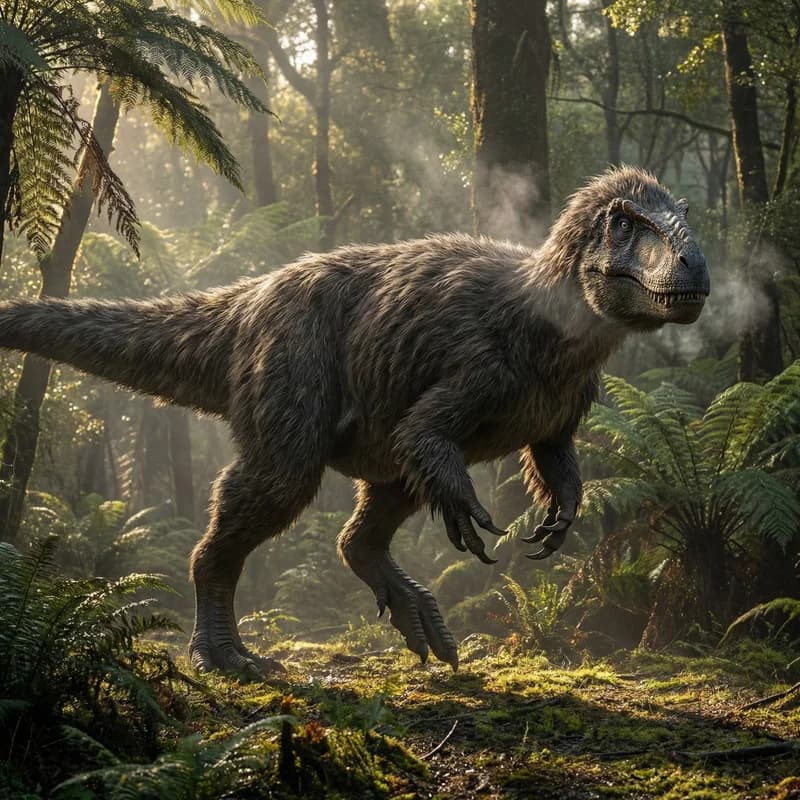
Yutyrannus
Yutyrannus huali

Deinonychus
Deinonychus antirrhopus

Microraptor
Microraptor zhaoianus
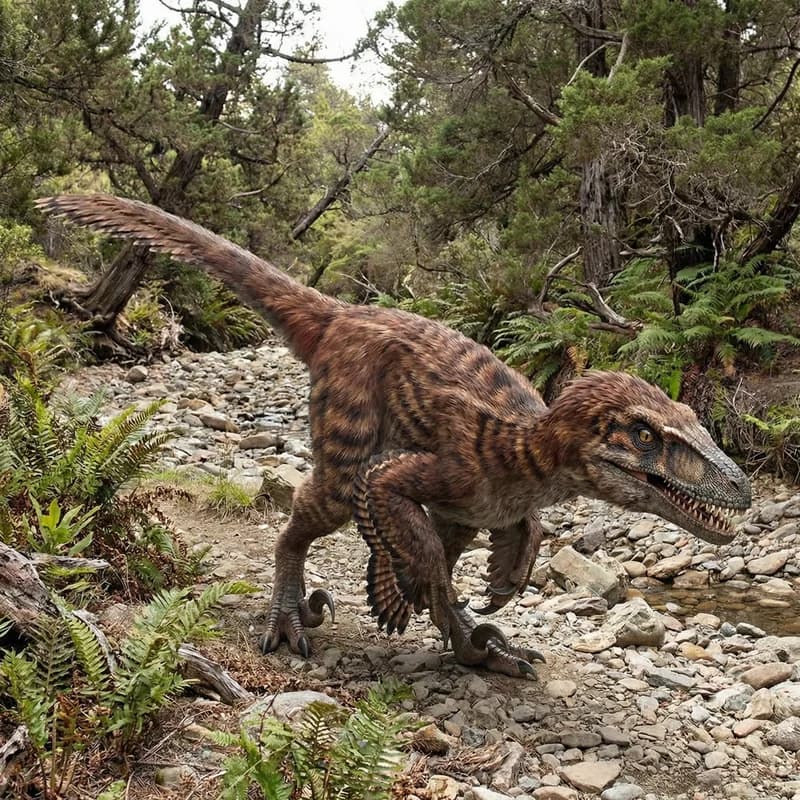
Dromaeosaurus
Dromaeosaurus albertensis

Carnotaurus
Carnotaurus sastrei