Pachyrhinosaurus
Cretaceous Period Herbivore Creature Type
Pachyrhinosaurus
Scientific Name: "Greek pachys (thick) + rhis/rhinos (nose) + sauros (lizard) = 'thick-nosed lizard'"
Local Name: Pachyrhinosaurus
Physical Characteristics
Discovery
Habitat

Pachyrhinosaurus (Sternberg, 1950) is a genus of centrosaurine ceratopsid dinosaur from the Late Cretaceous (Campanian to Maastrichtian, approximately 73.5–69 Ma) of North America. Belonging to the order Ornithischia and the infraorder Ceratopsia, it is currently the most speciose genus within the subfamily Centrosaurinae, with three recognized species: P. canadensis, P. lakustai, and P. perotorum. Fossils have been recovered from Alberta, Canada, and Alaska, USA, including dozens of partial skulls and an enormous quantity of postcranial material. The Pipestone Creek bonebed alone has yielded over 3,500 bones and 14 skulls, providing invaluable data for understanding population structure and herd behavior in ceratopsid dinosaurs.
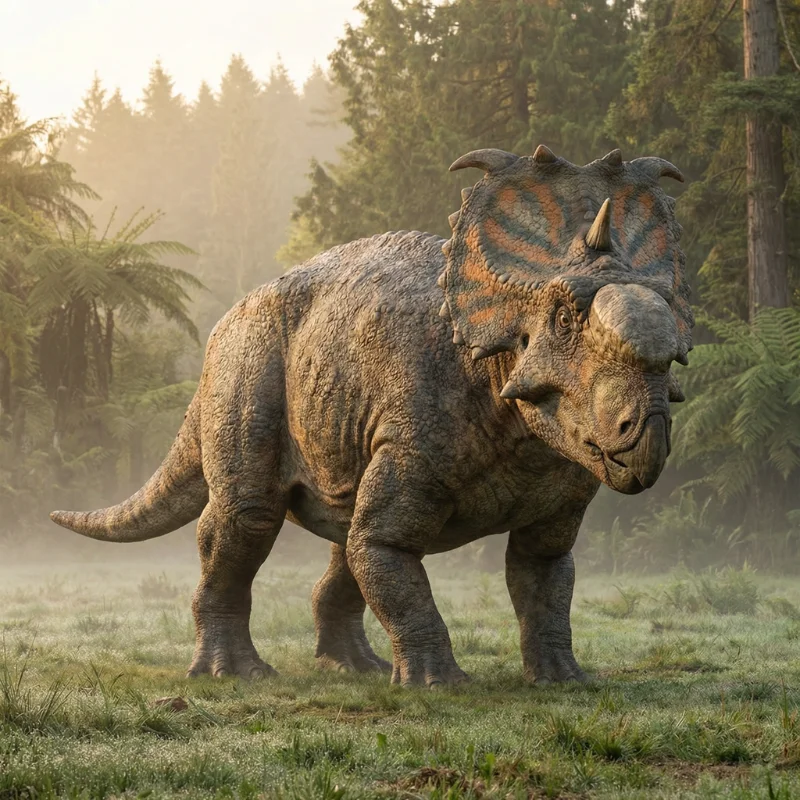
The most distinctive feature of Pachyrhinosaurus is its lack of the projecting nasal horn cores typical of most ceratopsians. Instead, the skull bears massive, flattened bony bosses: a large nasal boss over the snout and smaller supraorbital bosses above the eyes. The morphology of these bosses varies between species — in P. canadensis and P. perotorum, the nasal and supraorbital bosses are separated only by a narrow groove, whereas in P. lakustai a wide gap separates them. A prominent pair of backward-curving horns projects from the top of the frill. A histological study by Hieronymus et al. (2009) demonstrated that the surface texture of the nasal boss is most similar to the frontal horn boss of the extant muskox (Ovibos moschatus), suggesting that the boss was covered by a thick cornified pad rather than a tall rhinoceros-like keratinous horn. This integumentary reconstruction is consistent with high-energy headbutting behavior related to intraspecific competition.
Of particular significance is P. perotorum, recovered from the Prince Creek Formation on the North Slope of Alaska, which represents one of the northernmost ceratopsid dinosaurs known. The paleolatitude of this site was approximately 80–85°N during the Late Cretaceous, meaning these animals experienced months of polar darkness each winter. Osteohistological analysis by Erickson & Druckenmiller (2011) revealed conspicuous annual growth bands (LAGs) in the femur of an Alaskan specimen — up to 18 such lines — indicating seasonally arrested growth, with maximum body size not attained until approximately age 20 and sexual maturity reached around age 9.
Overview
Name and Etymology
The genus name Pachyrhinosaurus is derived from the Ancient Greek pachys (thick) + rhis/rhinos (nose) + sauros (lizard), meaning "thick-nosed lizard." The name refers to the massive bony boss over the nose rather than the nose itself being thick. Charles M. Sternberg named the type species P. canadensis in 1950, with the specific epithet referencing its country of discovery, Canada. The species P. lakustai (Currie, Langston & Tanke, 2008) honors Al Lakusta, the schoolteacher who discovered the Pipestone Creek bonebed in 1974. The species P. perotorum (Fiorillo & Tykoski, 2012) is named after the Texas businessman and museum benefactor Ross Perot.
Taxonomic Status
Pachyrhinosaurus is classified within Ceratopsidae, subfamily Centrosaurinae, tribe Pachyrhinosaurini. Together with its closest relative Achelousaurus horneri, it forms the clade Pachyrostra (defined by Fiorillo & Tykoski, 2012, as the most recent common ancestor of Achelousaurus horneri and Pachyrhinosaurus canadensis plus all descendants). The key synapomorphy uniting Pachyrostra is the replacement of projecting nasal horn cores with flattened bony bosses. In the phylogenetic analysis of Chiba et al. (2018), Einiosaurus procurvicornis is recovered as the outgroup to Pachyrhinosaurini, and Achelousaurus as the sister taxon to Pachyrhinosaurus.
All three species are currently considered valid. The validity of P. perotorum was reinforced by Tykoski et al. (2019), who corrected the original frill horn reconstruction and confirmed diagnostic features including a narrow dome on the posterior nasal boss.
Key Summary
The most species-rich centrosaurine genus, characterized by massive flattened bony bosses in place of horns, strong evidence for herding behavior, and an extraordinary latitudinal range from southern Alberta to the Arctic North Slope of Alaska.
Stratigraphy, Age, and Depositional Environment
Temporal Range
The genus Pachyrhinosaurus spans approximately 73.5–69 Ma, from the late Campanian to the early Maastrichtian. The temporal ranges of individual species are as follows:
- P. lakustai: approximately 73.5–72.5 Ma — Wapiti Formation Unit 4; an additional bonebed has been dated by 40Ar/39Ar to 71.89 ± 0.14 Ma (Fanti et al., 2015)
- P. canadensis: approximately 73–71 Ma — lower Horseshoe Canyon Formation (high-precision U-Pb dating by Eberth & Kamo, 2020, places this formation at approximately 73.1–68 Ma) and the St. Mary River Formation
- P. perotorum: approximately 73–69 Ma — Prince Creek Formation (Maastrichtian), North Slope of Alaska
Formations and Lithology
The principal fossil-bearing formations are summarized below.
| Species | Formation | Region | Lithology | Age (Ma) |
|---|---|---|---|---|
| P. lakustai | Wapiti Fm. Unit 4 | Grande Prairie, Alberta | Fluvial sandstone and mudstone | ~73.5–72.5 |
| P. canadensis | Horseshoe Canyon Fm. (lower) / St. Mary River Fm. | Drumheller and Lethbridge, Alberta | Sandy clay, fluvial-deltaic sediments | ~73–71 |
| P. perotorum | Prince Creek Fm. | North Slope, Alaska (Colville River) | Sandstone, mudstone, floodplain paleosols | ~73–69 |
The Wapiti Formation consists of upper Campanian fluvial sediments roughly equivalent in age to the upper Bearpaw and lower Horseshoe Canyon formations. Palynological analysis indicates a predominantly deciduous forest environment with sparse evergreen vegetation (Koppelhus, 2008). The Prince Creek Formation represents a high-paleolatitude (approximately 80–85°N) floodplain environment that experienced seasonal polar darkness and mean annual temperatures estimated at approximately 2–8°C.
Paleoenvironment
The Pipestone Creek bonebed in the Wapiti Formation has been interpreted as a mass mortality event caused by a failed river crossing during a flood (Currie et al., 2008). The Horseshoe Canyon Formation was deposited during the gradual withdrawal of the Western Interior Seaway, representing fluvial-deltaic-floodplain environments under a wet temperate to subtropical climate (Quinney et al., 2013). In the Prince Creek Formation, P. perotorum appears to have preferred more upland habitats, while Edmontosaurus favored lowland deltas, suggesting niche partitioning between the two herbivores (Fiorillo et al., 2016).
Specimens and Diagnostic Characters
Holotype and Key Specimens
The holotype of the type species P. canadensis is NMC 8867, an incomplete skull, with NMC 8866 (anterior skull lacking the right lower jaw and beak) as the paratype. Both were collected in 1945–1946 by C. M. Sternberg from the sandy clay of the Horseshoe Canyon Formation in Alberta. Additional specimens from Scabby Butte (St. Mary River Formation), including NMC 21863, NMC 21864, and NMC 10669, were referred to the species by W. Langston Jr. in 1975.
P. lakustai was described based on multiple individuals from the Pipestone Creek bonebed (Wapiti Formation) by Currie, Langston & Tanke (2008). The site yielded 14 skulls and over 3,500 bones representing four distinct age classes from juveniles to fully grown adults. In 2024, one of the largest known P. lakustai skulls — nicknamed "Big Sam" (PCB.2024.666), measuring 138 cm in length with a nasal boss 43 cm in diameter — was excavated from the same locality (Bamforth & Sweder, 2025).
P. perotorum was described by Fiorillo & Tykoski (2012) based on cranial material from the Prince Creek Formation of Alaska, and its diagnosis was subsequently revised by Tykoski et al. (2019).
Diagnostic Characters
The genus Pachyrhinosaurus is diagnosed by the following key features that distinguish it from other centrosaurines:
- Large, flattened nasal boss in place of a projecting nasal horn core
- Supraorbital bosses above the eyes
- A prominent pair of upward-projecting horns on the posterior frill
- Rugose surface texture on the bosses, indicative of a thick cornified integumentary covering
Species-level distinctions are based primarily on boss morphology. P. lakustai has widely separated nasal and supraorbital bosses, a comb-like extension at the tip of the nasal boss, and an additional comb-like horn arising from the midline of the frill. P. canadensis has a mainly flat-topped, rounded nasal boss with the nasal and supraorbital bosses nearly contiguous, separated only by a narrow groove. P. perotorum shares the comb-like nasal extension with P. lakustai but is uniquely characterized by a narrow dome on the posterior part of the nasal boss; its frill horns were originally described as projecting forward and downward but were corrected by Tykoski et al. (2019) to the same backward-pointing orientation as in its congeners.
Morphology and Function
Body Size
Body size varies among species. The largest species, P. canadensis, is estimated at 6–8 m in length and 3–4 tonnes in weight (Holtz, 2011; Paul, 2016). The smaller species, P. lakustai and P. perotorum, are estimated by Paul (2016) at approximately 5 m in length and 2 tonnes in weight. Shoulder height was probably around 1.5–2 m. The overall body plan was robust and quadrupedal, with a broad torso and strong limbs.
Skull and Bosses
The most remarkable aspect of the Pachyrhinosaurus skull is the massive nasal boss. This structure is composed of dense bone tissue and its surface morphology has been the subject of considerable debate. Currie (1989) initially proposed that the boss may have supported a large rhinoceros-like keratinous horn. However, Hieronymus et al. (2009) conducted a comprehensive morphological and histological analysis comparing the bone surface of pachyrhinosaur bosses with convergent structures in extant amniotes. Their classification tree analysis demonstrated that the pitting pattern on the nasal boss was most consistent with the frontal horn boss of the muskox (Ovibos moschatus), which is covered by a thick pad of cornified papillary epidermis. They further showed that the acquisition of such thick cornified pads is consistently associated with high-energy headbutting behavior in extant taxa, including muskoxen, helmeted hornbills (Rhinoplax vigil), and African buffalo (Syncerus).
Fiorillo et al. (2013) described an immature P. perotorum nasal bone (DMNH 21460) that revealed "a degree of integument complexity not previously recognized in other species," suggesting a thick, cornified pad and sheath on the dorsal surface of the developing boss.
Frill and Ornamentation
The frill bears a pair of small, curved, backward-pointing horns at its upper margin, confirmed in both P. canadensis and P. lakustai. The frill horns of P. perotorum were originally reconstructed as projecting forward and downward but were corrected by Tykoski et al. (2019) to the same backward orientation as in sister species. P. lakustai additionally possesses a distinctive comb-like horn arising from the midline of the frill behind the eyes.
Dentition and Beak
Like other ceratopsids, Pachyrhinosaurus possessed a keratinous beak for cropping vegetation and a complex dental battery of tightly packed cheek teeth adapted for processing tough, fibrous plant material.
Limbs and Locomotion
The animal was an obligate quadruped, with the hindlimbs longer than the forelimbs. A robust pelvis and strong limb musculature supported the considerable body mass.
Diet and Ecology
Diet
Pachyrhinosaurus was an obligate herbivore. Its strong beak was adapted for cropping vegetation, and the dental battery was well suited for shearing and processing tough plant matter. Given its relatively low browsing height, the animal probably fed primarily on low-growing shrubs, ferns, and angiosperms. No direct evidence of gut contents has been reported to date.
Social Behavior and Herding
The Pipestone Creek bonebed provides compelling evidence for herding behavior. The recovery of 14 skulls and over 3,500 bones representing four distinct age classes — from juveniles to full-grown adults — from a single locality strongly suggests that Pachyrhinosaurus lived in multi-generational herds. The bonebed is interpreted as a mass mortality event, possibly a failed attempt to cross a river during a flood (Currie et al., 2008). Herding would have served as an effective defense strategy against apex predators such as Albertosaurus.
Boss Function: Intraspecific Combat vs. Display
Two principal hypotheses have been advanced regarding the function of the nasal boss. (1) The "headbutting hypothesis," proposed since Sternberg (1950), suggests the boss was used in intraspecific combat similar to muskoxen. Hieronymus et al. (2009) provided strong support for this hypothesis through histological comparison with muskox frontal bosses and a cross-taxon analysis showing that thick cornified pads are consistently associated with high-energy headbutting in extant amniotes. (2) Currie et al. (2008) suggested that the bosses may have functioned primarily as visual display structures. These functions are not mutually exclusive, and the current consensus favors social selection — a broad framework encompassing both intraspecific competition and visual signaling — as the most comprehensive explanation for the diversity of centrosaurine ornamentation.
Growth and Life History
Osteohistological analysis of an Alaskan P. perotorum femur by Erickson & Druckenmiller (2011) revealed a nearly complete developmental record. Key findings include: the animal reached approximately 28% of adult body size by age one and nearly 50% by age two, indicating extremely rapid early growth. Growth rate slowed considerably thereafter, with maximum size not fully attained until approximately age 20. Sexual maturity, as inferred from the development of pronounced nasal bosses, was reached at approximately age 9. Up to 18 lines of arrested growth (LAGs) were preserved, reflecting seasonally arrested growth during harsh Arctic winters.
In contrast, P. lakustai from southern Alberta does not show conspicuous growth banding early in ontogeny, with weak expression appearing only later in development. This difference likely reflects the milder climate experienced by the southern species compared to the polar P. perotorum.
Paleopathology
A skull of P. lakustai nicknamed "Harvey" (TMP 1989.055.1234) exhibits severe pathological lesions on the right side, the largest measuring 195 mm in diameter. The lesion partially destroyed the right eye socket, likely rendering the animal blind on that side. Remarkably, the individual survived this affliction for a considerable time and ultimately died as part of the mass mortality event alongside its herd mates (Carpenter, 2007). In contrast, P. perotorum exhibits very low rates of paleopathology compared to lower-latitude ceratopsians, suggesting that the high-latitude Arctic environment did not impose uniquely severe hardships on this species (Fiorillo & Tykoski, 2022).
Distribution and Paleogeography
Geographic Distribution
Fossils of Pachyrhinosaurus are known from Alberta, Canada (Horseshoe Canyon Formation, St. Mary River Formation, Wapiti Formation) and Alaska, USA (Prince Creek Formation). This represents a broad north-south distribution across Late Cretaceous western North America, and P. perotorum remains the northernmost ceratopsid dinosaur known.
Paleolatitude and Paleoenvironmental Interpretation
The North Slope of Alaska was situated at a paleolatitude of approximately 80–85°N during the Late Cretaceous, meaning P. perotorum experienced approximately four months of polar darkness each winter. Although global temperatures were warmer than today, mean annual temperatures at this latitude have been estimated at only 2–8°C, representing a cool temperate environment. Lehman (2001) noted that the occurrence of Pachyrhinosaurus in both upland environments of southern Alberta and high-latitude lowland environments of Alaska suggests ecological parallels between low-elevation, high-latitude habitats and high-elevation, low-latitude habitats — a pattern also observed in modern ecosystems.
Phylogeny and Taxonomic Debates
Phylogenetic Analysis
In the analysis of Chiba et al. (2018), the three species of Pachyrhinosaurus form a monophyletic group, with P. canadensis as the sister taxon to a clade comprising P. lakustai + P. perotorum. Together with Achelousaurus horneri, they constitute the clade Pachyrostra, which is in turn part of the tribe Pachyrhinosaurini. Einiosaurus procurvicornis is recovered as the outgroup to Pachyrhinosaurini. The key synapomorphy of Pachyrostra is the replacement of projecting horn cores with flattened bony bosses.
Alternative Hypotheses
The independent species status of P. perotorum was initially questioned by some workers, but the revised diagnosis by Tykoski et al. (2019) — which corrected the frill horn reconstruction and confirmed the unique narrow dome on the posterior nasal boss — has reinforced the validity of all three species. The evolutionary trend from projecting horn cores in Centrosaurus through the incipient forward-curving horn of Einiosaurus, the small boss of Achelousaurus, and the massive boss of Pachyrhinosaurus is one of the most distinctive morphological transitions within the Centrosaurinae (Sampson, 1995).
Reconstruction and Uncertainty
Confirmed
- A large herbivorous ceratopsid with massive flattened bony bosses replacing nasal horn cores
- Three valid species (P. canadensis, P. lakustai, P. perotorum)
- Strong evidence for herding behavior (mass mortality bonebeds with multiple age classes)
- Survival in high-latitude Arctic environments (P. perotorum)
- Seasonal growth cessation in the Arctic species, documented by annual LAGs
Well-Supported but Debated
- The nasal boss was most likely covered by a thick muskox-like cornified pad (Hieronymus et al., 2009), though the rhinoceros-like horn hypothesis has not been conclusively ruled out
- Boss function likely involved a combination of intraspecific headbutting and visual display (social selection)
Hypothetical or Uncertain
- Exact body coloration and skin texture remain unknown
- Whether P. perotorum was a year-round Arctic resident or a seasonal migrant is debated; however, the discovery of juvenile specimens and the osteohistological growth pattern favor year-round residency (Druckenmiller et al., 2021)
- Popular media reconstructions sometimes depict Pachyrhinosaurus with a tall rhinoceros-like horn atop the nasal boss, which is inconsistent with the current mainstream scientific interpretation
Comparison with Related Taxa
| Genus | Subfamily | Age (Ma) | Nasal Ornamentation | Primary Locality |
|---|---|---|---|---|
| Centrosaurus | Centrosaurinae | ~77–75.5 | Projecting nasal horn | Alberta |
| Styracosaurus | Centrosaurinae | ~75.5–74.5 | Projecting nasal horn + frill spikes | Alberta |
| Einiosaurus | Centrosaurinae | ~74.5 | Forward-curving nasal horn | Montana |
| Achelousaurus | Centrosaurinae | ~74 | Small flattened nasal boss | Montana |
| Pachyrhinosaurus | Centrosaurinae | ~73.5–69 | Massive flattened nasal boss | Alberta, Alaska |
| Triceratops | Chasmosaurinae | ~68–66 | Short nasal horn + long brow horns | Western North America |
The evolutionary trend from Einiosaurus through Achelousaurus to Pachyrhinosaurus represents a progressive transformation from projecting horn cores to flattened bony bosses, representing one of the most distinctive morphological trajectories within the Centrosaurinae (Sampson, 1995).
Fun Facts
FAQ
📚References
- Sternberg, C. M. (1950). Pachyrhinosaurus canadensis, representing a new family of the Ceratopsia, from southern Alberta. National Museum of Canada Bulletin, 118, 109–120.
- Currie, P. J., Langston, W., Jr., & Tanke, D. H. (2008). A new species of Pachyrhinosaurus (Dinosauria, Ceratopsidae) from the Upper Cretaceous of Alberta, Canada. In: A New Horned Dinosaur from an Upper Cretaceous Bone Bed in Alberta (pp. 1–108). NRC Research Press. ISBN 978-0-660-19819-4.
- Fiorillo, A. R., & Tykoski, R. S. (2012). A new Maastrichtian species of the centrosaurine ceratopsid Pachyrhinosaurus from the North Slope of Alaska. Acta Palaeontologica Polonica, 57(3), 561–573. doi:10.4202/app.2011.0033
- Tykoski, R. S., Fiorillo, A. R., & Chiba, K. (2019). New data and diagnosis for the Arctic ceratopsid dinosaur Pachyrhinosaurus perotorum. Journal of Systematic Palaeontology, 17(16), 1397–1416. doi:10.1080/14772019.2018.1532464
- Hieronymus, T. L., Witmer, L. M., Tanke, D. H., & Currie, P. J. (2009). The facial integument of centrosaurine ceratopsids: morphological and histological correlates of novel skin structures. The Anatomical Record, 292(9), 1370–1396. doi:10.1002/ar.20985
- Erickson, G. M., & Druckenmiller, P. S. (2011). Longevity and growth rate estimates for a polar dinosaur: a Pachyrhinosaurus (Dinosauria: Neoceratopsia) specimen from the North Slope of Alaska showing a complete developmental record. Historical Biology, 23(4), 327–334. doi:10.1080/08912963.2010.546856
- Eberth, D. A., & Kamo, S. L. (2020). High-precision U–Pb CA–ID–TIMS dating and chronostratigraphy of the dinosaur-rich Horseshoe Canyon Formation (Upper Cretaceous, Campanian–Maastrichtian), Red Deer River valley, Alberta, Canada. Canadian Journal of Earth Sciences, 57(10), 1220–1237. doi:10.1139/cjes-2019-0019
- Chiba, K., Ryan, M. J., Fanti, F., Loewen, M. A., & Evans, D. C. (2018). New material and systematic re-evaluation of Medusaceratops lokii (Dinosauria, Ceratopsidae) from the Judith River Formation (Campanian, Montana). Journal of Paleontology, 92(2), 272–288. doi:10.1017/jpa.2017.62
- Paul, G. S. (2016). The Princeton Field Guide to Dinosaurs (2nd ed.). Princeton University Press. pp. 292–293.
- Holtz, T. R. (2011). Dinosaurs: The Most Complete, Up-to-Date Encyclopedia for Dinosaur Lovers of All Ages. Winter 2011 Appendix.
- Langston, W., Jr. (1975). The ceratopsian dinosaurs and associated lower vertebrates from the St. Mary River Formation (Maestrichtian) at Scabby Butte, Southern Alberta. Canadian Journal of Earth Sciences, 12(9), 1576–1608. doi:10.1139/e75-142
- Fiorillo, A. R., McCarthy, P. J., & Flaig, P. P. (2016). A multi-disciplinary perspective on habitat preferences among dinosaurs in a Cretaceous Arctic greenhouse world, North Slope, Alaska (Prince Creek Formation: lower Maastrichtian). Palaeogeography, Palaeoclimatology, Palaeoecology, 441, 377–389. doi:10.1016/j.palaeo.2015.07.024
- Quinney, A., Therrien, F., Zelenitsky, D. K., & Eberth, D. A. (2013). Palaeoenvironmental and palaeoclimatic reconstruction of the Upper Cretaceous (late Campanian–early Maastrichtian) Horseshoe Canyon Formation, Alberta, Canada. Palaeogeography, Palaeoclimatology, Palaeoecology, 371, 26–44. doi:10.1016/j.palaeo.2012.12.009
- Fiorillo, A. R., & Tykoski, R. S. (2022). Paleobiological inferences from paleopathological occurrences in the Arctic ceratopsian Pachyrhinosaurus perotorum. The Anatomical Record, 306(7), 1697–1711. doi:10.1002/ar.25104
- Carpenter, K. (Ed.) (2007). Horns and Beaks: Ceratopsian and Ornithopod Dinosaurs. Indiana University Press.
- Sampson, S. D. (1995). Two new horned dinosaurs from the Upper Cretaceous Two Medicine Formation of Montana; with a phylogenetic analysis of the Centrosaurinae (Ornithischia: Ceratopsidae). Journal of Vertebrate Paleontology, 15(4), 743–760.
- Bamforth, E., & Sweder, J. (2025). 'Big Sam': A new large skull of Pachyrhinosaurus lakustai from Alberta's Campanian (73 Ma) Wapiti Formation, with implications for bonebed taphonomy and intraspecies variation. Vertebrate Anatomy Morphology Palaeontology, 13(10).
- Fiorillo, A. R., Tykoski, R. S., & Currie, P. J. (2013). An immature Pachyrhinosaurus perotorum (Dinosauria: Ceratopsidae) nasal reveals unexpected complexity of craniofacial ontogeny and integument in Pachyrhinosaurus. PLoS ONE, 8(6), e65802. doi:10.1371/journal.pone.0065802
- Lehman, T. M. (2001). Late Cretaceous dinosaur provinciality. In: Tanke, D. H., & Carpenter, K. (Eds.), Mesozoic Vertebrate Life (pp. 310–328). Indiana University Press.
- Koppelhus, E. B. (2008). Palynology of the Wapiti Formation in the northwestern part of Alberta with special emphasis on a new Pachyrhinosaur bonebed. International Dinosaur Symposium in Fukui 2008, 65–66.
Gallery
5 images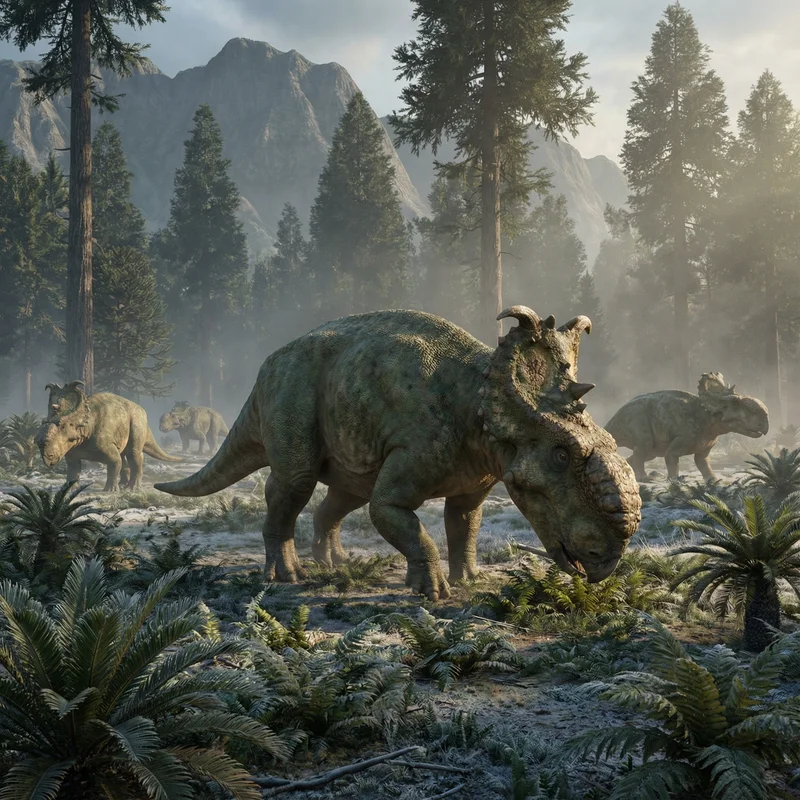 Pachyrhinosaurus
Pachyrhinosaurus · Cretaceous Period · Herbivore
 Pachyrhinosaurus
Pachyrhinosaurus · Cretaceous Period · Herbivore
 Pachyrhinosaurus
Pachyrhinosaurus · Cretaceous Period · Herbivore
 Pachyrhinosaurus
Pachyrhinosaurus · Cretaceous Period · Herbivore
 Pachyrhinosaurus
Pachyrhinosaurus · Cretaceous Period · Herbivore
🔗Related Creatures
Tenontosaurus
Tenontosaurus tilletti

Edmontosaurus
Edmontosaurus
Utahceratops
Utahceratops gettyi
Nigersaurus
Nigersaurus taqueti
Dongbeititan
Dongbeititan dongi
Torosaurus
Torosaurus latus
Patagotitan
Patagotitan mayorum

Muttaburrasaurus
Muttaburrasaurus langdoni