Patagotitan
Cretaceous Period Herbivore Creature Type
Patagotitan mayorum
Scientific Name: "Patago (Patagonia) + titan (Greek divine giant, symbolizing strength and great size); the species name mayorum honours the Mayo family, owners of La Flecha ranch where the fossils were found"
Local Name: Patagotitan
Physical Characteristics
Discovery
Habitat

Patagotitan mayorum Carballido et al., 2017 is a titanosaurian sauropod dinosaur from the Early Cretaceous (latest Albian, ~101.62 Ma) Cerro Castaño Member of the Cerro Barcino Formation in Chubut Province, Patagonia, Argentina. Known from at least six subadult to young adult individuals recovered from a single quarry, it ranks among the most completely known titanosaurs and one of the largest land animals ever documented.
The original description (Carballido et al., 2017) estimated a body length of approximately 37 m and a body mass of about 69 tonnes using a limb-bone scaling equation, leading to widespread media claims that Patagotitan was the largest land animal ever discovered. However, subsequent studies have substantially revised these figures. Gregory S. Paul (2019) reduced the length estimate to approximately 31 m and the mass to 50–55 tonnes based on volumetric model reconstruction, while Otero & Carballido (2020) reported a revised mean mass of 57 tonnes (range 42.5–71.4 t) using an updated scaling equation. Whether Patagotitan was definitively larger than Argentinosaurus remains actively debated, with most recent studies suggesting the two taxa fall within a comparable size range.
Patagotitan is diagnosed by a suite of unique features (autapomorphies), including nearly vertical prezygodiapophyseal laminae (PRDLs) in the dorsal vertebrae, retention of a hyposphene–hypantrum articulation between only a single pair of dorsal vertebrae (unique among all sauropods), a flat anterior articular surface on the first caudal vertebra, and coarse ridges above the lateral condyle at the distal end of the femur (Carballido et al., 2017; Otero et al., 2020). Phylogenetic analyses consistently recover Patagotitan as the sister taxon of Argentinosaurus within the Lognkosauria.
Overview
Name and Etymology
The generic name Patagotitan combines a reference to Patagonia, the region where the fossils were discovered, with the Greek word Titan (a mythological giant symbolizing strength and great size). The specific epithet mayorum honours the Mayo family, owners of La Flecha ranch, who provided hospitality and logistical support during fieldwork (Carballido et al., 2017).
Taxonomic Status
Patagotitan is classified within Sauropoda > Macronaria > Titanosauria > Lognkosauria and contains a single species, Patagotitan mayorum. No synonymies or taxonomic challenges have been raised since its description, and owing to its abundant skeletal material, it has been assessed as one of the most phylogenetically stable titanosaurs (Carballido et al., 2022, recuperation index of 62%).
Scientific Significance
As the most skeletally complete giant titanosaur known, Patagotitan provides critical data for understanding sauropod body mass evolution, vertebral mechanics, and limb muscle attachment morphology. The recovery of at least six individuals from the same locality also furnishes important evidence for studying intraspecific variation and potential gregarious behaviour in giant sauropods.
Age, Stratigraphy, and Depositional Environment
Geological Age
The holotype-bearing horizon belongs to the Cerro Castaño Member of the Cerro Barcino Formation. U-Pb zircon dating yielded an age of 101.62 ± 0.18 Ma, corresponding to the latest Albian at the transition from the Early to Late Cretaceous (Carballido et al., 2017; Pol et al., 2020). This places Patagotitan among the youngest faunal elements of the Cerro Barcino Formation, most of whose vertebrate assemblage falls within the ~118–110 Ma interval (Pol et al., 2020).
Depositional Environment and Lithology
The fossil-bearing sediments consist of fine-grained sandstone and tuff-bearing siltstone, indicative of a low-energy fluvial environment on a floodplain. Sporadic sheet flooding events occurred but were probably too weak to transport the bones of Patagotitan, suggesting the individuals were preserved where they died (Carballido et al., 2017). The broader depositional system of the Cerro Castaño Member comprised main channel belts, levees, subsidiary channels, and a distal floodplain within a rift basin setting (Pol et al., 2020).
Paleoflora
Numerous plant fossils were recovered approximately 200 m from the Patagotitan quarry, including fern pinnules; conifer leaves, cones, and petrified wood; and angiosperm leaf and flower impressions with petrified wood. The flora was dominated by conifers. A new genus of cupressaceous wood, Austrocupressinoxylon, similar to the living Fitzroya and Pilgerodendron, was described from the site in 2019, with estimated tree heights of approximately 15.3 m (Nunes et al., 2019). A new species of angiosperm wood, Carlquistoxylon australe, representing the oldest record of angiosperm wood from South America, was also named in 2018 (Nunes et al., 2018).
Specimens and Diagnostic Features
Holotype and Paratypes
The holotype, MPEF-PV 3400, is a partial skeleton lacking the skull, recovered from level FLV3 within a 3.43 m thick fossiliferous sediment package. It comprises three cervical vertebrae, six dorsal vertebrae (anterior, middle, and posterior), six anterior caudal vertebrae, three chevrons, ribs, both sternal plates, the right scapulocoracoid, both pubic bones, and both femora. It was selected as the holotype for its superior preservation and greatest number of distinguishing traits.
The paratype MPEF-PV 3399 (from FLV1) is a second skeleton consisting of six cervical vertebrae, four dorsal vertebrae, one anterior and sixteen posterior caudal vertebrae, ribs, chevrons, the left ulna and radius, both ischia, the left pubis, and the left femur. Additional paratypes include a tooth (MPEF-PV 3372), a posterior caudal vertebra (MPEF-PV 3393), three humeri (MPEF-PV 3395, 3396, 3397), two additional femora (MPEF-PV 3375, 3394), and two fibulae (MPEF-PV 3391, 3392). In total, over 130 sauropod bones and 57 theropod teeth were excavated from the quarry.
| Specimen | Level | Key Elements | Notes |
|---|---|---|---|
| MPEF-PV 3400 (holotype) | FLV3 | 3 cervicals, 6 dorsals, 6 anterior caudals, 3 chevrons, ribs, both sternal plates, right scapulocoracoid, both pubes, both femora | Best preserved |
| MPEF-PV 3399 (paratype) | FLV1 | 6 cervicals, 4 dorsals, 1 anterior + 16 posterior caudals, ribs, chevrons, left ulna and radius, both ischia, left pubis, left femur | Largest femur (2.38 m) |
| MPEF-PV 3395, 3396 | FLV1 | Left humeri (1 each) | — |
| MPEF-PV 3397 | FLV2 | Right humerus | — |
| MPEF-PV 3375 | FLV3 | Left femur | — |
| MPEF-PV 3394 | FLV1 | Right femur | — |
| MPEF-PV 3391, 3392 | FLV1 | Fibulae (1 each) | — |
| MPEF-PV 3372 | FLV1 | Tooth | Single tooth |
Summary of Diagnostic Features
Key autapomorphies described by Carballido et al. (2017) and Otero et al. (2020) include the following: prezygodiapophyseal laminae (PRDLs) in the dorsal vertebrae oriented nearly vertically because the prezygapophyses are situated higher than the diapophyses; prespinal laminae of the first two dorsal vertebrae bulging outward near the base; a hyposphene present on the third dorsal vertebra without a corresponding hypantrum on its anterior end (the only known sauropod with hyposphene–hypantrum retention between a single vertebral pair); a flat anterior articular surface on the first caudal vertebra (procoelous in other titanosaurs); neural spines of the anterior caudal vertebrae four to six times wider than long; coarse ridges above the lateral condyle at the distal femur (unique among sauropods), representing the insertion site of the flexor digitorum longus muscle; and paired muscle scars on the anteroproximal fossa of the humerus for the coracobrachialis.
Morphology and Functional Anatomy
Body Size
Size estimates for Patagotitan have varied considerably across studies and methods. The original description (Carballido et al., 2017) reported a length of approximately 37 m and two mass estimates: 69 tonnes (±17 t standard error) using a femoral–humeral scaling equation, and 44.2–77.6 tonnes using a volumetric method based on 3D skeletal models. Paul (2019) revised the length to approximately 31 m and the mass to 50–55 tonnes after reconstructing the volumetric model with corrections for torso proportions, neck length, and tail length. Campione & Evans (2020) estimated approximately 55.7 tonnes. Otero & Carballido (2020) applied a revised scaling equation and obtained a mean of 57 tonnes (range 42.5–71.4 t). Paul (2024) settled on 31 m and 57 tonnes, while Dempsey et al. (2025) estimated a mass exceeding 60 tonnes.
| Study | Method | Length estimate (m) | Mass estimate (t) |
|---|---|---|---|
| Carballido et al. (2017) | Scaling equation (femoral + humeral circumference) | 37 | 69 (±17 SE) |
| Carballido et al. (2017) | 3D volumetric method | 37 | 44.2–77.6 |
| Paul (2019) | Revised volumetric model | 31 | 50–55 |
| Campione & Evans (2020) | Revised scaling equation | — | 55.7 |
| Otero & Carballido (2020) | Revised scaling equation | — | 57 (42.5–71.4) |
| Paul (2024) | Volumetric model | 31 | 57 |
| Dempsey et al. (2025) | Isometric mass estimation | — | 60+ |
Shoulder height has been estimated at approximately 5.4–6 m based on skeletal reconstructions. Bone histology of five femora and one humerus confirmed that all known individuals were young adults whose growth had slowed but not entirely ceased (Carballido et al., 2017), implying that fully mature individuals may have been somewhat larger than the available specimens.
Femur
The largest femur (MPEF-PV 3399/44) measures 2.38 m in length with a midshaft circumference of 101 cm as reported in the electronic supplementary materials of the original description. For comparison, an incomplete Argentinosaurus femur estimated at 2.5 m when complete has a midshaft circumference of 118 cm, and a smaller specimen (2.25 m) has a circumference of 111.4 cm (Mazzetta et al., 2004; Benson et al., 2014). The Patagotitan femur averages 23% as broad as it is long, comparable to Rocasaurus in robustness.
Vertebral Column
The anterior to middle cervical vertebrae are very elongate, at least five times as long as wide at the posterior end, with horizontally flattened neural spines and no large pleurocoels. The posterior cervicals possess deep pleurocoels that penetrate into the bone interior. The dorsal column probably comprised 10 vertebrae. The dorsal vertebrae bear thin, strongly developed laminae, and all dorsal neural spines are tall and vertical. The anterior dorsal neural spines have expanded, arrow-shaped tips, similar to Argentinosaurus in the front but differing in that the posterior dorsal spines remain vertical (rather than inclining posteriorly as in Argentinosaurus and other titanosauriforms).
The anterior caudal vertebrae have tall, thin transverse processes similar to Futalognkosaurus and Mendozasaurus, which would have provided expanded attachment areas for the caudofemoralis longus, ilio-ischiocaudalis, and spinalis muscles, indicating a more muscular tail.
Limbs and Girdles
The scapula is robust and expanded, with the blade being only 4.15 times as long as wide at its narrowest point. The humerus is approximately 70% as long as the femur, comparable to Dreadnoughtus and Opisthocoelicaudia. Unique muscle attachment scars on the humerus include paired scars in the anteroproximal fossa (coracobrachialis insertion) and scars behind the deltopectoral crest (supracoracoideus, deltoideus clavicularis, and latissimus dorsi insertions). The ulna is robust (approximately 50% as broad at the top as long), and the radius bears a distinctive biceps brachii scar that extends as a crest, a feature shared with Elaltitan (Otero et al., 2020).
Diet and Ecology
Diet
Patagotitan was unambiguously herbivorous, as is established for all sauropods. Associated plant fossils indicate it inhabited a conifer-dominated forest environment, and its long neck would have enabled access to the upper canopy. However, no direct dietary evidence such as stomach contents or coprolites has been reported, so specific plant preferences remain inferential.
Social Behaviour
The recovery of at least six individuals from a single quarry across three distinct but closely spaced burial events (FLV1–FLV3) suggests that this locality was repeatedly used by Patagotitan. While the individuals did not all perish simultaneously—ruling out a single mass death event—the pattern is consistent with repeated visitation, possibly driven by access to water or other resources. This provides tentative evidence for some degree of gregarious behaviour, though the data are not conclusive.
Physiological Adaptations
The complex pneumatic (air sac) structures in the dorsal vertebrae would have reduced skeletal mass while maintaining structural integrity, a critical adaptation for an animal of this size. The unique retention of hyposphene–hypantrum articulations at a single vertebral pair positioned at the level of the scapular blade is interpreted as a weight-bearing adaptation not seen in any other known sauropod (Carballido et al., 2017).
Distribution and Paleogeography
Geographic Distribution
All known Patagotitan fossils come from a single locality near La Flecha, approximately 250 km west of Trelew in Chubut Province, Argentina. Excavations were led by the Museum of Paleontology Egidio Feruglio (MPEF) over eight field expeditions between late 2012 and February 2015. An additional quarry approximately 300 m to the west yielded a similar-sized sauropod skeleton from a fourth sediment level (FLV4).
Paleogeographic Context
During the Albian (~101 Ma), South America was in the process of separating from Africa. Patagonia occupied a lower latitude than today, experiencing a subtropical to warm-temperate humid climate. The Cerro Castaño Member was deposited within a rift basin characterized by a fluvial system of main channel belts, levees, subsidiary channels, and distal floodplains (Pol et al., 2020).
Phylogeny and Taxonomic Debates
Position Within Lognkosauria
The original phylogenetic analysis by Carballido et al. (2017) recovered Patagotitan as the sister taxon of Argentinosaurus, united by the presence of elongate neural spines in the anterior dorsal vertebrae. Both were placed within the Lognkosauria based on caudal vertebral features including well-developed spinodiapophyseal laminae (SDLs), tall transverse processes, and small spinoprezygapophyseal laminae (SPPLs). The emergence of this clade corresponds to a major increase in maximum body mass from approximately 20 to 60 tonnes.
Redefinition of Colossosauria
Carballido et al. (2022) leveraged Patagotitan's high phylogenetic stability (recuperation index of 62%) to redefine Colossosauria, the clade encompassing Lognkosauria and Rinconsauria. They replaced the phylogenetically unstable Mendozasaurus with Patagotitan as the defining taxon, establishing Colossosauria as the most inclusive clade containing Patagotitan but not Saltasaurus.
Alternative Analyses
González Riga et al. (2018, 2019) recovered Patagotitan in a polytomy with Puertasaurus and Notocolossus, with Argentinosaurus as closest outgroup, and placed Lognkosauria within Lithostrotia. Mannion et al. (2019) found a similar polytomy. Gallina et al. (2021) suggested that Ninjatitan might be closer to Patagotitan and Argentinosaurus than to Puertasaurus, but Pérez Moreno et al. (2023) recovered Ninjatitan closer to the Rinconsauria instead.
Reconstruction and Uncertainty
Confirmed
Patagotitan's taxonomic placement within the Titanosauria (Lognkosauria) is well supported. The recovery of at least six subadult to young adult individuals from the Cerro Castaño Member (~101.62 Ma) is confirmed, as are the numerous autapomorphies in the axial and appendicular skeleton.
Probable but Debated
Mass estimates have ranged from approximately 44 to 77 tonnes depending on methodology, with 2020s studies converging on a range of approximately 50–60 tonnes. The original claim that Patagotitan was the largest known land animal has been substantially weakened by subsequent research. Wedel (2017) and Paul (2019) noted that all comparable weight-bearing measurements—including dorsal centrum diameter and femoral midshaft circumference—are slightly larger in Argentinosaurus than in Patagotitan.
Uncertain or Hypothetical
No cranial material has been recovered, so head morphology remains unknown. Specific dietary preferences lack direct evidence. Precise shoulder height and total standing height depend on skeletal reconstruction methodology and are not definitively established. Since all known individuals are young adults, the maximum adult size of Patagotitan cannot be determined.
Media Portrayals vs. Scientific Consensus
Popular media often still refer to Patagotitan as the largest dinosaur ever discovered. In the scientific literature, however, it is more accurately characterized as one of the largest titanosaurs—broadly comparable in size to Argentinosaurus and Puertasaurus—rather than a clear record-holder. The initial 2014 media estimates of 40 m and 77 tonnes have been recognized as overestimates.
Comparison with Related and Contemporary Taxa
| Taxon | Age | Locality | Estimated length (m) | Estimated mass (t) | Notes |
|---|---|---|---|---|---|
| Patagotitan mayorum | Albian (~101.6 Ma) | Chubut Province, Argentina | 31–37 | 50–69 | Most complete giant titanosaur |
| Argentinosaurus huinculensis | Cenomanian (~96 Ma) | Neuquén Province, Argentina | 30–35 | 65–96.4 | Largest femoral circumference; fragmentary skeleton |
| Puertasaurus reuili | Maastrichtian (~70 Ma) | Santa Cruz Province, Argentina | 30+ | 50–60 (est.) | Largest dorsal centrum diameter (60 cm); very fragmentary |
| Dreadnoughtus schrani | Campanian (~77 Ma) | Santa Cruz Province, Argentina | 26 | 38–48 | Relatively complete; mass debated |
| Futalognkosaurus dukei | Coniacian–Santonian | Neuquén Province, Argentina | 26–30 | 38–50 | Representative lognkosaur |
Patagotitan possesses the most abundant skeletal material among these giant titanosaurs, making it an invaluable benchmark for size comparisons. However, the significantly larger femoral midshaft circumference of Argentinosaurus (118 cm vs. 101–110 cm) suggests the latter may have been heavier from a weight-bearing perspective (Wedel, 2017).
Fun Facts
FAQ
📚References
- Carballido, J.L., Pol, D., Otero, A., Cerda, I.A., Salgado, L., Garrido, A.C., Ramezani, J., Cúneo, N.R. & Krause, J.M. (2017). A new giant titanosaur sheds light on body mass evolution among sauropod dinosaurs. Proceedings of the Royal Society B: Biological Sciences, 284(1860), 20171219. doi:10.1098/rspb.2017.1219
- Otero, A., Carballido, J.L. & Pérez Moreno, A. (2020). The appendicular osteology of Patagotitan mayorum (Dinosauria, Sauropoda). Journal of Vertebrate Paleontology, 40(4), e1793158. doi:10.1080/02724634.2020.1793158
- Paul, G.S. (2019). Determining the largest known land animal: A critical comparison of differing methods for restoring the volume and mass of extinct animals. Annals of the Carnegie Museum, 85(4), 335–358. doi:10.2992/007.085.0403
- Campione, N.E. & Evans, D.C. (2020). The accuracy and precision of body mass estimation in non-avian dinosaurs. Biological Reviews, 95(6), 1759–1797. doi:10.1111/brv.12638
- Pol, D., Ramezani, J., García-López, K., Leardi, J.M., Garrido, A., Cúneo, N.R., Rauhut, O.W.M., Becerra, M.G. & Carballido, J.L. (2020). High-resolution chronostratigraphy of the Cerro Barcino Formation (Patagonia): Paleobiologic implications for the mid-Cretaceous dinosaur-rich fauna of South America. Gondwana Research, 80, 138–149. doi:10.1016/j.gr.2019.10.005
- Carballido, J.L., Otero, A., Mannion, P.D., Salgado, L. & Pérez Moreno, A. (2022). Titanosauria: A critical appraisal of its systematics and the relevance of the South American record. In: Otero, A., Carballido, J.L. & Pol, D. (eds.), South American Sauropodomorph Dinosaurs. Springer Earth System Sciences, 269–298. doi:10.1007/978-3-030-95959-3_8
- Nunes, C.I., Bodnar, J., Escapa, I.H., Gandolfo, M.A. & Cúneo, N.R. (2019). A new cupressaceous wood from the Lower Cretaceous of central Patagonia reveals possible clonal growth habit. Cretaceous Research, 99, 133–148. doi:10.1016/j.cretres.2019.02.013
- Nunes, C.I., Pujana, R.R., Escapa, I.H., Gandolfo, M.A. & Cúneo, N.R. (2018). A new species of Carlquistoxylon from the Early Cretaceous of Patagonia (Chubut province, Argentina): the oldest record of angiosperm wood from South America. IAWA Journal, 39(4), 406–426. doi:10.1163/22941932-20170206
- González Riga, B.J., Lamanna, M.C., Otero, A., Ortiz David, L.D., Kellner, A.W.A. & Ibiricu, L.M. (2019). An overview of the appendicular skeletal anatomy of South American titanosaurian sauropods, with definition of a newly recognized clade. Anais da Academia Brasileira de Ciências, 91(suppl 2), e20180374. doi:10.1590/0001-3765201920180374
- Gallina, P.A., Canale, J.I. & Carballido, J.L. (2021). The earliest known titanosaur sauropod dinosaur. Ameghiniana, 58(1), 35–51. doi:10.5710/AMGH.20.08.2020.3376
- Dempsey, M., Cross, S.R.R., Maidment, S.C.R., Hutchinson, J.R. & Bates, K.T. (2025). New perspectives on body size and shape evolution in dinosaurs. Biological Reviews of the Cambridge Philosophical Society, 100(5), 1829–1860. doi:10.1111/brv.70026
- Mazzetta, G.V., Christiansen, P. & Fariña, R.A. (2004). Giants and bizarres: body size of some southern South American Cretaceous dinosaurs. Historical Biology, 16(2–4), 71–83. doi:10.1080/08912960410001715132
- Wedel, M. (2017). Don't believe the hype: Patagotitan was not bigger than Argentinosaurus. Sauropod Vertebra Picture of the Week (SV-POW!). https://svpow.com/2017/08/09/dont-believe-the-hype-patagotitan-was-not-bigger-than-argentinosaurus/
- Benson, R.B.J., Campione, N.E., Carrano, M.T., Mannion, P.D., Sullivan, C., Upchurch, P. & Evans, D.C. (2014). Rates of dinosaur body mass evolution indicate 170 million years of sustained ecological innovation on the avian stem lineage. PLoS Biology, 12(5), e1001853. doi:10.1371/journal.pbio.1001853
- Mannion, P.D., Upchurch, P., Jin, X. & Zheng, W. (2019). New information on the Cretaceous sauropod dinosaurs of Zhejiang Province, China: impact on Laurasian titanosauriform phylogeny and biogeography. Royal Society Open Science, 6(8), 191057. doi:10.1098/rsos.191057
- Paul, G.S. (2024). The Princeton Field Guide to Dinosaurs. 3rd ed. Princeton University Press, p. 257.
Gallery
5 images Patagotitan
Patagotitan · Cretaceous Period · Herbivore
 Patagotitan
Patagotitan · Cretaceous Period · Herbivore
 Patagotitan
Patagotitan · Cretaceous Period · Herbivore
 Patagotitan
Patagotitan · Cretaceous Period · Herbivore
 Patagotitan
Patagotitan · Cretaceous Period · Herbivore
🔗Related Creatures
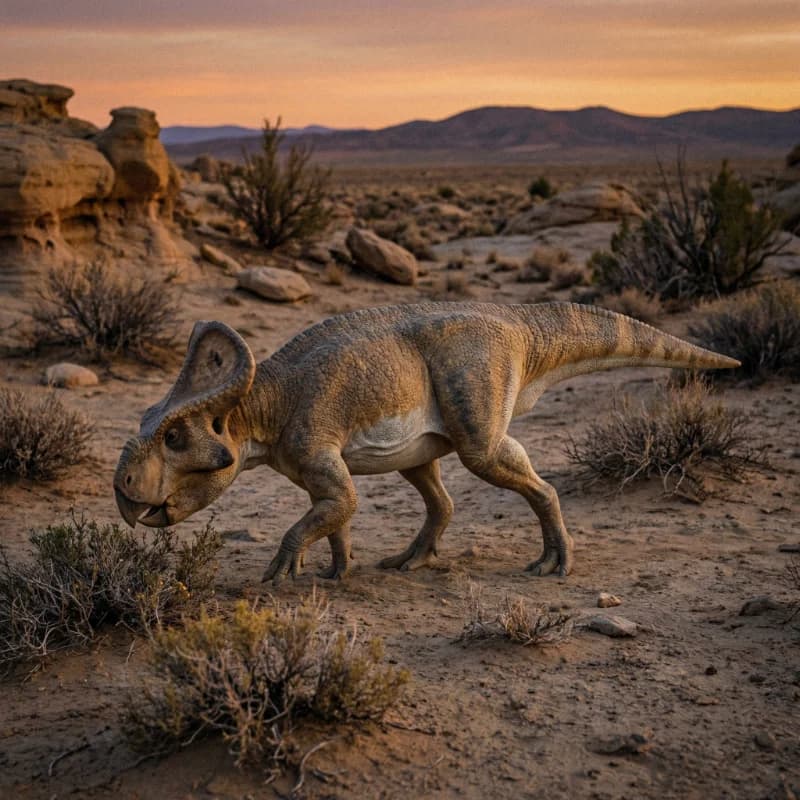
Protoceratops
Protoceratops andrewsi

Iguanodon
Iguanodon bernissartensis

Ankylosaurus
Ankylosaurus magniventris
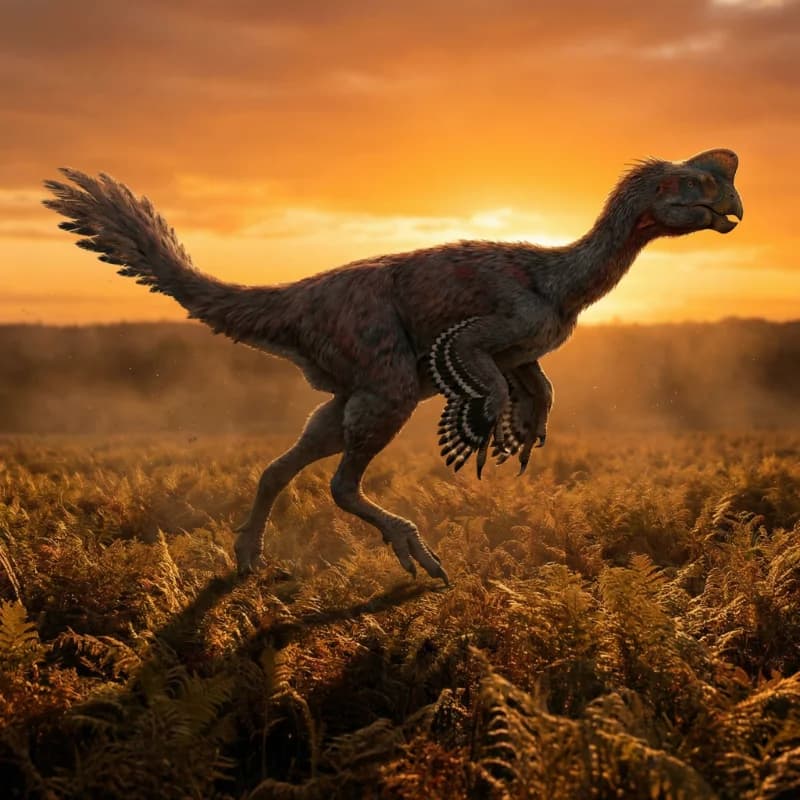
Yanbeilong
Yanbeilong ultimus

Edmontosaurus
Edmontosaurus
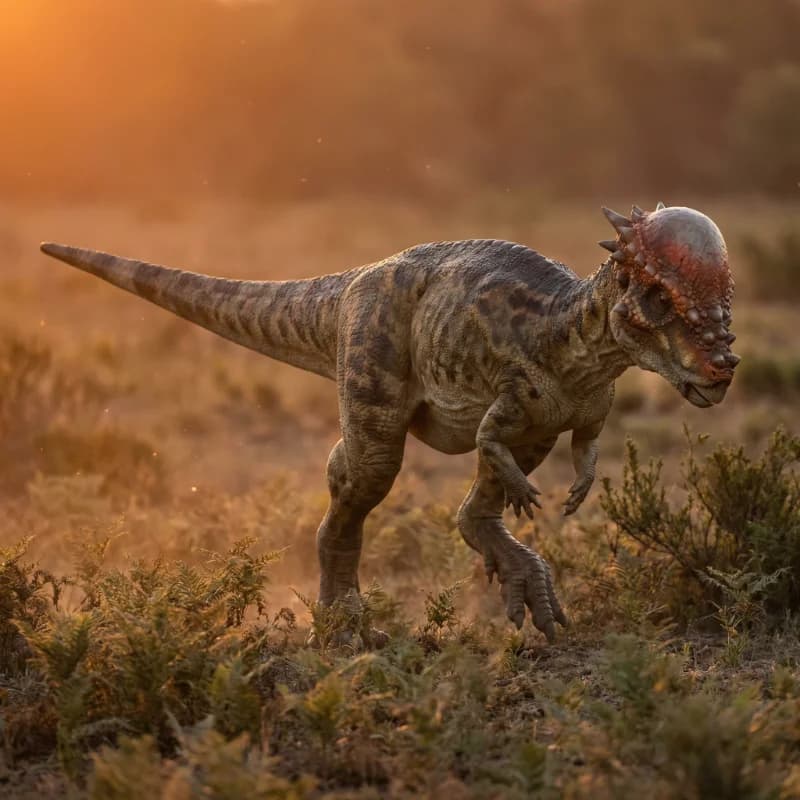
Pachycephalosaurus
Pachycephalosaurus wyomingensis
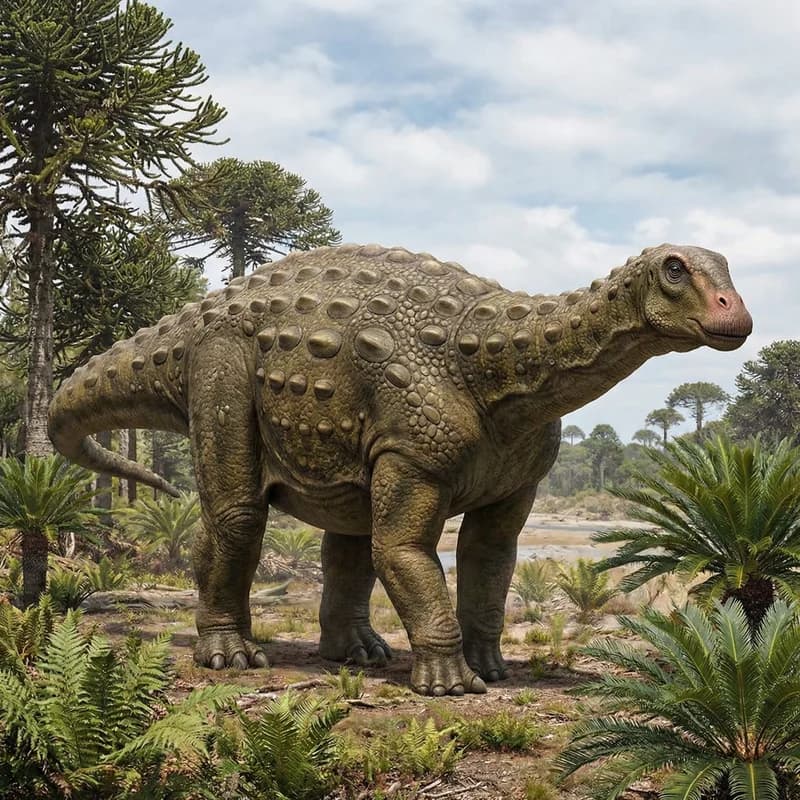
Saltasaurus
Saltasaurus loricatus

Regaliceratops
Regaliceratops peterhewsi