Iguanodon
Cretaceous Period Herbivore Creature Type
Iguanodon bernissartensis
Scientific Name: "iguana + Greek odōn (tooth) = 'iguana-tooth'; named for the resemblance of its teeth to those of a modern iguana, but approximately 20 times larger"
Local Name: Iguanodon
Physical Characteristics
Discovery
Habitat

Iguanodon bernissartensis (Boulenger in Beneden, 1881) is a large ornithopod dinosaur from the Early Cretaceous of western Europe, ranging from the middle Barremian to earliest Aptian (approximately 126–122 Ma). The genus Iguanodon was named in 1825 by the English physician and geologist Gideon Mantell, making it historically the second dinosaur genus to be formally named after Megalosaurus (Buckland, 1824), and one of the three genera used by Richard Owen in 1842 to define Dinosauria. The currently valid type species, I. bernissartensis, has its holotype designated as IRSNB 1534 (Royal Belgian Institute of Natural Sciences), fixed by the International Commission on Zoological Nomenclature (ICZN Opinion 1947) in 2000 after the original type species I. anglicus was found to be a nomen dubium based on a single tooth.
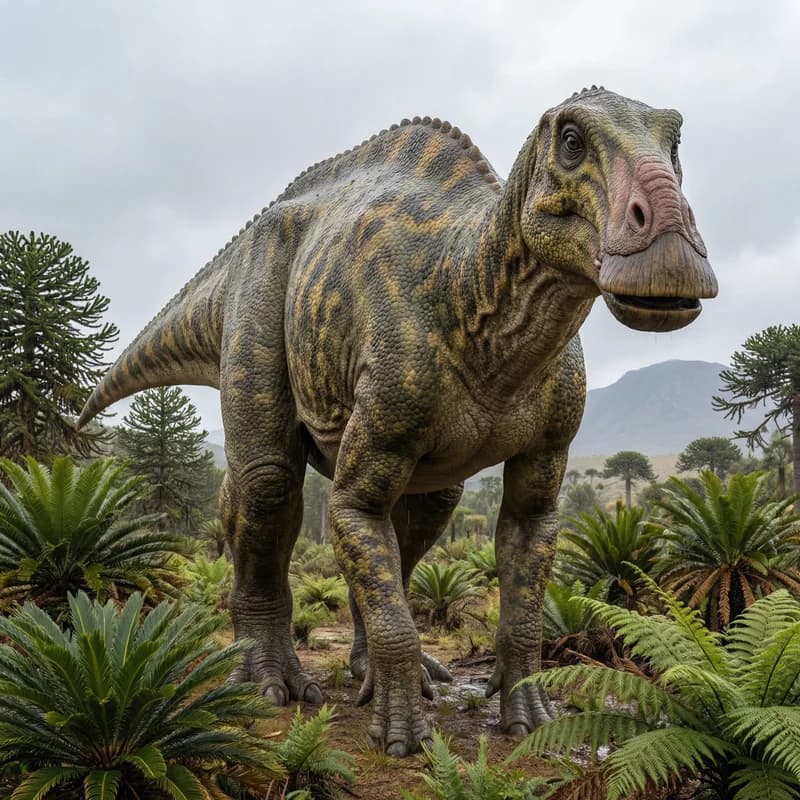
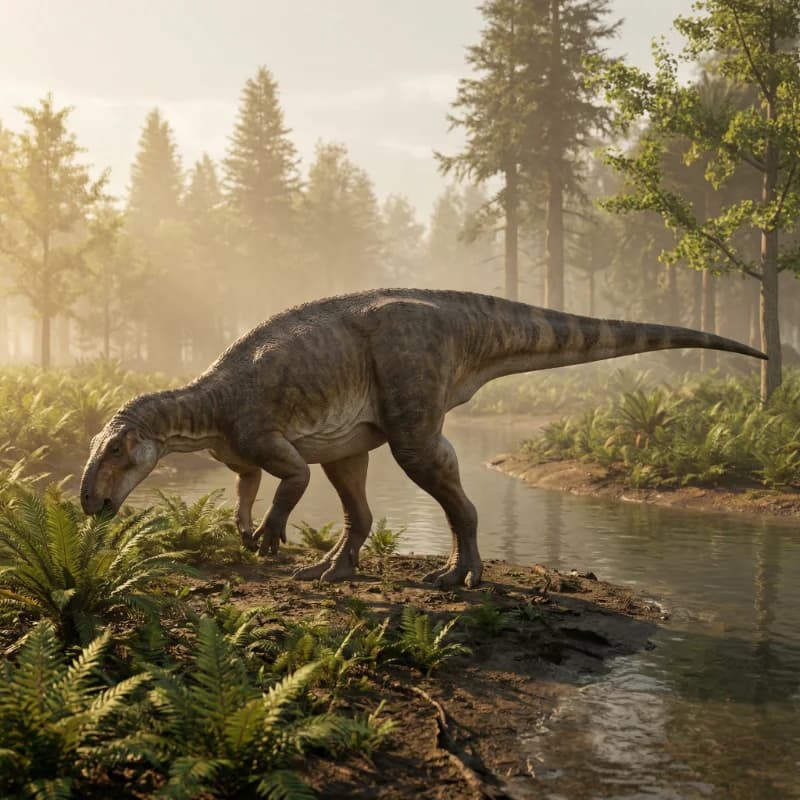
Adult I. bernissartensis measured approximately 9–11 m in body length and weighed an estimated 3.8–4.5 metric tonnes, based on 3D mathematical modelling and allometric scaling (Paul, 2008; Benson et al., 2014; Campione & Evans, 2020). The largest known individuals, including a recently described specimen from the upper Barremian of Spain, reached about 11 m and approximately 4.5 t (Gasulla et al., 2022). The most distinctive morphological features are the conical thumb spike on the first digit, three central weight-bearing fingers with hoof-like unguals, and a long, flexible fifth finger capable of manipulating objects. Iguanodon was a facultative quadruped: it could walk bipedally or quadrupedally, with quadrupedal locomotion becoming more prevalent in larger, older individuals (Norman, 1980; 2004).
The principal localities include the Sainte-Barbe Clays Formation at Bernissart (Belgium), the Wessex Formation and Upper Weald Clay Formation in England, the Nehden locality in Germany, and the Arcillas de Morella Formation in Spain. The famous 1878 discovery of at least 38 nearly complete skeletons in the Bernissart coal mine remains one of the most spectacular paleontological finds in history, providing the foundation for our modern understanding of this animal's anatomy, locomotion, and potential social behaviour.
Overview
Name and Etymology
The genus name Iguanodon is a compound of 'iguana' and the Greek ὀδών (odōn, 'tooth'), meaning 'iguana-tooth'. In the early 1820s, Mantell discovered herbivorous reptilian teeth from quarries near Cuckfield, Sussex, England. When shown to Samuel Stutchbury, assistant-curator at the Royal College of Surgeons, the teeth were recognised as resembling those of a modern iguana but approximately twenty times larger (Mantell, 1825). Mantell initially considered the name 'Iguana-saurus', but his friend William Daniel Conybeare suggested Iguanodon as more appropriate. The name was formally published on 10 February 1825 when Mantell presented his findings to the Royal Society of London.
The type species epithet bernissartensis refers to Bernissart, Belgium, the locality of the famous mass discovery. It was described by George Albert Boulenger in a report by Van Beneden in 1881.
Taxonomic Status
The genus Iguanodon originally had I. anglicus Holl, 1829 as its type species, but this was based on a single tooth and lacked diagnostic characters. In 2000, the ICZN replaced it with I. bernissartensis, designating IRSNB 1534 as the holotype. Major 21st-century revisions have split much of the material previously assigned to Iguanodon in England into separate genera: Mantellisaurus (Paul, 2007), Barilium and Hypselospinus (Norman, 2010). The only currently well-accepted species is I. bernissartensis. I. galvensis, named in 2015 by Verdú et al. from Spanish material, was reassigned to the new genus Paulodon in 2025 (Sancarlo et al., 2025), though this reassignment has been informally questioned.
Key Significance
Iguanodon bernissartensis is the second formally named dinosaur genus, one of the three founding genera of Dinosauria, and a pivotal taxon in the early history of palaeontology. The Bernissart assemblage remains one of the largest single-locality collections of dinosaur skeletons ever recovered.
Stratigraphy, Age, and Depositional Environment
Temporal Range
I. bernissartensis ranges from the middle Barremian to earliest Aptian of the Early Cretaceous (approximately 126–122 Ma). The Sainte-Barbe Clays Formation at Bernissart has been dated to this interval by palynological biostratigraphy (Yans et al., 2006; Dejax et al., 2007). In England, the Wessex Formation spans the Berriasian–Barremian, while the Upper Weald Clay Formation corresponds to the Barremian. The Arcillas de Morella Formation in Spain has been dated to the upper Barremian on the basis of strontium-isotope stratigraphy and ammonite biostratigraphy (Gasulla et al., 2022).
Formations and Lithology
| Locality | Formation | Lithology | Age | Dating Basis |
|---|---|---|---|---|
| Bernissart, Belgium | Sainte-Barbe Clays Fm. | Laminated clay, lignite | Mid-Barremian to earliest Aptian | Palynology (Yans et al., 2006) |
| Sussex and Isle of Wight, England | Wessex Fm., Upper Weald Clay Fm. | Mudstone, sandstone, clay | Barremian to earliest Aptian | Stratigraphy, palynology |
| Nehden, Germany | Local Wealden facies | Calcareous mudstone | Barremian (?) | Faunal association |
| Morella, Spain | Arcillas de Morella Fm. | Grey sandy clay | Upper Barremian | Sr isotopes, ammonites |
Palaeoenvironment
The Sainte-Barbe Clays Formation was deposited within localised sinkholes on the northern margin of the Mons Basin, Belgium. Sedimentological and geochemical analyses indicate a lacustrine to swampy environment on an inland alluvial plain under warm, humid subtropical conditions (Schnyder et al., 2009; Spagna et al., 2012). Associated fossils include the crocodyliform Bernissartia, the turtle Chitracephalus, diverse freshwater fish, the salamander Hylaeobatrachus, and a rich palynoflora dominated by ferns, conifers, and early angiosperms.
A 2024 palynological study of the Morella site (Rodríguez-Barreiro et al., 2024) reconstructed a subtropical forest-wetland environment dominated by ferns (especially Weichselia and Gleichenia), conifers, and cycadophytes, which are inferred to have been the primary food sources for I. bernissartensis.
Palaeomagnetic reconstructions place the Bernissart locality at approximately 40.7°N, 13.7°E during the Early Cretaceous, significantly south of its modern position, within a subtropical continental interior.
Specimens and Diagnostic Characters
Holotype and Key Specimens
The holotype of I. bernissartensis is IRSNB 1534, a nearly complete adult skeleton recovered from a depth of 322 m in the Bernissart coal mine in 1878. It was among the first dinosaur skeletons ever mounted for public display, assembled by Louis Dollo in 1882. At least 38 individuals were recovered from Bernissart, the majority of which are adults (Norman, 1980). Nine specimens are displayed as standing mounts at the Royal Belgian Institute of Natural Sciences in Brussels, with nineteen additional specimens housed in the museum's basement.
Additional referred material includes partial skeletons from the Isle of Wight (NHMUK R2502), Smokejacks Brickworks in Sussex, and axial elements from Morella, Spain described in 2022 by Gasulla et al., representing a large individual approximately 11 m in length.
Diagnosis
Following Norman (1986, 2004), the key diagnostic features of I. bernissartensis include: robust build; broad, flat premaxilla; up to 29 maxillary tooth positions per side (with none at the front of the jaw); 25 dentary tooth positions per side (dentary teeth broader than maxillary); conical thumb spike on digit I; humerus length approximately 70% of femur length in adults; and ossified tendons reinforcing the vertebral column and tail.
Limitations
The original type species I. anglicus was based on a single tooth, rendering it non-diagnostic. While the Bernissart assemblage is exceptionally well-preserved, significant individual variation has been documented (Verdú et al., 2017). Some Spanish specimens, such as the holotype of Delapparentia turolensis, have been argued to fall within the range of variation of I. bernissartensis rather than representing a distinct taxon.
Morphology and Functional Anatomy
Body Size and Proportions
I. bernissartensis was a large, robustly-built ornithopod. Adult body length averaged approximately 9–11 m, with some older references citing up to 13 m, though this is likely an overestimate (Norman, 2004). Body mass estimates vary by methodology: Paul (2008) proposed an average of approximately 3.08 t, but 3D volumetric modelling and allometric regressions suggest that even a sub-adult specimen approximately 8 m long weighed close to 3.8 t, with the largest adults (11 m) reaching approximately 4.5 t (Benson et al., 2014; Campione & Evans, 2020). Hip height was approximately 2.7 m, and with the head raised in a bipedal stance, the animal could have reached 4–5 m above the ground.
Skull and Dentition
The skull was tall, narrow, and laterally compressed, with a toothless beak at the anterior end covered by a keratinous rhamphotheca. The teeth were iguana-like but much larger and more closely packed. A key functional feature was pleurokinesis: as the jaws closed, the maxillae bowed outward, causing the upper tooth rows to grind against the lower ones in a motion functionally analogous to mammalian chewing (Weishampel, 1984). Unlike hadrosaurs, which possessed columns of replacement teeth forming a dental battery, Iguanodon had only a single replacement tooth per position at any time.
Thumb Spike and Manus
The most iconic feature of Iguanodon is its conical thumb spike, a bony structure on digit I that projects at a roughly perpendicular angle to the three central digits. Its precise function remains debated: hypotheses include predator defence, food procurement, and intraspecific combat. The three central digits (II–IV) were tightly bound together with hoof-like terminal phalanges capable of hyperextension and weight-bearing. The fifth digit was elongated and flexible, potentially used for manipulating vegetation. The phalangeal formula is 2-3-3-2-4 (Norman, 1980).
Locomotion
Since David Norman's landmark re-examination (1980, 1986), Iguanodon has been understood as a facultative quadruped, holding its body horizontally rather than in the earlier kangaroo-like tripodal posture proposed by Dollo. The tail was stiffened by a lattice of ossified tendons and could not have been flexed into a supporting 'third leg' without breaking. In adults, the forelimbs reached approximately 70% of hindlimb length (versus approximately 60% in juveniles), and the three central manual digits bore hoof-like unguals suitable for weight support. Iguanodontian trackways confirm that the palms faced medially during quadrupedal locomotion (Wright, 1999). Maximum speed has been estimated at approximately 24 km/h in bipedal mode; quadrupedal galloping was not possible (Norman, 1986).
A 2026 locomotor reassessment using osteological correlates found that Iguanodon scored as a quadruped on 9 of 11 indicators, suggesting it spent the majority of its time walking on all fours (published in Fossil Record, Pensoft, February 2026).
Tail and Ossified Tendons
The tail was long, robust, and reinforced by a dense mesh of ossified tendons running along the neural spines and chevrons. This structure maintained the tail in a horizontal position, serving as a counterbalance during locomotion. The tendons calcified during the animal's lifetime and are a characteristic feature of ornithopod dinosaurs.
Diet and Palaeoecology
Evidence for Herbivory
Herbivory in Iguanodon is strongly supported by dental morphology (iguana-like crowns with grinding wear facets), jaw biomechanics (pleurokinetic upper jaw enabling transverse grinding), and the toothless keratinous beak. No direct stomach contents have been reported. A 2024 palynological study (Rodríguez-Barreiro et al.) surveyed the pollen and spore assemblages at four major I. bernissartensis localities, inferring that ferns (especially Weichselia, Gleichenia), conifers, and cycadophytes constituted the primary food sources. Norman (1986) previously suggested horsetails, cycads, and conifers as likely dietary components. The hypothesis linking iguanodontian browsing habits to the spread of angiosperms in the Cretaceous has been proposed (Wing & Tiffney, 1987) but remains inconclusive.
The large body size of adult I. bernissartensis would have permitted access to vegetation from ground level up to 4–5 m high.
Ecological Role and Associated Fauna
I. bernissartensis was the most abundant medium-to-large herbivore in Early Cretaceous western European ecosystems. In the Wessex Formation of England, its contemporaries included the small theropod Aristosuchus, mid-sized predators Eotyrannus and Baryonyx, the large theropod Neovenator, the small ornithopods Hypsilophodon and Valdosaurus, the closely related Mantellisaurus, the armoured dinosaur Polacanthus, and the sauropod Pelorosaurus (Naish & Martill, 2001). At Bernissart, associated fauna include the crocodyliforms Bernissartia and Anteophthalmosuchus, the turtle Chitracephalus, and diverse freshwater fishes.
Social Behaviour
The concentration of at least 38 individuals at Bernissart and at least 15 individuals at Nehden, Germany (the latter predominantly Mantellisaurus with some I. bernissartensis) has been interpreted as indirect evidence for gregarious behaviour (Norman, 1987). However, whether these mass accumulations reflect genuine social cohesion or catastrophic events such as flash floods remains debated. The Nehden assemblage, in particular, is attributed to a flash flood event.
Distribution and Palaeogeography
Geographic Range
Confirmed occurrences of I. bernissartensis include:
- Belgium: Bernissart, Sainte-Barbe Clays Formation — at least 38 individuals, the richest locality
- England: Sussex (Upper Weald Clay Fm., Smokejacks Brickworks), Isle of Wight (Wessex Fm., Vectis Fm.)
- Germany: Nehden — some individuals among a predominantly Mantellisaurus assemblage
- Spain: Morella, Castellón (Arcillas de Morella Fm.) — multiple specimens including large adults
- France: Auxerre area, Paris Basin (upper Barremian) — fragmentary material with morphological and dimensional affinities to I. bernissartensis, but not definitively diagnosed (2009)
Palaeogeographic Context
During the Early Cretaceous, western Europe occupied a more southerly position than today, lying within the subtropical climate belt. Palaeomagnetic data place Bernissart at approximately 40.7°N / 13.7°E. Europe at this time was a partially flooded archipelago/peninsula complex separated by the Tethys Sea, with shallow epicontinental seas and land bridges facilitating faunal interchange between what is now Belgium, England, Germany, Spain, and France.
Phylogeny and Taxonomic Debates
Phylogenetic Position
Iguanodon is placed within Ornithischia: Ornithopoda: Styracosterna: Hadrosauriformes. In the cladistic analysis of McDonald (2012), Iguanodon occupies a position more derived than Camptosaurus but more basal than Mantellisaurus and Hadrosauroidea (the clade including hadrosaurs). It thus represents a basal hadrosauriform, an intermediate evolutionary stage on the lineage leading to the duck-billed dinosaurs. Poole's (2022) large-scale phylogenetic analysis of Iguanodontia recovered a broadly consistent result, placing Iguanodon as a sister group to or within the base of Hadrosauroidea within Ankylopollexia.
History of Taxonomic Revision
Numerous species were historically assigned to Iguanodon, making it one of the most taxonomically complex early dinosaur genera. Major 21st-century revisions have drastically streamlined the genus:
| Former Species | Current Status | Notes |
|---|---|---|
| I. anglicus | Nomen dubium | Based on a single tooth; replaced as type species |
| I. atherfieldensis | Mantellisaurus atherfieldensis | Separated by Paul, 2007 |
| I. dawsoni | Barilium dawsoni | Separated by Norman, 2010 |
| I. fittoni | Hypselospinus fittoni | Separated by Norman, 2010 |
| I. galvensis | Paulodon galvensis | Separated by Sancarlo et al., 2025 |
| I. orientalis | Altirhinus kurzanovi (skull) / nomen dubium (rest) | Norman, 1998 |
| I. lakotaensis | Dakotadon lakotaensis | Separated by Paul, 2008 |
Alternative Hypotheses
Paul (2008) advocated restricting I. bernissartensis strictly to the Bernissart sample, treating English material separately. However, Norman and McDonald have not followed this recommendation, preferring to include English and Spanish material within I. bernissartensis while exercising caution regarding records from France and other peripheral localities.
Reconstruction and Uncertainties
Well-Established Facts
- Large, robust herbivorous ornithopod, body length 9–11 m, body mass approximately 3.8–4.5 t (multiple independent lines of evidence)
- Conical thumb spike, flexible fifth digit, ossified tendon-reinforced tail (skeletal anatomy)
- Facultative quadruped (anatomy, biomechanics, trackways)
- Barremian to earliest Aptian in age, western European distribution (stratigraphy)
Hypothetical or Uncertain
- Specific function of thumb spike (defence/foraging/intraspecific combat): no direct evidence; hypothesis-level
- Gregarious behaviour: mass accumulations are factual, but whether they reflect lifelong social bonds is uncertain
- Precise dietary composition: inferred from palynological association, no direct gut contents known
- Integument colour and texture: no direct evidence
- Maximum speed of approximately 24 km/h: biomechanical model estimate
Popular Misconceptions vs Scientific Consensus
For decades, Iguanodon was depicted either as a giant iguana with a nasal horn (Crystal Palace sculptures, 1854) or as a kangaroo-like bipedal animal standing erect (Dollo's Bernissart mounts, 1882). Norman's work from the 1980s onward demonstrated that the animal held its body horizontally as a facultative quadruped, with the supposed 'nose horn' actually being the thumb spike. This correction stands as one of the most iconic examples of how scientific understanding of dinosaurs has evolved through better specimens and more rigorous analysis.
Discovery and Research History
Initial Discovery and Naming
The first Iguanodon fossils were found between 1820 and 1822 in quarries near Cuckfield, Sussex, within the strata of Tilgate Forest. Whether the initial herbivorous teeth were found by Mantell himself (as he stated in 1851) or by his wife Mary Ann Mantell (as he wrote in 1827 and 1833) remains historically unresolved. The teeth were initially dismissed by members of the Royal Society as fish teeth or rhinoceros incisors, and by Georges Cuvier as rhinoceros teeth (Cuvier quickly retracted the next day). In 1824, after Cuvier confirmed the teeth were reptilian and potentially from a giant herbivore, Mantell formally published the name Iguanodon on 10 February 1825.
The Bernissart Mass Discovery
On 28 February 1878, miners Jules Créteur and Alphonse Blanchard accidentally struck a skeleton at a depth of 322 m in a coal mine at Bernissart, Belgium, initially mistaking the bones for petrified wood. Louis de Pauw directed the excavation beginning in May 1878, and Louis Dollo undertook the reconstruction and description from 1882 onward. At least 38 individuals were recovered. The first mounted skeleton was displayed in a chapel of the Palace of Charles of Lorraine in July 1883. Dollo rejected Owen's quadrupedal pachyderm model and instead reconstructed Iguanodon in a bipedal posture modelled on cassowaries and wallabies, placing the thumb spike correctly on the hand — but the upright posture would later be revised.
Modern Research
David Norman's monographic studies from the 1980s onward (1980, 1986, 2004, 2010, 2012) established the modern anatomical, taxonomic, and locomotor framework for Iguanodon. Weishampel (1984) elucidated ornithopod feeding mechanisms. McDonald (2012) produced a comprehensive phylogenetic analysis of basal iguanodonts. Recent contributions include Gasulla et al. (2022) describing new Spanish material, and Rodríguez-Barreiro et al. (2024) conducting palynological habitat and diet reconstructions.
Comparison with Related and Contemporaneous Taxa
| Taxon | Body Length | Estimated Mass | Age | Locality | Key Differences |
|---|---|---|---|---|---|
| Iguanodon bernissartensis | 9–11 m | 3.8–4.5 t | Barremian–earliest Aptian | Belgium, England, Germany, Spain | Robust build, prominent thumb spike |
| Mantellisaurus atherfieldensis | 6–7 m | 0.7–1 t | Barremian–Aptian | England, Belgium | Gracile build, taller neural spines |
| Barilium dawsoni | ~8 m (est.) | Unknown | Valanginian | Sussex, England | Earlier age, incomplete material |
| Ouranosaurus nigeriensis | ~7–8 m | ~2.2 t | Aptian | Niger | Dorsal sail/hump, African distribution |
| Camptosaurus dispar | ~6 m | ~0.9 t | Late Jurassic | North America | Earlier age, smaller, rudimentary thumb spike |
Iguanodon bernissartensis is the most robustly built and largest of these taxa, with the most prominently developed thumb spike.
Fun Facts
FAQ
📚References
- Mantell, G. A. (1825). "Notice on the Iguanodon, a newly discovered fossil reptile, from the sandstone of Tilgate Forest, in Sussex." Philosophical Transactions of the Royal Society of London, 115, 179–186. doi:10.1098/rstl.1825.0010
- Norman, D. B. (1980). "On the ornithischian dinosaur Iguanodon bernissartensis from the Lower Cretaceous of Bernissart (Belgium)." Mémoires de l'Institut Royal des Sciences Naturelles de Belgique, 178, 1–103.
- Norman, D. B. (1986). "On the anatomy of Iguanodon atherfieldensis (Ornithischia: Ornithopoda)." Bulletin de l'Institut Royal des Sciences Naturelles de Belgique, Sciences de la Terre, 56, 281–372.
- Norman, D. B. (2004). "Basal Iguanodontia." In Weishampel, D. B., Dodson, P. & Osmólska, H. (eds.), The Dinosauria (2nd ed.), pp. 413–437. University of California Press.
- Paul, G. S. (2008). "A revised taxonomy of the iguanodont dinosaur genera and species." Cretaceous Research, 29(2), 192–216. doi:10.1016/j.cretres.2007.04.009
- Norman, D. B. (2010). "A taxonomy of iguanodontians (Dinosauria: Ornithischia) from the lower Wealden Group (Cretaceous: Valanginian) of southern England." Zootaxa, 2489, 47–66.
- McDonald, A. T. (2012). "Phylogeny of basal iguanodonts (Dinosauria: Ornithischia): An update." PLoS ONE, 7(5), e36745. doi:10.1371/journal.pone.0036745
- Yans, J., Dejax, J., Pons, D., Taverne, L. & Bultynck, P. (2006). "The iguanodons of Bernissart (Belgium) are middle Barremian to earliest Aptian in age." Bulletin de l'Institut Royal des Sciences Naturelles de Belgique, 76, 91–95.
- Dejax, J., Pons, D. & Yans, J. (2007). "Palynology of the dinosaur-bearing Wealden facies in the natural pit of Bernissart (Belgium)." Review of Palaeobotany and Palynology, 144(1–2), 25–38. doi:10.1016/j.revpalbo.2005.10.004
- Schnyder, J., Dejax, J., Keppens, E., et al. (2009). "An Early Cretaceous lacustrine record: Organic matter and organic carbon isotopes at Bernissart (Mons Basin, Belgium)." Palaeogeography, Palaeoclimatology, Palaeoecology, 281(1–2), 79–91. doi:10.1016/j.palaeo.2009.07.014
- Gasulla, J. M., Escaso, F., et al. (2022). "New Iguanodon bernissartensis axial bones (Dinosauria, Ornithopoda) from the Early Cretaceous of Morella, Spain." Diversity, 14(2), 63. doi:10.3390/d14020063
- Rodríguez-Barreiro, I., et al. (2024). "Palynological reconstruction of the habitat and diet of Iguanodon bernissartensis in the Lower Cretaceous Morella Formation, NE Iberian Peninsula." Cretaceous Research, 156, 105804. doi:10.1016/j.cretres.2023.105804
- Weishampel, D. B. (1984). "Evolution of jaw mechanisms in ornithopod dinosaurs." Advances in Anatomy, Embryology and Cell Biology, 87, 1–110.
- Verdú, F. J., Royo-Torres, R., Cobos, A. & Alcalá, L. (2017). "Individual variation in the postcranial skeleton of the Early Cretaceous Iguanodon bernissartensis (Dinosauria: Ornithopoda)." Cretaceous Research, 74, 65–86. doi:10.1016/j.cretres.2017.02.006
- Naish, D. & Martill, D. M. (2001). "Ornithopod dinosaurs." In Martill, D. M. & Naish, D. (eds.), Dinosaurs of the Isle of Wight, pp. 60–132. The Palaeontological Association.
- Godefroit, P. (ed.) (2012). Bernissart Dinosaurs and Early Cretaceous Terrestrial Ecosystems. Indiana University Press. ISBN 978-0-253-35721-2.
- Poole, K. E. (2022). "Phylogeny of iguanodontian dinosaurs and the evolution of quadrupedality." Palaeontologia Electronica, 25(3), a33. doi:10.26879/702
- Campione, N. E. & Evans, D. C. (2020). "The accuracy and precision of body mass estimation in non-avian dinosaurs." Biological Reviews, 95(6), 1759–1797. doi:10.1111/brv.12638
Gallery
5 images Iguanodon
Iguanodon · Cretaceous Period · Herbivore
 Iguanodon
Iguanodon · Cretaceous Period · Herbivore
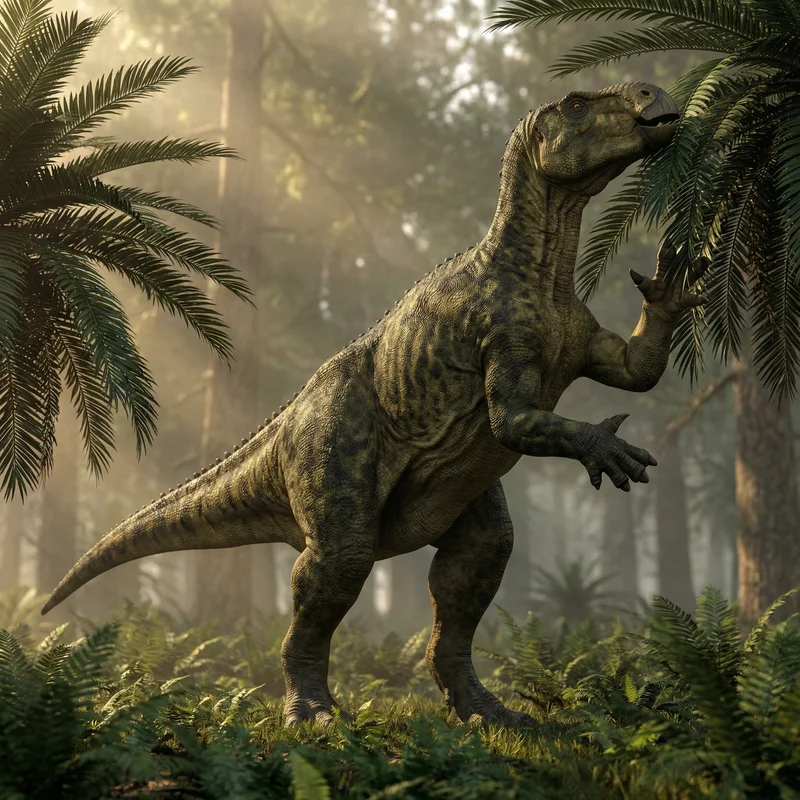 Iguanodon
Iguanodon · Cretaceous Period · Herbivore
 Iguanodon
Iguanodon · Cretaceous Period · Herbivore
 Iguanodon
Iguanodon · Cretaceous Period · Herbivore
🔗Related Creatures
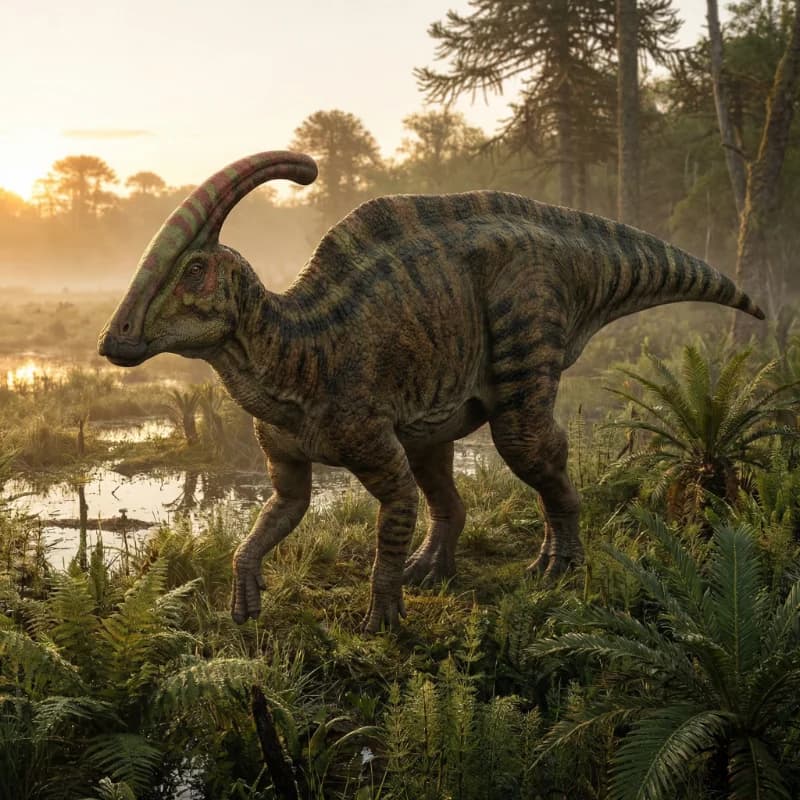
Parasaurolophus
Parasaurolophus walkeri
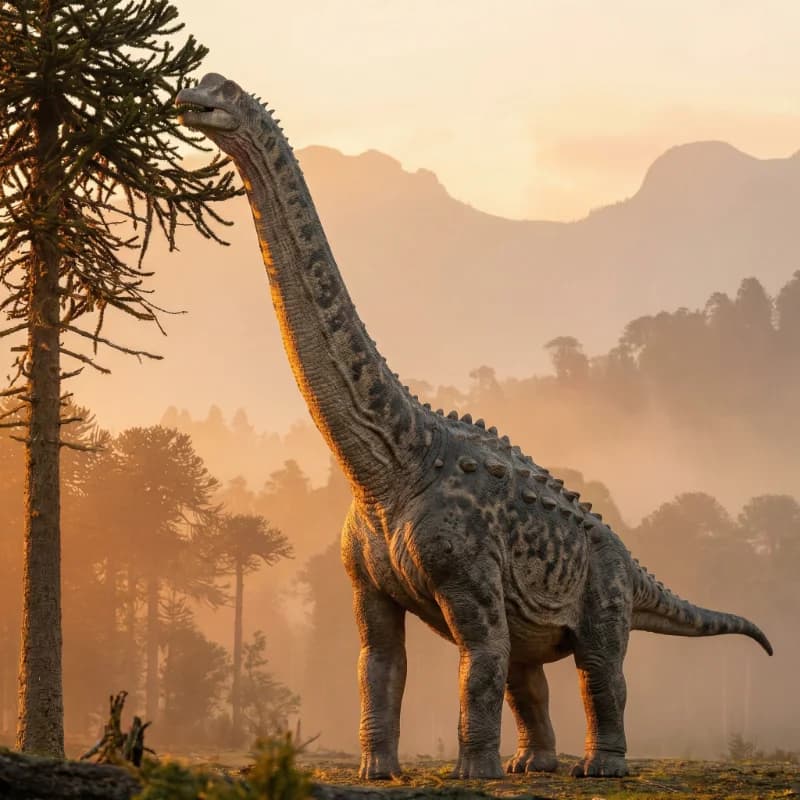
Dongbeititan
Dongbeititan dongi
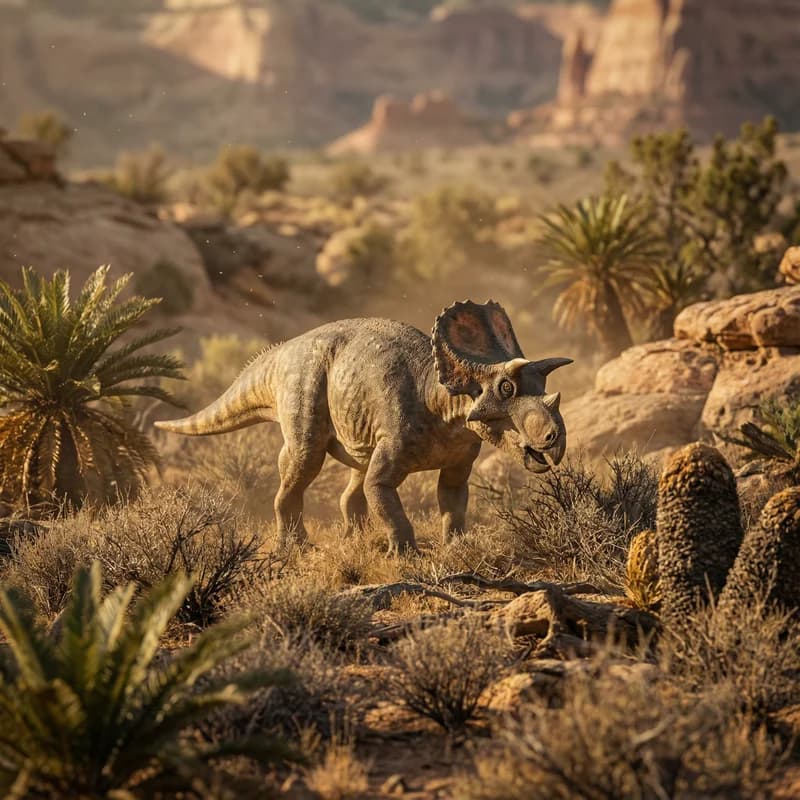
Zuniceratops
Zuniceratops christopheri

Maiasaura
Maiasaura peeblesorum
Shantungosaurus
Shantungosaurus giganteus
Tenontosaurus
Tenontosaurus tilletti

Triceratops
Triceratops
Yanbeilong
Yanbeilong ultimus