Maiasaura
Cretaceous Period Herbivore Creature Type
Maiasaura peeblesorum
Scientific Name: "Maia (Greek μαῖα, 'good mother') + saura (Greek σαύρα, feminine of saurus, 'lizard') = 'good mother lizard'"
Local Name: Maiasaura
Physical Characteristics
Discovery
Habitat

Maiasaura peeblesorum Horner & Makela, 1979 is a large hadrosaurid ("duck-billed") dinosaur from the Late Cretaceous (Campanian) of North America. Classified within the order Ornithischia, suborder Ornithopoda, family Hadrosauridae, subfamily Saurolophinae, and tribe Brachylophosaurini, it holds an extraordinary place in paleontological history as the first dinosaur for which definitive evidence of parental care was documented. The genus name combines the Greek μαῖα (maia, 'good mother') with σαύρα (saura, the feminine form of saurus, 'lizard'), meaning 'good mother lizard'—a direct reference to the discovery of nests containing juveniles that were being cared for by adults.
Fossils are principally recovered from the Two Medicine Formation near Choteau, Montana. The most recent CA-ID-TIMS U-Pb geochronology dates this formation to approximately 82.4–74.4 Ma (Rogers et al. 2024), and Maiasaura specimens concentrate in the middle to upper portions of the formation. The Egg Mountain bonebed has been dated to approximately 75.92 ± 0.32 Ma (Varricchio et al. 2010). Adults reached a total length of about 9 m, with an average body mass of approximately 2,300 kg; the largest known specimen (ROM 44770) is estimated at roughly 3,833 ± 958 kg using limb bone circumference methods (Woodward et al. 2015; N. Campione pers. comm. 2013). Over 200 individual specimens spanning every ontogenetic stage—eggs, embryos, nestlings, juveniles, subadults, and adults—have been collected, making Maiasaura the single best model organism for the study of growth dynamics, survivorship, and population biology in extinct vertebrates.
Beyond its scientific significance, Maiasaura boasts remarkable cultural distinctions. In 1985, astronaut Loren Acton carried a fragment of baby Maiasaura bone and a piece of eggshell aboard the Spacelab 2 mission, making it the first dinosaur fossil to travel to space. That same year, Maiasaura peeblesorum was designated Montana's official state fossil, following a campaign led by schoolchildren.
Overview
Name and Etymology
The genus name Maiasaura derives from the Greek μαῖα (maia, 'good mother'—also associated with Maia, one of the seven Pleiades and the mother of Hermes in Greek mythology) and σαύρα (saura, the feminine form of saurus, 'lizard'). The deliberate use of the feminine suffix -saura instead of the standard masculine -saurus was intended to emphasize the discovery of maternal care (Horner & Makela 1979). The specific epithet peeblesorum honors the families of John and James Peebles, owners of the Montana ranch on which the first fossils were found.
Taxonomic Status
Maiasaura belongs to the tribe Brachylophosaurini within the subfamily Saurolophinae of the family Hadrosauridae. Fellow tribe members include Brachylophosaurus canadensis, Acristavus gagslarsoni, Probrachylophosaurus bergei, and Ornatops incantatus. In the phylogenetic analysis of Prieto-Márquez & Wagner (2013), Maiasaura forms a sister-group relationship with Brachylophosaurus, with Acristavus as the outgroup to this pair. Freedman Fowler & Horner (2015) described Probrachylophosaurus bergei and proposed a heterochronic model in which the cranial morphology of Maiasaura represents an intermediate evolutionary stage between Acristavus and Brachylophosaurus. McDonald et al. (2021) expanded the tribe's geographic range southward with the description of Ornatops incantatus from New Mexico. Only one species, Maiasaura peeblesorum, is currently considered valid.
Scientific Significance
Maiasaura occupies a central position in paleontology for three main reasons. First, it provided the first definitive evidence that dinosaurs exhibited parental care, fundamentally reshaping scientific understanding of dinosaur behavior. Second, an osteohistological analysis of 50 individual tibiae produced the most detailed life history of any dinosaur known, including growth rates, age at sexual and skeletal maturity, and survivorship curves (Woodward et al. 2015). Third, mass bonebeds containing an estimated 10,000 or more individuals demonstrated large-scale herding behavior (Varricchio & Horner 1993).
Geological Context
Temporal Range and Dating
Maiasaura lived during the Late Cretaceous, specifically the Campanian stage. The most recent high-precision CA-ID-TIMS U-Pb geochronology (Rogers et al. 2024) constrains the Two Medicine Formation to approximately 82.4–74.4 Ma. Although Wikipedia lists a broader temporal range of 86.3–70.6 Ma, Maiasaura specimens are concentrated in the middle to upper portions of the formation. The Egg Mountain bonebed locality has been dated to approximately 75.92 ± 0.32 Ma (Varricchio et al. 2010), placing the bulk of the Maiasaura record within an approximately 80–74 Ma window.
Stratigraphy and Lithology
The Two Medicine Formation is an Upper Cretaceous continental succession exposed across northwestern Montana and southern Alberta, consisting primarily of sandstone, mudstone, and bentonite. Rogers et al. (2024) subdivided the formation into several formal members. The formation reaches thicknesses of approximately 600 m in western exposures. Recurring red beds and caliche (calcic paleosol) horizons indicate a seasonally dry climate. The formation is conformably underlain by the nearshore marine Virgelle Sandstone and overlain by the marine Bearpaw Shale, recording contemporaneous sea-level fluctuations.
| Feature | Details |
|---|---|
| Formation | Two Medicine Formation |
| Age | Campanian, ca. 82.4–74.4 Ma |
| Primary lithology | Sandstone, mudstone, bentonite |
| Dating method | CA-ID-TIMS U-Pb (Rogers et al. 2024) |
| Lower boundary | Virgelle Sandstone (conformable) |
| Upper boundary | Bearpaw Shale (conformable) |
| Maximum thickness | ca. 600 m (western sections) |
Paleoenvironment and Depositional Setting
The Two Medicine Formation was deposited under a semi-arid, seasonally dry climate on a floodplain/deltaic system east of the Cordilleran highlands. A rain-shadow effect from the Cordilleran orogen produced prolonged dry seasons and warm temperatures, as supported by red bed and caliche development, plant macro- and microfossil records, and invertebrate faunal data (Lorenz & Gavin 1984). The formation of Maiasaura bonebeds has been interpreted as resulting from drought-related catastrophic mass mortality events (Rogers 1990), though Schmitt et al. (2014) proposed debris-flow involvement in at least some bonebed deposits. The estimated paleolatitude of the area was approximately 55.3°N—significantly higher than its present-day position.
Specimens and Diagnostic Characters
Holotype and Key Specimens
The holotype specimen is YPM-PU 22405 (formerly PU 22405), an adult skull discovered in 1978 by Bynum, Montana, resident Laurie Trexler near Choteau. It is currently housed in the Yale Peabody Museum of Natural History following the transfer of the Princeton University vertebrate paleontology collections. In the same year, Marion Brandvold—owner of the Trex Agate Rock Shop in Bynum—discovered a nest containing eggshells and juvenile remains (YPM-PU 22400) at a nearby locality, providing the first evidence of dinosaur family structure (Horner & Makela 1979). Since then, over 200 individual specimens have been collected, representing every ontogenetic stage from eggs and embryos through nestlings, juveniles, subadults, and adults (Horner & Gorman 1988). The largest known specimen, ROM 44770, possesses a femur length of 102 cm; using the limb-bone circumference method of Campione & Evans (2012), its body mass has been estimated at approximately 3,833 ± 958 kg (Woodward et al. 2015; N. Campione pers. comm. 2013).
Diagnostic Characters
The principal autapomorphy of Maiasaura is a low, solid, transversely oriented crest situated between the eyes, formed by the nasals, prefrontals, and frontals rising vertically above the skull roof (Horner 1983). This feature distinguishes Maiasaura from its closest relative Brachylophosaurus, which possesses a flat, paddle-shaped nasal crest. Additional diagnostic features include a narrow, pointed posterior margin of the external naris and thickened, elevated frontals. McFeeters et al. (2021b) documented significant ontogenetic variation in crest morphology, with the structure being inconspicuous in juveniles and reaching full development only in adults. The function of the crest remains debated; hypotheses include use in headbutting competition during breeding seasons, species recognition, and sexual selection.
Specimen Limitations
The majority of Maiasaura fossils are found in a disarticulated state within bonebeds, making it difficult to associate individual skeletal elements with specific specimens. This complicates the distinction between intraindividual and interindividual variation, as well as assessments of sexual dimorphism. However, the sheer abundance of material—over 200 individuals—permits robust statistical analyses that substantially mitigate these limitations.
Morphology and Function
Body Form and Size
Adult Maiasaura reached a total length of approximately 9 m with a hip height of about 2.5 m or more. Based on a large-sample osteohistological analysis of 50 tibiae, Woodward et al. (2015) determined that skeletal maturity was attained at approximately 8 years of age, at which point the average body mass was about 2,300 kg (approximately 2.3 metric tons). The largest known individual (ROM 44770) is estimated at approximately 3,833 ± 958 kg based on humerus and femur circumference (Campione & Evans 2012 method). Wosik et al. (2020) reported a maximum body mass estimate of approximately 4 metric tons for hadrosaurids of comparable size.
Skull and Dentition
The skull of Maiasaura exhibits the characteristic "duck-billed" morphology of hadrosaurids. The rostral beak was covered in a keratinous sheath suited for cropping vegetation. The jaws contained hundreds of teeth organized into a dental battery that allowed efficient mastication of plant material. Teeth were continuously replaced throughout life to counteract wear. Notably, the teeth of nestlings show wear facets, suggesting that food was being consumed in the nest and that parents were bringing food to their young (Horner & Makela 1979).
Limb Structure and Locomotion
The hind limbs of Maiasaura were longer than the forelimbs. Cubo et al. (2015) analyzed bone stress patterns and found that juveniles under four years of age were primarily bipedal, transitioning to a predominantly quadrupedal gait as they grew larger. This ontogenetic locomotor shift is interpreted as a biomechanical adaptation to increasing body mass, and it represents the first reported case of biomechanically adaptive bone modeling in non-avian dinosaurs.
Diet and Ecology
Diet and Feeding Evidence
Maiasaura was herbivorous. Chin (2007) studied coprolites from the Two Medicine Formation and found that the diet of large herbivorous dinosaurs in this environment included fibrous plants, wood, rotting wood, tree bark, leaves, branches, ferns, and angiosperms. A follow-up study by Chin et al. (2017) revealed recurring crustacean exoskeletal remains within similar coprolites from the same formation, indicating that Maiasaura and other large herbivorous dinosaurs consumed crustaceans inhabiting rotting wood, likely as a supplementary protein source. These findings suggest that Maiasaura was both a browser and a grazer, with opportunistic supplementation of animal protein.
Parental Care and Nesting
The nesting sites discovered at Egg Mountain consist of bowl-shaped nests made of earth, each approximately 2 m (6–7 feet) in diameter. Individual nests contained 30–40 eggs arranged in a circular or spiral pattern. The eggs were roughly the size of ostrich eggs, oval in shape with one slightly more pointed end, and are black when fossilized with prominent surface ridges (Hirsch & Quinn 1990). Nest spacing was approximately 7 m—less than the 9 m body length of an adult—indicating densely packed colonial nesting similar to modern seabird colonies.
Incubation heat is thought to have been generated by decomposing vegetation placed into the nest by the parents, rather than by a parent sitting on the eggs. Upon hatching, nestlings had incompletely ossified leg bones and were incapable of walking, indicating an altricial developmental mode. The wear facets on nestling teeth imply that adults brought food to the nest (Horner & Makela 1979). Bert et al. (2025) used neonatal metabolic rate estimates to infer that Maiasaura young departed the nest after approximately 40–75 days (roughly 1–2 months). Comparative analysis with the related lambeosaurine Hypacrosaurus suggests that Maiasaura neonates were more altricial.
Growth and Survivorship
The 50-tibia osteohistological study by Woodward et al. (2015) produced the most detailed life history ever reconstructed for a dinosaur. The key findings are as follows. The mean cortical bone apposition rate during the first year was 86.4 μm/day—comparable to modern bird growth rates and strong evidence for endothermy. The mortality rate among individuals less than one year old was 89.9%. After surviving the first year, the mortality rate dropped sharply to 12.7%, making ages 2–8 a peak performance window. Sexual maturity was reached at approximately 3 years of age. Skeletal maturity was attained at approximately 8 years. After the eighth year, the mortality rate surged back to 44.4%. Hatchlings grew from approximately 41 cm at birth to approximately 147 cm by the end of their first year.
A follow-up study by Woodward (2019) identified non-annual cortical vascular rings in first-year tibiae, demonstrating that some growth marks previously assumed to be annual actually represent shorter-period growth fluctuations.
| Life Stage | Age | Mortality Rate | Key Events |
|---|---|---|---|
| Nestling/yearling (< 1 yr) | 0–1 yr | 89.9% | Rapid growth (86.4 μm/day), nest departure (~40–75 days) |
| Juvenile (growth phase) | 1–3 yr | 12.7% | Bipedal-to-quadrupedal locomotion transition begins |
| Sexual maturity | ca. 3 yr | 12.7% | Capable of reproduction |
| Skeletal maturity | ca. 8 yr | 12.7% → 44.4% | Mean body mass ca. 2,300 kg |
| Senescent | 8+ yr | 44.4% | Elevated mortality from aging/predation |
Herding Behavior
Mass bonebeds in the Two Medicine Formation containing an estimated 10,000 or more Maiasaura individuals provide compelling evidence for large-scale herding (Varricchio & Horner 1993). Taphonomic analysis indicates drought-related catastrophic mass mortality (Rogers 1990), and the size range of individuals within the bonebeds (3 m to 7.5 m) shows that herds were age-integrated—including juveniles, subadults, and adults together. Such large-scale herding is interpreted as an anti-predator strategy, providing a dilution effect against large theropod predators such as Daspletosaurus.
Sexual Dimorphism
Saitta et al. (2020) applied effect-size statistics to Maiasaura adult specimens and found evidence suggesting that one sex was approximately 45% larger than the other. However, which sex was larger cannot currently be determined. The existence and degree of sexual dimorphism in Maiasaura remain subjects of ongoing investigation.
Distribution and Paleogeography
Geographic Distribution
Maiasaura fossils are primarily known from the Two Medicine Formation in northwestern Montana, with Egg Mountain and the Two Medicine River drainage near Choteau as the principal localities. McFeeters et al. (2021) reported a partial skull with braincase from the Oldman Formation near Warner, southern Alberta, Canada, extending the genus's geographic range northward. This discovery suggests that Maiasaura occupied a continuous habitat from Montana into Alberta.
Paleogeographic Position
The estimated paleocoordinates for the Two Medicine Formation are approximately 55.3°N, 77.8°W. During the Late Cretaceous, this area lay on a coastal plain between the western shoreline of the Western Interior Seaway and the Cordilleran orogenic belt, on the landmass known as Laramidia. Maiasaura is considered the geologically youngest (most recent) maiasaurin from Laramidia (McFeeters et al. 2021).
Phylogeny and Taxonomic Debates
Phylogenetic Position
Maiasaura is placed within the tribe Brachylophosaurini, a clade of saurolophine hadrosaurids characterized by the absence of large, hollow cranial crests—so-called "unadorned" hadrosaurs. Key phylogenetic studies are summarized below.
Prieto-Márquez & Wagner (2013) recovered Maiasaura and Brachylophosaurus as sister taxa, with Acristavus as the immediate outgroup. Freedman Fowler & Horner (2015) described Probrachylophosaurus bergei and proposed an anagenetic series from Acristavus → Maiasaura → Probrachylophosaurus → Brachylophosaurus, in which the vertical crest of Maiasaura represents an intermediate stage in the evolution toward the flat, paddle-shaped crest of Brachylophosaurus. McDonald et al. (2021) added Ornatops incantatus from New Mexico, recovering it in a trichotomy with Probrachylophosaurus and Brachylophosaurus, with Maiasaura and Acristavus as successive outgroups.
Taxonomic Stability
Maiasaura peeblesorum has maintained a stable taxonomic position since its naming in 1979. Although some workers have suggested synonymy with Brachylophosaurus, clear differences in external naris morphology, frontal bone thickness, crest orientation (vertical vs. horizontal), and supratemporal fenestra structure support the continued recognition of Maiasaura as a distinct genus (McFeeters et al. 2021).
Contemporaneous Fauna
Coexisting Dinosaurs
The following table summarizes the major dinosaur taxa that coexisted with Maiasaura in the Two Medicine Formation.
| Higher group | Representative taxa |
|---|---|
| Tyrannosaurids | Daspletosaurus horneri, D. wilsoni |
| Dromaeosaurids | Bambiraptor feinbergi, Saurornitholestes |
| Troodontids | Stenonychosaurus/Troodon |
| Other hadrosaurids | Hypacrosaurus stebingeri, Gryposaurus latidens, Prosaurolophus maximus |
| Basal ornithopods | Orodromeus makelai |
| Ceratopsians | Achelousaurus horneri |
| Ankylosaurs | Scolosaurus cutleri, Edmontonia rugosidens |
In the Oldman Formation of Alberta, Maiasaura co-occurred with Albertaceratops, Chasmosaurus, Coronosaurus, Wendiceratops, Brachylophosaurus, Corythosaurus, Parasaurolophus, Dromaeosaurus, Hesperonychus, Struthiomimus, Albertadromeus, and Scolosaurus, among others (McFeeters et al. 2021). It is worth noting that the once-assumed co-occurrence of Maiasaura and Einiosaurus in a single faunal assemblage is inaccurate; Maiasaura is known exclusively from older strata (Sullivan & Lucas 2006).
Predator-Prey Dynamics
The large tyrannosaurid Daspletosaurus was likely the principal predator of Maiasaura. Juveniles (first-year mortality rate 89.9%) and senescent individuals (post-eighth-year mortality rate 44.4%) would have been the most vulnerable targets. Maiasaura lacked obvious defensive weaponry and likely relied primarily on the dilution effect afforded by its massive herd sizes to reduce individual predation risk.
Reconstruction and Uncertainty
Well-Established Facts
The following are firmly supported by fossil evidence: colonial nesting behavior; altricial development of hatchlings (incapable of walking at birth); large-scale herding of 10,000+ individuals; skeletal maturity at approximately 8 years with an average body mass of approximately 2,300 kg; herbivorous diet including diverse plant material; and an ontogenetic locomotor shift from bipedality to quadrupedality.
Strong Hypotheses
The following are well-supported but not fully confirmed: parents brought food to nestlings (based on nestling tooth wear); nest heat was generated by decomposing vegetation; nestlings departed the nest after approximately 40–75 days (Bert et al. 2025); bonebeds formed through drought-related catastrophic mortality; and rotting wood was consumed partly to obtain crustacean protein (Chin et al. 2017).
Areas of Uncertainty
Several aspects remain unresolved or debated. The existence, degree, and direction of sexual dimorphism (Saitta et al. 2020 suggested one sex was ~45% larger, but which sex remains unknown). The precise function of the cranial crest (species recognition, sexual selection, headbutting, or a combination). The specific mode and duration of parental care (biparental vs. uniparental; duration beyond nest departure). The internal social structure of herds. Popular media often depict a mother dinosaur sitting at the nest and hand-feeding hatchlings—while plausible, the specific mechanics and extent of parental provisioning remain uncertain.
Fun Facts
FAQ
📚References
- Horner, J.R. & Makela, R. (1979). Nest of juveniles provides evidence of family structure among dinosaurs. Nature, 282(5736), 296–298. doi:10.1038/282296a0
- Woodward, H.N., Freedman Fowler, E.A., Farlow, J.O. & Horner, J.R. (2015). Maiasaura, a model organism for extinct vertebrate population biology: a large sample statistical assessment of growth dynamics and survivorship. Paleobiology, 41(4), 503–527. doi:10.1017/pab.2015.19
- Rogers, R.R., Horner, J.R., Ramezani, J., Roberts, E.M. & Varricchio, D.J. (2024). Updating the Upper Cretaceous (Campanian) Two Medicine Formation of Montana: Lithostratigraphic revisions, new CA-ID-TIMS U-Pb ages, and a calibrated framework for dinosaur occurrences. Geological Society of America Bulletin, 137(1–2), 315–340. doi:10.1130/B37498.1
- Chin, K. (2007). The paleobiological implications of herbivorous dinosaur coprolites from the Upper Cretaceous Two Medicine Formation of Montana: Why eat wood? PALAIOS, 22(5), 554–566. doi:10.2110/palo.2006.p06-087r
- Chin, K., Feldmann, R.M. & Tashman, J.N. (2017). Consumption of crustaceans by megaherbivorous dinosaurs: dietary flexibility and dinosaur life history strategies. Scientific Reports, 7, 11163. doi:10.1038/s41598-017-11538-w
- Varricchio, D.J. & Horner, J.R. (1993). Hadrosaurid and lambeosaurid bone beds from the Upper Cretaceous Two Medicine Formation of Montana: taphonomic and biologic implications. Canadian Journal of Earth Sciences, 30(5), 997–1006. doi:10.1139/e93-083
- Prieto-Márquez, A. & Wagner, J.R. (2013). A new species of saurolophine hadrosaurid dinosaur from the Late Cretaceous of the Pacific coast of North America. Acta Palaeontologica Polonica, 58(2), 255–268. doi:10.4202/app.2011.0049
- McFeeters, B.D., Evans, D.C., Ryan, M.J. & Maddin, H.C. (2021). First occurrence of Maiasaura (Dinosauria, Hadrosauridae) from the Upper Cretaceous Oldman Formation of southern Alberta, Canada. Canadian Journal of Earth Sciences, 58(3), 286–296. doi:10.1139/cjes-2019-0207
- McFeeters, B.D., Evans, D.C. & Maddin, H.C. (2021). Ontogeny and variation in the skull roof and braincase of Maiasaura peeblesorum from the Two Medicine Formation of Montana, U.S.A. Acta Palaeontologica Polonica, 66. doi:10.4202/app.00698.2019
- Wosik, M., Chiba, K., Therrien, F. & Evans, D.C. (2020). Testing size–frequency distributions as a method of ontogenetic aging: a life-history assessment of hadrosaurid dinosaurs from the Dinosaur Park Formation of Alberta, Canada, with implications for hadrosaurid paleoecology. Paleobiology, 46(3), 379–404. doi:10.1017/pab.2020.2
- Hirsch, K.F. & Quinn, B. (1990). Eggs and eggshell fragments from the Upper Cretaceous Two Medicine Formation of Montana. Journal of Vertebrate Paleontology, 10(4), 491–511. doi:10.1080/02724634.1990.10011832
- Gates, T.A., Horner, J.R., Hanna, R.R. & Nelson, C.R. (2011). New unadorned hadrosaurine hadrosaurid (Dinosauria, Ornithopoda) from the Campanian of North America. Journal of Vertebrate Paleontology, 31(4), 798–811. doi:10.1080/02724634.2011.577854
- Freedman Fowler, E.A. & Horner, J.R. (2015). A New Brachylophosaurin Hadrosaur (Dinosauria: Ornithischia) with an Intermediate Nasal Crest from the Campanian Judith River Formation of Northcentral Montana. PLOS ONE, 10(11), e0141304. doi:10.1371/journal.pone.0141304
- McDonald, A.T., Wolfe, D.G., Freedman Fowler, E.A. & Gates, T.A. (2021). A new brachylophosaurin (Dinosauria: Hadrosauridae) from the Upper Cretaceous Menefee Formation of New Mexico. PeerJ, 9, e11084. doi:10.7717/peerj.11084
- Cubo, J., Woodward, H., Wolff, E. & Horner, J.R. (2015). First reported cases of biomechanically adaptive bone modeling in non-avian dinosaurs. PLOS ONE, 10(7), e0131131. doi:10.1371/journal.pone.0131131
- Rogers, R.R. (1990). Taphonomy of three dinosaur bone beds in the Upper Cretaceous Two Medicine Formation of northwestern Montana: evidence for drought-related mortality. PALAIOS, 5(5), 394–413. doi:10.2307/3514834
- Schmitt, J.G., Jackson, F.D. & Hanna, R.R. (2014). Debris flow origin of an unusual Late Cretaceous hadrosaur bonebed in the Two Medicine Formation of Western Montana. In Hadrosaurs (eds D.A. Eberth & D.C. Evans), Indiana University Press, 486–501.
- Bert, H., Woodward, H., Rinder, N., Amiot, R., Horner, J.R., Lécuyer, C., Sena, M. & Cubo, J. (2025). Neonatal state and degree of necessity for parental care in Maiasaura based on inferred neonatal metabolic rates. Scientific Reports, 15(1), 24827. doi:10.1038/s41598-025-06282-5
- Woodward, H.N. (2019). Maiasaura (Dinosauria: Hadrosauridae) tibia osteohistology reveals non-annual cortical vascular rings in young of the year. Frontiers in Earth Science, 7, 50. doi:10.3389/feart.2019.00050
- Saitta, E.T., Stockdale, M.T., Longrich, N.R., Bonhomme, V., Benton, M.J. & Sheratt, E. (2020). An effect size statistical framework for investigating sexual dimorphism in non-avian dinosaurs and other extinct taxa. Biological Journal of the Linnean Society, 131(2), 231–273. doi:10.1093/biolinnean/blaa105
- Varricchio, D.J., Koeberl, C., Raven, R.F., Wolbach, W., Elsik, W.C. & Miggins, D.P. (2010). Tracing the Manson impact event across the Western Interior Cretaceous Seaway. Geological Society of America Special Papers, 465, 269–299.
- Horner, J.R. & Gorman, J. (1988). Digging Dinosaurs: The Search that Unraveled the Mystery of Baby Dinosaurs. Workman Publishing Co.
- Lorenz, J.C. & Gavin, W. (1984). Geology of the Two Medicine Formation and the sedimentology of a dinosaur nesting ground. In Montana Geological Society 1984 Field Conference, 175–186.
- Sullivan, R.M. & Lucas, S.G. (2006). The Kirtlandian land-vertebrate "age"—faunal composition, temporal position and biostratigraphic correlation in the nonmarine Upper Cretaceous of western North America. New Mexico Museum of Natural History and Science Bulletin, 35, 7–29.
Gallery
5 images Maiasaura
Maiasaura · Cretaceous Period · Herbivore
 Maiasaura
Maiasaura · Cretaceous Period · Herbivore
 Maiasaura
Maiasaura · Cretaceous Period · Herbivore
 Maiasaura
Maiasaura · Cretaceous Period · Herbivore
 Maiasaura
Maiasaura · Cretaceous Period · Herbivore
🔗Related Creatures
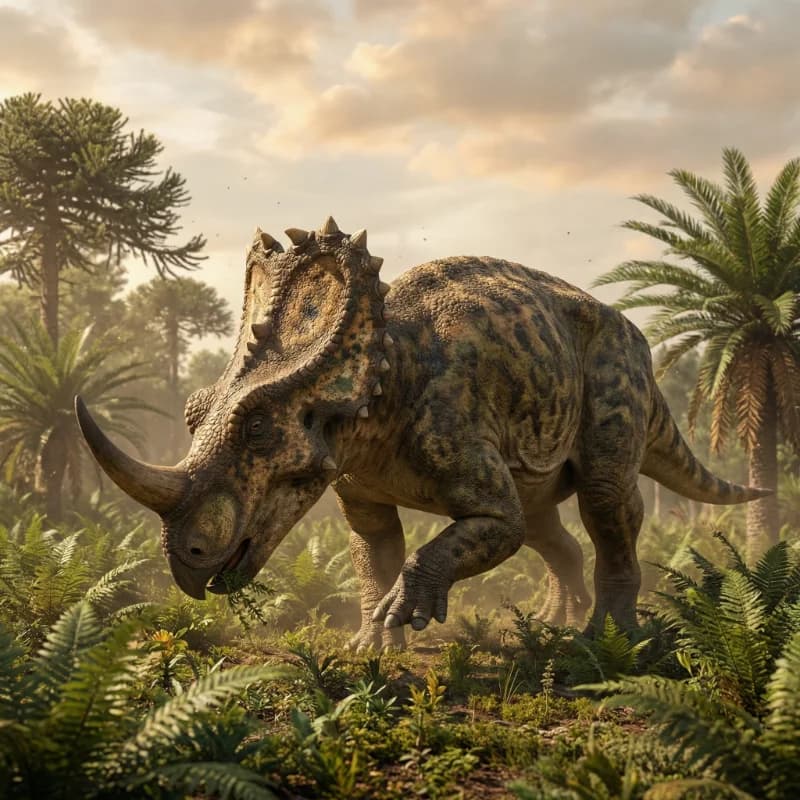
Centrosaurus
Centrosaurus apertus
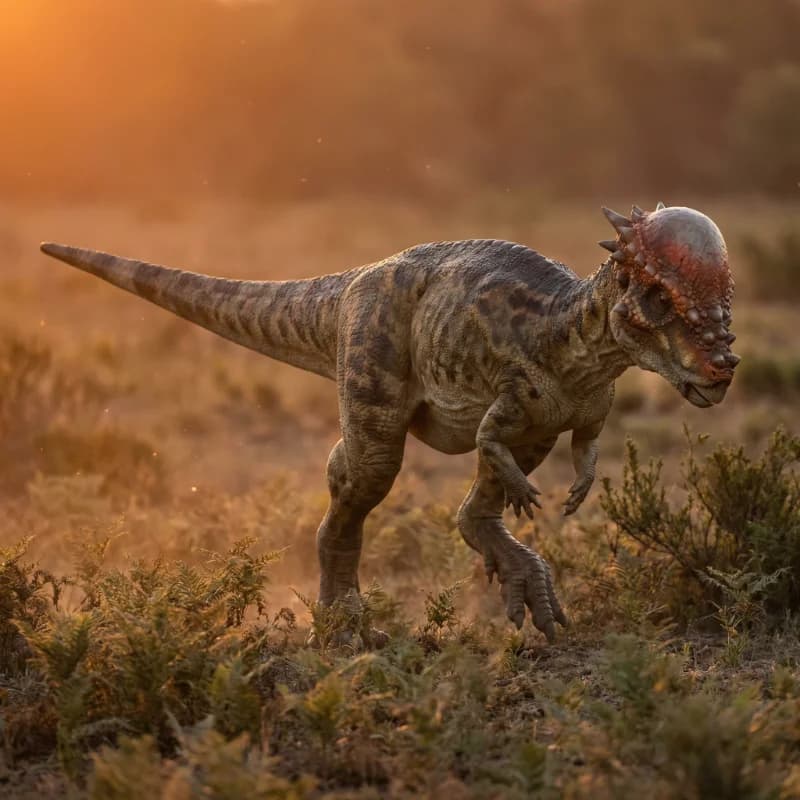
Pachycephalosaurus
Pachycephalosaurus wyomingensis
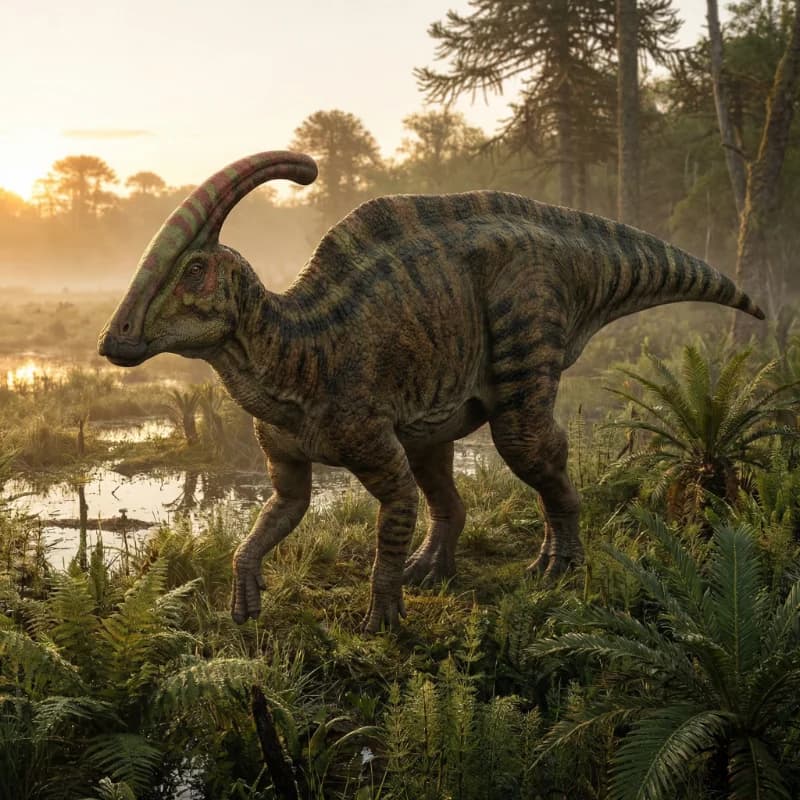
Parasaurolophus
Parasaurolophus walkeri
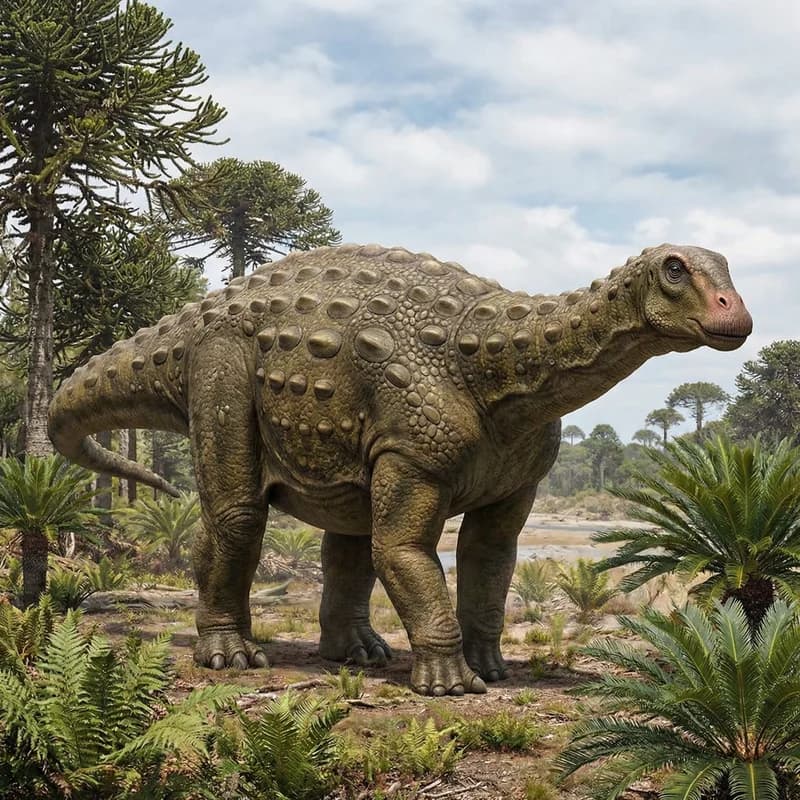
Saltasaurus
Saltasaurus loricatus

Regaliceratops
Regaliceratops peterhewsi
Amargasaurus
Amargasaurus cazaui
Minmi
Minmi paravertebra
Torosaurus
Torosaurus latus